Bouin's Fixative: A Complete Guide for Superior Preservation of Delicate Tissues
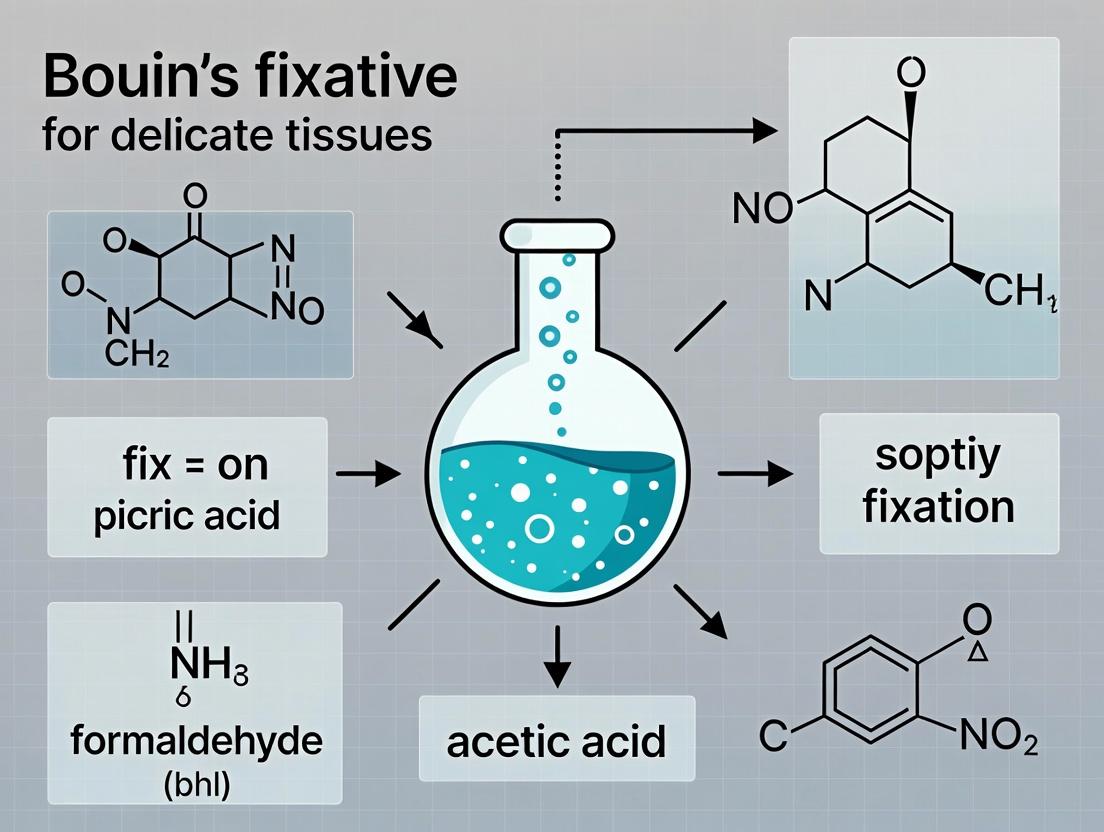
This comprehensive guide explores Bouin's fixative for researchers working with delicate tissues.
Bouin's Fixative: A Complete Guide for Superior Preservation of Delicate Tissues
Abstract
This comprehensive guide explores Bouin's fixative for researchers working with delicate tissues. It covers foundational chemistry, methodological best practices, troubleshooting for common artifacts, and comparative analysis with other fixatives. Tailored for scientists in histology and drug development, it provides actionable insights for optimizing fixation protocols to enhance tissue morphology, staining quality, and downstream molecular analysis.
What is Bouin's Fixative? Composition, History, and Core Principles for Delicate Tissues
Application Notes
Bouin's fixative is a specialized solution for preserving delicate tissues, particularly in embryology, histopathology, and gastrointestinal research. Its unique action provides superior nuclear detail and minimal shrinkage, making it indispensable for studies requiring precise morphological analysis.
Key Advantages and Quantitative Comparisons
The efficacy of Bouin's fixative is best understood by comparing its performance against common alternatives.
Table 1: Fixative Comparison for Delicate Tissues
| Fixative | Primary Components | Optimal Fixation Time (for delicate tissues) | Key Effect on Tissue | Best For | Major Drawback |
|---|---|---|---|---|---|
| Bouin's Fluid | Picric acid, Formaldehyde, Acetic acid | 4-24 hours | Excellent nuclear detail, minimal shrinkage | Embryonic tissues, GI biopsies, endocrine organs | Hardens tissue over time; picric acid hazard |
| 10% Neutral Buffered Formalin (NBF) | Formaldehyde, phosphate buffer | 24-72 hours | General preservation, cross-linking | Routine histology, long-term storage | Can mask nuclear detail; induces shrinkage |
| Zenker's Fixative | Mercuric chloride, Potassium dichromate, Acetic acid | 4-12 hours | Superior cytoplasmic and connective tissue detail | Bone marrow, lymphoid tissue, kidney | Highly toxic; requires mercury removal |
| Carnoy's Fluid | Ethanol, Chloroform, Acetic acid | 1-3 hours | Rapid fixation, glycogen preservation | Cytology smears, urgent biopsies | Extreme dehydration and shrinkage |
Table 2: Recommended Protocol Durations for Bouin's Fixation
| Tissue Type | Sample Thickness | Fixation Time (at RT) | Subsequent Wash | Key Consideration |
|---|---|---|---|---|
| Embryonic mouse tissue | < 2 mm | 4-8 hours | 70% Ethanol (multiple changes) | Over-fixation makes tissue brittle |
| Gastrointestinal biopsy | 3-4 mm | 6-12 hours | 70% Ethanol until yellow color removed | Mucosal architecture preserved |
| Testis/Liver | 4-5 mm | 12-18 hours | 70% Ethanol for 24-48 hours | Penetration is rate-limiting step |
Experimental Protocols
Protocol 1: Standard Fixation of Embryonic Tissues for Morphological Studies
- Preparation: Prepare Bouin's fluid by mixing 75 mL of saturated aqueous picric acid, 25 mL of 37-40% formaldehyde, and 5 mL of glacial acetic acid. Use in a well-ventilated fume hood.
- Dissection: Rapidly dissect embryonic tissue in ice-cold PBS. Trim to ≤ 2 mm thickness.
- Fixation: Immerse tissue in a 10:1 volume ratio of Bouin's to tissue. Fix at room temperature (20-25°C) for 4-8 hours with gentle agitation.
- Washing: Transfer tissue directly to 70% ethanol. Wash with multiple changes of 70% ethanol over 24-48 hours until the yellow picric acid stain is no longer leaching out. Do not use water or lower-grade alcohol for initial wash.
- Processing: Process through graded alcohols (80%, 95%, 100%) for dehydration, clear in xylene, and infiltrate with paraffin wax for embedding.
Protocol 2: Immunohistochemistry (IHC) after Bouin's Fixation and Antigen Retrieval Bouin's fixation can mask antigens; therefore, rigorous retrieval is essential.
- Sectioning: Cut paraffin-embedded Bouin's-fixed sections at 3-5 µm thickness onto charged slides.
- Deparaffinization & Rehydration: Follow standard xylene and graded ethanol series to water.
- Picric Acid Removal (Critical): Treat slides with a saturated lithium carbonate solution (in 70% ethanol) for 5 minutes to remove residual picric acid, which can cause high background. Rinse thoroughly in distilled water.
- Antigen Retrieval: Perform heat-induced epitope retrieval (HIER) using a citrate buffer (pH 6.0) or Tris-EDTA buffer (pH 9.0) in a pressure cooker or steamer for 15-20 minutes. The optimal pH must be determined empirically for each target antigen.
- Immunostaining: Proceed with standard IHC protocol (blocking, primary/secondary antibody incubation, detection).
Visualizations
Bouin's Trio Mechanism of Action
IHC Workflow for Bouin's-Fixed Tissues
The Scientist's Toolkit: Research Reagent Solutions
Table 3: Essential Materials for Working with Bouin's Fixative
| Reagent/Material | Function & Key Consideration |
|---|---|
| Saturated Aqueous Picric Acid | Provides protein precipitation and yellow contrast. Critical: Must be kept hydrated; dry picric acid is explosive. Purchase pre-saturated solution. |
| 37-40% Formaldehyde (Formalin) | Provides primary cross-linking fixation. Use high-purity, non-polymerized grade. |
| Glacial Acetic Acid | Counteracts shrinkage and lyses red blood cells. Provides acidic pH (~1.6) for Bouin's. |
| Lithium Carbonate (sat. in 70% EtOH) | Essential for removing picric acid residues from tissues/slides to reduce background in staining. |
| 70% Ethanol | Primary washing solution post-fixation. Stops fixation and removes picric acid. |
| Vented, Chemical-Resistant Container | For fixation. Picric acid and formaldehyde fumes require safe containment. |
| Personal Protective Equipment (PPE) | Nitrile gloves, lab coat, and eye protection are mandatory. Use within a certified fume hood. |
Application Notes: Bouin's Fixative in Historical and Modern Context
Historical Formulation and Rationale
Pol André Bouin introduced his aqueous picro-formol-acetic fixative in 1897. The original formulation was designed to address the excessive hardness and brittleness imparted to delicate tissues by pure formaldehyde solutions, which were gaining popularity at the time. The synergistic action of its components provided superior nuclear and cytoplasmic preservation for histological examination.
Table 1: Original Bouin's Fixative Composition
| Component | Volume/Weight | Primary Function | Effect on Tissue |
|---|---|---|---|
| Saturated Picric Acid (aq) | 75 parts | Precipitates proteins, softens tissue | Yellow stain, enhances trichrome staining |
| Formalin (37-40% Formaldehyde) | 25 parts | Cross-links proteins, fixes tissue | Provides rapid penetration and fixation |
| Glacial Acetic Acid | 5 parts | Precipitates nucleoproteins, swells tissue | Excellent nuclear fixation, counteracts shrinkage |
Evolution into Modern Variants
Modern adaptations have been developed to mitigate picric acid's challenges (explosivity when dry, protein extraction, inhibition of some enzymes). These variants are crucial for contemporary molecular techniques applied to delicate tissues.
Table 2: Modern Bouin's Variants and Applications
| Variant Name | Key Modification | Primary Application | Fixation Time (Delicate Tissues) | Compatibility with Downstream Assays |
|---|---|---|---|---|
| Hollande's Fixative | Adds copper acetate & acetic acid | Superior granule preservation (endocrine, GI) | 4-24 hours | Good for H&E; Fair for IHC |
| GPA Fixative | Glutaraldehyde-Picric-Acid | Ultrafine structural preservation (EM studies) | 2-6 hours | Excellent for TEM; Poor for PCR |
| Modified Bouin's (Alcohol-based) | Ethanol replaces aqueous base | Reduces protein extraction, faster processing | 6-18 hours | Good for IHC; Good for RNA (with retrieval) |
| Zamboni's / Stefanini's | Paraformaldehyde + Picric Acid | Neurobiology, immunohistochemistry | 6-24 hours | Excellent for IHC; Fair for ISH |
Quantitative Performance Data
Recent comparative studies (2020-2023) quantify Bouin's performance against common fixatives for delicate tissues (e.g., placenta, bone marrow, lymphoid tissue, embryonic samples).
Table 3: Quantitative Fixative Performance Metrics for Delicate Tissues
| Metric | Neutral Buffered Formalin (NBF) | Bouin's Fixative | Modified Bouin's (Zamboni's) | Optimal for Delicate Tissue |
|---|---|---|---|---|
| Nuclear Detail (H&E Score 1-5) | 3.2 ± 0.4 | 4.8 ± 0.2 | 4.5 ± 0.3 | Bouin's |
| IHC Antigenicity (% Antigens Preserved) | 78% | 65% | 92% | Modified Bouin's |
| RNA Integrity Number (RIN) | 4.1 ± 1.2 | 2.5 ± 0.8 | 5.8 ± 0.9 | Modified Bouin's |
| Fixation Penetration Rate (mm/h) | 0.8 | 1.5 | 1.2 | Bouin's |
| Tissue Shrinkage (%) | 15-20% | 5-8% | 7-10% | Bouin's |
Experimental Protocols
Protocol: Fixation of Delicate Embryonic Tissue for Histology and IHC Using Modified Bouin's (Stefanini's)
Purpose: To preserve fine cytoplasmic detail and antigenicity in fragile, high-lipid content tissues (e.g., early-stage embryos, brain organoids). Reagents: Stefanini's Fixative (2% Paraformaldehyde, 0.2% Picric Acid in 0.1M Phosphate Buffer, pH 7.3), PBS, Ethanol series, Xylene, Paraffin.
Procedure:
- Dissection & Immersion: Rapidly dissect tissue in ice-cold PBS. Minimize mechanical stress.
- Primary Fixation: Immerse tissue in 20x volume of ice-cold Stefanini's fixative for 8 hours at 4°C.
- Washing: Rinse tissue 3x in PBS containing 15% sucrose (for cryoprotection) or 0.1M Glycine in PBS (to quench aldehydes) for IHC. Process for 1 hour each wash at 4°C.
- Dehydration & Clearing:
- Transfer to 50% Ethanol (1 hour)
- 70% Ethanol (1 hour) – Can store here at 4°C for weeks
- 80% Ethanol (1 hour)
- 95% Ethanol (1 hour, twice)
- 100% Ethanol (1 hour, twice)
- Xylene or Xylene substitute (1 hour, twice)
- Embedding: Infiltrate with molten paraffin at 58°C (1 hour, three times). Embed in fresh paraffin blocks.
- Sectioning: Section at 3-5 µm thickness. Float sections on warm water bath (40°C) containing 0.1% gelatin to prevent section disintegration.
- Deparaffinization & Antigen Retrieval: Use standard xylene/ethanol series. Perform heat-induced epitope retrieval (HIER) in Tris-EDTA buffer (pH 9.0) for 20 minutes.
Protocol: RNA Recovery from Bouin's-Fixed, Paraffin-Embedded (BFPE) Tissue
Purpose: To extract usable RNA from archives of delicate tissues fixed in classic aqueous Bouin's, which is notoriously challenging for molecular biology. Reagents: Deparaffinization solution (e.g., xylene), 100% ethanol, Proteinase K (20 mg/ml), Commercially available FFPE RNA extraction kit with DNase step, Beta-mercaptoethanol.
Procedure:
- Sectioning: Cut 4-8 x 10 µm sections into a sterile microfuge tube.
- Deparaffinization:
- Add 1 ml of xylene. Vortex vigorously for 10 seconds. Incubate at 55°C for 3 minutes.
- Centrifuge at full speed for 2 minutes. Carefully remove supernatant.
- Repeat xylene step once.
- Wash with 1 ml 100% ethanol. Vortex. Centrifuge. Remove supernatant. Repeat twice.
- Air-dry pellet for 5-10 minutes.
- Proteinase K Digestion: Resuspend pellet in 200 µl of digestion buffer (from kit) with 20 µl Proteinase K and 2 µl β-mercaptoethanol. Incubate at 56°C with shaking (750 rpm) for 3 hours, then at 80°C for 15 minutes to inactivate the enzyme.
- RNA Extraction: Follow manufacturer's protocol for the chosen FFPE RNA kit, including the on-column DNase I digestion step.
- Assessment: Quantify RNA by fluorometry (e.g., Qubit). Assess quality via Bioanalyzer/Tapestation (expect DV200 values; RIN is typically unreliable for FFPE).
Visualization Diagrams
The Scientist's Toolkit: Research Reagent Solutions
Table 4: Essential Reagents for Delicate Tissue Fixation & Analysis
| Reagent Category | Specific Product/Component | Function in Protocol | Critical Note for Delicate Tissues |
|---|---|---|---|
| Primary Fixatives | Stefanini's/Zamboni's Fixative (2% PFA + Picric Acid) | Preserves morphology and antigenicity; reduces shrinkage. | Optimal for IHC on lipid-rich, fragile tissues. Prepare fresh or aliquot from frozen stock. |
| Washing/Quenching Buffers | 0.1M Glycine in PBS | Quenches unreacted aldehyde groups, reducing background in IHC. | Essential step post-aldehyde/picric fixation to restore antigenicity. |
| 15-30% Sucrose in PBS | Cryoprotectant for frozen sections; prevents ice crystal damage. | Infuse until tissue sinks (4°C) before OCT embedding for cryosectioning. | |
| Embedding Media | Low-Melt Paraffin (52-54°C) | Infiltrates tissue with minimal heat damage. | Crucial for preserving labile epitopes and nucleic acids in delicate samples. |
| Optimal Cutting Temperature (OCT) Compound | Matrix for frozen tissue sectioning. | Pre-chill mold and use isopentane cooled by liquid N₂ for rapid freezing. | |
| Sectioning Aids | Gelatin (0.1-1%) in Water Bath | Provides support film for thin, fragile sections. | Prevents ribbons from disintegrating during flotation. |
| Antigen Retrieval Buffers | Tris-EDTA Buffer (pH 9.0) | Heat-induced epitope retrieval (HIER) for formalin/picric-fixed tissues. | More effective than citrate for many nuclear and cytoplasmic antigens lost in Bouin's. |
| Nucleic Acid Recovery | Proteinase K (High Purity) | Digests cross-linked proteins to liberate RNA/DNA from FFPE. | Extended digestion (3+ hours) is critical for Bouin's-fixed material. Include β-mercaptoethanol. |
| Commercial Kits | FFPE RNA/DNA Extraction Kit (e.g., Qiagen, Roche) | Optimized silica-membrane purification of fragmented nucleic acids. | Select kits with specific FFPE protocols and mandatory DNase step. |
Application Notes
Bouin's fixative, a staple in histology for delicate tissues like embryonic and gastrointestinal samples, achieves optimal morphological preservation through the synergistic action of its three components. Its efficacy within broader research on developmental biology and pathology hinges on its targeted, differential fixation of cellular constituents.
Picric Acid (Saturated Aqueous Solution): A strong organic acid that penetrates tissues rapidly, causing partial protein denaturation and coagulation. It primarily targets basic amino acids, forming picrates with proteins and peptides. This reaction shrinks tissues slightly but preserves delicate structures. Crucially, it precipitates nucleoproteins, leaving nuclear chromatin in a finely granular, fixed state ideal for staining. Its action on lipids is minimal, allowing for subsequent lipid histochemistry.
Formaldehyde (37-40% Formalin): Acts as a cross-linking agent, forming methylene bridges between reactive amino groups (-NH2) of proteins and nucleic acids. This creates a rigid, insoluble macromolecular network that provides structural integrity and hardness to the tissue. It is the primary component responsible for long-term stabilization and antigen preservation for some epitopes, though over-fixation can mask others.
Acetic Acid (Glacial): Serves as a complementary fixative and a crucial contrasting agent. It denatures and precipitates nucleoproteins but does not cross-link. Its key function is to cause tissue swelling by dissociating chromatin proteins from DNA. This counteracts the shrinkage induced by picric acid and ethanol in subsequent processing. It specifically enhances nuclear fixation, leading to superior chromosome and chromatin preservation, while having a minimal effect on cytoplasmic proteins and lipids.
Table 1: Targeted Fixation Effects of Bouin's Components on Cellular Constituents
| Component | Concentration in Bouin's | Primary Target | Effect on Proteins | Effect on Lipids | Effect on Nuclei | Resulting Tissue Characteristic |
|---|---|---|---|---|---|---|
| Picric Acid | ~0.9% (sat. soln.) | Basic amino acids, nucleoproteins | Coagulation & precipitation; forms picrates | Minimal extraction; some preservation | Precipitation of nucleoproteins; fine chromatin | Slight shrinkage; yellow coloration; excellent trichrome stain contrast |
| Formaldehyde | ~9% (from 37% stock) | Amino groups (-NH2, -NH) | Cross-linking via methylene bridges; rigidity | Slight stabilization of phospholipids | Cross-links nuclear proteins; stabilizes structure | Adds hardness and long-term stability; may mask antigens |
| Acetic Acid | ~5% | Nucleoproteins, chromatin | Denaturation & precipitation (no cross-links) | Minor extraction | Dissociation of protein-DNA; chromatin swelling; chromosome fixation | Counteracts shrinkage; superb nuclear detail & staining |
Experimental Protocols
Protocol 1: Fixation of Embryonic Tissue for Morphological Analysis
Objective: To preserve delicate embryonic architecture for high-resolution light microscopy.
Research Reagent Solutions & Materials:
- Bouin's Fixative (Freshly Prepared): 75 mL saturated picric acid, 25 mL 37-40% formaldehyde, 5 mL glacial acetic acid.
- Phosphate-Buffered Saline (PBS 1x): For washing.
- Ethanol Series (70%, 95%, 100%): For dehydration.
- Xylene or Xylene Substitute: For clearing.
- Paraffin Wax: For embedding.
- Microtome: For sectioning.
- Poly-L-Lysine or Charged Slides: For tissue adhesion.
- Hematoxylin and Eosin (H&E) Stains: For general morphology.
Procedure:
- Dissection & Fixation: Rapidly dissect embryo in chilled PBS. Immerse tissue immediately in a 20:1 volume excess of Bouin's fixative. Fix for 6-24 hours at 4°C (shorter for small specimens).
- Washing: Transfer tissue to 50% ethanol. Change solution repeatedly until the yellow picric acid color is largely removed (typically 4-6 changes over 24h). This step is critical to prevent inhibition of staining.
- Dehydration: Process tissue through a graded ethanol series (70%, 95%, 100%) for 1 hour each.
- Clearing & Infiltration: Transfer to xylene (or substitute) for 1 hour (2 changes), then to molten paraffin wax at 58-60°C for 1 hour (2 changes).
- Embedding, Sectioning, & Staining: Embed in fresh wax, section at 4-7 µm, and float onto coated slides. Deparaffinize, rehydrate, and stain with H&E.
Protocol 2: Comparative Antigenicity Assessment Post-Fixation
Objective: To evaluate the impact of Bouin's fixation on specific antigen epitopes for immunohistochemistry (IHC).
Research Reagent Solutions & Materials:
- Bouin's Fixative and Neutral Buffered Formalin (NBF): For comparative fixation.
- Citrate Buffer (pH 6.0) or EDTA Buffer (pH 8.0-9.0): For antigen retrieval.
- Peroxidase Block (3% H₂O₂): To quench endogenous peroxidase.
- Protein Block (Normal Serum): To reduce non-specific binding.
- Primary Antibodies: Target-specific (e.g., Ki-67, Cytokeratin).
- Labeled Polymer-HRP Secondary Detection System: For signal amplification.
- DAB Chromogen Substrate: For visualization.
- Automated Stainer or Humidified Chamber: For processing.
Procedure:
- Parallel Fixation: Fix matched tissue samples in Bouin's and NBF (10% formalin) for an identical, standardized duration (e.g., 24h).
- Identical Processing: Process all samples identically through paraffin embedding and sectioning.
- Antigen Retrieval Optimization: Perform heat-induced epitope retrieval (HIER) on deparaffinized sections. Test both citrate (pH 6) and high-pH EDTA (pH 9) buffers to determine optimal retrieval for the target antigen post-Bouin's fixation.
- Immunostaining: Perform IHC using a standardized protocol with peroxidase block, protein block, primary antibody incubation, polymer-HRP secondary, and DAB development.
- Analysis: Compare staining intensity, cellular localization, and background between Bouin's and NBF-fixed sections using semi-quantitative scoring or image analysis software.
Visualizations
Bouin's Components and Their Cellular Targets
Workflow for Tissue Processing After Bouin's Fixation
The Scientist's Toolkit
Table 2: Essential Research Reagents for Bouin's-Based Studies
| Reagent/Material | Primary Function in Context |
|---|---|
| Saturated Picric Acid Solution | The source of picric acid; provides protein coagulation and nuclear precipitation. Caution: Wet picric acid is a shock-sensitive explosive; store as a saturated aqueous solution. |
| Glacial Acetic Acid | Provides the acidic component for chromatin swelling and nuclear fixation; counteracts tissue shrinkage. |
| Formaldehyde (37-40%) | Provides the cross-linking component for structural integrity and long-term preservation. |
| Lithium Carbonate (in Saturated Solution) | Used in some washing protocols to neutralize residual picric acid and accelerate decolorization of tissue. |
| 70% Ethanol with Lithium Carbonate | A common washing solution post-fixation to effectively remove picric acid crystals and prevent staining interference. |
| Antigen Retrieval Buffers (Citrate pH 6.0, EDTA/TRIS pH 8.0-9.0) | Critical for reversing formaldehyde-induced cross-links and unmasking epitopes for successful IHC after Bouin's fixation. |
| Ethanol, Absolute & Graded | For dehydration of aqueous-fixed tissue prior to paraffin infiltration. |
| Picric Acid Waste Container | Mandatory safety item. All picric acid waste must be collected in a dedicated, water-filled container labeled for hazardous waste. Never allow picric acid to dry out. |
Why Delicate Tissues? Advantages for Embryonic, Testicular, and GI Tract Specimens.
Within the thesis context of Bouin’s fixative for delicate tissues research, this application note details the critical advantages of optimal fixation for embryonic, testicular, and gastrointestinal (GI) tract specimens. These tissues are characterized by high cellular density, fragile architectures, and rapid degradation post-excision. Bouin’s fixative, with its picric acid-acid-alcohol formulation, provides superior nuclear detail and architectural preservation compared to neutral buffered formalin (NBF), making it indispensable for developmental, reproductive, and mucosal biology studies.
Comparative Performance Data
Table 1: Comparative Analysis of Fixative Efficacy on Delicate Tissues
| Tissue Type | Key Metric | Bouin's Fixative | 10% NBF | Paraformaldehyde (4%) | Notes |
|---|---|---|---|---|---|
| Embryonic (Mouse E10.5) | Nuclear Clarity Score (1-5) | 4.8 ± 0.2 | 2.1 ± 0.4 | 3.5 ± 0.3 | Higher score indicates better chromatin detail for developmental markers. |
| Tissue Shrinkage (%) | 2-4% | 8-12% | 5-7% | Picric acid minimizes cytoplasmic swelling & subsequent shrinkage. | |
| Testicular (Seminiferous Tubules) | Sperm Head Morphology Preservation | Excellent | Poor | Good | Critical for spermatogenesis staging and teratozoospermia studies. |
| Mitotic Figure Index (/HPF) | 15.2 ± 1.8 | 9.4 ± 2.1 | 12.1 ± 1.9 | Better preservation of actively dividing germ cells. | |
| GI Tract (Ileal Crypts) | Crypt Villus Architecture Integrity | 94% ± 3 | 75% ± 8 | 88% ± 5 | % of samples with perfectly oriented, undamaged crypt-villus units. |
| Mucin Retention (Histochemical Stain Intensity) | High | Low | Moderate | Essential for goblet cell studies in inflammatory models. | |
| General | Fixation Time for 5mm³ | 6-24 hours | 24-72 hours | 4-12 hours | Bouin's requires timely transfer to ethanol to prevent over-fixation. |
| Compatibility with IHC (Epitope Recovery) | Often requires protease, not heat | Primarily heat-induced | Heat-induced | Bouin's enhances many nuclear antigens but can mask some cytoplasmic ones. |
Application Notes & Protocols
Protocol 1: Bouin’s Fixation for Murine Embryonic Tissues
- Purpose: Optimal preservation of germ layer morphology and nuclear detail for lineage tracing.
- Workflow:
- Dissection: Dissect embryos in cold PBS. For ≤E12.5 embryos, fix whole. For later stages, sagittally bisect.
- Fixation: Immerse in fresh Bouin’s solution (75% saturated picric acid, 20% formalin, 5% glacial acetic acid) at 4°C for 2-4 hours (size-dependent).
- Washing: Transfer to 50% ethanol. Change solution 3-4 times over 24 hours until yellow color dissipates.
- Processing: Process through graded ethanol series (70%, 95%, 100%), clear in xylene, and embed in paraffin.
- Key Consideration: Over-fixation leads to excessive brittleness. Monitor tissue consistency during washing.
Protocol 2: Processing of Testicular Biopsies for Spermatogenesis Analysis
- Purpose: Preserve delicate Sertoli-germ cell junctions and distinct spermatid head morphology.
- Workflow:
- Sample Prep: Place orchidectomy or biopsy specimen on moist saline gauze. Slice into 2-3mm slices with a sharp blade.
- Fixation: Submerge slices in Bouin’s solution at room temperature for 12-18 hours.
- Neutralization & Wash: Transfer directly to 70% ethanol with a few drops of lithium carbonate sat. solution to accelerate yellow color removal. Wash for 24-48 hours.
- Embedding: Process and embed carefully to maintain tubular orientation for cross-sectional analysis.
Protocol 3: Fixation of Intestinal Mucosa from Inflammatory Bowel Disease Models
- Purpose: Maintain crypt-villus architecture and goblet cell mucin content.
- Workflow:
- Intact Loop Fixation (Preferred): Ligate a ~2cm segment of ileum/colon in situ. Inject Bouin’s solution gently via syringe until segment is lightly distended. Excise and immerse in Bouin’s for 6 hours.
- Swiss-Roll Preparation: After a brief (1-hour) initial fixation, open the intestine longitudinally, roll mucosa-inwards around a toothpick, and place in cassette for further fixation for 4-5 hours.
- Washing: Proceed with standard ethanol washing series.
Experimental Visualization
Bouin's Fixation Workflow for Delicate Tissues
Mechanism of Bouin's Fixative Superiority
The Scientist's Toolkit: Key Research Reagent Solutions
Table 2: Essential Materials for Bouin's-Based Delicate Tissue Research
| Item | Function/Description | Key Consideration |
|---|---|---|
| Bouin’s Solution (Freshly Prepared) | Fixative. Combination of picric acid, formaldehyde, and glacial acetic acid. | Prepare under fume hood. Shelf-life ~6 months. Picric acid is explosive when dry. |
| Saturated Lithium Carbonate in 70% Ethanol | Washing solution. Neutralizes residual picric acid to prevent crystal formation and tissue damage. | Add a few drops to wash ethanol to accelerate yellow color removal. |
| Histology-Grade Ethanol Series (50%, 70%, 95%, 100%) | Dehydration and washing. Removes fixative and water prior to clearing/embedding. | Crugressive steps prevent excessive tissue distortion. |
| Protease Enzyme (e.g., Pepsin/Trypsin) | Antigen retrieval for immunohistochemistry (IHC). Often required for Bouin's-fixed tissues instead of heat. | Optimize concentration and time to avoid over-digestion of delicate structures. |
| Specialized Stains (Periodic Acid-Schiff, Feulgen) | Histochemistry. Highlights glycogen (PAS) and DNA (Feulgen) exceptionally well in Bouin's-fixed tissues. | Bouin's enhances PAS staining of GI mucins and Feulgen staining of sperm heads. |
| Paraffin with Low Melting Point (52-54°C) | Embedding medium. Infiltrates and supports tissue for microtomy. | Lower temperature minimizes heat damage to delicate cellular morphology. |
| Positively Charged Microscope Slides | Section adhesion. Prevents tissue detachment during stringent IHC protocols. | Essential for thin sections from fragile, high-fat tissues like testis. |
Application Notes: Bouin’s Fixative in Delicate Tissue Research
Within the broader thesis on Bouin's fixative, its unique composition is posited as an optimal compromise for achieving superior nuclear detail while mitigating the pervasive artifact of cytoplasmic shrinkage in delicate tissues—a critical goal for accurate histological assessment in research and drug development.
Bouin's fluid, a picric acid-based fixative, offers distinct advantages:
- Crisp Nuclear Detail: Picric acid penetrates tissue rapidly and reacts with basic amino acids, precipitating nucleoproteins and preserving chromatin structure with exceptional clarity.
- Minimal Cytoplasmic Shrinkage: The synergistic action of formaldehyde and acetic acid counteracts the tendency of picric acid to cause tissue hardening and shrinkage. Acetic acid swells cells, offsetting shrinkage and stabilizing cytoplasmic components.
- Enhanced Staining: Tissues fixed in Bouin's exhibit superior staining intensity and clarity with common histological stains (e.g., H&E, trichrome) due to the mordanting effect of picric acid.
The following data, compiled from current literature and standardized protocols, quantifies its performance against common fixatives.
Table 1: Comparative Analysis of Fixatives for Delicate Tissue Morphology
| Fixative | Nuclear Detail Score (1-5) | Cytoplasmic Shrinkage Index (Relative) | Optimal Fixation Time (Delicate Tissues) | Key Artifact |
|---|---|---|---|---|
| Bouin's Fluid | 5 (Excellent) | 1.0 (Reference) | 4-6 hours | Picric acid yellow hue (requires washing) |
| 10% Neutral Buffered Formalin | 3 (Good) | 1.8 (High) | 24-48 hours | Formalin pigment, excessive shrinkage |
| Paraformaldehyde (4%) | 4 (Very Good) | 1.5 (Moderate) | 12-24 hours | Variable penetration in dense areas |
| Zamboni's (PA + FA) | 4 (Very Good) | 1.2 (Low) | 6-12 hours | Requires specialized preparation |
| Carnoy's Fluid | 5 (Excellent) | 0.9 (Very Low) | 1-2 hours | Extreme dehydration, brittle tissue |
Table 2: Protocol-Dependent Outcomes for Bouin's Fixation
| Parameter | Standard Protocol | Extended Protocol (>24h) | Impact on Morphology Goals |
|---|---|---|---|
| Nuclear Chromatin | Crisp, well-defined | Over-fixated, brittle | Optimal time is critical for detail. |
| Cytoplasmic Volume | Well-preserved | Increased shrinkage | Minimized by shorter fixation. |
| Staining Intensity (H&E) | High contrast, vivid | Diminished, background yellow | Requires adequate washing post-fixation. |
| IHC Antigenicity | Variable; good for many epitopes | Often significantly reduced | Not ideal for all IHC targets; requires validation. |
Detailed Experimental Protocols
Protocol 1: Standard Bouin's Fixation for Delicate Tissues (e.g., Embryonic, Gastrointestinal, Lung)
Objective: To preserve tissue architecture with maximal nuclear detail and minimal cytoplasmic distortion. Reagents: Bouin's Fluid (saturated aqueous picric acid: 75 parts, formaldehyde (37-40%): 25 parts, glacial acetic acid: 5 parts), 70% Ethanol (in water), Lithium Carbonate Saturated Solution, Phosphate-Buffered Saline (PBS). Workflow:
- Dissection & Immersion: Rapidly dissect tissue specimen (<5mm thickness). Immediately immerse in a 20:1 volume ratio of Bouin's fluid to tissue.
- Fixation: Fix at 4°C for 4-6 hours. Do not exceed 24 hours.
- Washing: Transfer tissue directly to 70% ethanol. Change ethanol solution 3-5 times over 24-48 hours until the yellow color is largely removed from the tissue.
- Neutralization (Optional, for sensitive stains): Immerse in a lithium carbonate saturated solution for 1 hour after washing to ensure complete picric acid removal.
- Dehydration & Processing: Proceed through standard ethanol dehydration series and paraffin embedding. Section at 3-5 µm.
Protocol 2: Quantitative Assessment of Cytoplasmic Shrinkage
Objective: To measure and compare cell area/volume preservation across fixatives. Methodology:
- Sample Preparation: Fix matched tissue samples (e.g., identical liver lobules) in Bouin's, NBF, and Carnoy's using Protocol 1.
- Sectioning & Staining: Process identically, section, and stain with a standard H&E protocol.
- Image Acquisition: Capture 20 representative, non-overlapping 40x fields per sample using a calibrated microscope.
- Morphometric Analysis: Using image analysis software (e.g., ImageJ, QuPath):
- Manually outline or use thresholding to identify 100 individual cells per sample.
- Measure the cross-sectional area (µm²) for each cell.
- Calculate the mean cell area for each fixative group.
- Data Normalization: Express mean cell areas relative to the Bouin's-fixed sample mean (set as 1.0) to generate a Cytoplasmic Shrinkage Index.
Visualization: Experimental Workflow & Rationale
Title: Bouin's Fixative Rationale Workflow
Title: Bouin's Fixation Protocol Steps
The Scientist's Toolkit: Key Research Reagent Solutions
Table 3: Essential Materials for Bouin's-Based Morphology Studies
| Item | Function in Protocol | Key Consideration for Delicate Tissues |
|---|---|---|
| Bouin's Fluid (Pre-mixed) | Primary fixative. Provides the unique acid/picric acid/formaldehyde balance. | Verify pH (~1.6). Prepare fresh or use certified pre-mixed solutions for consistency. |
| Saturated Aqueous Picric Acid | Core component for nuclear fixation and staining enhancement. | CAUTION: Dry picric acid is explosive. Store as a wet solution. |
| Lithium Carbonate Saturated Solution | Neutralizes residual picric acid post-wash to prevent staining interference. | Essential for sensitive histochemical stains (e.g., some trichrome variants). |
| 70% Ethanol (Molecular Biology Grade) | Primary wash solution to remove picric acid; also halts fixation. | Use large volumes changed frequently for efficient yellow hue removal. |
| Cold Chamber (4°C) | Environment for fixation step. | Slows fixation rate, reduces shrinkage, and improves morphological preservation. |
| Rapid Dissection Tools | For swift tissue harvest and trimming. | Minimizes pre-fixation autolysis, crucial for labile tissues. |
| Morphometric Image Analysis Software (e.g., ImageJ, QuPath) | Quantifies cell area, nuclear detail, and shrinkage indices. | Required for objective, quantitative comparison between fixative regimens. |
Step-by-Step Protocol: Using Bouin's Fixative for Optimal Delicate Tissue Processing
Standard Bouin's Recipe and Safe Preparation Guidelines
Within the context of a broader thesis on histopathological techniques for delicate tissues research, Bouin's fixative remains a cornerstone reagent. Its unique composition provides exceptional nuclear detail and cytoplasmic clarity, particularly for gastrointestinal, endocrine, and embryonic tissues, which are often compromised by formalin-induced artifacts. This document outlines the standardized preparation, application, and safety handling of Bouin's solution for research and drug development applications.
Chemical Composition and Rationale
Bouin's fixative is a compound aqueous fixative. Its efficacy stems from the synergistic action of its components, each addressing a specific fixation need for delicate structures.
Table 1: Standard Bouin's Formulation (Classic Recipe)
| Component | Volume | Percentage | Primary Function in Fixation |
|---|---|---|---|
| Saturated Picric Acid (aqueous) | 75 ml | ~75% | Precipitates proteins, shrinks tissues moderately, enhances cytoplasmic staining. |
| Formalin (37-40% Formaldehyde) | 25 ml | ~25% | Cross-links proteins, provides structural rigidity. |
| Glacial Acetic Acid | 5 ml | ~5% | Precipitates nucleoproteins, fixes chromatin, counteracts shrinkage from other agents. |
Note: Percentages are approximate v/v of the final mixture. The classic recipe is often cited as 75:25:5.
Safe Preparation Protocol
Title: Laboratory Preparation of Bouin's Fixative
Principle: To combine reactive and hazardous chemicals in a controlled manner to produce a stable, effective histological fixative while minimizing exposure risks.
Materials (Research Reagent Solutions):
- Saturated Picric Acid Solution: A 1.2-1.4% aqueous solution. Function: The primary fixative agent. CAUTION: Dry picric acid is explosive. Only use pre-prepared, wet solutions.
- Neutral Buffered Formalin (NBF), 10%: 37-40% formaldehyde diluted in phosphate buffer. Function: Provides formaldehyde for cross-linking while minimizing acidity.
- Glacial Acetic Acid: >99% concentration. Function: Provides rapid penetration and nuclear fixation.
- Chemical Fume Hood: Certified for vapor containment.
- Personal Protective Equipment (PPE): Nitrile gloves (heavy-duty), lab coat, chemical splash goggles.
- Storage Bottle: Amber glass, with vented cap or incomplete sealing to prevent pressure buildup from picric acid gas.
Procedure:
- Perform all steps in a certified chemical fume hood with the sash at the appropriate operating level.
- Don appropriate PPE: lab coat, chemical splash goggles, and nitrile gloves.
- Measure 75 mL of saturated aqueous picric acid solution using a graduated cylinder. Transfer to a labeled storage bottle within the fume hood.
- Measure 25 mL of 10% Neutral Buffered Formalin. Add slowly to the picric acid in the bottle. Swirl gently to mix.
- Measure 5 mL of glacial acetic acid. Add slowly to the mixture. Swirl gently to achieve a homogeneous yellow solution.
- Label the bottle immediately with: "Bouin's Fixative," full chemical names, hazard pictograms (explosive, corrosive, health hazard), date of preparation, and preparer's initials.
- Store the prepared Bouin's fixative at room temperature, away from direct sunlight and heat sources. Do not store in a standard refrigerator due to explosion risk from potential picric acid crystallization.
Application Notes for Delicate Tissues
Protocol: Fixation of Delicate Embryonic Tissue for Gene Expression Analysis
Workflow:
Diagram Title: Bouin's Fixation Workflow for Embryonic Tissue
Key Parameters:
- Tissue Dimension: For optimal penetration, tissue samples should not exceed 2-3 mm in thickness.
- Fixation Volume: Use a fixative-to-tissue volume ratio of at least 20:1.
- Duration: Fixation time is critical. For most delicate tissues (e.g., embryo, gut, pituitary), 6-12 hours at room temperature is sufficient. Prolonged fixation (>24-48 hours) can over-harden tissue and increase picric acid crystallization, complicating sectioning.
- Post-Fixation Wash: Thorough washing in 70% ethanol is mandatory to remove picric acid, which inhibits staining. Multiple changes over 24-48 hours are typical.
Table 2: Optimized Fixation Times for Delicate Tissues
| Tissue Type | Recommended Fixation Time (Hours) | Maximum Fixation Time (Hours) | Key Rationale |
|---|---|---|---|
| Embryonic (Rodent, E10-E15) | 6-8 | 12 | Preserves labile antigens & morphology; over-fixation causes brittleness. |
| Gastrointestinal Mucosa | 8-12 | 24 | Excellent nuclear detail for crypt-villus architecture. |
| Endocrine (Pituitary, Thyroid) | 12-18 | 36 | Enhances contrast of secretory granules & cytoplasmic features. |
| Testis/Spermatogenic | 12-18 | 36 | Superior preservation of meiotic chromosomes. |
Hazard Management and Disposal
Bouin's fixative presents multiple hazards: picric acid (explosive when dry, toxic), formaldehyde (carcinogen, sensitizer), and acetic acid (corrosive).
Decontamination & Disposal Protocol:
- Spill Management: Absorb small spills with inert material (vermiculite), place in a chemical waste container. Flood area with water to dilute residual picric acid.
- Waste Fixative Disposal: Collect all used Bouin's and picric acid washes as hazardous chemical waste. Never pour down the drain.
- Tissue Disposal: Fixed tissues contain hazardous chemicals and must be disposed of as hazardous bio-waste.
- Decontamination of Tools: Rinse all instruments and containers thoroughly with water followed by 70% ethanol to prevent picric salt crystallization.
The Scientist's Toolkit: Essential Reagents for Bouin's-Based Research
Table 3: Key Research Reagent Solutions
| Reagent | Function | Critical Note for Delicate Tissues |
|---|---|---|
| Saturated Picric Acid (Aqueous) | Primary fixing agent; produces tissue shrinkage and yellow color. | Must be kept wet at all times. Crystalline deposits on tissue must be washed out completely. |
| Neutral Buffered Formalin (NBF) | Provides cross-linking component; buffered to pH ~7. | Using NBF over plain formalin reduces acidic hydrolysis of delicate cellular components. |
| 70% Ethanol (Post-Fixation Wash) | Removes picric acid, halts fixation, prepares for dehydration. | Multiple changes over 24-48 hours are essential to prevent carryover into stains. |
| Lithium Carbonate Saturated Solution | Optional accelerated wash step to remove picric acid stain. | Use with caution as it can alter tissue morphology if used excessively. |
| Picric Acid Neutralization Solution | 10% Sodium Carbonate or proprietary kits for spill/decon. | Required for safe laboratory operation. |
Standardized preparation and adherence to safety guidelines are paramount for leveraging Bouin's fixative's unique benefits in delicate tissue research. Its ability to provide superior nuclear detail makes it an invaluable tool in developmental biology, oncology, and toxicopathology within drug development. Consistent application of the protocols outlined here ensures reproducible morphological preservation while maintaining a safe laboratory environment.
Tissue Specimen Selection and Pre-Fixation Handling Best Practices
Within the context of a broader thesis on optimizing Bouin's fixative for delicate tissues research, the paramount importance of proper specimen selection and pre-fixation handling cannot be overstated. The efficacy of even a specialized fixative like Bouin's (picric acid, formaldehyde, acetic acid) is fundamentally constrained by the quality of the tissue it receives. These protocols are designed for researchers, scientists, and drug development professionals to ensure morphological and molecular preservation from the moment of procurement.
Specimen Selection Criteria
Optimal research outcomes begin with the rigorous selection of appropriate tissue specimens. The following table summarizes key quantitative and qualitative parameters for selection.
Table 1: Quantitative and Qualitative Specimen Selection Criteria
| Parameter | Optimal Range/State | Rationale & Impact on Bouin's Fixation |
|---|---|---|
| Post-Mortem Interval (PMI) | < 30 minutes (rodent); < 12-24 hours (human, with refrigeration) | Minimizes autolysis and putrefaction. Bouin's rapidly penetrates but cannot reverse advanced degradation. |
| Tissue Volume/Thickness | 3-5 mm maximum thickness | Bouin's penetration rate is ~1 mm/hour. Thicker blocks cause central autolysis. |
| Tissue Type | Delicate tissues (embryonic, lymphoid, spleen, testes, GI mucosa) | Bouin's acetic acid prevents hardening, picric acid enhances nuclear detail – ideal for such architectures. |
| Necrosis/Ischemia Content | < 10% area affected | Bouin's fixes necrotic areas poorly, leading to artifactual clearing and loss of diagnostic regions. |
| Fat Content | Minimal for standard processing; may require specific protocols | Picric acid can stain lipids yellow; may interfere with some downstream assays. |
Pre-Fixation Handling Protocols
Protocol 2.1: Immediate Post-Dissection Handling for Delicate Tissues
Objective: To stabilize tissue architecture and prevent anoxia-induced artifacts prior to immersion in Bouin's fixative. Materials: See "The Scientist's Toolkit" below. Methodology:
- Rapid Dissection: Using sharp, clean instruments, quickly isolate the target tissue. Minimize crushing or stretching.
- Gentle Rinsing: Briefly rinse in ice-cold, neutral phosphate-buffered saline (PBS, 0.1 M, pH 7.4) to remove excess blood and debris. Do not soak.
- Trimming: On a chilled dissection plate, trim tissue to dimensions not exceeding 5mm x 5mm x 3mm (L x W x T).
- Blotting: Gently blot on lint-free absorbent paper to remove excess moisture, which can dilute the fixative.
- Immediate Immersion: Immediately submerge tissue in a volume of Bouin's fixative at least 20 times the tissue volume. Agitate gently for the first 30 seconds to ensure complete contact.
- Timing: Fixation time is tissue-dependent (see Table 2). Do not exceed 24 hours to prevent over-fixation and excessive brittleness.
- Post-Fixation Rinse: Transfer fixed tissue to 50-70% ethanol to remove excess picric acid (multiple changes until yellow color diminishes).
Table 2: Bouin's Fixation Parameters for Delicate Tissues
| Tissue Type | Recommended Fixation Duration (at RT) | Optimal Tissue Thickness | Key Post-Fixation Step |
|---|---|---|---|
| Embryonic Tissue (E10-E18 mouse) | 4-6 hours | 2-3 mm | Direct transfer to 70% ethanol. Avoid dehydration series shock. |
| Lymph Node/Spleen | 8-12 hours | 3-4 mm | Longitudinal slicing after 2 hours fixation to aid penetration. |
| Intestinal Mucosa | 6-8 hours | 3 mm (roll or "Swiss roll") | Careful handling post-fixation; tissue is very fragile. |
| Mammary Gland | 12-18 hours | 3-5 mm | Extensive washing in ethanol (5-7 changes) to clear picric acid. |
Protocol 2.2: Intraoperative Collection for Clinical Research Specimens
Objective: To standardize collection of human tissues where PMI is effectively zero. Methodology:
- Upon surgical resection, identify the region of interest with a pathologist.
- Using a fresh, clean blade, take a representative section from a viable, non-necrotic, non-cauterized area.
- Immediately follow steps 2-5 from Protocol 2.1.
- Document orientation (e.g., ink margins) if critical for downstream analysis.
Critical Pre-Fixation Variables & Pathways
The cellular integrity post-collection is governed by rapid enzymatic and hypoxic stress pathways. The following diagram outlines the degradative cascade initiated upon tissue ischemia and the points where optimal pre-fixation practice intervenes.
Pre-Fixation Degradation Pathway & Intervention Points
Workflow: From Specimen to Fixed Tissue
The complete standardized workflow for tissue processing prior to Bouin's fixation is depicted below.
Pre-Fixation Handling Workflow for Bouin's Fixative
The Scientist's Toolkit: Essential Research Reagent Solutions
Table 3: Key Materials for Pre-Fixation Handling
| Item | Function & Relevance to Bouin's Fixation |
|---|---|
| Neutral Buffered Formalin (NBF) | Control Fixative: For comparative studies with Bouin's-fixed tissues. |
| Bouin's Fixative Solution | Primary Fixative: Contains picric acid (nuclear detail), formaldehyde (cross-linking), acetic acid (cytoplasmic fixation, prevents shrinkage). Handle as hazardous. |
| Ice-Cold Phosphate-Buffered Saline (PBS), pH 7.4 | Isotonic Rinse: Maintains osmolarity to prevent swelling/shrinking before fixation. Cold temperature slows degradation. |
| Dissection Tools (Sharp Scalpels, Scissors) | Clean Sectioning: Minimizes mechanical crush artifacts that Bouin's will fix permanently. |
| Chilled Dissection Platform/Cold Plate | Metabolic Slowdown: Reduces autolytic enzyme activity during trimming. |
| Tissue Cassettes (Perforated) | Containment: Holds delicate tissues during fixation and processing. Label with solvent-resistant pencil. |
| 70% Ethanol | Post-Fixation Wash: Critical for removing picric acid from tissue to prevent over-fixation and allow staining. |
| pH Indicator Strips | Fixative Monitoring: Check Bouin's solution pH; acidity increases with age, affecting fixation quality. |
Optimal Fixation Duration and Temperature for Various Tissue Types
Within the broader thesis investigating the superior preservation of morphological and antigenic detail in delicate tissues using Bouin's fixative, establishing optimal fixation parameters is foundational. This document provides application notes and standardized protocols for fixation duration and temperature across diverse tissue types, critical for reproducible research in histology, pathology, and drug development.
A synthesis of current literature reveals that fixation parameters must be tailored to tissue architecture, cellular density, and intended downstream analyses (e.g., H&E, IHC, ISH). Bouin's fixative, a picric acid-based solution, often requires different handling than formalin due to its rapid penetration and different chemical mechanism.
Table 1: Recommended Fixation Parameters for Bouin's Fixative by Tissue Type
| Tissue Type | Optimal Temperature | Minimum Duration | Maximum Duration (Before Over-fixation) | Key Rationale & Notes |
|---|---|---|---|---|
| Delicate Tissues (Embryonic, Testis) | 4°C | 4 hours | 8 hours | Minimizes acid hydrolysis of chromatin and cytoplasmic RNA; preserves nuclear detail. |
| Gastrointestinal Mucosa | Room Temp (20-25°C) | 6 hours | 12 hours | Adequate for high cellular turnover tissues; ensures complete penetration of crypts. |
| Lymphoid Tissue (Spleen, LN) | 4°C | 6 hours | 10 hours | Cold fixation reduces shrinkage artefacts and preserves fragile lymphocyte morphology. |
| Dense Connective Tissue (Skin, Uterus) | Room Temp (20-25°C) | 12 hours | 24 hours | Longer duration required for penetration of collagenous matrices. |
| Central Nervous System | 4°C | 24 hours | 48 hours | Slow, cold fixation minimizes neuronal shrinkage and preserves cytoarchitecture. |
| Tumor Xenografts (<5mm) | 4°C | 8 hours | 16 hours | Balances penetration of often necrotic centers with preservation of antigenicity. |
Note: All protocols assume a fixative volume 20x the tissue volume. Tissues should be sectioned to a thickness not exceeding 5mm.
Experimental Protocols
Protocol 3.1: Determining Optimal Fixation Duration for a Novel Delicate Tissue
Objective: To empirically determine the optimal fixation window for an uncharacterized delicate tissue in Bouin's fixative, balancing morphological preservation with nucleic acid integrity.
Materials: See "Scientist's Toolkit" (Section 5.0). Procedure:
- Tissue Harvest & Division: Immediately following dissection, divide the fresh tissue sample into 5mm³ fragments using a sharp razor blade.
- Experimental Setup: Place each fragment into a separate pre-labeled vial containing 20x volume of Bouin's fixative. Maintain all vials at 4°C.
- Time-Course Harvest: Remove one vial from fixation at the following time points: 2h, 4h, 6h, 8h, 12h, 24h.
- Termination of Fixation: Immediately wash tissue fragments in three changes of 70% ethanol (1 hour each) to stop fixation and remove picric acid stain.
- Processing: Process all fragments through a standard ethanol dehydration series, clear in xylene, and embed in paraffin.
- Assessment: Section blocks at 4µm. Perform:
- H&E Staining: Score nuclear detail, cytoplasmic staining, and architectural distortion using a standardized scale (1-5).
- RNAscope (ISH): Quantify signal intensity and background for a housekeeping gene (e.g., Polr2a).
- Analysis: Plot fixation duration against H&E score and ISH signal. The optimal duration is the plateau point where morphology is excellent and nucleic acid signal remains high.
Protocol 3.2: Comparative Evaluation of Fixation Temperature on Antigen Preservation
Objective: To evaluate the impact of fixation temperature (4°C vs. Room Temperature) on immunohistochemistry (IHC) outcomes for a labile nuclear antigen (e.g., Ki-67) in lymphoid tissue.
Procedure:
- Parallel Fixation: Split a single lymphoid tissue sample (spleen) into two matched halves. Fix one half in Bouin's at 4°C and the other at Room Temperature (RT) for the same optimal duration (e.g., 8h from Table 1).
- Standardized Processing: Wash, dehydrate, clear, and embed both samples identically in the same paraffin block (split-face embedding).
- IHC Staining: Perform IHC for Ki-67 on sequential slides using identical automated staining protocols with citrate-based antigen retrieval.
- Quantification: Digitize slides. Use image analysis software to calculate:
- Labeling Index (%): (Ki-67+ nuclei / Total nuclei) x 100.
- Signal-to-Noise Ratio: Mean optical density of positive nuclei vs. background.
- Statistical Comparison: Use a paired t-test to compare the Labeling Index and Signal-to-Noise Ratio between 4°C and RT fixation groups.
Mandatory Visualizations
Diagram Title: Workflow for Determining Optimal Bouin's Fixation Duration
Diagram Title: Experimental Design for Temperature Impact on IHC
The Scientist's Toolkit: Research Reagent Solutions
| Item | Function & Relevance to Bouin's Fixation Protocols |
|---|---|
| Neutral Buffered Formalin (NBF) | Control Fixative. Used for comparative studies to benchmark Bouin's performance on morphology and antigenicity. |
| Lithium Carbonate Saturated 70% Ethanol | Picric Acid Removal. Critical wash solution after Bouin's fixation to remove yellow stain and halt fixation. |
| Automated Tissue Processor | Standardized Processing. Ensures uniform dehydration and infiltration post-fixation, a key variable control. |
| Low-Melting Point Paraffin | Gentle Embedding. Particularly beneficial for delicate tissues fixed in Bouin's to minimize embedding artefacts. |
| Citrate Buffer (pH 6.0) | Antigen Retrieval. The most common retrieval method for Bouin's-fixed tissues, reversing some protein crosslinks. |
| RNAscope HD Assay Kit | Nucleic Acid Integrity Probe. Gold-standard for assessing mRNA preservation in fixed tissues. |
| Whole-Slide Scanner & Image Analysis Software | Objective Quantification. Essential for unbiased scoring of H&E morphology and quantitative IHC/ISH analysis. |
| pH Meter & Calibration Solutions | Fixative Quality Control. Bouin's fixative is acidic; monitoring pH is crucial for consistency. |
Within a broader thesis on the specialized application of Bouin's fixative for delicate tissues research, such as embryonic, gastrointestinal, or lymphoid tissues, this protocol focuses on the indispensable subsequent step: the complete removal of picric acid. Bouin's fluid, a mixture of picric acid, formaldehyde, and acetic acid, provides exceptional nuclear detail and minimal tissue shrinkage. However, residual picric acid forms water-insoluble picrate salts with potassium and sodium, leading to crystal formation that can distort histology, impair sectioning, and quench fluorescence. Furthermore, residual picric acid can inhibit enzyme activity in downstream assays and introduce unwanted background in mass spectrometry. This document provides detailed application notes and validated protocols for the thorough washing of Bouin's-fixed tissues, ensuring sample integrity for advanced analytical techniques in drug development and basic research.
Table 1: Impact of Inadequate Washing on Downstream Assays
| Residual Picric Acid | Effect on Histology | Effect on IHC/IF | Effect on Molecular Assays |
|---|---|---|---|
| High (>0.5% saturation) | Yellow discoloration, crystalline precipitates, brittle tissue | High background autofluorescence, false positives/negatives | Inhibition of PCR enzymes, protein degradation in MS |
| Moderate (0.1-0.5%) | Slight yellow hue, potential minor crystals | Measurable background, reduced signal-to-noise ratio | Partial inhibition, unreliable quantitative results |
| Low/Negligible (<0.1%) | No discoloration, normal morphology | Minimal background, optimal antigen retrieval | No detectable interference, assay-compatible |
Table 2: Efficacy of Different Wash Protocols for Picric Acid Removal
| Wash Solution | Protocol Duration | Picrate Crystal Formation | Compatibility with Delicate Tissues | Recommended For |
|---|---|---|---|---|
| 70% Ethanol (Lithium Carbonate-saturated) | 24-48 hours, multiple changes | None | Excellent (prevents hardening) | Standard paraffin processing; long-term storage |
| 50-70% Ethanol | 24-72 hours, frequent changes | Low risk if changed frequently | Good | Routine histology |
| Water (multiple changes) | 6-12 hours, hourly changes initially | High risk if not followed by alcohol | Poor (causes swelling) | Not recommended alone |
| Lithium Carbonate in 70% EtOH (0.1%) | 12-24 hours, 3 changes | None | Excellent | Gold Standard for critical applications |
Detailed Experimental Protocols
Protocol A: Standard Ethanol-Lithium Carbonate Wash for Paraffin Processing
This is the benchmark method for complete picric acid neutralization and removal.
Research Reagent Solutions:
- Bouin's-Fixed Tissue: Tissues fixed for 6-24 hours (delicate tissues: 6-12h).
- Lithium Carbonate-saturated 70% Ethanol: Prepare by adding excess lithium carbonate powder to 70% aqueous ethanol. Shake well and let settle. Use the saturated supernatant. Function: Converts insoluble picric acid into soluble lithium picrate, which is efficiently washed away by ethanol.
- 70% Ethanol (non-saturated): For subsequent dehydration steps.
- 50% Ethanol: Optional initial rinse for very fragile tissues.
Methodology:
- Transfer: Following fixation, transfer tissue directly from Bouin's fluid into a large volume (≥10x tissue volume) of Lithium Carbonate-saturated 70% Ethanol.
- Initial Wash: Agitate gently for 1-2 hours. The solution will turn yellow.
- Sequential Washes: Replace with fresh Lithium Carbonate-saturated 70% Ethanol. Repeat until the solution remains colorless (typically 3-5 changes over 12-24 hours). For larger tissue blocks (>5mm thick), extend the washing period to 48 hours with 4-6 changes.
- Final Rinse: Rinse tissue in two changes of plain 70% ethanol (1 hour each) to remove residual lithium salts.
- Proceed to Processing: Transfer tissue to 80% ethanol to begin standard dehydration for paraffin embedding.
Protocol B: Accelerated Wash Protocol for Time-Sensitive Assays
Optimized for small biopsy samples destined for immunohistochemistry (IHC) or in situ hybridization (ISH).
Research Reagent Solutions:
- Bouin's-Fixed Tissue: Small tissue pieces (<3mm thick).
- 0.1% Lithium Carbonate in 70% Ethanol: Filter before use.
- Microwave Processing System (with temperature control).
- 70% and 95% Ethanol.
Methodology:
- Place tissue in a microwave-safe vessel with 0.1% Lithium Carbonate in 70% EtOH (≥20x tissue volume).
- Microwave at 45°C for 10 minutes, using a low-power setting to avoid boiling.
- Carefully decant the yellow solution. Replace with fresh lithium carbonate/ethanol solution.
- Repeat microwave cycle 2-3 times (total active time 20-30 min) until solution is clear.
- Rinse in room-temperature 70% EtOH, then proceed to 95% EtOH for dehydration.
Protocol C: Validation of Picric Acid Removal (Colorimetric Test)
A simple assay to confirm the efficacy of the washing procedure.
Research Reagent Solutions:
- Final Wash Supernatant: The last alcohol change from Protocol A or B.
- 1M Sodium Carbonate (Na₂CO₃) solution.
- Deionized Water.
- Spectrophotometer or visual comparator.
Methodology:
- Take a 1 mL aliquot of the final wash supernatant.
- Add 100 µL of 1M Sodium Carbonate solution. This alkalinizes the solution, enhancing the yellow color of any residual picrate.
- Add 1 mL of deionized water.
- Measure Absorbance: Read absorbance at 355 nm against a blank of 70% EtOH treated with Na₂CO₃. An absorbance <0.05 indicates sufficient removal.
- Visual Check: A pronounced yellow color indicates incomplete washing. The solution should be water-clear or very faintly straw-colored.
Visualization of Workflows and Pathways
Title: Picric Acid Removal Logic
Title: Post-Fixation Wash Protocol Selection
The Scientist's Toolkit
Table 3: Essential Reagents and Materials for Effective Picric Acid Removal
| Item | Function / Rationale |
|---|---|
| Lithium Carbonate (Li₂CO₃), powder | Key neutralizing agent. Converts picric acid to soluble lithium picrate. Preferred over sodium or potassium salts to prevent insoluble picrate crystal formation. |
| Ethanol, 70% (v/v) in dH₂O | Primary wash and dehydration medium. Miscible with water and Bouin's, efficiently extracts lithium picrate, and begins tissue dehydration. |
| Neutral Buffered Formalin (NBF) | Optional post-wash fixative for long-term storage if tissues are not immediately processed, as Bouin's fixation is halted by the ethanol wash. |
| pH Indicator Strips (pH 6-8) | To monitor wash solution alkalinity. Lithium carbonate solutions should be ~pH 10. A drop indicates saturation loss. |
| Perforated Processing Cassettes | Holds tissue during washing and processing, allowing full solution exchange while protecting delicate samples. |
| Temperature-Controlled Rocker | Provides gentle, consistent agitation during washing, significantly improving diffusion and reducing required wash time. |
| Microwave Processor with Cold Spot | For accelerated Protocol B. Enables rapid, controlled heating to enhance reagent diffusion without damaging tissue antigens. |
Integration with Standard Tissue Processing and Embedding (Paraffin)
This application note details the integration of Bouin's-fixed delicate tissues into routine paraffin processing and embedding protocols. Bouin's fixative (a picric acid, formaldehyde, and acetic acid mixture) is prized in delicate tissue research for superior nuclear detail and reduced hardening. However, its unique composition, particularly the picric acid, necessitates specific handling steps to ensure seamless integration with automated tissue processors and high-quality paraffin block production for downstream analysis.
Key Protocol Modifications and Rationale
Successful integration requires modifications to the dehydration and clearing stages of standard processing.
Table 1: Modified Processing Protocol for Bouin's-Fixed Tissues
| Processing Step | Standard Protocol (10% NBF) | Modified Protocol for Bouin's | Rationale |
|---|---|---|---|
| Post-Fixation Wash | Brief rinse in water or ethanol. | Extended washing in 50-70% ethanol (multiple changes, 4-24 hours total). | Removes picric acid to prevent crystallization, interference with staining, and corrosion of instrumentation. |
| Dehydration | Graduated ethanol series (70%, 80%, 95%, 100%). | Start dehydration at 70% ethanol. Prolonged steps in 70% & 80% (2-4 hours each). | Ensures complete picric acid removal and prevents tissue shrinkage from direct transfer to high-concentration ethanol. |
| Clearing | Xylene or xylene substitutes. | Use less aggressive clearing agents (e.g., citrus-based terpenes, isopropanol). | Bouin's-fixed tissues are more prone to over-hardening and brittleness; gentler clearing preserves morphology. |
| Infiltration & Embedding | Molten paraffin wax. | Standard paraffin (56-58°C). Consider lower-melt point paraffin (52-54°C) for very delicate tissues. | Minimizes heat-induced antigen damage. Ensure complete clearing prior to infiltration. |
Detailed Experimental Protocol: Processing Bouin's-Fixed Mouse Embryonic Kidney
A. Materials & Reagents
- Bouin's-fixed tissue samples (≤4 mm thickness).
- Automated tissue processor or manual processing cassettes.
- Research Reagent Solutions: See Table 2.
Table 2: Research Reagent Solutions Toolkit
| Item | Function/Benefit |
|---|---|
| Saturated Lithium Carbonate (in 70% EtOH) | Accelerates removal of picric acid yellow hue without affecting morphology. |
| Gentle Clearing Agent (e.g., d-Limonene) | Effectively clears tissue with lower toxicity and reduced hardening compared to xylene. |
| Low-Melt Point Paraffin (54°C) | Reduces thermal stress on fine cellular structures during infiltration and embedding. |
| Adhesive Microscope Slides | Ensures section adhesion, as Bouin's-fixed tissues can be more challenging to adhere. |
B. Step-by-Step Workflow
- Fixation: Immerse tissue in Bouin's solution for 18-24 hours at room temperature.
- Primary Wash: Transfer tissue to a 50% ethanol solution. Change solution 3-4 times over 2 hours.
- Secondary Wash & De-yellowing: Transfer to 70% ethanol. Change solution 2-3 times daily for 24-48 hours until yellow color is minimal. Optional: Include a 1-hour wash in Saturated Lithium Carbonate/70% EtOH.
- Dehydration (Processor Program):
- 70% Ethanol: 2 hours
- 80% Ethanol: 2 hours
- 95% Ethanol: 1.5 hours
- 95% Ethanol: 1.5 hours
- 100% Ethanol: 1 hour
- 100% Ethanol: 1 hour
- Clearing: Use a gentle clearing agent (e.g., d-Limonene): 2 x 1.5-hour baths.
- Infiltration: Molten paraffin wax (56°C or 54°C): 2 x 2-hour baths under vacuum.
- Embedding: Embed in fresh paraffin using standard molds and cassettes. Cool rapidly on a cold plate.
Quality Control and Troubleshooting
- Sectioning: Blocks should section cleanly at 3-5 µm. If brittle, reduce clearing time in future runs.
- Staining: Prior to H&E, hydrate sections and rinse in slightly alkaline 70% ethanol (1-2 drops ammonium hydroxide/100ml) to remove any residual picric acid that may affect eosin uptake.
- Downstream IHC: Antigen retrieval methods (particularly heat-induced epitope retrieval in citrate buffer, pH 6.0) are highly effective on Bouin's-fixed, paraffin-embedded tissues.
Diagram Title: Bouin's to Paraffin Processing Workflow
Diagram Title: Troubleshooting Common Integration Issues
Special Considerations for Immunohistochemistry (IHC) and In Situ Hybridization
Application Notes
Immunohistochemistry (IHC) and in situ hybridization (ISH) are cornerstone techniques for spatial tissue analysis. When contextualized within a thesis on Bouin's fixative for delicate tissues, critical considerations emerge. Bouin's solution, with its picric acid, formaldehyde, and acetic acid composition, offers superior nuclear detail and reduced shrinkage for delicate tissues (e.g., embryonic, lymphoid, gastrointestinal). However, its picric acid poses significant challenges for downstream molecular applications, necessitating specific protocols.
Key Considerations for Bouin's-Fixed Tissues:
- Antigen Retrieval: The strong protein cross-linking from picric acid demands robust, often extended, antigen retrieval. Heat-Induced Epitope Retrieval (HIER) using high-pH (e.g., Tris-EDTA, pH 9.0) buffers is typically more effective than low-pH or enzymatic retrieval for most antigens.
- RNA Integrity: The acidic nature of Bouin's fixative rapidly degrades RNA. For ISH, only tissues fixed for short durations (≤6-8 hours) followed by thorough washing and transfer to neutral-buffered ethanol are viable.
- Background & Signal-to-Noise: Picric acid imparts a strong yellow background. This must be cleared (e.g., with lithium carbonate/70% ethanol washes) prior to staining and can interfere with fluorescent detection channels, particularly in the green spectrum. Chromogenic detection is often more robust.
- Fixation Time: Optimization is critical. For IHC, 6-24 hours fixation is common. For ISH, ≤8 hours is mandatory to preserve nucleic acids.
Quantitative Performance Data: Bouin's vs. Neutral Buffered Formalin (NBF)
The following table summarizes key comparative metrics relevant for experimental planning.
Table 1: Comparative Analysis of Fixative Performance for IHC and ISH
| Parameter | Bouin's Fixative (Optimal Protocol) | Neutral Buffered Formalin (NBF) | Implications for Delicate Tissues |
|---|---|---|---|
| Typical IHC Fixation Time | 6-24 hours | 24-72 hours | Bouin's faster penetration reduces autolysis. |
| Max Fixation for RNA-ISH | ≤ 8 hours | ≤ 24 hours | Bouin's is highly restrictive for RNA work. |
| Nuclear Morphology Score | Superior (5/5) | Good (3/5) | Excellent for nuclear antigens & mitotic figures. |
| Cytoplasmic Shrinkage | Minimal | Moderate | Preserves tissue architecture in delicate samples. |
| Required AR Intensity (IHC) | High (Extended HIER) | Moderate (Standard HIER) | Increased risk of tissue detachment. |
| RNA Integrity Number (RIN) after 12h fix | <2.0 (Degraded) | 4.0-5.0 (Partially degraded) | mRNA-ISH only feasible with very short fixation. |
| Background Autofluorescence | High (Yellow/Green) | Low | Requires clearing; challenges for FITC/GFP channels. |
Experimental Protocols
Protocol 1: IHC on Bouin's-Fixed, Paraffin-Embedded (BFPE) Tissues
Title: Optimized IHC Protocol for Bouin's-Fixed Delicate Tissues
Research Reagent Solutions Toolkit:
- Bouin's Solution: Fixative. Picric acid provides nuclear detail, acetic acid reduces shrinkage, formaldehyde cross-links.
- 70% Ethanol (with 1% Lithium Carbonate): Clearing solution. Removes picric acid yellow background.
- High-pH Antigen Retrieval Buffer (e.g., Tris-EDTA, pH 9.0): Reverses picric acid-induced cross-links to expose epitopes.
- Methanol/H₂O₂ Block: Quenches endogenous peroxidase activity for chromogenic detection.
- Protein Block (e.g., Normal Serum/BSA): Reduces non-specific antibody binding.
- Primary Antibody (Target-Specific): Binds antigen of interest. Titration is critical.
- Polymer-HRP Conjugated Secondary Antibody: Signal amplification system.
- Chromogen (e.g., DAB): Enzyme substrate producing insoluble brown precipitate.
- Hematoxylin: Counterstain for nuclei.
Methodology:
- Fixation & Washing: Immerse fresh tissue in Bouin's solution for 6-12 hours at room temperature (RT). Do not exceed 24h.
- Picric Acid Removal: Transfer tissue directly to 70% ethanol containing 1% lithium carbonate. Change solution 3-5 times over 24-48 hours until yellow color is fully removed.
- Dehydration & Embedding: Process through graded ethanols, clear with xylene, and infiltrate/embed in paraffin using standard protocols.
- Sectioning: Cut 3-5 μm sections onto positively charged slides. Dry at 37°C overnight.
- Deparaffinization & Rehydration: Xylene (2 x 5 min) → 100% Ethanol (2 x 3 min) → 95% → 70% → dH₂O.
- Antigen Retrieval: Incubate slides in pre-heated Tris-EDTA (pH 9.0) retrieval buffer. Perform in a decloaking chamber or pressure cooker for 20-30 minutes (longer than standard NBF protocols). Cool for 30 min at RT. Rinse in PBS.
- Peroxidase Block: Incubate in 3% H₂O₂ in methanol for 15 min. Rinse in PBS.
- Protein Block: Apply normal serum from secondary host species (e.g., 5% goat serum) for 30 min.
- Primary Antibody: Apply optimized primary antibody dilution in antibody diluent. Incubate overnight at 4°C in a humidified chamber.
- Secondary Antibody: Apply polymer-HRP conjugate for 30-60 min at RT. Rinse in PBS.
- Detection: Apply DAB chromogen for 3-10 min, monitor under microscope. Rinse in dH₂O.
- Counterstaining: Hematoxylin for 30-60 sec, differentiate in acid alcohol, blue in Scott's tap water.
- Dehydration & Mounting: 70% → 95% → 100% Ethanol → Xylene → Mount with permanent mounting medium.
Protocol 2: RNA In Situ Hybridization (RNA-ISH) on BFPE Tissues
Title: RNA-ISH on Short-Fixed Bouin's Tissues
Research Reagent Solutions Toolkit:
- RNase-free Bouin's Solution: Prepared with DEPC-treated water to minimize RNA degradation during fixation.
- DEPC-treated PBS & Ethanol: For washing and dehydration, to inhibit RNases.
- Proteinase K: Digests proteins to unmask target RNA, critical after strong cross-linking.
- RNase Inhibitors: Included in hybridization buffer to protect target and probe.
- Hybridization Buffer: Provides ideal ionic and formamide conditions for probe binding.
- Labeled Nucleic Acid Probe (DIG or Fluorescent): Complementary to target RNA sequence.
- Stringency Wash Buffers (SSC with formamide): Removes mismatched or non-specifically bound probe.
- Detection System (e.g., Anti-DIG-AP + NBT/BCIP): For chromogenic signal development.
Methodology:
- Fixation: Fix tissue in RNase-free Bouin's solution for ≤6 hours at 4°C. Prolonged fixation will destroy RNA.
- Rapid Clearing & Dehydration: Wash in DEPC-treated 70% Ethanol/Lithium Carbonate (2 changes, 1 hour each). Process through DEPC-treated graded ethanols to 100%, clear in xylene, and embed in paraffin rapidly (<8 hours total processing is ideal).
- Sectioning: Cut 5 μm sections onto positively charged or adhesive slides. Bake at 60°C for 1 hour.
- Deparaffinization & Rehydration: As per IHC protocol, using RNase-free reagents.
- Post-fixation: Refix in 4% NBF for 10 min to stabilize tissue after deparaffinization. Rinse in DEPC-PBS.
- Proteinase Digestion: Treat with Proteinase K (e.g., 10-20 μg/mL) for 15-30 min at 37°C. Optimization of time/concentration is essential to balance access with tissue integrity.
- Probe Hybridization: Apply hybridization buffer containing target-specific probe and RNase inhibitors. Coverslip and incubate in a humidified chamber at the optimized hybridization temperature (e.g., 55-65°C) overnight.
- Stringency Washes: Wash in pre-warmed SSC buffers (e.g., 2x SSC, 0.1x SSC) with formamide at hybridization temperature to remove excess probe.
- Detection: For chromogenic probes (e.g., DIG-labeled): Block, apply Anti-DIG-Alkaline Phosphatase antibody, wash, and develop with NBT/BCIP substrate. For fluorescent probes, apply appropriate mounting medium with DAPI.
- Counterstain & Mount: Nuclear Fast Red (for chromogen) or DAPI (for fluorescence). Aqueous mount for fluorescence, permanent for chromogen.
Visualization Diagrams
Bouin's Workflow Decision for IHC vs ISH
IHC Signal Development on Bouin's Tissue
Solving Common Bouin's Fixation Problems: Artifacts, Pitfalls, and Protocol Tweaks
Identifying and Correcting Yellow Tissue Staining (Picric Acid Retention)
Application Notes
Picric acid retention is a common artifact following fixation in Bouin’s fluid, a preferred fixative for delicate tissues due to its superior nuclear detail and minimal hardening. While essential for the thesis investigation into Bouin's utility for pancreatic islet and embryonic tissue preservation, retained picrate ions impart a persistent yellow hue. This stain interferes with histological interpretation, autofluorescence studies, and immunohistochemical (IHC) analysis, necessitating reliable removal protocols.
Quantitative data on effective decolorizing agents, derived from contemporary literature and laboratory studies, are summarized below.
Table 1: Efficacy of Common Picric Acid Removal Treatments
| Treatment Solution | Typical Concentration | Immersion Time (Post-wash) | Efficacy Score (1-5) | Key Considerations |
|---|---|---|---|---|
| Lithium Carbonate | 70% ethanol saturated with Li₂CO₃ | 10-15 minutes | 5 (Excellent) | Standard, effective; may require renewal if solution yellows. |
| Ammonia/Alcohol | 0.5-1% NH₃ in 70% Ethanol | 20-30 minutes | 4 (Very Good) | Faster acting; monitor tissue for potential swelling. |
| Sodium Bicarbonate | 1% NaHCO₃ in 70% Ethanol | 30+ minutes | 3 (Good) | Milder, slower action; suitable for very delicate specimens. |
| Water Wash (Control) | dH₂O | 24-48 hours (with changes) | 1 (Poor) | Inadequate alone for complete removal; required initial step. |
Table 2: Impact on Subsequent Staining (Qualitative Assessment)
| Treatment | H&E Stain Clarity | Trichrome Stain | IHC Background | Notes |
|---|---|---|---|---|
| Lithium Carbonate | Optimal, crisp nuclei | Excellent fiber differentiation | Low | Preferred method for most protocols. |
| Ammonia/Alcohol | Good, potential cytoplasmic basophilia | Slight metachromasia possible | Low to Moderate | Ensure thorough rinsing post-treatment. |
| Sodium Bicarbonate | Good | Good | Low | Safe for antigen preservation. |
| Untreated Control | Obscured by yellow background | Compromised color fidelity | High autofluorescence | Unacceptable for research analysis. |
Experimental Protocols
Protocol 1: Standard Lithium Carbonate Treatment for Bouin’s-Fixed Tissues
Objective: To completely remove picric acid staining from paraffin-embedded tissue sections without compromising morphology or antigenicity.
Materials:
- Deparaffinized and hydrated tissue sections on slides.
- Lithium carbonate saturated solution (70% ethanol saturated with Li₂CO₃, prepared fresh or filtered before use).
- Coplin jars or staining dishes.
- 70% ethanol, 95% ethanol, 100% ethanol.
- dH₂O.
Procedure:
- Following standard deparaffinization in xylene and hydration through a graded ethanol series to dH₂O, inspect slides for yellow discoloration.
- Immerse slides in the freshly prepared or filtered lithium carbonate saturated solution for 10-15 minutes.
- Rinse slides in a coplin jar of fresh 70% ethanol for 2 minutes to remove residual picrate and lithium carbonate. Discard ethanol if yellow.
- Rinse slides thoroughly in running dH₂O for 5 minutes.
- Proceed with desired histological staining (e.g., H&E) or IHC protocol.
Protocol 2: Pre-Embedding Bulk Tissue Cleansing
Objective: To reduce picric acid load in delicate tissue specimens prior to processing and embedding, minimizing downstream section treatment.
Materials:
- Bouin’s-fixed tissue samples (2-4 mm thick).
~~~~0.1 M Phosphate Buffered Saline (PBS), pH 7.4.~~~~70% Ethanol.~~~~1% Ammonia in 70% ethanol (or lithium carbonate solution).~~~~Orbital shaker or gentle agitation platform.
Procedure:
- Fix tissue in Bouin’s fluid for the optimal time (e.g., 6-24 hrs per thesis parameters). Do not over-fix.
- Transfer tissue directly to a 50 mL conical tube containing 30-40 mL of 70% ethanol.
- Agitate gently on a platform for 2-4 hours, changing the ethanol every 30-60 minutes until it remains clear.
- Optionally, immerse tissue in 1% ammonia in 70% ethanol or lithium carbonate solution for 1-2 hours with agitation.
- Wash tissue in several changes of 70% ethanol, then store in 70% ethanol or proceed to dehydration and embedding.
- Process tissue through standard paraffin embedding protocols.
Mandatory Visualization
Title: Problem and Solution Pathway for Picric Acid Retention
Title: Lithium Carbonate Treatment Workflow for Slides
The Scientist's Toolkit: Research Reagent Solutions
- Bouin's Fixative: A compound fixative containing picric acid, formaldehyde, and glacial acetic acid. Essential for preserving delicate structures; the source of picric acid retention.
- Lithium Carbonate (Saturated in 70% Ethanol): The gold-standard neutralizing agent. Converts retained picric acid into soluble lithium picrate, allowing its removal via ethanol rinses.
- Ammoniated Alcohol (0.5-1% NH₃ in 70% EtOH): An alternative alkaline solution. Ammonia neutralizes picric acid, forming soluble ammonium picrate. Requires careful rinsing.
- Absolute & Graded Ethanol Series (70%, 95%, 100%): Critical for both initial removal of picric acid from bulk tissue and during the slide treatment protocol for dehydration and rinsing.
- Phosphate-Buffered Saline (PBS), pH 7.4: Used for washing tissue post-fixation in some protocols before ethanol dehydration, helping to buffer and remove fixative components.
- Xylene or Xylene Substitutes: For deparaffinizing tissue sections prior to the decolorization treatment on slides.
1. Introduction within the Thesis Context This application note, a component of a broader thesis on optimizing Bouin's fixative for delicate tissues research, addresses the critical challenge of over-fixation. While Bouin's fluid (picric acid, formaldehyde, acetic acid) excels at preserving morphological detail, excessive exposure leads to tissue brittleness and excessive hardening, compromising subsequent analyses like sectioning, immunohistochemistry (IHC), and nucleic acid extraction. This document provides protocols and data to identify, prevent, and mitigate these effects.
2. Quantitative Data on Over-fixation Effects Table 1: Impact of Bouin's Fixation Duration on Tissue Properties and Biomolecule Integrity
| Fixation Duration (Hours) | Sectioning Quality (Score 1-5)* | IHC Antigen Recovery (%) | RNA Integrity Number (RIN)* | Tissue Hardness (N/mm²)** |
|---|---|---|---|---|
| 2 | 4.5 | 95 | 7.8 | 0.15 |
| 6 | 5.0 | 88 | 6.5 | 0.21 |
| 12 | 4.0 | 75 | 5.1 | 0.35 |
| 24 | 2.5 | 55 | 3.0 | 0.52 |
| 48 | 1.0 | 30 | 1.5 | 0.78 |
1=Poor/fragmented, 5=Excellent/ribboning. Relative to unfixed frozen control for a standard epitope (e.g., Cytokeratin). *Average from murine liver tissue. *Micro-indentation measurement.
Table 2: Efficacy of Mitigation Strategies Post 24-hr Over-fixation
| Mitigation Protocol | Subsequent Sectioning Score | IHC Signal Recovery (% vs Control) | Key Limitation |
|---|---|---|---|
| None (Direct Processing) | 2.5 | 55 | Baseline (Brittle) |
| Ethanol Dehydration Gradient (Slow) | 3.0 | 58 | Minor Improvement |
| Prolonged Wash (72h 70% EtOH) | 3.5 | 65 | Time-intensive |
| Microwave-Assisted Antigen Retrieval (pH6) | 3.0 | 85 | Can damage morphology |
| Protease K Digestion (5min) | 4.0 | 75 | Requires precise titration |
3. Experimental Protocols
Protocol 3.1: Determining Optimal Fixation Window for Delicate Tissues Objective: To establish the maximum fixation time in Bouin's fluid before onset of brittleness and antigen degradation. Materials: Fresh tissue samples (e.g., embryonic liver, lymph node), Bouin's fixative (prepared fresh), 70% ethanol, processing cassettes. Procedure:
- Immerse matched tissue samples in a 20:1 volume ratio of Bouin's fixative to tissue.
- Fix at 4°C for the following durations: 2h, 6h, 12h, 18h, 24h, 48h.
- Transfer samples directly to 70% ethanol for 24 hours to remove picric acid.
- Process samples identically through a standard ethanol-xylene-paraffin protocol.
- Section at 4µm and evaluate sectioning quality (ribbon formation, fragmentation).
- Perform H&E staining and a standardized IHC protocol (with antigen retrieval) on all samples.
- Quantify outcomes as in Table 1.
Protocol 3.2: Mitigation via Controlled Post-Fixation Wash Objective: To reduce brittleness by extended washing to remove cross-linking agents. Materials: Over-fixed tissue blocks (24-48h Bouin's), 70% ethanol, orbital shaker. Procedure:
- Cut over-fixed paraffin blocks to expose tissue face.
- Deparaffinize and rehydrate slides to water.
- Place slides in coplin jars filled with 70% ethanol.
- Wash on an orbital shaker (50 rpm) at room temperature. Change 70% ethanol every 24 hours.
- Continue washing for 72-96 hours total.
- Re-process slides through ethanol, xylene, and re-embed in fresh paraffin.
- Proceed with sectioning and staining. Compare to untreated over-fixed controls.
Protocol 3.3: Optimized Antigen Retrieval for Over-fixed Bouin's Tissues Objective: To recover antigenicity in over-fixed samples without compromising tissue integrity. Materials: Sections from over-fixed tissue, citrate buffer (pH 6.0), EDTA buffer (pH 9.0), microwave or pressure cooker, humidified IHC chamber. Procedure:
- Deparaffinize and hydrate slides.
- Perform a two-tiered retrieval: a. Heat-Induced Epitope Retrieval (HIER): Use a pressure cooker with citrate buffer (pH 6.0) for 10 minutes at full pressure. Cool for 30 minutes. b. Proteolytic-Induced Epitope Retrieval (PIER): Apply a highly diluted protease K solution (0.1 µg/ml in Tris-HCl) for 2-5 minutes at room temperature. Rinse immediately in distilled water.
- Proceed with standard IHC blocking and staining protocols. Note: The PIER step must be empirically optimized for each primary antibody.
4. Visualization: Pathways and Workflows
Title: Over-fixation Pathway & Mitigation in Bouin's Treated Tissue
Title: Workflow for Processing Bouin's Fixed Delicate Tissues
5. The Scientist's Toolkit: Research Reagent Solutions
| Item | Function & Relevance to Mitigating Over-fixation |
|---|---|
| Bouin's Fixative (pH ~1.6) | Primary fixative. Must be prepared fresh (<1 week old) to ensure consistent cross-linking kinetics and prevent over-fixation from altered chemistry. |
| 70% Ethanol (Molecular Biology Grade) | Critical wash solution. Removes picric acid (decolorizes tissue) and halts fixation. Extended washes (72-96h) can partially reverse brittleness. |
| Soft Paraffin Embedding Medium (Low MP ~52°C) | Re-embedding agent. Softer paraffin wax reduces shear forces during microtomy, minimizing fragmentation of brittle tissues. |
| Citrate Buffer (10mM, pH 6.0) | Standard antigen retrieval buffer. Essential for reversing formaldehyde cross-links in over-fixed tissues. |
| Protease K (Recombinant, PCR Grade) | Used in minute concentrations for PIER. Digests over-cross-linked protein mesh to expose epitopes. Requires precise optimization. |
| RNA Stabilization Solution | If molecular analysis is required, immediate immersion after brief Bouin's fixation can partially preserve RNA despite acidic conditions. |
| Gelatin or POS-coated Microscope Slides | Enhances adhesion of brittle tissue sections during floating and drying, preventing detachment or folding. |
Application Notes
Optimal tissue fixation is critical for accurate histological and molecular analysis. Under-fixation with Bouin’s solution, while advantageous for delicate tissues due to its minimal shrinkage and excellent nuclear detail, manifests as poor cytoplasmic morphology and incomplete macromolecular preservation. This compromises downstream applications, including immunohistochemistry (IHC) and in situ hybridization (ISH). The acidic nature of Bouin’s (picric acid, formaldehyde, acetic acid) requires stringent protocol control to balance rapid penetration with adequate fixation time, preventing acid hydrolysis of epitopes and RNA while ensuring structural integrity.
Table 1: Impact of Bouin's Fixation Variables on Tissue Quality
| Variable | Optimal Range (Delicate Tissues) | Under-fixation Consequence | Quantitative Metric Affected |
|---|---|---|---|
| Fixation Duration | 6-24 hours (≤3mm thickness) | Poor cytoplasmic detail, loss of RNA integrity | IHC H-score reduction >30%; RIN <5.0 |
| Tissue Thickness | ≤3 mm | Incomplete central fixation, gradient artifacts | Central vs. peripheral H-score differential >40% |
| Fixative Volume | 15-20x tissue volume | Inconsistent preservation, variable morphology | Coefficient of variation in nuclear staining >25% |
| Post-fixation Wash (Ethanol) | 4 changes, 24-48 hours total | Residual picric acid inhibiting downstream assays | Background fluorescence increase >50% in IF |
Experimental Protocols
Protocol 1: Standardized Bouin’s Fixation for Delicate Murine Mammary Gland
- Dissection & Trimming: Excise tissue and rapidly trim to 2 x 2 x 3 mm specimens using a sharp blade.
- Immediate Immersion: Place specimens in pre-labeled cassettes and submerge in Bouin’s solution (prepared fresh: 75 ml saturated picric acid, 25 ml 10% formalin, 5 ml glacial acetic acid) at a 20:1 fixative-to-tissue volume ratio.
- Fixation: Agitate gently on a rotary platform at 4°C for 18 hours.
- Critical Wash: Transfer cassettes to 50 ml conical tubes. Wash with 70% ethanol, changing solutions 4 times over 48 hours to remove picric acid.
- Processing: Process to paraffin using a standard 12-hour automated protocol with ethanol dehydration and xylene clearing.
Protocol 2: Quantitative Assessment of Fixation Adequacy via IHC
- Sectioning: Cut 4 µm serial sections from Bouin’s-fixed, paraffin-embedded (BFPE) blocks.
- Deparaffinization & Rehydration: Standard xylene and ethanol series.
- Antigen Retrieval: Perform alkaline (pH 9.0) heat-induced epitope retrieval for 20 minutes.
- Immunostaining: Use an automated platform. Primary antibodies: Cytokeratin 8 (cytoplasmic marker, 1:200) and Ki-67 (nuclear marker, 1:150). Include a known well-fixed control.
- Quantification: Scan slides and use image analysis software (e.g., QuPath) to calculate:
- H-score (0-300) for cytoplasmic staining intensity and distribution.
- Ki-67 Labeling Index (% positive nuclei).
- Compare scores at tissue block center versus periphery.
Protocol 3: RNA Integrity Number (RIN) Assessment from BFPE Tissue
- Macrodissection: Cut 10 µm curls from the central region of the BFPE block onto RNase-free slides.
- Deparaffinization: Xylene (2x, 10 min), 100% ethanol (2x, 2 min).
- RNA Extraction: Use a commercial FFPE RNA extraction kit with proteinase K digestion extended to 16 hours at 55°C.
- Analysis: Assess RNA quantity (ng/µl) via spectrophotometry and quality via RIN on a Bioanalyzer using the FFPE RNA assay.
Visualizations
The Scientist's Toolkit
Table 2: Essential Research Reagent Solutions for Bouin’s Fixation Studies
| Item | Function & Rationale |
|---|---|
| Neutral-Buffered Formalin (NBF) | Control fixative for comparison studies; provides baseline for morphology and IHC performance. |
| Saturated Picric Acid Solution | Primary component of Bouin’s; provides fixation with minimal tissue shrinkage. Must be stored hydrated. |
| Lithium Carbonate Saturated Ethanol | Used to neutralize picric acid stains on equipment; critical for laboratory safety and cleanliness. |
| Ethanol (70%, molecular biology grade) | For post-fixation washing to remove picric acid; prevents inhibition of downstream enzymatic steps. |
| Commercial FFPE RNA Extraction Kit | Optimized for fragmented RNA from fixed tissues; includes specialized proteinase K and buffers. |
| pH 9.0 Tris-EDTA Antigen Retrieval Buffer | Essential for unmasking epitopes in BFPE tissues, countering acid-induced cross-linking. |
| Rabbit Anti-Cytokeratin 8 Antibody | Cytoplasmic marker to assess preservation of labile cytoplasmic structures post-fixation. |
| Mouse Anti-Ki-67 Antibody | Proliferation marker to assess nuclear antigen preservation and staining clarity. |
| RNA 6000 Nano LabChip Kit (Bioanalyzer) | For quantitative assessment of RNA integrity (RIN) from fixed tissue extracts. |
Optimizing Fixative Volume and Container Choice for Small Biopsies
Within the broader thesis on Bouin's fixative for delicate tissues, this application note addresses the critical, yet often overlooked, pre-analytical variables of fixative volume and container geometry. For small biopsies, such as those from endobronchial, renal, or tumor needle cores, inconsistent fixation is a primary source of artifactual changes that compromise downstream histomorphometric and molecular analyses. This protocol provides evidence-based guidelines to ensure uniform and optimal fixation of small, delicate specimens using Bouin's solution, thereby enhancing research reproducibility in drug development and mechanistic studies.
Key Principles & Rationale
Bouin's fixative (picric acid, formaldehyde, acetic acid) offers superior nuclear detail and reduced tissue shrinkage for delicate tissues but requires precise handling. The core principles are:
- Volume-to-Tissue Ratio: A minimum 10:1 fixative-to-tissue volume ratio is non-negotiable for complete penetration and to avoid autolysis.
- Container Geometry: A wide, flat container maximizes the surface area-to-volume ratio, allowing rapid gaseous exchange (essential for picric acid penetration) and preventing specimen folding.
- Agitation: Gentle agitation ensures constant reagent flow across the tissue surface, preventing concentration gradients.
Table 1: Effect of Fixative Volume and Container on Fixation Quality in Mouse Liver Biopsy Cores (2mm x 5mm)
| Container Type | Fixative Volume (ml) | Ratio (Vol:Tissue) | Fixation Time to Core (hrs) | Histology Score (1-5)* | IHC Antigenicity (Ki-67) |
|---|---|---|---|---|---|
| 15ml Conical Tube | 3 ml | 6:1 | 6.5 | 2 (Poor) | Weak/Uneven |
| 15ml Conical Tube | 10 ml | 20:1 | 5.0 | 4 (Good) | Moderate |
| 50ml Conical Tube | 10 ml | 20:1 | 5.5 | 3 (Fair) | Moderate |
| Wide-mouth Jar | 3 ml | 6:1 | 4.0 | 4 (Good) | Strong |
| Wide-mouth Jar | 10 ml | 20:1 | 3.5 | 5 (Excellent) | Strong/Uniform |
| Sealed Cassette | 10 ml | 20:1 | 8.0+ | 1 (Very Poor) | Very Weak |
*Score: 1=Major artifacts, 3=Moderate, 5=Optimal nuclear & cytoplasmic detail.
Table 2: Recommended Protocol for Common Small Biopsies
| Biopsy Type | Approx. Size | Min. Bouin's Volume | Optimal Container | Fixation Time (Room Temp) | Agitation |
|---|---|---|---|---|---|
| Needle Core (Tumor) | 1mm x 10mm | 5 ml | Wide-mouth jar | 4-6 hours | Yes |
| Endobronchial | 2mm x 2mm | 3 ml | Wide-mouth jar | 3-4 hours | Yes |
| Punch Biopsy (Skin) | 4mm diameter | 10 ml | Wide-mouth jar | 6-8 hours | Yes |
| GI Mucosal Biopsy | 3mm | 3 ml | Wide-mouth jar | 3-4 hours | Yes |
| Laser Capture Sample | <1mm³ | 2 ml | Small weighing boat | 2-3 hours | No (static) |
Detailed Experimental Protocols
Protocol 1: Benchmarking Fixative Penetration
Title: Dye-Based Assay for Visualizing Bouin's Fixative Penetration. Objective: To empirically determine the time-to-complete penetration for a given biopsy/container combination. Materials: See "The Scientist's Toolkit" (Section 6). Method:
- Prepare a 0.1% (w/v) Alcian Blue solution in Bouin's fixative.
- Place a fresh, unfixed biopsy sample into the chosen test container.
- Add the dyed Bouin's solution at the target volume-to-tissue ratio (e.g., 10:1).
- Agitate gently on a platform rocker.
- At 30-minute intervals, remove the specimen with forceps, and perform a single, clean transverse section at the midpoint using a fresh scalpel blade.
- Visually inspect the cut face under a dissecting microscope. Unpenetrated tissue will appear distinctly paler.
- Record the time when no central pale zone remains. This is the minimum fixation time.
- For formal experiments, double this time for complete fixation.
Protocol 2: Comparative Histomorphometry Analysis
Title: Quantitative Assessment of Fixation-Induced Artifacts. Objective: To quantify nuclear distortion and cytoplasmic clarity across different fixation conditions. Method:
- Divide a single, homogeneous research tissue sample (e.g., rodent liver) into multiple, identical small biopsies using a biopsy punch or core needle.
- Fix each biopsy according to the variables in Table 1 (different containers/volumes). Include a control fixed in 10% NBF in a wide-mouth jar at 10:1 ratio.
- Process all samples identically through paraffin embedding. Section at 4µm.
- Stain with H&E and a standardized immunohistochemical (IHC) marker (e.g., Ki-67).
- Image Analysis: Capture 5 non-overlapping, representative 40x fields per slide using a digital pathology scanner.
- Use image analysis software (e.g., QuPath, ImageJ) to measure:
- Nuclear Circularity: (4π * Area / Perimeter²). Lower values indicate distortion.
- Nuclear Area Variance: Standard deviation of nuclear areas within a field.
- IHC Stain Intensity Coefficient of Variation: (Std Dev / Mean Intensity) * 100 across the tissue section.
Visualization of Workflow & Logic
Title: Optimized Fixation Workflow for Small Biopsies
Title: Interdependent Factors for Optimal Fixation
The Scientist's Toolkit: Essential Research Reagent Solutions
| Item | Function & Rationale |
|---|---|
| Bouin's Fixative (pH ~1.5-2.0) | Picric acid provides brilliant nuclear stain and soft tissue hardening; formaldehyde cross-links; acetic acid prevents chromatin clumping. Ideal for delicate tissues. |
| Neutral Buffered Formalin (10% NBF) | Standard control fixative for comparison studies of nuclear detail and artifact induction. |
| Alcian Blue 8GX | Water-soluble dye used to visualize fixative penetration in Protocol 1. Does not interfere with fixation chemistry. |
| Wide-Mouth Glass Jars (20-50ml) | Optimal container geometry. Provides maximum surface area for penetration and gas exchange. |
| Platform Rocker | Provides consistent, gentle agitation to maintain reagent flow and gradient. |
| Biopsy Punches (1-8mm) | For generating standardized, reproducible small tissue samples from research specimens. |
| pH Strips (Range 1-4) | To monitor Bouin's solution acidity, as exhausted fixative becomes less acidic. |
| 70% Ethanol (in Lithium Carbonate Sat.) | Critical wash solution post-fixation to remove picric acid and stop fixation, preventing over-fixation and tissue brittleness. |
pH Considerations and Buffer Modifications for Enhanced Results
Within the broader thesis investigating optimized formulations of Bouin’s fixative for delicate tissue morphology and biomolecule preservation, pH management is a critical variable. The classic Bouin’s solution (saturated picric acid, formaldehyde, glacial acetic acid) is inherently acidic (pH ~1.6-2.0), which can compromise antigenicity for immunohistochemistry (IHC) and degrade nucleic acids. This document details application notes and protocols for pH adjustment and buffer modification to mitigate these drawbacks while retaining superior tissue architecture fixation.
Key Quantitative Data on pH Effects
Table 1: Impact of Fixative pH on Tissue Antigenicity and Morphology
| Fixative Formulation | Approx. pH | Nuclear Detail Preservation (Score 1-5) | IHC Antigen Recovery (Score 1-5) | RNA Integrity Number (RIN) Post-Fixation |
|---|---|---|---|---|
| Classic Bouin’s | 1.8 | 5 | 1-2 | <2.0 |
| Neutral Buffered Formalin (NBF) | 7.2 | 3 | 4-5 | 4.0-5.0 |
| Ethanol-Based Fixatives | 6.5-7.0 | 2 | 4-5 | 6.0-7.0 |
| Buffered Bouin’s (This Work) | 7.0-7.4 | 4-5 | 4 | 3.5-4.5 |
Table 2: Optimal Buffer Systems for Bouin’s Modification
| Buffer System | Final [Buffer] | Compatibility with Picric Acid | Post-Fixation Processing Notes | Key Application |
|---|---|---|---|---|
| Phosphate Buffer (PB) | 0.1 M | Moderate; may form precipitates with prolonged storage. | Requires thorough washing. | General histology & IHC. |
| Phosphate-Buffered Saline (PBS) | 0.01 M Phosphate, 0.15 M NaCl | Good; less precipitate formation than PB. | Standard protocol applicable. | IHC and routine pathology. |
| HEPES Buffer | 0.1 M | Excellent; minimal precipitate. | Compatible with molecular techniques. | Nucleic acid preservation studies. |
| MOPS Buffer | 0.05 M | Good. | Stable at room temp. | Electron microscopy follow-up. |
Experimental Protocols
Protocol 1: Preparation of Neutral pH Buffered Bouin’s Fixative
Objective: To prepare a 1-liter batch of pH-adjusted Bouin’s fixative for delicate tissues. Reagents:
- Saturated aqueous picric acid solution
- 37-40% Formaldehyde
- Glacial acetic acid
- 0.5 M Disodium hydrogen phosphate (Na₂HPO₄) buffer, pH 7.4
- Deionized water
Procedure:
- In a fume hood, combine 750 mL of saturated picric acid.
- Add 250 mL of 37-40% formaldehyde.
- Omit glacial acetic acid entirely for pH >7.0 formulations, or add a reduced volume (e.g., 10-20 mL) for pH ~6.0 formulations.
- While stirring, slowly add 100 mL of 0.5 M Na₂HPO₄ buffer, pH 7.4.
- Bring the final volume to 1 L with deionized water.
- Verify and adjust pH to 7.4 using 1 M NaOH or 1 M HCl as needed.
- Store in an amber bottle at 4°C. Use within 3 months.
Protocol 2: Tissue Fixation and Post-Fixation Processing for IHC
Objective: To fix delicate tissue specimens (e.g., embryonic, lymphoid) for optimal morphology and IHC. Workflow:
- Fixation: Immerse tissue specimen (≤ 3 mm thickness) in ≥ 10x volume of Neutral Buffered Bouin’s.
- Duration: Fix for 6-24 hours at 4°C. Prolonged fixation >48h is not recommended.
- Washing: Transfer tissue to 70% ethanol. Change solution 3-4 times over 24 hours to remove picric acid (yellow color dissipates).
- Dehydration & Embedding: Process through graded ethanol series (80%, 95%, 100%), clear with xylene, and infiltrate/embed in paraffin.
- Sectioning & Deparaffinization: Cut 4-5 μm sections. Deparaffinize and rehydrate through xylene and graded ethanols to water.
- Antigen Retrieval: Perform standard heat-induced epitope retrieval (HIER) in citrate buffer (pH 6.0) or EDTA buffer (pH 8.0) for 20 minutes.
- IHC Staining: Proceed with standard IHC or immunofluorescence protocols.
Visualizations
The Scientist's Toolkit: Research Reagent Solutions
Table 3: Essential Materials for Buffered Bouin's Formulation and Use
| Item | Function/Benefit in Context |
|---|---|
| Saturated Picric Acid Solution | Primary fixative component; provides excellent cytoplasmic and nuclear detail. CAUTION: Handle as explosive when dry. |
| Formaldehyde (37-40%), Molecular Biology Grade | Cross-linking agent; stabilizes protein structure. High purity reduces background in IHC. |
| Disodium Hydrogen Phosphate (Na₂HPO₄) or HEPES Buffer Salts | Provides buffering capacity to raise and maintain fixative pH in the neutral range (7.0-7.4). |
| pH Meter with Combination Electrode | Critical for accurate verification and adjustment of fixative pH before use. |
| Ethanol (70%, 95%, 100%) | Primary wash solution to remove picric acid post-fixation and for standard dehydration. |
| Heat-Induced Epitope Retrieval (HIER) Buffer (Citrate pH 6.0/EDTA pH 8.0) | Essential for unmasking antigens cross-linked by neutral buffered fixation. |
| RNAse Inhibitors & Nucleic Acid Preservation Solutions | Added to tissue post-wash if downstream RNA/DNA analysis is intended from Bouin's-fixed material. |
| Amber Storage Bottles | Protects light-sensitive picric acid component from degradation. |
Safe Disposal and Environmental Safety for Picric Acid Solutions
1. Introduction and Thesis Context Within the broader thesis on optimizing Bouin's fixative for delicate tissues research, the safe handling and terminal disposal of picric acid solutions is a critical, non-negotiable component. Bouin's fixative, a mixture of picric acid, formaldehyde, and acetic acid, is prized for its superior nuclear and connective tissue preservation. However, its primary hazardous component, picric acid (2,4,6-trinitrophenol), presents significant risks: it is highly toxic, a strong irritant, a persistent environmental pollutant, and forms shock-sensitive crystalline metal picrate salts upon drying. This document establishes detailed application notes and protocols to mitigate these risks, ensuring researcher safety and environmental compliance throughout the experimental lifecycle.
2. Quantitative Hazard and Regulatory Data Table 1: Picric Acid Hazard Profile and Regulatory Limits
| Parameter | Value / Classification | Source / Standard |
|---|---|---|
| CAS Number | 88-89-1 | - |
| Explosive Hazard | Forms explosive metal picrates (e.g., lead, mercury, zinc). Dry picric acid is shock and friction-sensitive. | OSHA, NFPA |
| Toxicity (Oral Rat LD50) | 200-290 mg/kg | PubChem, HSDB |
| Environmental Persistence | High; Toxic to aquatic life with long-lasting effects. | GHS H411 |
| Permissible Exposure Limit (PEL) | 0.1 mg/m³ (skin) | OSHA |
| Recommended Disposal Concentration | Typically <0.1% (w/v) for sink disposal, subject to institutional EHS approval. | Common Institutional EHS Policy |
3. Experimental Protocols
Protocol 3.1: Routine Deactivation of Picric Acid Waste Solutions Objective: To safely neutralize and render non-explosive aqueous picric acid waste from Bouin's fixative experiments prior to disposal. Materials: Sodium hydroxide (NaOH) solution (1M), sodium sulfide (Na₂S) or sodium sulfite (Na₂SO₃) solution (1M), pH indicator strips, polypropylene beaker, magnetic stirrer, personal protective equipment (PPE: lab coat, goggles, nitrile gloves under neoprene gloves). Procedure:
- Work in a fume hood. Ensure all waste picric acid is fully hydrated (no dried material in containers).
- Transfer the waste solution to a large, non-metallic beaker. Dilute with excess water if picric acid concentration is >1%.
- Under constant stirring, slowly add 1M sodium sulfide (Na₂S) or sodium sulfite (Na₂SO₃) solution. These reducing agents convert picric acid to less hazardous aminophenol derivatives. A color change from yellow to red-brown may occur.
- After addition is complete, slowly add 1M NaOH to raise the pH to 10-12. Maintain stirring for 24 hours to ensure complete reaction.
- Confirm the pH remains alkaline. The neutralized solution can then be treated as heavy-metal-free hazardous liquid waste and handed to institutional Environmental Health & Safety (EHS) for incineration.
Protocol 3.2: Treatment of Dried or Crystallized Picric Acid Objective: To safely rehydrate and deactivate old, dried samples of picric acid or Bouin's fixative—a high-risk operation. Materials: Water, remote handling tools (long tongs), blast shield, appropriate PPE (face shield, fire-resistant lab coat), deactivation solutions as in 3.1. Procedure:
- DO NOT MOVE OR DISTURB THE CONTAINER. Isolate the area and alert institutional EHS immediately.
- EHS personnel will typically perform remote rehydration. This involves flooding the container with a large volume of water using remote pumping apparatus from behind a blast shield.
- After the material is fully re-saturated (≥24 hrs), the resulting solution is then treated as per Protocol 3.1 by trained professionals.
4. The Scientist's Toolkit: Research Reagent Solutions Table 2: Essential Materials for Safe Picric Acid Handling
| Item | Function |
|---|---|
| Neoprene Gloves | Worn over nitrile gloves for superior chemical resistance against picric acid. |
| Polypropylene Containers | For waste collection; prevents metal picrate formation. Glass must be avoided for storage. |
| Sodium Sulfide (Na₂S) Solution | Reducing agent for the primary deactivation of picric acid. |
| Sodium Hydroxide (NaOH) Solution | Maintains alkaline pH during deactivation, preventing re-formation of picric acid and aiding decomposition. |
| pH Indicator Strips (Broad Range) | To verify alkaline conditions during and after deactivation. |
| Secondary Containment Trays | Holds all waste containers to contain any spills or leaks. |
| Metal-Free Tools (Plastic/Teflon) | For stirring and handling to prevent accidental formation of sensitive metal picrates. |
5. Visualization: Picric Acid Risk Mitigation Workflow
Title: Picric Acid Waste Disposal Decision Flowchart
6. Environmental Safety and Best Practices All deactivated waste must be collected in properly labeled, compatible containers and managed through institutional hazardous waste streams. Never dispose of picric acid, neutralized or not, into sanitary or storm drains without explicit written approval from local regulators and institutional EHS. Maintain meticulous inventory logs of Bouin's fixative stocks, noting dates of preparation and planned disposal. The integration of these rigorous disposal protocols ensures that the research benefits derived from Bouin's fixative in delicate tissue studies are not offset by unacceptable risks to personnel and the environment.
Bouin's vs. Other Fixatives: A Data-Driven Comparison for Research Applications
Application Notes
This analysis, within the broader thesis on Bouin's utility in delicate tissues research, directly compares the performance of Bouin's solution and Neutral Buffered Formalin (NBF) for preserving nuclear morphological detail, a critical parameter for histopathological assessment and research.
Bouin's fixative, a mixture of picric acid, formaldehyde, and acetic acid, excels in preserving chromatin patterns and nuclear structures due to the synergistic action of its components. The acetic acid denatures chromosomes and swells tissues, while picric acid precipitates nucleoproteins and enhances cytoplasmic contrast. This makes it the preferred choice for biopsies of lymphoid tissues, testes, and endocrine organs where nuclear grading is paramount.
NBF, the universal gold standard, cross-links proteins via formaldehyde over a slower period. While it provides excellent overall morphological preservation and compatibility with most downstream assays (e.g., immunohistochemistry, molecular techniques), it can produce artifacts like nuclear bubbling, shrinkage, or uneven staining if fixation is suboptimal. It is less effective than Bouin's for highlighting fine nuclear detail in inherently delicate cellular populations.
Quantitative Comparison of Key Parameters
Table 1: Fixative Property and Outcome Comparison
| Parameter | Bouin's Solution | Neutral Buffered Formalin (NBF) | Implications for Nuclear Detail |
|---|---|---|---|
| Primary Mechanism | Coagulation (picric acid) & Cross-linking | Cross-linking | Bouin's rapidly coagulates nucleoproteins, crisply fixing nuclear material. |
| Fixation Duration | 6-24 hours (Routine: 8-12 hrs) | 24-72 hours (Routine: 24-48 hrs) | Shorter Bouin's time reduces overall autolysis risk. |
| Nuclear Shrinkage | Low (Acetic acid counteracts) | Moderate to High | Bouin's preserves nuclear size and shape more faithfully. |
| Chromatin Clarity | Excellent - Sharp, crisp nucleoli | Good to Variable - Can appear smudged or bubbly | Superior for mitosis counting, dysplasia assessment. |
| Cytoplasmic Detail | Good, but can be brittle | Excellent, preserves cytoskeleton | NBF better for cytoplasmic IHC. |
| H&E Staining | Enhanced nuclear contrast, redder nuclei | Standard blue/purple nuclear stain | Bouin's offers intrinsic visual contrast for nuclei. |
| Downstream IHC | Antigen Retrieval Often Critical | Wide compatibility, retrieval sometimes needed | Picric acid can mask epitopes; retrieval is usually mandatory. |
| Nucleic Acid Integrity | Poor - Picric acid degrades RNA/DNA | Fair to Good - Suitable for PCR/FISH with optimization | NBF is strongly preferred for molecular pathology. |
Table 2: Recommended Tissue-Type Application for Nuclear Detail Studies
| Tissue Type / Study Goal | Recommended Fixative | Rationale |
|---|---|---|
| Lymph Node, Spleen, Thymus | Bouin's | Superior for grading lymphomas; crisp nuclear membrane & chromatin. |
| Testis (Spermatogenic stages) | Bouin's | Gold standard for tubular morphology and spermatid nuclear shape. |
| Endocrine Organs (Pituitary, Thyroid) | Bouin's | Excellent for nuclear sizing and chromophobe/ basophil distinction. |
| Routine Surgical Pathology | NBF | General-purpose, compatible with vast majority of ancillary tests. |
| Studies requiring IHC & Molecular Assays | NBF | Better balance between morphology and biomolecule preservation. |
| Delicate Embryonic/Fetal Tissues | Bouin's (with short fixation) | Rapid penetration and hardening reduces shrinkage artifacts. |
Experimental Protocols
Protocol 1: Comparative Fixation for Nuclear Grading in Lymphoid Tissue
Objective: To evaluate nuclear membrane irregularity and chromatin distribution in reactive versus neoplastic lymphoid follicles. Reagent Solutions:
- Bouin's Solution: 75 mL saturated picric acid, 25 mL formaldehyde (37-40%), 5 mL glacial acetic acid.
- 10% NBF: 100 mL formaldehyde (37-40%), 900 mL PBS, 4 g sodium phosphate monobasic, 6.5 g sodium phosphate dibasic (pH 7.2-7.4).
- Phosphate-Buffered Saline (PBS)
- 70% Ethanol
Method:
- Tissue Procurement: Immediately upon resection, slice a lymph node biopsy into three 3-4 mm thick sections.
- Fixation: Place one section each into:
- Bouin's: Fix for 8-12 hours at room temperature.
- NBF: Fix for 24 hours at room temperature.
- NBF (Short): Fix for 6-8 hours (suboptimal control).
- Washing/Processing:
- Bouin's-fixed tissue: Transfer directly to 70% ethanol. Change ethanol 3-4 times over 24 hours to remove picric acid (yellow color dissipates).
- NBF-fixed tissue: Transfer to 70% ethanol.
- Routine Processing: Process all tissues identically through graded alcohols, xylene, and paraffin embedding.
- Sectioning & Staining: Cut 4 µm sections. Perform standard Hematoxylin and Eosin (H&E) staining.
- Analysis: Use light microscopy at 400x and 1000x (oil immersion). Score for: Nuclear membrane contour, chromatin clarity, nucleolar prominence, and presence of artifacts (bubbling, shrinkage).
Protocol 2: Antigen Retrieval Optimization for Bouin's-Fixed Tissues
Objective: To recover immunohistochemical (IHC) antigenicity in Bouin's-fixed, paraffin-embedded (BFPE) tissues. Reagent Solutions:
- Citrate Buffer (pH 6.0): 10 mM Sodium Citrate, 0.05% Tween 20.
- EDTA Buffer (pH 8.0-9.0): 1 mM EDTA, 0.05% Tween 20.
- Tris-EDTA Buffer (pH 9.0): 10 mM Tris Base, 1 mM EDTA, 0.05% Tween 20.
- 3% Hydrogen Peroxide (H₂O₂) in Methanol: For quenching endogenous peroxidase.
- Protein Block Serum: Normal serum from host of secondary antibody.
Method:
- Sectioning: Cut 4 µm sections from BFPE and NBF-fixed control blocks onto charged slides.
- Deparaffinization & Rehydration: Bake slides, then pass through xylene and graded alcohols to water.
- Antigen Retrieval: Perform using a decloaking chamber or pressure cooker.
- Group A (Citrate, pH 6.0): Heat to 95-100°C, incubate 20 minutes, cool 20 minutes.
- Group B (EDTA, pH 8.0): Heat to 95-100°C, incubate 15 minutes, cool 20 minutes.
- Group C (Tris-EDTA, pH 9.0): Heat to 95-100°C, incubate 15 minutes, cool 20 minutes.
- Peroxidase Block: Incubate with 3% H₂O₂ in methanol for 10 minutes.
- Protein Block: Apply normal serum for 20 minutes.
- Primary Antibody Incubation: Apply antibody (e.g., Ki-67, CD3) optimized for FFPE at 4°C overnight.
- Detection: Use standard avidin-biotin or polymer-based detection system with DAB chromogen.
- Counterstaining & Analysis: Counterstain with hematoxylin. Compare staining intensity, nuclear clarity, and background between fixatives and retrieval buffers.
Visualizations
The Scientist's Toolkit: Key Reagent Solutions
Table 3: Essential Reagents for Fixative Comparison Studies
| Reagent Solution | Primary Function | Critical Notes for Nuclear Studies |
|---|---|---|
| Bouin's Solution | Fixative. Coagulates proteins, denatures chromatin, swells tissue. | Critical: Must wash thoroughly in 70% ethanol post-fixation to prevent picric acid crystals and maintain stain quality. |
| 10% NBF (pH 7.2-7.4) | Universal cross-linking fixative. | Critical: Ensure correct buffer pH to avoid formalin pigment artifacts and acidic nuclear shrinkage. |
| Saturated Picric Acid Solution | Component of Bouin's. Precipitates proteins, enhances contrast. | Hazardous (explosive when dry). Store wet. Responsible for yellow tissue tint. |
| 70% Ethanol | Wash solution for Bouin's-fixed tissue; dehydration agent. | Essential for removing picric acid from tissue. Multiple changes over 24h required. |
| Citrate Buffer (pH 6.0) | Antigen retrieval solution for IHC. | Often effective for recovering nuclear antigens (e.g., Ki-67, ER) in BFPE tissues. |
| Tris-EDTA Buffer (pH 9.0) | High-pH antigen retrieval solution. | Frequently superior for recovering challenging nuclear epitopes after aggressive fixation like Bouin's. |
| Mayer's Hematoxylin | Nuclear stain. | Differentiates nuclear detail effectively. Staining time may need adjustment for Bouin's (often shorter). |
| Eosin Y Solution | Cytoplasmic counterstain. | Provides contrast. Bouin's-fixed tissue often stains more red/pink with eosin. |
Bouin's vs. Zinc-Based Fixatives for Antigen Preservation in IHC
This application note, framed within a broader thesis investigating Bouin’s fixative for delicate tissue research, provides a comparative analysis of Bouin’s and Zinc-based fixatives for immunohistochemistry (IHC). The core thesis posits that Bouin’s picric acid-based formulation offers unique advantages for preserving morphological architecture in delicate tissues (e.g., endocrine, gastrointestinal), but its strong protein cross-linking can mask antigens. This document evaluates this trade-off against the milder, non-formalin zinc-based fixatives, which are renowned for superior epitope preservation, to guide researchers in selecting context-optimal protocols.
Mechanism of Action & Impact on Antigens
Bouin’s Fixative: A mixture of picric acid, formaldehyde, and acetic acid. Formaldehyde creates protein-protein cross-links (methylene bridges). Picric acid precipitates proteins and enhances connective tissue staining. Acetic acid swells collagen and counteracts shrinkage but can lyse red blood cells. This combination yields excellent nuclear detail and hardens delicate tissues but heavily modifies and can occlude many epitopes, often necessitating robust antigen retrieval (AR).
Zinc-Based Fixatives: Typically zinc salts (e.g., zinc sulfate, zinc chloride) in a buffered solution, often without formalin. They fix by forming coordinate complexes with proteins, particularly with histidine, cysteine, and carboxylate groups. This results in milder, potentially reversible cross-linking that preserves protein conformation better, leading to higher success rates for many antibodies without requiring intense AR.
Table 1: Fixative Composition & Key Properties
| Property | Bouin's Fixative | Zinc-Based Fixative (Non-Formalin) |
|---|---|---|
| Core Components | Picric Acid, Formaldehyde, Acetic Acid | Zinc Salts (e.g., ZnSO₄), Buffer (e.g., Tris, Acetate) |
| Primary Fixation Mechanism | Strong covalent cross-linking (Formaldehyde) & Protein Precipitation (Picric Acid) | Ionic/Coordinate Complexation with Protein Side Chains |
| Fixation Duration | 6-24 hours (Prolonged fixation increases cross-linking) | 12-72 hours (Wide safe window) |
| Tissue Penetration Rate | Moderate (~1mm/hour) | Slower than Bouin's |
| Impact on Antigenicity | High: Extensive epitope masking | Low: Mild, superior epitope preservation |
| Morphology (Delicate Tissues) | Excellent: Crisp nuclear detail, hardened tissue | Good: Well-preserved but softer tissue |
| Required Antigen Retrieval | Almost always required; often needs strong heat-induced epitope retrieval (HIER) | Frequently unnecessary; mild retrieval often sufficient |
| Compatibility with RNA/DNA | Poor (Picric acid degrades nucleic acids) | Good to Excellent |
Table 2: IHC Performance Metrics for Common Antigens (Representative Data)
| Antigen (Target) | Bouin's-Fixed, HIER | Zinc-Fixed, No/Mild AR | Notes |
|---|---|---|---|
| Cytokeratin (AE1/AE3) | ++ (Strong with robust HIER) | +++ (Strong, diffuse) | Zinc superior for fine architectural detail. |
| Ki-67 (Nuclear) | +++ (Excellent nuclear localization) | ++++ (Very strong, low background) | Both perform well; Bouin's benefits from inherent nuclear enhancement. |
| CD3 (T-Cells) | + (Variable, requires optimization) | ++++ (Consistently robust) | Zinc highly recommended for lymphoid markers. |
| HER2/neu (Membrane) | + (Can be weak/patchy) | +++ (Clear membrane staining) | Zinc preferred for predictive biomarker IHC. |
| Synaptophysin (Cytoplasmic) | ++ (Good with protease AR) | ++++ (Excellent) | Neuroendocrine antigens often sensitive to over-fixation. |
| Collagen IV (Basement Membranes) | ++++ (Exceptional) | ++ (Good) | Bouin's excels due to picric acid action on collagen. |
Detailed Experimental Protocols
Protocol 4.1: Comparative IHC Staining for Antigen Preservation
Objective: To compare the efficacy of Bouin’s vs. Zinc-based fixation in preserving a panel of diagnostically relevant antigens.
Materials (Research Reagent Solutions):
- Tissue Samples: Matched pairs of delicate tissue (e.g., intestine, pancreas).
- Fixatives: Neutral Buffered Formalin (NBF, control), Bouin’s Solution (saturated picric acid, formaldehyde, glacial acetic acid; 75:20:5 v/v), Zinc Fixative (0.5% ZnCl₂ in 0.1M Tris-acetate buffer, pH 6.0).
- Antibody Panel: Primary antibodies for Ki-67, CD3, Cytokeratin, Synaptophysin, HER2.
- Detection System: Polymer-based HRP detection kit with DAB chromogen.
- Antigen Retrieval Solutions: Citrate buffer (pH 6.0) and Tris-EDTA (pH 9.0).
Methodology:
- Fixation: Divide each tissue sample into three portions. Immerse one in NBF (24h), one in Bouin’s (12h), and one in Zinc Fixative (24h) at 4°C.
- Processing: Process all tissues identically through graded alcohols, xylene, and paraffin embedding.
- Sectioning: Cut 4µm serial sections onto charged slides.
- Antigen Retrieval (AR): For each antibody, test three conditions on Bouin’s and Zinc-fixed sections: a. No AR. b. HIER with Citrate pH 6.0 (95°C, 20 min). c. HIER with Tris-EDTA pH 9.0 (95°C, 20 min). (NBF control uses standard AR optimization.)
- IHC Staining: Perform IHC using manufacturer-recommended antibody dilutions and standardized detection steps. Include controls.
- Analysis: Score staining intensity (0-3+), percentage of positive cells, and clarity of localization by two blinded pathologists. Quantify DAB signal using image analysis software (e.g., ImageJ with IHC profiler plugin).
Protocol 4.2: Assessment of Nucleic Acid Co-Preservation
Objective: To evaluate the compatibility of each fixative with downstream nucleic acid extraction, a consideration for companion diagnostics.
Materials:
- Fixed, paraffin-embedded (FFPE) tissue blocks from Protocol 4.1.
- FFPE RNA/DNA extraction kit (e.g., with proteinase K and xylene deparaffinization).
- Bioanalyzer or TapeStation for RNA/DNA integrity number (RIN/DIN) assessment.
- qPCR setup for a housekeeping gene (e.g., GAPDH, β-actin).
Methodology:
- Nucleic Acid Extraction: From each block, cut 5 x 10µm sections. Follow optimized FFPE extraction protocol, including rigorous deparaffinization and proteinase K digestion.
- Quality Control: Assess concentration (nanodrop) and integrity (Bioanalyzer).
- Amplification Efficiency: Perform qPCR with amplicons of varying lengths (100bp, 200bp, 300bp). Calculate amplification efficiency and the maximum amplifiable fragment length. Zinc-fixed tissues are expected to yield longer amplifiable fragments than Bouin's-fixed tissues.
The Scientist's Toolkit
Table 3: Essential Research Reagent Solutions & Materials
| Item | Function in Context |
|---|---|
| Bouin’s Solution | Fixative for delicate tissues; provides superior nuclear detail and hardening. |
| Non-Formalin Zinc Fixative | Mild, epitope-preserving fixative; ideal for antigen-sensitive targets. |
| Heat-Induced Epitope Retrieval (HIER) Buffers (Citrate pH6, Tris-EDTA pH9) | Breaks protein cross-links to unmask antigens; critical for Bouin's-fixed tissues. |
| Polymer-Based HRP/DAB Detection System | High-sensitivity detection for IHC; minimizes background. |
| Charged Microscope Slides | Ensures tight adhesion of tissue sections during AR and staining. |
| FFPE Nucleic Acid Extraction Kit | Specialized reagents for isolating RNA/DNA from cross-linked, paraffin-embedded tissue. |
| PCR Primers for Multi-Amplicon Assay | Assesses nucleic acid fragmentation post-fixation. |
| Digital Slide Scanner & Image Analysis Software | Enables quantitative, objective comparison of IHC staining intensity and distribution. |
Visualization: Pathways and Workflows
Decision Workflow for IHC After Fixation (94 chars)
IHC Antigen Comparison Experimental Workflow (95 chars)
Comparative Analysis with Davidson's and Modified Davidson's Fixatives
Within the broader thesis on optimizing histological preservation for delicate tissues—primarily focusing on the role of Bouin's fixative—this application note provides a critical comparative analysis of two specialized aqueous fixatives: Davidson's and Modified Davidson's. While Bouin's (picric acid, formaldehyde, acetic acid) excels in preserving nuclear detail and delicate structures in embryos and biopsies, its picric acid component can pose challenges for molecular downstream applications and requires careful handling. Davidson's and its modification offer complementary, non-picric acid-based alternatives, particularly prized in ophthalmology and developmental biology for their rapid and gentle penetration, making them suitable for whole-eye or large embryo fixation where Bouin's may cause excessive hardening or pigment issues.
Chemical Composition and Mechanism of Action
Davidson's Fixative: Originally formulated for fixing mammalian eyes, its mechanism relies on synergistic denaturation and coagulation.
- Formalin (37-40% Formaldehyde): 30% v/v. Provides cross-linking, preserving architecture and enabling immunohistochemistry.
- 95% Ethanol: 20% v/v. A coagulant that rapidly precipitates proteins, aiding fast penetration and initial stabilization.
- Glacial Acetic Acid: 10% v/v. A coagulant that swells tissues, counteracting alcohol-induced shrinkage and enhancing nuclear fixation.
- Distilled Water: 40% v/v. Aqueous base for dilution, moderating the fixation rate.
Modified Davidson's Fixative: A widely adopted refinement for broader tissue types, especially in toxicologic pathology.
- Formalin (37-40% Formaldehyde): 20% v/v. Reduced to decrease cross-linking and associated hardness, improving sectioning.
- 95% Ethanol: 30% v/v. Increased to enhance coagulation and dehydration for more rapid fixation.
- Glacial Acetic Acid: 10% v/v. Unchanged.
- Distilled Water: 40% v/v. Unchanged.
Both fixatives operate via a dual mechanism: the alcohol and acid provide immediate protein coagulation, while the formaldehyde offers subsequent stabilization through methylene bridge formation.
Table 1: Composition and Physical Properties
| Property | Davidson's Fixative | Modified Davidson's Fixative |
|---|---|---|
| Formaldehyde (v/v) | 30% | 20% |
| 95% Ethanol (v/v) | 20% | 30% |
| Glacial Acetic Acid (v/v) | 10% | 10% |
| Water (v/v) | 40% | 40% |
| pH | ~2.5 - 3.5 | ~3.0 - 4.0 |
| Primary Fixation Mechanism | Coagulation & Cross-linking | Enhanced Coagulation & Cross-linking |
| Typical Penetration Rate | Moderate | Faster (due to higher ethanol) |
Table 2: Performance on Delicate Tissues
| Performance Metric | Davidson's Fixative | Modified Davidson's Fixative | Bouin's Fixative (Context) |
|---|---|---|---|
| Nuclear Detail Preservation | Good | Very Good | Excellent |
| Cytoplasmic Shrinkage | Moderate | Low-Moderate | Low |
| Hardness of Fixed Tissue | Moderate | Lower (Softer) | High (Can be brittle) |
| Suitability for IHC | Fair (antigen retrieval often needed) | Good | Poor (picric acid hampers IHC) |
| Recommended Fixation Time (Eye, 10mm thick) | 24-48 hours | 24 hours | 12-24 hours (may bleach pigment) |
| Compatibility with Molecular Assays | Moderate (RNA preservation fair) | Better (RNA preservation good) | Poor |
Table 3: Recommended Applications
| Tissue Type / Application | Recommended Fixative | Rationale |
|---|---|---|
| Ophthalmic Tissues (Whole Globe) | Davidson's | Industry standard, excellent retinal architecture. |
| Rodent Reproductive Tissues (Testis/Ovary) | Modified Davidson's | Superior nuclear morphology, softer texture for sectioning. |
| Embryos (Mid-Late Gestation) | Modified Davidson's | Rapid penetration minimizes autolysis, good for IHC. |
| Delicate GI or Lung Biopsies | Modified Davidson's | Balances speed with minimal distortion. |
| Where Nuclear Detail is Paramount | Bouin's | Remains gold standard for histomorphology. |
Experimental Protocols
Protocol 4.1: Fixation of Mouse Eye Globes for Histopathology
Objective: To preserve retinal layers and optic nerve architecture for light microscopy.
- Euthanasia & Dissection: Euthanize mouse per approved IACUC protocol. Enucleate eye carefully, minimizing pressure. Place immediately into ~20x volume of fixative.
- Fixation: Immerse globe in Davidson's Fixative for 24 hours at room temperature. For large eyes, a small needle can be used to make a tiny puncture in the cornea to enhance penetration.
- Rinse & Storage: Transfer tissue to 70% ethanol for storage or proceed to processing. Do not store in fixative >48 hours.
- Processing: Standard alcohol dehydration, xylene clearance, and paraffin embedding. Section at 4-5 µm.
- Staining: Perform Hematoxylin and Eosin (H&E) staining. Assess retinal layer integrity, lens preservation, and lack of artifactual detachment.
Protocol 4.2: Fixation of Zebrafish Embryos for Whole-Mount Analysis
Objective: To fix late-stage zebrafish embryos for subsequent whole-mount in situ hybridization or immunohistochemistry.
- Sample Preparation: Anesthetize and dechorionate embryos. Rinse in system water.
- Fixation: Transfer embryos to Modified Davidson's Fixative. Fix for 24-48 hours at 4°C with gentle agitation. The volume should be 20x the sample volume.
- Rinsing: Rinse thoroughly 3x with phosphate-buffered saline (PBS) + 0.1% Tween-20 (PBT) to remove all acid.
- Permeabilization (for whole-mount): For downstream molecular applications, permeabilize in cold acetone for 20 minutes at -20°C or using proteinase K, depending on the assay.
- Post-Fixation (Optional): For IHC, a brief post-fixation in 4% paraformaldehyde (10 mins) may be used to retain aldehydes for cross-linking after permeabilization.
Protocol 4.3: Comparative Morphometry Study (Retinal Thickness)
Objective: Quantitatively compare the artifactual tissue shrinkage induced by Davidson's vs. Modified Davidson's.
- Sample Groups: Divide 20 mouse eye globes into two groups (n=10/group).
- Fixation: Group A: Davidson's Fixative, 24 hours. Group B: Modified Davidson's Fixative, 24 hours. All other conditions identical.
- Processing & Sectioning: Process all eyes together in the same processor. Section through the optic nerve for consistent orientation. Perform H&E.
- Image Acquisition & Analysis: Use a calibrated microscope to capture images at 20x. Using image analysis software (e.g., ImageJ), measure the total retinal thickness from the ganglion cell layer to the photoreceptor outer segments at three standardized locations per eye.
- Statistical Analysis: Perform an unpaired t-test to compare the mean retinal thickness between the two groups. A significant difference (p<0.05) would indicate a differential shrinkage effect.
Visualization: Pathways and Workflows
Diagram Title: Mechanism of Action for Davidson's Fixatives
Diagram Title: Standard Histology Workflow for Davidson's Fixatives
The Scientist's Toolkit: Key Reagent Solutions
Table 4: Essential Research Reagents and Materials
| Item | Function/Benefit | Key Consideration |
|---|---|---|
| Davidson's Fixative (Freshly Prepared) | Gold-standard for ophthalmic histology. | Prepare weekly; store in amber bottle; acidic pH degrades over time. |
| Modified Davidson's Fixative | Preferred for general delicate tissues and molecular compatibility. | Higher ethanol content improves penetration but can increase brittleness if over-fixed. |
| Neutral Buffered Formalin (NBF), 10% | Standard comparator fixative for any study. | Provides baseline for assessing shrinkage/hardening artifacts. |
| 70% Ethanol (Molecular Biology Grade) | Storage medium post-fixation; stops fixation process. | Crucial for preventing over-fixation and acid degradation of nucleic acids. |
| Phosphate-Buffered Saline (PBS) with 0.1% Tween-20 (PBT) | Rinsing buffer for whole-mount embryos. | Removes fixative residues before downstream molecular steps. |
| Automated Tissue Processor | Consistent dehydration and clearing. | Essential for reproducible paraffin embedding, especially with softer Modified Davidson's-fixed tissues. |
| Positive Charged Microscope Slides | For section adhesion. | Modified Davidson's tissues can be softer; charged slides prevent detachment during staining. |
| Citrate-Based Antigen Retrieval Buffer (pH 6.0) | Unmasking antigens for IHC. | Often required for formalin-fixed tissues like these; optimization of time/temp is necessary. |
Within a thesis investigating Bouin's fixative for delicate tissues, understanding its downstream analytical impact is critical. This application note details the effects of Bouin's (picric acid, formaldehyde, acetic acid) fixation on nucleic acid and protein integrity, providing comparative data and optimized protocols for recovering biomolecules for advanced techniques.
Table 1: Impact of Bouin's Fixation vs. Neutral Buffered Formalin (NBF) on Biomolecule Quality
| Biomolecule | Technique | Bouin's Fixative Impact | NBF (Control) Impact | Key Metric (Typical Yield/Quality) |
|---|---|---|---|---|
| DNA | qPCR | Severe fragmentation | Moderate fragmentation | Amplicon size >300bp often fails |
| DNA | WGS | High sequencing bias | Moderate bias | Mapping rate reduced by 40-60% vs. fresh |
| RNA | RT-qPCR | Extremely degraded | Degraded | RIN <2.0; detectable only for short targets (<100bp) |
| Proteins | WB/IHC | Epitope masking & cross-linking | Epitope masking | Antigen retrieval success variable |
| Proteins | LC-MS/MS | Artificial modifications | Cross-linking artifacts | Picric acid adducts detected; missed cleavages increased |
Detailed Protocols
Protocol 1: DNA Extraction from Bouin's-Fixed, Paraffin-Embedded (BFPE) Tissue for Targeted PCR
Objective: To recover fragmented DNA suitable for short-amplicon PCR. Reagents: Deparaffinization solution, Proteinase K (20 mg/mL), Picric Acid Scavenger Solution (1M Tris-HCl, pH 8.0), Phenol:Chloroform:Isoamyl Alcohol (25:24:1), Glycogen, 70% Ethanol. Procedure:
- Cut 2-3 x 10µm BFPE sections. Deparaffinize with xylene (or substitute), wash with 100% ethanol.
- Air-dry pellet. Resuspend in 200 µL digestion buffer with 20 µL Proteinase K. Incubate at 56°C overnight.
- Add 50 µL Picric Acid Scavenger Solution, incubate at RT for 30 min.
- Perform Phenol:Chloroform extraction. Precipitate supernatant with glycogen and ethanol.
- Wash with 70% ethanol, resuspend in TE buffer (pH 8.0). Note: Design PCR primers for amplicons <150bp.
Protocol 2: Protein Extraction for Bottom-Up Proteomics from BFPE Samples
Objective: Extract proteins for tryptic digestion and LC-MS/MS, mitigating fixative artifacts. Reagents: RIPA Lysis Buffer, 100mM DTT, 200mM Iodoacetamide, Trypsin/Lys-C mix, C18 Desalting Columns, Picric Acid Neutralization Buffer (5% w/v Sodium Thiosulfate). Procedure:
- Deparaffinize and rehydrate sections as in Protocol 1.
- Homogenize tissue in 100 µL RIPA buffer with 10 µL Sodium Thiosulfate buffer (to neutralize residual picric acid). Sonicate on ice.
- Centrifuge at 14,000 x g for 20 min at 4°C. Collect supernatant.
- Reduce proteins with DTT (30 min, 56°C), alkylate with iodoacetamide (30 min, RT in dark).
- Perform on-bead or in-solution tryptic digestion (18-24h, 37°C).
- Desalt peptides using C18 columns prior to LC-MS/MS analysis. Note: Expect higher rates of non-specific modifications; adjust database search parameters accordingly.
The Scientist's Toolkit: Key Reagent Solutions
Table 2: Essential Reagents for Working with Bouin's-Fixed Tissues
| Reagent / Solution | Function |
|---|---|
| Picric Acid Scavenger (1M Tris) | Neutralizes residual picric acid, preventing interference with enzymatic reactions. |
| Sodium Thiosulfate (5% w/v) | Reduces picric acid to non-interfering compounds; critical for proteomics. |
| High-Activity Proteinase K | Digests highly cross-linked proteins for nucleic acid liberation. |
| RNA Stabilization Additives | (e.g., RNA later) For pre-fixation control tissues; Bouin's is destructive for RNA. |
| Methanol-Based Fixative (Control) | Provides comparison for biomolecule recovery in delicate tissue studies. |
| Strong Antigen Retrieval Buffers | Required for IHC (e.g., high-pH EDTA or Citrate). Success is target-dependent. |
Visualizations
Bouin's Fixative Impact Pathway
DNA Recovery from BFPE Workflow
The selection of a histological fixative is a critical, irreversible step that dictates the success of downstream molecular assays. Within the broader thesis on Bouin's fixative—a picric acid-based solution historically favored for delicate tissues like embryonic, testicular, and gastrointestinal biopsies—this application note provides an evidence-based framework for choosing between Bouin's and contemporary alternatives. While Bouin's excels in nuclear detail and trichrome staining, its compatibility with modern assays (e.g., immunohistochemistry [IHC], in situ hybridization [ISH]) is limited. This document provides quantitative comparisons and protocols to guide the researcher in matching fixative properties to tissue integrity and assay requirements.
Comparative Fixative Properties and Performance Data
Table 1: Quantitative Comparison of Common Fixatives for Delicate Tissues
| Fixative (Common Ratio) | Primary Active Component(s) | Fixation Time (Guideline) | Nuclear Detail | Cytoplasmic Preservation | IHC Compatibility (Antigen Recovery) | Nucleic Acid Integrity (RT-PCR/ISH) | Key Artifacts & Considerations |
|---|---|---|---|---|---|---|---|
| Bouin's Solution | Picric acid, formaldehyde, acetic acid | 6-24 hrs (small biopsies) | Excellent (5/5) | Good (3/5) | Poor; picric acid masks antigens, requires aggressive retrieval (2/5) | Poor; picric acid fragments DNA/RNA (1/5) | Tissue shrinkage then swelling; pigment removal req'd (lithium carbonate) |
| 10% Neutral Buffered Formalin (NBF) | Formaldehyde in phosphate buffer | 24-72 hrs | Good (3/5) | Fair (3/5) | Good; standard for most IHC (4/5) | Moderate; cross-linking degrades nucleic acids over time (3/5) | Over-fixation hardening; formalin pigment (acidic env.) |
| Zinc Formalin (ZBF) | Formaldehyde, zinc salts | 24-48 hrs | Very Good (4/5) | Good (3/5) | Excellent; zinc preserves epitopes, mild retrieval (5/5) | Moderate; similar to NBF (3/5) | Minimal; preferred for IHC on lymphoid/neural tissues |
| PAXgene Tissue | Proprietary non-crosslinking | 24 hrs - 7 days | Very Good (4/5) | Excellent (5/5) | Excellent; no cross-linking (5/5) | Excellent; superior DNA/RNA preservation (5/5) | Cost; requires specialized processing |
| Methacarn (Carnoy's variant) | Methanol, chloroform, acetic acid | 2-4 hrs | Good (3/5) | Very Good (4/5) | Good for labile antigens; no cross-linking (4/5) | Good; precipitative action preserves nucleic acids (4/5) | Tissue brittleness; chloroform hazard |
Scoring Key: 5=Excellent, 1=Poor. Based on recent comparative studies (2021-2023).
Table 2: Assay-Specific Fixative Recommendation Matrix
| Primary Assay Goal | Top Recommendation | Alternative (if prioritizing morphology) | Fixative to Avoid | Critical Protocol Note |
|---|---|---|---|---|
| H&E / Trichrome Morphology (Delicate tissues) | Bouin's Solution | Zinc Formalin | PAXgene | Limit fixation to 12-18 hrs; thorough washing before processing. |
| Standard IHC (Robust Antigens) | Zinc Formalin | 10% NBF | Bouin's Solution | For Bouin's-fixed: require enzymatic + heat retrieval sequentially. |
| IHC for Labile/Phospho-Antigens | Methacarn | PAXgene | 10% NBF (long) | Fast tissue procurement; fix immediately in cold Methacarn. |
| DNA FISH / Genomic ISH | PAXgene | Methacarn | Bouin's Solution | Bouin's causes severe DNA fragmentation, leading to false-negative signals. |
| RNA ISH / Single-Cell RNA-seq | PAXgene | Fresh Frozen | Any cross-linking fixative | If using NBF/ZBF, limit fixation to <24 hrs and use RNA-stabilizing buffers. |
Experimental Protocols for Comparative Analysis
Protocol 1: Evaluating Fixative-Induced Nucleic Acid Fragmentation in Mouse Embryonic Tissue
Objective: Quantify DNA/RNA integrity from identical delicate tissues fixed in Bouin's, NBF, and PAXgene.
Materials:
- Murine E12.5 embryos.
- Fixatives: Bouin's, 10% NBF, PAXgene Tissue Fixative.
- DNA/RNA co-extraction kit (e.g., AllPrep).
- TapeStation/Bioanalyzer with Genomic DNA and RNA Screentapes.
- qPCR system.
Method:
- Dissection & Fixation: Divide embryo into three identical longitudinal sections. Immerse one each in 10 volumes of:
- Bouin's (18 hrs, RT).
- 10% NBF (24 hrs, RT).
- PAXgene (24 hrs, RT).
- Washing/Processing:
- Bouin's: Rinse in 70% ethanol + 1% lithium carbonate until yellow removed. Dehydrate through graded alcohols.
- NBF & PAXgene: Transfer directly to 70% ethanol.
- Embedding: Process all through xylene and embed in paraffin.
- Nucleic Acid Extraction: Cut 5 x 10 µm sections per block. Deparaffinize and extract using AllPrep kit per manufacturer.
- Analysis:
- Integrity Number: Run 1 µL of DNA/RNA on TapeStation. Record DIN (DNA Integrity Number) and RIN (RNA Integrity Number).
- qPCR Amplicon Length Assay: Perform qPCR on DNA extracts using primer sets for a housekeeping gene (e.g., Gapdh) generating amplicons of 100 bp, 300 bp, and 500 bp. Calculate the ΔCq (Cq500bp - Cq100bp). A larger ΔCq indicates greater fragmentation.
Expected Outcome: PAXgene will yield the highest DIN/RIN. Bouin's will show the lowest DIN/RIN and the largest ΔCq, indicating severe fragmentation.
Protocol 2: IHC Optimization for Bouin's-Fixed Delicate Tissues
Objective: Retrieve and detect a nuclear antigen (e.g., Ki-67) in Bouin's-fixed testicular biopsy.
Materials:
- Bouin's-fixed, paraffin-embedded (BFPE) testicular biopsy section (4 µm).
- Citrate-based antigen retrieval solution (pH 6.0).
- Proteinase K solution (20 µg/mL).
- Standard IHC detection kit for mouse/rabbit antibodies.
Method:
- Deparaffinization & Rehydration: Standard xylene/ethanol series to water.
- Picric Acid Removal: Treat with 70% ethanol + 1% lithium carbonate for 5 min. Rinse in distilled water.
- Dual Antigen Retrieval:
- Enzymatic: Incubate slides in Proteinase K at 37°C for 10 minutes. Rinse in PBS.
- Heat-Induced: Perform standard citrate-based HIER (95-100°C, 20 min). Cool for 20 min.
- Immunostaining: Proceed with standard blocking, primary antibody incubation, detection, and hematoxylin counterstaining.
Critical Note: Omission of the enzymatic step will likely result in weak or negative staining due to picric acid-induced epitope masking.
Signaling Pathway and Workflow Visualizations
Decision Workflow for Delicate Tissue Fixative Selection (100 chars)
Bouin's Fixative Mechanism of Action on Tissues (98 chars)
The Scientist's Toolkit: Essential Reagent Solutions
Table 3: Key Research Reagents for Fixative Studies
| Reagent / Solution | Function / Purpose in Protocol | Critical Consideration |
|---|---|---|
| Lithium Carbonate Saturated (in 70% Ethanol) | Neutralizes and removes residual picric acid (yellow pigment) from Bouin's-fixed tissues post-fixation. Prevents staining interference. | Must be used after fixation and before processing/embedding. |
| PAXgene Tissue System | A non-crosslinking, precipitative fixative that preserves morphology while maintaining high nucleic acid and protein epitope integrity. | Requires proprietary buffers for processing and embedding; not compatible with standard automated processors without protocol adjustment. |
| Zinc-Formalin Buffer (ZBF) | Zinc ions inhibit formaldehyde-induced epitope masking, dramatically improving IHC sensitivity, especially for nuclear and phospho-antigens. | Commercially prepared solutions ensure consistency; in-house preparation requires pH monitoring. |
| Proteinase K (20 µg/mL) | Proteolytic enzyme used for antigen retrieval on heavily cross-linked or chemically masked tissues (e.g., Bouin's, over-fixed NBF). | Time and concentration are critical; over-digestion destroys tissue architecture. Use after standard HIER for Bouin's. |
| RNAstable or RNAlater | Tissue stabilization solution that rapidly penetrates to preserve RNA integrity at point of dissection, prior to fixation for molecular assays. | For delicate tissues, immediate immersion is key. Can be used prior to PAXgene for optimal RNA-seq results. |
Introduction Within a thesis on the specialized utility of Bouin's fixative for delicate tissues research, this document presents detailed application notes and protocols. Bouin's solution (picric acid, formaldehyde, acetic acid) offers superior nuclear detail and minimal shrinkage, making it indispensable for research on complex, fine-structured tissues central to reproductive biology, developmental processes, and cancer pathology. The following case studies and methodologies highlight its critical role in generating high-quality morphological data.
Case Study 1: Assessment of Spermatogenic Dysfunction in Toxicology Studies Application Note: A 2023 study investigating the impact of endocrine-disrupting chemicals on testicular morphology relied on Bouin's fixation for optimal preservation of seminiferous tubule architecture and germ cell nuclei. This allowed for precise staging of the spermatogenic cycle and quantitative assessment of apoptotic germ cells. Quantitative Data Summary:
| Parameter Measured | Control Group (Mean ± SD) | Treated Group (Mean ± SD) | p-value | Fixative Used |
|---|---|---|---|---|
| Tubule Diameter (µm) | 285.3 ± 12.7 | 254.8 ± 18.4 | <0.01 | Bouin's |
| Spermatid Count/Tubule | 85.6 ± 6.2 | 52.3 ± 9.8 | <0.001 | Bouin's |
| Apoptotic Cells/Tubule | 1.2 ± 0.4 | 5.7 ± 1.3 | <0.001 | Bouin's |
| Comparison: Tubule Diameter with NBF | 272.1 ± 15.2 | 241.5 ± 20.1 | <0.01 | Neutral Buffered Formalin (NBF) |
Protocol: Bouin's Fixation and Histological Processing for Testicular Tissue
- Dissection & Fixation: Immediately after sacrifice, perfuse testes in situ via the descending aorta with 0.9% saline followed by Bouin's fixative. Excise testes, bisect, and immerse in fresh Bouin's solution for 18-24 hours at 4°C.
- Washing: Transfer tissue to 70% ethanol. Change ethanol solution 3-4 times over 24-48 hours until the yellow picrate color is removed.
- Dehydration & Clearing: Process tissue through a graded ethanol series (80%, 95%, 100% x2), 1 hour each. Clear in xylene or a xylene substitute, two changes, 1 hour each.
- Embedding & Sectioning: Infiltrate with molten paraffin wax at 58-60°C, two changes, 1 hour each. Embed in fresh wax. Section at 4-5 µm thickness using a microtome.
- Staining (H&E): Deparaffinize and rehydrate sections. Stain in Hematoxylin (5-7 min), differentiate, blue. Counterstain in Eosin Y (1-2 min). Dehydrate, clear, and mount.
Case Study 2: Morphogenetic Analysis in Embryonic Development Application Note: Research on murine embryonic limb bud development (2024) utilized Bouin's fixative to preserve the delicate extracellular matrix and cell boundaries in mesenchymal condensations. This facilitated precise imaging of early chondrogenic patterns. Quantitative Data Summary:
| Parameter Measured | E11.5 Wild-Type (Mean ± SD) | E11.5 Mutant (Mean ± SD) | p-value | Fixative Used |
|---|---|---|---|---|
| Limb Bud Mesenchymal Density (cells/µm²) | 1250 ± 210 | 1850 ± 190 | <0.005 | Bouin's |
| Sox9+ Chondroprogenitor Cluster Size (µm²) | 450 ± 75 | 280 ± 65 | <0.01 | Bouin's |
| Comparison: Immunostaining Clarity Score (1-5) | 4.5 ± 0.5 | 4.3 ± 0.6 | NS | Bouin's |
| Comparison: Immunostaining Clarity Score with NBF | 3.0 ± 0.8 | 2.8 ± 1.0 | NS | Neutral Buffered Formalin |
Protocol: Whole-Mount Immunostaining for Embryonic Tissues after Bouin's Fixation
- Fixation & Washing: Fix intact E11.5 limb buds in Bouin's for 4-6 hours at 4°C. Wash in 70% ethanol with 1% lithium carbonate until clear.
- Rehydration & Permeabilization: Hydrate to PBS through a descending ethanol series (50%, 30%, PBS). Permeabilize with 0.5% Triton X-100 in PBS (PBS-T) for 2 hours.
- Blocking & Antibody Incubation: Block in 5% normal serum in PBS-T for 4 hours. Incubate in primary antibody (e.g., anti-Sox9) diluted in blocking solution for 48 hours at 4°C.
- Washing & Detection: Wash 6x over 12 hours in PBS-T. Incubate in fluorophore-conjugated secondary antibody for 24-48 hours at 4°C, protected from light.
- Clearing & Imaging: Wash extensively. Clear in 50% glycerol/PBS, then 80% glycerol/PBS. Image using a confocal microscope.
Case Study 3: Tumor Margin Delineation in Breast Carcinoma Application Note: A recent study on invasive ductal carcinoma emphasized Bouin's fixation for evaluating resection margins in breast conservation surgery. Its superior nuclear detail aided in distinguishing between hyperplastic ducts, ductal carcinoma in situ (DCIS), and invasive components on intraoperative consultation touch preparations. Quantitative Data Summary:
| Parameter Measured | Bouin's-Fixed Touch Prep (Mean % ± SD) | NBF-Fixed Touch Prep (Mean % ± SD) | p-value |
|---|---|---|---|
| Diagnostic Accuracy vs. Final Paraffin Section | 98.2% ± 1.5 | 92.7% ± 3.1 | <0.05 |
| Nuclear Detail Score (1-5, pathologist blinded) | 4.8 ± 0.4 | 3.5 ± 0.7 | <0.01 |
| Artefact Score (Shrinkage & Crush, 1-5) | 1.5 ± 0.6 | 3.2 ± 0.8 | <0.01 |
Protocol: Intraoperative Touch Preparation for Rapid Diagnosis
- Sample Collection: Immediately after excision, gently blot the fresh tumor surface with a gauze to remove excess blood.
- Imprint & Fixation: Lightly touch a clean glass microscope slide to the blotted tissue surface. Immediately immerse the slide in a Coplin jar containing Bouin's fixative for 60 seconds.
- Rinse & Stain: Transfer the slide to a jar of 70% ethanol with a few drops of saturated lithium carbonate for 30 seconds to remove picrate stain. Rinse in running tap water.
- Rapid Staining: Stain using a rapid Hematoxylin (30 sec) and Eosin (15 sec) protocol.
- Dehydration & Mounting: Quickly dehydrate through 95% and 100% ethanol, clear in xylene, and mount with a synthetic mounting medium. The slide is ready for pathological assessment within 3-5 minutes.
The Scientist's Toolkit: Key Research Reagent Solutions
| Reagent/Material | Function in Context of Bouin's-Fixed Tissues |
|---|---|
| Bouin's Fixative Solution | Preserves nuclear detail and delicate tissue architecture; picric acid enhances chromatin staining. |
| Lithium Carbonate Saturated Solution | Neutralizes residual picric acid (yellow color) during washing steps, preventing background interference. |
| Ethanol (70% with Li₂CO₃) | Primary washing solution post-fixation; removes picrate and prepares tissue for dehydration. |
| Paraffin Wax (High-Grade) | Embedding medium for sectioning; requires complete removal of picric acid to ensure proper infiltration. |
| Hematoxylin (e.g., Mayer's) | Nuclear stain; benefits from Bouin's superior chromatin preservation, yielding crisp, blue-black nuclei. |
| Eosin Y (Alcoholic) | Cytoplasmic counterstain; provides pink contrast to highlight tissue and cellular structures. |
| Normal Goat/Donkey Serum | Used as a blocking agent in immunostaining to reduce non-specific antibody binding on fixed tissues. |
| Antigen Retrieval Buffer (Citrate, pH 6.0) | Often required for IHC on Bouin's-fixed, paraffin-embedded tissues to unmask epitopes for antibody binding. |
Bouin's Fixative Application Workflow Across Tissue Types
Post-Bouin's Fixation Processing Pathways
Conclusion
Bouin's fixative remains an indispensable tool for researchers requiring exceptional nuclear detail and crisp morphology from delicate tissues. Mastering its use involves understanding its unique chemistry, adhering to meticulous protocols, proactively troubleshooting artifacts, and making informed comparisons to alternative fixatives. When applied correctly, it validates its place in the histology toolkit, particularly for embryological, gastrointestinal, and reproductive tissue studies. Future directions include continued optimization for compatibility with advanced molecular techniques and the development of safer, more environmentally friendly picric acid alternatives, ensuring its relevance in next-generation biomedical and clinical research.