Decoding Immunity: Structural Mechanisms and AI-Driven Prediction of Epitope-Paratope Binding
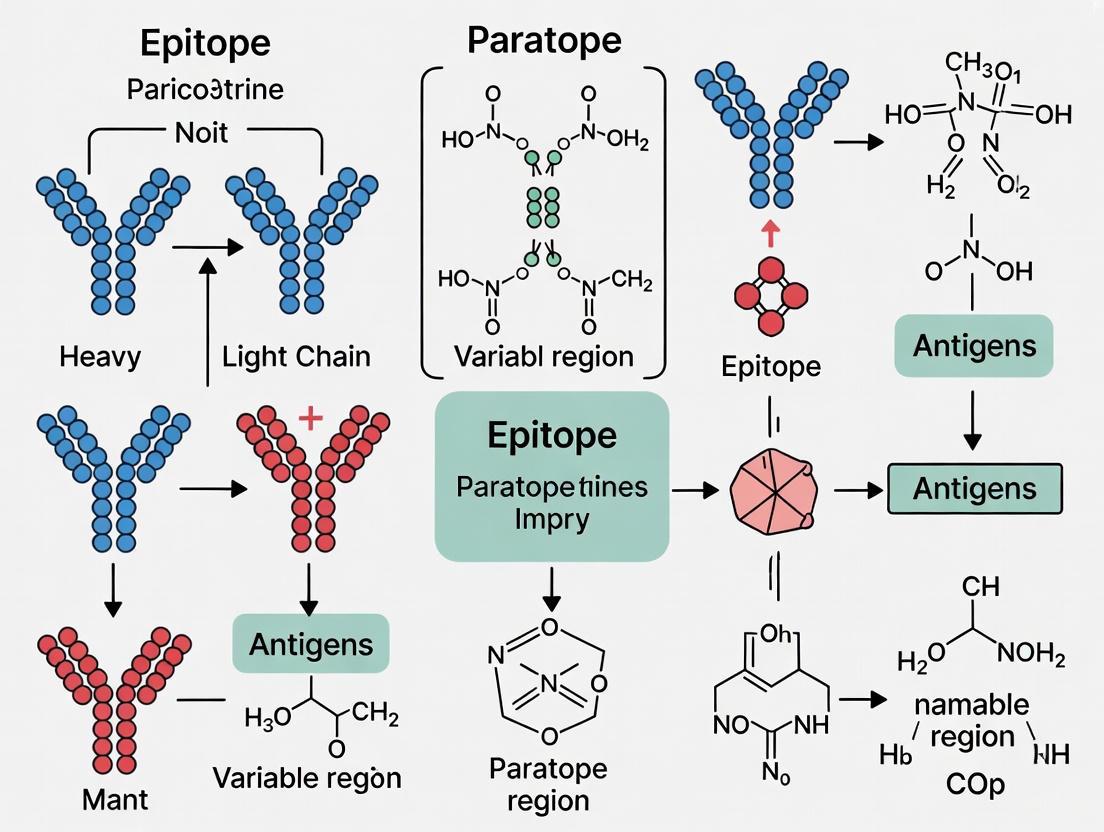
This article provides a comprehensive review of the structural mechanisms governing epitope-paratope binding, the foundational interaction in adaptive immunity.
Decoding Immunity: Structural Mechanisms and AI-Driven Prediction of Epitope-Paratope Binding
Abstract
This article provides a comprehensive review of the structural mechanisms governing epitope-paratope binding, the foundational interaction in adaptive immunity. Tailored for researchers, scientists, and drug development professionals, it explores the fundamental biophysics of antibody-antigen recognition, surveys the revolution of AI and deep learning in predictive modeling, and addresses key challenges in interface flexibility and rational design. Synthesizing the latest research, the content offers a critical analysis of validation methodologies and a comparative evaluation of state-of-the-art computational tools, serving as a practical guide for advancing therapeutic antibody and vaccine development.
The Structural Language of Immunity: Defining Epitopes, Paratopes, and Their Interaction
Antibodies, or immunoglobulins, are Y-shaped glycoproteins secreted by plasma cells differentiated from B lymphocytes and are fundamental to the adaptive immune response [1]. Their primary function is to recognize and bind with high specificity to foreign molecules (antigens), thereby neutralizing pathogens, facilitating phagocytic clearance, and activating the complement system [1]. The specific recognition of an antigen by an antibody is mediated by its binding sites (paratopes) located in the antibody variable regions, which engage specific structures on the antigen known as epitopes [2] [3]. Understanding the precise anatomy of an antibody, particularly the variable domains that form the antigen-binding site, is crucial for elucidating the rules governing antibody-antigen (Ab-Ag) interactions. Despite antibodies' tremendous therapeutic potential, the underlying molecular rules governing the antibody-antigen interface remain poorly understood, making in silico antibody design inherently difficult and keeping the discovery and design of novel antibodies a costly and laborious process [2]. This technical guide delves into the structural components of antibodies, the mechanisms of paratope-epitope interactions, and the experimental methodologies driving current research, framing this knowledge within the broader context of epitope and paratope binding mechanisms research.
Fundamental Structure and Components
The basic antibody structure is a symmetric multichain assembly. An antibody molecule consists of two identical heavy chains (H chains) and two identical light chains (L chains) interconnected by disulfide bonds, forming a characteristic Y-shaped conformation [1]. The molecular weight of the heavy chain is approximately 50 kDa, while the light chain is approximately 25 kDa [1]. Both chains contain a variable region (V region) and a constant region (C region) [1]. The heavy chain serves as the core subunit determining antibody class, with mammalian immunoglobulin heavy chains classified into five types: μ, γ, α, δ, and ε, corresponding to IgM, IgG, IgA, IgD, and IgE antibodies, respectively [1]. Light chains are categorized into κ and λ types, each containing one variable domain (VL) and one constant domain (CL) [1].
Functional Fragments: Fab and Fc
Proteolytic cleavage of antibodies reveals their dual functional nature. Antibodies can be enzymatically cleaved into two major functional fragments [1]:
- Fab (Antigen-Binding Fragment): Consists of an entire light chain paired with the VH and CH1 domains of a heavy chain and constitutes the functional region responsible for antigen binding. A full-length IgG molecule possesses two Fab fragments, enabling it to bind two identical or distinct epitopes.
- Fc (Crystallizable Fragment): Composed of the heavy chain constant domains (CH2 and CH3 for IgG; CH2, CH3, and CH4 for IgM and IgE). The Fc does not bind antigen directly but mediates antibody effector functions by interacting with cell surface Fc receptors or complement proteins, underpinning critical immune mechanisms such as Antibody-Dependent Cellular Cytotoxicity (ADCC), Complement-Dependent Cytotoxicity (CDC), and opsonophagocytosis.
Table 1: Core Structural Components of a Generic IgG Antibody
| Component | Description | Molecular Weight | Functional Role |
|---|---|---|---|
| Heavy Chain | Polypeptide chain with 1 variable (VH) and 3 constant (CH1, CH2, CH3) domains | ~50 kDa | Determines antibody class/isotype and contributes to effector functions |
| Light Chain | Polypeptide chain with 1 variable (VL) and 1 constant (CL) domain | ~25 kDa | Partners with the heavy chain to form the antigen-binding site |
| Fab Region | Fragment containing VL, CL, VH, and CH1 domains | ~50 kDa per fragment | Binds specific antigen via complementarity-determining regions (CDRs) |
| Fc Region | Dimer of CH2 and CH3 domains from both heavy chains | ~50 kDa | Mediates immune effector functions (e.g., ADCC, CDC) |
Figure 1: Hierarchical structure of an antibody molecule, depicting its composition from polypeptide chains down to functional domains.
The Antigen-Binding Site: A Deep Dive into Variable Domains
Composition of the Paratope
The antigen-binding site, or paratope, is formed by the variable domains of both the heavy (VH) and light (VL) chains [4]. Each variable domain contains three hypervariable loops, known as complementarity determining regions (CDRs) [2] [4] [1]. The dimerization of the variable domains on the light and heavy chains and the folding of the six CDRs (three from VH and three from VL) creates a surface highly specific for a particular epitope [4]. The hypervariability of these loops is integral to allowing the paratope to achieve high specificity and affinity for its target [4]. While the CDRs are widely assumed to be responsible for antigen recognition, recent analyses of growing numbers of antibody structures indicate this is an oversimplification [3]. Some positions within the CDRs never participate in antigen binding, and some residues outside the CDRs often contribute critically to the interaction [3].
Characteristics of Antibody-Antigen Interfaces
Large-scale computational analyses have provided significant insights into the physical characteristics of paratope-epitope interfaces. A 2023 study investigating over 850,000 atom-atom contacts from 1,833 nonredundant Ab-Ag complexes found clear patterns in the number of contacts and amino acid frequencies in the paratope [2]. The interface is typically assembled from discontinuous contact points that do not follow sequence linearity, governed by high sequence diversity and spatial arrangements [2]. The study also pinpointed antibody interface hotspot residues that are often found at the binding interface, along with their specific amino acid frequencies [2].
Table 2: Quantitative Analysis of Antibody-Antigen Interfaces from a Large-Scale Study [2]
| Analysis Parameter | Findings | Research Significance |
|---|---|---|
| Dataset Scale | 1,833 nonredundant Ab-Ag complexes; >850,000 atom-atom contacts | Largest reported set for such analysis, providing robust statistical power |
| Interface Definition | Atom-atom contacts identified with a ≤ 5 Å Euclidian distance cutoff | A robust and reproducible method for defining paratope-epitope interfaces |
| Key Observation | Clear patterns in amino acid frequencies in the paratope; identification of interface hotspot residues | Provides data-driven rules for predicting binding interface composition |
| Comparative Focus | Comparison of conventional Fv antibodies vs. single-domain antibodies (sdAbs) | Elucidates mechanisms sdAbs use to compensate for smaller size and fewer CDRs |
Specialized Architectures: The Case of Single-Domain Antibodies
Single-domain antibodies (sdAbs), derived from heavy-chain antibodies found in camelids (VHH) and cartilaginous fish (VNAR), present a unique and informative architectural paradigm. Their study helps elucidate the minimal requirements for effective antigen binding and reveals mechanisms to compensate for a smaller binding interface.
VHH Domains (Camelid sdAbs)
VHH domains are composed of approximately 110-130 amino acids and rely heavily on an elongated CDR3 region for antigen binding [5]. A distinctive feature of VHH domains is the substitution of highly conserved hydrophobic residues in the interface region (usually 47Val, 49Gly, 50Leu, 52Trp) with smaller or hydrophilic amino acids, primarily 47Phe, 49Glu, 50Arg, and 52Gly [5]. This substitution improves water solubility and reduces the tendency to form aggregates compared to traditional IgG antibodies [5]. The CDR3 length in VHH domains is approximately twice that of CDR1 and CDR2, providing a sufficiently large antigen interacting surface of about 600-800 Ų, which implies greater versatility and flexibility in binding target antigens [5].
VNAR Domains (Shark sdAbs)
VNAR domains represent an even more minimalistic architecture. Their most distinctive feature is the deletion of the C' and C'' strands that typically comprise the CDR2 region in conventional antibodies, making VNAR the smallest naturally occurring antigen-binding domain [5]. This absence is compensated by two loops, known as hypervariable region 2 (HV2) and hypervariable region 4 (HV4) [5]. Furthermore, VNAR domains often contain non-canonical cysteines that form additional disulfide bonds, dramatically altering the structure topology of their variable loops and increasing structural variability for interaction with antigen epitopes [5].
Table 3: Comparison of Conventional Antibody Fv Fragment and Single-Domain Antibodies (sdAbs)
| Feature | Conventional Fv (VH+VL) | VHH Domain (Camelid) | VNAR Domain (Shark) |
|---|---|---|---|
| Number of Domains | Two (VH and VL) | One | One |
| Total CDR Loops | 6 (3 from VH, 3 from VL) | 3 (CDR1, CDR2, CDR3) | 3 (CDR1, CDR3, HV4)* |
| Key Structural Traits | Hydrophobic VH-VL interface | Hydrophilic VH-VL interface residues; Long CDR3 | Lack of CDR2; Compensatory HV2 and HV4 loops; Atypical disulfides |
| CDR3 Length & Role | Typically 8-12 amino acids (human) | ~16 amino acids (convex type); Often dominates binding | Can vary up to 34 amino acids; Highly diverse |
| Molecular Weight | ~25 kDa (for Fv fragment) | ~15 kDa | ~12 kDa |
Note: HV2 is not always classified as a CDR. VNAR binding is primarily mediated by CDR1, CDR3, and HV4 [5].
Experimental Protocols for Studying Antibody-Antigen Interactions
Large-Scale Computational Analysis of Binding Interfaces
To systematically understand paratope-epitope interactions, researchers employ robust computational workflows. The following protocol, derived from a recent large-scale study, outlines the key steps [2]:
- Data Extraction: Download Protein Data Bank (PDB) files containing Ab-Ag complexes from the Structural Antibody Database (SAbDab). The search is typically limited to structures with resolutions ≤ 3 Å. Antibody chains are renumbered according to a standard scheme like IMGT.
- Elimination of Packing Complexes: From PDB files containing multiple biological units, select only the complex with the lowest average B-factor across all atoms to avoid skewing the representation.
- Removing Antibody Redundancy: Cluster individual VH and VL sequences separately using an algorithm like CD-HIT with a high sequence identity cut-off (e.g., 95%) to avoid bias towards frequently crystallized antibodies.
- Defining the Interface: Identify atom-atom contacts between the antibody and antigen using a Euclidean distance cutoff (e.g., ≤ 5 Å). This is a common and robust strategy for defining protein interfaces. Only non-hydrogen atoms from amino acids are considered.
- Computational Analysis: Use programming libraries (e.g., Biopython) to extract and analyze contacts, amino acid frequencies, and other physicochemical properties from the defined interfaces.
Figure 2: Workflow for the computational analysis of antibody-antigen binding interfaces from structural data.
Molecular Docking for Epitope Mapping
Computational docking is a key method for predicting how antibodies and antigens interact. One protocol involves [6]:
- Tool Selection: Use a molecular docking tool capable of simulating protein-protein interactions with flexibility, such as LightDock.
- Simulation Setup: Input the structures of the antibody and the antigen (HER2 in the cited study).
- Running Simulations: Perform multiple docking simulations to account for the flexibility of the CDRs.
- Results Analysis: Despite high variability in individual results, use a statistics-based approach to identify recurring antigen regions as potential binding sites.
- Validation: Acknowledge that further validation using experimental techniques is beneficial to refine and increase the accuracy of the in silico results.
Table 4: Key Research Reagent Solutions for Antibody-Antigen Interaction Studies
| Resource / Reagent | Function / Application | Specific Example / Note |
|---|---|---|
| Structural Antibody Database (SAbDab) | Centralized repository for annotated antibody structures [2] | Source for PDB files of Ab-Ag complexes; provides metadata and IMGT-numbered files [2] |
| BioPython Library | Python toolkit for computational analysis of biological data [2] | Used to identify atom-atom contacts and analyze PDB files in large-scale interface studies [2] |
| ANARCI Tool | Software for antibody numbering [2] | Used to renumber antibody sequences according to standardized schemes (e.g., IMGT) [2] |
| LightDock | Molecular docking framework [6] | Simulates flexible protein-protein interactions to investigate potential antibody binding sites [6] |
| Phage Display Technology | Technology for antibody screening [5] | Key method for screening and selecting sdAbs from large libraries [5] |
| Next-Generation Sequencing (NGS) | Technology for sequence analysis [5] | Enables high-throughput analysis of antibody libraries, including sdAb repertoires [5] |
The intricate anatomy of an antibody, from its conserved constant regions to its highly specialized variable domains, is elegantly tailored for specific antigen recognition. The Fab region, and particularly the CDRs within the variable domains, form the structural cradle of the paratope, enabling the immune system to generate an almost limitless repertoire of specificities. Research continues to reveal that the rules governing paratope-epitope interactions are complex, extending beyond the CDRs to include framework residues and allosteric effects [3]. The emergence of unique binding domains, such as VHH and VNAR, challenges traditional paradigms and offers new insights into minimalistic binding solutions. Driving this field forward are large-scale computational analyses of interface structures [2] and advanced docking protocols [6], which are gradually decoding the molecular logic of antibody-antigen binding. A deep and precise understanding of antibody anatomy is not merely an academic exercise; it is the fundamental basis for rational antibody engineering, the development of new therapeutics and diagnostics, and the advancement of a broader thesis on predictive immunology.
The precise interaction between an antibody and its target antigen is a cornerstone of the adaptive immune response and a critical determinant in the efficacy of biotherapeutic agents. The paratope—the specific set of antibody residues that makes direct physical contact with the antigen—is the key structural interface enabling this high-specificity binding. The paratope is predominantly, though not exclusively, composed of the complementarity-determining regions (CDRs), which are hypervariable loops located within the variable domains of the antibody's heavy (VH) and light (VL) chains [7] [8]. These six loops (CDR-H1, CDR-H2, CDR-H3, CDR-L1, CDR-L2, and CDR-L3) are primarily responsible for antigen recognition and binding affinity [7]. While the framework regions (FRs) provide a structural scaffold, the CDRs confer the remarkable diversity and specificity that allows the immune system to recognize a vast array of potential pathogens [8].
The structural and functional characterization of paratopes is not merely an academic exercise; it is fundamental to the rational design of next-generation antibody therapeutics, diagnostics, and research reagents. This guide provides an in-depth technical examination of CDR architecture, the latest computational and experimental methods for paratope analysis, and advanced engineering strategies, framed within the broader context of epitope-paratope binding mechanisms research.
Structural Architecture of CDRs
Definition and Numbering Schemes
A consistent and accurate numbering scheme is the foundational first step for any CDR-focused analysis or engineering project. These schemes allow researchers to align a given antibody sequence to a standardized scaffold, thereby identifying the location of each residue within the three-dimensional structure and classifying it as part of a framework region or a CDR [8]. Discrepancies in CDR boundary definitions between different schemes can lead to confusion and project delays.
Table 1: Major Antibody Numbering Schemes for CDR Definition
| Numbering Scheme | Basis of Definition | Key Characteristics | Primary Use Cases |
|---|---|---|---|
| Kabat [8] | Sequence variability | One of the earliest systems; defines hypervariable regions based on sequence alignment and variability calculations. | Foundational research, historical reference |
| Chothia [8] | Structural location | Defines CDR loops as those that form the antigen-binding site in 3D space; identifies structurally conserved "canonical" classes. | Structural biology, homology modeling |
| IMGT [8] | Standardized sequence alignment | Provides a standardized, unambiguous system based on multiple sequence alignments; widely used for bioinformatic databases. | Repertoire sequencing, database curation, immunoinformatics |
| AHo [8] | Structural alignment | Designed for engineering purposes; aligns antibody structures to a reference core structure. | Antibody engineering, humanization |
Unique Features of Nanobody Paratopes
Nanobodies, single-domain antibody fragments derived from camelid heavy-chain-only antibodies, exhibit distinct paratope characteristics compared to conventional antibodies. Their most notable feature is an exceptionally long CDR3 loop, which, combined with a more hydrophilic framework region 2 (FR2), allows them to access epitopes that are inaccessible to conventional antibodies, such as enzyme active sites [9]. Furthermore, structural studies have revealed that nanobodies from a single immune repertoire can bind a common antigen in at least three different orientations to maximally sample the antigen's surface [9]. This diverse orientation, correlated with their paratope composition, increases the potential for multiple nanobodies to bind a single antigen simultaneously without steric clashes.
Experimental Methods for Paratope Analysis
Determining the residues that constitute a paratope requires high-resolution techniques that can visualize the atomic-level interactions within an antibody-antigen complex.
High-Resolution Structural Determination
X-ray crystallography remains the gold standard for obtaining atomic-resolution structures of antibody-antigen complexes. The procedure involves co-crystallizing the complex and solving its structure by analyzing the diffraction pattern, providing a static but highly detailed snapshot of the paratope-epitope interface [9] [10]. As evidenced by the study of seven nanobody-GFP complexes, this method can precisely map paratope residues and reveal diverse binding orientations [9]. Cryo-Electron Microscopy (Cryo-EM) is increasingly valuable for solving structures of large or flexible complexes that are difficult to crystallize, such as those involving membrane proteins or full-length antibodies bound to their targets [11] [12].
Experimental Protocol: Co-crystallization and Structure Determination of an Antibody-Antigen Complex
- Complex Formation: Incubate the purified antibody (or Fab/nanobody fragment) with its purified antigen at an optimized stoichiometric ratio to form a stable complex.
- Purification: Purify the formed complex using size-exclusion chromatography (SEC) to isolate monodisperse species and remove unbound components.
- Crystallization: Screen a wide range of crystallization conditions using commercial sparse-matrix screens. Optimize promising conditions via vapor-diffusion methods.
- Data Collection: Flash-cool the crystal in liquid nitrogen and collect X-ray diffraction data at a synchrotron beamline.
- Structure Solution: Solve the phase problem by molecular replacement (MR) using known structures of the antibody variable domain and the antigen as search models.
- Model Building and Refinement: Iteratively build and refine the atomic model into the electron density map using programs like Coot and Phenix. The final refined model allows for the identification of paratope residues based on proximity to the antigen (e.g., residues with atoms within 4-5 Å of any antigen atom) [9] [10].
Deep Mutational Scanning (DMS)
DMS is a high-throughput functional method that systematically introduces point mutations across the antibody's variable domains and assesses their impact on binding affinity [10]. Residues where mutations severely disrupt binding are inferred to be critical components of the paratope.
Diagram 1: DMS Workflow for Paratope Mapping.
Computational Prediction of Paratopes
Accurate computational prediction of paratopes is a critical challenge, especially in high-throughput discovery workflows where structural data is limited. Methods have evolved from relying on handcrafted features to sophisticated deep learning models.
Sequence-Based Deep Learning
ParaDeep is a state-of-the-art, lightweight deep learning framework that predicts paratopes at the residue level directly from amino acid sequences. It integrates bidirectional long short-term memory networks (BiLSTMs) to capture long-range sequence context with one-dimensional convolutional layers (CNNs) to detect local binding motifs [13]. A key finding from its development is that chain-specific modeling enhances predictive accuracy, with heavy chain models (F1 = 0.856) significantly outperforming light chain models (F1 = 0.774) in cross-validation, indicating that heavy chains provide stronger sequence-based predictive signals for paratopes [13].
Table 2: Performance Metrics of Paratope Prediction Methods
| Method | Input Type | Heavy Chain F1 Score | Light Chain F1 Score | Key Features |
|---|---|---|---|---|
| ParaDeep [13] | Sequence | 0.856 (±0.014) | 0.774 (±0.023) | BiLSTM-CNN architecture; chain-aware |
| Parapred [13] | Sequence | (Baseline) | (Baseline) | CNN-BiLSTM on CDR±2 regions |
| Structure-based Methods [13] | 3D Structure | ~0.90 (est.) | ~0.90 (est.) | Higher accuracy but requires 3D models |
Structure-Based and Co-folding Approaches
When an antibody's structure is available (either experimentally determined or computationally modeled), structure-based methods can be applied. These include graph neural networks (GNNs) like PECAN and Paragraph, which operate on 3D structural graphs [13]. Furthermore, protein-folding engines like AlphaFold 2 (AF2) and AlphaFold 3 (AF3) can be used to predict the structure of an antibody-antigen complex directly from sequence, from which paratope residues can be inferred [10] [14]. These co-folding methods show promise but may not yet reliably capture the conformational flexibility of CDR loops.
Advanced Engineering of CDRs
Affinity Maturation and Humanization
Affinity maturation is an engineering process to enhance the binding affinity of an antibody for its target. Computational methods are now enabling a more rational and efficient approach. For instance, the AfDesign protein design method leverages AlphaFold2 within a "binder hallucination" framework to redesign CDR sequences [14]. This method involves iteratively generating sequences, predicting the structure of the complex with AlphaFold2, and using outputs like pLDDT (predicted Local Distance Difference Test) and pAE (predicted Aligned Error) as loss functions to guide the sequence optimization toward higher-affinity binders [14]. The predicted change in binding free energy (ΔΔG) can then be estimated using tools like the DDG predictor to rank the designed variants before experimental validation [14].
CDR grafting is the core technique for antibody humanization, where non-human CDRs are transplanted into a human antibody framework to reduce immunogenicity while maintaining binding affinity. The success of this process is highly dependent on the accurate definition of CDR boundaries and the careful selection of framework residues that can influence CDR loop conformation [8].
Predicting and Engineering Conformational Flexibility
The conformational flexibility of CDR loops, particularly CDR-H3, is a key functional property influencing binding affinity and specificity. Rigidification of flexible loops can be a natural mechanism to increase affinity by reducing the entropic penalty upon binding [11]. ITsFlexible is a deep learning tool that classifies CDR3 loops as 'rigid' or 'flexible' from an input antibody structure, using a graph neural network architecture trained on a vast dataset of loop conformations from the PDB [11]. Such predictions allow researchers to investigate the link between flexibility and function and provide a means to tune this property in therapeutic design.
Diagram 2: Computational CDR Engineering Workflow.
The Scientist's Toolkit: Research Reagent Solutions
Table 3: Essential Reagents and Tools for Paratope Research
| Reagent / Tool | Function in Paratope Research | Example / Specification |
|---|---|---|
| Antigen-Antibody Complex Database (AACDB) [13] | Provides curated datasets of antibody-antigen complexes for training and benchmarking computational models. | Version 1.0 (May 2024) contains 2,807 complexes. |
| ALL-conformations Dataset [11] | A dataset of over 1.2 million CDR3 and CDR3-like loop structures for studying conformational flexibility. | Used to train ITsFlexible classifier. |
| AfDesign Software [14] | Implements AlphaFold2-based "binder hallucination" for de novo protein and antibody CDR design. | Enables partial redesign of existing antibody sequences. |
| DDG Predictor [14] | A deep learning tool that predicts the change in binding free energy (ΔΔG) upon mutation. | Used for in silico ranking of designed antibody variants. |
| Proasis Platform [12] | Automates the analysis of structural data, including domain recognition, CDR identification, and contact mapping. | Aids in converting complex structural data into design insights. |
| Nanobody Libraries [9] | Source of single-domain antibodies with unique paratopes capable of accessing cryptic epitopes. | Can be generated via immunization of camelids or synthetic libraries. |
The composition of the paratope and the critical role of CDRs represent a dynamic and rapidly advancing field at the intersection of structural biology, computational science, and protein engineering. The movement away from purely empirical approaches and toward a more rational design paradigm is being powered by high-resolution experimental structures, sophisticated AI-driven prediction tools like ParaDeep, and generative design platforms like AfDesign. As these tools continue to mature, integrating ever-more-precise predictions of conformational dynamics and binding energetics, the ability to engineer antibodies with tailor-made paratopes will become increasingly routine. This progress will undoubtedly accelerate the development of next-generation biotherapeutics, including multi-specific nanobodies, highly stable diagnostic reagents, and antibodies capable of targeting previously intractable epitopes, thereby expanding the frontiers of medicine and biological research.
The precise molecular recognition between an antibody and its target antigen is a cornerstone of adaptive immunity and a critical determinant in the success of biologic therapeutics. This interaction is mediated by the paratope, the antigen-binding site of the antibody, and the epitope, the specific region of the antigen it recognizes. Within the context of broader research on paratope-epitope binding mechanisms, epitopes are fundamentally categorized as either linear or conformational. Understanding their distinct properties is not merely an academic exercise; it is essential for rational drug design, vaccine development, and immunodiagnostics [15] [16]. This guide provides an in-depth technical examination of epitope diversity, offering a clear distinction between these two classes of antigenic determinants, detailing the experimental and computational strategies used for their identification, and discussing their implications for therapeutic antibody and vaccine development.
Fundamental Definitions and Structural Characteristics
Linear epitopes, also known as continuous epitopes, are defined by a continuous sequence of amino acids within the primary structure of an antigen. Typically comprising short stretches of 5–20 amino acids, these epitopes retain their antigenicity even when the protein is denatured, as their recognition depends primarily on sequence rather than tertiary structure. They are often found in flexible, exposed regions of a protein, such as loops or terminal [16].
In contrast, conformational epitopes (also called discontinuous epitopes) are formed by amino acid residues that are distant in the primary sequence but are brought into proximity by protein folding. Their binding specificity is dependent on the native three-dimensional structure of the antigen. A subset, known as continuous conformational epitopes, involves a single, continuous stretch of amino acids that must adopt a specific 3D structure to be recognized [16]. It has been widely stated that approximately 90% of all B-cell epitopes are conformational [15] [16] [17], though this figure originates from an early, potentially biased dataset and the actual proportion can vary significantly depending on the antigen and immunological context [16].
Table 1: Core Characteristics of Linear and Conformational Epitopes
| Feature | Linear Epitope | Conformational Epitope |
|---|---|---|
| Definition | Continuous amino acid sequence | Residues brought together by protein folding |
| Dependency | Primary sequence | Native 3D structure |
| Prevalence | ~10% (estimate, context-dependent) [16] | ~90% (estimate) [15] [16] |
| Stability to Denaturation | Retains antigenicity | Loses antigenicity |
| Common Location | Flexible loops, termini | Surfaces of well-folded, globular proteins |
Experimental Mapping Methodologies
The distinct nature of linear and conformational epitopes demands different experimental approaches for their identification and characterization. The following section details key protocols and their underlying principles.
Mapping Linear Epitopes
Peptide Microarrays represent a high-throughput methodology for linear epitope mapping. The experimental workflow is as follows [16]:
- Design & Synthesis: Overlapping peptides (typically 15-mers with 1-12 amino acid offsets) spanning the entire antigen sequence are synthesized in situ on a solid surface or spotted onto a chip.
- Incubation: The array is incubated with the primary antibody of interest.
- Detection: After washing, bound antibodies are detected using a fluorescently labelled secondary antibody.
- Analysis: Fluorescence scanning identifies peptide sequences bound by the antibody, pinpointing the linear epitope at single-amino-acid resolution.
Phage Display Libraries offer an alternative, solution-based approach [15]:
- Library Panning: A library of bacteriophages, each displaying a random peptide on its surface, is incubated with the target antibody.
- Selection: Phages that bind to the antibody are captured and purified from non-binders.
- Amplification & Iteration: The bound phages are eluted and amplified in E. coli, and the process is repeated over 3-4 rounds to enrich for high-affinity binders.
- Sequencing: The DNA of selected phages is sequenced to determine the identity of the binding peptides (mimotopes).
Mapping Conformational Epitopes
Hydrogen/Deuterium Exchange Mass Spectrometry (HDX-MS) probes protein dynamics and epitope mapping by measuring solvent accessibility [15]:
- Deuterium Labelling: The antigen alone is compared to the antigen-antibody complex. Both are immersed in a deuterated buffer for a defined time.
- Exchange Quench: The reaction is quenched at low pH and temperature.
- Proteolysis & LC-MS: The protein is rapidly digested with pepsin, and the resulting peptides are analyzed by liquid chromatography-mass spectrometry (LC-MS).
- Epitope Identification: Regions of the antigen that show reduced deuterium uptake in the complex are shielded by the antibody, identifying the conformational epitope. A key limitation is that allosteric effects can confound interpretation [15].
X-ray Crystallography provides atomic-level resolution of the epitope-paratope interface [16]:
- Complex Formation: The antibody-antigen (Fab-Ag) complex is purified and crystallized.
- Data Collection: X-ray diffraction data is collected from the crystal.
- Structure Solution: The electron density map is calculated and used to build and refine an atomic model of the complex.
- Interface Analysis: The epitope is defined by calculating the solvent-accessible surface area lost on the antigen upon antibody binding. This is considered the "gold standard" for conformational epitope mapping.
Constrained Cyclic Peptide Microarrays represent an innovative hybrid approach that bridges the gap between linear and conformational mapping [16]:
- Library Design: Libraries of cyclic, conformationally constrained peptides are designed to mimic the structural motifs of native protein surfaces.
- Screening: The arrays are screened with the antibody, as with linear peptide arrays.
- Epitope Identification: Antibodies that require 3D structure for binding will recognize these constrained peptides but not their linear counterparts. For example, the therapeutic antibody rituximab, which binds a conformational epitope on CD20, shows strong binding to cyclic peptides with a consensus motif (e.g., EPANPSEK) but no binding to linear peptides [16].
The following diagram illustrates the strategic workflow for selecting an appropriate epitope mapping method based on the experimental goal and resources.
Diagram 1: Experimental Epitope Mapping Workflow. This flowchart guides the selection of appropriate methodologies based on research objectives and suspected epitope type.
Computational Prediction and AI-Driven Advances
Computational prediction of epitopes significantly accelerates research by reducing the experimental search space. The approaches for linear and conformational epitope prediction differ markedly in their input requirements and underlying algorithms.
Traditional and Machine Learning Approaches
Early methods for linear epitope prediction relied on identifying regions with high scores based on physicochemical scales, such as hydrophilicity, flexibility, accessibility, and antigenicity [15] [18]. These were followed by machine learning (ML) classifiers, including:
- Support Vector Machines (SVM): Used in tools like Pythia and SVMTriP to classify peptides as binders or non-binders based on sequence and chemical features [18].
- Random Forest (RF): An ensemble learning method that constructs multiple decision trees for robust prediction [15].
Conformational epitope prediction is more complex due to the necessity of 3D structural information. Tools in this domain include:
- DiscoTope: Integrates surface accessibility, contact numbers, and amino acid propensity scores [17].
- ElliPro: Calculates a "protrusion index" (PI) to identify protein surface regions that are likely epitopes [17].
Table 2: Comparison of Epitope Prediction Tools and Methods
| Prediction Type | Tool/Method Name | Core Algorithm/Principle | Input Required |
|---|---|---|---|
| Linear Epitope | BCEPred / BepiPred | Physicochemical scales / Hidden Markov Model | Protein Sequence |
| Linear Epitope | Pythia | Ensemble of Probabilistic SVMs | Protein Sequence / Features |
| Conformational Epitope | DiscoTope | Residue statistics, solvent accessibility, contact numbers | Protein Structure |
| Conformational Epitope | ElliPro | Protusion Index (PI) of surface residues | Protein Structure |
| Conformational Epitope | CEP | Amino Acid Residue Accessibility | Protein Structure |
The Rise of Deep Learning and AI
Deep learning (DL) has revolutionized epitope prediction by automatically learning complex patterns from large datasets, leading to significant improvements in accuracy [19].
- Convolutional Neural Networks (CNNs): Models like NetBCE combine CNNs with bidirectional Long Short-Term Memory (LSTM) networks to achieve an AUC of ~0.85, substantially outperforming traditional tools for B-cell epitope prediction [19].
- Graph Neural Networks (GNNs): These are particularly suited for conformational epitopes as they represent proteins as graphs where nodes are amino acids and edges represent spatial or chemical interactions. GraphBepi is an example that leverages this architecture to model the 3D structural surface of the antigen [19].
- Transformers and Advanced Architectures: Models like MUNIS for T-cell epitopes demonstrate how modern AI can achieve performance on par with laboratory binding assays, highlighting a trend towards highly accurate, data-driven prediction [19].
The architecture of a comprehensive computational system for conformational epitope analysis, which combines database matching with AI-based prediction, is shown below.
Diagram 2: Computational Workflow for Conformational Epitope Analysis. This system follows a "matching first, prediction second" strategy to efficiently identify epitopes [17].
Table 3: Key Research Reagent Solutions for Epitope Mapping
| Reagent / Resource | Function / Application | Example Use Case |
|---|---|---|
| Overlapping Peptide Library | Synthetic peptides spanning an antigen's sequence. | High-throughput screening for linear epitopes on peptide microarrays. |
| Constrained Cyclic Peptide Library | Structurally stabilized peptides mimicking native protein loops. | Identification of conformational epitopes via microarrays [16]. |
| Phage Display Library | Collection of bacteriophages displaying random peptide sequences. | Biopanning to identify mimotopes that mimic both linear and conformational epitopes [15]. |
| Stable Antigen-Antibody Complex | Purified complex of the target antigen with a monoclonal antibody. | Sample preparation for HDX-MS or X-ray crystallography to map conformational epitopes [15]. |
| Epitope Databases (IEDB, SAbDab) | Curated repositories of known epitope and antibody structure data. | Benchmarking predictions and searching for known epitopes on homologous antigens [17]. |
The distinction between linear and conformational epitopes is a fundamental aspect of molecular immunology with profound implications for research and development. While linear epitopes are accessible via high-throughput peptide-based methods, conformational epitopes, which constitute the majority of B-cell targets, require more sophisticated structural and computational approaches. The emerging integration of advanced AI, particularly deep learning models trained on vast structural datasets, is dramatically improving our ability to predict both classes of epitopes with increasing accuracy. This progress, combined with innovative experimental techniques like constrained peptide arrays, empowers researchers to more effectively delineate paratope-epitope binding mechanisms. This knowledge is instrumental in accelerating the design of next-generation therapeutic antibodies, vaccines, and diagnostics, ultimately bridging the gap between fundamental research and clinical application.
The specific binding between an antibody and its antigen is a cornerstone of the adaptive immune response and a critical mechanism exploited by biologic therapeutics. This interaction is governed by a complex interplay of non-covalent forces—hydrogen bonding, aromatic stacking, and hydrophobic interactions—at the paratope-epitope interface. Understanding the precise nature and contribution of these forces is essential for advancing fundamental immunology research and accelerating the rational design of antibody-based therapeutics with enhanced affinity and specificity [20]. Current research leverages increasingly sophisticated computational and experimental methods to dissect these molecular recognition events, moving beyond static structural snapshots to dynamic ensembles that more accurately represent the flexible nature of antibody-antigen complexes [21]. This whitepaper provides an in-depth technical examination of these interfacial forces, detailing quantitative contributions, experimental and computational methodologies for their characterization, and their integrated role in binding mechanism research.
Quantitative Analysis of Interfacial Forces
The binding interface between an antibody and antigen features distinct physicochemical properties. Statistical analysis of non-redundant antibody-antigen complexes reveals clear preferences for specific amino acids at the interface, driven by the need to optimize hydrogen bonding, aromatic stacking, and hydrophobic interactions.
Table 1: Amino Acid Frequency at Antibody-Antigen Interfaces
| Amino Acid | Frequency on Antigen | Frequency on Antibody | Primary Force Contribution |
|---|---|---|---|
| Tyrosine (TYR) | 0.0916 | 0.5473 | Hydrogen Bonding, Aromatic Stacking |
| Tryptophan (TRP) | 0.1149 | 0.3020 | Hydrophobic, Aromatic Stacking |
| Serine (SER) | Data Not Provided | Data Not Provided | Hydrogen Bonding |
| Aspartate (ASP) | Data Not Provided | Data Not Provided | Hydrogen Bonding |
| Positively Charged Residues | Enriched on Antigen | Data Not Provided | Electrostatic / Hydrogen Bonding |
The data shows a striking enrichment of tyrosine and tryptophan on both sides of the interface [22]. Tryptophan demonstrates a higher frequency on the antigen side, whereas tyrosine is vastly more prevalent on the antibody paratope. This asymmetry suggests complementary roles: tryptophan's bulky, hydrophobic indole ring provides a strong driving force for binding via the hydrophobic effect, while tyrosine's phenolic hydroxyl group can participate simultaneously in hydrogen bonding and aromatic stacking [22] [20]. The preference for tyrosine in the paratope may also relate to its ability to fine-tune interactions through subtle positional adjustments of its hydroxyl group [23]. Furthermore, antigens show an enrichment of positively charged residues at interfaces, which can form salt bridges and hydrogen bonds with complementary residues on the antibody [20].
Aromatic residues are particularly critical for forming stable interfaces. Their ability to engage in π-π stacking interactions, where electron-rich aromatic rings associate, significantly contributes to binding energy. Studies on peptide self-assembly have demonstrated that increasing aromaticity by adding benzene rings to peptide endcaps dramatically enhances the propensity to aggregate and form ordered nanostructures, underscoring the strength and directionality of these interactions [24]. Similarly, in designed hydrophobic eutectic solvents, π-π interactions between electron-deficient and electron-rich aromatic rings are a key driver of molecular association, independent of hydrogen bonding [25]. This principle translates directly to antibody-antigen interfaces, where similar aromatic pairings can occur.
Experimental and Computational Methodologies
Computational Structure Prediction and Docking
Accurately predicting the structure of an antibody-antigen complex is the first step toward analyzing its interface. The following workflow outlines a standard computational protocol.
Diagram 1: Computational workflow for antibody-antigen complex prediction.
- Antibody Structure Prediction: The antibody's variable regions, especially the highly diverse CDR-H3 loop, are modeled. Tools like RosettaAntibody combine homology modeling for the framework and non-H3 CDR loops with ab initio methods for CDR-H3 [20]. Recent deep learning tools such as ESMFold and AlphaFold2 can also be used, providing a pLDDT confidence score that correlates with regional flexibility—a useful metric for subsequent steps [23].
- Antigen Structure Prediction: If the antigen's structure is unknown, it can be modeled using standard protein structure prediction tools like AlphaFold2 or MODELLER [20] [26].
- Rigid-Body Docking: Initial poses of the antibody and antigen are generated using protein-protein docking algorithms. Standard shape complementarity is often insufficient for antibodies due to flat interfaces [20].
- Flexible Refinement: Protocols like SnugDock in Rosetta are essential. They perform alternating rounds of rigid-body perturbations and high-resolution side-chain and backbone minimization of the CDR loops to refine the complex, capturing induced-fit binding [20].
- Molecular Dynamics (MD) Simulation: The docked complex is solvated in an explicit water box and simulated for tens to hundreds of nanoseconds. This assesses the stability of the pose and samples its conformational ensemble. As one study demonstrated, using the dominant paratope states from MD simulations, rather than a single static crystal structure, significantly improves docking performance for antibodies that undergo conformational changes [21].
- Binding Energy Analysis: The Molecular Mechanics/Generalized Born Surface Area (MM/GBSA) method is widely used. It estimates binding free energy (
ΔG_bind) by combining molecular mechanics energy, solvation energy, and surface area terms. It can be applied to snapshots from an MD trajectory to obtain an average binding energy and can be decomposed to identify the contribution of individual residues [26]. This method runs efficiently on commodity hardware, making it accessible for research.
Molecular Dynamics and Free Energy Calculations
MD simulations are critical for understanding the dynamic nature of interfacial forces. The following protocol details the setup and analysis process.
Table 2: Key Parameters for MD Simulation and MM/GBSA Analysis
| Component | Setting / Method | Purpose & Rationale |
|---|---|---|
| Force Field | CHARMM36m (C36m), AMBER ff99SB* | Balanced secondary structure propensity and accurate disordered region sampling. |
| Water Model | CHARMM-modified TIP3P (for C36m) | Consistent with protein force field parameterization. |
| System Setup | Explicit solvation, Neutralizing ions, Physiological salt (e.g., 150mM NaCl) | Mimics physiological conditions for realistic electrostatics. |
| Ensemble | NPT (Constant Number, Pressure, Temperature) | Maintains realistic density and temperature. |
| Temperature | 310 K | Standard physiological temperature. |
| Simulation Time | 50 ns - 1 µs | Must be long enough to capture relevant motions and ensure convergence. |
| MM/GBSA | Single-trajectory approach, Implicit solvent model (GB), No entropy term (ΔΔS ≈ 0) |
Efficient, good for relative ΔΔG comparisons upon mutation. |
| Energy Decomposition | Per-residue or pairwise interaction energy calculation | Identifies molecular determinants and "hot spot" residues. |
Protocol: MD Simulation and MM/GBSA Analysis of an Antibody-Antigen Complex
- System Preparation: Obtain an initial structure from a database (PDB) or a previous modeling step. Add missing loops or residues using MODELLER. Protonate the structure with tools like MolProbity to ensure correct protonation states at physiological pH [26].
- Solvation and Ionization: Place the complex in a simulation box (e.g., a cubic or rhombic dodecahedron box) with a margin of at least 1.0 nm from the box edge. Fill the box with water molecules. Add ions to neutralize the system's net charge and then additional ions to achieve a desired physiological salt concentration [26] [27].
- Energy Minimization: Perform energy minimization (e.g., using steepest descent algorithm) to remove any steric clashes introduced during the solvation and ionization process.
- Equilibration: Run two phases of equilibration in the NVT and NPT ensembles. This gradually relaxes the system to the target temperature and pressure without the protein undergoing major conformational changes.
- Production MD: Run a long, unbiased simulation while saving atomic coordinates at regular intervals (e.g., every 100 ps). This trajectory is the basis for all subsequent analysis.
- MM/GBSA Calculation: Extract hundreds of uncorrelated snapshots from the production trajectory. For each snapshot, calculate the binding free energy using the MM/GBSA method. The single-trajectory approach is recommended, where the receptor, ligand, and complex energies are all extracted from the simulation of the complex itself [26].
- Energy Decomposition and Analysis: Decompose the MM/GBSA energies to determine the contribution of each residue to the total binding energy. This helps identify "hot spot" residues and visualize interaction networks using specialized diagrams [26].
The Scientist's Toolkit: Research Reagent Solutions
Table 3: Essential Reagents and Tools for Epitope-Paratope Research
| Item | Function / Description | Application Example |
|---|---|---|
| AbDb Database | A structural database of antibody-antigen interactions with non-redundant complexes. | Serves as a primary source of curated, high-quality structural data for training machine learning models and for benchmark studies [22]. |
| 3did Database | A database of three-dimensional protein-protein interacting domains. | Used to construct a control dataset of general protein-protein complexes for comparative analysis against antibody-antigen complexes [22]. |
| Rosetta Software Suite | A comprehensive modeling software for macromolecular structures, including antibodies. | Used for protocols like SnugDock for antibody-antigen docking and RosettaAntibody for structure prediction [20]. |
| BioLuminate (Schrödinger) | A commercial graphical interface for biologics modeling, requiring no coding. | Enables antibody structure prediction, developability analysis, humanization, and protein-protein docking via guided workflows [28]. |
| Molecular Dynamics Software | Software like GROMACS, AMBER, NAMD for running MD simulations. | Used to simulate the dynamic behavior of antibody-antigen complexes in a solvated environment to study stability and flexibility [21] [27]. |
| Phage Display Libraries | An experimental technique for screening protein-protein interactions, such as antibody-antigen binding. | Used to identify and validate epitopes and to select antibodies with high affinity for a specific antigen [22]. |
| Hydrogen/Deuterium Exchange (HDX) | A mass spectrometry-based technique to study protein dynamics and binding interfaces. | Infers binding regions by measuring the protection of amide hydrogens from exchange when an antibody binds to an antigen [22]. |
Integrated View of Binding Mechanisms
The forces at the antibody-antigen interface do not act in isolation. Hydrogen bonding provides directionality and specificity, while aromatic stacking and hydrophobic interactions provide a substantial driving force for association through the hydrophobic effect and van der Waals contacts. A key insight from recent research is the dynamic and cooperative nature of these interactions. Conformational flexibility, especially in the antibody's paratope, is now recognized as crucial for binding.
MD simulations have shown that a single static crystal structure is often insufficient to fully understand binding, as antibodies can sample multiple "paratope states" in solution [21]. The dominant states in this conformational ensemble often coincide with the binding-competent conformation. Furthermore, flexibility, as approximated by metrics like AlphaFold2's pLDDT score, can be directly incorporated into machine learning models to improve the prediction of antibody-antigen interactions by 4% (AUC-ROC of 92%) [23]. This demonstrates that intrinsic flexibility is a feature, not a bug, in molecular recognition.
The interplay of forces also leads to cooperativity, where the effect of a mutation is not always local. MM/GBSA studies on influenza antibodies have revealed that some substitutions cause a reorientation of the antibody, affecting a wide network of residue-residue interactions [26]. This explains why simple chemical property changes are poor predictors of binding energy changes (ΔΔG), highlighting the need for structure-based dynamic analysis. Ultimately, a holistic understanding that integrates hydrogen bonding, aromatic stacking, and hydrophobic effects within a dynamic framework is essential for unlocking the full potential of epitope and paratope binding mechanism research.
While the complementarity-determining regions (CDRs) are universally recognized as the primary mediators of antigen binding, emerging research underscores the critical, albeit indirect, roles played by the framework regions (FRs) and constant domains of antibodies. This whitepaper synthesizes current understanding of how these non-CDR elements influence antigen recognition by modulating paratope structure, stability, and dynamics. We detail experimental and computational methodologies for characterizing these contributions and present quantitative data on their structural and energetic impacts. Within the broader context of epitope and paratope binding mechanisms research, this review provides drug development professionals with a refined framework for the rational design of next-generation therapeutic antibodies with enhanced affinity and specificity.
The paradigm of antibody-antigen recognition has long been dominated by the central role of the six hypervariable CDR loops, which form the primary contact surface with the antigenic epitope [15] [7]. However, the surrounding framework regions (FRs) of the variable domain and the constant (Fc) domain are now understood to be far more than passive structural scaffolds. The FRs exert a profound influence on the spatial configuration and conformational dynamics of the CDR loops, thereby critically determining the shape and complementarity of the paratope [7]. Furthermore, the constant domain, particularly through its Fc region, does not directly contact the antigen but is essential for mediating immune effector functions post-binding, such as complement activation and antibody-dependent cellular cytotoxicity (ADCC) [7] [29]. A comprehensive understanding of epitope and paratope binding mechanisms must, therefore, extend beyond the CDRs to encompass the full immunoglobulin architecture.
This technical guide delineates the multifaceted contributions of framework and constant regions to antigen recognition. We explore the structural and biophysical mechanisms through which these regions operate, summarize experimental and computational approaches for their study, and integrate quantitative findings that illuminate their significance. The insights herein are intended to equip researchers and scientists with the knowledge to leverage these elements in the design of advanced antibody-based therapeutics.
Structural and Functional Roles of Non-CDR Regions
Framework Region (FR) Contributions to Paratope Architecture
The framework regions of the variable domain, while more conserved than the CDRs, provide the critical structural foundation that defines the relative positioning and orientation of the CDR loops. The three-dimensional fold of the β-sandwich variable domain, maintained by the FRs, creates a stable platform from which the CDRs project [7]. This structural conservation is vital for maintaining the canonical structures of five of the six CDR loops (CDR-H1, CDR-H2, CDR-L1, CDR-L2, and CDR-L3), whose conformations can often be predicted from their sequences alone due to the constraining influence of the framework [7]. The conformation of CDR-H3, the most diverse loop, is also influenced by its proximity to and interaction with both the heavy and light chain frameworks [7]. Specific FR residues can contact CDR loop bases, subtly tuning their conformation and dynamics. This tuning is a key mechanism through which somatic hypermutations in the FRs during affinity maturation can enhance antibody affinity, not by directly contacting the antigen, but by optimizing the paratope's geometry and rigidity for superior shape complementarity with the epitope [30].
Constant Region and Effector Functions
The constant region, specifically the Fc domain, is responsible for mediating immune effector functions following antigen binding. While the Fc region does not participate in antigen recognition itself, its interaction with Fc receptors (FcRs) on immune cells (e.g., macrophages, natural killer cells) and with components of the complement system is crucial for the clearance of pathogens and targeted cells [7] [29]. The hinge region, which connects the Fab to the Fc, provides the flexibility necessary for the antibody to adopt optimal orientations for simultaneously binding antigens and engaging effector molecules [7]. The different antibody isotypes (e.g., IgG, IgA, IgM) possess distinct constant regions that dictate their functional roles and distribution within the body, as detailed in Table 1 [7].
Table 1: Human Antibody Isotypes and Their Properties
| Isotype | Population in Serum | Key Functional Roles | Direct Antigen Binding? |
|---|---|---|---|
| IgG | ~70-75% | Dominant secondary response; crosses placenta; neutralizes toxins and viruses. | No (via Fab) |
| IgA | ~10-15% | Major antibody in mucosal areas (e.g., gut, respiratory tract); found in breast milk. | No (via Fab) |
| IgM | ~10% | Primary response; pentameric structure provides high avidity. | No (via Fab) |
| IgD | <0.5% | Role not fully defined; expressed on naive B cells. | No (via Fab) |
| IgE | <0.01% | Defense against parasites; primary mediator of allergic reactions. | No (via Fab) |
The Role of Nanobodies
Nanobodies, single-domain antibodies derived from camelids and sharks, exemplify the critical role of framework contributions. A nanobody's antigen-binding site is formed solely by three CDRs from a single variable domain (VHH). The framework regions of VHHs possess distinct amino acid substitutions that increase solubility and allow the CDRs to access conformations that recognize cryptic or concave epitopes often inaccessible to conventional antibodies [7]. This highlights how framework sequence evolution can directly expand the structural and functional repertoire of the paratope.
Quantitative Analysis of Interface Contributions
The amino acid composition of the paratope and epitope interfaces reveals distinct physicochemical properties that drive binding. Analyses of antibody-antigen complexes show that the paratope contact surface (PCS) contains almost twice the number of amino acid residues as the epitope contact surface (ECS), indicating a high density of interactions [29]. Furthermore, certain residues are highly enriched at these interfaces, with aromatic residues like Tyrosine (Tyr) and Tryptophan (Trp) playing a disproportionately significant role [29]. These residues form dense "aromatic islands" that create a hydrophobic environment, contributing substantial stabilizing energy to the complex through hydrophobic interactions and potential stacking effects [29]. Table 2 summarizes the propensity of key amino acids in antibody-antigen interfaces.
Table 2: Amino Acid Propensity in Antibody-Antigen Interfaces
| Amino Acid | Role/Propensity in Interface | Key Structural or Energetic Contribution |
|---|---|---|
| Tyrosine (Tyr) | Highly enriched in paratopes [15] [29]. | Hydroxyl group allows for hydrogen bonding and close interactions; aromatic ring enables hydrophobic and stacking interactions. |
| Tryptophan (Trp) | Highly enriched; high occurrence propensity [29]. | Large aromatic side chain creates hydrophobic "hot spots" for binding affinity. |
| Serine (Ser) | Dominates paratopes alongside Tyr [15]. | Polar side chain can participate in hydrogen bonding networks. |
| Arginine (Arg) | Enriched in interfaces [29]. | Posit charged side chain can form salt bridges and hydrogen bonds. |
| Phenylalanine (Phe) | Rare at antibody interfaces [29]. | Lacks functional groups on its aromatic ring, making it less versatile than Tyr or Trp. |
Experimental and Computational Methodologies
A multi-faceted approach is required to dissect the contributions of framework and constant regions. The following methodologies are central to this research.
Experimental Techniques for Structural and Dynamic Analysis
- X-ray Crystallography: This technique provides atomic-resolution structures of antibody-antigen complexes, allowing for the precise identification of all interfacial residues, including any FR residues that may be in direct contact with the antigen or that influence CDR conformation [29].
- Cross-linking Mass Spectrometry (XL-MS): As demonstrated in a study on a SUMO-remnant antibody, XL-MS can identify proximal residues between the antibody and antigen, helping to map the epitope and paratope [31]. When combined with molecular docking, it provides constraints for modeling the complex structure and understanding interfacial motifs [31].
- Surface Plasmon Resonance (SPR): SPR quantitatively measures the kinetics (association rate,
k_on, and dissociation rate,k_off) and affinity (K_D) of antibody-antigen binding [29]. This is crucial for assessing the functional impact of FR mutations on binding strength. - Hydrogen/Deuterium Exchange Mass Spectrometry (HDX-MS): This method probes protein flexibility and allosteric effects by measuring the rate at which backbone amide hydrogens exchange with deuterium in the solvent. It can reveal conformational dynamics and structural perturbations upon binding that may extend beyond the direct binding site [15].
Computational Approaches for Prediction and Modeling
- Molecular Docking and Dynamics (MD): Docking simulations predict the optimal binding orientation of an antibody and antigen [15] [29]. Subsequent MD simulations can model the dynamic behavior of the complex, capturing conformational flexibility, conformational selection mechanisms, and the critical role of side-chain dynamics in stabilizing the interface [15] [32]. MD simulations have been used to study the recognition of various antigen forms by antibodies and to explore conformational ensembles of CDR loops [15].
- Artificial Intelligence (AI) and Deep Learning: AI-based structure prediction tools like AlphaFold2/3 and RoseTTAFold have revolutionized antibody modeling [33] [32]. Antibody-specific models such as IgFold and ABodyBuilder3 further improve accuracy [33]. The pLDDT score from these models correlates with residue flexibility, providing a computational proxy for understanding dynamic regions like the CDR-H3 loop, which is influenced by the framework [32]. For paratope prediction, sequence-based tools like Paraplume leverage protein language models to identify binding residues from sequence alone, achieving state-of-the-art performance without requiring structural input [30].
- Machine Learning for Paratope Prediction: Methods such as Paraplume use embeddings from multiple protein language models (e.g., AbLang2, ESM-2, ProtTrans) fed into a Multi-Layer Perceptron (MLP) to predict paratope residues with high accuracy, demonstrating that sequence context captured by FRs is highly informative for identifying binding sites [30].
The following workflow diagram illustrates how these experimental and computational methods can be integrated to study framework and constant region contributions.
The Scientist's Toolkit: Key Research Reagents and Solutions
The following table lists essential tools and reagents for investigating non-CDR contributions, as derived from the cited methodologies.
Table 3: Essential Research Reagents and Computational Tools
| Tool/Reagent | Function/Application | Key Utility in Research |
|---|---|---|
| AntiBERTy / AbLang2 | Antibody-specific Protein Language Models (PLMs) [30]. | Generate sequence embeddings for paratope prediction and representation learning, capturing information from FRs. |
| Cross-linking Reagents | (e.g., DSSO, BS3) - chemical cross-linkers for MS [31]. | Covalently link proximal residues in antibody-antigen complexes for structural mapping via XL-MS. |
| SPR Sensor Chips | (e.g., CM5 chips) - solid supports for immobilization [29]. | Enable kinetic characterization of antibody-antigen binding (affinity, kinetics). |
| AlphaFold3 / IgFold | AI-based structure prediction tools [33] [32]. | Predict 3D structures of antibodies and their complexes from sequence, providing models for analysis and docking. |
| ClusPro-AbEMap | Computational docking platform [29]. | Perform epitope mapping by docking antibody Fv structures to antigen surfaces. |
| Deuterium Oxide (D₂O) | Solvent for HDX-MS experiments [15]. | Label exchanging backbone amide hydrogens to probe protein flexibility and dynamics. |
The intricate process of antibody-antigen recognition is a symphony orchestrated not only by the CDRs but also significantly influenced by the framework and constant regions. The FRs are indispensable for shaping a competent paratope, governing its structure, dynamics, and ultimate binding capability. The constant Fc domain, while spatially distant from the binding event, is fundamental for translating antigen recognition into a productive immune response. Ignoring these contributions results in an incomplete and potentially misleading model of antibody function. The integration of advanced experimental biophysics with powerful AI-driven computational methods is now providing an unprecedented, holistic view of these mechanisms. For researchers in drug development, leveraging these insights is paramount for the rational design of superior therapeutic antibodies, enabling precise optimization of both target engagement and immune effector activation. Future research will undoubtedly continue to unravel the subtleties of these relationships, further refining our ability to engineer these remarkable molecules.
The AI Revolution in Immunoinformatics: From Sequence to Structure-Based Prediction
Convolutional Neural Networks (CNNs) for Image-Based Paratope-Epitope Pair Prediction (ImaPEp)
Antibodies play a central role in the adaptive immune response of vertebrates through the specific recognition of exogenous or endogenous antigens. The rational design of antibodies has a wide range of biotechnological and medical applications, particularly in disease diagnosis and treatment. Despite advances in computational biology, reliably predicting which antibodies recognize specific antigen regions (epitopes) and, conversely, which epitopes interact with given antibody binding regions (paratopes) remains a significant challenge. The development of accurate computational methods for predicting paratope-epitope interactions would greatly facilitate our understanding of humoral immunity and boost the design of new therapeutics for many diseases [34] [22].
Traditional experimental methods for studying antibody-antigen interactions, including radioimmunoassay (RIA), enzyme-linked immunosorbent assay (ELISA), and surface plasmon resonance (SPR), provide valuable binding information but are not directly suitable for identifying paratope or epitope regions at residue-level resolution. While techniques such as X-ray crystallography and NMR spectroscopy can elucidate these specific regions, they typically require substantial time, effort, and expertise [35]. Computational modeling offers a less time-consuming and labor-intensive alternative, with methods historically ranging from propensity score-based approaches to molecular dynamics simulations and docking [22].
The recent breakthrough in artificial intelligence has enabled new approaches for predicting protein-protein interactions and modeling their structures. Within this context, we present ImaPEp (Image-based Paratope-Epitope prediction), a machine learning-based tool that represents a significant departure from conventional methods by using two-dimensional image representations of binding interfaces and convolutional neural networks to predict paratope-epitope interaction probability [34]. This approach fills a critical gap in the current computational pipeline for antibody design by enabling large-scale screening of antibody-antigen binding complexes.
Background and Significance
Antibody Structure and Binding Regions
An antibody is typically a Y-shaped homodimer of heterodimers, each composed of a heavy (H) and a light (L) chain. The antigen-binding capability is primarily contained within the fragment antigen-binding (Fab) region, which consists of variable (Fv) and constant domains. Each Fv region contains six hyper-variable sequences termed complementarity-determining regions (CDRs)—three in the light chain and three in the heavy chain—that primarily form the paratope, though some residues outside the CDRs may also participate in binding [34].
Antibody residues that form the antibody-antigen interface constitute the paratope, while the antigen residues of this interface form the epitope. Studies have identified several characteristics of paratopes, including an over-representation of aromatic residues (particularly tyrosine), a tendency to form hydrogen bonds, cation-π, and π-π interactions with epitopes, and lower propensity for hydrophobic interactions compared to general protein-protein interfaces [34].
Computational Challenges in Paratope-Epitope Prediction
Predicting paratope-epitope interactions presents unique computational challenges. Antibody paratopes exhibit a degree of flexibility and can modify their conformation during interaction with antigens [34]. Additionally, the specific pairing between particular paratopes and their corresponding epitopes remains difficult to predict, suggesting that one antigen may be targeted by multiple antibodies and that antibodies may bind to previously unidentified proteins [22].
Current computational methods for antibody design can be grouped into three categories: (1) designing complete antibodies from scratch, (2) designing paratopes or CDRs followed by grafting onto an antibody scaffold, and (3) engineering existing antibodies to improve specificity and affinity [34]. Within this framework, reliable prediction of paratope-epitope pairs would significantly advance all three approaches.
The ImaPEp Framework: Core Methodology
Image-Based Representation of Binding Interfaces
The ImaPEp framework introduces an innovative approach to representing paratope-epitope interactions as two-dimensional images. This representation transforms the traditionally three-dimensional structural biology problem into a computer vision task suitable for convolutional neural networks.
The process begins with experimental structures of antibody-antigen complexes from which paratope and epitope patches are extracted. These three-dimensional binding interfaces are simplified into interacting two-dimensional patches, which are colored according to selected feature values and pixelated [34]. This transformation preserves critical structural and chemical information while creating a standardized input format for deep learning.
Two versions of the model have been developed with different granularity levels:
- ImaPEp-atom: Represents epitope and paratope images at atomic level detail
- ImaPEp-resi: Uses a coarse-grained representation where side chains are represented by the Cμ side chain centroid [34]
Surprisingly, the residue-level representation outperforms the atomic-level version, suggesting that excessive detail may introduce noise that hampers model performance.
Feature Selection and Image Generation
The image generation process incorporates multiple feature types that capture essential aspects of binding interfaces:
- Shape and distance properties that encode spatial relationships
- Physicochemical and interaction features (denoted as P-I-H features) that capture chemical complementarity
- Ablation studies have demonstrated the importance of each feature category to overall prediction performance [34]
The specific process for converting three-dimensional structural data into two-dimensional images involves:
- Interface patch extraction: Identifying paratope and epitope residues from antibody-antigen complexes
- Feature calculation: Computing selected physicochemical, structural, and interaction properties
- Color mapping: Assigning colors according to feature values to create a visual representation
- Pixelation: Converting the colored patches into standardized image dimensions (typically 100×100 pixels)
This approach differs fundamentally from sequence-only methods that provide no precise information about binding residues and interaction types, and from other structure-based methods that use more complex representations and deeper network architectures [34].
CNN Architecture and Training
ImaPEp employs a residual neural network (ResNet) architecture [34], a proven CNN variant particularly effective for image recognition tasks. The model was trained on a non-redundant dataset of 3D structures of antibody-antigen complexes using 10-fold cross-validation to ensure robust performance estimation [34].
The training process involved:
- Data preparation: Curating a diverse set of antibody-antigen complexes with known structures
- Image generation: Converting each paratope-epitope pair into 2D representations
- Cross-validation: Dividing data into training (Dsubtrain) and validation (Dval) sets
- External testing: Evaluating final model performance on a completely independent test set (Dtest) [34]
Table 1: Performance Metrics of ImaPEp Models
| Model | Balanced Accuracy | MCC | AUROC | AUPRC |
|---|---|---|---|---|
| ImaPEp-resi | 0.84 | 0.70 | 0.94 | 0.86 |
| ImaPEp-atom | 0.78 | 0.57 | 0.90 | 0.77 |
The model achieves particularly strong performance with the residue-based approach, demonstrating the effectiveness of the image representation for capturing essential binding determinants without unnecessary atomic-level detail [34].
Experimental Protocols and Validation
Dataset Curation and Preparation
The development of ImaPEp relied on a carefully curated dataset of antibody-antigen complexes with known three-dimensional structures. Similar datasets used in related studies provide insight into the typical data preparation process:
One large-scale study utilized a dataset consisting of 1,215 pairs of antibody-antigen interactions downloaded from the AbDb database, which performs pairwise comparisons across antibody sequences to eliminate redundancy [22]. For control experiments, researchers often employ general protein-protein interaction datasets, such as the 4,960 protein complexes constructed from the 3did database, to distinguish antibody-specific binding patterns from general protein interaction patterns [22].
The critical steps in dataset preparation include:
- Data retrieval from structural databases (e.g., PDB, AbDb)
- Redundancy reduction through sequence identity clustering
- Interface identification using distance cutoffs (typically 4.5-5.0 Å)
- Labeling of binding and non-binding residues
- Stratified splitting into training, validation, and test sets
Performance Metrics and Evaluation
Comprehensive evaluation of paratope-epitope prediction models requires multiple metrics to assess different aspects of performance:
- Threshold-dependent metrics: Balanced Accuracy (BAC) and Matthews Correlation Coefficient (MCC)
- Threshold-independent metrics: Area Under the Receiver Operating Characteristic Curve (AUROC) and Area Under the Precision-Recall Curve (AUPRC) [34]
These metrics provide complementary insights, with BAC and MCC evaluating performance at a specific classification threshold, while AUROC and AUPRC assess performance across all possible thresholds, making them particularly valuable for imbalanced datasets where binding residues typically constitute only ~10% of all residues [13].
Ablation Studies for Feature Importance
Ablation studies are essential for understanding the contribution of different model components to overall performance. The ImaPEp researchers conducted systematic experiments to evaluate:
- Feature importance: Assessing the contribution of different feature categories
- Representation granularity: Comparing atomic vs. residue-level representations
- Image dimensions: Evaluating the impact of different pixel resolutions (e.g., 100×100 vs. 64×64)
Table 2: Ablation Studies on ImaPEp-resi
| Model Variant | Features | BAC | MCC | AUROC | AUPRC |
|---|---|---|---|---|---|
| Full ImaPEp-resi | P-I-H with distance | 0.841 | 0.697 | 0.940 | 0.857 |
| Variant I | P-I-H without distance | 0.813 | 0.651 | 0.927 | 0.830 |
| Variant III | Reduced image size (64×64) | 0.799 | 0.614 | 0.905 | 0.775 |
These studies revealed that distance information and larger image sizes significantly contribute to model performance, while the residue-level representation with selected physicochemical, interaction, and shape features provides optimal predictive power [34].
Comparative Analysis with Alternative Approaches
Sequence-Based Prediction Methods
Sequence-based methods for paratope prediction offer the advantage of requiring only amino acid sequences, making them widely applicable when structural data is unavailable:
- Parapred: A pioneering deep learning method that employs a hybrid neural network architecture combining convolutional and recurrent layers [35]
- ParaAntiProt: Leverages pre-trained protein and antibody language models (e.g., ESM-2, ProtTrans, AbLang, BALM) with CNN blocks for feature extraction [35]
- AntiBERTa: A language model specifically tailored for antibody sequences that provides contextualized representations [35]
- ParaDeep: A lightweight framework integrating bidirectional LSTM networks with 1D convolutional layers to capture both long-range sequence context and local binding motifs [13]
While these sequence-based methods have demonstrated good predictive power (with ParaDeep reporting F1 scores of 0.856 for heavy chains and 0.774 for light chains in cross-validation [13]), they inherently lack the spatial and structural information available to structure-based methods like ImaPEp.
Structure-Based Prediction Methods
Structure-based approaches exploit three-dimensional information to achieve higher accuracy:
- PECAN: Uses graph convolutional networks with attention to capture context-aware structural representations [35] [13]
- Paragraph: Applies equivariant graph neural networks to antibody CDR regions [35] [13]
- ParaSurf: Leverages 3D ResNet architectures with transformer-derived features for state-of-the-art performance [13]
These methods typically outperform sequence-based approaches but depend on the availability of antibody structures, limiting their applicability in large-scale screening scenarios where structural data is unavailable.
Multi-Modal and Emerging Approaches
Recent approaches aim to combine the advantages of multiple data modalities:
- MIPE: A multi-modal method that uses both sequence and structure data through contrastive learning and interaction informativeness estimation [36]
- Hybrid methods: Integrate language model embeddings with structural features
The image-based approach of ImaPEp represents a unique strategy that transforms structural information into a standardized visual format, enabling the application of highly optimized computer vision algorithms while maintaining structural awareness.
Applications in Drug Discovery and Antibody Engineering
The prediction of paratope-epitope pairs has direct applications across the antibody therapeutic development pipeline:
Large-Scale Screening
ImaPEp enables extensive screening of large libraries to identify paratope candidates that bind to selected epitopes [34]. This capability is particularly valuable for target identification and validation stages, where researchers need to assess the potential binders for a specific antigen region of interest.
Docking Pose Refinement
The method can be used for rescoring and refining antibody-antigen docking poses [34], addressing a critical challenge in computational antibody design where traditional scoring functions often struggle to accurately rank potential binding conformations.
Antibody Humanization and Optimization
Accurate paratope prediction facilitates antibody humanization and affinity maturation by identifying key binding residues that must be preserved while modifying framework regions to reduce immunogenicity. The compact vocabulary of paratope-epitope interactions revealed by deep learning models enables greater predictability of antibody-antigen binding [37] [13].
Research Reagent Solutions
Table 3: Essential Research Resources for Paratope-Epitope Prediction
| Resource Name | Type | Primary Function | Application Context |
|---|---|---|---|
| Structural Antibody Database (SAbDab) | Database | Curated repository of antibody structures | Training data source for structure-based methods [35] |
| AbDb | Database | Non-redundant antibody-antigen complexes | Benchmark datasets for method validation [22] |
| 3did Database | Database | Curated protein-protein interactions | Control dataset for general PPIs [22] |
| Antigen-Antibody Complex Database (AACDB) | Database | Curated antibody-antigen complexes | Training and evaluation data [13] |
| PyTorch/TensorFlow | Software Framework | Deep learning implementation | Model development and training [34] [35] |
| ProtTrans | Language Model | Protein sequence representations | Feature extraction for sequence-based methods [35] |
| ESM-2 | Language Model | Evolutionary-scale protein modeling | Sequence representation learning [35] [13] |
| AbLang | Language Model | Antibody-specific sequence modeling | Domain-specific feature extraction [35] |
Workflow and System Architecture
The following diagram illustrates the complete ImaPEp workflow from structural data to binding prediction:
ImaPEp System Workflow
The ImaPEp framework demonstrates that image-based representation of paratope-epitope interfaces combined with convolutional neural networks provides an effective approach for predicting antibody-antigen binding. The method achieves strong performance with a balanced accuracy of 0.84 and AUROC of 0.94 in the residue-based implementation, outperforming atomic-level representation and offering advantages in speed and reduced overfitting compared to more complex structure-based approaches [34].
Future development in this field will likely focus on several key areas:
- Multi-modal integration combining image representations with sequence-based embeddings [36]
- Geometric deep learning extending beyond 2D representations to capture full 3D structural information
- Language model enhancement leveraging pre-trained protein and antibody models to enrich feature representation [35]
- Dynamic interaction modeling capturing conformational changes and binding dynamics
As these computational methods continue to mature, they will increasingly impact biological research and therapeutic development, enabling more efficient antibody discovery and optimization while deepening our understanding of fundamental immune recognition mechanisms. The image-based approach exemplified by ImaPEp represents an important milestone in this ongoing development, offering a unique and effective strategy for tackling the challenging problem of paratope-epitope prediction.
The precise prediction of antibody paratopes—the set of antibody residues that make direct physical contact with an antigen—is a critical challenge in modern immunology and therapeutic antibody development. Paratopes are predominantly located within the hypervariable loops of the antibody's variable domains, known as Complementarity-Determining Regions (CDRs), though a significant minority of binding residues occur outside these canonical regions [13] [38]. Accurate residue-level paratope identification is essential for applications ranging from antibody humanization and engineering to repertoire profiling and drug design [13]. Traditional experimental methods for paratope mapping, including X-ray crystallography and nuclear magnetic resonance (NMR), provide high-resolution data but are time-consuming, expensive, and not scalable for high-throughput applications [35] [39]. This has driven the development of computational approaches, which can be broadly categorized into structure-based and sequence-based methods.
Structure-based methods, such as PECAN and Paragraph, leverage three-dimensional structural information through graph neural networks (GNNs) and often achieve high accuracy [13] [39]. However, their dependency on experimentally determined or modeled antibody structures limits their applicability in early-stage discovery workflows where structural data is unavailable [13] [30]. In contrast, sequence-based methods offer a compelling alternative by requiring only amino acid sequences, thereby enabling faster and broader screening. Early machine learning models relied on handcrafted physicochemical features, but the field has rapidly advanced with the adoption of deep learning architectures capable of capturing complex sequence patterns and long-range dependencies [13] [38]. ParaDeep represents a significant innovation in this space as a lightweight, interpretable, and chain-aware deep learning framework that integrates Bidirectional Long Short-Term Memory (BiLSTM) networks with one-dimensional Convolutional Neural Networks (CNNs) for residue-level paratope prediction directly from sequence data [13]. By operating without structural input and approaching the performance of state-of-the-art structure-based methods on heavy chains, ParaDeep effectively bridges the scalability gap in paratope prediction [13] [38].
Core Architectural Principles of ParaDeep
The ParaDeep framework is architecturally designed to balance long-range contextual awareness with motif-level sensitivity, enabling robust paratope prediction from sequence information alone. Its core innovation lies in the synergistic integration of two complementary deep learning components: Bidirectional Long Short-Term Memory (BiLSTM) networks and one-dimensional Convolutional Neural Networks (CNNs) [13] [38].
The BiLSTM component is responsible for capturing global, long-range dependencies throughout the antibody sequence. Unlike unidirectional models, the bidirectional architecture processes sequences in both forward and reverse directions, allowing the model to assimilate contextual information from the entire sequence context for each residue [13]. This is particularly crucial for antibodies, where the binding site conformation can be influenced by distributed framework residues. The sequential processing of BiLSTMs makes them inherently well-suited for modeling biological sequences, as they can learn dependencies that span the entire variable domain.
In parallel, the one-dimensional CNN component operates with localized convolutional filters to detect short, informative sequence motifs and patterns associated with binding residues [13]. These filters scan the sequence with defined kernel sizes, learning to recognize conserved physicochemical patterns or structural preferences that are hallmarks of paratope residues. The systematic evaluation of different kernel sizes in ParaDeep revealed that this parameter is a critical determinant of performance, as it defines the receptive field for local pattern detection [13].
A fundamental design principle of ParaDeep is its chain-aware modeling strategy. Unlike many predecessor models that treated antibody sequences homogenously, ParaDeep implements separate, optimized models for heavy (H) and light (L) chains [13] [40]. This architectural decision is biologically informed, recognizing that heavy and light chains often contribute differently to antigen binding and exhibit distinct sequence-phenotype relationships. Empirical results confirm that heavy chains provide stronger sequence-based predictive signals, while light chains benefit more from structural context [13]. For input representation, ParaDeep supports both one-hot encoding and learnable embeddings, providing flexibility in sequence representation strategies [13] [38].
Comparative Performance Analysis
ParaDeep was rigorously evaluated against existing paratope prediction methods using standardized benchmarks. The model was trained and tested on a curated dataset from the Antigen-Antibody Complex Database (AACDB), comprising 2,807 antibody-antigen complexes with paired heavy and light chains (totaling 5,614 sequences) [13] [38]. Performance was assessed using five-fold cross-validation followed by testing on an independent blind test set, with Matthews Correlation Coefficient (MCC) and F1-score as primary metrics to account for class imbalance (binding residues constitute only ~10.37% of all residues in the dataset) [13] [38].
Table 1: Performance Comparison of ParaDeep Against Sequence-Based Baseline
| Model | Chain Type | MCC (Cross-Validation) | F1-Score (Cross-Validation) | MCC (Blind Test) | F1-Score (Blind Test) |
|---|---|---|---|---|---|
| ParaDeep | Heavy (H) | 0.842 ± 0.015 | 0.856 ± 0.014 | 0.685 | 0.723 |
| ParaDeep | Light (L) | 0.772 ± 0.022 | 0.774 ± 0.023 | 0.587 | 0.607 |
| Parapred | Combined | Not Reported | Not Reported | ~0.54 (est.) | Not Reported |
Table 2: Comparison with Contemporary Prediction Methods
| Model | Input Type | Method | Chain-Specific | Reported MCC Range |
|---|---|---|---|---|
| ParaDeep | Sequence | BiLSTM-CNN | Yes | 0.587 - 0.842 |
| Parapred | Sequence (CDR±2) | CNN-BiLSTM | No | 0.35 - 0.45 |
| PECAN | Structure (Ab+Ag) | GNN + Attention | No | 0.55 - 0.65 |
| Paragraph | Structure (CDR±2) | EGNN | No | 0.65 - 0.69 |
| ParaAntiProt | Sequence | PLM + CNN | Partial | 0.55 - 0.59 |
The results demonstrate that ParaDeep's heavy chain model achieves superior performance, outperforming the sequence-based baseline Parapred by approximately 27% in MCC on the blind test set [13] [38]. The significant performance gap between heavy and light chain models (MCC of 0.685 versus 0.587) provides quantitative evidence for the fundamental biological insight that heavy chains contain stronger predictive signals for sequence-based paratope prediction, while light chains depend more heavily on structural context [13]. Notably, ParaDeep's heavy chain performance approaches that of state-of-the-art structure-based methods while requiring only sequence input, highlighting its practical utility in structure-limited applications [13].
Experimental Methodology and Protocols
Data Curation and Preprocessing
The development of ParaDeep utilized a meticulously curated dataset of 2,807 antibody-antigen complexes retrieved from the Antigen-Antibody Complex Database (AACDB) [13] [38]. The dataset construction followed a rigorous multi-step protocol to ensure data quality and relevance for paratope prediction:
- Complex Selection and Chain Annotation: The initial dataset contained paired heavy (H) and light (L) antibody chains for each complex, yielding 2,807 H chains and 2,807 L chains (5,614 total sequences). The dataset encompassed three structural formats: Fab fragments (91.20%), Fv fragments (7.59%), and full-length antibodies (1.21%) [13].
- Variable Domain Isolation: To maintain structural relevance, sequences were limited to the typical length of antibody variable domains (VH and VL, approximately 110-130 residues), excluding constant domains or incomplete entries that are not pertinent to paratope prediction [13].
- Binding Residue Labeling: Paratope residues were annotated using AACDB's atom-distance criterion: a residue was classified as binding (positive class, label=1) if at least one of its atoms was within a defined proximity threshold to any atom in an antigen residue; otherwise, it was labeled as non-binding (label=0) [13] [38]. This resulted in a dataset with 716,896 total residues, of which 74,350 (10.37%) were binding residues, reflecting the characteristic class imbalance in paratope prediction [13].
- Sequence Representation: Amino acid sequences were encoded using either one-hot encoding or learnable embeddings, with systematic evaluation of both schemes across different model configurations [13].
Model Architecture and Training Specifications
The ParaDeep implementation involved systematic experimentation across 30 different model configurations, varying in encoding schemes, convolutional kernel sizes, and antibody chain types [13]. The core architectural and training protocol consisted of:
- Architecture Configuration: Each model integrated BiLSTM layers with 1D convolutional layers. The BiLSTM was configured to capture long-range sequence dependencies, while the CNN component utilized varying kernel sizes (systematically evaluated from 3 to 31) to detect local binding motifs [13].
- Chain-Specific Modeling: Separate models were trained for heavy chains (H), light chains (L), and combined heavy-light chains (HL), enabling the investigation of chain-specific predictive signals [13].
- Training Protocol: Models were trained using five-fold cross-validation on the curated dataset. The training implemented standard deep learning practices including mini-batch processing, gradient-based optimization, and appropriate loss functions for the binary classification task [13].
- Performance Validation: Following cross-validation, the best-performing models were evaluated on an independent blind test set to assess generalization capability and compare against baseline methods like Parapred [13] [38].
Successful implementation of paratope prediction models like ParaDeep requires both computational resources and specialized biological data. The following table details key components essential for this research domain.
Table 3: Essential Research Reagents and Computational Resources
| Resource Name | Type | Primary Function | Access Information |
|---|---|---|---|
| AACDB (Antigen-Antibody Complex Database) | Biological Database | Provides curated antibody-antigen complexes with binding residue annotations for training and evaluation | https://i.uestc.edu.cn/AACDB/ [13] [38] |
| SAbDab (Structural Antibody Database) | Biological Database | Repository of antibody structures; common benchmark source for paratope prediction methods | https://opig.stats.ox.ac.uk/webapps/sabdab [35] [30] |
| PyTorch Deep Learning Framework | Computational Tool | Flexible machine learning library used for implementing and training BiLSTM-CNN models | https://pytorch.org/ [13] [40] |
| ParaDeep Implementation | Software | Pre-trained models and code for sequence-based paratope prediction | https://github.com/PiyachatU/ParaDeep [13] [40] |
| Google Colab Interface | Computational Tool | Cloud-based platform for accessible execution of ParaDeep without local GPU requirements | Available via ParaDeep repository [13] [40] |
Architectural Visualization and Data Flow
The ParaDeep framework processes antibody sequences through a coordinated pipeline that transforms raw amino acid sequences into residue-level binding predictions. The following diagram illustrates the core architectural components and their interactions.
ParaDeep represents a significant advancement in sequence-based paratope prediction through its chain-aware BiLSTM-CNN architecture. By demonstrating that heavy chains provide more substantial sequence-based predictive signals than light chains, the framework offers both practical utility and biological insights [13]. Its performance, approaching that of structure-based methods while requiring only sequence input, makes it particularly valuable for high-throughput antibody discovery, repertoire profiling, and therapeutic design in structure-limited contexts [13] [38].
The systematic evaluation of 30 model configurations provides comprehensive evidence that kernel size selection and encoding strategies are critical parameters in paratope prediction models [13]. Furthermore, ParaDeep's lightweight architecture and availability through user-friendly interfaces (including Google Colab) enhance its accessibility and practical application in research settings [13] [40].
Future research directions in this field will likely focus on integrating protein language model embeddings [35] [30], multi-modal learning approaches that combine sequence and structural information when available [41], and extending these principles to related challenges such as nanobody paratope prediction [35] [9]. As antibody therapeutics continue to expand in importance, sequence-based paratope prediction methods like ParaDeep will play an increasingly vital role in accelerating and optimizing the drug development pipeline.
Leveraging Graph Neural Networks (GNNs) for Structural Interface Analysis
The precise analysis of structural interfaces, particularly the binding mechanisms between antibody paratopes and antigen epitopes, is a cornerstone of modern therapeutic antibody development. Traditional experimental methods for determining these interfaces, such as X-ray crystallography and cryo-electron microscopy, are resource-intensive and low-throughput [42]. This whitepaper explores the transformative role of Graph Neural Networks (GNNs) in advancing structural interface analysis, framing this progress within a broader thesis on epitope-paratope binding mechanisms research. GNNs have emerged as powerful computational tools that natively operate on graph-structured data, making them exceptionally suited for modeling the complex relationships inherent in biomolecular structures [43]. By representing molecular structures as graphs—with nodes as atoms or residues and edges as bonds or spatial proximities—GNNs enable researchers to automatically extract meaningful features and patterns critical for understanding interface interactions [44].
Key GNN Architectures for Interface Analysis
Kolmogorov-Arnold Graph Neural Networks (KA-GNNs)
Recent research has introduced KA-GNNs, which integrate Kolmogorov-Arnold Networks (KANs) into the fundamental components of GNNs: node embedding, message passing, and readout. This architecture replaces conventional multilayer perceptrons (MLPs) with learnable univariate functions, offering improved expressivity, parameter efficiency, and interpretability [45]. Specifically, KA-GNNs utilize Fourier-series-based univariate functions within KAN layers to effectively capture both low-frequency and high-frequency structural patterns in graphs. Theoretical analysis demonstrates that this Fourier-based approach provides strong approximation capabilities for modeling complex molecular functions [45]. The framework has been instantiated in two primary variants—KA-Graph Convolutional Networks (KA-GCN) and KA-Graph Attention Networks (KA-GAT)—which enhance node feature initialization and updates through data-driven trigonometric transformations and residual KAN connections [45].
Integration with Protein Language Models
A powerful trend in structural interface analysis combines GNNs with protein language models (PLMs) like ESM-2. This hybrid approach leverages the strengths of both technologies: PLMs provide rich, evolutionarily informed sequence embeddings, while GNNs effectively model structural relationships [42] [30]. For instance, the EPP (Epitope-Paratope Predictor) model employs ESM-2 as a feature extractor followed by Bidirectional LSTM (Bi-LSTM) networks to jointly predict epitope-paratope interactions between antigens and antibodies [42]. Similarly, Paraplume concatenates embeddings from multiple PLMs (AbLang2, Antiberty, ESM-2, IgT5, IgBert, and ProtTrans) as input to a Multi-Layer Perceptron (MLP) for paratope prediction, achieving state-of-the-art performance without requiring structural information [30].
Advanced and Specialized GNN Frameworks
Beyond these architectures, researchers have developed several specialized GNN frameworks for particular aspects of interface analysis:
- GraphBepi: Utilizes pre-trained language models and AlphaFold2 as sequence and structure representations, applying Edge-Enhanced Graph Neural Networks (EGNN) and Bi-LSTM to predict epitopes [42].
- PECAN: Represents antigen and antibody structures as graphs and combines graph convolution networks, attention mechanisms, and transfer learning to learn structural representations and predict binding interfaces [42].
- Quantized GNNs: Address computational efficiency challenges by integrating GNN models with quantization algorithms like DoReFa-Net, reducing memory footprint and computational demands while maintaining predictive performance for molecular property prediction tasks [46].
Experimental Protocols and Methodologies
Data Curation and Preprocessing
A critical first step in GNN-based interface analysis involves the careful curation and preprocessing of structural data. For epitope-paratope prediction, datasets are typically sourced from the Structural Antibody Database (SAbDab), which contains antibody-antigen complexes with annotated interface information [42] [30]. The following protocol outlines standard data preparation procedures:
Protocol 1: Data Curation for Structural Interface Analysis
- Complex Retrieval: Download antibody-antigen complex structures from SAbDab or similar databases, filtering by resolution quality (e.g., sub-3Å resolution) [42].
- Interface Definition: Calculate antigen-antibody interfaces using distance thresholds (e.g., residues within 4.5Å) with tools like NEIGHBORHOOD [42].
- Sequence Processing: Extract heavy and light chain sequences from variable regions, ensuring proper numbering according to standardized schemes like IMGT [30].
- Non-Redundancy Filtering: Implement redundancy reduction strategies to create non-redundant datasets, removing sequences with high similarity to avoid bias [42].
- Dataset Splitting: Partition data into training, validation, and test sets (e.g., 60-20-20% splits) while maintaining separation between similar antigens [30].
Model Implementation and Training
Implementation of GNN models for interface analysis follows structured workflows that leverage both structural and sequential information. The specific approaches vary based on architectural choices:
Protocol 2: GNN Model Training Workflow
- Graph Construction:
- Node Definition: Represent atoms or residues as nodes with features including atom type, formal charge, hybridization, hydrogen bonding, aromaticity, degree, number of hydrogens, and chirality [44].
- Edge Definition: Define edges based on chemical bonds or spatial proximities with features including bond type, ring membership, conjugation, and stereo configuration [44].
Feature Initialization:
Model Configuration:
- Select appropriate GNN architecture (GCN, GAT, GIN, or specialized variants) based on the specific prediction task [44].
- Implement message-passing mechanisms with 2-5 layers to capture relevant neighborhood information without oversmoothing.
Training Procedure:
- Employ transfer learning when data is limited by pre-training on larger related datasets (e.g., solubility prediction before bioavailability prediction) [44].
- Use binary cross-entropy loss for classification tasks and mean squared error for regression tasks [30] [44].
- Regularize using techniques like dropout, weight decay, and early stopping to prevent overfitting.
The Scientist's Toolkit: Essential Research Reagents
Table 1: Key Research Reagents and Computational Tools for GNN-Based Interface Analysis
| Tool/Resource | Type | Function in Research | Example Applications |
|---|---|---|---|
| SAbDab | Database | Repository of antibody-antigen complex structures with annotated interface information | Training data source for paratope-epitope prediction models [42] [30] |
| ESM-2 | Protein Language Model | Generates evolutionarily informed embeddings from protein sequences alone | Feature extraction for sequence-based paratope prediction in Paraplume [30] |
| PyTorch Geometric | Library | Implements GNN layers and graph learning utilities | Model development for molecular property prediction [44] |
| AlphaFold2/3 | Structure Prediction | Generates 3D protein structures from sequences | Provides structural context for graph-based interface analysis [42] |
| RDKit | Cheminformatics | Generates molecular descriptors, fingerprints, and graph representations | Node and edge feature generation for molecular graphs [44] |
Performance Analysis and Benchmarking
Quantitative Performance Comparison
Rigorous evaluation of GNN models for structural interface analysis reveals their competitive performance across various benchmarks and datasets:
Table 2: Performance Comparison of GNN-Based Interface Prediction Methods
| Model | Architecture | Dataset | Key Metrics | Performance |
|---|---|---|---|---|
| Paraplume [30] | PLM Embeddings + MLP | PECAN Test Set (152 complexes) | ROC AUC: 0.89, F1: 0.79 | State-of-the-art sequence-based paratope prediction |
| EPP [42] | ESM-2 + Bi-LSTM | Custom SAbDab-derived | AUC: 0.789 (linear epitopes) | Superior joint epitope-paratope prediction |
| KA-GNN [45] | Fourier-KAN GNN | 7 Molecular Benchmarks | Accuracy: +3-8% vs baselines | Enhanced accuracy & computational efficiency |
| GNN + Transfer Learning [44] | GIN + Graph Transformer | Oral Bioavailability | Accuracy: 0.797, AUC-ROC: 0.867 | Improved prediction with limited data |
Case Study: Epitope-Paratope Interaction Analysis
A particularly compelling application of GNNs in structural interface analysis involves modeling the specific interactions between antibody paratopes and antigen epitopes. The EPP model demonstrates how GNN-based approaches can capture nuanced binding patterns, including the identification of distinctive epitopes in the same antigen when binding with different antibodies [42]. This capability is crucial for understanding immune evasion mechanisms and designing broad-spectrum therapeutics. Analysis of antibody repertoires using Paraplume has revealed that antigen-specific somatic hypermutations are associated with larger paratopes, suggesting a potential mechanism for affinity enhancement during antibody evolution [30].
Computational Considerations and Implementation Strategies
Efficiency Optimization Techniques
The implementation of GNNs for structural interface analysis must address significant computational challenges, particularly when scaling to large molecular datasets or entire antibody repertoires:
Quantization Approaches: Recent research demonstrates that integration of GNN models with quantization algorithms like DoReFa-Net can significantly enhance computational efficiency while maintaining predictive performance. Studies show that for physical chemistry datasets, the effectiveness of quantization is architecture-dependent, with quantum mechanical property prediction maintaining strong performance up to 8-bit precision [46]. However, aggressive quantization to 2-bit precision typically severely degrades performance, highlighting the importance of balanced compression strategies [46].
Transfer Learning: For limited datasets common in biological domains, transfer learning strategies have proven valuable. Pre-training GNN models on larger related datasets (e.g., solubility prediction) before fine-tuning on specific interface prediction tasks can improve performance and generalization [44]. This approach allows the model to learn generally relevant molecular representations before specializing in interface-specific patterns.
Interpretability and Explainability
A significant advantage of GNN-based approaches to structural interface analysis lies in their potential for interpretability. Attention mechanisms in models like KA-GAT and standard GATs enable researchers to identify which nodes (residues or atoms) contribute most significantly to predictions [45] [47]. This capability aligns with the broader thesis on epitope-paratope binding mechanisms by providing testable hypotheses about key interaction residues. Fourier-based KANs offer additional interpretability benefits by highlighting chemically meaningful substructures through their learnable activation functions [45].
Graph Neural Networks represent a paradigm shift in computational analysis of structural interfaces, particularly for epitope-paratope binding mechanisms. By leveraging graph-structured representations of molecular systems, GNNs automatically extract meaningful patterns from complex structural data, enabling accurate prediction of binding interfaces and molecular properties. The integration of GNNs with protein language models, advanced architectures like KA-GNNs, and efficient computational strategies creates a powerful framework for accelerating therapeutic antibody development and advancing our fundamental understanding of molecular recognition events. As these technologies continue to mature, they promise to become indispensable tools in the structural biologist's toolkit, enabling high-throughput analysis of binding interfaces that would be impractical with experimental methods alone.
The discovery of therapeutic antibodies is undergoing a profound transformation, moving from traditional empirical laboratory methods to sophisticated, data-driven computational approaches. This paradigm shift is centered on the systematic identification of antibody candidates through in silico screening, a process that leverages vast datasets, machine learning (ML), and a deep understanding of the fundamental paratope-epitope binding mechanisms that govern antibody-antigen interactions [48]. At its core, this methodology seeks to predict and prioritize antibodies with desirable therapeutic properties—such as high affinity, specificity, and low immunogenicity—from immense sequence spaces, dramatically accelerating the development timeline and reducing costs associated with conventional low-throughput experimental screening [49] [50].
The efficacy of any antibody therapeutic is ultimately determined by the physical-chemical complementarity between its paratope (the antigen-binding site) and the target epitope on the antigen. Therefore, modern in silico screening platforms are engineered to capture the intricate sequence-structure-function relationships that define these interactions [48] [37]. By framing the discovery process within this structural context, computational models can not only predict binding affinity but also optimize for critical developability profiles, paving the way for a more rational and efficient design of biologic drugs [48].
Foundational Concepts: Paratopes, Epitopes, and Binding
The interaction between an antibody and its antigen is a precise molecular recognition event. A deep understanding of the components involved is essential for effective in silico screening.
- Paratope: The paratope is the set of complementary-determining regions (CDRs) on the antibody variable domain that makes physical contact with the antigen. Its structure and chemical properties are the primary determinants of binding specificity and affinity. Traditional IgG antibodies have a paratope formed by six CDRs (three from the heavy chain, three from the light chain). In contrast, single-domain antibodies (sdAbs), such as camelid-derived VHHs, utilize an extended CDR3 region to form a convex, solvent-accessible paratope that can access cryptic epitopes [51].
- Epitope: The epitope is the specific region of the antigen that is recognized and bound by the antibody paratope. Epitopes can be linear (comprising a continuous sequence of amino acids) or conformational (formed by spatially proximate residues from different parts of the antigen sequence). The nature of the epitope heavily influences the functional outcome of antibody binding.
- Binding Mechanisms: The stability and specificity of the antibody-antigen complex are governed by non-covalent forces, including hydrogen bonding, electrostatic interactions, van der Waals forces, and hydrophobic effects. The goal of in silico prediction is to accurately model the structural and energetic landscape of this interaction to identify sequences that form optimal complexes [37].
The In Silico Screening Workflow: From Data to Candidate
The computational identification of therapeutic antibody candidates follows a multi-stage workflow that integrates diverse data types and predictive models. The following diagram illustrates this integrated pipeline, from initial data acquisition to final candidate selection.
Data Acquisition and Feature Engineering
Robust in silico screening is predicated on access to large-scale, high-quality training data.
- High-Throughput Data Generation: Experimental methods generate the foundational data for model training. Next-Generation Sequencing (NGS) enables deep profiling of antibody repertoires from immunized or infected individuals, providing millions of antibody sequences [48] [52]. Display technologies, such as phage and yeast display, couple genotype to phenotype, allowing for the selection of binders from vast libraries (e.g., >10^10 members) and the subsequent sequencing of enriched clones [48] [49]. High-throughput biophysical characterization using techniques like bio-layer interferometry (BLI) and surface plasmon resonance (SPR) generates quantitative data on binding kinetics (kon, koff, KD) and stability (e.g., via differential scanning fluorimetry, DSF) for thousands of antibody variants [48].
- Computational Feature Extraction: Raw sequence and structural data are processed into features that machine learning models can utilize.
- Sequence-based features include CDR loop lengths and amino acid compositions, charge, and the presence of sequence liabilities (e.g., deamidation or oxidation motifs) [50].
- Structure-based features are derived from 3D models of antibodies or antibody-antigen complexes. Key features include solvent-accessible surface area (SASA, calculated by tools like FreeSASA), surface hydrophobicity, and the presence of positive or negative charge patches that could impact solubility and aggregation [50].
- Energetic features, such as pKa values estimated by tools like PROPKA, help characterize the electrochemical properties of the paratope and the overall Fv region [50].
Predictive Modeling for Antibody Optimization
Machine learning models leverage the engineered features to predict key antibody properties, moving beyond affinity to encompass a holistic developability profile [48].
Table 1: Machine Learning Models for In Silico Antibody Profiling
| Model Category | Primary Function | Key Tools & Features | Application in Screening |
|---|---|---|---|
| Protein Language Models (LLMs) | Learn evolutionary constraints and syntax of antibody sequences from vast unlabeled datasets. | General protein LLMs (e.g., Ardigen's PRISM), fine-tuned with antibody-specific data. | Captures general protein "grammar" for humanness, stability, and fitness; used for initial candidate ranking and generation. |
| Structure Prediction Models | Predict the 3D structure of antibodies and antibody-antigen complexes from sequence. | AlphaFold, ABodyBuilder3 (specialized for antibodies). | Enables extraction of structure-based features (SASA, charge patches) when experimental structures are unavailable. |
| Developability Prediction Models | Forecast developability risks (solubility, viscosity, aggregation). | SoluProt (solubility), TAP (Therapeutic Antibody Profiler). | Filters out candidates with poor developability (e.g., high hydrophobicity, aggregation-prone paratopes) early in the pipeline. |
| Safety & Immunogenicity Models | Predict the potential for an antibody to elicit an unwanted immune response. | ARDisplay-II (HLA-II epitope prediction), BioPhi (humanization). | Identifies and removes candidates containing potential T-cell epitopes to reduce Anti-Drug Antibody (ADA) risk. |
Experimental Validation of In Silico Candidates
The computational workflow is designed to output a shortlist of high-priority candidates, which must then be rigorously validated experimentally. The following protocol outlines a standardized process for this crucial confirmatory stage.
Protocol for Experimental Validation of In Silico-Selected Antibodies
Objective: To experimentally confirm the binding affinity, specificity, and biophysical properties of antibody candidates identified through in silico screening.
Materials:
- Gene Fragments: Synthesized DNA encoding the variable heavy (VH) and variable light (VL) regions of the top in silico candidates.
- Expression System: Mammalian cell lines (e.g., HEK293 or CHO) for transient or stable expression of full-length IgG or Fab fragments.
- Antigen: Purified target antigen, and for specificity assessment, a panel of related but non-target proteins.
- Binding Assay Instruments: High-throughput surface plasmon resonance (SPR) system (e.g., Biacore 8K) or bio-layer interferometry (BLI) system (e.g., Octet HTX).
- Stability Assay Equipment: Differential scanning fluorimetry (DSF) instrument or plate reader capable of high-throughput thermal shift assays.
Methodology:
- Antibody Production:
- Clone the VH and VL sequences of selected candidates into IgG expression vectors.
- Transfect mammalian cells using a high-throughput transfection method (e.g., polyethylenimine (PEI) or commercial reagents in a 96-well deep-well block format).
- Culture for 5-7 days, then harvest and purify the antibodies using protein A affinity chromatography in a 96-well plate format.
High-Throughput Binding Characterization:
- Kinetics and Affinity (SPR/BLI): Immobilize the antigen on the sensor surface. For each purified antibody, measure its association and dissociation to the antigen. Use a concentration series to determine the kinetic rate constants (kon and koff) and calculate the equilibrium dissociation constant (KD). Systems like BreviA can measure 384 interactions simultaneously, making this step highly parallelizable [48].
- Specificity Assessment (ELISA/FACS): Coat an ELISA plate with the target antigen and a panel of off-target proteins. Incubate with the purified antibodies and detect binding with a labeled secondary antibody. Candidates showing high target signal and minimal off-target binding are prioritized.
Biophysical Stability Profiling:
- Perform Differential Scanning Fluorimetry (DSF) in a 96- or 384-well plate format. Mix the antibody with a fluorescent dye (e.g., SYPRO Orange) that binds to hydrophobic regions exposed upon unfolding. Ramp the temperature and monitor fluorescence. The midpoint of the thermal unfolding transition (Tm) provides a measure of conformational stability [48].
- Assess colloidal stability by measuring the diffusion interaction parameter (kD) using dynamic light scattering (DLS) or by subjecting the antibody to accelerated stress conditions (e.g., agitation, freeze-thaw cycles) and quantifying the percentage of aggregates formed.
Data Analysis: Compare the experimental results (KD, Tm, specificity) with the in silico predictions. Successful validation is achieved when the top in silico candidates demonstrate high affinity (e.g., nM to pM KD), high specificity, and favorable biophysical properties (e.g., Tm > 65°C, low aggregation), confirming the predictive power of the computational models.
The Scientist's Toolkit: Essential Research Reagent Solutions
The implementation of the in silico screening and validation pipeline relies on a suite of specialized computational tools and experimental platforms.
Table 2: Essential Tools for In Silico Antibody Discovery and Validation
| Tool/Platform Name | Type | Primary Function in Workflow |
|---|---|---|
| Next-Generation Sequencing (Illumina, PacBio) | Experimental Platform | Provides high-throughput sequencing of antibody repertoires for data acquisition [48]. |
| Phage/Yeast Display | Experimental Platform | Generates genotype-phenotype linked libraries for binder selection and sequence enrichment [48] [49]. |
| BLI/SPR (e.g., Octet, Biacore) | Experimental Platform | Enables high-throughput kinetic characterization of antibody-antigen interactions for model training and validation [48]. |
| ABodyBuilder3 | Computational Tool | Predicts the 3D structure of antibodies from sequence, enabling structural feature analysis [50]. |
| Therapeutic Antibody Profiler (TAP) | Computational Tool | Compares biophysical properties of candidate antibodies to those of clinically successful ones to assess developability risk [50]. |
| SoluProt | Computational Tool | Predicts protein solubility from sequence, helping to filter out poorly expressing candidates [50]. |
| ARDisplay-II | Computational Tool | Predicts peptide presentation by HLA-II molecules to forecast immunogenicity risk and mitigate ADA formation [50]. |
| Protein Language Models (LLMs) | Computational Model | Learns fundamental principles of protein sequences; can be fine-tuned for antibody-specific tasks like humanness scoring and fitness prediction [48] [50]. |
In silico screening represents the frontier of therapeutic antibody discovery, offering a powerful, rational framework to navigate the immense complexity of antibody sequence space. By deeply integrating an understanding of paratope-epitope binding mechanisms with high-throughput experimental data and advanced machine learning, this approach enables the simultaneous optimization of multiple drug-like properties early in the discovery process. As computational models become more sophisticated and datasets continue to expand, the integration of in silico screening will undoubtedly become the standard, accelerating the delivery of next-generation antibody therapeutics for a wide range of human diseases.
The SARS-CoV-2 pandemic has underscored the critical limitations of traditional vaccine development approaches when confronting rapidly mutating viruses with unprecedented global spread. The virus's spike glycoprotein, particularly its receptor-binding domain (RBD), has demonstrated a remarkable capacity for mutational escape from neutralizing antibodies induced by prior infection or vaccination [53]. This evolutionary arms race has necessitated a paradigm shift toward computationally driven vaccine design strategies capable of anticipating viral evolution and eliciting broadly protective immune responses. Artificial intelligence (AI) has emerged as a transformative force in this endeavor, enabling the rational design of optimized vaccine antigens that target conserved viral epitopes and overcome the limitations of empirical approaches.
The foundational challenge lies in the structural dynamics of the SARS-CoV-2 spike protein. As a trimeric glycoprotein, it exists in a dynamic equilibrium between prefusion and postfusion conformations, with the RBD adopting either "up" or "down" orientations that significantly impact antibody accessibility [53]. Early in the pandemic, structural studies classified RBD-targeting antibodies into distinct categories based on their binding epitopes and capacity to block ACE2 receptor engagement [53]. However, the emergence of Omicron subvariants and subsequent lineages with extensive RBD mutations revealed the fragility of many antibody responses, with single amino acid changes capable of abolishing neutralization through steric hindrance, electrostatic interference, or altered hydrophobicity at paratope-epitope interfaces [53].
AI-driven antigen optimization represents a multidisciplinary approach that integrates structural biology, immunology, and computational science to address these challenges. By leveraging vast datasets of viral sequences, protein structures, and immune recognition patterns, machine learning algorithms can identify conserved vulnerable sites on the viral surface and guide the design of immunogens that preferentially elicit antibodies against these regions [53] [19]. This case study examines how AI technologies are being deployed to develop next-generation SARS-CoV-2 vaccines, with particular focus on epitope-paratope binding mechanisms as the theoretical foundation for these advances.
Epitope Mapping and Classification in SARS-CoV-2
Structural Basis of SARS-CoV-2 Antigenicity
Comprehensive structural analysis of antibody-spike protein complexes has revealed at least 23 distinct epitopic sites (ES) on the SARS-CoV-2 RBD alone, demonstrating the remarkable diversity of immune recognition patterns [54]. This fine-grained epitope mapping, derived from systematic investigation of 340 antibody and 83 nanobody structures, provides unprecedented resolution of the antigenic landscape. The RBD surface exhibits distinct immunodominant regions that are frequently targeted by neutralizing antibodies, alongside less commonly targeted regions that may represent opportunities for designing vaccines that elicit broader responses [54].
Traditional classification systems categorized RBD antibodies into four classes based on their binding epitopes and ability to recognize different RBD conformational states [53]. Class 1 and 2 antibodies bind directly to the receptor-binding motif (RBM) and block ACE2 interaction, with Class 1 requiring the "up" conformation while Class 2 can bind both "up" and "down" states. Class 3 antibodies target conserved epitopes outside the ACE2 binding site, while Class 4 antibodies bind to more cryptic epitopes accessible only in the open conformation [53]. This classification system has proven valuable for understanding neutralization mechanisms but requires expansion as structural data accumulates, with some antibodies demonstrating binding characteristics that span multiple classes [54].
Viral Evolution and Escape Mechanisms
SARS-CoV-2 variants have systematically accumulated mutations that enhance viral fitness through two primary mechanisms: increased receptor binding affinity and antibody evasion. For instance, the Omicron BA.2.86 variant emerged with more than 30 spike mutations relative to BA.2, including 11 amino acid substitutions and one deletion in the RBD [53]. While this variant exhibited remarkably high ACE2 binding affinity, it showed only moderate immune escape relative to contemporaneous XBB-derived variants. However, its descendant JN.1 acquired a critical L455S mutation in the ACE2-binding site that significantly enhanced antibody evasion while only slightly reducing ACE2 affinity, demonstrating the selective trade-offs that shape viral evolution [53].
Structural analyses have identified three principal mechanisms by which RBD mutations mediate antibody escape:
- Reduced geometric complementarity: Mutations such as G446S introduce side chains that sterically clash with antibody complementarity-determining regions (CDRs) [53].
- Reduced electrostatic complementarity: Changes like K417N eliminate critical salt bridges between the RBD and antibody paratopes [53].
- Reduced hydropathic complementarity: Alterations in surface hydrophobicity disrupt hydrophobic interactions that drive antibody-antigen binding [53].
Table 1: Major SARS-CoV-2 Variant Lineages and Key RBD Escape Mutations
| Variant Lineage | Key RBD Mutations | Impact on Antibody Recognition |
|---|---|---|
| Beta/Gamma | K417N/T, E484K, N501Y | Complete escape from certain Class 1 antibodies due to salt bridge disruption |
| Omicron BA.1 | K417N, E484A, Q493R | Profound escape from pre-Omicron neutralizing antibodies |
| Omicron BA.4/5 | L452R, F486V | Enhanced escape from certain Class 2 and Class 3 antibodies |
| Omicron BQ.1.1 | R346T, K444T, L452R, N460K | Further accumulation of escape mutations |
| Omicron XBB | R346T, L368I, V445P, G446S, N460K, F486S/P, F490S | Significant antibody evasion through multiple mechanisms |
| BA.2.86 | K356T, V445A, G446S, N450D, L452W, N481K, A484K, F486P, R493Q | High ACE2 affinity with moderate immune escape |
| JN.1 | L455S (additional to BA.2.86) | Enhanced antibody evasion from BA.2.86 |
Conservation Patterns and Vulnerable Sites
Despite extensive mutation across the spike protein, certain regions remain relatively conserved due to functional constraints. These sites typically play essential roles in viral entry or spike protein dynamics, making them susceptible targets for broadly neutralizing antibodies. The Class 3 epitope region exhibits higher conservation compared to the receptor-binding motif, explaining why Class 3 antibodies often maintain neutralizing activity across diverse variants [53]. Computational analysis of evolving spike sequences has identified these conserved vulnerabilities, providing key targets for AI-driven antigen design aiming to elicit broad protection.
AI Methodologies for Epitope Prediction and Antigen Design
Machine Learning Approaches for B-cell and T-cell Epitope Prediction
AI-driven epitope prediction has revolutionized vaccine antigen design by delivering unprecedented accuracy, speed, and efficiency compared to traditional methods. Modern deep learning architectures have demonstrated remarkable performance in identifying immunogenic epitopes from pathogen proteomes:
Table 2: Performance Metrics of AI-Based Epitope Prediction Tools
| AI Model | Architecture | Application | Performance | Experimental Validation |
|---|---|---|---|---|
| MUNIS | Deep Learning | T-cell epitope prediction | 26% higher performance than prior algorithms | HLA binding and T-cell assays confirmed novel epitopes |
| NetBCE | CNN + Bidirectional LSTM | B-cell epitope prediction | ~0.85 ROC AUC in cross-validation | Substantially outperformed traditional tools |
| DeepLBCEPred | BiLSTM + Multi-scale CNN + Attention | B-cell epitope prediction | Significant improvements in accuracy and MCC | Superior to BepiPred and LBtope |
| GraphBepi | Graph Neural Network | B-cell epitope prediction | Revealed previously overlooked epitopes | Experimental confirmation of predictions |
| GearBind GNN | Graph Neural Network | Antigen-antibody binding optimization | 17-fold higher binding affinity for neutralizing antibodies | ELISA validation of optimized antigens |
Convolutional Neural Networks (CNNs) have proven particularly effective for epitope prediction tasks. For B-cell epitopes, NetBCE combines CNN and bidirectional LSTM architectures with attention mechanisms to achieve a cross-validation ROC AUC of approximately 0.85, substantially outperforming traditional tools [19]. Similarly, DeepLBCEPred utilizes BiLSTM and multi-scale CNNs with attention to demonstrate significant improvements in accuracy and Matthews correlation coefficient compared to classic predictors such as BepiPred and LBtope [19]. These models excel at identifying spatial patterns in protein sequences and structures that correlate with immunogenicity.
For T-cell epitope prediction, models like MUNIS have demonstrated a 26% higher performance than the best prior algorithms [19]. This advanced framework successfully identified known and novel CD8+ T-cell epitopes from viral proteomes, with experimental validation through HLA binding and T-cell assays confirming its predictive accuracy [19]. The model's immunogenicity predictions were on par with results from laboratory binding assays, suggesting that deep learning can substitute for specific wet-lab screens and thereby reduce experimental burden in early vaccine discovery.
Graph Neural Networks for Structural Epitope Prediction
Graph Neural Networks (GNNs) represent a particularly advanced approach for epitope prediction as they naturally operate on graph-structured data, making them ideal for modeling the three-dimensional spatial relationships within protein structures. In GNNs, amino acid residues are represented as nodes, with edges capturing their spatial proximity and chemical interactions [19]. This architecture enables the model to learn from the structural context of epitopes, including discontinuous epitopes formed by residues distant in sequence but proximal in three-dimensional space.
The GearBind GNN exemplifies this approach, facilitating computational optimization of spike protein antigens that resulted in variants with substantially enhanced binding affinity—up to 17-fold higher—for neutralizing antibodies, as confirmed by ELISA assays [19]. Crucially, these AI-optimized antigens maintained or improved broad-spectrum neutralization against multiple viral variants, demonstrating AI's ability to enhance vaccine potency and significantly broaden protective coverage while reducing experimental efforts.
Large Language Models for Antibody Design
Recent advances in large language models (LLMs) and generative AI have expanded their application from natural language processing to protein design, including antibody sequence generation and optimization. These models treat protein sequences as textual documents where amino acids correspond to words, allowing them to learn complex patterns from vast protein sequence databases [55]. For antibody design, LLMs can generate novel sequences with desired properties such as high affinity, stability, and specificity by learning from naturally occurring antibody repertoires.
These AI-powered innovations address longstanding challenges in antibody development, significantly improving speed, specificity, and accuracy in therapeutic design [55]. By integrating computational advancements with biomedical applications, AI is driving next-generation cancer therapies and transforming precision medicine, with similar approaches now being applied to viral antigen design.
Experimental Protocols for AI-Optimized Antigen Validation
In Silico Antigen Design Workflow
The development of AI-optimized SARS-CoV-2 antigens follows a structured computational pipeline that integrates multiple data sources and validation steps:
AI-Driven Antigen Design Workflow
The protocol begins with comprehensive sequence analysis of circulating SARS-CoV-2 variants to identify mutation patterns and conservation profiles. Structural modeling using tools like AlphaFold2 provides high-quality protein structures that serve as input for epitope prediction algorithms [19] [56]. Conserved epitope regions are prioritized based on functional constraints and low mutational frequency across variants.
AI-driven epitope prediction follows, utilizing convolutional neural networks (CNNs), recurrent neural networks (RNNs), or graph neural networks (GNNs) to identify immunogenic regions with high potential for eliciting broadly neutralizing antibodies [19]. For B-cell epitopes, models like NetBCE or DeepLBCEPred achieve high accuracy by learning from curated datasets of known epitopes. For T-cell epitopes, tools like MUNIS predict HLA-binding peptides with performance comparable to experimental assays [19].
The optimization phase employs generative models or reinforcement learning to refine antigen designs for enhanced antibody binding, improved stability, and optimal expression. GearBind GNN, for instance, has been used to optimize spike protein antigens, resulting in variants with up to 17-fold higher binding affinity for neutralizing antibodies [19]. Finally, in silico validation assesses immunogenicity, stability, and structural integrity before proceeding to experimental testing.
Experimental Validation of AI-Designed Antigens
Following computational design, AI-optimized antigens require rigorous experimental validation through a multi-stage process:
Experimental Validation Pipeline for AI-Designed Antigens
Structural validation confirms that the AI-designed antigens adopt the intended conformation. Techniques such as cryo-electron microscopy (cryo-EM) and X-ray crystallography provide high-resolution structural data, enabling verification of epitope presentation and identification of any structural deviations from predictions [53] [54]. For SARS-CoV-2 RBD antigens, structural studies have revealed how mutations affect antibody binding through mechanisms like steric hindrance or electrostatic changes [53].
Binding affinity measurements using surface plasmon resonance (SPR), bio-layer interferometry (BLI), or ELISA quantify interactions with neutralizing antibodies and the ACE2 receptor [19]. These assays validate AI predictions of enhanced binding, with successful optimizations demonstrating substantial improvements in affinity.
Functional assessment through in vitro neutralization assays evaluates the capacity of antibodies elicited by AI-designed antigens to neutralize pseudotyped or live SARS-CoV-2 viruses. These assays typically measure the dilution of immune sera required to inhibit infection by 50% (NT50), providing a direct readout of protective potential [53].
Animal immunization studies represent a critical step in evaluating immunogenicity and protection. Mice, hamsters, or non-human primates are immunized with AI-designed antigens, with immune responses characterized through ELISpot, intracellular cytokine staining, and antibody repertoire sequencing [53]. Challenge studies with live virus determine the vaccine's efficacy in reducing viral load and preventing disease.
The Scientist's Toolkit: Essential Research Reagents and Platforms
Table 3: Essential Research Reagents and Platforms for AI-Driven Vaccine Development
| Category | Specific Tools/Reagents | Function in AI-Driven Vaccine Development |
|---|---|---|
| AI Platforms | MUNIS, NetBCE, DeepLBCEPred, GraphBepi, GearBind GNN | Epitope prediction, antigen optimization, binding affinity enhancement |
| Structural Biology | Cryo-EM, X-ray crystallography, Surface Plasmon Resonance (SPR) | Validation of AI-designed antigen structures and binding interactions |
| Computational Infrastructure | AlphaFold2, Rosetta, GROMACS, PyMOL | Protein structure prediction, molecular dynamics simulations, visualization |
| Immunogenicity Assessment | ELISpot, Flow cytometry, Intracellular cytokine staining | Characterization of T-cell and B-cell responses to AI-designed antigens |
| Vaccine Platforms | mRNA-LNPs, Viral vectors (ChAdOx1, Ad26), Recombinant protein, VLP | Delivery of AI-optimized antigen sequences/structures to immune system |
| Viral Assay Systems | Pseudovirus neutralization, Live virus challenge models (hamster, mouse) | Functional assessment of vaccine-induced immunity against SARS-CoV-2 |
AI-driven antigen optimization represents a paradigm shift in vaccine development, moving from empirical approaches to rational design based on comprehensive computational analysis of viral evolution, immune recognition, and protein structure. For SARS-CoV-2, these methodologies have enabled the identification of conserved epitopes and the design of immunogens that elicit broadly neutralizing antibodies against diverse variants. The integration of large-scale antibody datasets with computational approaches increases the feasibility and efficiency of designing broadly neutralizing antibody therapeutics from ancestral antibody clones with limited initial efficacy [53].
The future of AI in vaccinology will likely see increased use of generative models for de novo antigen design, improved prediction of immune responses across diverse populations, and accelerated response to emerging pathogens. As these technologies mature, they will strengthen global preparedness for future pandemics and transform vaccine development for other challenging pathogens, including HIV, influenza, and novel coronaviruses. The successful application of AI to SARS-CoV-2 vaccine development establishes a powerful framework for addressing future global health threats through computational innovation.
Navigating Complexity: Challenges in Predicting Flexible Interfaces and Improving Affinity
The longstanding model of antibody-antigen interaction has evolved significantly from a simple, rigid 'lock-and-key' concept to a dynamic framework where conformational flexibility is recognized as a fundamental property of molecular recognition. Central to this framework is the paratope—the antigen-binding site of an antibody. It is now understood that far from being a single, static structure, a paratope exists in solution as an ensemble of multiple interconverting states, a phenomenon with profound implications for predicting and engineering antibody-antigen interactions [57] [58]. This dynamic nature constitutes a core challenge—the Conformational Dynamics Problem—in computational biology and structure-based antibody design. Accurately predicting which of these solution states is selected and stabilized upon antigen binding, often via an induced-fit mechanism, remains a major hurdle. Research framed within the broader investigation of epitope and paratope binding mechanisms demonstrates that moving beyond single, static crystal structures to consider paratope states in solution markedly improves the accuracy of antibody-antigen docking and structure prediction [57]. This whitepaper provides an in-depth examination of the experimental and computational evidence for paratope dynamics, the methodologies for its study, and its direct application to the rational design of therapeutic antibodies.
Molecular Evidence: Characterizing Paratope Dynamics and Allosteric Linkages
Kinetic and Thermodynamic Properties of Paratope States
Molecular dynamics (MD) simulations have been instrumental in revealing that the paratope is not a single conformation but a collection of states that interconvert on the micro-to-millisecond timescale [58]. One seminal study investigating antibodies known to undergo substantial conformational changes upon binding found that the kinetically dominant paratope conformations in solution are those with the highest probability of being selected by the bound antigen [57]. This suggests that the antigen does not induce a completely novel conformation but rather selects and stabilizes a pre-existing, competent state from the existing dynamic ensemble.
Conformational Changes Upon Binding and Allosteric Signaling
The binding event triggers conformational changes that can extend beyond the immediate binding site. Analysis of antibody-antigen complexes has led to a classification of these binding-induced changes into three distinct classes [59]:
- Class B1: Characterized by a significant distortion of the overall Fab fragment and changes in a specific loop region of the heavy chain's constant domain (C_Loop1), indicating a clear allosteric signaling pathway.
- Class B2: Exhibits changes in the same C_Loop1 region without a major overall distortion of the Fab.
- Class B3: Involves only local changes restricted to the complementarity-determining regions (CDRs), with no significant allosteric effects on the constant domains.
Furthermore, conformational rearrangements of the CDR loops can directly influence the relative orientation of the variable heavy (VH) and light (VL) domains, which in turn shapes the paratope and affects antigen specificity [58]. In some cases, these rearrangements also shift the distributions of the elbow angle (the hinge between the variable and constant domains), demonstrating a long-range coupling of dynamics within the antibody structure [58].
Table 1: Classification of Antibody Conformational Changes Upon Antigen Binding
| Class | Overall Fab Distortion | Changes in Constant Domain (C_Loop1) | Allosteric Signaling | Primary Nature of Change |
|---|---|---|---|---|
| B1 | Significant | Present | Strong | Global domain reorientation & allostery |
| B2 | Minimal | Present | Moderate | Local allostery without global distortion |
| B3 | Minimal | Absent | Weak or None | Localized to CDR loops |
Computational and Experimental Methodologies for Probing Dynamics
Molecular Dynamics (MD) Simulation Protocols
MD simulations are a cornerstone for studying paratope dynamics at an atomic level. Advanced sampling techniques, such as bias-exchange metadynamics, are employed to overcome energy barriers and efficiently explore the conformational landscape [58].
Detailed Workflow:
- System Setup: The initial antibody structure (often an unbound Fab fragment) is solvated in a water box (e.g., TIP3P water model) with ions added to neutralize the system and mimic physiological ionic strength.
- Equilibration: The system is energy-minimized and gradually heated to the target temperature (e.g., 310 K). Pressure is equilibrated using a barostat (e.g., Berendsen or Parrinello-Rahman).
- Enhanced Sampling (Bias-Exchange Metadynamics):
- Multiple replicas of the system are simulated in parallel.
- Each replica has a time-dependent bias potential applied to different collective variables (CVs), such as root-mean-square deviation (RMSD) of specific CDR loops, dihedral angles, or distances between key residues.
- Replicas are periodically swapped according to a Metropolis criterion, allowing for a broad and efficient exploration of the free energy landscape.
- Clustering and Analysis: The resulting simulation trajectories are clustered (e.g., using k-means or hierarchical clustering) to identify dominant conformational states or macrostates.
- Kinetic Modeling: A Markov State Model (MSM) is built from the simulation data to quantify the transition kinetics and probabilities between the identified paratope states [58].
Machine Learning for Predicting Flexibility
Recent advances in deep learning have produced tools that predict conformational flexibility directly from sequence or structure, offering a faster alternative to computationally expensive MD simulations.
- ITsFlexible: A deep learning tool with a graph neural network architecture that binary classifies CDR loops (particularly CDR-H3) as 'rigid' or 'flexible'. It was trained on the ALL-conformations dataset, which contains over 1.2 million loop structures from the PDB, and has been shown to generalize well to both crystal structures and MD data [11].
- pLDDT as a Flexibility Proxy: The predicted Local Distance Difference Test (pLDDT) score from structure prediction tools like AlphaFold2 and ESMFold has been shown to correlate with protein flexibility. Lower pLDDT scores in CDR loop regions, especially CDR-H3, indicate higher predicted flexibility. Integrating pLDDT into interaction prediction models has been shown to improve the accuracy of paratope-epitope pair prediction [23].
Experimental Structural Biology and Analysis
The primary experimental data comes from X-ray crystallography and, increasingly, cryo-Electron Microscopy (cryo-EM). Systematic analysis of paired bound and unbound antibody structures in the Protein Data Bank (PDB) provides direct observational evidence of conformational changes [60].
- Workflow for Observational Studies:
- Dataset Curation: Use databases like the Structural Antibody Database (SAbDab) to find pairs of high-resolution crystal structures for the same antibody, both free and in complex with its antigen [60].
- Structural Alignment: Superimpose the bound and unbound structures using their constant domains (e.g., CL and CH1) to minimize overall frame shifts.
- Quantifying Change: Calculate the root-mean-square deviation (RMSD) of the backbone atoms for different regions (CDRs, framework, VH-VL interface). Analyze shifts in VH-VL interface angles and elbow angles [58] [60].
- Surface Property Analysis: Compare changes in the Solvent-Accessible Area (SAA) of paratope residues between bound and unbound states to understand the burial of surface upon binding [60].
Figure 1: A combined computational and experimental workflow for characterizing paratope states.
The Scientist's Toolkit: Essential Research Reagents and Solutions
Table 2: Key Research Reagents and Computational Tools for Paratope Dynamics Studies
| Tool/Reagent | Type | Primary Function | Example/Reference |
|---|---|---|---|
| Molecular Dynamics Software | Software | Simulate atomic-level motions and thermodynamics of antibodies in solution. | GROMACS, AMBER, NAMD |
| Structural Antibody Database (SAbDab) | Database | Curated repository of all antibody structures from the PDB; essential for dataset creation. | [60] |
| Bias-Exchange Metadynamics | Algorithm | Enhanced sampling method to explore conformational landscapes and free energies. | [58] |
| ITsFlexible | Deep Learning Model | Classify CDR loops as 'rigid' or 'flexible' from input structure. | [11] |
| ESMFold/AlphaFold2 | Structure Prediction | Predict protein structure from sequence; pLDDT score acts as a flexibility proxy. | [23] |
| ImaPEp | Machine Learning Tool | Predict binding probability of paratope-epitope pairs using a 2D image-based CNN. | [61] |
| Markov State Model (MSM) | Analytical Model | Quantify kinetics and thermodynamics of transitions between paratope states. | [58] |
Application to Predictive Modeling and Therapeutic Antibody Design
The explicit consideration of paratope states in solution directly enhances the predictability of antibody-antigen interactions. Using the unbound antibody X-ray structure as a starting point for MD simulations allows researchers to retain binding-competent conformations that are substantially different from the initial static structure, thereby improving the success rate of antibody-antigen docking [57].
Furthermore, the ability to predict and manipulate flexibility has become a strategic tool in antibody engineering.
- Engineering for Affinity: Reducing flexibility (rigidification) of the paratope can lower the entropic penalty upon binding, thereby increasing affinity [11].
- Engineering for Breadth: For targets like highly variable viral surface proteins (e.g., HIV-1, SARS-CoV-2), greater paratope flexibility can allow a single antibody to tolerate a wider range of antigenic variants, promoting broad neutralization [23] [11].
The prediction of paratope-epitope interactions has also been advanced by methods like ImaPEp, which uses convolutional neural networks (CNNs) trained on 2D representations of the binding interface. This approach achieves high performance (balanced accuracy of 0.8) and is useful for large-scale screening and refining docking poses [61].
The "Conformational Dynamics Problem" underscores a critical reality in structural immunology: a comprehensive understanding of antibody-antigen binding requires a shift from a static, single-structure view to a dynamic, ensemble-based perspective. Paratopes intrinsically populate multiple states in solution, and the binding mechanism often involves the selection and stabilization of a competent state from this pre-existing equilibrium, accompanied by induced-fit adjustments. Leveraging this understanding through integrated computational and experimental methodologies—from advanced MD simulations and machine learning to systematic structural bioinformatics—is key to overcoming current challenges in antibody structure prediction and docking. As the field progresses, the rational design of next-generation therapeutic antibodies will increasingly rely on the ability to measure, predict, and engineer the very dynamics of the paratope itself.
Within the broader context of epitope and paratope binding mechanisms research, the engineering of nanobodies represents a paradigm shift from conventional antibody engineering. Derived from heavy-chain-only antibodies found in camelids, nanobodies are minimal antigen-binding fragments that combine small size (~15 kDa) with high stability and specificity [62] [63]. Their single-domain nature, extended complementarity-determining region 3 (CDR3), and framework adaptations enable unique binding solutions to structural challenges in therapeutic development. This technical guide examines recent advances in nanobody engineering, focusing specifically on framework mutations and paratope stabilization strategies that enhance biophysical properties while maintaining antigen recognition. The integration of structural biology with artificial intelligence has created new engineering paradigms that are transforming nanobody optimization for research, diagnostic, and therapeutic applications.
Structural Fundamentals of Nanobodies
Comparative Architecture: VHH vs. Conventional VH Domains
Nanobodies (VHH domains) share the immunoglobulin fold with conventional antibody variable heavy (VH) domains but possess distinct structural adaptations that enable autonomous function without light chain pairing. Three key differences distinguish nanobodies from conventional VH domains: (1) significantly longer CDR3 regions that enhance epitope accessibility, (2) framework region 2 (FR2) substitutions that increase hydrophilicity and prevent light chain interaction, and (3) frequent non-canonical disulfide bonds linking CDR3 to framework regions [9] [64] [63]. These adaptations create a stable, soluble single-domain scaffold capable of recognizing cryptic epitopes inaccessible to conventional antibodies.
The hallmark FR2 substitutions replace hydrophobic residues (V42, G49, L50, W52 in VH domains) with more hydrophilic residues (F42, E49, R50, G52 in many VHHs) [63]. This change eliminates the hydrophobic interface that normally pairs with VL domains while enhancing solubility and stability. Additionally, the extended CDR3 in nanobodies often forms finger-like projections that can penetrate enzyme active sites and other concave epitopes, substantially expanding the potential epitope landscape [62] [65].
Paratope Composition and Antigen Recognition
Nanobody paratopes demonstrate remarkable structural diversity in antigen recognition. Recent structural analyses of nanobody-GFP complexes revealed that even within a single immune repertoire, nanobodies bind their antigen in multiple orientations, maximizing sampling of the antigen surface [9] [64]. This diversity is correlated with paratope composition, particularly CDR3 length and conformation. Unlike conventional antibodies where paratopes are predominantly formed by CDRs, framework residues in nanobodies frequently contribute directly to antigen binding, with FR3 playing a particularly important role in both stability and antigen interaction [9].
Diagram 1: Structural organization of nanobodies highlighting key engineering targets.
Framework Engineering Strategies
FR3: A Key Region for Stability Enhancement
Framework region 3 has emerged as a critical target for nanobody stabilization. Structure-guided reengineering experiments have demonstrated that single point mutations in highly conserved regions of FR3 can markedly improve both antigen affinity and nanobody stability [9]. These mutations appear to optimize the structural scaffold without directly interfering with paratope composition, suggesting a general mechanism for stability enhancement across different nanobody families.
The engineering potential of FR3 was systematically investigated through mutational analysis of anti-GFP nanobodies, which identified specific residue positions where substitutions improved thermal stability while maintaining antigen binding [9] [64]. This approach represents a significant advance over earlier humanization strategies that focused predominantly on FR2 modification, which often resulted in loss of antigen binding or nanobody aggregation [64]. The identification of FR3 as a key stability determinant provides a more robust engineering strategy that separates stability optimization from antigen recognition.
AI-Driven Framework Optimization
Recent advances in artificial intelligence have enabled systematic framework optimization through phylogenetic analysis and neural network-based sequence design. By combining multiple sequence alignment of nanobody homologs with ProteinMPNN, researchers have identified minimal sets of framework mutations that improve production yield, stability, and folding reversibility while preserving binding affinity [66].
This approach was successfully applied to four nanobodies targeting clinically relevant antigens (TNFα, methotrexate, amylase, and chorionic gonadotropin), resulting in consistent improvements in key biophysical parameters as shown in Table 1 [66]. The optimization strategy specifically targeted scaffold positions with lower conservation, hypothesizing these would be more tolerant to mutation while avoiding the hypervariable loops responsible for antigen recognition.
Table 1: Biophysical Properties of AI-Optimized Nanobodies
| Nanobody Variant | Production Yield (mg/L) | Melting Temperature (°C) | Thermal Reversibility (%) | Binding Affinity Kd (nM) |
|---|---|---|---|---|
| TNFα (Original) | 2.3 ± 0.9 | 66.4 ± 0.8 | 56 ± 1 | 4 ± 2 |
| TNFα (Optimized) | 10 ± 4 | 70.7 ± 0.8 | 71 ± 5 | 2.7 ± 0.5 |
| MTX (Original) | 9 ± 2 | 69 ± 1 | 72.0 ± 0.8 | 5.0 ± 0.8 |
| MTX (Optimized) | 13 ± 6 | 74 ± 1 | 84 ± 4 | 23 ± 6 |
| hCG (Original) | 10 ± 3 | 61.3 ± 0.7 | 95 ± 5 | 23 ± 9 |
| hCG (Optimized) | 19 ± 5 | 67 ± 1 | 100 ± 0 | 20 ± 10 |
| AMS (Original) | 0 ± 0 | n.d. | n.d. | n.d. |
| AMS (Optimized) | 1.7 ± 0.4 | 72 ± 1 | 33 ± n.d. | 20 ± 10 |
Experimental Protocol: Framework Optimization via ProteinMPNN
Objective: Identify stabilizing framework mutations while preserving antigen binding.
Materials:
- Nanobody sequence and structure (experimental or AlphaFold2-predicted)
- Multiple sequence alignment of nanobody homologs (≥70% identity)
- ProteinMPNN software package
Procedure:
- Generate multiple sequence alignment by querying UniRef90 database against target nanobody
- Rank scaffold positions based on conservation, selecting least conserved positions for mutation
- Perform sequence sampling using ProteinMPNN with experimental nanobody structure as input
- Generate large candidate set and identify most recurrent mutations
- Construct minimal mutation sets (1-2 variants) for experimental validation
- Express variants and characterize production yield, thermal stability, and binding affinity
Validation: Characterize optimized nanobodies using:
- Production yield measurement in bacterial expression systems
- Differential scanning fluorimetry for thermal melting temperature
- Isothermal titration calorimetry for binding affinity
- Thermal reversibility assessment through refolding after heat denaturation
This protocol successfully improved production yields up to 5-fold and thermal stability by 3-6°C across multiple nanobody targets [66].
Paratope Stabilization Techniques
Non-canonical disulfide bonds represent a powerful strategy for paratope stabilization in nanobodies. These disulfide bonds typically link the extended CDR3 loop to framework residues, reducing conformational entropy and pre-organizing the paratope for antigen binding [63]. Repertoire analyses indicate that more than 25% of natural nanobody sequences contain such CDR3-associated disulfides, with species-specific patterns in cysteine placement [63].
The structural impact of these disulfide bonds includes stabilization of CDR3 conformations and expansion of paratope diversity. Nanobodies with additional disulfide bonds tend to exhibit longer CDR3 sequences that adopt pre-organized conformations, enabling recognition of diverse epitope geometries [63]. Engineering studies have demonstrated that strategic introduction of disulfide bonds can enhance thermal stability and resistance to chemical denaturation without compromising antigen recognition.
Affinity-Stability Trade-offs in Paratope Engineering
A critical consideration in paratope stabilization is the balance between affinity and stability. Research has demonstrated the potential negative impact on antigen affinity when "over-stabilizing" nanobodies [9] [64]. Overly rigid paratopes may lose the conformational flexibility required for optimal antigen interaction, particularly when targeting flexible epitopes or undergoing induced fit binding.
This phenomenon was observed in framework reengineering experiments, where certain stabilizing mutations decreased antigen affinity despite improving thermal stability [9]. The findings highlight the need for balanced engineering approaches that optimize both stability and binding function, rather than maximizing stability alone. Successful engineering strategies must therefore incorporate high-throughput screening for both parameters to identify variants with optimal combinations of stability and affinity.
Computational and AI-Driven Engineering Approaches
Deep Learning for Paratope Prediction
Accurate paratope prediction is essential for targeted nanobody engineering. Recent advances in deep learning have produced sophisticated models that predict paratope residues directly from sequence data, enabling engineering without structural information. Paraplume represents a state-of-the-art approach that leverages embeddings from multiple protein language models (ESM-2, ProtTrans, AbLang2, Antiberty, IgT5, IgBert) to achieve superior paratope prediction performance [30].
Unlike structure-based methods that require antibody modeling, sequence-based approaches like Paraplume offer computational efficiency for large-scale applications, enabling paratope prediction for 1000 sequences in approximately 3 minutes [30]. This scalability makes deep learning approaches particularly valuable for high-throughput engineering campaigns and repertoire-scale analysis of binding sites.
Table 2: Performance Comparison of Paratope Prediction Methods
| Method | Input Type | ROC AUC | F1 Score | MCC | Speed (Sequences/Min) |
|---|---|---|---|---|---|
| Paraplume | Sequence | 0.856 | 0.856 | 0.842 | ~333 |
| Parapred | Sequence | 0.723 | 0.723 | 0.685 | ~50 |
| Paragraph | Structure | 0.841 | 0.841 | 0.827 | ~10 |
| PECAN | Structure | 0.832 | 0.832 | 0.819 | ~8 |
Generative AI for Nanobody Design
Generative adversarial networks (GANs) and other deep learning architectures have enabled de novo design of nanobody CDR sequences. The AiCDR model incorporates dual external discriminators to enhance sequence naturalness and diversity in CDR3 generation, creating nanobody libraries with enriched functional epitopes [67]. This approach has been successfully applied to design nanobodies targeting SARS-CoV-2 Omicron RBD, with two of ten computationally designed nanobodies showing detectable neutralization activity in vitro [67].
The integration of generative modeling with epitope profiling represents a paradigm shift in nanobody discovery, moving from animal immunization to computational design. Structure-based docking of generated nanobody libraries can identify binding hotspots enriched in functional epitopes across multiple targets, accelerating the discovery process for therapeutic applications [67].
Diagram 2: AI-driven nanobody engineering workflow integrating prediction and generation tasks.
Research Reagent Solutions
Table 3: Essential Research Reagents for Nanobody Engineering
| Reagent/Platform | Function | Application Examples |
|---|---|---|
| ProteinMPNN | Neural network for protein sequence design | Framework optimization through sequence sampling [66] |
| ESM-2 | Protein language model for sequence representation | Paratope prediction from sequence alone [42] [30] |
| Phage Display Systems | In vitro selection of antigen-binding nanobodies | Library screening from immune, naïve, or synthetic sources [62] [65] |
| Yeast Surface Display | Eukaryotic display platform with flow cytometry screening | High-throughput quantitative screening of nanobody libraries [62] |
| AbodyBuilder | Antibody structure prediction from sequence | Structural modeling for engineering applications [13] |
| Paraplume | Sequence-based paratope prediction using PLM embeddings | Binding site identification without structural data [30] |
| Camelid Immunization Platforms | In vivo generation of affinity-matured nanobodies | Production of target-specific nanobody repertoires [63] [65] |
Framework mutations and paratope stabilization strategies have transformed nanobody engineering from an empirical process to a rational design discipline. The identification of FR3 as a key stability determinant, coupled with AI-driven optimization approaches, has enabled simultaneous enhancement of multiple biophysical properties while maintaining antigen recognition. Strategic introduction of disulfide bonds and balanced affinity-stability optimization further expand the engineering toolbox for creating nanobodies with therapeutic-grade properties. As computational methods continue to advance, integrating deep learning predictions with high-throughput experimental validation will likely accelerate the development of next-generation nanobodies for research, diagnostic, and therapeutic applications. These engineering advances position nanobodies as versatile tools for targeting challenging epitopes and developing novel therapeutic modalities across diverse disease areas.
Overcoming Data Scarcity and Class Imbalance in Machine Learning Models
In computational biology, particularly in the critical field of epitope and paratope binding mechanisms research, the development of predictive machine learning (ML) models faces two fundamental data challenges: data scarcity and class imbalance. Epitopes, the specific regions on an antigen recognized by the immune system, and paratopes, the complementary regions on an antibody, engage in complex binding interactions that are difficult and time-consuming to characterize experimentally [37]. This results in scarce, high-dimensional data. Furthermore, within these datasets, functionally significant binding events (positive cases) are vastly outnumbered by non-binding or weak-binding interactions (negative cases), creating severe class imbalance [68]. This imbalance systematically biases predictive models towards the majority class, reducing their sensitivity to detect the biologically crucial binding events [69] [70]. This technical guide provides an in-depth analysis of these interconnected challenges and offers a structured framework of solutions, complete with experimental protocols and resources, tailored for researchers and drug development professionals.
The Data Challenge in Binding Mechanisms Research
Research focused on predicting antibody-antigen binding affinity exemplifies these data challenges. Accurate prediction is a cornerstone of biologic drug development, as binding affinity directly influences drug efficacy [68]. However, traditional methods for assessing these interactions, such as molecular dynamics (MD) simulations, are computationally prohibitive for large molecules [68]. While deep learning presents a faster alternative, its performance is heavily dependent on the quality and quantity of 3D structural data for antibody-antigen pairs [68]. The curation of large, generalized datasets is a significant hurdle, and the resulting models often lack sensitivity because high-affinity binders represent a small fraction of the possible sequence space, leading to imbalanced datasets where the minority class is of primary clinical importance [68] [71].
Class imbalance, defined as situations where the clinically or functionally important "positive" cases constitute less than 30% of the dataset, degrades both the sensitivity and fairness of prediction models [69] [70]. Models trained on such data without correction are apt to overlook rare but critical high-affinity binding events, jeopardizing both scientific discovery and therapeutic application.
Overcoming Data Scarcity with Synthetic Data
Synthetic data generation has emerged as a powerful, and in many cases essential, strategy to address data scarcity. It involves creating artificial datasets that mimic the statistical properties and complexities of real-world data [72]. The synthetic data generation market is projected to grow at a CAGR of 35.3% annually through 2030, driven by the need to train AI/ML models where real data is lacking [72].
Core Synthetic Data Generation Techniques
Table 1: Synthetic Data Generation Techniques and Applications
| Technique | Description | Best Suited For | Considerations |
|---|---|---|---|
| Generative Adversarial Networks (GANs) [73] | Uses a generator network to create data and a discriminator network to evaluate it in an adversarial game. | Complex, high-dimensional data like structural biology data and images. | Can be computationally intensive; requires careful validation. |
| Rule-Based Methods [72] | Generates data based on predefined domain knowledge and constraints. | Scenarios where underlying physical/biological rules are well-understood. | Limited by the completeness and accuracy of the predefined rules. |
| Statistical Models [72] | Uses real-world statistical distributions and relationships to generate new data points. | Tabular data and numerical simulations. | May struggle to capture complex, non-linear relationships. |
| Agent-Based Models [72] | Simulates the actions and interactions of autonomous agents to generate system-level data. | Complex systems involving multiple entities, such as cellular interactions. | Highly specific to the modeled system; can be complex to set up. |
Experimental Protocol: Generating Synthetic Data with GANs
The following workflow outlines the process for generating synthetic run-to-failure or binding affinity data using Generative Adversarial Networks, a method successfully applied in predictive maintenance and adaptable to biological data [73].
Title: GAN Training Workflow
Procedure:
- Data Preparation: Begin with a real, albeit small, seed dataset of known binding affinities or molecular structures. Clean and preprocess the data, which may include normalizing sensor readings or protein sequences using min-max scaling [73].
- Model Initialization: Instantiate two neural networks: the Generator (G) and the Discriminator (D).
- Adversarial Training: a. Training D: The Discriminator is trained on a batch of data containing both real samples from the training set and fake samples produced by the Generator. Its goal is to correctly classify them as "real" or "fake" [73]. b. Training G: The Generator is updated based on the Discriminator's performance. The goal is to adjust the Generator's parameters so that its output is more likely to be classified as "real" by the Discriminator [73].
- Equilibrium: This process continues iteratively until the Generator produces synthetic data that is virtually indistinguishable from real data to the Discriminator. The trained Generator can then be used to produce large volumes of synthetic data for training subsequent ML models [73].
Validation and Best Practices
Synthetic data is not a panacea and must be used responsibly. Key validation steps and best practices include:
- Fidelity Testing: Rigorously compare synthetic data with real-world data to ensure it accurately reflects statistical properties and complexities. In a biomedical example, researchers used fidelity testing to confirm that synthetic images of renal cell carcinoma closely matched actual data [72].
- Bias Mitigation: Proactively evaluate and correct for potential biases that might be amplified from the original, small dataset. Synthetic data should enhance diversity and representativeness, not perpetuate existing inequalities [72].
- Hybrid Approach: Always blend synthetic data with real data. Use synthetic generation to expand edge cases and cover underrepresented classes, but base your models on a foundation of real observations [74].
- Rigorous Benchmarking: Never evaluate final model performance solely on synthetic datasets. The ultimate benchmark must be a hold-out set of real-world data [74].
Addressing Class Imbalance
Once a sufficiently large dataset (real or synthetic) is available, the problem of class imbalance must be directly addressed to ensure models are sensitive to the minority class.
Data-Level Resampling Techniques
These techniques adjust the training dataset's composition to create a more balanced class distribution [69] [70].
Table 2: Data-Level Resampling Techniques for Class Imbalance
| Technique | Method | Advantages | Risks |
|---|---|---|---|
| Random Oversampling (ROS) | Randomly duplicates existing minority class instances. | Simple to implement; retains all data from both classes. | High risk of overfitting, as models learn from duplicated examples [69]. |
| Random Undersampling (RUS) | Randomly removes instances from the majority class. | Reduces computational cost of training. | Discards potentially useful data from the majority class [69]. |
| Synthetic Minority Oversampling Technique (SMOTE) | Generates synthetic minority class instances by interpolating between existing ones. | Mitigates overfitting compared to ROS; expands minority class. | May generate unrealistic or noisy synthetic examples [69]. |
| Creating Failure Horizons [73] | Labels the last 'n' observations before a failure event as the minority class. | Contextually increases minority class samples in temporal data. | Specific to run-to-failure or time-series data. |
Algorithm-Level and Hybrid Techniques
Instead of modifying the data, these methods adjust the learning process itself.
- Cost-Sensitive Learning: This approach assigns a higher misclassification cost to errors in the minority class during model training. The algorithm is then optimized to minimize the total cost, which inherently increases sensitivity to the minority class. Evidence suggests that cost-sensitive learning can outperform pure data-level resampling, especially at very high imbalance ratios (e.g., <10%) [69] [70].
- Hybrid Methods: Combining data-level resampling with algorithm-level cost-sensitive learning can often yield the most robust performance, leveraging the benefits of both approaches [69].
Integrated Solution Framework for Epitope-Paratope Research
To effectively build predictive models for antibody-antigen binding, a structured, integrated framework that combines the solutions for both data scarcity and class imbalance is essential. The following diagram and protocol detail this integrated approach.
Title: Integrated Solution Framework
Experimental Protocol: An End-to-End Workflow
This protocol integrates the strategies discussed into a cohesive pipeline for developing a model to predict antibody-antigen binding affinity.
Problem Definition and Data Curation:
- Define Objective: Clearly state the prediction goal (e.g., classify binding affinity as high/low, or predict a continuous affinity value like IC50) [68].
- Gather Data: Curate a dataset from public repositories and proprietary sources. This dataset will likely be small and imbalanced. The data should include both evolutionary details (amino acid sequences) and atomistic-level structural details (3D structures) for the antibody-antigen pairs [68].
Data Preprocessing and Labeling:
- Clean Data: Handle missing values and normalize features as necessary.
- Create Labels: For classification tasks, define the minority class (e.g., high-affinity binders). For temporal or run-to-failure data, create "failure horizons" by labeling a window of observations leading to a binding event as the positive class to mitigate imbalance [73].
Synthetic Data Augmentation:
- Implement a GAN or other deep generative model (see Protocol 3.2) using the curated real data as a seed.
- Generate synthetic antibody-antigen pairs or their representative feature vectors. In the context of binding research, this could involve generating plausible molecular structures or interaction features.
- Validate the synthetic data for fidelity and diversity (see Section 3.3).
- Combine the validated synthetic data with the original real data to form a large, augmented dataset.
Class Imbalance Correction:
- Apply a resampling strategy (e.g., SMOTE) to the augmented dataset only on the training split to create a balanced training set. It is critical that the validation and test sets remain untouched and reflect the real-world class distribution.
- Alternatively, or in addition, select ML models that support cost-sensitive learning, setting a higher class weight for the minority (binder) class.
Model Training and Validation:
- Architecture Selection: Choose a model architecture suited to the data. For instance, a combined geometric and sequence model that uses graph convolution/attention for 3D structures and self-attention for amino acid sequences has been shown to be effective [68].
- Train: Train the model on the balanced, augmented training dataset.
- Validate: Rigorously validate the model's performance on the held-out real-world validation set. Use metrics that are robust to imbalance, such as Precision-Recall AUC (PR-AUC) and Matthews Correlation Coefficient (MCC), in addition to standard metrics like AUC-ROC [69] [70].
The Scientist's Toolkit: Research Reagent Solutions
Table 3: Essential Research Reagents and Computational Tools
| Reagent / Tool | Function / Description | Application in Binding Research |
|---|---|---|
| Generative Adversarial Network (GAN) [73] | A deep learning framework for generating synthetic data through adversarial training of generator and discriminator networks. | Augmenting scarce datasets of antibody-antigen structures or sequences. |
| SMOTE [69] | A data-level algorithm to correct class imbalance by generating synthetic minority class samples. | Balancing training datasets to improve model sensitivity to high-affinity binders. |
| Particle-Based Stochastic Model [71] | A spatially-resolved, stochastic model for analyzing binding interactions, overcoming limitations of deterministic models. | Mechanistically studying bivalent antibody-antigen binding and estimating parameters like molecular reach. |
| Geometric Attention Network [68] | A deep learning model that processes 3D structural data of proteins using graph-based operations and attention mechanisms. | Extracting critical features from the 3D structures of antibody-antigen complexes for affinity prediction. |
| Cost-Sensitive Learning Algorithms [69] [70] | Algorithmic modifications that assign a higher cost to misclassifying minority class instances. | Training classifiers to prioritize the correct identification of rare, high-affinity binding events. |
| Surface Plasmon Resonance (SPR) [71] | A biophysical technique used to study real-time biomolecular interactions without labels. | Generating high-quality experimental data on antibody-antigen binding kinetics (kon, koff) and affinity (KD). |
The development of therapeutic monoclonal antibodies (mAbs) necessitates the simultaneous optimization of multiple properties, with binding affinity and thermodynamic stability being of paramount importance. A significant challenge in this process is the affinity-stability trade-off, where mutations introduced to enhance binding often compromise the structural integrity of the antibody. This whitepaper examines the molecular basis of this trade-off within the context of epitope-paratope binding mechanisms and presents advanced protein engineering strategies to overcome it. By detailing experimental protocols and benchmarking data, we provide a framework for the co-optimization of affinity and stability, which is critical for developing robust biotherapeutics with superior developability profiles.
The success of monoclonal antibodies in therapeutic and diagnostic applications stems from their ability to bind targets with high affinity and specificity, coupled with favorable biophysical properties such as high conformational stability and solubility [75]. The natural process of antibody affinity maturation in the immune system involves the introduction of somatic mutations followed by clonal selection. However, this process is not exclusively selective for affinity; it also involves the accumulation of compensatory mutations that counteract the destabilizing effects of affinity-enhancing mutations [75]. This phenomenon highlights an inherent interdependence between the reshaping of the antigen-binding site (paratope) for improved affinity and the thermodynamic stability of the antibody scaffold.
In in vitro antibody engineering, this interdependence manifests as a significant trade-off. Intense selection pressure for increased affinity, particularly through display technologies, can lead to the isolation of antibody variants with dramatically reduced stability. For instance, directed evolution of single-domain (VH) antibodies has yielded variants with substantial gains in affinity that are partially unfolded as soluble proteins, exhibiting reductions in apparent melting temperature (Tm) of up to 18°C [75]. Understanding and overcoming this trade-off is therefore essential for efficiently generating antibodies that are not only potent but also suitable for manufacturing, storage, and therapeutic use.
Quantitative Evidence of the Trade-off
The affinity-stability trade-off is not merely theoretical but is consistently observed in experimental studies. The following table summarizes key findings from research investigating this phenomenon across different antibody formats and affinity proteins.
Table 1: Documented Instances of Affinity-Stability Trade-offs
| Protein / Antibody Type | Target | Affinity Enhancement | Stability Reduction (ΔTm) | Citation |
|---|---|---|---|---|
| Single-domain VH Antibody | Aβ42 peptide | Significant increase | ~18 °C | [75] |
| Designed Ankyrin Repeat Protein (DARPin) | HER2 | >700-fold | 30 °C | [75] |
| Anti-HA33 Antibody (CDR-grafted) | HA33 | ~300-fold (after SHM) | ~10 °C (initial graft) | [76] |
| Fibronectin Domain | Lysozyme | Not Specified | Significant | [75] |
The destabilizing impact of affinity-enhancing mutations was systematically deconstructed in a study of an evolved VH antibody with twelve acquired mutations [75]. By generating single reversion mutants, researchers demonstrated that the majority of mutations that increased affinity simultaneously decreased stability. For example, reverting the N72 mutation to the wild-type residue (D72) decreased affinity but increased stability, illustrating a direct trade-off. This study also revealed that compensatory, stabilizing mutations (e.g., K45 and K98) were critical for maintaining the structural integrity of the high-affinity variant [75].
Molecular Mechanisms Underpinning the Trade-off
The affinity-stability trade-off arises from fundamental biophysical principles governing protein folding and binding.
Energetic Destabilization of the Native State: Affinity-enhancing mutations often involve introducing residues that form strong interactions with the antigen in the bound state. These same mutations can disrupt favorable intramolecular interactions within the unbound antibody's native state, thereby lowering its thermodynamic stability [75]. The paratope is optimized for complementarity with the epitope, which may not be the optimal configuration for the isolated antibody's free energy minimum.
The Role of Compensatory Mutations: The natural immune system employs somatic mutations not only for affinity enhancement but also for stability compensation [75]. In in vitro engineering, this process must be replicated deliberately. Stabilizing mutations are often located in the antibody framework regions and act by improving the core packing, strengthening hydrogen bonding networks, or enhancing secondary structure propensity, thereby offsetting the destabilization introduced in the paratope.
CDR-Dependent Risk Profiles: The location of mutations influences their propensity to cause trade-offs. Mutations within the heavy chain CDR3, a region naturally endowed with high sequence variability, often display lower affinity-stability trade-offs compared to mutations in other CDRs or the framework regions [75]. This makes CDR3 a preferred focus for initial affinity optimization efforts.
The following diagram illustrates the conceptual relationship and experimental strategies related to this trade-off.
Experimental Protocols for Co-optimization
Overcoming the affinity-stability trade-off requires integrated experimental workflows that select for both properties simultaneously. The following sections detail key methodologies.
Yeast Surface Display with Conformational Probes
Traditional yeast surface display selects for antigen binding and high expression (e.g., via an anti-tag antibody). A advanced method incorporates a conformational probe that specifically binds the folded state of the antibody, directly linking stability to selection pressure [75].
Detailed Protocol:
- Library Construction: Introduce diversity into the antibody gene via error-prone PCR or site-directed mutagenesis. Clone the library into a yeast display vector.
- Induction and Display: Induce antibody expression on the yeast surface. The displayed antibody should be fused to a conformational probe ligand (e.g., Protein A for VH3 framework antibodies).
- Dual-Labeling Staining: Incubate the yeast library with two distinct reagents:
- Biotinylated antigen, followed by a streptavidin-conjugated fluorophore (e.g., SA-PE) to detect antigen binding.
- A differently colored fluorophore directly conjugated to the conformational probe (e.g., Protein A-FITC) to detect properly folded antibody.
- Dual-Parameter FACS: Use fluorescence-activated cell sorting (FACS) to isolate yeast populations that are double-positive for high antigen binding and high conformational probe signal.
- Iterative Rounds: Conduct multiple rounds of sorting and amplification to enrich for clones that excel in both parameters.
This protocol successfully identified VH antibodies with twelve affinity-enhancing mutations that retained high stability, whereas selection based only on antigen binding and expression yielded destabilized variants [75].
CDR-Grafting onto Stable Frameworks andIn VitroSHM
This approach transfers the specificity of a lead antibody to a pre-optimized, stable framework, then further improves its affinity.
Detailed Protocol:
- Stable Framework Identification: Select or engineer a human IgG framework with superior intrinsic stability. An example framework includes heavy chain (HC) mutations (L5V, R19I, S49C, I69C in IgHV3-23) and light chain (LC) mutations (M4L, P12A, T14L, F36Y, R46L, Y87F in IgKV2D-30), plus an added intra-domain disulfide bond (L12C, K104C) in the CH2 domain [76].
- CDR-Grafting: Genetically transplant the CDR sequences from the lead antibody into the stable framework.
- Mammalian Cell Display: Format the grafted variable regions as full-length IgG and display them on mammalian cells.
- Affinity Maturation via In Vitro SHM: Use hypermutating systems to introduce targeted mutations into the grafted antibody genes. Select high-affinity binders using FACS with labeled antigen.
- Characterization: Express and purify lead clones. Characterize affinity (e.g., by Surface Plasmon Resonance) and stability (e.g., by Differential Scanning Calorimetry or Thermofluor).
This method stabilized an anti-HA33 antibody by approximately 10°C and achieved an approximately 300-fold affinity maturation over the original antibody [76]. It has been successfully applied to therapeutic antibodies like adalimumab (stabilized by 9.9°C) and denosumab (stabilized by 7°C) [76].
The workflow for this integrated approach is detailed below.
The Scientist's Toolkit: Key Research Reagents and Solutions
Successful co-optimization relies on a suite of specialized reagents and tools. The following table catalogues essential items for the described experiments.
Table 2: Essential Research Reagents for Affinity-Stability Co-optimization
| Reagent / Solution | Function / Application | Key Features / Examples |
|---|---|---|
| Yeast Display System | Display of antibody libraries on the surface of yeast cells for screening. | Allows for FACS-based sorting. Common vectors for scFv or Fab display. |
| Mammalian Cell Display System | Display of full-length IgG libraries on mammalian cells (e.g., HEK293). | Provides eukaryotic protein processing; suitable for in vitro SHM. |
| Conformational Probe | Selection for properly folded antibodies during display. | Protein A (for VH3 frameworks); ligands for other conformational epitopes. |
| Fluorophore Conjugates | Labeling for FACS analysis and sorting. | Streptavidin-PE (for biotinylated antigen); FITC-conjugated Protein A; etc. |
| Stable Framework Vectors | Pre-optimized gene templates for CDR-grafting. | Vectors encoding stabilized VH/VL frameworks (e.g., based on IgHV3-23/IgKV2D-30) with engineered disulfide bonds [76]. |
| In Vitro Somatic Hypermutation (SHM) System | Introduction of targeted mutations in displayed antibody genes. | Activation-Induced Cytidine Deaminase (AID) based systems. |
| Thermofluor Assay | High-throughput measurement of antibody thermal stability (Tm). | Uses dye (e.g., SYPRO Orange) that fluoresces upon binding denatured protein. |
| Surface Plasmon Resonance (SPR) | Label-free kinetics and affinity analysis of antibody-antigen binding. | Determines association (ka) and dissociation (kd) rates, and KD. |
Benchmarking and Computational Tools
The development of benchmarking frameworks like AbBiBench (Antibody Binding Benchmarking) represents a significant advance in the field [77]. Unlike metrics that evaluate antibodies in isolation (e.g., amino acid recovery), AbBiBench assesses an antibody–antigen (Ab-Ag) complex as a functional unit, correlating model likelihoods with experimental affinity values [77]. This provides a more biologically grounded evaluation of an antibody's potential. In benchmark studies, structure-conditioned inverse folding models have demonstrated strong performance in both affinity correlation and generation tasks, highlighting the importance of structural integrity in the Ab-Ag complex for high-affinity binding [77].
The affinity-stability trade-off is a central challenge in antibody engineering, rooted in the biophysical conflict between optimizing a paratope for epitope binding and maintaining the intrinsic stability of the immunoglobulin fold. By adopting integrated strategies—such as yeast display with conformational probes and CDR-grafting onto stable frameworks followed by in vitro affinity maturation—researchers can systematically overcome this trade-off. The integration of robust experimental protocols with modern computational benchmarks ensures that the next generation of therapeutic antibodies will possess the high affinity, specificity, and exceptional stability required for clinical and commercial success.
Addressing Epitope Cross-Reactivity and Specificity in Therapeutic Antibody Design
Therapeutic antibodies have emerged as a predominant class of biopharmaceuticals, with the global market expected to reach $300 billion by 2025 [78]. Their therapeutic success fundamentally depends on achieving exquisite specificity for intended molecular targets while avoiding detrimental cross-reactivity with off-target epitopes. Epitope cross-reactivity occurs when an antibody binds to structurally similar epitopes on different antigens, potentially triggering adverse effects or compromising therapeutic efficacy. Within the context of epitope and paratope binding mechanisms research, this review examines the molecular basis of cross-reactivity and presents advanced methodological frameworks for characterizing and optimizing antibody specificity throughout the drug development pipeline.
The clinical consequences of cross-reactivity are particularly evident in autoimmune diseases, where molecular mimicry between microbial and self-antigens can trigger pathogenic immune responses [79] [80]. Conversely, therapeutic antibodies such as bispecific formats intentionally leverage cross-reactivity for enhanced efficacy, demonstrating the dual nature of this phenomenon [78]. This technical guide integrates structural biology, computational prediction, and experimental validation methodologies to address epitope cross-reactivity, providing researchers with a comprehensive framework for advancing therapeutic antibody development.
Molecular Mechanisms of Epitope Cross-Reactivity
Structural and Functional Classification
Cross-reactivity mechanisms can be categorized into distinct classes based on the nature of the molecular recognition interface. Contemporary research has moved beyond simple linear sequence homology to encompass more complex structural mimicry patterns [80].
- Linear Homology: Shared sequential epitopes with significant amino acid similarity between pathogen-derived and human proteins. This classical mechanism is frequently implicated in post-infectious autoimmune disorders [79].
- Structural Mimicry: Tertiary or quaternary structural convergence without significant linear sequence similarity. Antibodies recognizing such epitopes bind based on three-dimensional surface complementarity rather than primary sequence [80].
- Functional Mimicry: Non-peptide molecular interactions (e.g., metabolites, glycans) that mimic immune signaling patterns, potentially disrupting normal immune regulation [80].
Quantitative Surface Complementarity in Antibody-Antigen Interfaces
The structural basis of antibody specificity lies in the surface complementarity between the paratope (antibody binding site) and epitope (antigen binding site). Recent advances in quantitative descriptor analysis have revealed that shape and electrostatic complementarity are more predictive of binding specificity than sequence similarity alone [81].
The 3D Zernike formalism provides a mathematical framework for quantifying surface properties of antibody complementarity-determining regions (CDRs). This approach demonstrates that shape and electrostatic 3D Zernike descriptors (3DZD) of CDR surfaces are highly predictive of antigen specificity, achieving classification accuracy of 81% and AUC of 0.85 [81]. Furthermore, these descriptors detect significantly higher surface complementarity between cognate paratope-epitope pairs compared to non-specific interactions (AUC = 0.75), enabling discrimination of true binding partners based on structural complementarity [81].
Table 1: Experimental Platforms for Epitope Characterization
| Method Category | Specific Techniques | Key Applications | Resolution | Throughput |
|---|---|---|---|---|
| Structural Biology | Cryo-EM, X-ray crystallography, NMR | High-resolution epitope mapping, conformational epitopes | Atomic to near-atomic | Low to medium |
| Mass Spectrometry | HDX-MS, native MS | Epitope mapping, conformational dynamics, stability | Amino acid level | Medium |
| Surface-Based Biosensing | SPR, BLI | Binding kinetics (kon, koff, KD), affinity measurements | - | High |
| Computational Prediction | Molecular docking, 3DZD analysis, machine learning | Epitope prediction, paratope analysis, cross-reactivity risk assessment | Amino acid to residue level | Very high |
Advanced Characterization Techniques for Epitope Mapping
High-Resolution Structural Biology Methods
Cryo-Electron Microscopy (Cryo-EM) has emerged as a powerful technique for visualizing antibody-antigen complexes, particularly for large or flexible antigens that prove challenging for crystallography. Cryo-EM allows high-resolution structural imaging of antibody-antigen interactions, revealing molecular mechanisms of antibody function at resolutions now approaching 2-3 Å for suitable specimens [82]. This method is invaluable for characterizing conformational epitopes and understanding the structural basis of cross-reactivity.
X-ray Crystallography remains the gold standard for atomic-resolution structure determination of antibody-antigen complexes. When successful, this technique provides precise atomic coordinates for analyzing interfacial contacts, solvation patterns, and structural rearrangements upon binding. Technical advances in crystallization robotics and data collection have improved success rates for challenging targets.
Hydrogen-Deuterium Exchange Mass Spectrometry (HDX-MS)
HDX-MS has become a cornerstone technique for epitope mapping without requiring crystallization. This method monitors the differential exchange of hydrogen for deuterium along the protein backbone when antibodies are bound versus unbound, identifying regions with reduced exchange rates due to binding protection [82].
Experimental Protocol:
- Incubate antigen alone and antigen-antibody complex in deuterated buffer for varying timepoints (10 seconds to 4 hours)
- Quench exchange reaction at low pH and temperature
- Digest proteins with pepsin under quench conditions
- Analyze peptide mass shifts by LC-MS to determine deuterium incorporation
- Map significant protection differences to antigen structure to identify epitope regions
HDX-MS provides medium resolution at the peptide level (5-20 amino acids) and can capture dynamic binding processes and allosteric effects difficult to observe by other methods.
Biosensor Platforms for Binding Kinetics
Surface Plasmon Resonance (SPR) and Bio-Layer Interferometry (BLI) enable real-time monitoring of antibody-antigen interactions without labeling requirements. These platforms determine crucial kinetic parameters including association rate (k~on~), dissociation rate (k~off~), and equilibrium binding constants (K~D~) that inform both affinity and specificity.
Experimental Protocol for SPR:
- Immobilize antibody or antigen on sensor chip surface
- Flow analyte over surface at multiple concentrations
- Monitor binding response units during association phase
- Monitor dissociation in analyte-free buffer
- Fit sensorgram data to appropriate binding models
- Regenerate surface for repeated measurements
These techniques can detect subtle differences in binding kinetics that may indicate potential cross-reactivity risks, with modern instruments capable of high-throughput screening of antibody panels.
Computational Approaches for Predicting Cross-Reactivity
Immunoinformatics and Epitope Prediction Tools
The rapid development of immunoinformatics has produced sophisticated computational tools for B-cell and T-cell epitope prediction, significantly accelerating therapeutic antibody design [83]. These methods leverage machine learning algorithms trained on expanding structural and immunological databases to identify potential epitopes and assess cross-reactivity risks.
Table 2: Key Databases for Epitope Analysis and Antibody Characterization
| Database Name | Primary Focus | Key Features | Access URL |
|---|---|---|---|
| Protein Data Bank (PDB) | Macromolecular structures | Experimentally determined 3D structures of antibodies and complexes | rcsb.org |
| Immune Epitope Database (IEDB) | Epitope data | Curated database of antibody and T-cell epitopes | iedb.org |
| UniProt | Protein sequence and function | Comprehensive protein information with functional annotation | uniprot.org |
| SabDab | Structural antibody database | Specialized database of antibody structures | - |
B-cell Epitope Prediction Algorithms have evolved from simple propensity scale methods to sophisticated machine learning approaches. The Kolaskar-Tongaonkar method utilizes a semi-empirical scale based on amino acid occurrence in known epitopes, achieving approximately 75% accuracy [83]. Contemporary tools like BepiPred-2.0 incorporate machine learning to identify conformational epitopes from structural data, significantly improving prediction reliability [80].
T-cell Epitope Prediction is crucial for assessing immunogenicity risk of therapeutic antibodies. Tools predicting MHC class I and II binding affinity help identify potential T-cell epitopes within antibody sequences that could lead to anti-drug antibody responses, enabling deimmunization through engineering.
Structural Modeling and Molecular Docking
Computational approaches for modeling antibody-antigen interactions have advanced dramatically with improved force fields and sampling algorithms. These methods can predict binding modes and estimate interaction energies to assess specificity.
Homology Modeling enables construction of antibody variable region structures from sequence data using canonical structure databases as templates. Programs like MODELER generate 3D models by satisfying spatial restraints derived from template structures [83].
Molecular Docking predicts the structure of antibody-antigen complexes by sampling binding orientations and scoring interactions. Specialized docking platforms including HPEPDOCK 2.0 and TCRDock have been developed specifically for immune recognition complexes [80]. These tools can identify potential cross-reactive antigens by screening against human proteome databases.
Artificial Intelligence Approaches represent the cutting edge of epitope prediction. Deep learning models like AlphaFold and specialized tools such as tFold-TCR enable highly accurate structure prediction of immune complexes, dramatically improving our ability to anticipate cross-reactivity risks [80].
Experimental Validation of Antibody Specificity
In Vitro Specificity Profiling
Comprehensive specificity assessment requires orthogonal experimental methods to validate computational predictions:
Protein Microarray Screening enables high-throughput testing of antibody binding against thousands of human proteins. This approach directly assesses cross-reactivity potential across a significant portion of the proteome.
Protocol:
- Print representative human proteome arrays with appropriate controls
- Block non-specific binding sites
- Incubate with fluorescently labeled therapeutic antibody candidate
- Scan arrays and quantify binding signals
- Identify off-target interactions exceeding threshold values
Biosensor-Based Cross-Reactivity Screening using SPR or BLI platforms provides quantitative assessment of binding to putative off-target antigens identified through in silico methods.
Protocol:
- Immobilize candidate off-target antigens on biosensor chips
- Measure binding responses at therapeutically relevant antibody concentrations
- Determine kinetic parameters for any confirmed interactions
- Compare affinity ratios between target and off-target binders
Cell-Based Specificity Assays evaluate binding to native antigens in physiological contexts, accounting for post-translational modifications and cellular environment factors that may influence recognition.
Epitope Binning Assays
Epitope binning determines whether antibodies recognize identical or overlapping epitopes, providing crucial information for understanding potential cross-reactivity patterns.
Competitive Binding Biosensor Assays represent the gold standard for epitope binning:
Protocol:
- Immobilize target antigen on biosensor surface
- Saturate with first antibody
- Assess binding of second antibody to antigen-antibody complex
- Classify second antibody as competitor (same bin) or non-competitor (different bin)
- Repeat with antibody pairs to establish complete binning map
Table 3: Research Reagent Solutions for Epitope-Specificity Studies
| Reagent Category | Specific Examples | Primary Function | Key Characteristics |
|---|---|---|---|
| Display Libraries | Phage display, yeast display | Antibody discovery and optimization | Diversity >10^9, surface expression |
| Biosensor Platforms | Biacore SPR, Octet BLI | Binding kinetics and affinity | Label-free, real-time monitoring |
| Mass Spectrometry | HDX-MS, native MS | Epitope mapping, complex characterization | Solution-phase, conformational analysis |
| Protein Arrays | HuProt array, NAPPA | Proteome-wide specificity screening | High-content, multiplexed analysis |
| Structural Biology | Cryo-EM, X-ray crystallography | Atomic-resolution structure determination | Atomic detail, static conformations |
Engineering Strategies for Enhanced Specificity
Affinity Maturation and Specificity Optimization
Modern antibody engineering employs sophisticated strategies to enhance specificity while maintaining or improving affinity:
Directed Evolution using phage, yeast, or mammalian display systems enables selection of variants with improved specificity profiles. Negative selection against off-target antigens can be incorporated to directly counter-select cross-reactive clones.
Computational Design approaches using structure-based algorithms can identify point mutations that enhance specificity by destabilizing off-target interactions while preserving or strengthening target binding. These methods analyze atomic-level interactions to identify residues contributing disproportionately to off-target binding.
Framework Engineering techniques optimize the structural context of CDRs to pre-shape paratopes for enhanced specificity. This includes engineering of vernier zone residues that influence CDR conformation and stability.
Validation in Complex Biological Systems
Rigorous specificity validation requires assessment in increasingly complex biological systems:
Tissue Cross-Reactivity Studies using immunohistochemistry on tissue microarrays representing diverse human organs provide critical safety assessment, particularly for regulatory submissions. These studies identify potential off-target binding in physiological contexts with native tissue architecture and antigen presentation.
In Vivo Biodistribution and Imaging studies using radiolabeled antibodies provide whole-organism assessment of target engagement and potential off-target accumulation. These approaches can reveal context-dependent cross-reactivity not apparent in reduced systems.
Addressing epitope cross-reactivity represents a fundamental challenge and opportunity in therapeutic antibody design. The integration of advanced computational prediction with high-resolution experimental validation provides a robust framework for optimizing antibody specificity throughout the development pipeline. Emerging technologies including AI-based structure prediction, single-cell sequencing, and high-throughput proteomic screening are rapidly transforming our ability to anticipate and mitigate cross-reactivity risks.
Future advances will likely focus on dynamical aspects of antibody-antigen interactions, allosteric effects, and systems-level understanding of how specificity manifests in physiological environments. The continued expansion of structural and functional databases will further enhance predictive algorithms, potentially enabling first-pass design of highly specific therapeutic antibodies. As these technologies mature, the field moves closer to realizing the ideal of perfectly specific therapeutic antibodies that maximize efficacy while eliminating off-target effects.
Benchmarking Predictive Tools: From Computational Accuracy to Experimental Confirmation
In the field of computational immunology, the accurate prediction of epitope and paratope binding is fundamental to advancing therapeutic antibody design, vaccine development, and diagnostic tools. AI and machine learning (ML) models have emerged as powerful tools for tackling this challenge, capable of learning complex patterns from immunological data. However, the reliability of these models hinges on the use of robust, informative performance metrics that can thoroughly evaluate their predictive capabilities. For researchers and drug development professionals, selecting appropriate metrics is not merely a technical formality but a critical step that directly impacts the interpretation of results and subsequent experimental decisions. The core challenge in this domain often involves classifying binding interfaces, where the regions of interest (true positives) are significantly outnumbered by non-binding residues (true negatives), creating class imbalance. This technical guide provides an in-depth examination of four essential metrics—Balanced Accuracy (BAC), Matthews Correlation Coefficient (MCC), Area Under the Receiver Operating Characteristic Curve (AUROC), and Area Under the Precision-Recall Curve (AUPRC)—framed within the context of epitope and paratope binding research. We will explore their mathematical definitions, interpretative value, and practical application through case studies from recent literature, equipping researchers with the knowledge to validate their AI models rigorously.
Metric Definitions and Mathematical Foundations
Core Definitions and Formulas
The following table summarizes the key performance metrics used in evaluating AI models for epitope/paratope prediction.
Table 1: Core Performance Metrics for Classification Models
| Metric | Mathematical Formula | Interpretation Range | Optimal Value |
|---|---|---|---|
| Balanced Accuracy (BAC) | ( \frac{1}{2} \left( \frac{TP}{TP+FN} + \frac{TN}{TN+FP} \right) ) | 0 to 1 | 1 |
| Matthews Correlation Coefficient (MCC) | ( \frac{TP \times TN - FP \times FN}{\sqrt{(TP+FP)(TP+FN)(TN+FP)(TN+FN)} } ) | -1 to +1 | +1 |
| Area Under the ROC Curve (AUROC) | Area under the plot of Sensitivity (TPR) vs. 1-Specificity (FPR) at various thresholds | 0 to 1 | 1 |
| Area Under the PR Curve (AUPRC) | Area under the plot of Precision vs. Recall at various thresholds | 0 to 1 | 1 |
Conceptual Workflows and Relationships
The following diagram illustrates the logical relationship between a classification model's output, the confusion matrix, and the derived performance metrics.
Diagram 1: From Predictions to Performance Metrics. This workflow shows how raw model outputs are processed through threshold application to generate a confusion matrix, from which all core metrics are derived. AUROC and AUPRC require iterating over multiple thresholds.
Application in Epitope and Paratope Binding Research
Case Study: ImaPEp for Paratope-Epitope Pair Prediction
The ImaPEp tool, which predicts binding probability for paratope-epitope pairs, provides an excellent case study for applying these metrics. The developers used a convolutional neural network (ResNet) trained on 2D representations of antibody-antigen interfaces derived from experimental structures [34]. In their 2024 study, they reported the following performance for their residue-level model (ImaPEp-resi) on an independent test set:
Table 2: Performance Metrics of ImaPEp-resi Model [34]
| Model | Balanced Accuracy (BAC) | MCC | AUROC | AUPRC |
|---|---|---|---|---|
| ImaPEp-resi | 0.84 | 0.70 | 0.94 | 0.86 |
| ImaPEp-atom | 0.78 | 0.57 | 0.90 | 0.77 |
The high BAC (0.84) indicates robust performance across both binding and non-binding classes, crucial when non-binding residues dominate. The strong MCC (0.70) suggests a high-quality model that effectively handles the dataset's imbalance, correlating well with both binding and non-binding predictions. The superior AUROC (0.94) confirms the model's excellent ability to rank binding pairs higher than non-binding ones. Finally, the high AUPRC (0.86) is particularly significant, reflecting strong performance on the positive (binding) class, which is typically the primary research interest [34].
Case Study: EpiScan for Antibody-Specific Epitope Mapping
EpiScan is an attention-based deep learning framework that predicts antibody-specific epitopes using sequence information. Its multi-input architecture processes different antibody regions (VH, VL, CDRs, FRs) independently, weighting their contributions for final prediction [84]. On the DB1 benchmark dataset, EpiScan achieved an AUROC of 0.715 and an F1-score of 0.338, outperforming other methods like PInet and EPI-EPMP [84]. While the absolute AUROC is lower than ImaPEp's, it represents state-of-the-art performance for the more challenging task of antibody-specific epitope mapping. The reported precision of 0.239 and recall of 0.776 highlight the precision-recall trade-off common in epitope prediction, where achieving high recall (identifying most true epitopes) often comes at the cost of lower precision (including many false positives) [84].
Experimental Protocol for Model Evaluation
A rigorous experimental protocol is essential for obtaining reliable metric values. The following workflow outlines the key steps for evaluating an AI-based epitope prediction model, based on methodologies from cited studies [34] [85] [84].
Diagram 2: Experimental Workflow for AI Model Evaluation. This protocol outlines the standard pipeline for developing and evaluating epitope/paratope prediction models, emphasizing rigorous validation to ensure metric reliability.
Critical Considerations and Best Practices
Navigating the Challenges of AUPRC Implementation
A critical finding from recent methodology research is that commonly used software tools produce conflicting and overly-optimistic AUPRC values [86]. Different tools use various methods to connect anchor points on the precision-recall curve, leading to substantially different AUPRC values from the same prediction scores. In one analysis of a COVID-19 study, 10 popular tools produced AUPRC values ranging from 0.416 to 0.684 for the same classifier [86]. These discrepancies arise from several implementation issues:
- Linear interpolation between anchor points, which can produce overly-optimistic AUPRC values
- Inconsistent handling of the starting point of the PRC
- Improper handling of tied prediction scores
- Incomplete PRC coverage of the full recall range
To ensure reproducible and accurate AUPRC values, researchers should:
- Document the specific tool and version used for AUPRC calculation
- Validate critical findings using multiple calculation methods
- Report the actual PRC plot alongside the summary AUPRC value
- Use consistent tools when comparing different models or studies
Contextual Metric Selection for Binding Prediction
Each metric offers distinct insights, and their relative importance depends on the specific research goal:
- For overall balanced performance: BAC provides an intuitive measure of model performance across both classes.
- For comprehensive quality assessment: MCC accounts for all four confusion matrix categories and is reliable for imbalanced datasets.
- For ranking capability: AUROC evaluates how well the model separates binding from non-binding residues across all possible thresholds.
- For focused positive class evaluation: AUPRC is most informative when the positive class (binding) is rare but more important than the negative class.
In epitope prediction, where the goal is often to identify a small number of true binding residues from a protein sequence, AUPRC is particularly valuable as it focuses on the model's performance on the positive class [34] [87]. For therapeutic antibody design, where both sensitivity (identifying true paratopes) and specificity (avoiding false paratopes) matter, MCC provides a balanced single-figure metric [34].
Table 3: Key Computational Tools and Resources for Epitope/Paratope Binding Prediction Research
| Tool/Resource | Type | Primary Function | Application in Research |
|---|---|---|---|
| ImaPEp [34] | Machine Learning Tool | Predicts paratope-epitope binding probability | Screen large antibody libraries; refine antibody-antigen docking poses |
| EpiScan [84] | Deep Learning Framework | Maps antibody-specific epitopes from sequences | High-throughput epitope mapping for vaccine design |
| epitope1D [85] | Machine Learning Classifier | Identifies linear B-cell epitopes | Vaccine development and immunodiagnostic test design |
| ImmuneApp [88] | Deep Learning Framework | Predicts HLA-I epitopes and prioritizes neoepitopes | Cancer immunotherapy and viral vaccine development |
| Protein Data Bank (PDB) | Data Repository | Provides 3D structures of antibody-antigen complexes | Source of training data and experimental validation |
| IEDB Database [85] | Curated Database | Contains experimentally confirmed epitopes | Benchmark dataset creation and model training |
| Scikit-learn | Python Library | Implements metric calculation functions | Compute BAC, MCC, AUROC, and AUPRC from prediction scores |
| TensorFlow/PyTorch | Deep Learning Frameworks | Enable custom neural network implementation | Develop and train bespoke epitope prediction models |
| ProtT5 [89] | Protein Language Model | Generates protein sequence embeddings | Feature engineering for sequence-based prediction |
| AlphaFold DB [89] | Structure Database | Provides predicted protein structures | Structure-based epitope prediction when experimental structures are unavailable |
The rigorous evaluation of AI models for epitope and paratope prediction demands a multifaceted approach to performance assessment. Balanced Accuracy, Matthews Correlation Coefficient, AUROC, and AUPRC each provide complementary insights into model behavior, with particular relevance to the class imbalance and focus on positive binding sites characteristic of this domain. As demonstrated by tools like ImaPEp and EpiScan, comprehensive reporting of these metrics enables meaningful comparison across methods and builds confidence in predictive outcomes. However, researchers must remain vigilant about technical implementation challenges, particularly the documented inconsistencies in AUPRC calculation across software tools. By applying these metrics judiciously—understanding their strengths, limitations, and appropriate contexts—computational immunologists and drug development professionals can more reliably advance AI-driven discoveries in antibody engineering, vaccine design, and therapeutic development.
Within the broader context of epitope and paratope binding mechanisms research, the accurate computational prediction of antibody-antigen interfaces represents a cornerstone for advancing therapeutic antibody design, vaccine development, and personalized medicine. The specific region of an antibody responsible for binding, known as the paratope, and its corresponding region on the antigen, the epitope, determine binding affinity and specificity [90] [34]. Experimental methods for determining these interfaces, such as X-ray crystallography and cryo-electron microscopy (cryo-EM), provide high-resolution structural data but are labor-intensive, time-consuming, and costly [10] [91]. Consequently, computational prediction tools have emerged as essential, high-throughput alternatives.
These tools largely fall into two distinct paradigms: sequence-based methods, which predict binding residues directly from amino acid sequences, and structure-based methods, which leverage three-dimensional structural information. Sequence-based approaches offer scalability and speed, making them suitable for analyzing large antibody repertoires [90] [13]. In contrast, structure-based methods often achieve higher accuracy by incorporating spatial and geometric features critical for molecular recognition [10] [92]. This review provides a comparative analysis of these methodologies, detailing their underlying mechanisms, performance benchmarks, and practical applications, thereby offering a framework for selecting the appropriate tool based on research objectives and data availability.
Biological Background and Prediction Challenge
Fundamental Concepts: Paratopes and Epitopes
Antibodies are Y-shaped proteins produced by B cells, capable of specifically recognizing and neutralizing foreign antigens. The antigen-binding site, known as the paratope, is primarily located within the variable domains of the antibody's heavy (VH) and light (VL) chains. These domains contain six hypervariable loops, termed Complementarity-Determining Regions (CDRs), which form the core of the binding interface [13] [35]. However, not all CDR residues directly contact the antigen, and significant binding interactions can occur outside these canonical regions [13]. The specific region on the antigen recognized by the paratope is the epitope. Approximately 90% of B-cell epitopes are discontinuous (or conformational), meaning they are composed of residues distant in the primary sequence but brought together by the antigen's three-dimensional folding [10]. This complexity makes computational prediction particularly challenging.
The interaction between a paratope and its epitope is governed by cumulative non-covalent interactions—including hydrogen bonds, salt bridges, and van der Waals forces—and is highly dependent on the complementary geometric shapes of the two interfaces [92] [91]. The thermodynamic stability conferred by these interactions dictates binding specificity and affinity, which are critical parameters for therapeutic antibody efficacy [91].
Key Challenges in Computational Prediction
Computational prediction of paratopes and epitopes faces several intrinsic challenges. The foremost is the pronounced class imbalance; binding residues typically constitute only about 10% of an antibody sequence, making it difficult for machine learning models to learn the positive class effectively [13]. Furthermore, antibodies exhibit significant conformational flexibility, and binding can induce structural changes in both the antibody and antigen, a phenomenon known as induced fit [34] [91]. This challenges methods that rely on static structural snapshots. Finally, the high diversity of antibody sequences and structures, refined through somatic hypermutation, means that models must generalize to a vast and variable sequence space [90].
Sequence-Based Prediction Tools
Core Methodology and Workflow
Sequence-based methods predict paratopes using only amino acid sequences as input. They do not require three-dimensional structural information, making them fast and applicable to the vast number of sequences generated by modern sequencing technologies. The general workflow involves:
- Input Representation: The antibody sequence is tokenized into its constituent amino acids.
- Feature Extraction: Each residue is converted into a numerical feature vector, known as an embedding. Modern tools leverage Protein Language Models (PLMs), which are transformer-based models pre-trained on millions of protein sequences. These embeddings encapsulate evolutionary, structural, and functional information [90] [35] [30].
- Contextual Modeling: The sequence of embedded residues is processed by neural networks—such as Convolutional Neural Networks (CNNs) for local motif detection and Bidirectional Long Short-Term Memory (BiLSTM) networks for long-range dependencies—to generate a context-aware representation for each residue [13].
- Classification: A final classifier, typically a Multi-Layer Perceptron (MLP), assigns a probability score to each residue, indicating its likelihood of being part of the paratope.
Representative Tools and Architectures
- Paraplume: This method exemplifies the modern PLM-based approach. It concatenates embeddings from six different protein language models (AbLang2, Antiberty, ESM-2, IgT5, IgBert, and ProtTrans) to capture complementary information. The combined embeddings are fed into an MLP for prediction. Its antigen-agnostic and structure-independent design enables high-speed prediction, processing ~1000 sequences in just 3 minutes [90] [30].
- ParaDeep: A lightweight framework integrating BiLSTM networks with 1D CNNs. The BiLSTM captures long-range sequence context, while the CNN detects local binding motifs. It employs chain-specific modeling, demonstrating that heavy chains provide stronger predictive signals than light chains for sequence-based prediction [13].
- ParaAntiProt: Built on the ProtTrans architecture, this tool utilizes both general protein and specialized antibody language models. A key innovation is the incorporation of CDR positional encoding, which provides the model with explicit structural context of residue location within CDR loops, enhancing prediction accuracy [35].
The table below summarizes the reported performance of sequence-based tools on independent test sets.
| Tool | Architecture | ROC AUC | PR AUC | F1-Score | MCC |
|---|---|---|---|---|---|
| Paraplume | PLM (6-model ensemble) + MLP | ~0.94 [30] | ~0.73 [30] | High (specifics not provided) | High (specifics not provided) |
| ParaDeep (Heavy Chain) | BiLSTM-CNN | Not Provided | Not Provided | 0.723 | 0.685 |
| ParaAntiProt | ProtTrans + CNN | 0.904 | 0.731 | 0.701 | 0.585 |
| Parapred (Baseline) | CNN-RNN | Lower than newer models | Lower than newer models | Lower than newer models | Lower than newer models |
Table 1: Performance metrics of sequence-based paratope prediction tools. MCC: Matthews Correlation Coefficient. Metrics are dataset-dependent and should be compared qualitatively.
Structure-Based Prediction Tools
Core Methodology and Workflow
Structure-based methods require the three-dimensional structure of the antibody or the antibody-antigen complex as input. These tools leverage geometric and physicochemical features derived from the atomic coordinates, which are often critical for discerning fine-grained binding interactions.
- Input Representation: The antibody structure, obtained from experiments (PDB) or prediction tools (AlphaFold, AbodyBuilder), is processed.
- Feature Extraction: The structure is represented as a graph or a surface.
- Graph Representation: Residues are treated as nodes, and edges connect spatially proximal residues. Each node is annotated with features like amino acid type, physicochemical properties, and geometric descriptors [92].
- Surface Representation: The protein's molecular surface is computed and represented as a mesh or point cloud. Features are projected onto the surface points, focusing the model on the solvent-accessible interface [92].
- Geometric Deep Learning: The graph or surface is processed by specialized neural networks.
- Classification: The refined node or point features are used to classify each residue or surface point as binding or non-binding.
Representative Tools and Architectures
- GEP (Geometric Epitope-Paratope): This framework investigates the optimal structural representation, comparing inner (graph-based) and outer (surface-based) structures. Its I-GEP model uses a GCN to process a residue graph, while O-GEP uses surface representations and spectral geometry. It found that graph models are superior for paratope prediction, while surface models are more efficient for epitope prediction [92].
- Paragraph: This method relies on an equivariant graph neural network (EGNN) to process predicted 3D antibody structures. It represents the structure as a graph based on amino acid distances, capturing the geometric constraints of the paratope [30].
- ImaPEp: A unique tool that predicts binding between paratope-epitope pairs. It simplifies the 3D binding interface into 2D images colored by selected structural features (e.g., physicochemical properties). A convolutional neural network (CNN) is then trained to recognize interacting image pairs, achieving a balanced accuracy of 0.84 [34].
The table below summarizes the performance of structure-based tools.
| Tool | Architecture | Key Metric | Performance |
|---|---|---|---|
| GEP (I-GEP) | Graph Convolutional Network | ROC AUC (Paratope) | State-of-the-art, significant improvement [92] |
| ImaPEp-resi | 2D Image-based CNN | Balanced Accuracy | 0.84 [34] |
| Paragraph | Equivariant GNN | Performance vs. Sequence-based | Outperforms sequence-based Parapred [30] |
| PECAN | Graph Attention Network | Performance vs. Sequence-based | Outperforms sequence-based Parapred [30] |
Table 2: Performance metrics of structure-based paratope prediction tools.
Direct Comparative Analysis
Performance Benchmarking
When data and computational resources are not limiting factors, structure-based methods generally achieve higher accuracy by directly leveraging spatial information. For instance, the structure-based tool Paragraph has been shown to outperform the sequence-based baseline Parapred [30]. However, the gap is narrowing with the advent of advanced sequence-based methods that leverage protein language models. Paraplume demonstrates performance that is competitive with structure-based methods on several benchmarks, while operating orders of magnitude faster and without the need for structural input [90] [30].
A critical limitation for structure-based methods is their performance degradation when using predicted antibody structures instead of experimental ones. This dependency introduces a bottleneck, as the accuracy of the paratope prediction is contingent on the quality of the upstream structural model [30].
Computational and Practical Considerations
The choice between sequence and structure-based tools involves a direct trade-off between speed/scalability and accuracy/information depth.
| Aspect | Sequence-Based Tools | Structure-Based Tools |
|---|---|---|
| Input Requirement | Amino acid sequence only | 3D Structure (experimental or predicted) |
| Speed | High (e.g., 1000 seqs in ~3 mins [30]) | Low (requires structure modeling + prediction) |
| Scalability | Excellent for repertoire-scale analysis [90] | Limited by computational cost of structure modeling |
| Accuracy | Competitive, especially with modern PLMs | Generally Higher, when high-quality structures are used |
| Additional Insight | Limited to sequence information | Provides Geometric & Physicochemical context |
| Best Use Case | High-throughput screening, early discovery, large-scale evolution studies | Detailed characterization, antibody engineering, when structures are available |
Table 3: Practical comparison between sequence-based and structure-based prediction tools.
Experimental Protocols and Validation
Standardized Benchmarking Methodology
To ensure fair and meaningful comparisons, new prediction tools are evaluated on standardized, independent test sets derived from public structural databases like the Structural Antibody Database (SAbDab). Standard evaluation protocols involve:
- Data Sourcing and Curation: A non-redundant set of antibody-antigen complexes is curated from SAbDab or similar resources. Complexes are filtered for resolution (e.g., better than 3.0 Å) and to remove sequence redundancy (e.g., <95% sequence identity) [13] [35].
- Ground Truth Labeling: A residue is defined as a binding paratope if at least one of its non-hydrogen atoms is within a cutoff distance (typically 4.5 Å or 5.0 Å) of any non-hydrogen atom in the antigen [30].
- Data Splitting: The dataset is split into training, validation, and independent test sets. Splits are performed at the complex level to prevent data leakage [13] [92].
- Performance Metrics: Due to class imbalance, multiple metrics are used:
- ROC AUC: Area under the Receiver Operating Characteristic curve.
- PR AUC: Area under the Precision-Recall curve (more informative for imbalanced data).
- F1-Score: Harmonic mean of precision and recall.
- MCC: Matthews Correlation Coefficient (a balanced measure for binary classification).
Successful implementation of paratope prediction tools relies on a suite of computational and data resources.
| Resource Name | Type | Function in Research | Relevance |
|---|---|---|---|
| SAbDab | Database | Primary repository for antibody structural data; used for training and benchmarking. | Provides ground truth data for both training and validation [30] [92]. |
| AACDB | Database | Curated database of antigen-antibody complexes; alternative data source. | Used as a data source for training models like ParaDeep [13]. |
| PyTorch / TensorFlow | Software Library | Open-source machine learning frameworks for model implementation. | Essential for building, training, and deploying deep learning models [13] [35]. |
| AlphaFold 2/3 | Software Tool | Protein structure prediction from sequence; generates input for structure-based methods. | Provides reliable structural models when experimental structures are unavailable [10] [92]. |
| ABodyBuilder / AbLooper | Software Tool | Antibody-specific structure prediction tools. | Used by tools like Paragraph to generate initial 3D models from sequence [30]. |
| PyMOL | Software Tool | Molecular visualization system; used for analyzing structures and predictions. | Critical for visualizing and validating predicted paratopes on 3D structures [92]. |
Table 4: Essential research reagents and computational resources for epitope/paratope prediction research.
The comparative analysis reveals that the dichotomy between sequence-based and structure-based prediction tools is evolving into a synergistic relationship. Sequence-based methods, particularly those harnessing the power of protein language models like Paraplume and ParaAntiProt, offer an unparalleled combination of speed and accuracy, making them indispensable for high-throughput applications such as repertoire analysis and early-stage therapeutic screening [90] [35]. Conversely, structure-based methods like GEP and Paragraph provide deeper mechanistic insights and, when high-fidelity structures are available, achieve top-tier performance, solidifying their role in detailed characterization and rational antibody engineering [30] [92].
Future progress in the field will likely be driven by hybrid approaches that integrate the scalability of sequence-based information with the rich, physical context of structural data. The rapid development of structure prediction tools like AlphaFold will further blur the lines, potentially enabling structure-based methods to be applied more broadly. Furthermore, the application of these tools to massive antibody repertoire datasets is already yielding new biological insights, such as the association between somatic hypermutation and larger paratope size, revealing the dynamics of antibody evolution [90]. As these computational tools continue to mature and integrate, they will profoundly accelerate the rational design of next-generation biologics, vaccines, and therapeutic antibodies.
Understanding the precise binding mechanisms between antibodies and their target antigens is fundamental to advancing therapeutic and vaccine development. Epitope mapping—the process of identifying the specific binding site on an antigen—and paratope characterization provide crucial insights into antibody function, specificity, and mechanism of action [93] [94]. Within the broader context of epitope and paratope binding mechanisms research, experimental structure determination serves as the ultimate validation for computational predictions and lower-resolution experimental data.
While numerous computational and medium-throughput experimental methods exist for epitope mapping, only high-resolution structural techniques can provide an unequivocal, atomic-scale picture of the antibody-antigen interface [95]. X-ray crystallography has long been considered the historical gold standard for this purpose, offering atomic-resolution models of these interactions [93]. More recently, cryo-electron microscopy (cryo-EM) has emerged as a powerful complementary technique, capable of resolving complex biological assemblies without the need for crystallization [96] [97]. This whitepaper examines both methodologies, their respective capabilities, and their indispensable role in validating molecular predictions for researchers and drug development professionals.
Comparative Analysis of Structural Techniques
Technical Specifications and Performance Metrics
Table 1: Comparison of key technical aspects of X-ray crystallography and cryo-EM for epitope mapping.
| Parameter | X-ray Crystallography | Cryo-Electron Microscopy |
|---|---|---|
| Typical Resolution | Atomic level (0.5-3.0 Å) | 3.0-4.0 Å (epitope interface); can reach 3.0 Å or better with optimization [96] [98] |
| Sample Requirements | High-purity, crystallizable protein complexes | 0.5-5 mg/mL, 50-100 μL volume [96] |
| Minimum Size Requirements | Smaller fragments (Fab, scFv, nanobodies) preferred [93] | 80-100 kDa ordered mass minimum for reliable orientation [96] |
| Sample State | Crystalline solid | Vitreous ice (near-native state) [99] |
| Key Limitations | Difficulty crystallizing large, flexible, or glycosylated proteins; static picture [93] [99] | Preferred orientation issues; lower resolution for flexible regions [96] [99] |
| Typical Timeline | Weeks to months (including crystallization optimization) | ~2 weeks for well-behaved samples [96] |
| Information Obtained | Atomic coordinates of all ordered regions; specific molecular interactions | 3D density map; architecture of large complexes; visualization of multiple binding modes |
Application Scope and Strategic Selection
Table 2: Application-based guidance for technique selection in epitope mapping projects.
| Research Scenario | Recommended Technique | Rationale |
|---|---|---|
| Atomic-level detail on specific residue interactions | X-ray crystallography [93] | Provides unambiguous atomic coordinates for detailed interaction analysis |
| Large, complex targets (>100 kDa) resistant to crystallization | Cryo-EM [96] [100] | No crystallization requirement; handles large assemblies |
| Rapid turnaround for well-behaved complexes | Cryo-EM [96] | ~2 week timeline for suitable samples |
| Studying dynamic conformational changes | Complementary approaches | HDX-MS with cryo-EM captures dynamics [99] |
| Small protein targets (<50 kDa) | X-ray crystallography or cryo-EM with scaffolding [98] | Cryo-EM requires size enhancement strategies |
| Intellectual property documentation | Both (complementary) [100] | Atomic detail (X-ray) with solution-state validation (cryo-EM) strengthens claims |
| Fragment antibodies (nanobodies, Fabs) | X-ray crystallography [93] | Proven track record with these smaller constructs |
| Membrane proteins or flexible targets | Cryo-EM [100] | Better tolerance for flexibility and detergent environments |
Experimental Protocols for High-Resolution Epitope Mapping
X-ray Crystallography Workflow for Nanobody-Antigen Complexes
The protocol for X-ray crystallography-based epitope mapping involves multiple stages of sample preparation, complex formation, crystallization, and data analysis [93]:
Protein Expression and Purification:
- Clone nanobody into periplasmic expression vector (e.g., pSJF2H) with C-terminal His-tag and transform into E. coli TG1 strains [93].
- Express protein antigen separately in cytoplasmic expression vector (e.g., pET28a+) in E. coli BL21(DE3) [93].
- Induce expression with 0.4 mM IPTG [93].
- Purify both proteins using Immobilized Metal Affinity Chromatography (IMAC) with nickel-nitrilotriacetic acid (Ni-NTA) resin [93].
- Use wash buffers with increasing imidazole concentrations (10-15 mM) and elute with high imidazole buffers (100-1000 mM) [93].
- Dialyze proteins into appropriate storage buffers (e.g., PBS pH 7.4) [93].
Complex Formation and Purification:
- Mix nanobody and antigen in appropriate molar ratios (typically 1:1 to 1:2).
- Incubate to form stable complexes.
- Purify complex using Size Exclusion Chromatography (SEC) to isolate monodisperse complexes and remove unbound components.
Crystallization and Data Collection:
- Screen crystallization conditions using commercial screens and optimization.
- Flash-cool crystals in liquid nitrogen with appropriate cryoprotectants.
- Collect X-ray diffraction data at synchrotron facilities.
- Solve structure using molecular replacement with known antibody fragment and antigen structures as search models.
Epitope Analysis:
- Examine the final refined structure to identify residues at the binding interface.
- Calculate contact surfaces and specific molecular interactions (hydrogen bonds, van der Waals contacts, salt bridges).
Diagram 1: X-ray crystallography workflow for epitope mapping (55 characters)
Cryo-EM Single Particle Analysis for Antibody-Antigen Complexes
Modern cryo-EM workflows enable rapid structural determination of antibody-antigen complexes through systematic sample preparation and computational analysis [96] [97]:
Sample Optimization and Vitrification:
- Prepare antibody-antigen complex at 0.5-5 mg/mL concentration in compatible buffers [96].
- Avoid high carbon content compounds (glycerol, sucrose) and organic solvents (DMSO) that interfere with vitrification or increase background noise [96].
- Apply 3-5 μL sample to freshly plasma-cleaned grids.
- Vitrify grids by plunging into liquid ethane using a vitrification device.
- Screen multiple grid types (e.g., Quantifoil, UltraAufoil) and conditions to achieve uniform ice thickness and particle distribution.
Data Collection and Processing:
- Collect preliminary micrographs on screening microscope (e.g., Glacios) to assess sample quality.
- Acquire full datasets using high-end microscopes (e.g., Titan Krios) with automated data collection software.
- Collect thousands of micrographs with defocus range of -0.5 to -3.0 μm.
- Use parallel processing with cryoSPARC Live or similar software for real-time assessment [96].
Image Processing and Reconstruction:
- Perform motion correction and CTF estimation on collected micrographs.
- Execute automated particle picking to extract millions of particle images.
- Conduct multiple rounds of 2D classification to remove junk particles and identify homogeneous subsets.
- Generate initial 3D model using ab initio reconstruction.
- Perform heterogeneous refinement to separate conformational or compositional states.
- Execute non-uniform refinement and local motion correction to achieve highest possible resolution.
- Sharpen final map using post-processing procedures.
Model Building and Epitope Validation:
- Build atomic models into density maps using available structures as starting points.
- Iteratively refine models against cryo-EM maps using real-space refinement.
- Validate epitope regions by examining fit-to-density and identifying specific antibody-antigen interactions.
Diagram 2: Cryo-EM workflow for epitope mapping (43 characters)
Integrating Computational Predictions with Experimental Validation
Computational methods for epitope prediction have advanced significantly but require experimental validation to confirm biological relevance. Machine learning approaches, particularly those using deep learning frameworks, now achieve state-of-the-art performance by leveraging key aspects of antibody-antigen interactions [95]:
- Graph convolutions aggregate properties across local protein regions, recognizing that interfaces form from multiple residues in spatial proximity [95].
- Attention mechanisms explicitly encode partner context, reflecting the specificity between antibody-antigen pairs [95].
- Transfer learning leverages general protein-protein interaction data as a prior for antibody-antigen specific predictions [95].
These computational predictions provide valuable starting points for experimental design but cannot capture the full complexity of molecular interactions without structural validation. Recent advances in protein language models like ESM-2 combined with Bi-LSTM networks have shown improved performance in joint epitope-paratope prediction, achieving AUC values of 0.789 and 0.776 for linear and conformational B-cell epitopes, respectively [42]. However, even the most advanced computational models require validation through experimental structural biology to confirm their biological accuracy and utility for drug development.
Research Reagent Solutions for Structural Epitope Mapping
Table 3: Essential research reagents and materials for structural epitope mapping studies.
| Reagent/Material | Function/Application | Examples/Specifications |
|---|---|---|
| Expression Vectors | Recombinant protein production | pSJF2H (nanobody periplasmic expression), pET28a+ (antigen cytoplasmic expression) [93] |
| Affinity Chromatography Resins | Protein purification | Ni-NTA resin for His-tagged proteins [93] |
| Size Exclusion Columns | Complex purification and homogeneity assessment | Superdex 200, Superose 6 Increase (Cytiva) |
| Crystallization Screens | Initial crystal condition screening | Commercial sparse matrix screens (Hampton Research, Molecular Dimensions) |
| Cryo-EM Grids | Sample support for vitrification | Quantifoil, UltraAufoil, graphene oxide |
| Scaffold Proteins | Size enhancement for small targets | Coiled-coil modules (APH2), DARPin cages, megabodies [98] |
| Nanobodies | Rigid binding modules for structural biology | Anti-APH2 nanobodies (Nb26, Nb28, Nb30, Nb49) [98] |
X-ray crystallography and cryo-EM provide complementary and often synergistic approaches for validating epitope and paratope predictions in antibody research. While crystallography continues to offer unparalleled atomic-level detail for amenable samples, cryo-EM has emerged as a powerful alternative for complex, flexible, or large targets that resist crystallization. The integration of computational predictions with these high-resolution experimental techniques creates a robust framework for understanding antibody-antigen binding mechanisms, ultimately accelerating the development of novel therapeutics and vaccines. As both technologies continue to advance, their role in validating and refining our molecular understanding of immune recognition will remain indispensable to researchers and drug development professionals.
The precise characterization of antibody-antigen interactions is a cornerstone of modern immunology and biologic drug development. This process fundamentally aims to decipher the molecular dialogue between epitopes (the specific regions on an antigen recognized by the immune system) and paratopes (the complementary regions on the antibody) [41]. Understanding these binding mechanisms is critical for engineering high-affinity therapeutic antibodies and for developing effective vaccines and diagnostics. This whitepaper provides an in-depth technical guide to the primary experimental workflows—in vitro binding assays and functional neutralization tests—used to validate these interactions. Framed within the broader context of epitope and paratope research, it details the methodologies, applications, and key reagents essential for researchers and drug development professionals.
In Vitro Binding Assays for Characterizing Affinity and Kinetics
In vitro binding assays are indispensable for quantitatively measuring the strength and dynamics of the antibody-antigen binding event. They provide critical data on affinity (the equilibrium binding constant) and kinetics (association and dissociation rates), which are vital for lead antibody selection and optimization.
Core Methodologies and Quantitative Analysis
The primary function of these assays is to measure the direct physical interaction between an antibody and its target antigen. Enzyme-Linked Immunosorbent Assay (ELISA) is a widely used technique to confirm binding, but for detailed kinetic characterization, Surface Plasmon Resonance (SPR) is the gold standard.
A powerful computational approach to guide and supplement experimental binding assays involves the use of statistical potential methodology. This method calculates the pairwise interaction energy between amino acids at the antibody-antigen interface based on the frequency of their co-occurrence in known complex structures [101]. The energy, ( E(x,y) ), for an antigen residue ( x ) and an antibody residue ( y ) is calculated from their concurrence frequency ( F(x,y) ) and their individual frequencies in the epitope (( Fe(x) )) and paratope (( Fp(y) )):
[E(x,y) = -RT \ln \left( \frac{F(x,y)}{Fe(x) \cdot Fp(y)} \right)]
where ( R ) is the gas constant and ( T ) is the temperature [101]. This potential can be used to compute a binding free energy score for a mutant antibody-antigen complex, helping to prioritize candidates for experimental testing and reducing the reliance on random mutation strategies [101].
Table 1: Key In Vitro Binding Assay Techniques
| Assay Type | Measured Parameters | Typical Data Output | Key Applications in Epitope/Paratope Research |
|---|---|---|---|
| Surface Plasmon Resonance (SPR) | Affinity (KD), Association Rate (ka), Dissociation Rate (kd) | Sensoryrams, Kinetic constants | Precise quantification of how paratope mutations affect binding energy and kinetics [101]. |
| Isothermal Titration Calorimetry (ITC) | Binding affinity (KD), Enthalpy (ΔH), Entropy (ΔS) | Thermodynamic binding isotherm | Understanding the thermodynamic driving forces of epitope-paratope interaction. |
| Enzyme-Linked Immunosorbent Assay (ELISA) | Semi-quantitative binding affinity, Titer | Absorbance values, Dose-response curves | High-throughput screening of antibody binding to recombinant antigen or mapped epitope peptides. |
Experimental Protocol: Statistical Potential-Based Binding Evaluation
The following protocol outlines how to computationally evaluate binding free energy changes, a precursor to experimental validation [101].
- Complex Structure Preparation: Obtain or generate a 3D structural model of the antibody-antigen complex. This can be derived from experimental methods (X-ray crystallography, cryo-EM) or computational docking and modeling tools like AlphaFold3, with refinement via Molecular Dynamics (MD) simulations if needed [101].
- In Silico Mutagenesis: For each planned point mutation within the Complementarity-Determining Region (CDR), generate a mutant PDB file. This involves replacing the backbone and removing the side chains of the wild-type residue, then using a tool like
pdbfixerto add the new side chains [101]. - Interface Extraction: Using a custom script, analyze the mutant complex structure to extract all antibody-antigen residue pairs at the binding interface. A common definition for a pair is any two residues (one from the antibody, one from the antigen) that have atoms within a specified distance cutoff (e.g., 6 Å or 10 Å) [101].
- Energy Calculation: For each residue pair at the interface, assign the corresponding statistical potential energy value, ( E(x,y) ), from a pre-calculated matrix derived from databases of antibody-antigen complexes (e.g., SAbDab) [101]. Sum these energies to obtain a total binding free energy score for the mutant.
- Candidate Prioritization: Rank the designed mutant antibodies based on their calculated binding free energy scores, with lower (more negative) scores predicting higher affinity. Select top candidates for experimental expression and validation.
Functional Neutralization Tests
While binding assays confirm physical interaction, functional neutralization tests determine the biological consequence—specifically, whether the antibody can block the pathogenic function of the antigen, such as viral entry into host cells.
Surrogate Virus Neutralization Test (sVNT)
The sVNT is an ELISA-based assay that mimics the virus-receptor interaction in vitro. It detects antibodies that competitively inhibit the binding between a viral protein and its host receptor, offering a safe and rapid alternative to live virus assays [102].
3.1.1 Detailed sVNT Protocol (as validated for SARS-CoV-2) This protocol can be adapted for other viruses by replacing the specific reagents [103] [102].
- Plate Coating: Coat a 96-well ELISA plate with the host receptor protein (e.g., recombinant human ACE2 for SARS-CoV-2) in carbonate-bicarbonate buffer. Incubate overnight at 4°C, then wash and block the plate with a protein-based blocking buffer.
- Serum-Spike Incubation: Dilute the test serum or purified antibody sample. Pre-incubate a fixed concentration of the labeled viral protein (e.g., HRP-conjugated SARS-CoV-2 Spike trimer or RBD) with the serum dilution for a specified time (e.g., 15-30 minutes) at 37°C. Note: Using a trimeric spike protein, rather than just the RBD, can detect a broader range of neutralizing antibodies targeting different domains of the viral protein [103].
- Competitive Binding: Transfer the serum-viral protein mixture to the ACE2-coated plate. Allow the competitive binding to proceed for a set time (e.g., 30-60 minutes) at 37°C. During this step, neutralizing antibodies in the serum will block the HRP-spike from binding to the immobilized ACE2.
- Detection: Wash the plate thoroughly to remove unbound HRP-spike. Add a chromogenic TMB substrate solution. The reaction is stopped with stop solution, and the absorbance is measured at 450 nm.
- Data Analysis: The percentage of neutralization is calculated as:
[1 - (Absorbance of Test Sample / Absorbance of Negative Control)] × 100%. An IC50 titer (the half-maximal inhibitory concentration) can be determined by testing serial dilutions of the serum [102].
Table 2: Comparison of Neutralization Assays
| Assay Parameter | Surrogate VNT (sVNT) | Live Virus Neutralization Test (VNT) | Pseudovirus VNT (pVNT) |
|---|---|---|---|
| Principle | Antibody blockage of protein-protein (e.g., RBD-ACE2) interaction [102] | Antibody neutralization of live, replicating virus | Antibody neutralization of non-replicating viral vector bearing a reporter gene |
| Biosafety Level | BSL-1 [102] | BSL-3 (for pathogens like SARS-CoV-2) | BSL-2 |
| Throughput | High (results in hours) [102] | Low (results in 2-4 days) [102] | Medium (results in 2-3 days) |
| Key Advantage | Species- and isotype-independent; rapid; does not require cells [102] | Gold standard; measures neutralization in a fully biological context | Safer for highly pathogenic viruses; can use reporter genes for quantitation |
| Key Limitation | May not capture all neutralization mechanisms outside the targeted interaction (e.g., post-attachment steps) | Resource-intensive, low throughput, requires specialized containment | Still requires cell culture; production of consistent pseudovirus batches can be variable |
Workflow for Functional Validation
The following diagram illustrates the logical progression from initial functional screening to confirmatory testing, integrating the sVNT with other neutralization methods.
Advanced Integration: Epitope Mapping and Affinity Maturation
Cutting-edge workflows integrate binding and functional data with high-resolution epitope mapping to guide rational antibody design. Deep Mutational Scanning (DMS) is revolutionizing this field by enabling high-throughput screening of all possible single amino acid mutations in an antigen to identify residues critical for antibody binding, thereby inferring the epitope structure with high resolution [104]. This information is crucial for understanding escape mutations and for developing broadly neutralizing antibodies.
Furthermore, computational tools are now enabling in silico affinity maturation. By combining evolutionary information from sequence alignments to restrict mutation sites with statistical potential or deep learning models to predict affinity-enhancing mutations, researchers can design and screen millions of virtual antibody variants [101] [41]. These computational designs are then validated through the binding and neutralization assays described above, creating an efficient and powerful iterative optimization cycle [101].
The Scientist's Toolkit: Research Reagent Solutions
Table 3: Essential Reagents for Binding and Neutralization Assays
| Reagent / Material | Function / Description | Example in Context |
|---|---|---|
| Recombinant Antigen (Trimeric Spike) | The full-length viral surface protein used in sVNT to detect a broad spectrum of NAbs, not just those targeting the RBD [103]. | SARS-CoV-2 Spike protein (WT, Delta, Omicron variants) for variant-specific sVNT [103]. |
| Recombinant Antigen (RBD) | The receptor-binding domain; the primary target for many neutralizing antibodies. Used in sVNT and ELISA [102]. | SARS-CoV-2 RBD protein, often conjugated to HRP for detection in sVNT [102]. |
| Recombinant Host Receptor | The human cell surface protein the virus uses for entry. Coated on the plate in sVNT. | Human ACE2 (hACE2) protein for SARS-CoV-2 sVNT [102]. |
| Reference Sera / International Standards | Calibrators and controls used to standardize assays across different laboratories and ensure reproducibility. | WHO International Standards for SARS-CoV-2 NAbs [103]. |
| Monoclonal Antibodies (mAbs) | Well-characterized antibodies used as positive controls and for epitope binning. | SARS-CoV-2 neutralizing mAbs (e.g., S309, REGN10987) for assay validation [102]. |
| Statistical Potential Matrix | A pre-calculated database of amino acid pair interaction energies used to compute binding free energy in silico [101]. | A 20x20 matrix of E(x,y) values derived from thousands of antibody-antigen complexes in SAbDab [101]. |
The Receptor-Binding Domain (RBD) of the SARS-CoV-2 spike protein is a critical antigenic site, responsible for engaging the human angiotensin-converting enzyme 2 (hACE2) receptor to initiate viral entry. Its significance as the primary target for neutralizing antibodies (NAbs) has made it a focal point for therapeutic and vaccine development. Systematic epitope mapping of this domain reveals a complex structural landscape where the RBD adopts dynamic conformations, transitioning between "down" (closed) and "up" (open) states. In the "down" conformation, the ACE2 binding site is buried within the trimeric spike structure, partially shielding it from immune recognition. The "up" conformation exposes this site, making it accessible for both receptor binding and antibody neutralization [105]. Understanding the precise epitopes, or the specific regions on the RBD surface that antibodies recognize, is fundamental to deciphering the mechanisms of neutralization and viral immune evasion. This guide synthesizes insights from large-scale structural studies to provide a comprehensive technical overview of SARS-CoV-2 RBD epitope mapping, framing it within the broader context of epitope and paratope binding mechanisms research.
Systematic Classification of RBD Epitopes
The evolution of SARS-CoV-2 and the emergence of Variants of Concern (VoCs) have necessitated a move from broad antibody classifications to a more granular, systematic understanding of epitopes. Large-scale structural analyses have enabled high-resolution mapping of the antibody-RBD interface.
From Broad Classes to Fine-Grained Epitopic Sites
Initial studies categorized NAbs into four broad classes (C1-C4) based on their binding location relative to the Receptor-Binding Site (RBS) and their ability to bind "up" and "down" RBD conformations [105]. Class 1 and Class 2 antibodies compete directly with ACE2 binding, with Class 1 requiring the "up" conformation and Class 2 able to bind both conformations. Class 3 antibodies bind outside the RBS but can still neutralize, while Class 4 antibodies bind to a distant site that is only accessible after significant conformational changes in the spike protein [105].
A more recent, comprehensive analysis of 340 antibody and 83 nanobody structures has dramatically refined this view, identifying 23 distinct epitopic sites (ES) on the RBD [54]. This fine-grained classification is based on a quantitative analysis of interatomic contacts between paratope and epitope residues, using a distance cut-off of 5.0 Å to define meaningful interactions. This systematic approach reveals a continuum of binding modes and highlights the exquisite specificity of the human immune response.
A Unified Topology-Based Classification
Harmonizing prior schemes, a unified topology-based classification has been established from 544 NAb and 60 nanobody-RBD complex structures. This framework defines five major NAb classes, each with two subclasses, based on binding zone, angle of approach, hACE2 competition, and hotspot residue usage [106]. This system segments the RBD into specific topological regions, providing an integrative structural framework that captures the diversity of NAb binding modes.
Table 1: Unified Topology-Based Classification of Anti-RBD Neutralizing Antibodies
| Class | hACE2 Competition | Binding Zone (Topological Region) | RBD Conformation Preference | Response to Omicron Variants |
|---|---|---|---|---|
| Class 1 | Yes | Peak, Valley, Mesa (RBS) | Up | Progressive loss of affinity due to RBM mutations [106] |
| Class 2 | Yes | Upper Inner Face, Short Cliff | Up and Down | Progressive loss of affinity due to RBM mutations [106] |
| Class 3 | No/Indirect | Outer Face, Long Cliff | Up and Down | Progressive loss of affinity due to RBM mutations [106] |
| Class 4 | No | Inner Face (buried in trimer) | Down (requires S1 shedding) | Maintains high affinity [106] |
| Class 5 | No | Outer Face, distal to RBS | Up and Down | Maintains high affinity [106] |
Epitope Communities and Hotspot Residues
Clustering analysis of the 23 epitopic sites reveals groups of antibodies with similar binding motifs, known as "epitope communities." These communities have functional importance, as antibodies within the same community often exhibit similar neutralization profiles against variants [107]. Systematic mapping of NAb-antigen contacts has further identified 91 recurrent hotspot residues on the RBD that are frequently engaged by antibodies [106]. Some of these hotspots remain fully conserved across all Omicron variants, highlighting them as potential targets for broadly protective antibody and vaccine design. The high-resolution epitope binning performed by the Coronavirus Immunotherapeutic Consortium (CoVIC) has been instrumental in defining these spike epitope communities and their correlation with durable potency against variants [107].
Quantitative Epitope Analysis and Mutational Landscape
The interaction between an antibody and its epitope is a physical interface that can be quantitatively measured. Furthermore, the effect of viral evolution on this interface is a critical area of study.
Paratope-Epitope Contact Frequencies
Analysis of 340 antibody structures reveals that, on average, each antibody makes approximately 25 contacts with the RBD. Heavy chains contribute significantly more contacts (5623 total) than light chains (3107 total), underscoring the dominant role of the heavy chain in antigen recognition for these antibodies [54]. Nanobodies, despite being single-domain, make a comparable number of contacts (~22 per Nb), with a distinct preference for the RBD region spanning residues 368 to 386 [54]. This data provides a quantitative basis for understanding binding affinity and specificity.
Table 2: Key RBD Hotspot Residues and Their Mutation in Variants of Concern
| RBD Hotspot Residue | Functional Role | Mutations in VoCs | Impact on Antibody Binding & ACE2 Affinity |
|---|---|---|---|
| L452 | RBM, ACE2 contact | L452R (Delta, B.1.427/429) | Disrupts C1/C2 NAbs; enhances ACE2 binding [105] |
| K417 | RBM, ACE2 contact | K417T/N (Beta, Gamma, Omicron) | Disrupts NAbs; may alter ACE2 interaction [105] [106] |
| E484 | RBM, ACE2 contact | E484K (Beta, Gamma, P.1) | Disrupts a wide range of NAbs [105] |
| N501 | RBM, key ACE2 contact | N501Y (Alpha, Beta, Gamma, Omicron) | Disrupts some NAbs; enhances ACE2 binding [105] [106] |
| F486 | RBM, ACE2 contact | F486V (Omicron subvariants) | Major driver of immune escape in later variants [106] |
| R493 | RBM, ACE2 contact | R493Q (Omicron reversion) | Compensatory change that restores ACE2 affinity [106] |
Impact of RBD Mutations on Antibody Binding and ACE2 Affinity
Naturally occurring mutations in the RBD can simultaneously disrupt antibody binding and enhance affinity for ACE2, providing a double advantage for the virus. For instance, the K417T, E484K, and N501Y mutations found in the P.1 (Gamma) variant disrupt binding of approximately 65% of NAbs evaluated [105]. While E484K and N501Y maintain ACE2 binding equivalent to the wild-type RBD, the L452R mutation (associated with the Delta and California VoCs) not only disrupts binding of C1 and C2 class NAbs but also enhances ACE2 binding affinity [105]. The extensive mutations in Omicron variants, particularly within the RBM, lead to a progressive loss of affinity for Classes 1-3 antibodies, while Classes 4 and 5 generally maintain high affinity regardless of the variant [106].
Experimental Methodologies for Large-Scale Epitope Mapping
A variety of high-throughput and high-resolution experimental techniques underpin the systematic epitope mapping of the SARS-CoV-2 RBD.
Structural Biology and High-Throughput Epitope Binning
X-ray crystallography and cryo-Electron Microscopy (cryo-EM) are the gold standards for determining the atomic structure of antibody-RBD complexes. These methods provide precise epitope and paratope information but are labor-intensive. To overcome this bottleneck, high-throughput epitope binning is used to group antibodies based on their ability to compete for binding to the RBD. The CoVIC used this approach to analyze hundreds of antibodies, defining epitope communities with functional importance [107]. This method efficiently categorizes large panels of antibodies before more resource-intensive structural analysis.
Computational and Library-Based Mapping Techniques
Computational pipelines like Brewpitopes integrate linear (BepiPred v2.0, ABCpred) and conformational (Discotope v2.0) epitope prediction tools, refining candidates based on glycosylation status, viral membrane localization, and solvent accessibility [108]. These in silico predictions are validated against patient sera to identify immunogenic epitopes.
Library-based technologies offer a high-resolution, proteome-independent approach. Serum Epitope Repertoire Analysis (SERA) uses a high-diversity random bacterial peptide display library incubated with patient serum. Antibody-bound peptides are sequenced via NGS, and algorithms like IMUNE and PIWAS identify enriched epitope motifs in the context of the SARS-CoV-2 proteome or through unbiased motif discovery [109]. Ultrahigh-density peptide microarrays represent another powerful method, synthesizing hundreds of thousands of peptides on a glass surface to map linear antibody epitopes with exhaustive length and substitution analysis [110].
The Scientist's Toolkit: Key Research Reagent Solutions
The systematic epitope mapping efforts rely on a suite of critical reagents and databases.
Table 3: Essential Research Reagents and Resources for RBD Epitope Mapping
| Reagent / Resource | Description | Primary Function in Epitope Mapping |
|---|---|---|
| Stabilized Prefusion Spike Trimer | Recombinant S protein engineered in pre-fusion state. | Presents RBD in native conformation for structural studies (cryo-EM, X-ray) and binding assays (BLI, SPR) [111]. |
| hACE2 Ectodomain | Recombinant soluble human ACE2 protein. | Reference molecule for competition assays (BLI, ELISA) to determine if antibodies are ACE2-blocking [105] [112]. |
| RBD Mutant Library | Collection of RBD proteins with single/multiple point mutations (e.g., K417N, E484K, N501Y). | Profiling antibody binding breadth and identifying escape mutations via high-throughput assays [105] [106]. |
| Panels of Defined mAbs & Nanobodies | Curated sets of antibodies with known epitopes and structures. | Gold standard references for epitope binning and validation of new mapping techniques [54] [107]. |
| The CoVIC Database (CoVIC-DB) | Publicly accessible database from the Coronavirus Immunotherapeutic Consortium. | Centralized resource for side-by-side comparison of antibody features (epitope, affinity, neutralization) [107]. |
| CovAbDab | The Coronavirus Antibody Database. | A curated repository of coronavirus-binding antibodies, including sequence, epitope, and neutralization data [54]. |
Systematic epitope mapping of the SARS-CoV-2 RBD has transitioned the field from a phenomenological understanding of antibody neutralization to a quantitative, mechanistic science. The convergence of high-resolution structural biology, large-scale binding studies, and sophisticated computational analyses has yielded a detailed atlas of epitopic sites, defined the impact of viral evolution, and identified conserved vulnerabilities. The frameworks and methodologies established, such as the unified topology-based classification and the high-throughput epitope binning pipelines, provide a blueprint for the rapid response to future viral threats. The key challenge remains the design of next-generation vaccines and biologics that can focus the immune response on these conserved, broadly protective epitopes to outpace viral evolution. The continued systematic analysis of the epitope-paratope interface will be fundamental to achieving this goal.
Conclusion
The field of epitope-paratope binding has been transformed by a synergy of high-resolution structural biology and advanced artificial intelligence. Foundational studies have revealed the intricate structural vocabulary of antibody-antigen interfaces, while deep learning models like CNNs and BiLSTMs now enable accurate, high-throughput prediction from sequence and structure. Despite persistent challenges such as conformational dynamics and data limitations, the integration of computational predictions with robust experimental validation creates a powerful pipeline for rational immunogen and therapeutic antibody design. Future directions will focus on developing models that more accurately capture interface dynamics, expanding to multi-specific binders, and fully leveraging the growing structural database to create generalizable rules for immune recognition, ultimately accelerating the development of next-generation biologics and broadly protective vaccines.
References
- 1. Types of Antibodies: Structure, Isotype, and Function [https://www.sinobiological.com/resource/antibody-technical/antibody-structure-function]
- 2. Structural trends in antibody-antigen binding interfaces [https://pmc.ncbi.nlm.nih.gov/articles/PMC10755492/]
- 3. The Structural Basis of Antibody-Antigen Recognition - PMC [https://pmc.ncbi.nlm.nih.gov/articles/PMC3792396/]
- 4. How does the structure of the variable domain ... [https://www.aatbio.com/resources/faq-frequently-asked-questions/How-does-the-structure-of-the-variable-domain-of-an-antibody-allow-it-to-bind-with-high-affinity-to-its-epitope]
- 5. Research progress on unique paratope structure, antigen ... [https://www.frontiersin.org/journals/immunology/articles/10.3389/fimmu.2022.1059771/full]
- 6. Investigating and evaluating potential antigen binding sites ... [https://www.sciencedirect.com/science/article/pii/S200103702500217X]
- 7. Review of Antibody Structure Prediction-Based on Artificial ... [https://link.springer.com/article/10.1007/s11831-025-10404-7]
- 8. Antibody numbering schemes: advances, comparisons and ... [https://pmc.ncbi.nlm.nih.gov/articles/PMC11997657/]
- 9. Unique Mechanisms to increase structural stability and ... [https://pmc.ncbi.nlm.nih.gov/articles/PMC12042621/]
- 10. Improving B-cell epitope prediction [https://www.sciencedirect.com/science/article/abs/pii/S1359644625002028]
- 11. Predicting the conformational flexibility of antibody and T ... [https://www.nature.com/articles/s42256-025-01131-6]
- 12. Next-generation antibody therapeutics [https://www.desertsci.com/2025/06/16/next-generation-antibody-therapeutics/]
- 13. ParaDeep: sequence-based deep learning for residue- ... [https://www.frontiersin.org/journals/bioinformatics/articles/10.3389/fbinf.2025.1684042/full]
- 14. Antibody complementarity-determining region design using ... [https://link.springer.com/article/10.1007/s11227-023-05887-9]
- 15. Recent Progress in Antibody Epitope Prediction - PMC [https://pmc.ncbi.nlm.nih.gov/articles/PMC10443277/]
- 16. Linear vs. conformational epitope mapping: Methods, ... [https://www.pepperprint.com/downloads-resources/blog/article/linear-vs-conformational-epitope-mapping-methods-differences-and-strategic-use-in-drug-development]
- 17. Conformational epitope matching and prediction based on ... [https://bmcgenomics.biomedcentral.com/articles/10.1186/s12864-020-07303-5]
- 18. A computational method for designing diverse linear epitopes ... [https://bmcbioinformatics.biomedcentral.com/articles/10.1186/s12859-016-1008-7]
- 19. AI-driven epitope prediction: a systematic review ... [https://www.nature.com/articles/s41541-025-01258-y]
- 20. In Silico Methods in Antibody Design - PMC [https://pmc.ncbi.nlm.nih.gov/articles/PMC6640671/]
- 21. Paratope states in solution improve structure prediction ... [https://www.sciencedirect.com/science/article/pii/S0969212621004135]
- 22. Machine-learning-based Structural Analysis of Interactions ... [https://pmc.ncbi.nlm.nih.gov/articles/PMC10723427/]
- 23. Enhancing antibody-antigen interaction prediction with atomic ... [https://pmc.ncbi.nlm.nih.gov/articles/PMC12530544/]
- 24. Unraveling the influence of aromatic endcaps in peptide ... [https://www.sciencedirect.com/science/article/abs/pii/S0032386124004269]
- 25. Exploring the Synergy between π–π Interactions and ... [https://pmc.ncbi.nlm.nih.gov/articles/PMC12442499/]
- 26. Investigating Substitutions in Antibody–Antigen Complexes ... [https://www.frontiersin.org/journals/immunology/articles/10.3389/fimmu.2017.00143/full]
- 27. Force Field Development and Simulations of Intrinsically ... [https://pmc.ncbi.nlm.nih.gov/articles/PMC5826789/]
- 28. Introduction to Computational Antibody Engineering Course [https://www.schrodinger.com/life-science/learn/education/courses/antibody/]
- 29. Interplay of Epitope Landscapes: Unraveling Molecular ... [https://www.intechopen.com/chapters/1182651]
- 30. Paraplume: A fast and accurate paratope prediction ... [https://arxiv.org/html/2510.05626v1]
- 31. Epitope and Paratope Mapping of a SUMO-Remnant ... [https://pubmed.ncbi.nlm.nih.gov/39965925/]
- 32. Enhancing antibody-antigen interaction prediction with atomic ... [https://journals.plos.org/ploscompbiol/article?id=10.1371/journal.pcbi.1013576]
- 33. Artificial intelligence-driven computational methods for ... [https://pmc.ncbi.nlm.nih.gov/articles/PMC12279266/]
- 34. Prediction of Paratope–Epitope Pairs Using Convolutional ... [https://pmc.ncbi.nlm.nih.gov/articles/PMC11121317/]
- 35. ParaAntiProt provides paratope prediction using antibody ... [https://www.nature.com/articles/s41598-024-80940-y]
- 36. Improving Paratope and Epitope Prediction by Multi-Modal ... [https://arxiv.org/abs/2405.20668]
- 37. A compact vocabulary of paratope-epitope interactions ... [https://www.sciencedirect.com/science/article/pii/S2211124721001704]
- 38. ParaDeep: sequence-based deep learning for residue-level ... [https://pmc.ncbi.nlm.nih.gov/articles/PMC12626946/]
- 39. ParaSurf: a surface-based deep learning approach for ... [https://pmc.ncbi.nlm.nih.gov/articles/PMC11855283/]
- 40. PiyachatU/ParaDeep: Sequence-based antibody paratope ... [https://github.com/PiyachatU/ParaDeep]
- 41. Improving Paratope and Epitope Prediction by Multi-Modal ... [https://arxiv.org/html/2405.20668v1]
- 42. Enhanced prediction of antigen and antibody binding ... [https://www.sciencedirect.com/science/article/abs/pii/S0198885925000758]
- 43. Large Language Models Meet Graph Neural Networks [https://arxiv.org/html/2412.19211v1]
- 44. Evaluating the Use of Graph Neural Networks and Transfer ... [https://pmc.ncbi.nlm.nih.gov/articles/PMC10467575/]
- 45. Kolmogorov–Arnold graph neural networks for molecular ... [https://www.nature.com/articles/s42256-025-01087-7]
- 46. Enhancing molecular property prediction with quantized GNN ... [https://jcheminf.biomedcentral.com/articles/10.1186/s13321-025-00989-3]
- 47. Interpretability of Graph Neural Networks: An Exploratory ... [https://medium.com/the-quantastic-journal/interpretability-of-graph-neural-networks-an-exploratory-study-of-nodes-features-and-attention-70799aec74dd]
- 48. Accelerating antibody discovery and optimization with high ... [https://jbiomedsci.biomedcentral.com/articles/10.1186/s12929-025-01141-x]
- 49. High-throughput strategies for monoclonal antibody screening [https://jbioleng.biomedcentral.com/articles/10.1186/s13036-025-00513-z]
- 50. Antibody Hit Screening: Developing Successful Therapies ... [https://ardigen.com/antibody-hit-screening-developing-successful-therapies-with-the-help-of-in-silico-tools/]
- 51. Research progress on unique paratope structure, antigen ... [https://pmc.ncbi.nlm.nih.gov/articles/PMC9720397/]
- 52. Integrating high‐throughput screening and sequencing for ... [https://pmc.ncbi.nlm.nih.gov/articles/PMC5721244/]
- 53. Optimizing the breadth of SARS-CoV-2-neutralizing ... [https://pmc.ncbi.nlm.nih.gov/articles/PMC12285597/]
- 54. SARS-CoV-2 antibodies recognize 23 distinct epitopic sites ... [https://www.nature.com/articles/s42003-023-05332-w]
- 55. Revolutionizing oncology: the role of Artificial Intelligence (AI ... [https://pmc.ncbi.nlm.nih.gov/articles/PMC11954232/]
- 56. Artificial intelligence in vaccine research and development [https://www.frontiersin.org/journals/immunology/articles/10.3389/fimmu.2025.1567116/full]
- 57. Paratope states in solution improve structure prediction ... [https://pubmed.ncbi.nlm.nih.gov/34838187/]
- 58. Antibodies exhibit multiple paratope states influencing V H [https://www.nature.com/articles/s42003-020-01319-z]
- 59. Antibody-protein binding and conformational changes [https://www.nature.com/articles/s41598-020-70680-0]
- 60. Experimentally Observed Conformational Changes in ... [https://www.sciencedirect.com/science/article/abs/pii/S0022354923002290]
- 61. Prediction of Paratope–Epitope Pairs Using Convolutional ... [https://www.mdpi.com/1422-0067/25/10/5434]
- 62. Small but mighty: the versatility of nanobodies in modern ... [https://pubs.rsc.org/en/content/articlehtml/2025/nh/d5nh00283d]
- 63. From discovery to the clinic: structural insights, engineering ... [https://pmc.ncbi.nlm.nih.gov/articles/PMC12591594/]
- 64. Unique mechanisms to increase structural stability and ... [https://www.sciencedirect.com/science/article/abs/pii/S096921262500019X]
- 65. Unveiling the new chapter in nanobody engineering [https://jnanobiotechnology.biomedcentral.com/articles/10.1186/s12951-025-03169-5]
- 66. Improving the production and stability of nanobodies - PMC [https://pmc.ncbi.nlm.nih.gov/articles/PMC12510460/]
- 67. Computational nanobody design through deep generative ... [https://www.sciencedirect.com/science/article/pii/S2001037025003125]
- 68. Deep geometric framework to predict antibody-antigen ... [https://www.sciencedirect.com/science/article/abs/pii/S1047847725000929]
- 69. Resampling methods for class imbalance in clinical prediction ... [https://journals.plos.org/plosone/article?id=10.1371/journal.pone.0330050]
- 70. Resampling methods for class imbalance in clinical ... [https://pmc.ncbi.nlm.nih.gov/articles/PMC12582444/]
- 71. The molecular reach of antibodies crucially underpins their ... [https://pmc.ncbi.nlm.nih.gov/articles/PMC11695720/]
- 72. Addressing Data Scarcity and Bias in ML Models [https://www.dataversity.net/articles/synthetic-data-generation-addressing-data-scarcity-and-bias-in-ml-models/]
- 73. Strategies for overcoming data scarcity, imbalance, and ... [https://www.nature.com/articles/s41598-024-59958-9]
- 74. Synthetic data for ML: the game-changer in training for 2025 [https://cleverx.com/blog/synthetic-data-for-ml-the-game-changer-in-training-for-2025]
- 75. Understanding and overcoming trade-offs between antibody affinity, specificity, stability and solubility - PMC [https://www.ncbi.nlm.nih.gov/pmc/articles/PMC6338232/]
- 76. A general approach to antibody thermostabilization - PMC [https://pmc.ncbi.nlm.nih.gov/articles/PMC4623350/]
- 77. Benchmark for Antibody Binding Affinity Maturation and Design [https://arxiv.org/html/2506.04235v1]
- 78. Development of therapeutic antibodies for the treatment of ... [https://jbiomedsci.biomedcentral.com/articles/10.1186/s12929-019-0592-z]
- 79. Complexities in the Relationship Between Infection and ... [https://pmc.ncbi.nlm.nih.gov/articles/PMC3926441/]
- 80. Autoimmunity, epitope analysis, and molecular mimicry [https://www.sciencedirect.com/science/article/abs/pii/S0952791525001578]
- 81. Quantitative Description of Surface Complementarity of ... [https://pmc.ncbi.nlm.nih.gov/articles/PMC8514621/]
- 82. 5 Critical Insights You Need to Know About Antibody ... [https://precisionantibody.com/insights-about-antibody-characterization/]
- 83. Predicting epitopes for vaccine development using ... [https://pmc.ncbi.nlm.nih.gov/articles/PMC9130818/]
- 84. EpiScan: accurate high-throughput mapping of antibody ... [https://www.nature.com/articles/s41540-024-00432-7]
- 85. accurate taxonomy-aware B-cell linear epitope prediction [https://pmc.ncbi.nlm.nih.gov/articles/PMC10199762/]
- 86. Commonly used software tools produce conflicting and overly ... [https://genomebiology.biomedcentral.com/articles/10.1186/s13059-024-03266-y]
- 87. AI-driven epitope prediction: a systematic review ... [https://pmc.ncbi.nlm.nih.gov/articles/PMC12398602/]
- 88. ImmuneApp for HLA-I epitope prediction and ... [https://pmc.ncbi.nlm.nih.gov/articles/PMC11484853/]
- 89. PMSFF: Improved Protein Binding Residues Prediction ... [https://www.mdpi.com/2218-273X/14/10/1220]
- 90. Paraplume: A fast and accurate paratope prediction ... [https://arxiv.org/abs/2510.05626]
- 91. Structures of CRP antigen-antibody complexes provide ... [https://www.nature.com/articles/s42003-025-08941-9]
- 92. Geometric epitope and paratope prediction - PMC [https://pmc.ncbi.nlm.nih.gov/articles/PMC11245313/]
- 93. Epitope Mapping of Antibody-Antigen Interactions with X- ... [https://pmc.ncbi.nlm.nih.gov/articles/PMC6260929/]
- 94. A Beginner's Guide to Antibody Epitope Mapping [https://www.creative-biostructure.com/resource-antibody-epitope-mapping.htm?srsltid=AfmBOoqb_hZUpvkLlVt7veJsx6hTBBsCaB399EOYPxIsWhKwRbWDjDFq]
- 95. Learning context-aware structural representations to ... [https://pmc.ncbi.nlm.nih.gov/articles/PMC7332568/]
- 96. The Ins and Outs of Epitope Mapping with Cryo-EM [https://www.nanoimagingservices.com/about/blog/the-ins-and-outs-of-epitope-mapping-with-cryo-em-how-do-you-do-it]
- 97. Cryo-Electron Microscopy-Based Epitope Mapping [https://pubmed.ncbi.nlm.nih.gov/40593414/]
- 98. Structural determination of small proteins by cryo-EM using ... [https://www.nature.com/articles/s41598-025-20608-3]
- 99. Comparing Epitope Mapping Methods [https://www.rapidnovor.com/comparing-epitope-mapping-methods/]
- 100. Antibody Discovery and Epitope Mapping [https://www.thermofisher.com/us/en/home/electron-microscopy/life-sciences/drug-discovery/antibodies.html]
- 101. Development and experimental validation of computational ... [https://pmc.ncbi.nlm.nih.gov/articles/PMC11446602/]
- 102. A SARS-CoV-2 surrogate virus neutralization test based on ... [https://www.nature.com/articles/s41587-020-0631-z]
- 103. Validation of a SARS-CoV-2 Surrogate Neutralization Test ... [https://pmc.ncbi.nlm.nih.gov/articles/PMC10573711/]
- 104. Epitope mapping via in vitro deep mutational scanning ... [https://www.sciencedirect.com/science/article/pii/S0021925824025742]
- 105. Epitope Classification and RBD Binding Properties of ... [https://pmc.ncbi.nlm.nih.gov/articles/PMC8212047/]
- 106. A unified topology-based classification of SARS-CoV-2 RBD ... [https://pmc.ncbi.nlm.nih.gov/articles/PMC12542604/]
- 107. A global collaboration for systematic analysis of broad- ... [https://www.sciencedirect.com/science/article/pii/S2211124725002700]
- 108. Epitope mapping of SARS-CoV-2 Spike protein using ... [https://www.nature.com/articles/s41598-025-00555-9]
- 109. High-resolution epitope mapping and characterization of ... [https://www.nature.com/articles/s42003-021-02835-2]
- 110. High-resolution Mapping of Linear Antibody Epitopes ... [https://pmc.ncbi.nlm.nih.gov/articles/PMC3518105/]
- 111. Identification of a conserved S2 epitope present on spike ... [https://pmc.ncbi.nlm.nih.gov/articles/PMC10030117/]
- 112. Structural and Functional Basis of SARS-CoV-2 Entry by ... [https://pmc.ncbi.nlm.nih.gov/articles/PMC7144619/]