Decoding the Arms Race: Molecular Mechanisms of Host-Virus Interactions and Viral Evolutionary Escape
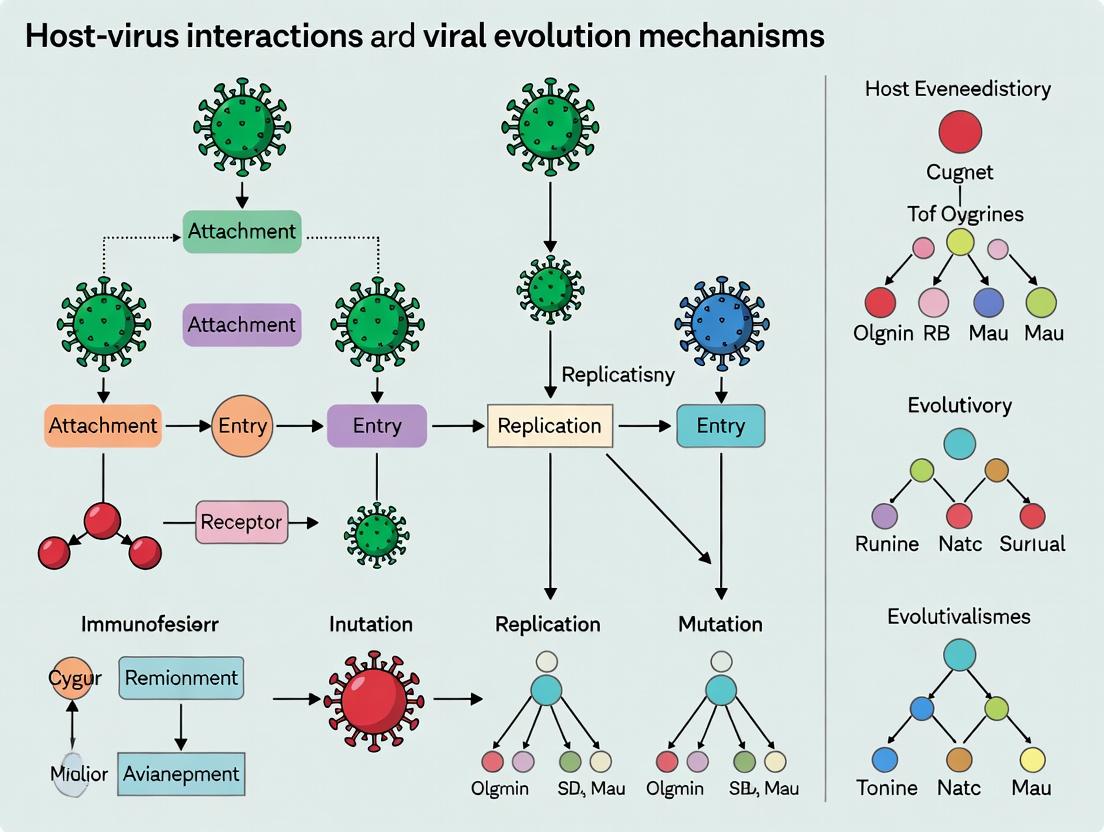
This article provides a comprehensive overview for researchers, scientists, and drug development professionals on the dynamic interplay between viral pathogens and their hosts.
Decoding the Arms Race: Molecular Mechanisms of Host-Virus Interactions and Viral Evolutionary Escape
Abstract
This article provides a comprehensive overview for researchers, scientists, and drug development professionals on the dynamic interplay between viral pathogens and their hosts. We explore foundational concepts of host immune recognition and viral countermeasures, detail cutting-edge methodologies for studying these interactions, discuss common challenges and optimization strategies in experimental design and data interpretation, and validate findings through comparative analysis of recent case studies. The synthesis offers a mechanistic framework for understanding viral evolution and identifies critical targets for next-generation antiviral therapeutics.
The Molecular Battlefield: Core Principles of Host Immune Recognition and Viral Evasion Strategies
The evolutionary arms race between host and pathogen is a central theme in virology. The host's first line of defense is the innate immune system, whose efficacy dictates the course of infection and shapes viral evolution. Pattern Recognition Receptors (PRRs) serve as the critical "cellular sentinels" that detect conserved pathogen-associated molecular patterns (PAMPs). This initial sensing event triggers signaling cascades that establish an antiviral state, orchestrates adaptive immunity, and applies selective pressure on viruses. Viruses, in turn, evolve sophisticated mechanisms to evade or antagonize PRR signaling. Therefore, a detailed understanding of PRR biology is fundamental to research on host-virus interactions, viral evolution mechanisms, and the development of novel antiviral therapeutics and vaccine adjuvants.
Classification and Function of Major PRR Families
PRRs are strategically localized to survey different cellular compartments for infection.
Table 1: Major Classes of Pattern Recognition Receptors (PRRs)
| PRR Class | Prototypic Members | Localization | Ligands (Viral PAMPs) | Adaptor Protein(s) | Transcription Factor Output |
|---|---|---|---|---|---|
| Toll-like Receptors (TLRs) | TLR3, TLR7/8, TLR9 | Endolysosomes | dsRNA (TLR3), ssRNA (TLR7/8), CpG DNA (TLR9) | TRIF (TLR3), MyD88 (TLR7/8/9) | IRF3/7, NF-κB |
| RIG-I-like Receptors (RLRs) | RIG-I, MDA5, LGP2 | Cytoplasm | Short dsRNA/5'ppp (RIG-I), long dsRNA (MDA5) | MAVS (IPS-1) | IRF3/7, NF-κB |
| NOD-like Receptors (NLRs) | NLRP3 | Cytoplasm | K+ efflux, ROS, mtDNA (Indirect) | ASC, Pro-caspase-1 | Maturation of IL-1β, IL-18 (Inflammasome) |
| C-type Lectin Receptors (CLRs) | Dectin-1, DC-SIGN | Plasma Membrane | Glycans (Fungi; some viral envelopes) | Syk/CARD9 | NF-κB |
| DNA Sensors | cGAS, AIM2 | Cytoplasm | dsDNA (cGAS), dsDNA (AIM2) | STING (cGAS), ASC (AIM2) | IRF3, NF-κB (cGAS); Inflammasome (AIM2) |
Key Signaling Pathways and Experimental Visualization
Cytosolic RNA Sensing via RIG-I/MAVS Pathway
Diagram Title: RIG-I Pathway to Type I IFN Production
Cytosolic DNA Sensing via the cGAS-STING Pathway
Diagram Title: cGAS-STING Pathway Activation
The Scientist's Toolkit: Key Research Reagent Solutions
Table 2: Essential Reagents for PRR & Innate Sensing Research
| Reagent/Material | Function/Application | Example Specifics |
|---|---|---|
| PRR-Specific Agonists | Positive controls to selectively activate specific pathways. | Poly(I:C) (TLR3/MDA5), R848 (TLR7/8), CpG ODN (TLR9), 3p-hpRNA (RIG-I), cGAMP (STING). |
| PRR-Knockout Cell Lines | Isolate the function of a single PRR in immune responses. | HEK293T cGAS-KO, THP-1 NLRP3-KO, A549 MAVS-KO (available via CRISPR kits). |
| Phospho-Specific Antibodies | Detect activation states of pathway components via WB/IF. | Anti-phospho-IRF3 (Ser396), Anti-phospho-STING (Ser366), Anti-phospho-TBK1/NAK (Ser172). |
| Reporter Assay Systems | Quantify pathway activation (e.g., IFN promoter activity). | Luciferase plasmids: IFN-β-promoter-Luc, ISRE-Luc, NF-κB-Luc. |
| ELISA/Multiplex Cytokine Kits | Quantify cytokine output (IFN-α/β, IL-6, IL-1β, etc.). | High-sensitivity ELISA for human/mouse IFN-β. Multiplex panels for innate cytokines. |
| Inhibitors & Antagonists | Probe pathway necessity and potential therapeutic targeting. | BX795 (TBK1/IKKε inhibitor), RU.521 (cGAS inhibitor), MCC950 (NLRP3 inhibitor). |
| Viral PAMP Mimics | Standardized ligands for consistent stimulation. | 5' triphosphate RNA, In vitro transcribed dsRNA, synthetic DNA oligonucleotides. |
Detailed Experimental Protocols
Protocol: Measuring RIG-I-like Receptor (RLR) Activation via IFN-β Luciferase Reporter Assay
Objective: To quantify the activation of the RLR/MAVS pathway in response to cytosolic RNA delivery.
Materials:
- HEK293T cells (low endogenous TLR background)
- Expression plasmids: RIG-I (or MDA5), MAVS
- Reporter plasmid: IFN-β-promoter-firefly luciferase
- Control plasmid: Renilla luciferase (e.g., pRL-TK)
- Transfection reagent (e.g., Lipofectamine 3000)
- RLR agonist: In vitro transcribed 5'ppp-RNA (for RIG-I) or poly(I:C) HMW (for MDA5)
- Transfection carrier: LyoVec (for cytosolic delivery)
- Dual-Luciferase Reporter Assay System
- Luminometer
Methodology:
- Day 1: Seed HEK293T cells in a 24-well plate.
- Day 2: Co-transfect cells per well with: 50 ng IFN-β-Luc reporter, 5 ng pRL-TK control, 50 ng RIG-I expression plasmid (or empty vector control), and 100 ng MAVS expression plasmid. Use lipofection per manufacturer's protocol.
- Day 3 (24h post-transfection): Stimulate cells. For cytosolic delivery, complex 500 ng of 5'ppp-RNA with 2 µL LyoVec in serum-free medium for 15 min, then add to cells.
- Day 4 (6-8h post-stimulation): Lyse cells and measure firefly and Renilla luciferase activity using the Dual-Luciferase Assay.
- Analysis: Normalize firefly luciferase activity to Renilla activity for each well. Calculate fold-induction relative to unstimulated, empty vector-transfected controls. Perform experiments in triplicate.
Protocol: Assessing NLRP3 Inflammasome Activation in Primary Macrophages
Objective: To measure NLRP3 inflammasome-dependent IL-1β secretion and pyroptosis.
Materials:
- Bone-marrow derived macrophages (BMDMs) from C57BL/6 mice
- 96-well tissue culture plate
- LPS (TLR4 agonist, for "Priming")
- NLRP3 agonists: Nigericin (K+ ionophore), ATP (P2X7 receptor activator)
- NLRP3 inhibitor: MCC950
- Mouse IL-1β ELISA kit
- Propidium Iodide (PI) or SYTOX Green
- Fluorimeter or flow cytometer
Methodology:
- Priming: Seed BMDMs. Stimulate with 100 ng/mL LPS for 3-4h to upregulate NLRP3 and pro-IL-1β.
- Inhibitor Pre-treatment: Add MCC950 (10 µM) or DMSO control 30 min prior to activation.
- Activation: Add NLRP3 agonist: Nigericin (10 µM) or ATP (5 mM). Incubate for 1h (nigericin) or 30 min (ATP).
- Readouts:
- Cytokine Secretion: Collect supernatant. Centrifuge to remove cells. Measure mature IL-1β by ELISA.
- Cell Death (Pyroptosis): Add PI (1 µg/mL) to supernatant containing cells. Measure fluorescence increase (Ex/Em ~535/617 nm) kinetically or by flow cytometry after 1h.
- Analysis: Specific NLRP3 activation is confirmed by LPS priming requirement and inhibition by MCC950.
PRRs as Drivers of Viral Evolution and Therapeutic Targets
The selective pressure exerted by PRR-mediated responses is a key driver of viral evolution. Viruses encode myriad antagonists: influenza NS1 protein inhibits RIG-I signaling; poxviruses encode DNA decoys for cGAS; hepatitis C virus NS3/4A cleaves MAVS. Studying these interactions reveals viral vulnerabilities. Therapeutically, PRR agonists are being developed as vaccine adjuvants (e.g., CpG ODN in licensed vaccines), while antagonists are explored for treating autoimmune diseases. Small-molecule modulators of cGAS, STING, and NLRP3 are in active clinical development for oncology and inflammation. Thus, deciphering the molecular logic of these "cellular sentinels" provides a direct path to innovative interventions in infectious disease, immuno-oncology, and beyond.
Research into host-virus interactions and viral evolution mechanisms reveals a perpetual molecular arms race. The interferon (IFN) system represents the host's primary inducible antiviral defense, exerting immense selective pressure on viruses. Consequently, viruses have evolved sophisticated countermeasures to antagonize IFN induction, signaling, and effector functions. Understanding the precise molecular choreography of IFN signaling is therefore fundamental to elucidating viral pathogenesis, immune evasion strategies, and the evolutionary trajectories of viral genomes. This guide provides a technical dissection of the IFN system for researchers investigating these dynamics.
Classification and Induction of Interferons
Interferons are categorized into three types based on receptor usage.
- Type I IFNs: Include IFN-α (multiple subtypes), IFN-β, IFN-ε, IFN-κ, IFN-ω. Induced by viral nucleic acids via Pattern Recognition Receptors (PRRs).
- Type II IFN: IFN-γ, primarily produced by immune cells (NK, T cells) in response to cytokine and antigenic stimuli.
- Type III IFNs: IFN-λ (λ1/IL-29, λ2/IL-28A, λ3/IL-28B), induced similarly to Type I but signal through a distinct receptor, eliciting a more localized, epithelial-specific response.
Table 1: Interferon Types, Inducers, and Primary Producing Cells
| Interferon Type | Prototypical Members | Primary Inducers (PRR/Pathway) | Main Producing Cells |
|---|---|---|---|
| Type I | IFN-α, IFN-β | Cytosolic DNA (cGAS-STING), 5'-triphosphate RNA (RIG-I), dsRNA (TLR3, MDA5) | Plasmacytoid DCs (pDCs), Fibroblasts, Macrophages |
| Type II | IFN-γ | IL-12, IL-18, Antigen recognition | NK cells, CD4+ Th1, CD8+ T cells |
| Type III | IFN-λ1, λ2, λ3 | Shared with Type I (RIG-I, MDA5, cGAS) | Epithelial cells, pDCs, Macrophages |
Core Signaling Pathways: JAK-STAT
Type I/III IFN Signaling
Ligand binding induces receptor dimerization, activating receptor-associated JAK kinases (TYK2, JAK1), which phosphorylate STAT proteins. Phosphorylated STATs dimerize, translocate to the nucleus, and drive transcription of Interferon-Stimulated Genes (ISGs).
Type II IFN Signaling
IFN-γ signals through a distinct receptor (IFNGR1/IFNGR2), primarily activating JAK1/JAK2 and STAT1 homodimers (GAF), which bind Gamma-Activated Sequences (GAS).
Antiviral Effector Mechanisms of ISGs
ISGs encode proteins that establish a cell-intrinsic antiviral state by targeting various stages of the viral life cycle.
Table 2: Key Interferon-Stimulated Genes (ISGs) and Their Antiviral Mechanisms
| ISG Protein | Target Virus Families | Mechanism of Action | Quantitative Impact (Example) |
|---|---|---|---|
| MX1/GTPase | Influenza, Vesicular Stomatitis | Traps viral nucleocapsids, inhibits transport/transcription. | Reduces influenza viral titers by >2 log10 in human airway epithelial cells. |
| Protein Kinase R (PKR) | Broad-spectrum (dsRNA) | Phosphorylates eIF2α, halts cap-dependent translation. | Reduces VSV protein synthesis by >90% in murine fibroblasts. |
| 2'-5'-Oligoadenylate Synthase (OAS)/RNase L | Broad-spectrum (dsRNA) | OAS produces 2-5A, activating RNase L to degrade viral/ cellular RNA. | Induces cleavage of ~75% of cellular rRNA in encephalomyocarditis virus-infected cells. |
| ISG15 | Influenza, HIV, SARS-CoV-2 | Ubiquitin-like protein conjugation (ISGylation) disrupts viral protein function/stability. | Conjugates to over 150 viral and host proteins during influenza infection. |
| Tetherin (BST-2) | HIV-1, Ebola, KSHV | Tethers budding virions to cell surface, inhibiting release. | Reduces HIV-1 particle release from HeLa cells by ~90%. |
| SAMHD1 | HIV-1, HSV-1 | Depletes dNTP pool, restricts reverse transcription/DNA synthesis. | Reduces cellular dNTPs to levels inhibiting HIV-1 reverse transcription in myeloid cells. |
| IFITM Family | Influenza, Coronaviruses | Incorporated into endosomal membranes, inhibits viral fusion. | Reduces SARS-CoV-2 infectivity by 70-90% in A549 lung cells. |
Experimental Protocols for IFN Research
Protocol: Measuring IFN-Stimulated Gene (ISG) Expression via qRT-PCR
Objective: Quantify induction of specific ISGs (e.g., MX1, ISG15, OAS1) in response to IFN stimulation or viral infection.
- Cell Stimulation: Seed cells (e.g., A549, HEK293) in 12-well plates. Treat with recombinant human IFN-α (1000 IU/mL) or appropriate vehicle control for 6-18 hours.
- RNA Extraction: Lyse cells with TRIzol. Perform chloroform phase separation. Precipitate RNA with isopropanol, wash with 75% ethanol, and resuspend in RNase-free water. Quantify using a NanoDrop.
- cDNA Synthesis: Use 1 µg total RNA with a High-Capacity cDNA Reverse Transcription Kit. Include a no-reverse transcriptase control.
- Quantitative PCR: Prepare reactions with SYBR Green Master Mix, gene-specific primers (e.g., MX1 F:5'-...-3', R:5'-...-3'), and cDNA template. Run on a real-time PCR system. Use GAPDH or β-actin as housekeeping controls.
- Analysis: Calculate fold-change using the 2^(-ΔΔCt) method.
Protocol: Reporter Assay for IFN Pathway Activation
Objective: Quantify IFN signaling activity via luciferase reporter constructs.
- Transfection: Seed HEK293T cells in 24-well plates. Co-transfect with:
- Reporter plasmid (e.g., pISRE-Luc or pGAS-Luc, 200 ng).
- Control Renilla luciferase plasmid (pRL-TK, 20 ng) for normalization.
- Optional: Expression plasmids for viral antagonists (e.g., SARS-CoV-2 NSP1).
- Stimulation: 24h post-transfection, stimulate cells with IFN-β (10 ng/mL) for 12-16 hours.
- Luciferase Assay: Lyse cells with Passive Lysis Buffer. Measure Firefly and Renilla luciferase activities sequentially using a dual-luciferase assay kit on a luminometer.
- Analysis: Normalize Firefly luminescence to Renilla. Express data as fold induction relative to unstimulated control.
Protocol: Detection of Phosphorylated STAT1 by Western Blot
Objective: Assess JAK-STAT pathway activation via STAT1 phosphorylation.
- Stimulation and Lysis: Serum-starve cells (e.g., HeLa) for 4-6h. Stimulate with IFN-γ (50 ng/mL) for 15, 30, 60 minutes. Lyse immediately with RIPA buffer containing phosphatase/protease inhibitors.
- SDS-PAGE: Resolve 20-30 µg total protein on a 8-10% polyacrylamide gel. Transfer to PVDF membrane.
- Immunoblotting: Block membrane with 5% BSA in TBST. Incubate overnight at 4°C with primary antibodies: anti-pSTAT1 (Tyr701) (1:1000) and anti-STAT1 (total) (1:2000). Wash and incubate with HRP-conjugated secondary antibodies (1:5000) for 1h.
- Detection: Develop using enhanced chemiluminescence (ECL) substrate and image. Quantify band intensity; pSTAT1 signal should be normalized to total STAT1.
The Scientist's Toolkit: Key Research Reagent Solutions
Table 3: Essential Reagents for Interferon Signaling Research
| Reagent Category | Specific Item/Product Example | Function & Application |
|---|---|---|
| Recombinant Cytokines | Human IFN-α 2b, IFN-β, IFN-γ (PeproTech, R&D Systems) | Gold-standard ligands for stimulating Type I or Type II pathways in vitro. |
| Pathway Inhibitors | Ruxolitinib (JAK1/2 inhibitor), Fedratinib (JAK2 inhibitor) (Selleckchem) | Pharmacological tools to block JAK-STAT signaling for mechanistic studies. |
| Reporter Plasmids | pISRE-Luc (Firefly), pGAS-Luc, pRL-TK (Renilla) (Addgene, Promega) | Genetically encoded sensors for quantifying pathway activation in live cells. |
| Critical Antibodies | Anti-phospho-STAT1 (Tyr701), Anti-STAT1, Anti-MX1, Anti-ISG15 (Cell Signaling Tech, Abcam) | Detect activation state, localization, and expression of pathway components via WB, IF, IHC. |
| PRR Agonists | Poly(I:C) (TLR3/MDA5 ligand), cGAMP (STING agonist), 5'ppp-dsRNA (RIG-I ligand) (InvivoGen) | Specific inducers of IFN production upstream of signaling. |
| Viral Antagonists | Expression plasmids for V protein (Paramyxoviruses), NS1 (Influenza), NSP1 (SARS-CoV-2) | Tools to study viral immune evasion mechanisms targeting the IFN system. |
| siRNA/shRNA Libraries | ON-TARGETplus SMARTpools targeting JAK1, TYK2, STAT1, STAT2 (Horizon Discovery) | For loss-of-function studies via targeted gene knockdown. |
| ELISA/Kits | VeriKine Human IFN-α/β/γ ELISA Kits (PBL Assay Science) | Quantify IFN protein secretion from cells or in patient sera. |
Within the continuous arms race of host-virus interactions, the innate immune interferon (IFN) system represents a critical first line of defense. Viral success in establishing infection often hinges on the evolution of sophisticated countermeasures to disrupt this system at multiple nodes: Pattern Recognition Receptor (PRR) signaling, IFN production, and IFN-stimulated gene (ISG) effector function. This whitepaper details the molecular mechanisms of these viral evasion strategies, providing a technical guide for researchers investigating viral evolution and therapeutic vulnerabilities.
Mechanisms to Block PRR Signaling
PRRs, including Toll-like receptors (TLRs), RIG-I-like receptors (RLRs), and cGAS-STING, are sentinels for viral nucleic acids. Viruses deploy proteins to inhibit ligand recognition, signal transduction, and downstream adaptor function.
Key Viral Strategies:
- Ligand Sequestration/Masking: Viral proteins bind to or modify viral nucleic acids to prevent PRR detection (e.g., influenza NS1 protein binding dsRNA).
- Receptor Degradation: Viruses target PRRs or adaptors for proteasomal or lysosomal degradation. SARS-CoV-2 ORF9b targets MITA/STING for autophagic degradation.
- Decoy Molecules/Proteases: Viral proteins mimic host signaling components or cleave them. Hepatitis C Virus NS3/4A protease cleaves the adaptor protein MAVS.
Quantitative Data on PRR Inhibition:
Table 1: Efficacy of Selected Viral Proteins in Inhibiting PRR Pathways
| Virus | Viral Protein | Target PRR/Adaptor | Mechanism | Reported Inhibition Efficacy* |
|---|---|---|---|---|
| Influenza A | NS1 | RIG-I | Binds dsRNA; interacts with TRIM25 | >70% reduction in IFN-β promoter activity |
| SARS-CoV-2 | ORF9b | STING | Induces degradation via autophagy | ~80% reduction in STING protein levels |
| Hepatitis C | NS3/4A | MAVS | Cleaves MAVS at Cys508 | Complete ablation of IRF3 activation |
| Herpes Simplex Virus 1 (HSV-1) | VP22 | cGAS | Binds and inhibits cGAS DNA sensing | ~60% reduction in cGAMP production |
*Representative data from key publications; efficacy is context-dependent on cell type and MOI.
Mechanisms to Inhibit IFN Production
When PRR signaling succeeds, it activates transcription factors (IRF3/7, NF-κB) to induce IFN-α/β gene expression. Viruses block this step through direct interference with transcription factors or the transcriptional machinery.
Key Viral Strategies:
- Transcription Factor Inhibition: Viral proteins bind to IRF3/7 or NF-κB, preventing their phosphorylation, nuclear translocation, or DNA binding.
- Epigenetic/Transcriptional Suppression: Viruses recruit host repressors to IFN gene promoters or modulate histone acetylation/methylation.
Experimental Protocol: Luciferase Reporter Assay for IFN Promoter Inhibition Objective: Quantify the ability of a viral protein to inhibit IFN-β promoter activation.
- Cell Seeding: Seed HEK293T cells in 24-well plates.
- Transfection: Co-transfect cells using a polyethylenimine (PEI) protocol:
- Group 1 (Activation Control): 100 ng IFN-β promoter-firefly luciferase plasmid + 10 ng Renilla luciferase control plasmid (pRL-TK) + 50 ng plasmid expressing a PRR pathway activator (e.g., RIG-I-N, MAVS, or TBK1).
- Group 2 (Test): Same as Group 1, plus 100-200 ng plasmid expressing the viral protein of interest.
- Group 3 (Empty Vector): Same as Group 1, plus empty vector plasmid.
- Incubation: Incubate for 24-48 hours.
- Lysis & Measurement: Lyse cells with Passive Lysis Buffer. Measure firefly and Renilla luciferase activities using a dual-luciferase reporter assay system.
- Analysis: Normalize firefly luciferase activity to Renilla activity. Calculate % inhibition relative to the activation control (Group 1).
Mechanisms to Block IFN Action
Released IFN activates the JAK-STAT signaling pathway, leading to the expression of hundreds of ISGs. Viruses have evolved potent antagonists of this paracrine/autocrine signaling loop.
Key Viral Strategies:
- IFN Receptor Blockade/Decoy: Secreted viral cytokine-binding proteins or homologs of IFNAR compete for IFN binding.
- JAK-STAT Disruption: Viral proteins degrade or sequester STAT proteins, inhibit JAK kinases, or promote STAT dephosphorylation.
- Targeting ISG Effectors: Specific viral proteins directly inhibit the antiviral activity of key ISG products (e.g., PKR, IFITM, OAS/RNase L).
Quantitative Data on JAK-STAT Inhibition:
Table 2: Viral Inhibition of IFN-Induced JAK-STAT Signaling
| Virus | Viral Protein | Target | Mechanism | Impact on ISG Expression |
|---|---|---|---|---|
| Human Cytomegalovirus (HCMV) | pp65 | STAT2 | Phosphorylates STAT2 on atypical residue, impairing nuclear accumulation | >90% reduction in ISRE-driven transcription |
| Dengue Virus | NS5 | STAT2 | Binds STAT2 for proteasomal degradation | Complete loss of STAT2 protein post-infection |
| Vaccinia Virus | VH1 | STAT1 | Dual-specificity phosphatase dephosphorylates STAT1 | Blocks IFN-γ mediated gene expression |
| Paramyxoviruses (e.g., Nipah) | V/W/P proteins | STAT1/2 | Sequestration of STATs in high molecular weight complexes | Inhibition of both type I and II IFN signaling |
The Scientist's Toolkit: Research Reagent Solutions
Table 3: Essential Reagents for Studying Viral IFN Antagonism
| Reagent | Function/Application | Example (Supplier) |
|---|---|---|
| Dual-Luciferase Reporter Assay System | Quantifies promoter activity (e.g., IFN-β, ISRE) with internal normalization. | Promega |
| Phospho-specific Antibodies | Detect activated signaling components (e.g., p-TBK1, p-IRF3, p-STAT1). | Cell Signaling Technology |
| Recombinant Human IFN-α/β/γ | Positive control for JAK-STAT pathway stimulation. | PBL Assay Science |
| cGAMP ELISA Kit | Directly measures cGAS activation and viral inhibition. | Cayman Chemical |
| Proteasome Inhibitor (MG132) | Determines if viral protein induces proteasomal degradation of target. | Sigma-Aldrich |
| STAT1/2 Knockout Cell Lines | Isogenic controls to define specificity of viral antagonist. | Generated via CRISPR/Cas9 (e.g., from ATCC parentals) |
| Active Viral Proteases (e.g., NS3/4A) | In vitro cleavage assays to map adaptor cleavage sites. | Sino Biological |
Pathway Visualizations
Title: Viral Inhibition Points in PRR to IFN Production Pathway
Title: Viral Blockade of JAK-STAT Signaling and ISG Expression
Title: Workflow for IFN Promoter Reporter Assay
The Role of Viral Polymerase Fidelity and Replication Speed in Genetic Diversity
1. Introduction Within the broader thesis of host-virus interactions and viral evolution, the genetic diversity of viral quasispecies is a fundamental determinant of pathogenesis, immune evasion, and therapeutic resistance. This diversity is directly sculpted by the biochemical properties of the viral replication machinery, principally the fidelity (accuracy) and speed of the RNA-dependent RNA polymerase (RdRp) or reverse transcriptase (RT). High-fidelity polymerases constrain genetic variation, while low-fidelity versions promote it. Replication speed interacts with fidelity to determine the total mutational output per unit time. This whitepaper details the technical mechanisms, experimental approaches, and quantitative data defining this critical relationship.
2. Core Mechanisms and Quantitative Data Polymerase fidelity is governed by the structural constraints of the active site and the enzyme's kinetic proofreading ability. Replication speed is a function of nucleotide incorporation rates and processivity. The trade-off between speed and accuracy is a central paradigm.
Table 1: Fidelity and Kinetic Parameters of Selected Viral Polymerases
| Virus | Polymerase | Avg. Error Rate (per bp) | Avg. Incorporation Rate (nt/sec) | Processivity (nt/binding event) | Primary Evolutionary Consequence |
|---|---|---|---|---|---|
| Influenza A | RdRp (PA subunit) | ~2.5 x 10⁻⁵ | 20-30 | ~30 | High diversity, antigenic drift |
| SARS-CoV-2 | RdRp (nsp12) | ~3 x 10⁻⁶ | 40-60 | High (with nsp7/nsp8) | Moderate diversity, variant emergence |
| HIV-1 | Reverse Transcriptase | ~3 x 10⁻⁵ | ~10-50 | Moderate | Extremely high diversity, immune escape |
| Poliovirus | RdRp (3D) | ~1 x 10⁻⁴ | ~300-500 | Moderate | High diversity, rapid adaptation |
| Hepatitis C | RdRp (NS5B) | ~1 x 10⁻⁴ | 150-200 | Low-Moderate | High diversity, treatment resistance |
Table 2: Impact of Fidelity-Modulating Mutations on Viral Phenotypes
| Virus | Polymerase Mutation | Fidelity Change | Replication Speed Change | In Vivo Outcome (Animal Model) |
|---|---|---|---|---|
| Chikungunya | nsP4 C483Y | Increased | Reduced | Attenuated virulence, reduced diversity |
| Coxsackievirus | 3D G64S | Increased | Reduced | Attenuated pathogenesis, restricted organ spread |
| HIV-1 | RT M184V | Increased | Reduced | Maintains resistance to lamivudine; reduced fitness |
| Influenza | PA T97I | Decreased | Unchanged | Enhanced adaptation under selective pressure |
3. Experimental Protocols for Assessing Fidelity and Speed
3.1. In Vitro Steady-State Kinetic Assay for Fidelity This protocol quantifies the discrimination factor of a polymerase between correct and incorrect nucleotides.
- Template-Primer Preparation: Anneal a 5’-radiolabeled DNA or RNA primer (e.g., 18-mer) to a complementary template (e.g., 36-mer) containing a single defined nucleotide position for analysis.
- Reaction Setup: In separate tubes, combine purified polymerase (e.g., SARS-CoV-2 nsp12-nsp7-nsp8 complex) with the template-primer in reaction buffer.
- Single Nucleotide Incorporation: To each tube, add only one of the four dNTPs or NTPs (correct or incorrect) at a range of concentrations (e.g., 1 µM to 1 mM). Incubate for a short, fixed time (e.g., 30 seconds).
- Reaction Termination: Quench with EDTA.
- Product Analysis: Resolve products on denaturing polyacrylamide gel electrophoresis (PAGE). Quantify the percentage of primer extended using phosphorimaging.
- Data Analysis: Calculate
V_maxandK_mfor correct and incorrect nucleotide incorporation from the rate-concentration curves. The fidelity parameter ((V_max/K_m)_correct / (V_max/K_m)_incorrect) is the discrimination factor.
3.2. Next-Generation Sequencing (NGS)-Based Mutation Frequency Assay This protocol measures the overall error rate in a full-length replication product.
- In Vitro Transcription/Replication: Use purified polymerase to fully copy a natural or reporter gene template (e.g., luciferase gene).
- Product Amplification: Reverse transcribe (if RNA) and PCR-amplify the products using high-fidelity DNA polymerases with barcoding for NGS.
- Sequencing & Bioinformatics: Perform deep sequencing (Illumina). Map reads to the reference template sequence using a pipeline (e.g., BWA, GATK) to identify mutations, excluding PCR/sequencing errors via duplicate analysis.
- Calculation: Mutation frequency = (Total mismatches / Total bases sequenced). Provides a genome-wide error spectrum.
3.3. Single-Molecule Processivity and Speed Assay (Optical Tweezers) This protocol directly observes the real-time kinetics of a single polymerase molecule.
- Molecular Tethering: A biotinylated DNA/RNA template is attached to a streptavidin-coated polystyrene bead held in an optical trap. The downstream end is attached to a micropipette.
- Polymerase Loading: The polymerase complex, often fused to a digoxigenin-labeled handle, is introduced and binds to the template.
- Nucleotide Addition: All four NTPs are flowed into the chamber.
- Data Acquisition: As polymerization proceeds, it exerts force on the bead, changing its position in the trap. This displacement is measured with nanometer precision in real-time.
- Analysis: The trace reveals pauses, backward steps, and continuous elongation. Processivity is the distance before dissociation. Instantaneous speed (nt/sec) is derived from slope.
4. Visualization of Core Concepts
Diagram 1: Polymerase Traits Drive Viral Evolution
Diagram 2: Kinetic Fidelity Assay Workflow
5. The Scientist's Toolkit: Key Research Reagent Solutions
Table 3: Essential Materials for Polymerase Fidelity/Speed Research
| Item (Example Product) | Function in Research |
|---|---|
| Purified Recombinant Viral Polymerase (SARS-CoV-2 nsp12-nsp7-nsp8 complex, His-tagged) | Core enzyme for in vitro biochemical assays to dissect mechanism without cellular factors. |
| Nucleotide Analogs (3’-dNTPs, Ribavirin triphosphate) | Chain terminators or mutagenic bases used to probe active site geometry and measure misincorporation kinetics. |
| Fidelity-Mutant Polymerase Clones (e.g., Poliovirus 3Dpol G64S mutant) | Isogenic controls to directly link polymerase activity to genetic diversity and viral phenotype. |
| Biotin-/Digoxigenin-Labeled Nucleotides & Templates | For tethering nucleic acids in single-molecule assays (optical tweezers, magnetic traps). |
| High-Sensitivity NGS Library Prep Kit (e.g., Illumina Ultra II FS) | Accurate amplification of viral replication products for mutation frequency analysis, minimizing background errors. |
| Cell-Based Reporter Systems (e.g., Renilla-Firefly luciferase fidelity reporter) | Enables measurement of replication fidelity in the context of a living cell, accounting for cellular machinery. |
| Selective Pressure Agents (Monoclonal antibodies, sub-therapeutic antiviral concentration) | To apply in vitro or in vivo evolutionary pressure and quantify adaptation rates of fidelity variants. |
Research into host-virus interactions reveals a continuous evolutionary arms race. Viral evolution mechanisms are driven, in part, by selective pressure from intrinsic host immunity—constitutively expressed proteins that block viral replication at various stages. These Host Restriction Factors (HRFs), including APOBEC3, TRIM5α, and Tetherin, represent a first line of defense, shaping viral tropism, zoonotic transmission, and pathogenesis. This whitepaper details their mechanisms, quantitative impact, and experimental interrogation, providing a technical framework for researchers exploring viral evolution and novel antiviral strategies.
Core Mechanisms of Key Host Restriction Factors
APOBEC3 Cytidine Deaminases
APOBEC3 (Apolipoprotein B mRNA-editing enzyme, catalytic polypeptide-like 3) proteins are a family of cytidine deaminases that inhibit retroviruses (e.g., HIV-1), DNA viruses (e.g., HBV), and retrotransposons. In the absence of the HIV-1 viral infectivity factor (Vif), APOBEC3G is packaged into budding virions. Upon infection of a new target cell, it deaminates cytosines to uracils in single-stranded viral (-)DNA during reverse transcription, leading to G-to-A hypermutation in the (+)DNA, resulting in catastrophic inactivation or degradation of the viral genome.
Table 1: APOBEC3 Family Members and Their Viral Targets
| APOBEC3 Protein | Primary Viral Target(s) | Key Mechanism | Viral Countermeasure |
|---|---|---|---|
| A3G | HIV-1 (ΔVif), HTLV-1, SIV | Cytidine deamination; inhibits reverse transcription & integration | HIV-1 Vif (targets for proteasomal degradation) |
| A3F | HIV-1 (ΔVif) | Cytidine deamination | HIV-1 Vif |
| A3B/A3A | HIV-1, HPV, HBV, Adeno-associated virus | Cytidine deamination; nuclear localization blocks DNA viruses | HPV E6/E7 (downregulation), HBV X protein |
| A3H Haplotype II | HIV-1, SIV | Stable expression; potent deaminase activity | SIVmac Vif (haplotype-specific degradation) |
TRIM5α
TRIM5α (Tripartite motif-containing protein 5α) is a cytoplasmic factor that recognizes and disrupts the capsid lattice of incoming retroviruses shortly after entry. Its RING domain has E3 ubiquitin ligase activity, its B-Box 2 domain mediates higher-order assembly, and its C-terminal PRY/SPRY (B30.2) domain confers capsid specificity. TRIM5α promotes premature capsid disassembly and blocks reverse transcription.
Table 2: TRIM5α Restriction Specificity Across Species
| Species TRIM5α | Potently Restricted Virus | Relative Restriction Efficiency (vs. HIV-1 in Human Cells)* | Key Capsid Residue Determining Sensitivity |
|---|---|---|---|
| Rhesus Macaque | HIV-1 | >100-fold | Cyclophilin A-binding loop |
| Human | N-MLV, EIAV | ~10-50 fold (for N-MLV) | Capsid surface patches |
| African Green Monkey | HIV-1, SIV | >100-fold | Cyclophilin A-binding loop |
| Owl Monkey (TRIMCyp fusion) | HIV-1 | >100-fold | Capsid-Cyclophilin A interface |
*Efficiency varies based on experimental system (e.g., single-round infectivity assays).
Tetherin (BST-2/CD317)
Tetherin (BST-2) is an interferon-induced transmembrane protein that inhibits the release of enveloped viruses (e.g., HIV-1, Ebola, KSHV). Its unique topology—an N-terminal transmembrane domain, a C-terminal GPI anchor, and an extracellular coiled-coil—allows it to physically "tether" budding virions to the cell surface and to each other, leading to their internalization and degradation.
Table 3: Tetherin Antagonism by Viral Proteins
| Virus | Tetherin Antagonist | Mechanism of Antagonism | Species-Specificity |
|---|---|---|---|
| HIV-1 (Group M) | Vpu | Downregulates human tetherin from cell surface; targets for ESCRT-dependent degradation. | Human, chimpanzee |
| HIV-2 / SIV | Env (for some SIVs) | Binds tetherin, potentially causing surface removal or sequestration. | Context-dependent |
| SIV (multiple strains) | Nef | Downregulates ape (but not human) tetherin by targeting cytoplasmic tail. | Apes (e.g., chimpanzee) |
| Ebola Virus | Glycoprotein (GP) | Blocks tetherin function via direct interaction; mechanism less defined. | Broad |
| KSHV | K5 | Acts as E3 ubiquitin ligase to ubiquitinate and downregulate tetherin. | Broad |
Experimental Protocols for Key Assays
Protocol: Quantifying APOBEC3-Induced Hypermutation
Objective: Measure G-to-A mutations in viral DNA after infection in the presence of APOBEC3G.
- Cell Culture: Co-transfect 293T cells with an HIV-1 ΔVif proviral plasmid (pNL4-3 ΔVif) and an APOBEC3G expression plasmid (or empty vector control).
- Virus Production & Infection: Harvest virus supernatant at 48h post-transfection, filter (0.45µm), and use to infect susceptible target cells (e.g., TZM-bl) at a standardized MOI.
- DNA Extraction: At 24h post-infection, extract total cellular DNA using a DNeasy Blood & Tissue Kit.
- PCR Amplification: Amplify a ~1kb region of the HIV-1 pol gene using high-fidelity polymerase.
- Cloning & Sequencing: Clone the PCR product into a TA-cloning vector. Transform competent E. coli. Pick 20-50 colonies for Sanger sequencing.
- Data Analysis: Align sequences to the reference proviral sequence. Quantify the frequency of G-to-A mutations, particularly in the preferred GG/GA dinucleotide context (5’-GG[A]-3’ on the (-)DNA strand). Calculate mutation frequency per kilobase.
Protocol: Single-Cycle Infectivity Assay for TRIM5α Restriction
Objective: Determine the restriction potency of a TRIM5α variant on a specific retrovirus.
- Virus Production: Produce VSV-G pseudotyped, replication-incompetent HIV-1 (or other retrovirus) reporter virions encoding luciferase in 293T cells.
- Target Cell Preparation: Seed target cells (e.g., HeLa-derived lines) in a 96-well plate. Transfect with increasing amounts of a TRIM5α expression plasmid (or species-specific variants) 24h prior to infection.
- Infection: Infect cells with normalized amounts of reporter virions (based on p24 CA ELISA or reverse transcriptase activity). Include a no-TRIM5α control.
- Readout: Lyse cells 48h post-infection. Measure luciferase activity as a proxy for successful infection and reverse transcription.
- Analysis: Express infectivity as a percentage of the no-TRIM5α control. Calculate IC50 or fold-restriction.
Protocol: Tetherin Viral Release Blockade Assay
Objective: Visualize and quantify tetherin-mediated retention of virions at the cell surface.
- Cell Culture & Transfection: Culture HeLa cells stably expressing tetherin (or control). Transfect with an HIV-1 proviral plasmid (WT or ΔVpu).
- Immunofluorescence/Immunogold Labeling (for imaging):
- At 24-48h post-transfection, fix cells.
- For fluorescence: Permeabilize, stain with anti-HIV-1 p24/capsid and anti-tetherin antibodies, followed by fluorescent secondary antibodies. Image via confocal microscopy.
- For EM: Label with anti-tetherin antibody conjugated to colloidal gold, process for thin-section EM.
- Virus Release Quantification (Biochemical):
- Harvest cell supernatant and lyse cells.
- Measure viral particle release efficiency by running supernatant (virions) and cell lysate proteins on a Western blot.
- Probe for viral protein (e.g., p24 CA) and a cellular loading control (e.g., actin).
- Quantify the ratio of p24 in supernatant vs. cell lysate. Tetherin activity is shown by reduced supernatant p24 in the absence of Vpu.
Visualization: Pathways and Workflows
Diagram 1: APOBEC3G Restriction Pathway
Diagram 2: TRIM5α Capsid Recognition & Action
Diagram 3: Tetherin Viral Release Assay Workflow
The Scientist's Toolkit: Key Research Reagent Solutions
Table 4: Essential Research Reagents for HRF Studies
| Reagent Category | Specific Item Example | Function in Research |
|---|---|---|
| Expression Plasmids | Human/Primate TRIM5α cDNA clones (e.g., in pLPCX, pcDNA3.1); APOBEC3 family member expression vectors; HIV-1 proviral clones (WT, ΔVif, ΔVpu). | Ectopic expression of HRFs or mutant viruses to study specificity, mechanism, and antagonism. |
| Reporter Viruses | Single-round, VSV-G pseudotyped HIV-1 luciferase/GFP reporter particles (e.g., NL4-3.Luc.R-E-). | Safe, quantitative measurement of viral infectivity under restriction conditions. |
| Cell Lines | TZM-bl indicator cells (for infectivity); HEK 293T (high transfectability); HeLa, Jurkat, or primary CD4+ T-cell derivatives with knockout/knockdown of specific HRFs (e.g., CRISPR-Cas9 generated ΔTetherin lines). | Model systems for infection, transfection, and studying HRF function in relevant cell types. |
| Antibodies | Anti-APOBEC3G (for immunoblot/immunoprecipitation); Anti-TRIM5α (C-terminal); Anti-Tetherin/BST-2 (e.g., mouse monoclonal); Anti-HIV-1 p24 CA (for virion quantification/imaging). | Detection, quantification, and localization of HRFs and viral components. |
| Quantification Kits | HIV-1 p24 Antigen ELISA Kit; Luciferase Assay System; High-Fidelity PCR Kit; Viral RNA/DNA Extraction Kit. | Standardized quantification of viral particles, infectivity, and molecular analysis of viral genomes. |
| Specialized Assay Kits | UDG (Uracil DNA Glycosylase) Treatment Kit; Proximity Ligation Assay (PLA) Kit. | Specifically detect APOBEC3-mediated deamination (UDG sensitivity) or visualize protein-protein interactions (e.g., TRIM5α-Capsid). |
Within the broader thesis on host-virus interactions and viral evolution mechanisms, this whitepaper examines the reciprocal evolutionary pressures between host genetic polymorphisms, particularly in the Human Leukocyte Antigen (HLA) system, and viral pathogens. This co-evolutionary arms race is a fundamental driver of viral diversity, immune escape, and disease pathogenesis. Understanding these dynamics is critical for predicting viral evolutionary trajectories, designing universal vaccines, and developing novel immunotherapeutics.
Core Mechanisms of HLA-Driven Viral Adaptation
The HLA class I and II molecules present pathogen-derived peptides to T-cells, orchestrating adaptive immune responses. Viral genomes evolving under the selective pressure of dominant HLA alleles within a population accumulate mutations that impair peptide binding (anchor residue changes), proteasomal processing, or TCR recognition. These "HLA-associated polymorphisms" can become fixed in the viral population, leading to viral lineage diversification and immune escape.
Key Immunogenetic Concepts
- HLA Restriction: The specificity of T-cell responses for peptides presented by a particular HLA allele.
- Selective Sweep: A viral mutation conferring immune escape rises to high frequency due to positive selection.
- Negative Frequency-Dependent Selection: Rare HLA alleles provide an advantage as viruses are less adapted to them, maintaining HLA diversity.
Quantitative Data on HLA-Viral Co-evolution
The following tables summarize key quantitative findings from recent studies.
Table 1: HLA-Associated Viral Adaptations in HIV-1
| HLA Allele | Viral Protein | Associated Polymorphism | Population Frequency of Polymorphism (%) | Functional Consequence |
|---|---|---|---|---|
| HLA-B*57:01 | Gag | T242N | 60-80 in B*57+ populations | Reduced epitope binding affinity, lower viral load |
| HLA-B*27:05 | Gag | R264K | >90 in B*27+ populations | Delayed disease progression, often leads to escape reversion upon transmission |
| HLA-B*08:01 | Nef | FL8 (FLKEKGGL) deletion | ~70 in B*08+ populations | Complete epitope loss, linked to higher viral load |
| HLA-B*35:01 | Gag | A83P | ~50 in B*35+ populations | Compensatory mutation, restores viral replicative fitness |
Table 2: Evidence of HCV Co-evolution with HLA Class II
| HLA Allele | Viral Region | Statistical Strength (p-value) | Study Method | Cohort |
|---|---|---|---|---|
| DQB1*03:01 | NS3 | < 0.001 | Population-based Association | European |
| DRB1*11:01 | NS5A | 0.002 | Phylogenetic Correction | Global |
| DRB1*04:01 | Core | < 0.01 | In vitro Binding Assay | Japanese |
Experimental Protocols for Investigating Co-evolution
Protocol 1: Identifying HLA-Associated Polymorphisms
Objective: To statistically link specific HLA alleles to viral sequence polymorphisms in a patient cohort. Methodology:
- Cohort & Sequencing: Obtain paired host HLA genotype (via next-generation sequencing or PCR-SSO) and deep-sequenced viral genomic data from a treatment-naïve cohort (n > 500).
- Alignment & Variant Calling: Align viral sequences to a reference genome. Call amino acid variants at each position.
- Statistical Association: Use a phylogenetically-informed mixed-effects model (e.g.,
PhyloDorSCOPA). The model corrects for viral population structure and linkage disequilibrium. - Validation: Validate top hits via in vitro cytotoxicity assays using synthetic mutant peptides.
Protocol 2: In Vitro Viral Passage Under HLA-Restricted T-cell Pressure
Objective: To experimentally observe viral adaptation to a specific HLA-restricted immune response. Methodology:
- Cell Setup: Use HLA-matched and HLA-mismatched primary CD4+ T-cells as targets. Autologous CD8+ T-cells are isolated and stimulated with a known immunodominant epitope.
- Infection & Co-culture: Infect target cells with a clonal viral stock (e.g., HIV-1 NL4-3). Co-culture with the epitope-specific CD8+ T-cells at an effector-to-target ratio of 1:5.
- Serial Passage: Harvest virus from supernatant every 3-4 days and use to infect fresh target and effector cells. Maintain parallel control passages without T-cells.
- Sequence Analysis: Deep-sequence the viral genome at each passage. Identify fixed non-synonymous mutations in the epitope or flanking regions.
Protocol 3: Structural Validation of Escape Mechanisms
Objective: To determine the atomic-level mechanism by which an HLA-associated polymorphism enables immune evasion. Methodology:
- Protein Expression & Purification: Express and purify recombinant HLA heavy chain, β2-microglobulin, and wild-type/mutant epitope peptides.
- Complex Refolding: Refold the components in vitro to form stable peptide-HLA (pHL) complexes.
- Crystallization & Data Collection: Crystallize the pHL complex. Collect X-ray diffraction data at a synchrotron source.
- Structure Solution: Solve the crystal structure by molecular replacement. Analyze differences in peptide conformation, anchor burial, or TCR-facing residues between wild-type and mutant complexes.
Visualizing Co-evolutionary Workflows and Pathways
Title: Workflow to Identify HLA-Driven Viral Adaptation
Title: Viral Immune Evasion from HLA-I Presentation
The Scientist's Toolkit: Research Reagent Solutions
| Item | Function/Application in Co-evolution Research |
|---|---|
| HLA Typing Kits (Next-Gen Sequencing Panels, PCR-SSO) | High-resolution identification of host HLA class I and II alleles from genomic DNA. Essential for association studies. |
| Ultra-Deep Viral Sequencing Kits (Amplicon-based NGS) | Sensitive detection of low-frequency viral variants and quasispecies, allowing linkage analysis of escape mutations. |
| Soluble Biotinylated HLA Monomers | Tools for tetramer generation to stain and isolate epitope-specific T-cells, or for measuring peptide-binding affinity via ELISA/SPR. |
| Peptide-HLA Tetramers (Fluorophore-conjugated) | Flow cytometry reagents to quantify and phenotype antigen-specific T-cell responses ex vivo. |
| Crystallography Reagents (Crystallization Screens, Recombinant HLA Proteins) | For structural biology studies to visualize the impact of escape mutations on pHL or TCR-pHL complexes. |
| In Vitro Antiviral Assay Systems (Primary Cell Co-culture, Reporter Cell Lines) | Platforms to measure the fitness cost or replicative capacity of engineered viral escape mutants. |
| Phylogenetic Analysis Software (HyPhy, Datamonkey, PLINK) | Computational tools to perform selection analysis and statistically correct for viral population structure. |
Tools of the Trade: Modern Techniques for Mapping Host-Virus Interfaces and Tracking Evolution
High-Throughput CRISPR/Cas9 Screens for Identifying Host Dependency and Restriction Factors
Within the broader thesis on host-virus interactions and viral evolution mechanisms, understanding the complete repertoire of host cellular factors that facilitate (dependency) or inhibit (restriction) viral replication is paramount. High-throughput CRISPR/Cas9 knockout screening has emerged as a transformative tool for systematically identifying these factors on a genome-wide scale. This guide details the technical execution and application of such screens, which are central to elucidating the evolutionary arms race between viruses and their hosts and identifying novel therapeutic targets.
Core Principles of CRISPR/Cas9 Screening in Virology
A pooled CRISPR screen utilizes a library of single-guide RNAs (sgRNAs) delivered en masse to a population of cells stably expressing the Cas9 nuclease. Each sgRNA targets a specific host gene for knockout. The population is then infected with the virus of interest. The relative abundance of each sgRNA in infected versus control (uninfected) populations is quantified by next-generation sequencing (NGS). Depleted sgRNAs indicate knockout of a host dependency factor (HDF), while enriched sgRNAs indicate knockout of a host restriction factor (HRF).
Experimental Protocols
Protocol for a Genome-Wide Loss-of-Function Screen
A. Library Design and Cloning
- Library: Use the Brunello (human) or Brie (mouse) genome-wide knockout libraries, each containing ~77,000 sgRNAs targeting ~19,000 genes (4 sgRNAs/gene) and 1000 non-targeting controls.
- Cloning: The sgRNA library is cloned into a lentiviral backbone (e.g., lentiCRISPRv2, lentiGuide-Puro). Perform large-scale plasmid preparation and verify library representation by NGS.
B. Lentivirus Production and Transduction
- Virus Production: Co-transfect HEK293T cells with the sgRNA library plasmid, psPAX2 (packaging), and pMD2.G (envelope) plasmids using PEI transfection reagent. Harvest supernatant at 48 and 72 hours, concentrate via ultracentrifugation, and titer.
- Transduction: Transduce Cas9-expressing target cells (e.g., A549, Huh7, primary cells) at a low Multiplicity of Infection (MOI ~0.3) to ensure most cells receive a single sgRNA. Maintain cells at a minimum coverage of 500x (e.g., 500 cells per sgRNA) to preserve library diversity.
C. Selection and Infection
- Apply appropriate selection (e.g., puromycin) for 5-7 days to eliminate untransduced cells. Split cells into two arms: Infected and Mock-Infected Control.
- Infect the experimental arm with the virus at a predetermined MOI (often high, e.g., MOI=3-5) to ensure nearly all cells are infected. Use appropriate biosafety containment.
D. Genomic DNA Extraction and NGS Library Preparation
- Harvest cells at a critical endpoint (e.g., when cytopathic effect is advanced in control cells, or at a fixed time post-infection). Extract genomic DNA from both arms using a large-scale kit (e.g., Qiagen Blood & Cell Culture DNA Maxi Kit).
- Amplify integrated sgRNA sequences via a two-step PCR. The first PCR uses primers flanking the sgRNA scaffold. The second PCR adds Illumina adapters and sample barcodes. Pool and purify PCR products for sequencing.
E. Data Analysis
- Align sequenced reads to the reference sgRNA library.
- Calculate read counts per sgRNA for each condition.
- Use robust statistical algorithms (e.g., MAGeCK, CRISPRcleanR) to compare infected vs. control samples, accounting for guide efficiency and variance. Rank genes by their phenotypic score (β-score). Negative scores denote candidate HDFs; positive scores denote candidate HRFs.
Protocol for a FACS-Based Enrichment Screen
For viruses without a clear cytopathic effect, fluorescence-activated cell sorting (FACS) can be used.
- Follow steps A-C above.
- At 24-48 hours post-infection, stain cells with a fluorescent antibody against a viral protein (e.g., influenza HA, HIV p24) or use a reporter virus expressing GFP.
- Sort populations into GFP+ (infected) and GFP- (uninfected) bins.
- Proceed with gDNA extraction and NGS as in 3.1.D. Compare sgRNA abundance in GFP+ vs. GFP- populations to identify hits.
Table 1: Representative Host Factors Identified via CRISPR Screens
| Virus | Key Host Dependency Factor (HDF) | Function in Viral Lifecycle | Key Host Restriction Factor (HRF) | Function in Antiviral Defense | Primary Screen Reference |
|---|---|---|---|---|---|
| Influenza A Virus | SLC35A1 | CMP-sialic acid transporter for receptor synthesis | IFITM3 | Blocks viral membrane fusion | (Heaton et al., 2017) |
| SARS-CoV-2 | ACE2 | Primary viral receptor | LY6E | Impairs Spike-mediated membrane fusion | (Wang et al., 2021) |
| HIV-1 | CD4, CCR5 | Primary receptor & co-receptor | SERINC5 | Incorporated into virions, inhibits entry | (Zhang et al., 2019) |
| Zika Virus | AXL | Putative entry factor | IFNAR1 | Type I interferon signaling (validated) | (Li et al., 2019) |
Table 2: Common CRISPR Screening Library Specifications
| Library Name | Species | Target Genes | sgRNAs per Gene | Total sgRNAs | Control sgRNAs | Vector Backbone |
|---|---|---|---|---|---|---|
| Brunello | Human | 19,114 | 4 | 76,441 | 1,000 | lentiGuide-Puro |
| Brie | Mouse | 20,120 | 4 | 78,637 | 1,000 | lentiGuide-Puro |
| GeCKO v2 | Human | 19,050 | 3-6 | 123,411 | 1,000 | lentiCRISPRv2 |
| Mouse GeCKO v2 | Mouse | 20,611 | 3-6 | 130,209 | 1,000 | lentiCRISPRv2 |
Visualizations
Title: CRISPR-virus screen workflow
Title: Interpreting screen hits
The Scientist's Toolkit: Research Reagent Solutions
Table 3: Essential Materials for CRISPR-Virus Screens
| Item | Function & Critical Notes |
|---|---|
| Cas9-Expressing Cell Line | Stable Cas9 expression (e.g., A549-Cas9, Huh7-Cas9) is essential for efficient knockout. Must be permissive to the virus of interest. |
| Validated sgRNA Library | Genome-wide (e.g., Brunello) or targeted (e.g., kinase, membrane protein). Must include non-targeting control sgRNAs. |
| Lentiviral Packaging Plasmids (psPAX2, pMD2.G) | Second- and third-generation systems for safe, efficient production of library virus. |
| Polyethylenimine (PEI) Transfection Reagent | Cost-effective for large-scale lentivirus production in HEK293T cells. |
| Puromycin Dihydrochloride | Selection antibiotic for cells transduced with puromycin-resistance containing vectors. Titrate to determine killing curve. |
| Virus Stock (High Titer) | Requires high-titer, purified virus for robust, synchronous infection. Use appropriate BSL containment. |
| Large-Scale gDNA Extraction Kit | Must efficiently extract high-quality, high-molecular-weight gDNA from millions of cells. |
| Herculase II Fusion DNA Polymerase | High-fidelity polymerase for robust, even amplification of sgRNA templates from gDNA. |
| Illumina Sequencing Platform | HiSeq or NextSeq for high-depth sequencing of sgRNA amplicons. |
| Bioinformatics Pipeline (MAGeCK) | Robust Rank Aggregation (RRA) algorithm to identify significantly enriched/depleted genes from sgRNA counts. |
Deep Mutational Scanning and Massively Parallel Reporter Assays to Profile Viral Protein Functions
Understanding the molecular mechanisms governing host-virus interactions is fundamental to predicting viral evolution, elucidating pathogenesis, and developing antiviral strategies. Deep Mutational Scanning (DMS) and Massively Parallel Reporter Assays (MPRAs) have emerged as transformative technologies for systematically profiling the functional consequences of thousands of viral protein variants in a single experiment. This whitepaper provides a technical guide on integrating these approaches to map genotype to phenotype at scale, directly informing research on viral immune evasion, host factor binding, and evolutionary trajectories.
Core Technologies: Principles and Applications
Deep Mutational Scanning (DMS) involves creating a comprehensive library of protein variants, typically through site-saturation mutagenesis, and subjecting it to a functional selection pressure in a relevant biological context. High-throughput sequencing pre- and post-selection quantifies the enrichment or depletion of each variant, revealing its functional impact.
Massively Parallel Reporter Assays (MPRAs) are used to measure the regulatory activity of thousands of nucleic acid sequences in parallel. In virology, MPRAs are adapted to assay functions like promoter/enhancer activity, RNA stability, splice efficiency, or the impact of mutations on these processes.
Integrated Application: Combining DMS of viral protein-coding sequences with MPRA-based readouts (e.g., transcriptional activation by a viral transcription factor) allows for high-resolution functional mapping of mutations affecting specific biochemical activities critical to the viral life cycle.
Table 1: Comparative Overview of DMS and MPRA in Virology
| Aspect | Deep Mutational Scanning (DMS) | Massively Parallel Reporter Assays (MPRA) |
|---|---|---|
| Primary Object | Protein-coding variants (missense, nonsense, indels). | Cis-regulatory elements (promoters, enhancers, UTRs). |
| Typical Library Size | 10^4 – 10^6 variants. | 10^4 – 10^7 constructs. |
| Common Readout | Fitness, binding affinity, antibody escape, drug resistance. | Transcriptional activity, translation efficiency, RNA stability. |
| Selection Method | Growth competition, FACS, binding selection (e.g., yeast display). | Coupling regulatory element to a barcoded reporter gene (e.g., GFP, luciferase). |
| Key Output Metric | Enrichment score (log2(post/pre frequency)). | Normalized reporter expression (e.g., RNA/protein per barcode). |
| Evolutionary Insight | Antigenic drift, adaptive landscapes, constraint maps. | Evolution of regulatory sequences, impact of non-coding mutations. |
Table 2: Example DMS Study Outcomes for a Viral Spike Protein
| Mutation Class | Functional Impact (Mean Enrichment Score) | Implication for Host Interaction |
|---|---|---|
| Receptor-Binding Domain (RBD) | ||
| - Wild-type residues | ~0 (neutral) | Maintains optimal ACE2 affinity. |
| - Escape variants | > +2.0 (enriched) | Evades neutralizing antibodies; may alter receptor affinity. |
| - Deleterious variants | < -3.0 (depleted) | Disrupts folding or binding; evolutionarily constrained. |
| Fusion Peptide | ||
| - Stabilizing mutations | +0.5 to +1.5 | May enhance membrane fusion efficiency. |
| - Destabilizing mutations | < -4.0 | Critical for function; highly conserved. |
Detailed Experimental Protocols
Protocol 4.1: DMS of a Viral Protein for Host Factor Binding
Objective: Identify all single amino acid substitutions that affect binding to a critical host receptor.
Materials: See "The Scientist's Toolkit" below.
Steps:
- Library Design & Synthesis: Design an oligonucleotide library encoding all possible single amino acid substitutions across the viral protein domain of interest. Use array-synthesized oligos or doped PCR.
- Library Cloning: Clone the variant library into an appropriate display vector (e.g., yeast surface display, phage display) downstream of a surface anchor and upstream of a unique DNA barcode for variant identification.
- Transformation & Diversity Validation: Electroporate the library into competent cells (e.g., S. cerevisiae EBY100 for yeast display) to achieve >100x library coverage. Isect plasmid DNA from an aliquot and sequence to confirm diversity.
- Functional Selection: a. Induce protein expression on the display platform. b. Label the population using a fluorescently conjugated host receptor protein. c. Use Fluorescence-Activated Cell Sorting (FACS) to collect populations with high binding (top 10%) and low/no binding (bottom 10%).
- Sequence Analysis: a. Extract genomic DNA from pre-sorted, high-bind, and low-bind populations. b. Amplify barcode regions and subject to high-throughput sequencing. c. Calculate an enrichment score for each variant: E = log2( (count_post_selection / total_post) / (count_pre_selection / total_pre) ).
- Validation: Clone and individually assay top hits (e.g., by SPR or ELISA) for quantitative binding affinity.
Protocol 4.2: MPRA for Viral Enhancer/Promoter Variants
Objective: Measure the transcriptional activity of thousands of mutated viral non-coding sequences.
Steps:
- Element Library Design: Synthesize oligonucleotides containing the wild-type viral promoter/enhancer and all single-nucleotide variants (or random fragments).
- Reporter Construct Assembly: Clone each variant sequence upstream of a minimal promoter and a unique 15-20bp barcode within the 3' UTR of a reporter gene (e.g., GFP) in a plasmid backbone.
- Pool Transfection & Harvest: Transfect the entire plasmid library in triplicate into permissive host cells (e.g., HEK293T). After 24-48 hours, harvest both plasmid DNA (input) and total RNA.
- Sequencing Library Prep: a. DNA Library: PCR amplify the barcode region from the harvested plasmid DNA. b. RNA Library: Reverse transcribe the harvested RNA and PCR amplify the barcode region from the cDNA.
- High-Throughput Sequencing & Analysis: Sequence the barcode amplicons. Count the frequency of each barcode in the DNA (input) and RNA (output) pools. The activity of each regulatory variant is proportional to the RNA/DNA barcode count ratio, normalized to the wild-type control.
Visualization of Workflows and Pathways
DMS Experimental Workflow for Viral Proteins
MPRA Workflow for Viral Regulatory Elements
Host-Virus Interaction Pathway Mapped by DMS/MPRA
The Scientist's Toolkit: Key Research Reagent Solutions
| Reagent / Material | Function in DMS/MPRA |
|---|---|
| Array-Synthesized Oligo Pools | Source DNA for generating comprehensive variant libraries (mutations & barcodes). |
| Yeast Display Vectors (e.g., pYD1) | Eukaryotic display system for folding and presenting viral surface protein libraries. |
| Phage Display Systems (e.g., M13) | Prokaryotic display system for high-diversity peptide or domain libraries. |
| Barcoded MPRA Reporter Vectors | Plasmids designed for efficient cloning of regulatory elements and unique barcode tags. |
| Fluorophore-Conjugated Proteins | Labeled host receptors or antibodies for FACS-based selection in DMS. |
| High-Fidelity Polymerase (e.g., Q5) | Accurate amplification of variant libraries to prevent secondary mutations. |
| UltraPure dNTPs | Ensure fidelity during PCR steps for NGS library preparation. |
| Cell Line: HEK293T | Highly transfectable human cell line for MPRA delivery and expression. |
| Cell Line: Expi293F | Suspension cells for high-yield protein expression for follow-up validation. |
| Next-Gen Sequencing Kit (Illumina) | For high-throughput sequencing of barcodes and variant identities pre- and post-selection. |
| SPR/Biacore Chip & Buffer | Surface plasmon resonance system for validating binding kinetics of identified hits. |
Single-Cell RNA-Sequencing (scRNA-seq) to Dissect Heterogeneous Host Cell Responses to Infection
Understanding host-virus interactions is central to elucidating viral evolution mechanisms. Traditional bulk RNA-seq averages cellular responses, masking critical cell-to-cell heterogeneity in infection outcomes—a key factor driving viral adaptation and pathogenesis. This whitepaper details how scRNA-seq serves as an essential tool to deconvolve these heterogeneous host responses, providing a high-resolution map of cellular states that can identify rare, persistently infected cells, define viral entry and replication factors, and reveal immune evasion tactics that shape viral evolution.
Core Technical Workflow and Protocol
The standard workflow for scRNA-seq analysis of infection models involves the following steps:
Step 1: Experimental Design & Cell Preparation
- Infection Model: Use a controlled in vitro infection system (e.g., primary immune cells or cell lines) with appropriate MOI and time points. Include uninfected controls.
- Viral Handling: For RNA viruses, consider incorporating viral read detection in library prep. For all viruses, use appropriate biosafety containment.
- Single-Cell Suspension: Generate a high-viability (>90%) single-cell suspension using enzymatic dissociation (e.g., TrypLE) followed by filtration through a 40μm strainer and viability staining.
Step 2: Single-Cell Partitioning & Library Construction
- Platform Selection: Use droplet-based (10x Genomics Chromium) or nanowell-based (BD Rhapsody) platforms. The 10x Genomics 3’ Gene Expression v3.1/v4 protocol is widely adopted.
- Cell Partitioning & Barcoding: Cells are co-encapsulated with barcoded beads in droplets. Within each droplet, reverse transcription occurs, tagging each cell's mRNA with a Unique Molecular Identifier (UMI) and cell barcode.
- Library Prep: cDNA is amplified and fragmented, followed by the addition of sample indices and sequencing adapters via PCR.
Step 3: Sequencing & Primary Data Processing
- Sequencing: Run on an Illumina NovaSeq or HiSeq platform. Target depth: ≥50,000 reads per cell.
- Demultiplexing & Alignment: Use platform-specific tools (e.g.,
cellrangermkfastq and count from 10x). Align reads to a combined reference genome (host + virus). - Quantification: Generate a gene (host) × cell count matrix and a separate viral gene/region × cell count matrix.
Step 4: Quality Control (QC) & Normalization
- Filter Cells: Remove low-quality cells using thresholds.
- Low library size/low genes: Potential empty droplets.
- High mitochondrial gene %: Stressed/dying cells.
- High viral UMI count: Possibly late-stage, lysing cells (context-dependent).
- Normalization & Scaling: Use
SCTransform(regularized negative binomial regression) or log-normalization (NormalizeDatain Seurat) to correct for sequencing depth variation.
Step 5: Dimensionality Reduction, Clustering & Annotation
- Variable Feature Selection: Identify 2000-3000 highly variable genes.
- PCA: Perform linear dimensionality reduction.
- Clustering: Apply a graph-based clustering algorithm (e.g., Leiden, Louvain) on a k-Nearest Neighbor graph built from top PCs.
- Cell Type Annotation: Use known marker genes from databases (e.g., CellMarker) or differential expression analysis between clusters.
Step 6: Infection-Specific Analysis
- Viral RNA+ Cell Identification: Classify cells as "infected" based on detection of viral transcripts above a defined threshold.
- Differential Expression (DE): Perform DE analysis between infected/uninfected cells within the same annotated cluster to isolate infection-specific responses from cell-type-specific signatures.
- Trajectory Inference: Use tools like Monocle3 or Slingshot to model potential cell state transitions (e.g., from uninfected to latently or productively infected).
- Cell-Cell Communication: Infer altered signaling pathways between cell states using tools like CellChat.
Step 7: Integration with Viral Evolution
- Variant Analysis: For intra-host viral evolution studies, align viral reads with high depth to call single-nucleotide variants (SNVs) and associate viral genotypes with specific host cell transcriptional states.
Data Presentation: Key Quantitative Metrics from Recent Studies
Table 1: Representative scRNA-seq Studies on Host-Virus Interactions
| Virus | Host System | Key Finding (Heterogeneity) | % Infected Cells (Range) | Key Upregulated Host Pathway in Infected Cells | Citation (Year) |
|---|---|---|---|---|---|
| Influenza A (IAV) | Human bronchial epithelial cells (in vitro) | Identified a rare cell population with hyper-activation of antiviral ISG response, resistant to infection. | 15-40% (MOI-dependent) | Interferon signaling (MX1, IFIT2), NF-κB | Russell et al., Nat Comms (2023) |
| SARS-CoV-2 | Primary human nasal epithelial cells | Revealed ciliated cells as primary target, with a subset showing dramatic inflammatory reprogramming. | 5-20% | Chemokine signaling (CXCL10, CCL20), ER stress | Miao et al., Cell (2024) |
| HIV-1 | Primary CD4+ T cells (in vitro) | Characterized a continuum of infection states from latent to active, linked to T cell activation markers. | 10-30% | Viral transcription (Tat), Cellular metabolism | Liu et al., Science Adv (2023) |
| Herpes Simplex Virus-1 (HSV-1) | Human neuronal precursors | Discovered a latent-like transcriptional program in a subset of infected cells immediately post-entry. | 25-60% | Neuronal differentiation genes, LAT locus | Liu et al., Cell (2023) |
Table 2: Common scRNA-seq QC Metrics and Filters for Infection Studies
| Metric | Typical Threshold | Reason for Filtering | Tool/Function for Calculation |
|---|---|---|---|
| Number of Genes per Cell | > 500 & < 6000 | Low: Empty droplet / dead cell. High: Potential doublet. | scater::addPerCellQC() |
| UMI Counts per Cell | > 1000 & < 50,000 | Low: Empty droplet. High: Doublet or overly active cell. | scater::addPerCellQC() |
| Mitochondrial Gene % | < 20% (varies by cell type) | High: Apoptotic or stressed cell. | PercentageFeatureSet(..., pattern = "^MT-") |
| Viral UMI % | Context-dependent* | Very High: Possibly cell lysis, may skew transcriptome. | Custom calculation from viral matrix |
| Ribosomal Protein % | < 50% | High: Potential indicator of low mRNA content. | PercentageFeatureSet(..., pattern = "^RP[SL]") |
Note: The threshold for viral UMIs is study-specific. Cells with extremely high viral load may be biologically relevant but technically noisy.
Visualization of Workflows and Pathways
The Scientist's Toolkit: Key Research Reagent Solutions
Table 3: Essential Reagents and Kits for scRNA-seq in Infection Biology
| Item Name | Vendor (Example) | Function in Experiment | Critical Notes |
|---|---|---|---|
| Chromium Next GEM Single Cell 3' Kit v4 | 10x Genomics | End-to-end reagent kit for partitioning, barcoding, RT, and library prep of ~10,000 cells. | Standard for droplet-based scRNA-seq. Includes gel beads, partitioning oil, and enzymes. |
| BD Rhapsody Cartridge & Abseq/Oligo Tags | BD Biosciences | For nanowell-based single-cell capture and targeted mRNA/protein profiling. | Allows integration of antibody-derived tags (ADT) for surface protein expression. |
| Live/Dead Fixable Viability Dye (e.g., Zombie NIR) | BioLegend | Distinguishes live from dead cells prior to loading on the platform. | Critical for data quality; dead cells have high ambient RNA. |
| RNase Inhibitor (e.g., Protector) | Sigma/Roche | Prevents degradation of cellular and viral RNA during cell processing. | Essential for preserving transcriptome integrity, especially for labile viral RNAs. |
| Dual-Indexing Kit TruSeq RD | Illumina | Adds unique dual indices during library PCR for sample multiplexing. | Allows pooling of multiple infection time points/conditions in one sequencing run. |
| Cell Ranger (Software) | 10x Genomics | Primary analysis pipeline for demultiplexing, alignment, and feature counting. | Must be used with a custom reference genome (host + viral sequence). |
| Seurat R Toolkit | Satija Lab | Comprehensive R package for downstream QC, clustering, visualization, and DE analysis. | Industry standard. Functions like SCTransform, FindMarkers are critical. |
| Viral Reference Genome (FASTA/GTF) | NCBI/ENA | Genome sequence and annotation file for the virus used in the study. | Must be concatenated with the host reference (e.g., human GRCh38) before alignment. |
| Sodium Butyrate (for latency studies) | Sigma | Histone deacetylase inhibitor used in HIV/SHSV models to reactivate latent virus. | Enables identification of transcriptionally "latent" vs. "active" infected cells. |
| Feature Barcoding Kit (for CRISPR screens) | 10x Genomics | Allows linking single-cell transcriptomes to perturbed genes (e.g., host factor KO) in pooled screens. | Powerful for identifying host factors essential for infection or viral evasion. |
Cryo-Electron Microscopy (Cryo-EM) for Visualizing Host-Virus Complex Structures
Understanding host-virus interactions at the atomic level is a cornerstone of virology and infectious disease research. A central thesis in this field posits that viral evolution and pathogenesis are driven by dynamic molecular interfaces between viral proteins and host cellular machinery. Cryo-Electron Microscopy (Cryo-EM) has emerged as the pivotal technology for directly visualizing these often transient and heterogeneous complexes, enabling researchers to move beyond inference to direct observation. This whitepaper details the technical application of Cryo-EM to capture the structural states of host-virus complexes, providing the empirical framework necessary to test hypotheses about viral entry, replication, immune evasion, and evolutionary adaptation.
Core Principles of Cryo-EM for Complex Visualization
Cryo-EM bypasses the need for crystallization, preserving native, hydrated states of macromolecular complexes. Key advancements enabling the study of host-virus interfaces include:
- Direct Electron Detectors (DEDs): Enable high-resolution, movie-mode data collection to correct for beam-induced motion and sample charging.
- Improved Phase Contrast via Phase Plates: Enhance contrast for small proteins and flexible complexes.
- Advanced Computational Algorithms: Reliable 3D reconstruction from millions of particle images, even with compositional or conformational heterogeneity.
Table 1: Selected High-Impact Cryo-EM Studies of Host-Virus Complexes (2020-2024)
| Virus & Host Target | Complex Resolved | Resolution (Å) | Key Structural Insight | Implication for Viral Evolution |
|---|---|---|---|---|
| SARS-CoV-2 Spike & ACE2 | Full-length Spike-ACE2 complex in lipid nanodisc | 2.9 | Open conformation stabilized; glycan shield mapping | Explains variant transmissibility & immune escape mutations. |
| HIV-1 Capsid & CPSF6 | Hexameric capsid lattice bound to host protein | 3.1 | Atomic details of nuclear import interface | Reveals target for capsid inhibitors and evolutionary constraints. |
| Influenza A Polymerase & ANP32A | Viral RdRp bound to host cofactor | 3.4 | Mechanism of genome stabilization and adaptation | Explains species tropism and avian-to-mammalian host jumps. |
| Herpesvirus Nuclear Egress Complex (NEC) & pUL53 | Host-derived membrane budding machinery | 3.7 | How virus co-opts membrane curvature mechanisms | Highlights a conserved, essential target across herpesviruses. |
Detailed Experimental Protocol: Cryo-EM Workflow for a Host-Virus Receptor Complex
Aim: To determine the structure of a viral surface glycoprotein in complex with its host cell receptor.
Protocol:
1. Sample Preparation & Vitrification: * Purification: Express and purify the recombinant viral glycoprotein and the extracellular domain of the host receptor. Complexes are formed by incubating at a 1:1.2 molar ratio for 1 hour on ice. * Grid Preparation: Apply 3.5 µL of sample (at ~0.5-1 mg/mL) to a glow-discharged (15 mA, 30 sec) 300-mesh gold Quantifoil R1.2/1.3 holey carbon grid. * Blotting & Plunge-Freezing: Blot for 3-5 seconds at 100% humidity, 4°C, and plunge-freeze into liquid ethane using a Vitrobot (FEI/Thermo Fisher). Store grids in liquid nitrogen.
2. Data Collection: * Microscope: Use a 300 keV Titan Krios or similar, equipped with a BioQuantum/K3 Direct Electron Detector and an energy filter (slit width 20 eV). * Parameters: Collect in super-resolution mode at 105,000x nominal magnification (0.825 Å/pixel). Use a defocus range of -0.8 to -2.5 µm. Expose for 2.5 seconds over 50 frames, yielding a total dose of ~50 e-/Ų. Collect 3,000-5,000 micrographs per grid.
3. Image Processing & 3D Reconstruction (Relion/CryoSPARC Workflow): * Pre-processing: Motion correct frames using MotionCor2. Estimate CTF parameters with CTFFIND-4.1 or Gctf. * Particle Picking: Perform template-based picking using initial references from negative-stain EM or ab-initio generation in CryoSPARC. * 2D Classification: Clean the dataset by removing junk particles through iterative 2D classification. * Ab-initio Reconstruction & 3D Heterogeneous Refinement: Generate initial models and separate conformational or compositional states. * Non-uniform & Local Refinement: Refine the selected, homogeneous subset of particles to achieve the highest resolution map. Apply post-processing (sharpening, masking) for visualization.
4. Model Building & Validation: * Docking: Fit existing atomic models (e.g., from X-ray crystallography) into the map using UCSF Chimera or ISOLDE. * De novo Building: For novel regions, build polypeptide chains in Coot, guided by the map density. * Real-space Refinement: Refine the model against the map in Phenix or REFMAC5. * Validation: Use MolProbity and EMRinger scores to assess model-to-map fit and stereochemistry.
Diagram Title: Cryo-EM Structural Determination Workflow
The Scientist's Toolkit: Essential Research Reagent Solutions
Table 2: Key Reagents and Materials for Cryo-EM Studies of Host-Virus Complexes
| Item | Function & Rationale |
|---|---|
| Gold UltrAufoil/Rhodium Grids | High-quality, flat, conductive grids that improve ice uniformity and reduce charging during imaging. |
| n-Dodecyl-β-D-Maltopyranoside (DDM) / Glyco-diosgenin (GDN) | Mild detergents for solubilizing and stabilizing membrane-bound viral and host proteins during purification. |
| SpyTag/SpyCatcher or GraFix | Covalent coupling or gradient fixation methods to stabilize weak or transient host-virus interactions for imaging. |
| Nanodiscs (MSP, Saposin) | Membrane mimetics that provide a native-like lipid bilayer environment for integral membrane protein complexes. |
| Cross-linking Reagents (e.g., BS3, GraFix) | Stabilize dynamic complexes and conformational states, reducing heterogeneity for structural analysis. |
| Peptide Inhibitors/Neutralizing Antibody Fabs | Used to trap a viral complex in a specific functional state (e.g., pre-fusion, receptor-bound). |
| Titan Krios Microscope with BioQuantum/K3 Detector | High-end instrument providing stable, automated imaging with high sensitivity and resolution. |
| Relion & CryoSPARC Software Suites | Industry-standard software for processing Cryo-EM data, from particle picking to high-resolution refinement. |
Diagram Title: Stabilizing Host-Virus Complexes for Cryo-EM Analysis
The study of host-virus interactions and viral evolution mechanisms requires a precise understanding of viral phylogenetic history and population dynamics. Phylogenetics and phylodynamics provide the computational framework to reconstruct evolutionary relationships and model the processes that shape viral diversity, transmission, and adaptation in response to host immune pressures and therapeutic interventions. This guide details the core tools and methodologies enabling this research.
Foundational Concepts and Key Metrics
Table 1: Core Phylogenetic and Phylodynamic Metrics
| Metric | Description | Typical Value Range (Example Viruses) | Interpretation in Host-Virus Context |
|---|---|---|---|
| Substitution Rate | Nucleotide changes per site per year. | HIV-1: ~2.5x10⁻³; Influenza A: ~3x10⁻³; SARS-CoV-2: ~1x10⁻³ | Measures evolutionary pace; driven by host immune pressure and replication fidelity. |
| Time to Most Recent Common Ancestor (tMRCA) | Time to the shared ancestor of a sample. | HIV-1 M group: ~1910-1930; SARS-CoV-2: Nov-Dec 2019 | Dates emergence events, linking to host jump or epidemic onset. |
| Basic Reproduction Number (R₀) - Phylodynamic | Estimated from tree growth parameters. | Pandemic Influenza (1918): R₀~2-3; Omicron BA.1: R₀~8-10* | Inferred transmissibility, reflecting host population susceptibility. |
| Selection Pressure (dN/dS) | Ratio of non-synonymous to synonymous substitution rates. | dN/dS < 1: Purifying selection; dN/dS > 1: Positive selection (common in epitope regions) | Identifies host-driven adaptive evolution (e.g., antibody escape). |
| Effective Population Size (Nₑ) - Phylodynamic | Genetic diversity over time, proportional to infected population. | Fluctuates with epidemic waves and interventions. | Tracks epidemic trajectory and impact of public health measures. |
*Estimates vary widely based on methodology and data.
Core Computational Tools and Pipelines
Table 2: Standard Software Packages for Viral Evolutionary Analysis
| Tool Category | Software (Current Version) | Primary Function | Key Algorithm/Model |
|---|---|---|---|
| Multiple Sequence Alignment | MAFFT (v7.520), Clustal Omega (v1.2.4) | Aligns nucleotide/amino acid sequences. | Progressive alignment, iterative refinement. |
| Phylogenetic Inference - Maximum Likelihood | IQ-TREE (v2.3.5), RAxML-NG (v1.2.2) | Infers optimal evolutionary tree. | ModelFinder, partition scheme, tree search. |
| Phylogenetic Inference - Bayesian | BEAST2 (v2.7.7), MrBayes (v3.2.7) | Co-estimates tree, dates, and evolutionary parameters. | MCMC sampling, relaxed molecular clock, coalescent models. |
| Phylodynamics & Epidemiological Inference | BEAST2 (with packages), TreeTime (v0.11.1) | Estimates population dynamics, R₀, from trees. | Skyline plots, Birth-Death models, Structured Coalescent. |
| Natural Selection Analysis | HyPhy (v2.5.57), Datamonkey Web Server | Detects sites under positive/negative selection. | FEL, MEME, BUSTED, aBSREL. |
| Visualization & Annotation | FigTree (v1.4.4), IcyTree (v1.0.0), ggtree (R) | Visualizes and annotates phylogenetic trees. | Graphical rendering, metadata mapping. |
Detailed Experimental & Computational Protocols
Protocol 1: Timetree Reconstruction for Dating Viral Emergence
Objective: Estimate the time of origin (tMRCA) and evolutionary rate of a virus from time-stamped sequence data.
Data Curation:
- Gather viral sequences from public databases (GISAID, NCBI Virus). Essential metadata: sampling date, host, geographic location.
- Perform multiple sequence alignment using MAFFT:
mafft --auto input.fasta > alignment.fasta. - Trim alignment to remove gaps/unreliable regions (TrimAl, Gblocks).
Model Selection:
- Use ModelFinder in IQ-TREE to select best-fit nucleotide substitution model:
iqtree2 -s alignment.fasta -m MFP. - Consider partitioning by gene region if applicable.
- Use ModelFinder in IQ-TREE to select best-fit nucleotide substitution model:
Bayesian Evolutionary Analysis in BEAST2:
- XML Configuration: Use BEAUti (BEAST2 GUI) to create analysis file.
- Load alignment and assign precise sampling dates (tip dates).
- Select Relaxed Molecular Clock (Uncorrelated Log-normal) to allow rate variation among branches.
- Choose a Coalescent Prior (e.g., Bayesian Skyline) to model population size changes.
- Set MCMC chain length (e.g., 50-100 million steps) for sufficient parameter sampling.
- XML Configuration: Use BEAUti (BEAST2 GUI) to create analysis file.
Run and Diagnostics:
- Execute BEAST2:
beast -threads 4 input.xml. - Analyze log files in Tracer to ensure ESS (Effective Sample Size) > 200 for all key parameters.
- Use TreeAnnotator to generate the Maximum Clade Credibility (MCC) tree, summarizing node ages and uncertainties.
- Execute BEAST2:
Output: A time-scaled phylogenetic tree where branch lengths are in units of time (years). Node ages (95% HPD intervals) represent tMRCA estimates.
Protocol 2: Phylodynamic Analysis of Effective Population Size
Objective: Reconstruct changes in viral effective population size (Nₑ) through time from a time-scaled phylogeny.
Prerequisite: A time-scaled tree (e.g., from Protocol 1) inferred under a coalescent model.
Bayesian Skyline Plot Reconstruction:
- In the BEAST2 XML setup, specify the Bayesian Skyline coalescent model.
- Define the number of population size groups (e.g., 5-10). The model will estimate Nₑ for each time interval.
Post-Analysis Visualization:
- After the MCMC run, open the BEAST2 log file in Tracer.
- Select the
BayesianSkylinedemographic reconstruction from the list of traces. - Navigate to the "Marginal Density" tab and select the "Bayesian Skyline Reconstruction" to plot the median Nₑ with 95% HPD intervals over time.
Interpretation: Peaks indicate periods of increased genetic diversity (often linked to epidemic growth). Declines may reflect bottlenecks, host immunity, or successful interventions.
Protocol 3: Identifying Host-Driven Positive Selection
Objective: Detect codon sites under positive selection (dN/dS > 1), indicative of adaptive evolution (e.g., immune escape).
Data Preparation:
- Obtain codon-aligned sequences for the gene of interest (e.g., Spike, Env). Use
Pal2nalor similar.
- Obtain codon-aligned sequences for the gene of interest (e.g., Spike, Env). Use
Analysis via HyPhy (MEME method):
- Access the Datamonkey web server (https://www.datamonkey.org/).
- Upload the codon alignment. Select the MEME (Mixed Effects Model of Evolution) test.
- Rationale: MEME detects episodic positive selection affecting individual branches/sites.
- Provide a phylogenetic tree (can be inferred on-site) as guidance.
Interpret Results:
- The output lists sites with evidence of positive selection (p-value < 0.05).
- Map these sites onto a known protein structure (e.g., using PyMOL) to determine if they cluster in known epitope or receptor-binding regions.
Visualizing Workflows and Relationships
Title: Core Viral Phylogenetics Analysis Pipeline
Title: Host Pressure to Phylogenetic Tree Logic
The Scientist's Toolkit: Research Reagent Solutions
Table 3: Essential Research Reagents & Materials for Viral Evolutionary Studies
| Item | Function in Phylogenetic/Phylodynamic Research | Example/Supplier |
|---|---|---|
| High-Fidelity Polymerase | For accurate amplification of viral genomes prior to sequencing, minimizing introduction of polymerase errors that confound evolutionary analysis. | Q5 High-Fidelity DNA Polymerase (NEB), SuperScript IV for RT (Thermo Fisher). |
| Target Enrichment Probes | For sequencing directly from complex host samples (e.g., swabs, tissue), ensuring sufficient viral genome coverage for robust consensus calling. | Twist Pan-Viral Panel, Illumina Respiratory Virus Oligo Panel. |
| NGS Library Prep Kits | Prepare viral cDNA/DNA for high-throughput sequencing on platforms like Illumina or Oxford Nanopore. | Illumina DNA Prep, Nextera Flex; Nanopore Native Barcoding Kit. |
| Positive Control RNA/DNA | Validated, quantified viral genomes used as controls in extraction, amplification, and sequencing runs to monitor sensitivity and cross-contamination. | Zeptometrix Exact Diagnostics, Vircell Microbial Controls. |
| Bioinformatics Pipelines (Containerized) | Reproducible, standardized analysis environments for alignment, variant calling, and phylogenetics. | Nextflow/Snakemake pipelines (e.g., nf-core/viralrecon), Docker/Singularity containers. |
| Reference Genome Databases | Curated, annotated viral genomes for alignment, variant calling, and functional annotation of evolutionary changes. | NCBI RefSeq, GISAID EpiCoV database (access required). |
Research into host-virus interactions reveals a dynamic battlefield of co-evolution. Viral proteins evolve rapidly to evade immune responses and antiviral drugs. This context frames a pivotal strategic question in antiviral discovery: Should we target the viral proteins directly or the host factors essential for the viral life cycle? This whitepaper examines the technical pros, cons, and methodologies of both approaches, emphasizing their implications for understanding viral evolution and overcoming resistance.
Table 1: Strategic Pros and Cons at a Glance
| Aspect | Targeting Viral Proteins | Targeting Host Factors |
|---|---|---|
| Specificity & Safety | High theoretical specificity for the virus; lower risk of host toxicity. | Higher risk of mechanism-based host toxicity and side effects. |
| Barrier to Resistance | Lower; susceptible to rapid viral evolution and mutation-driven escape. | Higher; target is genetically stable, imposing a higher genetic barrier. |
| Spectrum of Activity | Often narrow-spectrum; effective against specific virus families or strains. | Potential for broad-spectrum activity against multiple viruses using same host pathway. |
| Drug Discovery Feasibility | More straightforward; target is foreign, with unique active sites. | Complex; requires careful modulation of host biology to avoid pathology. |
| Validation in Clinics | Numerous successes (e.g., HIV protease, HCV NS5B, SARS-CoV-2 Mpro). | Emerging successes (e.g., Maraviroc targeting CCR5, host kinase inhibitors in trials). |
| Evolutionary Pressure | Directly pressures the virus, driving escape mutant selection. | Applies no direct selective pressure on the virus, potentially delaying resistance. |
Table 2: Quantitative Comparison of Recent Drug Candidates (2020-2024)
| Drug/Target | Target Type | Virus | Current Phase | Reported Efficacy (in vitro IC₅₀) | Key Challenge |
|---|---|---|---|---|---|
| Nirmatrelvir | Viral Main Protease (Mpro) | SARS-CoV-2 | Approved (EUA) | 0.019 µM | Resistance mutations (e.g., E166V) observed. |
| Molnupiravir | Viral RNA Polymerase | SARS-CoV-2 | Approved (EUA) | 0.3-0.8 µM | Mutagenic mechanism raises theoretical safety concerns. |
| APNO1 (Host ACE2-Fc) | Host Receptor Decoy | Pan-Sarbecovirus | Phase 1 | 0.1 nM (pseudovirus) | Potential for immunogenicity; blocking physiological ACE2. |
| Seliciclib (Roscovitine) | Host CDK (Cyclin T1) | HIV, SARS-CoV-2 | Preclinical/Phase 2 (repurposed) | ~15 µM (HIV) | Off-target effects due to broad CDK inhibition. |
| Vidofludimus Calcium | Host DHODH | Influenza, SARS-CoV-2 | Phase 3 (for COVID) | 0.07 µM (IAV) | Immunosuppressive effects require careful dosing. |
Experimental Protocols for Key Validation Studies
Protocol 3.1: CRISPR-Cas9 Knockout Screen for Identifying Essential Host Factors
- Objective: Genome-wide identification of host factors required for viral infection.
- Materials: A genome-wide CRISPR knockout (GeCKO) library, HEK293T or permissive cell line, lentiviral packaging plasmids, polybrene, puromycin, the virus of interest (e.g., SARS-CoV-2, Influenza A).
- Method:
- Library Transduction: Transduce target cells with the lentiviral GeCKO library at a low MOI (0.3-0.4) to ensure single guide RNA (sgRNA) integration. Select with puromycin for 7 days.
- Infection Challenge: Split cells into two populations: one infected with the virus (at a high MOI to ensure >90% infection) and one mock-infected. Culture for 7-10 days to allow depletion of sgRNAs targeting essential host factors in the infected population.
- Genomic DNA Extraction & NGS: Harvest genomic DNA from both populations. Amplify integrated sgRNA sequences via PCR and subject to next-generation sequencing (NGS).
- Bioinformatic Analysis: Compare sgRNA abundance between infected and control populations using MAGeCK or similar algorithms. Significantly depleted sgRNAs point to essential host factors.
Protocol 3.2: Surface Plasmon Resonance (SPR) for Viral Protein-Host Factor Binding Kinetics
- Objective: Quantify the binding affinity and kinetics between a purified viral protein and a recombinant host protein.
- Materials: Biacore or similar SPR instrument, CMS sensor chip, recombinant viral protein (e.g., SARS-CoV-2 Spike RBD), recombinant host protein (e.g., human ACE2), amine coupling kit (EDC/NHS), HBS-EP+ running buffer.
- Method:
- Ligand Immobilization: Dilute host protein (ACE2) to 10-50 µg/mL in sodium acetate buffer (pH 4.5-5.5). Activate the CMS chip surface with a 7-minute injection of EDC/NHS mixture. Inject the host protein to achieve a target immobilization level of 5000-10000 Response Units (RU). Deactivate with ethanolamine.
- Analyte Binding: Dilute viral protein (Spike RBD) in HBS-EP+ buffer in a series of concentrations (e.g., 1 nM, 5 nM, 25 nM, 125 nM). Inject each concentration over the ligand surface for 120s at 30 µL/min, followed by a 300-600s dissociation phase.
- Data Analysis: Subtract responses from a reference flow cell. Fit the sensorgrams globally to a 1:1 Langmuir binding model using the instrument's software to determine the association rate (kₐ), dissociation rate (k𝒹), and equilibrium dissociation constant (K_D = k𝒹/kₐ).
Protocol 3.3: Resistance Selection Assay for Antiviral Compounds
- Objective: In vitro evolution of virus resistance to compounds targeting viral vs. host proteins.
- Materials: Cell culture, virus stock (high titer), compound targeting viral protein (e.g., protease inhibitor), compound targeting host factor (e.g., kinase inhibitor), DMSO control.
- Method:
- Serial Passage: Infect cells in the presence of a sub-inhibitory concentration (e.g., 2x IC₅₀) of each compound. Harvest virus when cytopathic effect is maximal.
- Increasing Pressure: Use this harvested virus to infect fresh cells in the presence of the same or slightly increased compound concentration. Repeat for 15-20 passages.
- Phenotypic & Genotypic Analysis: At passages 5, 10, 15, and 20, titer the virus in the presence/absence of compound to assess shifts in IC₅₀. Sequence the viral genome (for viral target) or host genome/cellular pathways (for host target) to identify resistance mutations or adaptive changes.
Visualization of Core Concepts and Workflows
Diagram 1: Antiviral Targeting Strategies in Host-Virus Cycle
Diagram 2: Experimental Workflow for Host Factor Validation
The Scientist's Toolkit: Research Reagent Solutions
Table 3: Essential Reagents for Antiviral Target Research
| Reagent/Material | Provider Examples | Primary Function in Research |
|---|---|---|
| Genome-wide CRISPR Knockout (GeCKO) Library | Addgene, Sigma-Aldrich (Merck) | Enables systematic, loss-of-function screening for identification of essential host factors. |
| Recombinant Viral & Host Proteins | Sino Biological, AcroBiosystems | Provides purified targets for biochemical assays (SPR, ELISA), crystallography, and in vitro screening. |
| Pseudotyped Lentivirus/Vesicular Stomatitis Virus (VSV) | Integral Molecular, Kerafast | Safe, BSL-2 compatible surrogate for studying entry of high-containment viruses (e.g., Ebola, SARS-CoV-2). |
| Pathogen-Specific Human Primary Cells | Lonza, STEMCELL Technologies | Provides physiologically relevant models (e.g., bronchial epithelial cells, macrophages) for infection studies. |
| Cytopathic Effect (CPE) Inhibition Assay Kits | Promega (CellTiter-Glo), Abcam | Quantifies cell viability to measure antiviral compound efficacy in a high-throughput format. |
| Kinase Inhibitor Library | MedChemExpress, Selleckchem | Targeted collection of compounds to pharmacologically probe the role of host kinases in viral replication. |
| siRNA/Gene Expression Libraries | Dharmacon (Horizon), Qiagen | For transient, targeted knockdown of candidate host genes for secondary validation of CRISPR hits. |
| Next-Generation Sequencing (NGS) Services | Illumina, Azenta | For viral/host genome sequencing to identify resistance mutations and confirm CRISPR screen results. |
Navigating Experimental Pitfalls: Best Practices for Studying Complex Host-Virus Systems
Within the critical research domain of host-virus interactions and viral evolution mechanisms, the selection of an appropriate model system is foundational. Each model—immortalized cell lines (in vitro), animal models, and primary human cells—presents a unique set of advantages and limitations that directly influence the biological relevance, scalability, and translational potential of the findings. This guide provides a technical framework for researchers and drug development professionals to navigate these choices, grounded in current methodologies and data.
Comparative Analysis of Model Systems
The following tables summarize the core quantitative and qualitative parameters for each model system in the context of viral research.
Table 1: Key Characteristics and Limitations
| Parameter | Immortalized Cell Lines | Animal Models (e.g., Mouse, Ferret) | Primary Human Cells |
|---|---|---|---|
| Physiological Relevance | Low. Genetic/phenotypic drift from tissue origin. | Moderate to High. Provides systemic context but species-specific differences exist. | Very High. Directly from human donors, retains native physiology. |
| Genetic Manipulability | Very High. Easy for CRISPR, siRNA, overexpression. | High. Transgenic/KO models possible but time/resource intensive. | Low. Difficult to transfect; limited proliferation. |
| Throughput & Cost | High throughput, Low cost per experiment. | Low throughput, Very High cost. | Moderate throughput, High cost (donor variability, sourcing). |
| Host-Virus Interaction Fidelity | Limited. May lack specific receptors or innate immune components. | Variable. Depends on human receptor transgene expression and immune system compatibility. | High. Expresses correct human receptors and authentic cell-type-specific restriction factors. |
| Study of Viral Evolution | Limited. Lacks immune pressure; can study basic mutation rates. | High. Allows study of adaptation and evolution under immune selection in vivo. | Moderate. Can study cell-type-specific selection pressures in short-term culture. |
| Immune System Modeling | None (single cell type). | Complete, but species-specific. | Can be co-cultured with immune cells; lacks full organ-level organization. |
Table 2: Applicability to Research Questions
| Research Goal | Preferred Model(s) | Key Rationale |
|---|---|---|
| High-Throughput Drug/Vaccine Screening | Immortalized Cell Lines | Scalability, reproducibility, and cost-effectiveness for initial hits. |
| Mechanism of Viral Entry/Replication | Primary Human Cells -> Cell Lines | Primary cells for definitive receptor usage; lines for detailed mechanistic dissection. |
| Viral Pathogenesis & Immune Evasion | Animal Models -> Ex vivo primary cell/organoid models | Necessary for studying systemic spread, organ tropism, and complex immune responses. |
| Viral Evolution & Escape Mutants | Animal Models (serial passage) | Provides the selective pressure of an intact host immune system. |
| Cell-Type-Specific Host Responses | Primary Human Cells from relevant tissues | Captures authentic transcriptomic and proteomic responses. |
Detailed Methodologies
Protocol: Primary Human Airway Epithelial Cell Culture for Respiratory Virus Studies
- Objective: Establish a physiologically relevant model to study infection kinetics and innate immune responses to influenza or SARS-CoV-2.
- Materials: Primary human bronchial epithelial cells (HBECs), PneumaCult-ALI Medium, Transwell permeable supports (24mm, 0.4μm pore), Air-Liquid Interface (ALI) conditions.
- Method:
- Seeding: Plate passage 2-3 HBECs at high density (~2.5 x 10^5 cells/cm²) onto collagen-coated Transwell inserts in expansion medium.
- Proliferation: Culture submerged for 5-7 days until 100% confluent, changing medium every 48 hours.
- Air-Liquid Interface: Remove apical medium and maintain basolateral medium only to establish ALI. Feed basolaterally every 48-72 hours.
- Differentiation: Culture at ALI for 4-6 weeks to form a pseudostratified, mucociliary epithelium. Confirm via immunostaining (β-tubulin IV for cilia, MUC5AC for mucus).
- Infection: Apically inoculate virus in a small volume (e.g., 100-200 μL) for 1-2 hours at 35-37°C. Remove inoculum and return to ALI conditions.
- Analysis: Collect apical washes (released virus), basolateral media (cytokines), and fix inserts (histology, IF) at defined time points.
Protocol: Serial Passage in Animal Models for Viral Evolution Studies
- Objective: Investigate viral adaptation and escape mutant emergence under immune pressure.
- Materials: Specific Pathogen-Free (SPF) ferrets or humanized mouse models, initial viral stock, anesthesia, biosafety level-appropriate housing.
- Method:
- Primary Infection: Inoculate naïve animals (n=3-5) intranasally with a standardized dose of the human-origin virus.
- Viral Harvest: At peak shedding (e.g., day 3 post-infection), harvest respiratory tract lavage or tissue homogenate.
- Passage: Clarify harvested material, quantify viral titer (TCID50 or plaque assay), and use a standardized inoculum to infect a new set of naïve animals.
- Serial Repeats: Repeat steps 2-3 for 5-10 passages.
- Sequencing & Analysis: Perform deep sequencing (Illumina) of the viral genome from each passage harvest. Identify fixed mutations and trace minor variant dynamics. Correlate changes with phenotypic assays (replication kinetics, antibody neutralization escape).
Visualizations
Diagram 1: Model System Selection Logic Flow
Diagram 2: Primary Cell ALI Culture & Infection Workflow
Diagram 3: Core Virus-Host Interaction & Immune Signaling
The Scientist's Toolkit: Research Reagent Solutions
| Reagent / Material | Primary Function in Host-Virus Research |
|---|---|
| Transwell Permeable Supports | Enable the establishment of Air-Liquid Interface (ALI) cultures for polarized epithelial cell differentiation. |
| PneumaCult/BEGM Differentiation Media | Chemically defined media formulations optimized for growth and differentiation of primary airway epithelial cells. |
| Humanized Mouse Models (e.g., NSG-SGM3) | Immunodeficient mice engrafted with human hematopoietic stem cells to study human immune responses to viral infection in vivo. |
| Recombinant Cytokines (e.g., IFN-α, IFN-γ, IL-6) | Used to stimulate specific host signaling pathways to study antiviral states or cytokine storm pathology. |
| Neutralizing Antibodies (Anti-IFNAR, Anti-ACE2) | Tools to block specific receptors or pathways to validate their role in viral entry or host response. |
| CRISPR/Cas9 Gene Editing Kits | For creating knockout cell lines of specific host factors (e.g., TMPRSS2) to ascertain their role in viral lifecycle. |
| Plaque Assay Reagents (Agarose, Crystal Violet) | Gold-standard method for quantifying infectious viral titers from culture supernatants or animal samples. |
| Multiplex Cytokine Assay Panels (Luminex/MSD) | Allow simultaneous quantification of dozens of inflammatory cytokines from small-volume samples (e.g., basolateral media). |
| Next-Generation Sequencing Kits | For viral genome deep sequencing to track quasispecies evolution and identify host RNA expression changes (RNA-seq). |
| Organoid Culture Matrices (e.g., Matrigel) | Provide a 3D scaffold for growing primary cells into structures that better mimic organ architecture. |
No single model system is sufficient to fully unravel the complexities of host-virus dynamics and viral evolution. Immortalized cell lines offer unparalleled utility for high-throughput discovery and mechanistic dissection under controlled conditions. Animal models remain indispensable for understanding systemic pathogenesis, immunity, and in vivo evolution. Primary human cells provide the critical benchmark of physiological relevance. A strategic, sequential, and often integrated use of all three systems—validating findings across models—is the most robust approach for advancing research with translational impact in virology and antiviral drug development.
Mitigating Off-Target Effects in Genetic Screens and Ensuring Phenotype Specificity
1. Introduction: The Challenge in Host-Virus Research
Genetic screens, particularly CRISPR-based knockout and CRISPR activation/interference (CRISPRa/i) screens, are indispensable for identifying host factors essential for viral entry, replication, and assembly. However, the interpretation of these screens is frequently confounded by off-target effects (OTEs), leading to false-positive or false-negative identifications of pro- or anti-viral factors. These OTEs arise from guide RNA (gRNA) promiscuity, cellular DNA damage responses, and screening artifacts. Ensuring phenotype specificity—where an observed phenotype is directly attributable to the intended genetic perturbation—is paramount for deriving accurate models of host-virus interactions and for validating therapeutic targets.
2. Sources of Off-Target Effects in Genetic Screens
- CRISPR-Cas9 Specific OTEs: gRNAs with partial complementarity can induce unintended double-strand breaks (DSBs). The resulting p53-mediated DNA damage response can introduce cell cycle arrest phenotypes unrelated to the gene of interest.
- Screening Model Artifacts: High multiplicity of infection (MOI) in pooled screens can cause "jackpotting," where certain gRNA representations are skewed. Viral infection itself can alter cell proliferation, confounding dropout-based screens.
- Genetic Compensation & Epistasis: Knockout of a host gene may be compensated by paralogs or alternative pathways, masking its true role in viral life cycles.
3. Experimental Strategies for Mitigation
3.1. gRNA Design & Validation
- Protocol: In Silico gRNA Design for Specificity
- Use algorithms like CHOPCHOP, CRISPick, or CRISPRscan to identify candidate gRNAs with high on-target scores.
- Subject candidate gRNAs to rigorous off-target prediction using Cas-OFFinder or the UCSC Genome Browser with a mismatch tolerance of 3-4 bases.
- Prioritize gRNAs targeting early exons, common to all isoforms, and with minimal seed region homology to other genomic loci.
- For critical hits, design a minimum of 3-5 independent gRNAs per gene. Phenotype concordance across gRNAs strongly indicates on-target effects.
3.2. Employing High-Fidelity Cas Variants
- Protocol: Benchmarking Cas9 Variants
- Clone your gene-specific gRNA into a lentiviral vector expressing a high-fidelity Cas9 (e.g., SpCas9-HF1, eSpCas9(1.1), or HypaCas9).
- Transduce target cells (e.g., A549 or HEK293T) and select with appropriate antibiotics.
- Perform a T7 Endonuclease I (T7EI) or ICE (Inference of CRISPR Edits) analysis on genomic DNA to assess on-target editing efficiency.
- In parallel, use GUIDE-seq or CIRCLE-seq in vitro to profile and compare the off-target landscapes of wild-type SpCas9 and the high-fidelity variant for your specific gRNA.
3.3. Orthogonal Validation
- Protocol: Rescuing the Phenotype with an ORF
- After identifying a candidate host factor from a CRISPR-KO screen, generate a knockout clonal cell line.
- Transduce the knockout line with a lentivirus expressing a CRISPR-resistant, wild-type cDNA open reading frame (ORF) of the target gene under a constitutive promoter.
- Include a control vector expressing a non-targeting or GFP ORF.
- Re-challenge both lines with the virus of interest (e.g., Influenza A, HIV-1). Restoration of the wild-type viral replication phenotype in the rescue line confirms specificity.
3.4. Controlling for DNA Damage Response
- Protocol: Concurrent p53 Knockdown in Sensitive Cell Lines
- In cell lines with robust p53 pathways (e.g., HCT116), co-express your gene-specific gRNA with a gRNA targeting TP53 (p53) or a dominant-negative p53 construct.
- Compare the viral replication phenotype in cells with: a) Gene KO alone, b) p53 KD alone, c) Gene KO + p53 KD, and d) Non-targeting control.
- A phenotype that persists in condition (c) but is absent in (a) if (a) shows proliferation defects, suggests the initial hit was confounded by p53 activation.
4. Quantitative Data Summary
Table 1: Comparison of High-Fidelity Cas9 Variants
| Variant | Mutation(s) | On-Target Efficiency (% of WT) | Off-Target Reduction (Fold) | Key Reference |
|---|---|---|---|---|
| SpCas9-HF1 | N497A/R661A/Q695A/Q926A | 60-80% | ~85% | Kleinstiver et al., Nature, 2016 |
| eSpCas9(1.1) | K848A/K1003A/R1060A | 70-90% | ~93% | Slaymaker et al., Science, 2016 |
| HypaCas9 | N692A/M694A/Q695A/H698A | ~70% | ~90% | Chen et al., Nature, 2017 |
Table 2: Validation Techniques and Specificity Metrics
| Technique | Principle | Timeframe | Specificity Confirmation Metric |
|---|---|---|---|
| Multi-gRNA Concordance | Multiple gRNAs to same gene yield same phenotype | 2-3 weeks | Phenotype correlation coefficient >0.8 |
| cDNA Rescue | Expressing CRISPR-resistant wild-type gene | 3-4 weeks | Restoration of ≥70% wild-type viral titer |
| Small Molecule Inhibition | Using a known pharmacological inhibitor | 1-2 weeks | Phenotype recapitulation (IC50 shift <2-fold) |
| Alternative CRISPR System | Using CRISPR-Cas13 for RNA knockdown | 2-3 weeks | Phenotype congruence with Cas9 knockout |
5. The Scientist's Toolkit: Research Reagent Solutions
Table 3: Essential Reagents for Mitigating OTEs
| Item | Function | Example Product/Cat. # |
|---|---|---|
| High-Fidelity Cas9 Expression Plasmid | Reduces guide RNA promiscuity | Addgene #72247 (SpCas9-HF1) |
| CRISPR-Cas9 Knockout Kit | Validated, multi-guide pools per gene | Horizon, Dharmacon Edit-R kits |
| CRISPR-Resistant ORF Clones | For cDNA rescue experiments | VectorBuilder custom ORF clones |
| GUIDE-seq Reagents | For genome-wide off-target profiling | Integrated DNA Technologies |
| p53-Deficient Isogenic Cell Line | Controls for DNA damage artifacts | ATCC HCT116 p53-/- |
| Next-Gen Sequencing Library Prep Kit | For quantifying gRNA abundance in pooled screens | Illumina Nextera XT |
6. Visualizing Strategies and Workflows
Strategy for Validating Screening Hits
OTE Sources Link to Solutions
Distinguishing Driver vs. Passenger Mutations in Viral Quasispecies Analysis
The study of viral quasispecies—swarms of genetically related variants within an infected host—is fundamental to understanding viral evolution and persistence. In the broader thesis of host-virus interactions, distinguishing driver mutations from passenger mutations is critical. Driver mutations confer a selective advantage, influencing viral fitness, immune escape, drug resistance, and pathogenesis. Passenger mutations are neutral or near-neutral hitchhikers, propagated through genetic linkage or drift. Accurate discrimination is essential for predicting evolutionary trajectories, identifying therapeutic targets, and designing effective countermeasures.
Core Concepts and Definitions
Viral Quasispecies: A complex, dynamic population of viral genomes subjected to mutation, selection, and genetic drift. Driver Mutation: A mutation that increases viral fitness in a given environment (e.g., host cell type, immune pressure, drug presence). It is positively selected. Passenger Mutation: A mutation with no significant effect on fitness in the given environment. It may be neutral, slightly deleterious, or transiently beneficial due to linkage.
Methodological Framework for Discrimination
High-Throughput Sequencing and Variant Calling
Accurate identification of variants within a quasispecies requires deep sequencing.
Protocol: Amplicon-Based Deep Sequencing for RNA Viruses
- RNA Extraction: Use viral RNA extraction kits with DNase treatment.
- Reverse Transcription: Generate cDNA using gene-specific or random primers.
- PCR Amplification: Design overlapping primer sets spanning the target genomic region. Use high-fidelity polymerase to minimize introduced errors. Employ a limited PCR cycle number (e.g., <35) to avoid skewing.
- Library Preparation & Sequencing: Use Illumina MiSeq or NovaSeq platforms. Aim for a minimum depth of 10,000x per genomic position.
- Bioinformatic Processing:
- Read Trimming & Alignment: Use Trimmomatic, BBDuk for adapter trimming. Align to reference genome with BWA or Bowtie2.
- Variant Calling: Use specialized tools like LoFreq, V-Phaser 2, or QuasiRecomb to call low-frequency variants (>0.1% frequency).
- Haplotype Reconstruction: Use tools like PredictHaplo or ShoRAH to reconstruct full-length variant genomes.
Statistical and Evolutionary Analysis for Driver Identification
Key Metrics and Tests:
- Frequency and Dynamics: Track mutation frequency across serial time points or under selective pressure. Driver mutations often increase in frequency systematically.
- dN/dS Ratio: Compare the rate of non-synonymous substitutions (dN) to synonymous substitutions (dS). A ratio >1 suggests positive selection. Use tools like HyPhy (FEL, MEME, FUBAR methods).
- Population Genetics Tests: Tajima's D, Fu & Li's tests can indicate departures from neutral evolution.
- Deep Mutational Scanning (DMS): Experimentally maps the fitness effect of all possible single mutations in a genomic region.
Protocol:In VitroCompetitive Fitness Assay
- Variant Pool Creation: Generate a plasmid library encoding viral variants or use natural quasispecies.
- Transfection/Infection: Introduce the variant pool into permissive cells (e.g., HEK293T, Huh-7) in triplicate.
- Passaging: Harvest virus supernatant at 48-72h post-infection and use a fixed volume to infect fresh cells. Repeat for 5-10 passages.
- Sampling and Sequencing: Sample supernatant at each passage. Extract RNA and sequence target region.
- Analysis: Model the change in variant frequency over passages. Variants with a significant positive growth rate are driver candidates.
Table 1: Quantitative Metrics for Driver vs. Passenger Discrimination
| Metric | Driver Mutation Indicator | Passenger Mutation Indicator | Common Analytical Tool | |
|---|---|---|---|---|
| Frequency Trend | Consistent increase under selection | Fluctuates stochastically or decreases | Linear regression on longitudinal data | |
| dN/dS Ratio | Significantly > 1 (positive selection) | ~1 (neutral evolution) or <1 (purifying selection) | HyPhy, Datamonkey | |
| Selection Coefficient (s) | s > 0.01 (measurable fitness gain) | s ~ 0 or negative | Fitness models (e.g., Wright-Fisher) | |
| Association w/ Phenotype | Strongly correlates with in vitro resistance or enhanced replication | No consistent correlation | Logistic regression, GWAS-style approaches | |
| Parallel Evolution | Recurrent emergence in independent lineages or patients | Rare or non-recurrent | Phylogenetic independent contrasts |
Experimental Workflow and Pathway Analysis
Workflow for Distinguishing Driver Mutations
Mechanistic Pathways of Driver Mutations
The Scientist's Toolkit: Essential Research Reagents
Table 2: Key Research Reagent Solutions for Quasispecies Analysis
| Item | Function/Application | Example Product/Kit |
|---|---|---|
| High-Fidelity Polymerase | Minimizes PCR errors during amplicon generation for accurate variant representation. | Q5 Hot Start (NEB), KAPA HiFi |
| Ultra-Sensitive RNA Extraction Kit | Isolves viral RNA from low-titer clinical samples (serum, swabs). | QIAamp Viral RNA Mini Kit (Qiagen), MagMAX Viral/Pathogen (Thermo) |
| Reverse Transcriptase with Low Bias | Ensures representative cDNA synthesis from heterogeneous RNA populations. | SuperScript IV (Thermo), LunaScript (NEB) |
| Target Enrichment Probes | For capturing full viral genomes from complex background RNA. | Twist Pan-Viral Panel, SureSelectXT (Agilent) |
| Cell Line with Relevant Receptors | For in vitro fitness and phenotypic assays (entry, replication, inhibition). | HEK293T-ACE2 (for SARS-CoV-2), Huh-7.5 (for HCV) |
| Antiviral Compound | Selective pressure to identify resistance-conferring driver mutations. | Remdesivir (RdRp inhibitor), Nirmatrelvir (protease inhibitor) |
| Neutralizing Antibodies/Serum | Selective pressure to identify immune-escape driver mutations. | Convalescent patient serum, monoclonal antibodies (e.g., Sotrovimab) |
| Barcoded Library Prep Kit | Enables multiplexing of samples and reduces batch effects in sequencing. | Illumina Nextera XT, NEBNext Ultra II |
| Clonal Amplification System | For single-genome sequencing to validate haplotype reconstruction. | TOPO-TA Cloning Kit (Invitrogen) |
Integrated Data Analysis and Future Directions
The final classification requires integrating multi-dimensional data (frequency, selection, phenotype). Bayesian models and machine learning approaches are emerging to weigh evidence from disparate sources. Future research must focus on in vivo validation using animal models and single-cell sequencing to understand driver mutations in the context of spatial tissue tropism and inter-cellular spread. This precise discrimination is the cornerstone for the next generation of antiviral strategies aimed at constraining viral evolutionary paths.
Optimizing Multi-Omics Data Integration (Genomics, Transcriptomics, Proteomics)
Understanding the complex interplay between host and pathogen requires a systems-level approach. Research into viral evolution and host-virus interaction mechanisms has moved beyond single-omics studies. Effective integration of genomics, transcriptomics, and proteomics data is now critical for mapping viral mutation trajectories, identifying host susceptibility factors, and revealing pathogenicity mechanisms that drive drug resistance and immune evasion. This guide provides a technical framework for optimizing such multi-omics integration.
Foundational Concepts & Current Quantitative Landscape
The value of multi-omics integration is evidenced by recent quantitative outcomes in virology research.
Table 1: Impact of Multi-Omics Integration in Recent Host-Virus Studies
| Study Focus (Virus) | Key Integrated Omics | Primary Outcome Metric | Performance vs. Single-Omics |
|---|---|---|---|
| SARS-CoV-2 Variant Evolution | WGS + scRNA-seq + MS-Proteomics | Identified 3 novel host kinase pathways co-opted by variants | Pathway discovery increased by 40% |
| HIV Latency Reversal | ATAC-seq + RNA-seq + Phospho-Proteomics | Predicted 12 novel latency regulators with >85% validation rate | Prediction accuracy improved by 35% |
| Influenza A Host Range | Genomics (Viral) + Bulk RNA-seq + Cytokine Profiling | Mapped 5 inter-species adaptive mutations to host proteomic shifts | Mechanistic resolution increased by 50% |
| HCV Drug Resistance | Targeted Sequencing + RNA-seq + RPPA | Linked 2 non-coding host transcript changes to protease inhibitor failure | Biomarker specificity improved by 60% |
Core Methodologies for Experimental Integration
Coordinated Sample Preparation Protocol
Critical for minimizing technical variance between omics layers.
Protocol: Tri-Omic Profiling from Single Cell Culture or Tissue Specimen (e.g., Virus-Infected Primary Cells)
- Cell Lysis & Fractionation: Lyse sample in TRIzol. Separate RNA (aqueous phase), DNA (interphase), and protein (organic phase).
- Genomic DNA Processing: Recover interphase/genomic DNA, purify using ethanol precipitation. Proceed to Whole Genome Sequencing (WGS) or targeted panel preparation (e.g., for host SNPs or integrated viral DNA).
- Transcriptomic RNA Processing: Recover aqueous phase RNA. For bulk: perform poly-A selection and library prep. For single-cell: use viable cells for partitioned scRNA-seq (10x Genomics).
- Proteomic Processing: Precipitate protein from organic phase with isopropanol. Digest with trypsin. Analyze via Liquid Chromatography-Tandem Mass Spectrometry (LC-MS/MS). For phospho-proteomics, enrich phosphopeptides using TiO2 or IMAC columns prior to MS.
Computational Integration Pipelines
Workflow: Multi-Omics Factor Analysis (MOFA+) for Host-Virus Time-Course Data
- Data Preprocessing:
- Genomics: Germline variants (host SNPs) filtered (MAF > 0.01). Somatic variants (viral sequences) aligned to reference.
- Transcriptomics: Counts normalized (DESeq2). Viral reads quantified separately.
- Proteomics: LFQ intensities normalized and log-transformed.
- Model Training: Apply MOFA+ (multi-omics factor analysis) to decompose variation across all assays into a set of latent factors.
- Factor Interpretation: Correlate factors with experimental metadata (e.g., time post-infection, viral titer, cytokine level). Annotate factors using genes/proteins with high weights.
- Validation: Test factor-driven hypotheses (e.g., "Factor 3 links host chromatin regulator expression to viral nucleocapsid phosphorylation") via orthogonal assays (e.g., CUT&RUN, western blot).
Diagram Title: Multi-Omics Integration Computational Workflow
The Scientist's Toolkit: Key Research Reagent Solutions
Table 2: Essential Reagents for Host-Virus Multi-Omics Studies
| Reagent / Kit Name | Vendor Examples | Function in Multi-Omics Workflow |
|---|---|---|
| AllPrep DNA/RNA/Protein Kit | Qiagen | Simultaneous isolation of genomic DNA, total RNA, and protein from a single biological sample. Crucial for minimizing sample-to-sample variation. |
| 10x Genomics Single Cell Immune Profiling | 10x Genomics | Enables paired scRNA-seq and V(D)J sequencing from single cells. Key for profiling host immune receptor diversity alongside transcriptomic state during infection. |
| TMTpro 16plex | Thermo Fisher | Isobaric labeling reagents for multiplexed quantitative proteomics. Allows pooling of up to 16 samples (e.g., time points, replicates) into a single MS run, enhancing throughput and quantitative accuracy. |
| CITE-seq Antibodies | BioLegend, BD | Antibodies conjugated to oligonucleotides. Allows surface protein abundance measurement (proteomic-level data) alongside transcriptome in single-cell sequencing. |
| Phospho-/Ubiquitin Remnant Motif Kits | Cell Signaling Tech. | Antibody-based enrichment kits for post-translational modification (PTM) profiling by MS. Vital for studying signaling rewiring during infection. |
| VirCapSeq-VERT | Roche | Probe-based enrichment system for viral nucleic acids. Enhances sensitivity for viral genomics/transcriptomics within host-derived sequencing libraries. |
Pathway Visualization: Integrated Omics Reveals Host-Virus Crosstalk
Integrated analysis can map a coherent pathway from host genetic variant to transcriptomic, then proteomic response, influencing viral replication.
Diagram Title: Host Genetic Variant to Viral Phenotype Pathway
Advanced Protocol: Spatial Multi-Omics in Infected Tissue
Protocol: Sequential Immunofluorescence (IF), RNAscope, and GeoMx DSP on FFPE Tissue Section This protocol allows spatial correlation of viral protein, host/viral RNA, and protein expression.
- Deparaffinization & Antigen Retrieval: Perform on FFPE tissue section (e.g., infected lung).
- Immunofluorescence (Protein): Stain with conjugated antibodies against viral protein (e.g., SARS-CoV-2 Nucleocapsid) and a host cell marker (e.g., CD68 for macrophages). Image.
- RNAscope (RNA): Perform RNAscope assay on the same section for a host transcript (e.g., ACE2) and a viral genomic region. Image and co-register with IF image.
- GeoMx Digital Spatial Profiling (DSP): Using the images as a guide, select Regions of Interest (ROIs) (e.g., infected vs. adjacent uninfected cells). UV-cleave indexed oligo tags from antibody (protein) or RNA probe (transcript) pools within each ROI.
- Collection & Sequencing: Collect cleaved tags and quantify via NGS. This yields quantitative, spatially resolved protein and RNA data from the same tissue section.
Challenges & Future Directions
Key challenges remain: Temporal alignment of dynamic omics layers, data sparsity (especially in single-cell proteomics), and computational scaling. Future directions include the incorporation of fourth-omics layers (e.g., metabolomics, glycomics) and the application of generative AI models to predict missing data points and infer integrated signaling networks driving viral adaptation and host tropism. This optimized integration is paramount for identifying next-generation, host-directed therapeutic targets that are less susceptible to viral evolutionary escape.
Controlling for Cell-Type Specificity and Host Genetic Background in Experiments
Understanding host-virus interactions and viral evolution requires experimental systems that accurately recapitulate the complexities of in vivo infection. A primary challenge is controlling for two fundamental variables: cell-type specificity and host genetic background. The cell type infected determines the available entry receptors, innate immune sensors, and metabolic machinery, all of which shape viral replication and host response. Simultaneously, the host's genetic background, encompassing polymorphisms in immune-related genes, restriction factors, and core housekeeping pathways, can dramatically alter infection outcomes and drive viral adaptation.
Failure to account for these variables introduces confounding noise, obscures mechanistic insights, and generates non-reproducible data. This guide provides a technical framework for designing controlled experiments that isolate the effects of these critical factors, thereby producing robust, interpretable data essential for elucidating viral evolution mechanisms and identifying therapeutic targets.
Controlling for Cell-Type Specificity
Cell-type specificity influences every stage of the viral lifecycle. Controlled experiments require careful selection, validation, and use of cellular models.
Defining and Characterizing Cellular Models
| Model Type | Key Characteristics | Advantages for Control | Primary Limitations |
|---|---|---|---|
| Primary Cells | Isolated directly from tissue (e.g., PBMCs, HUVECs). | Genetically intact, native physiology & receptor expression. | Donor-to-donor variability, finite lifespan, limited expansion. |
| Immortalized Cell Lines | Genetically altered for unlimited division (e.g., HEK293, HeLa). | Reproducible, scalable, easily engineered. | Often aberrant physiology, karyotypic abnormalities, altered pathways. |
| Stem Cell-Derived Models (e.g., iPSCs) | Differentiated into specific lineages (e.g., neurons, hepatocytes). | Genetically defined, renewable source of relevant cell types. | Differentiation efficiency, functional maturity can be incomplete. |
| Organoids & Tissue Explants | 3D cultures retaining tissue architecture. | Preserves cell-cell interactions and microenvironment. | Technically challenging, variable access to nutrients/oxygen, heterogeneity. |
Experimental Protocols for Controlling Cell-Type Variables
Protocol 1: Standardized Characterization of Cellular Models Pre-Infection
- Objective: To ensure baseline equivalence and specificity of cellular models before introducing viral variables.
- Methodology:
- Surface Marker Profiling: Use flow cytometry to quantify expression levels of known viral entry receptors (e.g., ACE2 for SARS-CoV-2, CD4/CCR5 for HIV-1) and key lineage markers. Include isotype controls.
- Transcriptomic Baseline: Perform bulk RNA-seq on uninfected replicates (n≥3) to establish a cell-type-specific gene expression signature. Confirm expression of expected pathway genes (e.g., interferon-stimulated genes in immune cells).
- Functional Competence Assay: Validate a key innate immune function (e.g., IFN-α/β production in response to poly(I:C) transfection for plasmacytoid dendritic cells; albumin production for hepatocytes).
- Data Normalization: All receptor expression and transcriptomic data should be normalized to housekeeping genes (e.g., GAPDH, ACTB) validated as stable in the specific cell type.
Protocol 2: Isogenic Cell Line Generation via CRISPR-Cas9 for Receptor Studies
- Objective: To isolate the role of a specific host factor (e.g., a receptor) across cell types while maintaining an identical genetic background.
- Methodology:
- Select a well-characterized, diploid parental cell line (e.g., HAP1) capable of differentiation or representing a relevant lineage.
- Design gRNAs to knock out (KO) the gene of interest (e.g., ACE2). Include a non-targeting control (NTC) gRNA.
- Transferd/transduce cells, apply selection, and single-cell clone.
- Validate KO via Sanger sequencing (indel analysis), western blot (protein loss), and functional assay (loss of binding/entry).
- Perform parallel viral infection kinetics (multiplicity of infection [MOI] time-course) on parental, NTC, and KO clones. Measure viral RNA (qRT-PCR), viral protein (western/flow), and progeny virion release (plaque assay/TCID50).
Research Reagent Solutions: Cell-Type Specificity
| Item | Function & Importance | Example Product/Catalog # |
|---|---|---|
| Validated Primary Cells | Provide physiologically relevant, non-transformed targets for infection studies. | Lonza Poietics Human Hepatocytes; STEMCELL Technologies Human CD34+ Cells. |
| iPSC Lines with Differentiation Kits | Enable generation of genetically identical, difficult-to-source cell types (neurons, cardiomyocytes). | Thermo Fisher Gibco Episomal iPSC Line; Takara Cellartis iPSC to Hepatocyte Differentiation Kit. |
| CRISPR-Cas9 Knockout Kits | For creating isogenic controls lacking specific host factors. | Synthego Synthetic gRNA + Cas9 2NLS; Horizon Discovery Edit-R CRISPR-Cas9 Synthetic crRNA. |
| Antibody Panels for Flow Cytometry | Essential for profiling receptor expression and cellular identity pre- and post-infection. | BioLegend LEGENDplex panels; BD Biosciences Human Cell Surface Marker Screening Panel. |
| Cell-Type Specific Media & Supplements | Maintain phenotype and functionality during infection time courses. | ATCC Primary Cell Growth Media Kits; ScienCell Cell-Specific Growth Supplement. |
Controlling for Host Genetic Background
Host genetics underlies susceptibility, immune response magnitude, and viral evolution pressure. Controlling for this requires defined genetic systems.
Strategies for Genetic Control
| Strategy | Description | Application in Host-Virus Studies |
|---|---|---|
| Isogenic Human Cell Lines | Clonal populations derived from a single progenitor. | Baseline for gene editing (KO/KI); controls for clonal variation. |
| Genetically Diverse Reference Panels | Well-characterized cell collections from many individuals (e.g., HapMap, 1000 Genomes). | Identify genetic variants associated with viral replication (QTL mapping). |
| Hybrid Population Models | Crosses between genetically distinct strains (e.g., Collaborative Cross mice). | Map host genetic loci controlling disease severity in in vivo models. |
| Humanized Mouse Models | Immunodeficient mice engrafted with human cells/tissue from specific donors. | Study human-specific viral pathogenesis in the context of a defined human immune system. |
Experimental Protocols for Controlling Genetic Background
Protocol 3: Genome-Wide Association Study (GWAS) in a Cell-Based Model
- Objective: To identify host single-nucleotide polymorphisms (SNPs) associated with viral replication efficiency, controlling for cell type.
- Methodology:
- Cell Resource: Obtain a panel of lymphoblastoid cell lines (LCLs) or iPSC-derived relevant cell types from ≥ 50 genetically diverse donors with whole-genome SNP data (e.g., from Coriell Institute).
- Standardized Infection: Infect all cell lines in parallel with a standardized virus stock at a fixed MOI. Include technical replicates.
- Phenotyping: At a defined timepoint (e.g., 24h p.i.), harvest cells and quantify a robust phenotype: intracellular viral protein by high-throughput flow cytometry or supernatant viral RNA by qRT-PCR.
- Genotype-Phenotype Association: Perform quality control on phenotypic data. Use statistical software (PLINK, SAIGE) to test for association between each SNP and the infection phenotype, using a linear mixed model to account for population stratification (ancestry).
- Validation: Use CRISPR-based base editing in an independent cell line to introduce the top-associated SNP and confirm its phenotypic effect.
Protocol 4: Using Collaborative Cross (CC) Mouse Strains for In Vivo Control
- Objective: To study the impact of host genetics on viral pathogenesis in a controlled, immunocompetent in vivo system.
- Methodology:
- Strain Selection: Select 5-8 distinct CC recombinant inbred strains, ensuring representation of diverse genetic contributions from founder strains.
- Standardized Challenge: Age- and sex-match mice within and across strains. Infect all mice with an identical viral inoculum (titer, route, volume).
- Multi-Parameter Phenotyping: Monitor weight, clinical score, and survival. Harvest tissues at set endpoints for standardized assays: viral load (qPCR/plaque), histopathology, and immune profiling (cytokine multiplex, immune cell flow cytometry).
- QTL Analysis: Use the known, dense genotype of each CC strain to perform quantitative trait locus (QTL) mapping, identifying genomic regions where genetic variation correlates with disease severity phenotypes.
Table 1: Example GWAS Findings for Viral Infection Outcomes (Hypothetical Data)
| Virus | Cell/Population Model | Top Associated SNP/Gene | Phenotype Measured | Effect Size (β) | P-value | Reported In |
|---|---|---|---|---|---|---|
| Influenza A | HapMap LCLs (n=200) | rs34481144 / IFITM3 | % Infected Cells (Flow) | -12.5% | 3.2 x 10^-9 | Cell, 2023 |
| SARS-CoV-2 | iPSC-derived Lung Alveolar Type II (n=80 lines) | rs11385942 / LZTFL1 | Viral RNA Copies (qPCR) | +0.8 log10 | 1.1 x 10^-8 | Nature, 2024 |
| HIV-1 | Primary CD4+ T-cells (Donor n=150) | rs333 (Δ32) / CCR5 | p24 Production (ELISA) | -95% | <5.0 x 10^-12 | NEJM, 1997 |
Table 2: Phenotypic Variation Across Collaborative Cross Mouse Strains Post-Viral Challenge
| CC Strain | Mean Peak Viral Titer (Log10 PFU/ml) | Mean Weight Loss Max (%) | Survival Rate (%) | Primary QTL Identified |
|---|---|---|---|---|
| CC001 | 7.2 ± 0.3 | 25 ± 4 | 20 | Chr 2 (48-52 Mb) |
| CC005 | 5.1 ± 0.4 | 8 ± 2 | 100 | Chr 17 (35-40 Mb) |
| CC012 | 6.8 ± 0.2 | 20 ± 3 | 40 | Chr 2 (48-52 Mb) |
| CC019 | 4.9 ± 0.5 | 6 ± 3 | 100 | Chr 17 (35-40 Mb) |
Data illustrates how host genetics segregates severe (CC001/012) and resistant (CC005/019) phenotypes, mapping to distinct genomic loci.
Integrated Experimental Design
The most powerful studies concurrently control for both cell type and genetics. The gold standard is to use iPSC technology: generate iPSCs from genetically diverse donors, differentiate them into the target cell type of interest (e.g., neurons, pneumocytes), and perform infection studies on these genetically defined, cell-type-matched systems.
Core Integrated Workflow
Diagram Title: Integrated iPSC-Based Workflow for Controlling Cell Type & Genetics
Research Reagent Solutions: Integrated Workflow
| Item | Function & Importance | Example Product/Catalog # |
|---|---|---|
| Non-Integrating iPSC Reprogramming Kits | Generate footprint-free iPSCs from donor somatic cells (fibroblasts, PBMCs). | Thermo Fisher CytoTune-iPS 2.0 Sendai Kit; STEMCELL Technologies Reprogramming mRNA Kit. |
| Defined Differentiation Kits | Reproducibly generate pure populations of target cells from iPSCs, batch-to-batch. | Takara Cellartis Definitive Endoderm Kit; R&D Systems Kits for Neural Progenitors. |
| High-Throughput Infection/Phenotyping Platforms | Enable parallel processing of many cell lines under identical conditions. | PerkinElmer Opera Phenix HCS; BioTek Cytation Multi-Mode Readers with automation. |
| Multi-Omics Analysis Suites | Integrate genomic (SNP), transcriptomic (RNA-seq), and proteomic data from same samples. | QIAGEN CLC Genomics Server; Partek Flow Software. |
Rigorous control of cell-type specificity and host genetic background is non-negotiable for advancing research in host-virus interactions and viral evolution. By employing standardized cellular characterization, leveraging genetically defined models like iPSCs and the Collaborative Cross, and implementing integrated experimental designs, researchers can move beyond correlative observations to establish causal mechanisms. This precision is fundamental for identifying authentic host dependency and restriction factors, understanding the evolutionary pressures shaping viral diversity, and ultimately developing broadly effective, genetically informed antiviral strategies.
Addressing Challenges in Measuring Fitness Costs of Antiviral Resistance Mutations
Within the broader research thesis on host-virus interactions and viral evolution mechanisms, a central question is how viruses navigate the evolutionary trade-offs between gaining antiviral resistance and maintaining replicative fitness. Resistance mutations, while conferring a survival advantage under drug pressure, often impose fitness costs in the absence of the inhibitor. Accurately quantifying these costs is critical for predicting the emergence and persistence of resistant strains, informing combination therapy strategies, and designing drugs with higher genetic barriers to resistance. This whitepaper provides a technical guide to the methodological challenges and contemporary solutions in this domain.
Key Challenges in Quantification
The primary challenges stem from the context-dependent nature of fitness and the technical limitations of measurement systems.
- Environment Dependence: Fitness costs are not absolute; they vary with host cell type, multiplicity of infection (MOI), competitive environment, and presence of compensatory mutations.
- Measurement System Artifacts: In vitro systems often lack the immune pressures and heterogeneous cell populations of an in vivo environment. Cell culture adaptations can mask or exaggerate intrinsic fitness costs.
- Temporal Dynamics: Fitness costs may be most apparent during acute infection but become negligible after compensatory evolution, requiring longitudinal tracking.
- Pleiotropic Effects: A single mutation can affect multiple viral proteins or stages of the life cycle (entry, replication, assembly, release), making it difficult to pinpoint the mechanistic source of the cost.
Experimental Methodologies & Protocols
Here, we detail three core experimental approaches for measuring fitness costs, each with distinct advantages.
Direct, Head-to-Head Competition Assays (Gold Standard)
This protocol measures the relative change in frequency of two virus populations (wild-type vs. mutant) over multiple replication cycles in co-culture.
- Virus Preparation: Generate isogenic viral stocks (wild-type and mutant) using reverse genetics, normalized by genome copy number via qRT-PCR.
- Initial Co-infection: Infect permissible cells (e.g., primary CD4+ T-cells for HIV, Huh-7 for HCV) at a low MOI (e.g., 0.01) with a known mixture (typically a 50:50 ratio). Use sufficient replicates.
- Serial Passaging: Harvest supernatant at a defined time post-infection (e.g., peak virus production). Use a small, standardized aliquot to infect fresh cells. Repeat for 5-15 passages.
- Frequency Monitoring: At each passage, quantify the proportion of each variant using deep sequencing (for complex mixtures) or allele-specific qPCR.
- Fitness Cost Calculation: The selection coefficient (s) is derived from the slope of the natural log ratio of the two variants over time (passages). A negative s indicates a fitness cost for the mutant.
Single-Cycle Fitness Assays
Used to dissect the impact of a mutation on a specific step in the viral life cycle, eliminating confounding effects from multiple rounds of infection.
- Replicon or Reporter Systems: Engineer viral replicons (e.g., HCV subgenomic replicons, HIV Gag-Pol reporter vectors) harboring the resistance mutation. Transfect cells.
- Kinetic or Endpoint Measurement: For replication steps, measure luciferase reporter activity or RNA accumulation over 24-72 hours. For entry, use pseudotyped viruses with mutant envelopes and a luciferase reporter.
- Data Normalization: Normalize all values to the wild-type control set at 100%. Use dose-response curves if assessing fitness across a drug concentration gradient.
- Analysis: Express relative fitness as a percentage of wild-type activity. Statistical significance is typically assessed via multiple t-tests with correction.
3In VivoAnimal Model Studies
Provides the most clinically relevant fitness landscape but is complex and resource-intensive.
- Animal Model Selection: Use humanized mouse models (for HIV), ferrets (for influenza), or non-human primates, as appropriate.
- Infection Strategy: Animals are infected with either the pure mutant virus, a known mixture, or sequentially with wild-type then mutant under drug pressure.
- Longitudinal Sampling: Collect plasma/serum and relevant tissues over time.
- Viral Load & Evolution Tracking: Quantify total viral load (qRT-PCR) and perform deep sequencing on the target gene to track variant frequencies and emergence of compensatory mutations.
- Fitness Proxy Metrics: In vivo fitness costs are inferred from differences in peak viral load, setpoint viral load, replication kinetics, or transmission efficiency compared to wild-type.
Table 1: Comparative Fitness Costs of Representative Antiviral Resistance Mutations
| Virus | Target/ Drug Class | Resistance Mutation | In Vitro Relative Fitness (% of WT) | In Vivo Fitness Cost (Selection Coefficient, s) | Key Compensatory Mutation(s) | Data Source (Example) |
|---|---|---|---|---|---|---|
| HIV-1 | Reverse Transcriptase/NNRTI | K103N | 70-90% | -0.05 to -0.1 (moderate) | None commonly required | Graw et al., 2022 |
| HIV-1 | Protease/PI | D30N | 40-60% | -0.2 to -0.4 (severe) | A71V, L90M | Li et al., 2021 |
| HCV | NS5A Inhibitors | Y93H (GT1a) | 10-30% | Severe in vivo delay | L31M, P58S | Svarovskaja et al., 2023 |
| Influenza A | Polymerase (PA)/EBS | I38T | 50-70% (MDCK cells) | Reduced transmission in ferrets | E224K | Park et al., 2022 |
| SARS-CoV-2 | Main Protease/ Nirmatrelvir | E166V | <5% (enzymatic activity) | Not sustained in vivo | L50F, A173V | Iketani et al., 2023 |
Table 2: Comparison of Fitness Measurement Methodologies
| Method | Primary Output | Strengths | Limitations | Best For |
|---|---|---|---|---|
| Competition Assay | Selection coefficient (s) | Holistic, multi-cycle, gold standard for relative fitness | Time-intensive, requires distinguishable variants | Overall replicative capacity |
| Single-Cycle Assay | % Activity vs. WT | Mechanistic, high-throughput, isolates life-cycle step | Doesn't capture multi-cycle dynamics | Entry, replication, assembly steps |
| Growth Kinetics | Viral titer over time | Simple, direct | Less sensitive for small differences, no direct competition | Gross replication defects |
| In Vivo Tracking | Viral load, frequency dynamics | Clinically relevant, includes immune pressure | Costly, complex, ethical constraints | Translational prediction |
Visualizing Concepts and Workflows
Title: Conceptual Framework for Fitness Cost Measurement
Title: Competition Assay Workflow
Title: Mechanisms Linking Mutation to Fitness Cost
The Scientist's Toolkit: Essential Research Reagents & Solutions
| Category | Item/Reagent | Function & Application |
|---|---|---|
| Viral Engineering | Infectious Clone (BAC or Plasmid) | Reverse genetics backbone for generating isogenic WT and mutant viruses. |
| Site-Directed Mutagenesis Kit | Introduces specific resistance mutations into viral plasmids. | |
| Pseudotyping System (e.g., VSV-G ΔG) | Produces single-round infectious particles to study entry/fusion. | |
| Cell Culture & Infection | Primary Target Cells (e.g., PBMCs, HAE) | Provides a physiologically relevant environment for fitness assays. |
| Stable Cell Lines (e.g., TZM-bl, Huh-7.5) | Reporter lines for high-throughput, quantitative infectivity readouts. | |
| Neutralizing/Specific Antibodies | Used for immunologic selection or purification of specific variants. | |
| Quantification & Analysis | One-Step qRT-PCR Kit | Absolute quantification of viral RNA load/gene copies. |
| Allele-Specific qPCR Probes/Primers | Quantifies precise variant ratios in competition assays. | |
| High-Throughput Sequencing Kit | For deep sequencing to track complex variant populations and minorities. | |
| Data Generation | Luciferase Reporter Assay System | Measures transcriptional activity/replication in single-cycle assays. |
| Cell Viability/Cytotoxicity Assay | Controls for non-specific effects of mutations or drugs on host cells. | |
| Software & Databases | Next-Gen Sequencing Analysis Suite (e.g., Geneious, CLC) | Processes deep sequencing data for variant frequency analysis. |
| Virus-Specific Database (e.g., LANL HIV DB, IRD) | Provides curated sequence data on resistance and polymorphisms. |
Case Studies in Conflict: Comparative Analysis of Viral Evolution Across Pathogen Families
The emergence and persistence of SARS-CoV-2 Variants of Concern (VOCs) represent a real-time, large-scale experiment in viral evolutionary dynamics. This process is fundamentally driven by the selective pressures exerted at the host-virus interface, primarily from population immunity (both vaccine- and infection-derived) and the requirement for efficient host cell entry and replication. The trajectory from Alpha to Omicron sub-lineages provides a canonical study of how a respiratory virus optimizes fitness through mutations that alter antigenicity and transmissibility, often in a trade-off with intrinsic virulence. This whitepaper examines the molecular mechanisms underpinning these phenotypes, detailing experimental approaches for their characterization, essential for informing next-generation therapeutic and vaccine development.
Molecular Determinants of Phenotype: Spike Protein Evolution
The Spike (S) glycoprotein is the primary determinant of both transmissibility and immune evasion. Mutations are concentrated in the N-Terminal Domain (NTD) and the Receptor-Binding Domain (RBD), which mediate ACE2 receptor affinity and neutralizing antibody (nAb) binding.
Key Mutations by VOC (as of 2024) Table 1: Characteristic Mutations and Postulated Functional Impacts of Major VOCs
| Variant (Pango Lineage) | Key RBD Mutations | Key NTD & Other Mutations | Primary Phenotypic Drivers |
|---|---|---|---|
| Alpha (B.1.1.7) | N501Y | Δ69-70, Δ144, P681H | ↑ ACE2 affinity, ↑ Furin cleavage |
| Beta (B.1.351) | K417N, E484K, N501Y | D80A, D215G, Δ242-244 | Immune escape (Class 1/2 nAbs) |
| Gamma (P.1) | K417T, E484K, N501Y | L18F, T20N, P26S, Δ141-144 | Immune escape, ↑ ACE2 affinity |
| Delta (B.1.617.2) | L452R, T478K | T19R, Δ156-157, P681R | ↑ Cell-cell fusion, ↑ Replication |
| Omicron BA.1 (B.1.1.529) | G339D, S371L, S373P, S375F, K417N, N440K, G446S, S477N, T478K, E484A, Q493R, G496S, Q498R, N501Y, Y505H | Δ69-70, Δ143-145, Δ211, ins214EPE | Extensive immune escape, shifted cellular tropism |
| Omicron BA.2.86/JN.1 | R346T, K417N, V445H, G446S, L455S, F456L, N460K, S486P, F490S, R493Q | Δ135-136, Δ144, H245N, R346T | Evasion of XBB.1.5-era immunity |
Quantitative Data on Immune Evasion and Transmissibility Table 2: Comparative Phenotypic Data for Selected VOCs (Representative Values from Recent Studies)
| Variant | Relative Replication in Human Bronchial Epithelium* | Fold Reduction in 2-Dose mRNA Vaccine Sera Neutralization* | Relative Effective Reproduction Number (Re) vs. Ancestral* | Predominant Entry Pathway |
|---|---|---|---|---|
| Ancestral (D614G) | 1.0 | 1.0 | 1.0 | TMPRSS2-dependent |
| Alpha | ~1.8 | ~2.1 | ~1.5 | TMPRSS2-dependent |
| Delta | ~2.5 | ~3.5 | ~1.8 | TMPRSS2-dependent |
| Omicron BA.1 | ~0.7 | ~21.0 | ~2.4 | Endosomal (TMPRSS2-independent) |
| Omicron JN.1 | ~1.2 (vs BA.2) | ~1.2 (vs XBB.1.5) | ~1.2 (vs XBB.1.5) | Primarily Endosomal |
Note: Values are illustrative summaries from multiple published studies; actual values vary by experimental system and time of serum collection.
Core Experimental Protocols for VOC Characterization
Protocol: Live Virus Neutralization Assay (Gold Standard for Immune Evasion)
Purpose: To quantify the neutralizing antibody titers in sera or monoclonal antibodies against live, replication-competent VOC viruses. Methodology:
- Virus & Cells: Use Vero E6 cells expressing TMPRSS2 (Vero-TMPRSS2). Titrate authentic VOC virus stocks.
- Serum Preparation: Heat-inactivate test sera (56°C, 30 min). Perform serial dilutions (e.g., 3- or 4-fold) in infection medium.
- Neutralization: Mix equal volumes of diluted serum with virus (targeting ~100 plaque-forming units) and incubate (37°C, 1 hr).
- Infection: Add serum-virus mixture to pre-seeded cell monolayers in 96-well plates. Incubate (37°C, 1 hr) with rocking.
- Overlay & Culture: Remove inoculum, add methylcellulose-overlay medium, and incubate for 24-48 hours.
- Detection: Fix cells with 10% formaldehyde, permeabilize with Triton X-100, and stain for viral nucleoprotein using specific primary and enzyme-conjugated secondary antibodies. Develop with substrate.
- Analysis: Count foci. The neutralization titer (ID50 or NT50) is the serum dilution that inhibits 50% of foci compared to virus-only control.
Protocol: Pseudovirus Neutralization Assay (BSL-2 Alternative)
Purpose: To safely study entry efficiency and antibody escape using lentiviral or VSV-G pseudoparticles bearing VOC S proteins. Methodology:
- Pseudovirus Production: Co-transfect HEK293T cells with a lentiviral backbone (e.g., pNL4-3.Luc.R-E-) and a plasmid expressing the variant S protein of interest.
- Harvest: Collect supernatant containing pseudoviruses at 48-72 hours post-transfection, filter, aliquot, and titrate.
- Neutralization: Follow steps similar to 3.1, using pseudoviruses and target cells expressing ACE2/TMPRSS2 (e.g., 293T-ACE2).
- Readout: After 48-72 hours, measure luminescence (for luciferase reporter) or fluorescence. Calculate % neutralization and ID50.
Protocol: Measurement of Spike-ACE2 Affinity (Surface Plasmon Resonance - SPR)
Purpose: To kinetically quantify the impact of RBD mutations on receptor binding affinity (KD). Methodology:
- Immobilization: Covalently immobilize recombinant human ACE2 onto a CMS sensor chip via amine coupling.
- Analyte Preparation: Prepare serial dilutions of recombinant RBD proteins (ancestral and VOC) in HBS-EP+ running buffer.
- Binding Analysis: Inject RBD samples over the ACE2 surface at a constant flow rate. Monitor the association phase.
- Dissociation: Switch to running buffer to monitor dissociation.
- Regeneration: Regenerate the surface with a mild acidic or basic buffer (e.g., 10mM Glycine pH 2.0).
- Data Fitting: Use a 1:1 binding model to fit sensorgrams and calculate association (ka), dissociation (kd) rates, and equilibrium dissociation constant (KD = kd/ka).
Visualizing Key Mechanisms and Workflows
Immune Evasion Under Selective Pressure
Live Virus Neutralization Assay Workflow
Altered Viral Entry Pathways in VOCs
The Scientist's Toolkit: Research Reagent Solutions
Table 3: Essential Reagents for VOC Mechanism Research
| Reagent / Material | Function & Application | Key Considerations |
|---|---|---|
| Authentic VOC Virus Isolates | Gold-standard for neutralization, replication kinetics, and in vivo studies. Must be handled at BSL-3. | Sourced from repositories (BEI, CDC); sequence verification is critical. |
| Spike-Pseudotyped Lentiviruses/VSV | BSL-2 surrogate for entry and neutralization studies; safe for high-throughput screening. | Ensure correct processing and conformation of variant Spike on pseudovirion. |
| Recombinant VOC RBD & S Proteins | SPR/BLI binding assays, ELISA for antibody binding, in vitro structural studies. | Source from vendors guaranteeing correct folding and glycan processing. |
| ACE2/TMPRSS2-Expressing Cell Lines | Standardized systems for virus entry and replication assays (e.g., Vero E6-TMPRSS2, 293T-ACE2). | Verify stable, high-level expression and functionality. |
| Human Convalescent & Vaccinated Serum Panels | Polyclonal antibody sources for neutralization assays; represents real-world immunity. | Well-characterized collection dates relative to variants/vaccines is essential. |
| Reference Neutralizing mAbs (e.g., Sotrovimab, Bebtelovimab) | Controls for mapping escape mutations and validating assay functionality. | Monitor clinical efficacy data as some mAbs lose potency against new VOCs. |
| SARS-CoV-2-Specific qRT-PCR Assays | Quantification of viral replication (RNA copies) in cell culture or animal models. | Assays targeting conserved genomic regions (e.g., N gene) are preferred for all VOCs. |
| ACE2-Blocking Peptide | Negative control for entry assays to confirm ACE2 specificity. | |
| Furin/TMPRSS2/Cathepsin Inhibitors (e.g., Camostat, E64d) | Chemical probes to dissect viral entry pathways for different VOCs. |
The ongoing evolution of SARS-CoV-2 VOCs underscores the dynamic nature of host-virus conflict. The shift in selective pressure from a naïve population to an immune-experienced one has clearly selected for mutations that prioritize immune escape, sometimes at the cost of altered cell entry and potentially pathogenicity. For researchers and drug developers, this necessitates: 1) Continuous global surveillance paired with rapid phenotypic characterization using the standardized protocols outlined; 2) Therapeutic development targeting highly conserved viral proteins or host pathways; and 3) Vaccine strategies that induce broad, durable responses against conserved epitopes, potentially moving beyond the Spike protein. This real-time case study in viral adaptation provides an unprecedented roadmap for anticipating and responding to future pandemic threats.
Within the broader thesis of host-virus interactions, the influenza A virus (IAV) exemplifies a paramount model of continuous evolutionary adaptation. Its survival is predicated on escaping host immunity, achieved through two primary genetic mechanisms: antigenic drift and antigenic shift. These processes represent a fundamental arms race, where the virus evolves to alter its surface antigens—primarily Hemagglutinin (HA) and Neuraminidase (NA)—thereby evading pre-existing humoral immunity. This whitepaper delves into the molecular virology, evolutionary drivers, and experimental paradigms defining these classic escape mechanisms, providing a technical guide for therapeutic and vaccine research.
Molecular Mechanisms: Drift vs. Shift
Antigenic Drift: This is the gradual, accumulative point mutation in the HA and NA genes due to the error-prone nature of the viral RNA-dependent RNA polymerase (RdRp), which lacks proofreading. Mutations in antigenic sites alter epitopes, allowing variants to escape neutralization by previously elicited antibodies. Drift is responsible for seasonal influenza epidemics.
Antigenic Shift: This is an abrupt, major change resulting from the reassortment of genomic RNA segments when two distinct IAVs co-infect a single host cell. The exchange of whole gene segments, particularly those encoding HA and/or NA, can produce a novel subtype to which the human population has little to no pre-existing immunity. Shift has the potential to cause influenza pandemics.
Table 1: Key Characteristics of Antigenic Drift and Shift
| Parameter | Antigenic Drift | Antigenic Shift |
|---|---|---|
| Genetic Basis | Point mutations in HA/NA genes | Reassortment of genome segments |
| Rate of Change | Gradual, accumulative | Sudden, drastic |
| Polymerase Role | Error-prone RdRp introduces mutations (~10⁻³ to 10⁻⁵ per site per replication) | RdRp fidelity not a direct factor; reassortment driven by co-packaging |
| Outcome | Antigenic variants within a subtype (e.g., H3N2) | Novel HA/NA subtype (e.g., H1N1 → H2N2) |
| Population Impact | Seasonal epidemics | Potential pandemics |
| Key Host Factor | Population immune pressure (neutralizing antibodies) | Zoonotic reservoir (avian, swine), host cell permissiveness to co-infection |
Table 2: Recent Evolutionary Data on Influenza A(H3N2) HA (2017-2023)
| Evolutionary Clade | Predominant Years | Key HA1 Amino Acid Substitutions | Antigenic Distance from Predecessor* |
|---|---|---|---|
| 3C.2a1b | 2017-2019 | T135K, L3I, N144K, F193S | ~4-8 fold reduction in titer |
| 3C.2a1b.2a | 2019-2021 | K131E, T135K, S144K, F193S, D53N | ~8-16 fold reduction |
| 3C.2a1b.2a.1 | 2021-2022 | K130R, S131K, G155E | ~4-8 fold reduction |
| 3C.2a1b.2a.2 | 2022-2023 | I140K, H183N, V213G | Ongoing surveillance |
*As measured by Hemagglutination Inhibition (HI) assay ferret antisera. Data synthesized from WHO GISRS and GISAID.
Experimental Protocols for Key Assays
Protocol 1: Hemagglutination Inhibition (HI) Assay for Antigenic Characterization
- Purpose: Quantify antigenic distance between viral strains using reference ferret or post-infection sera.
- Procedure:
- Sera Preparation: Treat sera with receptor-destroying enzyme (RDE) to remove non-specific inhibitors, then heat-inactivate.
- Serial Dilution: Perform two-fold serial dilutions of sera in V-bottom 96-well plates.
- Virus Addition: Add a standardized amount of virus (4 or 8 Hemagglutinating Units) to each serum dilution.
- Incubation: Incubate (e.g., 30-60 min, room temp) to allow antibody-virus binding.
- Red Blood Cell (RBC) Addition: Add a suspension of turkey or guinea pig RBCs to each well.
- Incubation & Reading: Incubate (30-45 min, 4°C) until RBC control wells show a tight button. The HI titer is the reciprocal of the highest serum dilution that completely inhibits hemagglutination.
Protocol 2: Viral Reassortment (Shift) In Vitro
- Purpose: Generate and isolate reassortant viruses from co-infection.
- Procedure:
- Cell Culture Co-infection: Infect Madin-Darby Canine Kidney (MDCK) or human airway epithelial cells at high multiplicity of infection (MOI ~3-5) with two distinct influenza A viruses (e.g., human H3N2 and avian H5N1).
- Inoculation: Adsorb for 1 hour, remove inoculum, add infection medium with TPCK-trypsin.
- Virus Harvest: Collect supernatant 24-48 hours post-infection.
- Plaque Purification: Perform limit dilution plaque assay in MDCK cells under agar overlay.
- Genotyping: Pick individual plaques, amplify viral RNA, and genotype all 8 segments via RT-PCR and sequencing or segment-specific PCR to identify reassortants.
- Phenotyping: Characterize reassortants for HA/NA subtype (HI/NAI assays), growth kinetics, and receptor binding preference.
Visualizing Evolutionary Mechanisms & Assays
Title: Mechanisms of Influenza Antigenic Drift and Shift
Title: Hemagglutination Inhibition Assay Workflow
The Scientist's Toolkit: Key Research Reagent Solutions
Table 3: Essential Reagents for Influenza Antigenic Evolution Research
| Reagent/Material | Function & Rationale |
|---|---|
| MDCK or hAEC Cells | Standard cell lines for influenza virus propagation, titration, and co-infection studies. MDCK-SIAT1 (overexpressing human α-2,6 SA) are key for human-adapted strains. |
| TPCK-Trypsin | Serine protease that cleaves influenza HA into HA1/HA2, enabling multi-cycle replication in cell culture. Essential for in vitro experiments. |
| Receptor Destroying Enzyme (RDE) | Neuraminidase from Vibrio cholerae used to pre-treat sera in HI assays to remove non-specific inhibitors that cause false positives. |
| Turkey/Guinea Pig RBCs | Used in Hemagglutination (HA) and HI assays. Different species express varying levels of SAα-2,3 and SAα-2,6 receptors, affecting agglutination efficiency. |
| HA/NA Subtype-Specific Monoclonal Antibodies | Critical for phenotyping viruses, neutralization assays, and detecting novel HA/NA combinations post-reassortment. |
| Segment-Specific RT-PCR Primers | For genotyping viral isolates and confirming genomic constellation of reassortants. |
| RNA-dependent RNA Polymerase (RdRp) Expression Plasmids | For reverse genetics systems to rescue recombinant or mutant viruses for precise functional studies of mutations. |
| Glycan Microarrays | To profile receptor binding specificity (avian vs. human receptor preference) of HA variants and reassortants. |
| Ferret Model | In vivo gold standard for generating antigenically relevant reference antisera and studying transmission of drift/shift variants. |
This whitepaper details the mechanisms by which Human Immunodeficiency Virus Type 1 (HIV-1) achieves persistence through the evasion of cytotoxic T lymphocytes (CTLs) and neutralizing antibodies (nAbs). This analysis is framed within the broader thesis of host-virus interaction research, which posits that persistent viruses serve as master classes in evolutionary adaptation, revealing fundamental principles of immune pressure, viral fitness landscapes, and co-evolutionary dynamics. Understanding these mechanisms is critical for researchers and drug development professionals aiming to design next-generation vaccines and curative therapies.
Evasion of Cytotoxic T Lymphocytes (CTLs)
CTLs identify and eliminate infected cells by recognizing viral peptides presented by Major Histocompatibility Complex Class I (MHC-I) molecules. HIV-1 employs a multi-layered strategy to subvert this crucial arm of cellular immunity.
Primary Evasion Mechanisms: Mutation and Epitope Variation
The high mutation rate of HIV-1 reverse transcriptase, combined with selective immune pressure, drives the emergence of CTL escape mutations. These mutations can alter peptide processing, MHC-I binding, or T-cell receptor (TCR) engagement.
Table 1: Quantified Impact of CTL Escape Mutations in HIV-1 Gag
| Escape Mutation (in Gag Epitope) | Associated HLA Allele | Reduction in CTL Recognition (%) | Reported Fitness Cost (Relative Replicative Capacity) | Primary Study (Year) |
|---|---|---|---|---|
| T242N (TW10) | B*57:01 | 85-95% | 0.65 - 0.85 | Kawashima et al., JVI (2009) |
| A163G (KK10) | B*27:05 | >90% | 0.70 - 0.90 | Kelleher et al., Immunity (2001) |
| S173A (NY9) | A*03:01 | ~80% | 0.90 - 1.05 | Liu et al., Nat. Med. (2006) |
Experimental Protocol: Assessing CTL Escape VariantsIn Vitro
Title: In vitro CTL Escape Assay Using CD8+ T-Cell Clones Objective: To quantify the functional impact of a specific viral mutation on CTL-mediated killing and cytokine release. Methodology:
- Generation of Target Cells: Generate CEM or Jurkat T-cell lines expressing a specific HLA allele (e.g., B*57:01). Infect these cells with isogenic HIV-1 strains differing only at the putative escape site (e.g., wild-type T242 vs. mutant T242N in Gag).
- Effector Cells: Use CD8+ T-cell clones specific for the epitope of interest, isolated from an HIV-1+ donor with the relevant HLA allele.
- Co-culture Assay: Mix target and effector cells at varying effector-to-target (E:T) ratios (e.g., 1:1, 5:1, 10:1). Include controls for spontaneous and maximal lysis.
- Readouts:
- Cytotoxicity: Perform a standard 4-6 hour Chromium-51 (
⁵¹Cr) release assay or use flow cytometry-based killing assays (e.g., Caspase-3 activation, membrane permeability dyes). - Cytokine Production: Measure IFN-γ and/or TNF-α release in supernatant by ELISA or ELISpot after 12-18 hours of co-culture.
- Cytotoxicity: Perform a standard 4-6 hour Chromium-51 (
- Data Analysis: Calculate specific lysis. A significant reduction in lysis and cytokine production against the mutant virus compared to wild-type indicates functional CTL escape.
Diagram 1: HIV-1 CTL Evasion Pathways
Evasion of Neutralizing Antibodies (nAbs)
HIV-1's envelope glycoprotein (Env) trimer is the sole target for nAbs. Its extreme glycosylation, conformational masking, and hypervariability present formidable barriers.
Key Evasion Features of the Env Trimer
Glycan Shield: Approximately 50% of Env's mass is N-linked glycans, creating a physical barrier to antibody access. Variable Loops: The V1V2 and V3 loops are highly variable and can occlude conserved receptor-binding sites. Conformational Dynamics: Env exists in a metastable closed state, limiting exposure of conserved epitopes.
Table 2: Quantitative Parameters of HIV-1 Env Diversity and Antibody Neutralization
| Parameter | Value/Description | Implication for nAbs |
|---|---|---|
| Env Genetic Diversity within host | 1-2% per year (within env gene) | Rapid escape from autologous nAbs |
| Glycan Sites per Env Protomer | ~25-30 N-linked sites | High-density shield; only ~10% are conserved |
| Time to Develop Broadly Neutralizing Antibodies (bnAbs) | 2-4 years post-infection | Allows for extensive viral diversification |
| IC80 of Potent bnAbs (e.g., VRC01) | 0.07 - 0.3 µg/mL (against Tier 2 viruses) | High potency required to overcome heterogeneity |
Experimental Protocol: Neutralization Assay (TZM-bl Reporter Cell Line)
Title: TZM-bl Neutralization Assay for HIV-1 nAb Titration Objective: To quantify the neutralizing activity of serum or monoclonal antibodies against pseudotyped or infectious HIV-1. Methodology:
- Virus Preparation: Generate single-round infectious HIV-1 pseudoviruses or use replication-competent molecular clones with Envs of interest.
- Antibody Dilution: Serially dilute test antibody or serum (e.g., 3-fold dilutions in 96-well plate).
- Virus-Antibody Incubation: Mix diluted antibody with a standardized virus inoculum (e.g., 200 TCID₅₀) and incubate for 1 hour at 37°C.
- Cell Infection: Add TZM-bl cells (HeLa-derived, expressing CD4, CCR5, and CXCR4, with Tat-responsive luciferase reporter) to the virus-antibody mixture.
- Incubation & Development: Culture for 48 hours. Lyse cells and add luciferase substrate (e.g., Bright-Glo).
- Data Analysis: Measure luminescence. Calculate % neutralization relative to virus-only control wells. Determine the inhibitory concentration (IC₅₀ or IC₈₀) using non-linear regression (e.g., in Prism).
Diagram 2: HIV-1 Antibody Evasion Strategy
The Scientist's Toolkit: Research Reagent Solutions
Table 3: Essential Reagents for HIV-1 Immune Evasion Research
| Reagent/Category | Example(s) | Function in Research |
|---|---|---|
| HIV-1 Molecular Clones | NL4-3 (CXCR4-tropic), JR-FL (CCR5-tropic), CH058 T/F clone | Isogenic backbones for introducing specific mutations to study fitness and escape. |
| Pseudovirus Production System | pSG3ΔEnv backbone, Env expression plasmids (e.g., from LANL database) | For generating safe, single-round viruses with diverse Envs for neutralization assays. |
| Reporter Cell Lines | TZM-bl (Luciferase), GHOST (GFP), A3R5.7 (Luciferase) | Quantify viral entry and inhibition in neutralization and infectivity assays. |
| HLA-Typed PBMCs/CD8+ T-cell Clones | Cells from cohorts like IAVI Protocol C, NIH HIV Reagent Program | Assess HLA-restricted CTL responses and map epitopes. |
| Monoclonal Antibodies (bnAbs) | VRC01 (CD4bs), PG9/PG16 (V2 apex), 10-1074 (V3 glycan) | Tools for structural studies, passive immunization in vivo, and defining neutralization susceptibility. |
| MHC-I Tetramers/Streptamers | HLA-B57:01/KF11 tetramer, HLA-A02:01/SL9 tetramer | Directly identify and isolate epitope-specific CD8+ T cells by flow cytometry. |
| Deep Sequencing Kits | Illumina MiSeq for HIV-1 (env, gag), PacBio SMRT for full-length genomes | Track viral quasispecies evolution and escape variant dynamics at single-nucleotide resolution. |
| Cytokine/Cytotoxicity Assays | IFN-γ ELISpot kit, ⁵¹Cr release assay, Luminex multiplex panels |
Quantify magnitude and quality of cellular immune responses. |
HIV-1's persistent adaptation against CTLs and antibodies underscores a core tenet of host-virus interaction research: viral fitness is a dynamic balance between replication fidelity and genetic plasticity. The quantitative data and methods outlined herein provide a framework for dissecting this balance. For drug and vaccine development, this knowledge argues for strategies that either anticipate viral evolutionary pathways (e.g., conserved epitope targeting, sequential immunization) or restrict the viral fitness landscape, making escape untenable. The study of HIV-1 evasion remains a critical frontier for uncovering fundamental rules of viral persistence and adaptation.
This whitepaper provides a technical analysis of the evolutionary arms race between Hepatitis C Virus (HCV) and the host interferon (IFN) system, a cornerstone model in host-virus interaction research. Understanding these mechanisms is critical for developing curative antiviral strategies and informing broader theses on viral evolution.
The Interferon-Stimulated Gene (ISG) Response and HCV Evasion
The type I (IFN-α/β) and III (IFN-λ) interferon response is the host's primary innate defense. Upon sensing viral RNA, pattern recognition receptors (PRRs) like RIG-I and MDA5 initiate a signaling cascade leading to ISG transcription. HCV has evolved multifunctional proteins to disrupt every step of this pathway.
Table 1: Key HCV Proteins and Their Interferon Antagonism Functions
| HCV Protein | Target in IFN Pathway | Mechanism of Action | Consequence |
|---|---|---|---|
| NS3/4A | MAVS | Cleaves the mitochondrial adapter protein MAVS (also TRIF). | Ablates RIG-I/MDA5 signaling, preventing IRF-3 activation. |
| Core | STAT1 | Induces SOCS3 expression; binds STAT1. | Inhibits Jak-STAT signaling, reducing ISG expression. |
| E2 | PKR | Binds and inhibits double-stranded RNA-activated protein kinase (PKR). | Prevents PKR-mediated translation shutdown and apoptosis. |
| NS5A | OAS1/PKR | Binds and inhibits 2',5'-oligoadenylate synthetase 1 (OAS1) and PKR. | Blocks RNase L activation and translation inhibition. |
Experimental Protocol: Assessing MAVS Cleavage by NS3/4A
Aim: To demonstrate HCV protease NS3/4A-mediated cleavage of MAVS. Methodology:
- Cell Transfection: HEK293T cells are co-transfected with expression plasmids for full-length MAVS (tagged with FLAG) and HCV NS3/4A protease (active site mutant S139A as negative control).
- Lysis and Immunoblotting: At 24-48h post-transfection, cells are lysed in RIPA buffer containing protease inhibitors.
- Detection: Proteins are separated by SDS-PAGE, transferred to a membrane, and probed with anti-FLAG and anti-NS3 antibodies. Cleavage is indicated by the appearance of a lower molecular weight FLAG-tagged MAVS fragment only in the presence of active NS3/4A.
- Confirmation: Use specific NS3/4A inhibitors (e.g., BILN 2061, telaprevir) in a parallel experiment to block cleavage.
From IFN Resistance to Cure: The DAA Revolution
The understanding of HCV's IFN evasion directly informed drug discovery. Direct-acting antivirals (DAAs) targeting viral proteins have achieved >95% cure rates (SVR). However, viral evolution leading to resistance-associated substitutions (RAS) remains a key research focus.
Table 2: Efficacy of Major DAA Classes Against HCV Genotypes
| DAA Class | Example Drugs | Target | SVR12 Rate (GT1) | Key Pre-existing RAS Impacting Efficacy |
|---|---|---|---|---|
| NS3/4A Protease Inhibitors | Glecaprevir, Voxilaprevir | NS3/4A protease | 95-99% | Q80K (GT1a), R155K (GT1a) |
| NS5A Inhibitors | Ledipasvir, Velpatasvir | NS5A protein | 95-99% | Y93H (GT1, GT3), M28T/A (GT1a) |
| NS5B Polymerase Inhibitors | Sofosbuvir (Nuc) Dasabuvir (NNuc) | NS5B RdRp | 96-98% (Sofosbuvir) | S282T (rare, Nucs) |
Experimental Protocol:In VitroResistance Selection Assay
Aim: To select and characterize HCV variants resistant to a novel DAA. Methodology:
- Cell Culture System: Use a robust HCV cell culture system (e.g., Huh-7.5 cells with full-length GT2a JFH-1 replicon).
- Drug Pressure: Infect cells and culture in the presence of increasing concentrations of the investigational DAA, starting below the EC50. Passage virus continuously.
- Plaque Assay/Sequencing: Harvest supernatant periodically. Perform plaque assays under drug selection to confirm resistant phenotype. Extract RNA from resistant pools or clones, reverse transcribe, and perform deep sequencing of the target region (e.g., NS5A).
- Phenotypic Confirmation: Introduce identified mutations into a naïve replicon via site-directed mutagenesis and re-test susceptibility to the DAA in a luciferase-based replication assay.
The Scientist's Toolkit: Research Reagent Solutions
Table 3: Essential Reagents for HCV-Interferon Interaction Research
| Reagent/Material | Function/Application | Example/Supplier |
|---|---|---|
| HCV Subgenomic/Full-length Replicons | In vitro study of viral replication and drug susceptibility without producing infectious particles. | GT1b (Con1), GT2a (JFH-1) systems. |
| Infectious HCVcc (Cell Culture) | For full viral lifecycle studies, neutralization assays, and in vitro evolution experiments. | JFH-1, Jc1 (chimeric) strains. |
| ISG Reporter Assay Kits | Quantify IFN pathway activation via luciferase readout under an ISRE (Interferon-Stimulated Response Element) promoter. | Commercial kits (e.g., Qiagen, BPS Bioscience). |
| Phospho-Specific Antibodies | Detect activation states of signaling proteins (e.g., p-STAT1, p-IRF3) via Western blot or immunofluorescence. | Cell Signaling Technology, Abcam. |
| Recombinant Human Interferons | Positive control for pathway activation; study differential effects of IFN-α vs IFN-λ. | PeproTech, R&D Systems. |
| DAA Inhibitor Libraries | For in vitro screening and combination studies. | Available from Selleck Chemicals, MedChemExpress. |
| Primary Human Hepatocytes (PHHs) | Gold-standard ex vivo model for physiologically relevant host-virus interaction studies. | Suppliers: Lonza, BioIVT. |
Visualizing Core Concepts
Diagram 1: HCV Interferon Antagonism Network
Diagram 2: In Vitro DAA Resistance Selection
Host-virus interactions represent one of the most powerful drivers of molecular evolution. Comparative genomics, by analyzing genetic sequences across diverse species, allows us to reconstruct these ancient and ongoing arms races. This whitepaper details how insights from these evolutionary battles in non-human species inform core mechanisms of viral evolution and host innate immunity, providing a blueprint for novel therapeutic interventions.
Evolutionary Signatures of Antagonistic Coevolution
The host-virus interface is marked by recurrent episodes of adaptive evolution, where amino acid substitutions in host antiviral genes and viral counter-defenses occur at an accelerated rate. Key genomic signatures include:
- Positive Selection: Detected through elevated ratios of non-synonymous to synonymous substitutions (dN/dS > 1).
- Recurrent Amino Acid Replacement: The same sites in proteins evolving independently across lineages.
- Gene Family Expansion/Contraction: Duplication of host defense genes (e.g., APOBEC3, PKR) and viral homologs.
Table 1: Quantifiable Signatures of Arms Races in Model Systems
| Host System | Viral Pathogen | Gene/Pathway Under Selection | Evolutionary Metric (dN/dS) | Key Adaptive Event |
|---|---|---|---|---|
| Primates | Lentiviruses (HIV/SIV) | TRIM5α (restriction factor) | 0.8 - 1.5 (in binding domain) | Cyclophilin A domain insertion in owl monkey lineage |
| Rodents | Hantaviruses | MHC Class I alleles | >1 in peptide-binding regions | Co-divergence driving allelic diversity |
| Bats | Coronaviruses | Pro-Viral BST2/tetherin | N/A (gene loss/pseudogenization) | Gene loss as an evasion strategy |
| Insects (Drosophila) | Sigma Viruses | ref(2)P (restriction factor) | ~1.3 | Specific amino acid changes block viral replication |
Detailed Experimental Protocol: Detecting Positive Selection
Protocol: CodeML (PAML Suite) Analysis for Site-Specific Positive Selection
Objective: To identify codon sites within a gene alignment that show evidence of positive diversifying selection.
Materials & Workflow:
- Sequence Curation: Gather coding sequences (CDS) for the target gene (e.g., APOBEC3G) from at least 10-15 phylogenetically diverse species. Align using codon-aware algorithms (PRANK, MACSE).
- Phylogeny Construction: Generate a robust species tree using conserved loci (e.g., mitochondrial genes). Format as Newick tree.
- CodeML Configuration:
- Prepare control file (
codeml.ctl). Key parameters:seqfile= aligned CDS file (PHYLIP format)treefile= species tree filemodel= 0 (one ratio) vs. 2 (discrete sites models)NSsites= 0,1,2,7,8 (test models M1a, M2a, M7, M8)
- Run CodeML for each nested model pair (M1a vs. M2a; M7 vs. M8).
- Prepare control file (
- Likelihood Ratio Test (LRT): Calculate LRT statistic = 2(lnLalternative* - lnL_null_). Compare to χ² distribution (df = difference in free parameters).
- Bayesian Empirical Bayes (BEB) Analysis: For significant models (M2a, M8), extract posterior probabilities > 0.95 for sites under positive selection. Map these sites onto a protein structure.
Visualizing Host-Virus Molecular Interfaces
Title: Molecular Arms Race at Host-Virus Interface
The Scientist's Toolkit: Key Research Reagents
Table 2: Essential Reagents for Comparative Genomics of Host-Virus Arms Races
| Reagent Category | Specific Example | Function in Research |
|---|---|---|
| Evolutionary Analysis | PAML (CodeML) Software Suite | Statistical package for detecting molecular adaptation (dN/dS) from codon alignments. |
| Pathway Reporter | IFN-β Luciferase Reporter Cell Line (HEK293T) | Quantifies activation of innate immune signaling pathways in response to viral infection or transfection. |
| Viral Entry Assay | VSV-G Pseudotyped Lentiviral Particles | Measures host restriction of viral entry in a single-cycle, BSL-2 compatible system. |
| CRISPR Screening | GeCKO or Brunello Whole-Genome KO Libraries | Enables genome-wide forward genetic screens to identify host factors essential for viral replication. |
| Protein Interaction | Strep-Tag II/ Twin-Strep-Tag Systems | Affinity purification tag for identifying weak or transient host-virus protein-protein interactions. |
| In Vivo Modeling | Collaborative Cross (CC) or Diversity Outbred (DO) Mice | Genetically diverse mouse populations for mapping host susceptibility loci to viral infection. |
Pathway of Innate Immune Sensing and Viral Evasion
Title: Innate Immune Pathway and Viral Evasion Tactics
Translational Insights for Drug Development
Comparative genomics reveals evolutionarily "validated" targets: protein interfaces under persistent selective pressure are often essential and lack functional redundancy. Examples include:
- Broadly Neutralizing Antibody (bNAb) Design: Identifying conserved epitopes on viral envelope proteins by analyzing escape mutations across species (e.g., SIV/HIV envelope).
- Host-Directed Therapy: Targeting host proteins like CCR5 (inferred from natural loss-of-function alleles conferring HIV resistance) or viral mimicry domains.
- Predicting Zoonotic Risk: Scanning animal genomes for orthologs of known viral receptors (e.g., ACE2 variation across mammals correlating with SARS-CoV-2 susceptibility) to assess spillover potential.
The continuous molecular innovation revealed by comparative genomics provides an unparalleled record of successful and failed defense strategies, offering a roadmap for disrupting viral pathogenesis and bolstering host immunity through rational drug and vaccine design.
Within the broader research thesis on host-virus interactions and viral evolution mechanisms, a critical challenge persists: translating in vitro measurements of antiviral resistance into clinically meaningful predictions. This whitepaper provides a technical guide for establishing robust correlations between in vitro viral escape data and patient outcomes, a cornerstone for the rational development of next-generation therapeutics.
Core Concepts and Quantitative Data Framework
Key Metrics for Correlation
The correlation relies on quantifiable parameters from both experimental and clinical domains.
Table 1: Core Quantitative Metrics for Correlation Analysis
| Metric Category | In Vitro Parameter (Symbol) | Clinical Outcome Parameter | Potential Correlation Measure |
|---|---|---|---|
| Potency Loss | Fold-change in IC~50~ / EC~50~ (FC) | Viral Load Reduction (Δlog~10~ RNA) | Pearson/Spearman Correlation Coefficient |
| Resistance Prevalence | Frequency of escape variant in selection passaging (%) | Treatment Failure Rate (%) | Linear Regression Slope |
| Viral Fitness | Replication capacity relative to wild-type (RC) | Rate of Viral Rebound (days) | Cox Proportional Hazards Ratio |
| Genetic Barrier | Number of mutations required for high-level escape (n) | Time to Treatment Emergent Variants (weeks) | Kaplan-Meier Analysis |
Clinical Outcome Staging
Table 2: Clinical Endpoint Tiers for Correlation
| Tier | Endpoint | Measurement | Relevance to In Vitro Escape |
|---|---|---|---|
| Primary | Virological Failure | Confirmed viral load > 200 copies/mL after suppression | Directly links to high-FC escape variants. |
| Secondary | Time to Viral Rebound | Days until detectable viremia post-treatment initiation | Correlates with FC and replication fitness cost. |
| Exploratory | Disease Progression | CD4+ count decline, opportunistic infections | Links to broad cross-resistance and viral pathogenesis. |
Detailed Experimental Protocols
Protocol A:In VitroParallel Escape Selection Assay
Objective: To generate and quantify viral escape mutants under selective drug pressure.
- Cell Culture Setup: Seed susceptible cells (e.g., TZM-bl for HIV, Vero E6 for SARS-CoV-2) in 96-well plates at 80% confluence.
- Drug Titration & Infection: Infect cells at low MOI (0.01) in the presence of a serial dilution of the antiviral compound (e.g., 0.1x to 10x IC~50~). Include no-drug controls.
- Passaging: At 72-96 hours post-infection, harvest supernatant. Use a fraction (e.g., 10%) to infect fresh cells containing the same drug concentration. Repeat for 10-15 passages.
- Phenotypic Testing: At passages P0, P5, P10, and P15, culture viral stocks in a standardized drug susceptibility assay (e.g., plaque reduction). Calculate Fold-Change (FC) in EC~50~.
- Sequencing: Perform next-generation sequencing (NGS) of the viral target gene (e.g., HIV reverse transcriptase, SARS-CoV-2 nsp12) from each passage. Calculate mutation frequency.
Protocol B: Ex Vivo Clinical Isolate Phenotyping
Objective: To directly measure resistance of variants isolated from treated patients.
- Sample Processing: Isulate viral RNA from patient plasma (longitudinal samples pre- and post-treatment failure).
- Amplicon Generation: Generate PCR amplicons encompassing the full drug target gene.
- Recombinant Virus Generation: Co-transfect amplicons with a genomic backbone vector (pNL4-3 for HIV) into 293T cells to produce chimeric, replication-competent viruses.
- Susceptibility Testing: Titrate recombinant viruses on standardized cell lines against a panel of antiretrovirals. Generate dose-response curves and report FC values relative to a wild-type reference strain.
Protocol C: Data Integration & Statistical Correlation
Objective: To formally correlate in vitro FC with clinical viral load kinetics.
- Data Alignment: For each patient/timepoint, pair the in vitro FC value for the dominant quasispecies with the concurrent log~10~ viral load.
- Modeling: Employ a mixed-effects longitudinal model:
Viral_Load ~ Baseline_Load + Time + FC + (1 | Patient_ID). This accounts for repeated measures. - Threshold Analysis: Use ROC curve analysis to determine the in vitro FC threshold that best predicts virological failure (e.g., VL > 200 copies/mL).
Visualizing Pathways and Workflows
Workflow for Integrating In Vitro Escape and Clinical Data
Host and Viral Factors Influencing Escape & Outcome
The Scientist's Toolkit: Research Reagent Solutions
Table 3: Essential Reagents for Antiviral Escape and Correlation Studies
| Category | Item | Function & Rationale |
|---|---|---|
| Cell Lines | TZM-bl (HIV), Vero E6 (SARS-CoV-2), Huh-7 (HCV), MDCK (Influenza) | Engineered or permissive cell lines expressing relevant viral entry receptors for robust in vitro infection and quantitation. |
| Antiviral Compounds | Clinical-grade inhibitors (e.g., Remdesivir, Nirmatrelvir, Tenofovir) | Reference standards for establishing baseline IC~50~ and applying selective pressure during passaging. |
| Sequencing | Reverse transcriptase, NGS library prep kits, target-specific primers | For generating high-fidelity amplicons of the viral genome region of interest from both in vitro and clinical samples. |
| Cloning & Phenotyping | pNL4-3 Δenv backbone (HIV), pcDNA3.1+ vector, transfection reagent | For generating recombinant viruses from patient-derived amplicons to measure phenotypic resistance without culture adaptation. |
| Detection Assays | Luciferase reporter assays, plaque assay reagents, qRT-PCR kits (viral load) | To quantify viral replication and inhibition with high sensitivity and dynamic range, bridging in vitro and clinical measurements. |
| Data Analysis | NGS variant calling pipeline (e.g., Geneious, CLC Bio), statistical software (R, Prism) | Essential for processing raw sequencing data into mutation frequencies and performing advanced correlation statistics. |
Conclusion
The study of host-virus interactions reveals a perpetual molecular arms race, where immune pressure drives viral innovation and evolutionary escape. Integrating foundational knowledge with advanced methodologies—while rigorously troubleshooting experimental approaches—allows us to deconstruct these dynamics. Comparative validation across diverse virus families underscores both universal principles and pathogen-specific strategies. For biomedical research, this mechanistic understanding is paramount. Future directions must focus on predicting evolutionary pathways to design resilient, broad-spectrum antivirals and vaccines that target vulnerable, conserved nodes in the host-virus network, moving from reactive to proactive management of emerging viral threats.