Fc Receptor Blocking in Flow Cytometry: A Complete Guide for Accurate Immunophenotyping
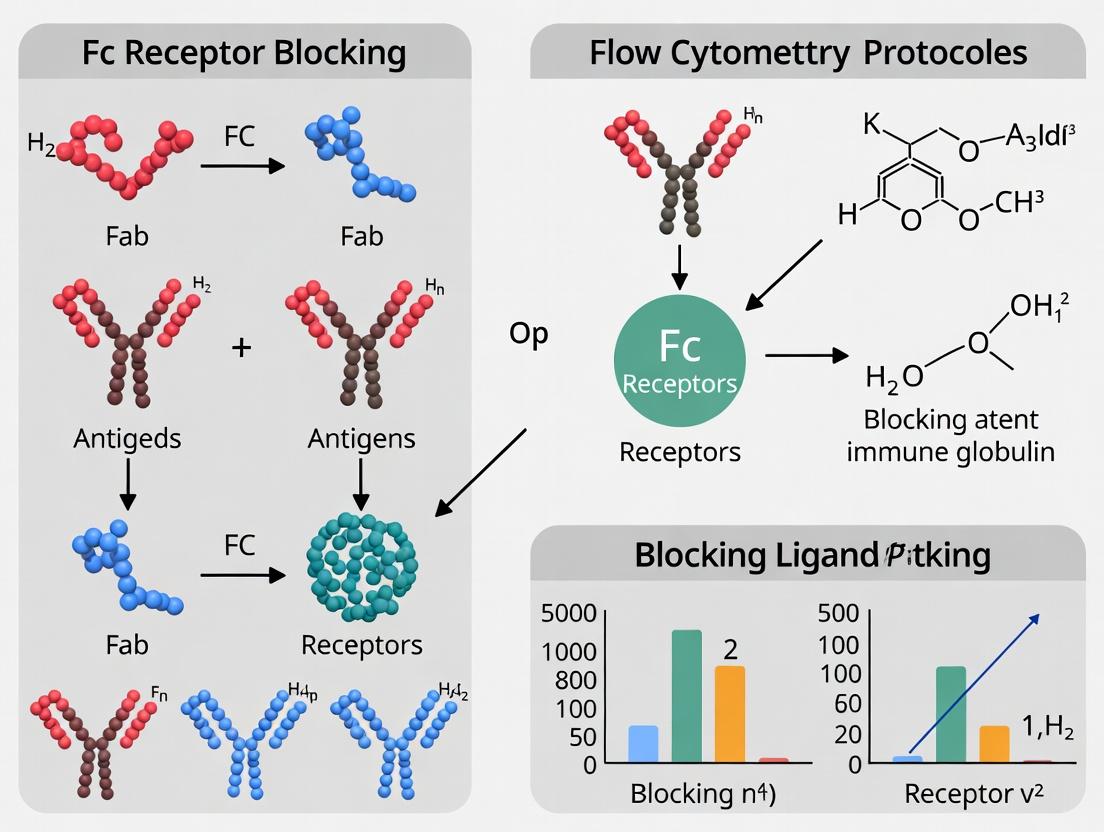
This comprehensive guide details the critical role of Fc receptor blocking in flow cytometry protocols for researchers, scientists, and drug development professionals.
Fc Receptor Blocking in Flow Cytometry: A Complete Guide for Accurate Immunophenotyping
Abstract
This comprehensive guide details the critical role of Fc receptor blocking in flow cytometry protocols for researchers, scientists, and drug development professionals. It covers the foundational science behind non-specific antibody binding, provides step-by-step methodological guidance for various sample types (human, mouse, clinical), addresses common troubleshooting and optimization challenges, and validates best practices through comparative analysis of commercial reagents and techniques. The article synthesizes current standards to ensure data accuracy, reproducibility, and reliable interpretation in immunology, oncology, and biomarker discovery.
Understanding Fc Receptors: The Science Behind Non-Specific Binding in Flow Cytometry
What Are Fc Receptors and Why Do They Cause Background in Flow?
Within flow cytometry, achieving high signal-to-noise ratios is paramount for accurate immunophenotyping and rare cell detection. A predominant source of non-specific background staining is the interaction between the Fc region of antibodies and Fc receptors (FcRs) expressed on many immune cells. This technical whitepaper, framed within the broader research thesis on optimizing Fc receptor blocking protocols, provides an in-depth examination of FcR biology, the mechanism of background generation, and evidence-based methodological solutions for its mitigation.
Fc receptors are cell surface proteins that bind the constant (Fc) region of immunoglobulins. They act as a critical link between the humoral and cellular immune systems, mediating effector functions such as phagocytosis, antibody-dependent cellular cytotoxicity (ADCC), and immune complex clearance.
Major Classes and Their Functions
The primary FcRs relevant to flow cytometry background are those for IgG (FcγRs) and IgE (FcεRI). Their characteristics are summarized below:
Table 1: Key Fc Receptors and Their Properties
| Receptor | Primary Isotope Affinity | Cell Expression | Signaling Outcome | Role in Flow Background |
|---|---|---|---|---|
| FcγRI (CD64) | IgG1, IgG3 > IgG4 | Monocytes, Macrophages, Activated Neutrophils, DCs | Activating (ITAM) | High - High affinity for monomeric IgG. |
| FcγRIIA (CD32a) | IgG1, IgG3 | Monocytes, Macrophages, Neutrophils, Platelets | Activating (ITAM) | Moderate - Low affinity, binds immune complexes. |
| FcγRIIC (CD32c) | IgG1, IgG3 | NK Cells, Neutrophils subset | Activating (ITAM) | Moderate |
| FcγRIIB (CD32b) | IgG1, IgG3, IgG4 | B Cells, Monocytes, Macrophages, DCs, Mast Cells | Inhibitory (ITIM) | Moderate - Binds immune complexes. |
| FcγRIIIA (CD16a) | IgG1, IgG3 | NK Cells, Monocytes, Macrophages, Mast Cells | Activating (ITAM) | Low-Moderate - Low affinity, binds immune complexes. |
| FcγRIIIB (CD16b) | IgG1, IgG3 | Neutrophils (GPI-anchored) | None (GPI-linked) | High - Can bind immune complexes and aggregated IgG. |
| FcεRI | IgE (high affinity) | Mast Cells, Basophils, DCs, Eosinophils | Activating (ITAM) | High if IgE is present in staining panel. |
DC: Dendritic Cell; GPI: Glycosylphosphatidylinositol; ITAM: Immunoreceptor Tyrosine-Based Activation Motif; ITIM: Immunoreceptor Tyrosine-Based Inhibitory Motif.
The Mechanism of Background Staining in Flow Cytometry
Background, or non-specific staining, occurs when fluorochrome-conjugated antibodies bind to cells via mechanisms other than specific antigen-paratope interaction. FcR-mediated binding is a major contributor.
The Binding Event
Staining antibodies, particularly intact IgG molecules, can be bound by FcRs on the cell surface. This results in the antibody localizing to the cell irrespective of target antigen expression. The degree of background is influenced by:
- FcR Expression Density: Cell types like macrophages and monocytes express high levels of multiple FcRs.
- Antibody Isotype and Form: Intact IgG antibodies are the primary culprits. F(ab')₂ fragments eliminate the Fc region but may not be available for all targets.
- Antibody Concentration & Purity: Over-titration or the presence of aggregated antibodies increases FcR binding.
- Sample Type: Cells with innate immune activation can upregulate FcγRI (CD64), drastically increasing background.
Diagram 1: Specific vs. FcR-Mediated Antibody Binding
Experimental Evidence & Quantification of Background
A seminal experiment quantifying FcR-mediated background involves comparing staining with intact IgG antibodies versus their F(ab')₂ fragments on FcR-positive and FcR-negative cell lines.
Detailed Protocol: Quantifying FcR Contribution
Objective: To measure the proportion of background signal attributable to FcR binding on human peripheral blood mononuclear cells (PBMCs). Reagents: See The Scientist's Toolkit below. Method:
- Cell Preparation: Isolate PBMCs from heparinized blood via density gradient centrifugation (Ficoll-Paque). Split into two aliquots (~1x10⁶ cells/tube).
- Blocking: Aliquot 1: Resuspend in 100µL FACS buffer. Aliquot 2: Resuspend in 100µL Fc Receptor Blocking Solution (e.g., human IgG, commercial block). Incubate for 15 minutes on ice.
- Staining: Directly add titrated amounts of fluorochrome-conjugated anti-CD14 (IgG isotype) and its corresponding F(ab')₂ fragment (if available) to both aliquots. Include isotype controls.
- Incubation: Stain for 30 minutes on ice in the dark.
- Washing: Wash cells twice with 2mL cold FACS buffer, centrifuging at 300-400 x g for 5 min.
- Acquisition: Resuspend in buffer and acquire on a flow cytometer.
- Analysis: Gate on monocytes (high SSC, CD14+). Compare the Median Fluorescence Intensity (MFI) of the intact IgG stain vs. the F(ab')₂ stain in blocked and unblocked conditions. Quantitative Outcome: The following table illustrates typical hypothetical data from such an experiment:
Table 2: Experimental Data - Effect of Blocking on Background MFI
| Cell Type | Staining Antibody | No Block (MFI) | With Fc Block (MFI) | % Reduction |
|---|---|---|---|---|
| Monocytes | Anti-CD14 (Intact IgG) | 85,000 | 65,000 | 23.5% |
| Anti-CD14 F(ab')₂ | 62,000 | 61,500 | 0.8% | |
| Isotype Ctrl (Intact IgG) | 4,500 | 950 | 78.9% | |
| B Cells | Isotype Ctrl (Intact IgG) | 1,200 | 250 | 79.2% |
MFI: Median Fluorescence Intensity; Ctrl: Control. Data is illustrative.
This data shows that a significant portion (≈78%) of isotype control binding (pure background) is eliminated by Fc block, confirming FcR-mediated binding. The residual signal in the specific anti-CD14 stain post-block represents specific binding.
The Scientist's Toolkit: Key Reagent Solutions
Table 3: Essential Reagents for Fc Receptor Blocking Research
| Reagent | Function & Rationale | Example Products/Formulations |
|---|---|---|
| Purified Immunoglobulin | Competitively saturates FcRs with unconjugated, non-signaling antibody. The gold standard. | Human: Purified human IgG (1-10 µg/million cells). Mouse: Purified anti-mouse CD16/32 (2.4G2). |
| Commercial Fc Block Buffers | Pre-formulated blends of purified immunoglobulins and inert proteins for optimized blocking. | BD Fc Block, TruStain FcX, BioLegend FcR Blocking Reagent. |
| F(ab')₂ Fragment Antibodies | Eliminate the Fc region entirely, preventing interaction with FcRs. | Available for many common targets from major suppliers. |
| Isotype Controls | Critical for distinguishing non-specific Fc-mediated binding from specific signal. | Must match the host species, isotype, and fluorochrome of the primary antibody. |
| Enzymatic Blocking | Uses enzymes like neuraminidase to modify FcR glycosylation and reduce affinity. | Less common, used in specific research contexts. |
Optimized Blocking Protocols Within Flow Workflow
Effective blocking must be integrated into the staining protocol. The choice depends on sample type and antibody panel.
Diagram 2: Integrated Fc Blocking in Staining Workflow
Key Protocol Note: The blocking step is performed before and separately from the surface staining step. Staining antibodies are added directly to the blocked cells without an intermediate wash to maintain FcR saturation.
Fc receptors are indispensable immune components that pose a significant technical challenge in flow cytometry by generating non-specific background. The research thesis on blocking protocols confirms that a rigorous, sample-tailored approach to FcR blockade—using purified immunoglobulins, validated commercial blocks, or F(ab')₂ fragments—is non-negotiable for achieving high-fidelity data. This is especially critical in multidimensional panels, rare event analysis, and phenotyping of highly FcR-expressive innate immune cells, where background minimization directly correlates with data accuracy and reproducibility.
1. Introduction
In flow cytometry protocols, a primary source of non-specific background staining and false-positive signals is the binding of antibody Fc portions to cellular Fc gamma receptors (FcγRs). This non-specific binding is particularly problematic in immunophenotyping, rare cell detection, and intracellular signaling studies. Within the broader thesis of optimizing Fc receptor blocking strategies, a precise understanding of FcγR biology and interaction mechanics is foundational. This whitepaper details the structural and kinetic mechanisms governing these interactions, providing a technical guide for researchers seeking to mitigate assay artifacts.
2. FcγR Family: Structure, Expression, and Function
FcγRs are transmembrane glycoproteins expressed predominantly on hematopoietic cells. Their primary physiological role is to link the humoral and cellular immune responses by binding IgG-opsonized targets. For flow cytometry, their expression on immune cells like monocytes, macrophages, neutrophils, dendritic cells, B cells, and NK cells creates a direct avenue for non-specific antibody binding.
Table 1: Human Fc Gamma Receptor Classes, Affinities, and Cellular Expression
| Receptor | Gene(s) | Signaling Motif | Affinity for IgG1 (Kd) | Primary Cell Expression | Role in Flow Artifact |
|---|---|---|---|---|---|
| FcγRI | FCGR1A | ITAM (via γ-chain) | High (~10⁻¹⁰ M) | Monocytes, Macrophages, DCs, activated neutrophils | High risk due to high affinity for monomeric IgG. |
| FcγRIIA | FCGR2A | ITAM (intrinsic) | Low (>10⁻⁷ M) | Monocytes, Macrophages, Neutrophils, Platelets | Binds immune complexes; risk with antibody aggregates. |
| FcγRIIB | FCGR2B | ITIM | Low (>10⁻⁷ M) | B cells, Monocytes, Macrophages, DCs | Inhibitory; contributes to background on B cells. |
| FcγRIIC | FCGR2C | ITAM (intrinsic) | Low (>10⁻⁷ M) | NK cells, Neutrophils (subset) | Activating; can bind staining antibodies. |
| FcγRIIIA | FCGR3A | ITAM (via ζ/γ-chain) | Low (~10⁻⁶ M) monomer; High for complexes | NK cells, Macrophages, Monocytes (low) | Major source of NK cell background via CD16. |
| FcγRIIIB | FCGR3B | GPI-anchored (non-signaling) | Low (>10⁻⁷ M) | Neutrophils | "Decoy" receptor; major sink on neutrophils. |
3. Mechanisms of Fc-FcγR Interaction
The binding interface involves the lower hinge region (amino acids 234-237) and the CH2 domain (residues 327-332) of the antibody Fc region. Key biophysical parameters include:
- Affinity & Valency: The low intrinsic affinity of most FcγRs (except FcγRI) for monomeric IgG is overcome by avidity in flow cytometry, where high concentrations of conjugated antibodies can lead to multivalent binding.
- Glycosylation: The conserved N-linked glycan at Asn297 of the Fc is critical for maintaining an open conformation competent for FcγR binding. Deglycosylated or aglycosylated antibodies show significantly reduced FcγR engagement.
- Allotypic Variation: Polymorphisms (e.g., FcγRIIA-H131/R131, FcγRIIIA-V158/F158) significantly alter binding affinity for specific IgG subclasses, contributing to variable background between donors.
Table 2: Key Biophysical Parameters Influencing Non-Specific Binding
| Parameter | Impact on FcγR Binding | Implication for Flow Cytometry |
|---|---|---|
| Antibody Concentration | Linear increase in monomeric ligand availability. | High titer increases non-specific binding risk. |
| Antibody Subclass | IgG2/IgG4 bind less efficiently to most FcγRs than IgG1. | Subclass choice can minimize interactions. |
| Fc Engineering | LALA, N297A, or PGA mutations abrogate binding. | Use of engineered clones eliminates the issue. |
| Antibody Aggregation | Creates multivalent immune-complex mimics. | Dramatically increases binding to low-affinity FcγRs. |
| Buffer Composition | Ionic strength, pH, divalent cations affect interaction. | Optimized staining buffers can reduce affinity. |
4. Experimental Protocols for Studying/Blocking FcγR Interactions
Protocol 4.1: Classical Fc Block using Human IgG or Sera
- Objective: Saturate FcγRs with excess, unlabeled, non-specific IgG.
- Materials: Human purified IgG (from pooled sera) or autologous/AB serum, FACS buffer (PBS + 1-2% BSA/FBS + 0.1% NaN₃).
- Procedure:
- Prepare a single-cell suspension (1x10⁷ cells/mL).
- Incubate cells with blocking agent (e.g., 1-10 µg/10⁶ cells of purified human IgG or 2-10% v/v human serum) in FACS buffer for 10-15 minutes on ice.
- Without washing, proceed directly to addition of fluorochrome-conjugated staining antibodies.
- Note: This is the most common method but may be insufficient for high-affinity FcγRI.
Protocol 4.2: Blockade using Anti-CD16/CD32 Monoclonal Antibodies
- Objective: Block specific, high-impact FcγRs with high-affinity monoclonal antibodies (mAbs).
- Materials: Anti-human CD16 (FcγRIII) and/or anti-human CD32 (FcγRII) blocking mAbs (clone-specific, unlabeled).
- Procedure:
- Resuspend cells (1x10⁷ cells/mL) in FACS buffer.
- Add a cocktail of blocking mAbs (e.g., 1 µg/10⁶ cells each of anti-CD16 and anti-CD32). Clone 3G8 (anti-CD16) and 2.4G2 (anti-mouse; for mouse cells) are common.
- Incubate for 10-15 minutes on ice.
- Without washing, add the staining panel. This method is often more specific and effective than polyclonal IgG block.
Protocol 4.3: Use of Fc-Engineered or Fab Fragment Antibodies
- Objective: Eliminate the Fc-mediated binding site entirely.
- Materials: Primary antibodies cloned as F(ab) or F(ab')₂ fragments, or recombinant antibodies with Fc-silencing mutations (e.g., L234A/L235A "LALA").
- Procedure:
- Source or conjugate the desired antibody specificity as an Fc-silent format.
- Use the fragment or engineered antibody in place of the full IgG in the standard staining protocol.
- No pre-blocking step is required, simplifying the protocol and providing the most specific signal.
5. The Scientist's Toolkit: Key Research Reagent Solutions
| Item | Function/Explanation |
|---|---|
| Purified Human/Mouse IgG | Inexpensive, polyclonal reagent for bulk saturation of multiple FcγR types. |
| Human AB Serum | Source of natural, polyclonal IgG for more physiologically relevant blocking. |
| Anti-CD16 mAb (e.g., clone 3G8) | Specifically blocks FcγRIII (CD16), critical for NK cell and macrophage assays. |
| Anti-CD32 mAb (e.g., clone AT10) | Specifically blocks FcγRII (CD32), important for monocyte, neutrophil, and B cell assays. |
| Fc Receptor Binding Inhibitor (Polymeric) | Recombinant, engineered protein (e.g., from Invitrogen or Miltenyi) offering high-affinity, multi-receptor blockade. |
| F(ab)/F(ab')₂ Fragment Antibodies | Lack the Fc region, eliminating the binding site; ideal for intracellular targets or high FcγR-expressing cells. |
| Fc-Silenced Recombinant Antibodies | Full-length antibodies with point mutations (e.g., LALA, N297A) that prevent all FcγR and complement binding. |
| TruStain FcX (BioLegend) | A commercial, ready-to-use anti-CD16/32 antibody cocktail optimized for mouse/human cell blocking. |
6. Signaling Pathways and Experimental Workflow
Title: Non-Specific Antibody Binding and Blocking Strategies
Title: FcγR-Mediated Cell Activation Artifact Pathway
7. Conclusion
Effective mitigation of non-specific antibody binding in flow cytometry requires a mechanistic understanding of FcγR interactions. The choice of blocking strategy—from classical polyclonal IgG saturation to the use of specific blocking mAbs or engineered reagents—must be informed by the target cell population, antibody clones, and required assay sensitivity. Integrating this knowledge into protocol design, as part of a systematic thesis on blocking optimization, is essential for obtaining data of the highest fidelity in immunology research and drug development.
Key Cell Types Expressing Problematic Fc Receptors (Monocytes, Macrophages, B Cells, etc.)
Introduction In flow cytometry protocols, particularly in immunophenotyping and cell sorting, non-specific antibody binding via Fc receptors (FcRs) presents a significant source of background noise and experimental artifact. This technical guide details the key immune cell types that express these problematic Fc receptors, framing the discussion within the broader thesis that strategic Fc receptor blocking is a critical, non-negotiable step for generating high-fidelity data. Understanding the expression profiles and functions of these receptors is foundational for designing effective blocking strategies in both research and drug development workflows.
1. Problematic Fc Receptors and Their Expression Profiles Fc receptors bind the constant region (Fc) of immunoglobulins. In flow cytometry, fluorescently conjugated antibodies can bind non-specifically to FcRs on cell surfaces, leading to false-positive signals. The key offending receptors are detailed below.
Table 1: Key Problematic Fc Receptors and Their Cellular Expression
| Fc Receptor | Primary Ligand(s) | Key Expressing Cell Types | Functional Consequence in Flow Cytometry |
|---|---|---|---|
| FcγRI (CD64) | IgG (high affinity) | Monocytes, Macrophages, Activated Neutrophils, Dendritic Cells (some) | High background from high-affinity binding of IgG-based detection antibodies. |
| FcγRIIA (CD32a) | IgG (low affinity) | Monocytes, Macrophages, Neutrophils, Platelets, Dendritic Cells, B Cells (low) | Predominant source of non-specific staining due to ubiquitous expression on myeloid cells. |
| FcγRIII (CD16) | IgG (low affinity) | NK Cells, Neutrophils, Monocytes, Macrophages, Mast Cells | Critical for functional studies but causes background on NK and phagocytic cells. |
| FcεRI | IgE (high affinity) | Mast Cells, Basophils, Dendritic Cells (some) | Relevant in allergy/asthma research; causes background with IgE reagents. |
| FcαRI (CD89) | IgA | Neutrophils, Monocytes, Macrophages, Eosinophils | Source of background in mucosal immunity studies. |
| FcγRIIB (CD32b) | IgG (low affinity) | B Cells, Mast Cells, Dendritic Cells | Predominant FcγR on B cells; its blockade is essential for clean B cell phenotyping. |
2. Detailed Characterization of Key Cell Types
2.1 Monocytes and Macrophages These are the most prolific expressors of problematic FcRs, displaying FcγRI, FcγRIIA, FcγRIII, and FcαRI. Their primary role in phagocytosis and antigen presentation is mediated through these receptors, making them exceptionally "sticky" to antibody cocktails without proper blocking.
2.2 B Cells While primarily known for expressing the inhibitory FcγRIIB, B cells can also bind immune complexes via this receptor. Unblocked, this leads to compromised resolution of B cell subsets (e.g., memory vs. naïve) and can obscure detection of low-density surface markers.
2.3 Natural Killer (NK) Cells Constitutively express FcγRIII (CD16), which mediates antibody-dependent cellular cytotoxicity (ADCC). In flow cytometry, this receptor readily binds IgG-based antibodies, requiring blockade for intracellular staining or analysis of activation markers.
2.4 Neutrophils, Eosinophils, and Basophils Granulocytes express a range of FcγRs (FcγRIIA, FcγRIII, FcαRI, FcεRI). Their high autofluorescence and FcR expression make them particularly challenging, necessitating robust blocking and careful compensation.
2.5 Dendritic Cells (DCs) Various DC subsets express FcγRI, FcγRII, and FcεRI, which are involved in antigen capture. Blocking is crucial for precise subset identification (e.g., cDC1 vs. cDC2) and activation status analysis.
3. Experimental Protocols for Fc Receptor Blocking in Flow Cytometry
Protocol 3.1: Standard Pre-Incubation Blocking
- Reagents: Purified anti-CD16/32 (Clone 2.4G2 or 93), species-matched IgG, or commercial blocking serum.
- Procedure:
- Prepare a single-cell suspension in cold flow cytometry buffer (PBS + 2% FBS + 1mM EDTA).
- Centrifuge at 300-400 x g for 5 min at 4°C. Decant supernatant.
- Resuspend cell pellet in buffer containing Fc block reagent (e.g., 1 µg of anti-CD16/32 per 10^6 cells or 5% normal serum).
- Incubate on ice or at 4°C for 10-15 minutes.
- Do not wash. Proceed directly to staining with the titrated antibody cocktail.
Protocol 3.2: Integrated Blocking for High-FcR Expressing Cells (e.g., Macrophages)
- Reagents: As above, plus viability dye.
- Procedure:
- Follow steps 1-3 from Protocol 3.1.
- Add the Fc block reagent AND the surface antibody cocktail simultaneously to the cells. The Fc block reagent is in excess.
- Incubate on ice in the dark for 30 minutes.
- Wash twice with cold buffer.
- If performing intracellular staining, fix and permeabilize cells according to manufacturer instructions. Note: Intracellular staining often requires a second blocking step with normal serum or IgG from the permeabilization buffer species.
Protocol 3.3: Validation of Blocking Efficiency (Critical Control Experiment)
- Method: Stain two identical aliquots of cells (e.g., murine splenocytes or human PBMCs).
- Tube A: With Fc block (as per Protocol 3.1 or 3.2).
- Tube B: Without Fc block, but with an irrelevant, fluorochrome-conjugated antibody of the same isotype and species as your test antibodies.
- Analysis: Compare the median fluorescence intensity (MFI) of the irrelevant antibody in Tube A vs. Tube B using flow cytometry software. Effective blocking should show a ≥90% reduction in MFI in Tube A.
4. Visualizations
Title: Standard Fc Blocking Workflow for Flow
Title: Mechanism of Fc Blocking Action
5. The Scientist's Toolkit: Research Reagent Solutions
Table 2: Essential Reagents for Fc Receptor Blocking Experiments
| Reagent | Function/Application | Example Product/Catalog |
|---|---|---|
| Purified Anti-Mouse CD16/32 (Clone 2.4G2) | Gold-standard for blocking mouse FcγRIII/II. Used prior to or during surface stain. | BioLegend, 101302; Tonbo, 70-0161 |
| Human FcR Blocking Reagent (Polyclonal) | Recombinant human IgG or purified antibody mix for blocking multiple human FcγRs. | Miltenyi Biotec, 130-059-901 |
| Normal Serum (Mouse, Rat, Human) | Provides species-specific IgG to competitively inhibit FcR binding. Must match secondary antibody species. | Various vendors (e.g., Jackson ImmunoResearch) |
| TruStain FcX (anti-mouse CD16/32) | A newer, ultra-purified formulation of clone 2.4G2 for reduced non-specific binding. | BioLegend, 101320 |
| Fc Block for Human Cells (Anti-CD16/CD32/CD64) | Antibody cocktail for comprehensive blocking on human myeloid cells. | BD Biosciences, 564220 |
| Isotype Control Antibodies | Critical negative controls to set gates and validate blocking efficiency. Must match primary antibody isotype, species, and fluorochrome. | Available from all major flow vendors |
| Viability Dye (Fixable) | Distinguishes live from dead cells; dead cells have high FcR-mediated nonspecific binding. | Zombie Dye (BioLegend), LIVE/DEAD (Thermo Fisher) |
Within the critical context of optimizing Fc receptor (FcR) blocking protocols for flow cytometry, the selection of species and sample type is a fundamental determinant of experimental validity. Effective blocking minimizes nonspecific antibody binding via Fc-FcR interactions, a prerequisite for accurate immunophenotyping. However, the biological and technical heterogeneity between human cell lines, mouse models, and primary human clinical samples necessitates a nuanced, non-uniform approach. This guide provides a technical framework for designing FcR blocking strategies tailored to these distinct sample types, ensuring data fidelity in both basic research and translational drug development.
Comparative Biology of Fc Receptors Across Species
The divergence in FcR families, expression patterns, and affinities between humans and mice directly impacts blocking reagent selection and efficacy.
Key Differences in FcR Families
Diagram Title: Species Divergence in Fcγ Receptor Families
Quantitative Comparison of Expression Profiles
Table 1: Expression of Key FcγRs on Major Immune Cell Types
| Cell Type | Human (Key Receptors) | Mouse (Key Receptors) | Implication for Blocking |
|---|---|---|---|
| Monocytes/Macrophages | High CD64, CD32a, CD16a | High FcγRI, FcγRIV, FcγRIII | Require high-dose, multi-target blocking. Mouse samples need anti-FcγRIV specifically. |
| Neutrophils | High CD16b (GPI), CD32a | Low FcγRI, express FcγRIII | Human: critical to block CD16b. Mouse: less demanding. |
| B cells | Primarily inhibitory CD32b | Primarily inhibitory FcγRIIb | Blocking still required to prevent nonspecific binding of immune complexes. |
| NK cells | CD16a (activating) | FcγRIII (activating) | Blocking prevents unwanted activation and nonspecific staining. |
| Dendritic Cells | Variable CD32, CD16, CD64 | Variable FcγRI, FcγRIIb, FcγRIV | Highly variable; requires empirical optimization for each subset. |
| Basophils/Mast Cells | High-affinity FcεRI for IgE | High-affinity FcεRI, FcγRIIb/FcγRIII | Requires consideration for IgE-mediated assays; standard IgG Fc blockers may be insufficient. |
Experimental Protocols for FcR Blocking by Sample Type
Protocol A: FcR Blocking for Human Cell Lines (e.g., THP-1, U937)
Principle: Use purified human IgG or commercial blocking reagents to saturate FcγRs. Detailed Methodology:
- Harvest & Wash: Collect 1x10^6 cells, wash once in cold Flow Cytometry Staining Buffer (FACS Buffer: PBS + 1% BSA + 0.1% NaN3).
- Blocking: Resuspend cell pellet in 100µL FACS Buffer containing either:
- 10µg of purified human IgG (e.g., from pooled serum) per 1x10^6 cells, OR
- 5µL of commercial human FcR blocking reagent (e.g., Human TruStain FcX).
- Incubate: 10 minutes on ice.
- Stain: Add fluorochrome-conjugated antibodies directly to the blocking mixture without washing. Incubate 30 min on ice in the dark.
- Wash & Analyze: Wash twice with 2mL FACS Buffer, resuspend in fixation buffer or PBS, and acquire on flow cytometer.
Protocol B: FcR Blocking for Mouse Tissues (Spleen, Lymph Nodes)
Principle: Employ anti-mouse CD16/32 (2.4G2) monoclonal antibody to block both FcγRIIb and FcγRIII, with consideration for FcγRIV. Detailed Methodology:
- Single-Cell Suspension: Generate suspension from spleen using gentle mechanical dissociation. Lyse red blood cells with ACK buffer. Wash with FACS Buffer.
- Viability Stain: Optional: pre-stain with viability dye in PBS.
- Blocking: Resuspend up to 1x10^7 cells in 100µL FACS Buffer containing:
- 0.5-1µg of purified anti-mouse CD16/32 (clone 2.4G2) per 1x10^6 cells, AND
- 10µg of purified mouse IgG (or rat serum) to block FcγRIV and other low-affinity sites.
- Incubate: 15 minutes on ice.
- Surface Stain: Add pre-titrated antibody cocktail directly. Incubate 30 min on ice, dark.
- Wash, Fix, Acquire: Wash twice, fix if required, and acquire data.
Protocol C: FcR Blocking for Human Primary Clinical Samples (PBMCs, Whole Blood)
Principle: Use high-potency, validated commercial blockers to handle diverse cell populations and potential immune complexes. Detailed Methodology:
- Sample Prep: Isolate PBMCs via density gradient (e.g., Ficoll) from whole blood. For whole blood assays, use heparin or EDTA tubes.
- Blocking (PBMC): Resuspend 1x10^6 PBMCs in 100µL FACS Buffer with 5µL Human TruStain FcX. Incubate 10 min on ice.
- Blocking (Whole Blood): Add 5µL FcR blocker per 100µL whole blood. Mix gently. Incubate 10 min at room temperature.
- Antibody Staining: Add surface antibody cocktail. For whole blood, incubate 30 min at room temp in the dark.
- RBC Lysis (Whole Blood): Add 2mL of 1x RBC lysis buffer (e.g., BD Pharm Lyse). Incubate 15 min at RT in dark. Centrifuge, aspirate.
- Wash & Finalize: Wash twice with FACS Buffer. Proceed to intracellular staining or fixation.
Diagram Title: Decision Flowchart for FcR Blocking Protocol Selection
The Scientist's Toolkit: Essential Research Reagents
Table 2: Key Reagent Solutions for FcR Blocking in Flow Cytometry
| Reagent | Recommended Application | Function & Rationale |
|---|---|---|
| Purified Human IgG | Human cell lines, some primary cells | Saturates FcγRs with homologous, unlabeled IgG. Cost-effective for large-scale experiments. |
| Purified Mouse/Rat IgG | Mouse tissue samples | Blocks low-affinity sites and FcγRIV in mice. Rat serum is often used for its broad reactivity in mouse models. |
| Anti-Mouse CD16/32 (2.4G2) | Mouse tissue samples (essential) | Monoclonal antibody that specifically blocks mouse FcγRIIb and FcγRIII, the primary sources of nonspecific binding. |
| Commercial Human FcR Blockers (e.g., TruStain FcX) | Human primary samples (PBMCs, whole blood) | Optimized, standardized polyclonal antibody mixtures providing consistent, high-efficiency blocking. |
| Fc Receptor Binding Inhibitor (e.g., polymer-based) | Multiplex panels, phospho-flow, sensitive targets | Non-antibody polymers that sterically inhibit all Fc-FcR interactions, reducing background without antibody masking. |
| Viability Dye (e.g., Zombie NIR) | All sample types, especially primary tissues | Distinguishes live/dead cells. Dead cells have high nonspecific FcR-mediated binding; must be excluded from analysis. |
| Cell Activation Cocktails | Functional assays (cytokine staining) | Induces cytokine production. FcR blocking MUST be performed prior to activation to prevent aberrant signaling. |
Data Interpretation & Troubleshooting
Validation of Blocking Efficacy
Control Experiment: Always include a fluorescence-minus-one (FMO) control and an isotype control stained with and without FcR blocking. A successful block will reduce the median fluorescence intensity (MFI) of the isotype control to near the level of the unstained/FMO control.
Table 3: Troubleshooting Common FcR Blocking Issues
| Problem | Possible Cause | Solution |
|---|---|---|
| High background in specific subsets | Incomplete blocking of dominant FcR on that subset (e.g., CD16b on neutrophils). | Increase blocker concentration or incubation time. Use a blocker specifically targeting the problematic receptor. |
| Poor blocking in mouse tissues | Neglecting FcγRIV. | Add purified mouse IgG (10-20µg/10^6 cells) or rat serum (2-5% v/v) to the anti-CD16/32 blocking step. |
| Reduced target antigen signal | Blocking reagent or antibody cross-linking causes internalization. | Ensure blocking is performed on ice. Titrate blocking reagent to find optimal concentration. |
| Persistent background in whole blood | Immune complexes or high endogenous IgG. | Use a more potent commercial blocker. Consider additional wash step pre-blocking. Use fresh samples. |
The strategic implementation of FcR blocking is not a one-size-fits-all step but a carefully calibrated parameter that hinges on species-specific biology and sample complexity. For mouse models, the mandatory inclusion of anti-CD16/32 alongside immunoglobulin addresses unique receptors like FcγRIV. For human primary clinical samples, characterized by immense heterogeneity and potential confounding factors, validated commercial blockers offer reproducibility crucial for translational research. Integrating these tailored protocols within the broader thesis of flow cytometry optimization ensures that the resulting high-dimensional data reflect true biological variance rather than technical artifact, thereby strengthening the foundation of immunology research and biomarker discovery.
The implementation of Fc receptor (FcR) blocking in flow cytometry protocols is a critical procedural step born from decades of investigative refinement. Its adoption as a standard practice stems from the fundamental need to differentiate specific antibody-antigen binding from non-specific interactions mediated by the Fc portion of immunoglobulins. Fc receptors, expressed constitutively on many immune cells like macrophages, dendritic cells, B cells, neutrophils, and mast cells, bind the constant region (Fc) of antibodies. Without blocking, fluorochrome-conjugated detection antibodies can bind non-specifically to these FcRs, leading to elevated background fluorescence, false-positive data, and compromised resolution of genuinely antigen-positive populations.
The historical evolution traces back to the early 1980s with the rise of monoclonal antibody technology and multi-color flow cytometry. Researchers initially used normal serum from the host species of the detection antibody as a blocking agent. The field progressed to purified, engineered proteins—like murine anti-CD16/32 F(ab')2 fragments or human IgG—offering higher specificity and consistency. Today, Fc blocking is a non-negotiable step in immunophenotyping, especially for complex samples like whole blood, splenocytes, or tumor infiltrates, and is rigorously validated in clinical assay development.
Quantitative Impact: Data Supporting the Practice
The necessity of Fc blocking is quantitatively demonstrable. The following tables summarize key metrics from contemporary studies.
Table 1: Impact of Fc Blocking on Flow Cytometry Assay Performance
| Metric | Without Fc Blocking | With Fc Blocking (anti-CD16/32) | Improvement | Reference Context |
|---|---|---|---|---|
| Background MFI (Isotype Control) | 450 ± 120 | 95 ± 25 | ~79% reduction | Murine splenocytes, staining for CD11c |
| False Positive Rate (%) | 15-35% | 2-5% | 4-7 fold reduction | Human PBMCs, identifying rare antigen-specific T cells |
| Signal-to-Noise Ratio | 8.5 | 42.3 | ~5 fold increase | Staining of FcγRIII (CD16) on NK cells |
| Population Purity in Sorting | 87% | 99.5% | Significant for downstream assays | Isolation of dendritic cell subsets for functional assays |
| Intra-Assay CV (%) | 18% | 6% | ~3 fold improvement | High-content immunophenotyping panel (15+ colors) |
Table 2: Comparison of Common Fc Blocking Reagents
| Reagent Type | Example | Primary Mechanism | Optimal Concentration | Best For | Key Consideration |
|---|---|---|---|---|---|
| Purified Anti-FcγR mAb | Anti-mouse CD16/32 (FcγRIII/II) | High-affinity blockade of specific receptors | 0.5-1 µg/10^6 cells | Mouse, rat samples; high FcR density | Most effective for specific species/cell types. |
| Species-Specific IgG | Human, Mouse, Rat IgG | Competes with detection Abs for FcR binding | 50-100 µg/10^6 cells | Polyclonal blocking; human PBMCs | Can be less potent than anti-receptor Abs. |
| F(ab')2 Fragments | Goat F(ab')2 Anti-Mouse IgG | Binds Fc portion of primary Ab, prevents FcR binding | 10-20 µg/10^6 cells | Blocking secondary Ab interactions | Useful in indirect staining protocols. |
| Commercial Blocking Mixtures | TruStain FcX (BioLegend), FcR Blocking Reagent (Miltenyi) | Optimized cocktail of antibodies/proteins | Per manufacturer | Standardized, high-throughput workflows | Validated for specific applications (e.g., human, mouse). |
| Normal Serum | Normal Mouse Serum | Polyclonal IgG competes for FcR binding | 2-5% (v/v) | Low-cost, general purpose | Variable composition, potential for cross-reactivity. |
Detailed Experimental Protocols
Protocol 1: Standard Pre-Incubation Fc Blocking for Murine Leukocytes
Objective: To inhibit non-specific binding of fluorochrome-conjugated antibodies to FcγRIII (CD16) and FcγRII (CD32) on murine immune cells. Materials: See The Scientist's Toolkit below. Method:
- Prepare a single-cell suspension from spleen, lymph nodes, or tumor. Lyse RBCs if using whole blood or spleen. Wash cells 2x in FACS Buffer (PBS + 1% BSA + 0.1% NaN3). Count and viability-assay cells.
- Fc Blocking: Aliquot 1 x 10^6 to 10 x 10^6 cells into a FACS tube. Pellet cells (300-500 x g, 5 min, 4°C). Thoroughly aspirate supernatant.
- Resuspend cell pellet in 50-100 µL of FACS Buffer containing purified anti-mouse CD16/32 antibody (clone 93) at a final concentration of 0.5 - 1 µg per 10^6 cells. Alternative: Use 2% normal mouse or rat serum.
- Incubate on ice or at 4°C for 10-15 minutes. Do not wash.
- Proceed directly to the antibody staining step by adding the pre-titrated, fluorochrome-conjugated antibody cocktail directly to the tube (typically in a total volume of 50-100 µL). Mix gently.
- Incubate staining cocktail with cells for 20-30 minutes in the dark at 4°C.
- Wash cells 2x with 2-3 mL of FACS Buffer. Resuspend in fixation buffer (e.g., 1-4% PFA) or FACS Buffer for immediate acquisition on a flow cytometer.
Protocol 2: Integrated Fc Blocking for Human PBMC Staining
Objective: To block Fc receptors on human peripheral blood mononuclear cells (PBMCs) in a high-parameter panel, often using a commercial cocktail. Method:
- Isolate PBMCs via density gradient centrifugation (Ficoll-Paque). Wash 2x in PBS. Count and resuspend in FACS Buffer.
- Fc Blocking & Staining: Aliquot 1 x 10^6 PBMCs per tube. Pellet and aspirate.
- Resuspend cells in 50 µL of FACS Buffer containing a human FcR blocking reagent (e.g., TruStain FcX) according to the manufacturer's instructions (e.g., 5 µL per 10^6 cells).
- Immediately add the master mix of surface staining antibodies (including viability dye) directly to the same tube without washing. Total staining volume should be 100 µL.
- Vortex gently and incubate for 30 minutes in the dark at 4°C.
- Wash cells 2x with 2 mL FACS Buffer.
- (Optional) For intracellular staining: Fix and permeabilize cells using a commercial kit (e.g., Foxp3/Transcription Factor Staining Buffer Set), then stain with intracellular antibodies after a second, brief Fc blocking step in permeabilization buffer to account for intracellular FcRs.
Visualizing the Mechanism and Workflow
Diagram 1: Mechanism of Fc Blocking in Flow Cytometry
Diagram 2: Standard Flow Cytometry Staining with Integrated Fc Block
The Scientist's Toolkit: Essential Reagents for Fc Blocking Experiments
| Item | Function & Role in Protocol | Key Considerations |
|---|---|---|
| Purified Anti-CD16/32 (Clone 93) | The gold-standard for blocking mouse FcγRIII/II. High-affinity monoclonal antibody that saturates receptors. | Use at 0.5-1 µg/10^6 cells. Pre-incubation is critical. Effective for most mouse immune cells. |
| Human TruStain FcX | A proprietary, optimized cocktail for blocking human FcRs. Allows co-incubation with staining antibodies. | Validated for human PBMCs, whole blood. Saves a step by enabling simultaneous block/stain. |
| FACS Buffer (PBS/BSA/Azide) | Standard washing and staining buffer. BSA acts as a protein block; azide inhibits receptor internalization. | Must be cold (4°C) and sterile-filtered. Avoid repeated freeze-thaw of BSA stock. |
| Normal Serum (Mouse, Rat, Human) | Provides a source of polyclonal IgG to compete for FcR binding sites. A cost-effective, general-purpose blocker. | Potential for batch-to-batch variability. May contain antibodies that cross-react with antigens of interest. |
| Viability Dye (e.g., LIVE/DEAD Fixable) | Distinguishes live from dead cells. Dead cells exhibit extremely high non-specific FcR-mediated binding. | Must be added BEFORE Fc block for best results, as dead cells can absorb blocking reagents. |
| F(ab')2 Fragment Goat Anti-Mouse IgG | Used to block secondary antibodies in indirect staining protocols. Prevents secondary Ab Fc-mediated binding. | Essential when using unconjugated primary antibodies followed by a fluorochrome-conjugated secondary. |
| 96-Well U-Bottom Plate | Preferred vessel for high-throughput staining of many samples. Facilitates easy centrifugation and washing steps. | Low binding plates minimize cell loss. Use plate seals during incubation steps to prevent evaporation. |
| Refrigerated Centrifuge | Maintains samples at 4°C during washing steps to minimize receptor internalization and capping. | Consistent, gentle pelleting (300-500 x g) is key to preserving cell integrity and reducing clumping. |
Step-by-Step Fc Blocking Protocols: From Standard Assays to Complex Panels
Within the broader research thesis on Fc receptor (FcR) blocking in flow cytometry, this guide addresses the pivotal operational question. Unwanted, non-specific antibody binding via Fc-FcR interactions is a primary confounder in immunophenotyping, leading to false-positive signals, reduced signal-to-noise ratios, and compromised data integrity. This protocol defines the critical parameters—temporal application, methodological choice, and sample-specific context—for the effective integration of Fc block to ensure antibody binding specificity reflects true antigen expression.
The "When": Decision Framework and Rationale
Fc block is not universally required but is essential under specific conditions. The decision framework is summarized below.
Table 1: Decision Matrix for Fc Block Application
| Sample Type | Recommended Fc Block? | Primary Rationale | Key Considerations |
|---|---|---|---|
| Mouse Immune Cells (splenocytes, PBMCs, lymph nodes) | Always | High FcγRIII/II (CD16/32) expression on myeloid cells (macrophages, DCs, monocytes, neutrophils) and subsets of lymphocytes. | Essential for all stains involving mouse myeloid cells. Purified anti-CD16/32 is standard. |
| Human PBMCs / Whole Blood | Context-Dependent | FcRs are expressed on monocytes, macrophages, B cells, NK cells, and activated T cells. | Critical for myeloid and activated cell panels. Less critical for resting lymphocyte panels but still recommended for purity. |
| Cell Lines (e.g., Jurkat, THP-1) | Case-by-Case | Expression varies (e.g., THP-1 expresses FcγRI). | Validate via isotype controls. Often required for monocytic lines. |
| Tissue Dissociates (e.g., tumor microenvironments) | Almost Always | High presence of resident macrophages and immune infiltrates. | Crucial to reveal true immune subset composition and activation states. |
| FcR-Transfected Cells | Mandatory | Engineered high-level expression. | Required to prevent massive non-specific staining. |
| Intracellular/Cytokine Staining | Yes, Prior to Fixation | Fixation permeabilization does not abrogate pre-formed Fc-antibody complexes. | Block during surface staining step before fixation/permeabilization. |
| Phospho-Flow Cytometry | Yes, Prior to Stimulation | FcR engagement can itself activate signaling pathways. | Block prior to any cell stimulation to prevent confounding activation. |
Quantitative Impact Data: Recent studies quantify the effect of omission. In a 2023 analysis of murine tumor-infiltrating leukocytes, the absence of Fc block led to a mean false-positive rate increase of 15.2% ± 4.8% in the monocytic myeloid-derived suppressor cell (M-MDSC) gate (defined as CD11b⁺Ly6C⁺Ly6G⁻). For human dendritic cell subsets, non-specific binding accounted for up to 30% of the median fluorescence intensity (MFI) in channels where no target antigen was expected.
The "How": Detailed Methodologies and Reagent Options
Core Experimental Protocol: Direct Fc Block (Pre-Incubation)
This is the gold-standard method, performed as a discrete step prior to antibody staining.
Detailed Protocol:
- Prepare Cell Suspension: Wash cells in cold flow cytometry staining buffer (PBS + 1-2% FBS or BSA + 0.1% NaN₂).
- Calculate Fc Block Volume: Resuspend cell pellet at 10-50 × 10⁶ cells/mL in staining buffer.
- Add Fc Block Reagent:
- For mouse samples: Add purified anti-mouse CD16/32 antibody (clone 93 or 2.4G2) at 0.5-1.0 µg per 10⁶ cells. Incubate on ice for 10-15 minutes.
- For human samples: Add either: a) Purified human IgG (or fragments) at 1-10 µg per 10⁶ cells, OR b) Commercial FcR blocking reagent (e.g., Human TruStain FcX) per manufacturer's instructions.
- Proceed to Staining: Without washing, directly add the pre-titrated antibody cocktail to the cells. The Fc block remains present during the surface staining incubation, preventing competition.
Alternative Method: Block-by-Dilution
This method relies on adding excess immunoglobulin to the staining antibody cocktail itself.
Protocol:
- Prepare Cocktail: Add a high concentration of irrelevant immunoglobulin (e.g., 2% rat, mouse, or human serum, or 0.5-1 mg/mL purified IgG) directly to the antibody staining mix.
- Stain: Add the cocktail directly to washed cells. The blocking agent competes in real-time during the staining incubation.
- Note: This method is less effective for high-FcR-expressing cells as the blocking is not saturating prior to specific antibody contact. It is suitable for low-complexity panels on samples with moderate FcR expression.
The "Where": Integration into Complex Workflows
The placement of Fc block is critical in multi-step protocols.
Title: Fc Block Position in a Multi-Parameter Staining Workflow
For phospho-specific flow cytometry, Fc block must precede any stimulation to prevent FcR-mediated signaling.
Title: Fc Block Placement for Phospho-Flow Cytometry Protocols
The Scientist's Toolkit: Essential Reagents & Materials
Table 2: Key Research Reagent Solutions for Fc Blocking
| Reagent / Material | Primary Function | Example & Notes |
|---|---|---|
| Purified anti-mouse CD16/32 | High-affinity, species-specific block. Binds and occupies mouse FcγRIII/II. | Clone 93 (eBioScience) or 2.4G2 (BD). The gold standard for mouse immunology. |
| Human TruStain FcX | Optimized, ready-to-use Fc block for human cells. Contains monoclonal antibody to human CD16 (FcγRIII). | (BioLegend). Superior to polyclonal IgG for consistency in blocking NK cells and monocytes. |
| Purified Human/IgG/Serum | Polyclonal competitor. Saturates all human FcR classes (FcγRI, II, III) via excess. | Donor pool human serum or purified IgG. Cost-effective but batch-variable. |
| Species-Specific Serum | Provides competing immunoglobulins in "block-by-dilution" method. | Fetal Bovine Serum (FBS), Goat Serum, etc. Contains animal IgGs. Less effective than targeted blocks. |
| FcR Blocking Buffer | Commercial pre-mixed solutions combining antibodies and protein stabilizers. | Miltenyi Biotec's FcR Blocking Reagent (human). Designed for consistency in clinical settings. |
| Flow Cytometry Staining Buffer | Provides protein background to minimize non-specific stickiness. | PBS with 0.5-2% BSA or FBS and 0.1% sodium azide. The universal diluent and wash buffer. |
| Viability Dye | Distinguishes live/dead cells. Dead cells have high FcR-mediated binding. | Fixable viability dyes (e.g., Zombie NIR). Must be used before Fc block for optimal results. |
Validation and Controls
Confirm the efficacy of your Fc block with two controls:
- Isotype Control: Stained with an irrelevant antibody of the same isotype, subclass, and fluorochrome as your test antibody. Run with and without Fc block. MFI should decrease to baseline with effective blocking.
- Fluorescence Minus One (FMO) Control: Essential for setting positive gates, especially in dense panels. Fc block should be included in all FMO controls to match the experimental condition.
Integrating Fc block is a non-negotiable step for rigorous flow cytometry in immunology and drug development. The protocol—when (almost always with primary immune cells), how (via direct pre-incubation with targeted reagents), and where (immediately before surface staining or stimulation)—is foundational to the thesis that deliberate FcR management is critical for data accuracy. Adherence to this core protocol eliminates a major source of artifact, ensuring that observed phenotypes and activation states are biologically real, thereby strengthening downstream conclusions in research and preclinical development.
Within the context of optimizing Fc receptor (FcR) blocking in flow cytometry protocols, selecting the correct blocking reagent is critical for reducing non-specific antibody binding and minimizing background staining. This guide provides an in-depth technical comparison of the primary reagent classes used for this purpose, enabling researchers to make informed decisions tailored to their specific experimental models, particularly in immunophenotyping and drug development.
Reagent Classes: Mechanisms and Applications
Purified Anti-CD16/32 Antibodies (Clone 2.4G2)
These are monoclonal antibodies specific for mouse CD16 (FcγRIII) and CD32 (FcγRII). They function by directly occupying the ligand-binding site of these Fc receptors, preventing the Fc portion of subsequent staining antibodies from attaching. This method is highly specific and effective for mouse cells, especially myeloid lineages and activated lymphocytes expressing high FcR levels.
Commercial Polyclonal FcR Blocking Reagents
Commercial blocks (e.g., Human TruStain FcX, Mouse TruStain FcX) are typically purified polyclonal antibodies or engineered Fc receptor proteins derived from the same species as the sample. They work via competitive binding, saturating Fc receptors with inert antibodies or protein fragments that do not elicit signaling or binding from secondary detection systems.
Serum (Autologous, Heterologous, or FBS)
Serum contains a high concentration of immunoglobulins that can bind to Fc receptors non-specifically. When used as a block, serum from the host species of the secondary antibody (or an unrelated species like goat) is often employed. However, autologous serum (from the same species as the sample) or fetal bovine serum (FBS) is preferred to avoid cross-reactivity. The mechanism is competition, where free immunoglobulins in the serum occupy Fc receptors.
Fab Fragment Blocking
Fab fragments, such as those from anti-CD16/32, are the antigen-binding fragments of antibodies without the Fc portion. They block Fc receptors by binding to them, but because they lack an Fc region themselves, they eliminate the potential for secondary anti-Fc antibodies to bind to the blocking reagent—a key advantage in complex multiplex panels.
Comparative Analysis and Quantitative Data
The effectiveness of a blocking reagent is measured by the reduction in median fluorescence intensity (MFI) of non-specific staining in relevant cell populations (e.g., monocytes, macrophages, B cells) using an isotype control antibody.
Table 1: Comparison of FcR Blocking Reagents for Mouse Splenocyte Staining
| Reagent Type | Specific Example | Incubation Time | Typical Concentration | Avg. Reduction in Non-Specific MFI* | Key Advantage | Primary Limitation |
|---|---|---|---|---|---|---|
| Purified Anti-CD16/32 | Clone 2.4G2 | 10-15 min (4°C) | 0.5-1 µg/10^6 cells | 85-95% | High specificity for mouse FcγRII/III. | Species-specific; may not block all FcR classes. |
| Commercial Polyclonal Block | TruStain FcX (anti-mouse CD16/32) | 5-10 min (RT) | 1:100 dilution / 10^6 cells | 80-90% | Optimized, ready-to-use, consistent lot-to-lot. | Cost per sample can be higher. |
| Serum | Normal Mouse Serum | 15-20 min (4°C) | 2-5% (v/v) | 60-75% | Low cost, readily available. | Contains unknown Ig levels; potential for cross-reactivity. |
| Fab Fragments | Fab anti-mouse CD16/32 | 15-20 min (4°C) | 1-2 µg/10^6 cells | 90-95% | No Fc region, eliminates secondary antibody binding. | Higher cost; requires careful purification. |
*MFI reduction data is representative and can vary based on cell type and activation state.
Table 2: Human Peripheral Blood Mononuclear Cell (PBMC) Blocking Efficiency
| Reagent | Target | Recommended Use | Impact on Monocyte Background |
|---|---|---|---|
| Human IgG | All human FcRs | 1-10 µg/10^6 cells, 10 min | High reduction (>90%) |
| Commercial Human Block | Broad FcR spectrum | Per mfr. protocol (e.g., 10 min, RT) | Very High reduction (92-98%) |
| Purified Anti-human CD16 | FcγRIII only | 0.5-1 µg/10^6 cells | Moderate reduction (70-80%); specific. |
Experimental Protocols for Evaluation
Protocol 3.1: Direct Comparison of Blocking Reagents on Mouse Splenocytes
Objective: To quantitatively evaluate the efficacy of different blocking strategies prior to surface staining for flow cytometry. Materials: Single-cell suspension of mouse splenocytes, FcR blocking reagents (see Table 1), FITC-labeled rat IgG2a κ isotype control antibody, flow cytometry staining buffer (PBS + 2% FBS + 0.09% NaN2). Method:
- Aliquot 1x10^6 splenocytes per tube (5 tubes + unstained control).
- Pellet cells (300 x g, 5 min, 4°C) and aspirate supernatant.
- Blocking: Resuspend each pellet in 100 µL of buffer containing:
- Tube 1: Buffer only (no block control).
- Tube 2: 1 µg purified anti-CD16/32 (2.4G2).
- Tube 3: 1:100 dilution of commercial polyclonal block.
- Tube 4: 2% normal mouse serum.
- Tube 5: 1 µg Fab anti-CD16/32.
- Incubate for 15 minutes on ice (4°C).
- Without washing, add 100 µL of buffer containing 0.25 µg of FITC-isotype control antibody to each tube. Incubate for 30 minutes on ice, protected from light.
- Wash cells twice with 2 mL cold staining buffer.
- Resuspend in 300 µL buffer and analyze immediately on a flow cytometer.
- Analysis: Gate on live lymphocytes and monocytes separately. Compare the median fluorescence intensity (MFI) of the FITC channel for the isotype control across tubes. Calculate % reduction relative to the "no block" control.
Protocol 3.2: Validation of Blocking for Human PBMC Staining
Objective: To ensure complete FcR blocking in human samples, critical for detecting low-abundance epitopes. Materials: Human PBMCs, human FcR blocking reagent (e.g., purified human IgG or commercial block), antibody cocktail including a critical low-density marker, corresponding isotype controls. Method:
- Aliquot 1x10^6 PBMCs per tube. Include a tube for a fluorescence-minus-one (FMO) control for your low-density marker.
- Block cells with 50-100 µL of human FcR block (e.g., 10 µg human IgG) per 10^6 cells for 10 minutes at room temperature.
- Add directly titrated surface antibody cocktail. Incubate 20-30 minutes at 4°C, protected from light.
- Wash twice and fix if necessary.
- Validation: The staining on highly FcR-expressing cells (e.g., CD14+ monocytes) in the isotype control/FMO tubes should be indistinguishable from the unstained cells within that channel. Any residual staining indicates insufficient blocking.
Signaling Pathways and Experimental Workflow
Title: Flow Cytometry FcR Blocking and Staining Workflow
Title: Mechanism of Fc Receptor Blocking to Reduce Background
The Scientist's Toolkit: Research Reagent Solutions
Table 3: Essential Reagents for FcR Blocking Experiments
| Reagent/Material | Function/Purpose | Example Product/Catalog |
|---|---|---|
| Purified Anti-Mouse CD16/32 | Specific block for mouse FcγRII/III. Critical for mouse tissue immunophenotyping. | Clone 2.4G2 (e.g., BioLegend 101302) |
| Human TruStain FcX | Optimized, ready-to-use polyclonal block for human cells. Standard for human PBMC/whole blood. | BioLegend 422302 |
| Normal Serum (Mouse, Rat, Human) | Cost-effective polyclonal block. Must match secondary antibody host or be autologous. | Various suppliers (e.g., Jackson ImmunoResearch) |
| Fab Fragment Anti-CD16/32 | High-fidelity block; ideal for multi-step staining or intracellular protocols. | Fab from clone 2.4G2 (e.g., Invitrogen 14-0161-82) |
| Fluorochrome-conjugated Isotype Control | Essential negative control to measure non-specific binding post-block. | Matched to primary antibody host, class, and conjugate. |
| Flow Cytometry Staining Buffer | Provides protein background to minimize cell loss and non-specific stickiness. | PBS with 2% FBS or BSA, 0.1% NaN3. |
| Viability Dye | Allows exclusion of dead cells, which exhibit high nonspecific antibody binding. | Fixable Viability Dye eFluor 506 (e.g., Invitrogen 65-0866-14) |
Effective blocking of Fc receptors (FcRs) is a critical pre-analytical step in flow cytometry to prevent non-specific antibody binding, thereby reducing background noise and improving data accuracy. This guide is framed within a broader thesis that asserts a "one-size-fits-all" FcR blocking approach is suboptimal for multispecies studies in immunology and drug development. The thesis posits that species-specific differences in FcR expression, affinity, and biology necessitate tailored blocking reagents and protocols to achieve optimal signal-to-noise ratios. This technical whitepaper provides an in-depth, species-optimized methodology for human, mouse, and non-human primate (NHP) samples, supporting the core argument of the thesis with current experimental data and protocols.
Species-Specific Fc Receptor Biology & Rationale for Tailored Blocking
The need for species-specific protocols stems from fundamental differences in FcR families. Humans express FcγRI (CD64), FcγRII (CD32), and FcγRIII (CD16), alongside FcαR and FcεR. Mice have orthologs with differing subclass distributions and affinities (e.g., multiple FcγRII/III genes). NHPs, while phylogenetically close to humans, exhibit variations in FcγRIII alleles and binding characteristics. Furthermore, cell type-specific expression levels vary significantly between species. Universal blockers (e.g., purified immunoglobulin from a single species) often fail to saturate all relevant FcRs across different sample types, leading to residual non-specific binding.
The following tables consolidate quantitative findings from recent studies on the efficacy of various blocking strategies across species. Metrics include Median Fluorescence Intensity (MFI) reduction of non-specific staining and percentage of background-positive cells.
Table 1: Comparison of Blocking Reagent Efficacy on Human PBMCs
| Blocking Reagent | Concentration | Incubation Time | % Reduction in CD16 NSB (MFI) | % Reduction in CD32 NSB (MFI) | Key Cell Type Tested |
|---|---|---|---|---|---|
| Human TruStain FcX | 5µg/10^6 cells | 10 min, RT | 98.5% | 97.8% | Monocytes |
| Purified Human IgG | 100µg/mL | 15 min, 4°C | 92.1% | 90.3% | Monocytes |
| Human FcR Binding Inhibitor | 1:100 dilution | 20 min, RT | 99.0% | 96.5% | NK Cells |
| Mouse Serum (10%) | N/A | 30 min, 4°C | 45.2% | 60.1% | B Cells |
Table 2: Comparison of Blocking Reagent Efficacy on Mouse Splenocytes
| Blocking Reagent | Concentration | Incubation Time | % Reduction in CD16/32 NSB (MFI) | Key Cell Type Tested | Notes |
|---|---|---|---|---|---|
| Anti-Mouse CD16/32 (2.4G2) | 0.5µg/10^6 cells | 15 min, 4°C | 99.2% | Macrophages | Gold standard for mouse. |
| Mouse TruStain FcX (anti-CD16/32) | 5µg/10^6 cells | 10 min, RT | 98.8% | Dendritic Cells | Ultra-purified clone 93. |
| Purified Rat IgG2a | 50µg/mL | 20 min, 4°C | 85.7% | B Cells | Isotype control as blocker. |
| Mouse Serum (5%) | N/A | 30 min, 4°C | 72.4% | T Cells | Variable between strains. |
Table 3: Blocking Strategies for Non-Human Primate (Rhesus/Cynomolgus) PBMCs
| Blocking Reagent | Concentration | Incubation Time | % Reduction in NSB (MFI) | Specificity | Recommended for |
|---|---|---|---|---|---|
| Human TruStain FcX | 5µg/10^6 cells | 10 min, RT | 95-97% | Cross-reactive | Most applications |
| Purified Human IgG | 200µg/mL | 20 min, 4°C | 88-92% | Polyclonal | Functional assays |
| Species-Specific NHP IgG | 100µg/mL | 20 min, 4°C | 98.5% | Optimal | Critical phenotyping |
| Anti-Human CD16 (3G8) | 1µg/10^6 cells | 15 min, 4°C | 70%* | Variable cross-reactivity | Not recommended alone |
Note: Efficacy varies by NHP species and FcR allele.
Detailed Experimental Protocols
Protocol 4.1: Optimized Blocking for Human Whole Blood or PBMCs
Principle: Use a high-affinity, engineered blocking reagent targeting human CD16, CD32, and CD64.
- Sample Preparation: Collect blood in heparin or EDTA tubes. Isolate PBMCs using Ficoll density gradient centrifugation if required.
- Cell Count: Adjust cell concentration to 5-10 x 10^6 cells/mL in FACS buffer (PBS + 1% BSA + 0.1% NaN3).
- Blocking: Add Human TruStain FcX (or equivalent monoclonal antibody cocktail) at a concentration of 5µg per 10^6 cells. Vortex gently.
- Incubation: Incubate for 10 minutes at Room Temperature (20-25°C). Do not incubate on ice, as it reduces blocking efficiency.
- Staining: Proceed directly to addition of fluorescently-labeled antibody cocktail without washing. Include the blocking reagent in the staining mix if a subsequent wash step is required before acquisition.
- Controls: Always include an unstained control, a fluorescence minus one (FMO) control, and an isotype control stained in the presence of the Fc block.
Protocol 4.2: Optimized Blocking for Mouse Splenocytes or Lymph Node Cells
Principle: Use a monoclonal antibody (clone 2.4G2 or 93) specifically blocking mouse CD16/32.
- Sample Preparation: Harvest spleen/lymph node. Generate a single-cell suspension and lyse RBCs using ammonium-chloride-potassium (ACK) lysing buffer. Wash twice with FACS buffer.
- Cell Count: Adjust to 10 x 10^6 cells/mL in FACS buffer (+ 2% FBS for viability).
- Blocking: Add purified anti-mouse CD16/32 antibody (clone 2.4G2) at 0.5 - 1.0µg per 10^6 cells. For commercial "TruStain" versions, follow manufacturer guidelines (often 5µg/10^6 cells).
- Incubation: Incubate for 15 minutes at 4°C. Mouse protocols often use 4°C to minimize internalization.
- Staining: Add directly conjugated antibodies and incubate for 30 minutes at 4°C in the dark. Wash once before acquisition.
- Note: For tissue-resident macrophages or highly FcR-expressing cells, combine with 2% normal mouse or rat serum for 5 minutes prior to adding the anti-CD16/32 antibody.
Protocol 4.3: Optimized Blocking for NHP (Rhesus/Cynomolgus) PBMCs
Principle: Leverage cross-reactivity of high-quality human blockers but validate for each specific NHP species.
- Sample Preparation: Isolate PBMCs from heparinized blood via Ficoll gradient. Wash thoroughly.
- Cell Count: Resuspend at 5 x 10^6 cells/mL in FACS buffer.
- Primary Block (Recommended): Use Human TruStain FcX at 5µg/10^6 cells. Incubate 10 minutes at RT.
- Secondary Block (For Critical Assays): Add purified NHP IgG (or 10% NHP serum) at a final concentration of 100µg/mL. Incubate for an additional 10 minutes at RT. This two-step approach ensures coverage of any non-cross-reactive epitopes.
- Staining: Add antibody cocktail without washing. Use antibodies validated for NHP cross-reactivity.
- Validation Imperative: Always run a validation experiment using isotype controls or FMO controls to confirm blocking efficacy for your specific NHP cohort and antibody panel.
Visualizations
Title: Experimental Workflow for Species-Specific Fc Blocking
Title: Fc Receptor Blocking Mechanism in Flow Cytometry
The Scientist's Toolkit: Essential Research Reagents
Table 4: Key Reagent Solutions for Species-Specific FcR Blocking
| Reagent Name (Example) | Function & Principle | Primary Species | Critical Note |
|---|---|---|---|
| Human TruStain FcX | Monoclonal antibody cocktail against human CD16, CD32, CD64. Occupies FcR binding sites. | Human, often NHP | Use at RT, not 4°C, for optimal kinetics. |
| Purified anti-Mouse CD16/32 (Clone 2.4G2) | Monoclonal antibody blocking the common epitope on mouse FcγRII/III. | Mouse | The gold standard; clone 93 is a newer alternative. |
| Normal Serum (Human, Mouse, NHP) | Polyclonal IgG competes with specific antibodies for FcR binding. | All (species-matched) | Can contain cross-reactive antibodies; may require titration. |
| FcR Binding Inhibitor (Polyclonal Human IgG) | Purified, aggregated IgG with high affinity for FcRs. | Human, NHP | Effective but can cause cell aggregation if old or improperly stored. |
| Species-Specific Purified IgG | Polyclonal IgG isolated from the same species as the sample. | All (ideal match) | Optimal for functional assays where minimal receptor engagement is critical. |
| FACS Buffer (PBS + 1% BSA + 0.1% Azide) | Staining and washing medium. Reduces non-specific sticking. | All | Azide inhibits internalization; omit for live cell assays. |
| Viability Dye (e.g., Fixable Viability Stain) | Distinguishes live from dead cells. Dead cells have high NSB. | All | Must be added AFTER Fc block but BEFORE surface stain. |
| Isotype Control Antibodies | Match the host species, isotope, and fluorochrome of primary antibodies. | All | Used to set negative gates in the presence of Fc block. |
This whitepaper is a component of a broader thesis investigating the critical, yet often underestimated, role of Fc receptor (FcR) blocking in advanced flow cytometry applications. While foundational for surface staining, FcR blocking assumes paramount importance in intracellular staining, phosphoflow, and high-parameter (>15-color) panels. Unmitigated FcR-mediated antibody binding generates nonspecific signal, elevated background, and false-positive data, severely compromising the resolution of low-abundance targets like phosphorylated epitopes and the fidelity of complex immunophenotyping. This guide details the technical rationale, optimized protocols, and essential tools for effective blocking in these sophisticated contexts.
Table 1: Impact of Fc Blocking on Key Assay Metrics
| Assay Type | Metric | Without Fc Block | With Optimal Fc Block | Improvement (%) | Reference (Example) |
|---|---|---|---|---|---|
| Phosphoflow (p-STAT5) | MFI (Positive Pop.) | 4,520 | 18,750 | +315% | Novus Biol. Tech Note |
| Intracellular Cytokine (IFN-γ) | Signal-to-Noise Ratio | 8.5 | 42.3 | +398% | BioLegend Protocol |
| >15-Color Panel | Spreading Error (CV) | 18.7% | 6.2% | -66.8% (reduction) | Cytometry A, 2023 |
| Surface + Intracellular | Non-Specific Binding (MFI) | 2,100 | 320 | -84.8% | ThermoFisher App Guide |
Detailed Experimental Protocols
Protocol 1: Integrated Blocking for Surface & Intracellular Staining
This protocol integrates blocking for surface staining, followed by fixation/permeabilization and intracellular staining.
- Cell Preparation: Harvest and wash cells in cold FACS buffer (PBS + 1% BSA + 0.1% NaN₃). Count and aliquot 0.5-1x10⁶ cells per tube.
- Fc Blocking: Resuspend cell pellet in 100µL FACS buffer containing:
- Purified anti-CD16/32 (Mouse: clone 2.4G2) or equivalent species-specific Fc block.
- AND/OR 5% normal serum from the host species of the secondary antibodies or the species being studied.
- Incubate on ice for 15 minutes.
- Surface Stain: Add titrated surface antibody cocktail directly to the block mixture. Vortex gently. Incubate on ice in the dark for 30 minutes.
- Wash & Fix: Wash twice with cold FACS buffer. Resuspend in 100µL of 4% paraformaldehyde (PFA). Incubate at RT for 20 min. Wash twice.
- Permeabilization: Resuspend in 100µL of ice-cold, true methanol or commercial perm buffer. Incubate on ice for 30 min (methanol) or as per buffer protocol.
- Intracellular Block & Stain: Wash twice with perm/wash buffer. Resuspend in 100µL perm/wash buffer containing a second application of Fc block. Incubate 10 min. Add titrated intracellular antibody cocktail. Incubate at RT for 30-60 min.
- Wash & Analyze: Wash twice with perm/wash buffer, resuspend in FACS buffer, and acquire on a spectral or conventional cytometer.
Protocol 2: Phosphoflow-Specific Blocking Workflow
Optimized to minimize background for detecting phosphorylated signaling proteins.
- Stimulation & Fixation: Stimulate cells with cytokine/activator for desired time. Immediately fix with pre-warmed 4% PFA for 10-15 min at 37°C. Critical: This step halts signaling.
- Wash & Permeabilize: Wash once with PBS. Permeabilize with 100% ice-cold methanol added dropwise while vortexing. Store at -20°C for 30 min or overnight.
- Rehydration & Block: Wash twice with abundant FACS buffer. Resuspend cells in FACS buffer containing 1-5% BSA AND purified Fc block. Incubate at RT for 30 min. Note: Serum is often avoided here to prevent exogenous phosphoproteins.
- Intracellular Phospho Stain: Add phospho-specific antibody cocktail directly to the block mixture. Incubate at RT for 60 min.
- Wash & Analyze: Wash twice with FACS buffer, resuspend, and acquire.
Essential Diagrams
Title: Integrated Surface & Intracellular Staining Workflow
Title: Impact of Fc Blocking on Panel Resolution
The Scientist's Toolkit: Essential Reagents & Materials
Table 2: Key Research Reagent Solutions for Advanced Blocking
| Reagent/Material | Function & Rationale | Example/Format |
|---|---|---|
| Purified Anti-CD16/32 (2.4G2) | Monoclonal antibody blocking mouse FcγRIII/II. Gold standard for mouse cells. Prevents antibody clustering via Fc. | Purified protein, lyophilized or liquid. |
| Human FcR Blocking Reagent | Polyclonal human IgG or specific antibody mix to block human FcRs (CD16, CD32, CD64). Essential for human PBMC/tissue. | Liquid ready-to-use solution. |
| Normal Serum (e.g., Mouse, Rat) | Provides a cocktail of immunoglobulins to saturate various FcRs. Cost-effective for bulk blocking. | Serum from the antibody host species. |
| BD Horizon Brilliant Stain Buffer | Contains a novel polymer that minimizes dye-dye interactions, reducing spread in multicolor panels. Used with Fc block. | Liquid buffer for antibody dilution. |
| True Methanol (-20°C) | Superior permeabilization for phosphoproteins and nuclear antigens. Maintains epitope structure better than some detergents. | Molecular biology grade, ice-cold. |
| Foxp3 / Transcription Factor Staining Buffer Set | Optimized commercial perm buffers for challenging nuclear targets. Often includes proprietary blocking components. | Multi-component kit (perm, wash). |
| Cell Fixation Buffer (PFA) | Rapidly cross-links proteins to "freeze" cell state. Critical for phosphoflow timing. | Pre-made 4% solution or concentrate. |
| BSA (IgG-Free, Protease-Free) | Carrier protein to reduce nonspecific sticking. "IgG-Free" is critical to avoid contaminating antibodies. | Powder or liquid, ultra-pure grade. |
Within the critical framework of optimizing Fc receptor (FcR) blocking protocols for flow cytometry, the analysis of challenging biological samples presents unique hurdles. Inadequate handling of these samples can lead to significant non-specific antibody binding, high background, loss of epitope integrity, and compromised data quality. This technical guide addresses the specific considerations for whole blood, frozen peripheral blood mononuclear cells (PBMCs), tissue digests, and activated cells, emphasizing how sample-specific pre-analytical variables interact with FcR blocking strategies to influence experimental outcomes.
The Imperative of Context-Specific Fc Receptor Blocking
Effective FcR blocking is not a one-size-fits-all step. The density and repertoire of FcRs (e.g., FcγRI, FcγRII, FcγRIII) vary dramatically between cell types and activation states. Furthermore, sample processing can induce conformational changes, expose internal epitopes, and increase non-specific sticking. Therefore, the blocking reagent, its concentration, incubation time, and temperature must be tailored to the sample matrix.
Key Challenges by Sample Type
- Whole Blood: Contains high levels of soluble immunoglobulins and complement proteins that compete with blocking reagents. Erythrocyte lysis can release heme and other factors that cause cellular clumping and autofluorescence.
- Frozen PBMCs: The freeze-thaw process can increase cell surface stickiness, upregulate stress markers, and cause partial membrane damage, leading to higher non-specific antibody uptake.
- Tissue Digests: Enzymatic digestion (collagenase, trypsin) can cleave off surface antigens of interest and expose cryptic FcR binding sites. The digest also contains a high load of cellular debris and dead cells.
- Activated Cells: Activation (e.g., with PMA/Ionomycin, cytokines, or antigen stimulation) dramatically upregulates FcR expression (particularly FcγRI) and increases general avidity for antibodies, necessitating more robust blocking.
Detailed Methodologies & Protocols
Protocol 1: Pre-Staining Blocking for Activated T-Cell Cultures
Objective: To minimize non-specific binding in cytokine-staining protocols following cell stimulation.
- Harvest cells from stimulation culture (e.g., 4-6 hour PMA/Ionomycin + Brefeldin A).
- Wash once in cold PBS + 1% BSA.
- Resuspend cell pellet in blocking solution: Human TruStain FcX (or equivalent purified anti-CD16/32 for mouse) at 2x manufacturer's recommended concentration in PBS/BSA. Use 50-100µl per 1e6 cells.
- Incubate for 15 minutes at 4°C. (Note: Longer incubation at 4°C is used for activated cells to enhance blocking efficacy without internalization of receptors).
- Proceed directly to surface staining without a wash step.
Protocol 2: Processing and Blocking for Tissue Digests (e.g., Tumor)
Objective: To preserve epitope integrity while blocking FcRs post-enzymatic digestion.
- Generate single-cell suspension using a gentle, titrated enzyme cocktail (e.g., Liberase TL + DNase I).
- Stop digestion with excess cold wash buffer (PBS/2% FBS/1mM EDTA).
- Filter through a 70µm cell strainer and perform a density gradient centrifugation (e.g., Percoll) to remove debris and dead cells.
- Count viable cells via Trypan Blue exclusion.
- Block using a combination of species-specific serum (e.g., 10% mouse serum for mouse tissue) AND purified FcR block (anti-CD16/32) for 20 minutes on ice.
- Perform surface staining in the presence of the blocking reagents.
Protocol 3: Thawing and Blocking for Frozen PBMCs
Objective: To restore cell viability and reduce assay background caused by freeze-thaw stress.
- Rapidly thaw cryovial in a 37°C water bath until only a small ice crystal remains.
- Transfer cells dropwise to 10mL of pre-warmed complete RPMI medium.
- Centrifuge at 300 x g for 5 minutes. Discard supernatant.
- Resuspend gently in 1mL of PBS/1% BSA/2mM EDTA.
- Filter through a 40µm strainer.
- Perform a viability stain (e.g., Fixable Viability Dye) concurrently with FcR block (e.g., Human TruStain FcX) for 15 minutes at 4°C.
- Wash once, then proceed to surface antibody staining.
Data Presentation: Impact of Optimized Blocking
Table 1: Comparison of Non-Specific Binding (MFI) With and Without Sample-Tailored FcR Blocking
| Sample Type | Target Population | Isotype Control MFI (No Block) | Isotype Control MFI (Generic Block) | Isotype Control MFI (Tailored Block) | Recommended Blocking Strategy |
|---|---|---|---|---|---|
| Whole Blood | Monocytes (CD14+) | 4,521 | 1,235 | 598 | Block in whole blood prior to lysis, using purified protein + serum. |
| Frozen PBMCs | CD8+ T Cells | 890 | 450 | 205 | Block concurrently with viability dye post-thaw. |
| Tumor Digest | Tumor-Infiltrating Lymphocytes | 3,150 | 1,800 | 655 | Combination block: 10% serum + purified anti-FcR. |
| Activated PBMCs | CD4+ T Cells (after stimulation) | 2,850 | 1,100 | 320 | 2x concentration of purified FcR block, 15 min at 4°C. |
Table 2: Effect of Blocking Protocol on Recovery of Key Markers
| Sample Type | Marker | % Positive Cells (No Block) | % Positive Cells (Tailored Block) | Mean Fluorescence Intensity (MFI) with Tailored Block |
|---|---|---|---|---|
| Tissue Digest | PD-1 on TILs | 22% | 38% | 8,540 |
| Activated Cells | IFN-γ (Intracellular) | 15% | 28% | 12,500 |
| Frozen PBMCs | CCR7 on Naïve T Cells | 65% | 72% | 4,220 |
Visualizing Workflows and Pathways
Workflow for Challenging Sample Processing
Fc Blocking Strategy Driven by Sample Challenge
The Scientist's Toolkit: Essential Research Reagents
| Reagent / Material | Primary Function in Challenging Samples | Key Consideration |
|---|---|---|
| Purified Anti-FcR Antibody (e.g., anti-CD16/32, TruStain FcX) | Directly blocks Fcγ receptors on cells. Crucial for activated cells and high-FcR expressing populations. | Use higher concentrations (2-5x) for tissue digests and activated cells. |
| Species-Specific Serum (e.g., Mouse, Rat, Human) | Provides a pool of immunoglobulins to saturate FcRs competitively. Ideal for tissue digests and whole blood. | Use at 5-10% v/v. Must match the host species of the staining antibodies. |
| Inert Carrier Proteins (BSA, FBS) | Reduces non-specific sticking by blocking low-affinity sites on cells and plastic. Standard in all wash buffers. | Use at 0.5-2%. Helps maintain cell viability in frozen PBMC protocols. |
| Viability Dye (Fixable Live/Dead Stain) | Distinguishes live cells from dead cells which bind antibodies nonspecifically. Critical for digests and thawed PBMCs. | Perform staining concurrently with FcR blocking step for efficiency. |
| DNase I | Degrades extracellular DNA released by dead cells, reducing cell clumping (especially in tissue digests and thawed samples). | Add during digestion or immediately post-thaw to improve cell recovery and flow characteristics. |
| EDTA (in Wash Buffers) | Chelates divalent cations, reducing cell clumping and adhesion to tubes. Essential for tissue-derived cells and PBMCs. | Use at 1-5mM. Improves sample homogeneity and staining consistency. |
Solving Fc Blocking Problems: Troubleshooting High Background and False Positives
Within the broader thesis of optimizing flow cytometry protocols, the critical step of Fc receptor (FcR) blocking is often underestimated. Incomplete blocking leads to Fc-mediated artifacts—non-specific antibody binding that can obscure true biological signals, resulting in false positives, inflated cell population percentages, and incorrect phenotypic characterization. This guide provides a systematic, technical approach to diagnosing these artifacts, ensuring data integrity in immunophenotyping, rare cell detection, and drug development assays.
The Biology of Fc-Mediated Artifacts
Fc receptors are expressed on many immune cells (e.g., monocytes, macrophages, B cells, NK cells, activated T cells). When an antibody's Fc region binds non-specifically to these receptors, it creates background staining independent of its antigen-specific Fab region. The affinity varies by FcR type (FcγRI, FcγRII, FcγRIII) and antibody isotype (IgG1, IgG2a, etc.).
Diagram Title: Pathway to Specific Signal vs. Fc Artifact
Key Indicators of Incomplete Blocking
Systematic analysis of flow cytometry data can reveal hallmark signs of Fc interference. The following table summarizes quantitative and qualitative indicators.
Table 1: Key Indicators of Fc-Mediated Artifacts in Flow Data
| Indicator | Manifestation in Data | Typical Affected Cell Types | Suggested Diagnostic Check |
|---|---|---|---|
| High Background in FcR+ Cells | Elevated MFI in monocytes, macrophages, B cells, and NK cells in unstained or isotype controls. | Monocytes, Macrophages, B cells, NK cells, Activated T cells | Compare MFI of unstained FcR+ vs. FcR- cells (e.g., T cell subsets). |
| "Unexpected" Positivity | A population shows positivity for a marker inconsistent with its known lineage (e.g., "CD4+ B cells"). | Any, but most suspicious in cells with high FcR expression. | Use lineage gating and check concordance with other markers. |
| Reduced Signal with Block | Decreased MFI or percent positive in the test sample when a blocking agent is added. | All populations, especially those with high FcR expression. | Compare +/- Fc block in parallel staining. |
| Isotype Control Issues | Isotype control shows high, non-uniform binding, making gating impossible. | FcR-high populations. | Titrate antibody and optimize block concentration. |
| Inconsistent Replicate Data | High variability in MFI or % positive between technical replicates. | Populations with variable FcR expression levels. | Standardize blocking protocol and incubation time. |
Experimental Protocols for Diagnosis
Protocol 4.1: Direct Comparison Staining (± Fc Block)
Objective: To directly quantify the contribution of Fc-mediated binding to the total signal.
Materials: See "The Scientist's Toolkit" below. Procedure:
- Prepare a single cell suspension from your sample (e.g., murine spleen, human PBMCs).
- Split into two equal aliquots (A and B). Count and adjust to equal cell density.
- Aliquot A (Blocked): Resuspend cells in 100 µL of FACS buffer containing the recommended dose of purified anti-CD16/32 (mouse) or human Fc block. Incubate for 15 minutes on ice.
- Aliquot B (Unblocked): Resuspend in 100 µL of FACS buffer only.
- Without washing, add identical titrated antibody panels to both tubes. Include all surface markers of interest and relevant isotype controls.
- Incubate for 30 minutes on ice in the dark.
- Wash cells twice with 2 mL cold FACS buffer.
- Resuspend in fixation buffer if needed and acquire on flow cytometer.
- Analysis: Compare MFI and percent positive for each marker in blocked vs. unblocked samples. A significant drop in the blocked sample indicates Fc artifact.
Protocol 4.2: The "FcR Expresser" vs. "Non-Expresser" Internal Control
Objective: Use internal cell populations as negative controls for Fc binding.
Procedure:
- Stain your sample with a full panel without prior Fc blocking.
- Include a viability dye and a lineage marker set (CD3, CD19, CD56, CD14, etc.) to identify major populations.
- Acquire data.
- During analysis, gate on specific populations: e.g., classical monocytes (CD14++ CD16-, high FcR expressers) vs. resting CD8+ T cells (low/no FcR expressers).
- Compare the MFI of the marker of interest in the isotype control channel between these populations. If the monocyte isotype MFI is significantly higher than the T cell isotype MFI, it suggests non-specific Fc binding.
- This internal control is particularly useful for primary human samples where cell numbers are limited.
Diagram Title: Diagnostic Workflow for Fc Artifacts
Quantitative Data Interpretation
Table 2: Interpretation Guide for ΔMFI in ± Block Experiments
| ΔMFI (Unblocked - Blocked) | % Change in Positive Population | Interpretation & Recommended Action |
|---|---|---|
| > 50% | > 15% decrease | Severe Artifact. Primary signal is likely compromised. Must use validated blocking for all experiments. Consider switching to F(ab')₂ antibodies. |
| 20% - 50% | 5% - 15% decrease | Moderate Artifact. Data interpretable but blocking is required for accuracy. Optimize block concentration and incubation time. |
| < 20% | < 5% decrease | Minimal Artifact. Fc blocking may be optional for this antibody/cell combination, but standard practice is still recommended. |
| Negative ΔMFI | Variable | Uncommon. Check for blocking agent interference with antigen-antibody binding (steric hindrance). Titrate blocking reagent. |
The Scientist's Toolkit: Research Reagent Solutions
Table 3: Essential Reagents for Diagnosing and Preventing Fc Artifacts
| Reagent | Primary Function | Key Considerations |
|---|---|---|
| Purified Anti-CD16/32 (Mouse) | Blocks mouse FcγIII/II receptors. Essential for mouse myeloid and B cell studies. | Use at 0.5-1 µg per 10^6 cells. Add before any staining antibody. |
| Human Fc Block (IgG from same species) | Saturates human Fc receptors (FcγR) with inert immunoglobulin. | For human PBMCs/tissues. Use homologous species IgG (e.g., human IgG for anti-human antibodies). |
| Purified Anti-CD64 (FcγRI) | Blocks high-affinity FcγRI, often needed for monocyte/macrophage work. | Used in combination with anti-CD16/32 for comprehensive block. |
| F(ab')₂ Fragment Antibodies | Antibodies lacking the Fc region; prevent binding to FcR. | Gold standard control. Use for critical markers where even optimized blocking is insufficient. |
| TruStain FcX (BioLegend) | Proprietary, optimized recombinant Fc block. | Often more effective than traditional IgG blocks, reducing reagent consumption. |
| Isotype Controls (Full-length) | Matched to primary antibody in Ig class, fluorochrome, and concentration. | Must be used under identical conditions (with/without block) to assess non-specific binding. |
| Cell Surface Stain Buffer (with FcR Block) | Commercial buffers containing proprietary blocking agents. | Convenient, but efficacy should be validated for your specific cell types. |
| Normal Serum (from host species) | A source of competing immunoglobulins for blocking. | Inexpensive but can introduce variability; less recommended than defined reagents. |
Optimized Blocking Protocol Recommendations
Based on current literature and manufacturer guidelines, the following integrated protocol is recommended for high-stakes data generation:
- Cell Preparation: Use fresh, viable cells. Avoid over-fixation before staining, as it can increase non-specific binding.
- Blocking Cocktail: For complex samples (e.g., whole murine splenocytes), use a cocktail of purified anti-CD16/32 (1 µg/10^6 cells) and 2% normal serum from the antibody host species (e.g., rat serum for many rat-anti-mouse antibodies).
- Incubation: Perform blocking in a small volume (50-100 µL) for 20 minutes on ice. Do not wash before adding the antibody cocktail.
- Antibody Titration: Always titrate all antibodies, especially when using a new blocking protocol, as effective blocking can lower the required antibody concentration.
- Validation: For each new cell type or antibody panel, run the diagnostic Protocol 4.1 to confirm artifact elimination.
Incorporating robust Fc block diagnostic checks is non-negotiable for rigorous flow cytometry. By systematically applying the comparative experiments and internal controls outlined here, researchers can confidently distinguish true biological expression from technical artifact. This diligence is paramount in preclinical and clinical drug development, where data accuracy directly impacts decision-making. The protocols and toolkit provided offer a actionable framework to fortify your staining protocols, ensuring that your data reflects biology, not binding artifacts.
Within the broader thesis on optimizing Fc receptor (FcR) blocking in flow cytometry, the precise titration of antibodies and critical reagents is paramount. The efficacy of any staining panel is fundamentally governed by two interdependent variables: reagent concentration and incubation time. Incorrect titrations can lead to high background from non-specific binding, false positives from insufficient FcR blockade, or diminished signal from antigen saturation. This technical guide provides a framework for systematic titration to establish optimal conditions, ensuring maximum specificity and signal-to-noise ratio in complex immunophenotyping assays relevant to drug development.
Core Principles of Titration
Titration is not merely determining the lowest usable concentration. The goal is to identify the point of optimal staining index (SI), where the difference between the positive and negative populations (signal-to-noise) is maximized. This point is influenced by the target antigen density, fluorophore brightness, and instrument configuration. Concurrently, incubation time must be optimized to ensure equilibrium binding without promoting non-specific interactions or cell deterioration. For FcR blocking reagents, the objective is complete blockade with minimal volume and cost, preventing antibody binding via Fc regions.
Experimental Protocols for Key Titrations
Protocol 1: Directly Conjugated Antibody Titration
Objective: To determine the optimal concentration of a fluorescently conjugated antibody for surface staining.
Materials:
- Single-cell suspension (≥1x10^7 cells/mL).
- Titration of antibody (e.g., 0.06 µg/mL, 0.125 µg/mL, 0.25 µg/mL, 0.5 µg/mL, 1.0 µg/mL, 2.0 µg/mL).
- FACS buffer (PBS + 0.5-1% BSA/5-10% FBS + 0.1% NaN₃).
- FcR blocking reagent (e.g., purified anti-CD16/32 for mouse cells, human IgG for human cells).
- Flow cytometer.
Method:
- Prepare cells: Aliquot 100 µL of cell suspension (~1x10^6 cells) per flow tube.
- Apply FcR block: Add recommended dose of blocking reagent (e.g., 1 µg/test anti-CD16/32), incubate 10 minutes on ice.
- Add titrated antibody: Add 100 µL of each antibody dilution directly to the blocked cells. Include a negative control (cells with FACS buffer only).
- Incubate: Protect from light, incubate for 30 minutes on ice.
- Wash: Add 2 mL FACS buffer, centrifuge (300-400 x g, 5 min, 4°C), aspirate supernatant.
- Resuspend: Resuspend cell pellet in 200-300 µL FACS buffer for acquisition.
- Acquire: Analyze immediately on a flow cytometer. Record Median Fluorescence Intensity (MFI) of positive and negative populations.
Analysis: Calculate the Staining Index for each concentration: SI = (MFIpositive – MFInegative) / (2 × SD_negative). Plot SI vs. concentration. The optimal concentration is at the plateau of the SI curve, typically one to two dilutions below the point of saturation.
Protocol 2: FcR Blocking Reagent Titration
Objective: To determine the minimum effective concentration of FcR blocking reagent required to eliminate non-specific antibody binding.
Materials:
- Cells with abundant FcR expression (e.g., monocytes, macrophages, B cells).
- A directly conjugated antibody known to bind via its Fc portion to the target FcRs (e.g., a mouse IgG2a anti-trinitrophenol antibody for mouse FcγR).
- Titration of FcR blocking reagent (e.g., purified anti-CD16/32 at 0.1, 0.5, 1.0, 2.0, 5.0 µg/test).
- Isotype control antibody.
- FACS buffer.
Method:
- Aliquot cells (1x10^6 per tube).
- Titrate the block: Add varying amounts of FcR blocking reagent to respective tubes. Include a "no block" control. Incubate 15 min on ice.
- Add probe antibody: Add a saturating, pre-determined concentration of the Fc-binding probe antibody and the isotype control to all tubes.
- Incubate 30 min on ice, wash, and resuspend.
- Acquire on flow cytometer.
Analysis: The optimal blocking concentration is the lowest dose that reduces the MFI of the probe antibody to the level of its isotype control, indicating complete FcR saturation.
Protocol 3: Incubation Time Optimization
Objective: To determine the minimal incubation time required to reach equilibrium binding for a given antibody concentration.
Materials:
- Cells and pre-titrated optimal antibody concentration.
- Timer.
- FACS buffer.
Method:
- Perform FcR block as standard.
- Add the optimal antibody concentration to all tubes.
- Vary incubation time: Incubate tubes on ice for different time points (e.g., 5, 10, 15, 20, 30, 45, 60 minutes).
- Immediately wash each tube at its designated time point with 2 mL of ice-cold buffer to stop the reaction.
- Resuspend and acquire all samples together.
Analysis: Plot MFI of the positive population vs. incubation time. The optimal time is the minimum period after which the MFI plateaus, indicating equilibrium.
Table 1: Example Antibody Titration Data for CD4-FITC on Murine Splenocytes
| Antibody Conc. (µg/mL) | MFI Positive | MFI Negative | SD Negative | Staining Index |
|---|---|---|---|---|
| 0.06 | 850 | 105 | 18 | 20.7 |
| 0.125 | 2100 | 110 | 20 | 49.8 |
| 0.25 | 4500 | 115 | 22 | 99.7 |
| 0.5 | 7800 | 120 | 25 | 153.6 |
| 1.0 | 8200 | 135 | 30 | 134.4 |
| 2.0 | 8300 | 155 | 35 | 116.4 |
Optimal concentration identified as 0.5 µg/mL.
Table 2: FcR Blocking Reagent Titration Results
| Anti-CD16/32 (µg/test) | Probe Ab MFI (Fc-mediated) | Isotype Control MFI | % Blockade Efficiency |
|---|---|---|---|
| 0 (No Block) | 9500 | 150 | 0% |
| 0.1 | 4500 | 145 | 52.7% |
| 0.5 | 1200 | 148 | 88.8% |
| 1.0 | 180 | 152 | 99.8% |
| 2.0 | 160 | 150 | 99.9% |
| 5.0 | 155 | 155 | 100% |
Optimal blocking dose identified as 1.0 µg/test.
Visualizations
Title: Antibody Titration and Optimization Workflow
Title: Mechanism of Fc Receptor Blocking in Flow Cytometry
The Scientist's Toolkit: Key Research Reagent Solutions
| Item | Function & Rationale |
|---|---|
| Purified Anti-CD16/32 (Mouse) | Monoclonal antibody blocking mouse FcγRIII/II. Prevents non-specific binding of mouse antibodies (especially IgG2a, IgG2b) to macrophages, monocytes, NK cells, and neutrophils. The cornerstone of murine flow cytometry. |
| Human TruStain FcX (or equivalent) | Polyclonal human IgG or recombinant FcR blockers for human cells. Saturates FcγRs on human leukocytes, critical for reducing background with human tissue samples or PBMCs. |
| Fluorophore-Conjugated Antibodies | Target-specific probes. Must be titrated individually, as required concentration is dependent on fluorophore brightness (e.g., PE vs. FITC) and antigen density. |
| Viability Dye (e.g., Fixable Viability Stain) | Distinguishes live from dead cells. Dead cells exhibit high non-specific binding; their exclusion is essential for clean data and is part of the "biological" blocking strategy. |
| FACS Buffer (PBS + Protein + Azide) | Standard wash/stain buffer. Protein (BSA or FBS) provides additional blocking of non-specific protein-binding sites. Azide inhibits internalization. |
| Isotype Control Antibodies | Immunoglobulins of the same species, subclass, and fluorophore but irrelevant specificity. Historical best practice for determining non-specific background, though increasingly supplemented by fluorescence-minus-one (FMO) controls. |
| Bright, Fc-Binding "Probe" Antibody | A tool antibody (e.g., anti-TNP) used specifically in FcR block titration experiments. Its high binding to FcRs provides a clear signal to block. |
Systematic titration of both concentration and incubation time is a non-negotiable step in developing robust flow cytometry protocols. When framed within the critical context of Fc receptor blocking, it ensures that observed staining is antigen-specific and not an artifact of Fc-mediated binding. By following the detailed protocols, employing the calculated Staining Index, and utilizing the essential toolkit reagents, researchers and drug developers can generate reliable, reproducible data that accurately reflects the biological state of the cellular system under investigation. This rigor is fundamental to advancements in immunology, biomarker discovery, and therapeutic development.
Within the critical context of optimizing Fc receptor (FcR) blocking protocols for high-fidelity flow cytometry, a persistent and often underappreciated challenge is the interference caused by the blocking reagents themselves. These interferences manifest primarily as (i) the obscuration of target surface epitopes, preventing antibody binding, and (ii) direct spectral interference with conjugated fluorochromes, leading to false-negative results or compromised data quality. This technical guide details the mechanisms of such interference, provides quantitative assessments, and outlines robust experimental methodologies for their identification and mitigation, thereby ensuring the integrity of immunophenotyping and biomarker detection.
Mechanisms of Interference
Epitope Masking
Blocking reagents, including purified antibodies, FcR blockers, and serum proteins, can non-specifically bind to or sterically hinder access to the target antigen. This is particularly problematic for glycosylated epitopes or antigens with binding sites near Fc receptor domains.
Fluorochrome Interaction
Certain protein-based blockers (e.g., BSA, serum) contain inherent fluorescence or can bind fluorochromes through hydrophobic or charge interactions. Furthermore, anti-mouse Ig blockers in rodent systems can directly bind to mouse-derived fluorochrome-conjugated detection antibodies, causing false-positive signals or quenching.
Table 1: Impact of Common Blocking Reagents on Mean Fluorescence Intensity (MFI) of Target Antigens
| Blocking Reagent | Conc. Used | Target CD4 (MFI) | % Change vs. Control | Target CD19 (MFI) | % Change vs. Control | Notes |
|---|---|---|---|---|---|---|
| Purified Anti-CD16/32 (clone 2.4G2) | 1 µg/10⁶ cells | 15,250 | -12% | 8,340 | -5% | Mild epitope masking near FcR. |
| Human TruStain FcX | 5 µL/test | 45,100 | +1% | 22,500 | +2% | Optimized for minimal interference. |
| Mouse Serum (10%) | 10% v/v | 9,850 | -43% | 5,220 | -40% | Severe non-specific binding. |
| Human IgG (1mg/mL) | 1 mg/mL | 16,800 | -3% | 9,100 | +0.5% | Generally low interference. |
| BSA (2%) | 2% w/v | 14,900 | -14% | 8,100 | -7% | Can quench some fluorophores. |
| No Block (Control) | N/A | 17,350 | 0% | 8,700 | 0% | Baseline signal. |
Table 2: Blocking Reagent-Induced Fluorescence Spillover (Spillover Spreading Matrix Increase)
| Blocking Reagent | Impact on BV421 Channel | Impact on PE-Cy7 Channel | Recommended Compensation Beads |
|---|---|---|---|
| Mouse Serum (10%) | High (+45% in BUV395) | Moderate (+18% in APC) | Use antibody-capture beads + block. |
| Rat Anti-Mouse CD16/32 | Low (+2%) | Low (+1%) | Standard beads acceptable. |
| FBS (10%) | Moderate (+22% in FITC) | Low (+5%) | Block with same serum for consistency. |
| Purified Rat IgG2a | Negligible | Negligible | Standard beads acceptable. |
Experimental Protocols for Detection and Mitigation
Protocol 1: Titration and Staining Index Validation
Objective: To determine the optimal concentration of a blocking reagent that minimizes interference while maintaining effective FcR blockade.
- Prepare Cells: Aliquot identical samples of target cells (e.g., murine splenocytes).
- Block Titration: Treat each aliquot with a serial dilution of the candidate blocking reagent (e.g., purified anti-CD16/32 from 10 µg to 0.1 µg per 10⁶ cells). Incubate for 15 minutes on ice.
- Stain: Add a titrated, pre-optimized cocktail of fluorescently-labeled antibodies targeting key markers (include at least one high- and low-density antigen). Incubate for 30 minutes in the dark.
- Acquire & Analyze: Run samples on a flow cytometer. Calculate the Staining Index (SI) for each antigen:
SI = (Median Positive – Median Negative) / (2 * SD of Negative). Plot SI vs. blocker concentration. The optimal point is where SI plateaus or is maximized. - Control: Include an unstained control, a fluorescence-minus-one (FMO) control, and a sample with an established, non-interfering blocker (e.g., TruStain FcX) for comparison.
Protocol 2: Direct Fluorochrome Interaction Assay
Objective: To assess if a blocking reagent directly binds to or quenches fluorochrome-conjugated antibodies.
- Prepare Beads: Use antibody-capture beads (e.g., CompBeads).
- Block Beads: Incubate beads with the test blocking reagent under standard conditions. Include an untreated bead control.
- Stain Beads: After washing, stain beads individually with each single-color fluorochrome-conjugated antibody used in your panel.
- Analyze Shift: Acquire on a flow cytometer. A significant increase in MFI in the blocked sample versus the control for a given fluorochrome indicates direct binding of the blocker to that antibody/fluorochrome pair.
Protocol 3: Epitope Masking Assessment via Sequential vs. Combined Staining
Objective: To differentiate true epitope masking from other interference types.
- Split Sample: Divide cell sample into two tubes.
- Tube A (Standard): Perform blocking and antibody staining simultaneously (combined).
- Tube B (Sequential): Perform blocking first, wash cells thoroughly, then add antibody stain.
- Comparison: If signal loss is observed in Tube A but recovered in Tube B, the interference is likely due to blocker-antibody complex formation in solution. If signal loss persists in Tube B, direct epitope masking on the cell surface is indicated.
The Scientist's Toolkit: Key Research Reagent Solutions
Table 3: Essential Reagents for Managing Block Reagent Interference
| Reagent / Material | Function & Rationale |
|---|---|
| FcR Blocking Reagents (Species-Specific) | Purified monoclonal antibodies (e.g., anti-CD16/32) or recombinant FcR fragments. Provide specific, high-affinity blockade with minimal cross-reactivity. |
| TruStain FcX (BioLegend) / Fc Block (BD) | Commercial, optimized formulations designed for effective blockade with minimal epitope masking or fluorochrome interaction. |
| Antibody-Capture Compensation Beads | Beads that bind antibody Fc regions. Essential for creating accurate compensation controls when using serum or other complex blockers that bind directly to detection antibodies. |
| Cell Viability Dye (Fixable) | Allows exclusion of dead cells, which exhibit high non-specific binding that can exacerbate interference artifacts. |
| Pre-Titered Antibody Panels | Antibodies pre-optimized for concentration reduce the need for excess reagent, minimizing potential for aggregates that interact with blockers. |
| Cell Staining Buffer (with BSA/Serum) | A standardized buffer ensures consistent blocking and wash conditions. The type of protein used (e.g., BSA vs. species-specific serum) should be matched to the experiment. |
| Fluorochrome Conjugates (Alternate) | Having access to antibodies conjugated to different fluorochromes (e.g., avoiding PE near a problematic blocker) allows panel redesign to circumvent interference. |
Visualization of Experimental Strategy and Pathways
Diagram Title: Diagnostic Flowchart for Block Reagent Interference
Diagram Title: Mechanisms of Blocker Interference in Flow Cytometry
Within the broader thesis on Fc receptor (FcR) blocking in flow cytometry protocols, the choice of blocking reagent is a critical determinant of data quality, specificity, and experimental cost. Non-specific antibody binding via Fc receptors on leukocytes can lead to high background, false positives, and misinterpretation of data. This technical guide provides an in-depth comparison of in-house preparations (serum or purified IgG) against commercially formulated blocking reagents, evaluating efficacy, cost, and protocol integration to inform evidence-based decision-making for researchers and drug development professionals.
The Science of Fc Receptor Blocking
Fc receptors are surface proteins on immune cells that bind the constant region (Fc) of antibodies. In flow cytometry, when a fluorochrome-conjugated detection antibody binds non-specifically to these receptors, it generates background noise. Effective blocking saturates these receptors with inert protein, preventing non-specific binding of staining antibodies.
Quantitative Comparison: In-House vs. Commercial Reagents
The following tables summarize key performance and cost metrics based on current literature and product data sheets.
Table 1: Efficacy & Performance Comparison
| Parameter | In-House (Serum/IgG) | Commercial (Pure Protein) | Commercial (Anti-FcR Antibody) |
|---|---|---|---|
| Blocking Specificity | Polyclonal, broad | Polyclonal/Monoclonal, defined | Monoclonal, high specificity |
| Typical Concentration | 2-10% serum, 0.1-1 mg/mL IgG | 0.5-2 mg/mL | 0.5-5 µg/mL |
| Incubation Time | 10-30 minutes | 10-15 minutes | 5-10 minutes |
| Compatibility w/ Multicolor Panels | Variable (Potential spectral overlap) | High (Often protein-free) | Very High |
| Lot-to-Lot Variability | High (Serum), Medium (Purified IgG) | Very Low | Very Low |
| Stability & Shelf Life | Short (Aliquoted, -80°C) | Long (2-4°C or RT) | Long (2-4°C) |
Table 2: Cost Analysis (Per 100 Tests, Approximate)
| Cost Component | In-House (Mouse Serum) | Commercial (Pure Protein) | Commercial (Anti-CD16/32) |
|---|---|---|---|
| Reagent Cost | $50 - $150 (Bulk purchase) | $200 - $400 | $300 - $600 |
| Preparation Time | 30-60 minutes | None | None |
| Validation Required | Yes (Each new lot) | Minimal | Minimal |
| Total Effective Cost | Low to Medium | Medium | High |
Experimental Protocols
Protocol A: In-House Blocking with Autologous Serum
Principle: Using serum from the same species as the detection antibody provides species-matched IgG to competitively inhibit FcR binding. Materials: See "The Scientist's Toolkit" below. Method:
- Prepare a single-cell suspension from spleen or lymph node.
- Wash cells 2x in FACS buffer (PBS + 2% FBS + 0.1% NaN3).
- Resuspend cell pellet in FACS buffer containing 2% (v/v) serum from the host species of the fluorochrome-conjugated antibodies (e.g., mouse serum for anti-mouse CD3-FITC). Use 100 µL per 1x10^6 cells.
- Incubate on ice or at 4°C for 20 minutes.
- Do not wash. Proceed directly to surface antibody staining by adding the fluorochrome-labeled antibody cocktail to the same tube.
- Incubate for 30 minutes on ice, protected from light.
- Wash cells 2x with FACS buffer, resuspend in fixation buffer, and acquire on a flow cytometer.
Protocol B: Commercial Pure Protein Block
Principle: Purified, aggregated immunoglobulin or Fc-fragment protein provides high-affinity, consistent blocking. Method:
- Wash cells 2x in FACS buffer.
- Resuspend cell pellet at 1x10^7 cells/mL in FACS buffer.
- Add commercial blocking protein (e.g., purified mouse, rat, or human IgG, or proprietary protein blends) at the manufacturer's recommended concentration (typically 0.5-1 mg/mL).
- Incubate at 4°C for 15 minutes.
- Add surface stain antibody cocktail directly without washing.
- Incubate 30 minutes at 4°C, wash 2x, and fix for acquisition.
Protocol C: Commercial Anti-FcR Monoclonal Antibody Block
Principle: Monoclonal antibodies (e.g., anti-mouse CD16/32) directly bind and occlude high-affinity Fc receptors with high specificity. Method:
- Wash cells 2x in FACS buffer.
- Resuspend cells in FACS buffer at 1x10^7 cells/mL.
- Add purified anti-FcR antibody (e.g., clone 2.4G2 for mouse) at 0.5-1 µg per 1x10^6 cells.
- Incubate on ice for 10 minutes.
- Without washing, proceed to add the surface antibody staining cocktail.
- Complete staining as per Protocol A steps 6-7.
Decision Pathway for Reagent Selection
Choosing the optimal blocking strategy depends on multiple experimental factors.
The Scientist's Toolkit
| Item | Function in FcR Blocking Experiments |
|---|---|
| FACS Buffer | Standard wash/stain buffer. PBS with 2% Fetal Bovine Serum (FBS) and 0.1% sodium azide. Provides protein background to minimize non-specific sticking. |
| Species-Matched Serum | In-house blocking reagent. Contains polyclonal IgG that competitively binds Fc receptors. Must be from the same species as the detection antibodies. |
| Purified Species IgG | More defined in-house reagent. Purified immunoglobulin G used at specific concentrations to block Fc receptors. |
| Commercial Protein Block | Ready-to-use, standardized formulation of purified immunoglobulin or Fc fragments. Offers consistency. |
| Anti-CD16/32 Antibody | Monoclonal antibody (e.g., clone 2.4G2 for mouse) that specifically blocks mouse FcγRIII and FcγRII. Gold standard for high-sensitivity mouse staining. |
| Viability Dye | Critical for excluding dead cells, which exhibit extremely high nonspecific antibody binding via exposed FcRs. |
| FC Receptor-Blocking Tubes | Specialized tubes pre-coated with blocking protein. Can streamline protocols for specific applications. |
The optimization of Fc receptor blocking is a cornerstone of robust flow cytometry. In-house serum or IgG blocks offer a cost-effective solution for routine, low-complexity phenotyping where budget is paramount. Commercial pure protein blocks provide an excellent balance of consistency and efficacy for most standard research and development applications. For high-stakes experiments involving complex multicolor panels, low-abundance targets, or regulatory-facing drug development work, commercial anti-FcR monoclonal antibodies deliver superior, reproducible specificity despite higher per-test cost. The choice should be guided by a rigorous assessment of the experimental needs within the context of the overarching research thesis.
Within the broader thesis on optimizing Fc receptor (FcR) blocking in flow cytometry protocols, accurate immunophenotyping of specific leukocyte subsets remains a critical challenge. Non-specific antibody binding via Fcγ receptors leads to high background, false-positive staining, and compromised data, particularly for cells with abundant FcR expression like myeloid cells and certain B cells. This guide presents case studies detailing resolution of specific analytical issues in Treg, myeloid, and B cell subsets through advanced FcR blocking and staining protocols.
Case Study 1: Resolving FoxP3+ Treg Identification in Human PBMCs
Issue: High background and variable staining of the transcription factor FoxP3 in CD4+ T cells, complicating the reliable identification of regulatory T cells (Tregs).
Root Cause: Non-specific intracellular antibody binding during the permeabilization step, exacerbated by inadequate surface FcR blocking prior to fixation.
Experimental Protocol:
- Sample Prep: Isolate PBMCs from fresh human blood via density gradient centrifugation.
- Viability Staining: Use a fixable viability dye (e.g., Zombie NIR).
- Surface Stain: Incubate with FcR Blocking Reagent (see Toolkit) for 15 minutes at 4°C.
- Surface Antibodies: Add directly (without wash) anti-human CD3, CD4, CD25, CD127 antibodies. Incubate 30 min at 4°C, protected from light. Wash.
- Fixation/Permeabilization: Use FoxP3/Transcription Factor Staining Buffer Set. Fix for 45 min at 4°C, then permeabilize.
- Intracellular Stain: Add anti-FoxP3 antibody in permeabilization buffer. Incubate 30 min at 4°C. Wash.
- Acquisition: Analyze on a flow cytometer within 24 hours.
Key Reagent Optimization: The use of a proprietary FcR blocking reagent prior to surface staining was critical. For intracellular staining, the inclusion of 5% normal rat serum in the permeabilization buffer significantly reduced non-specific nuclear FoxP3 antibody binding.
Quantitative Outcome:
| Condition | % FoxP3+ of CD4+ (Mean ± SD) | CV of FoxP3 MFI | Background in FMO |
|---|---|---|---|
| No FcR Block | 8.7 ± 2.1 | 25% | High |
| Standard Block (IgG) | 6.2 ± 0.8 | 18% | Moderate |
| Optimized Block Protocol | 5.5 ± 0.4 | 7% | Low |
Case Study 2: Distinguishing Monocyte Subsets and Myeloid-Derived Suppressor Cells (MDSCs)
Issue: Overlap in marker expression (e.g., HLA-DR, CD14, CD33) and severe non-specific antibody binding obscure the boundaries between classical/non-classical monocytes and polymorphonuclear (PMN)-MDSCs.
Root Cause: Myeloid cells express high levels of FcγRI (CD64) and FcγRII (CD32), which avidly bind antibody Fc regions.
Experimental Protocol:
- Sample: Human whole blood or PBMCs.
- Blocking: Use a high-concentration, cross-reactive FcR block (see Toolkit). Incubate for 20 min at 4°C.
- Antibody Cocktail: Add antibodies against lineage markers (CD3, CD19, CD56), CD11b, CD33, HLA-DR, CD14, CD15, and CD16. Include CD66b for PMN-MDSCs.
- Stain: Incubate for 30 min at 4°C in the dark.
- RBC Lysis: If using whole blood, lyse with ammonium chloride or commercial lysing buffer. Wash.
- Fixation: Fix with 1-2% PFA if needed.
- Acquisition: Acquire immediately. Use high-resolution settings for side scatter.
Key Reagent Optimization: A combination of purified anti-CD16/32 antibody (for mouse samples) or a proprietary universal block (for human) and the addition of excess purified human IgG (10 µg/ml) was necessary for complete blocking across the diverse FcR repertoire of myeloid subsets.
Quantitative Outcome:
| Cell Population | Marker Phenotype | % of CD11b+ Cells (Unblocked) | % of CD11b+ Cells (Optimized Block) | Notes |
|---|---|---|---|---|
| Classical Monocytes | CD14++ CD16- | 58% | 65% | Reduced CD16 false positivity |
| Non-Classical Monocytes | CD14+ CD16++ | 12% | 8% | Clearer separation from intermediates |
| Intermediate Monocytes | CD14++ CD16+ | 10% | 9% | |
| PMN-MDSCs | CD11b+ CD33+ HLA-DR- CD15+ CD66b+ | 5% (ambiguous) | 3% (clearly resolved) | Required CD66b to distinguish from neutrophils |
Case Study 3: Analyzing Antigen-Specific B Cells and Plasmablasts
Issue: Low-frequency antigen-specific B cells and plasmablasts are masked by non-specific staining of antibodies, particularly when using fluorescently labeled recombinant antigens as probes.
Root Cause: B cells express FcγRIIb (CD32). The recombinant antigen probes, often Fc-fusion proteins or labeled with fluorophores that increase hydrophobicity, bind non-specifically to this and other surface proteins.
Experimental Protocol:
- Sample: PBMCs or tonsil/lymph node single-cell suspension.
- Blocking: Two-step block is critical. First, block with an anti-FcγRII (CD32) monoclonal. Follow immediately with excess polyclonal IgG from the host species of all detection antibodies. Incubate 25 min at 4°C.
- Surface Stain: Add antibodies for B cell lineage (CD19, CD20), subset markers (CD27, CD38, IgD), and the fluorescently labeled antigen probe. Incubate 45 min at 4°C.
- Wash: Perform three rigorous washes with cold PBS + 2% FBS.
- Exclusion: Include a "dump channel" for dead cells and non-B cells (CD3, CD14, CD56).
- Acquisition: Use a high-throughput sampler and acquire ≥5 million events.
Key Reagent Optimization: The labeled antigen probe must be ultracentrifuged (100,000g for 10 min) prior to use to remove aggregates. Titration of the probe on FcR-blocked vs. unblocked B cells is mandatory to establish a specific signal threshold.
Quantitative Outcome:
| Sample Type | Target Population | Detection Sensitivity (Events/Million) | Signal-to-Background Ratio |
|---|---|---|---|
| Vaccinee PBMCs | Influenza HA-specific Plasmablasts (CD19+ CD27hi CD38hi) | 150 (Unblocked) | 1.5 |
| 450 (Optimized Block) | 8.2 | ||
| HIV+ PBMCs | gp140-specific Memory B cells (CD19+ CD20+ CD27+) | 80 (Unblocked) | 2.1 |
| 220 (Optimized Block) | 12.5 |
The Scientist's Toolkit: Research Reagent Solutions
| Item Name | Supplier Example | Function & Application Notes |
|---|---|---|
| Human TruStain FcX (Fc Receptor Blocking Solution) | BioLegend | Purified monoclonal anti-CD16/32. Essential first-line block for human cells, reduces non-specific binding. |
| Purified Anti-Mouse CD16/32 Antibody (Clone 93) | BioLegend, eBioscience | Standard for blocking mouse FcγRIII/II. Critical for all mouse immune cell staining. |
| Normal Rat Serum | Various | Used as an additive (2-5%) to blocking/staining buffers for intracellular targets, especially in mouse samples. |
| Normal Mouse Serum | Various | Used for blocking non-specific binding in human samples stained with mouse antibodies. |
| Human IgG, Isotype Control | Jackson ImmunoResearch | Purified, aggregate-free. Used at high concentration (10-50 µg/ml) to saturate high-affinity FcγRI (CD64). |
| Recombinant Human FcR (CD64, CD32, CD16) Proteins | R&D Systems, Sino Biological | Useful for validating blocking efficiency in competitive binding assays. |
| Brilliant Stain Buffer Plus | BD Biosciences | Contains proprietary polymers that minimize fluorophore aggregation, reducing non-specific binding via hydrophobic interactions. |
| LIVE/DEAD Fixable Viability Dyes | Thermo Fisher | Allows exclusion of dead cells which exhibit extremely high non-specific antibody binding. |
| FBS (Fetal Bovine Serum) | Various | Standard additive (2-10%) to staining buffers to reduce cell clumping and provide mild blocking. |
Visualizing the Core Principle: FcR Blocking in Flow Cytometry Workflow
FcR Blocking Workflow for Flow Cytometry
Visualizing Non-Specific vs. Specific Antibody Binding
Mechanism of FcR-Mediated Non-Specific Binding
These case studies underscore that a one-size-fits-all approach to FcR blocking is insufficient for advanced immunophenotyping. The resolution of specific issues in Treg, myeloid, and B cell analysis requires tailored blocking strategies integrated at the correct point in the protocol. The consistent application of these optimized methods, as part of a rigorous FcR blocking thesis, is fundamental to achieving high-fidelity data in immunology and drug development research.
Validating Your Block: Comparative Analysis of Reagents and Best Practice Standards
Within the broader research thesis on optimizing flow cytometry protocols, effective Fc receptor (FcR) blocking is a foundational step to reduce non-specific antibody binding and minimize background fluorescence. This whitepaper provides a head-to-head performance review of leading commercial Fc blocking reagents, offering an in-depth technical guide for researchers seeking to enhance data accuracy in immunophenotyping, intracellular staining, and multiplex panels.
Key Reagents & Experimental Design
The Scientist's Toolkit: Essential Research Reagent Solutions
| Reagent/Material | Function in Fc Blocking Experiments |
|---|---|
| Purified Anti-Mouse CD16/32 (Clone 93) | Classic monoclonal antibody blocking solution for mouse FcγIII/II receptors. |
| Human TruStain FcX (Fc Receptor Blocking Solution) | Recombinant human Fc receptor for high-affinity, species-specific blocking. |
| Purified Rat Anti-Mouse CD16/CD32 (Clone 2.4G2) | Widely used rat monoclonal for blocking mouse FcγRII and FcγRIII. |
| Human BD Fc Block (Purified CD16, CD32, CD64) | Mixture of monoclonal antibodies targeting key human Fcγ receptors. |
| Species-Specific Serum (e.g., FBS, Rat, Mouse) | Provides a source of immunoglobulins for competitive, non-specific FcR occupancy. |
| Cell Staining Buffer (with BSA/Azide) | Diluent and wash buffer to maintain cell viability and reduce non-specific binding. |
| Viability Dye (e.g., Fixable Viability Stain) | Distinguishes live from dead cells, as dead cells exhibit high FcR-mediated binding. |
| Multicolor Flow Cytometry Antibody Panel | To test blocking efficacy across various fluorochrome-conjugated antibodies. |
| Mouse Splenocytes or Human PBMCs | Primary cells expressing a high density and variety of Fc receptors. |
| Fc Receptor-Expressing Cell Line (e.g., Jurkat, U937) | Consistent cell source for standardized assay validation. |
Head-to-Head Performance Data
The following quantitative data is compiled from recent, publicly available technical specifications, peer-reviewed publications, and manufacturer data sheets.
Table 1: Comparative Performance Metrics of Leading Fc Blocking Reagents
| Commercial Reagent (Supplier) | Target Species | Key Components | Incubation Time (mins) | Recommended Concentration | % Reduction in Non-Specific Binding (Mean ± SD)* | Compatibility with Direct Staining |
|---|---|---|---|---|---|---|
| TruStain FcX (BioLegend) | Human, Mouse, Primate | Recombinant human Fc protein | 5-10 | 5 µL per 10^6 cells | 95.2 ± 2.1 | Yes - No Wash Required |
| BD Fc Block (BD Biosciences) | Human | Purified mAbs to CD16, CD32, CD64 | 10 | 10 µL per 10^6 cells | 93.8 ± 3.5 | Recommended to wash |
| UltraPure Anti-Mouse CD16/32 (Invitrogen) | Mouse | Purified anti-CD16/32 (93) | 15 | 0.5 µg per 10^6 cells | 92.5 ± 4.0 | Yes |
| True-Phos Fc Block (BioLegend) | Mouse, Rat, Hamster | Purified anti-CD16/32 (2.4G2) | 10 | 0.25 µg per 10^6 cells | 90.1 ± 5.2 | Yes |
| FcR Blocking Reagent, Human (Miltenyi) | Human | Purified human IgG | 10 | 10 µL per 10^6 cells | 88.7 ± 4.8 | No Wash Required |
| Normal Serum Block (Various) | Species-Specific | 2-10% Serum (e.g., Rat, Mouse) | 20-30 | 2-10% v/v | 75.5 ± 8.3 | Must wash thoroughly |
Data representative of reduction in MFI of isotype control staining on human PBMCs or mouse splenocytes compared to unblocked control.
Table 2: Protocol & Practical Considerations
| Reagent | Format | Stability Post-Reconstitution | Key Advantage | Notable Limitation | Approx. Cost per 10^6 cells |
|---|---|---|---|---|---|
| TruStain FcX | Liquid, ready-to-use | Stable at 4°C for 6 months | Speed, no wash step | Species-specific versions needed | $$$ |
| BD Fc Block | Liquid, ready-to-use | Stable at 4°C | Well-validated for human cells | Contains sodium azide | $$$ |
| UltraPure Anti-Mouse CD16/32 | Lyophilized | 1 month at 4°C post-reconstitution | High purity, low endotoxin | Requires reconstitution | $$ |
| True-Phos Fc Block | Liquid, ready-to-use | Stable at 4°C | Ideal for phospho-flow applications | Primarily for mouse cells | $$ |
| Miltenyi FcR Blocking Reagent | Liquid, ready-to-use | Stable at 4°C | Contains human IgG, gentle | Less effective for high-FcR expressing cells | $$ |
| Normal Serum | Liquid | Variable | Inexpensive, broad | High variability, can cause aggregation | $ |
Detailed Experimental Protocol for Head-to-Head Comparison
Protocol: Standardized Evaluation of Fc Blocking Reagent Efficacy
A. Cell Preparation
- Isolate human PBMCs using density gradient centrifugation (Ficoll-Paque) or harvest mouse splenocytes.
- Count cells and adjust concentration to 10 x 10^6 cells/mL in cold cell staining buffer (e.g., PBS + 0.5% BSA + 2mM EDTA).
- Aliquot 100 µL (1 x 10^6 cells) per test tube.
B. Fc Blocking Step
- Test Groups: Prepare one tube for each commercial Fc blocking reagent and an unblocked control.
- Add each Fc blocking reagent to respective tubes at the manufacturer's recommended concentration (see Table 1).
- Incubate cells for the specified time (5-30 min) on ice or at 4°C.
- For reagents requiring a wash post-block: Add 2 mL buffer, centrifuge at 300 x g for 5 min, decant supernatant.
- For "no-wash" reagents: Proceed directly to staining.
C. Staining to Assess Blocking Efficacy
- To all tubes, add a titrated, optimal concentration of fluorochrome-conjugated isotype control antibodies matching the host species and isotype of your experimental antibodies.
- Include a viability dye in the stain mix.
- Incubate for 30 min on ice in the dark.
- Wash all cells twice with 2 mL cold staining buffer.
- Resuspend in 200-300 µL of fixation buffer (e.g., 1% PFA) or staining buffer for immediate acquisition.
D. Flow Cytometry Acquisition & Analysis
- Acquire data on a flow cytometer, collecting a minimum of 10,000 live, single-cell events per sample.
- Key Metric: Analyze the Median Fluorescence Intensity (MFI) of the isotype control stain in a relevant channel (e.g., FITC). The effective blocking reagent will minimize this MFI.
- Calculate % Reduction = [1 - (MFI blocked / MFI unblocked)] x 100.
Signaling Pathways & Experimental Workflow Visualizations
Diagram 1: Fc Receptor Blocking Mechanism
Diagram 2: Fc Blocking Comparison Workflow
The choice of Fc blocking reagent significantly impacts flow cytometry data quality. Recombinant protein-based blockers (e.g., TruStain FcX) offer rapid, no-wash convenience and exceptional efficacy for many applications. Traditional monoclonal antibody-based blocks (e.g., CD16/32 clones) remain highly effective and cost-efficient for rodent studies. Normal serum, while inexpensive, introduces variability. Researchers should select a blocker based on target species, required speed, protocol integration, and the necessity for a wash step. Validation using an isotype control stain within a specific experimental system is paramount, as performance can vary based on cell type and antibody panel complexity. This head-to-head analysis underscores that investing in optimized, validated Fc blocking is non-negotiable for rigorous flow cytometry research and drug development.
This document serves as a technical core chapter in a broader thesis investigating Fc receptor (FcR) blocking in flow cytometry. The central premise of the thesis is that inadequate FcR blockade is a pervasive, often unquantified, source of non-specific binding (NSB) and background noise, compromising data integrity in immunophenotyping, intracellular signaling, and receptor occupancy assays. While the use of blocking reagents is standard, the efficacy of this blockade is frequently assumed, not measured. This guide establishes rigorous, quantitative metrics and controls to empirically validate blocking protocols, thereby elevating experimental reproducibility and the accuracy of biological interpretation in both research and drug development.
Core Quantitative Metrics for Blocking Efficacy
Two primary metrics, derived from control samples, are essential for quantifying blocking efficacy.
Table 1: Core Metrics for Quantifying Fc Receptor Blocking Efficacy
| Metric | Definition | Calculation | Optimal Result | Interpretation |
|---|---|---|---|---|
| MFI Shift (ΔMFI) | The reduction in median fluorescence intensity in a blocked vs. unblocked sample stained with an isotype control or a specific antibody known to bind FcRs. | ΔMFI = MFI_(Unblocked Control) - MFI_(Blocked Experimental) |
A large positive ΔMFI (≥ 1 log reduction is ideal). | Directly measures the reduction in non-specific signal intensity due to blocking. A minimal shift indicates ineffective blockade. |
| % Positive Cells in Isotype Control | The percentage of cells appearing "positive" in a channel when stained with a fluorochrome-conjugated isotype control antibody under blocked conditions. | Set a marker based on the unstained/blocked control (e.g., 99th percentile). Apply to the isotype control tube. | Typically < 2-3% for most cell types; may be higher for highly phagocytic cells (e.g., macrophages). | Measures the frequency of cells with residual NSB post-block. High % positive indicates incomplete blockade or insufficient antibody titration. |
Experimental Protocols for Key Validation Experiments
Protocol: Direct Measurement of Blocking Efficacy via FcR-Binding Antibody
Objective: To directly quantify the capacity of a blocking reagent to occupy FcRs.
- Prepare Cells: Aliquot identical samples of a FcR-expressing cell line (e.g., THP-1 monocytes) or primary cells (e.g., PBMCs).
- Blocking Condition: Incubate one aliquot with the candidate blocking reagent (e.g., purified human IgG, commercial FcR blocking supernatant, anti-CD16/32) per manufacturer's instructions (typically 10-15 min, 4°C).
- Unblocked Control: Incubate a second aliquot with buffer only.
- Staining: Stain both aliquots with a fluorochrome-conjugated anti-human CD16 (FcγRIII) and/or CD32 (FcγRII) antibody. Do not wash out the blocking reagent before staining.
- Acquisition & Analysis: Acquire on a flow cytometer. Calculate the ΔMFI for the FcR-specific signal between the unblocked and blocked samples. A successful block will show a significant decrease in detectable FcR.
Protocol: Functional Assessment via Isotype Control Staining
Objective: To assess the functional consequence of blocking on assay background.
- Cell Preparation: Split cells into three tubes: (A) Unstained/Blocked, (B) Isotype Control/Blocked, (C) Isotype Control/Unblocked.
- Blocking: Add blocking reagent to Tubes A and B. Incubate Tube C with buffer.
- Staining:
- Tube A: Add buffer only.
- Tube B & C: Add the same concentration of a fluorochrome-conjugated isotype control antibody, matched to the host species, subclass, and fluorochrome of your test antibodies.
- Acquisition & Analysis: Acquire all tubes. Use Tube A to set the negative population. Apply this gate to Tubes B and C. Report both the % positive cells and the MFI for Tubes B and C. Compare Tube B (target) to Tube C (worst-case background).
Visualization of Experimental Logic and Pathways
Title: Flowchart for Validating FcR Blocking Efficacy
Title: Mechanism of Fc-Mediated NSB and Blockade
The Scientist's Toolkit: Essential Research Reagent Solutions
Table 2: Key Reagents for Fc Receptor Blocking Studies
| Reagent / Material | Function / Purpose | Key Considerations |
|---|---|---|
| Purified Immunoglobulin (e.g., Human IgG, Mouse IgG) | The classical blocking agent. Saturates FcRs via competitive inhibition. | Cost-effective. Must be from the same species as detection antibodies. Concentration (e.g., 1-10 µg/10⁶ cells) and incubation time are critical. |
| Species-Specific FcR Blocking Supernatant | Ready-to-use solutions containing antibodies against specific FcRs (e.g., anti-mouse CD16/32). | Provides rapid, high-affinity blockade. Essential for mouse myeloid cells. Clone 2.4G2 is the standard for mouse. |
| Commercial Protein Block (e.g., BSA, Serum, Proprietary Blends) | Reduces NSB via general protein masking of sticky sites. | Often used in conjunction with specific FcR blockers. Not sufficient for high-FcR cells alone. |
| Fluorochrome-Conjugated Anti-FcR Antibodies (e.g., anti-human CD16, CD32, CD64) | Directly measure FcR surface expression and occupancy by blockers (Metric: ΔMFI). | Critical for the direct validation protocol. Confirms target engagement. |
| Fluorochrome-Conjugated Isotype Control Antibodies | Matched to primary antibodies in species, isotype, and fluorochrome. Measures residual NSB post-block (Metric: % Positive). | The cornerstone of the functional validation protocol. Must be carefully titrated. |
| FcR-Expressing Cell Lines (e.g., THP-1, U937, RAW 264.7) | Provide a consistent, high-signal model system for optimizing and comparing blocking protocols. | Useful for assay development before moving to variable primary cells. |
The Role of Fc Block in Multiplexed Cytometry and High-Parameter Panel Design
1. Introduction: Framing within Fc Receptor Blocking Research
In the broader thesis of flow cytometry protocol optimization, Fc receptor (FcR) blocking represents a foundational, non-negotiable step for data integrity. Its criticality escalates dramatically in multiplexed cytometry (e.g., spectral flow, mass cytometry) and high-parameter panel design (>20 markers). Unmitigated Fc-mediated antibody binding is a dominant source of non-specific staining, leading to false positives, reduced signal-to-noise ratios, and compromised dimensionality in high-content data. This technical guide details the mechanistic role, quantitative impact, and optimal implementation of Fc block within modern, high-parameter experimental frameworks.
2. Mechanisms of Fc-Mediated Non-Specific Binding
Fc receptors (e.g., FcgRI, FcgRII, FcgRIII, FcεRI) are constitutively expressed on myeloid cells (monocytes, macrophages, dendritic cells), B cells, NK cells, and some activated T cells. These receptors bind the constant region (Fc) of immunoglobulin antibodies. In cytometry, when a fluorescently- or metal-tagged detection antibody binds to a cell via its Fc region rather than its antigen-specific Fab region, it generates non-specific signal.
Diagram: Fc-Mediated Non-Specific vs. Specific Binding
3. Quantitative Impact on High-Parameter Data
Recent studies quantify the detrimental effect of omitted Fc blocking. The following table summarizes key metrics from contemporary cytometry research.
Table 1: Quantitative Impact of Fc Blocking Omission on High-Parameter Panels
| Parameter Measured | Without Fc Block | With Fc Block | Experimental Context |
|---|---|---|---|
| Non-Specific Signal (%) | 15-40% increase in MFI on FcR+ cells | Baseline (0-5% above isotype) | 30-parameter spectral flow on human PBMCs |
| Cluster Misassignment | Up to 25% of monocytes misassigned | <2% misassignment | t-SNE/UMAP analysis, CyTOF data |
| Signal-to-Noise Ratio | Reduced by 50-70% on key markers (e.g., CD64) | Optimized (reference=100%) | Murine splenocyte immunophenotyping |
| Dimensionality Loss | Effective parameters reduced by 10-30% | Preservation of all panel dimensions | 40-color panel, computational analysis |
| Background in Low-Abundance Targets | MFI often indistinguishable from isotype | Clear positive population resolution | Cytokine receptors, phospho-epitopes |
4. Optimized Experimental Protocols
Protocol 1: Standard Pre-Staining Fc Block for Surface Cytometry
- Objective: Saturate Fc receptors prior to antibody staining.
- Reagents: Purified anti-mouse CD16/32 (for murine samples), human Fc block (purified human IgG, or anti-human CD16/CD32), or species-specific serum.
- Procedure:
- Prepare a single-cell suspension. Wash with cold PBS + 0.5-1% BSA (Buffer).
- Centrifuge at 300-400 x g for 5 min at 4°C. Decant supernatant.
- Resuspend cell pellet in buffer at 5-10 million cells/mL.
- Add Fc block reagent at the manufacturer's recommended concentration (typically 0.5-1 µg per 10^6 cells for antibodies, or 10% v/v for serum).
- Incubate on ice or at 4°C for 10-15 minutes.
- Do not wash. Proceed directly to addition of the titrated antibody cocktail. The Fc block remains present during the staining step.
Protocol 2: Integrated Block/Stain for Complex Panels
- Objective: For high-parameter panels involving tandem dyes or fragile epitopes, incorporate the block into the stain mix.
- Procedure:
- Prepare antibody cocktail in buffer at the optimal final volume.
- Spike the Fc block reagent directly into the master antibody cocktail at the same recommended concentration.
- Add the cocktail to the washed cell pellet, vortex gently.
- Incubate as per panel requirements (typically 20-30 min on ice in the dark).
- Wash twice with buffer before acquisition or fixation.
- Advantage: Minimizes processing steps, reducing cell loss and time for sensitive cells.
5. The Scientist's Toolkit: Research Reagent Solutions
Table 2: Essential Fc Blocking Reagents and Materials
| Reagent/Material | Function & Principle | Key Considerations for High-Parameter Panels |
|---|---|---|
| Purified Anti-CD16/32 (Mouse) | Monoclonal antibody blocking murine FcgRIII/II. Gold standard for mouse samples. | Use clone 2.4G2 or 93. Prefer "Ultra-LEAF" purified versions to avoid activation. |
| Human Fc Block (Purified IgG) | Polyclonal human immunoglobulin competes for FcR binding on human cells. | Use at high concentration (1-10 µg/10^6 cells). Ensure it matches the host of detection antibodies. |
| Recombinant Human FcR Proteins | Soluble, high-affinity blockers for specific receptors (e.g., CD64/FcgRI). | Critical for intracellular staining or when targeting high-affinity FcRs. Reduces background supremely. |
| Species-Specific Serum (e.g., FBS, Mouse Serum) | Serum immunoglobulins act as competitive blockers. | Cost-effective but can introduce variability. Must be from same species as sample. Filter before use. |
| FcR Blocking Enhancer (Commercial) | Proprietary mixes of antibodies, proteins, and polymers for comprehensive blocking. | Optimized for spectral/mass cytometry. Validated for >30-color panels. Reduces lot-to-lot variability. |
| Titrated Antibody Cocktails | Pre-optimized, dry or liquid antibody panels. | Essential: Always include Fc block in the cocktail or pre-step, even if the vendor's protocol omits it. |
| Phospho-Specific Antibody Buffer | Buffers with added kinase/phosphatase inhibitors. | Often contain Fc block components. Verify concentration if used for surface-only staining. |
6. Integration into High-Parameter Panel Design Workflow
Diagram: Fc Block in High-Parameter Panel Design & Validation
7. Conclusion
Within the definitive thesis on flow cytometry protocols, effective Fc receptor blocking is not merely a preliminary step but a core determinant of high-dimensional data quality. As panels expand beyond 30 parameters, the compounding effects of non-specific binding can invalidate sophisticated experimental designs and computational analyses. Adopting a rigorous, validated Fc block protocol, integrated from the initial titration stage, is essential for achieving the specificity required to unlock the true biological resolution promised by multiplexed cytometry.
Fc receptor (FcR) blocking is a critical pre-analytical step in flow cytometry, particularly within drug development assays conducted under Good Laboratory Practice (GLP) and Good Clinical Practice (GCP). Non-specific binding of antibodies via their Fc region to FcRs on immune cells leads to false-positive signals, increased background noise, and compromised data accuracy. In a regulated environment, such artifacts are not merely a scientific nuisance; they represent a source of variability that can invalidate study results, jeopardize product licensing, and undermine patient safety. This whitepaper, framed within the broader thesis on optimizing Fc receptor blocking in flow cytometry protocols, provides an in-depth technical guide to implementing compliant, robust, and validated Fc blocking strategies.
The Imperative for Fc Blocking in Regulated Assays
Under GLP/GCP, every procedural step must be justified, standardized, and documented. The absence of proper Fc blocking introduces an uncontrolled variable. For immunophenotyping assays supporting pharmacokinetic, pharmacodynamic, or safety studies of biologic therapeutics (e.g., monoclonal antibodies, Fc-fusion proteins), the risk of detecting the therapeutic agent via non-specific binding is high. Regulatory agencies (FDA, EMA) expect explicit validation data demonstrating the assay's specificity, which directly necessitates effective FcR blockade.
Quantitative Comparison of Fc Blocking Reagents
The selection of a blocking agent is experiment-dependent. The following table summarizes key quantitative characteristics of common solutions, as established in recent literature and vendor data.
Table 1: Comparative Analysis of Fc Blocking Reagents
| Blocking Reagent Type | Primary Composition | Typical Concentration/ Dilution | Incubation Time (mins) | Key Advantages | Key Limitations | Best Suited For |
|---|---|---|---|---|---|---|
| Human IgG, Purified | Polyclonal human IgG | 1-10 µg/10⁶ cells (or 1-10% v/v) | 10-15 | Inexpensive, mimics sample matrix, GMP-grade available. | May contain aggregates; can bind to some antigens (e.g., CD16). | General human whole blood/ PBMC assays; GCP-compliant trials. |
| Species-Specific Serum | Whole serum (e.g., Mouse, Rat) | 2-10% (v/v) | 15-20 | Broad blockade; contains other blocking proteins. | High batch variability; risk of cross-reactivity with detection Abs. | Pre-clinical studies with mouse/rat tissues. |
| Monoclonal Anti-CD16/CD32 | Antibody against mouse FcγRIII/II | 0.5-1.0 µg/10⁶ cells | 10 | Highly specific; does not interfere with most detection Abs. | Species-specific (mouse); blocks only specific FcγRs. | Mouse cell assays requiring precision. |
| Commercial Fc Block (Human) | Monoclonal antibodies (e.g., anti-CD16, CD32, CD64) | As per vendor (e.g., 5 µL/test) | 10 | Optimized cocktail; consistent; low protein concentration. | Higher cost; proprietary formulation. | High-parameter panels for human cells; complex assays. |
| Fc Receptor Binding Inhibitor | Recombinant Fc fragment (e.g., huFcR) | 5-25 µg/mL | 15 | Non-antibody; eliminates secondary Ab binding to blocker. | Very high cost; may not block all FcR classes equally. | Critical assays with therapeutic mAb detection. |
Detailed Experimental Protocol for GLP/GCP-Compliant Fc Blocking
This protocol is designed for the immunophenotyping of human peripheral blood mononuclear cells (PBMCs) in a GLP-compliant study.
Title: Validated Fc Blocking Protocol for Human PBMC Flow Cytometry
Objective: To prevent non-specific binding of fluorescently-conjugated detection antibodies to Fcγ Receptors (CD16, CD32, CD64) on monocytes, neutrophils, B cells, and NK cells.
Materials (See "The Scientist's Toolkit" Section) Pre-Analytical Notes: All reagents must be batch-controlled and documented. A Standard Operating Procedure (SOP) must govern this protocol.
Procedure:
Cell Preparation: Isolate PBMCs using a validated, density-gradient centrifugation method (e.g., Ficoll-Paque). Perform a viable cell count using Trypan Blue or an automated cell counter. Adjust cell concentration to 5-10 x 10⁶ cells/mL in cold Staining Buffer (PBS + 1% BSA + 0.1% NaN₃).
Blocking Step: Aliquot 100 µL of cell suspension (~0.5-1 x 10⁶ cells) into a FACS tube. Add 5 µL of a commercial human FcR blocking reagent (e.g., TruStain FcX) or 10 µL of purified human IgG (1 mg/mL stock). Vortex gently.
Incubation: Incubate the cells in the dark at 2-8°C (on ice or in a refrigerated chamber) for 10 minutes. Note: Room temperature incubation is acceptable but must be standardized and validated for the specific assay.
Surface Staining: Without washing, directly add the pre-titrated, fluorescently-labeled antibody cocktail to the tube. The total volume of the added antibody cocktail should not exceed 10-20 µL to avoid significant dilution of the blocking reagent.
Continue Standard Staining: Follow the validated staining protocol (e.g., incubate 20-30 minutes in the dark at 2-8°C, wash twice with 2 mL Staining Buffer, resuspend in fixative or buffer for acquisition).
Controls: For assay validation, include the following mandatory controls:
- Unstained Control: Cells + blocking reagent only.
- Fluorescence Minus One (FMO) Controls: For each channel.
- Isotype Control (Historical, less critical): If used, it must undergo the same blocking step.
- Specificity Control: Cells + blocking reagent + the therapeutic mAb (if applicable) to demonstrate blocking prevents non-specific binding.
Validation Parameter: Demonstrate at least a 90% reduction in Median Fluorescence Intensity (MFI) on FcR-high cells (e.g., monocytes) for an irrelevant, Fc-containing antibody compared to an unblocked condition.
Signaling Pathways and Experimental Workflow
Diagram 1: Fc Receptor-Mediated Non-Specific Binding Pathway
Diagram 2: GLP-Compliant Fc Blocking Experimental Workflow
The Scientist's Toolkit: Essential Reagents for Compliant Assays
Table 2: Key Research Reagent Solutions for Fc Blocking Protocols
| Item | Function in Assay | GLP/GCP Compliance Considerations |
|---|---|---|
| Commercial Human FcR Block | Cocktail of monoclonal anti-human CD16/CD32/CD64. Provides specific, high-affinity blockade. | Must have Certificate of Analysis (CoA). Batch number must be recorded. Stability studies should be referenced. |
| Purified Human IgG (GMP Grade) | Polyclonal IgG saturates all FcR types via competitive inhibition. | Sourced from accredited vendor; CoA for purity/endotoxin; crucial for assays detecting human mAbs. |
| Staining Buffer (PBS/BSA/Azide) | Provides ionic strength, reduces non-specific binding, preserves cell viability. | Prepared from qualified raw materials; expiry date documented; sterile filtration recommended. |
| Viability Dye | Distinguishes live from dead cells. Dead cells have high non-specific binding. | Validated for compatibility with blocking step and other dyes. Lot-to-lot consistency is key. |
| Validated Antibody Panel | Fluorescently-conjugated antibodies for target antigens. | Each antibody must be titrated under blocked conditions. CoA and spectral overlap profile required. |
| Instrument QC Beads | Daily performance tracking of cytometer (laser alignment, PMT voltages). | Mandatory for GLP. Logs of QC performance are auditable data. |
The minimization of nonspecific antibody binding via Fc receptors (FcR) remains a cornerstone of reliable flow cytometry. Traditional methods, employing purified antibodies or monovalent Fab fragments to block FcRs, are being re-evaluated in light of two transformative advancements: (1) the clinical success and widespread use of engineered therapeutic antibodies with modified Fc regions, and (2) the advent of novel, high-affinity FcR-blocking technologies. This whitepaper frames these developments within a broader thesis: that modern flow cytometry protocols must evolve from a one-size-fits-all blocking approach to a strategic, application-specific selection of reagents, informed by the specific FcR interactions of both the target cells and the staining antibodies themselves.
The Core Challenge: Fc Receptor Diversity and Traditional Blockade
Human FcRs are classified by their target antibody isotype: FcγRI (CD64), FcγRII (CD32), FcγRIII (CD16), FcεRI (high-affinity IgE receptor), and FcαRI (CD89). Of primary concern in immunophenotyping are FcγRs. Traditional blocking agents (e.g., polyclonal IgG, anti-CD16/32 monoclonal antibodies) function via competitive inhibition.
Table 1: Key Fcγ Receptors on Human Leukocytes
| Receptor | CD Designation | Affinity for IgG | Primary Cell Expression |
|---|---|---|---|
| FcγRI | CD64 | High (nM) | Monocytes, Macrophages, Activated Neutrophils |
| FcγRIIA/B/C | CD32a/b/c | Low (µM) | Broad: Monocytes, Neutrophils, B cells, Eosinophils, Platelets |
| FcγRIIIA/B | CD16a/b | Low (µM) | NK cells, Monocytes/Macrophages, Neutrophils (CD16a), Eosinophils (CD16b) |
Fc-Engineered Antibodies: A Dual-Edged Sword for Protocols
Therapeutic antibodies are engineered for enhanced or silenced effector function via Fc modification, directly impacting flow staining.
Table 2: Common Fc Engineering Strategies and Flow Cytometry Implications
| Engineering Goal | Common Mutation(s) (IgG1 backbone) | Impact on FcR Binding | Protocol Implication |
|---|---|---|---|
| Enhanced Effector Function | S298A/E333A/K334A (AAA), G236A/S239D/I332E (ADE) | Increased affinity for FcγRIIIa (CD16) | Potentially increased nonspecific staining on NK cells, macrophages. May require enhanced blocking. |
| Silenced Effector Function | L234A/L235A (LALA), L234A/L235A/P329G (LALAPG), N297A (Aglcosylated) | Abolished binding to FcγR (except FcγRn) | Minimal nonspecific staining. Can be used as "self-blocking" reagents or in panels with reduced need for traditional block. |
| pH-Dependent Binding | M252Y/S254T/T256E (YTE) | Altered FcRn affinity | Minimal direct impact on staining protocols. |
Experimental Protocol: Assessing Nonspecific Binding of Fc-Engineered Antibodies
- Objective: To quantify the background staining of Fc-engineered vs. wild-type antibody conjugates on FcR-expressing cells.
- Method:
- Cell Preparation: Isolate PBMCs from healthy donor blood. Split into two aliquots.
- Blocking: Aliquot A: incubate with 1 µg/10⁶ cells of traditional Fc block (anti-CD16/32) for 15 min on ice. Aliquot B: no Fc block.
- Staining: Add titrated doses (e.g., 0.1, 0.5, 1.0 µg/test) of fluorescently labeled antibodies (wild-type IgG1, LALA-PG mutant, ADE mutant) with irrelevant antigen specificity (e.g., anti-hen egg lysozyme) to both aliquots. Incubate 30 min on ice.
- Analysis: Wash cells and acquire on flow cytometer. Compare Median Fluorescence Intensity (MFI) of staining on monocytes (CD64+ CD32+), NK cells (CD16+), and B cells (CD32+). Calculate signal-to-noise ratio.
Diagram Title: Impact of Fc Engineering and Blocking on Nonspecific Signal
Novel High-Affinity FcR Blocking Technologies
Next-generation blockers offer superior performance, especially for challenging cell types.
- Recombinant Multivalent Fc Fragments: e.g., TruStain FcX (BioLegend). Recombinant, engineered Fc multimers with high affinity for human CD16, CD32, and CD64. They are species-specific and protein-free.
- Non-Antibody Competitive Ligands: e.g., Fc Receptor Binding Inhibitor (eBioscience). Purified, engineered protein that binds FcR with high affinity.
- Cellular FcR Knockouts: Using CRISPR-Cas9 to generate in vitro or in vivo models lacking specific FcRs, providing a gold standard for background assessment.
Experimental Protocol: Benchmarking Novel vs. Traditional Fc Block
- Objective: Systematically compare blocking efficiency of novel high-affinity reagents against polyclonal IgG or anti-CD16/32.
- Method:
- Cell Lines: Use THP-1 (monocytic, high CD32/CD64) and NK-92 (NK cell, high CD16) cell lines.
- Blocking Conditions: Treat cells with: (A) No block, (B) 10 µg human IgG/10⁶ cells, (C) 1 µL anti-CD16/32/10⁶ cells, (D) 5 µL recombinant high-affinity Fc block/10⁶ cells. Incubate 10 min on ice.
- Probe Staining: Add a pre-titrated, saturating concentration of a directly conjugated, irrelevant antibody (e.g., FITC-anti-Keyhole Limpet Hemocyanin, IgG1 isotype). Incubate 30 min on ice.
- Quantification: Wash, acquire, and record MFI. Calculate % Blocking Efficiency = [1 - (MFIblocked - MFIauto)/(MFIunblocked - MFIauto)] * 100.
- Functional Panel: Repeat with a complex 12-color panel on primary human PBMCs. Assess impact on staining index (SI) for low-density antigens (e.g., cytokines, activation markers).
Table 3: Quantitative Comparison of Fc Blocking Efficiency (Hypothetical Data)
| Blocking Reagent | THP-1 Cells (CD64+ CD32+) | NK-92 Cells (CD16+) | Primary Monocytes | Cost per Test (Relative) |
|---|---|---|---|---|
| None (Control) | 0% | 0% | 0% | 0 |
| Polyclonal Human IgG | 75% | 60% | 70% | 1.0 |
| Anti-CD16/32 mAb | 85% | 95% | 80% | 1.5 |
| Recombinant High-Affinity Fc Block | 99% | 99% | 98% | 3.0 |
Integrated Protocol Evolution: A Strategic Framework
Future protocols will be decision-tree driven.
Diagram Title: Strategic Decision Tree for Modern Fc Blocking Protocols
The Scientist's Toolkit: Essential Reagent Solutions
Table 4: Key Research Reagents for Advanced Fc Blocking Studies
| Reagent Name/Type | Primary Function | Application Note |
|---|---|---|
| Recombinant High-Affinity Fc Block (e.g., TruStain FcX) | Superior, protein-free blockade of CD16/32/64. | Essential for high-background cells (macrophages, activated neutrophils) and sensitive detection panels. |
| Fc-Silent Isotype Controls (LALA-PG engineered) | Accurate assessment of nonspecific binding in complex panels. | Must match the Fc engineering of test antibodies for valid comparison. |
| FcR-Expressing Cell Lines (THP-1, U937, NK-92) | Standardized cells for blocking reagent QC and titration. | Provides a consistent, high-FcR background for benchmarking. |
| CRISPR-Cas9 FcR Knockout Kits | Generate isogenic controls lacking specific FcRs. | Gold standard for defining FcR-specific background; critical for assay validation. |
| Fluorochrome-Labeled, Antigen-Irrelevant Antibodies (e.g., anti-KLH, anti-gp120) | Probes to directly quantify nonspecific uptake. | Must be titrated and used at the same concentration as panel antibodies. |
| Monoclonal Anti-CD16, CD32, CD64 Antibodies | For phenotyping FcR expression levels on target cells. | Informs the choice of blocking strategy based on actual sample FcR landscape. |
The convergence of Fc-engineered biologics and novel blocking technologies necessitates a paradigm shift in flow cytometry protocol design. The future lies in moving beyond universal blocking to a nuanced, hypothesis-driven approach. By strategically selecting staining antibodies based on their Fc engineering and pairing them with blocking reagents matched to the sample's FcR profile, researchers can achieve unprecedented specificity and sensitivity. This evolution is critical for advancing applications in immunology, biomarker discovery, and the pharmacodynamic assessment of next-generation therapeutic antibodies.
Conclusion
Effective Fc receptor blocking remains a non-negotiable cornerstone of robust and reproducible flow cytometry, directly impacting data integrity from basic research to clinical trial assays. This guide synthesizes that a one-size-fits-all approach is insufficient; optimal blocking requires a tailored strategy informed by sample type, species, antibody panel complexity, and experimental goals. The foundational understanding of Fc biology informs methodological choices, while systematic troubleshooting and comparative validation guard against artifacts. As flow cytometry advances toward更高通量 and更高参数 applications, particularly in immunotherapy and precision medicine, the principles of rigorous Fc blocking will continue to be essential for accurate biomarker quantification and reliable biological interpretation. Future developments in recombinant blocking proteins and Fc-silent antibodies promise further refinement, but the core practice of deliberate, validated blocking will underpin confident discovery and translational science.