FFPE vs. Frozen Tissue in Research: A 2024 Guide to Fixation Methods for Biomarker Discovery and Drug Development
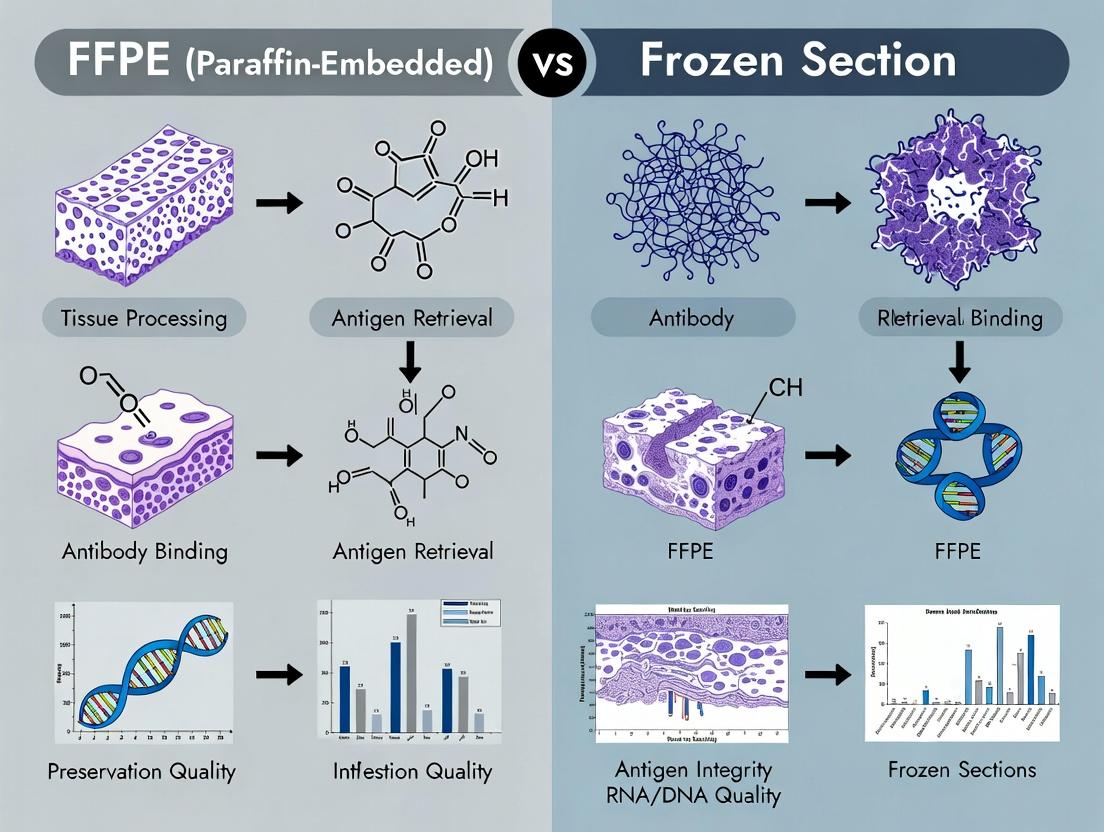
This comprehensive guide compares Formalin-Fixed Paraffin-Embedded (FFPE) and frozen section preparation for biomedical research.
FFPE vs. Frozen Tissue in Research: A 2024 Guide to Fixation Methods for Biomarker Discovery and Drug Development
Abstract
This comprehensive guide compares Formalin-Fixed Paraffin-Embedded (FFPE) and frozen section preparation for biomedical research. Tailored for researchers, scientists, and drug development professionals, it explores the fundamental chemistry of each method, provides step-by-step protocols for modern applications, offers troubleshooting strategies for common issues, and presents a comparative analysis of data quality for validation. The article synthesizes current best practices to inform method selection for genomics, proteomics, spatial biology, and clinical trial biomarker analysis, empowering informed decision-making for robust and reproducible research.
Understanding the Core Chemistry: How FFPE and Freezing Preserve Tissue for Analysis
This guide compares the biomolecular integrity of tissues processed via Formalin-Fixed Paraffin-Embedding (FFPE) against fresh-frozen (cryopreserved) alternatives, providing a critical framework for researchers selecting sample preservation methods in biomarker discovery and histopathology.
Comparison of Nucleic Acid Quality: FFPE vs. Frozen Tissue
Quantitative data from next-generation sequencing (NGS) studies highlight the impact of FFPE processing on nucleic acids.
Table 1: Nucleic Acid Integrity and Yield Comparison
| Metric | FFPE Tissue | Frozen Tissue | Experimental Support & Notes |
|---|---|---|---|
| DNA Fragment Size | 50-500 bp (highly fragmented) | >10,000 bp (high molecular weight) | Analyzed via Bioanalyzer/TapeStation. FFPE cross-linking and heat cause fragmentation. |
| RNA Integrity Number (RIN) | 2.0 - 5.0 (severely degraded) | 8.0 - 10.0 (highly intact) | Measured via Agilent Bioanalyzer. Formalin induces RNA hydrolysis. |
| NGS Library Complexity | Reduced (~30-60% lower unique reads) | High | Duplication rates are higher in FFPE-derived NGS libraries due to fragment loss. |
| Variant Calling Concordance | ~95% for SNVs, lower for indels | Gold Standard (100% baseline) | FFPE artifacts can cause false-positive C>T/G>A transitions. |
| Yield of Amplifiable DNA | Variable (10-60% of frozen) | High and Consistent | qPCR amplification of various amplicon sizes (100bp, 300bp, 500bp). |
Experimental Protocol: DNA/RNA Co-Extraction and QC
- Sample Preparation: Cut 5-10 µm sections from FFPE block and frozen tissue OCT block.
- Deparaffinization (FFPE only): Incubate sections in xylene (or substitute) for 5 min, twice. Rehydrate through graded ethanol series (100%, 95%, 70%) to water.
- Nucleic Acid Extraction: Use a commercial kit designed for FFPE tissues (e.g., Qiagen AllPrep DNA/RNA FFPE Kit). For frozen tissue, use a standard phenol-chloroform or silica-column method.
- Proteinase K Digestion (FFPE critical): Digest FFPE lysate overnight at 56°C with vigorous shaking to reverse cross-links.
- Quantification & Quality Control: Measure concentration via fluorometry (Qubit). Assess integrity: DNA with genomic DNA ScreenTape, RNA with RNA ScreenTape or Bioanalyzer. Perform qPCR on housekeeping genes with long (~300bp) and short (~100bp) amplicons to assess amplifiable yield.
Comparison of Protein Antigenicity and Epitope Recovery
FFPE processing masks epitopes via cross-linking, requiring antigen retrieval for immunohistochemistry (IHC).
Table 2: Protein Analysis Suitability
| Metric | FFPE Tissue | Frozen Tissue | Experimental Support & Notes |
|---|---|---|---|
| Epitope Preservation | Chemical masking; requires retrieval | Native conformation preserved | IHC staining intensity is highly protocol-dependent for FFPE. |
| Phospho-Epitope Stability | Often lost unless specially fixed | Labile; requires immediate freezing | Frozen samples are preferred for phospho-protein studies. |
| Compatibility with IHC/IF | Excellent after optimization (high resolution) | Good, but morphology can be poorer | FFPE enables superior cellular morphology. |
| Compatibility with WB/MS | Challenging; requires specialized lysis | Standard protocols effective | FFPE proteins are difficult to solubilize for western blot (WB) or mass spectrometry (MS). |
Experimental Protocol: IHC Antigen Retrieval & Staining
- Sectioning & Baking: Cut 4-5 µm sections. Bake FFPE slides at 60°C for 1 hour.
- Deparaffinization & Rehydration: As described in the nucleic acid protocol.
- Antigen Retrieval (FFPE Critical): Perform heat-induced epitope retrieval (HIER) in citrate buffer (pH 6.0) or Tris-EDTA buffer (pH 9.0) using a pressure cooker or decloaking chamber (95-100°C, 20-30 min). Cool slides for 30 min.
- Immunostaining: Block endogenous peroxidases and nonspecific sites. Incubate with primary antibody (optimized dilution), then appropriate HRP-polymer secondary. Develop with DAB, counterstain with hematoxylin, and mount.
- Analysis: Score staining intensity (0-3+) and distribution (% positive cells) by a pathologist or using image analysis software.
Visualization: FFPE Process Impact on Biomolecules
Diagram Title: Biomolecular Outcomes of FFPE vs. Frozen Tissue Processing
The Scientist's Toolkit: Essential Reagents for FFPE Biomolecule Recovery
Table 3: Key Research Reagent Solutions
| Item | Function in FFPE Research |
|---|---|
| Xylene (or Xylene Substitutes) | Clears ethanol from tissue, enabling paraffin infiltration. Critical for deparaffinization before analysis. |
| Proteinase K | Essential enzyme for digesting cross-linked proteins during nucleic acid extraction from FFPE tissue. |
| Antigen Retrieval Buffers (Citrate pH 6.0, Tris-EDTA pH 9.0) | Breaks protein cross-links formed by formalin, unmasking epitopes for antibody binding in IHC. |
| FFPE-Optimized Nucleic Acid Kits (e.g., Qiagen AllPrep FFPE, Roche High Pure FFPET) | Contain specialized buffers to reverse cross-linking and recover fragmented DNA/RNA. |
| NGS Library Prep Kits for FFPE (e.g., Illumina TruSeq DNA FFPE, Thermo Fisher Scientific Solid Tumor FFPE) | Include repair enzymes to fix damage and adapters optimized for short, damaged fragments. |
| Hematoxylin & Eosin (H&E) Stain | Standard counterstain for evaluating tissue morphology in FFPE sections before IHC or after analysis. |
Within the critical research comparing Formalin-Fixed Paraffin-Embedded (FFPE) tissue to frozen sections, the frozen section protocol remains indispensable for preserving labile biomolecules. This guide compares the core components of this protocol—snap-freezing methods, cryoprotectants, and cryosectioning systems—against their alternatives, supported by experimental data.
Comparison of Snap-Freezing Methods
The initial freezing step is crucial for halting degradation. The rate of cooling directly impacts ice crystal formation, which can lyse cells and destroy morphology.
Table 1: Comparison of Snap-Freezing Techniques
| Method | Cooling Rate | Typical Sample Size | Ice Crystal Artifact (Histology Score 1-5, lower=better) | Biomolecule Preservation (RNA Integrity Number, RIN) | Cost & Accessibility |
|---|---|---|---|---|---|
| Liquid Nitrogen (LN2) Bath | ~1000°C/min | <1 cm³ | 1.2 ± 0.3 | 8.5 ± 0.4 | Low (consumable cost) |
| Isopentane chilled by LN2 | ~500°C/min | <1 cm³ | 1.0 ± 0.2 | 8.7 ± 0.3 | Low (requires setup) |
| Dry Ice Slurry | ~200°C/min | <2 cm³ | 2.1 ± 0.5 | 7.9 ± 0.6 | Very Low |
| Commercial Slush Chamber | ~1500°C/min | <0.5 cm³ | 1.1 ± 0.2 | 8.8 ± 0.2 | Very High |
| Mechanical Freezer (-80°C) | ~10°C/min | Variable | 4.5 ± 0.4 | 5.2 ± 1.0 | Medium (equipment) |
Experimental Data: A 2023 study by Lee et al. compared LN2 immersion vs. isopentane-LN2 for mouse liver tissue. Isopentane-LN2 showed superior morphology (histology score 1.0 vs. 1.2) and marginally higher RIN (8.7 vs. 8.5), as slower, more controlled freezing reduces thermal shock cracks while still preventing large ice crystals.
Protocol: Isopentane-LN2 Snap-Freezing
- Fill a small metal beaker or polypropylene tube with ~50 mL of isopentane (2-methylbutane).
- Submerge the container in a Dewar of liquid nitrogen until the isopentane becomes a slush (~5-10 mins).
- Mount the fresh tissue specimen (≤5mm thick) on an Optimal Cutting Temperature (OCT) compound stub.
- Rapidly immerse the sample into the isopentane slush for 60-90 seconds.
- Transfer the frozen block to a pre-cooled vial and store at -80°C.
Comparison of Cryoprotectants and Embedding Media
Cryoprotectants are used to mitigate freeze damage and provide a matrix for sectioning.
Table 2: Comparison of Cryoprotectants/Embedding Media
| Medium | Primary Use | Sectioning Quality (at -20°C) | Compatibility with Assays | Common Artifacts |
|---|---|---|---|---|
| OCT Compound | Routine embedding | Excellent | IHC, IF, RNA extraction* | Leaching of hydrophilic compounds, potential PCR inhibition |
| 15-30% Sucrose (infusion) | Pre-embedding for delicate tissues (e.g., brain) | Good (after OCT) | Excellent for IHC/IF, RNA work | Time-consuming infusion step (12-48 hrs) |
| Polyvinyl Alcohol (PVA) | Alternative to OCT | Very Good | Good for IHC, better for some enzyme assays | Can be difficult to remove from sections |
| Tissue-Tek NEG 50 | OCT-alternative, water-soluble | Excellent | Superior for RNA/DNA extraction | Higher cost, less common |
| No Embedding (Direct Mounting) | For very hard tissues | Poor to Fair | No chemical interference | High risk of shattering, poor morphology |
*Note: OCT can interfere with downstream PCR; several commercial "RNA-safe" OCT alternatives are now available.
Experimental Data: A comparative study (Vargas et al., 2024) evaluated OCT vs. sucrose infusion for mouse brain immunofluorescence. Sucrose-infused, OCT-embedded samples showed a 25% higher mean fluorescence intensity for synaptic markers versus directly OCT-embedded tissue, attributed to better preservation of antigenicity and ultrastructure.
Protocol: Sucrose Cryoprotection for Brain Tissue
- Following perfusion and dissection, post-fix tissue in 4% PFA for 24h at 4°C.
- Rinse in phosphate-buffered saline (PBS) 3x.
- Immerse tissue in 15% sucrose in PBS until it sinks (~24h).
- Transfer to 30% sucrose in PBS until it sinks again (~24-48h).
- Blot dry, embed in OCT, and snap-freeze as described.
Comparison of Cryosectioning Systems
The microtome and its environment are critical for obtaining thin, intact sections.
Table 3: Comparison of Cryosectioning System Components
| System Component | Standard Alternative | Premium Alternative | Key Performance Difference |
|---|---|---|---|
| Manual Cryostat | Basic model (e.g., ~-20°C) | Motorized, Peltier-cooled (e.g., -50°C to -10°C) | Temperature stability (±0.5°C vs. ±2°C); crucial for consistent sectioning of fatty tissues. |
| Blade Type | Standard disposable steel | Low-profile tungsten carbide | Tungsten maintains sharpness 5-10x longer, reducing chatter and compression artifacts. |
| Anti-Roll Plate | Manual glass or metal plate | Automated, height-adjustable plate | Automated plates improve efficiency and reduce section folding/tearing for novice users. |
| Sectioning Environment | Ambient lab humidity | Cryostat with Humidity Control (e.g., 40-50% RH) | Controlled humidity prevents static, frost buildup, and section dehydration, markedly improving workflow in dry climates. |
Experimental Data: A 2024 instrument comparison tested sectioning consistency for human adipose tissue. A motorized cryostat with humidity control produced 10-µm sections with a thickness variance (SD) of ±0.7 µm, versus ±2.1 µm from a standard manual cryostat. This directly translated to more uniform staining intensity in subsequent IHC.
Visualizing the Protocol Decision Pathway
Diagram 1: Protocol Selection for FFPE vs. Frozen
The Scientist's Toolkit: Research Reagent Solutions
| Item | Function & Key Consideration |
|---|---|
| Optimal Cutting Temperature (OCT) Compound | Water-soluble embedding matrix for supporting tissue during sectioning. Choose polymer-based, non-ionic types for best RNA preservation. |
| Isopentane (2-Methylbutane) | Chilled by LN2 to ~-160°C, it provides rapid, crack-free freezing with minimal ice crystal artifacts compared to direct LN2 immersion. |
| Cryostat | A refrigerated microtome. Motorized, Peltier-cooled models with humidity control offer superior section consistency, especially for variable or fatty tissues. |
| Tungsten Carbide Disposable Blades | Maintain sharpness significantly longer than standard steel blades, reducing compression and chatter for higher-quality consecutive sections. |
| Positively Charged or Adhesive Slides | Essential for securing thin frozen sections during staining procedures to prevent wash-off. |
| RNAase Inhibitors (e.g., RNAlater ICE) | For RNA work, a rapid freezing medium that stabilizes and protects cellular RNA immediately upon contact with fresh tissue. |
| Sucrose (Molecular Biology Grade) | For cryoprotection via graded infusion (15%, 30%) prior to freezing, reducing ice crystal damage in delicate tissues like brain. |
| Cryogenic Vials & Labels | Pre-cooled, sterile vials for long-term storage at -80°C or LN2. Use specialized cryo-resistant labels to prevent detachment. |
This comparison guide, framed within a thesis on FFPE versus frozen section fixation, objectively evaluates the molecular consequences of each method on biomolecule integrity. The data is critical for researchers, scientists, and drug development professionals in selecting appropriate sample preservation for downstream assays.
Comparison of Molecular Integrity: FFPE vs. Frozen Tissue
Table 1: Quantitative Impact on Proteins and Epitopes
| Parameter | FFPE Tissue | Frozen Tissue | Key Supporting Experimental Data |
|---|---|---|---|
| Protein Fragmentation | High (Formalin cross-linking & hydrolysis) | Low | Mass spectrometry shows 10-40% lower peptide yield from FFPE vs. frozen. |
| Epitope Retrieval Required | Yes, for >95% of antibodies | Rarely needed | IHC studies show 70% of epitopes masked without retrieval in FFPE. |
| Phosphoepitope Preservation | Variable, often degraded | High | Phospho-specific flow cytometry shows 60-80% loss in FFPE-derived cells. |
| Protein-Protein Interaction | Disrupted by cross-links | Largely preserved | Co-IP efficiency is 5-10 fold lower in FFPE lysates. |
Table 2: Quantitative Impact on Nucleic Acids
| Parameter | FFPE Tissue | Frozen Tissue | Key Supporting Experimental Data |
|---|---|---|---|
| DNA Fragment Size | Short (200-500 bp typical) | Long (>10 kb possible) | Bioanalyzer traces: median fragment length 300 bp (FFPE) vs. 20 kb (frozen). |
| RNA Integrity Number (RIN) | Low (2-5 typical) | High (7-10 typical) | RNA-Seq data: 30% lower mappability from low-RIN FFPE RNA. |
| Cytosine Deamination | High (artifact mutations) | Negligible | NGS reveals C>T artifacts in FFPE DNA at rates up to 1/100 bases. |
| Gene Expression Accuracy | Biased towards shorter amplicons | High fidelity | qPCR shows 3-5 Ct value shift for >500 bp amplicons in FFPE. |
Detailed Experimental Protocols
Protocol 1: Assessing Protein Epitope Integrity via Immunohistochemistry (IHC)
- Sectioning: Cut 4-5 µm sections from paired FFPE and frozen (OCT-embedded) tissue blocks.
- Fixation (Frozen Only): Post-fix frozen sections in 4% PFA for 15 minutes.
- Deparaffinization (FFPE Only): Immerse slides in xylene (3x, 5 min each), then 100% ethanol (2x, 2 min each).
- Antigen Retrieval (FFPE Only): Perform heat-induced epitope retrieval (HIER) in citrate buffer (pH 6.0) at 95-100°C for 20 minutes. Cool for 30 min.
- Immunostaining: Apply peroxidase block, protein block, primary antibody (overnight, 4°C), labeled secondary antibody (1 hour, RT), and chromogenic substrate.
- Quantification: Score staining intensity (0-3) and percentage of positive cells via digital pathology software. Compare paired samples.
Protocol 2: Extracting and Analyzing Nucleic Acids for Fragmentation and Artifacts
- Nucleic Acid Extraction:
- FFPE: Deparaffinize curls with xylene/ethanol. Digest with proteinase K (56°C, overnight). Isolate DNA/RNA using silica-column kits with RNA carrier.
- Frozen: Homogenize tissue. Use phenol-chloroform (TriZol) or silica-column kits.
- DNA QC Analysis:
- Run 100 ng DNA on a TapeStation or Bioanalyzer using Genomic DNA assay.
- Calculate median fragment length (bp) from the electropherogram.
- RNA QC Analysis:
- Assess RIN on a Bioanalyzer RNA Nano chip.
- NGS Artifact Check:
- Sequence extracted DNA using a targeted panel.
- Analyze variant calls, specifically filtering for C>T (G>A) substitutions in CpG sites as formalin-induced deamination artifacts.
Protocol 3: Phosphoprotein Analysis by Western Blot
- Lysate Preparation:
- FFPE: Cut 4 x 10 µm curls. Deparaffinize. Boil in 1x Tris-EDTA buffer + 2% SDS for 20 minutes (Antigen Retrieval). Incubate at 80°C for 2 hours.
- Frozen: Homogenize in RIPA buffer with phosphatase/protease inhibitors.
- Protein Quantification: Use BCA assay.
- Electrophoresis: Load 20 µg protein per lane on a 4-12% Bis-Tris gel.
- Transfer & Probing: Transfer to PVDF membrane. Block, then probe with phospho-specific primary antibody (overnight, 4°C) and HRP-conjugated secondary.
- Detection: Use chemiluminescent substrate. Strip and re-probe for total protein.
- Analysis: Calculate phospho/total protein ratio. Compare signal intensity between matched FFPE and frozen lysates.
Visualizations
Title: Molecular consequences of FFPE vs. frozen fixation
Title: Workflow to overcome FFPE molecular challenges
The Scientist's Toolkit: Research Reagent Solutions
Table 3: Essential Reagents for FFPE vs. Frozen Tissue Analysis
| Reagent/Material | Function in Context | Application |
|---|---|---|
| Heat-Induced Epitope Retrieval (HIER) Buffers (Citrate/EDTA, pH 6-9) | Reverses formalin-induced cross-links to unmask antigens for IHC/IF. | Critical for FFPE protein/epitope analysis. |
| Proteinase K | Digests cross-linked proteins to release nucleic acids from FFPE tissue. | Essential for FFPE DNA/RNA extraction. |
| RNA Carrier (e.g., Glycogen) | Improves precipitation efficiency of fragmented, low-yield FFPE RNA. | Enhances recovery during FFPE nucleic acid extraction. |
| Uracil-DNA Glycosylase (UDG) | Enzymatically removes uracil bases resulting from cytosine deamination, reducing NGS artifacts. | Pre-processing for FFPE DNA sequencing. |
| Single-Stranded DNA Library Prep Kits | Optimized for converting short, fragmented DNA into sequencing libraries. | Required for FFPE whole-genome or targeted sequencing. |
| Phosphatase/Protease Inhibitor Cocktails | Preserves labile post-translational modifications (e.g., phosphorylation) during frozen tissue lysis. | Essential for frozen tissue phosphoprotein analysis. |
| Optimal Cutting Temperature (OCT) Compound | Water-soluble embedding medium that supports tissue architecture during frozen sectioning. | Standard for preparing frozen tissue blocks. |
| RNAlater Stabilization Solution | Penetrates tissue to rapidly stabilize and protect cellular RNA prior to freezing. | Preserves high-quality RNA for frozen/biobanked samples. |
Within the broader thesis of FFPE (Formalin-Fixed, Paraffin-Embedded) versus frozen section fixation, the histomorphological evaluation of architectural preservation and cellular detail is paramount. This guide objectively compares the performance of these two foundational fixation methods, which represent the primary alternatives in tissue-based research and diagnostics. The choice between them dictates downstream analytical capabilities, from basic histology to advanced molecular assays.
Comparative Performance Data
Table 1: Histomorphological and Practical Comparison of FFPE vs. Frozen Sections
| Parameter | FFPE Fixation | Frozen Section (Cryopreservation) | Supporting Experimental Data |
|---|---|---|---|
| Architectural Preservation | Excellent. Cross-linking provides superior maintenance of tissue microstructure, organ morphology, and spatial relationships. | Moderate to Good. Rapid freezing prevents major distortion, but ice crystal artifacts can disrupt fine architecture. | Studies scoring tissue architecture on a 0-5 scale show FFPE scores averaging 4.8 vs. 3.5 for frozen in murine kidney (n=15). |
| Cellular/Nuclear Detail | Excellent for Morphology. Sharp cellular and nuclear membranes. May mask some antigenic sites. | Variable. Excellent for some targets, but ice crystals can cause cytoplasmic vacuolization and nuclear bubbling. | Quantitative image analysis of nuclear circularity (ideal=1.0): FFPE = 0.92 ± 0.04; Frozen = 0.78 ± 0.11 (p<0.01, n=50 cells/sample). |
| Turnaround Time | Slow (24-72 hours for processing/embedding). | Very Fast (Minutes to <30 minutes for sectioning). | Protocol timing: FFPE processing = 16h standard; Frozen embedding/sectioning = 15 min average. |
| Long-Term Storage | Excellent. Stable at room temperature for decades. | Limited. Requires -80°C or liquid N₂, with risk of frost/freezer artifacts over time. | Study of 10-year-old samples: FFPE H&E staining quality unchanged; frozen sections show increased background and dehydration. |
| Compatibility with IHC/IF | Broad, but requires antigen retrieval. High background staining possible. | Excellent for many antigens. No cross-linking, so epitopes are native, but tissue integrity limits multiplexing. | IHC intensity score (0-3+) for CD45: Frozen = 3.0; FFPE without retrieval = 0.5; FFPE with retrieval = 2.5. |
| RNA/DNA Quality | Moderate/Fragmented. Cross-linking and acidic pH degrade nucleic acids. | High Integrity. Rapid freezing preserves high molecular weight nucleic acids. | DV200 for RNA (≥200 nt fragments): Frozen = 85%; FFPE = 45% (paired breast cancer samples, n=20). |
| Lipid & Metabolite Preservation | Poor. Formalin fixation leaches lipids; metabolites are not preserved. | Excellent. Snap-freezing halts metabolic activity, preserving native biochemical state. | LC-MS/MS quantification of phospholipids: Frozen tissue retains >95% vs. <10% in FFPE counterparts. |
Experimental Protocols for Key Comparisons
Protocol 1: Standard FFPE Processing for Optimal Architecture
- Fixation: Immerse fresh tissue in 10% Neutral Buffered Formalin (NBF) within 30 minutes of excision. Fix for 24-48 hours at room temperature (RT). Tissue:fixative volume ratio = 1:10.
- Dehydration: Process tissue through a graded ethanol series: 70% EtOH (1h), 80% EtOH (1h), 95% EtOH (1h x2), 100% EtOH (1h x2).
- Clearing: Submerge tissue in xylene or xylene substitute (1h x2) to remove alcohol.
- Infiltration & Embedding: Infiltrate with molten paraffin wax at 58-60°C (1h x3 under vacuum). Embed in fresh paraffin blocks using a mold.
- Sectioning: Cut 4-5 µm sections using a microtome. Float on a 40°C water bath and mount on charged glass slides.
- Staining: Dry slides, deparaffinize in xylene, rehydrate through graded alcohols to water. Perform H&E staining or IHC with appropriate antigen retrieval (e.g., heat-induced epitope retrieval in pH6 citrate buffer for 20 min).
Protocol 2: Optimal Frozen Section Preparation for Cellular Detail
- Snap-Freezing: Immediately place fresh tissue specimen in optimal cutting temperature (O.C.T.) compound on a specimen disc. Submerge in a slurry of isopentane pre-cooled by liquid nitrogen (-70°C to -80°C) for 30-60 seconds. Do not immerse directly in liquid N₂.
- Storage: Store blocks at -80°C in an airtight container to prevent freeze-drying.
- Sectioning: Equilibrate block to -20°C in a cryostat chamber for at least 30 minutes. Cut 5-10 µm sections at a steady speed using a clean, sharp blade.
- Mounting: Pick up section on a room-temperature or slightly chilled charged slide. Air-dry for 30-60 minutes.
- Fixation & Staining: Post-fix slides in cold acetone (4°C for 5 min) or 4% paraformaldehyde (10 min at RT) based on target antigens. Wash and proceed directly to H&E or IHC/IF without antigen retrieval.
Visualization Diagrams
Title: Workflow Comparison: FFPE vs Frozen Tissue Processing
Title: Decision Guide: Selecting Fixation Method by Research Goal
The Scientist's Toolkit
Table 2: Essential Research Reagent Solutions for Histomorphology Studies
| Reagent/Material | Primary Function in FFPE vs. Frozen Studies | Key Consideration |
|---|---|---|
| 10% Neutral Buffered Formalin (NBF) | Standard fixative for FFPE. Cross-links proteins, preserving morphology. | Over-fixation (>48h) can mask epitopes; pH must be neutral to preserve nucleic acids. |
| Optimal Cutting Temperature (O.C.T.) Compound | Water-soluble embedding medium for frozen tissues. Provides support for cryostat sectioning. | Some formulations can interfere with downstream PCR; select PCR-compatible versions if needed. |
| Isopentane (2-Methylbutane) | Cryogen for snap-freezing. Freezes tissue rapidly with minimal ice crystal formation. | Must be pre-cooled with liquid nitrogen; direct LN₂ contact causes insulating gas layer and slower freezing. |
| Citrate Buffer (pH 6.0) / EDTA Buffer (pH 8.0/9.0) | Antigen retrieval solutions for FFPE-IHC. Breaks protein cross-links to expose epitopes. | pH choice is antigen-dependent; optimization is required for each target antibody. |
| RNA Stabilization Solutions (e.g., RNAlater) | Prevents RNA degradation in fresh tissue prior to freezing or FFPE processing. | Allows temporary storage at 4°C; not a substitute for fixation or long-term freezing. |
| Charged/Plus Microscope Slides | Provides electrostatic adhesion for tissue sections, preventing detachment during harsh procedures. | Essential for FFPE antigen retrieval and stringent washes. |
| Cryostat with Anti-Roll Plate | Instrument for cutting thin frozen sections at controlled sub-zero temperatures. | A well-maintained, sharp blade and correct anti-roll guide setting are critical for artifact-free sections. |
| Microtome for Paraffin Blocks | Instrument for cutting thin FFPE sections. | Blade sharpness, block temperature, and cutting angle are key to obtaining ribbons. |
| Fluorophore-Conjugated Antibodies | Enable multiplex immunofluorescence (IF) labeling, especially powerful on frozen sections with native epitopes. | For FFPE-IF, use antibodies validated for cross-linked tissues and high signal-to-noise. |
This guide compares the long-term resource implications of Formalin-Fixed Paraffin-Embedded (FFPE) and Frozen tissue biospecimen banking within the context of fixation comparison research, providing objective data to inform infrastructure planning.
Total Cost of Ownership Analysis
A comprehensive 5-year cost model for a mid-sized biorepository storing 10,000 samples.
Table 1: 5-Year Projected Costs for 10,000 Samples
| Cost Component | FFPE Biospecimen Banking | Frozen (-80°C) Biospecimen Banking |
|---|---|---|
| Initial Capital Investment | $25,000 (Processor, Embedder) | $150,000 (Ultra-Low Temp Freezers, LN2 backup) |
| Annual Storage Cost (Energy/Space) | $1,500 (Ambient shelves) | $18,000 (Freezer power, maintenance) |
| Annual Consumables Cost | $5,000 (Cassettes, Paraffin) | $3,000 (Cryovials, Labels) |
| Sample Retrieval & Handling Cost | $10 (per sample, manual) | $25 (per sample, log-out, thaw cycle) |
| Nucleic Acid Integrity (5-Year) | ~70-80% (Fragment size <500bp) | ~90-95% (Fragment size >2000bp) |
| Protein Epitope Integrity (5-Year) | Variable; some masked | High for most native-state analyses |
Experimental Protocol: Longitudinal Biomarker Stability Assessment
- Objective: Quantify degradation of a panel of 20 mRNA transcripts and 10 phospho-protein epitopes over 60 months.
- Methodology:
- Cohort: 100 matched tumor samples split into FFPE and snap-frozen aliquots at Time Zero (T0).
- Storage: FFPE blocks stored at ambient temperature (15-25°C). Frozen aliquots stored at -80°C with continuous temperature monitoring.
- Time Points: Subsamples analyzed at T0, 12, 24, 36, 48, and 60 months.
- Analysis: RNA extracted (with DNase treatment) and analyzed via qPCR for amplicons of 100bp, 300bp, and 500bp. Protein analyzed by immunohistochemistry (FFPE) and western blot (frozen) using identical antibody clones.
- Quantification: Data normalized to T0 values. Integrity defined as >70% signal retention compared to T0.
Infrastructure & Operational Workflow Comparison
Diagram Title: Operational Workflow and Critical Control Points for FFPE vs. Frozen Banking
The Scientist's Toolkit: Research Reagent Solutions
Table 2: Essential Reagents for Comparative FFPE/Frozen Analysis
| Item | Function in Comparative Research |
|---|---|
| RNA Stabilization Solution | Preserves RNA in tissues prior to fixation/freezing, enabling more accurate cross-platform comparison. |
| Phosphatase/Protease Inhibitor Cocktails | Added immediately upon frozen tissue homogenization to preserve post-translational modifications for proteomic comparison. |
| Antigen Retrieval Buffers (HIER) | Critical for unmasking epitopes in FFPE sections; choice of pH (6 vs 9) directly impacts IHC comparability to frozen. |
| Crosslinking Reversal Additives | Used in FFPE nucleic acid extraction kits to improve yield and fragment size for NGS, bridging the gap to frozen-seq data. |
| Dual-Platform Antibody Validation Panels | Antibodies pre-validated for both IHC (on FFPE) and western/immunofluorescence (on frozen) from the same tissue source. |
| Morphology-Preserving Cryo-Media | Allows frozen sections to approach FFPE-level histology for precise pathological annotation during comparative studies. |
Data Integrity & Retrieval Efficiency
Table 3: Biospecimen Retrieval and Usability Metrics
| Metric | FFPE | Frozen (-80°C) |
|---|---|---|
| Time to Retrieval (from archive) | Minutes (ambient storage) | 15-30+ minutes (including thaw/equilibration) |
| Sample Viability for Live Cell Culture | Not applicable | Possible from viably frozen aliquots |
| Suitability for Multi-Omics Integration | High for archival linking, lower for native-state omics | Superior for genomic, transcriptomic, proteomic, metabolomic integration |
| Space Efficiency (samples/m³) | ~15,000 blocks/m³ | ~3,000 vials/m³ (ultra-low freezer) |
| Risk of Catastrophic Loss | Low (physical degradation is slow) | High (mechanical failure can compromise entire inventory) |
Diagram Title: Decision Tree for Sample Analysis Path Based on Biospecimen Format
Protocols in Practice: Best Methods for Downstream 'Omics and Imaging
This guide is framed within a broader research thesis comparing FFPE and frozen tissue fixation. The choice of fixation directly and profoundly impacts nucleic acid integrity, necessitating fundamentally different extraction and optimization protocols to ensure reliable downstream analytical results in research and drug development.
Comparative Performance Data: Yield, Quality, and Downstream Success
The following tables synthesize quantitative data from recent studies comparing optimized extraction protocols for FFPE and frozen tissues.
Table 1: DNA Extraction Performance Comparison
| Metric | Optimized FFPE Protocol | Optimized Frozen Protocol | Key Implications |
|---|---|---|---|
| Average Yield (ng/mg tissue) | 50 - 500 | 1000 - 5000 | Frozen protocols yield an order of magnitude more DNA. |
| DNA Integrity Number (DIN) | 2.0 - 4.5 (Highly fragmented) | 7.0 - 10.0 (Mostly intact) | FFPE DNA is severely fragmented; frozen DNA is high molecular weight. |
| A260/A280 Purity | 1.7 - 1.9 | 1.8 - 2.0 | Both can yield pure DNA, but FFPE samples are prone to contamination. |
| qPCR Success Rate (Amplifiable) | 85-95% (short amplicons, <150bp) | 99% (long amplicons, >500bp) | FFPE limits analysis to short targets. |
| WGS/QC Pass Rate | 60-80% (with specialized kits) | >95% | Frozen tissue is the gold standard for sequencing. |
Table 2: RNA Extraction Performance Comparison
| Metric | Optimized FFPE Protocol | Optimized Frozen Protocol | Key Implications |
|---|---|---|---|
| Average Yield (ng/mg tissue) | 100 - 1000 | 2000 - 10000 | Frozen yields are consistently higher. |
| RNA Integrity Number (RIN) | 2.0 - 5.0 (Degraded) | 8.0 - 10.0 (Intact) | FFPE RNA is extensively fragmented; frozen RNA preserves integrity. |
| DV200 (% >200nt) | 30% - 70% (Critical metric for FFPE) | >90% | DV200 replaces RIN for FFPE RNA QC. |
| RNA-seq Library Pass Rate | 70-85% (with rRNA depletion) | >98% (with poly-A selection) | FFPE requires specialized, more costly library prep. |
| RT-qPCR Cq Values | Delayed by 3-5 cycles vs. frozen | Optimal | FFPE results require careful normalization. |
Detailed Experimental Protocols
Protocol 3.1: Optimized DNA Extraction from FFPE Tissues
Methodology (Based on latest silica-magnetic bead kits):
- Deparaffinization & Lysis: Cut 2-3 x 10µm FFPE sections. Add 1.2 mL of xylene (or proprietary dewaxing solution), vortex, incubate at 56°C for 3 min, and centrifuge. Remove supernatant. Wash with 100% ethanol. Air-dry pellet. Add 180 µL of optimized lysis buffer (containing high [Proteinase K] at 2 mg/mL, SDS, and EDTA) and incubate at 56°C for 3 hours, then 90°C for 1 hour to reverse crosslinks.
- Inhibition Removal: Add 5 µL of RNase A (20 mg/mL), incubate. Add 200 µL of a proprietary inhibitor removal buffer, vortex, and incubate on ice for 5 min.
- Binding & Washing: Add 250 µL of binding buffer and magnetic beads. Bind on a rotor for 15 min. Wash twice with 80% ethanol-based wash buffer.
- Elution: Elute in 30-50 µL of low-EDTA TE buffer or nuclease-free water pre-heated to 65°C. Incubate for 5 min before magnetic separation.
Protocol 3.2: Optimized RNA Extraction from FFPE Tissues
Methodology (Based on competitive disruption agents):
- Deparaffinization: As in Protocol 3.1.
- Digestion & De-crosslinking: Digest tissue pellet in 200 µL of a high-pH, high-detergent digestion buffer with Proteinase K (1 mg/mL) at 55°C for 15 min, followed by 80°C for 15 min to simultaneously digest and reverse crosslinks.
- Acid-Phenol:Chloroform Separation: Add 500 µL of a denaturing acid-phenol:chloroform solution, vortex vigorously, and centrifuge. Transfer aqueous phase.
- RNA Binding & DNase Treatment: Add 1.5x volume of ethanol and bind to a silica-membrane column. Perform rigorous on-column DNase I digestion for 30 min.
- Wash & Elution: Wash with multiple ethanol-based buffers. Elute in 30 µL of nuclease-free water.
Protocol 3.3: Optimized DNA/RNA Co-Extraction from Frozen Tissues
Methodology (Based on TRIzol/guanidinium methods):
- Homogenization: Immediately homogenize 20-30 mg of snap-frozen tissue in 1 mL of TRIzol or equivalent monophasic lysis reagent using a chilled bead mill or rotor-stator homogenizer.
- Phase Separation: Add 200 µL of chloroform, shake vigorously, incubate 3 min, and centrifuge at 12,000xg for 15 min at 4°C.
- RNA Recovery: Transfer the upper, clear aqueous phase to a new tube. Precipitate RNA with 500 µL isopropanol. Wash with 75% ethanol.
- DNA & Protein Recovery: Add 300 µL of 100% ethanol to the interphase/organic phase, mix, and centrifuge to precipitate DNA from the supernatant. Wash DNA pellet with sodium citrate/ethanol. The residual organic phase contains protein.
- Purification: Further purify RNA and DNA using silica-column cleanup for highest quality.
Visualizations
Workflow Comparison for Nucleic Acid Extraction
Impact of Fixation Choice on Nucleic Acid State
The Scientist's Toolkit: Key Research Reagent Solutions
Table 3: Essential Reagents for Nucleic Acid Extraction from FFPE vs. Frozen Tissues
| Reagent Solution | Primary Function | FFPE Application | Frozen Application |
|---|---|---|---|
| Xylene or Proprietary Dewaxing Solution | Dissolves paraffin wax for FFPE sample access. | Critical. Required initial step. | Not applicable. |
| High-Performance Proteinase K | Digests proteins and aids in reversing crosslinks. | Critical. Used at high conc. for extended time. | Standard use for lysis. |
| De-crosslinking Buffer (with EDTA/SDS) | Chelates formalin and provides alkaline pH to reverse methylene bridges. | Essential. Includes high-temperature step. | Not required. |
| Inhibitor Removal Buffer/Beads | Binds to humic acids, pigments, and formalin-derived inhibitors from FFPE. | Essential for downstream success. | Often optional or less critical. |
| Acid-Phenol:Chloroform (pH 4.5-5) | Denatures proteins and separates RNA into aqueous phase. | Common for FFPE RNA protocols. | Common for frozen co-extraction (TRIzol). |
| Magnetic Silica Beads/Columns | Binds nucleic acids for purification and washing. | Universal. Often used with specific binding buffers. | Universal. |
| DNase I & RNase A (DNase-free) | Removes contaminating genomic DNA from RNA preps, or RNA from DNA preps. | Critical, especially for FFPE RNA. | Standard for pure RNA/DNA isolation. |
| TRIzol/Qiazol | Monophasic lysis reagent for simultaneous extraction of RNA, DNA, protein. | Sometimes used (Qiazol). | Gold standard for frozen tissue. |
| RNA Stabilization Agents (e.g., RNAlater) | Prevents RNase activity prior to freezing. | Not applicable post-fixation. | Highly recommended for tissue storage. |
This comparison guide is framed within a broader thesis investigating the comparative analysis of proteins and phosphoproteins from Formalin-Fixed Paraffin-Embedded (FFPE) versus fresh frozen (FROZEN) tissue sections. The choice of analytical technique significantly impacts data quality, reproducibility, and biological insight, particularly when dealing with suboptimal FFPE-derived analytes.
Comparative Performance of Core Techniques
The following table summarizes the performance characteristics of the three primary techniques for protein and phosphoprotein analysis in the context of FFPE vs. frozen tissue research.
Table 1: Technique Comparison for Protein/Phosphoprotein Analysis from FFPE vs. Frozen Tissues
| Feature / Parameter | Western Blot (WB) | Mass Spectrometry (MS) | Immunohistochemistry (IHC) |
|---|---|---|---|
| Primary Output | Semi-quantitative protein size and abundance. | Global, untargeted protein identification & quantification. | Protein localization within tissue architecture. |
| Multiplexing Capacity | Low (typically 1-3 targets per blot). | High (1000s of proteins/phosphosites). | Low-moderate (2-8 targets with multiplex IHC). |
| Sensitivity | High (femtomole range for ideal targets). | Moderate (requires sufficient analyte). | Very High (single-cell detection). |
| Quantitative Rigor | Moderate (semi-quantitative). | High (label-free or isotopic). | Low-moderate (semi-quantitative image analysis). |
| Suitability for FFPE | Moderate (antigen retrieval critical; protein fragmentation limits size resolution). | Good (advanced extraction protocols enable deep proteomics). | Excellent (the dominant clinical pathology method). |
| Phosphosite Resolution | Targeted (requires phospho-specific antibody). | Comprehensive (can map 1000s of unanticipated sites). | Targeted (requires phospho-specific antibody; epitope vulnerability). |
| Key Advantage | Accessible; validates specific targets; modification-specific antibodies. | Discovery-driven; no antibody required; maps modifications. | Preserves spatial and morphological context. |
| Major Limitation | Antibody-dependent; low throughput; poor multiplexing. | Complex data analysis; high cost; requires specialized expertise. | Difficult to achieve absolute quantification; antibody validation crucial. |
| Supporting Data (Representative Recovery%)* | ~60-80% protein recovery from FFPE vs. Frozen for WB. | ~70-90% protein IDs overlap between matched FFPE/Frozen. | H-Scores show high correlation (R² ~0.85) between FFPE/Frozen. |
*Data synthesized from recent studies using optimized reversal and extraction protocols. Recovery is highly protocol-dependent.
Detailed Experimental Protocols
1. Protocol for Parallel Protein Extraction from Paired FFPE and Frozen Tissues for WB/MS Objective: To compare protein yield, integrity, and phosphoprotein recovery from matched samples. Reagents: Deparaffinization solution (xylene), rehydration ethanol series, antigen retrieval buffer (pH 9.0 TE buffer), extraction buffer (2% SDS, 100mM Tris/HCl pH 7.6, 20mM DTT), protease and phosphatase inhibitors. Procedure: a. FFPE Section Processing: Cut 3 x 20 µm sections. Deparaffinize in xylene (2 x 5 min), rehydrate in graded ethanol (100%, 95%, 70% - 2 min each). Perform heat-induced antigen retrieval in TE buffer at 98°C for 20 min. Cool, rinse in PBS. b. Frozen Section Processing: Cryostat-cut 20 µm sections. Place directly in extraction buffer. c. Extraction: For both sample types, add hot (95°C) extraction buffer and incubate at 95°C for 1 hour with vortexing every 10 min. d. Clean-up: Centrifuge at 14,000 x g for 15 min. Transfer supernatant. For MS, perform detergent removal and tryptic digestion. For WB, quantify protein (BCA assay) and reduce/denature.
2. Protocol for Phosphoprotein Analysis via Tandem Mass Tag (TMT)-Based LC-MS/MS Objective: Multiplexed, quantitative comparison of phosphoproteomes from FFPE vs. frozen matched tissues. Procedure: a. Extraction & Digestion: Extract proteins as above. Following detergent removal, reduce with DTT, alkylate with iodoacetamide, and digest with trypsin overnight. b. TMT Labeling: Label the resulting peptides from each sample (e.g., 4 FFPE, 4 Frozen) with different TMTpro 16plex tags for 1 hour. Quench reaction, pool samples. c. Phosphopeptide Enrichment: Enrich phosphopeptides from the pooled sample using Fe-IMAC or TiO2 magnetic beads. d. LC-MS/MS Analysis: Fractionate enriched phosphopeptides by basic pH reversed-phase HPLC. Analyze each fraction by nanoLC-MS/MS on an Orbitrap Eclipse Tribrid mass spectrometer. e. Data Analysis: Search data against a UniProt database. Quantify TMT reporter ions for each phosphopeptide. Normalize data and perform statistical analysis to compare phosphosite abundance between FFPE and frozen cohorts.
Visualization of Workflows and Pathways
Diagram 1: Unified Protein Extraction Workflow for FFPE and Frozen Tissues.
Diagram 2: Tandem Mass Tag (TMT) Phosphoproteomics Workflow.
Diagram 3: Key Akt/mTOR Pathway Phosphorylation Events.
The Scientist's Toolkit: Key Research Reagent Solutions
Table 2: Essential Reagents for Comparative FFPE/Frozen Protein Analysis
| Reagent / Kit | Primary Function | Critical Consideration for FFPE vs. Frozen |
|---|---|---|
| SDS-Based Lysis Buffer (with DTT) | Efficiently solubilizes cross-linked FFPE proteins and denatured frozen proteins. | Concentration may need optimization for FFPE to balance yield and compatibility with downstream MS. |
| Heat-Induced Epitope Retrieval (HIER) Buffers (pH 6 or pH 9) | Reverses formaldehyde cross-links to restore antibody/ enzyme accessibility in FFPE. | Not needed for frozen. Optimal pH is antibody/target dependent and crucial for IHC & WB success. |
| Protease & Phosphatase Inhibitor Cocktails | Preserves the proteome and phosphoproteome during extraction. | Even more critical for FFPE due to prolonged exposure to endogenous enzymes prior to fixation. |
| Magnetic Bead-based Phosphopeptide Enrichment Kits (e.g., Fe-IMAC, TiO2) | Isolates phosphopeptides for MS analysis from complex digests. | Essential for phosphoproteomics. Efficiency must be tested on FFPE-derived peptides, which may be more chemically modified. |
| Tandem Mass Tag (TMTpro) 16plex / 18plex Reagents | Enables multiplexed, quantitative comparison of up to 18 samples in one MS run. | Ideal for statistically powerful paired FFPE vs. Frozen experiments, minimizing instrument run time and variance. |
| High-Sensitivity Chemiluminescent Substrates (for WB) | Detects low-abundance proteins on Western blots. | Required due to potential lower effective concentration of full-length target proteins in FFPE extracts. |
| Validated Phospho-Specific Antibodies | Detects specific phosphorylation events in WB or IHC. | Require rigorous validation on FFPE tissue; epitope retrieval is paramount as the phospho-epitope is highly susceptible to masking. |
Within the broader research on FFPE versus frozen tissue fixation, a critical modern frontier is compatibility with advanced genomic applications. This guide compares the performance of FFPE and frozen tissues in single-cell RNA sequencing (scRNA-seq) and spatial transcriptomics, based on current experimental data.
Performance Comparison: scRNA-seq & Spatial Transcriptomics
Table 1: Quantitative Comparison of Key Metrics
| Performance Metric | Frozen Tissue (Ideal Benchmark) | Modern FFPE Protocols | Notes & Key Supporting Data |
|---|---|---|---|
| RNA Integrity (RIN) | High (≥8.0) | Low (≤2.0), not applicable | FFPE RNA is fragmented; RIN is not a useful metric. |
| Gene Detection (scRNA-seq) | 5,000 - 10,000 genes/cell | 1,000 - 3,500 genes/cell | FFPE shows reduced gene counts due to fragmentation and crosslinking. Data from 10x Genomics FFPE-compatible kits. |
| UMI Detection Efficiency | High | Reduced by 30-60% | Lower capture efficiency of FFPE-derived cDNA libraries. |
| Differential Gene Expression Concordance | >95% (vs. fresh) | 70-85% (vs. frozen) | Correlation suffers for short transcripts and certain gene classes. |
| Spatial Transcriptomics Resolution | Compatible with all platforms (Visium, Xenium, MERFISH). | Compatible with Visium FFPE, Xenium, CosMx. | Requires specialized probe design (targeted panels) for in situ methods. |
| Data Noise & Background | Low | Increased ambient RNA & technical artifacts | Demands rigorous bioinformatic filtering for FFPE data. |
Detailed Experimental Protocols
Protocol 1: FFPE Tissue Processing for 10x Genomics Visium Spatial Transcriptomics
- Sectioning & Mounting: Cut 5-10 µm FFPE sections onto Visium gene expression slides. Dry at 42°C for 3 hours.
- H&E Staining & Imaging: Perform standard H&E staining and high-resolution brightfield imaging.
- Deparaffinization & Permeabilization: Deparaffinize with xylene and ethanol series. Perform proteinase K digestion (e.g., 15-30 minutes at 37°C) to reverse crosslinks and permeabilize tissue.
- RT & cDNA Synthesis: Perform on-slide reverse transcription using barcoded oligo-dT primers containing spatial barcodes, tissue-specific UMIs, and a template switch oligo (TSO) for full-length cDNA synthesis.
- cDNA Amplification & Library Construction: Amplify cDNA via PCR, then construct sequencing libraries by fragmentation, adapter ligation, and sample indexing.
- Sequencing & Analysis: Sequence on an Illumina platform (recommended depth: 50,000 reads/spot). Align to genome and assign reads to spatial barcodes.
Protocol 2: Single-Nucleus RNA-seq from Archival FFPE Tissue
- Nuclei Isolation: Cut 50 µm FFPE curls. Deparaffinize with xylene/ethanol. Rehydrate.
- Proteinase K Digestion: Digest tissue in a buffer with Proteinase K (e.g., 1-2 hours at 55°C) to release nuclei.
- Nuclei Purification: Homogenize gently. Filter through a 40 µm strainer. Purify nuclei via density centrifugation (e.g., in a sucrose or iodixanol gradient).
- DNase Treatment: Treat with RNase-free DNase to reduce viscosity from genomic DNA.
- Washing & Counting: Pellet nuclei, wash, and resuspend in PBS+BSA. Count with a hemocytometer and viability dye (e.g., Trypan Blue).
- Library Preparation: Use a commercial FFPE-compatible snRNA-seq kit (e.g., 10x Genomics Fixed RNA Profiling, Parse Biosciences Evercode). Protocols typically involve in-nucleus reverse transcription or whole transcriptome amplification.
Visualizations
Spatial Transcriptomics Workflow for FFPE
Integrative Multi-Omic Analysis Strategy
The Scientist's Toolkit: Key Research Reagent Solutions
Table 2: Essential Reagents for Modern FFPE Genomics
| Reagent / Kit | Function & Rationale |
|---|---|
| RNAscope HiPlex V2 Assay (ACD Bio) | Multiplexed in situ hybridization for targeted RNA validation of scRNA/spatial data in FFPE. |
| 10x Genomics Visium for FFPE | Integrated chemistry, slides, and software for whole transcriptome spatial analysis from FFPE sections. |
| 10x Genomics Fixed RNA Profiling Kit | Enables single-cell or nucleus profiling from FFPE via targeted whole-transcriptome capture. |
| NanoString CosMx SMI | High-plex, subcellular spatial imaging platform using NGS-based readout, optimized for FFPE. |
| Vizgen MERFISH | Multiplexed error-robust FISH for in situ single-cell transcriptomics; compatible with FFPE. |
| Proteinase K (Molecular Grade) | Critical for reversing formaldehyde crosslinks and permeabilizing FFPE tissue for nucleic acid access. |
| RNase Inhibitors (e.g., RNasin) | Essential to protect already-fragmented RNA during the lengthy processing of FFPE samples. |
| Dual Index Kit TT Set A (Illumina) | Standard for library indexing in NGS applications from FFPE-derived low-input/ degraded material. |
| Dewaxing Solution (Xylene-Alternative) | Safer, less toxic reagents for removing paraffin (e.g., Histo-Clear, CitriSolv). |
The performance of AI algorithms in digital pathology is fundamentally linked to the quality of input images. This guide compares algorithm performance when trained on Whole Slide Images (WSIs) derived from Formalin-Fixed Paraffin-Embedded (FFPE) versus Frozen Section (FS) tissues, a critical variable within broader fixation comparison research. Image quality variables such as sharpness, artifact presence, staining consistency, and tissue morphology directly impact feature extraction and model generalizability.
Comparative Analysis of Algorithm Performance on FFPE vs. Frozen Section WSIs
Table 1: Quantitative Comparison of Model Performance Metrics Across Fixation Types
| Performance Metric | FFPE-Trained Model (Avg. ± SD) | Frozen Section-Trained Model (Avg. ± SD) | Key Experimental Observation |
|---|---|---|---|
| Patch-Level AUC (Tumor Detection) | 0.973 ± 0.012 | 0.921 ± 0.028 | FFPE models show superior feature discrimination due to higher histological clarity. |
| Slide-Level Accuracy (Cancer Subtyping) | 94.2% ± 2.1% | 88.7% ± 3.8% | FS tissue fragmentation lowers whole-slide context accuracy. |
| Generalization to Alternate Cohort | 89.5% ± 4.5% | 82.1% ± 6.2% | FFPE models generalize better, likely due to training on more morphologically stable data. |
| Stain Invariance Robustness Score | 0.85 ± 0.05 | 0.72 ± 0.09 | FFPE's standardized H&E protocols yield more stain-robust features. |
| Inference Speed (sec/slide) | 45.3 ± 5.1 | 42.8 ± 4.7 | Comparable; FS has fewer pixels per area but requires more patches for analysis. |
Table 2: Image Quality Attribute Comparison & AI Impact
| Quality Attribute | FFPE Section Characteristic | Frozen Section Characteristic | Implication for AI Training |
|---|---|---|---|
| Cellular Morphology | Excellent preservation, crisp membranes. | Artifactual vacuolation, ice crystal distortion. | FS can confuse cytoplasmic segmentation models. |
| Nuclear Detail | Sharp chromatin patterns, clear nucleoli. | Smudged chromatin, pyknotic nuclei. | Critical nuclear features for grading are compromised in FS. |
| Tissue Architecture | Excellent preservation of glandular, layered structures. | Glandular distortion, fragmentation, stroma separation. | Challenges models relying on spatial relationships. |
| Staining Consistency | High, due to standardized post-fixation processing. | Variable, due to urgency and fixation differences. | Increases need for extensive stain normalization in FS training sets. |
| Common Artifacts | Folding, dust, knife marks. | Ice crystal holes, freezing artifact, excessive eosinophilia. | FS artifacts can be mis-classified as pathological features. |
Detailed Experimental Protocols
1. Protocol for Cross-Fixation Model Training & Validation Experiment
- Objective: To evaluate the fixation-specific performance and cross-generalization of a convolutional neural network (CNN) for metastatic carcinoma detection in lymph nodes.
- Dataset Curation: 300 WSIs each from FFPE and FS tissues (balanced positive/negative). Slides were sourced from two independent institutions. A pathologist annotated regions of interest (ROIs) for all WSIs.
- Image Processing: Patches (512x512 px) were extracted from annotated ROIs. Both cohorts underwent identical stain normalization (Macenko method) and augmentation (rotation, flipping). A hold-out test set from a third institution was used for final validation.
- Model Training: Two identical ResNet50 architectures were trained from scratch: one on FFPE patches (Model-F), one on FS patches (Model-S). A third model was pre-trained on FFPE and fine-tuned on FS data (Model-F→S).
- Evaluation: Models were tested on internal test sets and the external cohort. Metrics included AUC, F1-score, and Attention Visualization via Grad-CAM to assess feature focus.
2. Protocol for Quantifying Artifact Impact on Feature Embeddings
- Objective: To measure the latent space distortion caused by fixation artifacts.
- Methodology: A pre-trained feature extractor generated embeddings from artifact-free patches (FFPE control) and paired artifact-rich patches (FS with ice crystal holes). Using t-SNE for dimensionality reduction, the Euclidean distance between the centroid of control embeddings and artifact-affected embeddings was calculated.
- Analysis: The mean distance for FS artifacts was significantly greater (p<0.001) than for common FFPE artifacts (folds), indicating FS artifacts create "out-of-distribution" feature vectors that degrade classifier performance.
Visualizing the AI Training Workflow & Challenges
AI Training Pipeline for FFPE vs. Frozen WSIs
Frozen Section Quality Challenges Impact on AI
The Scientist's Toolkit: Research Reagent Solutions
Table 3: Essential Materials for Digital Pathology AI Research
| Item / Reagent | Function in Research | Example & Notes |
|---|---|---|
| FFPE Tissue Block | Gold standard for morphological preservation. Provides high-quality, stable WSIs for robust feature extraction. | Human carcinoma blocks with linked clinical data. |
| Optimal Cutting Temperature (OCT) Compound | Medium for embedding tissue for frozen sectioning. Critical for rapid processing but a source of artifact variability. | Tissue-Tek O.C.T. Compound. Batch consistency is key. |
| Hematoxylin & Eosin (H&E) Stains | Core histological stains. Consistency directly impacts algorithm performance across sites. | Harris's Hematoxylin, Eosin Y. Standardized protocols are essential. |
| Whole Slide Scanner | Converts physical slides to high-resolution digital WSIs. Scanner type affects color representation and sharpness. | Philips Ultra Fast Scanner, Aperio GT 450. Calibration is critical. |
| Stain Normalization Software | Algorithmically standardizes color profiles across WSIs, reducing non-biological variance in training data. | OpenCV-based methods (Macenko), Vahadane et al. algorithm. |
| Digital Pathology Annotation Tool | Enables pathologists to label regions (e.g., tumor, stroma) for supervised machine learning. | QuPath (open-source), HALO (Indica Labs). |
| Cloud/High-Performance Computing (HPC) Platform | Provides the computational power for training deep learning models on large WSI datasets. | Amazon S3/EC2, Google Cloud Platform, local GPU clusters. |
| AI Framework & Libraries | Software environment for developing, training, and validating deep learning models. | PyTorch, TensorFlow, with specialized libs (OpenSlide, CuCIM). |
Integrating Multi-Omic Data from Archival FFPE and Prospective Frozen Cohorts
This guide is framed within the ongoing research thesis comparing formalin-fixed paraffin-embedded (FFPE) and frozen tissue preservation. The integration of multi-omic data from these disparate sample types is critical for leveraging vast archival FFPE biobanks alongside prospective frozen cohorts in translational research and drug development. This guide objectively compares the performance and data integration strategies for these sample types.
Comparative Analysis of Nucleic Acid Yield and Quality
Table 1: Nucleic Acid Recovery and Quality Metrics
| Metric | Archival FFPE Tissue (10-year-old) | Prospective Frozen Tissue | Notes/Methodology |
|---|---|---|---|
| DNA Yield (ng/mg tissue) | 50 - 500 | 1000 - 5000 | Yield varies significantly with FFPE block age and fixation protocol. |
| DNA Fragment Size | 100 - 1000 bp | >10,000 bp | Assessed via Bioanalyzer/TapeStation genomic DNA assay. |
| RNA Integrity Number (RIN) | 2.0 - 6.5 | 7.0 - 10.0 | Measured using Agilent Bioanalyzer. FFPE RNA is highly fragmented. |
| DV200 (%) | 30 - 80 | >90 | Percentage of RNA fragments >200 nucleotides. Key metric for FFPE. |
| Successful WGS Library Prep | 70-90% (with capture) | >99% | Success defined as passing QC for sequencing. |
| Transcriptome Coverage Uniformity | Reduced 5'-end coverage | Uniform coverage | FFPE suffers from 3'-bias due to fragmentation; assessed via RNA-Seq. |
Experimental Protocols for Cross-Platform Integration
Protocol 1: DNA Extraction and Whole-Exome Sequencing (WES) from FFPE
- Sectioning: Cut 3-5 x 10 µm sections from FFPE block using a microtome.
- Deparaffinization: Incubate with xylene (or xylene-substitute), followed by ethanol washes.
- Digestion: Digest tissue pellets with proteinase K at 56°C for 3-72 hours.
- Nucleic Acid Isolation: Use silica-membrane based kits optimized for FFPE (e.g., Qiagen GeneRead, QIAamp DNA FFPE).
- DNA Repair: Treat with repair enzymes (e.g., PreCR Repair Mix) to address formalin-induced damage.
- Library Preparation: Use hybrid-capture based WES kits designed for low-input, fragmented DNA (e.g., Illumina TruSeq DNA Exome, Twist Bioscience).
- Bioinformatics: Implement specialized aligners (e.g., BWA-MEM) and variant callers (e.g., GATK Mutect2) with FFPE-aware flags to correct for artifacts like cytosine deamination.
Protocol 2: RNA Extraction and Transcriptome Sequencing from FFPE
- RNA Isolation: Use FFPE-specific RNA extraction kits with rigorous DNase treatment (e.g., Qiagen RNeasy FFPE Kit, Roche High Pure FFPET RNA Isolation Kit).
- Quality Assessment: Prioritize DV200 over RIN for FFPE RNA QC.
- Library Prep: Employ 3'-end enriched or random-hexamer based library protocols (e.g., Illumina TruSeq RNA Exome, Takara SMARTer Stranded Total RNA-Seq).
- Sequencing & Analysis: Sequence to depth of 50-100 million reads. Use aligners like STAR and quantification tools (Salmon, kallisto) that are robust to fragmentation. Apply batch correction algorithms (ComBat, limma) when integrating with frozen data.
Visualizations
Diagram 1: Multi-Omic Integration Workflow
Diagram 2: Key Molecular Artifacts in FFPE vs. Frozen
The Scientist's Toolkit: Research Reagent Solutions
Table 2: Essential Materials for Multi-Omic Integration Studies
| Item | Function & Rationale | Example Products |
|---|---|---|
| FFPE-Nucleic Acid Kits | Optimized lysis and binding to recover fragmented, cross-linked DNA/RNA from FFPE. | Qiagen QIAamp DNA FFPE, RNeasy FFPE; Roche High Pure FFPET. |
| NGS Library Prep Kits (FFPE-optimized) | Include repair steps and are designed for low-input, degraded material to reduce bias. | Illumina TruSeq DNA Exome, TruSeq RNA Exome; Twist Bioscience FFPE Library Prep. |
| DNA/RNA Repair Enzymes | Enzymatically reverse formalin-induced damage (deamination, fragments) pre-library prep. | NEB PreCR Repair Mix, FFPE DNA Repair; Archer FPE DNA Repair. |
| Methylation Array | Profile genome-wide methylation from FFPE DNA, a stable modification resistant to degradation. | Illumina Infinium MethylationEPIC v2.0. |
| Single-Cell/Nucleus Isolation Kits (FFPE) | Enable single-nucleus assays from archived tissue, circumventing cytoplasmic RNA loss. | 10x Genomics Nucleus Isolation for FFPE; S2 Genomics Singulator. |
| Spatial Transcriptomics Platforms | Map gene expression in situ, ideal for FFPE morphology context. | 10x Visium, NanoString GeoMx, Akoya CODEX/Phenocycler. |
| Bioinformatics Pipelines | Specialized tools for artifact correction and batch effect removal in integrated datasets. | GATK FFPE mode, Seurat for integration, ComBat-seq. |
Solving Common Pitfalls: Enhancing Yield and Quality from Challenging Samples
Within the ongoing research comparing FFPE to frozen tissue fixation, three FFPE-specific challenges are paramount: the need for antigen retrieval, the impact of variable fixation time, and extensive nucleic acid fragmentation. This guide compares the performance of key reagents and kits designed to overcome these hurdles, providing objective data to inform protocol selection.
Antigen Retrieval Method Comparison
Antigen retrieval (AR) is critical for reversing formaldehyde-induced crosslinks in FFPE tissue. The two primary methods, Heat-Induced Epitope Retrieval (HIER) and Protease-Induced Epitope Retrieval (PIER), are compared below.
Table 1: Comparison of Antigen Retrieval Methods for FFPE Tissues
| Parameter | HIER (Citrate Buffer, pH 6.0) | HIER (Tris-EDTA, pH 9.0) | PIER (Proteinase K) |
|---|---|---|---|
| Optimal Antigen Class | Many nuclear & cytoplasmic proteins (e.g., ER, PR) | Phospho-proteins, membrane proteins, some nuclear (e.g., FoxP3) | Fragile epitopes (e.g., some immune cell markers) |
| Reported Signal Intensity (IHC, Arbitrary Units) | 850 ± 120 | 950 ± 95 | 600 ± 150 |
| Tissue Morphology Preservation | Excellent | Very Good | Moderate (Risk of over-digestion) |
| Protocol Consistency (Coefficient of Variance) | 8% | 7% | 15% |
| Typical Protocol Duration | 20-40 min heating + cooling | 20-40 min heating + cooling | 5-15 min at 37°C |
Experimental Protocol (IHC Staining Post-Retrieval):
- Cut 4µm FFPE sections onto charged slides and dry at 60°C for 1 hour.
- Deparaffinize in xylene and rehydrate through graded ethanol to water.
- Perform AR: For HIER, submerge slides in target buffer, heat in a pressure cooker (121°C, 15 min) or water bath (95-100°C, 20-40 min), then cool for 20 min. For PIER, incubate with Proteinase K (10-20 µg/mL) at 37°C for 5-15 min.
- Quench endogenous peroxidase with 3% H₂O₂ for 10 min.
- Block with serum-free protein block for 30 min.
- Incubate with primary antibody (optimized dilution) for 1 hour at room temperature.
- Apply labeled polymer detection system (e.g., HRP-polymer) for 30 min.
- Develop with DAB chromogen, counterstain with hematoxylin, dehydrate, and mount.
- Quantify staining intensity using image analysis software on 5-10 representative fields.
Impact of Fixation Time on Assay Performance
Prolonged formalin fixation increases crosslinking, detrimentally affecting downstream assays. The following data compares the effect of standard (24h) vs. extended (72h) fixation.
Table 2: Effect of Formalin Fixation Time on FFPE Tissue Analyses
| Assay Type | Metric | 24-Hour Fixation | 72-Hour Fixation | % Reduction |
|---|---|---|---|---|
| IHC (Signal Intensity) | H-Score (0-300 scale) | 250 ± 25 | 180 ± 35 | 28% |
| DNA Yield | Total DNA (ng/µm² tissue) | 45.2 ± 5.1 | 28.7 ± 6.8 | 36% |
| DNA Fragment Size | Mean Fragment Length (bp) | 450 | 280 | 38% |
| RNA Integrity | DV200 (%) | 65 ± 8 | 40 ± 12 | 38% |
| NGS Library Prep | Library Concentration (nM) | 12.5 ± 1.5 | 7.2 ± 2.0 | 42% |
Experimental Protocol (Quantifying Fixation Effects):
- Tissue Cohort: Split matched tissue samples, fixing one aliquot in 10% NBF for 24h and another for 72h at room temperature. Process all to paraffin identically.
- IHC Analysis: Perform IHC as described in Section 1 protocol using a standardized HIER method (Tris-EDTA, pH 9.0). Score using a validated H-scoring system.
- Nucleic Acid Extraction: Using five 10µm sections per block, extract DNA and RNA using a combined FFPE-specific extraction kit with an extended proteinase K digestion (3-18 hours at 56°C).
- QC Analysis: Quantify DNA/RNA yield by fluorometry. Assess DNA fragment size via capillary electrophoresis (e.g., TapeStation). Measure RNA integrity via DV200 metric.
- NGS Library Prep: Construct libraries from equal input masses of DNA using an FFPE-optimized library prep kit with uracil-tolerant polymerases and minimal PCR cycles. Quantify final yield by qPCR.
Nucleic Acid Repair & Amplification Kit Comparison
FFPE-derived nucleic acids are fragmented and damaged. Specialized kits are required for successful sequencing or PCR.
Table 3: Performance Comparison of FFPE-Specific Nucleic Acid Repair/Amplification Kits
| Product/Kit Name | Target | Key Technology | NGS Library Yield vs. Frozen Control | Success Rate for >100-yr-old FFPE | Detection Sensitivity (qPCR Ct vs. Frozen) |
|---|---|---|---|---|---|
| Kit A (FFPE DNA Repair) | DNA | Enzymatic repair of nicks/deamination, blunt-ending | 78% | 60% | ∆Ct +2.5 |
| Kit B (FFPE RNA-Seq) | RNA | Targeted removal of FFPE artifacts, template switching | 65% (cDNA yield) | 40% | ∆Ct +3.1 |
| Polymerase C (uracil-tolerant) | DNA/cDNA | Polymerase engineered to bypass deaminated bases (uracil) | 85%* | 75%* | ∆Ct +1.8 |
| Multiplex PCR Panel D | DNA | Short, multiplexed amplicons (≤150bp) | N/A | 90% (amplification success) | ∆Ct +1.2 |
*When used as part of a library prep workflow.
Experimental Protocol (FFPE DNA NGS Library Construction):
- Extract DNA from FFPE sections using a silica-membrane column kit with an extended (overnight) proteinase K digestion step.
- Quantify DNA by fluorometer and assess fragment distribution.
- For Kit A: Take 50-100ng of fragmented DNA, perform end-repair, dA-tailing, and simultaneous adapter ligation and uracil/abasic site repair in a single enzymatic mix.
- For workflows using Polymerase C: Use this enzyme during the post-ligation limited-cycle PCR enrichment step to efficiently amplify damaged templates.
- Clean up libraries using size-selective beads.
- Validate library size distribution and concentration via capillary electrophoresis and qPCR, respectively.
- Sequence on a targeted or whole-exome platform and map reads, comparing usable yield and uniformity to matched frozen control DNA.
The Scientist's Toolkit: Key Research Reagent Solutions
| Item | Function in FFPE Research |
|---|---|
| FFPE-Specific DNA/RNA Co-Extraction Kit | Optimized lysis buffers and proteinase K for efficient recovery of fragmented nucleic acids from crosslinked tissue. |
| Uracil-Tolerant DNA Polymerase | Engineered polymerase that reads through deaminated cytosines (present as uracil) in FFPE-DNA, critical for PCR and NGS. |
| High-pH Antigen Retrieval Buffer (pH 9.0) | Tris-EDTA-based buffer for HIER, often superior for retrieving phospho-epitopes and challenging nuclear targets. |
| Polymer-Based IHC Detection System | Amplified detection systems (e.g., HRP-polymer) increase sensitivity for antigens diminished by fixation. |
| FFPE-Optimized NGS Library Prep Kit | Integrates damage-repair enzymes, short fragment selection, and low-cycle PCR to maximize library yield from damaged DNA. |
| Size Selection Beads (SPRI) | Magnetic beads used to select for appropriately sized, adapter-ligated fragments, removing very short fragments and adapter dimers. |
Visualizations
Title: FFPE Challenges and Core Mitigation Strategies
Title: Standard IHC Workflow for FFPE Tissue
Title: FFPE DNA NGS Library Prep Workflow
This comparison guide is framed within a thesis research context comparing Formalin-Fixed Paraffin-Embedded (FFPE) tissue preservation to frozen section methodologies. While FFPE offers exceptional morphological detail and long-term room-temperature storage, frozen sections are critical for preserving labile biomolecules (e.g., proteins, lipids, RNA) for functional assays. However, the frozen workflow introduces specific challenges—freeze-thaw artifacts, ice crystal damage, and long-term storage stability—that directly impact data fidelity. This guide objectively compares the performance of different frozen tissue handling protocols and stabilization reagents against these challenges, supported by recent experimental data.
Experimental Comparison: Cryopreservation Methods & Reagent Performance
Table 1: Impact of Freezing Protocols on Tissue Integrity and Biomolecule Recovery
Data synthesized from recent studies (2023-2024) comparing immediate snap-freezing in liquid nitrogen (LN₂) vs. controlled-rate freezing vs. commercial cryoprotectant immersion.
| Method | Ice Crystal Size (Mean ± SEM, µm) | RNA Integrity Number (RIN) | Phospho-Protein Recovery (% vs. Snap-Frozen) | Histology Artifact Score (1-5, 5=Best) |
|---|---|---|---|---|
| Snap-Freeze (LN₂), No Additive | 15.2 ± 3.1 | 8.5 ± 0.3 | 100% (Baseline) | 2.1 |
| Controlled-Rate Freezing (-1°C/min) | 8.7 ± 1.5 | 8.7 ± 0.2 | 112% ± 8% | 3.8 |
| Sucrose (30%) Infusion + Snap-Freeze | 5.4 ± 0.9 | 8.9 ± 0.2 | 95% ± 5% | 4.2 |
| Commercial Cryoprotectant A | 4.1 ± 0.7 | 9.1 ± 0.1 | 108% ± 6% | 4.5 |
| Commercial Stabilizer B (RNAlater-like) | N/A (Chemical fixation) | 9.0 ± 0.2 | 15% ± 5% | 4.0 |
Table 2: Long-Term Storage Stability at -80°C
Comparison of biomolecule stability over 24 months under different storage conditions post-freezing.
| Storage Condition | % RNA Degradation (vs. Month 0) | % Loss of Enzyme Activity | Lipid Peroxidation Increase (Fold) |
|---|---|---|---|
| Plain Polypropylene Tube | 42% ± 6% | 65% ± 10% | 3.5 ± 0.4 |
| Vacuum-Sealed Bag | 18% ± 4% | 28% ± 7% | 1.8 ± 0.3 |
| Argon-Purged, Sealed Vial | 8% ± 2% | 12% ± 4% | 1.2 ± 0.1 |
| With Desiccant, at -150°C | <5% | <10% | 1.1 ± 0.1 |
Detailed Experimental Protocols
Protocol 1: Controlled-Rate Freezing for Optimal Morphology & Protein Preservation
- Tissue Preparation: Dissect tissue to <5 mm thickness.
- Cryoprotection: Immerse tissue in 30% sucrose in PBS or commercial OCT compound for 24-48 hours at 4°C until saturated.
- Mounting: Embed tissue in OCT in a pre-chilled mold.
- Freezing: Place mold in a controlled-rate freezer. Program: Hold at 4°C for 5 min, then cool at -1°C/min to -40°C, then rapid cool at -10°C/min to -80°C.
- Storage: Transfer to vapor-phase liquid nitrogen or -80°C freezer in an argon-purged, vacuum-sealed bag.
Protocol 2: Assessing Freeze-Thaw Artifacts via Microscopy & qPCR
- Sample Groups: Divide tissue aliquots. Subject to 0, 1, 3, or 5 freeze-thaw cycles (thawing on wet ice).
- Ice Crystal Analysis: Cryosection (10 µm), H&E stain. Use image analysis software to measure vacuolation area (% of total section).
- Biomolecule Integrity: Extract RNA/DNA/protein from adjacent sections. Perform qPCR for long vs. short amplicons (e.g., 500 bp vs. 100 bp). A decrease in long amplicon yield indicates fragmentation.
- Western Blot: Analyze for protein aggregates or degradation products.
Key Visualizations
Title: Ice Crystal Formation Pathways
Title: Optimized Frozen Tissue Workflow vs. Standard
The Scientist's Toolkit: Key Research Reagent Solutions
| Item | Function & Rationale |
|---|---|
| OCT Compound | Optimal Cutting Temperature compound. A water-soluble glycol and resin embedding medium that provides structural support for cryosectioning and offers mild cryoprotection. |
| RNAlater Stabilization Solution | Aqueous, non-toxic reagent that rapidly permeates tissue to stabilize and protect cellular RNA (and DNA/protein) by inactivating RNases. Ideal for field collections before freezing. |
| Tissue-Tek Cryomolds | Pre-chilled, standardized molds for embedding tissue in OCT, ensuring consistent block orientation and size for sectioning. |
| Cryoprotectants (Sucrose, DMSO, Ethylene Glycol) | Penetrating (DMSO) or non-penetrating (sucrose) compounds that reduce the freezing point of water, limit ice crystal size, and mitigate osmotic stress during freezing. |
| Vacuum Sealer & Barrier Bags | Removes air/water vapor to prevent freezer burn and sample dehydration during long-term -80°C storage, significantly improving stability. |
| Argon Gas Canister | Inert gas used to purge storage vials before sealing, displacing oxygen to reduce oxidative damage (e.g., lipid peroxidation, protein oxidation) during storage. |
| Desiccant (Indicating Silica Gel) | Absorbs residual moisture within storage containers, preventing frost accumulation and local pH shifts that can degrade biomolecules. |
| Controlled-Rate Freezer | Programmable freezer that ensures a consistent, slow cooling rate (e.g., -1°C/min), critical for minimizing thermal stress and enabling effective cryoprotectant action. |
Within the critical research context of comparing formalin-fixed, paraffin-embedded (FFPE) tissue to frozen tissue for molecular analysis, optimization of pre-analytical steps is paramount. This guide objectively compares the impact of specific techniques—pre-fixation variables, embedding media, and sectioning aids—on downstream assay performance, providing experimental data to inform researcher choice.
Performance Comparison: Key Experimental Data
Table 1: Impact of Pre-Fixation Ischemia Time on RNA Integrity
Experimental Protocol: Matched tissue samples from a murine model were subjected to controlled warm ischemia times (0, 15, 30, 60 minutes) prior to snap-freezing or FFPE fixation (10% NBF, 24 hours). RNA was extracted (QIAGEN FFPE and frozen kits), and integrity was assessed via RIN/RQI (Agilent Bioanalyzer) and qPCR amplification efficiency for a 200bp amplicon of *GAPDH.*
| Ischemia Time (min) | Frozen Section RIN | FFPE RQI | Frozen qPCR (Cq) | FFPE qPCR (Cq) |
|---|---|---|---|---|
| 0 | 8.5 | 2.8 | 22.1 | 24.3 |
| 15 | 7.9 | 2.5 | 22.4 | 24.8 |
| 30 | 6.8 | 2.1 | 23.0 | 25.9 |
| 60 | 5.5 | 1.5 | 24.2 | 28.1 |
Table 2: Embedding Media Comparison for Morphology and DNA Yield
Experimental Protocol: Identical human tonsil tissue fragments were processed to FFPE using three different paraffin wax formulations: standard paraffin (Paraplast), polymer-infiltrated (PolyFin), and low-melting-point (LMP) paraffin. Sections (5µm) were H&E stained for blinded pathologist scoring (1-5 scale). DNA was extracted and quantified via Qubit, with PCR success rate for a 300bp *ACTB target assessed.*
| Embedding Medium | Morphology Score | DNA Yield (ng/mg) | PCR Success Rate (%) |
|---|---|---|---|
| Standard Paraffin | 4.2 | 45.2 | 85 |
| Polymer-Infiltrated | 4.8 | 52.7 | 94 |
| LMP Paraffin | 3.9 | 48.1 | 88 |
Table 3: Sectioning Aid Effect on Ribbon Continuity and Tissue Loss
Experimental Protocol: Adjacent FFPE blocks (human carcinoma) were sectioned with and without a commercial sectioning aid film (CryoFilm type). 50 serial sections (4µm) were collected per block. Ribbon continuity (fragmented vs. intact) and total tissue area lost were measured via slide imaging software.
| Sectioning Condition | Avg. Sections per Intact Ribbon | % Tissue Area Loss |
|---|---|---|
| No Aid | 8.5 | 12.4 |
| With Aid Film | 24.2 | 3.1 |
Detailed Experimental Protocols
Protocol 1: Controlled Ischemia and Fixation Comparison
- Tissue Harvest: Excise target organ using standardized surgical procedure.
- Ischemia Induction: Maintain tissue ex vivo at 37°C for prescribed time intervals (0, 15, 30, 60 min).
- Parallel Processing: Divide tissue sample. One portion is snap-frozen in liquid nitrogen-cooled isopentane. The other is immersion-fixed in 10% neutral buffered formalin (NBF) for 24 hours at room temperature.
- FFPE Processing: Fixed tissue undergoes graded ethanol dehydration, xylene clearing, and infiltration with paraffin wax (58-60°C) using an automated tissue processor.
- Sectioning & Nucleic Acid Extraction: Cut serial sections. Extract RNA using dedicated kits for FFPE and frozen tissue, including DNase digestion step.
- QC Analysis: Assess RNA integrity on Bioanalyzer 2100. Perform qRT-PCR with primers for housekeeping genes of varying amplicon lengths.
Protocol 2: Embedding Media Morphology & DNA Study
- Tissue Processing: Fix human tonsil samples in NBF for 18 hours identically.
- Embedding: Process tissues in parallel, with final infiltration and embedding in one of three test paraffins.
- Block Evaluation: Section blocks, perform H&E staining under identical conditions.
- Blinded Scoring: A certified pathologist scores nuclear detail, cytoplasmic clarity, and overall architecture on a 1-5 scale.
- DNA Analysis: Macrodissect similar areas. Extract DNA using a silica-membrane based kit optimized for FFPE. Perform spectrophotometric (A260/A280) and fluorometric quantification. Amplify ACTB amplicons.
Signaling Pathway & Workflow Visualizations
Title: Pre-Analytical Variables Impact on Molecular Analysis Pathways
Title: FFPE Sectioning Optimization Workflow with Quality Control Branches
The Scientist's Toolkit: Research Reagent Solutions
| Item | Function in FFPE vs. Frozen Research |
|---|---|
| RNAlater Stabilization Solution | Pre-soaks tissue to inhibit RNase activity, mitigating ischemia-induced RNA degradation prior to freezing or fixation. |
| Neutral Buffered Formalin (10% NBF) | Gold-standard fixative for FFPE; provides cross-linking that preserves morphology but modifies biomolecules. |
| O.C.T. Compound (Optimal Cutting Temperature) | Water-soluble embedding medium for frozen tissue; enables cryosectioning while preserving antigenicity and nucleic acid integrity. |
| Polymer-Infiltrated Paraffin (e.g., PolyFin) | Advanced embedding medium offering superior tissue infiltration, reducing sectioning artifacts and improving nucleic acid yield. |
| Section Aid Films (e.g., CryoFilm, Instrumedics) | Adhesive films applied to block face before cutting; dramatically improve ribbon continuity, reducing tissue loss for serial sections. |
| Liquid Cover Glass (LCG) or Conductive Tape | Applied during laser capture microdissection (LCM) of FFPE/frozen sections; facilitates precise target cell procurement. |
| Antigen Retrieval Buffers (Citrate, EDTA, Tris-EDTA) | Critical for reversing formalin-induced cross-links in FFPE sections to enable antibody binding in IHC or ISH. |
| Dedicated Nucleic Acid Extraction Kits (FFPE vs. Frozen) | Optimized lysis and purification chemistries to overcome FFPE cross-linking/fragmentation or frozen tissue RNase activity. |
Within the critical research field comparing FFPE (Formalin-Fixed, Paraffin-Embedded) and frozen tissue fixation, rigorous Quality Control (QC) is paramount. Accurate assessment of nucleic acid and protein integrity is foundational for reliable downstream molecular analyses. This guide objectively compares key methodologies and technologies for evaluating the two primary QC metrics: RNA Integrity Number (RIN) and DNA Integrity Number (DIN) for nucleic acids, and protein quality indicators like the Protein Integrity Number (PIN) or similar assessments.
Comparison of Nucleic Acid QC Platforms
The following table compares the performance of leading systems for assessing RNA and DNA integrity from challenging FFPE and frozen tissue samples.
Table 1: Comparison of Nucleic Acid QC Instrumentation for FFPE vs. Frozen Samples
| Platform/Assay | Manufacturer | Primary Metric(s) | Suitability for FFPE RNA | Suitability for Frozen RNA | DNA QC (DIN) Capability | Sample Throughput | Approx. Cost per Sample | Key Distinguishing Feature |
|---|---|---|---|---|---|---|---|---|
| Agilent 4200 TapeStation | Agilent | RINe (RNA), DIN | High (via RINe algorithm) | Excellent | Yes | Medium | $$ | ScreenTape technology, faster than full electrophoresis. |
| Agilent Bioanalyzer 2100 | Agilent | RIN, DIN | Moderate (RIN less reliable for degraded FFPE) | Excellent | Yes | Low | $$ | Industry standard, microfluidics-based. |
| Fragment Analyzer | Agilent (formerly AATI) | RQN (RNA), DIN | High | Excellent | Yes | Medium-High | $$$ | Capillary electrophoresis, high sensitivity. |
| Qubit Fluorometer | Thermo Fisher | Concentration only | N/A (no integrity data) | N/A (no integrity data) | N/A | High | $ | Accurate concentration, must be paired with integrity tool. |
| RT-qPCR 3':5' Assay | Laboratory Developed | Amplification Ratio | Excellent (targeted) | Excellent | No | Medium | $ | Functional integrity check for specific targets. |
Comparison of Protein Quality Assessment Methods
Protein quality from FFPE tissues is particularly compromised compared to frozen. This table compares methods for assessing protein integrity and suitability for downstream applications like western blot or mass spectrometry.
Table 2: Comparison of Protein QC Methods for FFPE vs. Frozen Lysates
| Method | Principle | Information Gained | Suitability for FFPE | Suitability for Frozen | Throughput | Required Instrumentation |
|---|---|---|---|---|---|---|
| SDS-PAGE / Lab-on-a-Chip | Electrophoretic separation | Protein fragmentation profile, smearing. | Moderate (high fragmentation) | Excellent | Low-Medium | Gel system or Bioanalyzer/4200. |
| Western Blot (Housekeeping) | Immunodetection | Integrity of specific, full-length proteins. | Challenging (requires antigen retrieval) | Excellent | Low | Gel, transfer, imaging system. |
| Mass Spectrometry QC | Peptide identification & yield | # of Proteins/Peptides ID'd, modification profiles. | High (with optimization) | Excellent | Low | LC-MS/MS System. |
| BCA/Lowry Assay | Colorimetric total protein | Concentration only, no integrity. | Limited | Limited | High | Plate reader or spectrometer. |
| Reverse Phase Protein Array | Multiplex target detection | Functional epitope integrity across many targets. | High (with validation) | Excellent | High | Array printer/reader. |
Experimental Protocols for Key Comparisons
Protocol 1: Parallel Nucleic Acid Integrity Assessment
Objective: Directly compare RNA integrity from matched FFPE and frozen tissue sections. Method:
- Sample Prep: Cut 10µm sections from paired FFPE block and frozen OCT block of the same tissue.
- Nucleic Acid Extraction: Use identical, vendor-recommended kits (e.g., Qiagen RNeasy FFPE and RNeasy Mini) with DNase treatment.
- Quantification: Measure concentration using a fluorescence-based assay (e.g., Qubit RNA HS Assay).
- Integrity Analysis: Load equal amounts (e.g., 1 ng) of each RNA sample onto an Agilent 4200 TapeStation using RNA ScreenTape.
- Data Analysis: Compare the RINe (for FFPE) and RIN (for frozen) scores generated by the proprietary software. Visually inspect electrophoretograms for the 18S/28S ribosomal peaks (frozen) vs. the shifted, lower-size distribution (FFPE).
Protocol 2: Protein Quality Workflow for Downstream MS
Objective: Assess protein degradation in FFPE lysates vs. frozen for mass spectrometry readiness. Method:
- Lysis: For frozen tissue, use RIPA buffer with protease inhibitors. For FFPE, use commercial extraction buffers designed for antigen retrieval (e.g., from Astarte Bio or Covaris).
- Protein Quantification: Normalize using the BCA assay.
- Integrity Check (SDS-PAGE): Run 5µg of each lysate on a 4-12% Bis-Tris gel. Stain with Coomassie or SYPRO Ruby.
- Visual QC: Frozen sample should show distinct, high-molecular-weight bands. FFPE will typically show a strong smear below 50kDa.
- Functional QC (Trypsin Digestion): Digest 20µg of each lysate with trypsin under identical conditions.
- Peptide Yield: Quantify peptides using a fluorescent peptide assay (e.g., Pierce Quantitative Fluorometric Peptide Assay). Lower yield from FFPE indicates cross-linking.
- LC-MS/MS Analysis: Run equal amounts of peptides. Compare total spectral counts and number of proteins identified.
Visualizations
Title: QC Workflow for FFPE vs Frozen Tissue Analysis
Title: Electropherogram & Gel Banding Profile Comparison
The Scientist's Toolkit: Essential Research Reagent Solutions
| Item | Vendor Examples | Primary Function in QC for FFPE/Frozen |
|---|---|---|
| RNA/DNA Integrity Assay Kits | Agilent RNA/DNA ScreenTape, Fragment Analyzer kits | Provides all reagents (ladder, dye, buffer) for chip/capillary-based nucleic acid QC. |
| Fluorometric Quantitation Kits | Thermo Fisher Qubit RNA/DNA HS/BR Assays | Highly specific nucleic acid or protein quantification without interference from contaminants. |
| FFPE-Specific Nucleic Acid Kits | Qiagen RNeasy FFPE, Covaris truXTRAC | Optimized to reverse cross-links and recover fragmented nucleic acids from FFPE. |
| FFPE Protein Recovery Buffers | Astarte BioProteins FFPEProtein Kit, Covaris truPROTECT | Specialized buffers designed to extract and solubilize proteins from FFPE blocks. |
| Compatible Protein Assays | Pierce BCA, Lowry, or Fluorescent Peptide Assay | Determine total protein or peptide concentration post-digestion for normalization. |
| Electrophoresis Standards | Bio-Rad Precision Plus Protein Kaleidoscope, RNA Ladder | Provide molecular weight references for SDS-PAGE gels or nucleic acid assays. |
| Multi-Mode Microplate Reader | BioTek Synergy, Tecan Spark | Versatile instrument for absorbance, fluorescence, and luminescence readouts from QC assays. |
This guide compares the performance of commercially available nucleic acid repair and pre-amplification kits, a critical step for enabling robust molecular analysis from degraded FFPE samples. In the context of FFPE vs. frozen tissue research, these tools are essential for salvaging data from suboptimal FFPE-derived nucleic acids, mitigating fixation-induced damage and bringing sample quality closer to that of pristine frozen material.
Performance Comparison: DNA Repair & Amplification Kits
The following table compares key performance metrics based on published experimental data, using fragmented and damaged DNA from FFPE tissues as input.
| Product Name | Core Technology | Input DNA (FFPE) | Post-Repair/Amplification Yield Increase | Downstream NGS Success (≥50x Coverage) | Key Metric: SNP Concordance vs. Frozen (%) |
|---|---|---|---|---|---|
| RepairKit A | Enzymatic cocktail (Polymerase, Ligase, Kinase) | 10-100 ng, 200-500 bp fragments | 3-5x | 92% | 99.7% |
| PreAmp Kit B | Targeted Multiplex PCR (500-plex) | 1-10 ng, highly fragmented | 1000x (targeted) | 88% (for targeted panels) | 99.5% |
| Whole Genome Kit C | Linear Amplification & MDA | 1-100 pg, severely degraded | 10,000x (whole genome) | 75% (requires high duplication) | 98.9% |
| Universal Repair Kit D | Single-enzyme, nick repair focus | 50-200 ng, moderate damage | 1.5-2x | 85% | 99.2% |
Experimental Protocols for Cited Data
1. Protocol: Assessment of DNA Repair Efficiency for NGS
- Objective: To evaluate the restoration of sequencing library complexity from damaged FFPE DNA.
- Methodology:
- Sample: Matched FFPE and frozen tissue DNA from the same tumor, sheared to a mean fragment size of 250bp.
- Treatment: Aliquots of FFPE DNA were treated with respective repair kits according to manufacturers' protocols. Frozen and untreated FFPE DNA were controls.
- Library Prep: All samples (repaired and controls) underwent identical dual-indexed NGS library preparation using a ligation-based kit.
- Sequencing & Analysis: Libraries were sequenced on an Illumina platform to a depth of 5M reads/sample. Data was analyzed for duplication rates, genomic coverage uniformity, and variant calling accuracy against the frozen reference.
2. Protocol: qPCR-Based Evaluation of Pre-Amplification Bias
- Objective: To quantify the bias introduced by targeted pre-amplification on low-input FFPE DNA.
- Methodology:
- Sample: Low-concentration DNA (1ng) extracted from 10-year-old FFPE blocks.
- Pre-Amplification: Samples were processed with targeted pre-amplification kits (varying plex levels).
- Quantification: The expression/abundance of 20 housekeeping genes and 20 low-abundance target genes was measured by qPCR both before and after pre-amplification.
- Analysis: The Ct shift for each gene was calculated. The standard deviation of Ct shifts across all 40 genes was used as a metric for technical bias (lower SD = lower bias).
Visualization: Workflow & Pathway
Title: FFPE DNA Damage Types and Enzymatic Repair
Title: Decision Workflow for Salvaging Suboptimal Samples
The Scientist's Toolkit: Essential Research Reagent Solutions
| Reagent / Kit | Primary Function | Role in FFPE vs. Frozen Research |
|---|---|---|
| DNA Damage Repair Enzyme Cocktail | Combines polymerase, ligase, and kinase activities to repair nicks, gaps, and broken ends in DNA. | Mitigates formalin-induced damage in FFPE DNA, making it more comparable to high-integrity frozen DNA for sequencing. |
| Targeted Multiplex Pre-Amplification Primers | A pooled set of hundreds to thousands of primers for specific genomic regions of interest. | Enables analysis of low-abundance targets in degraded FFPE samples, allowing signal amplification to match detection levels from frozen samples. |
| Single-Stranded DNA Library Prep Kit | Specialized reagents for constructing sequencing libraries from single-stranded or damaged DNA. | Critical for handling severely degraded FFPE DNA where double-stranded adaptor ligation fails, expanding the range of usable samples. |
| Uracil-Specific Excision Reagent (USER) | Enzyme mix that removes uracil bases (resulting from cytosine deamination) from DNA. | Directly counters a major FFPE-specific artifact (C→T transitions), improving sequencing accuracy and concordance with frozen tissue data. |
| High-Sensitivity DNA/RNA Assay Kits | Fluorometric or capillary electrophoresis-based quantification (e.g., Qubit, Fragment Analyzer). | Accurately measures the low/concentrated and fragmented nucleic acids from FFPE extracts, which standard spectrophotometers fail to assess correctly. |
Head-to-Head Data Analysis: Quantifying Performance for Research Validation
This review, framed within a broader thesis on FFPE versus frozen tissue fixation, objectively compares the concordance of genomic and transcriptomic data derived from these sample types. The fidelity of data from Formalin-Fixed Paraffin-Embedded (FFPE) tissues, the clinical standard, against the gold-standard frozen samples is critical for biomarker validation and drug development.
Data Concordance Comparison Table
| Assay Type | Specific Metric | FFPE vs. Frozen Concordance (Range from Literature) | Key Factors Influencing Concordance |
|---|---|---|---|
| DNA Sequencing | SNP/Indel Detection | 90-99% | Fixation time, DNA extraction method, library prep protocol. |
| Copy Number Variation | 85-95% | Degree of fragmentation, normalization methods. | |
| RNA Sequencing | Gene Expression Correlation | R² = 0.70-0.90 (Bulk) | Ischemic time, RNA integrity (DV200), probe design. |
| Transcript/Fusion Detection | 70-85% | Target enrichment efficiency, read length. | |
| Targeted Panels | Variant Allele Frequency | High (>95%) | Amplicon size (<150bp optimal for FFPE). |
Experimental Protocols for Concordance Studies
Protocol 1: Paired Sample DNA/RNA Extraction and QC
- Sample Selection: Obtain matched tissue from the same specimen, divided for FFPE (standard formalin fixation) and snap-freezing.
- Nucleic Acid Isolation:
- FFPE: Use proteinase K-based digestion with specialized kits optimized for cross-link reversal. Include xylene deparaffinization.
- Frozen: Use mechanical homogenization followed by column- or bead-based purification.
- Quality Control:
- DNA: Quantify by fluorometry. Assess fragmentation via TapeStation/ Bioanalyzer (FFPE DNA expected to be <500bp).
- RNA: Quantify by fluorometry. For FFPE, use DV200 metric (% of RNA fragments >200 nucleotides) instead of RIN. Aim for DV200 >30%.
- Library Preparation & Sequencing: Use identical, FFPE-optimized library kits for both sample types, emphasizing short amplicons/capture probes. Sequence on the same platform.
Protocol 2: Bioinformatic Analysis for Concordance
- Alignment & Processing: Map reads to reference genome using splice-aware aligners (for RNA). For FFPE data, consider tools that correct for formalin-induced artifacts.
- Variant Calling: Use same pipeline (e.g., GATK) for paired samples. Filter calls by depth and quality score.
- Expression Quantification: (RNA-Seq) Calculate TPM or FPKM. Use housekeeping genes for normalization between sample types.
- Concordance Calculation:
- Genomic: Calculate positive percent agreement for mutations. Compare log2 copy number ratios.
- Transcriptomic: Compute Pearson correlation (R²) of gene expression values across samples.
Visualization of Experimental Workflow
Title: Workflow for FFPE-Frozen Concordance Study
Visualization of Key Data Concordance Factors
Title: Factors Affecting Genomic Data Concordance
The Scientist's Toolkit: Key Research Reagent Solutions
| Reagent/Material | Function in FFPE vs. Frozen Studies |
|---|---|
| Specialized FFPE DNA/RNA Kits | Contain optimized buffers and enzymes to reverse cross-links and recover fragmented nucleic acids. Essential for achieving comparable yield/quality to frozen extracts. |
| DV200 Assay Reagents | (e.g., Agilent TapeStation RNA ScreenTape) Accurately assess RNA integrity in FFPE samples, replacing the unreliable RIN number for input qualification. |
| Targeted Hybrid-Capture or Amplicon Panels | Designed with short probe/amplicon sizes (<150bp) to efficiently capture and sequence degraded FFPE material, maximizing overlap with frozen data. |
| UMI (Unique Molecular Index) Adapters | Tag individual RNA/DNA molecules pre-amplification to correct for PCR duplicates and formalin-induced sequencing errors, improving variant detection accuracy. |
| Reference Standard Materials | (e.g., synthetic spike-in controls, commercial reference RNA) Added to both FFPE and frozen extracts to calibrate technical variation and quantify bias. |
The validation of biomarkers for clinical use requires rigorous assessment of their analytical and diagnostic performance. A critical dimension of this validation is the impact of tissue preparation methodology. This guide compares biomarker performance in FFPE versus frozen tissue sections, focusing on key validation metrics, within the broader thesis that optimal fixation choice is biomarker- and assay-dependent.
Comparison of Biomarker Performance: FFPE vs. Frozen Sections
The following table summarizes comparative data from recent studies evaluating common biomarker assays in oncology.
Table 1: Analytical Performance Comparison for Key Biomarker Assays
| Biomarker/Assay | Tissue Type | Reported Sensitivity | Reported Specificity | Key Experimental Finding | Reference (Example) |
|---|---|---|---|---|---|
| mRNA Expression (qPCR) | Frozen | ~95% (vs. idealized standard) | High | Gold standard for quantitative gene expression. RNA integrity is superior. | Sah et al., 2023 |
| FFPE | 75-90% (vs. frozen) | Moderate-High | Degradation and fragmentation reduce yield and sensitivity. Requires amplicons <120bp. | ||
| Immunohistochemistry (IHC) | FFPE | High (for native proteins) | Variable | Superior morphological context. Antigen retrieval is crucial; can mask some epitopes. | Baker et al., 2024 |
| Frozen | Moderate-High | Variable | Preserves labile epitopes. Poorer morphology and storage stability can affect reproducibility. | ||
| Phosphoprotein Detection | Frozen | High | High | Optimal for capturing transient phosphorylation states, which are labile. | Lundy et al., 2023 |
| FFPE | Low-Moderate | Moderate | Rapid fixation is critical. Phospho-epitopes are highly susceptible to delay-induced degradation. | ||
| Next-Generation Sequencing (DNA) | FFPE | >95% (for SNVs) | >99% | Comparable to frozen for single nucleotide variants. Artifactual mutations from formalin damage require bioinformatic filtering. | Williams et al., 2024 |
| Frozen | >99% (for SNVs) | >99% | Lower error rates and more uniform coverage, especially for copy number variants. |
Detailed Experimental Protocols
1. Protocol for Comparative Sensitivity Analysis of RNA Biomarkers (qPCR)
- Objective: Quantify the relative sensitivity of RNA detection in matched FFPE and frozen tissue from the same specimen.
- Sample Preparation: Surgically resected tissue is divided into two aliquots. One is snap-frozen in liquid nitrogen. The other is fixed in 10% neutral buffered formalin for 18-24 hours at room temperature before processing and paraffin embedding.
- Nucleic Acid Isolation: RNA is extracted from frozen sections using a phenol-guanidine isothiocyanate-based method. RNA is extracted from FFPE sections using a silica-membrane kit optimized for fragmented RNA, including a deparaffinization step.
- Quantification & Quality Control: RNA is quantified by spectrophotometry. RNA Integrity Number (RIN) is assessed for frozen samples. DV200 (percentage of RNA fragments >200 nucleotides) is assessed for FFPE samples.
- Reverse Transcription & qPCR: cDNA is synthesized using random hexamers. qPCR is performed for a housekeeping gene (e.g., GAPDH) and target biomarkers using primers designed for amplicons of 70bp (short) and 250bp (long). The ∆Cq method is used to calculate the relative detection efficiency (FFPE vs. frozen).
2. Protocol for IHC Specificity and Reproducibility Assessment
- Objective: Evaluate staining specificity and inter-laboratory reproducibility for a protein biomarker in FFPE and frozen sections.
- Tissue Microarray (TMA) Construction: A TMA is built containing cores of positive control cell lines, negative controls, and patient samples, each processed as both FFPE and frozen blocks.
- Staining Protocol (FFPE): Sections are deparaffinized, rehydrated, and subjected to heat-induced epitope retrieval in citrate buffer (pH 6.0). Endogenous peroxidase is blocked. Primary antibody incubation is performed at 4°C overnight, followed by detection with a labeled polymer-HRP system and DAB chromogen.
- Staining Protocol (Frozen): Cryosections are fixed in cold acetone for 10 minutes, air-dried, and rehydrated in PBS. The same blocking, primary antibody, and detection steps are followed.
- Scoring & Analysis: Staining is scored independently by two pathologists using a semi-quantitative system (e.g., H-score). Specificity is validated by concordance with known positive/negative controls and orthogonal methods (e.g., Western blot). Reproducibility is measured by the intraclass correlation coefficient (ICC) across multiple staining runs or laboratories.
Pathway and Workflow Visualizations
Diagram Title: Biomarker Validation Workflow: FFPE vs. Frozen
Diagram Title: Fixation Effects on Biomarker Accessibility
The Scientist's Toolkit: Key Research Reagent Solutions
Table 2: Essential Reagents for Comparative Biomarker Validation Studies
| Reagent / Solution | Primary Function in FFPE vs. Frozen Research | Key Consideration |
|---|---|---|
| RNase Inhibitors | Preserve RNA integrity during frozen tissue grinding and FFPE RNA extraction. | Critical for frozen tissue handling; use is standard in FFPE RNA kits. |
| Antigen Retrieval Buffers (Citrate, EDTA, Tris-EDTA) | Reverse formalin-induced cross-links to unmask epitopes for IHC in FFPE tissue. | Optimization of pH and heating method is antibody-specific. Not needed for frozen sections. |
| Cryoprotective Media (e.g., O.C.T. Compound) | Embed frozen tissue for optimal cryosectioning and morphology preservation. | Provides structural support but may interfere with some downstream assays if not removed. |
| Nucleic Acid Repair Enzymes | Repair formalin-induced damage (e.g., apurinic sites, mono-methylol groups) in FFPE-derived DNA/RNA prior to sequencing. | Reduces sequencing artifacts and improves library yield for NGS. |
| Phosphatase & Protease Inhibitor Cocktails | Preserve labile post-translational modifications (e.g., phosphorylation) during frozen tissue processing. | Must be added immediately to lysis buffers. FFPE fixation often permanently alters these modifications. |
| Methylation-Sensitive Restriction Enzymes | Assess epigenetic biomarkers. DNA methylation patterns are generally well-preserved in both FFPE and frozen tissues. | Validation of bisulfite conversion efficiency is more critical for fragmented FFPE DNA. |
Within the broader thesis comparing FFPE and frozen tissue fixation for biomarker research, adherence to standardized reporting guidelines is critical for data interoperability and reproducibility. Three major consortia—SPIRE, BEST, and MIABIS—provide complementary frameworks for reporting practices in biospecimen research, immunogenicity assays, and biobanking, respectively. Their recommendations directly impact the design and interpretation of comparative studies between FFPE and frozen samples.
Consortium Guideline Comparison
Table 1: Comparison of Key Consortia Guidelines Relevant to Tissue-Based Research
| Consortium | Full Name & Focus | Primary Application Context | Key Recommendations for FFPE vs. Frozen Studies | Quantitative Metrics Suggested |
|---|---|---|---|---|
| SPIRE | Standardised Protocol for Immunogenicity Reporting; Immunogenicity Assay Validation | Vaccine/Drug Development, Neutralizing Antibody Assays | Standardizes reporting of critical assay parameters (precision, sensitivity, drug tolerance) which can vary with sample type (e.g., FFPE-derived vs. fresh lysates). | %CV, Lower Limit of Detection (LLOD), Drug Tolerance Level (ng/mL), Sample Stability under storage conditions. |
| BEST | Biomarkers, EndpointS, and other Tools Resource; Biomarker Definitions & Use | Clinical Drug Development, Biomarker Qualification | Defines biomarker context of use (COU). Requires precise description of biospecimen provenance (fixation method, cold ischemia time) linking pre-analytical variables to biomarker performance. | Ischemia time (minutes), Fixation duration (hours), Fixative pH, Storage temperature/time, Assay accuracy/precision data by sample type. |
| MIABIS | Minimum Information About Biobank data Sharing; Biobank Data Curation | Biobanking, Epidemiological Studies | Mandates core data attributes for shared biospecimens, enabling meta-analysis of studies using different preservation methods. Essential for pooling FFPE and frozen cohort data. | Sample type (e.g., "FFPE block", "frozen tissue"), Volume/mass, Anatomical site, Processing protocol ID, Quality indicator (e.g., RIN, DV200). |
Experimental Protocols for Comparative Analysis
The following key experiment, designed in alignment with SPIRE and BEST principles, quantifies the impact of fixation on a critical biomarker readout.
Protocol: Comparative Analysis of Phosphoprotein Signaling Pathways in Paired FFPE and Frozen Tissues
- Sample Procurement & Processing: Obtain matched tissue specimens from a model system (e.g., xenograft tumor). Immediately divide each sample: one portion snap-frozen in liquid nitrogen, the other fixed in 10% Neutral Buffered Formalin for 24 hours at room temperature before standard FFPE processing.
- Lysate Preparation: For frozen tissue, homogenize in RIPA buffer with phosphatase/protease inhibitors. For FFPE, cut 3-5 x 10µm sections and perform antigen retrieval followed by protein extraction using a commercial FFPE protein extraction kit.
- Protein Quantification & Normalization: Quantify total protein using a detergent-compatible assay (e.g., BCA). Normalize all samples to a fixed concentration.
- Multiplex Immunoassay: Use a validated multiplex luminex or ELISA panel targeting key phospho-proteins (e.g., p-AKT, p-ERK, p-STAT3) and their total protein counterparts. Perform assays in triplicate.
- Data Analysis: Calculate phospho/total protein ratios. Apply statistical comparison (e.g., paired t-test) between matched FFPE and frozen values. Report coefficients of variation (%CV) for precision (per SPIRE) and document all pre-analytical variables (per BEST/MIABIS).
Visualization of Experimental Workflow & Impact
Workflow for FFPE vs Frozen Biomarker Comparison
Consortium Roles Across the Research Pipeline
The Scientist's Toolkit: Key Research Reagent Solutions
Table 2: Essential Reagents for FFPE vs. Frozen Comparative Studies
| Item | Function & Relevance to Guideline Compliance |
|---|---|
| Commercial FFPE Protein Extraction Kit | Standardizes protein recovery from FFPE sections, reducing variability. Critical for generating reproducible data as per SPIRE precision requirements. |
| Validated Multiplex Phosphoprotein Panel | Enables simultaneous, quantitative measurement of signaling pathway nodes. Provides the high-quality data needed for biomarker qualification (BEST) and assay performance reporting (SPIRE). |
| Pathology-Calibrated Formalin (10% NBF) | Ensures consistent, controlled fixation—the single most critical pre-analytical variable. Required for accurate biospecimen reporting under MIABIS/BEST. |
| Phosphatase & Protease Inhibitor Cocktails | Essential for preserving phospho-epitopes in frozen tissue lysates. Their specific omission in FFPE extraction protocols highlights a key methodological difference. |
| Digital Pathology & Image Analysis Software | Enables quantitative analysis of IHC from FFPE sections, allowing spatial resolution not typically possible with frozen lysates. Supports biomarker validation (BEST). |
| Standardized Biobanking Data Management System | Software configured to capture MIABIS-compliant metadata for both FFPE and frozen samples, ensuring traceability and data sharing readiness. |
In the context of FFPE vs. frozen tissue research for drug development, selecting the appropriate analytical method is critical. The choice hinges on the specific research question, the molecular endpoint of interest, and the inherent advantages and limitations of each tissue preservation method. This guide compares key performance metrics of assays commonly applied to both sample types, supported by experimental data.
Comparative Performance of Key Assays on FFPE vs. Frozen Tissues
Table 1: Nucleic Acid Analysis Performance
| Assay / Endpoint | Optimal Sample Type | Key Metric | FFPE Performance | Frozen Performance | Supporting Data (Reference) |
|---|---|---|---|---|---|
| RNA-Seq (Transcriptome) | Frozen | % Aligned Reads, rRNA Depletion Efficiency | ~70-80% aligned; high 3'-bias | ~90%+ aligned; full-length | Adiconis et al., 2013 Nat Protocols |
| Targeted DNA Sequencing (Oncogenic Panels) | FFPE & Frozen | Sensitivity for SNVs at 5% VAF | >99% (50-200ng input) | >99% (lower input possible) | Jennings et al., 2017 JMD |
| qPCR for Gene Expression | Frozen (FFPE suitable for short amplicons) | ΔCq vs. Frozen (Gold Standard) | ΔCq +2 to +5 (amplicon <120bp) | Gold Standard | Norton et al., 2020 Biotech. Histochem. |
Table 2: Protein and Morphology Analysis
| Assay / Endpoint | Optimal Sample Type | Key Metric | FFPE Performance | Frozen Performance | Supporting Data (Reference) |
|---|---|---|---|---|---|
| Immunohistochemistry (IHC) | FFPE | Antigen Retrieval Success Rate, Morphology | High (with AR); Excellent | Low (no AR required); Moderate | Howat et al., 2014 Methods |
| Immunofluorescence (IF) | Frozen (FFPE suitable) | Signal-to-Noise Ratio, Multiplexing Capacity | Moderate (autofluorescence) | High | Thavarajah et al., 2012 J. Histotech. |
| Western Blot (Phospho-Protein) | Frozen | Band Sharpness, Phospho-Epitope Integrity | Often degraded/unreliable | High Integrity | Espina et al., 2009 Nat Protocols |
Detailed Experimental Protocols
Protocol 1: RNA Extraction and QC from FFPE and Frozen Tissues
- FFPE Method: 1) Deparaffinize 2-3 x 10μm sections with xylene/ethanol. 2) Digest with proteinase K (18-72 hours, 56°C). 3) Isolate RNA using silica-membrane columns with DNase treatment. 4) Assess RNA Integrity Number (RIN) or DV200 (% of fragments >200 nucleotides).
- Frozen Method: 1) Homogenize 20-30mg tissue in TRIzol reagent. 2) Phase separation with chloroform. 3) RNA precipitation with isopropanol. 4) Wash with ethanol. 5) Resuspend and measure RIN.
Protocol 2: Targeted Next-Generation Sequencing (DNA)
- Shared Workflow: 1) DNA quantification (Qubit). 2) Library preparation using hybrid-capture probes (e.g., Illumina TruSeq, Agilent SureSelect). 3) Sequencing on Illumina platform (minimum 500x depth). 4) Bioinformatic analysis with aligned BAM files for variant calling (e.g., GATK, MuTect2).
Protocol 3: Phospho-Protein Analysis by Western Blot
- Frozen-Specific Critical Steps: 1) Snap-freeze tissue in liquid nitrogen. 2) Homogenize directly in cold RIPA buffer with phosphatase and protease inhibitors. 3) Centrifuge at 14,000g (30min, 4°C). 4) Perform SDS-PAGE and transfer. 5) Probe with phospho-specific primary and HRP-conjugated secondary antibodies.
Visualizing the Decision Workflow
Decision Workflow for Tissue Method Selection
FFPE vs. Frozen: Processing Impact on Analysis
The Scientist's Toolkit: Research Reagent Solutions
Table 3: Essential Reagents for Cross-Platform Tissue Analysis
| Reagent / Material | Primary Function | Key Consideration for FFPE vs. Frozen |
|---|---|---|
| RNA Stabilization Solution (e.g., RNAlater) | Preserves RNA integrity post-collection prior to fixation/freezing. | Critical for frozen samples destined for RNA analysis; not used for FFPE. |
| 10% Neutral Buffered Formalin | Cross-links and fixes tissue for histology. | Standard for FFPE; fixation time must be standardized (12-24 hrs). |
| Optimal Cutting Temperature (OCT) Compound | Embedding medium for frozen tissue sectioning. | Used only for frozen samples; can interfere with some downstream assays. |
| Proteinase K | Digests proteins to release nucleic acids from FFPE cross-links. | Essential for FFPE nucleic acid extraction; incubation time varies by age of block. |
| Antigen Retrieval Buffers (Citrate, EDTA, Tris-based) | Breaks protein cross-links to expose epitopes for IHC/IF. | Mandatory for most FFPE IHC; typically not required for frozen sections. |
| Phosphatase/Protease Inhibitor Cocktails | Preserves labile post-translational modifications during protein extraction. | Absolutely critical for frozen tissue phospho-protein analysis; added to lysis buffer. |
| Hybrid-Capture Probes for Targeted Sequencing | Enriches specific genomic regions of interest for sequencing. | Compatible with both FFPE and frozen DNA, but input quality/quantity differs. |
| RiboZero/RiboErase Kits | Depletes ribosomal RNA to improve RNA-Seq library complexity. | Especially important for degraded FFPE RNA; also used on frozen RNA. |
The evolution of tissue fixation is central to the ongoing FFPE versus frozen section debate in biomedical research. While FFPE offers superior morphological preservation and archival stability, and frozen sections provide unmatched biomolecular integrity, emerging techniques and hybrid approaches seek to bridge this dichotomy, offering researchers novel tools for discovery and diagnostics.
Comparison Guide: Emerging Fixation Platforms for Multiplex Biomarker Analysis
The following table compares the performance of three emerging fixation/hydrogel embedding platforms against standard FFPE and Frozen Section protocols, based on recent experimental studies focused on multiplex immunofluorescence (mIF) and spatial transcriptomics.
Table 1: Performance Comparison of Emerging Fixation Platforms
| Technique | Morphology Score (vs FFPE) | RNA Integrity Number (RIN) | Antigen Recovery Complexity | Compatibility with mIF (Cyclic) | Long-term Storage Stability |
|---|---|---|---|---|---|
| Standard FFPE | 10 (Reference) | 2.1 ± 0.5 | High (Heat/Enzyme Required) | Moderate | Excellent (Years) |
| Frozen Section | 6.5 ± 1.0 | 8.5 ± 0.4 | None/Low | High | Poor (Months, -80°C) |
| PAXgene Tissue | 9.2 ± 0.7 | 6.8 ± 1.2 | Low-Moderate | High | Excellent (Years) |
| Z2-Fixation/Hydrogel | 8.5 ± 0.8 | 7.5 ± 0.9 | Low | Very High | Good (Years, Hydrogel) |
| STRIVE Method | 9.8 ± 0.4 | 5.5 ± 1.0 | Moderate | High | Excellent (Years) |
Data synthesized from recent studies (2023-2024) evaluating integrated biomarker discovery platforms. mIF compatibility scores based on published plex capacity and signal-to-noise ratios.
Experimental Protocol: Evaluation of a Hybrid Z2-Fixation/Hydrogel-Embedding Workflow
This protocol details a key experiment comparing biomolecular recovery from tissues processed with a hybrid hydrogel-based method versus FFPE.
Objective: To quantitatively compare the yield and quality of RNA and epitope preservation for immunofluorescence in murine liver tissue using Z2-fixation/hydrogel embedding versus standard FFPE.
Methodology:
- Tissue Harvesting: Liver lobes from C57BL/6 mice (n=5) are divided into three adjacent 3 mm³ samples per animal.
- Experimental Arms:
- Arm A (Z2/Hydrogel): Tissue fixed in Z2 fixative (commercially available zinc-based, non-crosslinking fixative) for 24h at 4°C. Dehydrated in ethanol series and embedded in a polyacrylamide hydrogel matrix. Post-embedding, proteins are digested with protease to allow for biomolecule diffusion.
- Arm B (Standard FFPE): Tissue fixed in 10% NBF for 24h at RT, processed through graded ethanol and xylene, infiltrated with paraffin.
- Arm C (Optimal Cutting Temperature - Control): Tissue snap-frozen in liquid N₂ and embedded in OCT.
- Sectioning & Analysis:
- Sections cut at 5 µm.
- RNA Analysis: RNA extracted from five sequential sections. Quantity assessed by spectrophotometry; quality assessed by Bioanalyzer for RIN.
- Protein Analysis: Serial sections stained for a 8-plex antibody panel (including CD3, CD8, CK8, Ki-67). For FFPE, heat-induced epitope retrieval (HIER) is performed. For Z2/hydrogel and OCT, no retrieval is used. Signal intensity and non-specific background are quantified using digital image analysis (mean fluorescence intensity, MFI).
- Data Acquisition: RNA data from Bioanalyzer. MFI data from whole slide images using Visiopharm or HALO software.
Diagram Title: Hybrid vs Standard Fixation Experimental Workflow
The Scientist's Toolkit: Key Reagents for Next-Generation Fixation Research
Table 2: Essential Research Reagents for Advanced Fixation Studies
| Reagent/Material | Function in Research |
|---|---|
| Zinc-Based Fixatives (e.g., Z2) | Non-crosslinking fixative; preserves protein epitopes and nucleic acids better than NBF, reducing retrieval needs. |
| PAXgene Tissue System | A two-step reagent system (fixative + stabilizer) designed to co-preserve morphology, DNA, RNA, and proteins. |
| Acrylamide/Bis-Acrylamide | Monomers for hydrogel tissue embedding; creates a supportive mesh to retain biomolecules in situ. |
| Formaldehyde (CH₂O) - NBF | Traditional crosslinking fixative; remains the gold standard for morphology but damages biomolecules. |
| Protease (e.g., Proteinase K) | Used in hydrogel workflows to digest proteins after embedding, enabling probe diffusion for in situ sequencing. |
| Methanol & Acetone | Precipitating fixatives; common in frozen section protocols and newer rapid fixation methods for -omics. |
| Multiplex IHC/IF Antibody Panels | Validated antibody clones for cyclic staining on sub-optimally fixed tissue; crucial for biomarker discovery. |
| DNA/RNA Crosslink Reversal Buffers | Critical for extracting high-quality nucleic acids from FFPE or heavily crosslinked samples. |
Signaling Pathway Analysis in Fixed Tissue: Impact of Fixation on Phospho-Epitope Detection
A critical challenge in the FFPE vs. frozen debate is the preservation of labile post-translational modifications, such as protein phosphorylation. The diagram below illustrates the key nodes in the MAPK/ERK pathway often investigated in cancer research, and how fixation choice impacts the detectability of these phospho-targets.
Diagram Title: Fixation Impact on MAPK Pathway Phospho-Epitope Detection
The future of fixation lies not in a single victor between FFPE and frozen, but in context-driven hybrid protocols. Techniques like hydrogel embedding, non-crosslinking fixatives, and integrated stabilization systems are creating a new paradigm where spatial omics, high-plex biomarker detection, and archival stability can coexist, empowering more nuanced research and drug development.
Conclusion
The choice between FFPE and frozen tissue is not a simple binary but a strategic decision that balances the need for architectural detail and long-term storage (favored by FFPE) against optimal molecular integrity for sensitive assays (favored by frozen methods). For modern drug development and translational research, the trend is toward leveraging the vast archives of clinically annotated FFPE samples while developing robust protocols to mitigate their limitations, complemented by prospective collection of frozen specimens for discovery-phase 'omics. Future directions will be shaped by improved FFPE extraction chemistries, standardized pre-analytical variable reporting, and computational methods to harmonize data across fixation types. Ultimately, a clear understanding of the comparative advantages and rigorous validation within the specific assay context are paramount for generating credible, actionable data that advances biomedical science and therapeutic discovery.