H5N1 Avian Influenza: Decoding Ecology, Viral Spread, and Emerging Threats for Biomedical Research
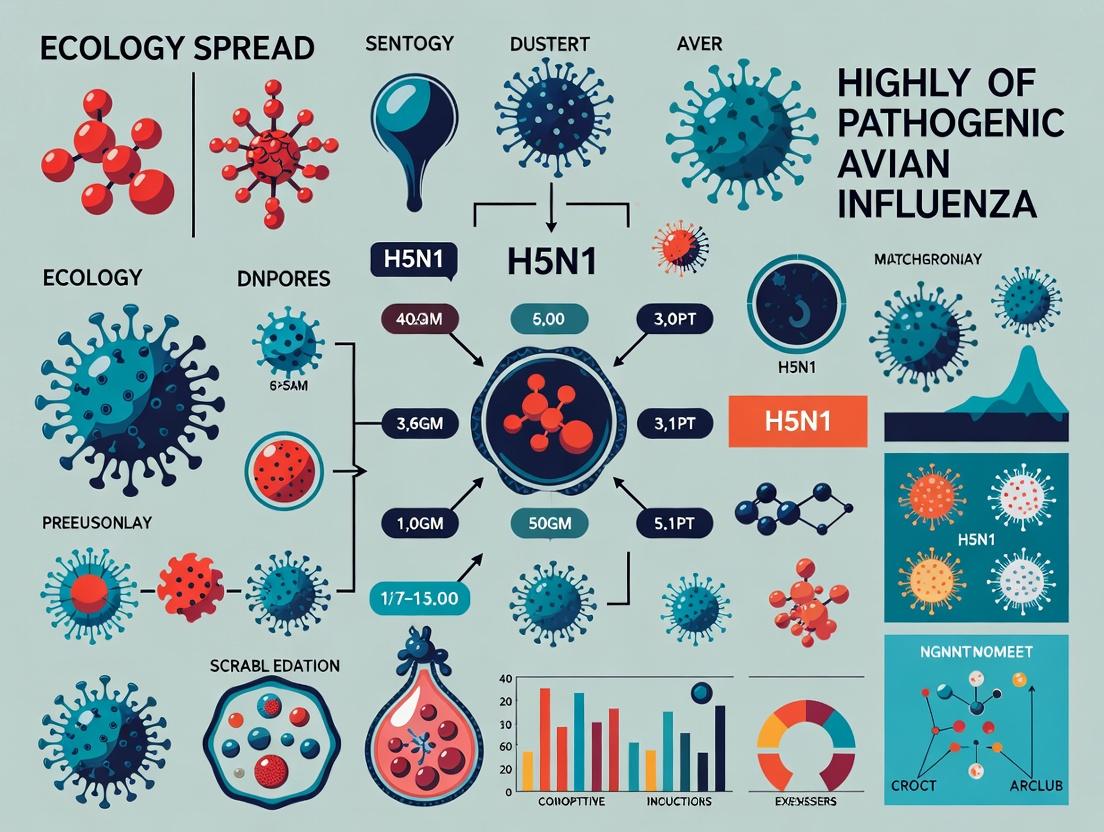
This article provides a comprehensive analysis for researchers, scientists, and drug development professionals on the current state of highly pathogenic avian influenza H5N1.
H5N1 Avian Influenza: Decoding Ecology, Viral Spread, and Emerging Threats for Biomedical Research
Abstract
This article provides a comprehensive analysis for researchers, scientists, and drug development professionals on the current state of highly pathogenic avian influenza H5N1. It explores the foundational ecology and evolutionary drivers of the virus, details advanced methodologies for tracking and modeling its spread, addresses key challenges in containment and antiviral optimization, and validates surveillance data against emerging threats. The synthesis aims to inform targeted surveillance, therapeutic development, and pandemic preparedness strategies.
Unraveling the Ecology and Evolution of HPAI H5N1: From Wild Birds to Spillover Events
1. Introduction within Ecological and Epidemiological Thesis Context The ongoing panzootic of Highly Pathogenic Avian Influenza (HPAI) A(H5N1), driven by clade 2.3.4.4b viruses, represents an unprecedented event in avian ecology and influenza virology. Framed within the broader thesis on the ecology and spread of HPAI H5N1, this clade exemplifies a critical evolutionary shift: the attainment of ecological dominance through enhanced viral fitness in wild bird reservoirs, leading to sustained global circulation, recurrent spillover into domestic poultry and mammals, and significant ecosystem disruption. This whitepaper details the virological basis, global spread, and key research methodologies essential for understanding this dominant lineage.
2. Virological Characterisation of Clade 2.3.4.4b Clade 2.3.4.4b (Goose/Guangdong lineage) emerged around 2020 and is distinguished by specific genetic signatures in the hemagglutinin (HA) gene. Key molecular determinants include:
- HA Cleavage Site: Multiple basic amino acids (e.g., motif REKRRKR/G) enabling systemic infection in birds.
- Receptor Binding Affinity: Mutations like T160A (H5 numbering, equivalent to T158A in H3) and substitutions at positions 222/223 (H3 numbering: 226/228) that modulate binding to avian-type (α2,3-linked sialic acid) and, in some variants, potential human-type (α2,6-linked) receptors.
- Gene Reassortment: Frequent exchange of internal gene segments (e.g., PB2, PA, NP, M, NS) with other circulating avian influenza viruses (AIVs), particularly from low pathogenic precursors, creating numerous genotypes.
3. Global Spread and Quantitative Impact Data Clade 2.3.4.4b has achieved truly global circulation, facilitated by migratory wild birds. The following table summarizes quantitative data on its impact (Data aggregated from WOAH reports and peer-reviewed publications, 2021-2024).
Table 1: Documented Global Impact of HPAI H5N1 Clade 2.3.4.4b (Approx. 2021-2024)
| Metric | Geographic Region(s) | Approximate Figure | Notes |
|---|---|---|---|
| Countries/Affected Regions | Worldwide | >80 countries | Across 5 continents. |
| Domestic Poultry Losses | Global | >131 million birds (culled/died) | Mass culling for outbreak control. |
| Wild Bird Mortalities | Europe, Americas, Asia, Africa | Tens of thousands reported | Actual mortality likely orders of magnitude higher; affects >150 species. |
| Non-Avian Mammal Spillovers | Americas, Europe, Asia | >48 species infected | Includes seals, foxes, dolphins, and cattle. |
| Human Infections (Confirmed) | Global (sporadic) | ~30 cases | Mostly mild or asymptomatic; high case-fatality in some historical clades, but limited for 2.3.4.4b to date. |
4. Core Experimental Protocols for Research 4.1. Protocol for Viral Phylogenetics and Clade Identification
- Objective: To identify and classify H5N1 isolates as clade 2.3.4.4b.
- Methodology:
- RNA Extraction & Sequencing: Extract viral RNA from allantoic fluid or tissue homogenates. Perform whole-genome sequencing using NGS platforms (e.g., Illumina).
- Sequence Alignment: Align HA gene sequences with reference sequences from GISAID/NCBI databases using MAFFT or CLUSTALW.
- Phylogenetic Analysis: Construct a maximum-likelihood or Bayesian phylogenetic tree (using IQ-TREE or BEAST). Clade assignment is confirmed by the virus's placement within the defined 2.3.4.4b monophyletic cluster and the presence of characteristic amino acid signatures.
4.2. Protocol for In Vitro Receptor Binding Assay (Solid-Phase Binding)
- Objective: To quantify viral HA affinity for avian (α2,3-SA) vs. human (α2,6-SA) sialic acid receptors.
- Methodology:
- Reagent Preparation: Biotinylate synthetic sialylglycopolymers (e.g., 3'SLN-PAA-biotin and 6'SLN-PAA-biotin).
- Plate Coating: Coat streptavidin plates with biotinylated receptors.
- Virus Binding: Apply sucrose-gradient purified, inactivated virus to coated wells. Incubate.
- Detection: Add primary antibody (anti-H5 HA monoclonal), followed by HRP-conjugated secondary antibody. Develop with TMB substrate. Measure OD450nm. Ratio of α2,6 to α2,3 binding indicates binding preference.
4.3. Protocol for Pathotyping in Chickens (IVPI)
- Objective: To determine the Highly Pathogenic phenotype in vivo as per OIE/WOAH standards.
- Methodology:
- Inoculation: Infect ten 6-week-old specific pathogen-free (SPF) chickens intravenously with a standard dose (e.g., 10^7 EID50) of test virus in 0.1 mL.
- Observation: Observe birds for 10 days. Score birds daily: 0=healthy, 1=sick, 2=severely sick, 3=dead.
- Calculation: Calculate the Intravenous Pathogenicity Index (IVPI). An IVPI > 1.2 confirms HPAI.
5. Visualization of Key Concepts
Ecology of H5N1 Clade 2.3.4.4b Dominance
H5N1 Clade Identification Workflow
6. The Scientist's Toolkit: Key Research Reagent Solutions Table 2: Essential Reagents for HPAI H5N1 Clade 2.3.4.4b Research
| Research Reagent / Material | Function & Application |
|---|---|
| Specific Pathogen-Free (SPF) Eggs | In ovo viral propagation and titration (EID50 calculation). Essential for virus stock production. |
| Anti-Influenza A NP Monoclonal Antibody | Core reagent for IFA, immunohistochemistry (IHC), and ELISA to detect influenza A antigen broadly. |
| Clade 2.3.4.4b HA-specific Antisera / mAbs | For serological assays (HI, VNT) to identify and characterize antigenic properties of the clade. |
| Biotinylated Sialylglycopolymers (3'SLN & 6'SLN) | Critical for solid-phase receptor binding assays to determine host receptor preference (avian vs. human). |
| Avian (DF1, LMH) & Mammalian (MDCK, Calu-3) Cell Lines | In vitro studies of viral replication kinetics, host range, and drug susceptibility. |
| High-Fidelity DNA Polymerase (e.g., Superscript IV) | For accurate reverse transcription and amplification of viral RNA for sequencing. |
| Reference RNA / External Run Controls | For validation and quality control of NGS workflows, ensuring sequence accuracy. |
| Recombinant H5 HA (Clade 2.3.4.4b) Protein | Positive control for serological assays, vaccine candidate development, and structural studies. |
Wild Avian Reservoirs and Migration Flyways as Primary Drivers of Spread
Thesis Context: This whitepaper situates the role of wild avian reservoirs and migration within the broader ecological research on the spread of highly pathogenic avian influenza (HPAI) H5N1, a critical framework for informing surveillance, modeling, and countermeasure development.
The persistent and intercontinental spread of HPAI H5N1 is fundamentally an ecological phenomenon driven by wild birds. The convergence of specific viral adaptations, the physiology of reservoir host species, and the spatiotemporal patterns of avian migration creates a powerful engine for viral dissemination. Understanding this interface is paramount for predicting spillover to poultry and novel mammals, including humans.
Ecological Drivers: Reservoirs and Flyways
Wild Avian Reservoirs
Not all bird species contribute equally to HPAI H5N1 perpetuation and spread. Reservoir competence—the ability to become infected, replicate, and shed virus—varies significantly by taxa and ecology.
Table 1: Reservoir Competence of Key Wild Bird Groups for HPAI H5N1
| Bird Group (Order/Family) | Typical Infection Outcome | Viral Shedding Level | Role in Long-Distance Spread | Key Species Examples |
|---|---|---|---|---|
| Anatidae (Ducks, Geese, Swans) | Often asymptomatic or mild | High via oropharynx & cloaca | Primary. Migratory, social, abundant. | Mallard (Anas platyrhynchos), Northern Pintail (A. acuta) |
| Laridae (Gulls) | Variable; can be severe | Moderate to High | Significant. Coastal & inland migration, bridge species. | Black-headed Gull (Chroicocephalus ridibundus), Herring Gull (Larus argentatus) |
| Scolopacidae (Shorebirds) | Often subclinical | Moderate | Potential. Long-distance migrants (e.g., trans-hemispheric). | Ruddy Turnstone (Arenaria interpres) |
| Passerines (Songbirds) | Typically severe, fatal | Low | Minimal. Dead-end hosts, local transmission only. | Limited data, experimental infections show high mortality. |
| Raptors & Scavengers | Severe, often fatal | Low | Indicative. Sentinel species for circulating virus. | Bald Eagle (Haliaeetus leucocephalus), White-tailed Sea Eagle (H. albicilla) |
Global Migration Flyways as Viral Highways
Avian migration flyways are not just bird routes; they are structured corridors for pathogen movement. The timing, connectivity, and stopover ecology within these flyways dictate spread dynamics.
Table 2: Major Global Flyways and Their Documented Role in HPAI H5N1 Spread
| Flyway Name | Geographic Range | Key HPAI H5N1 Introduction/Spread Events | Notable Reservoir Species | Major Stopover & Breeding Zones (Hotspots) |
|---|---|---|---|---|
| East Asian-Australasian (EAAF) | Siberia/Alaska -> SE Asia -> Australasia | Epicenter of Goose/Guangdong lineage emergence; recurrent source for global spread. | Bar-headed Goose, Northern Pintail, numerous dabbling ducks. | Qinghai-Tibet Plateau lakes, Yellow Sea mudflats, Poyang Lake. |
| Central Asian (CAF) | Siberia -> Indian Subcontinent | Linked to spread from Qinghai Lake to Europe and Africa. | Ruddy Shelduck, Common Teal. | Central Siberian wetlands, Caspian Sea region. |
| East Atlantic (EAF) | Arctic Russia/W. Siberia -> W. Europe & Africa | Primary route for 2021-2024 panzootic spread into and within Europe. | Barnacle Goose, Eurasian Wigeon, many dabbling ducks. | Wadden Sea, Baltic Sea, North Sea coasts. |
| Black Sea/Mediterranean | E. Europe -> Mediterranean & Africa | Secondary route into Europe and Africa, interface with poultry. | White-fronted Goose, various ducks. | Danube Delta, Black Sea wetlands. |
| Americas (Multiple) | Arctic -> Central/South America | Introduction and rapid spread within North America (2021-2023) followed by southward movement. | Snow Goose, American Wigeon, Blue-winged Teal. | Prairie Potholes, Gulf Coast, California Central Valley. |
Diagram Title: Ecology of HPAI H5N1 Spread via Wild Birds
Core Experimental Protocols for Field & Laboratory Research
Field Surveillance and Sample Collection (WHO/OIE/FAO Guidelines)
Objective: Systematically monitor virus presence, prevalence, and evolution in wild bird populations across flyways.
Protocol:
- Site Selection: Target major breeding, stopover, and wintering sites within flyways (see Table 2). Prioritize areas of high Anatidae/Laridae density and previous outbreak history.
- Sampling Strategy:
- Active Surveillance: Capture birds using mist nets, cannon nets, or hand-capture. Record species, age, sex, weight, and GPS location. Sample clinically healthy birds.
- Passive Surveillance: Collect and test carcasses of dead wild birds (especially waterfowl, raptors, scavengers).
- Sample Collection:
- Oropharyngeal Swab: Use synthetic fiber (e.g., Dacron) swabs. Place in 2-3 ml of viral transport medium (VTM). Essential for detecting HPAI H5N1.
- Cloacal Swab: Separate swab, place in VTM. Collect for both influenza A screening and other pathogens.
- Blood Sample: Collect via venipuncture for serology to detect past exposure (antibodies).
- Sample Processing & Storage: Swabs in VTM should be kept at 4°C and processed in a BSL-2/3 lab within 72 hours. Aliquot and store at -80°C for long-term preservation. Serum should be separated and stored at -20°C or below.
Viral Sequencing and Phylogenetic Analysis
Objective: Determine viral genetic sequence to identify lineage, mutations, and reconstruct spread pathways.
Protocol:
- RNA Extraction: Use commercial silica-membrane-based kits (e.g., QIAamp Viral RNA Mini Kit) from VTM samples.
- RT-PCR & Sequencing: Use pan-influenza A primers for the matrix (M) gene for initial screening. For H5N1 positives, perform hemagglutinin (HA) gene-specific RT-PCR. Next-generation sequencing (NGS) using amplicon-based or metagenomic approaches is now standard for whole-genome sequencing.
- Phylogenetic Analysis:
- Align sequences with global references from databases (GISAID, GenBank).
- Use software (e.g., MAFFT, IQ-TREE, BEAST) to construct maximum-likelihood or time-scaled phylogenetic trees.
- Map virus clades onto host migration flyways to infer transmission routes (phylogeography).
Diagram Title: Viral Sequencing and Phylogenetics Workflow
Experimental Infection Studies in Reservoir Species
Objective: Quantitatively assess host-virus interactions, including infection kinetics, shedding titers, and clinical outcomes in key wild bird species.
Protocol:
- Animal Model & Biosafety: Use captive-reared, seronegative individuals of target species (e.g., Mallards). Conduct in Animal Biosafety Level 3 (ABSL-3) facilities with enhanced agriculture containment.
- Inoculation: Infect birds via intranasal/oral routes with a standardized dose (e.g., 10^6 EID50) of a contemporary wild-bird-origin HPAI H5N1 virus. Include control groups.
- Monitoring & Sampling: Monitor daily for clinical signs (activity, neurological signs). Collect oropharyngeal and cloacal swabs daily for 14-21 days post-inoculation (dpi) to quantify viral shedding via quantitative RT-PCR (qRT-PCR) and virus titration in eggs/MDCK cells.
- Necropsy & Histopathology: Euthanize subsets at predetermined time points (e.g., 3, 7, 14 dpi). Collect tissues (brain, lung, pancreas, intestine) for viral load quantification and histopathological examination to assess lesion distribution and severity.
- Transmission Trial: In a separate setup, place naive "sentinel" birds in contact with inoculated birds to assess direct contact transmission potential.
The Scientist's Toolkit: Key Research Reagent Solutions
Table 3: Essential Reagents and Materials for HPAI H5N1 Wild Bird Research
| Category | Specific Item/Kit | Function & Rationale |
|---|---|---|
| Sample Collection | Viral Transport Medium (VTM) with antibiotics/antimycotics | Preserves viral RNA integrity and prevents bacterial/fungal overgrowth during transport. |
| Dacron or polyester-tipped swabs | Inert fibers do not inhibit PCR; superior to cotton for nucleic acid recovery. | |
| Molecular Detection | RNA Extraction Kit (e.g., QIAamp Viral RNA Mini Kit) | Efficient, reliable purification of viral RNA from swabs and tissues. |
| One-Step RT-PCR Kit for Influenza A (M gene) | High-sensitivity screening for the presence of any influenza A virus. | |
| H5 & N1 subtype-specific RT-PCR or real-time RT-PCR assays | Specific detection and confirmation of HPAI H5N1. | |
| Sequencing | Reverse Transcription Supermix | Converts viral RNA to cDNA for downstream sequencing. |
| Whole Genome Amplification Primers (Multi-segment RT-PCR) | Amplifies all 8 influenza gene segments for NGS. | |
| NGS Library Prep Kit (e.g., Nextera XT) | Prepares amplified cDNA for sequencing on Illumina platforms. | |
| Virology | Specific Pathogen Free (SPF) chicken eggs (9-11 day old) | Gold standard for virus isolation, propagation, and titration (EID50). |
| MDCK or MDCK-SIAT1 cells | Mammalian cell line for virus culture, plaque assays, and titration (TCID50). | |
| Serology | ELISA kits for Influenza A NP antibody | High-throughput screening of serum for prior exposure. |
| Hemagglutination Inhibition (HI) Test reagents (e.g., turkey RBCs, reference antigens) | Determines subtype-specific antibody titers against H5 HA. | |
| Field Equipment | GPS Logger | Precisely geotag sample collection sites for spatial analysis. |
| Cooler/Portable Freezer (-20°C or liquid N2 dry shipper) | Maintains cold chain for sample integrity from field to lab. |
Thesis Context: This whitepaper examines host range expansion of highly pathogenic avian influenza H5N1 (HPAI H5N1) within the broader ecological thesis that changing viral-host interfaces and anthropogenic factors are driving accelerated cross-species transmission and adaptation, posing a significant pandemic threat.
The global spread of the 2.3.4.4b clade of HPAI H5N1 represents an unprecedented ecological shift. Historically confined to avian populations, the virus has recently caused severe, mass mortality events in wild mammals (e.g., seals, sea lions) and sustained outbreaks in farmed mammals (minks, cattle). This expansion indicates adaptive evolution, potentially facilitating increased mammalian replication and raising the specter of human pandemic risk. This document provides a technical overview of the molecular drivers, surveillance data, and experimental methodologies central to this research field.
Epidemiological Data & Case Summaries
Table 1: Documented Mammalian Outbreaks of HPAI H5N1 (2.3.4.4b clade)
| Host Species | Location(s) | Timeframe | Estimated Mortality/Cases | Key Observations |
|---|---|---|---|---|
| American Mink (Neogale vison) | Spain (Galicia) | Oct 2022 | ~52,000 culled | Sustained mammal-to-mammal transmission on farm. PB2-E627K mutation identified. |
| Harbor & Gray Seals | Northeastern USA & Canada | 2022-2024 | 10,000+ seals dead | Mass mortality events; virus detected in brain tissue. |
| Dairy Cattle | United States (Multiple states) | Mar 2024 - Present | 100+ herds infected | Respiratory transmission not primary; virus high in milk, suggesting mammary gland tropism. |
| Domestic Cats | Poland, France, USA (on farms) | 2023-2024 | Numerous fatal cases | Infection via contaminated poultry or raw milk from infected cattle. |
Table 2: Key Mammalian-Adaptive Mutations in HPAI H5N1 (2.3.4.4b)
| Gene/Protein | Mutation(s) | Functional Consequence | Found in Notable Isolates |
|---|---|---|---|
| PB2 | E627K, D701N | Enhances polymerase activity in mammalian cells, increases virulence. | Mink (Spain), Seals (USA), Some bovine isolates. |
| HA (Hemagglutinin) | T271A, Q222L, etc. | Alters receptor binding preference (α-2,3 to α-2,6 linked sialic acids). | Detected in some mammalian isolates; under active investigation in cattle viruses. |
| NP | N319K | Contributes to enhanced polymerase complex activity. | Found in seal and fox variants. |
| NA (Neuraminidase) | H275Y (N1 specific) | Confers resistance to oseltamivir (antiviral). | Sporadic detection in human cases. |
Experimental Protocols for Host Adaptation Research
Receptor Binding Profiling via Glycan Array
Purpose: To quantify the shift in viral Hemagglutinin (HA) binding affinity from avian-type (α-2,3 sialic acid) to human/mammalian-type (α-2,6 sialic acid) receptors. Protocol:
- HA Preparation: Express and purify recombinant HA protein from target viral isolates (avian index case, mammalian outbreak variants).
- Array Incubation: Incubate fluorescently labeled HA proteins on a printed glycan array (CFG Consortium v5.0+ or equivalent) containing diverse biantennary α-2,3 and α-2,6 linked sialylated glycans.
- Washing & Scanning: Wash array to remove non-specific binding. Scan using a microarray scanner (e.g., GenePix 4300A) to measure fluorescence intensity at each glycan spot.
- Data Analysis: Normalize signal intensities. Calculate binding ratios (α-2,6/α-2,3). A significant increase in ratio in mammalian isolates indicates adaptive shift.
In VitroPolymerase Activity Assay (Dual-Luciferase)
Purpose: To assess the functional impact of PB2/E627K-like mutations on viral RNA polymerase complex activity in mammalian cells. Protocol:
- Plasmid Reconstitution: Co-transfect human (HEK293T) cells with:
- A firefly luciferase reporter plasmid under control of an influenza virus mini-genome promoter.
- Plasmids expressing viral polymerase proteins (PB2, PB1, PA, NP) from reference (avian) and mutant (mammalian) isolates. The PB2 plasmid is the experimental variable.
- A Renilla luciferase control plasmid for normalization.
- Incubation: Incubate cells at 33°C, 37°C, and 39°C to simulate different host environments (avian body temperature ~40°C).
- Measurement: At 24-48h post-transfection, lyse cells and measure firefly and Renilla luciferase activity using a dual-luciferase assay system (e.g., Promega).
- Analysis: Normalize firefly luminescence to Renilla. Higher relative activity, particularly at 37°C, indicates mammalian-adapted polymerase function.
In VivoTransmission Studies in Ferrets
Purpose: To evaluate the potential for airborne transmission between mammals, the gold-standard model for human transmissibility risk assessment. Protocol:
- Infection: Anesthetize and intranasally inoculate donor ferrets with 10^6 PFU of test virus (avian vs. mammalian isolate).
- Transmission Setup: 24 hours post-inoculation, place a naive recipient ferret in a cage adjacent to the donor ferret, separated by a perforated divider allowing air exchange but preventing direct contact.
- Monitoring: Monitor all animals daily for clinical signs (weight loss, lethargy, fever, neurological signs) and viral shedding (nasal wash collection every other day for titration by plaque assay on MDCK cells).
- Termination: Euthanize animals at study endpoint (typically 14 days) for pathological and virological analysis of respiratory and systemic tissues.
- Interpretation: Sustained viral shedding in recipients and seroconversion indicate efficient airborne transmission.
Visualization of Key Concepts
Title: H5N1 Host Expansion and Risk Pathway
Title: Polymerase Activity Assay Workflow
The Scientist's Toolkit: Research Reagent Solutions
Table 3: Essential Reagents for Host Expansion Research
| Reagent/Material | Supplier Examples | Function in Research |
|---|---|---|
| Madin-Darby Canine Kidney (MDCK) Cells | ATCC, ECACC | Standard cell line for influenza virus isolation, propagation, and plaque assays. |
| HEK293T Cells | ATCC | Highly transfectable cell line for in vitro polymerase activity assays (dual-luciferase). |
| Dual-Luciferase Reporter Assay System | Promega | Quantifies firefly (experimental) and Renilla (control) luciferase activity from co-transfected cells. |
| Printed Glycan Array (v5.0+) | Consortium for Functional Glycomics | High-throughput profiling of viral HA protein receptor binding specificity. |
| Pathogen-Free Ferrets | Marshall BioResources | In vivo model for studying pathogenesis, virulence, and airborne transmission potential. |
| Specific Pathogen-Free (SPF) Eggs | Charles River, Sunrise Farms | Essential for primary virus isolation from field samples and generating high-titer stocks. |
| Next-Generation Sequencing Kits | Illumina, Oxford Nanopore | For full-genome sequencing of outbreak isolates to identify adaptive mutations. |
| Monoclonal Antibodies (Anti-H5, Anti-N1) | BEI Resources, WHO Collaborating Centres | Used in IHC, neutralization assays, and antigenic characterization. |
| RNAlater Stabilization Solution | Thermo Fisher Scientific | Preserves RNA in field-collected tissue samples (e.g., seal brain, bovine milk). |
1. Introduction within Thesis Context This whitepaper details the molecular analysis of key genetic mutations that facilitate the ecological success and cross-species spread of highly pathogenic avian influenza (HPAI) H5N1. Understanding these signatures is critical to the broader thesis on HPAI H5N1 ecology, which seeks to link molecular virology with epidemiological patterns, host-range expansion, and pandemic risk assessment.
2. Key Mutations: Functional Roles & Quantitative Impact
Table 1: Core Adaptive Mutations in HPAI H5N1
| Gene/Protein | Key Mutation | Primary Functional Consequence | Quantitative Impact on Phenotype |
|---|---|---|---|
| Hemagglutinin (HA) | Polybasic Cleavage Site (e.g., RRRKR/G) | Enables ubiquitous furin-mediated cleavage, enhancing systemic infectivity. | Increases plaque size in cell culture by 2-3 fold; mortality in poultry reaches 90-100%. |
| Polymerase Basic 2 (PB2) | E627K | Enhances polymerase activity and viral replication in mammalian cells at lower temperatures (~33°C). | Increases viral titer in human bronchial epithelial cells by 1.5-2 log10 at 33°C. |
| Polymerase Basic 2 (PB2) | D701N | Improves nuclear import of the viral ribonucleoprotein complex in mammalian cells. | Correlates with a 60-80% increase in mammalian transmission in ferret models. |
| Hemagglutinin (HA) | Q226L / G228S (H5-numbering) | Alters receptor binding preference from α-2,3-linked to α-2,6-linked sialic acids (human-like). | Increases binding affinity to human tracheal epithelia by >50-fold in surface plasmon resonance assays. |
3. Detailed Experimental Protocols
3.1. Protocol: In Vitro Polymerase Activity Assay for PB2 Mutants Objective: Quantify the effect of mutations (e.g., E627K) on viral RNA-dependent RNA polymerase (RdRp) complex activity.
- Plasmid Reconstitution: Co-transfect HEK293T cells with plasmids expressing the H5N1 PA, PB1, PB2 (wild-type or mutant), and NP proteins, along with a reporter plasmid (e.g., a viral minigenome containing a firefly luciferase gene flanked by viral non-coding regions).
- Temperature Incubation: Incubate transfected cells at 33°C or 37°C to mimic upper respiratory tract or core body temperatures.
- Luciferase Assay: At 24-48 hours post-transfection, lyse cells and measure firefly luciferase activity using a luminometer. Renilla luciferase from a co-transfected control plasmid normalizes for transfection efficiency.
- Analysis: Calculate relative luciferase activity (Firefly/Renilla). Activity of mutant complexes is expressed as fold-change relative to the wild-type control at each temperature.
3.2. Protocol: Analysis of HA Receptor Binding Specificity Objective: Determine the shift in sialic acid receptor preference due to HA mutations.
- Protein Expression: Purify recombinant wild-type and mutant HA protein (e.g., globular head domain).
- Glycan Array Screening: Apply fluorescently labeled HA proteins to a glycan microarray containing diverse sialylated glycans (α-2,3- and α-2,6-linked).
- Signal Detection: Scan array with a fluorescence scanner. Binding intensity is quantified for each glycan spot.
- Data Processing: Calculate relative binding scores. A shift towards α-2,6-sialosides indicates adaptation to human-like receptors.
4. Visualizations: Pathways and Workflows
Title: HA Cleavage Leads to Systemic Infection
Title: PB2-E627K Enhances Mammalian Replication
5. The Scientist's Toolkit: Research Reagent Solutions
Table 2: Essential Reagents for Molecular Studies of H5N1 Adaptation
| Reagent / Material | Function / Application |
|---|---|
| Reverse Genetics Plasmid System | Enables rescue of recombinant H5N1 viruses with specific mutations to study causality. |
| Polymerase I-driven Minigenome Reporter Plasmid | Contains viral non-coding regions flanking a luciferase gene to measure RdRp activity in vitro. |
| Sialylated Glycan Microarray (e.g., CFG array) | High-throughput platform for profiling HA receptor binding specificity and avidity. |
| Differentiated Primary Human Bronchial Epithelial Cells (HBECs) | Physiologically relevant ex vivo model for studying viral replication kinetics and tropism in human airways. |
| Monoclonal Antibodies targeting HA cleavage site | Used in Western blot, IFA, and ELISA to detect cleaved vs. uncleaved HA and assess protease susceptibility. |
| Next-Generation Sequencing (NGS) Kit for Influenza | For deep sequencing of viral quasispecies from environmental or clinical samples to identify emerging mutations. |
Environmental Persistence and Transmission Dynamics in Different Ecosystems
Within the Context of a Broader Thesis on Ecology and Spread of Highly Pathogenic Avian Influenza H5N1
The global spread of highly pathogenic avian influenza (HPAI) H5N1 clade 2.3.4.4b represents a significant ecological and public health challenge. Its persistence across diverse ecosystems is a complex function of viral stability, host community composition, and environmental matrices. Understanding these dynamics is critical for predictive modeling and intervention.
Environmental Persistence: Quantitative Data
The persistence of infectious HPAI H5N1 virus is highly dependent on substrate, temperature, and pH. Data synthesized from recent experimental studies (2023-2024) are summarized below.
Table 1: HPAI H5N1 Persistence Under Controlled Laboratory Conditions
| Matrix | Temperature | pH | Mean Persistence (Days to Inactivation) | Experimental Notes |
|---|---|---|---|---|
| Distilled Water | 4°C | 7.0 | >28 | Linear decay; detection by egg inoculation. |
| Freshwater (Lake) | 17°C | 7.5 | 10-14 | Organic content reduces stability. |
| Sea Water (3.5% Salinity) | 17°C | 8.0 | 6-8 | Salt and high pH accelerate degradation. |
| Wet Avian Feces | 20°C | 6.5 | 20-25 | High organic load prolongs infectivity. |
| Dry Feathers | 15°C | N/A | 15-18 | Virus protected in keratinaceous material. |
| Poultry Meat | 4°C | 5.8 | 23-28 | Significant food safety concern. |
| Soil (Loamy) | 10°C | 6.2 | 12-15 | Binding to soil particles may protect virion. |
Table 2: Environmental Detection in Field Studies (2022-2024 Surveillance Data)
| Ecosystem Type | Sample Type | RT-PCR Positive Rate (%) | Viable Virus Isolated (%) | Primary Host Species Present |
|---|---|---|---|---|
| Natural Wetlands | Surface Water | 18.5 | 3.2 | Dabbling ducks, geese, swans, shorebirds |
| Poultry Farm (Outbreak) | Barn Air Dust | 92.0 | 45.7 | Gallus gallus domesticus |
| Urban Park Lakes | Water & Sediment | 9.8 | 0.5 | Resident mallards, feral pigeons, gulls |
| Agricultural Fields | Feces/Soil | 15.3 | 2.1 | Raptors, corvids, grazing waterfowl |
| Coastal Marine | Sea Water & Clam Siphon | 5.4 | 0.0 | Sea ducks, terns, gulls |
Core Experimental Protocols
Protocol: Assessing Viral Stability in Environmental Matrices
Objective: To determine the decay rate of infectious HPAI H5N1 in various environmental substrates.
Materials: See "Research Reagent Solutions" below.
Method:
- Sample Preparation: Aliquot sterile environmental matrices (e.g., 10 mL water, 10 g soil) into sealed containers. Triplicate for each time point.
- Virus Inoculation: Spike each sample with a known titer (e.g., 10^6 TCID50/mL) of a contemporary HPAI H5N1 strain (e.g., A/Guinea fowl/Ghana/22). Homogenize carefully.
- Incubation: Store samples under controlled conditions (e.g., 4°C, 17°C, 25°C) in the dark to simulate natural conditions.
- Time-Course Sampling: At predetermined intervals (e.g., 0, 1, 3, 7, 14, 28 days), collect triplicate samples.
- Virus Recovery:
- Liquid: Centrifuge at 3000 x g for 10 min to remove debris. Filter supernatant (0.45 µm).
- Solid: Add viral transport medium, vortex vigorously, centrifuge, and filter supernatant.
- Titration: Determine the remaining infectious titer via TCID50 assay in MDCK cells or via egg inoculation (EID50). Include appropriate controls (uninoculated matrix, virus stock titered in parallel).
- Data Analysis: Calculate decay rates (k) using a linear or non-linear regression model (e.g.,
log10(titer) = -k * time + intercept). Estimate half-life (t1/2 = ln(2)/k).
Protocol: Field Surveillance and Environmental Sampling
Objective: To detect and characterize HPAI H5N1 virus in ecosystem compartments.
Method:
- Site Selection: Stratified sampling across ecosystems (wetlands, farms, urban areas). Use GPS for geotagging.
- Sample Collection:
- Water: Collect 50-100 mL of surface water in sterile containers. Measure pH and temperature on-site.
- Sediment/Soil: Collect top 2 cm using a sterile scoop.
- Fecal: Collect fresh droppings with sterile swabs or tools.
- Air: Use portable cyclonic samplers or settled dust in poultry settings.
- Transport: Store samples at 4°C and process within 24 hours.
- Processing: Follow steps similar to 3.1.5 for virus recovery.
- Molecular Detection: Extract RNA, perform RT-qPCR targeting the H5 gene. Use a standard curve for genome copy number estimation.
- Virus Isolation: Inoculate recovered material into 9-11 day-old embryonated chicken eggs (Biosafety Level 3+ facilities). Confirm HA activity and subtype by sequencing.
Visualization of Transmission Dynamics
Title: HPAI H5N1 Ecosystem Transmission Cycle
Title: Viral Persistence Experiment Workflow
The Scientist's Toolkit: Research Reagent Solutions
Table 3: Essential Materials for Environmental Persistence & Transmission Research
| Item/Category | Specific Example/Product | Function & Rationale |
|---|---|---|
| Virus Strains | Contemporary HPAI H5N1 clade 2.3.4.4b isolate (e.g., A/American Crow/WA/433279-01/2022) | Ensures research relevance to currently circulating strains with potential mammalian adaptations. |
| Cell Lines | Madin-Darby Canine Kidney (MDCK) cells (ATCC CCL-34) | Standard permissive cell line for influenza A virus titration (TCID50, plaque assays). |
| Embryonated Eggs | Specific Pathogen Free (SPF) chicken eggs, 9-11 days old | Gold standard for primary virus isolation and propagation; high sensitivity. |
| Viral Transport Medium | Brain Heart Infusion (BHI) broth with antibiotics (Pen/Strep, Gentamicin) and antifungal (Amphotericin B). | Preserves viral infectivity and prevents microbial overgrowth during field sample transport. |
| Nucleic Acid Extraction | Magnetic bead-based kits (e.g., QIAamp Viral RNA Mini Kit) | Efficient RNA extraction from complex environmental matrices with inhibitors. |
| RT-qPCR Assay | USDA-validated or WHO-recommended primers/probes for H5 HA gene. TaqMan Fast Virus 1-Step Master Mix. | Sensitive and specific detection/quantification of viral genome copies in environmental samples. |
| Environmental Chambers | Precision incubators with temperature and light control (e.g., 4°C to 30°C range). | Simulates realistic environmental conditions for persistence studies. |
| Field Sampling Gear | Sterile 50mL conical tubes, nylon flocked swabs, portable water quality meter (pH/Temp/EC), GPS unit. | Ensures aseptic, geotagged sample collection with critical meta-data. |
| Bioinformatics Tools | Nextclade, GISAID EpiFlu database, BEAST (Bayesian evolutionary analysis). | For phylogenetic analysis and molecular clock dating to trace transmission pathways. |
Advanced Tools and Models for Tracking H5N1 Spread and Predicting Risk
Genomic Surveillance & Phylodynamic Analysis for Real-Time Lineage Tracking
The ecology and global spread of Highly Pathogenic Avian Influenza (HPAI) H5N1 represents a dynamic and persistent threat to avian populations, public health, and food security. The emergence of the 2.3.4.4b clade and its unprecedented spread across continents, involving wild birds and mammals, underscores the need for rapid, precise viral lineage tracking. Genomic surveillance coupled with phylodynamic analysis forms the cornerstone of this effort, enabling researchers to infer transmission patterns, evolutionary rates, antigenic drift, and the potential for mammalian adaptation in near real-time. This guide details the technical pipeline for implementing these analyses within an active H5N1 research program.
Core Technical Pipeline: From Sample to Insight
Sample Collection & Metagenomic Sequencing
Experimental Protocol: Sample Processing for H5N1 Whole Genome Sequencing
- Sample Acquisition: Collect oropharyngeal/cloacal swabs (avian) or tracheal/nasal swabs/washes (mammals) in viral transport media. For environmental surveillance, collect water or fecal samples.
- Nucleic Acid Extraction: Use a commercial column-based or magnetic bead-based kit optimized for viral RNA. Include carrier RNA to improve yield.
- Library Preparation: Employ a metagenomic shotgun approach or an H5N1-specific amplicon-based multiplex PCR (e.g., modified Artic Network protocol). The latter is more sensitive for low viral load samples.
- For Amplicon Sequencing: Use a primer pool tiling across all 8 H5N1 genome segments. Perform reverse transcription, multiplex PCR amplification (35-40 cycles), and PCR clean-up.
- Sequencing: Utilize Illumina (NovaSeq, MiSeq) for high-depth, accurate sequencing or Oxford Nanopore Technologies (MinION) for real-time, portable sequencing. For Nanopore, prepare library with native barcoding and sequence on an R10.4.1 flow cell.
- Quality Control: Assess raw reads with FastQC (Illumina) or PycoQC (Nanopore). Trim adapters and primers using Cutadapt or Porechop.
Bioinformatic Processing & Variant Calling
Experimental Protocol: Consensus Genome Generation
- Read Mapping: Map quality-filtered reads to a reference H5N1 genome (e.g., A/Guangdong/17SF003/2016 (H5N1) or a recent clade 2.3.4.4b strain) using BWA-MEM (Illumina) or Minimap2 (Nanopore).
- Variant Calling: Generate a sorted BAM file using SAMtools. Call variants with iVar (preferred for amplicon data due to primer trimming) or LoFreq. Apply a minimum coverage threshold of 100x and variant frequency of 5% for consensus calling.
- Consensus Generation: Use BCFtools or iVar to generate a consensus FASTA sequence for each segment, using an N-mask for low-coverage positions (<20x).
- Lineage Assignment: Upload consensus genomes to public databases and assign clade/lineage using Nextclade (with A/H5N1 dataset) or the WHO H5N1 clade nomenclature tool.
Phylodynamic Analysis
Experimental Protocol: Time-Scaled Phylogenetic Inference using Bayesian Methods
- Sequence Curation: Compile your generated sequences with a globally representative dataset from GISAID. Align each segment separately using MAFFT or Nextalign.
- Model Selection: Determine the best-fit nucleotide substitution model (e.g., GTR+I+Γ) and molecular clock model (strict vs. relaxed) using ModelTest-NG or via marginal likelihood estimation in BEAST.
- Tree Prior Selection: Choose an appropriate demographic/tree prior based on the hypothesis (e.g., Bayesian Skyline for population dynamics, or a structured coalescent for geographic spread).
- Bayesian Inference: Run analysis in BEAST 1.10 or BEAST 2. Perform 2-3 independent MCMC runs for at least 50-100 million generations, sampling every 10,000 states. Assess convergence (ESS > 200) using Tracer.
- Tree Annotation & Visualization: Combine log files in LogCombiner and generate a maximum clade credibility (MCC) tree with TreeAnnotator. Visualize and annotate trees in FigTree, IcyTree, or auspice.
Table 1: Global Genomic Surveillance Output for H5N1 (2.3.4.4b Clade) - Key Metrics (2023-2024)
| Metric | Value | Data Source / Period | Significance |
|---|---|---|---|
| Genomes in GISAID (H5N1) | ~27,000 (Total) | GISAID, as of Apr 2024 | Total available genomic data |
| Genomes (Clade 2.3.4.4b) | ~14,000 | GISAID, 2020-Apr 2024 | Dominant circulating clade |
| Estimated Evolutionary Rate | ~4.5 x 10⁻³ subs/site/year | Recent BEAST analysis (HA gene) | High mutation rate driving diversity |
| Intercontinental Spread Events | >5 major migrations | Phylogeographic studies, 2021-2023 | Evidence for wild bird-mediated dispersal |
| Mammalian Adaptation Markers | PB2-E627K, PB2-D701N detected in ~2% of mammalian isolates | GISAID meta-analysis, 2020-2024 | Enhanced polymerase activity in mammalian cells |
Table 2: Comparison of Sequencing Platforms for H5N1 Surveillance
| Platform | Typical Read Length | Run Time (Library-to-Data) | Key Advantage for HPAI Surveillance | Key Limitation |
|---|---|---|---|---|
| Illumina MiSeq | 2x 300 bp | 24-56 hours | High accuracy (>99.9%), ideal for variant detection | Fixed infrastructure, longer turnaround |
| Oxford Nanopore MinION | Up to 10+ kb | 5-12 hours | Real-time analysis, portable, detects modifications | Higher raw error rate (~5%), requires bioinformatic polishing |
Visualized Workflows & Pathways
The Scientist's Toolkit: Essential Research Reagents & Materials
Table 3: Key Research Reagent Solutions for H5N1 Genomic Surveillance
| Item / Reagent | Function in Protocol | Example Product / Specification |
|---|---|---|
| Viral Transport Media (VTM) | Stabilizes viral RNA in field-collected swab samples. | Copan UTM or PBS with protein stabilizer (e.g., BSA). |
| Viral RNA Extraction Kit | Isolves high-purity viral RNA from complex samples. | QIAamp Viral RNA Mini Kit (Qiagen), MagMAX Viral/Pathogen Kit (Thermo). |
| H5N1-Specific Multiplex PCR Primers | Amplifies full H5N1 genome from low-titer samples via tiling amplicons. | Artic Network H5N1 primer scheme v1/v2, customized for 2.3.4.4b. |
| One-Step RT-PCR Mix | Performs reverse transcription and PCR amplification in a single tube. | Superscript III One-Step RT-PCR System (Thermo), QIAGEN OneStep Ahead RT-PCR Kit. |
| High-Fidelity DNA Polymerase | For accurate amplification during library prep (if not using One-Step). | Q5 Hot Start High-Fidelity 2X Master Mix (NEB). |
| Sequencing Library Prep Kit | Prepares amplicons for sequencing platform (Illumina/Nanopore). | Illumina DNA Prep, Nanopore Native Barcoding Kit 96 V14. |
| Positive Control RNA | Validates entire wet-lab workflow, from extraction to sequencing. | In vitro transcribed RNA of known H5N1 strain, or quantified viral stock. |
| Bioinformatic Reference Genome | High-quality complete genome for read mapping and variant calling. | GISAID-derived reference (e.g., EPIISL12345678), annotated in GenBank format. |
Geospatial Modeling and Risk Mapping Using Environmental & Animal Data
1. Introduction
This technical guide outlines a framework for integrating environmental, climatological, and animal movement data to model and map the spatial risk of highly pathogenic avian influenza (HPAI) H5N1. This approach is central to a broader thesis in Ecology, aiming to elucidate the complex interplay of abiotic and biotic drivers behind the virus's establishment and spread in wild bird populations and its subsequent spillover into domestic poultry and novel mammalian hosts.
2. Core Data Types and Sources for HPAI H5N1 Modeling
Effective risk mapping requires synthesizing disparate, multi-scale data streams. The following table categorizes essential data types and representative sources.
Table 1: Core Data Types for HPAI H5N1 Geospatial Modeling
| Data Category | Specific Variables | Example Sources/Purpose | Spatio-Temporal Resolution |
|---|---|---|---|
| Virus Occurrence | HPAI H5N1 positive cases in wild birds, poultry, mammals. | Official reporting (WOAH, FAO/EMPRES-i), research surveillance. | Point/County, Daily. |
| Wild Bird Ecology | Species distribution, migration flyways, congregation sites (breeding, stopover, wintering). | eBird, Movebank, species distribution models (SDMs). | Point/Raster, Seasonal. |
| Environmental & Climatic | Land surface temperature (LST), precipitation, humidity, water body extent (NDWI), vegetation (NDVI). | MODIS, Sentinel-2/3, ERA5 reanalysis. | Raster (1km-10km), 8-day to Monthly. |
| Host Density | Poultry density (chickens, ducks), livestock density. | Gridded Livestock of the World (GLW), national agricultural censuses. | Raster (1km-10km), Annual. |
| Anthropogenic | Land use (cropland, urban), road networks, market locations. | Global Land Cover, OpenStreetMap. | Raster/Vector, Annual. |
3. Methodological Framework: From Data to Risk Maps
The core workflow involves data preprocessing, integration, statistical modeling, and validation.
3.1. Data Preprocessing and Harmonization Protocol
- Spatial Alignment: Reproject all raster and vector data to a common coordinate reference system (e.g., World Geodetic System 1984).
- Resampling: Aggregate or disaggregate rasters to a uniform spatial resolution (e.g., 5km x 5km) using bilinear (continuous data) or nearest-neighbor (categorical data) methods.
- Temporal Aggregation: Summarize environmental variables (e.g., mean LST, total precipitation) and case counts to a consistent epidemiological period (e.g., monthly).
- Case Data Processing: Convert point case data to a presence/absence or incidence rate within each grid cell for the modeling period.
3.2. Statistical Modeling: Maximum Entropy (MaxEnt) & Machine Learning While traditional logistic regression is common, machine learning methods like MaxEnt or Random Forests are robust for presence-background data.
- MaxEnt Protocol for HPAI H5N1 in Wild Birds:
- Input: Wild bird H5N1 presence locations (P) and a large random sample of background points (B) from the study extent.
- Covariate Extraction: For each P and B point, extract values from all environmental and ecological raster layers.
- Model Training: The algorithm finds the probability distribution of maximum entropy (i.e., closest to uniform) subject to the constraint that the expected value of each environmental covariate under this distribution matches its empirical average over the presence sites.
- Regularization: Apply regularization multipliers to prevent overfitting to sparse data.
- Output: A continuous suitability raster (0-1) representing relative probability of presence based on the environmental conditions.
- Validation: Perform k-fold (e.g., 10-fold) spatial cross-validation, partitioning data into folds based on geographic blocks to assess transferability. Use AUC (Area Under the ROC Curve) and True Skill Statistic (TSS) as performance metrics.
4. Experimental Protocol for Validating Risk Maps via Active Surveillance
A proposed field protocol to ground-truth high-risk model predictions.
Title: Targeted Environmental and Avian Sampling for HPAI H5N1 Validation
- Site Selection: Based on the generated risk map, stratify the study region into High, Medium, and Low-risk areas. Randomly select 10 field sampling sites within each stratum.
- Environmental Sampling:
- At each site, collect 10-20 composite water/sediment samples from wetlands or water bodies used by birds.
- Process samples using a validated RT-qPCR protocol for H5N1 viral RNA (e.g., targeting the Matrix or H5 gene). Include negative controls.
- Avian Sampling:
- Conduct non-invasive fecal sampling from bird congregations or live/dead bird surveillance where permitted.
- Process oropharyngeal/cloacal swabs or fecal samples via RT-qPCR.
- Analysis: Compare the proportion of PCR-positive samples across risk strata using a Chi-square test to validate the model's predictive capacity.
5. Visualization of Conceptual and Analytical Workflows
Title: HPAI H5N1 Geospatial Modeling & Validation Workflow
Title: Pathways of HPAI H5N1 Spread and Spillover
6. The Scientist's Toolkit: Essential Research Reagents & Materials
Table 2: Key Reagent Solutions for Field and Lab Components of HPAI Studies
| Item/Category | Specific Example/Kit | Function in Research |
|---|---|---|
| Viral RNA Preservation | RNAlater, DNA/RNA Shield | Stabilizes nucleic acids in field-collected environmental (water/sediment) or swab samples prior to lab processing. |
| Nucleic Acid Extraction | QIAamp Viral RNA Mini Kit, MagMAX Pathogen RNA/DNA Kit | Isolates high-quality viral RNA from complex samples like cloacal/oropharyngeal swabs or environmental matrices. |
| HPAI H5N1 RT-qPCR | CDC Influenza Virus RT-qPCR Panel, VetMax-Gold AIV Detection Kit | For specific detection and subtyping of H5N1 viral RNA. Provides quantitative data (Ct values) for viral load estimation. |
| Next-Generation Sequencing | Illumina COVIDSeq, ARTIC Network primers | For whole-genome sequencing of H5N1 isolates to track viral evolution, reassortment, and spatial spread. |
| Sterile Sampling Supplies | Sterile swabs (flocked), viral transport media (VTM), sterile collection tubes | Ensures integrity of biological samples during field collection and transport. |
| Geospatial Software | QGIS, R (sf, terra, maxnet packages), Google Earth Engine | For processing satellite imagery, performing spatial analyses, and executing ecological niche models. |
Applications of Wastewater-Based Epidemiology for Early Community Detection
Within the broader thesis on the ecology and spread of highly pathogenic avian influenza (HPAI) H5N1, wastewater-based epidemiology (WBE) emerges as a pivotal, non-invasive surveillance tool. This technical guide details its application for the early detection of H5N1 in human communities, offering a critical early warning system that precedes clinical case reporting and enables proactive public health interventions.
Core Principles and Quantitative Data
WBE leverages the principle that infected individuals shed viral genetic material (RNA) via feces, sputum, and other bodily excretions, which enters municipal wastewater systems. Concentrating and analyzing this composite sample provides a population-level snapshot of infection prevalence.
Table 1: Key Quantitative Metrics from Recent HPAI H5N1 WBE Studies
| Metric / Parameter | Value Range (Reported in Literature) | Significance for Surveillance |
|---|---|---|
| Shedding Onset vs. Symptoms | 1-3 days prior to clinical presentation | Enables true early warning. |
| RNA Shedding Duration in Feces | Up to 14 days post-infection (modeled from human & avian studies) | Allows detection even in asymptomatic/pauci-symptomatic cases. |
| WBE Detection Limit (Gene Copies/L) | 10^3 - 10^4 copies/L for reliable RT-qPCR signal | Informs required sample concentration factors. |
| Population Coverage per Sample | 10,000 to >1,000,000 individuals (sewershed dependent) | Demonstrates cost-effectiveness and scale. |
| Lead Time over Clinical Surveillance | 7-14 days (estimated for emerging outbreaks) | Critical for mobilizing healthcare and containment resources. |
| Estimated Prevalence Detectable | ~1 case per 10,000 - 100,000 persons (model-dependent) | Highlights sensitivity for low-prevalence emerging threats. |
Experimental Protocol for HPAI H5N1 Detection in Wastewater
Sample Collection and Pre-treatment
- Protocol: Collect 24-hour composite samples using autosamplers at wastewater treatment plant influent or targeted manholes. Store samples at 4°C and process within 24 hours. For H5N1, inactivate samples immediately using heat (60°C for 90 min) or guanidinium-based lysis buffers under BSL-2/3 precautions.
- Volume: 200-500 mL of raw wastewater.
Virus Concentration
- Method: PEG Precipitation (High-Volume, Cost-Effective)
- Adjust wastewater pH to ~7.0.
- Add polyethylene glycol 8000 (PEG) to a final concentration of 8% (w/v) and NaCl to 0.3 M.
- Incubate overnight at 4°C with gentle stirring.
- Centrifuge at 10,000 x g for 90 minutes at 4°C.
- Resuspend the pellet in 1-2 mL of phosphate-buffered saline (pH 7.4).
- Alternative Method: Ultrafiltration or electronegative membrane filtration for improved recovery of enveloped viruses like influenza.
Nucleic Acid Extraction
- Protocol: Use commercial silica-membrane or magnetic bead-based RNA extraction kits optimized for complex matrices. Include an internal process control (e.g., mengovirus, bacteriophage MS2) spiked into the sample pre-extraction to monitor efficiency and identify PCR inhibition.
Reverse Transcription Quantitative PCR (RT-qPCR) Analysis
- Targets: Multiplex assays targeting conserved regions of H5 hemagglutinin (HA) and N1 neuraminidase (NA) genes. Always include a universal influenza A matrix (M) gene assay as a primary screen.
- Protocol:
- Use a one-step RT-qPCR master mix.
- Primer/Probe sequences must be frequently validated against circulating H5N1 clades (e.g., 2.3.4.4b).
- Run in triplicate with a standard curve of known copy number (synthetic gBlock) for absolute quantification.
- Cycling Conditions: Reverse Transcription: 50°C for 15 min; Initial Denaturation: 95°C for 2 min; 45 cycles of: 95°C for 15 sec, 60°C for 1 min (with fluorescence acquisition).
Data Normalization and Interpretation
- Normalize H5N1 RNA concentrations (gene copies/L) using wastewater flow rates and population serviced by the sewershed to estimate community prevalence. Trend analysis is more informative than single time-point data.
Visualizations
The Scientist's Toolkit: Research Reagent Solutions
Table 2: Essential Research Reagents for H5N1 WBE
| Item | Function & Rationale |
|---|---|
| Automatic Composite Sampler | Collects time- or flow-proportional wastewater samples over 24h, ensuring representative community signal. |
| PEG 8000 / NaCl | Precipitates viruses from large volumes of wastewater; cost-effective for enveloped viruses like influenza. |
| Guanidinium Thiocyanate Lysis Buffer | Inactivates HPAI H5N1 immediately upon sample contact, ensuring safe downstream processing (BSL-2). |
| Internal Process Control (e.g., Mengovirus) | Exogenous virus spiked into sample pre-extraction to monitor RNA recovery efficiency and identify PCR inhibitors. |
| RNA Extraction Kit (Magnetic Bead) | Efficiently purifies viral RNA from complex, inhibitor-rich wastewater concentrates. |
| One-Step RT-qPCR Master Mix | Enables reverse transcription and quantitative PCR in a single tube, reducing hands-on time and contamination risk. |
| H5-, N1-, & FluA M-gene Primers/Probes | Specific oligonucleotides for multiplex detection; sequences must be curated against evolving H5N1 clades. |
| Synthetic gBlock DNA Standard | Known-copy-number external standard for generating absolute quantification curves in RT-qPCR. |
| Digital PCR Master Mix (Optional) | For absolute quantification without a standard curve, offering high precision at low target concentrations. |
| Next-Generation Sequencing (NGS) Library Prep Kit | For whole genome sequencing of H5N1 from wastewater to assess clade, mutations, and zoonotic potential. |
Understanding the ecology and spread of highly pathogenic avian influenza (HPAI) H5N1 requires elucidating two pivotal traits: transmissibility among mammals and cellular tropism. These traits are directly investigated through two cornerstone experimental models: in vivo ferret transmission studies and in vitro receptor binding assays. Ferrets are the gold-standard model for influenza transmission as their respiratory tract physiology, sialic acid receptor distribution, and clinical disease closely mimic humans. Receptor binding assays quantify the virus's affinity for avian-type (α2,3-linked sialic acid) versus human-type (α2,6-linked sialic acid) receptors, a key determinant of host range and pandemic potential. Together, these models provide critical data for risk assessment of emerging H5N1 clades and inform therapeutic and vaccine development.
In Vitro Receptor Binding Assays: Methodology and Data
Core Principle: These assays measure the binding affinity and specificity of the viral hemagglutinin (HA) protein for glycan receptors. The transition from preferential binding of avian-type (α2,3-SA) to human-type (α2,6-SA) receptors is a critical adaptive step for efficient human transmission.
Detailed Protocol: Solid-Phase Binding Assay (ELISA-like)
- Glycan Coating: Dilute biotinylated glycans (e.g., 3'SLN [α2,3-SA] and 6'SLN [α2,6-SA]) in PBS. Add to streptavidin-coated 96-well plates (100 µL/well, 2-5 µg/mL). Incubate 1 hour at room temperature (RT).
- Blocking: Aspirate glycan solution. Block plates with 200 µL/well of PBS containing 2% bovine serum albumin (BSA) for 1 hour at RT.
- Virus Binding: Prepare purified, sucrose-gradient-centrifuged virus or recombinant HA protein in blocking buffer. Serially dilute across glycan-coated wells. Incubate for 2 hours at RT.
- Detection: Wash plates 3x with PBS/0.05% Tween-20. Add primary antibody (e.g., mouse anti-influenza HA) in blocking buffer. Incubate 1 hour at RT. Wash 3x.
- Signal Development: Add horseradish peroxidase (HRP)-conjugated secondary antibody. Incubate 1 hour at RT. Wash 3x. Add chromogenic substrate (e.g., TMB). Stop reaction with H2SO4.
- Quantification: Read absorbance at 450 nm. Binding affinity is expressed as the half-maximal effective concentration (EC50), derived from the binding curve.
Quantitative Data Summary:
| Assay Type | Measured Parameter | Typical Output for Avian H5N1 | Typical Output for Human-Adapted H5N1 | Key Interpretation |
|---|---|---|---|---|
| Solid-Phase Binding | EC50 for Glycan Binding | Low EC50 for α2,3-SA; High EC50 or no binding for α2,6-SA | Low EC50 for α2,6-SA; Reduced EC50 for α2,3-SA | Quantifies shift in receptor preference. Lower EC50 indicates higher affinity. |
| Glycan Microarray | Relative Binding Intensity | Strong signal for avian intestinal/respiratory glycans (α2,3-SA). | Broadened signal for human upper respiratory tract glycans (α2,6-SA). | Provides a broad profile of binding to hundreds of natural glycans. |
| Resialylated RBC Hemagglutination | Minimum Agglutinating Dose | Agglutination of α2,3-SA-RBCs at low virus titers. | Agglutination of α2,6-SA-RBCs at low virus titers. | Functional confirmation of binding specificity in a solution-based assay. |
Diagram: Receptor Binding Assay Workflow
Title: Solid-phase receptor binding assay workflow.
Ferret Transmission Studies: Methodology and Data
Core Principle: These studies evaluate direct contact and respiratory droplet (or airborne) transmission between ferrets, modeling human spread. Key outcomes include transmission efficiency, onset/shedding kinetics, and clinical severity.
Detailed Protocol: Respiratory Droplet Transmission Study
- Animal Housing & Biosafety: Conduct in ABSL-3 or ABSL-3+ facilities. Use ferrets (≥ 6 months old, seronegative for circulating influenza). House animals in specially designed transmission cages with a solid divider separating an infected donor ferret from a naive recipient ferret, allowing only air exchange.
- Infection of Donor: Anesthetize donor ferret. Inoculate intranasally with a standardized dose (e.g., 10^6 PFU) of H5N1 virus in 1 mL PBS.
- Transmission Setup: 24 hours post-inoculation, place a naive recipient ferret in the adjacent compartment of the transmission cage. Maintain continuous airflow from donor to recipient.
- Monitoring: Monitor daily for clinical signs (weight loss, temperature, activity, nasal discharge). Collect nasal washes daily for 7-14 days to quantify viral shedding (via plaque assay or TCID50).
- Endpoint Analysis: At study end, euthanize animals and collect respiratory tract tissues for viral titers and histopathology. Test all sera for seroconversion by hemagglutination inhibition (HI) assay.
Quantitative Data Summary:
| Study Arm | Key Metrics Measured | Typical Data Output | Interpretation of Positive Transmission |
|---|---|---|---|
| Direct Contact | Viral shedding in recipient, Seroconversion (HI ≥40). | Shedding onset (e.g., Day 3-5 post-exposure). | Virus detected in nasal wash of ≥2/3 recipients. |
| Respiratory Droplet/Airborne | As above, plus transmission efficiency. | Transmission rate (e.g., 2/3 recipients infected). | Efficient: 100% (3/3); Limited: 33-66% (1-2/3); None: 0%. |
| Viral Shedding Kinetics | Peak titer (log10 PFU/mL), Duration (days). | Donor peak: 10^6-10^8 PFU/mL; Recipient peak: 10^4-10^6 PFU/mL. | High recipient titers correlate with sustained transmission risk. |
| Clinical Severity | Weight loss (%), Mortality. | High pathogenicity: >15% weight loss, mortality. | Increased severity may correlate with higher replication but not always with transmissibility. |
Diagram: Ferret Transmission Study Design Logic
Title: Respiratory droplet transmission cage design and timeline.
The Scientist's Toolkit: Key Research Reagent Solutions
| Item | Function in Experiments | Specific Application/Example |
|---|---|---|
| Biotinylated Glycans | Capture molecules for solid-phase binding assays. | 3'-Sialyllactosamine (3'SLN) and 6'-Sialyllactosamine (6'SLN) for receptor specificity screening. |
| Streptavidin-Coated Plates | High-affinity solid support for biotinylated glycans. | 96-well plates for ELISA-style HA binding assays. |
| Recombinant H5 HA Protein | Standardized, safe antigen for binding studies. | Used in place of live virus in BSL-2 labs for initial receptor profiling. |
| Specific Pathogen Free (SPF) Ferrets | In vivo model with human-like influenza physiology. | Essential for transmission, pathogenesis, and therapeutic efficacy studies. |
| Plaque Assay Reagents | Quantify infectious virus titer from nasal washes/tissues. | Madin-Darby Canine Kidney (MDCK) cells, agar overlay, crystal violet stain. |
| Hemagglutination Inhibition (HI) Assay Reagents | Detect functional, strain-specific anti-HA antibodies. | Turkey red blood cells (RBCs), reference antisera for seroconversion confirmation. |
| α2,3- and α2,6-Resialylated RBCs | Probe for functional HA receptor preference in solution. | Created by treating human RBCs with specific sialyltransferases for hemagglutination assays. |
Integrating AI and Machine Learning for Outbreak Forecasting
This whitepaper, framed within a thesis on the ecology and spread of highly pathogenic avian influenza (HPAI) H5N1, provides a technical guide for applying AI/ML to enhance predictive forecasting. The goal is to inform research and therapeutic countermeasure development.
HPAI H5N1 persists in wild bird populations (the ecological reservoir), leading to episodic spillover into poultry and mammals. Forecasting requires integrating multi-scale ecological and epidemiological data to model complex, non-linear transmission dynamics across species interfaces and geographies.
Effective ML models rely on heterogeneous, spatiotemporal data streams. The following table summarizes key quantitative data types used in contemporary H5N1 forecasting research.
Table 1: Core Quantitative Data Types for H5N1 AI/ML Forecasting
| Data Category | Specific Data Stream | Typical Volume/Frequency | Primary Use in Model |
|---|---|---|---|
| Viral Genetic | H5N1 genome sequences from GISAID | 1000s of sequences; weekly updates | Track evolution, identify clades, estimate spread. |
| Ecological | Wild bird migration tracks (Movebank) | Millions of GPS points; hourly | Define connectivity networks between regions. |
| Environmental | Temperature, precipitation (NASA, NOAA) | 1km² resolution; daily | Driver of virus persistence & host distribution. |
| Host Population | Poultry density (FAO STAT), wild bird counts (eBird) | Country/regional level; annual | Estimate susceptible host density. |
| Outbreak Surveillance | Official reports (WOAH, FAO EMPRES-i) | 100s of events/year; daily/real-time | Ground truth for model training/validation. |
| Social-Economic | Poultry trade networks, land use change | Varies; often annual | Capture anthropogenic drivers of spread. |
Machine Learning Methodologies and Experimental Protocols
Protocol: Spatiotemporal Risk Mapping with Ensemble Learning
Objective: Generate high-resolution maps (e.g., 1km x 1km) predicting H5N1 introduction risk over a future period (e.g., next 3 months).
Workflow:
- Data Assembly & Alignment: Gather datasets from Table 1. Spatially align all raster data to a common grid. Aggregate point data (outbreaks, sequences) to the grid cell level.
- Feature Engineering: Create lagged variables (e.g., outbreak count 3 months prior). Calculate dynamic predictors from static data (e.g., distance from water bodies for wild birds). Normalize all features.
- Model Training (Ensemble): Use historical data (e.g., 2010-2022) for training.
- Train multiple base models: Random Forest (RF) for feature importance, Gradient Boosting Machines (GBM) for predictive accuracy, and a Long Short-Term Memory (LSTM) network to capture temporal sequences in each cell.
- Use a stacking meta-learner (e.g., a logistic regression or simple neural network) to combine the predictions of the base models. The target variable is binary (outbreak yes/no in cell during the forecast window).
- Validation: Perform rigorous spatiotemporal cross-validation. Never use data from future years to predict the past. Use metrics: AUC-ROC, Precision-Recall, and spatial correlation of error maps.
- Forecasting & Uncertainty Quantification: Run the trained ensemble on the most recent data to produce a risk map. Use techniques like jackknife+ or quantile regression forests to produce prediction intervals for each pixel.
Title: Workflow for Spatiotemporal Risk Modeling
Protocol: Phylogenetic-Geographic Diffusion Forecasting
Objective: Forecast the geographic direction and rate of H5N1 lineage spread using viral genomic data.
Workflow:
- Phylogenetic Inference: Build a time-scaled maximum likelihood phylogeny from global H5N1 hemagglutinin (HA) sequences (e.g., using Nextstrain pipeline with Augur). Annotate nodes with inferred geographic states (region/country).
- Feature Extraction: From the tree, extract features for each lineage: evolutionary rate (branch length/time), ancestral geographic path, and jump distance between parent and child node locations.
- Model Application: Train a Phylogenetic Extension of Structured coalescent Approximation (PHAST) model or a Bayesian phylogeographic model (in BEAST2) to estimate discrete diffusion rates between locations. Alternatively, apply a Graph Neural Network (GNN) where nodes represent locations and edges represent migration events from the tree. The GNN learns to predict the probability of the next geographic "jump."
- Forecasting Simulation: Using the estimated parameters (diffusion matrix from Bayesian model or trained GNN), simulate thousands of possible future diffusion pathways along the evolving phylogeny from the most recent common ancestor of a target clade (e.g., clade 2.3.4.4b).
- Output: Generate a ranked list of geographic regions at highest risk of receiving viral imports from the focal clade within the next 6-12 months, with associated probabilities.
Title: Phylogenetic-Geographic Forecasting Pipeline
The Scientist's Toolkit: Research Reagent Solutions
Table 2: Essential Research Reagents and Computational Tools
| Item / Solution | Function in H5N1 Forecasting Research |
|---|---|
| GISAID EpiFlu Database | Primary repository for accessing and sharing H5N1 (and other influenza) genetic sequence data with associated metadata. Essential for phylogenetic models. |
| Nextstrain (Augur & Auspice) | Open-source pipeline for building real-time phylogenetic trees (from GISAID data) and visualizing viral evolution and spread. |
| BEAST2 / PANGEA | Bayesian evolutionary analysis software for sophisticated phylogeographic and phylodynamic modeling, estimating transmission rates over time and space. |
| Movebank & eBird API | Programmatic access to animal movement data (wild birds) and citizen science bird observation data, respectively. Key for ecological driver layers. |
| Google Earth Engine | Cloud platform for processing and analyzing petabyte-scale environmental raster data (climate, land use) without local download. |
| WOAH/FAO EMPRES-i API | Access to validated, near-real-time international animal disease outbreak reports for model ground truthing. |
| TensorFlow / PyTorch | Core open-source libraries for building and training deep learning models (e.g., LSTMs, GNNs) used in ensemble forecasting. |
| Scikit-learn & XGBoost | Core libraries for implementing traditional ML algorithms (Random Forest, Gradient Boosting) within ensemble stacks. |
| Rasterio & GeoPandas (Python) | Essential libraries for processing, aligning, and analyzing geospatial raster and vector data within ML workflows. |
| DNASynthesis & Plasmid Kits | Wet-lab reagents for rapidly synthesizing H5N1 gene fragments (e.g., HA) based on ML-predicted emergent variants for in vitro characterization and vaccine seed strain development. |
Addressing H5N1 Surveillance Gaps, Antiviral Resistance, and Vaccine Challenges
Identifying and Overcoming Biases in Wild Bird and Livestock Surveillance
The ecology of Highly Pathogenic Avian Influenza (HPAI) H5N1 is fundamentally shaped by complex interactions between wild bird reservoirs (notably waterfowl and shorebirds) and domestic poultry/livestock populations. Surveillance data forms the cornerstone for modeling viral spread, identifying emergent strains, and informing intervention strategies. However, systematic biases in surveillance design and execution can distort our understanding of viral prevalence, host range, and spatiotemporal dynamics. This technical guide details the principal biases inherent in current surveillance paradigms for HPAI H5N1 and provides validated experimental and analytical methodologies to mitigate them, thereby generating more robust ecological data.
Major Surveillance Biases: Identification and Impact
Sampling Bias
- Definition: Non-random collection of samples leading to over/under-representation of certain host species, geographies, or health statuses.
- Common Manifestations in H5N1 Surveillance:
- Passive vs. Active: Over-reliance on passive surveillance (testing sick/dead birds) skews data towards clinical disease, missing asymptomatic carriers in wild birds.
- Accessibility Bias: Easily accessible sites (e.g., near roads, poultry farms) are oversampled versus remote wetlands.
- Species Bias: Charismatic or economically important species are sampled more frequently.
Diagnostic and Detection Bias
- Definition: Variability in test sensitivity/specificity across host species and sample types.
- Common Manifestations: Molecular assays (rRT-PCR) designed for poultry may have reduced sensitivity for wild bird viral strains due to genetic variation. Sample degradation in field conditions lowers detection rates.
Temporal and Spatial Bias
- Definition: Inconsistent sampling frequency and distribution over time and space.
- Common Manifestations: Intensified sampling only during outbreak periods, creating "peaks" in data. Lack of synchronized multi-species sampling across flyways.
Data Integration and Reporting Bias
- Definition: Inconsistencies in data aggregation from disparate sources (wildlife, agriculture, public health).
- Common Manifestations: Under-reporting in regions with limited resources or fear of economic consequences. Lack of standardized metadata.
Table 1: Quantitative Impact of Common Surveillance Biases on HPAI H5N1 Prevalence Estimates
| Bias Type | Potential Direction of Error | Illustrative Data Implication | Reference Estimate of Effect |
|---|---|---|---|
| Over-reliance on Passive Surveillance | Underestimates true prevalence | Asymptomatic shedding in wild ducks may be 5-10x higher than detected. | Can underestimate prevalence by 70-90% in reservoir species. |
| Geographic Accessibility Bias | Distorts spatial risk maps | Surveillance intensity drops >80% beyond 5km from access roads. | Creates false "cold spots" in ecological models. |
| Species Selection Bias | Misidentifies key reservoir hosts | >60% of samples from <10% of co-circulating bird species. | May overlook critical maintenance hosts. |
| Assay Performance Variability | Inconsistent detection across hosts | rRT-PCR sensitivity can drop from ~98% (poultry) to ~85% (wild birds) for certain gene targets. | Leads to false negatives and underestimation of host range. |
Overcoming Biases: Experimental Protocols & Methodologies
Protocol 3.1: Spatially Explicit, Risk-Based Active Surveillance Design
- Objective: To implement active surveillance that proportionally samples across ecological gradients and host communities.
- Workflow:
- Stratification: Divide the study region into strata based on risk factors (e.g., wetland density, poultry density, migratory flyway overlap).
- Power Analysis: Determine sample size per stratum needed to detect a minimum prevalence (e.g., 1%) with 95% confidence.
- Random Site Selection: Within each stratum, use geographic information system (GIS) software to randomly select sampling coordinates, including inaccessible areas.
- Standardized Effort: Define and adhere to constant sampling effort (e.g., mist-net hours, transect length) per site visit.
- Multi-Species Sampling: Establish a protocol to sample all captured birds or a truly random subset, not based on human selection.
Protocol 3.2: Harmonized Multi-Host Diagnostic Testing
- Objective: To ensure equivalent detection probability of H5N1 across diverse avian and mammalian hosts.
- Workflow:
- Primer/Probe Validation: In silico and in vitro validation of rRT-PCR assays against sequences from target host species. Use assays targeting conserved regions (e.g., M gene) for screening, and host-optimized assays for subtyping.
- Sample Matrix Evaluation: Test sensitivity of RNA extraction kits and rRT-PCR protocols using spiked samples (inactivated virus) in host-specific matrices (e.g., cloacal, oropharyngeal, environmental water).
- Parallel Testing: For critical samples (e.g., from a novel host), employ two independent diagnostic assays (e.g., rRT-PCR and virus isolation in embryonated eggs).
- Blinded Analysis: Technicians should be blinded to host species and expected outcome during testing to reduce confirmation bias.
Protocol 3.3: Integrated Environmental Sampling
- Objective: To complement direct animal sampling and detect viral presence independent of host capture bias.
- Workflow:
- Site Selection: Sample water and sediment at key wild bird aggregation points (e.g., roosting, feeding sites) and livestock water sources.
- Collection: Filter large volumes of water (≥50L) through a portable ultrafiltration system or collect concentrated sediment.
- Concentration & Extraction: Concentrate virus using polyethylene glycol (PEG) precipitation or ultracentrifugation. Extract RNA from the concentrate.
- Quantification: Use rRT-PCR with appropriate standards to estimate viral genome copies per liter. Correlate with simultaneous bird count data.
Visualizing Surveillance Workflows and Bias Mitigation
Diagram 1: Comprehensive H5N1 Surveillance Workflow
Diagram 2: From Bias Identification to Model Input
The Scientist's Toolkit: Research Reagent Solutions
Table 2: Essential Reagents and Materials for Bias-Aware H5N1 Surveillance
| Item Category | Specific Product/Example | Function in Bias Mitigation |
|---|---|---|
| Validated Assays | WHO/ OIE-endorsed rRT-PCR kits for Influenza A, H5, N1; Host-optimized primers/probes. | Ensures comparable sensitivity across diverse host species, reducing diagnostic bias. |
| RNA Extraction Controls | Exogenous Internal Control RNA (e.g., MS2 phage). | Monitors extraction efficiency across different sample matrices (cloacal vs. water). |
| Standardized Collection | Viral Transport Media (VTM) with consistent composition; Barcoded swabs. | Preserves sample integrity, links metadata to sample precisely, reduces pre-analytical variability. |
| Environmental Sampling | Portable Ultrafiltration System (e.g., IDEXX Filta-Max); PEG precipitation kits. | Allows detection independent of host capture, mitigating species and accessibility bias. |
| Reference Materials | Quantified H5N1 RNA standards (e.g., from EVA, CBER); Negative control matrices from various hosts. | Enables absolute quantification and assay calibration across runs and labs. |
| Data Management | Electronic field data capture apps with GPS; Standardized metadata templates (e.g., DwC). | Reduces transcription errors, ensures spatial accuracy, and facilitates data integration. |
Optimizing and Deploying Rapid Field Diagnostics for Diverse Hosts
Within the broader thesis on the ecology and spread of highly pathogenic avian influenza (HPAI) H5N1, the development of rapid, field-deployable diagnostics is a critical cornerstone. The virus's expanding host range—from wild bird reservoirs to domestic poultry, mammalian carnivores, and sporadic human infections—demands diagnostic tools that are sensitive, specific, portable, and adaptable. This technical guide outlines the core principles, current technologies, and detailed protocols for optimizing and deploying such diagnostics to inform real-time surveillance and containment efforts.
Rapid field diagnostics for H5N1 must balance analytical sensitivity with operational speed and simplicity. The following table compares the core technologies.
Table 1: Comparison of Rapid Field Diagnostic Platforms for HPAI H5N1
| Technology | Target | Time to Result | Approx. Limit of Detection (LOD) | Key Advantage | Key Limitation for Field Use |
|---|---|---|---|---|---|
| Antigen Detection (LFIA) | Viral Nucleoprotein (NP) | 10-15 minutes | 10^3-10^4 TCID50/mL | Extreme simplicity, low cost | Lower sensitivity, host species variability can affect accuracy |
| RT-PCR (Portable) | H5 HA gene segment | 45-90 minutes | 10^1-10^2 RNA copies/µL | High sensitivity & specificity, can subtype | Requires power, training, reagent cold chain |
| RT-LAMP | Conserved H5 sequences | 15-60 minutes | 10^1-10^3 RNA copies/µL | Isothermal, robust, visual readout | Primer design critical, risk of aerosol contamination |
| CRISPR-Cas12a/Cas13 | H5 HA or N1 NA gene | 60-120 minutes | 10^0-10^2 RNA copies/µL | Programmable sensitivity, single-base specificity | Multi-step workflow, cost of reagents |
Core Experimental Protocols
Protocol: Multiplex RT-LAMP for H5N1 in Avian and Mammalian Samples
This protocol is designed for field use with a portable fluorometer or visual dye.
I. Reagent Preparation (Master Mix per reaction):
- Isothermal Buffer: 25 µL
- MgSO4 (8 mM): 6 µL
- dNTPs (1.4 mM each): 8 µL
- Betaine (1 M): 8 µL
- Primer Mix (H5-specific FIP/BIP, LoopF/LoopB, F3/B3): 4 µL
- Optional Internal Control Primers (e.g., β-actin host gene): 1 µL
- WarmStart Bst 2.0/3.0 Polymerase: 2 µL
- Sample RNA Template: 5-10 µL
- Nuclease-free H2O to 50 µL total.
II. Procedure:
- Sample Collection: Use cloacal/oropharyngeal swabs (birds) or nasal/tracheal swabs (mammals) in viral transport media (VTM). Field lysis can be achieved with a 5-minute incubation in 2% Triton X-100/Chelex buffer.
- RNA Extraction (Rapid Field Method): Use a magnetic bead-based silica kit compatible with a portable magnetic rack. Elute in 30 µL.
- RT-LAMP Assembly: Combine master mix and template in a single tube.
- Amplification: Incubate at 65°C for 30-45 minutes. No thermal cycling required.
- Detection:
- Fluorometric: Include SYTO-9 green dye in master mix; monitor real-time fluorescence.
- Visual: Add Phenol Red (pH indicator) pre-amplification. Positive = yellow (acidic); negative = red (basic).
Protocol: CRISPR-Cas12a-based Lateral Flow Readout for H5 Specificity
This protocol confirms H5 subtype and differentiates from other influenza A viruses.
I. Reagent Preparation:
- Step 1 - RT-RPA (Recombinase Polymerase Amplification):
- RPA rehydration buffer: 29.5 µL
- Forward/Reverse Primers (H5-specific): 2.4 µL total
- Magnesium Acetate (280 mM): 2.5 µL
- Sample RNA: 5 µL
- Step 2 - CRISPR Detection:
- Cas12a enzyme (50 nM): 2 µL
- crRNA (H5-specific, 50 nM): 2 µL
- FQ-reporter (ssDNA, FAM/Biotin labeled): 1 µL
- NEBuffer 2.1: 3 µL
II. Procedure:
- Perform RT-RPA at 42°C for 15-20 minutes.
- Mix CRISPR detection components with 5 µL of the RT-RPA product. Incubate at 37°C for 10 minutes.
- Apply the entire reaction to a lateral flow strip (anti-FAM test line, anti-biotin control line).
- Run with 100 µL of running buffer. Result in 5 minutes. Two lines (control + test) = H5 positive.
Visualization of Workflows and Pathways
(Diagram 1: Field Diagnostic Workflow: From Sample to Result)
(Diagram 2: CRISPR-Cas12a H5 Detection Mechanism)
The Scientist's Toolkit: Research Reagent Solutions
Table 2: Essential Reagents for Field Diagnostic Development & Deployment
| Reagent/Material | Function | Key Considerations for Field Use |
|---|---|---|
| Viral Transport Media (VTM) | Stabilizes viral RNA/DNA and preserves infectivity during transport. | Must work across diverse hosts (avian, mammalian). Lyophilized formats preferred. |
| Magnetic Bead-based NA Extraction Kit | Purifies nucleic acid from complex samples. | Requires portable magnetic rack. Reagents should be stable at ambient temperature for defined periods. |
| WarmStart Bst 2.0/3.0 Polymerase | Isothermal polymerase for LAMP. High strand displacement activity. | Engineered to prevent activity at room temp, reducing primer-dimer formation during setup. |
| Lyophilized RT-RPA/RT-LAMP Pellets | Pre-mixed, stable master mix formats for amplification. | Critical for field use. Just add rehydration buffer and sample. Enables single-tube reactions. |
| H5 & N1 Specific Primers/crRNAs | Oligonucleotides that confer specificity to the H5N1 virus. | Designed against conserved regions of HA/NA. Must be validated against current clades (e.g., 2.3.4.4b). |
| Cas12a (Cpf1) Enzyme | CRISPR effector protein providing specific detection and signal amplification. | Commercial variants optimized for speed and sensitivity. Often supplied in lyophilized form. |
| Fluorescent Dye (SYTO-9) / pH Indicator (Phenol Red) | For real-time or visual endpoint detection in LAMP. | Phenol Red allows naked-eye readout without opening tubes, reducing contamination risk. |
| Lateral Flow Strip (FAM/Biotin) | Simple, equipment-free visual readout for CRISPR assays. | Stable at room temperature. Compatible with cleaved reporter formats. |
| Positive Control (Synthetic H5 RNA) | Non-infectious control to validate each assay run. | Essential for quality control. Should be aliquoted and stable at 4°C or lyophilized. |
Navigating Challenges in Vaccine Strain Selection and Efficacy for Poultry
The relentless evolution and global spread of Highly Pathogenic Avian Influenza (HPAI) H5N1, particularly the 2.3.4.4b clade, represent a paradigm of rapid viral adaptation within ecological niches. This ecological dynamism—driven by wild bird reservoirs, poultry density, and anthropogenic factors—directly undermines traditional poultry vaccination paradigms. Strain selection is no longer a periodic exercise but a continuous race against antigenic drift and shift. This guide details the technical challenges and modern methodologies for optimizing vaccine strain selection and evaluating efficacy within this volatile ecological framework, critical for both animal health and pandemic preparedness.
Core Challenges in Strain Selection
- Antigenic Mismatch: The primary challenge. Continuous evolution in the Hemagglutinin (HA) protein, especially in antigenic sites, reduces vaccine effectiveness.
- Clade Diversity: The co-circulation of multiple genetic clades and subclades (e.g., 2.3.4.4b, 2.3.2.1c) within a region necessitates broad protection.
- Assay Limitations: Reliance on historical serological assays (HI) may not predict protection against emerging variants.
- DIVA Dilemma: Maintaining robust "Differentiating Infected from Vaccinated Animals" strategies while adapting vaccines is complex.
Quantitative Data: Recent H5N1 Clade Prevalence & Vaccine Efficacy
Table 1: Global Prevalence of Major H5N1 Clades in Poultry (2023-2024)
| Clade | Key Geographic Regions | Approximate Prevalence in Reported Poultry Outbreaks | Known Antigenic Divergence from Vaccine Seed Strains (e.g., Re-5, Re-11) |
|---|---|---|---|
| 2.3.4.4b | Worldwide (Americas, Europe, Asia, Africa) | ~85% | High (6-8-fold reduction in HI titer) |
| 2.3.2.1c | Southeast Asia, Parts of Africa | ~10% | Moderate to High (4-8-fold reduction) |
| Classical 2.2 | Egypt, Endemic Regions | ~5% | Low to Moderate (2-4-fold reduction) |
Table 2: Inactivated Vaccine Efficacy Challenge Study Data
| Vaccine Seed Strain (Clade) | Challenge Virus (Clade) | Mean HI Titer Pre-Challenge | Clinical Protection (%) | Reduction in Viral Shedding (log10 EID50) | DIVA Compatibility |
|---|---|---|---|---|---|
| A/turkey/Turkey/1/2005 (2.2) | 2.3.4.4b Field Isolate | 128 | 40% | 1.5 | Yes (NS1 ELISA) |
| Re-11 (2.3.4.4b-homologous) | 2.3.4.4b Field Isolate | 256 | 95% | 3.8 | Yes |
| Re-5 (2.3.2.1c) | 2.3.2.1c Field Isolate | 512 | 98% | 4.2 | Yes |
| Re-5 (2.3.2.1c) | 2.3.4.4b Field Isolate | 64 | 50% | 1.8 | Yes |
Experimental Protocols for Selection & Efficacy Testing
Protocol 4.1: Antigenic Cartography for Strain Selection
- Objective: To visualize antigenic relationships between circulating field isolates and candidate vaccine viruses (CVVs).
- Method:
- Virus Panel: Isolate and propagate HPAI H5N1 viruses from recent outbreaks. Inactivate with beta-propiolactone.
- Antisera Production: Generate monospecific antisera in SPF chickens against CVVs and reference strains.
- Hemagglutination Inhibition (HI) Assay: Perform cross-HI tests using the virus panel and antisera panel. Use turkey red blood cells and serialize sera after receptor-destroying enzyme treatment.
- Data Analysis: Input HI titers (log2 scale) into antigenic cartography software (e.g., Racmacs). Construct a map where distance between points (viruses and sera) represents antigenic distance.
Protocol 4.2: In Vivo Vaccine Efficacy Challenge in Chickens
- Objective: To evaluate clinical, virological, and pathological protection.
- Method:
- Animals & Vaccination: 30 SPF chickens per group. Vaccinate at 14 days old with inactivated oil-adjuvanted vaccine (0.5 ml IM). Include unvaccinated control group.
- Serology: Collect sera at 21 days post-vaccination (dpv) for HI testing.
- Challenge: At 28 dpv, inoculate chickens intranasally with 10^6 EID50 of homologous or heterologous HPAI H5N1 challenge virus.
- Monitoring: Observe for clinical signs (morbidity/mortality) for 10 days.
- Sample Collection: Collect oropharyngeal and cloacal swabs daily for 7 days post-challenge for viral RNA quantification by RT-qPCR.
- Necropsy: Perform necropsy on deceased/moribund birds; collect tissues for histopathology and immunohistochemistry for viral nucleoprotein.
Visualizing Key Concepts & Workflows
Title: HPAI Vaccine Strain Selection Workflow
Title: Immune Correlates of Protection for Avian Influenza
The Scientist's Toolkit: Research Reagent Solutions
Table 3: Essential Reagents for HPAI Vaccine Research
| Item | Function in Research | Example/Note |
|---|---|---|
| SPF Chicken Eggs & Birds | Virus propagation and in vivo efficacy studies. Must be from validated flocks. | Charles River Laboratories, Valo BioMedia |
| Receptor-Destroying Enzyme (RDE) | Treats serum to remove non-specific inhibitors prior to HI assays. | Denka Seiken, Sigma-Aldrich |
| Beta-Propiolactone (BPL) | Chemical inactivation of virus for antigen/antiserum production. | Sigma-Aldrich |
| Specific Pathogen-Free (SPF) Sera | Negative control sera for serological assays. | Ideally produced in-house from SPF flock. |
| Monoclonal Antibodies to H5 HA | Used in antigenic characterization, HI, and neutralization assays. | BEI Resources, custom generation. |
| RT-qPCR Master Mix (for M-gene, H5) | Quantification of viral shedding from challenge studies. | Applied Biosystems, Qiagen |
| Adjuvants (Mineral Oil, ISA series) | For formulating experimental inactivated vaccines to enhance immunogenicity. | SEPPIC (ISA 71 VG), Montanide |
| DIVA Serology Kits (NS1, NA ELISA) | To differentiate infected from vaccinated animals in the field. | IDEXX, IDVet |
| Antigenic Cartography Software | Analyzes serological data to map antigenic relationships. | Racmacs (R package) |
Monitoring and Countering Antiviral Resistance (e.g., Oseltamivir, Baloxavir)
The global spread of highly pathogenic avian influenza H5N1 (HPAI H5N1) represents a persistent pandemic threat. Within this ecological context, antiviral drugs like neuraminidase inhibitors (e.g., Oseltamivir) and polymerase acidic (PA) endonuclease inhibitors (e.g., Baloxavir marboxil) are critical for early outbreak control and treatment. However, the virus's high mutation rate, driven by error-prone RNA polymerase and selective pressures in both avian reservoirs and sporadic mammalian hosts, fosters the emergence of resistant variants. Monitoring and countering this resistance is therefore integral to understanding and mitigating the epidemic potential of H5N1.
Mechanisms of Resistance
Neuraminidase Inhibitors (Oseltamivir): Resistance primarily arises from point mutations in the viral neuraminidase (NA) gene. The H274Y (N1 numbering; H275Y in N1) substitution is classic, reducing drug binding affinity by altering the enzyme's active site conformation. Other mutations like N294S and E119V can also confer resistance, with varying effects on viral fitness and transmissibility.
Cap-Dependent Endonuclease Inhibitors (Baloxavir): Resistance to baloxavir is primarily mediated by mutations in the PA subunit of the viral polymerase complex. The I38T/F/M mutations are most common, reducing drug binding at the active site without completely abolishing endonuclease function, allowing continued viral replication.
Fitness and Transmission in Avian Ecology: Resistant variants often exhibit attenuated fitness in vitro, but compensatory mutations (e.g., in HA or other polymerase subunits) can restore fitness and enable persistence within wild bird populations, facilitating global spread.
Quantitative Data on Resistance Prevalence
Current data (last 12-24 months) from global surveillance networks indicate the following trends for HPAI H5N1 clade 2.3.4.4b:
Table 1: Recent Antiviral Resistance Marker Prevalence in HPAI H5N1 (Clade 2.3.4.4b)
| Antiviral Class | Target Gene | Key Resistance Mutations | Approximate Prevalence in Clinical/Human Isolates* | Prevalence in Avian/Environmental Isolates* | Impact on IC50 (Fold Change) |
|---|---|---|---|---|---|
| Neuraminidase Inhibitors (Oseltamivir) | NA | H275Y | <1% | <0.5% | 200-500x increase |
| N295S (N2 numbering) | Rare | Rare | 50-100x increase | ||
| Cap-Dependent Endonuclease Inhibitors (Baloxavir) | PA | I38T | ~1-2% (in treated cases) | Very Rare | 50-80x increase |
| I38M | Rare | Not detected | >100x increase |
Note: Prevalence is highly variable by region and host species. Data synthesized from WHO FLUNET, OFFLU, and recent publications.
Experimental Protocols for Detection and Characterization
Genotypic Surveillance Protocol (Sanger Sequencing)
Objective: To identify known resistance-associated mutations in NA and PA genes from clinical or environmental samples. Workflow:
- RNA Extraction: Use QIAamp Viral RNA Mini Kit.
- RT-PCR: Perform one-step RT-PCR with gene-specific primers for influenza A NA and PA segments.
- Purification: Purify PCR amplicons using magnetic bead-based clean-up systems.
- Cycle Sequencing: Perform sequencing reactions using BigDye Terminator v3.1 kit.
- Capillary Electrophoresis: Run on an ABI 3500xl Genetic Analyzer.
- Analysis: Align sequences to reference (e.g., A/duck/Guangdong/1996 H5N1) using BioEdit or Geneious. Manually inspect chromatograms for mixed bases at critical codons.
Phenotypic Antiviral Susceptibility Assay (Plaque Reduction Assay - PRA)
Objective: To determine the 50% inhibitory concentration (IC50) of an antiviral against a viral isolate. Protocol:
- Cell Preparation: Seed Madin-Darby Canine Kidney (MDCK) cells in 12-well plates to form a confluent monolayer.
- Virus Inoculation: Serially dilute the antiviral (e.g., Oseltamivir carboxylate) in infection medium (EMEM with TPCK-trypsin). Mix equal volumes of virus suspension (∼50 PFU/well) with each drug dilution and incubate 1 hour at 37°C.
- Infection: Aspirate media from cell monolayers. Inoculate with 500 µL of virus-drug mixture per well. Incubate for 1 hour with rocking every 15 min.
- Overlay: Add 1.5 mL of overlay medium (MEM with 1% agarose and TPCK-trypsin).
- Incubation: Incubate plates for 72 hours at 37°C, 5% CO2.
- Plaque Visualization: Fix cells with 10% formaldehyde for 2 hours. Remove overlay, stain with 0.1% crystal violet, and count plaques.
- IC50 Calculation: Plot plaque count (%) against log10 drug concentration. Calculate IC50 using non-linear regression (four-parameter logistic model) in GraphPad Prism.
Reverse Genetics for Fitness Assessment
Objective: To engineer specific resistance mutations into a defined H5N1 backbone and assess replicative fitness. Protocol (8-Plasmid System):
- Site-Directed Mutagenesis: Introduce mutation (e.g., PA-I38T) into the appropriate pHW2000-based plasmid using QuikChange Lightning Kit.
- Transfection: Co-transfect HEK293T cells with 8 plasmids (1 µg each) representing all viral segments using Lipofectamine 3000.
- Virus Rescue: After 48-72 hours, collect supernatant and inoculate into MDCK cells or 10-day-old embryonated chicken eggs for virus amplification.
- Fitness Competition: Mix rescued mutant virus and wild-type virus at a 50:50 ratio. Infect MDCK cells or ferrets at low MOI. Passage the virus 3-5 times.
- Quantification: Use quantitative RT-PCR with allele-specific probes or deep sequencing to determine the proportion of mutant vs. wild-type virus at each passage.
Visualization of Pathways and Workflows
Title: Mechanism of Action and Resistance Mutations for Two Antiviral Classes
Title: Integrated Genotypic and Phenotypic Antiviral Resistance Surveillance Workflow
The Scientist's Toolkit: Research Reagent Solutions
Table 2: Essential Reagents for Antiviral Resistance Research in H5N1
| Item | Function/Application | Example Product/Catalog |
|---|---|---|
| Viral RNA Extraction Kit | Isolates high-quality viral RNA from clinical specimens, allantoic fluid, or cell culture. Essential for downstream molecular assays. | QIAamp Viral RNA Mini Kit (Qiagen 52906) |
| One-Step RT-PCR Kit | Amplifies target genes (NA, PA) directly from RNA for sequencing and cloning. Reduces contamination risk. | SuperScript III One-Step RT-PCR System (Invitrogen 12574026) |
| Sanger Sequencing Reagents | For cycle sequencing of PCR amplicons to identify nucleotide substitutions. | BigDye Terminator v3.1 Cycle Sequencing Kit (Applied Biosystems 4337455) |
| Cell Line: MDCK | Standard mammalian cell line for influenza A virus propagation, plaque assays, and drug susceptibility testing. | MDCK (NBL-2) (ATCC CCL-34) |
| Antiviral Reference Standards | Pharmaceutical-grade compounds for use as controls in phenotypic assays. | Oseltamivir carboxylate (TRC-O658000), Baloxavir acid (MedChemExpress HY-109025) |
| Reverse Genetics Plasmid System | 8-plasmid system for rescuing recombinant influenza virus, allowing introduction of specific mutations. | pHW2000-based plasmids for H5N1 backbone |
| Deep Sequencing Kit | For high-sensitivity detection of low-frequency resistant variants in mixed virus populations. | Illumina COVIDSeq Test (for Influenza) or NEBNext Ultra II RNA Library Prep |
| Neuraminidase Inhibition Assay Kit | Fluorometric assay for rapid phenotypic assessment of NA inhibitor susceptibility. | NA-Fluor Influenza Neuraminidase Assay Kit (Thermo Fisher A-22177) |
Strategies for Containing Spread in Dairy and Mixed-Species Farms
The emergence of highly pathogenic avian influenza (HPAI) H5N1 clade 2.3.4.4b within dairy and mixed-species farms represents a critical juncture in mammalian adaptation and zoonotic risk. This whitepaper, framed within a broader ecological thesis on H5N1 spread, details containment strategies grounded in the latest research and field data. The movement of the virus from wild bird reservoirs into domestic dairy cattle, with subsequent intra- and inter-herd transmission, underscores a complex ecological interface requiring multifaceted interventions targeting virological, ecological, and operational pathways.
Quantitative Epidemiology of H5N1 in Dairy Systems
Recent outbreak data (2023-2024) reveal key transmission metrics.
Table 1: HPAI H5N1 Outbreak Metrics in U.S. Dairy Farms (2024)
| Metric | Value | Source/Notes |
|---|---|---|
| Confirmed Dairy Herds Affected | 120+ herds across 12 states | USDA APHIS (as of June 2024) |
| Virus Shedding Primary Route | High-titer in milk; moderate in nasal secretions | Lednicky et al., 2024 (Emerg Infect Dis) |
| Clinical Attack Rate in Cows | ~10-15% of herd; lactating cows most susceptible | Preliminary outbreak reports |
| Case Fatality Rate in Cattle | <2%; severe morbidity in ~10% of clinical cases | USDA situation reports |
| R₀ within affected herd (Est.) | 1.2 - 1.8 (without interventions) | Modeling based on herd serial intervals |
| Incubation Period | 3-7 days | Experimental infection data |
| Virus Persistence in Raw Milk | Detectable RNA >5 weeks at 4°C; infectious virus ~2 weeks | USDA ARS studies |
Table 2: Cross-Species Transmission Risks on Mixed-Species Farms
| Interface | Risk Level (High/Med/Low) | Key Evidence & Mitigation Factor |
|---|---|---|
| Wild Bird -> Cattle | High | Viral RNA matches local wild bird lineages; feed/water contamination. |
| Cattle -> Poultry | High | Shared equipment, personnel, aerosols; often fatal in poultry. |
| Cattle -> Cats | High | >70% fatality in farm cats; linked to raw milk consumption. |
| Cattle -> Humans (Occupational) | Medium | 3 confirmed cases in 2024; exposure to milking equipment/unpasteurized milk. |
| Swine -> Cattle (and reverse) | Unknown/Under Study | Swine as potential mixing vessel; strict segregation critical. |
Core Containment Strategies: A Technical Guide
Biosecurity Segmentation and Compartmentalization
The primary strategy is the creation of functional biosecurity zones.
Experimental Protocol 1: Evaluating Fomite Transmission via Milking Equipment
- Objective: To quantify H5N1 virus load on milking liners and claws post-milking of infected cows and assess decontamination efficacy.
- Materials: Milking unit, swabs, viral transport media, qRT-PCR assay, cell culture (MDCK cells).
- Methodology:
- Sample milking clusters before and after milking a PCR-positive cow using pre-moistened swabs.
- Process swabs for RNA extraction and qRT-PCR (targeting HA gene).
- Inoculate MDCK cells with swab eluate to isolate infectious virus (BSL-3+).
- Test standard sanitizers (iodophor, peracetic acid) by applying to contaminated surfaces for recommended contact time, then re-sample.
- Key Outcome: Data informs disinfection SOPs and milking order (healthy herds first).
Wildlife Interface Management
Experimental Protocol 2: Assessing Environmental Contamination from Wild Birds
- Objective: To map H5N1 prevalence in farm environments relative to wild bird activity.
- Materials: Automated water samplers, sediment traps, pan traps for feathers/feces, RT-ddPCR.
- Methodology:
- Deploy a grid of samplers in feed alleys, water troughs, and roof gutters.
- Collect samples daily for one month during migration season.
- Concentrate water samples via centrifugation; process solids and feces for RNA.
- Use RT-ddPCR for absolute quantification of viral copies per gram or mL.
- Correlate with wildlife camera data of bird activity.
- Key Outcome: Identifies high-risk contamination points for targeted hardening (e.g., covering troughs, netting).
Movement Controls and Sentinel Surveillance
Implement real-time, movement-based risk assessment.
Experimental Protocol 3: Sentinel Animal Monitoring Protocol
- Objective: Early detection of H5N1 incursion using sentinel animals and environmental sampling.
- Materials: Seronegative sentinel chickens or ducks, frequent milk filters, bulk tank milk samples, ELISA (Anti-NP) and HI assays.
- Methodology:
- Place sentinel birds in protected enclosures at farm perimeter and near cattle housing.
- Collect serum weekly for ELISA screening.
- Test milk filters from milking parlors daily via qRT-PCR (high-sensitivity method).
- Test bulk tank milk 3x weekly.
- Any positive trigger immediate movement quarantine and deep diagnostic sampling.
- Key Outcome: Creates an early warning system, reducing silent spread.
Visualization of Key Concepts
H5N1 Introduction and Spread Pathways on a Farm
HPAI Outbreak Response Protocol on a Dairy Farm
The Scientist's Toolkit: Research Reagent Solutions
Table 3: Essential Reagents and Materials for H5N1 Farm Research
| Item | Function/Application | Key Notes |
|---|---|---|
| Viral Transport Media (VTM) | Stabilizes H5N1 virus in nasal swabs, milk, and environmental samples during transport. | Must contain protein stabilizer (e.g., BSA) and antibiotics. |
| Universal Transport Media (UTM) | Alternative to VTM for molecular detection; preserves viral RNA. | Preferred for sample shipping to diagnostic labs. |
| qRT-PCR Master Mix (One-step) | For direct detection of H5N1 RNA targeting conserved matrix (M) or H5 gene. | Use USDA-approved assays or WHO protocols. |
| RNAlater Stabilization Solution | Preserves RNA in tissue samples (e.g., mammary gland, lung) for pathogenesis studies. | Critical for field necropsy in remote locations. |
| MDCK cells (Madin-Darby Canine Kidney) | Cell line for virus isolation and titration from clinical samples. | Requires trypsin in media for HA cleavage. |
| Specific Pathogen-Free (SPF) Eggs (9-11 day) | Gold standard for influenza virus isolation and propagation. | Used for high-titer stock generation and vaccine seed development. |
| Hemagglutination Inhibition (HI) Assay Reagents | Turkey or horse red blood cells, reference antisera for subtyping and immunology. | For serosurveillance to detect prior exposure in cattle or other species. |
| Next-Generation Sequencing (NGS) Library Prep Kits | For whole genome sequencing of H5N1 isolates to track evolution and transmission links. | Essential for identifying mammalian adaptive mutations (e.g., PB2 E627K). |
| BSL-3+ Enhanced Personal Protective Equipment (PPE) | Powered air-purifying respirators (PAPRs), Tyvek suits, rubber boots for field sampling. | Non-negotiable for safety during direct animal handling in outbreak settings. |
| Environmental Samplers | Automated water samplers, air samplers (Coriolis, gelatin filters), swabs for surfaces. | Quantifies environmental viral load and aerosol transmission risk. |
Validating H5N1 Threat Assessments: Comparing Data, Strains, and Preparedness Frameworks
Cross-Validating Animal Surveillance Data with Human Case Reports and Serology
Within the broader thesis on the ecology and spread of highly pathogenic avian influenza (HPAI) H5N1, this technical guide details methodologies for the systematic cross-validation of animal surveillance data with human epidemiological and serological findings. The integration of these disparate data streams is critical for accurate risk assessment, understanding spillover dynamics, and informing pandemic preparedness.
The persistent and expanding epizootic of HPAI H5N1, with increasing mammalian spillover events, underscores the necessity of a unified One Health analytical framework. Discrepancies between animal surveillance intensity, human case reporting, and population-level seroprevalence can lead to significant misestimation of zoonotic risk. This guide provides protocols for aligning these datasets to produce a coherent picture of viral activity at the human-animal interface.
Core Data Streams for Cross-Validation
Animal Surveillance Data
- Source: National and international veterinary agencies (WOAH, USDA, EFSA), wildlife disease networks, and genomic repositories (GISAID, NCBI Virus).
- Data Types: Outbreak reports in poultry (farms, live markets), wild bird mortality events, ad hoc testing in wild birds, and reports of infections in non-avian species (e.g., mammals).
Human Case Reports
- Source: National public health agencies (CDC, ECDC, WHO) and published literature.
- Data Types: Confirmed human infections (symptomatic, severe), often with associated exposure histories to avian/mammalian sources.
Human Serosurveillance Data
- Source: Population-based studies, occupational cohort studies (e.g., poultry workers, veterinarians), and published serological surveys.
- Data Types: Seroprevalence of antibodies against H5N1, typically using Hemagglutination Inhibition (HI) or Virus Neutralization (VN) assays to measure specific, cross-reactive, or subclinical exposures.
Table 1: Representative Data Streams for HPAI H5N1 (Hypothetical Composite from Recent Literature)
| Data Stream | Metric | Region A (Poultry-Dense) | Region B (Wild Bird Focus) | Region C (Mixed) | Temporal Granularity |
|---|---|---|---|---|---|
| Animal Surveillance | Poultry Outbreaks (last 12 mos) | 142 | 18 | 67 | Weekly |
| Wild Bird Positives (%) | 2.1% | 15.7% | 8.3% | Monthly | |
| Mammalian Infections | 3 (foxes) | 12 (seals, foxes) | 5 (skunks) | As reported | |
| Human Case Reports | Confirmed Clinical Cases | 4 | 0 | 1 | As reported |
| Case Fatality Rate (CFR) | 50% (2/4) | N/A | 100% (1/1) | Cumulative | |
| Human Serology | Ab Positivity in High-Risk Groups | 1.2% (n=500) | 0.8% (n=250) | Not assessed | Point survey |
| General Population Sero-prevalence | <0.1% | <0.1% | <0.1% | Point survey |
Table 2: Assay Performance Characteristics for Serology
| Assay | Target | Sensitivity (Est.) | Specificity (Est.) | Advantages | Limitations for H5N1 |
|---|---|---|---|---|---|
| Hemagglutination Inhibition (HI) | Strain-specific anti-HA antibodies | Moderate-High | High | Standardized, quantitative | Requires specific viral antigen, cross-reactivity with seasonal flu possible |
| Virus Neutralization (VN) | Functional neutralizing antibodies | High | High | Functional readout, gold standard | BSL-3 required, labor-intensive |
| ELISA (Nucleoprotein) | Anti-NP antibodies (pan-influenza A) | High | Moderate | Broad detection, high throughput | Does not differentiate subtype (H5 vs. other influenza A) |
| Pseudoparticle Neutralization | Functional anti-HA antibodies | High | High | Safer than live virus (BSL-2) | Not yet universally standardized |
Methodological Protocols for Cross-Validation
Protocol: Spatiotemporal Correlation Analysis
Objective: To statistically assess the relationship between animal outbreak events and human cases over time and geography.
- Data Alignment: Aggregate animal outbreak data (poultry, wild birds) and human case data into standardized geographic units (e.g., districts) and time bins (e.g., months).
- Statistical Testing: Apply space-time scan statistics (e.g., using SaTScan) to identify significant clustering of human cases relative to animal outbreaks. Calculate correlation coefficients (e.g., Spearman's rank) between animal case counts and human case counts per unit/time, with appropriate lag periods (e.g., 2-4 weeks).
- Visualization: Generate heat maps and time-series plots with dual y-axes for concurrent visualization of animal and human data streams.
Protocol: Targeted Serosurvey of High-Risk Cohorts
Objective: To detect subclinical or mild infections in populations with high exposure to infected animals.
- Cohort Definition & Recruitment: Identify and recruit participants with occupational (farm workers, cullers, vets) or residential proximity to confirmed animal outbreaks within the last 6-12 months. Obtain informed consent.
- Sample Collection: Collect serum samples under approved ethical protocols.
- Serological Testing:
- Screening: Use a high-sensitivity ELISA for influenza A nucleoprotein (NP) to identify recent/prior influenza A infection.
- Confirmatory Testing: Test NP-positive samples by Hemagglutination Inhibition (HI) assay using contemporary H5N1 virus antigens (e.g., A/Astrakhan/3212/2020-like). Perform in duplicate.
- Specificity Confirmation: Apply Virus Neutralization (VN) assay on HI-positive samples (titer ≥1:40) to confirm presence of neutralizing antibodies. (BSL-3 required).
- Data Analysis: Calculate seroprevalence (% with confirmed H5-specific antibodies). Compare seropositivity rates against background animal outbreak density in the cohort's region.
Protocol: Genomic Epidemiologic Integration
Objective: To phylogenetically link viral sequences from animal and human cases.
- Sequence Acquisition: Download full or partial HA sequences of H5N1 from human cases and contemporaneous animal cases (poultry, wild birds, mammals) from the same region from GISAID.
- Phylogenetic Analysis: Align sequences using MAFFT. Construct a maximum-likelihood phylogenetic tree (IQ-TREE) with appropriate outgroups. Assess bootstrap support (1000 replicates).
- Interpretation: Identify monophyletic clusters containing both human- and animal-derived sequences. Calculate pairwise genetic distances within clusters. Infer directionality of spillover where possible (requires dense sampling).
The Scientist's Toolkit: Research Reagent Solutions
Table 3: Essential Reagents and Materials for Cross-Validation Research
| Item | Function/Application | Example/Note |
|---|---|---|
| Reference H5N1 Antigens & Antisera | Essential controls for HI and VN assays; ensure assay specificity and allow inter-study comparison. | Obtain from WHO Collaborating Centers (CDC, Mill Hill). |
| Pseudotyped Lentiviral Particles | Expressing H5 HA for safe (BSL-2) neutralization assays. | Commercially available or generated in-house using plasmids. |
| Recombinant H5 HA Protein | For ELISA development to detect anti-H5 antibodies. | Ensures specificity without live virus handling. |
| Automated Nucleic Acid Extractor | For high-throughput processing of animal swab or human respiratory samples for PCR/genomics. | Platforms like MagMAX or QIAcube. |
| Next-Generation Sequencing Kit | For generating whole genomes from animal/human clinical samples directly. | Illumina or Oxford Nanopore-based kits. |
| Geographic Information System (GIS) Software | For spatial mapping and analysis of animal outbreak and human case data. | ArcGIS, QGIS (open source). |
| Statistical Software with ST Module | For performing space-time cluster and correlation analysis. | R (with surveillance, spatstat packages), SaTScan. |
Visualization of Methodological Workflows
Diagram 1: Cross-validation workflow for H5N1 data.
Diagram 2: Serological testing algorithm for H5N1.
This technical guide examines the comparative pathogenesis of major avian influenza A viruses (IAVs) within the ecological context of H5N1's global spread. The continuous evolution and reassortment of HPAI viruses in wild bird reservoirs and poultry systems create zoonotic strains with varying pandemic potential. Understanding the distinct and shared molecular mechanisms of H5N1, H5N6, H7N9, and seasonal H1N1/H3N2 is critical for risk assessment, surveillance, and the development of broad-spectrum countermeasures.
Viral Determinants of Pathogenesis
Pathogenesis is driven by viral proteins interacting with host systems. Key determinants include:
- Hemagglutinin (HA): Mediates receptor binding and membrane fusion. Cleavability by host proteases is a primary determinant of pathogenicity and tissue tropism.
- Neuraminidase (NA): Facilitates viral egress; balance with HA activity is crucial.
- Polymerase Complex (PB2, PB1, PA, NP): Governs replication efficiency and host adaptation (e.g., PB2-627K confers mammalian adaptation).
- Non-structural Proteins (NS1, PB1-F2): Key virulence factors modulating host interferon response and apoptosis.
Quantitative Comparison of Key Molecular Markers
Table 1: Comparison of Key Viral Determinants of Pathogenesis
| Virus Strain | Primary Receptor Binding Preference (HA) | HA Cleavage Site Motif | Key Mammalian Adaptation Marker (PB2) | Noted Virulence Factor(s) | Common Zoonotic Source |
|---|---|---|---|---|---|
| Seasonal H1N1 | α2,6-linked sialic acid (Human) | Single basic (e.g., IPSR↓GL) | E627 (Avian-type common) | NS1 (weaker IFN antagonist) | Human-to-human |
| Seasonal H3N2 | α2,6-linked sialic acid (Human) | Single basic (e.g., PQR↓G) | E627 (Avian-type common) | Rapid antigenic drift | Human-to-human |
| HPAI H5N1 (clade 2.3.4.4b) | α2,3-linked sialic acid (Avian) | Multi-basic (e.g., RRRKR↓GLF) | K627 (Mammalian-type) | PB1-F2 (pro-apoptotic), HA cleavability, NS1 | Poultry, Wild Birds |
| HPAI H5N6 | α2,3-linked sialic acid (Avian) | Multi-basic (e.g., RERRRKR↓GLF) | K627 (Mammalian-type) | HA cleavability, robust polymerase | Poultry |
| LPAI/HPAI H7N9 | α2,3-linked sialic acid (Avian)* | LPAI: Single basic / HPAI: Multi-basic insertions | K627 (Mammalian-type) | Q226L (HA) (↑human receptor binding), G540S (PA) | Live Bird Markets |
Note: H7N9 variants often acquire mutations (e.g., Q226L) that increase binding to α2,6 receptors.
Host Response and Immunopathogenesis
Severe disease is often a result of dysregulated host immune response. HPAI H5 and H7 infections typically induce a "cytokine storm" characterized by excessive pro-inflammatory cytokines (e.g., IL-6, TNF-α, IFN-γ, IP-10) in the lower respiratory tract.
Comparative Host Response Data
Table 2: Clinical and Immunopathological Features in Human Infections
| Feature | Seasonal Influenza | HPAI H5N1 | HPAI H5N6 | H7N9 |
|---|---|---|---|---|
| Primary Target Cells | Upper respiratory tract, tracheal epithelium | Type II pneumocytes, alveolar macrophages | Type II pneumocytes, alveolar macrophages | Type II pneumocytes, club cells |
| Median Viral Shedding Titer | ~10³-10⁵ PFU/mL | ~10⁷-10⁸ PFU/mL | ~10⁶-10⁷ PFU/mL | ~10⁵-10⁷ PFU/mL |
| Cytokine Storm | Mild-Moderate | Severe, sustained | Severe | Severe, associated with fatal cases |
| Extrapulmonary Dissemination | Rare | Common (CNS, GI tract, lymphoid) | Reported (CNS) | Less common than H5N1 |
| Case Fatality Rate (CFR) | <0.1% | ~53% (WHO) | ~40-70% | ~39% (WHO) |
Key Signaling Pathways in HPAI-Induced Cytokine Storm
The RIG-I/MDA5 pathway is central to detecting viral RNA, leading to a cascade that results in potent type I interferon (IFN) and pro-inflammatory cytokine production. HPAI viruses often encode proteins (like NS1) that inhibit various steps in this pathway, but their replication in deep lung cells leads to overwhelming activation.
Diagram 1: Host Antiviral Signaling and Viral Antagonism in HPAI Infection
Core Experimental Protocols for Pathogenesis Research
Protocol: In Vitro Assessment of Viral Replication Kinetics and Cytokine Response
Objective: To compare multi-step growth curves and host response induction of different influenza strains in primary human airway epithelial cells (AECs).
Detailed Methodology:
- Cell Culture: Differentiate primary human bronchial epithelial cells at air-liquid interface (ALI) for >28 days to form pseudostratified, mucociliary epithelium.
- Virus Inoculation: Apically inoculate ALI cultures with standardized MOI=0.01 of each virus (H1N1, H5N1, H7N9) in infection medium. Incubate for 1 hour at 37°C.
- Sample Collection: At designated timepoints (e.g., 2, 24, 48, 72, 96 hours post-infection - hpi), collect apical washes with 200µL PBS for viral titration. Simultaneously, harvest basal media for cytokine analysis and cell lysates for immunoblotting.
- Viral Titration: Determine viral titer by plaque assay on MDCK cells. Fix cells with formaldehyde, stain with crystal violet, and count plaques.
- Cytokine Profiling: Quantify cytokines (IL-6, TNF-α, IP-10, IFN-λ) in basal media using a multiplex Luminex bead-based assay.
- Data Analysis: Plot growth curves (log10 TCID50/mL vs. time) and cytokine concentration vs. time. Compare peak titer, kinetics, and cytokine magnitude.
Protocol: In Vivo Pathogenesis and Transmission Studies in Ferret Model
Objective: To assess lethality, systemic dissemination, and potential for airborne transmission.
Detailed Methodology:
- Animal Housing: House female ferrets (Mustela putorius furo), 6-12 months old, in pairs within containment cages. Provide ad libitum food/water.
- Infection: Anesthetize ferrets and inoculate intranasally with 10⁶ PFU of test virus in 1mL PBS.
- Clinical Monitoring: Monitor daily for weight loss (>20% is humane endpoint), body temperature, activity, nasal discharge, and dyspnea.
- Sample Collection: Collect nasal washes daily under light anesthesia. At predetermined endpoints (e.g., days 3, 5, 7) or upon meeting euthanasia criteria, euthanize animals and harvest tissues (nasal turbinates, trachea, lungs, spleen, brain).
- Transmission Setup: For airborne transmission, place a naïve ferret in an adjacent cage separated by a perforated divider allowing air exchange but no physical contact. Expose 24 hours after infection of the donor ferret.
- Analysis: Titrate virus in tissues and nasal washes. Perform histopathology (H&E staining) and immunohistochemistry (IHC) for viral nucleoprotein on formalin-fixed tissues to visualize distribution.
Diagram 2: Ferret Model Experimental Workflow for Pathogenesis
The Scientist's Toolkit: Essential Research Reagents
Table 3: Key Reagent Solutions for Influenza Pathogenesis Research
| Reagent/Material | Function & Application | Example/Vendor |
|---|---|---|
| Differentiated Primary Human Airway Epithelial Cells (AECs) | Gold-standard in vitro model for studying human respiratory tropism, replication kinetics, and innate immune response. | MatTek AIR-100, Epithelix MucilAir. |
| MDCK-SIAT1 Cells | MDCK cells engineered to overexpress human α2,6-sialic acid receptors. Essential for efficient titration of human-adapted and some avian viruses. | ATCC, laboratory stocks. |
| TPCK-treated Trypsin | Serine protease added to infection media to cleave HA of seasonal and LPAI viruses, enabling multi-cycle replication in cell culture. | Worthington, Sigma. |
| Polyclonal/Monoclonal Anti-NP Antibody | For immunohistochemistry (IHC) to visualize viral antigen distribution in formalin-fixed tissue sections. | Many cross-reactive clones available (e.g., HB-65). |
| Cytokine/Chemokine Multiplex Bead Array | To quantify a broad panel of inflammatory mediators (e.g., IL-6, IP-10, TNF-α, IFN-γ) from cell culture supernatant or animal serum. | Luminex xMAP, Bio-Plex Pro. |
| Pathogen-Specific qRT-PCR Assays | For rapid, sensitive detection and quantification of viral RNA (e.g., M gene, subtype-specific HA) and host gene expression (e.g., ISGs). | CDC RT-PCR protocol, commercial kits. |
| α2,3- and α2,6-Sialylated Receptor Analogs | Used in solid-phase binding assays (ELISA-like) or glycan arrays to quantitatively characterize HA receptor binding specificity. | Glycan array cores (CFG), synthetic glycans. |
1. Introduction: Framing within H5N1 Ecology and Spread Research The persistent evolution and global spread of highly pathogenic avian influenza (HPAI) H5N1 clade 2.3.4.4b represents a paramount case study in pandemic risk assessment. This analysis is framed within a broader ecological thesis examining viral adaptation at the avian-human-mammalian interface. Assessing the pandemic potential of emergent variants requires a dual-axis evaluation of transmissibility and disease severity, contextualized against historical pandemic benchmarks. For researchers and drug development professionals, precise metrics and standardized experimental protocols are critical for threat prioritization and countermeasure development.
2. Core Metrics: Transmissibility and Severity
2.1 Transmissibility Metrics Transmissibility is quantified through parameters describing the efficiency of human-to-human spread, which remains limited for H5N1 but is closely monitored for genetic and phenotypic shifts.
- Basic Reproduction Number (R₀): The average number of secondary cases generated by one infected individual in a fully susceptible population.
- Serial Interval (SI): The time between symptom onset in a primary case and symptom onset in a secondary case.
- Secondary Attack Rate (SAR): The proportion of exposed contacts who become infected.
- Host Range Index (HRI): An ecological metric quantifying the breadth of susceptible host species, relevant for H5N1's expansion in mammals.
2.2 Severity Metrics Severity metrics gauge the clinical and population impact of infection.
- Case Fatality Rate (CFR): The proportion of confirmed cases that result in death.
- Infection Fatality Rate (IFR): The proportion of all infections (including asymptomatic) that result in death.
- Hospitalization Rate: The proportion of cases requiring hospitalization.
- Pathogenicity in Animal Models: Measured via lethal dose 50 (LD₅₀) and viral titers in respiratory and extrapulmonary tissues.
3. Comparative Data: H5N1 and Historical Pandemics Table 1: Comparative Transmissibility Metrics
| Virus / Pandemic (Year) | Estimated R₀ | Mean Serial Interval (Days) | Notes |
|---|---|---|---|
| HPAI H5N1 (Current, Human Clusters) | <1 (sustained human transmission not established) | N/A (limited data) | Sporadic zoonotic transmission; no sustained human-to-human spread. |
| Seasonal Influenza | 0.9-2.1 | 2.5-3.5 | Baseline for endemic human strains. |
| 2009 H1N1 Pandemic | 1.2-1.8 | 2.5-3.0 | Moderate transmissibility. |
| 1918 H1N1 Pandemic | 1.4-2.8 | 2-4 | High transmissibility in pre-modern era. |
| SARS-CoV-2 (Ancestral) | 2.5-3.5 | 4.5-7.0 | Higher transmissibility than influenza. |
Table 2: Comparative Severity Metrics
| Virus / Pandemic (Year) | Approximate CFR/IFR (%) | Hospitalization Rate (%) | Key Severity Driver |
|---|---|---|---|
| HPAI H5N1 (1997-2024, Human Cases) | ~52 (CFR) | High (variable by health system) | Cytokine dysregulation, viral pneumonia, ARDS. |
| Seasonal Influenza | 0.1-0.2 (IFR) | 1-5 | Complications in high-risk groups. |
| 2009 H1N1 Pandemic | 0.01-0.08 (IFR) | 1-10 | Higher severity in younger populations. |
| 1918 H1N1 Pandemic | 2-3 (IFR) | N/A | "W-shaped" mortality curve (young adults). |
| SARS-CoV-2 (Ancestral) | ~0.5-1.5 (IFR) | 10-20 | Dysregulated immune response, coagulopathy. |
4. Key Experimental Protocols for H5N1 Pandemic Risk Assessment
4.1. Ferret Transmission Studies
- Objective: Assess the potential for airborne transmission between mammals, the gold-standard model for influenza transmissibility.
- Protocol:
- Virus Inoculation: Anesthetize and intranasally inoculate donor ferrets with a standardized dose (e.g., 10⁶ PFU) of the test H5N1 variant.
- Housing: 24 hours post-inoculation, place donor ferret in a transmission cage setup. An adjacent cage houses naïve recipient ferrets. Cages are separated by a perforated divider allowing air exchange but preventing direct contact.
- Monitoring: Monitor all ferrets daily for clinical signs (weight loss, lethargy, sneezing), body temperature, and viral shedding (nasal washes collected every other day for viral titration by plaque assay or TCID₅₀).
- Seroconversion: Terminate experiment at 14-21 days post-exposure. Collect serum from recipient ferrets to test for H5N1-specific antibodies via Hemagglutination Inhibition (HI) assay.
- Analysis: Transmission is confirmed if viral RNA is detected in nasal washes and/or seroconversion occurs in recipient ferrets.
4.2. Plaque Assay for Viral Titer
- Objective: Quantify infectious virus particle concentration in samples (e.g., nasal wash, lung homogenate).
- Protocol:
- Cell Preparation: Seed Madin-Darby Canine Kidney (MDCK) cells in a 6-well plate to form a confluent monolayer.
- Inoculation: Serially dilute the sample in infection medium. Aspirate medium from cells, wash with PBS, and inoculate each well with 1 mL of diluted sample. Incubate at 37°C for 1 hour with rocking.
- Overlay: Remove inoculum and overlay cells with 2 mL of a nutrient agarose medium (e.g., MEM with 1% agarose and TPCK-trypsin).
- Incubation & Staining: Incubate plates at 37°C, 5% CO₂ for 48-72 hours. Fix cells with 10% formalin, remove overlay, and stain with 0.1% crystal violet solution.
- Quantification: Count plaques (clear zones) and calculate viral titer as Plaque-Forming Units per mL (PFU/mL).
4.3. Hemagglutination Inhibition (HI) Assay
- Objective: Measure strain-specific neutralizing antibody titers in serum, critical for assessing prior immunity and vaccine efficacy.
- Protocol:
- Serum Treatment: Treat serum with receptor-destroying enzyme (RDE) to remove non-specific inhibitors, then heat-inactivate.
- Serial Dilution: Perform two-fold serial dilutions of treated serum in V-bottom 96-well plates.
- Virus Addition: Add a standardized amount of virus (containing 4 or 8 Hemagglutinating Units) to each serum dilution. Incubate at room temperature for 30-60 minutes.
- Red Blood Cell Addition: Add a suspension of turkey or guinea pig red blood cells (RBCs) to each well. Incubate at 4°C for 30-60 minutes until RBC control wells show a tight "button."
- Titer Determination: The HI titer is the reciprocal of the highest serum dilution that completely inhibits hemagglutination (no RBC streaming).
5. Visualizing Host-Virus Interaction and Research Pathways
5.1 H5N1 Host Cell Entry and Innate Immune Signaling
5.2 Ferret Transmission Study Experimental Workflow
6. The Scientist's Toolkit: Key Research Reagent Solutions Table 3: Essential Materials for H5N1 Pandemic Potential Research
| Item | Function in Research |
|---|---|
| Specific Pathogen-Free (SPF) Ferrets | The premier in vivo model for studying influenza transmission, pathogenesis, and immune response due to similar sialic acid receptor distribution in the respiratory tract to humans. |
| MDCK Cells (Madin-Darby Canine Kidney) | Standard cell line for influenza virus propagation, titration (plaque/TCID₅₀ assays), and pseudotype virus production. |
| TPCK-Trypsin | Serine protease added to cell culture medium to cleave influenza hemagglutinin (HA), enabling multicycle viral replication in vitro. |
| Receptor Destroying Enzyme (RDE) | Neuraminidase preparation used to pre-treat serum samples in HI assays to remove non-specific viral inhibitors for accurate antibody titer measurement. |
| Turkey/Guinea Pig Red Blood Cells (RBCs) | Used in Hemagglutination (HA) and HI assays. Virus binding to sialic acids on RBCs causes agglutination, which is inhibited by specific antibodies. |
| Polymerase Cloning & Reverse Genetics Systems | Essential tools for generating recombinant H5N1 viruses to study the function of specific genes (e.g., PB2-E627K mutation) on pathogenicity and transmissibility. |
| Monoclonal Antibodies (mAbs) | Target-specific antibodies used for neutralization assays, immunohistochemistry, and flow cytometry to dissect immune responses and viral antigenicity. |
| Next-Generation Sequencing (NGS) Reagents | For whole-genome sequencing of viral isolates from animals and humans to track evolutionary changes, reassortment, and zoonotic mutations. |
Evaluating the Efficacy of Current Candidate Vaccines and mAbs Against Circulating Clades
1. Introduction Within the broader thesis on the ecology and spread of highly pathogenic avian influenza (HPAI) H5N1, evaluating countermeasures is critical. The virus's continuous evolution, characterized by antigenic drift and the emergence of distinct genetic clades, challenges the efficacy of pre-pandemic vaccine candidates and monoclonal antibodies (mAbs). This technical guide provides a framework for the in vitro and in vivo assessment of these medical countermeasures against currently circulating H5N1 clades, focusing on standardized, comparable methodologies.
2. Circulating H5 Clades of Concern (2023-2024) Surveillance data indicate the global dominance of H5N1 viruses from the 2.3.4.4b clade, with recent emergence and spread of the 2.3.4.4b genotype B (North America) and detection of 2.3.2.1c. Antigenic cartography reveals distinct clusters within 2.3.4.4b, necessitating clade-specific evaluation.
Table 1: Representative Circulating HPAI H5N1 Clades (2023-2024)
| Clade | Representative Strain(s) | Primary Geographic Circulation | Key Antigenic Markers |
|---|---|---|---|
| 2.3.4.4b | A/American wigeon/South Carolina/22-000345-001/2021 | Global, especially Americas, Europe, Africa | HA T144A, K156R, S133del |
| 2.3.4.4b (Genotype B) | A/red fox/Michigan/1/2023 | North America | HA S133del, I151T |
| 2.3.2.1c | A/tufted duck/Cambodia/NPH200720/2023 | Southeast Asia | HA S84L, A85V, A141S, R162K |
3. Experimental Protocols for Vaccine Candidate Evaluation
3.1. Antigenic Characterization by Hemagglutination Inhibition (HI) Assay
- Objective: Quantify antigenic relatedness between vaccine strain(s) and circulating viruses.
- Protocol:
- Virus Preparation: Inactivate representative virus stocks (β-propiolactone or formaldehyde). Use 8 HA units/25µL.
- Serum Preparation: Treat post-vaccination ferret or mouse sera with receptor-destroying enzyme (RDE) overnight at 37°C, then heat-inactivate at 56°C for 30 min.
- Assay Setup: Perform serial 2-fold dilutions of treated sera in V-bottom 96-well plates.
- Incubation: Add 25µL of virus to each serum dilution. Incubate at room temperature for 30 minutes.
- Red Blood Cell (RBC) Addition: Add 50µL of 0.5% turkey (or horse) RBC suspension to each well.
- Reading: Incubate at 4°C for 30-60 min until RBC controls form a tight button. The HI titer is the reciprocal of the highest serum dilution that completely inhibits hemagglutination. A ≥4-fold titer reduction compared to the homologous strain suggests significant antigenic mismatch.
3.2. In Vivo Efficacy in the Ferret Model
- Objective: Assess protection against lethal challenge, reduction of viral replication, and clinical disease.
- Protocol:
- Animal Groups: 6 ferrets/group (vaccinated vs. placebo). Vaccinate intramuscularly (Day 0 & 21) with candidate vaccine (e.g., 15µg HA with adjuvant).
- Challenge: On Day 49, intranasally challenge with a lethal dose (e.g., 10^6 EID50) of a heterologous circulating virus under BSL-3+/ABSL-3+ conditions.
- Monitoring: Record daily weights, clinical scores (activity, dyspnea, neurologic signs), and mortality for 14 days.
- Sample Collection: Collect nasal washes daily for viral titration via TCID50 or qRT-PCR on MDCK cells.
- Terminal Points: Euthanize survivors on Day 14 post-challenge. Collect lung tissue for viral load and histopathology.
- Key Metrics: Survival rate, mean day of death, weight loss curve, peak viral titer in wash, area-under-curve for viral shedding, lung viral load.
Table 2: Key Quantitative Metrics for *In Vivo Vaccine Efficacy*
| Metric | Calculation/Measurement | Benchmark for Efficacy |
|---|---|---|
| Survival Rate | % of animals surviving to study end | ≥70% (vs. 0% in placebo) |
| Peak Viral Titer (Nasal Wash) | Log10(TCID50/mL) | Reduction of ≥2 logs vs. placebo |
| Duration of Shedding | Days post-challenge until undetectable virus | Significant reduction vs. placebo |
| Lung Viral Load (Log10 TCID50/g) | Titration from homogenized lung tissue | Reduction of ≥3-4 logs vs. placebo |
4. Experimental Protocols for Monoclonal Antibody (mAb) Evaluation
4.1. In Vitro Neutralization Assay (Microneutralization - MN)
- Objective: Determine the concentration of mAb required to neutralize viral infectivity.
- Protocol:
- Virus & Cells: Use 100 TCID50 of virus and confluent MDCK-SIAT1 cells in 96-well plates.
- mAb Dilution: Serially dilute mAb (3 or 10-fold) in infection medium (EMEM with TPCK-trypsin).
- Virus-mAb Incubation: Mix equal volumes of diluted virus and mAb. Incubate at 37°C for 1 hour.
- Infection: Add mixture to washed cell monolayers. Incubate at 37°C for 1 hour, then replace with fresh infection medium.
- Detection: After 18-24 hours, fix cells and detect viral nucleoprotein by ELISA or immunostaining.
- Analysis: Calculate 50% and 90% inhibitory concentration (IC50/IC90) using a non-linear regression model.
4.2. In Vivo Prophylactic/Therapeutic Efficacy in Mice
- Objective: Assess mAb's ability to prevent or treat infection when administered pre- or post-exposure.
- Protocol:
- Prophylaxis: Administer mAb (e.g., 5-20 mg/kg) intraperitoneally to mice 24 hours before intranasal challenge with a mouse-adapted H5N1 strain.
- Therapy: Administer mAb at 24, 48, or 72 hours post-challenge.
- Monitoring & Analysis: Monitor weight and survival. Harvest lungs at defined time points (e.g., Day 3 & 5 p.i.) for viral titer determination. Compare outcomes to isotype control mAb groups.
5. Visualizing Key Relationships and Workflows
6. The Scientist's Toolkit: Research Reagent Solutions
Table 3: Essential Reagents for H5N1 Countermeasure Evaluation
| Reagent/Material | Supplier Examples | Critical Function |
|---|---|---|
| Reference H5N1 Antigens & Sera | WHO CCs (CDC, Crick, NIID), BEI Resources | Gold standard for assay calibration and antigenic comparison. |
| Pseudotyped Lentivirus (H5-HA) | Integral Molecular, Sino Biological | Safe, BSL-2 tool for high-throughput neutralization screening. |
| Recombinant H5 HA Proteins | Sino Biological, The Native Antigen Company | ELISA development, surface plasmon resonance (SPR) for binding kinetics. |
| MDCK-SIAT1 Cells | ATCC | Cells engineered for enhanced human-type influenza virus receptor (α2,6-SA) expression, ideal for neutralization assays. |
| Pathogen-Free Turkey RBCs | Lampire Biological Laboratories, Rockland | Essential for HI assays; turkey RBCs are sensitive to avian H5 viruses. |
| Receptor Destroying Enzyme (RDE) | Denka Seiken, Sigma-Aldrich | Removes non-specific inhibitors from serum prior to HI testing. |
| Adjuvant Systems (e.g., AS03, MF59) | GSK, Seqirus | Critical for enhancing immunogenicity of pre-pandemic split/subunit vaccines in preclinical models. |
| BSL-3/ABSL-3 Facility | N/A | Mandatory for in vivo studies with wild-type, circulating HPAI H5N1 viruses. |
Benchmarking National and International Preparedness and Response Protocols
The ecology of highly pathogenic avian influenza (HPAI) H5N1, characterized by persistent circulation in wild bird reservoirs, frequent spillover to domestic poultry and mammals, and increasing geographic spread, presents a quintessential "One Health" crisis. Effective mitigation hinges on the robustness of preparedness and response protocols at national and international levels. Benchmarking these frameworks is not an administrative exercise but a critical scientific endeavor to identify gaps in surveillance, data sharing, and countermeasure deployment that directly impact pandemic risk. This guide provides a technical methodology for the comparative analysis of such protocols, providing researchers with tools to evaluate systemic strengths and weaknesses in the face of a rapidly evolving zoonotic threat.
Core Components for Benchmarking: A Technical Framework
Benchmarking requires deconstructing protocols into measurable core components. The following table outlines key domains and their quantitative indicators.
Table 1: Core Benchmarking Domains & Quantitative Indicators
| Domain | Key Performance Indicators (KPIs) | Data Source Examples |
|---|---|---|
| Surveillance & Detection | Time from event to reporting (hours); Genomic sequencing turnaround time (days); Proportion of high-risk areas under active surveillance (%); Number of wild bird species monitored. | WHO GISRS reports; OFFLU databases; National surveillance reports; OIE/WAHIS data. |
| Containment & Control | Time to cull/index case confirmation (hours); Radius of control zones (km); Availability of antivirals per capita (doses/1000 pop); Vaccine stockpile size for poultry (doses). | National action plans; USDA/EFSA response reports; Public health agency inventories. |
| Data Sharing & Integration | Frequency of data uploads to international databases (e.g., GISAID, EMPRES-i); Data completeness score (% fields populated); Inter-agency data exchange agreements (Y/N). | GISAID metadata; OIE/WAHIS compliance reports; Legal frameworks. |
| Cross-Sectoral Coordination | Existence of formalized One Health coordination body (Y/N); Frequency of inter-ministerial exercises (per year); Joint risk assessment protocols (Y/N). | Government structural reviews; After-action reports from simulation exercises. |
| Research & Development Linkage | Time from virus isolation to vaccine candidate development (days); Existence of pre-pandemic vaccine contracts (Y/N); Funding for pan-influenza vaccine research (USD). | CEPI/BARDA reports; Peer-reviewed literature; Clinical trial registries. |
Experimental Protocol: Simulated Outbreak Response Exercise
A critical experimental method for benchmarking is the structured simulation exercise.
Protocol Title: Tabletop Simulation for Protocol Stress-Testing
- Objective: To evaluate the decision-making latency, information flow, and inter-agency coordination of a national HPAI H5N1 protocol under a scenario of spillover to mammals.
- Materials: Scenario injects, facilitator guide, participant roster, evaluation matrix, timing devices.
- Methodology:
- Pre-Simulation: Assemble a cross-sectional team (veterinary services, public health, wildlife agency, communications). Distribute the relevant national response protocol.
- Scenario Injection: Introduce the initial condition: "Detection of H5N1 in 3 wild foxes within 50km of a major poultry-dense region and a large urban center."
- Timed Inject Sequence:
- T+0 hrs: Initial detection report.
- T+2 hrs: First suspect poultry farm report.
- T+6 hrs: Preliminary genomic data indicating mammalian adaptation markers (e.g., PB2-E627K).
- T+12 hrs: First human case under investigation (poultry worker).
- Data Collection: Record time-stamped decisions, information requests, and identified protocol bottlenecks. Use pre-defined scoring for clarity of roles and adherence to communication trees.
- Analysis: Calculate latency metrics (e.g., time to activate Incident Command System, time to issue public alerts) and qualitatively assess the breakdown points.
Diagram 1: Simulation Exercise Workflow
The Scientist's Toolkit: Research Reagent Solutions for HPAI H5N1 Preparedness
Benchmarking biological readiness requires standardized research tools.
Table 2: Essential Research Reagents for HPAI H5N1 Response Research
| Reagent / Material | Provider Examples | Function in Preparedness Research |
|---|---|---|
| Reference HPAI H5N1 Antigens & Sera | WHO CCs (CDC, NIID, etc.), BEI Resources | Serological assay calibration (HAI, VN) for vaccine immunogenicity and surveillance serology. |
| Pseudotyped Viral Particles (PVPs) | Integral Molecular, Kerafast | Safe, BSL-2 surrogate for studying virus entry, neutralizing antibody assays, and screening antivirals. |
| Reverse Genetics Plasmids | WHO CCs, BEI Resources | Rescuing replication-competent virus for vaccine seed generation and pathogenesis studies under BSL-3. |
| Monoclonal Antibodies (mAbs) | BEI Resources, commercial vendors | Standardized reagents for diagnostic development, epitope mapping, and therapeutic candidate benchmarking. |
| qRT-PCR Assays & Controls | WHO protocols, CDC kits, commercial kits | Gold-standard molecular detection. Controls ensure inter-laboratory comparability of surveillance data. |
| Pathogen Access & Biorisk Mgmt Systems | N/A (Institutional) | BSL-3/ABSL-3 facilities and protocols are the foundational material for safe high-consequence pathogen research. |
International Signaling Pathways: Data Flow and Decision Loops
A core aspect of benchmarking is mapping the formal and informal pathways for information sharing that drive global response.
Diagram 2: International HPAI H5N1 Data & Alert Pathway
Comparative Data Analysis: Benchmarking Table
Synthesizing data from multiple sources allows for direct comparison. The following table presents hypothetical but realistic data based on current landscape analysis.
Table 3: Comparative Benchmark of Select Protocol Indicators
| Country/Region | Median Seq. to GISAID (days) | Poultry Vaccine Stockpile (M doses) | Last One Health Sim. (Year) | Pre-pandemic Vaccine Agreement |
|---|---|---|---|---|
| United States | 14 | 500 | 2023 | Yes (CEPI, BARDA) |
| European Union | 21 | 300 (collective) | 2022 | Yes (EMA) |
| Southeast Asia (Avg) | 35 | Variable (<100) | 2021 (variable) | Limited |
| Global Target (Ideal) | ≤7 | >1000 (global reserve) | Annual | Multiple, with equity clauses |
Conclusion Benchmarking national and international protocols against the relentless ecological spread of HPAI H5N1 is a dynamic and technical necessity. By employing structured frameworks, simulation experiments, and standardized toolkits, researchers can transform policy analysis into an empirical science. The resulting data are critical for fortifying global defenses, accelerating R&D pathways, and ultimately diminishing the pandemic threat posed by this continuously evolving virus.
Conclusion
The ongoing H5N1 panzootic, characterized by unprecedented geographic spread and host range expansion into mammals, represents a significant and evolving threat. Foundational ecological studies highlight the role of wild birds and viral adaptation. Methodological advances in genomics and modeling are crucial for predictive risk assessment. However, persistent challenges in surveillance, antiviral optimization, and vaccine development require urgent attention. Validation efforts confirm the virus's pandemic potential, though sustained human-to-human transmission remains limited. Future biomedical research must prioritize the development of broad-spectrum antivirals and universal vaccine platforms, enhance real-time, cross-species surveillance, and strengthen One Health frameworks to mitigate the risk of a human pandemic emanating from animal reservoirs.