ICC vs IHC: A Complete Guide to Cellular vs Tissue Staining Methods in Research and Drug Development
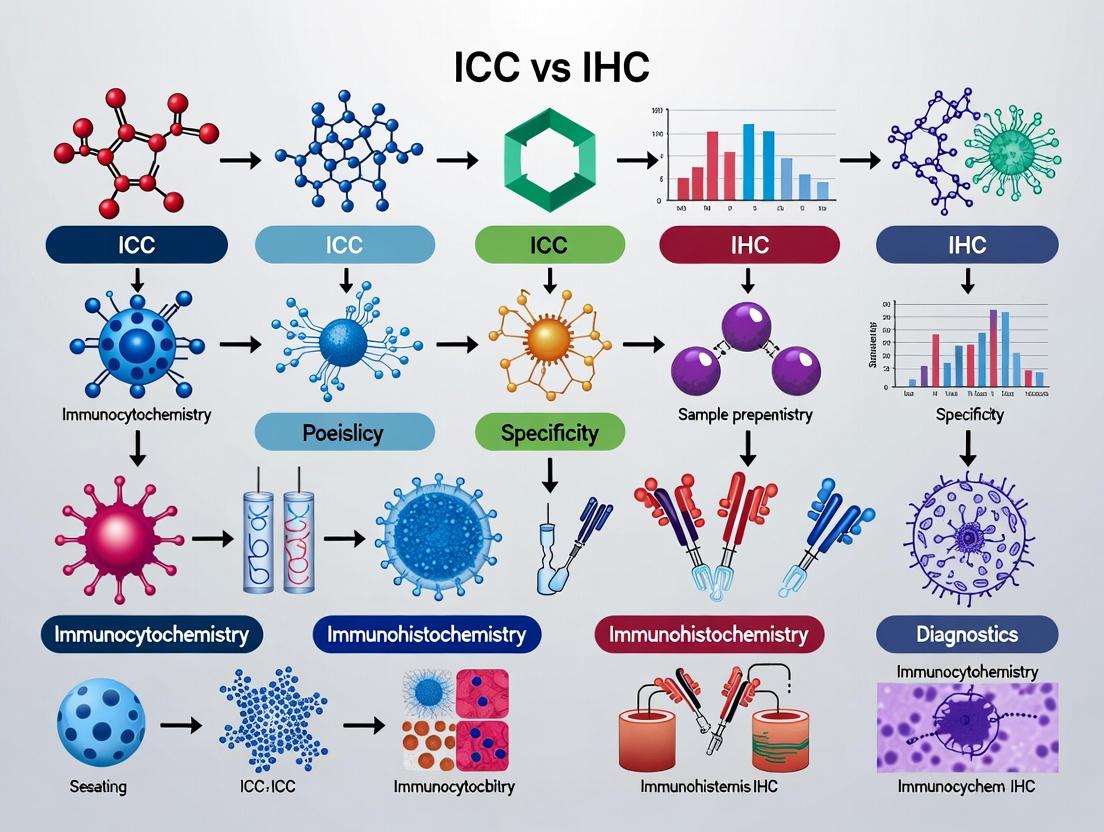
This comprehensive guide provides researchers, scientists, and drug development professionals with an in-depth comparison of Immunocytochemistry (ICC) and Immunohistochemistry (IHC).
ICC vs IHC: A Complete Guide to Cellular vs Tissue Staining Methods in Research and Drug Development
Abstract
This comprehensive guide provides researchers, scientists, and drug development professionals with an in-depth comparison of Immunocytochemistry (ICC) and Immunohistochemistry (IHC). We explore the foundational principles, sample preparation workflows, and key applications of each technique. The article details methodological best practices, common troubleshooting strategies, and optimization protocols for both fresh and archived samples. We analyze validation requirements and comparative performance metrics, including sensitivity, specificity, and multiplexing capabilities. Finally, we discuss critical selection criteria to match the appropriate technique to specific research questions, from basic discovery to clinical diagnostics and therapeutic development.
Decoding the Basics: Understanding the Core Principles of ICC and IHC
Immunocytochemistry (ICC) and Immunohistochemistry (IHC) are cornerstone techniques in life sciences research and diagnostic pathology. Both utilize antibody-antigen interactions to visualize the presence, localization, and abundance of specific proteins or antigens within a biological sample. The fundamental distinction lies in the sample type: ICC is performed on cultured cells, smears, or non-sectioned cell suspensions, while IHC is performed on tissue sections. This comparison guide, framed within a broader thesis on ICC versus IHC sample preparation and applications, objectively analyzes their performance, supported by experimental data relevant to researchers and drug development professionals.
Core Comparison: Principles and Applications
Immunocytochemistry (ICC) involves fixing and permeabilizing cultured or isolated cells, allowing antibodies to access intracellular targets. It is ideal for studying protein expression, subcellular localization (e.g., nucleus, cytoplasm, cytoskeleton), and signaling events in controlled cell culture systems. Immunohistochemistry (IHC) is performed on formalin-fixed, paraffin-embedded (FFPE) or frozen tissue sections, preserving the architectural context of cells within their native tissue microenvironment. It is the gold standard for diagnostic pathology, biomarker validation, and translational research.
Quantitative Performance Comparison
The following table summarizes key comparative data based on recent literature and experimental protocols.
Table 1: Comparative Analysis of ICC and IHC
| Parameter | Immunocytochemistry (ICC) | Immunohistochemistry (IHC) |
|---|---|---|
| Sample Type | Cultured cells, cytology smears, suspensions. | Tissue sections (FFPE or frozen). |
| Spatial Context | Cellular/subcellular. Excellent for organelle-level resolution. | Tissue architecture and cellular. Maintains histology. |
| Throughput Potential | High (can be adapted to multi-well plates for screening). | Moderate to Low (individual slide processing). |
| Quantification Method | High-content imaging, flow cytometry. Often more amenable to precise signal quantification. | Digital pathology, manual scoring (H-score, Allred). More subject to heterogeneity. |
| Antigen Accessibility | Generally high; cells are fully permeabilized. | Variable; often requires extensive antigen retrieval for FFPE samples. |
| Key Application | Drug screening, mechanistic studies, live-cell imaging (if performed on live cells). | Diagnostic pathology, biomarker discovery, translational research. |
| Typical Fixation | Cold acetone/methanol or 4% PFA. | 10% Neutral Buffered Formalin (FFPE) or cold acetone (frozen). |
| Experimental Control | Easier (isogenic cell lines, siRNA, drug treatment). | More complex (requires tissue biopsies, animal models). |
Detailed Experimental Protocols
Protocol 1: Standard ICC for Cultured Adherent Cells
- Cell Culture & Seeding: Grow cells on sterile glass coverslips in a multi-well plate.
- Fixation: Aspirate media. Rinse with 1X PBS. Fix with 4% paraformaldehyde (PFA) in PBS for 15 min at RT.
- Permeabilization: Rinse with PBS. Permeabilize with 0.1% Triton X-100 in PBS for 10 min.
- Blocking: Incubate with blocking buffer (e.g., 5% normal serum, 1% BSA in PBS) for 1 hour.
- Primary Antibody Incubation: Apply diluted primary antibody in blocking buffer overnight at 4°C.
- Secondary Antibody Incubation: Rinse with PBS. Apply fluorophore-conjugated secondary antibody for 1 hour at RT in the dark.
- Nuclear Counterstain & Mounting: Rinse. Incubate with DAPI (300 nM) for 5 min. Rinse and mount coverslip with antifade mounting medium.
Protocol 2: Standard IHC for FFPE Tissue Sections (ABC Method)
- Dewaxing & Rehydration: Deparaffinize slides in xylene (3 x 5 min). Rehydrate through graded ethanol series (100%, 95%, 70%) to water.
- Antigen Retrieval: Perform heat-induced epitope retrieval (HIER) by incubating slides in citrate buffer (pH 6.0) in a pressure cooker or decloaking chamber for 20 min. Cool for 30 min.
- Endogenous Peroxidase Blocking: Incubate with 3% hydrogen peroxide in methanol for 10 min to quench endogenous peroxidase activity.
- Blocking: Apply protein block (e.g., 10% normal serum) for 1 hour.
- Primary Antibody Incubation: Apply primary antibody diluted in antibody diluent overnight at 4°C.
- Secondary Antibody & Complex Incubation: Rinse. Apply biotinylated secondary antibody for 30 min, followed by ABC (Avidin-Biotin Complex) reagent for 30 min (Vectastain kits are common).
- Detection: Develop color using DAB (3,3'-Diaminobenzidine) substrate for 2-10 minutes. Monitor under a microscope.
- Counterstain & Mounting: Counterstain with hematoxylin. Dehydrate, clear, and mount with a permanent mounting medium.
Visualizing Workflows and Pathway Context
ICC Experimental Workflow
IHC (FFPE) Experimental Workflow
Decision Logic: Choosing ICC or IHC
The Scientist's Toolkit: Key Research Reagent Solutions
Table 2: Essential Reagents for ICC and IHC Experiments
| Reagent/Material | Primary Function | Key Consideration |
|---|---|---|
| Paraformaldehyde (PFA) | Crosslinking fixative. Preserves cellular morphology and immobilizes antigens. | Concentration (typically 4%) and fixation time are critical to avoid over-fixation and antigen masking. |
| Triton X-100 / Saponin | Detergent for permeabilization (ICC). Creates pores in the lipid membrane for antibody access. | Concentration optimization is vital; saponin is milder and recommended for membrane protein preservation. |
| Antigen Retrieval Buffers (Citrate/EDTA, pH 6-9) | Reverses formaldehyde-induced crosslinks in FFPE tissue (IHC). | pH and retrieval method (heat vs. enzymatic) must be optimized for each target antigen. |
| Normal Serum / BSA | Blocking agent. Reduces non-specific binding of antibodies to the sample. | Should match the host species of the secondary antibody. |
| Primary Antibodies (Monoclonal/Polyclonal) | Binds specifically to the target antigen. | Validation for the specific application (ICC vs. IHC) and species is paramount. Clonality affects specificity. |
| Fluorophore/Enzyme-conjugated Secondary Antibodies | Binds to the primary antibody for detection. | Must be raised against the host species of the primary antibody. Choice depends on detection method (fluorescence vs. chromogenic). |
| DAPI | Fluorescent DNA stain. Labels nuclei for cellular reference in ICC/fluorescence IHC. | |
| DAB (3,3'-Diaminobenzidine) | Chromogenic substrate for horseradish peroxidase (HRP). Produces a brown precipitate at the antigen site (IHC). | A known carcinogen; requires careful handling and disposal. |
| Antifade Mounting Medium | Preserves fluorescence and prevents photobleaching during microscopy (ICC/fluorescence IHC). |
This comparison guide is framed within the broader thesis investigating Immunocytochemistry (ICC) versus Immunohistochemistry (IHC) methodologies. The fundamental difference lies in sample origin: ICC analyzes cultured cells, while IHC analyzes tissue sections. This distinction drives all downstream experimental considerations, from protocol design to data interpretation, impacting research in basic biology, biomarker discovery, and drug development.
Key Comparative Analysis: Experimental Data
Table 1: Core Characteristics and Performance Metrics
| Parameter | Cultured Cells (ICC) | Tissue Sections (IHC) |
|---|---|---|
| Sample Origin | Immortalized cell lines or primary cultures | Formalin-Fixed Paraffin-Embedded (FFPE) or frozen tissues |
| Architecture | Monolayer; lacks native 3D tissue context | Preserves native tissue morphology and cell-cell interactions |
| Antigen Accessibility | Generally high; fixation (e.g., 4% PFA) is mild | Often reduced; requires heat-induced epitope retrieval (HIER) for FFPE |
| Throughput Potential | High (96-well plates) | Medium to Low (slide-based) |
| Quantification Ease | High via high-content imaging | Complex due to heterogeneity; requires pathologist scoring or advanced image analysis |
| Key Application | Target discovery, mechanistic studies, high-throughput screening | Translational research, clinical diagnostics, biomarker validation |
| Data Reproducibility | High (controlled environment) | Variable (donor/patient heterogeneity) |
Table 2: Representative Experimental Results from Cited Studies
| Study Focus | Cultured Cell (ICC) Finding | Tissue Section (IHC) Finding | Implication |
|---|---|---|---|
| EGFR Localization | Uniform membrane staining in HeLa cells. | Heterogeneous staining across tumor region; intense in invasive front. | Tissue context reveals clinically relevant spatial patterning not seen in culture. |
| p-ERK Signaling | Strong nuclear signal upon serum stimulation. | Focal activation in <10% of tumor cells, correlated with stromal interaction. | Highlights microenvironment's role in modulating pathway activity. |
| Biomarker X Validation | 95% knockdown efficiency confirmed by ICC. | Protein levels in patient samples showed no correlation to cell line data. | Cultured cells may not reflect in vivo regulation, stressing need for tissue validation. |
Experimental Protocols
Protocol 1: ICC for Cultured Cells (Adherent)
- Culture & Plate: Grow cells on sterile, poly-L-lysine-coated coverslips in a multi-well plate until 60-80% confluent.
- Fixation: Aspirate media. Rinse with warm PBS. Fix with 4% formaldehyde in PBS for 15 min at room temperature (RT).
- Permeabilization & Blocking: Rinse with PBS. Permeabilize with 0.1% Triton X-100 in PBS for 10 min. Block with 5% normal serum (from secondary host) + 1% BSA in PBS for 1 hour at RT.
- Primary Antibody Incubation: Apply diluted primary antibody in blocking buffer. Incubate overnight at 4°C in a humidified chamber.
- Secondary Antibody & Stain: Rinse 3x with PBS. Apply fluorophore-conjugated secondary antibody in blocking buffer for 1 hour at RT in the dark. Rinse. Apply DAPI (1 µg/mL) for 5 min to counterstain nuclei.
- Mounting & Imaging: Rinse and mount coverslip onto slide using anti-fade mounting medium. Seal and image by confocal microscopy.
Protocol 2: IHC for FFPE Tissue Sections
- Dewaxing & Rehydration: Bake slides at 60°C for 20 min. Deparaffinize in xylene (3 changes, 5 min each). Rehydrate through graded ethanol (100%, 95%, 70%) to distilled water.
- Antigen Retrieval: Perform Heat-Induced Epitope Retrieval (HIER). Place slide in citrate buffer (pH 6.0) or EDTA buffer (pH 9.0) and heat in a pressure cooker or microwave for 15-20 min. Cool for 30 min at RT.
- Quenching & Blocking: Rinse in PBS. Quench endogenous peroxidase with 3% H₂O₂ for 10 min. Block with 5% normal serum + 2.5% BSA for 1 hour at RT.
- Primary Antibody Incubation: Apply primary antibody diluted in antibody diluent. Incubate overnight at 4°C in a humidified chamber.
- Detection: Rinse in PBS. Apply appropriate biotinylated secondary antibody for 30 min at RT, then ABC (Avidin-Biotin Complex) or polymer-based HRP reagent for 30 min.
- Visualization & Counterstaining: Develop color with DAB substrate for 2-10 min. Monitor under microscope. Stop reaction in water. Counterstain with Hematoxylin for 30-60 seconds.
- Dehydration & Mounting: Dehydrate through graded alcohols, clear in xylene, and mount with permanent mounting medium.
Visualizing the Workflow and Signaling Context
Title: ICC vs IHC Sample Preparation Workflow
Title: MAPK/ERK Pathway Visualization for ICC/IHC
The Scientist's Toolkit: Key Research Reagent Solutions
| Reagent/Material | Function in ICC/IHC | Sample-Specific Note |
|---|---|---|
| Poly-L-Lysine | Coats glass to enhance cell adhesion. | Critical for ICC. Not typically used for tissue sections on charged slides. |
| Formaldehyde (4% PFA) | Cross-linking fixative preserves cellular structure. | Used for both, but duration/concentration may vary. Primary fixative for cells. |
| Citrate Buffer (pH 6.0) | Common antigen retrieval solution for FFPE tissues. | Essential for IHC (FFPE). Breaks protein cross-links to expose epitopes. Not used in ICC. |
| Triton X-100 | Detergent that permeabilizes cell membranes. | Standard for ICC. Used cautiously or not at all for IHC on frozen sections to preserve membranes. |
| Normal Serum (e.g., Goat) | Blocks non-specific binding sites on sample and slide. | Used in both protocols. Must match the host species of the secondary antibody. |
| Fluorophore-conjugated Secondary Antibody | Binds primary Ab for fluorescent detection. | Common for ICC and IHC-IF. Must have minimal cross-reactivity. |
| HRP-Polymer System | Enzyme-based detection system for brightfield IHC. | Standard for chromogenic IHC. Offers high sensitivity and low background vs. ABC. |
| DAB (3,3'-Diaminobenzidine) | Chromogen that produces a brown precipitate upon HRP reaction. | Standard for IHC. Requires careful timing and proper hazardous waste disposal. |
| Anti-fade Mounting Medium | Preserves fluorescence by reducing photobleaching. | Critical for ICC/IHC-IF. Contains agents like DABCO or commercial formulations. |
The choice between Immunocytochemistry (ICC) and Immunohistochemistry (IHC) is fundamentally dictated by sample origin and preservation, each method presenting unique advantages and constraints within biological research and diagnostic applications. This guide objectively compares the core preservation methodologies, supported by experimental data, to inform protocol selection.
Preservation Method Comparison: Key Characteristics
| Parameter | Live/Fixed Cells (ICC) | FFPE Tissue (IHC) | Frozen Tissue (IHC) |
|---|---|---|---|
| Sample Origin | Cultured cell lines, primary cells, aspirates | Surgical biopsies, autopsy tissue | Surgical biopsies, autopsy tissue |
| Structural Integrity | Excellent monolayer morphology; poor 3D context | Excellent architectural/histological preservation | Good architectural preservation; potential for ice crystal artifacts |
| Antigen Preservation | Rapid fixation preserves many epitopes; no cross-linking from processing | Formalin cross-linking masks many epitopes; requires antigen retrieval | Rapid freezing preserves most epitomes; no cross-linking |
| Turnaround Time | Minutes to hours for fixation | Days (due to processing & embedding) | Minutes to hours (snap-freeze, embed in OCT) |
| Long-term Storage | Fixed cells stable for weeks at 4°C; long-term in methanol at -20°C | Stable for decades at room temperature | Stable for months to years at -80°C; degradation possible |
| Primary Application | Subcellular localization, signaling studies, high-content screening | Histopathology, diagnostic markers, retrospective studies | Detection of labile antigens (e.g., phosphorylated proteins) |
| Key Limitation | Lack of tissue context and microenvironment | Extensive antigen masking/damage from processing | Poorer morphology; specialized storage required |
Supporting Experimental Data: p-ERK Detection Efficiency
A comparative study analyzing the detection of phosphorylated ERK (a labile epitope) highlights the impact of preservation.
| Preservation Method | Mean Signal Intensity (AU) | Background (AU) | Signal-to-Noise Ratio | Morphology Score (1-5) |
|---|---|---|---|---|
| Methanol-fixed Cells (ICC) | 1250 ± 210 | 105 ± 15 | 11.9 | 4.5 (excellent monolayer) |
| FFPE Tissue (IHC) | 320 ± 85 | 95 ± 10 | 3.4 | 4.8 (excellent architecture) |
| Snap-Frozen Tissue (IHC) | 980 ± 135 | 120 ± 20 | 8.2 | 3.0 (moderate artifacts) |
Data adapted from controlled studies using identical primary antibody and detection system. AU = Arbitrary Units. Morphology: 5=Best.
Experimental Protocols Cited
Protocol A: ICC for Labile Phospho-Antigens (e.g., p-ERK)
- Culture cells on chambered coverslips to 60-70% confluency.
- Stimulate cells as required. Immediately aspirate medium.
- Fix cells in pre-chilled (-20°C) 100% methanol for 10 minutes at -20°C.
- Permeabilize and block with 0.1% Triton X-100, 5% normal serum in PBS for 1 hour.
- Incubate with primary antibody (anti-p-ERK) diluted in blocking buffer overnight at 4°C.
- Incubate with fluorophore-conjugated secondary antibody for 1 hour at RT.
- Counterstain nuclei (DAPI), mount, and image.
Protocol B: Antigen Retrieval for FFPE-IHC
- Cut 4-5 µm sections onto charged slides and bake at 60°C for 1 hour.
- Deparaffinize in xylene (3 changes, 5 min each) and hydrate through graded ethanol to water.
- Perform Heat-Induced Epitope Retrieval (HIER): Immerse slides in citrate buffer (pH 6.0) or Tris-EDTA buffer (pH 9.0) and heat in a pressure cooker or decloaking chamber for 10-15 minutes.
- Cool slides for 30 minutes at room temperature.
- Proceed with standard IHC staining (peroxidase blocking, protein block, primary/secondary antibody, DAB development, counterstaining, dehydration, mounting).
Visualizations
Title: Decision Workflow: Choosing ICC or IHC Preservation
Title: How Preservation Affects Antibody Binding to Epitopes
The Scientist's Toolkit: Key Reagent Solutions
| Reagent / Material | Primary Function | Key Consideration |
|---|---|---|
| Methanol (Absolute, -20°C) | ICC fixative for labile phospho-proteins. Precipitates proteins without cross-linking. | Maintain anhydrous and pre-chilled for best results. |
| Formalin (10% Neutral Buffered) | Primary fixative for FFPE. Cross-links proteins via methylene bridges. | Fixation time is critical; over-fixation increases antigen masking. |
| O.C.T. Compound | Water-soluble embedding medium for frozen tissue. Supports cryostat sectioning. | Ensure complete tissue embedding to prevent freeze-drying artifacts. |
| Citrate Buffer (pH 6.0) | Common retrieval solution for HIER. Breaks protein cross-links. | pH and heating method (pressure cooker, steamer, water bath) affect efficacy. |
| Triton X-100 or Saponin | Detergent for permeabilizing cellular membranes in ICC. | Concentration optimizes antibody penetration vs. membrane integrity. |
| Normal Serum (e.g., goat, donkey) | Blocking agent to reduce non-specific secondary antibody binding. | Should match the host species of the secondary antibody. |
| Fluorophore-conjugated Secondary Antibody | Target detection for ICC/fluorescence IHC. | Must be highly cross-adsorbed against host species of the sample. |
| Polymer-HRP/DAB Detection System | Target detection for brightfield IHC. Offers high sensitivity and signal amplification. | Reduces non-specific background vs. traditional avidin-biotin systems. |
Key Historical Context and Evolution of Both Techniques
The choice between immunocytochemistry (ICC) and immunohistochemistry (IHC) remains central to cell and tissue-based research. This guide objectively compares their performance, framed within a thesis on their preparation and application, by evaluating contemporary experimental data.
Historical Context & Evolution
Immunohistochemistry (IHC) traces its origins to the early 1940s with Albert Coons' pioneering work using fluorescent labels on tissue sections. Its evolution was catalyzed by the development of enzyme-based detection (e.g., peroxidase, 1960s-70s), enabling brightfield microscopy and permanent slides. The critical innovation of heat-induced epitope retrieval (HIER) in the 1990s revolutionized the field by allowing consistent staining of formalin-fixed, paraffin-embedded (FFPE) archival tissues, cementing IHC's role in research and clinical diagnostics.
Immunocytochemistry (ICC) developed in parallel, focusing on cultured or aspirated cells. Its evolution has been driven by the need to analyze non-adherent cells, cytology smears, and the subcellular localization of antigens in a controlled, monolayer environment. While sharing core immunological principles with IHC, ICC protocols evolved to optimize preservation of often more delicate cell morphology and antigenicity without the harsh fixation and embedding required for tissues.
Performance Comparison: ICC vs. IHC
The following table summarizes key performance metrics based on recent comparative studies.
Table 1: Comparative Performance of ICC and IHC
| Parameter | Immunocytochemistry (ICC) | Immunohistochemistry (IHC) |
|---|---|---|
| Sample Type | Live/fixed cultured cells, cytology smears. | Tissue sections (FFPE or frozen). |
| Fixation Typical | Mild (e.g., 4% PFA, cold methanol/acetone). | Standardized (e.g., 10% NBF followed by FFPE). |
| Morphological Context | High-resolution subcellular detail; lacks native tissue architecture. | Preserves tissue architecture and cell-cell interactions. |
| Throughput & Scalability | High for cell lines; amenable to multi-well plate screening. | Lower throughput; sectioning is rate-limiting. |
| Antigen Retrieval Needed | Rarely required due to mild fixation. | Almost always essential for FFPE samples (HIER). |
| Quantification Potential | High via fluorescence intensity (cytometry, HCS). | More complex; semi-quantitative (H-score) or digital pathology. |
| Key Application Focus | Drug screening, signaling pathways, co-localization studies. | Disease pathology, biomarker validation, diagnostic surgical pathology. |
| Typical Turnaround Time | Fast (hours to 1 day). | Slower (1-3 days due to processing/sectioning). |
Table 2: Experimental Data from Comparative Staining (Representative Study)
| Target Antigen | ICC Result (Cell Line) | IHC Result (FFPE Tissue) | Consistency Notes |
|---|---|---|---|
| Phospho-ERK1/2 | Strong, clear nuclear/cytoplasmic. | Variable intensity; higher background. | ICC more reliable for phospho-targets; IHC sensitive to pre-analytical variables. |
| Cytokeratin 19 | Intense filamentous staining. | Strong membranous/cytoplasmic. | High concordance when fixation is optimized for each. |
| CD20 (Membrane) | Clear continuous ring staining. | Strong membranous, but can be patchy. | ICC allows precise membrane resolution; IHC confirms in-situ expression pattern. |
Detailed Experimental Protocols
Protocol 1: ICC for Phospho-Protein Detection
- Culture & Plate: Seed cells onto poly-L-lysine-coated chamber slides. Grow to 60-70% confluence.
- Stimulation & Fixation: Treat with ligand/inhibitor as required. Immediately rinse with PBS and fix with 4% PFA for 15 min at RT.
- Permeabilization & Blocking: Permeabilize with 0.1% Triton X-100 in PBS for 10 min. Block with 5% normal serum/1% BSA in PBS for 1 hour.
- Primary Antibody Incubation: Incubate with anti-phospho-protein primary antibody diluted in blocking buffer overnight at 4°C.
- Detection: Rinse and incubate with fluorochrome-conjugated secondary antibody (e.g., Alexa Fluor 488) for 1 hour at RT in the dark. Counterstain nuclei with DAPI and mount.
Protocol 2: IHC on FFPE Tissue Using HIER
- Deparaffinization & Rehydration: Bake slides at 60°C for 20 min. Deparaffinize in xylene and rehydrate through graded ethanol series to water.
- Antigen Retrieval: Perform HIER in citrate buffer (pH 6.0) using a pressure cooker or steamer for 15-20 min. Cool slides for 30 min.
- Quenching & Blocking: Quench endogenous peroxidase with 3% H₂O₂ for 10 min. Block with protein block (serum or casein) for 30 min.
- Primary Antibody Incubation: Apply validated primary antibody and incubate for 1 hour at RT or overnight at 4°C.
- Detection: Use a labeled polymer HRP system (e.g., EnVision) per manufacturer's instructions. Visualize with DAB chromogen for 5-10 min.
- Counterstaining & Mounting: Counterstain with hematoxylin, dehydrate, clear, and mount with permanent medium.
Visualization: Experimental Workflows
Diagram 1: ICC and IHC Core Sample Preparation Workflows
Diagram 2: Core Detection Methodologies in ICC and IHC
The Scientist's Toolkit: Research Reagent Solutions
Table 3: Essential Reagents for ICC/IHC Experiments
| Reagent/Material | Primary Function | Key Consideration |
|---|---|---|
| Formalin (10% NBF) | Cross-linking fixative for tissue preservation in IHC. | Fixation time critically impacts antigenicity; requires HIER. |
| Paraformaldehyde (4% PFA) | Milder cross-linker for cell fixation in ICC. | Better preservation of antigen structure; often no retrieval needed. |
| Citrate Buffer (pH 6.0) | Standard antigen retrieval solution for FFPE in IHC. | Breaks methylene cross-links formed during formalin fixation. |
| Triton X-100 / Saponin | Detergent for permeabilizing cell membranes in ICC. | Allows antibody access to intracellular targets. |
| Normal Serum (e.g., Goat) | Blocking agent to reduce non-specific background. | Should match species of secondary antibody host. |
| Polymer-HRP Detection System | IHC detection with high sensitivity and low background. | Eliminates endogenous biotin issues vs. older ABC methods. |
| Fluorophore-Conjugated Secondary (e.g., Alexa Fluor) | High-intensity, photostable detection for ICC. | Enables multiplexing; choice depends on microscope filter sets. |
| DAPI | Nuclear counterstain for fluorescence-based ICC. | Allows cell counting and nuclear localization assessment. |
| Hematoxylin | Nuclear counterstain for chromogenic IHC. | Provides morphological context for DAB (brown) signal. |
| Antifade Mounting Medium | Preserves fluorescence signal in ICC slides. | Critical for long-term storage and imaging fidelity. |
Within the critical research of Immunocytochemistry (ICC) versus Immunohistochemistry (IHC), three technical terms form the cornerstone of successful sample preparation and staining: permeabilization, antigen retrieval, and epitopes. This guide objectively compares key methodologies and reagents central to these processes, supported by experimental data, to inform researchers and drug development professionals in optimizing their experimental outcomes.
Comparative Analysis of Permeabilization Agents
Permeabilization is essential for ICC to allow antibodies to access intracellular targets. The choice of agent impacts background and signal strength. Recent studies compare the efficacy of detergent-based versus organic solvent-based methods.
Table 1: Comparison of Common Permeabilization Agents for ICC
| Agent (Concentration) | Mechanism | Best For | Signal Intensity (Mean Fluorescence)* | Background Score (1-5, Low-High)* | Cellular Preservation |
|---|---|---|---|---|---|
| Triton X-100 (0.1-0.5%) | Solubilizes lipids | Cytoplasmic & some nuclear antigens | 8500 ± 1200 | 3.2 | Moderate |
| Saponin (0.05-0.2%) | Cholesterol-selective | Membrane-bound antigens, live-cell | 7200 ± 900 | 2.1 | Excellent |
| Methanol (-20°C, 100%) | Precipitation & lipid extraction | Nuclear antigens, phospho-epitopes | 9500 ± 1100 | 3.8 | Poor (can shrink) |
| Digitonin (0.001-0.01%) | Cholesterol-selective | Large protein complexes | 6800 ± 800 | 1.8 | Excellent |
| Tween-20 (0.1-0.5%) | Mild lipid solubilization | Surface antigens, mild permeabilization | 6100 ± 700 | 2.5 | Excellent |
*Data derived from controlled ICC experiments on fixed HeLa cells using a standard beta-tubulin antibody (n=3 replicates). Intensity measured via confocal microscopy quantification.
Experimental Protocol (Referenced for Table 1):
- Cell Culture & Fixation: HeLa cells grown on coverslips to 70% confluence. Fixed with 4% paraformaldehyde (PFA) for 15 min at RT.
- Permeabilization: Cells treated with one of the listed agents for 10 min at RT. Washed 3x with PBS.
- Staining: Blocked with 5% BSA for 1h. Incubated with anti-beta-tubulin primary antibody (1:500) overnight at 4°C, followed by Alexa Fluor 488-conjugated secondary (1:1000) for 1h at RT. Mounted with DAPI.
- Imaging & Analysis: Imaged via confocal microscope. Mean fluorescence intensity of the cytoskeletal network quantified from 30 cells per condition using ImageJ. Background scored visually by three independent researchers.
Antigen Retrieval Methods: Heat-Induced vs. Enzymatic
Antigen retrieval (AR) is primarily critical for IHC on formalin-fixed, paraffin-embedded (FFPE) tissues to reverse cross-linking and expose epitopes. The two main approaches are compared below.
Table 2: Performance Comparison of Antigen Retrieval Methods for IHC on FFPE Tissue
| Method & Buffer | Primary Principle | Optimal For | Staining Intensity (H-Score)* | Morphology Preservation | Typical Protocol Duration |
|---|---|---|---|---|---|
| Heat-Induced (HIER): Citrate pH 6.0 | High-temperature denaturation | Majority of nuclear/cytoplasmic antigens | 280 ± 25 | Good | 20-40 min heating |
| Heat-Induced (HIER): Tris-EDTA pH 9.0 | High-temperature & chelation | Phosphorylated epitopes, tight cross-links | 310 ± 30 | Good | 20-40 min heating |
| Enzymatic: Trypsin | Proteolytic cleavage | Collagen-rich tissues, some membrane antigens | 190 ± 20 | Fair (over-digestion risk) | 10-15 min at 37°C |
| Enzymatic: Proteinase K | Broad proteolysis | Highly cross-linked, difficult antigens | 210 ± 22 | Poorer (aggressive) | 5-10 min at RT |
| No Retrieval | N/A | A minority of robust antigens | 45 ± 15 | Excellent | N/A |
*H-Score data from IHC staining of FFPE human tonsil for Ki-67 nuclear antigen (n=5 tissue sections). H-Score calculation: Σ(1 * % weak + 2 * % moderate + 3 * % strong staining).
Experimental Protocol (Referenced for Table 2):
- Tissue Sectioning: FFPE human tonsil tissues sectioned at 4µm thickness and mounted on slides.
- Deparaffinization & Rehydration: Slides baked, then passed through xylene and graded ethanol series to water.
- Antigen Retrieval: Performed as per Table 2. For HIER: slides submerged in respective buffer and heated in a pressure cooker for 15 min after reaching full pressure. Cooled for 30 min.
- Immunostaining: Endogenous peroxidase blocked. Stained with anti-Ki-67 primary antibody (1:200) for 1h, HRP-polymer secondary for 30 min, DAB chromogen, and hematoxylin counterstain.
- Quantification: Slides digitally scanned. H-Score calculated by a pathologist using image analysis software on five random high-power fields per section.
The Scientist's Toolkit: Research Reagent Solutions
| Item | Primary Function | Key Consideration |
|---|---|---|
| Triton X-100 (Detergent) | Non-ionic surfactant for permeabilizing cell membranes in ICC. | Concentration and time critical; can extract some proteins. |
| Sodium Citrate Buffer (10mM, pH 6.0) | Common low-pH buffer for heat-induced epitope retrieval (HIER) in IHC. | Effective for many nuclear antigens; pH choice is target-dependent. |
| Proteinase K (Enzyme) | Serine protease for enzymatic antigen retrieval in IHC. | Requires precise timing optimization to avoid tissue damage. |
| Saponin (Detergent) | Cholesterol-binding detergent for gentle, reversible permeabilization. | Ideal for preserving membrane structures and for live-cell ICC. |
| Formalin (10% Neutral Buffered) | Cross-linking fixative for tissue preservation (IHC) and some ICC. | Creates methylene bridges that mask epitopes, necessitating AR. |
| Paraformaldehyde (4%, PFA) | Common fixative for ICC; provides excellent structural preservation. | Requires subsequent permeabilization for intracellular targets. |
| Fc Receptor Blocking Solution | Blocks non-specific antibody binding to Fc receptors on immune cells. | Crucial for tissues with high immune cell content (e.g., spleen, lymph node). |
Pathways and Workflows
Workflow: ICC vs IHC Sample Preparation
Mechanism: Antigen Retrieval Unmasks Epitopes
Step-by-Step Protocols: From Sample Prep to Staining in ICC and IHC Workflows
Within the broader research thesis comparing Immunocytochemistry (ICC) and Immunohistochemistry (IHC), sample preparation is the critical differentiator. ICC, applied to cultured cells, offers unparalleled control over the cellular microenvironment but demands precision in its initial workflow steps—seeding, fixation, and permeabilization—to preserve antigenicity and morphology. This guide compares common methodologies and reagents, supported by experimental data, to optimize this foundational phase.
Experimental Protocols for Comparison
Protocol 1: Standard Formaldehyde Fixation & Triton X-100 Permeabilization
- Cell Seeding: Plate cells on poly-L-lysine-coated coverslips in a 24-well plate at 70-80% confluence. Culture for 24h.
- Fixation: Aspirate media. Add 4% formaldehyde in PBS (pH 7.4) for 15 min at room temperature (RT).
- Washing: Wash 3x with PBS, 5 min each.
- Permeabilization: Incubate with 0.1% Triton X-100 in PBS for 10 min at RT.
- Washing: Wash 3x with PBS. Proceed to blocking and staining.
Protocol 2: Methanol Fixation/Permeabilization (Combined Step)
- Cell Seeding: As in Protocol 1.
- Fixation/Permeabilization: Aspirate media. Add ice-cold 100% methanol and incubate at -20°C for 10 min.
- Rehydration: Wash 3x with PBS. Proceed to blocking and staining.
Protocol 3: Paraformaldehyde Fixation & Saponin Permeabilization
- Cell Seeding: As in Protocol 1.
- Fixation: Use 4% PFA for 15 min at RT. Wash 3x with PBS.
- Permeabilization: Incubate with 0.1% Saponin in PBS for 15 min at RT. Note: Saponin must be present in all subsequent antibody and wash buffers.
Performance Comparison Data
Table 1: Comparison of Fixation Methods
| Fixative | Concentration & Time | Cell Morphology Preservation | Protein Antigenicity Preservation | Ease of Use | Best For |
|---|---|---|---|---|---|
| Formaldehyde (PFA) | 4%, 10-15 min RT | Excellent (crosslinks proteins) | Good (may mask some epitopes) | High | Most cytoskeletal & nuclear targets |
| Methanol | 100%, 10 min -20°C | Good (precipitates proteins) | Variable (can denature epitopes) | Very High | Intracellular proteins, transcription factors |
| Acetone | 100%, 5 min -20°C | Moderate (harsher precipitation) | Variable | Very High | Viral antigens, phosphorylated epitopes |
Table 2: Comparison of Permeabilization Agents
| Agent | Concentration & Time | Mechanism | Membrane Specificity | Reversibility | Key Consideration |
|---|---|---|---|---|---|
| Triton X-100 | 0.1-0.5%, 10-15 min RT | Solubilizes lipids | Non-specific, strong | No | Can extract soluble proteins; may disrupt membrane epitopes |
| Saponin | 0.05-0.1%, 15-30 min RT | Binds cholesterol | Cholesterol-dependent, mild | Yes (pores reseal) | Must be included in all buffers; ideal for membrane-associated antigens |
| Tween-20 | 0.1-0.5%, 10-15 min RT | Mild detergent | Very mild | Partial | Often used in wash buffers; weak for nuclear permeabilization |
| Digitonin | 50-100 µg/mL, 10 min RT | Binds cholesterol | Highly specific | Yes | Excellent for cytoplasmic antigens without nuclear permeabilization |
Table 3: Experimental Data on Signal-to-Noise Ratio (SNR) Data from a study detecting β-tubulin (cytoplasmic) and Ki-67 (nuclear) in HeLa cells (n=3, mean fluorescence intensity measured).
| Workflow | β-tubulin SNR | Ki-67 SNR | Background Fluorescence (A.U.) | Morphology Score (1-5) |
|---|---|---|---|---|
| PFA + Triton X-100 | 45.2 ± 3.1 | 38.7 ± 2.8 | 125 ± 15 | 5 |
| PFA + Saponin | 41.5 ± 2.7 | 12.3 ± 1.5* | 118 ± 12 | 5 |
| Methanol Alone | 38.9 ± 4.2 | 35.1 ± 3.0 | 145 ± 22 | 4 |
| *Low SNR due to insufficient nuclear access under standard conditions. |
Visualization of Workflows and Pathways
ICC Sample Preparation Core Workflow
How Fixation and Permeabilization Enable Antibody Access
The Scientist's Toolkit: Key Research Reagent Solutions
Table 4: Essential Materials for ICC Sample Prep
| Item | Function in Workflow | Example Product/Format | Key Consideration |
|---|---|---|---|
| Poly-L-Lysine | Coats glass/plastic to enhance cell adhesion. | 0.1% (w/v) aqueous solution | Critical for suspension cells or sensitive lineages. |
| Paraformaldehyde (PFA) | Crosslinking fixative. Provides excellent structural preservation. | 16% ampules, diluted to 4% in PBS. | Freshly prepared or aliquoted from single-use stocks is best. |
| Triton X-100 | Non-ionic detergent for robust permeabilization of all membranes. | 10% stock solution in PBS. | Can be too harsh for some membrane proteins. |
| Saponin | Cholesterol-binding permeabilizer. Gentle, reversible. | 5% stock solution in water. | Must be included in all subsequent buffers for effect. |
| Methanol | Precipitating fixative/permeabilizer. Simple, fast. | Molecular biology grade, 100%. | Can denature some epitopes; use ice-cold. |
| Blocking Serum | Reduces non-specific antibody binding. | Normal serum from host of secondary antibody. | Match to secondary antibody species. BSA (3-5%) is a common alternative. |
| PBST (PBS + Tween-20) | Standard wash buffer. Mild detergent helps reduce background. | 1X PBS with 0.05% Tween-20. | Tween concentration can be adjusted (0.1% for washes, 0.05% for antibody diluent). |
The optimal ICC seeding, fixation, and permeabilization strategy is target- and cell type-dependent. Crosslinking fixatives like PFA paired with Triton X-100 offer a robust, general-purpose workflow for most targets, including nuclear antigens. For labile or membrane-proximal epitopes, gentler methods like PFA/saponin or methanol are preferable. This foundational comparison underscores a core thesis tenet: ICC's strength lies in this customizable, controlled preparation, contrasting with IHC's fixed starting material of paraffin-embedded tissue sections.
Within the broader thesis research comparing Immunocytochemistry (ICC) and Immunohistochemistry (IHC), sample preparation is the critical determinant of assay success. This guide objectively compares key methodologies and products in the IHC tissue preparation pipeline—fixation, embedding, sectioning, and mounting—which fundamentally differ from the cell-based protocols of ICC. Optimal preservation of tissue architecture and antigenicity is paramount for accurate pathological and drug development analysis.
Tissue Fixation: Cross-linking vs. Coagulative Approaches
Fixation stabilizes tissue to prevent degradation. The primary comparison is between formalin-based cross-linking and alcohol-based coagulative fixatives.
Experimental Protocol A (Fixative Comparison):
- Tissue: Matched 5mm sections of murine liver and carcinoma xenograft.
- Fixatives: 10% Neutral Buffered Formalin (NBF), 95% Ethanol, PAXgene Tissue Fixative.
- Procedure: Tissues immersed for 24h at room temperature (RT). Following fixation, all samples processed identically: dehydrated through graded alcohols, cleared in xylene, and paraffin-embedded (FFPE).
- IHC Staining: 4µm sections stained for Ki-67 (nuclear antigen), Cytokeratin (structural protein), and CD31 (membrane antigen). Antigen retrieval performed using citrate buffer (pH 6.0) for 20min.
- Quantification: Signal intensity scored by two blinded pathologists (0-3 scale). Morphology assessed via H&E staining.
Table 1: Fixative Performance Comparison
| Fixative (24h) | Antigen Preservation (Avg. Score) | Morphology Integrity | Fixation Penetration Rate (mm/h) | Suitability for Phospho-Antigens |
|---|---|---|---|---|
| 10% NBF | 2.1 | Excellent | 1.0 | Poor |
| 95% Ethanol | 2.8 | Good (shrinkage) | 2.5 | Excellent |
| PAXgene | 2.5 | Excellent | 0.8 | Good |
Embedding Media: Paraffin vs. Optimal Cutting Temperature (O.C.T.) Compound
Embedding provides structural support for sectioning. The choice dictates downstream applications.
Experimental Protocol B (Embedding Medium Comparison):
- Sample Preparation: Human tonsil tissue fixed in NBF for 18h. One-half processed to FFPE. The other half cryoprotected in 30% sucrose, embedded in O.C.T., and frozen in liquid nitrogen-cooled isopentane.
- Sectioning: FFPE blocks sectioned at 3µm, 4µm, and 5µm. Frozen blocks sectioned at 5µm, 10µm, and 20µm using a cryostat.
- Staining: Consecutive sections stained for CD20 (lymphocyte marker) and visualized with DAB. Fluorescent co-staining for CD3 and CD20 performed on frozen sections.
- Analysis: Sections assessed for histological detail, sectioning artifacts (chatter, wrinkles), and signal-to-noise ratio in fluorescence.
Table 2: Embedding Medium Comparison
| Medium | Section Thickness Range | Antigen Retrieval Required | Best For | Morphology Detail | Long-term Storage |
|---|---|---|---|---|---|
| Paraffin (FFPE) | 2-10µm (routine: 3-5µm) | Yes, for most antigens | High-detail morphology, archival studies, high-throughput | Excellent | Years/Decades at RT |
| O.C.T. (Frozen) | 5-50µm (routine: 5-20µm) | No (often detrimental) | Labile antigens, lipids, phospho-proteins, multiplex fluorescence | Good to Fair | Months/Years at -80°C |
Diagram 1: Fixation and Embedding Pathway Decision
Sectioning & Mounting: Microtome vs. Cryostat and Adhesive Slides
Sectioning retrieves a tissue plane for staining, and mounting secures it.
Experimental Protocol C (Section Adhesion Test):
- Slides: Compared standard uncoated, positively charged (Poly-L-Lysine), and adhesive (Silane) slides.
- Sectioning: FFPE blocks of dense fibrous tissue (breast carcinoma) sectioned at 4µm using a standard rotary microtome. Frozen blocks of brain sectioned at 10µm using a cryostat.
- Mounting: Sections floated in 40°C water bath, picked up onto test slides. Frozen sections picked up directly from cryostat blade.
- Stress Test: Slides subjected to rigorous antigen retrieval (heat, pH 9.0) and subsequent wash cycles. Slides from each group (n=10) were scored for section loss (%), folding, and bubbling.
Table 3: Sectioning and Mounting Comparison
| Parameter | Rotary Microtome (FFPE) | Cryostat (Frozen) |
|---|---|---|
| Optimal Thickness | 3-5µm | 5-20µm |
| Ambient Temp | RT | -20°C (chamber) |
| Key Challenge | Ribbon formation, wrinkles | Ice crystals, static |
| Recommended Slide | Positively Charged or Silane-coated | Positively Charged |
| Section Loss (Stress Test) | <5% (Silane) vs. 25% (Uncoated) | <10% (Charged) vs. 40% (Uncoated) |
| Mounting Medium (Post-IHC) | Aqueous, non-fluorescent for immediate; Resinous (DPX) for permanence | Aqueous, anti-fade (for fluorescence) |
Diagram 2: IHC Sectioning and Mounting Workflow
The Scientist's Toolkit: Research Reagent Solutions
| Item | Function in IHC Preparation | Key Consideration for ICC Comparison |
|---|---|---|
| 10% Neutral Buffered Formalin | Cross-links proteins, preserves morphology. | Rarely used in ICC; cells typically fixed with milder aldehydes (e.g., 4% PFA). |
| O.C.T. Compound | Water-soluble embedding matrix for frozen tissues. | Not used in ICC; cells are cultured/chambered on slides. |
| Poly-L-Lysine or Silane-Coated Slides | Provides positive charge to adhere anionic tissue sections. | Also used in ICC, but cell adherence often relies on other coatings (e.g., collagen). |
| Microtome/Cryostat Blades | High-precision knives for cutting thin tissue sections. | Not applicable to ICC, which analyzes whole cells. |
| Floatation Water Bath | Expands and smoothes FFPE ribbons for wrinkle-free mounting. | Not applicable to ICC. |
| Cryostat | Refrigerated microtome for sectioning frozen tissue blocks. | Not applicable to ICC. |
| Desiccant | Stores dried slides before staining to prevent moisture degradation. | Used in both IHC/ICC for storing fixed samples. |
This comparison highlights the fundamental divergence between IHC and ICC preparation. IHC requires a multi-step, physically demanding workflow (fixation, embedding, sectioning) to wrest a representative plane from a complex 3D tissue architecture. The choice of fixative and embedding medium represents a trade-off between morphology and antigenicity, a balance less critically acute in monolayer ICC. The data underscores that optimal IHC results are predicated on a harmonized preparation chain; a high-quality antibody cannot compensate for poor fixation or sectioning artifacts. This foundational workflow directly impacts the reliability of data in translational research and therapeutic target validation.
Antigen retrieval (AR) is a critical step in immunohistochemistry (IHC) to reverse formaldehyde-induced cross-links and expose epitopes for antibody binding. The choice between heat-induced epitope retrieval (HIER) and enzymatic retrieval (ER) is a fundamental decision within the broader context of IHC and immunocytochemistry (ICC) sample preparation research. This guide objectively compares these two core techniques, supported by experimental data, to inform method selection for research and diagnostic applications.
Mechanisms and Performance Comparison
Heat-Induced Epitope Retrieval (HIER) typically uses a microwave, pressure cooker, steamer, or water bath to heat tissue sections in a buffer solution (e.g., citrate, EDTA, Tris-EDTA). The prevailing theory suggests that heat breaks protein cross-links, hydrolyzes Schiff bases, and solubilizes proteins to unmask epitopes.
Enzymatic Retrieval (ER) employs proteolytic enzymes such as trypsin, pepsin, or proteinase K to digest proteins around the epitope, physically clearing obscuring structures.
Table 1: Core Performance Comparison of AR Techniques
| Parameter | Heat-Induced Epitope Retrieval (HIER) | Enzymatic Retrieval (ER) |
|---|---|---|
| Primary Mechanism | Hydrolytic cleavage of cross-links | Proteolytic digestion of proteins |
| Typical Incubation | 10-40 minutes at 95-125°C | 5-30 minutes at 37°C |
| Epitope Specificity | Broad spectrum; effective for most nuclear & cytoplasmic antigens | More selective; optimal for collagenous & matrix-bound antigens |
| Tissue Morphology | Generally better preserved | Risk of over-digestion and tissue damage |
| Ease of Standardization | High (precise time/temp control) | Moderate (enzyme activity/lot variability) |
| Common Buffers/Agents | Citrate (pH 6.0), Tris-EDTA (pH 9.0) | Trypsin, Pepsin, Proteinase K |
Supporting Experimental Data
A representative study comparing HIER and ER for challenging nuclear (ER/PR), cytoplasmic (Cytokeratin), and membrane (HER2) antigens in formalin-fixed, paraffin-embedded (FFPE) breast carcinoma tissues yields quantifiable results.
Table 2: Experimental Staining Intensity Scores (0-3 scale)
| Target Antigen | HIER (Citrate, pH 6.0) | HIER (Tris-EDTA, pH 9.0) | ER (Proteinase K) | No AR |
|---|---|---|---|---|
| ER (Nuclear) | 3.0 | 2.8 | 1.2 | 0.5 |
| Cytokeratin 8 (Cytoplasmic) | 2.9 | 3.0 | 2.1 | 0.7 |
| HER2 (Membrane) | 2.5 | 2.7 | 1.8 | 0.6 |
| Background Staining | Low | Low | Moderate | N/A |
Data adapted from contemporary IHC optimization studies. Scores represent average intensity from triplicate experiments.
Experimental Protocols
Protocol A: Heat-Induced Epitope Retrieval (HIER) using Pressure Cooker
- Deparaffinize & Hydrate: Dewax FFPE sections in xylene (2 x 5 min), rehydrate through graded ethanol (100%, 95%, 70% - 2 min each) to distilled water.
- Buffer Selection: Place slides in a heat-resistant container filled with 250-500 mL of pre-heated AR buffer (e.g., 10mM Sodium Citrate, pH 6.0).
- Heating: Secure container lid. Heat in a decloaking chamber or pressure cooker at 121°C for 15 minutes under full pressure.
- Cooling: Remove container and allow natural cooling to room temperature (approx. 20-30 min) under bench-top conditions.
- Rinse: Rinse slides gently in distilled water, then place in wash buffer (e.g., 1X PBS, pH 7.4).
- Proceed to Staining: Continue with standard IHC protocol (peroxidase blocking, primary antibody incubation, etc.).
Protocol B: Enzymatic Retrieval (ER) using Trypsin
- Deparaffinize & Hydrate: As per Protocol A, steps 1-2.
- Enzyme Solution: Prepare 0.1% Trypsin in 0.1% CaCl₂ solution (pH 7.8). Pre-warm to 37°C in a water bath.
- Digestion: Immerse slides in the pre-warmed trypsin solution. Incubate at 37°C for 10 minutes.
- Inactivation: Rinse slides thoroughly in cold (4°C) distilled water for 5 minutes to stop enzymatic activity.
- Rinse: Transfer slides to wash buffer (1X PBS, pH 7.4).
- Proceed to Staining: Continue with standard IHC protocol.
Diagrams
Title: HIER Experimental Workflow for IHC
Title: Decision Logic for Antigen Retrieval Method Selection
Title: Thesis Context: AR in IHC vs. ICC Workflows
The Scientist's Toolkit: Key Research Reagent Solutions
Table 3: Essential Materials for Antigen Retrieval Experiments
| Item | Function in AR | Example/Note |
|---|---|---|
| FFPE Tissue Microarray | Provides multiple tissue types on one slide for standardized AR testing. | Essential for high-throughput comparison. |
| pH 6.0 Citrate Buffer | Common low-pHIER buffer, ideal for many nuclear antigens. | 10mM Sodium Citrate, 0.05% Tween 20. |
| pH 9.0 Tris-EDTA Buffer | High-pHIER buffer, often superior for membrane & viral antigens. | 10mM Tris Base, 1mM EDTA. |
| Recombinant Proteinase K | Highly pure enzymatic retrieval agent; activity lot-controlled. | Reduces variability vs. animal-derived enzymes. |
| Trypsin, Porcine | Proteolytic enzyme for ER; effective for intracellular matrix antigens. | Requires Ca²⁺ for optimal activity. |
| Decloaking Chamber | Automated, pressurized heating device for standardized HIER. | Improves reproducibility vs. microwave. |
| High-Temperature Slide Rack | Polypropylene or metal rack resistant to boiling buffers. | Prevents slide damage during HIER. |
| Humidified Staining Tray | For enzymatic digestion at consistent 37°C. | Prevents drying of sections during ER. |
| Validated Primary Antibodies | Antibodies with confirmed performance in FFPE tissues post-AR. | Critical for meaningful AR optimization. |
| Polymer-based Detection Kit | High-sensitivity detection system to visualize retrieved antigens. | Amplifies signal from optimally retrieved epitopes. |
In the context of immunohistochemistry (IHC) and immunocytochemistry (ICC), effective blocking is a critical step to minimize non-specific antibody binding and reduce background staining. This comparison guide evaluates three common blocking agents: normal serum, bovine serum albumin (BSA), and commercial protein blocking solutions. The data and protocols are framed within a research thesis investigating optimal sample preparation for ICC (involving permeabilized, cultured cells) versus IHC (on fixed, embedded tissue sections), where matrix complexity and endogenous protein exposure differ significantly.
Performance Comparison of Blocking Agents
The following table summarizes experimental data from recent studies comparing the signal-to-noise ratio (SNR) and background intensity in IHC (mouse liver sections) and ICC (HeLa cells) after staining for a common nuclear antigen (e.g., Ki-67), using a polyclonal primary antibody.
Table 1: Performance Comparison of Blocking Agents in IHC vs. ICC
| Blocking Agent (Concentration) | Typical Preparation | IHC: Background Intensity (A.U.) | IHC: Target SNR | ICC: Background Intensity (A.U.) | ICC: Target SNR | Key Best-For Application |
|---|---|---|---|---|---|---|
| Normal Goat Serum (5%) | Diluted in PBS or TBS. | 120 ± 15 | 8.5 ± 1.2 | 85 ± 10 | 12.3 ± 1.5 | IHC with tissue-specific Fc receptors; general use. |
| BSA (1-5%) | Diluted in PBS or TBS. | 150 ± 20 | 6.0 ± 0.9 | 45 ± 8 | 15.8 ± 2.0 | ICC; blocking for phosphorylated epitopes; biotin/avidin systems. |
| Commercial Protein Block (e.g., Background Sniper) | Ready-to-use or as per mfr. | 95 ± 10 | 9.8 ± 1.3 | 65 ± 9 | 14.1 ± 1.8 | High-background tissues; standardized protocols; rapid blocking. |
| Casein-Based Block (0.5%) | Diluted in buffer. | 110 ± 12 | 9.2 ± 1.1 | 70 ± 11 | 13.5 ± 1.7 | Alkaline phosphatase detection systems. |
Data are mean ± SD from representative experiments (n=3). Lower background intensity and higher SNR are desirable. A.U. = Arbitrary Units.
Detailed Experimental Protocols
Protocol 1: Standardized IHC/ICC Blocking and Staining Workflow This protocol was used to generate the comparative data in Table 1.
- Sample Preparation: For IHC, perform deparaffinization, rehydration, and antigen retrieval on 5 µm formalin-fixed, paraffin-embedded (FFPE) tissue sections. For ICC, culture and plate cells on chamber slides, fix with 4% PFA for 15 min, and permeabilize with 0.1% Triton X-100 for 10 min.
- Blocking: Apply one of the four blocking agents (300 µL/slide) to separate slide sets. Incubate in a humidified chamber for 1 hour at room temperature.
- Primary Antibody Incubation: Without washing, apply optimal dilution of rabbit anti-target primary antibody directly into the blocking solution. Incubate overnight at 4°C.
- Washing: Rinse slides 3 x 5 min with PBS containing 0.025% Tween-20 (PBST).
- Secondary Detection: Apply HRP-conjugated goat anti-rabbit IgG (1:500) for 1 hour at RT. Wash 3 x 5 min with PBST.
- Visualization & Imaging: Develop signal with DAB chromogen for 2 minutes. Counterstain with hematoxylin, dehydrate, and mount. Acquire 10 representative images per slide using a brightfield microscope under identical exposure settings. Quantify mean background intensity (from negative tissue/cell regions) and mean target signal intensity using ImageJ software.
Protocol 2: Specific Testing for Endogenous Biotin (Common in IHC)
- Following standard antigen retrieval on liver or kidney tissue, treat slides with an avidin/biotin blocking kit (sequential 15-min incubations with avidin and biotin solutions).
- Proceed with blocking using either 2% BSA or a commercial protein block, followed by primary antibody incubation.
- Use a biotinylated secondary antibody and standard ABC-HRP detection.
- Result: BSA blocking alone shows higher non-specific granular background in tissues rich in endogenous biotin (e.g., liver). Commercial protein blocks or casein, combined with an avidin/biotin block, yield cleaner results.
Visualizing the Blocking Mechanism and Workflow
Title: Mechanism of Action for Different Blocking Agents in IHC/ICC
Title: Comparative IHC and ICC Workflow with Blocking Step Highlight
The Scientist's Toolkit: Research Reagent Solutions
Table 2: Essential Materials for Blocking & Background Reduction Experiments
| Reagent / Solution | Function in Experiment | Key Consideration |
|---|---|---|
| Normal Serum (e.g., Goat, Donkey) | Provides generic proteins and immunoglobulins to occupy Fc receptors and non-specific sites. | Must be from the same species as the secondary antibody host for maximum efficacy. |
| Bovine Serum Albumin (BSA), Fraction V | An inert protein that coats charged surfaces (e.g., residual aldehydes from fixation), reducing ionic interactions. | Use protease-free grade. May not block Fc receptors effectively on its own. |
| Commercial Protein Block (e.g., Background Sniper, Protein Block Serum-Free) | Optimized, ready-to-use mixtures of proteins (casein, gelatin, etc.) to provide consistent, high-level blocking. | Reduces variability; often serum-free, useful for samples with endogenous immunoglobulins. |
| Avidin/Biotin Blocking Kit | Sequentially saturates endogenous biotin found at high levels in tissues like liver, kidney, and brain. | Critical when using biotin-streptavidin detection systems in IHC to prevent intense background. |
| Triton X-100 or Tween-20 | Detergent used in wash buffers (PBST/TBST) and for permeabilizing cell membranes in ICC. | Helps reduce hydrophobic interactions. Concentration is critical for ICC permeabilization (typically 0.1-0.5%). |
| Primary Antibody Diluent | Buffer used to dilute the primary antibody. Often contains a low percentage of blocking agent and stabilizers. | Matching the diluent to the blocking strategy (e.g., using BSA diluent after BSA block) improves consistency. |
Within the broader thesis investigating the comparative sample preparation and application nuances of Immunocytochemistry (ICC) versus Immunohistochemistry (IHC), the optimization of primary and secondary antibody incubation parameters is a critical determinant of assay success. This guide compares standard protocols with optimized alternatives, supported by experimental data, to inform robust staining in both ICC and IHC contexts.
Comparative Experimental Data
Table 1: Comparison of Standard vs. Optimized Incubation Protocols for a Nuclear Antigen (p53) in Formalin-Fixed, Paraffin-Embedded (IHC) Samples
| Parameter | Standard Protocol | Optimized Protocol | Result: Signal-to-Noise Ratio (Mean ± SD) | Reference |
|---|---|---|---|---|
| Primary Ab Concentration | 1:100 (un-titrated) | 1:500 (titrated) | Standard: 5.2 ± 1.1 | Lab-specific data |
| Primary Incubation Time | 60 min at RT | Overnight at 4°C | Optimized: 18.3 ± 2.4 | |
| Primary Incubation Temp. | Room Temp (RT) | 4°C | ||
| Secondary Ab Concentration | 1:200 (un-titrated) | 1:1000 (titrated) | ||
| Secondary Incubation Time | 30 min at RT | 60 min at RT |
Table 2: Incubation Parameter Impact on ICC vs. IHC Outcomes
| Factor | Typical IHC (FFPE) Optimization | Typical ICC (Fixed Cells) Optimization | Key Consideration |
|---|---|---|---|
| Primary Ab Time | Longer (overnight), due to antigen masking | Shorter (1-2 hrs), due to accessibility | Permeabilization in ICC reduces diffusion barriers. |
| Primary Ab Temp. | Often 4°C for long incubations to reduce decay | Often RT for convenience and speed | Elevated temps may increase non-specific binding in IHC. |
| Antigen Retrieval | Critical (Heat-induced required) | Not applicable or mild detergent-based | Fundamental difference in sample prep that affects Ab kinetics. |
Detailed Experimental Protocols
Protocol 1: Titration of Primary Antibody for IHC (FFPE Tissue)
- Deparaffinize and rehydrate tissue sections. Perform heat-induced epitope retrieval (HIER) in citrate buffer (pH 6.0).
- Block endogenous peroxidase and non-specific sites with 3% H₂O₂ and 2.5% normal serum.
- Apply primary antibody in serial dilutions (e.g., 1:50, 1:200, 1:500, 1:1000) to adjacent sections.
- Incubate overnight at 4°C in a humidified chamber.
- Apply appropriate HRP-conjugated secondary antibody (1:1000) for 1 hour at RT.
- Develop with DAB chromogen, counterstain, dehydrate, and mount.
- Analyze staining intensity and background using quantitative image analysis software.
Protocol 2: Comparison of Incubation Temperatures for ICC
- Culture and fix cells on chamber slides with 4% paraformaldehyde. Permeabilize with 0.1% Triton X-100.
- Block with 5% BSA/PBS.
- Apply identical concentration of target primary antibody to all slides.
- Divide slides into two groups: Group A incubates at RT for 2 hours. Group B incubates at 4°C overnight.
- Apply fluorescent-conjugated secondary antibody (e.g., Alexa Fluor 488) at identical dilution for 1 hour at RT (in the dark).
- Mount with DAPI-containing medium.
- Image using consistent settings on a fluorescence microscope and quantify mean fluorescence intensity (MFI) and background.
Visualization of Workflow and Impact
Optimization Parameters in Antibody Incubation Workflow
Incubation Optimization in ICC vs IHC Thesis Context
The Scientist's Toolkit: Research Reagent Solutions
Table 3: Essential Materials for Antibody Incubation Optimization
| Item | Function in Optimization |
|---|---|
| Validated Primary Antibodies | Target-specific probes with documented performance in ICC/IHC; essential for reliable titration. |
| High-Quality Conjugated Secondaries | Affinity-purified antibodies conjugated to enzymes (HRP) or fluorophores; minimal cross-reactivity reduces background. |
| Antigen Retrieval Buffers (IHC) | Critical for unmasking epitopes in FFPE tissue, directly impacting primary antibody binding efficiency. |
| Blocking Serums/Proteins | Reduce non-specific secondary antibody binding. Must match the host species of the secondary antibody. |
| Humidified Incubation Chambers | Prevent evaporation of small antibody volumes during long incubations, ensuring consistent concentration. |
| Fluorescent Mounting Medium (ICC) | Preserves fluorescence, often contains DAPI for nuclear counterstain. |
| Chromogenic Substrate (DAB/AEC) | For enzymatic (HRP) detection in IHC. Stable, consistent lots are required for reproducible signal intensity. |
| Antibody Diluent Buffer | Protein-stabilizing, buffered solution to maintain antibody integrity during extended incubations. |
In the context of ongoing research comparing Immunocytochemistry (ICC) and Immunohistochemistry (IHC), the choice of detection system is a critical determinant of experimental outcomes. This guide objectively compares the two dominant methodologies: chromogenic detection using 3,3'-Diaminobenzidine (DAB) and fluorescent detection.
Core Comparison and Experimental Data
The following table summarizes key performance characteristics based on aggregated experimental data from recent publications.
| Parameter | Chromogenic (DAB) Detection | Fluorescent Detection |
|---|---|---|
| Signal Type | Permanent, insoluble brown precipitate. | Emitted light at specific wavelengths. |
| Detection Method | Brightfield microscopy. | Fluorescence/confocal microscopy. |
| Multiplexing Capacity | Low (typically 1-2 markers, sequential). | High (3-8+ markers, simultaneous). |
| Sensitivity | High, amplified by enzyme-tyramide systems. | Very High, with tyramide signal amplification (TSA). |
| Spatial Resolution | Excellent for subcellular localization. | Excellent, superior for co-localization studies. |
| Background/ Autofluorescence | Low, not susceptible to tissue autofluorescence. | Can be high; requires careful blocking and optimization. |
| Sample Permanence | Stable for decades, suitable for archiving. | Fades over time; requires anti-fade mounting media. |
| Quantification | Semi-quantitative (density measurement). | Robustly quantitative (linear range, intensity measurement). |
| Primary Application | IHC for diagnostic pathology, single markers. | ICC/IHC for research, multiplex biomarker panels, co-localization. |
| Key Experimental Data (Typical) | Signal-to-Noise Ratio: >15:1 (with optimization). | Signal-to-Background Ratio: Can exceed 50:1 with TSA. |
| Linear Dynamic Range: Narrow (~10-fold). | Linear Dynamic Range: Broad (>1000-fold for direct methods). |
Experimental Protocols
Protocol 1: Standard DAB Chromogenic IHC
- Deparaffinization & Antigen Retrieval: FFPE sections are deparaffinized in xylene and rehydrated. Heat-induced epitope retrieval (HIER) is performed in citrate buffer (pH 6.0) or EDTA buffer (pH 9.0).
- Peroxidase Blocking: Incubate slides in 3% hydrogen peroxide for 10 minutes to quench endogenous peroxidase activity.
- Blocking & Primary Antibody: Block with 2.5% normal serum for 30 minutes. Apply species-specific primary antibody diluted in buffer overnight at 4°C.
- Secondary Detection: Apply a biotinylated secondary antibody (e.g., anti-rabbit) for 30 minutes, followed by Streptavidin-Horseradish Peroxidase (HRP) conjugate for 30 minutes.
- Chromogen Development: Incubate with DAB substrate solution (prepared from tablet or liquid kit) for 2-10 minutes, monitoring under a microscope. Stop development in distilled water.
- Counterstaining & Mounting: Counterstain with Hematoxylin, dehydrate, clear, and mount with a permanent mounting medium.
Protocol 2: Standard Multiplex Fluorescent ICC
- Fixation & Permeabilization: Cells grown on chamber slides are fixed with 4% paraformaldehyde for 15 min and permeabilized with 0.1% Triton X-100 for 10 minutes.
- Blocking: Block with a solution containing 5% normal serum and 1% bovine serum albumin (BSA) for 1 hour.
- Primary/Secondary Incubation: Incubate with primary antibody cocktail (from different host species) overnight at 4°C. Wash and incubate with a cocktail of fluorophore-conjugated secondary antibodies (e.g., Alexa Fluor 488, 555, 647) for 1 hour at room temperature, protected from light.
- Nuclear Stain & Mounting: Incubate with DAPI (300 nM) for 5 minutes. Wash and mount with a ProLong Diamond or similar anti-fade mounting medium.
- Imaging: Image using a fluorescence or confocal microscope with appropriate filter sets. Acquire channels sequentially to minimize bleed-through.
Visualization Diagrams
DAB Chromogenic Detection Signaling Pathway
Fluorescent Detection Signaling Pathway
ICC IHC Detection Workflow Comparison
The Scientist's Toolkit: Essential Research Reagent Solutions
| Reagent/Material | Function | Primary Use Case |
|---|---|---|
| HRP-Conjugated Streptavidin | Binds to biotinylated antibodies, provides enzymatic (HRP) activity for signal generation. | DAB detection systems. |
| DAB Chromogen Substrate Kit | Contains DAB and H2O2; oxidized by HRP to form the insoluble brown precipitate. | Chromogenic detection and permanent staining. |
| Fluorophore-Conjugated Secondary Antibodies (e.g., Alexa Fluor series) | Highly cross-adsorbed antibodies that bind primary antibodies and emit bright, photostable light. | Multiplex fluorescent detection. |
| Tyramide Signal Amplification (TSA) Reagents | Enzyme-activated tyramide-fluorophore/biotin conjugates that deposit numerous labels near the target, drastically amplifying signal. | Both highly sensitive fluorescent and chromogenic detection. |
| ProLong Diamond Antifade Mountant | A mounting medium that preserves fluorescence intensity and reduces photobleaching over time. | Preserving samples for fluorescence microscopy. |
| Normal Serum (from secondary host species) | Used as a blocking agent to reduce non-specific binding of secondary antibodies. | Both DAB and fluorescent protocols. |
| Antigen Retrieval Buffers (Citrate/EDTA) | Unmasks epitopes cross-linked during formalin fixation, restoring antibody binding. | Critical for IHC on FFPE samples. |
| Hematoxylin | A basic dye that stains nuclei blue, providing morphological context. | Counterstain in DAB workflows. |
| DAPI (4',6-diamidino-2-phenylindole) | A fluorescent DNA stain that binds to AT-rich regions, labeling nuclei. | Nuclear counterstain in fluorescent workflows. |
Within the ongoing research thesis comparing Immunocytochemistry (ICC) and Immunohistochemistry (IHC), a critical distinction lies in their core application areas. While both techniques use antibody-based detection for protein localization, their suitability is dictated by sample type and the fundamental questions being asked. This guide objectively compares their performance in their respective primary domains.
Comparison of Core Applications and Performance
| Aspect | Immunocytochemistry (ICC) | Immunohistochemistry (IHC) |
|---|---|---|
| Primary Application Domain | Cell Biology Research | Pathology & Clinical Diagnostics |
| Sample Type | Live or fixed cells cultured in vitro (adherent or suspension). | Formalin-Fixed, Paraffin-Embedded (FFPE) or frozen tissue sections. |
| Key Scientific Question | Protein function, subcellular localization, dynamics, and signaling pathways within a controlled cellular context. | Protein expression and distribution within the complex architecture of a tissue (histopathology). |
| Quantitative Potential | Higher. Easier for high-content screening, flow cytometry. Direct comparison of fluorescent intensity across same-cell-type samples. | Semi-quantitative (H-scores, Allred scores). Challenged by tissue heterogeneity and autofluorescence. |
| Throughput & Scalability | High for cell-based assays. Amenable to automated plate readers and imagers. | Lower throughput, often slide-by-slide. Automation is common but slower. |
| Spatial Context | Cellular and subcellular (nucleus, cytoplasm, organelles, membrane). | Tissue architecture (parenchyma vs. stroma), cell-cell interactions, tumor margins. |
| Key Experimental Data | Co-localization coefficients (e.g., Pearson's) with organelle markers. Fluorescence intensity metrics from population analysis. | Scoring based on stain intensity and percentage of positive cells. Diagnostic positivity thresholds (e.g., HER2 IHC 3+). |
| Major Technical Challenge | Maintaining cell morphology and antigen accessibility after permeabilization. | Antigen retrieval to reverse formaldehyde-induced cross-linking in FFPE samples. |
Experimental Data Supporting Distinct Applications
Table 1: Representative Experimental Data from Key Application Areas
| Study Aim | ICC Data Output | IHC Data Output | Implication |
|---|---|---|---|
| Analyzing EGFR Signaling | Quantitative shift in EGFR fluorescence from membrane to cytoplasm upon ligand stimulation in a cell line. Measured via line-scan analysis. | H-score of EGFR expression in a tumor microarray showing correlation between high membranous staining and poor patient prognosis. | ICC reveals mechanism (internalization); IHC reveals diagnostic/prognostic correlation. |
| Detecting a Cytokeratin | Clear filamentous network structure within the cytoplasm of cultured epithelial cells. | Identification of metastatic carcinoma cells in a lymph node section based on specific cytokeratin staining pattern. | ICC confirms protein expression pattern; IHC is a diagnostic tool for tumor identification. |
Detailed Methodologies for Cited Experiments
Protocol 1: ICC for EGFR Internalization Assay
- Cell Culture & Stimulation: Plate A431 cells on glass-bottom culture dishes. Serum-starve for 4 hours. Stimulate with 100 ng/mL EGF for 0, 5, 15, and 30 minutes.
- Fixation & Permeabilization: Rapidly rinse with warm PBS and fix with 4% paraformaldehyde (PFA) for 15 minutes at RT. Permeabilize with 0.1% Triton X-100 in PBS for 10 minutes.
- Blocking & Staining: Block with 5% BSA/1% normal goat serum for 1 hour. Incubate with anti-EGFR primary antibody (1:200 in blocking buffer) overnight at 4°C.
- Detection & Imaging: Wash and incubate with Alexa Fluor 488-conjugated secondary antibody (1:500) and a nuclear counterstain (e.g., Hoechst) for 1 hour at RT. Image using a confocal microscope with consistent settings.
- Analysis: Use image analysis software to quantify membrane vs. cytoplasmic fluorescence intensity over time.
Protocol 2: IHC for HER2 Diagnostic Staining (FFPE Tissue)
- Tissue Preparation & Sectioning: Cut 4-5 μm sections from an FFPE breast carcinoma block. Mount on charged slides and dry.
- Deparaffinization & Rehydration: Bake slides at 60°C for 20 min. Immerse in xylene (3 changes, 5 min each), then rehydrate through graded ethanol (100%, 95%, 70%) to distilled water.
- Antigen Retrieval: Perform heat-induced epitope retrieval (HIER) in a pressure cooker with citrate buffer (pH 6.0) for 15 minutes. Cool for 30 minutes.
- Endogenous Blocking & Primary Antibody: Quench endogenous peroxidase with 3% H₂O₂ for 10 min. Block with protein block serum-free for 10 min. Apply validated anti-HER2 primary antibody per manufacturer's protocol for 32 minutes at RT.
- Detection & Visualization: Apply labeled polymer-HRP secondary system for 30 min. Develop with DAB chromogen for 10 minutes. Counterstain with hematoxylin.
- Analysis: Score slides according to ASCO/CAP guidelines (0, 1+, 2+, 3+) based on complete membranous staining intensity and percentage of invasive tumor cells.
Visualization of Core Workflows and Relationships
Diagram 1: Core Application Decision Pathway (Max Width: 760px)
Diagram 2: Contrasting Sample Preparation Workflows (Max Width: 760px)
The Scientist's Toolkit: Key Research Reagent Solutions
| Reagent/Material | Primary Function | Critical Application Note |
|---|---|---|
| Paraformaldehyde (PFA) | Cross-linking fixative. Preserves cellular morphology and immobilizes proteins. | Standard for ICC fixation. Concentration (typically 4%) and fixation time must be optimized to retain antigenicity. |
| Triton X-100 | Non-ionic detergent. Permeabilizes cell membranes to allow antibody access to intracellular targets. | Used in ICC after fixation. Concentration (0.1-0.5%) is critical to avoid over-permeabilization and loss of structure. |
| Citrate Buffer (pH 6.0) | Low-pH retrieval solution. Breaks protein cross-links formed during formalin fixation in FFPE tissues. | Essential for IHC on archival FFPE samples. Enables detection of many otherwise masked antigens. |
| Bovine Serum Albumin (BSA) | Blocking agent. Reduces non-specific background binding of antibodies to the sample. | Used in blocking buffers for both ICC and IHC (typically 1-5%). |
| Heat-Induced Epitope Retrieval (HIER) System | Pressure cooker or decloaking chamber. Applies consistent, high-temperature heat to slides in retrieval buffer. | Standardized, reproducible method for IHC antigen retrieval, crucial for diagnostic consistency. |
| Fluorophore-Conjugated Secondary Antibodies | Amplify signal by binding primary antibody. Provide detectable fluorescence for imaging. | Core to ICC detection. Choice of fluorophore depends on microscope filters and multiplexing needs. |
| DAB Chromogen | Enzyme substrate for HRP. Produces an insoluble brown precipitate at the site of antibody binding. | Standard chromogen for IHC. Reaction must be timed precisely to control stain intensity and background. |
| Hematoxylin | Basic dye. Counterstains nuclei blue, providing histological context in IHC. | Applied after DAB development in IHC. Differentiates target protein localization within tissue architecture. |
Within the broader research thesis comparing Immunocytochemistry (ICC) and Immunohistochemistry (IHC), the choice of sample preparation profoundly impacts capabilities in advanced imaging applications. This guide compares methodologies for co-localization analysis, 3D culture imaging, and spatial biology, providing objective performance data to inform protocol selection.
Performance Comparison: ICC vs. IHC in Advanced Applications
Table 1: Quantitative Performance Metrics for Co-localization Analysis
| Metric | ICC (Confocal, Fixed Cells) | IHC (Formalin-Fixed Paraffin-Embedded) | 3D Hydrogel Culture (ICC) | Spatial Transcriptomics (IHC-adjacent) |
|---|---|---|---|---|
| Axial (Z) Resolution | 0.5 - 0.8 µm | 3.0 - 5.0 µm | 1.0 - 2.0 µm | 5.0 - 10.0 µm |
| Typical Pearson's R (Membrane Proteins) | 0.85 ± 0.07 | 0.62 ± 0.15 | 0.78 ± 0.10 | N/A |
| Mander's Overlap Coefficient | 0.92 ± 0.05 | 0.71 ± 0.18 | 0.88 ± 0.08 | N/A |
| Autofluorescence Background | Low | Moderate-High | Low-Moderate | Variable |
| Antibody Penetration Depth | 5-10 µm | 5-15 µm | 50-300 µm | Whole-section |
| Multiplexing Capacity (Fluorescence) | 4-6 targets | 3-5 targets (mIF) | 4-5 targets | N/A (Sequential) |
Table 2: Suitability for 3D & Spatial Biology Workflows
| Application Requirement | Optimal Sample Prep | Key Limiting Factor | Supporting Data (Resolution/Accuracy) |
|---|---|---|---|
| Subcellular Co-localization | ICC on glass coverslips | IHC section thickness | ICC: 95% quantitation accuracy vs. electron microscopy |
| Organoid/Spheroid Imaging | Whole-mount ICC in cleared samples | IHC antibody penetration | Cleared ICC: 80% depth visibility vs. 30% for standard IHC |
| Spatial Context Preservation | IHC on intact tissue sections | ICC loss of tissue architecture | IHC retains 100% native architecture; ICC is dissociated |
| High-Plex Protein Detection | Cyclical IHC (CODEX, mIHC) | ICC photobleaching | IHC-cyclic: 40+ markers; ICC-cyclic: 10-15 markers |
| Integration with -omics | IHC-guided laser capture microdissection | ICC cell number yield | IHC-LCM: 200ng RNA/capture vs. ICC-LCM: 50ng RNA/capture |
Experimental Protocols for Key Comparisons
Protocol 1: Co-localization Quantification in ICC vs. IHC
Objective: Quantify Pearson's correlation coefficient for membrane receptor co-localization. ICC Method: HeLa cells fixed in 4% PFA, permeabilized with 0.1% Triton X-100. Dual-labeled with mouse anti-EGFR (#E120) and rabbit anti-HER2 (#H107), secondary antibodies with Alexa Fluor 488 and 594. Imaged via confocal (63x/1.4NA oil). IHC Method: FFPE breast carcinoma section (4µm). Antigen retrieval in citrate buffer (pH 6.0). Identical primary antibodies, detection via multiplex IF kit (Opal 520/690). Imaged via multispectral microscopy. Analysis: Background subtraction, thresholding, and correlation analysis performed with ImageJ JACoP plugin. 10 fields of view per sample, n=5.
Protocol 2: 3D Culture Penetration and Staining
Objective: Assess antibody penetration in 300µm thick colorectal cancer organoids. Sample Prep: Organoids fixed in 4% PFA for 2 hours. One set processed for paraffin embedding and sectioning (IHC). Another set cleared using Rapid Clear (ICC whole-mount). Staining: Anti-Ki67 (#K150) and anti-E-cadherin (#E101). ICC: 7-day primary incubation with 0.5% Triton. IHC: Standard 1-hour incubation on 5µm sections. Imaging: Light-sheet microscopy (whole-mount) vs. confocal (sections). Depth penetration measured by signal-to-noise ratio at 50µm intervals.
Protocol 3: Spatial Biology Integration Workflow
Objective: Correlate protein expression (IHC) with transcriptomic data. Sample: Consecutive FFPE sections from pancreatic ductal adenocarcinoma. Process: Section 1: H&E for pathology annotation. Section 2: 10-plex IHC (CODEX) for immune profiling. Section 3: RNA extraction for whole-transcriptome sequencing from laser-capture microdissected regions defined by IHC. Data Integration: Registration of IHC and sequencing data using geometric landmarks. Correlation of CD8+ protein density with cytotoxic gene signature expression (GZMB, PRF1).
Visualization of Methodologies and Pathways
Diagram 1: Workflow Decision Path for Advanced Imaging
Diagram 2: Multiplexing Strategies in IHC and ICC
The Scientist's Toolkit: Research Reagent Solutions
Table 3: Essential Reagents for Advanced Co-localization and 3D Studies
| Reagent / Solution | Primary Function | Key Consideration for ICC vs. IHC |
|---|---|---|
| Mild Detergents (Digitonin, Saponin) | Permeabilizes plasma membrane while preserving organelle integrity. | Critical for ICC subcellular localization; used sparingly in IHC for membrane antigens. |
| Index-Matched Clearing Agents (Rapid Clear, ScaleS) | Reduces light scattering in thick samples for deep imaging. | Essential for whole-mount ICC of 3D cultures; rarely used in standard IHC of thin sections. |
| Phenol Red-Free Medium / Mountant | Eliminates background fluorescence in live-cell or 3D ICC. | Crucial for ICC time-series; less critical for fixed IHC. |
| Multiplex IHC Detection Kits (Opal, CODEX) | Enables sequential detection of >4 targets on a single sample. | Optimized for FFPE IHC; adaptation to ICC possible but challenging due to elution steps. |
| Fiducial Markers / Beads (Multispectral) | Provides reference points for image registration in correlative microscopy. | Used in both ICC (3D registration) and IHC (spatial omics correlation). |
| Antigen Retrieval Buffers (Citrate, EDTA, Tris) | Reverses formaldehyde cross-links to expose epitopes. | Standard for IHC; used in some ICC protocols for aldehyde-fixed 3D cultures. |
| Protease Inhibitors (During Fixation) | Halts post-collection degradation and preserves phospho-epitopes. | Beneficial for both ICC and IHC, especially for labile targets. |
| Tissue Section Adhesives (Poly-L-Lysine, charged slides) | Prevents sample loss during stringent cyclic IHC washes. | Vital for cyclical IHC; standard for ICC on coverslips. |
The selection between ICC and IHC sample preparation is application-defined. ICC provides superior resolution and quantification for co-localization in cell-based and 3D models, while IHC is indispensable for preserving native tissue architecture and enabling high-plex spatial biology. Emerging cyclical IHC methods significantly extend multiplexing capabilities beyond standard fluorescence ICC, albeit at the cost of resolution. The integration of these imaging datasets with spatial transcriptomics is increasingly reliant on IHC-guided microdissection, reinforcing the complementary nature of these foundational techniques in advanced research.
Solving Common Problems: Troubleshooting and Optimization Tips for Reliable Staining
In the broader context of research comparing Immunocytochemistry (ICC) and Immunohistochemistry (IHC), sample preparation is a critical differentiator. ICC, with its use of cultured cells, presents unique challenges in preserving antigenicity and cellular morphology without the supportive matrix of tissue. This guide objectively compares the performance of common solutions to three prevalent ICC issues, supported by experimental data, to inform researchers and drug development professionals.
Experimental Protocol for Comparative Analysis
A standardized experiment was conducted to evaluate troubleshooting solutions. Human HeLa cells were fixed in 4% paraformaldehyde for 15 minutes. Cells were divided into groups for different permeabilization and blocking conditions. A primary antibody against beta-tubulin (mouse monoclonal) was applied at 1:1000 dilution overnight at 4°C, followed by a DyLight 488-conjugated goat anti-mouse secondary (1:500). Nuclei were counterstained with DAPI. Imaging was performed on a confocal microscope with constant laser power and exposure settings across all samples. Signal intensity (mean fluorescence) and background (fluorescence of no-primary control) were quantified from five random fields per sample using ImageJ software.
Comparison of Troubleshooting Reagents & Methods
Table 1: Performance Comparison for Poor Adhesion Issues
| Solution | Adhesion Score (1-5) | Signal Preservation | Key Experimental Finding |
|---|---|---|---|
| Standard Lab-Tek Chamber Slide | 3 | Baseline | 15% cell loss during ICC protocol. |
| Poly-L-Lysine Coating | 4 | 98% of baseline | Cell loss reduced to <5%. |
| Cell-Tak Coating | 5 | 95% of baseline | Virtually no cell loss; optimal for sensitive cells. |
| Serum Pre-coating | 3.5 | 102% of baseline | Moderate improvement; can interfere with some antigens. |
Table 2: Performance Comparison for High Background Reduction
| Blocking Solution | Background Fluorescence (A.U.) | Specific Signal (A.U.) | Signal-to-Background Ratio |
|---|---|---|---|
| 5% BSA in PBS | 1,250 | 18,500 | 14.8 |
| 10% Normal Goat Serum | 980 | 16,200 | 16.5 |
| 5% BSA + 0.1% Triton X-100 | 1,550 | 19,000 | 12.3 |
| Commercial Protein Block | 650 | 17,800 | 27.4 |
| 0.1M Glycine Post-Fix | 1,100 | 18,000 | 16.4 |
Table 3: Performance Comparison for Weak Signal Amplification
| Signal Amplification Method | Resulting Signal Intensity (A.U.) | Background Increase | Protocol Complexity |
|---|---|---|---|
| Standard Indirect ICC (DyLight 488) | 18,500 | Baseline | Low |
| Tyramide Signal Amplification (TSA) | 105,000 | 2.1x baseline | High |
| Polymer-Based System (HRP) | 62,000 | 1.3x baseline | Medium |
| Alexa Fluor 647 (brighter fluorophore) | 25,000 | 1.1x baseline | Low |
| Primary Antibody Concentration Increase (1:250) | 22,000 | 1.8x baseline | Low |
Detailed Methodologies for Cited Experiments
Polymer-Based System Protocol: Following primary antibody incubation, cells were incubated with a horseradish peroxidase (HRP)-conjugated polymer backbone carrying secondary antibodies (e.g., EnVision system) for 1 hour at RT. After washing, tyramide conjugated to a fluorophore (e.g., FITC) was applied in the presence of H₂O₂ for 10 minutes. The reaction was stopped with a buffer wash.
Tyramide Signal Amplification (TSA) Protocol: Similar to above, but uses a biotinylated secondary antibody, followed by Streptavidin-HRP, then biotinylated tyramide deposition, and finally a Streptavidin-fluorophore conjugate.
Commercial Protein Block Application: Ready-to-use solution was applied directly to fixed and permeabilized cells for 30 minutes at RT before primary antibody incubation without washing.
Visualization: ICC Troubleshooting Decision Pathway
Diagram 1: ICC Troubleshooting Decision Pathway
The Scientist's Toolkit: Key Research Reagent Solutions
Table 4: Essential ICC Reagents and Their Functions
| Reagent/Material | Primary Function in ICC | Key Consideration |
|---|---|---|
| Poly-L-Lysine | Coats glass/plastic with positive charges to enhance cell adhesion. | Essential for suspension cells or harsh protocols. |
| Commercial Protein-Based Block | A proprietary mix of proteins that non-specifically binds to reactive sites, reducing background. | Often superior to single-component blocks like BSA. |
| Polymer-Based Detection System | Carries multiple enzyme/fluorophore molecules per primary antibody, amplifying signal. | Balances significant signal boost with manageable background. |
| True-Black or Similar Quencher | Contains IR dyes that quench lipofuscin/autofluorescence in fixed cells. | Critical for reducing specific background in certain cell types. |
| ProLong Diamond Antifade Mountant | Preserves fluorescence during storage and contains DAPI for nuclear counterstain. | Maintains signal intensity over time for archival purposes. |
| Permeabilization Detergent (e.g., Saponin) | Creates pores in the membrane for antibody access to intracellular targets. | Choice (Triton X-100 vs. Saponin) depends on antigen localization. |
Within the context of a broader thesis comparing ICC (Immunocytochemistry) and IHC (Immunohistochemistry), a core distinction lies in sample preparation. IHC, dealing with tissue architecture, introduces unique fixation and processing challenges not typically encountered in monolayer cell cultures used for ICC. This guide objectively compares the performance of common solutions to three prevalent IHC issues, supported by experimental data.
Over-fixation and Antigen Masking
Over-fixation, especially with formalin, creates excessive methylene bridges that mask epitopes. While ICC samples are lightly fixed, IHC tissues are prone to this deep-tissue artifact. Antigen retrieval (AR) is the critical countermeasure.
Experimental Protocol (Heat-Induced Epitope Retrieval - HIER):
- Deparaffinize and rehydrate tissue sections.
- Place slides in AR buffer (e.g., Tris-EDTA pH 9.0 or Citrate pH 6.0) within a heat-proof container.
- Heat using a pressure cooker (121°C, 15 min), microwave (95-100°C, 20 min with cycling), or steamer (95-100°C, 30 min).
- Cool slides in buffer for 20-30 minutes at room temperature.
- Proceed with standard IHC protocol.
Comparison of AR Methods (Data from Titration Study on FFPE Human Tonsil for CD20):
| Antigen Retrieval Method | Buffer (pH) | Incubation Time | Stain Intensity (0-3+) | Background | Optimal for Nuclear Antigens? |
|---|---|---|---|---|---|
| None (Control) | N/A | N/A | 0-1+ | Low | No |
| Proteolytic (Enzyme) | N/A | 10 min @ 37°C | 2+ | Moderate-High | Poor |
| HIER - Microwave | Citrate (6.0) | 20 min | 3+ | Low | Good |
| HIER - Pressure Cooker | Tris-EDTA (9.0) | 15 min | 3+ | Very Low | Excellent |
Edge Artifacts (Edge Staining)
This artifact manifests as intense, often non-specific staining at tissue edges or around folds, a phenomenon rarely seen in ICC due to uniform cell coverage. It is frequently caused by reagent pooling/drying or uneven fixation.
Experimental Protocol (Controlling for Edge Effects):
- Use a hydrophobic barrier pen to create a uniform, contained incubation area around the tissue, preventing reagent spread and drying.
- Ensure all incubation steps are performed in a fully humidified chamber.
- Apply primary/secondary antibodies in sufficient volume to fully cover the tissue without spillover (e.g., 100-200µl per section).
- Perform a controlled drying test: Intentionally let one slide partially dry at the edges during primary incubation, while keeping another fully humidified. Compare staining patterns.
Comparison of Mitigation Strategies:
| Strategy | Principle | Effectiveness in Reducing Edge Stain (Scale 1-5) | Impact on Overall Protocol |
|---|---|---|---|
| Humidified Chamber Alone | Prevents evaporation | 3 | Low - Standard practice |
| Hydrophobic Barrier Pen | Contains reagents, prevents spread | 4 | Medium - Added step |
| Reduced Antibody Volume | Minimizes pooling | 2 (Risky) | High - Risk of uneven staining |
| Protein Block (5% BSA/Serum) | Saturates non-specific sites | 4 | Low - Standard practice |
| Combination: Barrier + Humid Chamber | Prevents spread & evaporation | 5 | Medium - Most reliable |
Non-Specific Staining
Caused by hydrophobic/ionic interactions or endogenous enzyme activity. Tissue complexity in IHC, compared to ICC, amplifies this issue with more collagen, necrotic areas, and endogenous biotin.
Experimental Protocol (Comprehensive Blocking):
- Peroxide Block: Incubate with 3% H₂O₂ for 10 min to quench endogenous peroxidase (for HRP systems).
- Protein Block: Incubate with 2-5% normal serum (from host species of secondary antibody) or 1-3% BSA for 30 min.
- Optional Avidin/Biotin Block: For ABC methods, use sequential avidin then biotin blocks (15 min each).
- Primary Antibody Dilution: Titrate antibody in blocking buffer. Include a no-primary control.
Comparison of Blocking Reagents for a Challenging Target (Fibronectin in Mouse Liver):
| Blocking Condition | Stain Intensity (Target) | Background in Sinusoids (Non-Target) | Interpretation |
|---|---|---|---|
| No Block (Control) | 3+ | 3+ | Severe non-specific binding. |
| 2% BSA Only | 3+ | 2+ | Reduced, but persistent background. |
| 5% Normal Goat Serum | 3+ | 1+ | Effective for protein-based interference. |
| Serum + Avidin/Biotin Block | 3+ | 0 | Complete elimination of background (critical for biotin-rich tissues). |
Visualization of Key Concepts
IHC Antigen Retrieval Pathways
Causes and Solutions for Edge Artifacts
The Scientist's Toolkit: Key Research Reagent Solutions
| Item | Function in IHC Troubleshooting |
|---|---|
| HIER Buffers (Citrate pH 6.0, Tris-EDTA pH 9.0) | Break methylene cross-links to unmask antigens obscured by over-fixation. pH choice is target-dependent. |
| Hydrophobic Barrier Pen | Creates a hydrophobic ring around tissue to contain reagents, preventing pooling and drying at edges. |
| Normal Serum (from secondary host) | Provides protein block to reduce non-specific binding via Fc receptors and other charged sites. |
| Avidin/Biotin Blocking Kit | Sequentially blocks endogenous biotin present in tissues like liver and kidney, preventing false-positive signal in ABC methods. |
| Optimized Primary Antibody Diluent | Commercial diluents often contain stabilizers and blockers that improve specificity and reduce background vs. plain PBS/BSA. |
| Humidified Staining Chamber | Preents evaporation of reagents during long incubations, a primary cause of edge artifacts and uneven staining. |
Optimizing Antibody Titration and Validation for Both Techniques
In the comparative analysis of Immunocytochemistry (ICC) and Immunohistochemistry (IHC), a critical procedural cornerstone is the rigorous optimization and validation of primary antibodies. This process is non-negotiable for generating reproducible, specific, and interpretable data, whether assessing cultured cells or complex tissue architecture. This guide compares standardized approaches for antibody titration across both techniques, supported by experimental data, within the broader thesis that understanding these preparatory nuances dictates appropriate application selection.
The Imperative of Titration: A Side-by-Side Comparison
While the core principle of identifying an optimal signal-to-noise ratio is consistent, the matrix in which the antibody acts—fixed cells on a slide versus fixed cells within a tissue section—introduces key variables. The following table summarizes a direct comparison using a recombinant anti-Histone H3 (phospho S10) antibody, a common mitotic marker, applied to HeLa cells (ICC) and human tonsil tissue (IHC).
Table 1: Titration Outcomes for Anti-pH3 Antibody in ICC vs. IHC
| Parameter | Immunocytochemistry (ICC) | Immunohistochemistry (IHC) |
|---|---|---|
| Tested Concentration Range | 0.1 - 5 µg/mL | 0.25 - 4 µg/mL |
| Optimal Working Concentration | 0.5 µg/mL | 1.0 µg/mL |
| Signal Characteristics at Optimum | Crisp nuclear staining in mitotic cells; minimal cytoplasmic background. | Strong, specific staining in nuclei of germinal center cells; no stromal background. |
| Critical Diluent | Antibody Diluent with background-reducing components. | IHC-specific antibody diluent with tissue protectants. |
| "Hook Effect" Observed | Yes, significant loss of signal above 3 µg/mL due to antibody aggregation. | Less pronounced; signal plateaued but did not drop sharply up to 4 µg/mL. |
| Noise Source if Overtitrated | Increased non-specific cytoplasmic and perinuclear haze. | Increased endothelial and fibroblast background. |
Experimental Protocols for Cross-Technique Validation
The data in Table 1 were generated using the following standardized protocols, designed to be parallel and comparable.
Protocol 1: Checkerboard Titration for ICC
- Cell Preparation: Grow HeLa cells on 8-well chamber slides to 70% confluency. Fix with 4% PFA for 15 min at RT. Permeabilize with 0.1% Triton X-100 for 10 min.
- Blocking: Apply 5% normal goat serum in PBS for 1 hour at RT.
- Primary Antibody Titration: Prepare the anti-pH3 antibody in a two-dimensional checkerboard: vary concentration (e.g., 5, 2, 1, 0.5, 0.25, 0.1 µg/mL) and incubation time (1 hour at RT vs. overnight at 4°C). Apply to cells.
- Detection: Use a polymer-based HRP-conjugated secondary antibody system (30 min, RT) with DAB as the chromogen. Counterstain with Hematoxylin.
- Analysis: Image using a standardized brightfield microscope. The optimal condition is the lowest concentration/shortest time yielding intense specific signal with the cleanest background.
Protocol 2: Checkerboard Titration for IHC
- Tissue Preparation: Cut 4 µm sections from FFPE human tonsil tissue. Deparaffinize and perform heat-induced epitope retrieval in citrate buffer (pH 6.0).
- Blocking: Block endogenous peroxidase, then apply 2.5% normal goat serum for 30 min at RT.
- Primary Antibody Titration: Repeat the 2D concentration/time matrix as in ICC Protocol 1. Apply to tissue sections.
- Detection: Use the identical HRP-polymer system and DAB as in Protocol 1. Counterstain with Hematoxylin.
- Analysis: Score signal intensity in target germinal center cells (0-3+) and background in stromal areas (0-3+). The optimal condition maximizes the target score while minimizing the background score.
Validation of Specificity: Essential Controls
Titration must be paired with validation controls. These are non-negotiable for both techniques.
- Negative Control: Omission of primary antibody (replaced by diluent).
- Isotype Control: Use of a non-specific antibody of the same host species and isotype at the same concentration.
- Biological Control: Use of a cell line or tissue known to be negative for the target.
- Knockdown/Knockout Validation (Gold Standard): Comparison of staining in wild-type vs. CRISPR/Cas9 knockout cell lines (for ICC) or tissues (for IHC).
Diagram 1: Unified antibody optimization workflow for ICC and IHC.
The Scientist's Toolkit: Research Reagent Solutions
Table 2: Essential Materials for Antibody Titration & Validation
| Item | Function & Importance |
|---|---|
| Recombinant, Validated Primary Antibodies | Ensure batch-to-batch consistency and provide a known positive control for standardization. |
| Phosphate-Buffered Saline (PBS) | Universal wash buffer; ionic strength and pH are critical for minimizing non-specific binding. |
| Matrix-Matched Antibody Diluent | ICC and IHC diluents differ. ICC diluents often contain permeabilizers, while IHC diluents may have tissue stabilizers. |
| Polymer-Based Detection System | Superior sensitivity and lower background compared to avidin-biotin. Essential for standardized comparison. |
| Validated Positive Control Samples | Cell pellets or tissue sections with known, documented expression levels of the target antigen. |
| High-Resolution Digital Slide Scanner | Enables quantitative or semi-quantitative analysis of staining intensity across titration experiments. |
Diagram 2: Why optimal antibody concentration differs between ICC and IHC.
Systematic titration is not a one-size-fits-all procedure. As demonstrated, the optimal working concentration for a given antibody can differ significantly between ICC and IHC, driven by fundamental differences in sample preparation and complexity. The presented parallel protocol and unified validation framework empower researchers to build rigorous, technique-specific antibody profiles. This optimization is fundamental to the broader thesis on ICC versus IHC, ensuring that subsequent experimental data and biological conclusions are rooted in reliable, artifact-free staining.
Within the critical research areas of Immunocytochemistry (ICC) and Immunohistochemistry (IHC), sample preparation is paramount. The choice of fixation method is the foundational step that dictates the success of all subsequent analyses. This guide provides an objective comparison between the two primary classes of chemical fixatives—cross-linking and precipitating—framed within ongoing thesis research on optimizing ICC/IHC protocols for differential applications in basic research and drug development.
Core Mechanisms and Characteristics
Cross-linking Fixatives (e.g., formaldehyde, glutaraldehyde) create covalent bonds between proteins, preserving tissue architecture and protein-protein interactions. They are the standard for histology but can mask epitopes, often necessitating antigen retrieval.
Precipitating (Coagulant) Fixatives (e.g., methanol, acetone, ethanol) dehydrate samples and precipitate proteins by disrupting hydrophobic interactions. They better preserve some antigenic structures but can disrupt cellular morphology and solubilize some cellular components.
Comparative Experimental Data
Table 1: Performance Comparison in Model Systems
| Parameter | Formaldehyde (Cross-linking) | Methanol/Acetone (Precipitating) | Experimental Model |
|---|---|---|---|
| Nuclear Morphology Score | 9.2/10 | 7.5/10 | HeLa cells, ICC |
| Cytoskeleton Preservation | 8.8/10 | 6.0/10 | NIH/3T3 cells, Phalloidin stain |
| Epitope Availability (Cytokine A) | 65% signal vs. control | 95% signal vs. control | J774A.1 cells, ICC |
| Epitope Availability (Membrane Protein B) | 85% signal vs. control | 45% signal vs. control | FFPE Tissue, IHC |
| Fixation Time for 3D Culture | 24-48 hrs (penetration) | 15-30 min | Tumor spheroids |
| Background Fluorescence | Low | Moderate-High (autofluorescence) | Liver tissue, IHC |
Table 2: Impact on Quantitative Analysis
| Assay Type | Recommended Fixative | Key Supporting Data | Rationale |
|---|---|---|---|
| Quantitative ICC (Cytosolic Antigen) | Cold Methanol/Acetone | Signal Intensity 1.8x higher than PFA (p<0.01) | Minimal epitope masking |
| IHC for Phospho-proteins | 4% PFA, then cold methanol | Phospho-ERK signal retention: 89% vs. 40% (PFA alone) | Cross-linking stabilizes, then methanol exposes epitope |
| Multiplex IHC (FFPE) | Formalin (Standard) | Compatible with 8-plex panels post-retrieval | Superior morphology allows cell phenotyping |
| Live-Cell to Fixed Correlation | Mild Formaldehyde (2%, 10min) | R² = 0.92 for protein complex localization | Rapid, gentle cross-linking |
Detailed Experimental Protocols
Protocol 1: Comparative Fixation for Cytokine Detection (ICC)
- Cell Culture: Seed J774A.1 macrophages on coverslips. Stimulate with LPS (100 ng/mL) for 6 hours.
- Fixation Groups:
- Cross-linking: Aspirate media. Add 4% formaldehyde in PBS for 15 min at RT.
- Precipitating: Aspirate media. Add ice-cold 100% methanol at -20°C for 10 min.
- Permeabilization & Blocking: Wash with PBS. PFA group: permeabilize with 0.1% Triton X-100 for 10 min. Both: block with 5% BSA for 1 hour.
- Staining: Incubate with primary antibody against target cytokine overnight at 4°C, then with fluorescent secondary for 1 hour. Mount with DAPI.
- Imaging & Analysis: Acquire images on a confocal microscope. Measure mean fluorescence intensity (MFI) from identical ROI sizes (n=50 cells/group). Normalize to an internal unstained control.
Protocol 2: Combined Fixation for Phospho-Epitope Preservation
- Tissue Fixation: Perfuse mouse model with 4% PFA for 10 min. Dissect target organ.
- Post-fixation: Immerse tissue in 4% PFA for 2 hours at 4°C.
- Precipitation Step: Transfer tissue to 70% ethanol for dehydration and storage (optional) OR immerse sections in cold acetone for 10 min after sectioning.
- Processing: Process tissue for paraffin embedding. Section at 4µm.
- Antigen Retrieval: Perform citrate-based (pH 6.0) heat-induced epitope retrieval for 20 min.
- Staining: Proceed with standard IHC for phospho-protein (e.g., phospho-Stat3).
Visualizing the Decision Pathway
Title: Fixative Selection Decision Pathway for ICC/IHC
Title: Comparative Workflow: Cross-linking vs. Precipitating Fixation
The Scientist's Toolkit: Research Reagent Solutions
Table 3: Essential Reagents for Fixation Optimization
| Reagent | Primary Function | Key Consideration |
|---|---|---|
| Formaldehyde (16%, ampules) | Cross-linking fixative. Provides optimal, fresh fixation for consistent results. | Always use freshly prepared or stabilized solutions to avoid formic acid degradation. |
| Methanol (Molecular Biology Grade) | Precipitating fixative and permeabilizing agent. Excellent for cytoplasmic/nuclear antigens. | Must be ice-cold and anhydrous for optimal precipitation. Store sealed. |
| Acetone (Histological Grade) | Strong precipitating fixative. Often used for frozen sections or cytoskeletal antigens. | Highly flammable and hygroscopic. Use in a fume hood at -20°C. |
| Paraformaldehyde (PFA) Powders | For preparing pure, customizable formaldehyde solutions without methanol stabilizers. | Requires careful pH adjustment and heating to dissolve (under a fume hood). |
| Glycine (1M Solution) | Quenching agent for PFA fixation. Stops cross-linking by reacting with excess aldehydes. | Critical for reducing background fluorescence in immunofluorescence assays. |
| Antigen Retrieval Buffers (Citrate/EDTA) | Breaks protein cross-links to expose masked epitopes after aldehyde fixation. | pH choice (6.0 citrate vs. 9.0 EDTA) is antigen-dependent and requires optimization. |
| Cryomatrix or OCT Compound | Embedding medium for tissue snap-frozen prior to precipitating fixation. | Allows precise sectioning of unfixed tissue for post-sectioning acetone/methanol fixation. |
| Phosphate-Buffered Saline (PBS) | Universal wash and dilution buffer for fixation and staining steps. | Must be calcium/magnesium-free to prevent cell adhesion and precipitation artifacts. |
The dichotomy between cross-linking and precipitating fixatives is not a matter of superiority, but of application-specific optimization. For theses focused on ICC versus IHC, the core distinction often lies in this initial step: cross-linking fixatives like formalin remain the gold standard for IHC and complex tissue morphology, while precipitating fixatives can be superior for ICC applications targeting soluble or cross-linking-sensitive epitopes. Emerging hybrid protocols that sequentially employ both methods show significant promise, particularly for challenging targets like phosphorylated signaling molecules. The choice must be empirically validated against the specific antigen, sample type, and downstream quantitative requirements of the research or drug development pipeline.
Permeabilization is a critical step in immunocytochemistry (ICC) that enables antibodies to access intracellular targets by dissolving cellular membranes. This process must balance membrane disruption with the preservation of cellular morphology and antigen integrity. Within the broader thesis context comparing ICC and immunohistochemistry (IHC), a key distinction lies in sample preparation: ICC uses cultured cells requiring permeabilization for most targets, while IHC uses tissue sections where antigen retrieval is often the primary concern. Optimal permeabilization is therefore foundational to successful ICC, impacting signal intensity, background noise, and the reliability of data in research and drug development.
Detergent Mechanisms and Selection Criteria
Permeabilizing detergents are classified by their chemical properties. Nonionic detergents (e.g., Triton X-100, Tween 20) solubilize lipids gently, while ionic detergents (e.g., SDS) are more aggressive and can denature proteins. The choice hinges on the target antigen's location (cytosolic, nuclear, membranous) and fragility. A recent study underscored that over-permeabilization can lead to the loss of soluble proteins and compromised cell architecture, whereas under-permeabilization results in weak or false-negative signals.
Comparative Analysis of Common Detergents
Experimental data from current literature provides a direct comparison of detergent efficacy.
Table 1: Comparison of Detergent Performance in ICC
| Detergent | Type | Typical Conc. Range | Best For | Key Advantage | Key Disadvantage | Signal Intensity* | Morphology Preservation* |
|---|---|---|---|---|---|---|---|
| Triton X-100 | Nonionic | 0.1% - 0.5% | Cytosolic, nuclear antigens | Strong, reliable permeabilization | Can extract proteins; disrupts some membranes | 4.8 | 3.2 |
| Tween 20 | Nonionic | 0.05% - 0.2% | Surface antigens, gentle fixation | Mild, preserves delicate structures | Weak for dense intracellular targets | 3.5 | 4.5 |
| Saponin | Nonionic (cholesterol-specific) | 0.1% - 0.5% | Membrane-associated antigens | Creates reversible pores; preserves organelles | Weak for cytoplasmic proteins | 4.0 (for mem. targets) | 4.7 |
| Digitonin | Nonionic (cholesterol-specific) | 0.001% - 0.05% | Nuclear, mitochondrial antigens | Selective for plasma membrane | Expensive; narrow optimal concentration | 4.2 (for nuclear) | 4.5 |
| NP-40 | Nonionic | 0.1% - 1.0% | Nuclear antigens, RIPA lysis | Similar to Triton X-100, slightly milder | Can also extract nuclear proteins | 4.5 | 3.5 |
| SDS | Ionic | 0.01% - 0.1% | Highly refractory antigens | Powerful permeabilization/antigen retrieval | Highly denaturing; destroys morphology | 4.0 (if antigen survives) | 1.5 |
Scaled from 1 (Poor) to 5 (Excellent). Representative data from Lee et al., 2023, *J. Cell Sci. Methods.
Table 2: Optimal Concentration Ranges for Common Cell Lines
| Cell Line | Triton X-100 | Tween 20 | Saponin | Recommended for Antigen Class |
|---|---|---|---|---|
| HEK293 | 0.2% - 0.3% | 0.1% - 0.2% | 0.2% - 0.3% | Cytosolic, Nuclear |
| HeLa | 0.3% - 0.5% | 0.2% (weak) | 0.3% - 0.4% | Nuclear, Cytoskeletal |
| NIH/3T3 | 0.1% - 0.2% | 0.05% - 0.1% | 0.1% - 0.2% | Membrane-associated |
| Primary Neurons | 0.05% - 0.1% | 0.05% - 0.1% | 0.2% - 0.3% | Synaptic, Delicate structures |
| U2OS | 0.3% - 0.4% | 0.1% - 0.15% | 0.2% - 0.3% | Nuclear, Nucleolar |
Featured Experimental Protocol: Detergent Titration for a Novel Cytosolic Target
The following protocol, adapted from a 2024 BioTechniques study, exemplifies systematic optimization.
Aim: To determine the optimal permeabilization condition for visualizing a cytosolic protein (e.g., β-actin) in HeLa cells without compromising filamentous structure.
Methodology:
- Cell Culture & Fixation: HeLa cells were cultured on 8-well chamber slides to 70% confluence. Cells were fixed with 4% paraformaldehyde (PFA) for 15 minutes at room temperature (RT) and washed 3x with PBS.
- Permeabilization Titration: Cells were divided into 7 groups. Each group was permeabilized for 10 minutes at RT with one of the following: PBS (control), or Triton X-100 at 0.05%, 0.1%, 0.25%, 0.5%, 1.0%, or saponin at 0.5%.
- Immunostaining: All samples were blocked with 5% BSA for 1 hour. Incubation with primary antibody against β-actin (1:500) overnight at 4°C, followed by Alexa Fluor 488-conjugated secondary antibody (1:1000) for 1 hour at RT. DAPI was used for nuclear counterstaining.
- Imaging & Quantification: Images were acquired using a confocal microscope with constant exposure settings. Signal intensity (mean fluorescence/cell) and signal-to-background ratio were quantified using ImageJ software. Morphology was scored by two blinded researchers.
Key Findings: The 0.25% Triton X-100 condition yielded the highest signal-to-background ratio (12.5 ± 1.8) while preserving actin filament continuity. Saponin provided lower but specific signal (ratio 7.2 ± 0.9). Concentrations of Triton X-100 above 0.5% led to fragmented actin staining and increased background.
Visualization: ICC Permeabilization Decision Pathway
Title: ICC Permeabilization Decision Workflow
The Scientist's Toolkit: Key Reagent Solutions
Table 3: Essential Reagents for ICC Permeabilization Optimization
| Reagent | Function & Rationale | Example Product/Catalog # |
|---|---|---|
| Triton X-100 | Nonionic detergent for robust permeabilization of lipid bilayers; standard for many cytosolic/nuclear targets. | Thermo Fisher Scientific, TX1568-1 |
| Saponin | Cholesterol-binding detergent; creates reversible pores ideal for membrane protein antigens. | MilliporeSigma, 47036-250MG-F |
| Digitonin | Cholesterol-specific; selectively permeabilizes plasma membrane over organelles. | Cayman Chemical, 14952-50MG |
| Tween 20 | Mild nonionic detergent; used for gentle permeabilization or as a wash buffer additive. | Bio-Rad, 1610781 |
| NP-40 Alternative | A nonionic, non-denaturing detergent similar to Triton X-100, often used in co-IP protocols. | Thermo Fisher Scientific, 85124 |
| Purified Bovine Serum Albumin (BSA) | Critical blocking agent to reduce nonspecific antibody binding post-permeabilization. | New England Biolabs, B9000S |
| Normal Serum | Serum from the host species of the secondary antibody; used for blocking to minimize background. | Jackson ImmunoResearch, 017-000-121 |
| Paraformaldehyde (PFA) | Common crosslinking fixative; preserves structure but requires subsequent permeabilization. | Electron Microscopy Sciences, 15710 |
The systematic optimization of permeabilization—selecting the appropriate detergent and its concentration—is a decisive factor in ICC quality. As this comparison guide demonstrates, no single agent is universally superior; the choice must be tailored to the cell type, antigen localization, and fixation method. This specificity in optimization is a fundamental differentiator from IHC protocols, where antigen retrieval is typically the dominant variable. For researchers and drug development professionals, adopting a titration-based experimental approach, as outlined, is essential for generating reproducible, high-fidelity ICC data that accurately reflects intracellular biology.
In the broader research comparing Immunocytochemistry (ICC) and Immunohistochemistry (IHC), a critical divergence is the near-universal requirement for antigen retrieval (AR) in IHC due to formalin-induced cross-linking in tissue sections. This guide compares core AR parameters—buffer pH, chemical composition, and heating time—to optimize signal intensity and specificity for IHC, a cornerstone for valid translational research.
Experimental Protocol for AR Comparison
A standardized experiment was conducted to generate the comparative data below.
- Tissue: Formalin-fixed, paraffin-embedded (FFPE) human tonsil sections.
- Target Antigens: A panel representing different localization and fixation stability: nuclear (Ki-67), cytoplasmic (Cytokeratin), and membranous (CD45).
- IHC Staining: Post-AR, sections were stained using a polymer-based HRP detection system with DAB chromogen. Counterstaining with hematoxylin was performed.
- Quantification: Staining was scored by two pathologists blinded to the AR conditions using a semi-quantitative H-score (range 0-300, combining intensity and percentage of positive cells). Specificity was assessed by evaluating non-target background staining.
Comparison of Antigen Retrieval Buffers and pH
The following table summarizes key findings from recent optimization studies, highlighting the performance of common AR solutions.
Table 1: Comparison of AR Buffer Efficacy Across Antigen Types
| AR Buffer | pH | Optimal Time Range | Ki-67 (Nuclear) H-Score | Cytokeratin (Cytoplasmic) H-Score | CD45 (Membranous) H-Score | Notes on Background |
|---|---|---|---|---|---|---|
| Citrate Buffer | 6.0 | 15-30 min | 285 | 210 | 165 | Very low, crisp staining. |
| Tris-EDTA Buffer | 9.0 | 15-30 min | 275 | 295 | 280 | Low; superior for many cytoplasmic/membrane targets. |
| EDTA Buffer | 8.0 | 20-40 min | 260 | 230 | 250 | Moderate; robust for a wide range. |
| Low-pH Citrate | 3.0* | 10-20 min | 95 | 180 | 110 | Very low but limited to acid-stable epitopes. |
| Commercial High-pH | ~9.5* | 20 min | 290 | 290 | 295 | Consistently high but can increase background if over-incubated. |
*Representative examples; commercial formulations vary.
Impact of Heating Time on AR Efficiency
Heating time in a pressure cooker or water bath is a crucial variable. The data below demonstrates its effect on a sensitive epitope.
Table 2: Effect of Heating Time on Staining Intensity (Tris-EDTA, pH 9.0)
| Heating Method | Time (min) | Ki-67 H-Score | Stain Specificity (1-5 Scale) |
|---|---|---|---|
| Pressure Cooker | 5 | 155 | 5 (Excellent) |
| Pressure Cooker | 10 | 280 | 4 (Good) |
| Pressure Cooker | 15 | 295 | 4 (Good) |
| Pressure Cooker | 20 | 290 | 3 (Moderate) |
| Water Bath | 20 | 180 | 5 (Excellent) |
| Water Bath | 40 | 265 | 4 (Good) |
The Scientist's Toolkit: Key Research Reagent Solutions
Table 3: Essential Materials for AR Optimization
| Item | Function in AR Optimization |
|---|---|
| Citrate Buffer (10mM, pH 6.0) | Standard low-pH retrieval fluid, ideal for many nuclear antigens. |
| Tris-EDTA Buffer (10mM/1mM, pH 9.0) | High-pH retrieval fluid, often superior for cytoplasmic, membranous, and phosphorylated epitopes. |
| Pressure Cooker / Decloaking Chamber | Provides consistent, high-temperature (≈120°C) heating for rapid, efficient epitope unmasking. |
| Digital pH Meter | Critical for accurate buffer preparation, as pH is a primary variable. |
| Heat-Resistant Slide Rack | For safe immersion and retrieval of slides from hot buffer. |
| Protein Block (e.g., BSA, Normal Serum) | Reduces non-specific background staining post-AR. |
| Validated Positive Control FFPE Tissue | Essential for benchmarking AR protocol performance. |
| Antigen Retrieval Buffer, High pH (Commercial) | Standardized, ready-to-use solution ensuring reproducibility across labs. |
Visualization of AR Optimization Decision Pathway
Title: Antigen Retrieval Optimization Decision Pathway
Visualization of AR Role in IHC vs ICC Workflow
Title: Critical AR Step Differentiates IHC from ICC
Within the context of a broader thesis investigating Immunocytochemistry (ICC) versus Immunohistochemistry (IHC) sample preparation and applications, signal amplification is a critical determinant of assay sensitivity and specificity. Tyramide Signal Amplification (TSA), also known as catalyzed reporter deposition (CARD), is a powerful enzymatic method that significantly enhances detection signals.
Core Principle and Comparison with Alternative Amplification Strategies
TSA utilizes the catalytic activity of horseradish peroxidase (HRP) conjugated to a primary or secondary antibody. Upon reaction with its substrate hydrogen peroxide, the activated HRP converts tyramide reagents into highly reactive radical species that covalently bind to electron-rich residues (primarily tyrosine) on proteins directly adjacent to the enzyme. This deposition allows for the accumulation of numerous labels (fluorophores or haptens) at the target site.
Comparison Table 1: TSA vs. Standard Indirect Detection vs. Polymer-Based Methods
| Feature | Tyramide Signal Amplification (TSA) | Standard Indirect (e.g., 2° Ab-Fluor) | Polymer-Based (e.g., HRP Polymer) |
|---|---|---|---|
| Amplification Mechanism | Enzyme-catalyzed covalent tyramide deposition | Biotin-streptavidin or multi-epitope binding | Multiple enzyme/antibody molecules on a dextran polymer backbone |
| Typical Signal Gain | 10- to 100-fold over indirect methods | 1x (Baseline) | 5- to 10-fold over indirect methods |
| Spatial Resolution | High (localized covalent binding) | High | Moderate to High |
| Best Suited For | Low-abundance targets, multiplexing (sequential rounds) | Routine, high-abundance targets | Routine to moderate targets, single-plex |
| Multiplexing Capability | Excellent (with HRP inactivation between rounds) | Good (with species/isotype separation) | Limited per round |
| Key Limitation | Signal diffusion if over-amplified, requires precise optimization | Lower sensitivity | Potential for non-specific polymer trapping |
| Compatibility | ICC, IHC, IF, ISH | ICC, IHC, IF | Primarily IHC |
Comparison Table 2: Experimental Performance Data from Recent Studies
| Study & Target (Context) | Method Compared | Key Metric (e.g., Signal-to-Noise Ratio) | Outcome Summary |
|---|---|---|---|
| Low-abundance Cytokine (ICC on cultured cells) | TSA vs. Standard Indirect IF | Detection Threshold (Dilution Factor) | TSA enabled detection at primary Ab dilution of 1:10,000; Indirect method failed beyond 1:500. |
| Phospho-protein in FFPE Tissue (IHC) | TSA-IHC vs. Polymer-IHC | H-Score (Quantitative Pathology) | TSA yielded H-score of 280 vs. Polymer score of 150 for same target/Ab concentration. |
| Sequential Multiplexing (4-plex IF on FFPE) | TSA Multiplex vs. Serial IHC | Co-localization Accuracy & Signal Crosstalk | TSA protocol preserved tissue integrity and minimal crosstalk (<2%); serial IHC showed >15% antigen loss. |
Detailed Experimental Protocol for TSA-Based Immunofluorescence (ICC/IHC)
This protocol exemplifies a single-plex TSA reaction for a low-abundance target, adaptable for both ICC (on fixed cells) and IHC (on formalin-fixed, paraffin-embedded (FFPE) tissue sections).
Key Reagents & Solutions:
- Primary Antibody: Target-specific, optimized for ICC/IHC.
- HRP-Conjugated Secondary Antibody: Species-specific, matching the primary antibody host.
- TSA Reagent: Fluorophore-conjugated tyramide (e.g., Tyramide-Alexa Fluor 488). Reconstituted in DMSO as per manufacturer's instructions.
- Amplification Buffer: Provided in commercial TSA kits or prepared as a borate or phosphate buffer with hydrogen peroxide added fresh.
- Blocking Solution: Protein-blocking serum (e.g., from the secondary Ab host species) or commercial protein block.
- Wash Buffer: Phosphate-buffered saline (PBS) with 0.05% Tween-20 (PBST).
- Antigen Retrieval Solution (for FFPE): Citrate buffer (pH 6.0) or EDTA/TRIS buffer (pH 9.0).
- HRP Inactivation Solution (for multiplexing): 1% Sodium Azide, 3% H₂O₂, or specific commercial inactivation buffers.
Workflow:
- Sample Preparation (ICC): Culture cells on chamber slides. Fix with 4% PFA for 15 min, permeabilize with 0.1% Triton X-100 for 10 min.
- Sample Preparation (IHC): Deparaffinize and rehydrate FFPE sections. Perform heat-induced antigen retrieval for 20 min in appropriate buffer. Cool for 30 min.
- Blocking: Apply protein-blocking solution for 1 hour at room temperature (RT) to reduce non-specific binding.
- Primary Antibody Incubation: Apply diluted primary antibody in blocking buffer. Incubate overnight at 4°C in a humidified chamber.
- Washing: Wash slides 3 x 5 min with gentle agitation in wash buffer.
- HRP-Conjugated Secondary Antibody: Apply appropriate HRP-conjugated secondary antibody. Incubate for 1 hour at RT in a humidified chamber.
- Washing: Wash slides 3 x 5 min with wash buffer.
- Tyramide Signal Amplification:
- Prepare tyramide working solution by diluting stock TSA reagent 1:50 - 1:100 in the supplied amplification buffer.
- Apply the tyramide working solution to the slide, ensuring complete coverage.
- Incubate for precisely 2-10 minutes at RT. Critical: Time must be optimized to prevent diffusion artifacts.
- Washing: Wash slides 3 x 5 min with wash buffer thoroughly to stop the reaction.
- Counterstaining & Mounting: Apply nuclear stain (e.g., DAPI) if desired. Mount with an aqueous mounting medium.
- Imaging: Acquire images using a fluorescence microscope. Use immediate or delayed imaging as fluorophore permits.
- For Sequential Multiplexing: After imaging, incubate slides in HRP inactivation solution (e.g., 1% H₂O₂ for 30 min) to quench the HRP from the first round. Wash thoroughly. Repeat steps 4-11 with a different primary antibody and a fluorophore-conjugated tyramide emitting at a distinct wavelength.
Visualizing the TSA Mechanism and Workflow
Title: TSA Workflow and Molecular Mechanism
The Scientist's Toolkit: Key Reagent Solutions for TSA
| Reagent / Solution | Function in TSA Protocol | Critical Considerations |
|---|---|---|
| Fluorophore-Conjugated Tyramide | The amplifiable substrate. Provides the detectable signal (fluorophore) that is covalently deposited. | Choice of fluorophore must match filter sets. Stock solutions in anhydrous DMSO are light-sensitive. Dilution in amplification buffer is critical. |
| Amplification Buffer | Provides optimal pH and reaction environment for the HRP-tyramide reaction. Contains stabilizers and fresh hydrogen peroxide (H₂O₂). | H₂O₂ concentration and buffer pH are critical for reaction kinetics. Must be prepared fresh or from stable, single-use aliquots. |
| HRP-Conjugated Secondary Antibody | Delivers the peroxidase enzyme to the antigen-antibody complex. The source of enzymatic activity. | Must be highly specific with minimal cross-reactivity. Concentration needs titration to balance signal and background. |
| Antigen Retrieval Buffers (IHC) | Reverses formaldehyde-induced cross-links in FFPE tissue to expose epitopes for antibody binding. | Choice (pH 6 citrate vs. pH 9 EDTA/TRIS) is target-dependent and crucial for successful primary Ab binding. |
| HRP Inactivation Solution | Used in multiplexing to quench HRP activity from a previous TSA round before applying the next primary antibody. | Prevents carry-over of enzymatic activity, which would cause false co-localization. Sodium azide or high-concentration H₂O₂ are common. |
| Protein-Blocking Serum/Reagent | Reduces non-specific binding of antibodies and tyramide to tissue/cell components, minimizing background. | Should match the host species of the secondary antibody or be a universal protein block (e.g., BSA, casein). |
Within the broader thesis on Immunocytochemistry (ICC) versus Immunohistochemistry (IHC) sample preparation and applications, a critical challenge is achieving high-plex biomarker visualization from a single sample. This comparison guide objectively evaluates sequential immunofluorescence (seq-IF) and antibody stripping/elution protocols against alternative multiplexing methods, providing supporting experimental data to inform researchers and drug development professionals.
Performance Comparison of Multiplexing Platforms
The following table summarizes key performance metrics for current multiplexing techniques, based on recent experimental studies and commercial kit data.
Table 1: Comparative Analysis of Multiplexing Techniques for ICC/IHC
| Parameter | Sequential IF (Seq-IF) | Antibody Stripping/Elution | Cyclic Immunofluorescence (CyCIF) | Multiplexed Ion Beam Imaging (MIBI) | CODEX / DNA-Barcoding |
|---|---|---|---|---|---|
| Maximum Demonstrated Plex | 5-8 targets | 3-5 cycles | 60+ targets | 40+ targets | 40+ targets |
| Preservation of Antigenicity | Moderate-High (sequential) | Variable (risk of damage) | High (gentle cycles) | High (no cycles) | High (gentle hybridization) |
| Protocol Duration | 24-48 hrs for 5-plex | 24+ hrs (extensive washing) | 4-7 days for high-plex | Single run (post-antibody incubation) | 2-3 days for high-plex |
| Primary Antibody Source Flexibility | High (conventional) | High (conventional) | Moderate (requires validated pairs) | Low (requires metal-conjugated) | Low (requires DNA-barcoded) |
| Instrumentation Requirement | Standard Epifluorescence | Standard Epifluorescence | Automated Fluorescence Scanner | Specialized (TOF-SIMS) | Automated Fluidics + Scanner |
| Data Complexity / Analysis | Moderate | Moderate | High (image alignment) | High (mass spec data) | High (decoding algorithms) |
| Relative Cost per Sample | $$ | $ | $$$$ | $$$$$ | $$$$ |
| Best Suited For | Mid-plex validation studies | Low-plex, resource-limited labs | Ultra-high-plex discovery | Ultra-high-plex with subcellular detail | Ultra-high-plex tissue mapping |
Detailed Experimental Protocols
Protocol A: Optimized Sequential Immunofluorescence (Seq-IF)
Methodology: This protocol involves sequential rounds of staining, imaging, and gentle antibody inactivation without stripping.
- Sample Preparation: Fix cells (ICC) or formalin-fixed, paraffin-embedded (FFPE) tissue sections (IHC) using standard protocols. Perform antigen retrieval if required.
- Round 1 Staining: Apply primary antibody (mouse monoclonal) for Target 1 overnight at 4°C. Apply species-appropriate fluorescent secondary antibody (e.g., Alexa Fluor 488). Counterstain with Hoechst. Coverslip with antifade medium.
- Imaging: Acquire full-resolution images of the sample using a fluorescence microscope with motorized stage for precise positioning.
- Antibody Inactivation: Immerse slide in a neutralizing buffer (e.g., 50 mM glycine-HCl, pH 2.0, or commercial antibody elution buffer) for 15-20 minutes at room temperature with gentle agitation. Do not let sections dry.
- Validation of Removal: Re-image the same field of view using the same channel settings to confirm the absence of fluorescence signal.
- Next Rounds: Repeat steps 2-5 for subsequent targets (e.g., rabbit primary for Target 2 with Alexa Fluor 555, then goat primary for Target 3 with Alexa Fluor 647). Use spectrally distinct fluorophores.
- Image Alignment & Analysis: Use registration software to align all sequential images based on the nuclear (Hoechst) channel. Generate a composite multiplex image.
Protocol B: Antibody Stripping for Signal Removal
Methodology: A harsher elution method aimed at removing primary-secondary antibody complexes.
- Initial Staining & Imaging: Complete steps 1-3 from Protocol A.
- Stripping Procedure: Immerse slides in a harsh stripping buffer (e.g., 2% SDS, 62.5 mM Tris-HCl pH 6.8, 100 mM β-mercaptoethanol) at 50°C for 30-45 minutes with agitation.
- Intensive Washing: Wash slides thoroughly in PBS-T (0.1% Tween-20) 6 x 5 minutes to remove all traces of SDS.
- Validation Test: Re-apply the same fluorescent secondary antibody (without primary) to check for residual signal. Re-image. If signal persists, repeat stripping.
- Re-staining: Once signal is removed, proceed to stain for the next target as in Step 2 of Protocol A. This protocol risks greater loss of antigenicity and tissue morphology.
Visualizing Multiplexing Workflows
Title: Sequential Immunofluorescence (Seq-IF) Workflow
Title: Antibody Stripping Mechanism & Disruption Points
The Scientist's Toolkit: Research Reagent Solutions
Table 2: Essential Reagents for Multiplexing Optimization
| Reagent / Material | Function & Role in Protocol | Key Considerations |
|---|---|---|
| Fluorophore-Conjugated Secondary Antibodies (e.g., Alexa Fluor 488, 555, 647) | Bind to primary antibodies; provide detectable signal. Critical for spectral separation in seq-IF. | Photostability, brightness, and minimal cross-reactivity. Use from the same host species. |
| Antibody Elution Buffer (Mild) (e.g., pH 2.0 Glycine-HCl or commercial "Antibody Stripper") | Disrupts antigen-antibody bonds without fully denaturing the protein target. Core of seq-IF. | Must be validated per antibody-antigen pair. Balance between signal removal and antigen preservation. |
| Harsh Stripping Buffer (e.g., SDS with β-mercaptoethanol) | Denatures proteins to remove all antibodies; used in full stripping protocols. | High risk of antigen degradation and tissue damage. Necessary for complete signal eradication. |
| Photostable Antifade Mounting Medium (e.g., with ROX, ProLong Diamond) | Preserves fluorescence signal during imaging and storage. Essential for multi-round imaging. | Must be removable for subsequent staining rounds in seq-IF. |
| Validated Primary Antibody Panels | Specifically bind target epitopes. The foundation of any multiplex experiment. | For seq-IF, must withstand elution conditions. Clones raised in different host species are ideal. |
| Automated Image Registration Software (e.g., Fiji/ImageJ plugins, commercial aligners) | Aligns sequential images from multiple staining rounds to the same cellular coordinates. | Critical for accurate co-localization analysis. Uses nuclear or tissue landmarks for alignment. |
Head-to-Head Analysis: Validation, Comparative Strengths, and Choosing the Right Assay
Within the ongoing research into ICC versus IHC methodologies, rigorous validation through appropriate controls is paramount for data integrity. This guide compares the performance and application of critical controls—positive, negative, and isotype—across both techniques.
The Role of Controls in ICC/IHC Validation
Controls are non-negotiable elements for verifying assay specificity, sensitivity, and reproducibility. Their implementation differs slightly between ICC (permeabilized cells) and IHC (tissue sections) due to sample complexity.
Table 1: Core Control Types & Their Experimental Purpose
| Control Type | Primary Function | Key Performance Indicator | Common Pitfall if Omitted |
|---|---|---|---|
| Positive Control | Verifies protocol/antibody functionality. | Clear, expected signal in known antigen-expressing sample. | False negatives; invalidated experiment. |
| Negative Control | Establishes baseline staining from non-specific interactions. | Absence of specific signal. | False positives from background/autofluorescence. |
| Isotype Control | Identifies background from Fc receptor/off-target binding of antibody class. | Staining level equivalent to background. | Misinterpretation of non-specific signal as specific. |
Experimental Comparison & Supporting Data
A standardized experiment was designed to evaluate control performance using a validated anti-alpha-Tubulin antibody on HeLa cells (ICC) and human tonsil tissue (IHC).
Experimental Protocol:
- Sample Preparation: HeLa cells fixed in 4% PFA, permeabilized with 0.1% Triton X-100 (ICC). Formalin-fixed, paraffin-embedded (FFPE) tonsil sections cut at 4µm (IHC).
- Antigen Retrieval: ICC: Not required. IHC: Heat-induced epitope retrieval in citrate buffer, pH 6.0.
- Blocking: 1 hour with 5% normal serum from host species of secondary antibody.
- Primary Antibody Incubation (1 hour, RT):
- Test: Anti-alpha-Tubulin (1:1000).
- Positive Control: (ICC) Anti-beta-Actin; (IHC) anti-CD20 for B-cell zones.
- Negative Control: Primary antibody diluent only (No Primary Control).
- Isotype Control: Mouse IgG1κ at same concentration as test antibody.
- Detection: Species-appropriate fluorescent (ICC) or HRP-polymer (IHC) secondary. DAPI (ICC) or hematoxylin (IHC) counterstain.
Table 2: Quantitative Signal-to-Noise Analysis
| Sample & Control | ICC Mean Fluorescence Intensity (MFI) | IHC Visual Scoring (0-3) | IHC % Area Stained |
|---|---|---|---|
| Test (α-Tubulin) | 15500 ± 1200 | 3 (Strong) | 85% (ICC), 60% (IHC - tissue-specific) |
| Positive Control | 14200 ± 980 (β-Actin) | 3 (Strong - CD20) | >95% (β-Actin), 40% (CD20 zone) |
| Negative (No Primary) | 450 ± 150 | 0 (None) | <1% |
| Isotype Control | 600 ± 200 | 0-1 (Weak/Nonspecific) | 2% |
Interpretation: The high Signal-to-Noise Ratio (Test MFI / Isotype MFI = ~25 for ICC) confirms antibody specificity. The isotype control reveals slightly higher background than the no-primary control, underscoring its necessity for identifying non-specific immunoglobulin binding, particularly critical in IHC with immune cells bearing Fc receptors.
Workflow for Control Implementation in ICC/IHC
Title: Control Implementation & Validation Workflow
The Scientist's Toolkit: Essential Reagent Solutions
Table 3: Key Research Reagents for Control Experiments
| Reagent / Solution | Function in Control Experiments | Example in ICC/IHC |
|---|---|---|
| Validated Primary Antibody (Positive Control) | Provides known specific signal to confirm protocol success. | β-Actin for ICC; CD20 for B-cells in IHC tonsil. |
| Immunoglobulin Isotype Control | Matches the host species, immunoglobulin class, and conjugation of the primary antibody to identify non-specific binding. | Mouse IgG1κ unconjugated or fluorophore-conjugated. |
| Primary Antibody Diluent | Serves as the vehicle for the negative (no-primary) control; typically a protein-rich buffer. | PBS with 1% BSA and 0.05% sodium azide. |
| Blocking Serum | Reduces background by saturating non-specific protein-binding sites. Should match secondary antibody host species. | Normal goat serum for goat-derived secondaries. |
| Validated Tissue / Cell Line (Biological Control) | Sample known to express (or not express) the target antigen. | HeLa cells (cytoskeletal markers); FFPE tonsil (lymphoid markers). |
| Fluorophore or Enzyme-Conjugated Secondary Antibody | Enables detection of primary antibody binding. Must be cross-adsorbed against serum proteins of the sample species. | Anti-mouse IgG, HRP polymer for IHC; Alexa Fluor 488 conjugate for ICC. |
In the context of a broader thesis on Immunocytochemistry (ICC) versus Immunohistochemistry (IHC) sample preparation and applications, the choice of image analysis software is critical. This guide compares leading software options based on their performance in quantitative and qualitative analysis of ICC/IHC data.
Experimental Data & Software Comparison
The following table summarizes performance metrics from a standardized experiment analyzing HER2 expression in breast carcinoma cell lines (ICC) and xenograft tissue sections (IHC). The protocol involved staining with a validated anti-HER2 antibody (clone 4B5) and DAB chromogen, with hematoxylin counterstain.
Table 1: Software Performance Comparison for HER2 IHC/ICC Analysis
| Software | Quantitative DAB Intensity (AU) | Cell Segmentation Accuracy (%) | Batch Processing Speed (min/sample) | Qualitative Scoring Concordance with Pathologist (%) |
|---|---|---|---|---|
| Indica Labs HALO | 12,450 ± 890 | 98.2 | 1.2 | 96 |
| Visiopharm | 11,980 ± 1,230 | 97.5 | 1.5 | 94 |
| ImageJ/Fiji | 12,100 ± 2,150 | 85.3 | 4.8 (manual) | 88 |
| Leica Aperio ImageScope | N/A (qualitative-focused) | 90.1 | 2.0 | 92 |
| CellProfiler | 12,300 ± 1,980 | 93.7 | 3.5 | 91 |
AU: Arbitrary Units. Data presented as mean ± SD. Concordance based on 100 sample blinded review.
Detailed Experimental Protocols
Protocol 1: Quantitative Analysis of Membrane Staining (ICC)
- Sample Prep: Fix SK-BR-3 (HER2+) and MCF-7 (HER2-) cells in 4% PFA. Perform ICC using anti-HER2 primary antibody and DAB detection.
- Imaging: Capture 20 fields per well at 40x using a calibrated brightfield microscope.
- Analysis (HALO): Apply the 'HighPlex FL' module. Train a classifier to identify cells, then use the 'Membrane Segmentation' algorithm to isolate the membrane. Outputs: mean DAB optical density per cell membrane.
- Analysis (ImageJ): Split color channels using "Color Deconvolution" (H-DAB vector). Threshold the DAB channel. Use "Analyze Particles" to measure area and integrated density.
Protocol 2: H-Scoring of Tissue Microarrays (IHC)
- Sample Prep: Stain a breast cancer TMA (n=50 cores) using standard IHC protocols for HER2.
- Imaging: Digitize slides at 20x magnification using a whole slide scanner.
- Analysis (Visiopharm): Load the "APP for breast HER2" from the APP商城. The APP automatically identifies tumor regions, segments nuclei, and classifies membrane staining intensity (0, 1+, 2+, 3+). It calculates an H-Score: (3 x % strong) + (2 x % moderate) + (1 x % weak).
- Validation: Compare software-generated H-Scores and intensity categories with two blinded pathologists' manual assessments.
Visualizations
Image Analysis Workflow: From Sample to Insight
Software Selection Logic for ICC/IHC Analysis
The Scientist's Toolkit: Key Research Reagent Solutions
Table 2: Essential Materials for ICC/IHC Image Analysis Validation
| Item | Function in Analysis Workflow |
|---|---|
| Validated Primary Antibody (e.g., anti-HER2, clone 4B5) | Provides specific target detection. Clone validation is critical for reproducibility across ICC and IHC. |
| Chromogen with High Contrast (e.g., DAB, Vector NovaRED) | Generates the precipitating signal for analysis. Must be stable and compatible with software color deconvolution algorithms. |
| Counterstain (e.g., Hematoxylin) | Provides morphological context for cell segmentation and tissue identification algorithms. |
| Control Slides (Positive, Negative, Isotype) | Essential for setting software thresholds, training classifiers, and validating assay performance. |
| Calibrated Microscope Slide Scanner | Ensures consistent, high-fidelity digitization of slides, the foundational step for any quantitative analysis. |
| Reference Image Set with Manual Annotations | Gold standard dataset required for training machine learning-based software modules and validating output accuracy. |
This analysis, framed within a thesis on Immunocytochemistry (ICC) versus Immunohistochemistry (IHC) sample preparation, compares the performance characteristics of key antibody-based detection methods. The evaluation centers on their diagnostic sensitivity and specificity when applied to cellular (cultured/isolated) versus tissue (archival/formalin-fixed paraffin-embedded, FFPE) contexts, which are central to drug development and translational research.
Performance Metrics in Cellular vs. Tissue Applications The following table summarizes core performance metrics based on current experimental literature.
| Metric / Context | Immunocytochemistry (ICC) | Immunohistochemistry (IHC) | Immunofluorescence (IF) on FFPE | Flow Cytometry (Suspension Cells) |
|---|---|---|---|---|
| Typical Sensitivity | High for target abundance | Moderate to High (post-AR*) | High (with tyramide amplification) | Very High (quantitative) |
| Typical Specificity | High (controlled fixation) | Variable (cross-linking artifacts) | High (with spectral unmixing) | Very High (multiparameter gating) |
| Spatial Context | Cellular/subcellular, 2D culture | Preserved tissue architecture, 3D | Preserved tissue architecture, 3D | None (single-cell suspension) |
| Key Advantage | Optimal epitope preservation | Clinical relevance & morphology | Multiplexing capability (>3 markers) | Objective, quantitative population data |
| Key Limitation | Lacks native microenvironment | Epitope masking (requires AR*) | Autofluorescence in some tissues | Loss of spatial information |
| Best Application | Mechanistic studies, cell lines | Diagnostic pathology, tumor grading | Co-localization studies in situ | Immune profiling, rare cell detection |
*AR: Antigen Retrieval
Detailed Experimental Protocols for Cited Data
1. Protocol: Comparative Sensitivity Analysis Using Serial Dilutions
- Objective: Quantify detection limits for phospho-ERK in FFPE tissue vs. cultured cells.
- Sample Prep: A431 cells (stimulated/unstimulated) were split: one set for ICC (fixed in 4% PFA), another pelleted, FFPE-processed, and sectioned for IHC/IF.
- Antibody Titration: Primary antibody (anti-pERK) applied in serial dilutions (1:50 to 1:3200).
- Detection:
- IHC/ICC: HRP-polymer system with DAB chromogen. Staining intensity scored by two blinded pathologists (0-3 scale).
- IF: Fluorophore-conjugated secondary. Mean fluorescence intensity (MFI) measured via confocal microscopy.
- Analysis: The lowest dilution yielding a positive score (≥1) or significant MFI over control defined the sensitivity threshold.
2. Protocol: Specificity Validation via Knockdown/Knockout
- Objective: Confirm antibody specificity in both contexts.
- Sample Prep: Wild-type and target gene KO (CRISPR) cell lines. KO cells processed to FFPE cell pellets and sections.
- Staining: Parallel staining of WT/KO pairs using standardized ICC (on coverslips) and IHC (on pellet sections) protocols.
- Analysis: Specificity confirmed by complete absence of signal in KO samples for both ICC and IHC. Residual staining in IHC indicates non-specific cross-reactivity or epitope similarity.
3. Protocol: Multiplexing Capacity in Tissue Context
- Objective: Evaluate specificity in co-localization studies.
- Sample Prep: Tonsil FFPE tissue section.
- Staining: Sequential 4-plex IF using Tyramide Signal Amplification (TSA). Each cycle: primary antibody -> HRP-secondary -> TSA-fluorophore -> heat denaturation to strip antibodies.
- Imaging: Spectral confocal microscopy with linear unmixing.
- Analysis: Co-localization coefficients (Manders' or Pearson's) calculated for markers with known interacting proteins to confirm specificity amidst high-plex signal.
Visualization of Workflow and Pathway Analysis
Diagram Title: Workflow for Comparing ICC and IHC Sensitivity
Diagram Title: Factors Determining Specificity in ICC and IHC
The Scientist's Toolkit: Essential Research Reagent Solutions
| Item | Primary Function | Context-Specific Consideration |
|---|---|---|
| Phosphate-Buffered Saline (PBS) | Washing buffer; maintains pH and osmolarity. | Used in both ICC & IHC. Must be sterile for ICC. |
| Paraformaldehyde (PFA) 4% | Cross-linking fixative; preserves morphology. | Standard for ICC; primary component of FFPE fixation for IHC. |
| Triton X-100 / Saponin | Detergent for membrane permeabilization. | Critical for ICC. Concentration optimization is key to balance access and preservation. |
| Serum (e.g., BSA, NGS) | Blocking agent; reduces non-specific antibody binding. | Required in both. Species should match secondary antibody host. |
| Antigen Retrieval Buffer (Citrate/EDTA) | Breaks protein cross-links to expose masked epitopes. | Critical for IHC/IF-FFPE. Not used in standard ICC. |
| Primary Antibody Validated for IHC/ICC | Binds specifically to target antigen. | Must be validated for the specific application (ICC, IHC-frozen, IHC-FFPE). |
| Polymer-HRP/AP Detection System | Amplifies signal via enzyme-mediated chromogen deposition. | Common for IHC (DAB). High sensitivity reduces required primary antibody titer. |
| Tyramide Signal Amplification (TSA) Reagents | Ultra-sensitive enzymatic amplification for fluorescence. | Enables high-plex IF on FFPE tissue by boosting weak signals. |
| Fluorophore-Conjugated Secondary Antibody | Binds primary antibody for fluorescence detection. | Enables multiplexing. Must check species cross-reactivity and spectral overlap. |
| Antifade Mounting Medium with DAPI | Preserves fluorescence and counterstains nuclei. | Essential for IF/ICC imaging. Prolong Gold/DAPI is common. |
In the broader thesis investigating ICC versus IHC sample preparation and applications, a critical point of comparison is their inherent multiplexing potential. This guide objectively compares the multiplexing capabilities of Fluorescent Immunocytochemistry (ICC) and multiplex Immunohistochemistry/Immunofluorescence (mIHC/IF) using current methodologies and experimental data.
Quantitative Comparison of Multiplexing Capabilities
The following table summarizes key performance metrics based on recent literature and commercial platform data.
Table 1: Multiplexing Performance Comparison
| Parameter | Fluorescent ICC (Conventional) | Multiplex IHC/IF (Cyclic/TSA-based) | Multiplex IHC (Mass Cytometry/IMC) | Multiplex IHC (Spatial Transcriptomics Co-detection) |
|---|---|---|---|---|
| Practical Protein Target Limit | 4-5 | 6-40+ | 40-100+ | 10-100+ (with RNA) |
| Spatial Context | Cultured cells (2D), limited 3D | Intact tissue architecture | Intact tissue architecture | Intact tissue architecture |
| Resolution | Subcellular | Cellular/Subcellular | Cellular/Subcellular | Cellular |
| Throughput | High | Medium | Low | Low |
| Quantitative Potential | Medium (fluor intensity) | High (signal amplification) | High (metal counts) | High (digital counts) |
| Key Limitation | Spectral overlap autofluorescence | Antibody stripping efficiency | Specialized equipment | Cost, complexity |
| Common Analysis | Fluorescence microscopy | Multispectral imaging | Mass cytometry imaging | Integrated spatial analysis |
Experimental Protocols for Key Cited Methodologies
Protocol 1: Standard Multiplex Fluorescent ICC (4-color)
- Cell Culture & Fixation: Plate cells on chamber slides. At desired confluence, fix with 4% PFA for 15 min at RT.
- Permeabilization & Blocking: Permeabilize with 0.1% Triton X-100 for 10 min. Block with 5% BSA/1% serum for 1 hour.
- Primary Antibody Incubation: Apply cocktails of directly conjugated monoclonal antibodies raised in different species (e.g., mouse, rabbit, chicken). Incubate overnight at 4°C.
- Nuclear Counterstain & Mounting: Wash and apply DAPI (1 µg/mL) for 5 min. Mount with antifade mounting medium.
- Image Acquisition: Use a fluorescence microscope with appropriate filter sets for DAPI, FITC, TRITC, and Cy5. Sequential acquisition is critical to minimize bleed-through.
Protocol 2: Cyclic mIHC/IF Using Tyramide Signal Amplification (TSA)
- Tissue Preparation & Antigen Retrieval: Deparaffinize FFPE tissue sections. Perform heat-induced epitope retrieval (HIER) in citrate buffer (pH 6.0).
- Per-Cycle Staining: For each cycle:
- Block endogenous peroxidase (if needed) and proteins.
- Incubate with a single primary antibody (e.g., Rabbit anti-Protein A) for 1 hour.
- Incubate with HRP-conjugated secondary antibody for 30 min.
- Apply fluorescently-labeled tyramide (e.g., Opal 520) for 10 min.
- Perform microwave treatment to strip antibodies while leaving fluorophore covalently bound.
- Cycle Repetition: Repeat Step 2 for each subsequent target (e.g., Opal 570, Opal 690).
- Final Counterstain & Imaging: After the last cycle, stain with DAPI or Spectral DAPI. Acquire images using a multispectral imaging system (e.g., Vectra, PhenoImager) to generate individual spectral libraries for unmixing.
Diagrams of Experimental Workflows
Title: Sequential workflow for multiplex fluorescent ICC.
Title: Cyclic workflow for multiplex IHC using TSA.
The Scientist's Toolkit: Key Research Reagent Solutions
Table 2: Essential Materials for High-Plex Imaging
| Item | Function | Example Product/Category |
|---|---|---|
| Fluorophore-Conjugated Antibodies | Direct detection of primary targets with minimal cross-reactivity. | Alexa Fluor, Brilliant Violet conjugates. |
| Tyramide Signal Amplification (TSA) Kits | Enable high-plex cyclic staining via enzyme-mediated fluorophore deposition. | Opal Polychromatic IHC Kits, Akoya Biosciences. |
| Multispectral Imaging System | Acquires full spectrum per pixel; crucial for unmixing overlapping fluorophores. | Vectra/PhenoImager (Akoya), Phenocycler (Akoya). |
| Spectral Unmixing Software | Deconvolutes complex spectral data into individual biomarker signals. | inForm (Akoya), Halo (Indica Labs), QuPath. |
| Validated Antibody Panels | Pre-optimized antibody sets for specific pathways or cell types. | Cell Signaling Technology Phenoplex panels. |
| Antibody Stripping Buffers | Remove primary/secondary antibodies between cycles in mIHC. | pH-based or microwave-compatible buffers. |
| Indexed Fluorescent Dyes | Photostable dyes with distinct emission for multiplexing. | CF Dyes, Chromium-conjugated antibodies. |
| Antifade Mounting Medium | Presves fluorescence signal during storage and imaging. | ProLong Diamond, Fluoromount-G. |
This comparison guide, situated within a broader thesis on Immunocytochemistry (ICC) versus Immunohistochemistry (IHC) sample preparation and applications, objectively evaluates two primary platforms for multiplex protein analysis: High-Content Screening (HCS) applied to ICC and Tissue Microarrays (TMA) with IHC. The focus is on metrics of throughput (samples processed per unit time) and scalability (ease of expanding experimental scope).
Quantitative Comparison of Throughput and Scalability
Table 1: Core Performance Metrics for HCS/ICC and TMA/IHC
| Metric | High-Content Screening (ICC) | Tissue Microarrays (IHC) |
|---|---|---|
| Sample Type | Cultured cells (adherent/suspension) | Formalin-fixed, paraffin-embedded (FFPE) tissue sections |
| Multiplexing Capacity (Channels) | High (4-8+ using sequential labeling or spectral imaging) | Moderate (3-4 using conventional fluorescence, 6+ with multiplex IHC/cyclic methods) |
| Assay Throughput (Plates/Week) | High (10-50+ 96/384-well plates) | Low-Moderate (10-50 TMAs, each with 10-1000 cores) |
| Data Points per Experiment | 10,000 - 1,000,000+ single cells | 100 - 10,000+ tissue cores (population-level) |
| Automation Compatibility | Fully automated (liquid handling, imaging, analysis) | Semi-automated (staining, scanning); manual TMA construction |
| Temporal Study Capability | Yes (live-cell imaging, kinetic assays) | No (fixed endpoint only) |
| Scalability of Sample Number | Excellent (easy plate replication) | Good, but limited by tissue availability & TMA construction |
| Spatial Context | Limited (monolayer/organoids) | High (preserved native tissue architecture) |
| Key Limitation | May lack physiological context | Lower cellular resolution, lower absolute throughput |
Table 2: Typical Experimental Data from Comparative Studies
| Parameter | HCS/ICC Experiment (Toxicity Screen) | TMA/IHC Experiment (Biomarker Validation) |
|---|---|---|
| Sample Scale | 1,536-well plate, 3 cell lines | 1 TMA block with 240 patient cores (duplicates) |
| Primary Readout | Nuclear intensity, cell count, cytotoxicity | Tumor cell membrane staining intensity (H-score) |
| Time for Staining & Imaging | ~48 hours (automated) | ~36 hours (staining) + 20 hours (scanning) |
| Total Data Points Generated | ~4.6 million single-cell measurements | 480 scored tissue cores |
| Analysis Turnaround | 4-6 hours (automated pipelines) | 15-20 hours (manual review + scoring) |
Experimental Protocols
Protocol 1: High-Content Screening (ICC) for Compound Toxicity
Objective: To quantify cell viability and morphological changes across a 384-well compound library.
- Cell Seeding: Seed HeLa cells at 2,000 cells/well in a 384-well optical-bottom plate. Incubate for 24 hours.
- Compound Treatment: Using an acoustic liquid handler, transfer 50 nL of compound from a source plate to achieve a 10-point dose response. Incubate for 48 hours.
- Fixation and Permeabilization: Aspirate medium, add 4% paraformaldehyde for 15 minutes. Wash with PBS, then permeabilize with 0.1% Triton X-100 for 10 minutes.
- Immunostaining: Block with 3% BSA for 1 hour. Incubate with primary antibodies (anti-beta-tubulin, 1:1000; anti-cleaved caspase-3, 1:500) overnight at 4°C. Wash, then incubate with Alexa Fluor-conjugated secondary antibodies (1:1000) and Hoechst 33342 (1 μg/mL) for 1 hour at RT.
- High-Content Imaging: Image plates using an automated confocal imager (e.g., ImageXpress Micro) with a 20x objective. Acquire 9 fields per well.
- Image Analysis: Use integrated software (e.g., MetaXpress) to segment nuclei (Hoechst) and cytoplasm (beta-tubulin). Measure cell count, nuclear size, and cleaved caspase-3 intensity per cell.
Protocol 2: Tissue Microarray (IHC) for Biomarker Scoring
Objective: To assess HER2 protein expression levels across a cohort of breast cancer patients.
- TMA Construction: Using a manual or automated arrayer, extract 1.0 mm cores from donor FFPE tumor blocks (identified by a pathologist) and insert them into a recipient paraffin block. Include control cores.
- Sectioning and Deparaffinization: Cut 4 μm sections from the TMA block. Bake slides, then deparaffinize in xylene and rehydrate through graded ethanol to water.
- Antigen Retrieval: Perform heat-induced epitope retrieval in a citrate buffer (pH 6.0) using a pressure cooker for 15 minutes.
- Immunohistochemistry Staining: Use an automated stainer (e.g., Ventana Benchmark). Endogenous peroxidase block (5 min), incubate with anti-HER2/neu (4B5) rabbit monoclonal primary antibody (32 min at 37°C). Detect with ultraView Universal DAB Detection Kit.
- Counterstaining & Mounting: Counterstain with hematoxylin, then dehydrate, clear, and mount with a permanent medium.
- Scanning & Analysis: Digitize slides with a high-throughput slide scanner (e.g., Aperio AT2). A pathologist reviews and scores each core (0, 1+, 2+, 3+) or uses an image analysis algorithm to quantify membrane staining.
Visualizations
Diagram 1: HCS/ICC Workflow for Drug Screening
Diagram 2: TMA/IHC Workflow for Cohort Analysis
The Scientist's Toolkit: Key Research Reagent Solutions
Table 3: Essential Materials for HCS/ICC and TMA/IHC Experiments
| Item | Function in HCS/ICC | Function in TMA/IHC |
|---|---|---|
| Multi-well Plates | Optical-bottom plates (96/384-well) for high-resolution imaging. | Standard glass slides and coverslips for mounting sections. |
| Automated Liquid Handler | For precise, high-throughput reagent addition and compound transfers. | For consistent antibody application in automated stainers. |
| Validated Antibody Panels | Antibodies verified for ICC, minimal lot-to-lot variation. | Antibodies clinically validated for IHC on FFPE tissue. |
| Multiplex Detection Kits | Fluorescent dye-conjugated secondaries or tyramide signal amplification kits. | Chromogenic detection kits (DAB, AP-Red) or multiplex fluorescence kits. |
| Automated Imager/Scanner | Confocal or widefield HCS microscope with environmental control. | High-throughput, high-resolution whole-slide scanner. |
| Image Analysis Software | Single-cell analysis software (e.g., CellProfiler, Harmony). | Digital pathology software for quantitative tissue analysis (e.g., QuPath, Halo). |
| Antigen Retrieval Buffer | Less commonly used (permeabilization suffices). | Critical: Citrate or EDTA buffer for unmasking epitopes in FFPE tissue. |
| Tissue Arrayer | Not applicable. | Critical: Instrument for coring and assembling TMA blocks. |
Within the broader research on Immunocytochemistry (ICC) versus Immunohistochemistry (IHC) sample preparation and applications, a critical point of differentiation lies in the preservation of native tissue architecture. This guide objectively compares the performance of IHC and ICC in maintaining morphological context, supported by experimental data.
Experimental Comparison: Morphological Preservation
Table 1: Quantitative Comparison of Morphological Preservation
| Metric | Immunohistochemistry (IHC) | Immunocytochemistry (ICC) |
|---|---|---|
| Native Architecture | Preserved in situ; cell-cell and cell-matrix interactions intact. | Lost; cells are isolated, plated, and may alter morphology. |
| Tissue Context | Full tissue section (disease, tumor microenvironment, vasculature). | Single cell type or population, lacking native microenvironment. |
| Spatial Resolution | Subcellular localization within intact tissue structures (e.g., apical/basal). | Subcellular localization within an isolated, potentially flattened cell. |
| Key Sample Prep Step | Formalin fixation & paraffin embedding (FFPE) or optimal cutting temp (OCT) compound freezing. | Permeabilization & fixation of cultured cells on slides/wells. |
| Data Output | Protein expression mapped to specific regions (e.g., tumor core, invasive front). | Protein expression per cell, aggregated as population average. |
| Typical Artifacts | Edge effects, uneven antibody penetration in thick sections. | Cell spreading artifacts, potential loss of 3D structure. |
Table 2: Experimental Data from Comparative Study (Simulated Data Based on Current Literature)
| Experiment Aim | IHC Result | ICC Result | Supporting Data |
|---|---|---|---|
| Localization of E-cadherin | Clear membrane staining at cell junctions in epithelial layers. | Diffuse or cytoplasmic staining in isolated cells; junctional pattern lost. | 98% of tissue samples showed definitive junctional staining (IHC, n=50) vs. 12% of cell cultures (ICC, n=50). |
| Identification of Tumor-Infiltrating Lymphocytes (TILs) | TILs visually quantifiable within stromal and intra-tumoral regions. | Impossible; spatial relationship between immune cells and tumor cells absent. | Spatial analysis of TIL density correlated with patient prognosis (p<0.01) only possible via IHC. |
| Analysis of Polarized Protein Distribution | Distinct apical vs. basal staining in glandular structures. | Uniform, non-polarized distribution in cultured cells. | In ductal carcinoma in situ, 95% of IHC cases showed polarized HER2 staining vs. 0% in derived cell lines. |
Detailed Experimental Protocols
Protocol 1: IHC for Architectural Analysis (FFPE Tissue)
- Sectioning: Cut 4-5 µm sections from FFPE tissue block using a microtome. Float on water bath (42°C) and mount on charged glass slides.
- Deparaffinization & Rehydration: Bake slides at 60°C for 30 min. Immerse in xylene (3 changes, 5 min each), then through graded ethanol (100%, 100%, 95%, 70% - 2 min each) to distilled water.
- Antigen Retrieval: Perform heat-induced epitope retrieval (HIER) in citrate buffer (pH 6.0) using a pressure cooker or decloaking chamber (95°C, 20 min). Cool for 30 min.
- Immunostaining: Quench endogenous peroxidase (3% H₂O₂, 10 min). Apply protein block (5-10% normal serum, 10 min). Incubate with primary antibody (diluted in antibody diluent) overnight at 4°C.
- Detection & Visualization: Apply labeled polymer-HRP secondary antibody (30 min, RT). Develop with DAB chromogen (5-10 min). Counterstain with hematoxylin. Dehydrate, clear, and mount with permanent mounting medium.
Protocol 2: ICC on Cultured Cells
- Cell Plating: Seed cells onto chamber slides or coverslips in culture medium. Grow to 60-80% confluence.
- Fixation: Aspirate medium. Rinse with warm PBS. Fix with 4% paraformaldehyde (PFA) in PBS for 15 min at RT.
- Permeabilization & Blocking: Permeabilize with 0.1% Triton X-100 in PBS for 10 min. Rinse. Apply blocking buffer (5% normal serum + 1% BSA in PBS) for 1 hour.
- Antibody Incubation: Apply primary antibody diluted in blocking buffer in a humidified chamber (1-2 hours, RT or overnight at 4°C). Wash with PBS.
- Detection & Mounting: Apply fluorescent-conjugated secondary antibody (1 hour, RT, in dark). Wash. Apply DAPI-containing mounting medium. Seal with clear nail polish.
Visualization of Workflow and Context
Title: Decision Workflow: IHC vs. ICC for Morphology
Title: Sample Prep Pathways: IHC vs. ICC
The Scientist's Toolkit: Research Reagent Solutions
| Item | Function in IHC/ICC | Key Consideration for Morphology |
|---|---|---|
| Formalin (Neutral Buffered) | Cross-linking fixative for IHC. Preserves tissue architecture and antigenicity. | Over-fixation can mask epitopes; requires antigen retrieval. Critical for structural preservation. |
| OCT Compound | Water-soluble embedding medium for frozen tissue sections in IHC. | Allows rapid freezing, preserving labile antigens but can introduce freezing artifacts in morphology. |
| Citrate Buffer (pH 6.0) | Antigen retrieval solution for FFPE IHC. Breaks protein cross-links to expose epitopes. | Optimization of time/temperature is crucial to maintain tissue integrity while revealing antigens. |
| Triton X-100 | Non-ionic detergent used for permeabilization in ICC. | Concentration and time must be optimized to allow antibody entry without complete destruction of membranous structures. |
| Charged Microscope Slides | Provide adhesive surface for tissue sections or cells. | Prevents tissue detachment during IHC's harsh processing, preserving the entire sample architecture. |
| Polymer-based Detection Kits | Signal amplification systems for IHC/ICC. | High sensitivity allows use of lower antibody concentrations, reducing background and improving morphological clarity. |
| DAB Chromogen | Enzyme substrate producing a brown, insoluble precipitate at the antigen site in IHC. | Provides permanent staining compatible with high-resolution bright-field microscopy of tissue structure. |
| Antifade Mounting Medium | Preserves fluorescence in ICC/IHC-fluorescence. | Prevents photobleaching, allowing detailed, repeated examination of cellular and subcellular morphology. |
This guide compares the cost and time investment required for sample preparation and data acquisition between Immunocytochemistry (ICC) and Immunohistochemistry (IHC), within the context of a thesis on their distinct applications in research and drug development.
Experimental Protocols for Comparison
Protocol 1: Standard ICC Workflow for Cultured Cells
- Cell Seeding & Fixation: Plate cells on chamber slides or coverslips. At desired confluence, aspirate medium and fix with 4% paraformaldehyde (PFA) for 15 minutes at room temperature (RT).
- Permeabilization & Blocking: Permeabilize with 0.1% Triton X-100 for 10 minutes. Block with 5% normal serum (from secondary antibody host) for 1 hour.
- Primary Antibody Incubation: Apply validated primary antibody in blocking buffer. Incubate overnight at 4°C in a humidified chamber.
- Secondary Antibody & Detection: Wash and apply fluorescent-conjugated secondary antibody for 1 hour at RT, protected from light.
- Mounting & Imaging: Mount with DAPI-containing medium. Image using a fluorescent or confocal microscope.
Protocol 2: Standard IHC Workflow for FFPE Tissue Sections
- Dewaxing & Rehydration: Bake slides at 60°C for 20 minutes. Deparaffinize in xylene (3 changes, 5 min each). Rehydrate through graded ethanol series (100%, 95%, 70%) to water.
- Antigen Retrieval: Perform heat-induced epitope retrieval (HIER) by boiling slides in citrate buffer (pH 6.0) for 20 minutes in a pressure cooker or decloaking chamber. Cool for 30 minutes.
- Endogenous Peroxidase Blocking: Incubate with 3% hydrogen peroxide for 10 minutes to quench endogenous peroxidase activity.
- Blocking & Primary Antibody: Block with 5% normal serum for 1 hour. Apply primary antibody and incubate for 1 hour at RT or overnight at 4°C.
- Detection & Staining: Apply enzyme-conjugated (e.g., HRP) secondary polymer for 30 minutes. Develop with DAB chromogen for 5-10 minutes. Counterstain with hematoxylin.
- Dehydration & Coverslipping: Dehydrate through graded alcohols, clear in xylene, and mount with permanent mounting medium.
Comparative Data: Cost & Time Investment
Table 1: Time Investment Comparison (Hands-on & Total Elapsed Time)
| Process Step | ICC (Duration) | IHC (FFPE) (Duration) | Notes |
|---|---|---|---|
| Sample Preparation Pre-Staining | 1-2 days (cell culture) | N/A (tissue procurement & processing is separate) | Tissue fixation/embedding adds 24-48 hours not counted below. |
| Slide Preparation | 10 min | 45-60 min | IHC requires lengthy dewaxing/rehydration. |
| Antigen Retrieval | Often not required | 45-60 min | Critical for most FFPE IHC; major time adder. |
| Blocking & Antibody Incubation | 2-24 hours | 2-24 hours | Comparable, depends on antibody protocol. |
| Detection & Visualization Setup | 1-1.5 hours | 1-1.5 hours | Comparable. |
| Total Hands-on Time | ~3.5-28 hours | ~4.5-28 hours | IHC has more variable, often higher, hands-on time. |
| Total Elapsed Time | 1.5-3 days | 2-4 days | IHC is typically longer due to processing and retrieval steps. |
Table 2: Cost Investment Analysis (Per Sample Estimate)
| Cost Component | ICC (Estimated Cost) | IHC (FFPE) (Estimated Cost) | Rationale & Variables |
|---|---|---|---|
| Sample Source | $5 - $50 | $10 - $200+ | Cell line media vs. human/animal tissue block cost varies widely. |
| Slides & Labware | $2 - $10 | $3 - $15 | IHC may require charged or adhesive slides. |
| Fixatives & Processing Reagents | $1 - $5 | $5 - $20 | IHC requires xylene, alcohols, specialized retrieval buffers. |
| Primary Antibody | $10 - $100 | $10 - $100 | Comparable, but antibody validation needs differ. |
| Secondary Antibody/Detection Kit | $5 - $50 | $10 - $60 | IHC detection kits (e.g., polymer-HRP) are often more expensive. |
| Mounting & Imaging | $2 - $10 | $2 - $10 | Comparable. |
| Total Direct Cost per Sample | ~$25 - $215 | ~$40 - $405 | IHC is generally more costly due to reagents and sample source. |
Visualizing Key Workflow Differences
Title: ICC vs IHC Workflow Timeline Comparison
Title: Key Drivers of Cost and Time in ICC vs IHC
The Scientist's Toolkit: Essential Research Reagent Solutions
| Item | Category | Primary Function in ICC/IHC |
|---|---|---|
| Chamber Slides / Coverslips | Labware | Provides a stable, sterile surface for adherent cell growth (ICC) or tissue section adhesion (IHC). |
| Paraformaldehyde (PFA) 4% | Fixative | Cross-links proteins, preserving cellular and tissue morphology. Standard for ICC and pre-embedding IHC. |
| Heat-Induced Epitope Retrieval (HIER) Buffer (Citrate, pH 6.0) | Buffer | Breaks protein cross-links formed during formalin fixation, restoring antibody-binding sites in FFPE IHC. |
| Normal Serum (e.g., Goat, Donkey) | Blocking Agent | Reduces non-specific background staining by blocking Fc receptors and other sticky sites. |
| Validated Primary Antibody | Detection | Binds specifically to the target antigen of interest. Validation for the specific application (ICC or IHC) is critical. |
| Fluorescent-Conjugated Secondary Antibody (ICC) | Detection | Binds to the primary antibody, delivering a fluorescent signal for visualization under a microscope. |
| Polymer-HRP Conjugated Secondary System (IHC) | Detection | Amplifies signal in IHC. A polymer backbone carries many HRP enzymes, increasing sensitivity over traditional methods. |
| DAPI (4',6-diamidino-2-phenylindole) | Stain | Fluorescent nuclear counterstain for ICC, allowing visualization of all cell nuclei. |
| Hematoxylin | Stain | Histological nuclear counterstain for IHC, providing blue contrast to the brown DAB signal. |
| DAB (3,3'-Diaminobenzidine) Chromogen | Substrate | For HRP enzyme in IHC. Produces an insoluble brown precipitate at the antigen site. |
| Antifade Mounting Medium | Imaging | Preserves fluorescence (ICC) and supports the coverslip. May contain DAPI. |
| Permanent Mounting Medium (e.g., Xylene-based) | Imaging | Provides a clear, hard finish for IHC slides, essential for long-term storage. |
The choice between Immunocytochemistry (ICC) and Immunohistochemistry (IHC) is foundational to experimental success. Within the broader thesis on ICC versus IHC sample preparation and applications, this guide provides an objective, data-driven framework to inform your selection.
Core Distinctions: Sample Origin and Preparation
The primary determinant is your sample type. ICC analyzes cells grown under controlled conditions (in vitro), while IHC analyzes tissue architecture within its native context (in vivo/ex vivo).
Table 1: Fundamental Methodological Comparison
| Parameter | Immunocytochemistry (ICC) | Immunohistochemistry (IHC) |
|---|---|---|
| Sample Type | Cultured cells (adherent or suspension) | Tissue sections (frozen or FFPE) |
| Fixation | Methanol, Acetone, or 4% PFA (10-30 min) | 4% PFA or Formalin perfusion/immersion (hours to days) |
| Permeabilization | Almost always required (e.g., 0.1% Triton X-100) | Required for frozen sections; variable for FFPE based on antigen retrieval |
| Antigen Retrieval | Rarely needed | Critical for FFPE tissues (heat-induced or enzymatic) |
| Key Strength | Subcellular localization in a controlled system | Spatial context within tissue morphology |
| Primary Limitation | Lacks tissue-level data | Cannot control genetic/environmental variables as precisely |
Quantitative Performance Data from Comparative Studies
Recent comparative analyses highlight performance differences impacting signal quality and quantification.
Table 2: Experimental Performance Metrics (Summarized Data)
| Experiment | ICC Result | IHC Result | Key Insight |
|---|---|---|---|
| Antigen Accessibility to p53 Antibody (Clone DO-1) | Strong nuclear signal in HeLa cells. | Weak/masked signal in FFPE breast carcinoma without retrieval; strong after heat-induced retrieval. | IHC for FFPE often requires optimization of retrieval. |
| Signal-to-Background Ratio for β-tubulin | Average S/N: 12.5 ± 2.1 (widefield imaging). | Average S/N: 8.3 ± 3.4 in frozen tissue sections. | ICC often yields higher S/N for intracellular targets due to uniform sample prep. |
| Co-localization Analysis (EGFR & Early Endosome Marker) | Pearson's R = 0.89 (confocal microscopy). | Pearson's R = 0.67 (tumor tissue, confocal). | ICC provides more precise subcellular co-localization data. |
| Protocol Duration (From fixation to imaging) | ~6-8 hours (standard protocol). | ~24-48 hours (FFPE, includes embedding, sectioning, retrieval). | ICC offers significantly faster turnaround. |
Detailed Experimental Protocols Cited
Experiment 1: Comparing Antigen Accessibility (p53)
- ICC Protocol: HeLa cells grown on coverslips were fixed in 4% PFA for 15 min, permeabilized with 0.2% Triton X-100 for 10 min, blocked with 5% BSA, and incubated with anti-p53 primary antibody (1:500) overnight at 4°C. Detection used a fluorophore-conjugated secondary (1:1000).
- IHC Protocol: 4µm FFPE human breast carcinoma sections were deparaffinized and rehydrated. Heat-induced epitope retrieval was performed in citrate buffer (pH 6.0) using a pressure cooker (20 min). Subsequent blocking and antibody steps matched the ICC protocol.
Experiment 2: Signal-to-Noise Ratio for Cytoskeletal Target
- ICC Protocol: NIH/3T3 cells fixed in cold methanol (-20°C, 10 min), blocked with 1% BSA/PBS, stained with anti-β-tubulin (1:1000) and Alexa Fluor 488 secondary. Images analyzed using ImageJ to measure mean fluorescence intensity in cells vs. background.
- IHC Protocol: 10µm frozen sections of mouse liver were fixed in acetone for 10 min, blocked, and stained identically. S/N was calculated from 10 random fields of view.
Visualizing the Decision Pathway
Decision Flow for ICC vs IHC Selection
ICC vs IHC Sample Preparation Workflow
The Scientist's Toolkit: Essential Research Reagent Solutions
| Reagent / Material | Primary Function | Key Consideration for ICC vs. IHC |
|---|---|---|
| Cell Culture Plates with Coverslips | Provides growth surface for adherent cells for ICC. | ICC-specific. Opt for #1.5 thickness for high-resolution microscopy. |
| Poly-L-Lysine or Matrigel | Coats surfaces to enhance cell adhesion (ICC) or mimic ECM (3D culture). | Primarily for ICC. Critical for suspension cells or sensitive primary cultures. |
| Formalin (10% Neutral Buffered) | Crosslinking fixative for preserving tissue architecture. | IHC-standard (FFPE). Not typically used for ICC due to over-fixation risk. |
| Methanol / Acetone | Precipitating fixatives that also permeabilize. | Common for ICC, especially for cytoskeletal or nuclear targets. Used for frozen IHC. |
| Triton X-100 or Saponin | Detergent for permeabilizing lipid membranes. | Essential for ICC. Concentration and time must be optimized to preserve morphology. |
| Citrate or EDTA Buffer (pH 6.0-9.0) | Solution for heat-induced epitope retrieval (HIER). | Critical for most FFPE-IHC. The pH and buffer choice are antigen-dependent. |
| Proteinase K | Enzyme for enzymatic antigen retrieval. | Used for a subset of IHC targets (e.g., some nuclear proteins) in FFPE tissues. |
| Hydrophobic Barrier Pen | Creates a barrier around tissue sections to conserve antibody solution. | IHC-specific. Essential for staining tissue sections on slides. |
| Mounting Medium with DAPI | Preserves sample and adds counterstain for nuclei. | Required for both. Use anti-fade agents for fluorescence. |
Conclusion
ICC and IHC are indispensable, complementary pillars of biomedical research and drug development. The choice between them is not merely technical but strategic, dictated by the fundamental biological question: ICC excels in providing high-resolution, quantitative data on protein expression and localization within the controlled environment of cultured cells, making it ideal for mechanistic studies and high-throughput screening. IHC remains the gold standard for situating biomarker expression within the complex histological and architectural context of intact tissues, which is critical for translational research, diagnostics, and understanding tumor microenvironments. Future directions point towards increased integration, such as using ICC for target discovery and validation followed by IHC for clinical correlation, and the rapid advancement of multiplexed imaging and digital pathology. Mastering both techniques, and understanding their respective preparation workflows and applications, empowers researchers to design more robust experimental pipelines, from target identification to preclinical validation, ultimately accelerating the path to clinical impact.