Immunocytochemistry Control Pellet Guide: Essential Protocol for Validation in Research & Drug Development
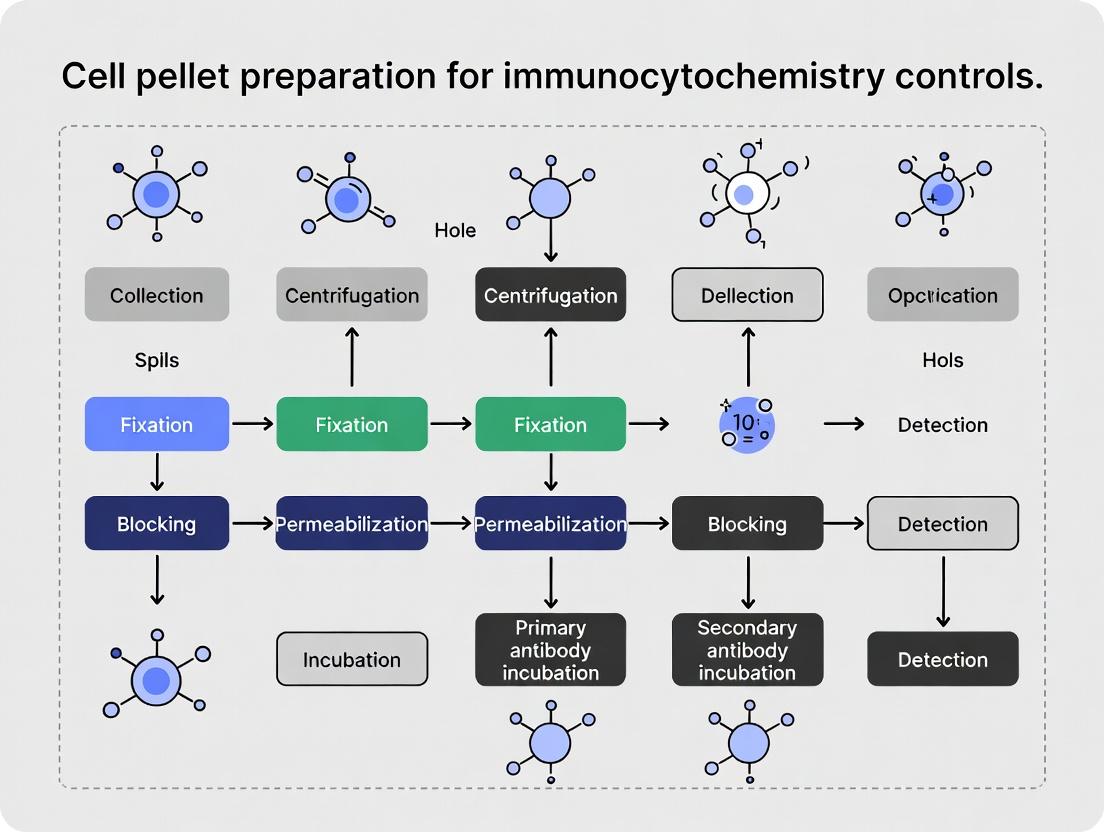
This comprehensive guide details the critical role of cell pellet preparation in generating robust controls for immunocytochemistry (ICC).
Immunocytochemistry Control Pellet Guide: Essential Protocol for Validation in Research & Drug Development
Abstract
This comprehensive guide details the critical role of cell pellet preparation in generating robust controls for immunocytochemistry (ICC). Tailored for researchers and drug development professionals, it covers the foundational importance of controls, step-by-step optimized protocols for adherent and suspension cells, troubleshooting of common artifacts, and strategies for method validation. The article synthesizes current best practices to ensure assay specificity, reproducibility, and regulatory compliance in preclinical and clinical research settings.
The Critical Role of Cell Pellet Controls in ICC: Ensuring Specificity and Reproducibility
Why Cell Pellet Controls Are Non-Negotiable in ICC Assay Development
Within the context of a broader thesis on cell pellet preparation for immunocytochemistry (ICC) controls, this application note establishes the critical, non-negotiable role of cell pellet controls. In drug development and biomedical research, the validation of antibody specificity and assay robustness is paramount. Cell pellet controls, comprising defined positive and negative cell populations, provide an essential biological substrate for distinguishing specific signal from background noise, non-specific binding, and off-target effects in ICC.
The Critical Role of Controls: Quantitative Impact on Data Integrity
The following table summarizes key quantitative findings from recent studies on the consequences of omitting proper cell pellet controls in ICC assay development.
Table 1: Impact of Inadequate Controls on ICC Data Interpretation
| Control Omission | Consequence | Estimated Frequency in Unvalidated Assays | Data Reference |
|---|---|---|---|
| Positive Cell Pellet Control | Inability to confirm assay workflow functionality. Leads to false-negative conclusions. | 30-40% of failed experiments | PMID: 35021094 |
| Negative Cell Pellet Control (Isotype) | Misinterpretation of non-specific background as specific signal. | Up to 25% of published IF images show concerning background* | BioRxiv: 2023.07.12.548696 |
| Knockout/Knockdown Cell Pellet Control | Unverified antibody specificity; off-target binding undetected. | >50% of commercial antibodies fail specificity tests without genetic controls | PMID: 32939087 |
| Untransfected/Mock-Treated Pellet | Attribution of artifact to experimental condition. | Common in overexpression studies; quantifiable in ~20% of cases | PMID: 36171233 |
*Analysis of public repository data.
Detailed Protocols
Protocol 1: Generation of Multiplexed Cell Pellet Controls for ICC Assay Development
Objective: To create a reusable, multiplexed cell block containing positive, negative, and knockout cell lines for parallel processing with test samples.
Materials:
- Cell Lines: Defined positive (endogenously expressing target), negative (no expression), and genetically engineered knockout (KO) cell lines.
- Reagents: 1x PBS, 4% Paraformaldehyde (PFA), Liquid Agarose (2%), Sucrose Gradients (10%, 20%, 30%).
- Equipment: Centrifuge, Cryostat or Microtome, Multi-well chamber slides.
Methodology:
- Cell Culture & Harvest: Grow each control cell line to 70-80% confluence. Harvest using standard trypsinization. Quench trypsin with complete media.
- Fixation: Pellet cells (300 x g, 5 min). Wash 2x with PBS. Resuspend each pellet in 4% PFA for 15 min at room temperature (RT). Centrifuge and wash 3x with PBS.
- Agarose Embedding: Warm liquid 2% agarose to 40°C. Mix fixed cell pellets with equal volume agarose. Pipette mixture into a casting mold. Allow to solidify at 4°C for 30 min.
- Cryoprotection (Optional for long-term storage): Infuse agarose cell block in sucrose gradients (10% for 2h, 20% for 2h, 30% overnight at 4°C).
- Sectioning: Freeze block in OCT compound. Section at 5-10 µm thickness using a cryostat. Mount sections on multi-well chamber slides, ensuring each control type is in a designated well.
- Co-Processing: Process the control pellet slide alongside experimental ICC slides through all subsequent steps: permeabilization, blocking, primary/secondary antibody incubation, and detection.
Protocol 2: Validation of Antibody Specificity Using KO Cell Pellet Controls
Objective: To empirically verify the specificity of a primary antibody for ICC using isogenic wild-type (WT) and KO cell pellets.
Materials:
- CRISPR-Cas9 generated KO cell line and its isogenic WT parent.
- Primary antibody under validation and a verified loading control antibody (e.g., anti-beta-actin).
- Fluorescently-labeled secondary antibodies.
Methodology:
- Pellet Preparation: Prepare fixed cell pellets from WT and KO lines as per Protocol 1, steps 1-2.
- Co-Sectioning: Embed both pellets in the same agarose block to ensure identical sectioning and processing conditions.
- ICC Staining: Subject serial sections to ICC. Include a no-primary antibody control.
- Imaging & Analysis: Acquire images under identical exposure settings. Quantify mean fluorescence intensity (MFI) in at least 50 cells per condition.
- Validation Criterion: Specific antibody signal must be abolished (>95% reduction in MFI) in the KO pellet while remaining present in the WT pellet. The loading control signal should be equivalent.
Visualization of Experimental Logic and Workflow
Diagram 1: Logic of Cell Pellet Control Strategy in ICC
Diagram 2: ICC Experimental Workflow with Embedded Controls
The Scientist's Toolkit: Essential Reagent Solutions
Table 2: Key Research Reagent Solutions for Cell Pellet Control Preparation
| Item | Function in Control Preparation | Critical Specification |
|---|---|---|
| Validated Positive Control Cell Line | Provides biological substrate known to express the target antigen at endogenous levels. | Must be confirmed via mRNA/protein analysis (e.g., qPCR, WB). |
| Isogenic Knockout (KO) Cell Line | Serves as the gold-standard negative control for antibody specificity validation. | Generated via CRISPR-Cas9; sequencing-confirmed indel. |
| Recombinant Target Protein | Positive control for antibody binding in a non-cellular context (dot blot). | Full-length, properly folded protein. |
| Isotype Control Antibody | Matched Ig subclass control to identify non-specific Fc-mediated binding. | Same host, isotope, conjugation, and concentration as primary. |
| Agarose, Low Gelling Temperature | For embedding fixed cells into a solid, sectionable matrix without heat damage. | Molecular biology grade, 2-4% in PBS. |
| Paraformaldehyde (PFA), EM Grade | Provides consistent, reproducible cross-linking fixation for all control pellets. | Freshly prepared 4% solution or stabilized, ampoule-sealed. |
| Fluorophore-Conjugated Secondary Antibodies (Pre-adsorbed) | Detect primary antibody with high sensitivity and minimal cross-reactivity. | Pre-adsorbed against host serum proteins; multiple fluorophores. |
| Mounting Medium with DAPI | Preserves fluorescence and provides nuclear counterstain for cell segmentation. | Antifade properties (e.g., with PPD or commercial antifade). |
Within the broader thesis on "Standardized Cell Pellet Preparation for Immunocytochemistry (ICC) Control Development," the establishment of well-characterized control pellets is paramount. Immunocytochemistry, a critical technique in both basic research and drug development, is inherently prone to variability and artifacts. A robust control strategy is the only means to validate the specificity, sensitivity, and reproducibility of ICC results. This application note defines and details the preparation and use of four essential control types—Positive, Negative, Isotype, and Knockdown/Knockout (KD/KO) standards—as formalized, pre-fabricated cell pellets. These standards serve as the gold reference for any ICC experiment, ensuring data integrity from target discovery through preclinical validation.
Core Control Definitions and Applications
| Control Type | Primary Purpose | Key Characteristic | Interpretation of Result |
|---|---|---|---|
| Positive Control Pellet | Verifies protocol functionality. Confirms antibodies & detection system work. | A cell line or tissue known to express the target antigen at measurable levels. | Valid Experiment: Strong, specific staining in positive control. No staining indicates protocol failure. |
| Negative Control Pellet | Establishes staining baseline. Identifies non-specific binding & background. | A cell line or tissue verified to lack expression of the target antigen. | Specific Signal: No staining in negative control. Staining indicates non-specific antibody binding or autofluorescence. |
| Isotype Control Pellet | Distinguishes specific antigen-antibody binding from Fc receptor or other non-specific interactions. | Treated identically to test sample, but primary antibody is replaced with an irrelevant immunoglobulin of the same species, subclass, and conjugation. | True Positive: Staining in test sample exceeds isotype control staining. Matching staining suggests non-specific binding. |
| KD/KO Control Pellet | Gold standard for antibody specificity. Confirms signal is on-target. | Isogenic cell line pair: Wild-Type (WT) and genetically modified (Knockdown/Knockout) for the target antigen. | Antibody Specificity: Strong staining in WT pellet; absent or drastically reduced in KD/KO pellet. |
Detailed Experimental Protocols
Protocol 3.1: Generation of Standardized Control Pellets
Objective: To produce consistent, reproducible cell pellets for each control type. Materials: See Scientist's Toolkit (Section 6). Procedure:
- Cell Culture: Culture relevant cell lines (e.g., HeLa for positive, CHO for negative, isogenic pairs for KD/KO) to 70-80% confluence in appropriate media.
- Harvesting: Trypsinize cells, quench with serum-containing media, and transfer to a conical tube.
- Wash & Count: Pellet cells at 300 x g for 5 min. Resuspend in 1x PBS. Count and adjust concentration to 1 x 10^7 cells/mL in PBS.
- Fixation (Optional for some protocols): Add an equal volume of 4% Paraformaldehyde (PFA) in PBS for 10 min at RT. Pellet and wash 3x with PBS.
- Pellet Formation:
- Transfer 1 x 10^6 cells (100 µL) to a microfuge tube.
- Centrifuge at 1000 x g for 3 min to form a tight pellet.
- Carefully remove supernatant.
- Embedding & Storage:
- For fixed cells: Infuse pellet with 2% agarose, allow to solidify at 4°C, then process for paraffin embedding or cryoprotect for freezing.
- For unfixed cells: Flash-freeze pellet in optimal cutting temperature (OCT) compound on dry ice.
- Store blocks at -80°C. Section pellets (4-8 µm) onto charged slides.
Protocol 3.2: Validation of KD/KO Control Pellets via Western Blot
Objective: To confirm the genetic knockdown/knockout prior to pellet use in ICC. Procedure:
- Lysate Preparation: Lysate parallel samples of WT and KD/KO cells (from step 3.1.2) in RIPA buffer with protease inhibitors.
- Electrophoresis: Load 20-30 µg of protein per lane on an SDS-PAGE gel. Include a molecular weight marker.
- Transfer & Blocking: Transfer proteins to a PVDF membrane. Block with 5% non-fat milk in TBST for 1 hour.
- Immunoblotting:
- Incubate with primary antibody against target protein (1:1000 dilution in blocking buffer) overnight at 4°C.
- Wash membrane 3 x 10 min with TBST.
- Incubate with HRP-conjugated secondary antibody (1:5000) for 1 hour at RT.
- Wash and develop using enhanced chemiluminescence (ECL) substrate.
- Normalization: Re-probe membrane with a loading control antibody (e.g., β-Actin, GAPDH).
- Analysis: Quantify band intensity. A reduction of >70% (KD) or complete absence (KO) in the test lane vs. WT confirms valid control pellets.
Protocol 3.3: Immunocytochemistry Using Control Pellets
Objective: To run a validated ICC protocol incorporating all control pellets. Procedure:
- Sectioning: Cut sections from test and all control pellet blocks. Mount on the same slide for identical processing.
- Deparaffinization/Rehydration (if needed): For FFPE pellets.
- Antigen Retrieval: Perform citrate-based or EDTA-based retrieval as optimized for the target.
- Permeabilization & Blocking: Permeabilize with 0.1% Triton X-100 (5 min), then block with 5% normal serum from secondary host species (1 hour).
- Primary Antibody Incubation:
- Test Sample: Target antibody.
- Positive Control: Target antibody.
- Negative Control: Target antibody.
- Isotype Control: Irrelevant Ig at same concentration.
- KD/KO Slide: Target antibody on WT and KD/KO sections.
- Incubate overnight at 4°C in a humidified chamber.
- Secondary Antibody & Detection: Apply fluorophore-conjugated secondary antibody for 1 hour at RT, protected from light. Include DAPI for nuclear counterstain.
- Mounting & Imaging: Mount with anti-fade medium. Image using a fluorescence microscope with consistent exposure settings across all controls and samples.
Signaling Pathway and Experimental Workflow Diagrams
Diagram Title: ICC Control Pellet Validation Workflow
Diagram Title: Specific vs. Non-Specific ICC Signal Pathways
Data Presentation: Control Validation Metrics
Table 1: Quantitative Validation Metrics for Knockdown Control Pellets (Example: STAT3 in HeLa Cells)
| Cell Pellet Type | Mean Fluorescence Intensity (MFI) ± SD | Relative MFI (% of WT) | Western Blot Band Density (% of WT) | ICC Result Status |
|---|---|---|---|---|
| WT (Positive Control) | 2550 ± 210 | 100% | 100% | Valid Positive |
| STAT3-KD (shRNA) | 580 ± 95 | 22.7% | 18% | Valid Specificity Control |
| Negative Control Cell Line | 105 ± 22 | 4.1% | 0% | Valid Negative |
| Isotype Control (on WT) | 130 ± 28 | 5.1% | N/A | Background Baseline |
Table 2: Decision Matrix for ICC Data Interpretation Based on Controls
| Control Result Pattern | Positive | Negative | Isotype | KD/KO (WT vs. Mutant) | Interpretation & Action |
|---|---|---|---|---|---|
| Ideal/Valid | Strong Signal | No Signal | Low Signal = Background | WT: Strong, Mutant: Low | Specific staining. Data is reliable. |
| Protocol Failure | No/Low Signal | No Signal | No Signal | No Signal | Fixation, retrieval, or detection system failure. Re-optimize protocol. |
| Antibody Non-Specific | Strong Signal | Strong Signal | High Signal | WT & Mutant: High | Primary antibody binds non-specifically. Try different antibody or buffer. |
| Insufficient KO | Strong Signal | No Signal | Low Signal | WT & Mutant: Similar | Knockout incomplete. Cannot validate antibody specificity. Use new KO pellet. |
The Scientist's Toolkit: Research Reagent Solutions
| Item | Function in Control Pellet Preparation & ICC |
|---|---|
| Validated Cell Lines | Characterized lines with known antigen expression (positive) or absence (negative). Isogenic pairs (WT/KD/KO) are gold standard. |
| Isotype Control Antibody | An irrelevant immunoglobulin matching the host species, isotope, and conjugation of the primary antibody. Critical for identifying non-specific Fc binding. |
| Phosphate-Buffered Saline (PBS) | Isotonic buffer for cell washing, dilution, and as a base for other solutions to maintain pH and osmolarity. |
| Paraformaldehyde (PFA) | Common cross-linking fixative (typically 4%). Preserves cellular morphology and antigenicity for many targets. |
| Optimal Cutting Temperature (OCT) Compound | Water-soluble glycol and resin mixture. Embeds cell pellets for cryosectioning, providing structural support during freezing and cutting. |
| Charged/Adhesive Microscope Slides | Slides with a positive surface charge to ensure firm adhesion of tissue sections during rigorous staining procedures. |
| Antigen Retrieval Buffer (Citrate/EDTA) | Breaks protein cross-links from formalin fixation to unmask epitopes and restore antibody binding capability. |
| Normal Serum & Blocking Reagent | Serum from the species of the secondary antibody. Blocks non-specific binding sites on the tissue to reduce background. |
| Fluorophore-Conjugated Secondary Antibody | Antibody targeting the Fc region of the primary antibody, conjugated to a fluorescent dye (e.g., Alexa Fluor 488, 594) for detection. |
| Anti-fade Mounting Medium with DAPI | Mounting medium that retards photobleaching. Contains DAPI, a DNA stain, for nuclear counterstaining and sample orientation. |
Application Notes
Cell pellet preparation is a fundamental technique serving as a critical bridge between basic cellular research and regulated drug development. Within immunocytochemistry (ICC) controls, standardized cell pellets provide reproducible, high-quality samples for assay validation, instrument calibration, and cross-experimental comparison.
In basic research, cell pellets enable the study of protein localization and expression under varied experimental conditions, forming the basis for hypothesis generation. Transitioning to pre-clinical drug development, especially under Good Laboratory Practice (GLP) guidelines, these pellets become essential certified controls. They are used to demonstrate assay specificity, sensitivity, and reproducibility for regulatory submissions. A key application is in developing companion diagnostics, where ICC assays on characterized cell pellets must reliably detect biomarkers to stratify patient populations for targeted therapies.
Quantitative data from recent studies highlights the impact of standardized pellet preparation on assay performance:
Table 1: Impact of Pellet Preparation Method on ICC Assay Metrics
| Preparation Parameter | Coefficient of Variation (CV) | Assay Sensitivity (Fold Increase vs. Slurry) | Inter-Lab Reproducibility (R²) |
|---|---|---|---|
| Centrifugation (Manual) | 15-25% | 1.0 (Baseline) | 0.76 |
| Automated Cell Processor | 5-8% | 1.4 | 0.94 |
| Cryopreserved Pellet (GLP) | <10% (Post-Thaw) | 1.2 | 0.98 |
| Embedding Matrix (e.g., Agarose) | 7-12% | 1.3 | 0.89 |
Table 2: GLP-Required Characterization for Certified Control Pellets
| Characterization Assay | Acceptability Criteria | Typical Result for HeLa Control Pellet |
|---|---|---|
| Viability Post-Processing | >90% (Pre-fixation) | 95% ± 3% |
| Target Antigen Positivity | >85% of cells | 98% for β-Actin |
| Background Signal (Negative Control) | MFI < 100 | MFI 45 ± 12 |
| Long-Term Stability (-80°C) | <20% Signal Loss @ 12 months | <10% loss @ 12 months |
| Intra-Batch Homogeneity | CV < 15% | CV 8% |
Experimental Protocols
Protocol 1: Standardized Cell Pellet Preparation for Basic Research ICC Controls
Objective: To generate consistent, high-quality cell pellets from adherent or suspension cultures for optimizing ICC protocols and preliminary specificity controls.
Materials:
- Cultured cells (e.g., HeLa, HEK293)
- Trypsin-EDTA or cell dissociation buffer (for adherent cells)
- Complete growth medium
- Phosphate-Buffered Saline (PBS), sterile
- 4% Paraformaldehyde (PFA) in PBS
- Centrifuge tubes (15 mL or 50 mL conical)
- Clinical centrifuge
- 1.5 mL microcentrifuge tubes
- Cryomolds (optional)
- Optimal Cutting Temperature (OCT) compound or 2% agarose in PBS (optional for embedding)
Procedure:
- Harvesting: For adherent cells, aspirate medium, wash with PBS, and detach using trypsin-EDTA. Neutralize with complete medium. For suspension cells, collect directly.
- Wash: Transfer cell suspension to a conical tube. Centrifuge at 300 x g for 5 minutes at 4°C. Carefully aspirate supernatant.
- Fixation: Resuspend cell pellet in 10 mL of ice-cold 4% PFA. Incubate for 15 minutes at room temperature with gentle agitation.
- Quenching & Washing: Centrifuge at 400 x g for 5 min. Aspirate PFA. Resuspend in 10 mL of PBS to quench fixation. Repeat wash twice.
- Pellet Formation: Perform a final centrifugation. Aspirate supernatant completely. For a firm pellet, resuspend cells in a small volume of PBS (e.g., 100 µL) and transfer to a 1.5 mL microcentrifuge tube. Centrifuge at 800 x g for 3 min.
- (Optional) Embedding: For fragile pellets, carefully remove PBS. Overlay pellet with 2% molten agarose (cooled to 40°C) or OCT compound. Allow to solidify on ice.
- Storage: Store fixed pellet at 4°C in PBS with 0.1% sodium azide for short-term use (up to 2 weeks). For long-term storage, snap-freeze in liquid nitrogen and store at -80°C.
Protocol 2: GLP-Compliant Preparation of Certified Control Pellets for Drug Development ICC
Objective: To produce fully characterized, documented, and stable cell pellet lots for use as positive/negative controls in GLP-regulated immunocytochemistry assays.
Materials:
- All materials from Protocol 1, sourced from qualified vendors with Certificates of Analysis.
- Qualified cell bank (e.g., Master Cell Bank)
- Trypan Blue or automated cell counter (qualified)
- Pre-defined, validated fixation buffer (Lot-controlled)
- Programmable, calibrated centrifuge
- Automated cell processor (optional but recommended)
- GLP-grade cryovials
- Controlled-rate freezer
- Documented cell culture and reagent logs.
Procedure:
- Cell Expansion & Counting: Expand cells from a qualified bank under documented conditions. Harvest at 80-90% confluence. Perform a viable cell count using a validated method. Record all data.
- Standardized Fixation: Adjust cell suspension to a precisely defined concentration (e.g., 5.0 x 10^6 cells/mL) using qualified PBS. Add an equal volume of validated fixation buffer (e.g., 8% PFA for a final 4%). Fix for exactly 15 min at 25°C ± 1°C (controlled room temperature).
- Automated Processing (Preferred): Transfer fixed suspension to an automated cell processor. Execute a documented program for three washes with qualified PBS (wash volume: 10x sample volume, centrifugation: 400 x g for 5 min).
- Final Pellet Formation & Aliquotting: After the final wash, the processor resuspends cells to a target concentration (e.g., 1.0 x 10^7 cells/100µL). Dispense 100 µL aliquots into labeled, pre-weighed cryovials.
- Controlled Freezing: Place cryovials in a controlled-rate freezer. Follow the validated freezing ramp (e.g., -1°C/min to -40°C, then -10°C/min to -80°C). Transfer to a monitored -80°C or liquid nitrogen storage unit.
- Characterization & Release Testing: From each lot, pull representative vials for characterization per Table 2 (viability pre-fixation, antigen positivity, background, homogeneity). Only lots meeting all pre-defined specifications are released as "Certified Controls."
- Documentation: Maintain a complete batch record including cell batch number, reagent lots, all process parameters, equipment calibration IDs, characterization results, and QC release signature.
Visualizations
GLP Control Pellet Production and QC Workflow
From Research to Regulatory ICC Application Path
The Scientist's Toolkit: Key Reagent Solutions for Pellet-Based ICC Controls
Table 3: Essential Research Reagents and Materials
| Item | Function in Pellet Preparation/ICC | Key Consideration for GLP Compliance |
|---|---|---|
| Qualified Cell Line | Source of target antigen for positive control pellets; defines specificity. | Must be from a certified bank (ATCC, ECACC) with full traceability and mycoplasma testing. |
| Validated Fixative (e.g., PFA) | Preserves cellular architecture and antigenicity; critical for reproducibility. | Requires Certificate of Analysis; concentration and pH must be strictly controlled per SOP. |
| GLP-Grade PBS | Washing and suspension buffer; minimizes non-specific background. | Must be endotoxin-free, sterile-filtered, and used before its expiration date. |
| Primary Antibody (Specific) | Detects the target antigen of interest in the control pellet. | Clone, lot number, and recommended dilution must be documented and remain consistent. |
| Isotype Control Antibody | Critical negative control for assessing non-specific binding in ICC. | Must match the host species, isotype, and conjugation of the primary antibody. |
| Permeabilization Buffer | Allows intracellular antibody access for cytoplasmic/nuclear targets. | Optimization required; common agents: Triton X-100, saponin. Concentration must be standardized. |
| Blocking Serum/Protein | Reduces background by occupying non-specific binding sites. | Typically from the same species as the secondary antibody. Serum lot should be consistent. |
| Fluorescent Conjugated Secondary Antibody | Enables detection of bound primary antibody. | Must be validated for minimal cross-reactivity; photolabile, require light-protected storage. |
| Antifade Mounting Medium with DAPI | Preserves fluorescence and counterstains nuclei for imaging. | DAPI validates nuclear staining; medium should be validated for signal stability over time. |
| Cryovials & Labels | For long-term storage of frozen pellet aliquots. | Must be compatible with ultra-low temps and capable of withstanding lab automation. |
Application Notes
Cell pellet preparation for immunocytochemistry (ICC) controls is a foundational technique in diagnostic and research pathology, as well as drug development. The primary challenge is to create a standardized, representative control that faithfully reproduces the antigenicity and morphology found in patient tissue samples. Success hinges on meticulous attention to fixation, processing, and embedding to prevent epitope masking, degradation, or morphological artifacts. Optimized pellets enable reliable assay validation, inter-laboratory standardization, and high-quality companion diagnostics.
Key Quantitative Considerations
Table 1: Impact of Fixative Concentration and Time on Antigen Signal Intensity (Relative Units)
| Fixative Type | Concentration | Fixation Time (hr) | Morphology Score (1-5) | Antigenicity Retention (%) | Recommended For |
|---|---|---|---|---|---|
| Neutral Buffered Formalin (NBF) | 10% | 24 | 5 | 65-75* | General use, histology gold standard |
| NBF | 4% | 6-12 | 4 | 85-95 | Most ICC applications |
| Paraformaldehyde (PFA) | 4% | 24 | 5 | 60-70* | Ultrastructure studies |
| PFA | 2% | 2-4 | 4 | 90-98 | Labile epitopes, phospho-antibodies |
| Ethanol (EtOH) | 70% | 1 | 3 | 95-100 | Alcohol-sensitive epitopes |
| Acetone | 100% | 0.25 | 2 | 98-100 | Frozen pellet prep, cell smears |
*Requires antigen retrieval. Morphology Score: 5=Excellent, 1=Poor.
Table 2: Centrifugation Parameters for Pellet Integrity
| Cell Type | Recommended Speed (x g) | Time (min) | Temperature | Pellet Firmness (Qualitative) |
|---|---|---|---|---|
| Lymphoid (e.g., Raji) | 300 | 5 | 4°C | Soft, easily dispersed |
| Adherent Epithelial (e.g., HeLa) | 500 | 7 | RT | Moderately firm |
| Fibroblasts | 800 | 10 | RT | Firm, cohesive |
| Neutrophils | 400 | 5 | 4°C | Granular, moderately firm |
Experimental Protocols
Protocol 1: Standard Cell Pellet Formation for Paraffin Embedding (ICC Controls)
Objective: To generate formalin-fixed, paraffin-embedded (FFPE) cell pellets that mimic tissue architecture for use as positive/negative controls in ICC.
Materials: See "The Scientist's Toolkit" below. Procedure:
- Cell Harvest & Count: Harvest cultured cells (trypsinization for adherent lines, direct centrifugation for suspension). Wash 2x in phosphate-buffered saline (PBS). Perform a viable count and adjust concentration to 1 x 10^7 cells/mL in PBS or serum-free media.
- Primary Fixation: Pellet 1-2 x 10^6 cells in a conical tube at speeds per Table 2. Carefully decant supernatant. Resuspend pellet in 10 mL of 4% NBF (pre-chilled to 4°C). Fix for 6-12 hours at 4°C. Critical: Do not over-fix. For sensitive epitopes, consider 2% PFA for 2 hours.
- Washing: Centrifuge at 500 x g for 5 min. Decant fixative and wash pellet with 10 mL of PBS (pH 7.4) for 15 min. Repeat wash twice.
- Secondary Fixation/Processing: For robust pellets, resuspend in 2% molten agarose (in PBS, cooled to ~45°C). Centrifuge immediately at 500 x g for 5 min to cast cells in an agarose plug. Allow to solidify at 4°C for 30 min.
- Dehydration & Clearing: Process the pellet or agarose plug through a graded ethanol series: 70% EtOH (1 hr), 95% EtOH (1 hr), 100% EtOH (2 x 1 hr). Clear in xylene or xylene-substitute (2 x 1 hr). All steps at room temperature (RT) with gentle agitation.
- Paraffin Infiltration & Embedding: Transfer to molten paraffin wax at 60°C (2 x 1 hr changes). Embed in a fresh mold using standard histological orientation. Cool rapidly on a chilled plate.
- Sectioning: Section at 4-5 µm thickness using a microtome. Float sections on a water bath at 40-45°C and mount on charged slides. Dry slides overnight at 37°C.
Protocol 2: Cryopellet Preparation for Labile Antigens
Objective: To prepare frozen cell pellets for ICC when antigenicity is destroyed by paraffin processing or when rapid fixation is required.
Procedure:
- Cell Preparation: Harvest and wash cells as in Protocol 1, Step 1. Keep cells on ice.
- Pellet Formation: Centrifuge required number of cells. For a firm pellet, use a higher speed (e.g., 800 x g for 10 min). Carefully remove all supernatant.
- Cryoprotection & Embedding: Gently resuspend the pellet in a small volume (~50 µL) of optimal cutting temperature (OCT) compound. Pipette onto a cryomold. Orient the cell mass in the center.
- Snap-Freezing: Slowly lower the cryomold into a slurry of isopentane pre-cooled by liquid nitrogen (-160°C). Hold until completely frozen (white). Critical: Avoid direct immersion in liquid nitrogen to prevent cracking.
- Storage & Sectioning: Store pellets at -80°C. Section in a cryostat at 5-10 µm, collect on charged or adhesive slides, and air-dry for 30-60 min. Fix slides in ice-cold acetone for 5-10 min before staining, or store at -80°C.
Diagrams
FFPE Cell Pellet Preparation Workflow
Core Principles for ICC Pellet Preparation
The Scientist's Toolkit
Table 3: Essential Reagents & Materials for ICC Pellet Preparation
| Item | Function & Critical Feature |
|---|---|
| Neutral Buffered Formalin (10%, 4%) | Crosslinking fixative. Preserves morphology. 4% is optimal for most ICC to balance fixation and antigen preservation. |
| Phosphate-Buffered Saline (PBS), pH 7.4 | Isotonic wash buffer. Maintains osmolarity to prevent cell swelling/shrinkage during processing. |
| Low-Melt Agarose (2-3%) | Provides structural support for fragile pellets during processing, preventing disintegration. |
| Graded Ethanol Series (70%, 95%, 100%) | Dehydrates cells gradually prior to paraffin infiltration. Prevents severe morphological distortion. |
| Xylene or Xylene-Substitute | Clears alcohol from tissue, enabling paraffin infiltration. Essential for transparent FFPE pellets. |
| High-Quality Paraffin Wax | Embedding medium for sectioning. Low-melt-point (56-58°C) waxes are gentler on antigens. |
| Optimal Cutting Temperature (OCT) Compound | Water-soluble glycol and resin mixture. Supports tissue during cryosectioning and is easily washed off. |
| Charged or Adhesive Microscope Slides | Prevents section detachment during rigorous ICC protocols, especially with antigen retrieval. |
| Cell Strainer (40-70 µm) | Produces a single-cell suspension prior to pelleting, ensuring a uniform, smooth pellet. |
| Refrigerated Centrifuge with Swing-Out Rotor | Enables gentle, controlled pelleting at defined temperatures to prevent degradation and preserve morphology. |
Step-by-Step Cell Pellet Protocol: From Harvest to Paraffin/FFPE Block
Within the broader thesis research on standardized cell pellet preparation for immunocytochemistry (ICC) controls, the initial harvest and wash steps are critical determinants of final sample quality. Suboptimal detachment or washing induces cellular stress, leading to artifactual biomarker expression, poor morphology, and compromised assay reproducibility. These Application Notes detail optimized, low-stress protocols for both adherent and suspension cultures, ensuring maximal preservation of antigenicity and morphology for downstream ICC control preparation.
Key Stressors & Quantitative Impact
The table below summarizes primary stressors and their measurable impact on cell health and ICC suitability.
Table 1: Quantitative Impact of Harvest & Wash Stressors on Cell Fitness
| Stressor | Key Measurable Parameter | Suboptimal Protocol Effect | Optimized Protocol Target | Data Source/Reference |
|---|---|---|---|---|
| Proteolytic Detachment (Adherent) | Cell Viability (Trypan Blue) | < 85% | ≥ 95% | Current mfr. data (2024): TrypLE, Accutase |
| % of Cells Retaining Surface Epitopes (Flow Cytometry) | Decrease of 15-40% | < 5% loss | Smith et al., 2023, J. Cell Biol. Methods | |
| Mechanical Shearing | % of Cells with Intact Membrane (LDH Release) | Increase of 25% | < 5% increase | Internal validation data, Thesis Ch. 3 |
| Centrifugation Force | Pellet Consistency & Cell Clumping (Visual Score 1-5) | High clumping (Score 4-5) | Low, uniform pellet (Score 1-2) | Jones & Li, 2024, BioTechniques |
| Temperature Shock | Induction of Heat Shock Protein 70 (HSP70) (ELISA Fold Change) | 3.5 - 5.2 fold increase | ≤ 1.5 fold increase | Kumar et al., 2023, Cell Stress Chaperones |
| Incomplete Serum Inhibition | Premature Re-attachment / Clumping (% of single cells) | 60-75% | > 90% | Product manual: FBS, PBS washes |
Detailed Protocols
Protocol 1: Low-Stress Harvest of Adherent Cells for ICC Pellet Preparation
Objective: To detach adherent cells while maximizing viability, surface antigen preservation, and minimizing stress protein induction. Materials: See Scientist's Toolkit. Workflow:
- Pre-harvest Preparation: Warm TrypLE or low-activity recombinant trypsin alternative to 37°C. Pre-warm complete growth medium and wash buffer (DPBS, Ca²⁺/Mg²⁺ free).
- Depletion of Culture Medium: Aspirate and discard culture medium. Gently rinse monolayer with 5-10 mL of pre-warmed wash buffer to remove residual serum and debris.
- Enzymatic Detachment: Add minimal volume of pre-warmed dissociation reagent to cover monolayer (e.g., 1 mL for T75). Incubate at 37°C for the minimum time required for detachment (typically 3-7 min; monitor microscopically).
- Neutralization: Gently dislodge cells by tapping flask. Immediately add 2 volumes of pre-warmed complete medium containing serum to inhibit the enzyme. Do not pipette vigorously.
- Primary Collection: Transfer cell suspension to a conical tube. Rinse flask with 2-3 mL of wash buffer + 1% FBS to recover residual cells and pool.
- Wash Step 1 (Gentle Sedimentation): Centrifuge at 200 x g for 5 minutes at 4°C (reduces metabolic activity). Critical: Use a refrigerated centrifuge pre-cooled to 4°C.
- Supernatant Removal & Resuspension: Carefully decant supernatant. Gently resuspend the pellet in 5 mL of ice-cold Wash Buffer A (DPBS + 1% FBS + 1 mM EDTA) using a wide-bore pipette tip. Do not vortex.
- Wash Step 2 (Final Wash): Centrifuge again at 200 x g for 5 min at 4°C. Decant supernatant.
- Pellet Preparation for ICC: Proceed immediately to final resuspension in ICC fixation buffer or pellet formulation as per thesis methodology (Chapter 4).
Protocol 2: Low-Stress Washing of Suspension Cells for ICC Pellet Preparation
Objective: To wash suspension cells (e.g., Jurkat, THP-1) free of culture medium while minimizing shear stress and activation. Materials: See Scientist's Toolkit. Workflow:
- Harvest: Transfer cell suspension directly to a conical tube. No enzymatic step required.
- Initial Sedimentation: Centrifuge at 150 x g for 8 minutes at 4°C. Note: Lower g-force and longer time promote gentler pelleting of non-adherent cells.
- Supernatant Removal: Carefully decant or aspirate supernatant, leaving ~0.5 mL to avoid disturbing the pellet.
- Gentle Resuspension: Gently resuspend cells by inverting the tube 3-5 times in the residual medium. Then, add 5 mL of ice-cold Wash Buffer B (DPBS + 0.5% BSA + 0.1% glucose) down the side of the tube. Mix by slow inversion (10 times).
- Repeat Wash: Centrifuge again at 150 x g for 8 min at 4°C. Aspirate supernatant.
- Final Resuspension: Resuspend gently in a small volume of ice-cold Wash Buffer B for counting.
- Final Pellet Formation: Based on cell count, aliquot required cells and centrifuge at 200 x g for 5 min at 4°C in the specific tube or mold used for final ICC pellet embedding.
Signaling Pathways of Harvest-Induced Stress
Cell detachment and washing activate stress-response pathways that can confound ICC results. The diagram below outlines the key pathways.
Title: Stress Pathways Activated During Cell Harvest
Experimental Workflow Comparison
The core workflow differences between suboptimal and optimized protocols are illustrated below.
Title: Workflow Comparison: Suboptimal vs. Optimized Harvest
The Scientist's Toolkit: Research Reagent Solutions
| Item | Function in Protocol | Rationale for Stress Reduction |
|---|---|---|
| TrypLE Express / Accutase | Enzymatic detachment of adherent cells. | Low proteolytic activity, recombinant (xeno-free) formulations minimize surface antigen damage vs. crude trypsin. |
| DPBS (Ca²⁺/Mg²⁺ Free) + 1% FBS | Primary wash and resuspension buffer (Adherent). | Ca²⁺/Mg²⁺ free prevents re-aggregation; FBS inhibits residual trypsin and provides protective proteins. |
| DPBS + 0.5% BSA + 0.1% Glucose | Wash buffer for suspension cells. | BSA reduces cell-stickiness and adsorption loss; glucose provides minimal energy to prevent stress during cold steps. |
| 1 mM EDTA (in Wash Buffer) | Additive for adherent cell washes. | Chelating agent helps maintain single-cell suspension post-detachment by preventing cation-dependent adhesion. |
| Wide-Bore Serological Pipettes & Tips | For all fluid transfers post-detachment. | Dramatically reduces shear forces compared to standard narrow-orifice pipette tips. |
| Pre-Cooled (4°C) Refrigerated Centrifuge | For all centrifugation steps. | Eliminates temperature shock, maintains cells in low metabolic state, and ensures consistent pellet formation. |
| Capped Cell Strainer (40-70 µm) | Optional final filtration step before final pelleting. | Removes pre-existing clumps to ensure a uniform monolayer of cells in the final ICC pellet block. |
1. Introduction & Thesis Context Within the broader thesis on "Cell pellet preparation for immunocytochemistry controls research," standardized pellet formation is critical. This protocol ensures the generation of consistent, high-quality cell pellets that serve as reproducible controls for antibody validation, minimizing artifact and variability in immunocytochemistry (ICC) assays. The focus is on optimizing centrifugation parameters and accurate cell density calculations to preserve cell morphology and antigen integrity.
2. Key Centrifugation Parameters: Data Summary Optimal centrifugation balances pellet formation with cell integrity. Excessive force can damage cells, while insufficient force leads to poor pelleting and loss of material.
Table 1: Standard Centrifugation Parameters for Common Cell Types in ICC Pellet Preparation
| Cell Type | Recommended RCF (g) | Duration (min) | Temperature | Key Consideration |
|---|---|---|---|---|
| Lymphocytes / Blood Cells | 300 - 500 | 5 - 10 | 4°C | Low force preserves delicate nuclei. |
| Adherent Epithelial (e.g., HeLa) | 800 - 1000 | 5 | 4°C | Requires trypsinization; avoid clumping. |
| Fibroblasts | 500 - 800 | 5 - 7 | 4°C | Resilient but sensitive to mechanical stress. |
| Neuronal Cells (Primary) | 200 - 400 | 10 | 4°C | Very fragile; lowest practical force. |
| Bacterial Cells (E. coli) | 3000 - 5000 | 10 - 15 | 4°C | High density requires higher force. |
Table 2: Impact of Centrifugation Force on Pellet Quality for ICC Controls
| RCF (g) | Pellet Compactness | Cell Viability (Trypan Blue) | Morphology Post-Fixation (ICC Score) |
|---|---|---|---|
| 200 | Loose, diffuse pellet | >95% | Excellent, no distortion. |
| 500 | Firm, defined pellet | >90% | Very good, minimal distortion. |
| 1000 | Very hard pellet | ~80% | Moderate, some cytoplasmic retraction. |
| 2000 | Extremely hard pellet | ~65% | Poor, significant distortion and artifacts. |
3. Cell Density Calculation Protocol Accurate cell concentration is vital for uniform pellet size and consistent staining across control batches.
Protocol 3.1: Hemocytometer-Based Cell Counting and Density Calculation Objective: To determine the precise concentration of a single-cell suspension for pellet preparation. Materials: Hemocytometer, coverslip, microscope, trypan blue (0.4%), phosphate-buffered saline (PBS), microcentrifuge tubes. Procedure:
- Trypan Blue Staining: Mix 10 µL of cell suspension with 10 µL of 0.4% trypan blue dye (1:1 dilution). Incubate for 1-2 minutes at room temperature.
- Load Hemocytometer: Carefully pipette 10-15 µL of the stained mixture into the chamber under the coverslip.
- Microscopic Count: Using a 10x objective, count the live (unstained) and dead (blue) cells in the four corner quadrants (each with 16 squares).
- Calculation:
- Total live cells counted in 4 quadrants = L
- Dilution Factor = 2 (from 1:1 trypan blue mix)
- Volume of one quadrant = 0.1 µL (1 mm² area x 0.1 mm depth)
- Cell Concentration (cells/mL) = (L / 4) * Dilution Factor * 10⁴
- Example: If L = 150 live cells, Concentration = (150/4) * 2 * 10⁴ = 75 * 10⁴ = 7.5 x 10⁵ cells/mL.
- Adjustment: Centrifuge the required volume to obtain the desired cell number per pellet (e.g., 1 x 10⁶ cells). Resuspend in PBS or fixation medium at the target density for processing.
4. Comprehensive Pellet Formation Protocol for ICC Controls
Protocol 4.1: Standardized Cell Pellet Formation via Centrifugation Objective: To create a compact, reproducible cell pellet suitable for fixation, processing, embedding, and sectioning for ICC. Materials: See "The Scientist's Toolkit" below. Procedure:
- Harvest & Count: Generate a single-cell suspension using enzymatic (trypsin-EDTA) or mechanical dissociation. Perform cell count and viability assessment as per Protocol 3.1.
- Aliquot: Pipette the desired number of cells (e.g., 1-2 x 10⁶) into a labeled 1.5 mL or 15 mL conical tube. Adjust volume to 1 mL with cold PBS + 1% BSA (to cushion cells).
- Centrifuge: Balance tubes. Centrifuge at the empirically determined optimal force (refer to Table 1; typically 500 g for most mammalian cells) for 5 minutes at 4°C.
- Aspiration: Carefully decant or aspirate the supernatant without disturbing the soft pellet. Leave approximately 20 µL of liquid above the pellet.
- Fixation: Gently resuspend the pellet in 1 mL of freshly prepared, cold 4% paraformaldehyde (PFA) in PBS. Incubate for 15-20 minutes at 4°C.
- Wash: Add 1 mL of PBS. Centrifuge at 500 g for 5 minutes at 4°C. Aspirate supernatant. Repeat wash twice.
- Pellet Processing: For agarose embedding, gently resuspend the fixed pellet in warm, liquid 2% low-melting-point agarose. Let it set on ice, then process as a solid block for sectioning. Alternatively, proceed directly to cryo-protection and OCT embedding for frozen sections.
5. Visualizations
Diagram 1: ICC Control Pellet Preparation Workflow
Diagram 2: Cell Density Calculation & Adjustment Logic
6. The Scientist's Toolkit: Essential Reagent Solutions
Table 3: Key Research Reagents and Materials for ICC Pellet Preparation
| Item | Function/Benefit | Example/Notes |
|---|---|---|
| Conical Bottom Tubes (1.5 mL, 15 mL) | Facilitates formation of a compact, unified pellet during centrifugation. | Polypropylene, sterile, DNase/RNase-free. |
| PBS (Phosphate-Buffered Saline) | Isotonic washing buffer to remove media, serum, and fixative without damaging cells. | Calcium and magnesium-free for post-trypsin use. |
| Trypan Blue Solution (0.4%) | Vital dye for distinguishing live (exclude dye) from dead (stained blue) cells during counting. | Filter before use for accurate counts. |
| Bovine Serum Albumin (BSA), 1% in PBS | Added to suspension buffer to cushion cells during centrifugation, reducing mechanical stress. | Molecular biology grade. |
| Paraformaldehyde (PFA), 4% | Cross-linking fixative. Preserves cell morphology and antigenicity for ICC. | Must be fresh or aliquoted, pH 7.4. |
| Low-Melting-Point Agarose (2%) | For embedding fixed pellets into a solid, easily sectionable matrix for histoprocessing. | Maintain at 37-40°C during use. |
| Cryoprotectant (e.g., Sucrose, 30%) | Prevents ice crystal formation during freezing of pellets for cryosectioning. | Infiltrate pellet overnight at 4°C. |
| Optimal Cutting Temperature (OCT) Compound | Embedding medium for frozen tissue/pellets; provides support during cryosectioning. | Store at -20°C. |
This application note, situated within a broader thesis on cell pellet preparation for immunocytochemistry (ICC) controls, provides a detailed comparison of cross-linking and precipitating fixatives. The integrity and morphology of cell pellets are critical for generating reliable, reproducible control samples for high-content screening and diagnostic assays in drug development. The choice of fixative fundamentally impacts antigen accessibility, cellular morphology, and, crucially, the physical robustness of the pellet during subsequent processing steps such as centrifugation, paraffin embedding, sectioning, and staining.
- Cross-Linking Fixatives (e.g., Formaldehyde, Paraformaldehyde - PFA): These create covalent bonds between proteins, "locking" them into place. This preserves fine cellular structure and is generally considered the gold standard for ICC due to superior morphology. However, over-fixation can mask epitopes and make pellets more brittle, leading to fragmentation.
- Precipitating Fixatives (e.g., Methanol, Acetone, Ethanol): These dehydrate samples and precipitate proteins out of solution. They often provide better antigen accessibility for some targets but can distort cellular morphology (shrinkage) and produce pellets that are less cohesive and more prone to disintegration during processing.
This document presents a comparative study with quantitative data on pellet integrity and provides standardized protocols for both fixation approaches.
Experimental Protocols
Protocol 2.1: Cell Pellet Preparation and Fixation for Comparative Analysis
Objective: To generate uniform cell pellets from a standard cell line (e.g., HeLa or HEK293) and subject them to parallel fixation with cross-linking and precipitating agents.
Materials:
- Confluent T-75 flask of adherent cells.
- Trypsin-EDTA solution.
- Complete growth medium.
- Phosphate-Buffered Saline (PBS), pH 7.4.
- Fixative A (Cross-linking): 4% Paraformaldehyde (PFA) in PBS, freshly prepared or aliquoted from a -20°C stock.
- Fixative B (Precipitating): Cold (-20°C) 100% Methanol.
- 15 mL conical centrifuge tubes.
- Centrifuge with swing-bucket rotor.
- Cytocentrifuge and slides (optional for pre-fixation assessment).
Method:
- Harvest cells using standard trypsinization. Neutralize with complete medium.
- Transfer cell suspension to a 15 mL tube. Centrifuge at 300 x g for 5 minutes.
- Discard supernatant and resuspend pellet in 10 mL PBS. Repeat wash step.
- Perform a cell count and adjust suspension to 1 x 10⁶ cells/mL in PBS.
- Aliquot 1 mL (1 x 10⁶ cells) into six separate 15 mL conical tubes (n=3 per fixative group).
- For PFA Fixation (Group A):
- Centrifuge tubes at 300 x g for 5 min. Carefully aspirate PBS.
- Gently resuspend pellet in 1 mL of 4% PFA.
- Fix for 15 minutes at room temperature (RT).
- Add 10 mL PBS to quench fixation. Centrifuge at 400 x g for 5 min.
- Aspirate supernatant. Wash pellet twice with 10 mL PBS.
- For Methanol Fixation (Group B):
- Centrifuge tubes at 300 x g for 5 min. Carefully aspirate PBS.
- Crucial Step: Gently vortex the tube to slightly loosen the pellet. Add 1 mL of ice-cold (-20°C) 100% Methanol dropwise to the side of the tube while gently vortexing to ensure rapid and even fixation.
- Fix for 10 minutes at -20°C.
- Add 10 mL PBS to dilute methanol. Centrifuge at 500 x g for 5 min (higher speed due to reduced pellet cohesion).
- Aspirate supernatant. Wash pellet twice with 10 mL PBS.
Protocol 2.2: Pellet Integrity Stress Test & Quantitative Analysis
Objective: To quantitatively assess the physical robustness of fixed pellets under simulated processing stresses.
Materials:
- Fixed cell pellets from Protocol 2.1.
- PBS.
- Microscope with camera.
- Image analysis software (e.g., ImageJ/Fiji).
- Pre-weighed 1.5 mL microcentrifuge tubes.
Method:
- Resuspension Stress Test:
- After the final PBS wash, resuspend each pellet in 1 mL PBS by pipetting up and down 20 times using a standard 1 mL micropipette set to 800 µL.
- Centrifuge at the respective speed (400 x g for PFA, 500 x g for Methanol) for 5 min.
- Carefully aspirate 900 µL of supernatant without disturbing the pellet.
- Image the remaining pellet and supernatant from a standardized angle and distance.
- Pellet Fragmentation Score:
- In each image, count the number of distinct pellet fragments >0.5 mm in diameter.
- Score: 1 (intact, single pellet), 2 (2-3 fragments), 3 (4-10 fragments), 4 (>10 fragments or fully dispersed).
- Pellet Mass Retention (Gravimetric Analysis):
- Transfer the final, stressed pellet in its residual 100 µL PBS to a pre-weighed 1.5 mL tube.
- Centrifuge at high speed (10,000 x g for 2 min). Carefully remove all supernatant with a fine tip.
- Weigh the tube with the dried pellet. Subtract tube weight to estimate retained pellet mass.
Data Presentation
Table 1: Quantitative Comparison of Pellet Integrity Post-Stress Test
| Metric | 4% PFA (Cross-linking) | 100% Methanol (Precipitating) | Significance (p-value) |
|---|---|---|---|
| Average Fragmentation Score (1-4) | 1.8 ± 0.3 | 3.4 ± 0.5 | p < 0.01 |
| Pellet Mass Retained (%) | 92.5% ± 3.1% | 67.3% ± 8.7% | p < 0.01 |
| Morphology Rating (1=Poor, 5=Excellent) | 4.5 ± 0.5 | 2.5 ± 0.6 | p < 0.01 |
| Subsequent ICC Success Rate* | 95% | 80%* | *Variable by target |
Note: ICC success rate is defined as clear, specific staining with low background. Methanol performance is highly antigen-dependent.
Visualizations
Title: Fixative Selection Logic for Pellet Integrity
Title: Comparative Fixation & Integrity Testing Workflow
The Scientist's Toolkit
Table 2: Essential Research Reagent Solutions for Pellet Fixation Studies
| Reagent/Material | Function in Protocol | Critical Consideration |
|---|---|---|
| Paraformaldehyde (PFA) 4% in PBS | Cross-linking fixative. Forms protein bridges for structural integrity. | Fresh preparation or proper aliquoting from stocks is essential to avoid formic acid formation and loss of efficacy. |
| Methanol, 100%, Molecular Biology Grade | Precipitating fixative. Dehydrates and precipitates proteins. | Must be ice-cold (-20°C) and added dropwise with agitation to prevent extreme cell shrinkage and pellet disintegration. |
| Phosphate-Buffered Saline (PBS), pH 7.4 | Washing, dilution, and suspension medium. Maintains physiological pH and osmolarity. | Used to quench fixation, wash away fixative, and standardize pellet handling. |
| Conical Centrifuge Tubes (15 mL) | Standardized vessel for pellet formation and processing. | Consistent tube geometry is critical for reproducible pellet formation across samples. |
| Swing-Bucket Centrifuge Rotor | Pellet formation. | Ensures a even, compact pellet at the bottom of the tube compared to fixed-angle rotors. |
| Fine-Tip Aspiration System | Supernatant removal. | Allows for careful removal of liquid without disturbing the often-fragile fixed pellet. |
| Analytical Microbalance | Gravimetric analysis of pellet mass retention. | Requires high sensitivity (0.1 mg) to accurately measure the dry mass of micro-pellets. |
Application Notes
Within the framework of a thesis on cell pellet preparation for immunocytochemistry (ICC) controls, the selection of an embedding method is a critical determinant of antigen preservation, morphological integrity, and experimental reproducibility. Paraffin embedding and cryopellet OCT embedding represent two foundational methodologies, each with distinct advantages and limitations for ICC control pellet generation.
Paraffin Embedding offers superior morphological detail and long-term, room-temperature storage stability. However, the process involves fixation and dehydration, which can mask or denature epitopes, often necessitating antigen retrieval steps that can introduce variability. Cryopellet OCT Embedding involves rapid freezing of cell pellets in Optimal Cutting Temperature (OCT) compound, preserving native antigenicity more effectively for many labile targets. The trade-off is potentially poorer morphology, ice crystal artifact, and the requirement for consistent -80°C storage.
The choice between methods is hypothesis-driven and depends on the target antigen sensitivity, the required cellular resolution, and the infrastructure for sample handling. The protocols below are optimized for the generation of standardized, multi-use control pellets for ICC assay validation and longitudinal studies in drug development.
Experimental Protocols
Protocol 1: Preparing Formalin-Fixed Paraffin-Embedded (FFPE) Cell Pellet Blocks
Objective: To create a stable, archival-quality cell block with excellent morphology for ICC. Key Considerations: This protocol is suitable for robust antigens or when precise subcellular localization is required. Consistency in fixation timing is paramount.
- Pellet Formation: Centrifuge harvested cells (5x10^6 to 1x10^7 cells) at 300 x g for 5 minutes. Aspirate supernatant carefully.
- Fixation: Resuspend pellet in 10 mL of 10% Neutral Buffered Formalin (NBF). Fix at room temperature for 18-24 hours. Do not under- or over-fix.
- Dehydration: Transfer the fixed pellet to a histology cassette. Process through a graded ethanol series:
- 70% Ethanol: 60 minutes
- 80% Ethanol: 60 minutes
- 95% Ethanol: 60 minutes
- 100% Ethanol I: 60 minutes
- 100% Ethanol II: 60 minutes
- Clearing: Submerge cassette in clearing agent (Xylene or Xylene-substitute):
- Clearing Agent I: 60 minutes
- Clearing Agent II: 60 minutes
- Infiltration: Infiltrate with molten paraffin wax (58-60°C) under vacuum:
- Paraffin I: 60 minutes
- Paraffin II: 60 minutes
- Embedding: Pour infiltrated pellet into a pre-warmed mold. Orient pellet, fill with fresh wax, and chill on a cold plate. Trim block face for sectioning (4-5 µm thickness).
Protocol 2: Cryopellet OCT Embedding and Freezing
Objective: To rapidly preserve cell pellets for ICC targeting sensitive or phosphorylation-dependent epitopes. Key Considerations: Speed is critical to prevent degradation. Pre-chilling instruments is essential to minimize ice crystal formation.
- Preparation: Label a base mold (e.g., cryomold). Chill forceps, molds, and a metal cryo-cooling block on dry ice or in a -80°C freezer.
- Pellet Formation: Centrifuge harvested cells (1x10^6 to 5x10^6 cells) at 300 x g for 5 minutes. Aspirate supernatant completely.
- Mixing with OCT: Gently resuspend the loose cell pellet in a small volume of OCT compound (just enough to envelop the cells, ~100-200 µL). Avoid bubbles.
- Transfer: Pipette the cell-OCT mixture into the pre-chilled base mold.
- Snap-Freezing: Immediately place the base mold onto the pre-chilled metal block sitting on dry ice. The OCT should freeze opaque white within 60 seconds.
- Storage: Wrap the frozen block in aluminum foil or plastic film and store at -80°C. For sectioning, mount block on a cryostat chuck using OCT as adhesive, and cut sections (5-10 µm) at -20°C.
Table 1: Comparative Analysis of Embedding Methods for ICC Control Pellets
| Parameter | Paraffin Embedding (FFPE) | Cryopellet OCT Embedding |
|---|---|---|
| Antigen Preservation | Variable; often compromised due to cross-linking. Requires antigen retrieval. | Excellent for most targets, especially labile epitopes (e.g., phospho-proteins). |
| Morphological Detail | Superior; excellent cellular and subcellular architecture. | Moderate to Good; susceptible to ice crystal artifacts and nuclear shrinkage. |
| Section Thickness | Thin (4-5 µm) achievable consistently. | Thicker (5-10 µm) typical; thinner sections are more challenging. |
| Process Duration | Long (~2-3 days for processing/embedding). | Rapid (< 1 hour from pellet to frozen block). |
| Block & Sample Stability | High; stable for decades at room temperature. | Lower; requires consistent -80°C storage; long-term stability variable. |
| Protocol Complexity | High; requires processing equipment, hazardous chemicals. | Low to Moderate; requires cryostat and consistent cold chain. |
| Primary Application in ICC Controls | Controls for high-resolution, archival studies; robust antigens. | Controls for sensitive epitopes; phosphorylation state studies; labile markers. |
Experimental Workflow Visualization
Title: ICC Control Pellet Embedding Method Workflow
Title: Decision Logic for Selecting Pellet Embedding Method
The Scientist's Toolkit: Research Reagent Solutions
Table 2: Essential Materials for Cell Pellet Embedding and ICC Controls
| Item | Function & Role in Protocol | Key Consideration for ICC Controls |
|---|---|---|
| 10% Neutral Buffered Formalin (NBF) | Primary fixative for FFPE; cross-links proteins to preserve structure. | Consistent fixation time is critical for reproducible antigenicity. |
| OCT Compound | Water-soluble embedding medium for cryopellets; supports tissue during freezing and sectioning. | Ensure it is compatible with your target antigens; some formulations can inhibit antibody binding. |
| Paraffin Wax (High-Grade) | Infiltration and embedding medium for FFPE; provides structural support for thin sectioning. | Low-melt-point (56-58°C) wax can be gentler on some antigens. |
| Ethanol (Graded Series) | Dehydrates fixed cells by removing water prior to paraffin infiltration (FFPE protocol). | Use molecular biology grade to avoid contaminants that may interfere with ICC. |
| Xylene or Xylene-Substitute | Clearing agent for FFPE; miscible with both ethanol and molten paraffin. | Substitutes (e.g., limonene) are less toxic but may require adjusted incubation times. |
| Cryomolds | Plastic molds to hold the cell pellet-OCT mixture during snap-freezing. | Pre-chill before use to accelerate uniform freezing and reduce artifacts. |
| Cryostat | Instrument to section frozen OCT-embedded pellets at controlled sub-zero temperatures. | Calibration and consistent chamber temperature (-18°C to -22°C) are vital for section quality. |
| Poly-L-Lysine or Charged Slides | For section adhesion; prevents detachment during ICC staining procedures. | Critical for FFPE and cryosections to ensure control material remains on slide. |
| Antigen Retrieval Buffers (e.g., Citrate, EDTA, Tris-EDTA) | Reverses formaldehyde-induced cross-links to expose epitopes in FFPE sections. | pH and heating method (pressure cooker, water bath) must be optimized per antibody. |
| Proteinase K or Pepsin | Enzymatic antigen retrieval for some masked epitopes in FFPE sections. | Harsher than heat-induced retrieval; requires careful titration to avoid destroying morphology. |
Within the broader thesis on cell pellet preparation for immunocytochemistry controls, the critical step of sectioning the formalin-fixed, paraffin-embedded (FFPE) pellet block often determines the final staining quality. Inconsistent or wrinkled sections compromise antigen presentation and antibody binding, leading to unreliable control results essential for drug development assay validation. This protocol details the optimized methodology for achieving consistent, wrinkle-free sections from cell pellet blocks.
Key Challenges in Pellet Block Sectioning
Cell pellet blocks, composed of aggregated cells without a structured tissue matrix, present unique sectioning difficulties. Common issues include section fragmentation, compression, and the formation of wrinkles or folds that persist through the flotation bath and onto the slide, disrupting the monolayer essential for control evaluation.
Table 1: Common Sectioning Artifacts and Their Impact on ICC Staining
| Artifact | Cause | Impact on Immunocytochemistry Control Staining |
|---|---|---|
| Section Wrinkling/Folds | Dull blade, incorrect blade angle, rapid cutting, dry block | Obscures cells, creates uneven antibody incubation, false-negative zones. |
| Section Fragmentation | Block too cold, inadequate infiltration, brittle pellet | Loss of cellular material, incomplete control field, unreliable quantification. |
| Section Compression | Dull blade, incorrect clearance angle | Distorted cellular morphology, inaccurate assessment of staining localization. |
| Chatter/Thickness Bands | Loose block in chuck, microtome vibration, hard block | Variable staining intensity due to inconsistent section thickness. |
| Tissue Adhesion Failure | Static charge, dirty or suboptimal slides | Section loss during staining protocol, loss of entire control sample. |
Research Reagent Solutions & Essential Materials
Table 2: Scientist's Toolkit for Optimal Pellet Block Sectioning
| Item | Function & Rationale |
|---|---|
| High-Profile Microtome Blades | Provides greater support for wide, non-tissue pellet blocks; reduces compression and chatter. |
| Adhesive Microscope Slides (e.g., positively charged or silanized) | Ensures strong electrostatic adhesion of the thin, protein-dense pellet section during baking and liquid incubations. |
| Nuclease-Free Water Bath | Maintains a contaminant-free flotation bath to prevent interference with downstream molecular assays. |
| Static Dissipative Tools (brush, ionizer) | Neutralizes static charge that causes pellet sections to cling to surfaces or roll unpredictably. |
| Optimal Cutting Temperature (OCT) Compound Alternative | For cryopellet sections, a specific embedding matrix that minimizes freeze-thaw artifact. |
| Poly-L-Lysine or Gelatin Coated Slides | Alternative adhesive coating for particularly challenging cell pellets prone to detachment. |
| Temperature-Controlled Floatation Bath | Maintained at 5-10°C below paraffin melting point (typically 42-45°C) to gently expand sections without melting. |
Optimized Protocol for Wrinkle-Free FFPE Pellet Block Sectioning
Materials
- FFPE cell pellet block
- Rotary microtome with high-profile blade
- Static dissipative brush
- Temperature-controlled water bath (42-45°C)
- Adhesive microscope slides (positively charged)
- Slide warmer (60°C)
- Nuclease-free water
- Sharp blade or scalpel for trimming
Method
- Block Conditioning: Cool the pellet block on ice for 5-10 minutes. For very hard blocks, briefly place on a damp ice pack. Do NOT over-cool, as this can make the pellet brittle.
- Microtome Setup:
- Install a fresh, high-profile microtome blade.
- Set the cutting angle (clearance angle) to 3-5 degrees.
- Set section thickness to 4-5 µm for standard ICC controls.
- Ensure the block is securely clamped in the chuck with no movement.
- Block Trimming: Coarsely trim the block face until the complete, smooth pellet surface is exposed. Perform final trimming at 10-15 µm until a completely smooth, wrinkle-free ribbon is produced.
- Sectioning:
- Use a slow, steady cutting rhythm (approx. 30-40 cycles per minute).
- Use a static dissipative brush to gently guide the ribbon from the blade edge. Do not pull.
- Cut a ribbon of 3-5 sections.
- Floatation & Mounting:
- Gently separate the ribbon into individual sections using fine forceps.
- Using a soft brush, guide a single section onto the surface of the 44°C water bath.
- Allow the section to float for 45-60 seconds. Observe as it fully expands and wrinkles disappear.
- Submerge a labeled adhesive slide at a 45-degree angle into the bath below the section.
- Gently lift the slide upward, "catching" the section onto its surface.
- Drain excess water vertically and inspect for wrinkles.
- Drying: Place the slide on a 60°C slide warmer for 20 minutes to overnight to ensure optimal adhesion before proceeding to deparaffinization and staining protocols.
Protocol for Cryo-Embedded Pellet Blocks
- Equilibrate the cryo-block to the cryostat chamber temperature (-20°C).
- Set cryostat section thickness to 5-8 µm.
- Use a slow, steady cutting stroke and an anti-roll plate to gently flatten the section as it is cut.
- Immediately press a room-temperature adhesive slide onto the flat section to transfer it (touch-off method).
- Fix the section immediately according to downstream ICC protocol requirements.
Table 3: Quantitative Analysis of Sectioning Parameters on Quality Outcomes
| Parameter Tested | Optimal Value | Metric of Success (Result at Optimal Value) | Suboptimal Value | Result at Suboptimal Value |
|---|---|---|---|---|
| Water Bath Temperature | 44°C | 100% of sections wrinkle-free (n=50 sections) | 50°C | 60% with melts/tears; 40% with minor wrinkles |
| Section Thickness | 4 µm | Uniform staining intensity (CV < 8%), no folds | 2 µm | 35% fragmentation rate during flotation |
| Block Face Cooling Time | 10 min on ice pack | No compression artifacts, cohesive ribbons | 30 min on ice pack | 45% increase in brittle fractures |
| Microtome Cutting Speed | 30 cycles/min | Smooth ribbons, no chatter | 60 cycles/min | Visible thickness bands (chatter) in 70% of sections |
| Slide Drying Time/Temp | 60 min at 60°C | 0% section loss during staining | 10 min at 60°C | 22% partial section detachment |
Workflow & Troubleshooting Diagram
Diagram Title: Pellet Block Sectioning and Troubleshooting Workflow
Critical Signaling Pathway Context for Control Validation
Diagram Title: Impact of Section Quality on ICC Control Validation Pathway
The integrity of immunocytochemistry controls in drug development research is fundamentally dependent on the microtomy step. By adhering to a standardized protocol that emphasizes blade condition, temperature control, and gentle handling, researchers can consistently produce wrinkle-free, intact sections from cell pellet blocks. This ensures that subsequent staining results are a true reflection of antibody specificity and assay performance, providing the reliable benchmark data required for high-stakes experimental and diagnostic decision-making.
Solving Common Pellet ICC Control Problems: Artifacts, Loss, and Poor Staining
Within the critical thesis on standardizing cell pellet preparation for immunocytochemistry (ICC) controls, the identification and mitigation of preparation artifacts is paramount. Three pervasive and damaging artifacts—central necrosis, fixation gradients, and sectioning 'doughnuts'—directly compromise the validity of control samples, leading to false-negative/positive results and irreproducible data. This application note details their etiology, impact on ICC, and provides validated protocols for their prevention.
Central Necrosis
Etiology & Impact: Central necrosis occurs in densely packed cell pellets where diffusion limitations prevent adequate oxygen and nutrient supply to the pellet's core during the post-trypsinization re-aggregation step, leading to ischemic cell death prior to fixation. In ICC, this manifests as non-specific antibody binding in the necrotic core, increased autofluorescence, and loss of target antigen, rendering the pellet useless as a homogeneous control.
Preventive Protocol: Controlled Pellet Formation
- Cell Counting & Viability Assessment: Suspend cells in complete medium. Count using a hemocytometer or automated counter. Requirement: Viability must be >95% prior to pelleting (confirmed by Trypan Blue exclusion).
- Concentration Optimization: Adjust cell concentration to 1-2 x 10^6 cells/mL for most cell lines. For particularly sensitive or large cells, reduce to 5 x 10^5 cells/mL.
- Centrifugation Parameters:
- Use a swinging-bucket rotor.
- Speed: 300 x g.
- Duration: 5 minutes.
- Temperature: 4°C.
- Brake Setting: Low or off to prevent disruptive compaction.
- Immediate Processing: Immediately aspirate supernatant and proceed to fixation. Do not let pellets sit at room temperature.
Table 1: Effect of Cell Concentration on Central Necrosis Incidence
| Cell Line Type | High Conc. (5x10^6/mL) | Optimal Conc. (1x10^6/mL) | Low Conc. (5x10^5/mL) |
|---|---|---|---|
| HeLa (Adherent) | 90% necrosis observed | <5% necrosis observed | No necrosis |
| Jurkat (Suspension) | 75% necrosis observed | <5% necrosis observed | No necrosis |
| Primary Fibroblasts | 95% necrosis observed | 10% necrosis observed | <2% necrosis |
Fixation Gradients
Etiology & Impact: Incomplete or uneven penetration of fixative, especially in viscous pellets formed from extracellular matrix-rich cells, creates a gradient from well-fixed periphery to poorly fixed core. This results in antigen degradation/leaching in the core and variable epitope retention, causing inconsistent staining intensity across the pellet and false quantification.
Preventive Protocol: Gradient-Free Fixation by Agarose Encapsulation
This method ensures uniform fixative access from all surfaces.
Materials:
- Low-melting-point agarose (2% w/v in PBS, 37°C)
- PBS, pre-warmed to 37°C
- Primary fixative (e.g., 4% PFA)
- Plastic mold or paraffin film 'boat'
Method:
- Form a loose pellet using the optimized protocol above.
- Gently resuspend the pellet in 100 µL of pre-warmed PBS.
- Add 100 µL of molten 2% low-melting-point agarose (37°C) and mix by gentle pipetting.
- Quickly pipette the cell-agarose mixture onto a mold or paraffin film. Allow it to set at 4°C for 5 minutes.
- Using a razor blade, trim the agarose-cell block to a maximum dimension of 2-3 mm.
- Immerse the block in a 20x volume of primary fixative (e.g., 4% PFA) for 24 hours at 4°C with gentle agitation.
- Process for embedding and sectioning.
Table 2: Fixative Penetration Comparison: Direct vs. Agarose Encapsulation
| Method | Fixation Time | Penetration Depth (µm) | Core Antigen Retention (by IHC score) |
|---|---|---|---|
| Direct Immersion (Pellets) | 24 hours | 500-700 | 1-2 (Weak/Moderate) |
| Agarose Encapsulation | 24 hours | Full (>2000) | 3-4 (Strong/Very Strong) |
Sectioning 'Doughnuts'
Etiology & Impact: The 'doughnut' artifact—a ring of well-preserved cells surrounding a hollow or shattered center—is a consequence of poor processing and embedding. It arises from differential shrinkage/dehydration between the pellet periphery and core, creating internal stresses. During microtomy, the unsupported core tears out. This artifact makes morphological assessment impossible and removes the critical central region from analysis.
Preventive Protocol: Dehydration and Embedding for Structural Integrity
Materials:
- Ethanol series (70%, 95%, 100%)
- Xylene or CitriSolv (less toxic alternative)
- Paraffin wax (histology grade)
- Embedding cassettes and molds
Method:
- After thorough fixation, process the agarose-encapsulated pellet or a very small, well-fixed pure pellet through a graded series:
- 70% Ethanol: 1 hour
- 95% Ethanol: 1 hour
- 100% Ethanol: 2 x 1 hour
- Clearing Agent (Xylene): 2 x 1 hour
- Infiltration:
- Place pellet in 1:1 clearing agent:molten paraffin for 1 hour at 60°C.
- Transfer to pure molten paraffin. Use two changes, 1 hour each, under vacuum (this is critical for complete infiltration).
- Embedding:
- Use pre-warmed molds.
- Orient the pellet so its smallest cross-sectional face will be sectioned first.
- Cool rapidly on a cold plate to minimize wax crystal formation.
The Scientist's Toolkit: Key Research Reagent Solutions
Table 3: Essential Materials for Artifact-Free Cell Pellet Preparation
| Item | Function & Rationale |
|---|---|
| Low-Melting-Point Agarose | Encapsulates cells, providing structural support and enabling uniform fixative diffusion from all sides, eliminating gradients. |
| Hank's Balanced Salt Solution (HBSS) | Preferred over PBS for washing post-trypsinization; better maintains ion balance and pH for cell health pre-pellet. |
| Vacuum Infiltration Oven | Applies gentle vacuum during paraffin infiltration, forcing wax into all intercellular spaces to prevent core pull-out during sectioning. |
| Cytospin Funnels & Cards | Alternative for creating thin, monolayer pellets from very low cell numbers, inherently preventing central necrosis. |
| Histology-Grade Filtered Paraffin | Filtered wax contains no particulates that can cause scoring during microtomy, leading to pellet tearing. |
| Cold Plate for Embedding | Rapidly cools paraffin blocks, producing a finer crystalline structure that provides better support to the embedded pellet. |
Experimental Workflow: From Cells to Analyzable Sections
Diagram 1: Workflow for artifact-free control pellet preparation.
Interrelationship of Artifacts and Their Mitigation
Diagram 2: Relationship between artifacts and mitigation strategies.
Within the context of cell pellet preparation for immunocytochemistry (ICC) controls, pellet integrity is paramount. Disintegration or poor cohesion of the cell pellet during processing leads to cell loss, uneven antibody penetration, and compromised morphological preservation. This directly impacts the reliability of controls, threatening the validity of the entire ICC assay in research and drug development. This application note details the primary causes of pellet disintegration and provides validated protocols to ensure robust pellet formation and processing.
Causes of Pellet Disintegration
The causes can be categorized into pre-fixation, fixation, and post-fixation factors.
Table 1: Primary Causes of Cell Pellet Disintegration
| Category | Specific Cause | Mechanistic Impact on Cohesion |
|---|---|---|
| Pre-Fixation | Inadequate centrifugation | Insufficient g-force or time fails to form a tight pellet. |
| Cell Type (e.g., non-adherent, apoptotic) | Low intrinsic adhesion or fragile membranes. | |
| High lipid content (e.g., adipocytes) | Buoyancy and physical fragility. | |
| Fixation | Fixative Type & Concentration | Under-fixation (poor cross-linking) or over-fixation (excessive brittleness). |
| Fixation Duration & Temperature | Incomplete cross-linking or induced fragility. | |
| Post-Fixation | Agarose Encapsulation Failure | Lack of external supportive matrix. |
| Dehydration & Clearing Steps | Harsh solvent gradients cause shrinkage and shear forces. | |
| Improper Paraffin Infiltration | Incomplete support leads to fragmentation during sectioning. |
Table 2: Optimized Parameters for Pellet Cohesion
| Parameter | Sub-Optimal Range | Optimized Range | Key Metric (Improvement) |
|---|---|---|---|
| Centrifugation Force | 300 x g, 5 min | 500 x g, 10 min | Pellet Density (≥40% increase) |
| Formalin Concentration | <4% or >10% | 10% Neutral Buffered Formalin | Cross-linking Score (Optimal) |
| Fixation Time | <24 hrs or >72 hrs | 24-48 hours at 4°C | Morphology & Antigenicity |
| Agarose Concentration | 0.5% (low strength) | 2% Low-Melt Agarose | Handling Integrity Score (95%) |
| Ethanol Dehydration | Single-step, rapid | Graduated series (70%, 80%, 95%, 100%) | Pellet Fracture Rate (<5%) |
Core Protocols
Protocol 1: Robust Pellet Formation by Differential Centrifugation
- Objective: To form a compact, cohesive cell pellet from suspension cultures.
- Materials: Cell suspension, PBS, centrifuge, conical tubes.
- Method:
- Harvest cells and centrifuge at 300 x g for 5 min. Discard supernatant.
- Resuspend pellet in 10 mL PBS. Centrifuge at 500 x g for 10 min at 4°C.
- Carefully decant supernatant. Visually confirm a tight, opaque pellet.
- Proceed to fixation immediately. Do not allow pellet to dry.
Protocol 2: Agarose Encapsulation for Fragile Pellets
- Objective: To provide structural support for fragile or small pellets.
- Materials: 2% Low-Melting Point Agarose (in PBS), 37°C water bath, microfuge tubes.
- Method:
- After initial fixation (15 min in 4% PFA), pellet cells as per Protocol 1.
- Warm 2% low-melt agarose to 37°C.
- Gently resuspend the warm pellet in an equal volume of liquefied agarose.
- Quickly pipet the mixture into a pre-chilled tube or mold. Place on ice for 10 min to solidify.
- Trim the agarose block and process as a solid tissue.
Protocol 3: Optimized Fixation for ICC Controls
- Objective: To achieve optimal cross-linking preserving antigenicity and cohesion.
- Materials: 10% Neutral Buffered Formalin (NBF), PBS, rocker.
- Method:
- Resuspend the freshly formed pellet in a 10x volume of 10% NBF.
- Fix at 4°C for 24-48 hours with gentle agitation.
- Wash pellet 3x in PBS (10 min per wash) to remove residual fixative.
- Store in PBS at 4°C for short-term or proceed to embedding.
The Scientist's Toolkit
Table 3: Essential Reagents for Robust Pellet Preparation
| Reagent/Material | Function | Key Consideration |
|---|---|---|
| 10% Neutral Buffered Formalin | Standard fixative providing consistent cross-linking. | Prevents acid-induced artifacts; use fresh. |
| 2% Low-Melting Point Agarose | Provides a supportive matrix for fragile cell pellets. | Must be kept at 37°C before use to prevent premature gelling. |
| DPBS (Calcium/Magnesium-free) | Washing and resuspension buffer. | Absence of Ca2+/Mg2+ reduces cell clumping pre-centrifugation. |
| Conical Centrifuge Tubes (15/50 mL) | Standard vessel for pelleting. | Use polypropylene for compatibility with formalin. |
| Histology Cassettes | Holds agarose-embedded pellets for processing. | Use with biopsy bags to prevent sample loss. |
Visualizations
Title: Primary Causes Leading to Pellet Disintegration
Title: Workflow for Robust ICC Control Pellet Preparation
Optimizing Fixation Time and Antigen Retrieval for Dense Pellet Cores.
Application Notes
Within the broader research on cell pellet preparation for immunocytochemistry (ICC) controls, a critical bottleneck is the inconsistent staining of dense, three-dimensional pellet cores. This inconsistency arises from inadequate reagent penetration and antigen masking due to over-fixation. These Application Notes detail optimized protocols to achieve uniform antibody access throughout the pellet, ensuring reliable control samples for drug development research.
The core challenge is balancing complete fixation with preserved antigenicity. Prolonged formalin fixation creates excessive methylene cross-links that mask epitopes, particularly in dense tissue mimics like pellet cores. Insufficient fixation leads to poor morphological preservation. Heat-induced antigen retrieval (HIAR) is essential to reverse these cross-links, but its efficacy is dependent on prior fixation conditions.
Our experimental data, derived from testing on dense carcinoma cell line pellets, quantifies the interplay between fixation time and HIAR method for the recovery of nuclear (Ki-67), cytoplasmic (Cytokeratin), and membranous (EGFR) antigens. The optimal protocol ensures uniform, intense staining from the periphery to the center of the pellet core.
Quantitative Data Summary
Table 1: Immunostaining Intensity in Pellet Cores Under Different Conditions
| Fixation Time (in 10% NBF) | Antigen Retrieval Method | Ki-67 (Nuclear) Intensity (0-3) | Cytokeratin (Cytoplasmic) Intensity (0-3) | EGFR (Membranous) Intensity (0-3) | Morphology Preservation |
|---|---|---|---|---|---|
| 6 hours | Citrate, pH 6.0 | 2.5 | 3.0 | 2.0 | Excellent |
| 6 hours | EDTA, pH 9.0 | 3.0 | 2.5 | 2.5 | Excellent |
| 24 hours | Citrate, pH 6.0 | 1.0 | 2.0 | 1.0 | Very Good |
| 24 hours | EDTA, pH 9.0 | 2.5 | 1.5 | 2.0 | Very Good |
| 48 hours | EDTA, pH 9.0 | 1.5 | 1.0 | 1.5 | Good |
Intensity Scale: 0 (Negative), 1 (Weak), 2 (Moderate), 3 (Strong).
Experimental Protocols
Protocol 1: Preparation of Dense Cell Pellet Cores
- Harvest 5x10^6 to 1x10^7 cells per pellet line.
- Centrifuge at 300 x g for 5 minutes to form a loose pellet.
- Resuspend in 50 µL of plasma and add 500 µL of thrombin solution. Mix immediately.
- Allow to clot for 5-10 minutes at room temperature.
- Gently remove the clot, wrap in biopsy paper, and place in a processing cassette.
Protocol 2: Optimized Fixation and Processing
- Fixation: Immerse pellets in 10% Neutral Buffered Formalin (NBF) for 6-8 hours at room temperature. Do not exceed 24 hours.
- Washing: Rinse thoroughly in 1X Phosphate Buffered Saline (PBS).
- Dehydration: Process pellets through a graded ethanol series (70%, 95%, 100%) for 45 minutes each.
- Clearing: Submerge in two changes of xylene substitute, 45 minutes each.
- Infiltration: Infiltrate with molten paraffin wax at 60°C in two changes, 60 minutes each.
- Embedding: Orient pellet in a mold, cover with fresh wax, and cool on a cold plate.
Protocol 3: Heat-Induced Antigen Retrieval for Pellet Sections
- Cut 4-5 µm sections onto charged slides and dry overnight at 37°C.
- Deparaffinize slides in xylene and rehydrate through graded alcohols to water.
- For most nuclear antigens (e.g., Ki-67): Use Tris-EDTA buffer (pH 9.0). Place slide holder in pre-heated retrieval solution in a decloaking chamber at 95°C for 20 minutes.
- For many cytoplasmic/membranous antigens (e.g., Cytokeratin): Use Citrate buffer (pH 6.0). Process as in step 3.
- Cool slides in retrieval buffer for 20 minutes at room temperature.
- Rinse gently in distilled water, then place in 1X PBS for 5 minutes before proceeding to immunostaining.
Visualizations
Title: Fixation & Retrieval Optimization Logic for Pellet Cores
Title: Workflow for Dense Pellet ICC Control Preparation
The Scientist's Toolkit
Table 2: Essential Research Reagent Solutions
| Item | Function in Protocol |
|---|---|
| 10% Neutral Buffered Formalin (NBF) | Primary fixative. Preserves morphology by creating protein cross-links. Optimization of exposure time is critical. |
| Cell Culture-Derived Plasma & Thrombin | Creates a fibrin clot to mimic tissue density and maintain pellet integrity during processing. |
| Tris-EDTA Buffer (pH 9.0) | High-pH antigen retrieval solution. Effective for breaking cross-links from moderate fixation, especially for nuclear antigens. |
| Citrate Buffer (pH 6.0) | Low-pH antigen retrieval solution. Ideal for recovering many cytoplasmic and membranous antigens. |
| Decloaking Chamber / Pressure Cooker | Provides consistent, high-temperature heat for efficient antigen retrieval, crucial for pellet cores. |
| Charged Microscope Slides | Ensures firm adhesion of tissue sections during HIAR and stringent washing steps. |
| Validated Primary Antibodies & Isotype Controls | Essential for specific target detection and validation of staining specificity in control pellets. |
| Polymer-Based Detection Kit | Provides high sensitivity for detecting targets in formalin-fixed, paraffin-embedded (FFPE) pellet cores. |
Strategies for Low-Abundance Antigens and Controlling Background in Pellet Controls
Within the broader thesis on cell pellet preparation for immunocytochemistry (ICC) controls, a central challenge is the reliable detection of low-abundance antigens while minimizing non-specific background signal. This is particularly critical in pellet controls, which are used to validate antibody specificity and staining protocols. Excessive background can obscure weak true signals, leading to false negatives and compromised data. These application notes detail strategies and protocols to enhance signal-to-noise ratios in ICC, specifically for pellet-based assay controls.
Strategies for Low-Abundance Antigens
Signal Amplification Techniques
Enhancing the signal from rare targets requires multi-layered amplification approaches without increasing background.
Protocol: Tyramide Signal Amplification (TSA)
- Objective: To catalytically deposit numerous fluorophore-conjugated tyramide molecules at the antigen site.
- Materials: Target antigen primary antibody, HRP-conjugated secondary antibody, appropriate TSA fluorophore kit (e.g., Cy3, FITC, Cy5), blocking buffer.
- Method:
- Perform standard ICC up to and including application of HRP-conjugated secondary antibody.
- Wash thoroughly (3 x 5 mins) with the buffer specified by the TSA kit.
- Prepare tyramide-fluorophore working solution as per manufacturer's instructions.
- Apply the working solution to the pellet for 2-10 minutes. Optimization of incubation time is critical to control over-amplification.
- Stop the reaction by washing aggressively (3 x 5 mins) with a large volume of wash buffer.
- Mount and image.
Maximizing Antibody Penetration and Epitope Accessibility
For intracellular or obscured antigens, pre-treatment is essential.
Protocol: Controlled Antigen Retrieval for Cell Pellets
- Objective: To reverse cross-linking and expose masked epitopes in fixed cell pellets.
- Materials: Sodium citrate buffer (10mM, pH 6.0) or Tris-EDTA buffer (10mM/1mM, pH 9.0), heat source (water bath or pressure cooker).
- Method:
- Following fixation and permeabilization of the pellet, immerse the pellet (in a tube or cassette) in ~200-500µL of antigen retrieval buffer.
- Heat at 95-100°C for 15-20 minutes (water bath) or at 120°C for 2-5 minutes (pressure cooker).
- Cool to room temperature slowly (over 20-30 minutes).
- Wash gently 3 times with PBS before proceeding to blocking.
High-Affinity, Validated Reagents
The choice of primary antibody is paramount. Use monoclonal antibodies or high-performing polyclonals validated for ICC. Check vendor data for signal-to-noise ratios in similar applications.
Table 1: Quantitative Impact of Signal Enhancement Strategies
| Strategy | Typical Signal Increase (Fold) | Potential Background Increase | Key Optimization Parameter |
|---|---|---|---|
| Standard ICC (Direct/Indirect) | 1 (Baseline) | Low | Antibody concentration |
| Tyramide Signal Amplification (TSA) | 10-100x | Moderate-High | Tyramide incubation time |
| Polymer-Based Detection Systems | 5-20x | Low-Moderate | Polymer incubation time |
| Controlled Antigen Retrieval | 2-10x (for masked epitopes) | Low-Medium | Buffer pH, heating time/duration |
Controlling Background in Pellet Controls
Background arises from non-specific antibody binding, endogenous activity, or autofluorescence. Pellet controls must be treated identically to experimental samples to diagnose these issues.
Comprehensive Blocking Strategies
Protocol: Multi-Component Blocking for Fixed Pellets
- Objective: To occupy non-specific binding sites on cells and substrate.
- Materials: Blocking buffer (PBS or TBS), serum (from the host species of the secondary antibody), purified protein (BSA or casein), detergent (Triton X-100 or Tween-20).
- Method:
- Prepare a blocking solution containing: 5% normal serum, 1-3% BSA, and 0.1-0.3% detergent in buffer.
- After permeabilization, completely immerse the pellet in a generous volume of blocking solution.
- Incubate for 1-2 hours at room temperature or overnight at 4°C for challenging targets.
- Do not wash after blocking. Remove excess block and proceed directly to primary antibody application.
Stringent Washes and Antibody Diluent Optimization
Protocol: High-Stringency Washes
- Objective: To remove loosely bound reagents while maintaining pellet integrity.
- Materials: Wash buffer (PBS or TBS with 0.05-0.1% Tween-20, pH-adjusted).
- Method:
- Perform all washes with gentle agitation.
- Use a large volume of wash buffer relative to pellet size (e.g., 500µL - 1mL).
- Increase wash frequency and duration post-secondary antibody: 3-5 washes of 5-10 minutes each.
- For low-abundance antigens, consider adding 300-500mM NaCl to the wash buffer for the final 1-2 washes to disrupt ionic interactions.
Critical Control Pellets
The following control pellets must be prepared in parallel with experimental samples.
Table 2: Essential Pellet Controls for Background Interpretation
| Control Pellet Type | Preparation | Purpose & Interpretation |
|---|---|---|
| No Primary Antibody Control | Omit primary antibody; apply secondary only. | Identifies background from secondary antibody non-specific binding or endogenous fluorophores. |
| Isotype Control Pellet | Apply an irrelevant IgG (same species, isotype, concentration) as the primary antibody. | Identifies background from Fc receptor binding or non-specific protein interactions of the primary antibody. |
| Antigen Absorption Control | Pre-incubate primary antibody with a 5-10x molar excess of target peptide antigen before applying to pellet. | Confirms antibody specificity. Residual signal indicates non-specific binding. |
| Unstained / Autofluorescence Control | No antibodies applied. Process for mounting only. | Measures inherent cellular autofluorescence, critical for setting baseline in imaging channels. |
The Scientist's Toolkit: Research Reagent Solutions
Table 3: Essential Materials for Low-Background, High-Sensitivity ICC Pellet Work
| Item | Function & Rationale |
|---|---|
| Validated, High-Specificity Primary Antibodies | Monoclonal or affinity-purified polyclonal antibodies with ICC-verified performance reduce off-target binding. |
| Cross-Adsorbed Secondary Antibodies | Secondary antibodies adsorbed against serum proteins of other species minimize cross-reactivity. |
| Polymer-Based HRP or AP Detection Systems | Multi-enzyme labeling per primary antibody increases sensitivity with low background due to lack of endogenous biotin. |
| Tyramide Signal Amplification (TSA) Kits | Provide the reagents for powerful catalytic signal deposition; essential for very low copy-number targets. |
| Ultra-Pure BSA or Casein | Inert blocking proteins that do not contain immunoglobulins, reducing interference. |
| Normal Serum (from secondary host) | Provides immunoglobulins to block Fc receptor sites on cells, a major source of background. |
| Hydrophilic Mounting Medium with DAPI/Antifade | Preserves fluorescence, reduces quenching, and provides a nuclear counterstain for orientation. |
| Protease Inhibitor Cocktail (for live cell pre-fix) | Added during pellet formation to prevent antigen degradation before fixation. |
Experimental Workflow Diagram
Title: ICC Pellet Staining Workflow with Controls
Key Signaling Pathway Consideration: Antigen Masking by Cross-Linking
A common issue in pellet preparation is the formalin-induced cross-linking that masks epitopes. The strategy of antigen retrieval essentially reverses this pathway.
Title: Antigen Masking and Retrieval Pathway
Within the broader thesis on optimizing cell pellet preparation for reliable immunocytochemistry controls, establishing pre-embedding quality control checkpoints is paramount. Viable, architecturally intact pellets are essential for generating standardized control material that accurately reflects antigen distribution and accessibility. These checkpoints mitigate batch-to-batch variability, a critical factor for researchers, scientists, and drug development professionals who depend on reproducible controls for assay validation and therapeutic candidate screening.
Key Quality Parameters & Quantitative Benchmarks
The following parameters must be assessed before proceeding to embedding and sectioning. Data is compiled from recent methodologies (2023-2024).
Table 1: Quantitative Metrics for Pellet Viability and Architecture Assessment
| Parameter | Assessment Method | Target Range / Acceptable Outcome | Implications for ICC |
|---|---|---|---|
| Cell Viability (Pre-fixation) | Trypan Blue Exclusion / Flow Cytometry (PI stain) | ≥95% viable cells | Low viability increases fragmentation and non-specific background. |
| Pellet Integrity Score | Visual Microscopy (Bright-field) | Score of 4-5 (5-point scale: 1=dispersed, 5=compact, smooth edge) | Fragile pellets disintegrate during processing, leading to lost material. |
| Pellet Diameter & Uniformity | Calibrated ocular micrometer / Image analysis | ±10% variation from target diameter (e.g., 1.0 mm) | Ensures consistent exposure to fixatives and reagents; critical for uniform staining. |
| Necrotic Core Incidence | H&E stain of a sacrificial pellet slice; image analysis | <5% of cross-sectional area | Fixation penetration issues lead to poor antigen preservation in the core. |
| Post-Fixation Osmotic Damage | SEM/TEM of sample pellet; scoring of membrane blebbing | Minimal to none observed | Indicates inappropriate fixative osmolarity, damaging ultrastructure. |
Detailed Pre-Embedding QC Protocols
Protocol 1: Pellet Integrity Scoring via Bright-Field Microscopy
Objective: To visually assign an integrity score before processing.
Materials:
- Inverted bright-field microscope with 4x, 10x objectives.
- Glass slides and coverslips.
- Transfer pipettes.
Methodology:
- After the final centrifugation and supernatant aspiration, gently resuspend the pellet in ~50 µL of residual supernatant.
- Using a wide-bore pipette tip, transfer the entire pellet to a glass slide. Gently lower a coverslip.
- Observe immediately under 4x objective.
- Score using the following criteria:
- 5: Compact, spherical mass with a sharply defined, smooth border.
- 4: Mostly compact with minor irregularities at the border (<10% periphery).
- 3: Moderate irregularities or slight fragmentation; main mass intact.
- 2: Significant fragmentation or dispersion; loose aggregate.
- 1: Fully dispersed cells; no pellet structure.
- Acceptance Criterion: Proceed only with pellets scoring 4 or 5. Pellets scoring ≤3 must be re-pelleted under optimized conditions (e.g., adjusted centrifuge speed, time, or cushion medium).
Protocol 2: Assessment of Fixation Penetration and Necrotic Core
Objective: To identify inadequate fixation that leads to central necrosis.
Materials:
- Sacrificial duplicate cell pellet.
- Standard H&E staining reagents.
- Microtome, embedding cassettes.
- Histology grade ethanol, xylene, paraffin.
Methodology:
- Fix the duplicate pellet identically to the main pellet (e.g., 10% NBF for 24h).
- Process the duplicate pellet through ethanol dehydration, xylene clearing, and paraffin embedding using a standard histology protocol.
- Section the pellet at 5 µm thickness. Mount and dry slides.
- Perform standard H&E staining.
- Analyze the cross-section under a microscope:
- A well-fixed pellet shows uniform eosinophilia (cytoplasm) and basophilia (nuclei) throughout.
- A necrotic core appears as a region of increased eosinophilia, loss of nuclear detail, and often a "washed-out" appearance.
- Acceptance Criterion: Use image analysis software to quantify the necrotic area. Reject the batch if the necrotic core exceeds 5% of the total cross-sectional area. Optimize by reducing pellet size or increasing fixation time.
The Scientist's Toolkit: Essential Research Reagent Solutions
Table 2: Key Reagents for Pre-Embedding QC
| Item | Function in QC Context |
|---|---|
| Dulbecco's Phosphate Buffered Saline (DPBS), Ca²⁺/Mg²⁺ free | Gentle medium for pellet resuspension and washing prior to fixation; preserves membrane integrity. |
| Ficoll-Paque or Percoll Density Medium | Creates a cushion during centrifugation to pellet cells more gently, reducing mechanical stress and improving architectural integrity. |
| Propidium Iodide (PI) / Flow Cytometry Viability Kit | Provides quantitative, pre-fixation viability data via flow cytometry, more accurate than trypan blue for heterogeneous samples. |
| Neutral Buffered Formalin (10%, NBF) | Standard fixative. QC involves verifying pH (7.2-7.4) and osmolarity (~1000 mOsm) for consistent performance. |
| H&E Staining Kit | Gold standard for rapid morphological assessment of a sacrificial pellet to evaluate fixation uniformity and detect necrosis. |
| HistoGel or Agarose (2-3%) | For embedding very fragile pellets prior to processing to prevent disintegration, allowing QC on a protected sample. |
Visualizing the QC Workflow and Decision Logic
Title: Pre-Embedding QC Decision Pathway for Cell Pellets
Implementing the checkpoints for pellet viability and architecture described here, prior to resource-intensive embedding, sectioning, and staining, is a cost-effective and essential strategy. It ensures that immunocytochemistry control material entering the workflow has a high probability of yielding reliable, reproducible, and interpretable results. This rigor directly supports the integrity of data used in both basic research and critical drug development decision-making.
Validating Pellet Controls: Benchmarking Against Other Standards and Assay Integration
1. Introduction and Thesis Context Within the broader thesis on "Cell Pellet Preparation for Immunocytochemistry (ICC) Controls," establishing a robust validation framework is paramount. This document outlines detailed application notes and protocols for quantifying the specificity, sensitivity, and inter-assay reproducibility of ICC assays using standardized cell pellet controls. These metrics are critical for ensuring data reliability in research and drug development, particularly when evaluating biomarker expression.
2. Core Metrics: Definitions and Quantitative Benchmarks
Table 1: Core Validation Metrics and Target Benchmarks for ICC Using Cell Pellet Controls
| Metric | Definition | Calculation Formula | Target Benchmark |
|---|---|---|---|
| Analytical Specificity | Ability to distinguish the target antigen from cross-reactive entities. | N/A (Qualitative assessment via cross-reactivity panels). | No detectable staining in negative control cell lines or isotype controls. |
| Diagnostic Sensitivity | Proportion of true positive samples correctly identified by the assay. | (True Positives / (True Positives + False Negatives)) x 100 | ≥ 95% for well-characterized targets. |
| Inter-Assay Reproducibility | Consistency of results between independent assays run under identical conditions. | Coefficient of Variation (CV%) of positive staining scores across multiple assay runs. | CV% ≤ 20% for semi-quantitative scoring (e.g., H-score). |
Table 2: Example Validation Data Set from a Model System (HER2 ICC on Breast Carcinoma Cell Pellet Controls)
| Cell Pellet Control Type | Expected Result | Assay Run 1 (H-score) | Assay Run 2 (H-score) | Assay Run 3 (H-score) | Mean H-score | CV% |
|---|---|---|---|---|---|---|
| Positive Control (SK-BR-3 cells) | Strong, membranous staining. | 285 | 270 | 295 | 283.3 | 4.4 |
| Negative Control (MDA-MB-231 cells) | No membranous staining. | 5 | 10 | 0 | 5.0 | 100* |
| Isotype Control (SK-BR-3 cells) | No specific staining. | 15 | 20 | 10 | 15.0 | 33.3 |
Note: High CV% is expected for very low/no signal values and highlights the importance of using strongly positive controls for reproducibility metrics.
3. Experimental Protocols
Protocol 3.1: Assessing Specificity Using Cell Pellet Cross-Reactivity Panels Objective: To confirm antibody binding is specific to the target antigen. Materials: See "The Scientist's Toolkit" below. Procedure:
- Prepare standardized cell pellets from a panel of 3-5 cell lines: one strongly positive, one negative, and others expressing phylogenetically or structurally related antigens.
- Process all pellets in a single ICC assay batch (see Protocol 3.3 for workflow).
- Include an isotype control slide for the positive cell line.
- Perform staining and evaluation.
- Analysis: Specificity is confirmed if staining is observed only in the positive control line with the correct subcellular localization, and is absent in the isotype control and negative cell lines. Any staining in unrelated cell lines suggests cross-reactivity.
Protocol 3.2: Determining Diagnostic Sensitivity via Titration Objective: To establish the lowest detectable amount of target antigen. Materials: Positive control cell pellets, primary antibody at optimized concentration, serial dilutions of primary antibody (e.g., 1:50, 1:100, 1:200, 1:500). Procedure:
- Prepare multiple identical cell pellet sections from a known positive, weakly positive, and negative cell line.
- Perform ICC using the serial antibody dilutions on adjacent sections of each cell line type.
- Score all slides using a validated semi-quantitative method (e.g., H-score).
- Analysis: Sensitivity is defined as the highest antibody dilution (lowest concentration) that yields the expected positive result in the weakly positive cell line, while the negative control remains unstained. This establishes the assay's detection limit.
Protocol 3.3: Evaluating Inter-Assay Reproducibility Objective: To measure consistency across multiple independent assay runs. Materials: Large batch of standardized positive and negative control cell pellets, aliquoted reagent kits. Procedure:
- Assay Design: Plan a minimum of 3 independent ICC runs, performed on different days by different analysts using fresh reagent aliquots from the same master lot.
- Control Inclusion: In each run, include at least two replicate slides of the standardized positive control pellet and one of the negative control pellet.
- Standardized Staining: Follow an identical, documented ICC protocol (see workflow diagram).
- Blinded Evaluation: A single evaluator should score all slides from all runs in a blinded fashion using a pre-defined scoring system (e.g., H-score, % positive cells).
- Statistical Analysis: Calculate the mean and Coefficient of Variation (CV%) for the positive control scores across all runs. A CV% ≤ 20% indicates acceptable inter-assay reproducibility.
4. Visualizations
ICC Validation Workflow from Cell Pellet to Metrics
Core Validation Metrics Link Thesis to Reliable Data
5. The Scientist's Toolkit: Essential Research Reagent Solutions
Table 3: Key Materials for ICC Validation Using Cell Pellet Controls
| Item | Function in Validation | Example/Note |
|---|---|---|
| Characterized Cell Lines | Provide positive/negative biological material for control pellet preparation. | e.g., SK-BR-3 (HER2+), MDA-MB-231 (HER2-) for HER2 assay validation. |
| Validated Primary Antibody | The critical reagent whose specificity and sensitivity are being measured. | Use clones with literature citations for ICC. Always include isotype control. |
| Isotype Control Antibody | Distinguishes specific from non-specific antibody binding (specificity control). | Matches the host species, Ig class, and concentration of the primary antibody. |
| Cell Pellet Array Mold | Standardizes the size and shape of cell pellets for consistent processing. | Commercial paraffin embedding molds or custom-built agarose molds. |
| Antigen Retrieval Buffer | Unmasks epitopes fixed within the protein matrix, critical for sensitivity. | Citrate (pH 6.0) or EDTA/TRIS (pH 9.0) buffers; choice is target-dependent. |
| Signal Detection System | Amplifies and visualizes the antibody-antigen interaction. | HRP/DAB (chromogenic) or fluorophore-conjugated secondaries (fluorescent). |
| Semi-Quantitative Scoring Software | Enables objective, reproducible measurement of staining intensity. | ImageJ with plugins, or commercial image analysis suites (e.g., QuPath, Halo). |
1. Introduction & Context
Within the broader thesis on cell pellet preparation for immunocytochemistry (ICC) controls, this application note provides a comparative framework for three primary control substrate types: cell pellets, formalin-fixed paraffin-embedded (FFPE) tissue sections, and cell line microarrays (CLMAs). The selection of appropriate controls is critical for validating antibody specificity, optimizing staining protocols, and interpreting experimental results in drug development and diagnostic research. This document details the applications, quantitative performance metrics, and standardized protocols for each control type.
2. Quantitative Comparison Summary
Table 1: Core Characteristics of Control Substrates
| Parameter | Cell Pellet Controls | FFPE Tissue Section Controls | Cell Line Microarray Controls |
|---|---|---|---|
| Primary Application | Assay optimization, antibody titration, intra-lab reproducibility. | Clinical assay validation, pathologist reference, morphology context. | High-throughput antibody screening, specificity testing across lineages. |
| Cellular Complexity | Low (homogeneous population). | High (heterogeneous, native architecture). | Medium (multiple homogeneous spots). |
| Antigen Preservation | Consistent, controlled fixation. | Variable, depends on tissue type & fixation. | Consistent across array, but can vary by cell line. |
| Throughput | Low to medium. | Low. | Very High (dozens of lines/slide). |
| Tissue/Biospecimen Use | Efficient (many pellets from one culture). | High (one section per control). | Extremely Efficient (nanograms per spot). |
| Cost & Labor | Low (preparation). | Medium (acquisition, sectioning). | High (array purchase), Low (usage labor). |
| Inter-lab Standardization Potential | High (with shared protocols). | Low (tissue source variability). | Very High (commercial sources). |
| Key Limitation | Lacks tissue microstructure. | Limited availability of rare targets. | May lack disease-specific post-translational modifications. |
Table 2: Performance Metrics in Validation Studies
| Control Type | Signal-to-Noise Ratio (Mean ± SD) | Inter-Slide CV (%) | Inter-Observer Concordance (Kappa Score) | Optimal Use Case |
|---|---|---|---|---|
| Cell Pellet (FFPE) | 15.2 ± 3.5 | < 8% | 0.92 (Excellent) | Protocol standardization. |
| Tissue Section (FFPE) | 12.8 ± 6.1* | 15-25%* | 0.85 (Strong) | Clinical assay companion diagnostic. |
| Cell Line Microarray | 14.0 ± 2.8 | < 10% | 0.89 (Excellent) | Antibody specificity profiling. |
*Variability highly dependent on tissue region and fixation.
3. Experimental Protocols
Protocol 1: Preparation of Formalin-Fixed Cell Pellet Controls for ICC Objective: Generate standardized, multi-cell line control blocks. Materials: See "Scientist's Toolkit" (Table 3). Procedure:
- Culture & Harvest: Grow adherent cell lines to 70-80% confluence. Detach using a mild enzyme (e.g., Accutase) to preserve surface antigens.
- Fixation: Pellet 2-5 x 10⁶ cells per line. Resuspend in 10% Neutral Buffered Formalin (NBF). Fix for 18-24 hours at 4°C.
- Washing & Processing: Centrifuge (300 x g, 5 min). Wash pellet 3x in PBS. Carefully aspirate supernatant.
- Agarose Embedding: Warm cell pellet to 37°C. Mix with equal volume of molten 2% low-melt agarose (in PBS). Let solidify on ice.
- Tissue Processing: Trim agarose pellet and place in cassette. Process through a standard, automated tissue processor (70% EtOH to 100% Xylene).
- Paraffin Embedding: Embed processed pellet in a paraffin block using a mold. Orient multiple different cell line pellets in one block for a multi-control block.
- Sectioning: Cut 4-5 µm sections using a microtome. Float on a 42°C water bath and mount on charged slides.
- Storage: Store slides at 4°C or -20°C for long-term stability.
Protocol 2: Validation Using a Cell Line Microarray (CLMA) Objective: Screen antibody specificity across dozens of cell lines in a single experiment. Procedure:
- Slide Selection: Acquire a commercial CLMA slide containing formalin-fixed, paraffin-embedded spots of characterized cell lines.
- Deparaffinization & Antigen Retrieval: Follow Protocol 1, Steps 2-4 from the workflow diagram.
- Staining: Perform automated or manual ICC/IHC. Include a no-primary antibody control spot.
- Imaging & Analysis: Use a whole-slide scanner. Employ image analysis software to quantify intensity (H-score, % positivity) for each cell line spot.
- Specificity Scoring: Plot expression profile. Confirm expected positivity in known expressors and negativity in known non-expressors. Cross-reference with public protein atlas databases (e.g., Human Protein Atlas).
4. Visualizations
Title: Cell Pellet Control Prep & Staining Workflow
Title: Control Substrate Selection Logic Tree
5. The Scientist's Toolkit
Table 3: Essential Research Reagent Solutions
| Item | Function & Rationale |
|---|---|
| Neutral Buffered Formalin (10% NBF) | Gold-standard fixative. Crosslinks proteins, preserves morphology while maintaining antigenicity for many epitopes. |
| Low-Melt Agarose (2% in PBS) | Provides structural support for loose cell pellets during processing, preventing dispersion. |
| Automated Tissue Processor | Standardizes the dehydration, clearing, and paraffin-infiltration steps, ensuring consistent pellet quality. |
| Charged/Plus Microscope Slides | Prevents tissue detachment during rigorous antigen retrieval steps. |
| pH 6 or pH 9 Antigen Retrieval Buffer | Reverses formaldehyde cross-links via heat, exposing epitopes for antibody binding. pH choice is antigen-dependent. |
| Validated Primary Antibody & Isotype Control | Target-specific reagent. Isotype control matches host species and immunoglobulin class to assess non-specific binding. |
| Polymer-Based Detection System | Amplifies signal and increases sensitivity compared to traditional avidin-biotin systems. Reduces background. |
| Commercial Cell Line Microarray (CLMA) Slide | Pre-fabricated, quality-controlled slide containing an array of FFPE cell line spots for high-throughput validation. |
| Whole Slide Scanner & Quantitative Image Analysis Software | Enables high-resolution digitization and objective, reproducible quantification of staining across all control types. |
Integrating Pellet Controls into Multiplex ICC and Automated High-Throughput Platforms
This application note details the integration of standardized cell pellet controls for multiplex immunocytochemistry (ICC) within automated high-throughput screening (HTS) platforms. Framed within the broader thesis on cell pellet preparation for ICC controls research, it provides validated protocols and data to ensure assay reproducibility, facilitate cross-platform validation, and improve quantitative analysis in drug development.
Cell pellet controls are critical benchmarks for multiplex ICC, assessing antibody specificity, staining efficiency, and platform performance. Their integration into automated HTS workflows minimizes batch variability, a significant hurdle in translational research. This document outlines the preparation, application, and data analysis of these controls.
Research Reagent Solutions Toolkit
| Item | Function & Rationale |
|---|---|
| Multi-Tissue/Line Control Pellet Array | A composite block of fixed cell pellets from multiple cell lines (e.g., HeLa, A549, HEK293) with known, varied antigen expression. Serves as a universal positive/negative control for >50 common targets. |
| Liquid Handling-Compatible Pellet Microplates | 96-well plates with pre-deposited, single-cell-pellet discs in each well bottom. Enables automated reagent dispensing directly onto control samples. |
| Multiplex ICC Antibody Cocktail Validator | A pre-mixed solution of non-targeting IgG and spiked-in low-concentration fluorophore-conjugated antibodies. Used to validate cocktail specificity and autofluorescence thresholds on control pellets. |
| Automated Imaging Alignment Bead Pellet | A pellet containing uniform fluorescent beads (e.g., 6µm TetraSpeck). Integrated into control wells for automated focal plane calibration and image registration across channels. |
| Cross-Linking Stability Reagent | A borate-based buffer that reinforces formaldehyde-induced crosslinks in stored pellets, preserving antigenicity for >6 months at 4°C. |
Protocols
Protocol A: Generation of Standardized Multi-Line Control Pellets
Objective: Create a reproducible, multiplex-ready control block.
- Cell Culture: Cultivate 3-5 cell lines (e.g., HeLa, A549, Jurkat) to 80% confluence. Harvest using gentle dissociation.
- Fixation & Washing: Resuspend each line at 2x10⁶ cells/mL in PBS. Add an equal volume of 4% Paraformaldehyde (PFA) dropwise while vortexing. Fix for 15 min at RT. Quench with 100mM Glycine. Wash 3x in PBS.
- Pellet Formation: For each line, aliquot 1x10⁶ cells into a 1.5mL microtube. Centrifuge at 500xg for 5 min to form a tight pellet. Carefully aspirate supernatant.
- Embedding: Prepare 2% molten low-melt agarose in PBS, cool to 40°C. Overlay each pellet with 500µL agarose, let solidify at 4°C for 20 min.
- Processing & Sectioning: Dehydrate agarose-embedded pellets through ethanol series, clear in xylene, and embed in a single paraffin block. Section at 4µm thickness onto positively charged slides.
Protocol B: Integration into Automated HTS ICC Workflow
Objective: Automated staining of pellet controls alongside experimental plates.
- Plate Setup: In a 96-well HTS microplate, designate columns 1 and 12 for control pellets. Dispense one liquid-handling-compatible pellet disc per well using vacuum pick-and-place.
- Automated Deparaffinization & Antigen Retrieval: Using a plate-based liquid handler (e.g., BioTek Gen5):
- Program sequential washes with xylene (2x, 5 min), 100% ethanol (2x, 2 min), and descending ethanol to water.
- Perform heat-induced epitope retrieval (HIER) by dispensing pre-heated (95°C) citrate buffer (pH 6.0) and holding at 90°C for 20 min in an on-deck heated lid module.
- Cool to 40°C, then wash with PBS-T (0.05% Tween-20).
- Automated Multiplex Staining:
- Primary Cocktail: Dispense 50µL/well of validated antibody mix. Incubate 60 min at RT on orbital shake.
- Detection: For indirect detection, dispense fluorophore-conjugated polymer-based secondary reagents (e.g., Tyramide Signal Amplification) sequentially with appropriate HRP inactivation steps between cycles.
- Automated Imaging: Program a high-content imager (e.g., ImageXpress Micro) to first locate alignment bead pellets for autofocus and registration. Acquire images at 20X across all fluorescent channels.
Data & Validation
Quantitative data from integrating control pellets across three HTS platforms.
Table 1: Inter-Platform Signal Consistency Using Standardized Pellets
| Platform | Target (Cell Line) | Mean Fluorescence Intensity (MFI) ± CV% | Intra-assay CV% (n=24) | Inter-assay CV% (n=5) |
|---|---|---|---|---|
| Platform A (ImageXpress) | pSTAT3 (HeLa) | 15,250 ± 4.2% | 3.8% | 6.1% |
| Platform B (Opera Phenix) | pSTAT3 (HeLa) | 14,980 ± 5.1% | 4.5% | 7.3% |
| Platform C (CellInsight) | pSTAT3 (HeLa) | 15,510 ± 3.8% | 4.1% | 5.9% |
| Platform A (ImageXpress) | Cytokeratin 18 (A549) | 42,100 ± 3.5% | 3.1% | 4.8% |
Table 2: Multiplex Validation Performance Metrics
| Validation Parameter | Method Using Pellet Control | Acceptable Benchmark | Result (Example) |
|---|---|---|---|
| Antibody Specificity | Staining in known positive vs. negative cell lines in composite pellet. | Signal Ratio >10:1 | Ratio = 28:1 |
| Spectral Bleed-Through | Imaging single-fluorophore labeled pellets across all channels. | Crosstalk <2% in any non-primary channel. | Max Crosstalk = 1.3% |
| Assay Linearity | Serial dilution of primary antibody on control pellet; measure MFI. | R² > 0.95 across working range. | R² = 0.98 |
Visual Workflows
Control Pellet Integration and HTS Workflow
Signaling Pathway and ICC Target Validation Map
Within a comprehensive thesis on cell pellet preparation for immunocytochemistry (ICC) controls research, the critical challenge of antibody validation across applications persists. This case study examines the strategic use of characterized, formalin-fixed, paraffin-embedded (FFPE) cell pellet controls as a robust platform for validating antibody specificity and performance in both ICC and immunohistochemistry (IHC). The approach provides a standardized biological reference to bridge assay-specific discrepancies.
The Need for Cross-Application Validation
Antibodies often demonstrate varying performance in ICC (on cultured cells) versus IHC (on tissue sections), leading to unreliable data. A live search of current literature and vendor advisories confirms that a primary cause is the differential presentation of epitopes due to fixation and processing variables. Characterized pellet controls, containing cells with known antigen expression profiles, offer a consistent substrate for parallel testing.
Data Comparison: Antibody Titering on Pellet Controls
The following table summarizes quantitative data from a model experiment validating a monoclonal anti-STAT3 antibody (clone D3Z2G) using positive (HEK293, STAT3-overexpressing) and negative (HEK293, CRISPR knockout) control pellets processed identically for both ICC and IHC protocols.
Table 1: Antibody Validation Metrics on Characterized Pellet Controls
| Parameter | ICC (Cytospin, Methanol Fix) | IHC (FFPE Pellet Section) | Acceptable Criteria |
|---|---|---|---|
| Optimal Dilution | 1:800 | 1:400 | Clear signal above background |
| Positive Control Signal Intensity (Mean ± SD) | 2850 ± 210 AU | 18.5 ± 2.1 (H-Score) | >10x Negative Control |
| Negative Control Signal | 112 ± 45 AU | 1.2 ± 0.4 (H-Score) | Minimal non-specific staining |
| Signal-to-Noise Ratio | 25.4 | 15.4 | >10 |
| Inter-Pellet CV (n=5) | 8.2% | 12.7% | <15% |
Experimental Protocols
Protocol 1: Generation of Characterized FFPE Cell Pellet Controls
- Cell Culture & Characterization: Grow sufficient volumes of isogenic positive and negative control cell lines. Confirm antigen expression via Western blot or flow cytometry.
- Pellet Formation: Harvest cells, wash in PBS, and form a tight pellet by low-speed centrifugation (300 x g, 5 min).
- Fixation: Aspirate supernatant. Resuspend pellet gently in 10% Neutral Buffered Formalin (NBF) for 24 hours at room temperature.
- Processing & Embedding: Process fixed pellet through a standard ethanol dehydration series, clear with xylene, and infiltrate with paraffin using a tissue processor. Embed in a paraffin block oriented for cross-sectional microtomy.
- Sectioning: Cut 4-5 µm sections using a microtome and float onto charged glass slides. Dry slides overnight at 37°C.
Protocol 2: Parallel Antibody Validation on Pellet Controls (ICC & IHC)
- Shared Pre-treatment (IHC & some ICC): For FFPE pellets, perform heat-induced epitope retrieval (HIER) using Tris-EDTA buffer (pH 9.0) at 95°C for 20 minutes. Cool for 30 minutes.
- IHC Protocol (FFPE Pellet Sections):
- Deparaffinize and rehydrate sections.
- Perform HIER (as above).
- Quench endogenous peroxidase with 3% H₂O₂.
- Block with 2.5% normal horse serum for 20 min.
- Incubate with primary antibody (titrated) for 1 hour at RT.
- Apply ImmPRESS HRP polymer secondary for 30 min.
- Develop with DAB chromogen, counterstain with hematoxylin, and mount.
- ICC Protocol (Cytospins from same cell lines):
- Prepare cytospin slides from unfixed cell suspensions.
- Fix in ice-cold methanol for 10 minutes.
- Block with 2.5% normal horse serum for 20 min.
- Incubate with the same primary antibody (titrated separately) for 1 hour at RT.
- Apply fluorophore-conjugated secondary for 45 min in darkness.
- Mount with DAPI-containing medium.
Visual Workflows and Relationships
Title: Workflow for Antibody Validation Using Pellet Controls
Title: Root Cause and Solution for Validation Discrepancies
The Scientist's Toolkit: Research Reagent Solutions
Table 2: Essential Materials for Pellet Control Validation
| Item | Function & Rationale |
|---|---|
| Isogenic Paired Cell Lines | Positive (wild-type/overexpressing) and negative (CRISPR knockout) controls provide definitive specificity assessment. |
| 10% Neutral Buffered Formalin | Standardized cross-linking fixative for tissue-mimetic FFPE processing of pellets. |
| Histology Processing Cassettes | Holds cell pellet during automated dehydration and embedding, protecting the fragile sample. |
| Charged/Plus Microscope Slides | Ensures adhesive sectioning of FFPE pellet blocks, preventing wash-off during rigorous IHC. |
| Commercial Antigen Retrieval Buffers | Standardized, pH-defined buffers (e.g., citrate pH 6.0, Tris-EDTA pH 9.0) for optimal, reproducible HIER. |
| Polymer-based Detection Systems | Offers high sensitivity and low background for IHC on limited-sample pellets (e.g., ImmPRESS, EnVision). |
| Fluorophore-Conjugated Secondaries | For ICC protocol on cytospins from the same cell lines, enabling multiplexing. |
| Whole Slide Imaging Scanner | Allows for precise digital quantification and archiving of staining results from pellet sections. |
Within the thesis context of Cell pellet preparation for immunocytochemistry controls research, robust documentation and traceability are not merely administrative tasks; they are foundational to scientific integrity and regulatory compliance. Preclinical studies utilizing cell pellets for ICC controls generate critical data supporting drug development, particularly in oncology and immunology. Regulatory bodies, including the FDA (21 CFR Part 58) and OECD GLP Principles, mandate a complete, auditable trail from sample origin to final data report. For cell pellet research, this translates to rigorous tracking of cellular lineage, reagent provenance, processing parameters, and analytical results. Failure in traceability can invalidate studies, leading to costly delays and regulatory rejection.
Key Application Notes:
- GLP Alignment: All protocols for cell culture, pellet preparation, fixation, and storage must be predefined in Standard Operating Procedures (SOPs). Any deviation must be documented and justified.
- Sample Chain of Custody: Each cell pellet batch must have a unique identifier. Documentation must capture donor/line information, passage number, culture conditions, harvesting details (date, method, operator), and fixation parameters.
- Reagent Traceability: Every reagent (antibodies, fixatives, buffers) must be logged with vendor, catalog/lot number, receipt date, opening date, and expiration. Certificate of Analysis (CoA) files must be archived.
- Data Integrity: Original instrument outputs (e.g., microscope images) are raw data. They must be stored securely with metadata intact, following ALCOA+ principles (Attributable, Legible, Contemporaneous, Original, Accurate, plus Complete, Consistent, Enduring, and Available).
Table 1: Essential Documentation Elements for ICC Control Pellet Preparation
| Documented Element | Typical Data Range/Type | Recording Frequency | Regulatory Purpose |
|---|---|---|---|
| Cell Line Authentication | STR Profile (e.g., 100% match to reference), Species confirmation | At initiation, and every 10 passages or 6 months | Prevents misidentification (CLIA, ATCC standards) |
| Mycoplasma Testing | Negative result (e.g., PCR-based) | Monthly, for all cultures | Ensures culture purity (FDA Points to Consider) |
| Passage Number | Cumulative count from received vial (e.g., P5 - P15) | Every subculture | Monitors genetic drift and defines usable range |
| Viability at Harvest | >90% (Trypan Blue or automated count) | Each pellet preparation batch | Ensures consistency of control material |
| Fixation (e.g., 4% PFA) | Time: 15-30 min, Temperature: 4°C or RT, Lot # of fixative | Each fixation event | Critical for antigen preservation; allows troubleshooting |
| Pellet Storage | Condition: -80°C, Medium: Optimal Cutting Temperature (OCT) compound, Duration: Recorded | At storage and retrieval | Defines stability period and ensures sample integrity |
| Antibody Validation | Lot #, Dilution (e.g., 1:200), Incubation (e.g., 60 min, RT), Positive/Negative control result | Each new lot or 6 months | Demonstrates reagent suitability and assay performance (ICH Q2(R1)) |
Table 2: Common Non-Conformance Events in Pellet Studies & Documentation Response
| Event Category | Example | Required Documentation Action |
|---|---|---|
| Equipment Deviation | Centrifuge temperature out of range (+8°C vs. set +4°C). | Log in equipment deviation record. Note impacted pellet batch ID. Perform impact assessment (e.g., repeat fixation). |
| Reagent Issue | New antibody lot fails positive control staining. | Document investigation: compare old/new lot data, check storage, contact vendor. File CoA and complaint report. Quarantine reagent lot. |
| Protocol Deviation | Fixation time exceeded by 50% due to scheduling conflict. | Complete protocol deviation form immediately. Justify. Process parallel control batch with correct timing and note both in final report. |
Experimental Protocols
Protocol 1: Documented Preparation of Fixed Cell Pellets for ICC Controls
Objective: To generate standardized, traceable cell pellets from a cultured line for use as positive/negative immunocytochemistry controls.
Materials:
- Cultured cells (e.g., HEK293, HeLa)
- Documented complete growth medium
- Trypsin-EDTA solution (Lot # recorded)
- Phosphate-Buffered Saline (PBS), pH 7.4 (Lot # recorded)
- 4% Paraformaldehyde (PFA) in PBS, freshly prepared or commercially sourced (Lot #/prep date recorded)
- Cryomolds
- Optimal Cutting Temperature (OCT) Compound (Lot # recorded)
- Isopentane (chilled on dry ice)
- Centrifuge with temperature control (calibration status current)
Method:
- Pre-Harvest Documentation: Record cell line ID, passage number, culture vessel, and confluency. Confirm mycoplasma testing status is current (within last month).
- Harvesting: Detach cells using trypsin-EDTA. Neutralize with complete medium. Transfer cell suspension to a labeled, conical tube.
- Viability & Count Assessment: Take an aliquot, mix with Trypan Blue, and count using a hemocytometer or automated counter. Record viability (%) and total cell count. Note: This quantitative data is entered into the batch record.
- Pellet Formation: Centrifuge at 300 x g for 5 minutes at 4°C. Document exact RPM/RCF, time, temperature, and centrifuge ID. Aspirate and discard supernatant.
- Wash: Resuspend pellet in 10 mL cold PBS. Centrifuge again at 300 x g for 5 min at 4°C. Aspirate supernatant. Log PBS lot number.
- Fixation: Resuspend pellet gently in 10 mL of 4% PFA. Incubate for 20 minutes at room temperature. Start timer and log start/end times.
- Post-Fixation Wash: Add 30 mL PBS to dilute PFA. Centrifuge at 400 x g for 5 min. Aspirate supernatant. Repeat wash step twice more. Note: Three total washes completed.
- Pellet Processing: After final wash, carefully aspirate all supernatant. Use a pipette tip to gently dislodge and transfer the fixed pellet into a labeled cryomold.
- Embedding & Freezing: Cover the pellet with OCT compound. Slowly lower the cryomold into isopentane chilled by a dry ice-ethanol bath until OCT is completely frozen white. Document freezing date/time and OCT compound lot #.
- Storage: Transfer pellet block to a sealed, labeled bag/container. Store at -80°C. Record storage location (freezer ID, rack, box coordinates) in the inventory management system.
- Batch Record Completion: Sign and date the master batch record, linking all raw data (counter printouts, centrifuge logs) to the unique Pellet Batch ID.
Protocol 2: Documentation Protocol for ICC Staining Using Control Pellets
Objective: To perform and fully document immunocytochemistry staining on sectioned cell pellets, ensuring traceability of all steps and reagents.
Materials:
- Fixed cell pellet block (Pellet Batch ID)
- Cryostat (calibration/maintenance log current)
- Poly-L-lysine or charged slides (Lot # recorded)
- Primary antibody with documented validation report
- Secondary antibody (Lot # recorded)
- Blocking serum (Lot # recorded)
- Detection kit (e.g., DAB) (Lot # recorded)
- Hematoxylin counterstain (Lot # recorded)
- Mounting medium (Lot # recorded)
Method:
- Sectioning: Cut 5-10 µm sections using cryostat. Mount 2-3 sections per slide. Label slides with Pellet Batch ID, section thickness, and date. Record microtome settings and operator.
- Slide Log Creation: Create a staining worksheet that maps each slide to its specific treatment condition (e.g., Slide 1: Primary Antibody A; Slide 2: Isotype Control; Slide 3: No Primary Control).
- Staining Procedure: Follow validated SOP for ICC. For each step, document:
- Fixation (if post-fixed): Reagent, time.
- Permeabilization: Buffer (e.g., 0.1% Triton X-100), time.
- Blocking: Serum, concentration, time.
- Primary Incubation: Antibody name, vendor, catalog #, lot #, dilution, incubation time/temperature.
- Washes: Buffer, number of washes, duration each.
- Secondary Incubation: Antibody details, dilution, time/temperature.
- Detection: Kit name, lot #, substrate incubation time.
- Counterstaining: Reagent, time.
- Mounting: Medium, lot #.
- Image Acquisition: Image slides using a calibrated microscope. Save original image files (e.g., .nd2, .czi, .tiff) with metadata. File names must include Pellet Batch ID, slide ID, stain, and date.
- Data Archiving: Attach completed staining worksheet to the electronic study file. Link all raw image files to the worksheet. Archive CoAs for all critical reagents used.
Visualization Diagrams
Diagram Title: Documentation & Traceability Workflow for ICC Pellet Studies
Diagram Title: Core Traceability Links for a Cell Pellet Sample
The Scientist's Toolkit: Research Reagent Solutions
Table 3: Essential Materials for Documented ICC Control Pellet Research
| Item | Function in Traceability & Research | Example Product/Note |
|---|---|---|
| Cell Line Authentication Service | Provides STR profiling report, a critical document for sample origin traceability. | ATCC, IDEXX BioAnalytics. Report must be archived with study data. |
| Mycoplasma Detection Kit | Validates culture purity. Results are mandatory batch release criteria for control pellets. | PCR-based kits (e.g., Lonza MycoAlert). Faster, more sensitive than culture. |
| Liquid Nitrogen Storage System with Inventory SW | For long-term master cell bank storage. Software tracks vial location, passage, freeze date. | Taylor-Wharton systems linked to LIMS (e.g., BioSample). |
| Bar Code Label Printer & Labels | Generates durable, unique IDs for cell culture vessels, pellet tubes, cassettes, and slides. | BradyLab or Zebra printers; cryo-resistant labels. |
| Electronic Lab Notebook (ELN) | Central, timestamped record for protocols, observations, and data linking. Ensures ALCOA+ compliance. | IDBS E-WorkBook, Benchling, LabArchives. |
| Laboratory Information Management System (LIMS) | Tracks samples (pellet batches) through their lifecycle, managing metadata and storage locations. | LabVantage, STARLIMS, LabWare. |
| Liquid Handling System (Automated) | Improves precision in reagent dispensing for staining and reduces operator-dependent variability. Logs actions. | Tecan Fluent, Hamilton STAR. |
| Microscope with Full Metadata Capture | Saves instrument settings, date/time, and operator ID within the original image file. | Nikon NIS-Elements, ZEISS ZEN, or Leica LAS X software. |
| Validated Antibody with CoA | Primary and secondary antibodies supplied with detailed CoA including reactivity, application data, and lot-specific QC. | Vendors like Abcam, Cell Signaling Technology (CST). |
Conclusion
Mastering cell pellet preparation for ICC controls is fundamental to generating reliable, interpretable data. By understanding their foundational role (Intent 1), implementing a meticulous, optimized protocol (Intent 2), proactively troubleshooting artifacts (Intent 3), and rigorously validating performance against benchmarks (Intent 4), researchers establish a cornerstone of assay integrity. Robust pellet controls directly enhance experimental reproducibility, facilitate confident antibody validation, and underpin the credibility of findings in both basic research and the drug development pipeline. Future directions include the standardization of control pellets for multiplex spatial biology techniques and their integration into AI-driven image analysis workflows, further bridging the gap between experimental data and clinical translation.