Immunohistochemistry and Immunofluorescence: The Complete Beginner's Guide for Research and Drug Development
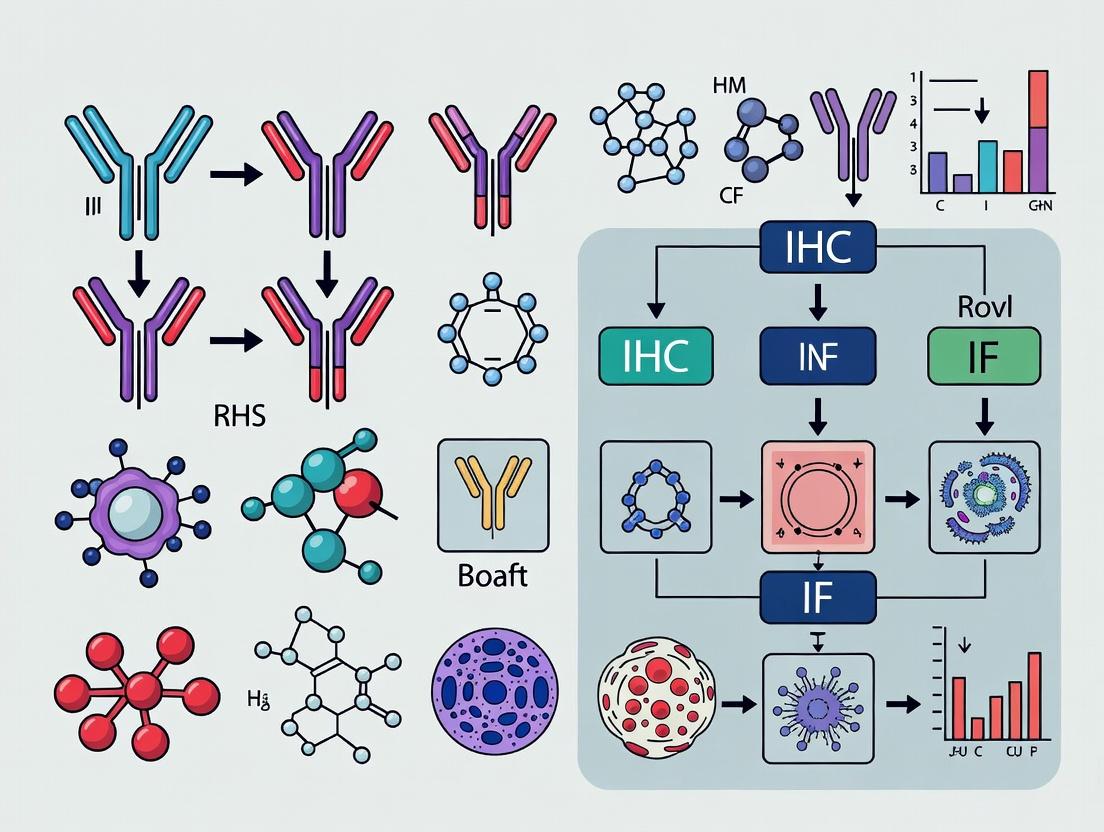
This comprehensive guide demystifies IHC and IF techniques for biomedical researchers and drug development professionals.
Immunohistochemistry and Immunofluorescence: The Complete Beginner's Guide for Research and Drug Development
Abstract
This comprehensive guide demystifies IHC and IF techniques for biomedical researchers and drug development professionals. Covering foundational principles, step-by-step protocols, advanced troubleshooting, and validation strategies, it provides the essential knowledge to implement these critical spatial biology techniques with confidence. Learn how to choose the right method for your target, optimize staining for publication-quality results, and ensure your data is robust, reproducible, and clinically translatable.
IHC vs IF: Demystifying Core Principles, Applications, and Choosing Your First Assay
What are IHC and IF? Defining Immunohistochemistry and Immunofluorescence
Immunohistochemistry (IHC) and Immunofluorescence (IF) are cornerstone techniques in biomedical research and diagnostic pathology. Both are immunological staining methods used for the detection and localization of specific antigens (proteins) within tissue sections (IHC/IF) or cell preparations (primarily IF). They provide critical spatial and morphological context, bridging the gap between molecular biology and histology. This guide frames these techniques within a foundational thesis for beginner researchers, detailing principles, protocols, and applications.
Core Principles and Differentiation
Both IHC and IF rely on the specific binding of an antibody to its target antigen. A label is then used to visualize this antibody-antigen complex. The fundamental distinction lies in the detection methodology.
Immunohistochemistry (IHC) typically uses an enzyme (e.g., Horseradish Peroxidase - HRP) as a label. The enzyme catalyzes a reaction with a chromogenic substrate (e.g., DAB) to produce a colored, insoluble precipitate at the antigen site. Visualization is performed using standard brightfield microscopy. IHC stains are generally permanent and compatible with traditional histopathology evaluation.
Immunofluorescence (IF) uses a fluorophore (e.g., FITC, Alexa Fluor dyes) as a label. The fluorophore absorbs light at a specific wavelength and emits light at a longer wavelength. Visualization requires a fluorescence or confocal microscope. IF enables multiplexing (detecting multiple antigens simultaneously using different fluorophores) and offers higher sensitivity in some contexts, but signals can fade over time.
Quantitative Comparison of IHC vs. IF
The following table summarizes the key technical distinctions.
| Feature | Immunohistochemistry (IHC) | Immunofluorescence (IF) |
|---|---|---|
| Detection Label | Enzyme (e.g., HRP, AP) | Fluorophore (e.g., Alexa Fluor 488) |
| Visualization | Brightfield microscope | Fluorescence/Confocal microscope |
| Signal Type | Chromogenic precipitate (color) | Light emission (fluorescence) |
| Multiplexing Capacity | Low (typically 1-2 targets/cycle) | High (3-8+ targets simultaneously) |
| Permanence | High (stain is permanent) | Low (fluorophores photobleach) |
| Primary Output | Cellular localization within morphology | Co-localization, semi-quantitative intensity |
| Common Use | Diagnostic pathology, clinical research | Cell biology, mechanistic research, multiplex analysis |
| Sensitivity | High with amplification | Very high, single-molecule potential |
Detailed Experimental Protocols
Generic Protocol for Formalin-Fixed Paraffin-Embedded (FFPE) Tissue IHC
This is a standard protocol using HRP-based detection with a DAB chromogen.
- Dewaxing and Rehydration: Deparaffinize slides in xylene (3 changes, 5 min each). Rehydrate through graded ethanol series (100%, 95%, 70% - 2 min each) to distilled water.
- Antigen Retrieval: Perform heat-induced epitope retrieval (HIER). Place slides in pre-heated (95-100°C) citrate buffer (pH 6.0) or EDTA/TRIS buffer (pH 9.0) for 20-30 minutes. Cool slides for 20-30 min at room temperature (RT).
- Peroxidase Blocking: Incubate slides in 3% hydrogen peroxide (H₂O₂) solution for 10 min at RT to quench endogenous peroxidase activity. Wash in PBS (pH 7.4).
- Protein Blocking: Apply a protein block (e.g., 5% normal serum, 1% BSA in PBS) for 30-60 min at RT to reduce non-specific binding.
- Primary Antibody Incubation: Apply optimally diluted primary antibody in dilution buffer. Incubate in a humidified chamber for 1 hour at RT or overnight at 4°C. Wash in PBS.
- Secondary Antibody Incubation: Apply enzyme-conjugated secondary antibody (e.g., HRP-anti-rabbit) for 30-60 min at RT. Wash in PBS.
- Signal Detection: Apply chromogen substrate (e.g., DAB) for 3-10 min. Monitor development under a microscope. Stop reaction by immersing in distilled water.
- Counterstaining and Mounting: Counterstain with Hematoxylin for 30-60 sec. Dehydrate through graded alcohols, clear in xylene, and mount with a permanent mounting medium.
Generic Protocol for Immunofluorescence on Cultured Cells
This protocol is for adherent cells grown on coverslips, using indirect immunofluorescence.
- Fixation: Aspirate culture media. Rinse cells gently with pre-warmed PBS. Fix with 4% paraformaldehyde (PFA) in PBS for 15 min at RT. Note: Alternative fixatives (e.g., ice-cold methanol) may be used depending on the target antigen.
- Permeabilization and Blocking: Permeabilize cells with 0.1-0.5% Triton X-100 in PBS for 10 min at RT (skip if only detecting surface antigens). Wash with PBS. Apply blocking solution (e.g., 5% normal serum, 1% BSA, 0.1% Tween-20 in PBS) for 45-60 min at RT.
- Primary Antibody Incubation: Apply diluted primary antibody in blocking buffer. Incubate in a humidified chamber for 1 hour at RT or overnight at 4°C. Wash 3x with PBS + 0.1% Tween-20 (PBST).
- Secondary Antibody Incubation: Apply fluorophore-conjugated secondary antibody (e.g., Alexa Fluor 488-anti-mouse) diluted in blocking buffer. Incubate for 45-60 min at RT in the dark. Wash 3x with PBST in the dark.
- Nuclear Stain and Mounting: Optionally, incubate with DAPI (300 nM in PBS) for 5 min at RT to stain nuclei. Wash with PBS. Mount coverslip onto a glass slide using a fluorescent mounting medium (e.g., ProLong Gold).
Visualization of Core Methodologies
Diagram Title: IHC and IF Core Workflow Comparison
The Scientist's Toolkit: Essential Research Reagent Solutions
| Reagent/Material | Primary Function | Key Considerations |
|---|---|---|
| Primary Antibodies | Specifically bind to the target protein (antigen) of interest. | Critical to validate for the application (IHC/IF) and species. Monoclonal (specific) vs. Polyclonal (sensitive). |
| Secondary Antibodies (Conjugated) | Bind to the primary antibody. Conjugated to an enzyme (IHC) or fluorophore (IF) for detection. | Must be raised against the host species of the primary antibody. Match conjugate to method. |
| Chromogenic Substrates (DAB, AEC) | Enzymatic conversion produces a visible, localized color precipitate (IHC). | DAB is common, brown, permanent. AEC is red, alcohol-soluble. Some substrates are hazardous. |
| Fluorophores (Alexa Fluor series, FITC, TRITC) | Emit light upon excitation; visualizes antibody location (IF). | Choose based on microscope filter sets, brightness, and photostability. Consider multiplexing spectra. |
| Antigen Retrieval Buffers (Citrate, EDTA, TRIS) | Reverse formaldehyde cross-linking in FFPE tissues to expose epitopes. | pH and buffer choice are antigen-dependent. Requires heat (HIER) for effectiveness. |
| Blocking Serums/Proteins (BSA, Normal Serum) | Reduce non-specific background binding of antibodies. | Serum should match the species of the secondary antibody. BSA is a common additive. |
| Mounting Media | Preserves sample and optimizes microscopy. | IHC: Permanent, non-aqueous media. IF: Anti-fade media essential to retard photobleaching. |
| Protease Inhibitors (e.g., PMSF, Complete Mini) | Prevent protein degradation during tissue processing (especially for fresh/frozen samples). | Added to lysis or fixation buffers. Critical for preserving labile epitopes or phosphorylation states. |
This guide serves as a foundational chapter within a broader thesis designed for beginners in immunohistochemistry (IHC) and immunofluorescence (IF) research. Mastering these core components—antibodies, antigens, chromogens, and fluorophores—is critical for generating reliable, interpretable data in biomedical research and drug development.
Antibodies: The Primary Detection Agents
Antibodies are immunoglobulin proteins generated by the immune system to bind with high specificity to a unique epitope on an antigen. In IHC/IF, they are the primary tool for detecting target molecules.
Key Characteristics & Quantitative Data
| Property | Primary Antibody | Secondary Antibody | Validation Importance |
|---|---|---|---|
| Target | Protein/Antigen of interest | Constant region of primary antibody species | Ensures specificity, reduces off-target binding |
| Clonality | Monoclonal (single epitope) or Polyclonal (multiple epitopes) | Typically polyclonal for amplification | Monoclonal: reproducibility; Polyclonal: sensitivity |
| Conjugation | Unconjugated or directly tagged | Conjugated to enzyme (IHC) or fluorophore (IF) | Determines detection method |
| Typical Dilution | 1:50 to 1:1000 | 1:200 to 1:1000 | Must be optimized for each protocol |
| Incubation | 1 hour at RT to O/N at 4°C | 30 min - 1 hour at RT | Longer primary incubation can increase sensitivity |
Experimental Protocol: Antibody Validation via Western Blot
- Sample Preparation: Lyse cells or tissue in RIPA buffer with protease inhibitors. Quantify protein concentration (e.g., BCA assay).
- Gel Electrophoresis: Load 10-30 µg of protein per lane on an SDS-PAGE gel. Run at constant voltage (100-150V).
- Transfer: Transfer proteins from gel to PVDF or nitrocellulose membrane using wet or semi-dry transfer apparatus.
- Blocking: Block membrane in 5% non-fat dry milk or BSA in TBST for 1 hour at room temperature.
- Primary Antibody Incubation: Dilute primary antibody in blocking buffer. Incubate membrane overnight at 4°C.
- Washing: Wash membrane 3x for 5 minutes each with TBST.
- Secondary Antibody Incubation: Incubate with species-appropriate HRP-conjugated secondary antibody in blocking buffer for 1 hour at RT.
- Detection: Use chemiluminescent substrate and image with a digital imager. Expected result: a single band at the correct molecular weight.
Antigens: The Targets
Antigens are the biological molecules (primarily proteins) targeted for detection. Their preservation and accessibility are paramount.
Key Factors for Antigen Integrity
| Factor | Impact on IHC/IF | Optimal Practice |
|---|---|---|
| Fixation | Preserves tissue architecture; can mask epitopes | 24-48 hours in 10% Neutral Buffered Formalin for tissues |
| Antigen Retrieval | Reverses formaldehyde cross-linking, exposes epitopes | Heat-Induced (HIER) using citrate (pH 6.0) or EDTA (pH 8.0-9.0) buffer |
| Permeabilization | Allows antibody access to intracellular antigens (esp. IF) | 0.1-0.5% Triton X-100 or Tween-20 for 10-15 minutes |
Experimental Protocol: Heat-Induced Epitope Retrieval (HIER)
- Deparaffinize and rehydrate formalin-fixed, paraffin-embedded (FFPE) tissue sections.
- Place slides in a coplin jar filled with retrieval buffer (e.g., 10mM Sodium Citrate, pH 6.0).
- Heat the jar in a pressure cooker, microwave, or steamer according to established lab protocols (e.g., 95-100°C for 20 minutes in a water bath).
- Cool the jar to room temperature (approximately 30 minutes).
- Rinse slides in distilled water, then proceed to PBS for subsequent blocking and staining steps.
Chromogens: The Visible Signal (IHC)
Chromogens are enzyme substrates that produce a colored, insoluble precipitate at the site of antibody binding in IHC.
Common Chromogens & Their Properties
| Chromogen | Enzyme | Precipitate Color | Compatible Counterstain | Notes |
|---|---|---|---|---|
| 3,3'-Diaminobenzidine (DAB) | HRP | Brown | Hematoxylin (blue) | Most common; permanent; can be enhanced with metals (e.g., nickel). |
| 3-Amino-9-ethylcarbazole (AEC) | HRP | Red | Hematoxylin (blue) | Alcohol-soluble; requires aqueous mounting. Fades over time. |
| 5-Bromo-4-chloro-3-indolyl phosphate / Nitro Blue Tetrazolium (BCIP/NBT) | Alkaline Phosphatase (AP) | Blue/Purple | Nuclear Fast Red (pink) | Excellent contrast; alcohol-insoluble. |
Experimental Protocol: DAB Chromogen Development
- Post-Secondary Antibody: After incubating with HRP-conjugated secondary antibody and washing, prepare DAB substrate according to manufacturer's instructions.
- Application: Apply substrate solution to the tissue section. Monitor development under a microscope (typically 30 seconds to 5 minutes).
- Termination: Stop the reaction by immersing slides in distilled water as soon as optimal signal-to-noise is achieved.
- Counterstaining: Counterstain with Hematoxylin (30 seconds to 1 minute), differentiate in acid alcohol, and blue in Scott's tap water or a suitable buffer.
- Dehydration & Mounting: Dehydrate through graded alcohols, clear in xylene, and mount with a permanent, non-aqueous mounting medium.
Fluorophores: The Fluorescent Signal (IF)
Fluorophores are molecules that absorb light at a specific wavelength and emit light at a longer wavelength. They are conjugated to antibodies for IF detection.
Common Fluorophores and Spectral Properties
| Fluorophore | Primary Excitation (nm) | Primary Emission (nm) | Common Laser Line (nm) | Relative Brightness |
|---|---|---|---|---|
| DAPI (Nuclear Stain) | 358 | 461 | 405 | N/A |
| FITC | 495 | 519 | 488 | Medium |
| Alexa Fluor 488 | 495 | 519 | 488 | High |
| TRITC | 557 | 576 | 561 | Medium |
| Alexa Fluor 555 | 555 | 565 | 561 | High |
| Cy5 | 649 | 670 | 633/640 | High |
| Alexa Fluor 647 | 650 | 665 | 633/640 | Very High |
Experimental Protocol: Standard Indirect Immunofluorescence
- Fixation & Permeabilization: Fix cells/tissue with 4% paraformaldehyde (15 min), wash with PBS, and permeabilize with 0.1% Triton X-100 (10 min).
- Blocking: Block in 5% normal serum (from secondary antibody species) + 1% BSA in PBS for 1 hour at RT.
- Primary Antibody: Apply diluted primary antibody in blocking buffer. Incubate in a humid chamber for 1 hour at RT or overnight at 4°C.
- Washing: Wash 3x for 5 minutes with PBS.
- Secondary Antibody: Apply fluorophore-conjugated secondary antibody (diluted in blocking buffer). Incubate for 1 hour at RT in the dark.
- Nuclear Stain & Mounting: Wash 3x with PBS. Apply DAPI (300 nM) for 5 minutes. Wash and mount with an anti-fade mounting medium (e.g., ProLong Diamond).
- Imaging: Image using a fluorescence or confocal microscope with appropriate filter sets. Store slides at 4°C in the dark.
The Scientist's Toolkit: Essential Research Reagent Solutions
| Item | Function in IHC/IF |
|---|---|
| 10% Neutral Buffered Formalin | Standard fixative for tissue preservation. |
| Bovine Serum Albumin (BSA) | Blocking agent to reduce non-specific antibody binding. |
| Normal Serum (Goat, Donkey, etc.) | Blocking agent to bind Fc receptors and reduce background. |
| Triton X-100 or Tween-20 | Detergent for permeabilizing cell membranes. |
| Citrate or EDTA Buffer (pH 6.0 or 9.0) | Solutions for heat-induced epitope retrieval. |
| Hydrogen Peroxide (H₂O₂) | Used to quench endogenous peroxidase activity in IHC. |
| DAB Substrate Kit | Contains chromogen and buffer for HRP-based detection. |
| Anti-fade Mounting Medium (e.g., ProLong Diamond) | Preserves fluorescence and reduces photobleaching for IF. |
| Fluorophore-Conjugated Secondary Antibodies | Amplify signal and provide detection in IF and some IHC. |
| Nuclear Stains (DAPI, Hoechst) | Counterstain to visualize cell nuclei in IF. |
Visualizing Core Relationships and Workflows
Title: IHC Detection Principle: Indirect Method
Title: Standard Immunofluorescence Staining Workflow
This guide explores the fundamental technical distinctions between colorimetric and fluorescent detection methods. Framed within a broader thesis on immunohistochemistry (IHC) and immunofluorescence (IF) for beginners, this whitepaper aims to equip researchers, scientists, and drug development professionals with the knowledge to select the appropriate detection system for their experimental goals. The choice between these two core methodologies significantly impacts data sensitivity, multiplexing capability, and instrumentation requirements.
Fundamental Principles
Colorimetric Detection relies on an enzyme-labeled antibody (e.g., Horseradish Peroxidase - HRP or Alkaline Phosphatase - AP) that catalyzes a reaction with a chromogenic substrate (e.g., DAB, AEC). This reaction produces an insoluble, colored precipitate at the antigen site, visible under brightfield microscopy. The signal intensity is stoichiometric, meaning more enzyme present leads to more precipitate and a darker color.
Fluorescent Detection utilizes fluorophore-labeled antibodies (e.g., FITC, Cy3, Alexa Fluor dyes). The fluorophore absorbs light at a specific wavelength (excitation) and emits light at a longer, lower-energy wavelength (emission). The emitted light is detected using a fluorescence or confocal microscope equipped with appropriate filter sets. Signal intensity depends on the fluorophore's quantum yield and the efficiency of the optical system.
Comparative Analysis: Key Metrics
Table 1: Core Technical and Performance Comparison
| Parameter | Colorimetric Detection | Fluorescent Detection |
|---|---|---|
| Signal Type | Stable, colored precipitate | Emitted light (photons) |
| Readout | Brightfield microscopy | Fluorescence/confocal microscopy |
| Sensitivity | Moderate (limited by enzyme kinetics & substrate) | High (capable of single-molecule detection) |
| Dynamic Range | Narrow (prone to saturation) | Broad (linear over several logs) |
| Multiplexing | Limited (typically 1-2 targets on same section) | High (4+ targets with non-overlapping spectra) |
| Signal Permanence | Permanent (fades slowly) | Photobleaching over time |
| Quantification | Semi-quantitative (density-based image analysis) | Highly quantitative (intensity-based analysis) |
| Background/Noise | Endogenous enzyme/peroxidase activity | Autofluorescence, non-specific binding |
| Typical Cost | Lower (standard microscopes) | Higher (specialized filters, cameras, lasers) |
Table 2: Common Reagents & Substrates
| Detection Method | Common Enzyme/Fluorophore | Common Substrate/Excitation-Emission (nm) | Result |
|---|---|---|---|
| Colorimetric (HRP) | Horseradish Peroxidase | 3,3'-Diaminobenzidine (DAB) | Brown precipitate |
| Colorimetric (AP) | Alkaline Phosphatase | Fast Red / NBT-BCIP | Red/Blue-purple precipitate |
| Fluorescent | Alexa Fluor 488 | Ex/Em: 495/519 | Green fluorescence |
| Fluorescent | Cy3 | Ex/Em: 550/570 | Orange-red fluorescence |
| Fluorescent | DAPI (nuclear stain) | Ex/Em: 358/461 | Blue fluorescence |
Detailed Experimental Protocols
Protocol A: Standard Colorimetric IHC (Indirect, HRP-DAB Method)
Key Reagent Solutions:
- Primary Antibody: Specific to target antigen.
- HRP-Conjugated Secondary Antibody: Species-specific, targets primary antibody's Fc region.
- DAB Substrate Kit: Contains DAB chromogen, buffer, and hydrogen peroxide substrate.
- Blocking Serum: Normal serum from the species of the secondary antibody.
- Antigen Retrieval Buffer (e.g., citrate, EDTA, pH 6.0 or 9.0).
Methodology:
- Deparaffinization & Rehydration: Process formalin-fixed, paraffin-embedded (FFPE) sections through xylene and graded alcohols to water.
- Antigen Retrieval: Heat slides in retrieval buffer using a pressure cooker, microwave, or steamer (e.g., 20 min at 95-100°C in 10mM Citrate pH 6.0). Cool for 30 min.
- Endogenous Peroxidase Blocking: Incubate with 3% H₂O₂ in methanol for 10 min to quench endogenous peroxidase activity.
- Blocking: Apply 5-10% normal serum in PBS for 30 min at room temperature (RT) to reduce non-specific binding.
- Primary Antibody Incubation: Apply optimized dilution of primary antibody in diluent buffer. Incubate in a humidified chamber (1 hr at RT or overnight at 4°C).
- Secondary Antibody Incubation: Wash slides (3x with PBS-Tween). Apply HRP-conjugated secondary antibody (30-60 min at RT).
- Signal Development: Wash slides. Prepare DAB solution per manufacturer's instructions. Apply to tissue and monitor development under a microscope (typically 30 sec to 5 min). Stop reaction by immersing in water.
- Counterstaining & Mounting: Counterstain with Hematoxylin. Dehydrate through graded alcohols and xylene. Mount with permanent mounting medium.
Protocol B: Standard Immunofluorescence (Indirect Method)
Key Reagent Solutions:
- Primary Antibody: Specific to target antigen.
- Fluorophore-Conjugated Secondary Antibody: Species-specific, targeting primary antibody.
- Nuclear Counterstain: DAPI, Hoechst.
- Blocking Agent: Bovine Serum Albumin (BSA) or normal serum.
- Autofluorescence Quencher (e.g., Vector TrueVIEW, Sudan Black B).
- Antifade Mounting Medium (e.g., ProLong Gold, Vectashield).
Methodology:
- Deparaffinization & Antigen Retrieval: As per Protocol A steps 1 & 2.
- Blocking: Apply blocking solution (e.g., 5% BSA, 5% normal serum in PBS) for 1 hr at RT.
- Primary Antibody Incubation: Apply primary antibody in blocking solution. Incubate in a humidified chamber (1 hr at RT or overnight at 4°C).
- Secondary Antibody Incubation: Wash thoroughly (3x with PBS). Apply fluorophore-conjugated secondary antibody diluted in blocking buffer. Incubate for 1 hr at RT in the dark.
- Counterstaining: Wash. Apply DAPI (e.g., 1 µg/mL for 5 min) to stain nuclei.
- Mounting: Apply antifade mounting medium. Seal coverslip with clear nail polish. Store slides at 4°C in the dark.
Visualizing Detection Pathways & Workflows
Colorimetric IHC Detection Principle
Fluorescent IF Detection Principle
IHC vs IF Experimental Workflow Comparison
The Scientist's Toolkit: Essential Research Reagents
Table 3: Key Reagent Solutions for Detection Methods
| Reagent Category | Specific Example | Primary Function in Experiment |
|---|---|---|
| Detection Enzyme (Colorimetric) | Horseradish Peroxidase (HRP) | Catalyzes oxidation of chromogen substrates (e.g., DAB) to produce colored precipitate. |
| Chromogen Substrate | 3,3'-Diaminobenzidine (DAB) | A colorless compound that, when oxidized by HRP in the presence of H₂O₂, forms a stable brown precipitate at the antigen site. |
| Fluorophore (Fluorescent) | Alexa Fluor 568 | A bright, photostable dye that absorbs light at ~568 nm (orange) and emits at ~603 nm (red), used for labeling secondary antibodies. |
| Antibody Diluent/Buffer | Antibody Diluent with Background Reducing Components | A protein-based buffer used to dilute primary and secondary antibodies, minimizing non-specific binding and background staining. |
| Blocking Solution | Normal Goat Serum (5% in PBS) | Used prior to primary antibody application to bind non-specific sites on tissue, reducing off-target antibody binding. |
| Antigen Retrieval Buffer | Tris-EDTA Buffer, pH 9.0 | A high-pH solution used with heat to break protein cross-links formed during fixation, thereby unmasking epitopes for antibody binding. |
| Mounting Medium (IF) | ProLong Gold Antifade Mountant | A reagent that preserves fluorophore signal by reducing photobleaching and contains DAPI for nuclear counterstaining. |
| Mounting Medium (IHC) | Permanent Aqueous Mounting Medium | A non-aqueous, resin-based medium used to permanently preserve colorimetric-stained sections under a coverslip. |
The selection between colorimetric and fluorescent detection is a foundational decision in IHC/IF experimental design. Colorimetric methods offer simplicity, permanence, and compatibility with brightfield microscopy, making them ideal for single-target, diagnostic, or lab environments with standard equipment. Fluorescent methods provide superior sensitivity, quantifiability, and multiplexing potential, indispensable for co-localization studies and advanced research, albeit requiring more specialized and costly imaging systems. Understanding these core differences enables researchers to strategically align their detection methodology with their specific biological questions and technical constraints.
This guide, framed within a broader thesis on immunohistochemistry (IHC) and immunofluorescence (IF) for beginners, delineates the primary applications of these pivotal techniques. For researchers, scientists, and drug development professionals, selecting the appropriate method is foundational. IHC is the cornerstone for in situ protein detection in formalin-fixed, paraffin-embedded (FFPE) tissues, providing critical morphological context for diagnostic pathology. In contrast, IF excels in multiplexing, allowing simultaneous detection of multiple antigens on a single sample, and is widely used for co-localization studies in both research and advanced diagnostics.
IHC uses enzyme-labeled antibodies (e.g., HRP, AP) to generate a colored chromogenic precipitate visible by brightfield microscopy. IF employs fluorophore-conjugated antibodies, with signals detected via fluorescence microscopy.
Table 1: Quantitative Comparison of IHC and IF Characteristics
| Characteristic | Immunohistochemistry (IHC) | Immunofluorescence (IF) |
|---|---|---|
| Typical Signal Output | Chromogenic (absorbance) | Fluorescent (emission) |
| Detection Limit (Antigen Copy Number) | ~200-500 copies/cell | ~50-100 copies/cell |
| Common Multiplexing Capacity | 1-3 targets (sequential) | 3-8+ targets (simultaneous) |
| Sample Compatibility | Primarily FFPE, also frozen | Frozen, FFPE, cells |
| Signal Permanence | High (years, slides fade slowly) | Low (months, photos bleach) |
| Required Microscope | Brightfield | Epifluorescence/Confocal |
| Quantification Method | Semi-quantitative (H-score, % positivity) | Quantitative (Mean Fluorescence Intensity) |
| Typical Throughput | High (clinical pathology) | Moderate to High |
When to Use IHC: The Pathology Workhorse
IHC is the gold standard in clinical and anatomic pathology. Its primary strength lies in correlating protein expression with classic tissue morphology (hematoxylin-stained nuclei, connective tissue) on a single slide.
Primary Applications:
- Diagnostic Pathology: Identifying cell lineage (e.g., cytokeratins for carcinoma, CD45 for lymphoma), classifying tumors, and detecting infectious agents.
- Prognostic & Predictive Biomarker Analysis: Assessing biomarkers like HER2/neu in breast cancer, PD-L1 in immunotherapy, or mismatch repair proteins (MSH2, MLH1).
- Tissue Morphology Preservation: Essential for pathologists to evaluate antigen expression within specific architectural contexts (e.g., tumor center vs. invasive front).
Experimental Protocol: Key IHC Staining for FFPE Tissue (Indirect Method)
- Deparaffinization & Rehydration: Bake slides at 60°C for 20 min. Immerse in xylene (3 changes, 5 min each), followed by graded ethanol (100%, 100%, 95%, 70%, 5 min each) to water.
- Antigen Retrieval: Place slides in citrate buffer (pH 6.0) or EDTA/TRIS buffer (pH 9.0). Perform heat-induced epitope retrieval (HIER) using a pressure cooker (121°C, 15 min) or water bath (95-100°C, 20-40 min). Cool for 30 min.
- Peroxidase Blocking: Incubate with 3% H₂O₂ in methanol for 10 min to quench endogenous peroxidase activity. Rinse with wash buffer (e.g., PBS + 0.025% Triton X-100).
- Blocking: Apply a protein block (e.g., 2.5-5% normal serum, 10% BSA) for 30 min at room temperature (RT) to reduce non-specific binding.
- Primary Antibody Incubation: Apply optimized dilution of primary antibody in antibody diluent. Incubate at 4°C overnight or at RT for 60 min.
- Secondary Antibody Incubation: Apply enzyme-conjugated secondary antibody (e.g., HRP-anti-rabbit) for 30-60 min at RT.
- Chromogen Development: Incubate with chromogen substrate (e.g., DAB for brown, AEC for red) for 2-10 min, monitoring under a microscope. Stop development in water.
- Counterstaining & Mounting: Counterstain with Hematoxylin for 30-60 sec, "blue" in tap water. Dehydrate through graded alcohols and xylene. Mount with permanent mounting medium.
Title: Standard IHC Staining Workflow for FFPE Tissue
When to Use IF: The Power of Multiplexing
IF is the technique of choice when investigating the co-expression, co-localization, or interaction of multiple proteins within a single sample. The distinct emission spectra of fluorophores enable simultaneous detection.
Primary Applications:
- Multiplex Biomarker Profiling: Interrogating immune cell populations in the tumor microenvironment (e.g., CD8+/CD4+/FoxP3+/PD-1+) or signaling pathway activation status.
- Co-localization Studies: Determining if two or more proteins reside in the same subcellular compartment (e.g., receptor-ligand pairs, organelle markers).
- Live or Fixed Cell Imaging: Suitable for dynamic studies in live cells (using fluorescent proteins) or high-resolution 3D imaging in fixed cells/tissues via confocal microscopy.
Experimental Protocol: Standard Multiplex IF Staining (Sequential, Indirect)
- Sample Preparation: Fix cells or frozen sections in 4% PFA for 15 min. For FFPE, follow deparaffinization and antigen retrieval as in IHC (Steps 1-2).
- Permeabilization & Blocking: Permeabilize with 0.1-0.5% Triton X-100 in PBS for 10 min. Block with 2-5% BSA and/or serum matching the secondary host species for 1 hour at RT.
- Primary Antibody Incubation (Round 1): Apply the first primary antibody (e.g., mouse anti-protein A). Incubate overnight at 4°C or 2 hours at RT. Wash 3x with PBS-T.
- Secondary Antibody Incubation (Round 1): Apply fluorophore-conjugated secondary antibody (e.g., Alexa Fluor 488 donkey anti-mouse). Incubate for 1 hour at RT in darkness. Wash 3x.
- Antibody Stripping/Inactivation (Optional): To prevent cross-reactivity in sequential staining, perform a mild stripping step (e.g., glycine pH 2.0, 10 min) or use a chemical inactivation system (e.g., NaBH₄ for HRP-conjugates). Validate for each target.
- Repeat for Subsequent Targets: Repeat steps 3-5 for the second (e.g., rabbit anti-protein B with Alexa Fluor 555) and third primary antibodies.
- Nuclear Counterstain & Mounting: Apply DAPI (0.5-1 µg/mL) for 5 min. Wash and mount with anti-fade mounting medium (e.g., ProLong Diamond). Seal edges.
- Imaging: Acquire images using a fluorescence or confocal microscope with appropriate filter sets for each fluorophore.
Title: Sequential Multiplex Immunofluorescence Workflow
The Scientist's Toolkit: Essential Research Reagents
Table 2: Key Reagent Solutions for IHC and IF
| Reagent Category | Specific Example(s) | Primary Function in Experiment |
|---|---|---|
| Fixative | 10% Neutral Buffered Formalin (NBF), 4% Paraformaldehyde (PFA) | Preserves tissue architecture and immobilizes antigens. |
| Antigen Retrieval Buffer | Citrate Buffer (pH 6.0), Tris-EDTA Buffer (pH 9.0) | Reverses formaldehyde-induced cross-links to expose epitopes. |
| Blocking Agent | Normal Serum (from secondary host), Bovine Serum Albumin (BSA) | Reduces non-specific antibody binding to tissue. |
| Detection System (IHC) | HRP-Polymer conjugates, DAB Chromogen Kit | Provides enzyme-mediated, chromogenic signal generation. |
| Fluorophores (IF) | Alexa Fluor 488, 555, 647; DAPI | Provides specific, excitable emission signals for multiplex detection and nuclear labeling. |
| Mounting Medium | Aqueous Mount (for IF), Resinous Mount (for IHC) | Preserves sample, provides correct refractive index, and prevents photobleaching (IF). |
| Antibody Diluent | Commercial Antibody Diluent (protein-based, preservative) | Stabilizes antibodies during incubation and reduces background. |
The choice between IHC and IF is dictated by the experimental question.
- Use IHC when: The output is a clinical pathology report; the sample is traditional FFPE; the priority is correlating protein expression with pristine, familiar morphology; and quantification is semi-quantitative.
- Use IF when: The goal is detecting 3 or more co-localized targets simultaneously; higher detection sensitivity is required; the sample is fresh-frozen, cells, or amenable to high-resolution 3D imaging; and fully quantitative data extraction from images is planned.
Modern techniques like multiplexed IHC (using sequential enzymatic reactions) and imaging mass cytometry are blurring these boundaries. However, the fundamental principles remain: IHC for pathology in context, IF for multiplexing in space.
This guide serves as a foundational chapter in a comprehensive thesis on Immunohistochemistry (IHC) and Immunofluorescence (IF) for beginner researchers. Establishing a well-equipped and organized laboratory is the critical first step towards generating reproducible, high-quality data. This document details the essential equipment and core reagents required to build a functional IHC/IF starter kit, providing technical specifications and protocols to empower researchers, scientists, and drug development professionals in their initial experimental design.
Core Laboratory Equipment
The following table categorizes and specifies the essential instrumentation for a basic IHC/IF workflow.
Table 1: Essential Equipment for IHC/IF Workflows
| Equipment Category | Specific Device | Key Specifications & Purpose |
|---|---|---|
| Tissue Processing | Microtome/Cryostat | Produces thin tissue sections (4-10 µm) from paraffin blocks or frozen tissue. |
| Slide Preparation | Slide Warmer/ Oven | Adheres tissue sections to glass slides (typically 60°C for paraffin). |
| Staining Automation | Manual or Automated Slide Staining System | Provides consistent application of reagents; essential for high-throughput. |
| Washing | Slide Rack and Coplin Jars or Automated Washer | Ensures gentle, consistent buffer exchange between reagent steps. |
| Detection | Humidity Chamber | Prevents slide dehydration during antibody incubation steps. |
| Imaging & Analysis | Epifluorescence or Confocal Microscope (for IF) | High-quality objective lenses (20x, 40x, 60x oil), appropriate filter sets for fluorophores. |
| Imaging & Analysis | Brightfield Microscope (for IHC) | Required for chromogen (DAB, AEC) visualization. |
| Image Capture | CCD or sCMOS Camera | High sensitivity and dynamic range for quantitative IF and IHC analysis. |
| Image Analysis | Dedicated Software (e.g., ImageJ, QuPath, commercial packages) | For quantification of staining intensity, colocalization, and cellular analysis. |
Essential Reagents & Consumables
A curated selection of high-quality reagents is paramount. The following table outlines the core components of the "Research Reagent Solutions" toolkit.
Table 2: Research Reagent Solutions: Core IHC/IF Starter Kit
| Reagent Category | Specific Item | Function & Critical Notes |
|---|---|---|
| Sample Substrate | Positively Charged or Poly-L-Lysine Slides | Ensures strong tissue section adhesion throughout rigorous processing. |
| Fixatives | Neutral Buffered Formalin (NBF), Paraformaldehyde (PFA) | Preserves tissue morphology and antigen integrity. PFA (4%) is standard for IF. |
| Permeabilization | Triton X-100 or Tween-20 | Solubilizes cell membranes to allow antibody penetration (critical for IF/intracellular targets). |
| Blocking Agents | Normal Serum (from secondary host), BSA, or Protein Block | Reduces non-specific background staining by occupying reactive sites. |
| Antibodies | Primary Antibodies (Validated for IHC/IF) | Target-specific; key variables: host species, clonality, recommended dilution. |
| Antibodies | Secondary Antibodies (Conjugated) | Conjugated to enzymes (HRP/AP for IHC) or fluorophores (for IF); must target primary host species. |
| Detection | Chromogenic Substrates (DAB, AEC, Vector NovaRED) | Enzymatic conversion produces a colored precipitate at the antigen site (IHC). |
| Detection | Fluorophores (e.g., Alexa Fluor 488, 555, 647, DAPI) | Fluorescent dyes for direct detection or secondary conjugation; DAPI stains nuclei. |
| Mounting Media | Aqueous, Antifade (for IF) or Permanent, Non-aqueous (for IHC) | Preserves fluorescence and photobleaching (IF) or provides permanent sealing (IHC). |
| Buffers | Phosphate-Buffered Saline (PBS), Tris-EDTA (pH 9.0) | Universal washing and dilution buffer. Tris-EDTA is common for heat-induced epitope retrieval. |
Foundational Protocols
Basic Immunofluorescence Protocol for Cultured Cells
This is a standard, direct or indirect IF protocol for adherent cells.
Materials: Cells on coverslips, 4% PFA, PBS, 0.1% Triton X-100, blocking buffer (e.g., 5% BSA in PBS), primary antibody, fluorophore-conjugated secondary antibody, DAPI, antifade mounting medium.
Methodology:
- Fixation: Aspirate culture media. Rinse cells gently with warm PBS. Fix with 4% PFA for 15 minutes at room temperature (RT).
- Permeabilization: Wash 3 x 5 minutes with PBS. Permeabilize with 0.1% Triton X-100 in PBS for 10 minutes at RT.
- Blocking: Wash with PBS. Apply blocking buffer for 1 hour at RT in a humid chamber.
- Primary Antibody Incubation: Dilute primary antibody in blocking buffer. Apply to coverslip and incubate overnight at 4°C in a humid chamber.
- Secondary Antibody Incubation: Wash 3 x 5 minutes with PBS. Apply fluorophore-conjugated secondary antibody (and DAPI if not included in mountant) diluted in blocking buffer. Incubate for 1 hour at RT in the dark.
- Mounting: Wash 3 x 5 minutes with PBS. Rinse briefly with distilled water. Mount coverslip onto a glass slide using antifade mounting medium.
- Imaging: Seal slide if necessary. Image using a fluorescence microscope with appropriate filter sets.
Basic Immunohistochemistry Protocol (Indirect, Chromogenic)
A core protocol for paraffin-embedded tissue sections using heat-induced epitope retrieval (HIER).
Materials: Paraffin sections, xylene, ethanol series, HIER buffer (e.g., citrate pH 6.0 or Tris-EDTA pH 9.0), endogenous peroxidase blocker (3% H₂O₂), blocking serum, primary antibody, HRP-conjugated secondary antibody, DAB substrate, hematoxylin, mounting medium.
Methodology:
- Dewaxing & Rehydration: Deparaffinize slides in xylene (2 x 5 min). Rehydrate through graded ethanol (100%, 95%, 70% - 2 min each) to distilled water.
- Epitope Retrieval: Perform HIER by boiling slides in target retrieval buffer (e.g., citrate buffer, pH 6.0) for 20 minutes in a steamer or pressure cooker. Cool for 30 minutes. Rinse in PBS.
- Peroxidase Blocking: Incubate with 3% H₂O₂ in PBS for 10 minutes at RT to quench endogenous peroxidase activity. Wash with PBS.
- Blocking: Apply normal serum block (e.g., from species of secondary antibody) for 1 hour at RT.
- Primary Antibody Incubation: Apply diluted primary antibody and incubate overnight at 4°C in a humid chamber.
- Secondary Antibody Incubation: Wash 3 x 5 minutes with PBS. Apply HRP-conjugated secondary antibody for 1 hour at RT.
- Chromogen Detection: Wash with PBS. Apply DAB substrate solution according to manufacturer's instructions. Monitor development under a microscope (typically 30 seconds - 5 minutes). Stop reaction by immersing in distilled water.
- Counterstaining & Mounting: Counterstain with hematoxylin for 30-60 seconds. "Blue" in tap water. Dehydrate through graded alcohols, clear in xylene, and mount with permanent mounting medium.
Visualizing Workflows and Pathways
IHC/IF Core Experimental Workflow
Immunofluorescence Signal Generation Pathway
Chromogenic IHC Signal Amplification Pathway
This guide details the foundational steps of tissue preparation, a critical prerequisite for successful Immunohistochemistry (IHC) and Immunofluorescence (IF) analyses. For researchers entering the field, mastering fixation, embedding, and sectioning is essential for preserving tissue architecture and antigenicity, directly impacting the reliability of experimental outcomes in drug development and basic research.
Fixation: Preserving Tissue Morphology and Antigens
Fixation halts degradation (autolysis and putrefaction) and stabilizes cellular structures for subsequent processing. The choice of fixative and protocol is a balance between optimal morphology and antigen preservation.
Common Fixatives and Their Properties
The following table summarizes key fixatives used in IHC/IF research.
Table 1: Common Fixatives for IHC and IF Studies
| Fixative | Type | Mechanism | Typical Concentration & Time | Key Advantages for IHC/IF | Key Disadvantages |
|---|---|---|---|---|---|
| Formalin (Formaldehyde) | Aldehyde | Cross-links proteins via methylene bridges | 10% Neutral Buffered Formalin, 6-72 hrs (size-dependent) | Excellent morphology; standard for histopathology. | Can mask epitopes, often requiring antigen retrieval. |
| Paraformaldehyde (PFA) | Aldehyde | Same as formalin, but without methanol stabilizer | 4% in PBS, 4-24 hrs at 4°C | Consistent, pure cross-linking; gold standard for IF. | Epitope masking; over-fixation reduces antigenicity. |
| Glutaraldehyde | Aldehyde | Extensive protein cross-linking | 2.5% in buffer, 2-24 hrs | Superior ultrastructural preservation for EM. | High autofluorescence; severe epitope masking. |
| Ethanol | Alcohol | Dehydration and protein precipitation | 70-100%, 1-24 hrs | Good antigen preservation; no cross-linking. | Poor subcellular morphology; tissue shrinkage. |
| Acetone | Ketone | Precipitation and dehydration | 100%, cold, 5-10 minutes | Excellent for many labile antigens (e.g., in IF). | Harsh; poor cytological detail; brittle tissue. |
| Zinc Fixatives | Metallic ions | Protein precipitation and cross-linking | As per manufacturer, 12-24 hrs | Superior antigen preservation for many targets. | Less standardized; variable morphology. |
Standard Fixation Protocol for IHC/IF
Objective: To adequately fix fresh murine liver tissue for concurrent IHC and IF analysis. Materials: Dissection tools, 4% Paraformaldehyde (PFA) in 0.1M PBS (pH 7.4), 15/50ml conical tubes, rocker at 4°C. Method:
- Dissection & Trimming: Euthanize animal per approved protocol. Rapidly dissect liver and trim to 5 mm x 5 mm x 2 mm pieces using a sharp blade.
- Immersion Fixation: Immediately immerse tissue samples in a 20:1 volume ratio of 4% PFA to tissue. Ensure complete immersion.
- Fixation Conditions: Place samples on a rocker at 4°C for 24 hours. Note: Time varies with tissue type and size.
- Washing: After fixation, wash tissues 3 times in PBS (15 minutes per wash) to remove residual PFA.
- Storage: Store washed tissues in PBS with 0.02% sodium azide at 4°C for short-term (weeks). For long-term storage, transfer to a cryoprotectant (e.g., 30% sucrose) and freeze, or proceed to processing for paraffin embedding.
Embedding: Providing Structural Support for Sectioning
Embedding involves infiltrating fixed tissue with a support medium to allow thin, stable sectioning.
Paraffin Embedding
Protocol:
- Dehydration: Pass fixed, washed tissues through a graded ethanol series: 70%, 80%, 95%, 100%, 100% (1 hour each).
- Clearing: Transfer tissue to a clearing agent (xylene or xylene-substitute) twice, 1 hour each, to remove alcohol and allow paraffin infiltration.
- Infiltration: Place tissue in molten paraffin wax at 55-60°C in an oven or processor. Use 2-3 changes, 1-2 hours each.
- Embedding: Orient tissue in a mold filled with molten paraffin. Place a cassette on top as a base, and chill on a cold plate. The resulting paraffin block provides rigid support.
Frozen Section Embedding (Cryoembedding)
Protocol:
- Cryoprotection: After PBS wash, incubate fixed tissue in 15% sucrose in PBS until it sinks, then in 30% sucrose overnight at 4°C.
- Embedding Medium: Place tissue in a mold filled with Optimal Cutting Temperature (O.C.T.) compound.
- Freezing: Slowly lower the mold onto the surface of a slurry of dry ice and isopentane (or use a cryostat chilling chamber) until O.C.T. turns white. Store at -80°C.
Table 2: Comparison of Embedding Media
| Medium | Process Temperature | Morphology | Antigen Preservation | Typical Use |
|---|---|---|---|---|
| Paraffin Wax | 55-60°C (infiltration) | Excellent | Moderate to Poor (requires retrieval) | Standard histology, high-morphology IHC |
| O.C.T. Compound | -20°C to -80°C | Good (crystal artifacts possible) | Excellent (no heat/ solvent exposure) | Immunofluorescence, enzyme histochemistry |
| Agarose/ Sucrose | N/A (aqueous) | Fair | Excellent for delicate tissues | Mainly for Vibratome sectioning of fixed tissue |
Sectioning: Producing Thin Tissue Slices
Sectioning generates thin slices (sections) amenable to microscopic analysis after mounting on slides.
Microtomy (Paraffin Sections)
Protocol:
- Block Trimming: Secure the paraffin block in a microtome. Trim the block face with a coarse trim setting (e.g., 15-20 µm) until the entire tissue surface is exposed.
- Sectioning: Install a sharp microtome blade. Set thickness to 4-7 µm. Use a smooth, steady cranking motion to produce a ribbon of sections.
- Water Bath & Mounting: Float the ribbon on a 40-45°C water bath to remove wrinkles. Pick up sections onto positively charged glass slides.
- Drying: Dry slides upright in a 37°C incubator overnight or at 60°C for 1 hour to ensure adhesion.
Cryostat Sectioning (Frozen Sections)
Protocol:
- Equilibration: Allow the frozen block to equilibrate in the cryostat chamber (-15°C to -20°C) for at least 30 minutes.
- Trimming & Sectioning: Trim block as with paraffin. Set thickness to 5-20 µm. Cut sections with a steady, slow motion.
- Mounting: Use a fine brush or room-temperature slide to directly pick up the section from the blade. Air-dry the slide for 30-60 minutes before staining or storage at -80°C.
Table 3: Standard Sectioning Parameters
| Parameter | Paraffin Sectioning | Frozen Sectioning |
|---|---|---|
| Typical Thickness Range | 3-10 µm | 5-40 µm |
| Optimal Thickness for IHC/IF | 4-5 µm | 8-12 µm |
| Blade Type | Disposable steel or low-profile carbide | Disposable high-profile carbide |
| Critical Factor | Blade angle, block temperature | Tissue and chamber temperature |
The Scientist's Toolkit: Research Reagent Solutions
Table 4: Essential Materials for Tissue Preparation
| Item | Function & Importance |
|---|---|
| Neutral Buffered Formalin (10%) | Standard fixative providing consistent cross-linking for morphology. |
| Paraformaldehyde (PFA, 4% in PBS) | Purified, consistent aldehyde fixative critical for immunofluorescence. |
| Phosphate-Buffered Saline (PBS), 0.1M, pH 7.4 | Isotonic buffer for washing, dilution, and storage of fixed tissues. |
| Ethanol Series (70%, 95%, 100%) | Dehydrates tissue progressively prior to paraffin infiltration. |
| Xylene or Xylene Substitute | Clearing agent that bridges ethanol and paraffin for infiltration. |
| High-Quality Paraffin Wax | Embedding medium with optimal melting point for thin sectioning. |
| Optimal Cutting Temperature (O.C.T.) Compound | Water-soluble embedding matrix that freezes to support frozen tissue. |
| Positively Charged Glass Slides | Electrostatic adhesion prevents tissue detachment during staining. |
| Disposable Microtome/Cryostat Blades | Sharp, uncontaminated blades are essential for producing artifact-free sections. |
| Sodium Azide (0.02%) | Preservative added to PBS to inhibit microbial growth during tissue storage. |
Visualizing the Workflow
Diagram 1: Tissue Preparation Core Workflow (76 chars)
Meticulous tissue preparation is the non-negotiable foundation for high-quality IHC and IF data. The interrelated choices in fixation chemistry, embedding medium, and sectioning technique dictate the preservation of both morphology and antigen integrity. Adherence to standardized protocols, as outlined in this guide, minimizes variability and artifacts, enabling reproducible and interpretable results crucial for biomedical research and therapeutic development. This process forms the essential first chapter in any robust thesis on IHC/IF methodology.
Step-by-Step Protocols: From Antigen Retrieval to Imaging for Perfect Staining
This guide, part of a broader thesis on Immunohistochemistry (IHC) and Immunofluorescence (IF) for beginner research, details the standardized protocol for IHC. IHC is a cornerstone technique in biomedical research and diagnostic pathology, enabling the visualization of antigen distribution in tissue sections through antibody-based detection. Mastery of this protocol is essential for researchers, scientists, and drug development professionals investigating disease biomarkers, drug targets, and tissue morphology.
Key Quantitative Data in IHC
Table 1: Critical Antigen Retrieval Methods
| Method | Typical Conditions (pH/Time/Temp) | Best For | Success Rate* |
|---|---|---|---|
| Heat-Induced Epitope Retrieval (HIER) | pH 6.0 or 9.0, 20-40 min, 95-100°C | Formalin-fixed, paraffin-embedded (FFPE) tissues | 85-95% |
| Protease-Induced Epitope Retrieval (PIER) | Trypsin or Proteinase K, 5-15 min, 37°C | Delicate antigens damaged by heat | 70-80% |
| No Retrieval | N/A | Fresh frozen tissues; some cytoplasmic antigens | N/A |
*Estimated based on common laboratory experience for a broad range of antigens.
Table 2: Detection System Characteristics
| System | Amplification | Sensitivity | Typical Incubation Time | Common Use |
|---|---|---|---|---|
| Direct (Primary-labeled) | None | Low | 60 min | Quick screening; double labeling |
| Indirect (Secondary-labeled) | 1-Step | Moderate | 30-60 min | Common for high-abundance antigens |
| Avidin-Biotin Complex (ABC) | High | Very High | 30 min | Low-abundance antigens; FFPE tissues |
| Polymer-based (HRP/AP) | High | Very High | 30 min | Low background; recommended for beginners |
Detailed IHC Protocol Methodology
Tissue Preparation and Sectioning
- Fixation: Immerse tissue in 10% Neutral Buffered Formalin (NBF) for 18-24 hours at room temperature (RT). Prolonged fixation can mask epitopes.
- Processing & Embedding: Dehydrate fixed tissue through graded alcohols (70%, 95%, 100%), clear in xylene, and infiltrate with paraffin wax using an automated processor. Embed in a paraffin block.
- Sectioning: Cut 4-5 µm sections using a microtome. Float sections on a 40°C water bath and mount on charged or coated glass slides. Dry slides overnight at 37°C or 1 hour at 60°C.
Deparaffinization and Rehydration
- Bake slides at 60°C for 20 minutes.
- Immerse slides in fresh xylene (or xylene substitute), 3 changes, 5 minutes each.
- Rehydrate through graded alcohols: 100% Ethanol (2x, 3 min each) → 95% Ethanol (2x, 3 min each) → 70% Ethanol (1x, 3 min) → deionized water (1x, 5 min).
Antigen Retrieval (For FFPE Tissues)
- HIER (Recommended): Place slides in preheated target retrieval solution (pH 6.0 citrate or pH 9.0 Tris-EDTA) in a decloaking chamber or pressure cooker. Heat at 95-100°C for 20 minutes. Cool at RT for 30 minutes before proceeding.
- PIER: Apply enough protease enzyme solution to cover tissue. Incubate at 37°C for 5-15 minutes. Rinse gently with PBS.
Immunostaining
- Peroxidase Blocking: Apply endogenous peroxidase block (3% H₂O₂ in methanol or commercial blocker) for 10 minutes at RT. Rinse with PBS.
- Protein Block: Apply enough protein block (5% normal serum, BSA, or commercial blocker) for 30 minutes at RT to reduce non-specific binding.
- Primary Antibody Incubation: Tap off block. Apply optimally diluted primary antibody in antibody diluent. Incubate in a humidified chamber for 1 hour at RT or overnight at 4°C. Rinse with PBS-Tween (0.05% Tween 20) 3x, 5 minutes each.
- Secondary Antibody/Detection System: Apply labeled secondary antibody or polymer-based detection system as per manufacturer's instructions for 30 minutes at RT. Rinse with PBS-Tween 3x, 5 minutes each.
- Chromogen Development: Apply enough prepared chromogen substrate (e.g., DAB, AEC) and monitor development under a microscope (typically 30 seconds to 5 minutes). Stop reaction by immersing in deionized water.
- Counterstaining: Immerse slides in hematoxylin for 30-60 seconds. Rinse in tap water. Differentiate briefly in acid alcohol (1% HCl in 70% ethanol) if needed. Rinse in tap water and "blue" in Scott's tap water or alkaline buffer.
- Dehydration and Mounting: Dehydrate quickly through graded alcohols (70%, 95%, 100%, 1-2 min each) and clear in xylene (2x, 3 min each). Mount with a permanent mounting medium and coverslip.
Visualizing the IHC Workflow
Diagram 1: Complete IHC Step-by-Step Workflow
The Scientist's Toolkit: Essential IHC Reagents & Materials
Table 3: Research Reagent Solutions for IHC
| Item | Function & Critical Notes |
|---|---|
| 10% Neutral Buffered Formalin (NBF) | Cross-linking fixative. Preserves tissue architecture and antigens. Over-fixation (>24h) can mask epitopes. |
| Charged/Coated Microscope Slides | Prevents tissue detachment during rigorous retrieval and washing steps. Essential for FFPE sections. |
| Target Retrieval Buffer (Citrate pH 6.0, Tris-EDTA pH 9.0) | Breaks protein cross-links formed during fixation, restoring antibody access to epitopes. pH choice is antigen-specific. |
| Endogenous Peroxidase Block (3% H₂O₂) | Quenches peroxidase activity in red blood cells and myeloid cells to prevent false-positive signal with HRP detection. |
| Normal Serum or Protein Block | Reduces non-specific, background staining by blocking sites of hydrophobic or ionic interaction. Should match host of secondary antibody. |
| Validated Primary Antibody | Binds specifically to the target antigen. Must be validated for IHC on the specific tissue type and fixation method used. |
| Polymer-based Detection System (HRP/AP) | Conjugated to secondary antibodies or dextran polymers. Offers high sensitivity and low background. Preferred over traditional ABC for beginners. |
| Chromogen Substrate (DAB, AEC) | Enzyme substrate that produces an insoluble, colored precipitate at the antigen site. DAB is permanent and brown; AEC is alcohol-soluble and red. |
| Hematoxylin Counterstain | Provides blue/purple nuclear contrast, allowing visualization of tissue morphology and context for the target stain. |
| Aqueous or Permanent Mounting Medium | Preserves the stain and provides optical clarity for microscopy. Aqueous for fluorescent/chromogens like AEC; permanent for DAB. |
Immunofluorescence (IF) is a cornerstone technique in life sciences, enabling the visualization of target antigens within cells and tissues using fluorescently-labeled antibodies. Framed within a broader thesis on IHC and IF for beginner research, this guide details the critical steps from blocking non-specific sites to applying the final mounting medium, a phase often oversimplified yet vital for signal-to-noise ratio and preservation.
Core Protocol: Blocking to Mounting
Blocking
Purpose: Reduce non-specific antibody binding to minimize background fluorescence. Detailed Methodology:
- Following fixation and permeabilization, prepare a blocking buffer.
- Apply enough buffer to completely cover the sample (e.g., 100-200 µL for a standard chamber slide).
- Incubate at room temperature for 1 hour in a humidified chamber. For challenging samples, incubate at 4°C overnight.
- Do not wash after blocking. Gently blot excess buffer before applying primary antibody.
Table 1: Common Blocking Buffer Compositions
| Blocking Agent | Typical Concentration | Primary Mechanism | Best For |
|---|---|---|---|
| Normal Serum | 1-10% (v/v) | Occupies Fc receptor sites | General use; serum should be from host of secondary antibody |
| BSA (Bovine Serum Albumin) | 1-5% (w/v) | Non-specific protein binding site saturation | Broad applicability; cost-effective |
| Non-Fat Dry Milk | 1-5% (w/v) | Casein proteins block charged sites | Phosphoprotein studies (low phosphatase activity) |
| Fish Skin Gelatin | 0.1-1% (w/v) | Low mammalian protein cross-reactivity | Reducing mammalian-specific background |
Antibody Incubation & Washes
Primary Antibody Incubation:
- Dilute antibody in appropriate buffer (often the same as blocking buffer).
- Apply to sample. Incubate in a humidified chamber.
- Typical Conditions: 1-2 hours at room temperature OR 4°C overnight for increased sensitivity and lower background.
Washing Steps:
- Use a wash buffer (e.g., PBS or TBS with 0.1% Tween-20).
- Protocol: Perform 3 washes, each for 5 minutes, with gentle agitation. Use sufficient volume (≥500 µL for a slide).
Counterstaining & Final Washes
Nuclear Counterstains:
- DAPI (4',6-diamidino-2-phenylindole): Dilute to 0.1-1 µg/mL in PBS or wash buffer. Incubate for 5-10 minutes at room temperature.
- Hoechst Stains: Dilute to 0.5-5 µg/mL. Incubate for 10-20 minutes.
- Follow with 2-3 brief final washes in pure buffer (without detergent) for 5 minutes each to remove unbound stain and detergent residue before mounting.
Mounting Media
Purpose: Preserve fluorescence, provide correct refractive index for microscopy, and secure the coverslip.
Table 2: Mounting Media Characteristics
| Media Type | Key Components | Curing/Setting | Antifade Protection | Optimal For |
|---|---|---|---|---|
| Aqueous | Glycerol, PBS | Non-curing, requires sealant | Low (unless additives like p-phenylenediamine are used) | Immediate imaging; sensitive fluorophores |
| Hard-Setting (e.g., Polyvinyl Alcohol) | PVA, Glycerol, Tris | Air-dries and hardens overnight | Moderate | Long-term storage at 4°C |
| Non-Hardening Polymer | Specialty polymers in aqueous solution | Does not harden; remains viscous | High (e.g., with DABCO, Trolox) | Routine long-term storage at -20°C |
| Antifade Reagent-Based | Commercial formulations (e.g., with p-phenylenediamine) | Varies by product | Very High | Photobleaching-prone dyes (e.g., Cy3, FITC) |
Mounting Protocol:
- After final wash, carefully aspirate most of the liquid. Keep sample hydrated.
- Apply a small drop (5-15 µL) of chosen mounting medium to the center of the sample area.
- Gently lower a clean coverslip at a ~45° angle to avoid air bubbles.
- For non-hardening media, seal edges with clear nail polish or a commercial sealant.
- Allow to set (if required) in the dark at 4°C or as per manufacturer instructions before imaging.
The Scientist's Toolkit: Key Reagent Solutions
Table 3: Essential Materials for IF (Blocking to Mounting)
| Item | Function & Critical Notes |
|---|---|
| Blocking Buffer | Reduces background. Choice (BSA, serum, etc.) depends on target and antibody. |
| Primary Antibody Diluent | Stabilizes antibody; often blocking buffer or commercial antibody diluents. |
| Fluorophore-Conjugated Secondary Antibody | Binds primary antibody to provide signal. Must target host species of primary. |
| Nuclear Counterstain (DAPI/Hoechst) | Labels DNA for nucleus visualization. Concentration is critical for signal/background. |
| Wash Buffer with Detergent (e.g., PBS-T) | Removes unbound reagents; detergent (Tween-20) concentration typically 0.05-0.1%. |
| Final Wash Buffer (No Detergent) | Removes detergent before mounting to prevent crystallization and uneven mounting. |
| Mounting Medium with Antifade | Preserves fluorescence. Selection (hard-set vs. aqueous) depends on storage needs. |
| #1.5 Precision Coverslips | Optimal thickness for high-resolution oil and water immersion objectives. |
| Microscope Slides & Coverslip Sealant | For sample support and sealing non-hardening media to prevent drying/oxidation. |
Workflow & Pathway Visualization
IF Protocol Workflow from Blocking to Mounting
Mechanism of Blocking to Reduce Non-Specific Signal
Within the broader thesis of IHC and IF guides for beginner researchers, antigen retrieval (AR) stands as a critical, foundational step. The development of formalin-fixed, paraffin-embedded (FFPE) tissue preservation revolutionized histology but created a challenge: formaldehyde-induced protein cross-links mask antigenic sites, impairing antibody binding. AR methods reverse these cross-links, restoring immunoreactivity. The choice between Heat-Induced Epitope Retrieval (HIER) and Enzymatic Retrieval (ER) is pivotal and depends on the target antigen, tissue type, and experimental goals. This guide provides an in-depth technical comparison to inform robust experimental design.
Principles and Mechanisms
Heat-Induced Epitope Retrieval (HIER)
HIER employs elevated temperature (typically 92-100°C) in a buffered solution. The leading theory suggests heat hydrolysis reverses methylene bridges, while the combined effect of heat and specific buffer ions breaks protein cross-links, thereby exposing epitopes. The pH of the retrieval buffer is a crucial variable, influencing the electrostatic charge of proteins and tissue morphology.
Enzymatic Retrieval (ER)
ER uses proteolytic enzymes (e.g., trypsin, pepsin, proteinase K) to digest formalin-induced cross-links and cleave peptide bonds, physically freeing the epitope. This method is more aggressive and can damage tissue morphology or over-digest the target antigen if not carefully controlled.
Quantitative Comparison of Methods
Table 1: Core Characteristics of Antigen Retrieval Methods
| Parameter | Heat-Induced Epitope Retrieval (HIER) | Enzymatic Retrieval (ER) |
|---|---|---|
| Primary Mechanism | Hydrolytic reversal of cross-links via heat & buffer chemistry. | Proteolytic cleavage of cross-links & proteins. |
| Typical Conditions | 92-100°C for 20-30 min in buffer (pH 6-10). | 20-37°C for 5-20 min in enzyme solution. |
| Key Variables | Buffer type/pH, temperature, time, heating method (pressure, water bath, microwave). | Enzyme type, concentration, incubation time, temperature. |
| Morphology Preservation | Generally excellent. | Can be poor; risk of over-digestion and tissue damage. |
| Epitope Suitability | Broad spectrum, especially nuclear antigens. | Limited spectrum; some cytoplasmic/membrane antigens. |
| Reproducibility | High with precise control of time/temperature/pH. | Moderate; more sensitive to tissue fixation variables. |
| Throughput Potential | High, especially with automated stainers. | Lower, often manual processing. |
Table 2: Common Retrieval Reagents and Applications
| Retrieval Solution | Typical pH | Common Antigen Targets | Method |
|---|---|---|---|
| Citrate Buffer | 6.0 | Broad range (ER, PR, HER2, p53, Cytokeratins) | HIER |
| Tris-EDTA/EGTA Buffer | 8.0-9.0 | Challenging nuclear antigens (MIB1/Ki-67, p16) | HIER |
| Trypsin | 7.6-8.0 | Laminin, Collagen IV, Fibronectin | ER |
| Pepsin | 2.0-3.0 | Tightly cross-linked antigens (Lambda/Ig light chains) | ER |
| Proteinase K | 7.5 | Amyloid, some viral antigens | ER |
Experimental Protocols
Protocol 1: Standard HIER Using Citrate Buffer (Manual)
Materials: Slide rack, Coplin jar or pressure cooker, heating source, 10 mM Sodium Citrate Buffer (pH 6.0).
- Deparaffinize and hydrate FFPE sections to distilled water.
- Place slides in a Coplin jar filled with pre-heated (~95°C) citrate buffer.
- Incubate in a water bath or steamer at 95-100°C for 20 minutes.
- Remove the jar and cool at room temperature for 20-30 minutes.
- Rinse slides in distilled water, then proceed to PBS wash and immunohistochemistry staining.
Protocol 2: Enzymatic Retrieval Using Trypsin
Materials: Humidified chamber, Trypsin solution (0.1% trypsin, 0.1% CaCl2 in Tris-HCl, pH 7.8), 37°C incubator.
- Deparaffinize and hydrate FFPE sections to distilled water.
- Rinse in pre-warmed (37°C) Tris-HCl buffer.
- Apply sufficient trypsin solution to cover the tissue section.
- Incubate in a humidified chamber at 37°C for 10 minutes.
- Gently rinse slides with running tap water for 5 minutes to halt enzymatic activity.
- Rinse in distilled water, then proceed to PBS wash and staining.
Mandatory Visualizations
Title: Antigen Retrieval Core Mechanisms
Title: IHC/IF Workflow with Antigen Retrieval Step
The Scientist's Toolkit: Essential Research Reagent Solutions
| Item | Function & Rationale |
|---|---|
| Sodium Citrate Buffer (10mM, pH 6.0) | The most universal HIER buffer; mild acidity effectively unmasks a wide range of epitopes while preserving morphology. |
| Tris-EDTA/EGTA Buffer (pH 9.0) | High-palkaline HIER buffer; chelates calcium ions to improve retrieval of nuclear and phospho-antigens. |
| Trypsin, Lyophilized | Serine protease for ER; digests peptide bonds at lysine/arginine residues. Concentration and time are critical. |
| Pepsin, from Porcine Gastric Mucosa | Acidic protease for ER; effective in low-pH environments for heavily cross-linked extracellular matrix antigens. |
| Proteinase K, Recombinant | Broad-spectrum serine protease for ER; used for particularly resistant antigens like amyloid. |
| HIER-Compatible Slide Rack/Coplin Jar | Polypropylene or metal; must withstand high temperatures and chemical corrosion from buffers. |
| Humidified Slide Chamber | Essential for enzymatic retrieval steps to prevent evaporation and uneven digestion of the tissue section. |
| pH Meter & Calibration Standards | Critical for accurate buffer preparation, as retrieval efficacy is highly pH-dependent. |
| Heat Source (Steamer/Pressure Cooker/Water Bath) | Provides consistent, high-temperature heating for HIER. Pressure cookers reduce retrieval time. |
| Positive Control Tissue Slides | Tissues with known expression of the target antigen are non-negotiable for optimizing and validating AR conditions. |
Within the critical techniques of immunohistochemistry (IHC) and immunofluorescence (IF), antibody selection and optimization form the cornerstone of reproducible and specific staining. For researchers embarking on basic research in pathology, cell biology, and drug target validation, strategic choices between monoclonal and polyclonal antibodies, coupled with rigorous titration, directly determine experimental success. This guide provides a technical framework for these decisions, integral to any comprehensive beginner's guide to IHC/IF.
Monoclonal vs. Polyclonal Antibodies: A Comparative Analysis
The fundamental choice lies between monoclonal (mAb) and polyclonal (pAb) antibodies, each with distinct advantages and limitations.
Table 1: Comparative Properties of Monoclonal and Polyclonal Antibodies
| Property | Monoclonal Antibody | Polyclonal Antibody |
|---|---|---|
| Specificity | High; recognizes a single epitope. | Variable; recognizes multiple epitopes on the target antigen. |
| Sensitivity | May be lower if epitope is masked or altered. | Generally higher due to binding multiple epitopes; can amplify signal. |
| Reproducibility | Excellent; consistent between batches. | Variable; depends on animal immune response between bleeds. |
| Supply | Unlimited; produced from hybridoma cell line. | Limited; finite serum supply from immunized animals. |
| Cost | Higher initial development cost; lower long-term cost. | Lower initial cost; higher long-term cost for re-validation. |
| Best For | Detecting specific isoforms, phosphorylated states, or when epitope uniqueness is critical. | Detecting proteins with low expression, denatured antigens in fixed tissue, or native proteins in IP. |
| Potential Issues | Sensitivity to fixation-induced epitope loss; no signal amplification via multi-epitope binding. | Higher risk of cross-reactivity and non-specific background. |
Core Titration Strategies for IHC and IF
Titration is non-negotiable for optimizing the signal-to-noise ratio. A standard checkerboard titration experiment is essential.
Experimental Protocol: Checkerboard Titration for IHC/IF Objective: To empirically determine the optimal primary and secondary antibody concentrations for a specific tissue/cell type and fixation condition.
Materials:
- Tissue sections or cell culture samples on slides (serial sections or wells).
- Primary antibody (mAb or pAb).
- Matched species-specific secondary antibody (conjugated to HRP for IHC or fluorophore for IF).
- Antigen retrieval reagents (if required).
- Blocking solution (e.g., serum, BSA, or protein block).
- Detection system (DAB chromogen for IHC, mounting medium with DAPI for IF).
- Wash buffer (e.g., PBS or TBS with detergent).
Methodology:
- Prepare Slides: Process identical sample slides through deparaffinization, antigen retrieval (if needed), and permeabilization (for IF) steps.
- Blocking: Apply blocking solution for 1 hour at room temperature (RT) to reduce non-specific binding.
- Primary Antibody Dilution Series: Create a series of primary antibody dilutions (e.g., 1:50, 1:100, 1:200, 1:500, 1:1000) in antibody diluent.
- Apply Primary Antibody: Apply each dilution to a designated sample area. Include a no-primary control (diluent only).
- Incubate: Incubate as per recommendation (typically 1 hour at RT or overnight at 4°C). Wash thoroughly.
- Secondary Antibody Dilution Series: While primary is incubating, prepare secondary antibody dilutions (e.g., 1:100, 1:200, 1:500, 1:1000).
- Apply Secondary Antibody: Apply each secondary dilution in a checkerboard pattern across the primary antibody dilutions.
- Incubate and Wash: Incubate secondary antibody (30-60 mins, RT, protected from light for IF). Wash thoroughly.
- Detection: Develop with chromogen (IHC) or apply mounting medium with DAPI (IF).
- Analysis: Image all combinations. The optimal combination provides strong specific staining with minimal background in the no-primary control. Use the highest dilution (lowest concentration) that gives a robust, specific signal.
Table 2: Typical Starting Points for Antibody Titration (Recent Guidelines)
| Antibody Type / Application | Typical Starting Dilution Range | Key Consideration |
|---|---|---|
| Monoclonal (IHC) | 1:50 - 1:500 | Manufacturer's datasheet is a guide; fixation can drastically alter optimal dilution. |
| Polyclonal (IHC) | 1:100 - 1:2000 | Often requires higher dilutions than monoclonal to mitigate background. |
| Monoclonal (IF) | 1:100 - 1:1000 | Fluorophore choice and microscope sensitivity influence optimal dilution. |
| Polyclonal (IF) | 1:200 - 1:5000 | High potential for background; stringent blocking and high dilution are critical. |
| Phospho-specific Antibodies | 1:50 - 1:200 | Generally require higher concentration due to low abundance of target epitope. |
The Scientist's Toolkit: Essential Reagent Solutions
Table 3: Key Research Reagent Solutions for Antibody-Based Staining
| Item | Function & Rationale |
|---|---|
| Antigen Retrieval Buffer (e.g., Citrate pH 6.0, Tris-EDTA pH 9.0) | Reverses formaldehyde-induced cross-links, exposing epitopes masked by fixation. Choice of pH is antigen-dependent. |
| Blocking Serum (e.g., Normal Goat Serum) | Reduces non-specific binding of primary/secondary antibodies by occupying hydrophobic or charged sites on tissue. Should match the host species of the secondary antibody. |
| Protein Block (BSSA or Casein) | An alternative or supplement to serum; provides inert protein to minimize non-specific adsorption. |
| Antibody Diluent | A buffered solution (PBS/TBS) with added protein (BSA) and stabilizers to maintain antibody integrity and reduce background during incubation. |
| Wash Buffer with Detergent (e.g., PBS/TBS with 0.1% Tween-20) | Removes unbound antibody and reagents. Low-concentration detergent reduces hydrophobic interactions that cause background. |
| Detection Kit (e.g., HRP-polymer + DAB, or fluorophore-conjugated polymer) | Provides the signal amplification and visualization system. Polymer-based systems offer high sensitivity and low background versus traditional avidin-biotin. |
Strategic Workflow for Antibody Optimization
The following diagram outlines the logical decision-making and experimental workflow for antibody selection and titration.
Diagram Title: Workflow for Antibody Selection and Titration Optimization
A deliberate approach to antibody selection—weighing the specificity of monoclonals against the sensitivity of polyclonals—followed by systematic, empirical titration is fundamental to robust IHC/IF data. This process, while resource-intensive initially, prevents costly misinterpretations downstream in drug development and basic research. Integrating these strategies into a beginner's framework ensures that researchers build their studies on a foundation of methodological rigor and reproducibility.
Within the broader thesis of providing a foundational guide for beginners to immunohistochemistry (IHC) and immunofluorescence (IF), understanding the detection system is paramount. These systems transform the invisible binding of a primary antibody into a detectable signal, forming the cornerstone of spatial biology research. This technical guide delves into the two dominant detection paradigms: chromogenic detection via Horseradish Peroxidase (HRP) with 3,3'-Diaminobenzidine (DAB) for IHC, and fluorescent detection via fluorophore-conjugated antibodies for IF.
HRP/DAB Chromogenic Detection in IHC
The HRP/DAB system is the most widely used method for brightfield IHC, producing a stable, brown precipitate at the antigen site.
The Biochemical Pathway
The detection cascade involves an enzyme-driven precipitation reaction.
Diagram 1: HRP/DAB Reaction Pathway (87 characters)
Detailed Protocol for HRP/DAB Detection
This protocol follows a typical indirect IHC method after antigen retrieval and blocking.
Materials: See The Scientist's Toolkit (Section 5). Procedure:
- Primary Antibody Incubation: Apply appropriately diluted primary antibody to tissue section. Incubate in a humidified chamber for 1 hour at room temperature or overnight at 4°C.
- Washing: Rinse slide with wash buffer (e.g., PBS + 0.025% Triton X-100). Perform 3 washes of 5 minutes each on an orbital shaker.
- HRP-Secondary Antibody Incubation: Apply HRP-conjugated polymer secondary antibody (e.g., anti-mouse/rabbit) covering the tissue. Incubate for 30-60 minutes at room temperature in a humidified chamber.
- Washing: Repeat Step 2.
- DAB Substrate Preparation: Prepare DAB working solution immediately before use by mixing reagents per manufacturer's instructions (e.g., 1 drop of DAB chromogen per 1 mL of substrate buffer). Note: DAB is a suspected carcinogen; use appropriate PPE and disposal.
- Color Development: Apply DAB working solution to tissue. Monitor development under a microscope. Typical development time ranges from 30 seconds to 5 minutes.
- Reaction Termination: Stop the reaction by immersing the slide in distilled water.
- Counterstaining: Apply hematoxylin for 30-60 seconds to stain nuclei. Differentiate in water or weak acid alcohol if necessary.
- Dehydration & Mounting: Dehydrate slides through an ethanol series (70%, 95%, 100%), clear in xylene, and mount with a permanent mounting medium.
Fluorophore Conjugates for Immunofluorescence (IF)
IF detection relies on fluorophores—molecules that absorb light at a specific wavelength and emit light at a longer wavelength. Direct or indirect methods can be used.
Indirect Immunofluorescence Workflow
The indirect method, using a fluorophore-conjugated secondary antibody, provides signal amplification and flexibility.
Diagram 2: Indirect Immunofluorescence Workflow (87 characters)
Detailed Protocol for Indirect IF
Materials: See The Scientist's Toolkit (Section 5). Procedure:
- Primary Antibody Incubation: After fixation, permeabilization, and blocking, apply species-specific primary antibody diluted in blocking buffer. Incubate in a humidified chamber for 1 hour at room temperature or overnight at 4°C.
- Washing: Wash slides 3 times for 5 minutes each with PBS or a mild detergent solution (e.g., PBS + 0.1% Tween 20) on an orbital shaker.
- Fluorophore-Conjugated Secondary Antibody Incubation: Apply secondary antibody, specific to the primary antibody host species and conjugated to the desired fluorophore (e.g., Alexa Fluor 488, Cy3). Dilute in blocking buffer or PBS. Incubate for 45-60 minutes at room temperature in the dark (using a slide box or foil).
- Washing: Repeat Step 2, keeping slides in the dark as much as possible.
- Nuclear Counterstain (Optional): Apply a DNA stain like DAPI (1 µg/mL in PBS) for 5-10 minutes at room temperature in the dark.
- Final Wash: Wash briefly (2 x 5 minutes) with PBS in the dark.
- Mounting: Apply a few drops of antifade mounting medium to the tissue. Gently lower a coverslip, avoiding bubbles. Seal edges with clear nail polish if required for long-term storage.
- Imaging: Visualize slides using a fluorescence or confocal microscope equipped with appropriate excitation/emission filter sets. Capture images promptly or store slides at 4°C in the dark.
Comparative Data Analysis
The choice between HRP/DAB and fluorophore conjugates depends on experimental goals. Key quantitative and qualitative parameters are summarized below.
Table 1: Comparison of HRP/DAB and Fluorophore Detection Systems
| Parameter | HRP/DAB (IHC) | Fluorophore Conjugates (IF) |
|---|---|---|
| Signal Type | Chromogenic, permanent precipitate | Fluorescent, light-based emission |
| Output | Single-color, brightfield image | Multicolor (multiplexing possible), darkfield image |
| Sensitivity | High (enzyme amplification) | Very High (with Tyramide Signal Amplification) to Moderate (standard) |
| Spatial Resolution | Limited by precipitate diffusion (~0.5-2 µm) | High, subcellular (~0.2 µm with super-resolution) |
| Signal Stability | Excellent; permanent, resistant to quenching | Prone to photobleaching; requires antifade mounting |
| Compatible Microscopy | Standard brightfield microscope | Epifluorescence, confocal, super-resolution |
| Quantification Ease | Moderate (density based, color deconvolution) | Excellent (direct pixel intensity analysis) |
| Multiplexing Capacity | Low (sequential staining is challenging) | High (simultaneous detection of multiple antigens) |
| Tissue Background | Moderate (endogenous peroxidase requires blocking) | Low (specific, but may require autofluorescence reduction) |
| Protocol Complexity | Moderate | Moderate to High (requires dark conditions) |
Table 2: Common Fluorophores and Their Properties
| Fluorophore | Primary Excitation (nm) | Primary Emission (nm) | Relative Brightness | Common Application |
|---|---|---|---|---|
| DAPI | 358 | 461 | N/A | Nuclear counterstain |
| Alexa Fluor 488 | 495 | 519 | High | Green channel, high stability |
| FITC | 494 | 519 | Moderate | Green channel, classic dye |
| Cy3 | 550 | 570 | High | Orange/red channel, bright |
| Alexa Fluor 568 | 578 | 603 | High | Red channel, pH insensitive |
| Texas Red | 595 | 615 | High | Far-red channel |
| Cy5 | 649 | 670 | High | Near-infrared channel |
| Alexa Fluor 647 | 650 | 665 | Very High | Near-infrared channel, low background |
The Scientist's Toolkit: Essential Reagents and Materials
Table 3: Key Research Reagent Solutions for IHC/IF Detection
| Item | Function | Key Considerations |
|---|---|---|
| Primary Antibodies | Specifically bind to the target antigen of interest. | Validate for IHC/IF; optimize concentration (titer). |
| HRP-Conjugated Polymer Secondary Antibody | Binds to primary antibody and carries multiple HRP enzymes for amplification. | Species-specific; polymer systems reduce non-specific staining. |
| DAB Chromogen Kit | Contains buffer, H2O2, and DAB tablets/solution for the enzyme reaction. | Handle with care; prepare fresh; contains stabilizers for consistent results. |
| Fluorophore-Conjugated Secondary Antibody | Binds to primary antibody and emits light upon excitation. | Match species/isotype; select fluorophore based on microscope filters and multiplexing panel. |
| Antigen Retrieval Buffer (e.g., Citrate, EDTA) | Reverses formalin-induced cross-linking to expose epitopes. | pH choice (6.0 or 9.0) is target-dependent; requires heat treatment. |
| Blocking Serum/Protein | Reduces non-specific binding of antibodies (e.g., BSA, normal serum). | Should match the host species of the secondary antibody for IF. |
| Permeabilization Agent (e.g., Triton X-100, Saponin) | Creates pores in cell membranes for intracellular target access (IF). | Concentration and time are critical to preserve morphology. |
| Antifade Mounting Medium | Preserves fluorescence by reducing photobleaching. | Choose with or without DAPI; check compatibility with fluorophores. |
| Hematoxylin | Nuclear counterstain for chromogenic IHC. | Differentiates tissue architecture; requires bluing step. |
| Fluorescence Microscope with Filter Sets | Enables excitation and detection of specific fluorophores. | Must match filter sets to the fluorophores used (e.g., DAPI, FITC, TRITC, Cy5). |
Within the comprehensive workflow of immunohistochemistry (IHC) and immunofluorescence (IF), counterstaining and mounting are critical final steps that transform specific labeling into interpretable, high-quality data. For beginners, mastering these steps ensures cellular context is provided and signals are preserved for analysis. This guide details the best practices for using Hematoxylin (the standard IHC nuclear counterstain) and DAPI (the standard IF nuclear counterstain), followed by appropriate mounting.
Hematoxylin Counterstaining for IHC
Hematoxylin stains chromatin, providing a blue contrast to the brown (DAB) or red (AEC) chromogen in IHC, allowing for visualization of tissue architecture and nuclear morphology.
Best Practice Protocol:
- After Chromogen Development: Rinse slides in distilled water to stop the chromogen reaction.
- Hematoxylin Application: Immerse slides in Mayer’s or Harris’s hematoxylin for 15-60 seconds. Timing is empirical; over-staining can obscure the specific signal.
- Rinsing: Rinse in running tap water for 5-10 minutes to remove excess stain and "blue" the hematoxylin. Alternatively, use a weak ammonia solution or Scott’s tap water substitute for rapid bluing.
- Dehydration: Dehydrate through a graded alcohol series (70%, 95%, 100% ethanol), 1-2 minutes each.
- Clearing: Clear in xylene or a xylene substitute for 2x 5 minutes.
- Mounting: Apply a permanent, non-aqueous mounting medium (e.g., DPX, Entellan) and a coverslip.
Key Considerations:
- Choice of Hematoxylin: Mayer’s is progressive and milder; Harris’s is regressive and more intense.
- Differentiation: If over-stained, briefly dip in acid alcohol (1% HCl in 70% ethanol) to destain cytoplasm, then rinse and blue again.
DAPI Counterstaining for IF
DAPI (4',6-diamidino-2-phenylindole) binds to adenine-thymine-rich regions of DNA, providing a blue nuclear counterstain that complements fluorophore-labeled antibodies.
Best Practice Protocol:
- After Antibody Incubations: Perform a final wash in PBS or TBS.
- DAPI Solution Preparation: Dilute DAPI stock solution (e.g., 5 mg/mL) in PBS to a working concentration of 1-5 µg/mL. Filter through a 0.22 µm syringe filter.
- Application: Apply sufficient DAPI solution to cover the tissue/section (typically 100-200 µL per slide). Incubate at room temperature for 5-10 minutes in the dark.
- Rinsing: Rinse gently 2-3 times with PBS to remove excess, unbound DAPI.
- Mounting: Apply an aqueous, antifade mounting medium (e.g., ProLong Gold, Vectashield) and a coverslip. Seal edges with clear nail polish if required for long-term storage.
Key Considerations:
- Concentration Optimization: Too high a concentration causes high background and nonspecific staining.
- Antifade Reagent: Essential to retard photobleaching of both DAPI and target fluorophores during microscopy.
- Spectral Separation: Ensure DAPI emission does not bleed into the channel of your primary fluorophore (e.g., FITC).
Comparative Data: Hematoxylin vs. DAPI
Table 1: Core Characteristics of Hematoxylin and DAPI
| Feature | Hematoxylin (IHC) | DAPI (IF) |
|---|---|---|
| Target | DNA/RNA (chromatin, ribosomes) | AT-rich DNA regions (minor groove) |
| Signal Type | Chromogenic (permanent) | Fluorescent (photobleachable) |
| Primary Use | Nuclear contrast for brightfield IHC | Nuclear contrast for fluorescence microscopy |
| Excitation/Emission | N/A (broadlight absorption) | ~358 nm / ~461 nm |
| Mounting Medium | Non-aqueous, permanent (e.g., DPX) | Aqueous, antifade (e.g., ProLong Gold) |
| Compatibility | Compatible with organic solvents | Compatible with aqueous buffers |
| Typical Incubation | 15-60 seconds | 5-10 minutes |
Table 2: Troubleshooting Common Counterstaining Issues
| Problem | Possible Cause (Hematoxylin) | Solution (Hematoxylin) | Possible Cause (DAPI) | Solution (DAPI) |
|---|---|---|---|---|
| Weak/No Stain | Too dilute, time too short, exhausted solution | Increase time, refresh solution, check bluing step | Too dilute, incubation too short, wrong buffer | Increase concentration to 5 µg/mL, incubate 10 min, use PBS pH 7.4 |
| Excessive Stain | Time too long, solution too concentrated | Differentiate in acid alcohol, re-blue | Concentration too high (>10 µg/mL) | Dilute to 1 µg/mL, reduce incubation time |
| High Background | Inadequate washing post-stain, precipitation | Rinse thoroughly under tap water, filter solution | Insufficient post-stain washing, dried specimen | Perform 3x 5 min PBS washes, keep specimen hydrated |
| Signal Fading | N/A (permanent) | N/A | Photobleaching (no antifade) | Use antifade mounting medium, store slides at -20°C in dark |
Mounting: Securing the Sample
Mounting is the final, crucial step that preserves the stained sample under a coverslip for microscopy.
- For IHC (with Hematoxylin): Use a non-aqueous, permanent mounting medium (e.g., synthetic resin). It is compatible with the dehydrated, cleared specimen and dries to a hard finish.
- For IF (with DAPI): Use an aqueous, antifade mounting medium. It maintains hydration for fluorescent probes and contains compounds (e.g., p-phenylenediamine, commercial antifades) that scavenge free radicals to retard photobleaching.
General Mounting Protocol:
- Ensure the specimen area is appropriately prepared (dehydrated for IHC, hydrated for IF).
- Place a small drop of the correct mounting medium on the specimen.
- Gently lower a clean coverslip at a 45-degree angle to avoid trapping air bubbles.
- Gently press out any large bubbles with a pipette tip. Allow to cure (IHC) or set (IF) as per manufacturer instructions.
Workflow Diagrams
IHC and IF Counterstain & Mount Workflow Comparison
DAPI Excitation & Emission Pathway
The Scientist's Toolkit: Essential Reagents & Materials
Table 3: Key Research Reagent Solutions for Counterstaining & Mounting
| Item | Function | Example Product(s) |
|---|---|---|
| Mayer's Hematoxylin | Progressive nuclear counterstain for IHC; provides clear, defined nuclei. | Sigma-Aldrich Mayer’s Hematoxylin, Dako S3309 |
| Harris Hematoxylin | Intense, regressive nuclear counterstain; may require differentiation. | Thermo Fisher Scientific 72711 |
| DAPI Stock Solution | Fluorescent DNA stain for IF; used to dilute working solution. | Thermo Fisher Scientific D1306, Sigma-Aldrich D9542 |
| Antifade Mounting Medium | Aqueous medium that reduces photobleaching of fluorophores and DAPI. | Invitrogen ProLong Gold, Vector Labs H-1000 (Vectashield) |
| Permanent Mounting Medium | Non-aqueous, resin-based medium for permanent preservation of IHC slides. | Sigma-Aldrich DPX, Thermo Fisher Scientific SP15-100 |
| Coverslips | Thin glass for covering specimen; thickness (#1.5) is critical for high-resolution microscopy. | Marienfeld Superior #1.5 |
| Bluing Solution | Alkaline solution (e.g., ammonia water) used to convert hematoxylin to its blue color. | Sigma-Aldrich GHS132, 0.1% Ammonia Water |
| Xylene (or Substitute) | Clearing agent for IHC; removes alcohol and allows medium infiltration. | Thermo Fisher Scientific X3P-1GAL (xylene substitute) |
This whitepaper, part of a broader thesis on IHC and IF guides for beginner research, details the core imaging modalities used in immunohistochemistry (IHC) and immunofluorescence (IF). Brightfield microscopy visualizes chromogenic IHC signals, while fluorescence microscopy is required for multiplexed detection of fluorophore-labeled targets in IF. Mastery of these techniques is fundamental for researchers, scientists, and drug development professionals analyzing protein expression and localization in tissue and cell samples.
Brightfield Microscopy for IHC
Core Principles
Brightfield microscopy illuminates the sample with white light from below. In IHC, an enzyme (commonly horseradish peroxidase or alkaline phosphatase) is conjugated to an antibody and catalyzes a chromogen reaction, producing a colored precipitate at the antigen site. This precipitate absorbs specific wavelengths of light, creating contrast against a counterstained background. Image formation relies on absorption, not emission.
Key Components & Imaging Parameters
Optimal IHC imaging requires careful configuration of microscope components.
Table 1: Key Brightfield Microscope Components for IHC
| Component | Function & Consideration for IHC |
|---|---|
| Light Source | Halogen or LED lamp. Kohler illumination is essential for even field brightness. |
| Objective Lens | Plan-apochromat objectives (e.g., 20x, 40x) correct for chromatic and spherical aberration. Magnification and Numerical Aperture (NA) determine resolution and light gathering. |
| Condenser | Focuses light onto the sample. A high-NA condenser matched to the objective is critical. |
| Filters | Optional complementary color filters can enhance contrast of specific chromogens (e.g., green filter for red DAB). |
| Camera | High-resolution monochromatic or color CMOS/sCMOS cameras. Monochrome often provides superior dynamic range. |
Table 2: Quantitative Comparison of Common IHC Chromogens
| Chromogen | Enzyme | Color | Solubility | Compatible Counterstain | Stability |
|---|---|---|---|---|---|
| DAB (3,3'-Diaminobenzidine) | HRP | Brown | Insoluble | Hematoxylin | Excellent, permanent |
| AEC (3-Amino-9-ethylcarbazole) | HRP | Red | Alcohol-soluble | Hematoxylin | Fades, requires aqueous mounting |
| Fast Red / Naphthol Phosphate | AP | Red | Alcohol-soluble | Methyl Green, Hematoxylin | Moderate, requires aqueous mounting |
| BCIP/NBT | AP | Blue/Purple | Insoluble | Nuclear Fast Red | Excellent, permanent |
Detailed IHC Staining & Imaging Protocol
Protocol for Formalin-Fixed Paraffin-Embedded (FFPE) Tissue Sections Using DAB
Deparaffinization & Rehydration:
- Incubate slides in xylene (3 changes, 5 min each).
- Rehydrate through graded ethanol series (100%, 95%, 70% - 2 min each).
- Rinse in distilled water.
Antigen Retrieval:
- Place slides in preheated target retrieval solution (e.g., citrate buffer, pH 6.0 or EDTA buffer, pH 9.0).
- Heat in pressure cooker (121°C, 10 min) or water bath (95-100°C, 20-40 min).
- Cool to room temperature (RT) for 30 min. Rinse in PBS.
Peroxidase Blocking & Staining:
- Apply endogenous peroxidase block (3% H₂O₂ in methanol, 10 min, RT). Rinse in PBS.
- Apply protein block (e.g., serum or BSA, 10-30 min, RT).
- Apply primary antibody diluted in antibody diluent (overnight, 4°C or 1 hr, RT). Rinse in PBS.
- Apply enzyme-conjugated secondary polymer (e.g., HRP-polymer, 30 min, RT). Rinse in PBS.
Chromogen Development & Counterstaining:
- Prepare DAB solution (mix substrate buffer, DAB chromogen, and H₂O₂). Apply to tissue (30 sec - 10 min), monitoring under microscope. Stop reaction in distilled water.
- Counterstain with Hematoxylin (30 sec - 1 min). Rinse in tap water.
- "Blue" in Scott's tap water or buffer (30 sec). Rinse.
Dehydration & Mounting:
- Dehydrate through graded ethanol series (70%, 95%, 100% - 1 min each).
- Clear in xylene (3 changes, 2 min each).
- Mount with permanent, non-aqueous mounting medium (e.g., resin).
Microscopy & Image Capture:
- Using a brightfield microscope with Kohler illumination, focus on the sample with a 10x objective.
- Switch to the desired high-power objective (20x or 40x).
- For a color camera, set white balance on a clear area. For a monochrome camera, capture separate RGB images with appropriate filters.
- Adjust camera exposure to avoid saturation (overexposure) of the DAB signal.
- Capture multiple non-overlapping fields for quantitative analysis or representative high-power fields.
Fluorescence Microscopy for IF
Core Principles
Fluorescence microscopy illuminates the sample with high-energy (short wavelength) light. Fluorophore-labeled antibodies absorb this light and emit lower-energy (longer wavelength) light. A series of filters separate the intense excitation light from the weaker emitted light, allowing specific detection of multiple targets simultaneously. Image formation relies on emission.
Key Components & Imaging Parameters
Modern fluorescence microscopy, especially for multiplex IF, involves precise control of hardware.
Table 3: Key Fluorescence Microscope Components for IF
| Component | Function & Consideration for IF |
|---|---|
| Light Source | Lasers (for confocal) or high-power LEDs/Lamps (for widefield). Provides specific excitation wavelengths. |
| Excitation Filter | Selects the specific wavelength range to excite the target fluorophore. |
| Dichroic Mirror | A wavelength-specific beam splitter; reflects excitation light toward sample and transmits emitted light to detector. |
| Emission Filter | Blocks residual excitation light and transmits only the emission wavelength range of the fluorophore. |
| Objective Lens | High-NA objectives (>1.2) are critical for collecting maximum emitted photons. |
| Detector | Highly sensitive PMTs (confocal) or sCMOS/EMCCD cameras (widefield). Cooled to reduce dark noise. |
Table 4: Common Fluorophores for Multiplex Immunofluorescence
| Fluorophore | Primary Excitation (nm) | Primary Emission (nm) | Microscope Filter Set | Common Application |
|---|---|---|---|---|
| DAPI | 358 | 461 | DAPI | Nuclear counterstain |
| FITC | 495 | 519 | FITC/GFP | 1st label, green channel |
| Cy3 / TRITC | 554 | 568 | TRITC/Cy3 | 2nd label, orange/red channel |
| Texas Red | 595 | 615 | Texas Red | 3rd label, far-red channel |
| Cy5 | 650 | 670 | Cy5 | 4th label, infrared channel |
| Alexa Fluor 488 | 495 | 519 | FITC/GFP | Superior brightness/photostability |
| Alexa Fluor 594 | 590 | 617 | TRITC/Texas Red | Superior brightness/photostability |
Detailed IF Staining & Imaging Protocol
Protocol for Cell Culture or Frozen Sections Using Indirect Immunofluorescence
Fixation & Permeabilization:
- Fix cells/tissue with 4% paraformaldehyde in PBS (10 min, RT). Rinse 3x with PBS.
- Permeabilize with 0.1-0.5% Triton X-100 in PBS (10 min, RT). Rinse 3x with PBS.
Blocking & Staining:
- Apply blocking buffer (e.g., 5% BSA, 10% normal serum in PBS) for 1 hr at RT.
- Apply primary antibody cocktail diluted in blocking buffer (overnight, 4°C in humid chamber). Rinse 3x with PBS (5 min each).
- Apply fluorophore-conjugated secondary antibody cocktail (e.g., donkey anti-rabbit Alexa Fluor 488, donkey anti-mouse Alexa Fluor 594) diluted in blocking buffer (1 hr, RT in dark). Rinse 3x with PBS (5 min each in dark).
Counterstaining & Mounting:
- Apply nuclear stain (e.g., DAPI, 300 nM in PBS, 5 min). Rinse 2x with PBS.
- Mount with anti-fade mounting medium (e.g., ProLong Diamond). Seal coverslip with clear nail polish.
Microscopy & Image Capture (Widefield):
- Turn on the microscope and fluorescence light source 30 min prior to imaging for stability.
- Find focus using a low-fluorescence objective and transmitted light.
- For each fluorophore channel:
- Select the correct filter set (Excitation filter, Dichroic, Emission filter).
- Close the field diaphragm to adjust Köhler illumination for fluorescence.
- Using a low exposure, find a positive signal area.
- Adjust camera exposure time/gain to fill the dynamic range without saturation (check histogram).
- Capture image. Repeat for all channels and positions.
- Always capture control images (no primary antibody, single stains) for background subtraction and spectral unmixing if required.
The Scientist's Toolkit: Research Reagent Solutions
Table 5: Essential Materials for IHC and IF Experiments
| Item | Function | Example (Vendor Non-Specific) |
|---|---|---|
| Primary Antibodies | Binds specifically to the target antigen of interest. | Rabbit monoclonal anti-Ki67, Mouse monoclonal anti-alpha-SMA |
| Detection Systems | Amplifies the primary antibody signal and couples it to an enzyme or fluorophore. | HRP-Polymer systems, Fluorescently-labeled secondary antibodies (e.g., Alexa Fluor conjugates) |
| Chromogens | Enzyme substrate that produces a visible, colored precipitate at the antigen site (IHC). | DAB, AEC, Fast Red kits |
| Fluorophores | Molecules that absorb light at one wavelength and emit light at a longer wavelength (IF). | Alexa Fluor 488, Cy3, DAPI |
| Antigen Retrieval Buffers | Reverses formaldehyde cross-linking to expose epitopes in FFPE tissue. | Citrate buffer (pH 6.0), Tris-EDTA buffer (pH 9.0) |
| Blocking Agents | Reduces non-specific binding of antibodies to tissue or cells. | Normal serum, BSA, Casein |
| Mounting Media | Preserves the sample and provides correct refractive index for microscopy. | Aqueous mounting medium (for AEC), Hard-set resinous medium (for DAB), Anti-fade mounting medium (for IF) |
| Automated Slide Stainers | Provides consistent, reproducible staining with reduced hands-on time. | Bench-top IHC/IF stainers with liquid handling and heating capabilities. |
Visualizing Key Concepts
IHC Workflow for FFPE Tissue
IF Staining Workflow for Cells
Brightfield vs Fluorescence Microscope Optical Paths
Solving Common IHC/IF Problems: Troubleshooting Weak Signal, Background, and Autofluorescence
Within the framework of a comprehensive thesis on immunohistochemistry (IHC) and immunofluorescence (IF) for beginner researchers, mastering troubleshooting is a critical step. Failed or suboptimal staining is a common hurdle that can derail experimental timelines. This guide provides a systematic, decision-tree-based approach to diagnosing the root causes of IHC/IF staining failures, empowering researchers to efficiently identify and correct issues.
The Core Troubleshooting Decision Tree
A logical, step-by-step workflow is essential for effective troubleshooting. The following diagram maps the primary diagnostic pathway.
Diagram Title: Primary Diagnostic Path for IHC/IF Staining Failures
Detailed Branch Analysis & Solutions
Branch: Positive Control Failure (Problem with Reagents/Protocol)
If controls fail, the issue is systemic.
Protocol: Systemic Reagent Validation
- Prepare fresh aliquots of all critical reagents (antibodies, enzyme conjugates, fluorophores).
- Run a simplified positive control slide alongside the experimental sample using a trusted, previously validated primary antibody.
- Sequentially replace one key reagent at a time (secondary antibody, detection kit, substrate/DAPI, mounting medium) to identify the failed component.
- Verify incubation times and temperatures per protocol.
Branch: Excessive Uniform Background
Caused by inadequate blocking or over-amplification.
Protocol: Optimization of Blocking and Detection
- Increase blocking time to 1 hour at room temperature or use overnight blocking at 4°C.
- Test different blocking buffers (e.g., 5% normal serum, 1% BSA, or commercial protein blocks).
- Increase wash stringency: Add 0.1% Tween-20 to PBS (PBST) and perform three 5-minute washes after each step.
- Titer down the secondary antibody concentration (see Table 1).
- For enzymatic detection: Reduce incubation time with chromogen substrate.
Table 1: Quantitative Guide for Titrating Detection Reagents
| Reagent | Typical Starting Concentration | Adjustment for High Background | Adjustment for Weak Signal |
|---|---|---|---|
| Primary Antibody | Manufacturer's recommendation | Reduce 2-5x | Increase 2x |
| Secondary Antibody (IF) | 1:500 - 1:1000 | Reduce to 1:2000 - 1:4000 | Increase to 1:250 |
| HRP-Conjugate (IHC) | As per kit | Reduce incubation time by 50% | Increase incubation time by 50% |
| Fluorophore (Direct IF) | 1-5 µg/mL | Reduce to 0.5-1 µg/mL | Increase to 10 µg/mL (with controls) |
Branch: Weak/Absent Signal with Clean Background
Indicates problems with antigen preservation or primary antibody binding.
Protocol: Antigen Retrieval Optimization Two primary methods are used, as summarized in Table 2.
Table 2: Comparative Analysis of Antigen Retrieval Methods
| Method | Buffer (pH) | Common Use Case | Typical Protocol |
|---|---|---|---|
| Heat-Induced Epitope Retrieval (HIER) | Citrate (6.0), Tris-EDTA (9.0) | Formalin-fixed, paraffin-embedded (FFPE) tissues | 95-100°C for 20-40 mins, cool 20 mins |
| Proteolytic-Induced Epitope Retrieval (PIER) | Trypsin, Pepsin, Proteinase K | Heavily cross-linked antigens, some IF applications | 37°C for 5-30 mins (time-critical) |
Experimental Workflow:
Diagram Title: Antigen Retrieval Optimization Workflow
Branch: Localized Non-Specific Background
Often due to endogenous enzymes or hydrophobic interactions.
Protocol: Quenching Endogenous Activity & Reducing Hydrophobicity
- Endogenous Peroxidase (IHC): Incubate slides in 3% H₂O₂ in methanol for 15 minutes in the dark post-retrieval.
- Endogenous Biotin (IHC/IF): Use a commercial biotin blocking kit or pre-incubate with avidin, then biotin.
- Lipofuscin Autofluorescence (IF): Treat with 0.1% Sudan Black B in 70% ethanol for 10-20 minutes post-staining.
- Hydrophobic Interactions: Add 0.1-0.3% Triton X-100 or Tween-20 to antibody diluents to reduce non-specific sticking.
The Scientist's Toolkit: Essential Research Reagent Solutions
| Reagent/Material | Primary Function in IHC/IF | Key Consideration |
|---|---|---|
| Primary Antibody (Monoclonal/Polyclonal) | Binds specifically to the target antigen of interest. | Validate for application (IHC/IF) and species. Titer is critical. |
| Species-Matched Secondary Antibody (Conjugated) | Amplifies signal by binding to the primary antibody. Conjugated to fluorophore (IF) or enzyme (IHC). | Must target host species of primary. Minimize cross-reactivity. |
| Fluorophore (e.g., Alexa Fluor dyes) | Emits light at specific wavelength upon excitation for IF detection. | Choose based on filter availability, brightness, and tissue autofluorescence. |
| Enzyme-Chromogen System (e.g., HRP/DAB) | Produces an insoluble colored precipitate at antigen site for IHC. | DAB is hazardous. Alternatives (AEC, Vector NovaRED) offer different colors. |
| Antigen Retrieval Buffer (Citrate/Tris-EDTA) | Reverses formaldehyde-induced cross-links to expose epitopes. | pH is critical; test pH 6.0 and 9.0 for optimal results. |
| Blocking Serum (Normal Serum, BSA) | Reduces non-specific binding of antibodies to tissue. | Should match the species of the secondary antibody for serum blocking. |
| Mounting Medium (Aqueous or Hard-Set) | Preserves stained sample and provides correct refractive index for imaging. | Use anti-fade agents (for IF) and select medium based on coverslip sealing need. |
| Automated Staining Platform | Provides highly reproducible reagent application, incubation, and washing. | Standardizes protocol but may require more reagent volume. |
Within the broader thesis of a comprehensive IHC and IF guide for beginner researchers, troubleshooting weak or absent signal is a fundamental skill. This technical guide provides an in-depth analysis of optimizing three core pillars: the primary antibody, antigen retrieval, and detection systems, to achieve robust, reproducible results in immunohistochemistry (IHC) and immunofluorescence (IF).
Core Optimization Pillars
Primary Antibody Optimization
The primary antibody is the cornerstone of specificity. Failure here cannot be compensated for later.
Key Parameters & Protocols:
- Titration (Direct Method):
- Protocol: Perform a checkerboard titration. Prepare a serial dilution of the primary antibody (e.g., 1:50, 1:100, 1:200, 1:500, 1:1000) in antibody diluent. Apply to serial tissue sections or cells with known positive and negative controls. Process all slides identically through detection. The optimal dilution provides the strongest specific signal with the lowest background.
- Data: Optimal dilutions are target- and tissue-dependent. A recent survey of 500 published experiments shows the following distribution for monoclonal antibodies:
Table 1: Typical Primary Antibody Working Dilution Ranges
| Antibody Type | Common Range (IHC) | Common Range (IF) | Notes |
|---|---|---|---|
| Monoclonal | 1:100 - 1:1000 | 1:200 - 1:2000 | Higher specificity, may require AR. |
| Polyclonal | 1:200 - 1:5000 | 1:500 - 1:10000 | Higher sensitivity, risk of background. |
- Validation & Controls: Always include a known positive tissue control, a negative control (no primary antibody, isotype control), and a biological negative control tissue. Verify antibody specificity through knockout/knockdown validation if possible.
Antigen Retrieval (AR) Optimization
AR reverses formaldehyde-induced cross-linking, exposing epitopes. It is critical for >85% of antibodies used on formalin-fixed, paraffin-embedded (FFPE) samples.
Key Methods & Protocols:
- Heat-Induced Epitope Retrieval (HIER):
- Protocol: Deparaffinize and hydrate slides. Place in retrieval vessel (e.g., pressure cooker, microwave, or steamer) with pre-heated citrate (pH 6.0) or Tris-EDTA (pH 9.0) buffer. Heat per standard cycle (e.g., 95-100°C for 20-40 min in a water bath). Cool slides for 30 min at room temperature before proceeding to staining.
- Proteolytic-Induced Epitope Retrieval (PIER):
- Protocol: After rehydration, incubate slides with a solution of protease, trypsin, or pepsin (typically 0.05%-0.1%) for 5-20 minutes at 37°C. Rinse thoroughly to stop digestion.
Table 2: Antigen Retrieval Method Selection Guide
| Retrieval Method | Typical Buffer (pH) | Optimal For | Key Consideration |
|---|---|---|---|
| HIER (Citrate) | Sodium Citrate (6.0) | Most nuclear proteins, many cytoplasmic. | Standard first choice. Over-retrieval can damage morphology. |
| HIER (Tris/EDTA) | Tris-EDTA (8.0-9.0) | Many transmembrane proteins, difficult epitopes. | More aggressive; ideal when citrate fails. |
| PIER | Protease Solution | Some tightly cross-linked extracellular epitopes. | Can damage tissue morphology; time-critical. |
Detection System Amplification
Enhancing signal generation and detection is essential for low-abundance targets.
Key Strategies & Protocols:
- Polymer-Based Systems (Standard): Replace traditional avidin-biotin complex (ABC) with enzyme-labeled polymer systems (e.g., HRP or AP polymers conjugated with secondary antibodies). These offer higher sensitivity and lower background.
- Protocol: After primary antibody incubation, incubate with the polymer-conjugated secondary antibody (e.g., anti-mouse/rabbit HRP polymer) for 30-60 min at room temperature.
- Tyramide Signal Amplification (TSA): An enzymatic reaction deposits numerous hapten-labeled tyramide molecules at the site of the primary antibody, enabling massive signal amplification.
- Protocol: After primary antibody and HRP-conjugated secondary, incubate with fluorophore- or enzyme-labeled tyramide reagent (e.g., 1:50-1:100 dilution) for 5-10 minutes. Requires careful optimization to avoid high background.
Table 3: Detection System Sensitivity Comparison
| System Type | Approximate Amplification Factor | Best Suited For | Risk of Background |
|---|---|---|---|
| Direct (Labeled Primary) | 1-2 | High-abundance targets, multiplexing | Very Low |
| Indirect (Enzyme/Antibody) | 10-50 | Routine IHC/IF, good abundance targets | Medium |
| Polymer-Based | 50-500 | Routine to low-abundance targets | Low-Medium |
| Tyramide (TSA) | 100-1000+ | Very low-abundance targets, RNA/DNA ISH | High (if not optimized) |
Integrated Troubleshooting Workflow
Workflow for Signal Optimization
Key Signaling Pathways in IHC/IF Detection
Core Detection Pathways
The Scientist's Toolkit: Research Reagent Solutions
Table 4: Essential Materials for IHC/IF Optimization
| Item | Function & Rationale |
|---|---|
| Validated Primary Antibody | Provides specificity. Use antibodies validated for IHC/IF in your species and tissue type. |
| Positive Control Tissue/Slide | Essential for confirming protocol functionality and troubleshooting. |
| Antigen Retrieval Buffers (Citrate pH 6.0, Tris-EDTA pH 9.0) | Unmask hidden epitopes in FFPE tissue. Testing both pH levels is critical. |
| High-Sensitivity Polymer Detection Kit (HRP or AP) | Amplifies signal while minimizing non-specific background vs. ABC methods. |
| Tyramide Signal Amplification (TSA) Kit | Provides extreme amplification for very low-abundance targets. |
| Fluorophore Conjugates (e.g., Alexa Fluor 488, 594, 647) | Bright, photostable dyes for IF. Match to microscope filter sets. |
| Mounting Medium (Antifade, Aqueous, or Hard-set) | Preserves signal (especially fluorescence) and allows for imaging. |
| Blocking Serum (e.g., from species of secondary antibody) | Reduces non-specific binding of secondary antibodies to tissue. |
Eliminating High Background and Non-Specific Staining
High background and non-specific staining are primary challenges in Immunohistochemistry (IHC) and Immunofluorescence (IF), critically affecting data reliability. This guide provides a systematic, technical approach to identifying and resolving these issues, framed within a beginner's research thesis. Effective troubleshooting requires a methodical investigation of each step in the assay workflow.
Root Causes and Diagnostic Framework
Non-specific signals arise from multiple interactive factors. A logical diagnostic pathway is essential.
Diagram Title: Diagnostic Pathway for Non-Specific Staining Causes
Quantitative Impact of Common Variables
The following table summarizes experimental data on how key variables influence staining specificity.
Table 1: Impact of Key Parameters on Staining Specificity (Signal-to-Noise Ratio)
| Parameter | Optimal Range for IHC/IF | Effect of Deviation (Too High/Low) | Typical SNR Change (vs Optimal)* |
|---|---|---|---|
| Primary Antibody Conc. | 0.5 - 10 µg/mL (varies by clone) | High: High background. Low: Weak specific signal. | +50% / -80% |
| Blocking Serum Concentration | 5-10% (normal serum from host of 2° Ab) | Low: Non-specific Ab binding. High: Can block antigen. | +200% / -60% |
| Wash Buffer Stringency (Salt) | PBS (Low) vs. PBS-T (Med) vs. High-Salt TBS (High) | Low Stringency: High background. Very High: May elute specific Ab. | +150% (PBS-T vs PBS) |
| Fixation Time (4% PFA) | 6-24 hours | Short: Poor preservation. Long: Antigen masking, autofluorescence. | -70% (after 48h) |
| Detector Amplification Time | 1-10 minutes (DAB) / 1-5 sec (Fluorophore) | Over-incubation: High precipitate/background. Under: Weak signal. | +300% / -90% |
*SNR: Signal-to-Noise Ratio. Percent change is approximate and antigen-dependent.
Detailed Experimental Protocols for Troubleshooting
Protocol 4.1: The Antibody Titration and Isotype Control
Purpose: To determine the optimal primary antibody concentration and assess non-specific Fc receptor or protein-G binding. Materials: Serial dilutions of primary antibody; Isotype-matched control antibody at same concentration; Validated positive control tissue/cells. Procedure:
- Prepare serial dilutions of the primary antibody (e.g., 10, 5, 2, 1, 0.5 µg/mL) in antibody diluent.
- Prepare the same dilutions for an irrelevant IgG from the same host species (isotype control).
- Apply the antibody dilutions to adjacent, serial, or duplicate tissue sections/cell slides.
- Process all slides identically through the standard IHC/IF protocol.
- Compare specific staining (primary Ab) vs. background (isotype control) at each concentration. The optimal concentration provides maximal specific signal with minimal isotype control staining.
Protocol 4.2: Comprehensive Blocking Strategy Optimization
Purpose: To quench endogenous activities and block non-specific protein-binding sites. Materials: Hydrogen peroxide (3%), sodium azide, levamisole, avidin/biotin blocking kits, normal serum, BSA, purified Fc receptor blockers. Procedure:
- Endogenous Enzyme Block:
- Peroxidase (IHC): Incubate with 3% H₂O₂ in methanol for 15 min at RT. For frozen sections, use 0.3% H₂O₂ to preserve morphology.
- Alkaline Phosphatase: Include 1-2 mM levamisole in substrate solution.
- Endogenous Biotin Block (IHC): Use a commercial avidin/biotin blocking kit. Sequentially apply avidin (15 min), wash, then biotin (15 min) before primary antibody.
- Protein Block: Apply blocking buffer for 1 hour at RT. Compare:
- Option A: 5% normal serum from the species of the secondary antibody.
- Option B: 2-5% BSA in PBS/TBS.
- Option C: Combination (e.g., 2% BSA + 5% serum).
- Option D (for Fc receptors): Use species-specific Fc block or purified CD16/32 antibody (for mouse tissues).
Protocol 4.3: High-Stringency Washes
Purpose: To remove weakly bound, non-specific antibodies. Materials: Tris-Buffered Saline (TBS), Phosphate-Buffered Saline (PBS), Tween-20, Triton X-100, high-salt buffers. Procedure:
- Standard Wash: 3 x 5 min in PBS/TBS with 0.025-0.1% detergent (PBS-T/TBS-T).
- High-Stringency Post-Primary Wash: After primary antibody incubation, perform a stringent wash for 10-15 min with a buffer containing:
- Increased Salt: 0.5 M NaCl in TBS-T.
- Detergent Variation: Switch from Tween-20 to 0.1% Triton X-100 (if compatible with antigen/epitope).
- Rinse with standard wash buffer before proceeding to secondary antibody.
Protocol 4.4: Detection System Validation (IHC)
Purpose: To ensure signal originates from specific antibody-antigen interaction. Materials: Primary antibody, isotype control, detection kit (e.g., HRP-DAB). Procedure:
- Include a "No Primary Antibody" control (only diluent applied).
- Include a "Secondary Only" control (primary step omitted).
- If using an ABC or polymer system, include a "Tertiary/Chromogen Only" control.
- Any staining in these control slides indicates non-specific interaction of the detection system components with the sample and necessitates more aggressive blocking or a different detection system.
The Scientist's Toolkit: Essential Research Reagent Solutions
Table 2: Key Reagents for Optimizing IHC/IF Specificity
| Reagent | Primary Function | Example Products/Formulations |
|---|---|---|
| Normal Serum | Blocks non-specific binding sites with irrelevant proteins. Matched to secondary Ab host. | Goat, donkey, or horse serum, 5-10% in buffer. |
| BSA or Casein | Inert protein blocker, reduces hydrophobic/hydrophilic interactions. | 1-5% Bovine Serum Albumin (Fraction V) in PBS/TBS. |
| Fc Receptor Block | Binds Fc receptors on leukocytes/tissues, preventing antibody binding via Fc region. | Purified anti-CD16/32 (mouse), human Fc block. |
| Avidin/Biotin Blocking Kit | Saturates endogenous biotin, preventing detection system binding. | Sequential avidin then biotin incubation. |
| High-Salt Wash Buffer | Increases ionic strength to disrupt weak, non-specific ionic interactions. | TBS with 0.3-0.5 M NaCl and 0.1% Tween-20. |
| Detergents (Tween-20, Triton X-100) | Reduce hydrophobic interactions, permeabilize membranes (Triton). | 0.05-0.1% in wash buffers. Triton X-100 at 0.1-0.3% for permeabilization. |
| Enzyme Blocks | Quenches endogenous enzymatic activity used in detection. | 3% H₂O₂ (peroxidase), 1-2 mM levamisole (AP). |
| Autofluorescence Quenchers | Reduces tissue autofluorescence in IF via chemical reduction. | Vector TrueVIEW, 0.1% Sudan Black B (in 70% ethanol), or 0.1 M glycine. |
Integrated Workflow for Staining Optimization
A successful optimization integrates the above protocols into a coherent sequence.
Diagram Title: Optimized IHC/IF Workflow to Minimize Background
Eliminating non-specific staining is not a single-step fix but a systematic process of validation and optimization. By rigorously implementing antibody titrations, comprehensive blocking strategies, and appropriate controls, researchers can achieve high-specificity results essential for robust scientific conclusions in drug development and basic research. This guide provides the foundational toolkit for beginners to build reliable IHC/IF data into their research thesis.
Autofluorescence (AF) in immunofluorescence (IF) is the non-specific emission of light by endogenous biomolecules, masquerading as true signal from fluorophore-labeled antibodies. For beginners navigating IHC and IF, understanding and mitigating AF is critical for data integrity. This guide, part of a broader thesis on foundational microscopy techniques, details the sources, identification, and quenching of AF to ensure accurate biomarker visualization in research and drug development.
AF arises from intracellular and extracellular components with intrinsic fluorescent properties. Their spectral profiles are broad, often overlapping with common fluorophores.
Table 1: Common Sources of Autofluorescence
| Source | Primary Emission Range (nm) | Common Tissue/Cell Location | Key Contributors |
|---|---|---|---|
| Reduced Nicotinamide Adenine Dinucleotide (NADH) | 450-470 | Cytoplasm, Mitochondria | Cellular metabolism |
| Flavins (FAD, FMN) | 520-540 | Mitochondria | Metabolic enzymes |
| Lipofuscin | 500-700 (Broad) | Lysosomes (aging cells, neurons, liver) | Oxidized proteins & lipids |
| Elastin & Collagen | 420-520 (Blue-Green) | Extracellular matrix, blood vessels | Cross-linked fibers |
| Porhyrins | 620-670 (Red) | Erythrocytes, tissues with heme | Hemoglobin, cytochromes |
Identification and Diagnostic Experiments
Distinguishing AF from specific signal is the first experimental step.
Protocol 3.1: Systematic Identification of Autofluorescence
- Objective: To confirm the presence and source of AF in a sample.
- Materials: Untreated control sample (no primary or secondary antibody), specifically stained sample, imaging system with spectral detection or multiple filter sets.
- Method:
- Prepare your experimental sample alongside an unstained control (same fixation, processing).
- Image the unstained control first using all excitation/emission filter sets intended for your experiment.
- Acquire images of the specifically stained sample using the same settings.
- Compare signals: Persistent signal in the unstained control channel indicates AF.
- Spectral Analysis (if available): Acquire a lambda scan (emission spectrum) from a region of suspected AF. Compare its broad spectrum to the sharp peak of a true fluorophore.
- Photobleaching Test: Excite the suspect area with high-intensity laser light. AF often bleaches faster than many synthetic fluorophores (e.g., Alexa Fluor dyes).
Quenching and Reduction Techniques
Several chemical and optical methods exist to suppress AF. The choice depends on the AF source and sample type.
Table 2: Autofluorescence Quenching Techniques Comparison
| Technique | Mechanism | Primary Target | Protocol Duration | Effectiveness | Potential Drawbacks |
|---|---|---|---|---|---|
| Chemical Quenching (e.g., TrueVIEW, Vector TrueBlack) | Uses dye molecules that absorb emitted AF photons and dissipate energy as heat. | Broad-spectrum (Lipofuscin, Elastin) | 30 min - 2 hrs | High (Signal:Background ↑ 5-10x) | May require post-stain application; test with target antigens. |
| Reduction with Borohydride | Reduces Schiff bases formed by aldehyde fixation. | Fixation-induced AF (protein cross-links) | 5-15 min | Moderate | Can be harsh; may damage some epitopes. |
| Optical Clearing (e.g., Scale, CUBIC) | Reduces light scattering, allowing deeper imaging & lower laser power. | Scatter-induced background | Hours to Days | High for thick tissue | Can alter tissue morphology; long protocol. |
| Spectral Unmixing (Computational) | Mathematically separates overlapping spectra based on reference profiles. | All sources (requires hardware) | During analysis | Excellent | Requires specialized imaging system and software. |
| Time-Gated Imaging | Exploits the shorter fluorescence lifetime of most AF vs. lanthanide probes. | Fast-decaying AF (e.g., Flavins) | During acquisition | Excellent for specific probes | Requires lifetime-capable system; limited to compatible fluorophores. |
Protocol 4.1: Chemical Quenching with Commercial Reagents (Post-Staining)
- Objective: To suppress AF after immunostaining is complete.
- Materials: PBS, commercial AF quenching reagent (e.g., TrueVIEW Autofluorescence Quenching Kit), aqueous mounting medium, coverslips.
- Method:
- After final PBS wash following secondary antibody incubation, prepare the quenching working solution as per manufacturer's instructions.
- Incubate the sample in the quenching solution for the recommended time (typically 5-30 minutes) at room temperature, protected from light.
- Wash the sample 3x for 5 minutes each in PBS.
- Mount the sample with an appropriate aqueous mounting medium and proceed to imaging. Do not allow the sample to dry.
Protocol 4.2: Reduction with Sodium Borohydride
- Objective: To reduce fixation-induced AF, particularly in aldehyde-fixed tissues.
- Materials: 0.1% - 1% Sodium borohydride (NaBH₄) in PBS, freshly prepared.
- Method:
- Following fixation and permeabilization (if needed), wash sample in PBS.
- Prepare a fresh 1% NaBH₄ solution in PBS. Caution: It will fizz as it dissolves.
- Incubate the sample for 5-15 minutes. Shorter times are recommended for delicate cells or antigens.
- Wash thoroughly, 4x for 10 minutes each, in PBS to remove residual borohydride.
- Proceed with standard immunostaining protocol.
Strategic Experimental Design to Minimize AF
The best approach is preventive.
- Fixative Choice: Consider methanol/acetone at -20°C for cells instead of aldehyde fixation when compatible with antigenicity.
- Tissue Processing: Perfusion fixation is superior to immersion for reducing erythrocyte-derived AF.
- Fluorophore Selection: Use fluorophores emitting above 600 nm (e.g., Alexa Fluor 647, CF680) where AF is minimal ("optical window").
- Imaging Parameters: Use the lowest laser power and shortest exposure time that provides a specific signal to minimize AF excitation.
Visualization: Pathways and Workflows
Diagram 1: Decision Workflow for Managing Autofluorescence
Diagram 2: Mechanism of Chemical Autofluorescence Quenching
The Scientist's Toolkit: Essential Research Reagents & Materials
Table 3: Key Reagent Solutions for Autofluorescence Management
| Item | Function/Benefit | Example/Note |
|---|---|---|
| TrueVIEW Autofluorescence Quenching Kit | Ready-to-use chemical quencher for broad-spectrum AF. Applied post-staining. | Compatible with most fluorophores; avoids antigen damage. |
| Vector TrueBlack Lipofuscin Autofluorescence Quencher | Specifically formulated for lipofuscin-rich tissues (brain, liver). | Used before primary antibody application. |
| Sodium Borohydride (NaBH₄) | Reduces aldehyde-induced AF by reducing Schiff bases. | Must be prepared fresh; use with caution on sensitive epitopes. |
| ProLong Diamond Antifade Mountant | Advanced mounting medium with antifade agents. | Protects against photobleaching of both signal and AF, improving contrast. |
| Alexa Fluor 647-conjugated Antibodies | Fluorophore in the near-infrared range. | Minimally excited by common AF sources; excellent for high-background samples. |
| Spectral Imaging Microscope System | Enables acquisition of full emission spectrum per pixel. | Allows computational unmixing of AF signal from specific fluorescence. |
| Methanol (Cold, -20°C) | Alternative fixative to paraformaldehyde. | Reduces protein cross-linking and subsequent AF formation in cell samples. |
Within the broader context of immunohistochemistry (IHC) and immunofluorescence (IF) guides for beginners, mastering multiplex IF is a critical advancement. It enables the simultaneous visualization of multiple biomarkers on a single tissue section, preserving spatial relationships and scarce samples. This technical guide focuses on the two foundational pillars of successful multiplex IF: strategic panel design and accurate spectral unmixing.
Core Principle: From Fluorophores to Data
Multiplex IF relies on using antibodies conjugated to fluorophores with distinct emission spectra. The primary challenge is spectral overlap (crosstalk), where the emission of one fluorophore is detected in another's channel. Spectral unmixing is the computational process that resolves this overlap, assigning the correct signal to each marker.
Panel Design: A Strategic Foundation
Key Considerations
- Biomarker Co-expression & Localization: Avoid targets expressed in the same cell compartment unless necessary, as colocalization complicates unmixing.
- Antibody Validation: Antibodies must be validated for multiplexing conditions. Cross-reactivity and signal loss after repeated staining cycles are major concerns.
- Tissue Autofluorescence: Consider autofluorescence spectra (common in liver, lung, gut) when selecting fluorophores.
Fluorophore Selection
The choice of fluorophores is dictated by the available microscope filters and light sources. The goal is to maximize the Signal-to-Noise Ratio (SNR) and minimize crosstalk.
Table 1: Common Fluorophore Properties for Multiplex IF (Exemplary Set)
| Fluorophore | Peak Excitation (nm) | Peak Emission (nm) | Recommended Filter Set | Notes |
|---|---|---|---|---|
| DAPI | 358 | 461 | DAPI/BP 460-490 | Nuclear counterstain. |
| FITC | 495 | 519 | FITC/BP 500-550 | High brightness, prone to photobleaching. |
| Cy3 | 554 | 568 | TRITC/BP 570-620 | Good photostability. |
| Alexa Fluor 647 | 650 | 665 | Cy5/BP 665-715 | Far-red, low autofluorescence. |
| Brilliant Violet 421 | 407 | 421 | BV421/BP 420-450 | Violet-excited, bright polymer dye. |
Panel Design & Validation Protocol
Protocol: Sequential Stain-Strip-Round (SSR) Multiplex IF This is a standard method for high-plex imaging using conventional fluorophores.
- Primary & Secondary Staining (Round 1): Incubate tissue with primary antibodies for the first set of targets. Follow with appropriate fluorophore-conjugated secondary antibodies. Image.
- Antibody Elution (Stripping): Treat slides with a stripping buffer (e.g., 0.2M NaOH, 1% SDS, or commercial reagents) to remove antibodies without damaging tissue morphology or antigenicity.
- Validation: Re-stain with a single marker from the previous round to confirm complete removal.
- Next Round Staining: Repeat Step 1 with the next set of antibodies targeting different biomarkers.
- Image Registration: Use software to align images from all cycles based on a permanent fiducial marker (e.g., DAPI, tissue landmarks).
Diagram Title: Sequential Stain-Strip-Round Workflow
Spectral Unmixing: Resolving the Signal
The Need for Unmixing
Even with optimal filters, fluorophore emission spectra overlap. Spectral unmixing uses a reference spectrum ("signature") for each fluorophore to mathematically disentangle the signals pixel-by-pixel.
Linear Unmixing Methodology
The core assumption is that the measured signal at each pixel is a linear combination of the individual fluorophore contributions.
Protocol: Acquiring Reference Spectra & Performing Linear Unmixing
- Capture Reference (Single Stain) Images:
- Prepare control slides stained singly with each fluorophore used in the panel.
- Using the exact same imaging settings as the multiplex experiment, acquire a full spectral stack (lambda scan) or image through all detection channels.
- For each fluorophore, define a Region of Interest (ROI) to extract its unique emission spectrum vector (Sₖ).
Acquire Multiplex Image:
- Image the experimental sample using the same multi-channel settings.
Apply Linear Unmixing Algorithm:
- For each pixel
i, the measured signalM(i)is modeled as:M(i) = Σ [aₖ(i) * Sₖ] + ε(i)whereaₖ(i)is the abundance of fluorophorekat pixeli, andε(i)is noise. - The algorithm (e.g., least squares minimization) calculates the set of abundances
aₖ(i)that best fits the measured dataM(i). - The result is a set of "unmixed" images, one for each fluorophore, with crosstalk removed.
- For each pixel
Table 2: Quantitative Impact of Spectral Unmixing on Signal Fidelity
| Metric | Before Unmixing (Channel 2) | After Unmixing (Channel 2) | Improvement |
|---|---|---|---|
| Crosstalk from Fluorophore 1 | 25-40% signal intensity | < 2% signal intensity | > 90% reduction |
| Signal-to-Noise Ratio (SNR) | Compromised by background | Restored, true signal isolated | 5-10 fold increase |
| Colocalization Accuracy | High false-positive rate | Statistically reliable | Essential for quantitation |
Diagram Title: Spectral Unmixing Data Flow
The Scientist's Toolkit: Essential Reagents & Materials
Table 3: Key Research Reagent Solutions for Multiplex IF
| Item | Function/Description | Example/Critical Feature |
|---|---|---|
| Validated Primary Antibodies | Bind specifically to target antigens. | Host species, clonality, and validation for IHC/IF on FFPE tissue are critical. |
| Fluorophore-Conjugated Secondaries | Amplify signal and provide detection. | Use cross-adsorbed antibodies to minimize species cross-reactivity. |
| Antibody Diluent/Optimizer | Buffer for antibody dilution. | Reduces background and improves specificity (e.g., containing protein blockers). |
| Multiplex IF Validated Antibody Panels | Pre-optimized, validated antibody sets. | Saves time; ensures compatibility (e.g., from Akoya Biosciences, Bio-Techne). |
| Autofluorescence Quenchers | Reduce tissue autofluorescence. | Treatments like TrueBlack Lipofuscin Autofluorescence Quencher. |
| Antibody Elution/Stripping Buffer | Removes antibodies between staining rounds. | Must remove signal without damaging antigens (e.g., pH, detergent-based). |
| Phenolic Mounting Medium | Preserves fluorescence and allows imaging. | Must be anti-fade (e.g., with DABCO, ProLong Diamond). |
| Multispectral Imaging System | Captures full spectrum data per pixel. | Essential for complex unmixing (e.g., Akoya Vectra/Polaris, Zeiss Celldiscoverer). |
| Spectral Unmixing Software | Performs linear unmixing analysis. | InForm, HALO, Nuance, or open-source (QuPath, MxIF). |
Optimized panel design and precise spectral unmixing are interdependent processes that form the core of robust multiplex IF. By strategically selecting biomarkers and fluorophores, and rigorously applying unmixing mathematics, researchers can transform complex, overlapping signals into clear, quantitative spatial data. This capability is indispensable for advancing research in oncology, immunology, and drug development, providing deep insights into the tumor microenvironment and cellular interactions within their native architectural context.
Preserving Tissue Morphology and Antigen Integrity Throughout the Protocol
Within the broader thesis of an IHC and IF guide for beginners, this whitepaper addresses the fundamental challenge of maintaining both optimal tissue architecture and target antigen structure from sample procurement to imaging. Successful immunohistochemistry (IHC) and immunofluorescence (IF) are contingent upon this dual preservation, as artifacts or epitope loss directly compromise data validity, especially for novel drug targets.
Critical Variables Affecting Preservation
Pre-Analytical Factors
The journey of preservation begins long before staining. Recent studies quantify the impact of pre-analytical variables on antigen integrity.
Table 1: Impact of Pre-Analytical Variables on Antigen Integrity
| Variable | Condition | % Antigen Signal Retention (Mean ± SD) | Morphology Score (1-5, 5=Best) | Key Reference |
|---|---|---|---|---|
| Ischemia Time | <10 min | 100% (Baseline) | 5 | Matthews et al., 2022 |
| 30 min | 78% ± 12 | 4 | Matthews et al., 2022 | |
| 60 min | 45% ± 18 | 3 | Matthews et al., 2022 | |
| Fixation Type | 10% NBF (24h) | 100% (Baseline) | 5 | Leong et al., 2023 |
| PAXgene (72h) | 105% ± 8 | 5 | Leong et al., 2023 | |
| Zinc Formalin (24h) | 92% ± 7 | 5 | Leong et al., 2023 | |
| Unfixed (Snap-freeze) | 95% ± 10* | 4* | *Requires specific protocols | |
| Fixation Delay | Immediate (<10 min) | 100% (Baseline) | 5 | Capelozzi et al., 2021 |
| 30 min delay | 80% ± 15 | 4 | Capelozzi et al., 2021 | |
| 60 min delay | 60% ± 20 | 3 | Capelozzi et al., 2021 |
Fixation and Antigen Retrieval
Fixation cross-links proteins to preserve morphology but can mask epitopes. The balance is quantified by fixation time and retrieval efficacy.
Table 2: Optimization of Fixation and Retrieval for Common Antigen Classes
| Antigen Class | Optimal Fixation (10% NBF) | Preferred Retrieval Method | Optimal HIER Time/Temp | pH of Retrieval Buffer | Signal-to-Noise Improvement vs. Proteolysis |
|---|---|---|---|---|---|
| Nuclear (e.g., ER, Ki-67) | 18-24 hours | Heat-Induced (HIER) | 20 min, 97°C | pH 9 | 3.5x |
| Cytoplasmic (e.g., Cytokeratins) | 12-18 hours | HIER | 15 min, 97°C | pH 6 | 2.8x |
| Membrane (e.g., Her2, PD-L1) | 6-12 hours | Enzymatic (Proteinase K) or HIER | 10 min, 37°C (Enz.) | N/A | 1.5x (HIER: 2.2x) |
| Phospho-Antigens | 6-12 hours (with phosphatase inhib.) | HIER (gentle) | 10 min, 95°C | pH 8 | 4.0x* (*with inhibition) |
Detailed Experimental Protocols
Protocol for Optimal Tissue Harvesting and Fixation (Matthews et al., 2022)
Aim: To minimize cold ischemia time and ensure uniform fixation. Materials: See "The Scientist's Toolkit" below. Procedure:
- Dissection: Excise target tissue rapidly post-mortem/surgery. Using a sharp blade, trim to dimensions not exceeding 5mm thick.
- Rinse: Briefly immerse in cold phosphate-buffered saline (PBS) to remove blood.
- Immersion Fixation: Immediately submerge in a 20:1 volume ratio of fixative (e.g., 10% NBF) to tissue.
- Fixation Duration: Fix at room temperature for 24 hours for most general purposes (refer to Table 2 for specific antigens).
- Post-Fixation Wash: Transfer tissue to 70% ethanol for storage or proceed to processing. Do not store long-term in formalin.
Protocol for Validated Heat-Induced Epitope Retrieval (HIER) (Leong et al., 2023)
Aim: To effectively unmask antigens while preserving tissue adherence and morphology. Materials: Pressure cooker or commercial decloaking chamber, citrate (pH 6.0) or Tris-EDTA (pH 9.0) buffer, slides in metal rack. Procedure:
- Deparaffinize and hydrate slides to water.
- Place slide rack in retrieval chamber filled with pre-heated retrieval buffer (enough to cover slides).
- For a pressure cooker: Heat until full pressure is reached (≈ 121°C). Start timer for 2 minutes (pressure cookers) or 15-20 minutes (water baths at 97°C, see Table 2). For a decloaker: Follow manufacturer's settings (typically 110°C for 10-15 min).
- Immediately transfer the chamber to a cool water bath. Allow pressure to drop naturally for 20 minutes.
- Cool slides in buffer for an additional 20 minutes at room temperature.
- Rinse gently in distilled water, then place in wash buffer (e.g., PBS). Proceed to staining.
Workflow and Pathway Visualizations
Diagram Title: IHC/IF Preservation Critical Pathway
Diagram Title: HIER Mechanism & Epitope Unmasking
The Scientist's Toolkit
Table 3: Essential Research Reagent Solutions for Morphology & Antigen Preservation
| Item | Function & Rationale | Key Consideration |
|---|---|---|
| Neutral Buffered Formalin (10% NBF) | Gold-standard fixative. Buffers prevent acidity-induced artifacts and maintain consistent cross-linking. | Use fresh (<1 year old). Fixation time is antigen-specific (see Table 2). |
| Phosphate-Buffered Saline (PBS) | Isotonic rinse solution. Removes blood/post-fixative without damaging cells. | Use cold PBS for pre-fixation rinses to slow degradation. |
| Ethanol (70%, 95%, 100%) | Dehydrating agent for processing. Graded series prevents severe tissue shrinkage. | Ensure graded steps are timed correctly per processing schedule. |
| Citrate Buffer (pH 6.0) | Common HIER solution. Effective for many nuclear and cytoplasmic antigens. | Check pH after preparation. Can be aliquoted and frozen. |
| Tris-EDTA Buffer (pH 9.0) | High-pHI HIER solution. Superior for many transcription factors and challenging antigens. | More aggressive; monitor tissue adherence, especially on fragile samples. |
| Proteinase K Solution | Enzymatic retrieval. Gently digests protein cross-links for sensitive membrane antigens. | Concentration and time are critical; over-digestion destroys morphology. |
| Protein Block (e.g., BSA, Serum) | Reduces non-specific antibody binding, lowering background and improving signal clarity. | Match serum to secondary antibody host (e.g., use goat serum for anti-goat secondary). |
| Hydrophobic Barrier Pen | Creates a barrier around tissue section, conserving reagents and allowing smaller incubation volumes. | Ensure pen lines are complete and dried before applying liquids. |
| Antifade Mounting Medium | Preserves fluorescence signal during IF storage and imaging. Contains radical scavengers. | For IF only. Choose with/without DAPI based on needs. |
Immunohistochemistry (IHC) and Immunofluorescence (IF) are cornerstone techniques in biomedical research, enabling the visualization and quantification of protein expression within tissue architecture. For beginners, mastering these techniques is only the first step. The critical, often underappreciated, challenge lies in the subsequent quantitative image analysis. Inconsistent sample preparation, image acquisition, and software parameter settings can introduce profound variability, rendering data unreliable. This guide details the systematic protocols and controls necessary to ensure analytical consistency, forming an essential chapter in a broader thesis on IHC/IF for beginners.
Foundations of Variability in IHC/IF Imaging
Quantitative data from IHC/IF is susceptible to pre-analytical and analytical variance. Key sources include:
- Pre-Analytical: Tissue fixation time, antigen retrieval method, primary antibody lot and dilution, staining protocol drift.
- Analytical: Microscope light source intensity/homogeneity, camera exposure time, gain, bit-depth, and objective lens magnification.
- Post-Analytical: Image analysis software algorithms, thresholding methods, region-of-interest (ROI) definition, and user bias.
Pre-Imaging Experimental Controls & Protocols
Robust quantification mandates the inclusion of specific controls in every experiment.
Controls for Assay Validation
| Control Type | Purpose | Protocol Summary | Expected Outcome |
|---|---|---|---|
| Negative Control (Isotype/No Primary) | Assess non-specific background staining. | Process slide identically, replacing primary antibody with species/isotype-matched IgG at same concentration. | Minimal to no specific staining in target compartments. |
| Positive Tissue Control | Confirm assay functionality. | Include a tissue slice with known high expression of the target antigen on every staining run. | Consistent, strong positive signal between runs. |
| Background/ Autofluorescence Control | Identify signal not from fluorophore. | Include an unstained tissue section (IF) or one without chromogen development (IHC). Image with all channels. | Reveals inherent tissue fluorescence or pigment. |
| Serial Dilution Series | Determine optimal antibody concentration. | Stain serial sections with primary antibody diluted over a range (e.g., 1:50 to 1:1600). | Identifies dilution yielding optimal signal-to-noise. |
Standardized Slide Preparation Protocol for Quantification
Aim: To generate highly reproducible staining for image analysis. Materials: FFPE tissue sections, automated stainer or humidified chamber, validated antibody panel, detection kit (chromogenic or fluorescent), mounting medium. Workflow:
- Tissue Sectioning: Cut all samples in a study at a consistent thickness (e.g., 4 µm) using the same microtome and blade condition.
- Baking & Deparaffinization: Standardize baking time/temperature. Use identical times for xylene and ethanol steps in an automated processor.
- Antigen Retrieval: Use the same retrieval buffer (e.g., citrate pH 6.0 or EDTA pH 9.0), heating method (pressure cooker, water bath, steamer), and exact time for all samples. Cool slides uniformly.
- Staining: Preferably use an automated stainer. If manual:
- Use a calibrated pipette for antibody application.
- Perform all incubations in a humidified chamber at a controlled temperature (e.g., room temp in a climate-controlled lab).
- Use a timer for precise incubation steps.
- Counterstaining & Mounting: Use consistent counterstain concentration and time (e.g., Hematoxylin for 30 sec, or DAPI for 5 min). Apply a uniform volume of mounting medium (e.g., 80 µL) and use coverslips of the same thickness (#1.5).
Image Acquisition Standardization
Consistent digital image capture is non-negotiable.
Microscope Calibration & Settings
| Instrument Parameter | Consistency Action | Documentation |
|---|---|---|
| Light Source | Allow lamp to warm up for manufacturer-specified time before imaging. For fluorescence, use a metal-halide or LED source for stable intensity. | Record lamp hours. |
| Camera & Exposure | Set camera to manual mode. Determine optimal, non-saturating exposure time for each channel using the positive control, then fix it for all subsequent images. Do not use auto-exposure. | Document exposure time, gain, bit-depth for each channel. |
| Objective Lens | Use the same objective for a given assay (e.g., 20x plan-apochromat). | Note objective NA and magnification. |
| Microscope Field | Establish a systematic, non-overlapping tile-scan pattern. | Map saved filename to tissue location. |
Reference Standard Imaging
Protocol: Use a Fluorescent Reference Slide
- Acquire a slide with stable, known fluorophores (e.g., fluorescent plastic slide, or bead-embedded sample).
- Image this reference slide using the exact same settings at the start of each imaging session.
- Measure the mean pixel intensity (MPI) of a standard ROI on the reference slide.
- Normalization: If the MPI of the reference drifts >10% from the baseline, investigate and recalibrate the system. This corrects for lamp aging and optical path variations.
Software Analysis: Parameter Locking & Thresholding
Image analysis software (e.g., QuPath, ImageJ/FIJI, HALO, CellProfiler) requires stringent parameter standardization.
Defining the Analysis Workflow
A generalized, consistent workflow must be established and documented.
Diagram Title: Standardized Image Analysis Software Workflow
Critical Step: Objective Threshold Determination
Protocol: Utilizing Controls to Set Binary Thresholds
- Image Control Slides: Acquire images of your negative control (isotype) and positive control slides under the standardized conditions.
- Intensity Distribution Analysis: Using your software, measure the signal intensity in the relevant channel(s) across multiple fields from the negative control slide.
- Set Threshold: Calculate the mean + 3 standard deviations of the negative control intensity. Set this value as the lower threshold limit for positive signal detection. This threshold must be saved and applied to all subsequent experimental images in the study.
- Validate: Apply the threshold to your positive control slide. It should correctly identify >95% of the expected positive signal.
Inter-Operator Consistency Test
Protocol:
- Have 2-3 trained analysts follow the identical, written analysis protocol to analyze the same set of 10 pre-defined images.
- Quantify the key output metrics (e.g., % positive cells, H-Score, mean fluorescence intensity).
- Calculate the Intraclass Correlation Coefficient (ICC). An ICC > 0.9 indicates excellent agreement. If ICC < 0.8, refine the protocol and retrain.
The Scientist's Toolkit: Research Reagent Solutions
| Item | Function in IHC/IF Quantification |
|---|---|
| Automated Slide Stainer | Eliminates manual pipetting and incubation timing variance, ensuring identical reagent contact times across runs. |
| Validated Antibody Panels | Use antibodies with published application-specific validation (e.g., IHC-P, IF). Lot-to-lot consistency is critical. |
| Fluorescent Reference Slide | A slide with stable, photobleach-resistant fluorophores used to calibrate and monitor microscope light source intensity over time. |
| Chromogenic DAB Enhancer | Increases signal intensity and uniformity for chromogenic IHC, improving the consistency of threshold-based segmentation. |
| Antifade Mounting Medium | Preserves fluorescence intensity over time, especially for slow imaging sessions or re-imaging, reducing signal decay variability. |
| Tissue Microarray (TMA) | Contains multiple experimental and control tissues on one slide, guaranteeing identical staining and imaging conditions for all samples. |
| Automated Cell Counter / Beads | Used to create a standard curve for quantitative fluorescence, allowing conversion of pixel intensity to molecules of equivalent fluorophore. |
Data Management & Reporting
All parameters must be meticulously recorded.
| Category | Specific Parameters to Document |
|---|---|
| Sample Prep | Fixation time, retrieval method/conditions, antibody catalog #/lot/dilution, stain date. |
| Imaging | Microscope, objective (mag/NA), camera, exposure/gain per channel, bit-depth, lamp hours. |
| Analysis | Software name/version, segmentation parameters, threshold value per channel, ROI definition method. |
By adhering to these rigorous standardization protocols, researchers can transform their IHC/IF workflows from qualitative art into robust, quantitative science, generating data worthy of publication and high-stakes decision-making in drug development.
Ensuring Rigor: Antibody Validation, Controls, and Quantitative Analysis for Publication
For researchers beginning immunohistochemistry (IHC) and immunofluorescence (IF) studies, the reliability of experimental data hinges on the quality of the primary antibody. Antibody validation is a critical, non-negotiable step to ensure that observed staining patterns accurately reflect the true distribution and abundance of the target antigen. This guide details the three foundational pillars—Specificity, Sensitivity, and Reproducibility—framed within the context of a comprehensive IHC/IF research thesis. Adherence to these principles is paramount for generating credible, publication-quality data and for downstream applications in drug development and diagnostics.
Specificity: Binding to the Intended Target
Specificity confirms that an antibody binds exclusively to its target antigen and does not exhibit off-target reactivity.
Key Validation Methods & Protocols
A. Genetic Strategies (Knockout/Knockdown Controls)
- Protocol: Perform IHC/IF on isogenic cell lines or tissue sections: (1) Wild-type, (2) Target gene knockout (KO) or siRNA-mediated knockdown (KD). Compare staining patterns.
- Acceptance Criterion: A significant reduction or complete absence of signal in the KO/KD sample compared to the wild-type control.
B. Orthogonal Validation
- Protocol: Compare antibody-derived data with results from a non-antibody-based method (e.g., mRNA in situ hybridization, mass spectrometry) on the same sample type.
- Acceptance Criterion: High spatial correlation between protein detection (antibody) and mRNA or peptide presence.
C. Independent Antibody Validation
- Protocol: Use two or more antibodies raised against non-overlapping epitopes of the same target on identical samples under optimized conditions.
- Acceptance Criterion: Concordant staining patterns between the independent antibodies.
D. Adsorption Control (Blocking with Recombinant Protein)
- Protocol: Pre-incubate the antibody with a molar excess of its cognate recombinant antigen (blocking peptide) for 1 hour at room temperature before applying to the sample. Run the untreated antibody in parallel.
- Acceptance Criterion: Significant attenuation of staining with the pre-adsorbed antibody.
Table 1: Specificity Validation Methods Summary
| Method | Principle | Key Strength | Key Limitation | Optimal For |
|---|---|---|---|---|
| Genetic KO/KD | Elimination of target | Gold standard; definitive | KO cell/tissue may not be available | Cell lines, engineered tissues |
| Orthogonal | Non-antibody target confirmation | Highly convincing; cross-platform | May not match protein localization | Tissues with known expression data |
| Independent Abs | Epitope convergence | Practical; confirms target identity | Both antibodies could share same cross-reactivity | Any sample type |
| Adsorption Control | Epitope saturation | Simple, rapid | Peptide purity/solubility issues; not definitive | Initial screening |
Sensitivity: Detection of Low Abundance Targets
Sensitivity measures the lowest amount of antigen an antibody can reliably detect under defined experimental conditions. It is concentration-dependent and context-specific.
Optimization Protocol for Determining Optimal Antibody Dilution
- Prepare a cell pellet or tissue section known to express the target antigen across a range of abundances.
- Perform a checkerboard titration: Test a series of antibody dilutions (e.g., 1:100 to 1:10,000) against a series of antigen retrieval conditions (e.g., citrate pH6, EDTA pH9, enzymatic).
- Develop using identical detection system and development times.
- Analysis: Identify the dilution yielding strong specific signal with minimal background. The optimal dilution is the highest (most dilute) that gives a robust positive signal before signal drops off.
Amplification Strategies for Low Abundance Targets
- Tyramide Signal Amplification (TSA): An enzyme (HRP) catalyzes the deposition of numerous labeled tyramide molecules near the antigen-antibody complex, drastically amplifying signal.
- Polymer/Multimer-Based Detection Systems: Use secondary antibodies conjugated to dextran polymers or branched DNA carrying multiple enzyme/fluorophore molecules.
- Signal-Enhancing Buffers: Commercial buffers containing components that reduce background and non-specific binding.
Table 2: Factors Influencing Antibody Sensitivity
| Factor | Impact on Sensitivity | Optimization Goal |
|---|---|---|
| Antibody Concentration | Too high: high background; Too low: no signal | Find optimal dilution via titration |
| Antigen Retrieval | Unmasks epitopes; critical for FFPE samples | Match retrieval method/buffer to epitope and fixative |
| Detection System | Defines signal intensity per binding event | Choose high-sensitivity systems (e.g., polymers, TSA) for low-abundance targets |
| Fixation Type & Duration | Over-fixation can mask epitopes; under-fixation causes poor morphology | Standardize fixation protocol (e.g., 24h in 10% NBF) |
| Signal Development Time | Under-develop: weak signal; Over-develop: high background & noise | Establish standardized, timed development |
Reproducibility: Consistency Across Experiments and Platforms
Reproducibility ensures that the antibody performance is consistent within a lab (intra-lab), between labs (inter-lab), and across lots (inter-lot).
Essential Documentation for Reproducibility
A detailed, step-by-step protocol must accompany every validated antibody application. This must include:
- Sample Preparation: Exact fixation method, duration, embedding medium, section thickness.
- Antigen Retrieval: Buffer, pH, method (heat-induced, enzymatic), time, cooling conditions.
- Staining Conditions: Antibody diluent, antibody concentration, incubation time and temperature, wash buffer composition and number of washes.
- Detection: Detection system (catalog #, dilution), development time, counterstain, mounting medium.
Lot-to-Lot Validation Protocol
- When a new antibody lot is received, parallel testing must be performed against the expiring/old lot.
- Use the same, well-characterized control tissue/cell sample, processed identically on the same day.
- Use the exact, documented protocol.
- Compare staining intensity, pattern, and background qualitatively and, where possible, quantitatively (e.g., using H-score or mean fluorescence intensity).
- Accept the new lot only if staining characteristics are statistically indistinguishable from the old lot.
The Scientist's Toolkit: Key Research Reagent Solutions
Table 3: Essential Materials for IHC/IF Antibody Validation
| Item | Function | Example/Notes |
|---|---|---|
| Validated Positive Control Samples | Provides expected staining pattern; essential for sensitivity/reproducibility. | Knock-in cell lines, well-characterized tissue microarrays (TMAs). |
| Validated Negative Control Samples | Assesses specificity (e.g., KO/KR samples, irrelevant tissue). | Isogenic KO cell lines, tissue lacking target expression. |
| Isotype Control Antibody | Distinguishes specific from non-specific Fc receptor/background binding. | Same host species, isotype, and concentration as primary antibody. |
| Recombinant Target Protein/Peptide | For adsorption/blocking control experiments to test specificity. | Should match the immunogen sequence used to generate the antibody. |
| Validated Detection Systems | Amplifies signal while minimizing background. Critical for sensitivity. | Polymer-based systems (e.g., EnVision), avidin-biotin complexes, fluorescent secondaries. |
| Automated Staining Platform | Dramatically improves inter- and intra-lab reproducibility. | Standardizes all incubation and wash times, reagent volumes, and temperatures. |
| Image Analysis Software | Enables objective, quantitative assessment of staining for reproducibility. | Used for measuring intensity, percentage positive cells, and subcellular localization. |
Experimental Workflow for Comprehensive Antibody Validation
Diagram Title: Comprehensive Antibody Validation Workflow for IHC/IF
Key Signaling Pathway for Validation Context: Antibody-Antigen Detection Cascade
Diagram Title: Signal Generation Pathway in IHC/IF Detection
Robust antibody validation is not a single experiment but a rigorous, multi-faceted process anchored by the pillars of Specificity, Sensitivity, and Reproducibility. For the beginner in IHC/IF research, integrating these validation steps into every workflow is essential to build a foundation of trustworthy data. This practice minimizes false positives and negatives, ensures that biological conclusions are sound, and ultimately upholds the integrity of scientific research and its translation into drug development.
Within the framework of a comprehensive guide to Immunohistochemistry (IHC) and Immunofluorescence (IF) for beginner researchers, the implementation of rigorous experimental controls is non-negotiable. These controls are the fundamental checks that validate the specificity, sensitivity, and reliability of antibody-based detection. For scientists and drug development professionals, omitting these controls renders data uninterpretable and compromises experimental integrity. This whitepaper details the four mandatory controls: Positive Control, Negative Control, No-Primary Antibody Control, and Isotype Control.
The Four Pillars of Experimental Control
Positive Control
A tissue or cell sample known to express the target antigen at detectable levels. It verifies that every component of the experimental protocol—from fixation to detection—is functioning correctly.
Negative Control
A sample confirmed to lack the target antigen. It establishes the baseline for non-specific staining or background fluorescence, crucial for accurate signal threshold determination.
No-Primary Antibody Control
The experimental sample is processed identically but with the omission of the primary antibody. This control identifies non-specific binding or endogenous activity from the detection system (e.g., secondary antibody, enzyme conjugates).
Isotype Control
The experimental sample is treated with an antibody of the same isotype (e.g., IgG1, IgG2a) and host species as the primary antibody, but with no specificity for the target antigen. This is the gold standard for identifying non-specific Fc receptor binding or other off-target interactions of the antibody itself.
Quantitative Comparison of Control Functions
The following table summarizes the core purpose, composition, and interpretation of each mandatory control.
Table 1: Comparative Analysis of Mandatory Experimental Controls
| Control Type | Purpose | Sample Composition | Expected Result | Interpretation of Deviation |
|---|---|---|---|---|
| Positive Control | Validate protocol efficacy | Known antigen-expressing tissue/cells | Clear, specific staining | Protocol failure: Fixation issues, antibody inactivation, detection system failure. |
| Negative Control | Establish background baseline | Known antigen-negative tissue/cells | No specific staining | High background indicates non-specific binding of detection components or endogenous activity. |
| No-Primary Control | Detect detection system artifacts | Test sample, no primary antibody | No staining | Staining indicates secondary antibody non-specificity or endogenous enzyme activity (e.g., peroxidases, phosphatases). |
| Isotype Control | Identify antibody-specific artifacts | Test sample, irrelevant isotype-matched primary | No staining | Staining indicates non-specific binding of the primary antibody itself (e.g., to Fc receptors). |
Detailed Methodological Protocols
Protocol 1: Establishing Positive and Negative Tissue Controls for IHC
- Materials: Target antigen-positive tissue section, target antigen-negative tissue section, full IHC reagent set.
- Procedure:
- Deparaffinize and rehydrate both tissue sections simultaneously.
- Perform antigen retrieval using a standardized method (heat-induced or enzymatic).
- Block endogenous peroxidase activity with 3% H₂O₂ (for HRM systems) for 10 minutes.
- Apply serum-based protein block for 20 minutes.
- Incubate both slides with the same batch of validated primary antibody (diluted in antibody diluent) for 60 minutes at room temperature or overnight at 4°C.
- Apply labeled polymer secondary (e.g., HRP-polymer) for 30 minutes.
- Develop with chromogen (e.g., DAB) for equal duration (typically 5-10 minutes).
- Counterstain, dehydrate, and mount.
- Expected Outcome: Robust signal in positive control; absence of specific signal in negative control.
Protocol 2: No-Primary and Isotype Control for Immunofluorescence (IF)
- Materials: Test sample cells seeded on chamber slides, primary antibody, matched isotype control antibody, fluorescent secondary antibody, DAPI, mounting medium.
- Procedure:
- Fix (4% PFA, 15 min) and permeabilize (0.1% Triton X-100, 10 min) all test sample wells.
- Block with 5% BSA/1% serum for 1 hour.
- Well A (Experimental): Apply specific primary antibody.
- Well B (No-Primary Control): Apply antibody diluent only.
- Well C (Isotype Control): Apply the isotype control antibody at the same concentration as the primary.
- Incubate all slides for 1 hour at room temperature.
- Wash 3x with PBS.
- Apply fluorophore-conjugated secondary antibody (specific to the host species of the primary) to all wells for 45 minutes in the dark.
- Wash 3x with PBS.
- Counterstain nuclei with DAPI (1 µg/mL, 5 min).
- Mount with anti-fade mounting medium.
- Expected Outcome: Specific staining in Well A only. Signal in Well B indicates secondary antibody issues. Signal in Well C indicates non-specific primary antibody binding.
Visualizing Control Logic and Workflow
Diagram 1: IHC/IF Experimental Control Decision Tree
Diagram 2: Isotype vs. Specific Antibody Binding
The Scientist's Toolkit: Essential Research Reagents
Table 2: Key Reagents for IHC/IF Controls
| Reagent | Function & Importance in Controls | Example Products/Sources |
|---|---|---|
| Validated Positive Control Tissue | Provides a biological reference for protocol success. Essential for Positive Control. | Commercial tissue microarrays (TMAs), cell lines with known expression (e.g., from ATCC). |
| Validated Negative Control Tissue | Provides a biological reference for background. Essential for Negative Control. | Paired tissue/cell line isogenic for target knockout, or tissues known to lack expression. |
| Isotype Control Antibody | Distinguishes specific from non-specific primary antibody binding. Critical for Isotype Control. | Purified irrelevant immunoglobulin from the same host species, clonality, isotype, and conjugate as the primary antibody. |
| Antibody Diluent | A consistent, protein-rich buffer for antibody dilution. Used in all controls. | Commercially available diluents (e.g., from Dako/Agilent, Abcam) or lab-made (PBS with 1% BSA). |
| Fluorophore-Conjugated Secondary Antibody | Must be highly cross-adsorbed to minimize non-specific binding. Used in all but No-Primary control. | Affinity-purified, cross-adsorbed antibodies from major suppliers (Jackson ImmunoResearch, Thermo Fisher). |
| Chromogen (DAB, AEC) | Enzyme substrate for visualization in IHC. Development time must be equal across all slides. | Ready-to-use liquid DAB kits (Vector Labs, Agilent) ensure consistency between control and experimental slides. |
| Blocking Serum | Reduces non-specific background by saturating hydrophobic and charged sites. Used in all protocols. | Normal serum from the species in which the secondary antibody was raised (e.g., Normal Goat Serum). |
Within the broader context of immunohistochemistry (IHC) and immunofluorescence (IF) guide for beginners research, the choice of analytical method is foundational. Quantitative and semi-quantitative analyses represent two distinct paradigms for extracting objective data from stained tissue samples. This guide delves into the technical specifics, applications, and limitations of these approaches, with a focus on H-Scoring as a seminal semi-quantitative method, the rise of digital pathology for quantification, and the nuances of fluorescence intensity measurement.
Core Analytical Paradigms
Semi-Quantitative Analysis: The H-Score
Semi-quantitative analysis provides a systematic, observer-dependent assessment of staining. The H-Score is a classic, widely accepted method in IHC.
Methodology:
- Sample Preparation: Standard IHC protocol is followed with appropriate controls (positive, negative, isotype).
- Microscopy & Evaluation: A pathologist/researcher examines representative fields at high magnification (e.g., 40x).
- Scoring: For each field, 100-200 cells are assessed. Cells are categorized based on staining intensity:
- 0: No staining
- 1+: Weak staining
- 2+: Moderate staining
- 3+: Strong staining
- Calculation: The H-Score is calculated using the formula:
H-Score = Σ (Pi * i) = (Percentage of 1+ cells * 1) + (Percentage of 2+ cells * 2) + (Percentage of 3+ cells * 3)wherePiis the percentage of cells with intensityi. The theoretical range is 0 to 300.
Protocol for Manual H-Scoring:
- Fixation: Use FFPE tissue sections (4-5 µm).
- Antigen Retrieval: Perform heat-induced epitope retrieval in citrate buffer (pH 6.0) or EDTA (pH 9.0).
- Blocking: Block endogenous peroxidase and non-specific protein binding.
- Primary Antibody: Apply validated, titrated primary antibody; incubate overnight at 4°C.
- Detection: Use HRP-conjugated secondary antibody and DAB chromogen.
- Counterstaining: Apply hematoxylin.
- Scoring: Two independent, blinded observers score 3-5 representative fields per sample. The average score is reported. Discrepancies >15% trigger re-evaluation.
Quantitative Analysis via Digital Pathology
Digital pathology involves scanning whole slide images (WSI) and using software algorithms for fully quantitative, objective analysis.
Methodology:
- Whole Slide Imaging: The stained slide is digitized using a high-resolution scanner.
- Image Analysis: Software performs:
- Tissue Detection: Identifies regions of interest (tumor vs. stroma).
- Cell Segmentation: Identifies individual cell boundaries.
- Color/Intensity Deconvolution: Separates DAB (brown) and hematoxylin (blue) signals.
- Quantification: Measures intensity (optical density) and area of DAB staining on a per-cell or per-pixel basis.
Protocol for Digital Quantitative IHC:
- Staining: Follow the IHC protocol above with strict standardization for time and reagent batches.
- Scanning: Scan slides at 20x or 40x magnification using a calibrated whole slide scanner.
- Algorithm Setup:
- Train software to recognize tissue architecture.
- Set threshold parameters for positive staining using control slides.
- Define regions to analyze (e.g., annotate tumor regions).
- Analysis: Run batch analysis. Outputs include: percentage of positive nuclei, average optical density of stain, total stained area, and H-Score equivalents.
Quantitative Fluorescence Intensity Analysis (IF)
In immunofluorescence, quantification typically involves measuring the intensity of the fluorescent signal, which is proportional to the target antigen concentration.
Methodology:
- Image Acquisition: Use a fluorescence or confocal microscope with standardized exposure times, laser power, and gain settings across all samples.
- Background Subtraction: Subtract background fluorescence from an unstained area.
- Intensity Measurement: Software measures the mean or integrated fluorescence intensity within a defined region of interest (ROI), cell, or cellular compartment (e.g., nucleus).
Protocol for IF Quantification:
- Staining: Perform standard IF with validated antibodies and fluorophores (e.g., Alexa Fluor dyes). Include controls for autofluorescence and secondary antibody specificity.
- Acquisition: Capture images in a single session with identical settings. Use a high-bit-depth camera (12-bit or 16-bit).
- Analysis (using ImageJ/Fiji):
- Split channels.
- Set an intensity threshold to identify positive regions.
- Measure area and mean gray value for each ROI.
- Report as Mean Fluorescence Intensity (MFI) or Corrected Total Cell Fluorescence (CTCF):
CTCF = Integrated Density – (Area of cell * Mean background fluorescence).
Table 1: Comparison of Analytical Methods
| Feature | Semi-Quantitative (H-Score) | Quantitative (Digital IHC) | Quantitative (IF Intensity) |
|---|---|---|---|
| Objective Output | Ordinal score (0-300) | Continuous data (optical density, %, area) | Continuous data (intensity units, MFI) |
| Primary Use | Biomarker scoring in clinical & research IHC | High-throughput, reproducible tissue analysis | Protein localization & expression level in cells |
| Throughput | Low to Medium | High (post-setup) | Medium |
| Reproducibility | Moderate (subject to observer variance) | High (algorithm-dependent) | High (with strict acquisition controls) |
| Spatial Context | High (observer integrates morphology) | High (software links data to morphology) | Can be very high (confocal, subcellular) |
| Key Requirement | Expert pathological training | Scanner, analysis software, algorithm validation | Calibrated microscope, controlled acquisition |
| Common Outputs | H-Score, Allred Score | % positivity, stain area, intensity histograms | MFI, CTCF, co-localization coefficients |
Table 2: Advantages and Limitations
| Method | Advantages | Limitations |
|---|---|---|
| H-Scoring | Clinically validated, incorporates morphology, low cost. | Inter- and intra-observer variability, labor-intensive, subjective. |
| Digital IHC | Objective, high reproducibility, generates rich data sets, archives images. | High initial cost, requires computational skills, algorithm "black box" potential. |
| IF Intensity | Multiplexing capability, subcellular resolution, linear signal range. | Fluorophore bleaching, spectral overlap, expensive equipment, complex normalization. |
Visualizing Workflows and Relationships
IHC and IF Analysis Pathways
H-Score Calculation Logic
The Scientist's Toolkit: Essential Research Reagents & Materials
Table 3: Key Reagent Solutions for IHC/IF Analysis
| Item | Function in Experiment | Key Consideration for Quantification |
|---|---|---|
| Validated Primary Antibodies | Specific binding to target antigen. | Clone specificity, lot-to-lot consistency, and vendor validation data are critical for reproducibility. |
| Detection Systems (HRP/DAB for IHC) | Amplifies signal for visual/optical detection. | DAB incubation time must be strictly controlled; polymer-based systems offer higher sensitivity. |
| Fluorophore-Conjugated Antibodies (IF) | Provides measurable fluorescent signal. | High quantum yield, photostability (e.g., Alexa Fluor dyes), and minimal spectral overlap for multiplexing. |
| Antigen Retrieval Buffers | Unmasks epitopes obscured by fixation. | pH (6.0 vs 9.0) must be optimized for each target; consistency is key for batch analysis. |
| Automated Stainers | Provides standardized, hands-off staining. | Essential for reducing protocol variability in high-throughput quantitative studies. |
| Fluorescence Mounting Medium | Preserves fluorescence and reduces photobleaching. | Must contain antifade agents (e.g., DABCO, ProLong Diamond) for intensity measurement integrity. |
| Calibrated Microscopy Slides & Coverslips | Uniform substrate for tissue adherence and imaging. | Thickness (#1.5) is critical for high-resolution microscopy and digital scanning. |
| Whole Slide Scanner | Digitizes entire slide for digital analysis. | Resolution (0.25-0.5 µm/pixel), fluorescence capability, and scan time are primary specs. |
| Image Analysis Software | Performs segmentation, deconvolution, and quantification. | Open-source (QuPath, ImageJ) vs. commercial (HALO, Visiopharm); algorithm transparency is important. |
| Reference Control Tissue Microarrays (TMAs) | Positive/Negative controls for staining run. | Allows simultaneous validation of staining quality across multiple samples in one batch. |
The transition from semi-quantitative H-Scoring to fully quantitative digital pathology and fluorescence intensity analysis marks a significant evolution in IHC and IF research. For beginners, understanding the principles, protocols, and trade-offs of each method is crucial for designing robust experiments. While H-Scoring remains a clinically relevant bridge between morphology and quantification, digital methods offer the objectivity, reproducibility, and data richness required for modern translational research and drug development. The choice hinges on the research question, available resources, and the required balance between morphological context and numerical precision.
Within the broader thesis of providing a guide for beginners in immunohistochemistry (IHC) and immunofluorescence (IF) research, this whitepaper offers a direct, technical comparison of these two cornerstone techniques in the context of drug development. Both methods are used to visualize antigen distribution in tissue sections but differ fundamentally in detection, application, and interpretability, influencing critical decisions from biomarker discovery to preclinical toxicology.
Core Principles and Detection Mechanisms
Immunohistochemistry (IHC) uses enzyme-linked antibodies (e.g., Horseradish Peroxidase/HRP or Alkaline Phosphatase/AP) to catalyze a chromogenic reaction, producing a permanent, colored precipitate at the antigen site. Visualization is typically via brightfield microscopy.
Immunofluorescence (IF) uses antibodies conjugated to fluorophores. Upon excitation at a specific wavelength, these fluorophores emit light of a longer wavelength. Detection requires a fluorescence or confocal microscope, allowing for multiplexing of multiple antigens.
Diagram Title: Core Detection Workflows for IHC and IF
Quantitative Comparison: Strengths and Limitations
The following table summarizes the critical parameters for selection in drug development projects.
| Parameter | Immunohistochemistry (IHC) | Immunofluorescence (IF) |
|---|---|---|
| Detection Signal | Chromogenic precipitate (colorimetric). | Light emission from fluorophores. |
| Microscope Required | Brightfield. | Fluorescence/Confocal. |
| Multiplexing Capacity | Low (typically 1-2 antigens, with challenges in color separation). | High (3-8+ antigens with spectral unmixing). |
| Spatial Context | Excellent. High morphological detail against H&E-like counterstain. | Moderate. Morphology can be obscured by signal/background. |
| Sensitivity | High with amplification (e.g., tyramide signal amplification). | Very High due to direct emission capture. |
| Quantification | Semi-quantitative (density, H-score); can be subjective. | Highly quantitative (fluorescence intensity, co-localization). |
| Permanence of Stain | High (slides are stable for years). | Low (fluorophores photobleach; slides require careful storage). |
| Throughput for Pathology | High. Compatible with routine histopathology and digital scanning. | Lower. Requires specialized scanning and analysis. |
| Key Limitation | Limited multiplexing; subjective quantification. | Photobleaching; autofluorescence; complex analysis. |
| Typical Cost per Sample (Reagents) | $50 - $150 | $75 - $200+ (increases with multiplexing) |
Cost-Benefit Analysis for Drug Development Stages
The utility and cost-effectiveness of IHC or IF vary significantly across the drug development pipeline.
| Development Stage | Primary Application | Recommended Technique | Rationale & Cost-Benefit |
|---|---|---|---|
| Target Discovery & Validation | Identifying biomarker expression patterns and cellular localization in disease vs. normal tissues. | IF (Multiplex) | Benefit of simultaneous detection of multiple targets outweighs higher cost. Enables understanding of complex cell phenotypes and interactions. |
| Preclinical Pharmacology | Assessing target engagement (TE) and pharmacodynamic (PD) biomarkers in animal models. | IHC or IF | IHC is preferred for TE biomarkers requiring clear morphological context (e.g., nuclear translocation). IF is chosen for multiplex PD panels. Cost savings with IHC for high-volume studies. |
| Toxicology & Safety | Evaluating off-target effects, organ-specific toxicity, and immune cell infiltration. | IHC | Gold standard for pathologists. Provides permanent record for regulatory submission. Superior morphology is critical for identifying subtle lesions. Lower long-term archival cost. |
| Biomarker Assay Development | Creating companion diagnostic (CDx) assays for clinical trials. | IHC | Dominant choice. Aligns with clinical pathology workflows, uses archival FFPE samples, and is more easily standardized and validated for regulated environments. |
| Clinical Trial Analysis | Retrospective analysis of patient biopsies for predictive or prognostic biomarkers. | IHC | Standardized, high-throughput analysis of large cohorts is feasible and cost-effective. Digital IHC quantification is increasingly accepted. |
Detailed Experimental Protocols
Protocol 1: Standard Chromogenic IHC for FFPE Tissue (PD-L1 Assay Example)
Application: Quantifying PD-L1 expression as a predictive biomarker in oncology trials.
- Sectioning & Baking: Cut formalin-fixed, paraffin-embedded (FFPE) tissue sections at 4-5 µm. Bake at 60°C for 1 hour.
- Deparaffinization & Rehydration: Immerse slides in xylene (3 changes, 5 min each), followed by 100% ethanol (2 changes, 5 min each), 95% ethanol, 70% ethanol, and finally distilled water.
- Antigen Retrieval: Use heat-induced epitope retrieval (HIER). Place slides in pre-heated pH 6.0 citrate buffer (10 mM) in a decloaking chamber or pressure cooker for 15-20 minutes. Cool slides for 30 minutes at room temperature (RT).
- Peroxidase Blocking: Incubate with 3% hydrogen peroxide in methanol for 10 minutes to quench endogenous peroxidase activity. Rinse with wash buffer (e.g., PBS + 0.025% Triton X-100).
- Protein Block: Apply normal serum (from species of secondary antibody) or a commercial protein block for 30 minutes at RT to reduce non-specific binding.
- Primary Antibody Incubation: Apply anti-PD-L1 monoclonal antibody (clone 22C3) at optimized dilution (e.g., 1:100) in antibody diluent. Incubate overnight at 4°C in a humidified chamber.
- Secondary Antibody & Detection: Apply enzyme-labeled polymer (e.g., HRP) conjugated to anti-mouse antibodies for 30 minutes at RT. Visualize using 3,3'-Diaminobenzidine (DAB) chromogen substrate for 2-10 minutes. Monitor development under a microscope.
- Counterstaining & Mounting: Counterstain with hematoxylin for 30-60 seconds. Dehydrate through graded alcohols, clear in xylene, and mount with permanent mounting medium.
Protocol 2: Multiplex Immunofluorescence (mIF) for Immune Cell Profiling
Application: Characterizing the tumor immune microenvironment (TIME) in discovery phases.
- Sectioning, Baking, Deparaffinization & Antigen Retrieval: Perform as per IHC steps 1-3 above.
- Autofluorescence Reduction (Optional): Treat slides with TrueVIEW Autofluorescence Quenching Kit or 0.1% Sudan Black B in 70% ethanol for 10-15 minutes.
- Multiplexing Cycle (Repeated per Target):
- Protein Block & Primary Antibody: Apply protein block for 30 min, then primary antibody (e.g., anti-CD8) overnight at 4°C.
- Fluorophore Conjugation: Apply fluorophore-conjugated secondary antibody or, preferably, a tyramide signal amplification (TSA) fluorophore system (e.g., Opal) for 10-30 minutes. This provides high sensitivity and enables antibody stripping.
- Antigen Retrieval (Microwave Stripping): Perform a second HIER step to denature and remove the primary-secondary antibody complex while leaving the deposited fluorophore intact. This prepares the tissue for the next round of staining.
- Repeat Cycle: Repeat Step 3 for each additional marker (e.g., CD68, FoxP3, PD-1, Cytokeratin).
- Nuclear Counterstain & Mounting: After the final cycle, apply a nuclear counterstain (e.g., DAPI, spectral variety) for 5 minutes. Mount with a fluorescence-compatible, anti-fade mounting medium (e.g., ProLong Diamond).
The Scientist's Toolkit: Essential Research Reagent Solutions
| Item | Function in IHC/IF | Example Products/Types |
|---|---|---|
| Primary Antibodies | Bind specifically to the target antigen of interest. | Monoclonal (clones 22C3, SP142), Polyclonal. Validate for IHC/IF application. |
| Detection Systems (IHC) | Amplify signal and enable chromogenic visualization. | HRP- or AP-based polymer systems (EnVision+, ImmPRESS), ABC kits. |
| Chromogens | Enzyme substrates that produce colored precipitate. | DAB (brown), AEC (red), Vector Blue. |
| Fluorophores | Dyes that emit light upon excitation for IF. | Alexa Fluor series (488, 555, 647), Cy dyes, Opal TSA fluorophores. |
| Antigen Retrieval Buffers | Unmask epitopes cross-linked by formalin fixation. | Citrate pH 6.0, Tris-EDTA pH 9.0, proprietary high-/low-pH buffers. |
| Blocking Reagents | Reduce non-specific antibody binding to minimize background. | Normal serum, BSA, casein, commercial protein blocks (e.g., from Vector Labs). |
| Mounting Media | Preserve and protect stained tissue for microscopy. | IHC: Permanent, non-aqueous (Permount). IF: Anti-fade, aqueous (ProLong, Fluoroshield). |
| Automated Stainers | Standardize and increase throughput of staining protocols. | Ventana Benchmark, Leica BOND, Agilent Dako Autostainer. |
The choice between IHC and IF in drug development is not a matter of superiority but of strategic fit. IHC remains the workhorse for translational research, clinical biomarker assay development, and toxicopathology, offering robust, morphologically-rich, and regulatory-friendly data. IF is an indispensable discovery and mechanistic tool, providing unparalleled multiplexing capability and quantitative precision for dissecting complex biological systems. A successful development pipeline will leverage the strengths of both, using IF for deep biological insight in early phases and IHC for streamlined, validated application in later preclinical and clinical stages.
This whitepaper serves as a technical guide within a broader thesis on Immunohistochemistry (IHC) and Immunofluorescence (IF) for beginner researchers. As IHC/IF provide spatial protein localization within tissue architecture, their findings require rigorous validation and quantification through orthogonal methods. Correlating IHC/IF data with Western Blot (WB), Flow Cytometry (FC), and RNA-Seq is a cornerstone of robust biological research and drug development. This guide details the principles, protocols, and analytical frameworks for effective multi-modal correlation.
Principles of Correlation
Each modality interrogates biological samples differently. WB quantifies protein expression levels from lysates but loses spatial context. FC quantifies protein expression at a single-cell level in suspension but requires tissue dissociation. RNA-Seq measures global gene expression but may not reflect post-transcriptional regulation or protein abundance. Correlation strengthens conclusions by confirming that observed IHC/IF patterns are consistent with expression levels measured by other means.
Table 1: Core Characteristics of Complementary Techniques
| Modality | Measured Output | Sample Input | Key Metric | Throughput | Spatial Context |
|---|---|---|---|---|---|
| IHC/IF | Protein localization & semi-quantitation | Tissue section | Stain intensity, H-Score | Low-Medium | Preserved |
| Western Blot | Protein expression level | Tissue/cell lysate | Band density (AU) | Low | Lost |
| Flow Cytometry | Protein expression per cell | Single-cell suspension | Fluorescence Intensity (MFI) | High | Lost |
| RNA-Seq | Gene expression level | Extracted RNA | Reads/Fragments per kb per Million (FPKM, TPM) | High | Typically lost (spatial transcriptomics preserves it) |
Table 2: Common Correlation Metrics and Their Interpretation
| Correlation Target | Expected Outcome (Positive Finding) | Potential Discrepancy & Biological Reason |
|---|---|---|
| IHC Intensity vs. WB Band Density | Strong positive correlation (Pearson r > 0.7) | Low correlation: Protein localization specific to a rare cell subset (diluted in lysate); post-translational modification detected only by IHC. |
| IHC/IF % Positive Cells vs. Flow Cytometry % Gated | Strong positive correlation | Discrepancy: Tissue dissociation artifacts affecting antigen integrity; gating strategy differences. |
| IHC Protein Score vs. RNA-Seq Gene Expression | Moderate positive correlation (r ~ 0.4-0.7) | Low correlation: Post-transcriptional regulation, protein turnover rates, mRNA vs. protein half-life differences. |
Experimental Protocols for Correlation
Protocol 1: Correlative Analysis of IHC and Western Blot
Objective: Validate IHC staining intensity and specificity by quantifying total protein expression from serial sections or matched samples.
Materials:
- Matched formalin-fixed paraffin-embedded (FFPE) tissue blocks (for IHC) and flash-frozen tissue (for WB) from the same model/system.
- Microtome, IHC staining reagents, specific primary and validated secondary antibodies.
- Tissue homogenizer, RIPA lysis buffer, protease inhibitors, BCA assay kit, SDS-PAGE system, transfer apparatus, chemiluminescent substrate.
Methodology:
- Sectioning: Cut consecutive 5µm sections from the FFPE block for IHC. For WB, homogenize 20-30mg of matched flash-frozen tissue in RIPA buffer.
- IHC Staining: Perform standardized IHC with appropriate controls (positive, negative, no-primary). Scan slides and quantify stain intensity using image analysis software (e.g., H-Score, % positive pixels).
- Western Blot: Quantify lysate protein concentration via BCA assay. Load equal amounts (e.g., 20µg) per lane. Perform SDS-PAGE, transfer, and blot with the same antibody clone used for IHC, if possible. Use housekeeping protein (e.g., GAPDH, β-Actin) for normalization.
- Analysis: Normalize WB band density to loading control. Plot normalized band density (AU) vs. IHC H-Score from matched samples. Perform linear regression and calculate Pearson correlation coefficient.
Protocol 2: Correlative Analysis of IHC/IF and Flow Cytometry
Objective: Compare the proportion and intensity of protein-positive cells measured in situ (IHC/IF) vs. in single-cell suspension (FC).
Materials:
- Fresh tissue sample (divided into two portions).
- IHC/IF reagents.
- Tissue dissociation kit (enzyme-based, e.g., collagenase/hyaluronidase), flow cytometry staining buffer (FBS/PBS), Fc receptor blocking reagent, fluorescently-conjugated antibodies for FC, viability dye, flow cytometer.
Methodology:
- Sample Split: Fix and embed one portion of tissue for IHC/IF. Mechanically and enzymatically dissociate the second portion into a single-cell suspension.
- IHC/IF Processing: Stain sections, image, and calculate the percentage of positive cells and mean cellular intensity using segmentation software.
- Flow Cytometry Processing: Stain single-cell suspension with viability dye and fluorescent antibodies (matching the target protein from IHC). Include isotype and unstained controls. Acquire data on a flow cytometer.
- Analysis: Gate on single, live cells. Determine the percentage of positive cells and Median Fluorescence Intensity (MFI) for the target protein. Correlate % positive cells (IHC vs. FC) and relative intensity metrics (e.g., normalized MFI vs. normalized mean cellular fluorescence from IF).
Protocol 3: Correlative Analysis of IHC and RNA-Seq
Objective: Assess the relationship between protein abundance (IHC) and mRNA expression (RNA-Seq) across multiple samples or conditions.
Materials:
- Multiple matched tissue samples (e.g., from different patients, treatments, or time points).
- IHC staining reagents.
- RNA stabilization solution, RNA extraction kit, RNA integrity analyzer (e.g., Bioanalyzer), library preparation kit, sequencing platform.
Methodology:
- Parallel Processing: For each sample in the cohort, split tissue: one piece for FFPE/IHC, one piece snap-frozen for RNA extraction.
- IHC Quantification: Perform IHC on all samples in a single batch to minimize variability. Generate a quantitative score (e.g., H-Score) for each sample.
- RNA-Seq: Extract high-quality RNA (RIN > 7). Prepare sequencing libraries using a poly-A selection or rRNA depletion protocol. Sequence on an appropriate platform to achieve sufficient depth (e.g., 30M reads per sample).
- Bioinformatic Analysis: Map reads to a reference genome, quantify gene expression (e.g., using TPM - Transcripts Per Million). Extract TPM values for the gene corresponding to the IHC target protein.
- Correlation: Perform a cross-sample correlation analysis. Plot IHC H-Score vs. RNA-Seq TPM for the target gene across all samples. Calculate Spearman's rank correlation coefficient (non-parametric, robust to outliers).
Visualizing Workflows and Relationships
Title: Multi-modal Correlation Workflow from IHC
Title: Relationship Between IHC and RNA-Seq Measurements
The Scientist's Toolkit: Research Reagent Solutions
Table 3: Essential Reagents and Materials for Correlative Studies
| Item | Function & Importance | Example/Note |
|---|---|---|
| Validated Primary Antibodies | Specific binding to target epitope. Critical for correlation; using the same clone across modalities is ideal. | Clone validation for WB, IHC, and FC (e.g., CD44 antibody clone IM7). |
| Multiplex IHC/IF Detection Kits | Enable detection of multiple proteins on one section, allowing internal correlation within a sample. | Opal Tyramide Signal Amplification, CODEX systems. |
| Single-Cell Suspension Kits | Generate viable, antigen-preserved single cells from solid tissues for flow cytometry correlation. | Miltenyi Biotec GentleMACS, STEMCELL Technologies dissociation kits. |
| RNA Stabilization Reagent | Preserves RNA integrity immediately upon tissue collection for accurate RNA-Seq correlation. | RNAlater, PAXgene Tissue system. |
| Universal Blocking Buffer | Reduces non-specific binding in IHC, WB, and FC, improving signal-to-noise ratio. | Protein-based blocks (BSA, casein) or serum matching secondary antibody host. |
| Fluorophore-Conjugated Secondary Antibodies | Enable detection in IF and FC. Must match excitation lasers/filters and be spectrally distinct for multiplexing. | Alexa Fluor series, Brilliant Violet series. |
| Chemiluminescent Substrate (for WB) | Provides sensitive detection of HRP-conjugated antibodies for protein level quantification. | SuperSignal West Pico/Femto, ECL Prime. |
| Normalization Controls | Essential for controlling technical variability across samples and modalities. | WB: β-Actin, GAPDH. RNA-Seq: Housekeeping genes (ACTB, GAPDH), spike-in RNAs. FC: Isotype controls, compensation beads. |
| Automated Image Analysis Software | Provides objective, quantitative metrics from IHC/IF images for statistical correlation. | HALO, Visiopharm, QuPath, ImageJ/Fiji with plugins. |
| Integrated Data Analysis Platform | Facilitates statistical correlation and visualization of data from different modalities. | R (with ggplot2, corrplot), Python (Pandas, SciPy, Seaborn), GraphPad Prism. |
Within the critical fields of immunohistochemistry (IHC) and immunofluorescence (IF) research, particularly for beginners, robust documentation and transparent reporting are not merely administrative tasks but foundational to scientific integrity and reproducibility. This guide details the application of two key reporting frameworks: the Minimum Information About a Proteomics Experiment (MIAPA) guidelines for protein identification and characterization workflows, and the REporting recommendations for tumor MARKer prognostic studies (REMARK) guidelines for prognostic biomarker research. Adherence to these standards ensures that IHC/IF data, from antibody validation to quantitative image analysis, is communicated with sufficient detail to enable evaluation, replication, and meta-analysis.
Core Guidelines Explained
MIAPA Guidelines for Proteomics and Protein Analysis
MIAPA establishes a community-agreed minimum set of information required to unambiguously interpret and potentially reproduce proteomics experiments, which directly applies to protein-based IHC/IF studies. Its core principle is to capture the essential "what, how, and what was found" of an experiment.
Key Reporting Elements for IHC/IF:
- Biological Sample Origin: Species, tissue, cell line, genetic background, and processing conditions (fixation, embedding method, section thickness).
- Reagent Annotation: Antibodies (clone, host, catalog number, vendor, dilution, validation details like knockdown/knockout confirmation), dyes, mounting media.
- Instrumentation: Microscope (make, model, objective specifications), detector (camera type), and filter sets/laser lines.
- Data Processing: Image analysis software (name, version, algorithms used for quantification, thresholding methods).
- Final Data: Raw and processed data availability (repository identifiers).
Quantitative Data Summary: MIAPA Core Elements
| MIAPA Section | Key Data Points for IHC/IF | Example Entry |
|---|---|---|
| Sample | Tissue type, fixation (e.g., 10% NBF, 24h), embedding (paraffin), sectioning (5µm). | Human breast carcinoma; FFPE; 5µm section. |
| Reagents | Primary antibody (Rabbit anti-HER2, Clone A0485, Dako, 1:500), detection system (Polymer-HRP), chromogen (DAB). | Anti-CD8 (C8/144B, Dako M7103, 1:100). |
| Instrumentation | Microscope, camera, software. | Olympus BX53; DP80 camera; cellSens v3.2. |
| Data Analysis | Quantification method, thresholds, controls. | H-Score calculated via QuPath; tumor ROI annotated. |
| Results | Raw image location, processed data table. | Images in Figshare DOI: XX; H-Scores in Table 1. |
Detailed Protocol: Antibody Validation for IHC (MIAPA-Compliant)
- Sample Preparation: Use genetically modified cell lines (knockout/KO) or siRNA-treated cells as negative controls, alongside wild-type/isogenic controls. Pellet and fix in 4% paraformaldehyde for 24 hours, followed by standard FFPE processing.
- Sectioning & Staining: Section control cell pellets alongside test tissues. Perform IHC using the standardized protocol with titrated antibody concentrations.
- Imaging & Analysis: Acquire images under identical exposure settings. Quantify signal intensity in control (KO) vs. wild-type samples using image analysis software.
- Documentation: Report clone, lot number, dilution, retrieval method, and the validation outcome (e.g., "Signal abolished in KO pellet, confirming specificity").
REMARK Guidelines for Prognostic Biomarker Studies
The REMARK guidelines provide a structured checklist for reporting studies on prognostic tumor markers, essential for IHC-based biomarker research in oncology. They emphasize clear study design, pre-specified hypotheses, and complete reporting of methods and results.
Key Reporting Elements:
- Introduction: Pre-specified hypothesis and clinical context.
- Materials and Methods: Patient cohort characteristics (inclusion/exclusion criteria, treatment, follow-up), tissue handling, assay method (detailed IHC protocol), scoring method (blinding, cut-off definition).
- Results: Patient flow diagram, associations with clinical variables, multivariate analysis, and survival data.
- Discussion: Interpretation in context of pre-specified hypothesis and study limitations.
Quantitative Data Summary: REMARK Essential Items
| REMARK Item | Description | IHC/IF Application Focus |
|---|---|---|
| 1-3 | Hypothesis, patient cohort, treatment. | Define biomarker & outcome; cohort source (e.g., retrospective). |
| 4-6 | Tissue handling, assay method. | Fixation time, storage, IHC protocol (MIAPA detail). |
| 7-10 | Scoring method, statistical methods. | Pathologist blinding, scoring system (e.g., H-Score), cut-off selection. |
| 11-13 | Data, analysis, presentation. | Provide raw data table; Kaplan-Meier curves; hazard ratios. |
| 17-20 | Study limitations, interpretation. | Discuss bias, generalizability, clinical relevance. |
Detailed Protocol: REMARK-Compliant IHC Biomarker Analysis
- Cohort Definition & TMA Construction: Define a retrospective cohort with clinical outcome data. Construct tissue microarrays (TMAs) from tumor cores, including control cores.
- IHC Staining & Digitalization: Perform IHC under standardized conditions across a single staining run. Digitize all slides using a whole-slide scanner at 20x magnification.
- Blinded Pathological Review: Two pathologists, blinded to clinical data, score each core using a pre-defined system (e.g., H-Score: intensity (0-3) x percentage).
- Statistical Analysis: Define a pre-specified or data-driven cut-off. Assess association with clinical variables (Chi-square). Perform survival analysis (Kaplan-Meier, log-rank test, Cox proportional hazards model). Report with 95% confidence intervals.
Integrated Workflow and Pathway Visualization
Title: IHC Research Workflow with MIAPA & REMARK Integration
Title: IHC Detection Pathway with Essential Controls
The Scientist's Toolkit: Research Reagent Solutions
| Item | Function in IHC/IF | Key Considerations for Reporting (MIAPA/REMARK) |
|---|---|---|
| Primary Antibodies | Specifically bind to the target antigen. Provide the primary experimental readout. | Clone, Catalog #, Lot #, Vendor, Host Species, Dilution. Report validation data (e.g., KO validation, citation). |
| Validated Control Tissues | Positive and negative controls for assay performance. Essential for interpreting patient/experimental samples. | Source (e.g., commercial array, internal bank). Describe staining pattern expected. REMARK: Use in TMAs. |
| Detection Kit (HRP/AP or Fluorescent) | Amplifies signal and enables visualization. Critical for sensitivity and dynamic range. | System Name (e.g., Polymer-HRP), Vendor, Catalog #. Incubation times. |
| Chromogens (DAB, AEC) / Fluorophores | Produce visible color (chromogen) or fluorescent signal (fluorophore). | Name (e.g., DAB), Vendor. For IF: Fluorophore (e.g., Alexa Fluor 488), Excitation/Emission peaks. |
| Antigen Retrieval Buffer | Reverses formalin-induced cross-linking, exposes epitopes. | Type (Citrate pH 6.0, EDTA pH 8.0, Tris-EDTA), Method (Heat-induced, enzymatic), Time. |
| Automated Stainer / Manual Setup | Ensures staining consistency and reproducibility across batches. | Instrument Model & Software Version or detailed manual protocol with timings. |
| Whole Slide Scanner / Microscope | Digitizes slides for analysis or enables direct visualization. | Microscope/Scanner Model, Objective Magnification/NA, Camera/Detector, Software, Acquisition Settings. |
| Image Analysis Software | Enables quantitative, objective measurement of staining. | Software Name & Version, Algorithm Used (e.g., cell detection, intensity threshold), Scoring Parameters (e.g., H-Score formula). |
| Blocking Serum | Reduces non-specific background staining. | Source (e.g., Normal Goat Serum), Concentration, Incubation Time. |
| Mounting Media | Preserves stain and enables imaging. | Type (Aqueous, Permanent), Anti-fade properties (for IF), Vendor. |
Implementing the MIAPA and REMARK guidelines creates a rigorous framework for IHC and IF research. For beginners, this structured approach instills best practices from the outset, ensuring that experiments are not only technically sound but also documented with the transparency required for impactful, reproducible science. This directly strengthens the validity of findings in basic research and accelerates the translation of potential biomarkers into clinically useful tools within drug development pipelines.
Within the foundational context of an immunohistochemistry (IHC) and immunofluorescence (IF) guide for beginners, this whitepaper delineates the intricate, multi-stage journey of translating a promising research-grade assay into a clinically validated, regulatory-approved Companion Diagnostic. A CDx is an essential tool that provides information critical for the safe and effective use of a corresponding therapeutic product, as defined by regulatory bodies like the FDA and EMA. The transition from a robust research protocol to a locked-down in vitro diagnostic (IVD) requires meticulous attention to analytical validation, clinical utility, and stringent quality systems.
The Translational Pathway: Key Stages and Gates
The translation process is a stage-gated funnel, progressing from initial feasibility to full commercialization. Each stage has distinct objectives and success criteria.
Table 1: Stages of CDx Development and Associated Metrics
| Stage | Primary Objective | Key Activities | Success Criteria / Quantitative Metrics |
|---|---|---|---|
| Research & Feasibility | Establish assay prototype & biological rationale. | Optimize IHC/IF protocol on retrospective samples; correlate with preclinical drug response. | >90% assay success rate; statistically significant (p<0.05) correlation with outcome in pilot cohort (n~50). |
| Analytical Validation | Rigorously characterize assay performance. | Determine precision, accuracy, sensitivity, specificity, robustness, and reportable range. | Intra-run CV <10%, Inter-run CV <15%; Concordance with reference standard >95%; Stability per claimed shelf life. |
| Clinical Validation | Demonstrate clinical utility with the therapeutic. | Test locked assay in clinical trial cohort(s); link biomarker status to treatment outcome. | Statistically significant hazard ratio (e.g., HR<0.5) or difference in response rate (e.g., Δ>20%) with p<0.01. |
| Regulatory Submission & Review | Obtain market approval. | Compile Technical File (EU) or Premarket Approval (PMA) submission (US); address agency queries. | Successful audit; Approval decision from FDA/EMA/Other with indicated use statement. |
| Commercial Launch & Post-Market | Ensure reliable clinical use. | Implement manufacturing, distribution, clinical testing services, and ongoing monitoring. | Consistently high test success rate (>98%); low complaint rate; successful proficiency testing. |
Core Experimental Protocols for Translation
Protocol: Analytical Validation of an IHC-Based CDx for a Therapeutic Target
This protocol details the key experiments required to establish analytical performance.
A. Precision (Repeatability & Reproducibility)
- Objective: Quantify assay variability under defined conditions.
- Materials: 10-20 clinical specimens spanning the expected biomarker expression range (negative, low, medium, high). Include control slides.
- Method:
- Repeatability (Intra-assay): A single operator runs the full IHC protocol (sectioning, staining, scanning) on all samples three times in one day using the same lot of reagents and equipment.
- Reproducibility (Inter-assay): Two additional operators, using different reagent lots and instruments on different days, each run the assay once on the same sample set.
- Analysis: Digital image analysis (DIA) quantifies biomarker expression (e.g., H-score, % positive cells). Calculate Coefficient of Variation (CV) for repeatability and reproducibility. Acceptance criterion is typically CV <15% for quantitative assays.
B. Limit of Detection (Analytical Sensitivity)
- Objective: Determine the lowest level of analyte detectable by the assay.
- Materials: Cell line microarray with cells expressing a titrated amount of target antigen (via siRNA knockdown or recombinant expression).
- Method: Perform IHC staining per protocol. Use DIA to measure signal intensity across the titration series.
- Analysis: Establish the point where the signal is statistically different from the negative control (isotype-stained) population. This defines the assay's limit of detection (LoD).
C. Concordance Study (vs. Reference Method)
- Objective: Establish assay accuracy.
- Materials: A set of ≥60 independent clinical specimens with results from a validated reference method (e.g., FISH, NGS, a previously approved CDx).
- Method: Test all samples using the new IHC CDx protocol under development. Operators should be blinded to reference results.
- Analysis: Calculate positive/negative percentage agreement (PPA, NPA) and overall percentage agreement (OPA) with the reference method. Target thresholds are often >90% for all metrics.
Protocol: Clinical Validation Using a Retrospective Clinical Trial Cohort
- Objective: Link biomarker status to clinical benefit from the associated therapy.
- Materials: Formalin-fixed, paraffin-embedded (FFPE) tumor blocks from a completed Phase II/III clinical trial for the drug. Associated anonymized clinical outcome data (e.g., PFS, OS, ORR).
- Method:
- Sample Selection: Apply pre-defined eligibility criteria (e.g., available tissue, informed consent).
- Blinded Testing: Perform the analytically validated IHC/IF assay on all selected samples in a CAP/CLIA-certified lab. Generate a biomarker score (e.g., positive/negative, H-score).
- Statistical Analysis: A pre-specified statistical analysis plan is executed by a biostatistician to associate biomarker status with clinical endpoints.
- Analysis: Primary analysis may compare Progression-Free Survival (PFS) between biomarker-positive patients treated with the drug vs. control, using a log-rank test and Cox proportional hazards model to generate a Hazard Ratio (HR).
Visualization of Key Processes
Title: Stage-Gate Pathway for CDx Development
Title: Clinical Decision Flow Using a CDx Result
The Scientist's Toolkit: Essential Reagents & Materials
Table 2: Key Research Reagent Solutions for IHC/IF CDx Development
| Item | Function in Development | Critical for CDx Translation |
|---|---|---|
| Primary Antibody (Clone XXX) | Binds specifically to the target biomarker of interest. | Must be extensively characterized for specificity; the exact clone is often locked and becomes part of the approved device. |
| Detection System (Polymer-HRP/AP) | Amplifies signal from primary antibody for visualization. | IVD-conjugated systems replace research detection; lot-to-lot consistency is rigorously controlled. |
| Automated Stainer | Performs staining protocol with minimal variability. | Must be a platform cleared for IVD use; protocol steps are fixed and software-controlled. |
| Reference Standard | Tissue/cell line with known biomarker status. | Used for daily run validation and assay calibration. Must be traceable and sustainably sourced. |
| Cell Line Microarray | Contains cell lines with defined, titrated antigen expression. | Essential for determining analytical sensitivity (LoD) and assay linearity during validation. |
| Digital Pathology Scanner | Creates whole-slide images for analysis. | Enables quantitative, reproducible scoring; must be validated and integrated with IVD software. |
| Image Analysis Algorithm | Quantifies biomarker expression (e.g., H-score, % cells). | Algorithm is locked, validated, and reviewed by regulators as a Software as a Medical Device (SaMD). |
| Control Slides | Tissue with known positive/negative reactivity. | Included in every run to monitor assay performance. Acceptance criteria are predefined. |
Conclusion
Mastering IHC and IF unlocks powerful spatial context for protein expression, a cornerstone of modern biomedical research and therapeutic development. This guide has walked you from foundational concepts through robust application and validation. Remember, the choice between IHC and IF hinges on your specific question: IHC for definitive, pathology-linked single targets in clinical samples, and IF for dynamic, multiplexed analysis in research. Success lies in meticulous optimization, rigorous controls, and appropriate quantitative analysis. As these technologies evolve with multiplex IF, spatial proteomics, and AI-driven digital pathology, a solid grasp of these core principles will remain essential. By implementing the strategies outlined here, you will generate reliable, publication-quality data that can bridge the gap from basic discovery to clinical impact, ultimately accelerating the path of new diagnostics and therapies.