Mastering DAB Chromogenic Detection in FFPE Tissues: A Comprehensive Guide for Researchers and Drug Developers
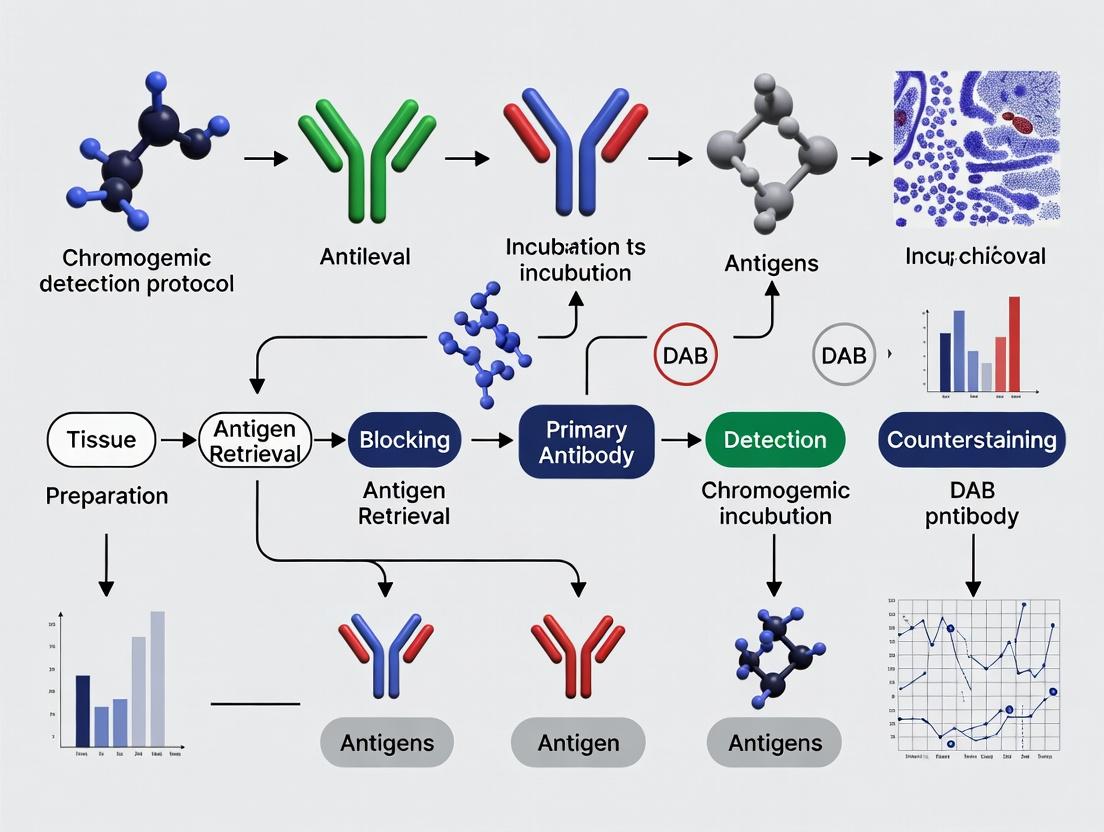
This comprehensive guide details the DAB (3,3'-Diaminobenzidine) chromogenic detection protocol for formalin-fixed, paraffin-embedded (FFPE) tissues, a cornerstone technique in immunohistochemistry (IHC) and biomedical research.
Mastering DAB Chromogenic Detection in FFPE Tissues: A Comprehensive Guide for Researchers and Drug Developers
Abstract
This comprehensive guide details the DAB (3,3'-Diaminobenzidine) chromogenic detection protocol for formalin-fixed, paraffin-embedded (FFPE) tissues, a cornerstone technique in immunohistochemistry (IHC) and biomedical research. We cover the foundational chemistry of DAB polymerization and its role in visualizing target antigens. A step-by-step, optimized methodological protocol from deparaffinization to counterstaining is provided. The article addresses common pitfalls, offers robust troubleshooting strategies, and explores optimization techniques for sensitivity and specificity. Finally, it discusses validation strategies, compares DAB with other chromogens and fluorescence, and examines its critical applications in pathology, biomarker discovery, and therapeutic development. This resource is tailored for researchers, scientists, and drug development professionals seeking reliable, high-quality IHC results.
Understanding DAB Chromogen: The Chemistry and Critical Role in FFPE IHC
Within the context of a formalin-fixed, paraffin-embedded (FFPE) tissue research thesis, chromogenic detection using 3,3'-Diaminobenzidine (DAB) persists as the benchmark for immunohistochemistry (IHC) and in situ hybridization (ISH). This application note details the intrinsic properties of DAB, provides current protocols, and quantitatively compares it with alternative chromogens, underscoring its irreplaceable role in drug development and pathological diagnosis.
The Unparalleled Advantages of DAB
DAB generates an insoluble, stable brown precipitate at the site of target antigen-antibody binding. Its dominance is attributed to the following key characteristics, critical for rigorous research:
- Permanent Archival Stability: The DAB polymer is resistant to solvents and fading, allowing slides to be stored for decades.
- Superior Compatibility: Compatible with routine histological counterstains (e.g., Hematoxylin) and mounting media.
- High Resolution: Produces a fine, precise precipitate enabling clear subcellular localization.
- Robust Signal Intensity: Amenable to signal amplification techniques, making it ideal for low-abundance targets in FFPE tissues.
- Established Reference Standard: The vast majority of diagnostic and pharmaceutical validation studies are built upon DAB, providing a critical historical and comparative database.
Quantitative Comparison of Common Chromogens
The table below summarizes key performance metrics for DAB against other frequently used chromogens, based on current vendor data and literature.
Table 1: Comparative Analysis of Chromogenic Substrates for IHC
| Chromogen (Precipitate Color) | Sensitivity | Solubility/Stability | Compatible Counterstains | Common Applications & Notes |
|---|---|---|---|---|
| DAB (Brown) | High | Insoluble in organic solvents; Permanent | Hematoxylin, Methyl Green, etc. | Gold Standard. Ideal for FFPE, high-resolution, archival work. |
| AEC (Red) | Medium-High | Soluble in alcohol; Requires aqueous mounting | Hematoxylin, Alcian Blue | Frozen sections; not permanent; alcohol-soluble. |
| Vector VIP (Purple) | High | Relatively insoluble; Stable | Methyl Green, Neutral Red | Good for dual staining with DAB; some alcohol fastness. |
| Vector SG (Blue-Gray) | High | Insoluble in alcohol; Stable | Nuclear Fast Red, Eosin | Excellent permanent alternative to AEC; alcohol-fast. |
| BCIP/NBT (Blue-Purple) | Medium | Soluble in organic solvents; Fades | None or very light | Primarily for in situ hybridization and phosphatase enzymes. |
Detailed Protocol: DAB IHC for FFPE Tissues
This protocol outlines a standard detection method using a horseradish peroxidase (HRP)-based system for FFPE tissue sections.
Research Reagent Solutions & Essential Materials
Table 2: The Scientist's Toolkit for DAB IHC
| Item | Function/Explanation |
|---|---|
| FFPE Tissue Sections (3-5 µm) | The standard archival material for pathological and research studies. |
| Xylene and Ethanol Series | For complete deparaffinization and rehydration of tissue sections. |
| Target Retrieval Buffer (Citrate, pH 6.0 or EDTA/TRIS, pH 9.0) | Reverses formaldehyde-induced cross-links to expose epitopes. |
| Endogenous Peroxidase Block (3% H₂O₂ in methanol) | Eliminates background from tissue peroxidases. |
| Protein Block (Normal serum, BSA, or casein) | Reduces non-specific antibody binding to tissue. |
| Primary Antibody | Target-specific monoclonal or polyclonal antibody. |
| HRP-Labeled Polymer Conjugate (Secondary Ab system) | Amplifies signal; links primary Ab to enzyme. |
| DAB Substrate Kit (Chromogen + Buffer + H₂O₂) | Generates the insoluble brown precipitate upon enzymatic reaction. |
| Hematoxylin | Nuclear counterstain for morphological context. |
| Mounting Medium (Non-aqueous, permanent) | Preserves the stain for long-term storage and imaging. |
Step-by-Step Methodology
- Deparaffinization/Rehydration: Bake slides at 60°C for 20 min. Immerse in xylene (2 x 5 min), followed by 100%, 95%, 70% ethanol (2 min each), and finally dH₂O.
- Antigen Retrieval: Perform heat-induced epitope retrieval (HIER) in appropriate buffer using a pressure cooker, steamer, or microwave. Cool for 30 min, then rinse in PBS.
- Endogenous Peroxidase Block: Incubate slides in 3% H₂O₂ for 10 min at RT. Wash in PBS.
- Protein Block: Apply blocking solution for 20-30 min at RT. Tap off excess (do not wash).
- Primary Antibody Incubation: Apply optimized dilution of primary antibody. Incubate in a humidified chamber (1 hr at RT or overnight at 4°C). Wash thoroughly in PBS-Tween.
- Polymer-HRP Conjugate Incubation: Apply enzyme-labeled polymer for 30-60 min at RT. Wash in PBS.
- DAB Development:
- Prepare DAB working solution according to manufacturer's instructions (typically 1 drop of DAB chromogen per 1 mL of buffer + H₂O₂).
- Apply to tissue and monitor development under a microscope (typically 2-10 minutes).
- Immerse in dH₂O to stop the reaction immediately upon optimal stain intensity.
- Counterstaining & Mounting: Counterstain with Hematoxylin for 30-60 sec. Differentiate in acid alcohol, blue in Scott's tap water. Dehydrate through alcohols, clear in xylene, and mount with permanent resinous medium.
The HRP-DAB Detection Pathway
A critical component of the thesis is understanding the enzymatic amplification cascade that makes DAB detection so sensitive.
Diagram Title: HRP-DAB Chromogenic Detection Pathway
Experimental Workflow for DAB IHC Optimization
A standard experimental workflow for validating a new antibody using DAB detection in a thesis project.
Diagram Title: DAB IHC Optimization Workflow
For thesis research and drug development involving FFPE tissues, DAB chromogenic detection remains the gold standard due to its unique combination of permanence, high resolution, and robust signal amplification. Its well-characterized behavior provides a reliable and quantitatively comparable foundation for translational research, ensuring data integrity from the laboratory bench to clinical validation.
Within the broader thesis on optimizing chromogenic detection in formalin-fixed, paraffin-embedded (FFPE) tissues, understanding the precise biochemistry of 3,3’-Diaminobenzidine (DAB) is foundational. DAB serves as the quintessential chromogen in immunohistochemistry (IHC) and in situ hybridization (ISH) for detecting target antigens or nucleic acids. Its value lies in the conversion from a colorless, soluble substrate to a highly localized, insoluble, and stable brown precipitate at the site of enzymatic activity (typically horseradish peroxidase, HRP). This precipitate is osmiophilic, allowing for electron microscopy, and permanently stained sections can be archived for decades. The following Application Notes detail its biochemical pathway, critical parameters for optimal signal-to-noise, and standardized protocols for reproducible results in drug development research.
Biochemical Pathway & Quantitative Data
The oxidation and polymerization of DAB is a multi-step electron-transfer process catalyzed by HRP in the presence of hydrogen peroxide (H₂O₂).
Key Reaction Summary:
- HRP (resting state, Fe³⁺) is oxidized by H₂O₂ to form Compound I (Fe⁴⁺=O π-cation radical).
- Compound I oxidizes one DAB molecule (electron donor), yielding a DAB radical and Compound II (Fe⁴⁺=O).
- Compound II oxidizes a second DAB molecule, regenerating resting HRP and producing a second DAB radical.
- Two DAB radicals undergo non-enzymatic polymerization, forming an insoluble, heterogenous polymer (phenazine polymer) that precipitates as a brown product.
Table 1: Critical Reaction Parameters & Their Quantitative Effects
| Parameter | Typical Optimal Range | Effect on Signal Intensity | Effect on Background |
|---|---|---|---|
| DAB Concentration | 0.02 - 0.1% (w/v) | Increases up to saturation (~0.05%) | High conc. increases non-specific polymer deposition |
| H₂O₂ Concentration | 0.001 - 0.03% (v/v) | Increases up to optimum; inhibitory beyond | High conc. inactivates HRP, increases background |
| Incubation Time | 1 - 10 minutes | Increases linearly initially, then plateaus | Prolonged time dramatically increases background |
| pH of Reaction Buffer | 6.0 - 7.5 (e.g., Tris, PBS) | Maximal at ~pH 7.0-7.5 | Acidic pH reduces enzyme activity; alkaline pH increases spontaneous oxidation |
| Reaction Temperature | 20 - 25°C (Room Temp) | Standardized for consistency | Increased temp accelerates reaction & background |
Table 2: Properties of the Final DAB Polymer
| Property | Characteristic | Research Implication |
|---|---|---|
| Solubility | Insoluble in water, alcohols, xylene | Permits permanent mounting and archival of slides |
| Color | Dark brown, near-black with nickel/cober intensification | Provides high contrast against hematoxylin counterstain |
| Electron Density | Osmiophilic (binds osmium tetroxide) | Suitable for transmission electron microscopy (TEM) |
| Absorption Max | ~450 nm (broad spectrum) | Optimal for brightfield microscopy; compatible with common filters |
| Stability | Highly stable, fades minimally over decades | Essential for long-term sample storage and legal/clinical records |
Detailed Protocols
Protocol 1: Standard DAB Chromogen Development for IHC on FFPE Tissue Sections Based on current best practices for manual and automated platforms.
A. Materials & Reagents: See "The Scientist's Toolkit" below. B. Pre-Development Steps:
- Complete antigen retrieval, blocking, and primary/secondary antibody incubations per your validated IHC protocol.
- Incubate slides with HRP-conjugated polymer/label (e.g., Streptavidin-HRP or anti-species HRP polymer) for the recommended time.
- Wash slides 3 x 2 minutes in Tris-Buffered Saline with Tween-20 (TBST), pH 7.6. C. DAB Solution Preparation (Immediately Before Use):
- For 1 mL of working solution: Add 1 drop (or ~50 µL) of DAB Chromogen concentrate to 1 mL of DAB Substrate Buffer. Alternatively, if using tablet/capsule forms, dissolve in the recommended volume of buffer.
- Mix gently. Do not vortex.
- Optional: Add 1 drop of metal enhancer (e.g., DAB Nickel or Cobalt) for a grey/black product. Mix gently. D. Development & Termination:
- Drain slides and apply enough prepared DAB working solution to completely cover the tissue section.
- Monitor development under a microscope at 30-second to 1-minute intervals.
- Optimal development is typically achieved within 1-5 minutes. Stop the reaction by immersing slides in distilled water once desired stain intensity is reached, before background appears. E. Post-Development:
- Counterstain with hematoxylin (e.g., 30 seconds to 1 minute).
- Dehydrate through graded alcohols (70%, 95%, 100%), clear in xylene or substitute, and mount with permanent mounting medium.
Protocol 2: DAB Signal Intensification & Stabilization for Low-Abundance Targets This protocol enhances sensitivity for targets with low expression levels.
- After HRP incubation and washing, prepare a DAB solution with metal enhancement (e.g., Nickel ammonium sulfate at 0.03% final concentration in the DAB buffer).
- Develop as in Protocol 1. The product will be grey-black, offering higher contrast.
- For critical quantitative or long-term archival work, perform an osmium intensification step: a. After DAB development and water rinse, treat slides with 0.1% aqueous osmium tetroxide (in a fume hood) for 1-2 minutes. b. Rise thoroughly in running distilled water for 5 minutes. c. Proceed with counterstaining and dehydration.
Visualization: Biochemical and Experimental Pathways
Diagram 1: The HRP-Catalyzed Oxidation and Polymerization of DAB (73 chars)
Diagram 2: Standard IHC Workflow with DAB Detection (52 chars)
The Scientist's Toolkit
Table 3: Essential Research Reagent Solutions for DAB-Based Detection
| Reagent / Material | Function & Critical Notes |
|---|---|
| DAB Tetrahydrochloride (DAB·4HCl) | The chromogenic substrate. Light and oxygen-sensitive. Usually prepared as a concentrated stock solution (e.g., 10 mg/mL in dH₂O, stored at -20°C in aliquots). |
| Peroxidase-Conjugated Polymer/Label | The enzyme source. Modern systems use HRP conjugated to a polymer backbone that carries secondary antibodies (e.g., anti-mouse/rabbit), reducing non-specific staining. |
| 30% Hydrogen Peroxide (H₂O₂) | The oxidizing co-substrate for HRP. Must be diluted fresh (typically 1:1000 to 1:10000 in buffer) for the working solution. Unstable. |
| Tris or PBS Buffer (pH 7.2-7.6) | Provides optimal pH for HRP activity. Contains salts to maintain ionic strength. Often used with 0.05% Tween-20 (TBST/PBST) for washing to reduce background. |
| DAB Chromogen Kit (Liquid) | Commercial ready-to-use systems (Chromogen + Substrate Buffer ± Enhancer). Offer superior consistency, safety (pre-mixed, stabilized), and are recommended for standardized studies. |
| Metal Enhancers (Ni, Co, Cu) | Salts added to the DAB reaction to modify the final polymer's color and intensity (e.g., nickel yields a black-purple precipitate, enhancing contrast). |
| Aqueous Hematoxylin | Standard nuclear counterstain (blue) to provide morphological context after DAB (brown) development. |
| Permanent Mounting Medium | A non-aqueous, synthetic resin (e.g., DPX, Permount) used to coverslip dehydrated tissue, preserving the stain permanently. |
In the context of a broader thesis on DAB (3,3'-diaminobenzidine) chromogenic detection in formalin-fixed tissues research, the preparation of Formalin-Fixed, Paraffin-Embedded (FFPE) tissue is the critical foundation. Formalin fixation cross-links proteins, preserving tissue morphology but often masking antigenic sites. Antigen Retrieval (AR) is the essential reversal process to enable successful antibody binding and subsequent DAB-based visualization. These application notes detail current protocols for optimizing this preparatory phase.
The Impact of Formalin Fixation on Antigenicity
Formalin (aqueous formaldehyde) creates methylene bridges between proteins, forming a gel-like network that stabilizes tissue architecture. While advantageous for preservation, this cross-linking obscures epitopes recognized by antibodies. The efficacy of subsequent immunohistochemistry (IHC) using DAB detection is therefore heavily dependent on reversing these modifications.
Table 1: Key Variables in Formalin Fixation and Their Impact
| Variable | Optimal Condition | Effect of Deviation from Optimal |
|---|---|---|
| Fixative Concentration | 10% Neutral Buffered Formalin (NBF) | Under-concentration: poor preservation; Over-concentration: excessive cross-linking. |
| Fixation Duration | 24-72 hours, tissue-dependent | Under-fixation: poor morphology; Over-fixation: severe antigen masking. |
| Tissue Thickness | ≤ 4 mm | Thicker sections cause fixation gradients and uneven preservation. |
| pH | Neutral (pH 7.0-7.4) | Acidic pH promotes formation of acid-induced artifacts. |
| Temperature | Room Temperature (20-25°C) | Elevated temps accelerate fixation but can increase cross-linking. |
Principles and Protocols for Antigen Retrieval
AR methods break protein cross-links, restoring antigen conformation and accessibility. The choice of method and buffer is antigen-specific.
Heat-Induced Epitope Retrieval (HIER)
The most common method, using heat and buffer to break cross-links.
- Protocol:
- Deparaffinize and rehydrate FFPE tissue sections through xylene and graded ethanol series to water.
- Place slides in a heat-resistant container filled with AR buffer (see Table 2).
- Perform heating using one of the following:
- Pressure Cooker: Heat buffer to ~120°C for 10-15 minutes. Allow natural pressure release and cool for 20-30 minutes.
- Microwave/Steamer: Heat at ~95-100°C for 20-30 minutes in cycles, ensuring slides do not dry out.
- Water Bath/Commercial Decloaker: Incubate at 95-100°C for 20-40 minutes.
- Cool slides at room temperature in buffer for 20-30 minutes.
- Rinse gently in distilled water, then place in appropriate wash buffer (e.g., PBS or TBS).
Proteolytic-Induced Epitope Retrieval (PIER)
Uses enzymatic digestion (e.g., trypsin, proteinase K) to cleave proteins and expose epitopes. Suitable for a subset of antigens destroyed by heat.
- Protocol:
- Deparaffinize and rehydrate slides to the recommended buffer (often Tris or PBS).
- Prepare enzyme solution in the appropriate buffer at 37°C.
- Incubate slides in enzyme solution for 5-30 minutes at 37°C. Time and concentration are critical and must be optimized.
- Stop the reaction by rinsing thoroughly in cold buffer.
Table 2: Common Antigen Retrieval Buffers for HIER
| Buffer | Common Composition | pH Range | Typical Antigen Targets |
|---|---|---|---|
| Citrate-Based | 10mM Sodium Citrate | 6.0 | A broad range of nuclear, cytoplasmic, and membrane antigens (e.g., ER, PR, Ki-67). |
| Tris-EDTA/EGTA | 10mM Tris Base, 1mM EDTA/EGTA | 8.0-9.0 | Phosphorylated epitopes, many transmembrane proteins, challenging nuclear antigens. |
| EDTA Only | 1-5mM EDTA | 8.0 | Often used for transcription factors or tightly masked epitopes. |
Experimental Protocol: Optimizing AR for a Novel Target
This protocol, cited within DAB detection research, systematically identifies optimal AR conditions.
Title: Optimization of Antigen Retrieval for DAB IHC on FFPE Tissue. Objective: To determine the optimal HIER method and buffer for a novel target protein "X" in archival FFPE tissue. Materials: Serial sections of FFPE tissue block containing target; citrate (pH 6.0) and Tris-EDTA (pH 9.0) buffers; pressure cooker/decloaker; standard IHC kit with primary antibody for target X and DAB chromogen; hematoxylin counterstain. Method:
- Section FFPE block to 4 µm thickness.
- Label slides into 5 groups (n=3 per group): A. Citrate buffer, pressure cooker; B. Citrate buffer, water bath (95°C); C. Tris-EDTA buffer, pressure cooker; D. Tris-EDTA buffer, water bath; E. No AR control.
- Perform deparaffinization and rehydration for all slides.
- Perform AR as per group designation (e.g., pressure cooker at 120°C for 15 min, water bath at 95°C for 30 min).
- Cool all slides (including control) for 30 min at RT.
- Perform standardized IHC protocol for target X with DAB development (e.g., 5 min) and hematoxylin counterstain.
- Quantitative Analysis: Capture images at 20x magnification. Using image analysis software, measure the DAB staining intensity (optical density) and the percentage of positive cells in three representative fields per slide. Record the signal-to-noise ratio (specific staining vs. background in an isotype control section). Analysis: Compare the mean intensity and positivity percentage across groups using ANOVA. The condition yielding the highest specific signal (intensity x positivity) with minimal background is considered optimal.
The Scientist's Toolkit: Research Reagent Solutions
Table 3: Essential Materials for FFPE Preparation and Antigen Retrieval
| Item | Function in Protocol |
|---|---|
| 10% Neutral Buffered Formalin (NBF) | Gold-standard fixative; provides optimal trade-off between morphology preservation and antigenicity. |
| Microtome | Instrument for cutting thin, consistent FFPE tissue sections (typically 2-5 µm) for slide mounting. |
| Poly-L-Lysine or Plus Charged Slides | Coated microscope slides to prevent tissue section detachment during rigorous AR and IHC steps. |
| HIER Device (Pressure Cooker/Decloaker) | Provides controlled, high-temperature heating for efficient and consistent breaking of cross-links. |
| Antigen Retrieval Buffers (Citrate, Tris-EDTA) | Solutions of specific ionic strength and pH that facilitate the unfolding of proteins and unmasking of epitopes during heating. |
| Humidified Slide Chamber | Essential for incubating slides with primary antibody during IHC, preventing evaporation and uneven staining. |
| DAB Chromogen Kit | Enzyme substrate that produces a brown, insoluble precipitate at the site of antibody binding, visualized by light microscopy. |
| Automated Stainers | Enable high-throughput, highly reproducible processing of FFPE slides through deparaffinization, AR, and IHC steps. |
Visualizing the Workflow and Molecular Impact
Title: FFPE Tissue Processing and Staining Workflow
Title: Molecular Effect of Fixation and Antigen Retrieval
Within the broader thesis on optimizing chromogenic detection for formalin-fixed, paraffin-embedded (FFPE) tissues, a rigorous understanding of the individual kit components is paramount. The 3,3’-Diaminobenzidine (DAB) detection system remains a cornerstone for visualizing antigen localization in immunohistochemistry (IHC). Its performance is dictated by the precise interplay and quality of its four key components: Horseradish Peroxidase (HRP), the substrate (Hydrogen Peroxide), the chromogen (DAB), and the reaction buffer. This application note details their roles, provides quantitative comparisons, and outlines standardized protocols for their use in FFPE tissue research, ensuring reproducibility and high signal-to-noise ratios critical for drug development research.
Component Analysis & Quantitative Data
Table 1: Key Components of a Standard DAB Detection Kit
| Component | Chemical Name & Role | Typical Working Concentration | Key Function in Detection | Impact on Signal/Noise |
|---|---|---|---|---|
| Enzyme (HRP) | Horseradish Peroxidase, Conjugated to secondary antibody. | 2-10 µg/mL | Catalyzes the oxidation of DAB in the presence of H₂O₂. | High-affinity, high-specificity conjugates reduce background. |
| Substrate | Hydrogen Peroxide (H₂O₂). | 0.01%-0.03% (v/v) | Oxidizing agent; the co-substrate for the HRP enzyme. | Optimal concentration is critical; excess increases background. |
| Chromogen | 3,3’-Diaminobenzidine tetrahydrochloride (DAB). | 0.02-0.07% (w/v) | Electron donor; upon oxidation, forms an insoluble brown precipitate. | Concentration affects intensity; metal enhancers (e.g., Ni, Co) can modulate color and sensitivity. |
| Buffer | Tris, Phosphate, or Imidazole-HCl buffer, pH ~7.2-7.6. | 0.05-0.1 M | Maintains optimal pH for HRP activity and provides ionic strength. | Prevents precipitation, ensures consistent reaction kinetics. |
Table 2: Optimization Parameters for DAB in FFPE Tissues
| Parameter | Recommended Range | Effect of Low Value | Effect of High Value |
|---|---|---|---|
| Incubation Time (DAB+HRP) | 2-10 minutes | Weak, undetectable signal. | High background, non-specific precipitation. |
| Reaction pH | 7.2 - 7.6 | Reduced enzymatic activity, slower reaction. | Potential enzyme denaturation, increased background. |
| H₂O₂ Concentration | 0.01% - 0.03% | Incomplete DAB oxidation, faint signal. | Enzyme inactivation, oxidative damage to tissue, high background. |
Detailed Experimental Protocols
Protocol 1: Standard DAB Detection for FFPE Tissue Sections
Title: IHC Detection with DAB on FFPE Tissue. Application: For visualizing protein targets after primary antibody binding. Materials: See "The Scientist's Toolkit" below. Procedure:
- Deparaffinization & Antigen Retrieval: Follow standard protocols for your tissue and target antigen (heat-induced or enzymatic retrieval).
- Peroxidase Blocking: Incubate slides in 3% H₂O₂ in methanol for 10 minutes at room temperature (RT) to quench endogenous peroxidase activity. Rinse in wash buffer.
- Protein Blocking: Apply a protein block (e.g., serum or BSA) for 30 minutes at RT to reduce non-specific binding.
- Primary Antibody: Apply optimized dilution of primary antibody in antibody diluent. Incubate as required (1 hour at RT or overnight at 4°C). Wash 3 x 5 minutes.
- HRP-Conjugated Secondary Antibody: Apply species-appropriate HRP polymer conjugate for 30-60 minutes at RT. Wash 3 x 5 minutes.
- DAB Substrate Preparation: Prepare DAB working solution immediately before use by mixing buffer, DAB chromogen, and H₂O₂ substrate per manufacturer's instructions.
- Chromogenic Reaction: Apply DAB working solution to the tissue section. Monitor development under a microscope (typically 2-10 minutes). Stop reaction by immersing slides in distilled water.
- Counterstaining & Mounting: Counterstain with Hematoxylin for 20-60 seconds. Dehydrate, clear, and mount with a permanent mounting medium.
Protocol 2: Titration of DAB Component for Signal Optimization
Title: DAB Chromogen/Substrate Titration for Sensitivity. Application: To determine the optimal DAB and H₂O₂ concentration for a new antibody or tissue type. Materials: Variable concentrations of DAB stock (0.1% w/v) and H₂O₂ stock (3% v/v). Procedure:
- Prepare a checkerboard titration on serial sections from the same FFPE block.
- Prepare DAB working solutions with final concentrations of 0.01%, 0.03%, and 0.05% DAB, each combined with 0.005%, 0.01%, and 0.03% H₂O₂.
- Follow Protocol 1 through step 5 uniformly for all sections.
- Apply the 9 different DAB/H₂O₂ combinations to separate sections.
- Develop for a fixed time (e.g., 5 minutes). Stop simultaneously.
- Analyze slides microscopically. The condition yielding the strongest specific signal with the lowest background is optimal. Document for your thesis methods.
Visualizing the DAB Detection Workflow & Chemistry
Diagram Title: DAB IHC Detection Principle
Diagram Title: FFPE IHC Staining Workflow
The Scientist's Toolkit
Table 3: Essential Research Reagent Solutions for DAB IHC
| Item | Function in Protocol | Example/Note |
|---|---|---|
| FFPE Tissue Sections | The sample matrix for analysis. | Mounted on positively charged slides. |
| Antigen Retrieval Buffer | Reverses formaldehyde cross-links to expose epitopes. | Citrate (pH 6.0) or Tris-EDTA (pH 9.0) buffers. |
| Peroxidase Blocking Solution | Inactivates endogenous tissue peroxidases to prevent false positives. | 3% H₂O₂ in methanol or aqueous solution. |
| Protein Blocking Serum | Reduces non-specific binding of antibodies to tissue. | Normal serum from the species of the secondary antibody. |
| Primary Antibody Diluent | Buffer for diluting and stabilizing the primary antibody. | Often PBS or TBS with 1% BSA and 0.1% sodium azide. |
| HRP Polymer Detection System | Provides high-sensitivity secondary detection. | Anti-mouse/rabbit IgG polymers conjugated with numerous HRP enzymes. |
| DAB Chromogen/Substrate Kit | Provides optimized, stable components for precipitate formation. | Commercial kits (e.g., DAB+) are recommended for consistency and safety. |
| Hematoxylin Counterstain | Provides blue nuclear contrast to the brown DAB signal. | Different formulations (e.g., Mayer's, Gill's) offer varying intensities. |
| Aqueous & Permanent Mountant | For preserving and coverslipping stained slides. | Use aqueous for temporary analysis; permanent synthetic resin for archiving. |
3,3'-Diaminobenzidine (DAB) is a chromogen extensively used in immunohistochemistry (IHC) for the detection of antigens in formalin-fixed, paraffin-embedded (FFPE) tissues. Within the context of optimizing DAB chromogenic detection protocols for FFPE tissues, it is imperative to address the significant health and safety considerations first. DAB is a suspected carcinogen (potential mutagen) and must be handled with stringent controls. These Application Notes provide the essential safety protocols to integrate into any research workflow.
Hazard Classification and Exposure Limits
Table 1: Hazard Profile and Occupational Exposure Limits for DAB
| Parameter | Value/Specification | Source/Notes |
|---|---|---|
| CAS Number | 91-95-2 | Chemical Abstracts Service |
| GHS Hazard Classification | Suspected of causing cancer (Category 1B), May cause genetic defects (Category 1B) | Globally Harmonized System |
| OSHA PEL | Not Established | Occupational Safety & Health Admin. |
| ACGIH TLV | 0.1 mg/m³ (as inhalable particulate) | American Conf. of Govt. Industrial Hygienists |
| Physical Form | Tan to brown crystalline powder | Solid at room temperature |
| Primary Route of Exposure | Inhalation of aerosols/dust, skin contact, accidental ingestion |
Detailed Safety Protocols for Handling DAB
Procurement and Storage
- Purchase DAB in the smallest practical quantity, preferably as ready-to-use liquid substrate kits or tablets to minimize powder handling.
- Store solid DAB in its original, clearly labeled container within a dedicated, sealed secondary container (e.g., plastic bin).
- Store liquid DAB solutions and kits according to manufacturer specifications. The storage area must be cool, dry, and well-ventilated, away from acids and oxidizers.
Personal Protective Equipment (PPE)
Mandatory PPE for handling solid DAB:
- Nitrile gloves (double-gloving recommended for powder handling).
- Lab coat (disposable, closed-front).
- Chemical splash goggles.
- Respiratory protection: Use a NIOSH-approved N95 respirator or half-face respirator with particulate/organic vapor cartridges when weighing powder or handling outside a containment device.
- Closed-toe shoes.
Mandatory PPE for handling liquid DAB solutions:
- Nitrile gloves and lab coat are minimum requirements. Face shield and goggles are required if splashing is possible.
Engineering Controls and Work Practices
- Primary Containment: All manipulations of DAB powder (weighing, dissolving) must be performed inside a certified chemical fume hood or a Class II Biological Safety Cabinet if sterility is required for the protocol.
- Wetting Agent: When weighing powder, use a wetting agent (e.g., 10% acetic acid) to dampen the weighing paper and reduce aerosolization.
- No Mouth Pipetting: Use mechanical pipetting aids exclusively.
- Containment: Perform all staining steps involving liquid DAB in a well-ventilated area, ideally within a fume hood or over a drip tray.
- Decontamination: Immediately decontaminate work surfaces and equipment with an appropriate detergent and 10% bleach solution or a commercial peroxidase-cleaning solution (e.g., 3% H₂O₂).
Waste Disposal Protocol
DAB waste must be inactivated and disposed of as hazardous chemical waste.
Experimental Protocol for DAB Waste Inactivation
This protocol should be performed in a fume hood.
Materials:
- DAB waste containers (liquid and solid)
- Household bleach (Sodium hypochlorite, NaOCl)
- 1M Sodium hydroxide (NaOH)
- pH paper or meter
- Secondary containment vessel
Method:
- Segregation: Collect all DAB waste separately. Use one labeled container for liquid waste (used substrate, rinses from staining) and another for solid waste (contaminated gloves, towels, weighing papers).
- Liquid Waste Treatment: a. Under the fume hood, slowly add household bleach to the liquid DAB waste with stirring. Use a 1:1 (v/v) ratio of bleach to waste. b. Adjust the pH to >10 using 1M NaOH. The high pH enhances the oxidizing power of hypochlorite. c. Let the mixture react for a minimum of 24 hours in the closed, labeled container inside the fume hood. d. After 24 hours, the solution should be colorless. Test for residual peroxidase activity by placing a drop on a filter paper and adding fresh DAB/H₂O₂. No brown color should develop.
- Solid Waste Treatment: a. Immerse solid waste in a basin containing a freshly prepared 10% bleach solution in the fume hood. b. Ensure all materials are fully submerged and let soak for 24 hours.
- Disposal: After confirmed inactivation, dispose of both liquid and solid wastes through your institution's hazardous chemical waste management stream. Do not pour down the sanitary drain or discard as regular trash.
The Scientist's Toolkit: Research Reagent Solutions
Table 2: Essential Materials for Safe DAB-Based IHC
| Item | Function & Safety Relevance |
|---|---|
| DAB Tablet/Kit | Pre-measured, reduces exposure risk during weighing of powder. |
| Chemical Fume Hood | Primary engineering control for aerosol containment during solution prep and waste treatment. |
| Nitrile Gloves | Protects against skin contact and permeation. |
| NIOSH-Approved Respirator | Protects against inhalation of particulates during powder handling. |
| Peroxidase Inactivation Solution (e.g., 3% H₂O₂) | Used for immediate decontamination of spills and equipment surfaces. |
| 10% Sodium Hypochlorite (Bleach) | Primary oxidizing agent for chemical inactivation of DAB waste. |
| Secondary Containment Bin | For storage of DAB primary containers; contains spills. |
| Dedicated DAB Waste Containers | Clearly labeled, leak-proof containers for segregated waste collection. |
Experimental Workflow: Integrating Safety into DAB IHC
Title: DAB IHC Safety-Integrated Workflow
DAB Hazard Signaling Pathway
Title: DAB Hazard and Carcinogenesis Pathway
Step-by-Step DAB IHC Protocol for FFPE Tissues: From Slide to Image
This protocol details the critical pre-analytical steps for DAB chromogenic detection in formalin-fixed, paraffin-embedded (FFPE) tissues. Within the broader thesis on optimizing IHC for drug development, reproducible and high-quality tissue preparation is the foundational determinant of experimental validity. Inconsistent sectioning, inadequate adhesion, or residual paraffin directly causes high background, non-specific staining, and false-negative results, compromising all subsequent data in the DAB detection cascade.
Application Notes & Key Quantitative Data
Optimal conditions for tissue section handling have been empirically established. Deviations from these parameters significantly impact downstream assay quality.
Table 1: Quantitative Parameters for Pre-Stage Steps
| Step | Parameter | Optimal Range | Impact of Deviation | Primary Reference |
|---|---|---|---|---|
| Sectioning | Section Thickness | 4–5 µm | <4 µm: Fragility, loss of morphology. >5 µm: Incomplete reagent penetration, increased background. | Dapson et al., 2021 |
| Baking | Temperature | 55–65°C | <55°C: Incomplete melting, poor adhesion. >65°C: Antigen damage, tissue brittleness. | Howat et al., 2014 |
| Baking | Duration | 30–60 minutes | Insufficient: Section detachment. Excessive: Antigen degradation. | Ramos-Vara & Miller, 2024 |
| Deparaffinization | Xylene Baths | 2–3 changes, 3–5 min each | Incomplete: Paraffin residues create hydrophobic barriers, causing uneven reagent flow and high spotty background. | Fischer et al., 2022 |
| Rehydration | Ethanol Gradient | 100%, 95%, 70% (3 min each) | Incomplete rehydration prevents aqueous-based buffers and antibodies from penetrating tissue matrix. | N/A (Standard Protocol) |
Detailed Experimental Protocols
Protocol 3.1: Sectioning of FFPE Tissue Blocks
- Materials: Rotary microtome, low-profile microtome blades, chilled ice tray, fine brush, adhesive microscope slides (e.g., positively charged or poly-L-lysine).
- Method:
- Chill the FFPE block on ice for 5–10 minutes to harden the paraffin.
- Trim the block face with coarse cuts until the full tissue surface is exposed.
- Set microtome thickness to 4–5 µm.
- Cut sections using a smooth, steady motion. Use a fine brush to gently guide the ribbon as it forms.
- Float the ribbon on a 40–45°C water bath (containing nuclease-free water) for 30–60 seconds to remove folds.
- Carefully pick up the section onto a labeled adhesive slide.
- Drain excess water and vertically dry slides at room temperature for 30 minutes before baking.
Protocol 3.2: Baking and Slide Adhesion
- Materials: Slide drying oven or incubator.
- Method:
- Place air-dried slides in a slide rack.
- Incubate in a pre-warmed oven at 60°C for 45 minutes.
- Critical Note: Avoid prolonged baking (>24 hours) as it can mask antigens. For long-term storage after baking, keep slides at -20°C.
Protocol 3.3: Deparaffinization and Rehydration
- Materials: Xylene or xylene substitute, 100% ethanol, 95% ethanol, 70% ethanol, distilled water, Coplin jars or automated staining system.
- Method:
- Immerse baked slides in fresh Xylene (Bath 1) for 5 minutes.
- Transfer to fresh Xylene (Bath 2) for an additional 5 minutes.
- Hydrate through a graded ethanol series:
- 100% Ethanol: 3 minutes.
- 100% Ethanol: 3 minutes.
- 95% Ethanol: 3 minutes.
- 70% Ethanol: 3 minutes.
- Rinse in distilled or deionized water for 5 minutes.
- Proceed immediately to antigen retrieval (the next step in the DAB protocol). Do not allow sections to dry out after this point.
Visualization: Experimental Workflow Diagram
Diagram Title: Pre-DAB Tissue Processing Workflow
The Scientist's Toolkit: Essential Research Reagent Solutions
Table 2: Key Materials for Tissue Pre-Stage Processing
| Item | Function & Rationale |
|---|---|
| Positively Charged Slides | Permanent electrostatic attraction between slide and tissue section prevents detachment during rigorous antigen retrieval and washing steps. |
| Low-Profile Microtome Blades | Provide extreme sharpness for consistent, wrinkle-free sections of uniform thickness, preserving morphological detail. |
| High-Purity Xylene | Effective organic solvent for complete paraffin dissolution. Xylene substitutes are less hazardous but require validation for specific tissues. |
| Molecular Grade Ethanol Series | Ensures contamination-free rehydration. Lower grades (95%, 70%) introduce water gradually to prevent tissue damage. |
| Temperature-Controlled Water Bath | Precisely heated bath for section expansion; temperature >50°C can melt paraffin prematurely. |
| Slide Drying Oven | Provides uniform, controlled heat for optimal paraffin melting and tissue adhesion without excessive antigen damage. |
Within the context of optimizing DAB chromogenic detection for formalin-fixed, paraffin-embedded (FFPE) tissues, antigen retrieval (AR) is the critical, rate-limiting step. Formalin fixation creates methylene bridges that cross-link and mask epitopes, significantly reducing antibody binding. Effective AR reverses these cross-links, restoring antigenicity and ensuring specific, intense DAB signal with minimal background. The choice between heat-induced epitope retrieval (HIER) and enzymatic epitope retrieval (EER), and the optimization thereof, directly dictates the success of subsequent immunohistochemistry (IOC) or in situ hybridization (ISH) assays in research and drug development pathology.
Comparative Analysis of Antigen Retrieval Methods
The selection of HIER vs. EER depends on the target antigen, antibody characteristics, and tissue type. The following table summarizes key quantitative parameters and applications.
Table 1: Comparison of Heat-Induced and Enzymatic Antigen Retrieval Methods
| Parameter | Heat-Induced Epitope Retrieval (HIER) | Enzymatic Epitope Retrieval (EER) |
|---|---|---|
| Primary Mechanism | Hydrothermal cleavage of cross-links | Proteolytic digestion of proteins to unmask epitopes |
| Typical Conditions | 95-100°C, 20-40 min, in buffer (pH 6.0, 8.0, or 9.0) | 37°C, 5-30 min, in protease (e.g., trypsin, pepsin, proteinase K) |
| Optimal pH Range | Broad (pH 6.0-10.0); target-dependent | Mildly acidic to neutral (pH 1.5-7.5); enzyme-dependent |
| Success Rate (Est.) | ~85-90% of FFPE antigens | ~10-15% of FFPE antigens (for HIER-resistant targets) |
| Tissue Morphology | Generally well-preserved | Risk of over-digestion and tissue damage |
| Key Advantage | Broad applicability, high efficiency, reproducible | Essential for specific, deeply masked epitopes (e.g., collagen, some nuclear antigens) |
| Major Disadvantage | Can destroy some labile epitopes | Narrow optimization window; over-digestion common |
| Common Buffers/Reagents | Citrate (pH 6.0), Tris-EDTA (pH 8.0-9.0), EDTA (pH 8.0) | Trypsin, Pepsin, Proteinase K, Pronase |
Detailed Application Notes & Protocols
Protocol 1: Standardized Heat-Induced Epitope Retrieval (HIER) Optimization Workflow
This protocol is designed for systematic optimization of HIER for a novel target within a DAB-IHC pipeline.
Materials:
- FFPE tissue sections (4-5 µm) on positively charged slides
- Deparaffinization reagents (xylene, graded ethanol series)
- AR buffers: 10mM Sodium Citrate (pH 6.0), 1mM EDTA (pH 8.0), 10mM Tris/1mM EDTA (pH 9.0)
- Heat source: Pressure cooker, microwave, steamer, or water bath
- Humidity chamber
- Phosphate-buffered saline (PBS), pH 7.4
- Peroxidase block (3% H₂O₂ in methanol)
- Normal serum (from species matching secondary antibody host)
- Primary antibody (target-specific, validated for IHC)
- HRP-conjugated secondary antibody & polymer detection system
- DAB Chromogen Kit
- Hematoxylin counterstain, mounting medium
Methodology:
- Deparaffinization & Rehydration: Bake slides at 60°C for 20 min. Immerse in xylene (3 x 5 min), then 100%, 95%, 70% ethanol (2 min each). Rinse in distilled water.
- Peroxidase Blocking: Incubate in 3% H₂O₂/methanol for 10 min to quench endogenous peroxidase activity. Rinse in PBS.
- Antigen Retrieval Setup: Prepare 1-2 L of three different AR buffers in separate heat-proof containers. Preheat retrieval device (e.g., pressure cooker).
- Heat Retrieval: Immerse slides in the preheated buffer. Process using one of the following methods:
- Pressure Cooker: Bring to full pressure, maintain for 2.5-10 minutes.
- Microwave: Heat at full power until boiling, then at 20-30% power to maintain a simmer for 15-20 minutes.
- Water Bath/Steamer: Maintain at 95-99°C for 20-40 minutes.
- Cooling: Carefully remove container and cool slides in the buffer at room temperature for 20-30 minutes.
- Rinsing: Rinse slides in distilled water, then transfer to PBS.
- Immunostaining: Proceed with standard DAB-IHC protocol: apply protein block, primary antibody incubation (overnight, 4°C), secondary antibody/DAB detection, counterstain, and mount.
- Optimization Analysis: Compare staining intensity, specificity, and background across pH conditions and heating times. Select the condition yielding the highest signal-to-noise ratio.
Protocol 2: Targeted Enzymatic Retrieval for HIER-Resistant Antigens
This protocol is for antigens that do not respond to HIER, such as some structural proteins.
Methodology:
- Perform steps 1 and 2 from Protocol 1.
- Enzyme Preparation: Prepare a working solution of the chosen protease (e.g., 0.05-0.1% trypsin in 0.1% CaCl₂, pH 7.8; 0.4% pepsin in 0.1N HCl, pH ~2.0). Pre-warm to 37°C.
- Enzymatic Digestion: Drain slides and apply enough enzyme solution to cover the tissue section. Incubate in a humidity chamber at 37°C.
- Time Course Optimization: Perform a pilot test with incubation times of 2, 5, 10, 15, and 30 minutes.
- Termination: Gently rinse slides in cold PBS to stop the enzymatic reaction.
- Rinsing: Rinse thoroughly in PBS (2 x 5 min).
- Immunostaining: Continue with the standard DAB-IHC protocol (Protocol 1, step 7).
- Optimization Analysis: Assess tissue integrity and staining. Optimal digestion provides specific staining without tissue detachment or excessive hole formation.
Signaling Pathways and Workflow Visualizations
Title: Antigen Retrieval Decision & Optimization Workflow
Title: Mechanism of Epitope Masking and Retrieval
The Scientist's Toolkit: Research Reagent Solutions
Table 2: Essential Materials for Antigen Retrieval Optimization
| Item | Function & Relevance to AR Optimization |
|---|---|
| pH-Stable AR Buffers (Citrate, Tris-EDTA, EDTA) | Provide the chemical environment for heat-induced reversal of cross-links. pH is a critical optimization variable. |
| Specific Proteases (Trypsin, Pepsin, Proteinase K) | Enzymatically digest tissue proteins to expose masked epitopes unresponsive to HIER. |
| Controlled Heating Devices (Pressure Cooker, Steamer, Water Bath) | Provide reproducible, uniform heating for HIER. Pressure cookers often yield the most consistent results. |
| HRP Polymer Detection System | Amplifies the primary antibody signal. Low background systems are crucial post-AR to assess optimization accurately. |
| Validated Primary Antibodies | Antibodies specifically validated for IHC on FFPE tissue are essential, as AR cannot rescue poor antibody specificity. |
| DAB Chromogen Kit | Produces the insoluble brown precipitate for visualization. Must be used with peroxidase block post-AR. |
| Slide Adhesive (Poly-L-Lysine, charged slides) | Prevents tissue detachment during aggressive HIER or enzymatic treatment steps. |
| Humidity Chamber | Essential for maintaining consistent enzyme activity and antibody incubation conditions during optimization. |
Blocking Endogenous Peroxidases and Non-Specific Binding
Within the broader thesis on optimizing 3,3'-Diaminobenzidine (DAB) chromogenic detection in formalin-fixed, paraffin-embedded (FFPE) tissues, the critical pre-detection steps of blocking endogenous peroxidases and preventing non-specific antibody binding are paramount. These steps directly influence the signal-to-noise ratio, specificity, and interpretability of immunohistochemistry (IHC) data. Inadequate blocking can lead to false-positive signals from endogenous enzymes or high background, compromising quantitative and qualitative analysis. This application note details current, validated protocols to achieve effective blocking, ensuring that the final DAB precipitate accurately reflects target antigen distribution.
The Challenge: Endogenous Peroxidases and Non-Specific Sites
FFPE tissues, particularly those rich in erythrocytes, leukocytes, and certain parenchymal cells (e.g., hepatocytes), contain endogenous peroxidases (mainly myeloperoxidase in neutrophils and eosinophils, and pseudoperoxidase activity in red blood cells). During the DAB development step, these enzymes can catalyze the oxidation of DAB in the absence of the primary antibody, generating precipitates indistinguishable from true signal.
Non-specific binding arises from hydrophobic, ionic, or Fc-receptor-mediated interactions between detection system reagents (primary/secondary antibodies) and tissue components unrelated to the target antigen. This results in diffuse, high-background staining.
Quantitative Data on Blocking Efficacy
Table 1: Efficacy of Common Peroxidase Blockers on FFPE Tissue Sections
| Blocking Agent | Typical Concentration & Incubation | Target Peroxidases | Key Advantages | Reported Reduction in Background Signal* |
|---|---|---|---|---|
| 3% Aqueous H₂O₂ | 3% v/v, 10-15 min, RT | Myeloperoxidase, Pseudoperoxidase | Inexpensive, rapid, ubiquitous. | 95-99% |
| 0.3% H₂O₂ in Methanol | 0.3% v/v in absolute methanol, 15-30 min, RT | All peroxidases; also fixes tissue. | Reduces tissue detachment; good for fragile sections. | 90-98% |
| Glucose Oxidase Method | 10 mM glucose, 1 U/mL glucose oxidase, 37°C, 1 hr | Catalase-sensitive peroxidases. | Very gentle; generates H₂O₂ in situ; ideal for labile antigens. | 85-95% |
| Sodium Azide | 0.1% w/v in buffer, 10-15 min, RT | Horseradish Peroxidase (HRP) & endogenous. | Can be used post-primary Ab to block residual HRP. | 70-90% |
Data synthesized from recent literature; efficacy varies by tissue type.
Table 2: Common Agents for Reducing Non-Specific Binding in IHC
| Blocking Agent | Typical Concentration & Incubation | Mechanism of Action | Primary Use Case |
|---|---|---|---|
| Normal Serum | 2-10% v/v, 20-30 min, RT | Saturates Fc receptors and non-specific charged sites. | Universal; must match secondary antibody host. |
| BSA (Fraction V) | 1-5% w/v in buffer, 20-30 min, RT | Saturates hydrophobic & charged sites; stabilizer. | General purpose protein block. |
| Casein | 0.1-0.5% w/v, 20-30 min, RT | Phosphoprotein; effective hydrophilic blocker. | Low background, especially with biotin systems. |
| Non-Ionic Detergent (Tween-20/ Triton X-100) | 0.1-0.5% v/v in buffer (often in wash) | Reduces hydrophobic interactions; permeabilizes membranes. | Standard wash/additive for reducing background. |
| Commercial Protein Blocks | As per manufacturer | Proprietary mixtures of proteins, polymers, or casein. | Optimized for specific detection systems/tissues. |
Detailed Experimental Protocols
Protocol 1: Standard Dual-Blocking for FFPE Sections (HRP/DAB)
This is the foundational protocol for the thesis work on DAB detection optimization.
Materials:
- Deparaffinized and rehydrated FFPE tissue sections on slides.
- Antigen retrieval solution (e.g., citrate buffer, pH 6.0 or Tris-EDTA, pH 9.0).
- Phosphate-Buffered Saline (PBS), pH 7.4.
- 3% Hydrogen Peroxide (H₂O₂) in distilled water (freshly diluted from 30% stock).
- Blocking solution: 5% (v/v) normal serum from the host species of the secondary antibody in PBS, OR 2.5% BSA in PBS.
- Humidified slide chamber.
Method:
- Perform antigen retrieval as required for your target antigen. Cool slides and wash in running tap water for 1 min.
- Rinse slides in PBS (3 x 2 min) using a Coplin jar or slide rack.
- Endogenous Peroxidase Block: Incubate slides in 3% aqueous H₂O₂ for 10 minutes at room temperature. Ensure complete coverage.
- Rinse thoroughly with PBS (3 x 2 min) to remove all traces of H₂O₂.
- Non-Specific Binding Block: Tap off excess PBS and carefully wipe around the tissue section. Apply enough of the chosen blocking solution (e.g., 5% normal goat serum) to completely cover the tissue. Incubate for 20 minutes at room temperature in a humidified chamber.
- Do not rinse. Gently tap off the excess blocking serum directly onto a paper towel. Proceed immediately with application of the primary antibody diluted in PBS or a diluent compatible with your blocking agent.
Protocol 2: Sensitive Antigen Protocol with Gentle Peroxidase Block
For targets susceptible to oxidation or when using enzymatic antigen retrieval.
Materials:
- Glucose Oxidase (from Aspergillus niger), 10,000 U/mL stock in sodium acetate buffer.
- 1 M D-Glucose solution in PBS.
- 0.1 M Sodium Acetate buffer, pH 5.5.
- Other materials as in Protocol 1.
Method:
- Complete antigen retrieval and PBS washes as in Protocol 1, steps 1-2.
- Prepare Gentle Peroxidase Blocking Solution: For 10 mL, mix 9.89 mL of 0.1 M Sodium Acetate buffer (pH 5.5), 100 µL of 1 M D-Glucose (final 10 mM), and 10 µL of Glucose Oxidase stock (final ~10 U/mL). Prepare fresh.
- Apply the solution to the slides and incubate at 37°C for 60 minutes in a humidified chamber.
- Rinse thoroughly with PBS (3 x 5 min).
- Proceed with standard protein block (Protocol 1, step 5) and primary antibody application.
Diagrams
Title: DAB IHC Workflow with Dual Blocking Steps
Title: Blocking Strategies Against Background Sources
The Scientist's Toolkit: Research Reagent Solutions
Table 3: Essential Materials for Effective Blocking
| Item | Function/Description | Example Product/Catalog Considerations |
|---|---|---|
| 30% Hydrogen Peroxide | Source for making diluted peroxidase blocking solutions. High purity is essential. | Sigma-Aldrich, H1009. Store cold, dark. |
| Normal Sera | Provides proteins to occupy non-specific binding sites and Fc receptors. Must be from the species in which the secondary antibody was raised. | Goat, donkey, or horse serum. Jackson ImmunoResearch, various. |
| Bovine Serum Albumin (BSA), Fraction V | Inert protein block for reducing hydrophobic and ionic non-specific binding. | Sigma-Aldrich, A7906. Low IgG, protease-free. |
| Casein (from milk) | Effective alternative to BSA, often used in commercial blocking buffers. | Vector Laboratories, SP-5020 (Ready-to-use). |
| Glucose Oxidase | Enzyme for generating low, continuous levels of H₂O₂ for gentle peroxidase inhibition. | Sigma-Aldrich, G0543. Specific activity >100,000 U/g. |
| Tween 20 or Triton X-100 | Non-ionic detergents added to wash buffers (0.05-0.1%) to lower surface tension and reduce hydrophobic binding. | Thermo Fisher Scientific, BP337-500 (Tween 20). |
| Commercial Universal Blockers | Optimized, ready-to-use mixtures that block multiple non-specific interaction pathways simultaneously. | Dako Protein Block (Agilent), Background Sniper (Biocare Medical). |
| Humidified Slide Chamber | Prevents evaporation of reagents during incubation steps, which can cause high edge artifacts. | Any airtight box with a rack and moist paper towels. |
Within the broader context of optimizing DAB chromogenic detection protocols for formalin-fixed, paraffin-embedded (FFPE) tissues, primary antibody incubation is a critical determinant of assay success. This step directly influences the specificity, intensity, and signal-to-noise ratio of the final histochemical stain. Incubation parameters—time, temperature, and dilution—must be empirically optimized for each antibody-antigen pair to balance maximal specific binding with minimal non-specific background, ensuring accurate and reproducible research outcomes in biomarker discovery and drug development.
Optimal primary antibody incubation is a function of antibody affinity, antigen accessibility (after epitope retrieval), and the desired assay stringency. The following tables summarize key quantitative relationships and common practice ranges.
Table 1: Standard Incubation Conditions & Outcomes
| Condition | Typical Range | Impact on Signal | Impact on Background | Best For |
|---|---|---|---|---|
| Temperature | 4°C (overnight) | High, specific | Lowest | High-affinity antibodies; labile antigens |
| Room Temp (1-2 hrs) | Moderate | Moderate | Routine, robust antibodies; rapid protocols | |
| 37°C (30-60 min) | Accelerated | Potentially Higher | Accelerated workflows; some monoclonal antibodies | |
| Time | 30 min - 1 hr (RT/37°C) | Baseline | Low | Concentrated antibodies; high-abundance antigens |
| 1 - 2 hours (RT) | Enhanced | Moderate | Standard protocol | |
| Overnight (12-16 hrs, 4°C) | Maximum | Low (if cold) | Low-abundance antigens; maximum sensitivity | |
| Dilution | High (1:1000 - 1:5000) | Low (if under) | Very Low | Concentrated antibody stocks; high-affinity antibodies |
| Moderate (1:100 - 1:500) | Optimal | Low | Well-characterized antibodies | |
| Low (1:10 - 1:50) | High | High Risk | Antibodies of low affinity/titer; exploratory studies |
Table 2: Optimization Matrix for FFPE Tissues
| Variable | Test Range | Protocol Adjustment Recommendation |
|---|---|---|
| Dilution | 1:50, 1:100, 1:200, 1:500, 1:1000 | Perform checkerboard titration against incubation time. |
| Time (at 4°C) | 1h, 2h, 6h, Overnight (16h), 24h | >24h incubations rarely beneficial and increase background. |
| Time (at RT) | 15min, 30min, 1h, 2h | Monitor for drying; use humidified chamber. |
| Temperature | 4°C, RT, 37°C | Higher temp may require antibody diluent with stabilizers. |
Detailed Experimental Protocol: Antibody Titration & Incubation Optimization for FFPE Tissues
Objective: To empirically determine the optimal primary antibody dilution and incubation conditions for a specific antibody on FFPE tissue sections in a DAB immunohistochemistry (IHC) protocol.
Materials & Reagents: (See "The Scientist's Toolkit" below)
Pre-Optimization Requirements:
- Tissue sections (4-5 µm) mounted on positively charged slides.
- Effective epitope retrieval has been previously validated and standardized.
- A known positive control tissue and a negative control (e.g., isotype control or omission of primary antibody) are included in the experiment.
Protocol:
Section Preparation:
- Bake slides at 60°C for 1 hour.
- Deparaffinize and rehydrate through xylene and graded ethanol series to distilled water.
- Perform validated epitope retrieval (e.g., heat-induced epitropy in citrate buffer, pH 6.0, or EDTA/TRIS buffer, pH 9.0).
- Cool slides to room temperature (RT).
- Rinse in distilled water, then place in wash buffer (e.g., 1X TBS or PBS).
Peroxidase Blocking:
- Incubate sections with 3% hydrogen peroxide solution for 10 minutes at RT to quench endogenous peroxidase activity.
- Rinse thoroughly with wash buffer (2 x 5 min).
Protein Blocking:
- Apply a non-specific protein block (e.g., 2.5-5% normal serum or a commercial protein block) for 30 minutes at RT.
- Tip off excess block; do not rinse.
Primary Antibody Incubation Setup (Checkerboard Titration):
- Prepare a series of primary antibody dilutions in antibody diluent (e.g., 1:50, 1:100, 1:200, 1:500, 1:1000).
- For each dilution, apply to separate tissue sections and incubate under different conditions:
- Condition A: 1 hour at RT.
- Condition B: 2 hours at RT.
- Condition C: Overnight (~16 hours) at 4°C.
- Include a negative control (diluent only) for each incubation condition.
- Ensure slides are in a humidified chamber to prevent evaporation.
Post-Primary Washes:
- Wash slides in wash buffer (3 x 5 minutes each) with gentle agitation.
Detection (DAB Chromogenic):
- Apply labeled polymer (e.g., HRP-conjugated secondary antibody/ polymer system) for 30 minutes at RT.
- Wash as in step 5.
- Prepare DAB substrate solution immediately before use. Apply to sections and monitor chromogen development under a microscope (typically 30 seconds to 5 minutes).
- Immerse slides in distilled water to stop the reaction.
Counterstaining & Mounting:
- Counterstain with hematoxylin for 20-60 seconds.
- Differentiate (if needed) in acid alcohol, blue in Scott's tap water or buffer.
- Dehydrate through graded alcohols, clear in xylene, and mount with a permanent mounting medium.
Analysis & Optimization Decision:
- Examine all slides by light microscopy.
- The optimal condition is the highest dilution that yields strong specific signal in expected cellular compartments with minimal to no background staining in the negative control.
- Document the intensity (0-3+), distribution, and background for each condition.
Visualization: Primary Antibody Incubation Optimization Workflow
Diagram 1: Primary Antibody Incubation Optimization Workflow for DAB IHC
The Scientist's Toolkit: Essential Reagents for Primary Antibody Incubation
| Reagent/Material | Function & Importance |
|---|---|
| Validated Primary Antibody | The key reagent; specificity and titer must be validated for FFPE tissues. Monoclonal antibodies offer high reproducibility. |
| Antibody Diluent Buffer | A stabilizing buffer (often containing protein, salts, and preservatives) to maintain antibody stability during incubation and reduce non-specific binding. |
| Positively Charged Microscope Slides | Ensure firm adhesion of FFPE tissue sections throughout rigorous processing steps. |
| Humidified Chamber | Prevents evaporation of small volumes of antibody solution during incubation, which can cause high background and uneven staining. |
| Epitope Retrieval Reagents | (e.g., Citrate pH 6.0, EDTA/TRIS pH 9.0) Essential for reversing formaldehyde cross-links and exposing masked epitopes in FFPE tissue. |
| Wash Buffer (PBS or TBS) | Used for rinsing steps to remove unbound antibody; often includes a small percentage of detergent (e.g., Tween-20) to reduce background. |
| Protein Blocking Serum | (e.g., normal serum from the species of the secondary antibody) Saturates non-specific protein-binding sites on the tissue to lower background. |
| Positive Control Tissue Slide | Tissue known to express the target antigen at a defined level; critical for validating the entire protocol and troubleshooting. |
| Digital Timer & Temperature Controller | Precise control of incubation times and temperatures (4°C fridge, RT, 37°C oven) is necessary for protocol consistency and optimization. |
Applying the HRP-Labeled Secondary Detection System
This protocol details the application of Horseradish Peroxidase (HRP)-labeled secondary antibodies for the chromogenic detection of antigens in formalin-fixed, paraffin-embedded (FFPE) tissues, a cornerstone technique in the broader thesis research on optimizing 3,3'-Diaminobenzidine (DAB) chromogenic detection protocols. This system is fundamental for visualizing protein expression and localization in pathological and drug development research, providing a robust, amplifiable signal suitable for brightfield microscopy.
Core Principles and Quantitative Data
HRP catalyzes the oxidation of DAB in the presence of hydrogen peroxide (H₂O₂), yielding a brown, insoluble precipitate at the antigen site. Key performance metrics for contemporary HRP systems are summarized below.
Table 1: Performance Comparison of Common HRP Polymer-Based Detection Systems
| System Type | Sensitivity (Approx. Primary Antibody Dilution Factor) | Incubation Time | Endogenous Enzyme Blocking Required? | Common Vendor Examples |
|---|---|---|---|---|
| Streptavidin-Biotin (ABC) | High (1:5,000 - 1:50,000) | 30-60 min | Yes | Vector Laboratories |
| Polymer-HRP (One-step) | Very High (1:10,000 - 1:100,000) | 10-30 min | Yes | Agilent Dako, Biocare Medical |
| Polymer-HRP (Two-step) | High (1:5,000 - 1:40,000) | 20-40 min | Yes | Leica Biosystems, Cell Signaling Tech |
| Tyramide Signal Amplification (TSA) | Ultra-High (1:100,000+) | 10-30 min + TSA step | Yes | Akoya Biosciences, PerkinElmer |
Table 2: Optimized DAB Development Times and Stopping Criteria
| Tissue Type / Antigen Abundance | Recommended H₂O₂ Concentration | Typical Development Time (Room Temp) | Visual Stopping Criterion |
|---|---|---|---|
| High-abundance antigens (e.g., Cytokeratin) | 0.01% - 0.03% | 1-3 minutes | Brown precipitate visible, no background |
| Low-abundance antigens (e.g., Phospho-proteins) | 0.005% - 0.01% | 3-10 minutes | Specific signal just above background |
| Nuclear antigens | 0.01% | 2-5 minutes | Clear nuclear staining, clean cytoplasm |
| Critical: All development | - | Do not exceed 10 minutes | Stop immediately if background appears. |
Detailed Protocol for FFPE Tissues
Materials & Reagent Solutions
The Scientist's Toolkit: Essential Reagents for HRP-DAB IHC
| Reagent / Solution | Function & Critical Notes |
|---|---|
| Antigen Retrieval Buffer (pH 6.0 Citrate or pH 9.0 EDTA/Tris) | Reverses formaldehyde-induced cross-links, exposes epitopes. Choice impacts signal intensity. |
| Endogenous Peroxidase Block (3% H₂O₂ in methanol or buffer) | Quenches peroxidase activity naturally present in tissues (e.g., RBCs). |
| Protein Block (Normal serum, BSA, or casein) | Reduces non-specific binding of secondary antibodies to tissue. |
| Primary Antibody | Target-specific monoclonal or polyclonal antibody. |
| HRP-Labeled Polymer Secondary Antibody | Polymer conjugated with multiple HRP and anti-host Ig molecules. Provides amplification. |
| DAB Chromogen Substrate | Contains DAB tetrahydrochloride, buffer, and stabilizer. Carcinogen—handle with care. |
| DAB Substrate Buffer (with H₂O₂) | Hydrogen peroxide solution to mix with chromogen immediately before use. |
| Hematoxylin Counterstain | Stains nuclei blue, providing histological context. |
| Aqueous Mounting Medium | Preserves chromogen and allows for permanent coverslipping. |
Step-by-Step Methodology
Day 1: Deparaffinization, Retrieval, and Blocking
- Dewaxing: Bake slides at 60°C for 20 min. Deparaffinize in xylene (3 x 5 min). Rehydrate through graded ethanol (100%, 95%, 70% - 2 min each) to distilled water.
- Antigen Retrieval: Place slides in pre-heated retrieval buffer (pH as optimized). Perform heat-induced epitope retrieval (HIER) using a pressure cooker (95-100°C, 20 min) or steamer. Cool for 30 min at room temperature.
- PBS Rinse: Rinse slides in 1X Phosphate Buffered Saline (PBS), pH 7.4 (3 x 5 min).
- Peroxidase Blocking: Incubate with 3% H₂O₂ in PBS for 10 min at room temperature to block endogenous peroxidases.
- PBS Rinse: Rinse in PBS (2 x 5 min).
- Protein Blocking: Apply enough protein block solution to cover tissue. Incubate for 30 min at room temperature in a humidified chamber.
- Primary Antibody Application: Tap off block. Apply optimized dilution of primary antibody in antibody diluent. Incubate overnight at 4°C in a humidified chamber.
Day 2: Detection, Development, and Counterstaining
- PBS Rinse: Warm slides to room temperature for 30 min. Rinse in PBS (3 x 5 min).
- Secondary Detection: Apply HRP-labeled polymer secondary antibody (e.g., anti-mouse/rabbit EnVision+ or equivalent). Incubate for 30-60 min at room temperature.
- PBS Rinse: Rinse in PBS (3 x 5 min).
- DAB Chromogen Preparation: In a fume hood, prepare DAB working solution by mixing chromogen and substrate buffer according to manufacturer's instructions. Use within 15 minutes.
- DAB Development: Apply DAB working solution to tissue. Monitor development under a microscope. Typical time is 1-5 minutes. Immerse slides in distilled water immediately upon optimal signal-to-background achievement.
- Counterstaining: Counterstain with Hematoxylin (e.g., Mayer's) for 30-60 seconds. Rinse in tap water.
- Dehydration and Mounting: Dehydrate quickly through graded alcohols (70%, 95%, 100% - 1 min each) and xylene (2 x 2 min). Coverslip using permanent mounting medium.
Visualizing the Signaling Pathway and Workflow
Within the context of formalin-fixed, paraffin-embedded (FFPE) tissue research, the 3,3'-Diaminobenzidine (DAB) chromogenic detection protocol is the cornerstone of immunohistochemistry (IHC). The development of the DAB signal—its initiation, monitoring, and cessation—is a critical, operator-dependent step that directly impacts assay sensitivity, specificity, and reproducibility. This document provides detailed application notes and protocols for mastering DAB development, framed within a thesis focused on standardizing chromogenic detection for quantitative pathology.
The Quantitative Dynamics of DAB Development
The DAB reaction is an enzyme-mediated precipitation. Horseradish Peroxidase (HRP), conjugated to a secondary antibody, catalyzes the oxidation of DAB in the presence of hydrogen peroxide (H₂O₂), producing an insoluble, brown precipitate at the antigen site. The key variables are time and reagent concentration.
Table 1: Key Variables in DAB Reaction Kinetics
| Variable | Typical Range | Impact on Signal | Risk of High Value |
|---|---|---|---|
| DAB Incubation Time | 30 seconds to 10 minutes | Directly proportional to precipitate density. | High background, non-specific precipitation, masking of morphology. |
| H₂O₂ Concentration | 0.01% - 0.03% | Drives reaction rate; insufficient levels limit signal. | Increased background and enzyme inactivation (over-oxidation). |
| HRP Activity | Variable (assay-dependent) | Determines reaction speed. | Requires empirical optimization of DAB time. |
| Antigen Abundance | Variable (tissue-dependent) | High-abundance antigens develop rapidly. | Requires vigilant monitoring to prevent over-development. |
Table 2: Visual Monitoring Guide for DAB Development
| Observation Timeframe | Desired Signal | Undesired Outcome | Recommended Action |
|---|---|---|---|
| 30-60 seconds | Faint, specific staining in positive control. | No staining. | Continue development; check reagent viability if control is negative. |
| 2-5 minutes | Strong, crisp staining in positive areas; clear background. | Light, diffuse brown background. | Prepare to stop reaction. Background may intensify. |
| >5-10 minutes | Signal plateau in positive areas. | Widespread, granular background staining. | Reaction over-developed. Optimize time for future runs. |
Detailed Protocols
Protocol 1: Standardized DAB Development with Timed Endpoint
Objective: To achieve consistent, reproducible DAB staining by using a fixed development time determined by prior titration.
- Deparaffinization & Antigen Retrieval: Process FFPE sections through xylene and graded alcohols to water. Perform heat-induced epitope retrieval (HIER) in appropriate buffer (e.g., citrate pH 6.0 or EDTA pH 9.0).
- Peroxidase Blocking: Incubate slides in 3% H₂O₂ in methanol for 10 minutes to quench endogenous peroxidase activity. Rinse in wash buffer.
- Immunostaining: Apply primary antibody per optimized conditions. Apply HRP-conjugated secondary polymer system.
- DAB Application: Prepare DAB substrate solution immediately before use according to manufacturer's instructions. Apply sufficient volume to completely cover tissue section.
- Timed Development: Incubate for the pre-determined optimal time (e.g., 90 seconds). Use a timer. Do not visually monitor during this time.
- Reaction Stopping: Immerse slides immediately in a large volume of distilled water. Rinse thoroughly under running dH₂O for 2 minutes.
- Counterstaining & Mounting: Counterstain with hematoxylin. Dehydrate, clear, and mount with permanent mounting medium.
Protocol 2: Visual Monitoring with Controlled Stop
Objective: To adapt development time for tissues or antigens with unknown staining characteristics or variable fixation.
Steps 1-4 are identical to Protocol 1.
- Visual Monitoring Development: a. Apply DAB substrate. b. After 60 seconds, begin observing the slide under a brightfield microscope at low magnification (10x-20x). c. Focus on the positive control area or expected positive tissue region. d. Continue development until the specific stain is clearly visible against a clean background. The moment faint, non-specific background starts to appear, proceed to step 6.
- Reaction Stopping: Immediately tip off the DAB solution and immerse the slide in dH₂O. Rinse thoroughly.
- Counterstaining & Mounting: As in Protocol 1.
Critical Note for Visual Monitoring: Consistency requires a single experienced operator to make the stop decision for an entire experiment to minimize inter-observer variability.
The Scientist's Toolkit: Research Reagent Solutions
Table 3: Essential Materials for DAB IHC
| Item | Function & Rationale |
|---|---|
| Stable DAB Chromogen (Liquid or Tablet) | Pre-formulated substrate ensuring consistent H₂O₂ and DAB concentration. Liquid kits often offer superior stability and mix consistency. |
| HRP Polymer Detection System | Secondary antibody coupled to a dextran polymer backbone with multiple HRP molecules. Increases sensitivity and reduces non-specific binding vs. traditional avidin-biotin. |
| Positive Control Tissue Microarray (TMA) | Contains cores of tissues with known antigen expression levels. Essential for titrating primary antibody and determining optimal DAB development time. |
| Automated Slide Stainer | Provides precise, software-controlled reagent application, incubation times, and washes. Eliminates timing variability in DAB development. |
| Wash Buffer (Tris or PBS Buffered) | Maintains pH and ion concentration during washes. Detergent (e.g., Tween 20) reduces non-specific binding. |
| Hydrated Slide Rack & Coplin Jars | For immediate, total immersion of slides in dH₂O to stop DAB reaction uniformly and rapidly across all sections. |
Visualization of Workflows and Pathways
DAB Chromogenic Reaction Pathway
DAB Development Decision Workflow
Counterstaining (Hematoxylin), Dehydration, Clearing, and Mounting
Application Notes
Within a broader thesis focusing on DAB (3,3'-Diaminobenzidine) chromogenic detection in formalin-fixed, paraffin-embedded (FFPE) tissues, the steps following chromogenic development are critical for preserving the experimental result and enabling accurate microscopic analysis. After DAB deposition, which creates an insoluble brown precipitate at the antigen site, the tissue section is vulnerable. Without proper counterstaining, dehydration, clearing, and mounting, the specific signal lacks morphological context, and the entire sample is at risk of degradation or detachment.
Counterstaining with Hematoxylin provides the essential cellular and nuclear context to the specific, DAB-highlighted protein localization. It allows the researcher to distinguish between DAB-positive and DAB-negative cells within the tissue architecture. Dehydration removes all aqueous components from the tissue using a graded series of alcohols, a crucial step as the mounting medium is hydrophobic. Clearing replaces the dehydrating agent with a xylene or xylene-substitute solution, rendering the tissue transparent and fully compatible with the resinous mounting medium. Finally, Mounting applies a permanent, rigid cover slip using a medium that matches the refractive index of glass, preserving the sample indefinitely for brightfield microscopy.
Failure to execute these steps meticulously can result in poor contrast, tissue damage, crystallization, or fading of the DAB signal, compromising the quantitative and qualitative data central to research and drug development findings.
Protocols
Protocol 1: Hematoxylin Counterstaining Following DAB Development
Objective: To stain nuclei, providing morphological context to DAB-specific signal without obscuring or altering the chromogen.
- Rinse: Following DAB development and the prescribed stop wash, rinse slides gently in distilled water.
- Counterstain: Immerse slides in Mayer's Hematoxylin for 30-60 seconds. Timing may require optimization based on hematoxylin age and tissue type.
- Rinse: Rinse in running tap water for 5 minutes to develop the blue color ("bluing").
- Differentiate (Optional): If over-stained, briefly dip (1-3 seconds) in 1% Acid Alcohol (1% HCl in 70% ethanol), then immediately rinse in tap water.
- Bluing: Place slides in Scott's Tap Water Substitute or a weak ammonia solution for 15-30 seconds to ensure optimal blue color, followed by a final tap water rinse.
Protocol 2: Dehydration, Clearing, and Mounting
Objective: To permanently preserve the stained section under a cover glass for high-resolution microscopy.
- Dehydrate: Pass slides through a graded ethanol series:
- 70% Ethanol – 1 minute
- 95% Ethanol – 1 minute
- 100% Ethanol I – 2 minutes
- 100% Ethanol II – 2 minutes
- Clear: Immerse slides in a clearing agent to remove alcohol:
- Xylene or Xylene Substitute I – 3 minutes
- Xylene or Xylene Substitute II – 3 minutes
- Note: Slides must not dry out at any point after dehydration begins.
- Mount:
- Remove one slide from the final xylene bath and briefly drain.
- Apply 1-2 drops of resinous mounting medium (e.g., DPX, Permount) directly onto the tissue section.
- Gently lower a clean glass coverslip at an angle to avoid air bubbles.
- Allow mounting medium to cure horizontally in a fume hood for 24-48 hours before microscopy.
Data Presentation
Table 1: Optimization Parameters for Hematoxylin Counterstaining Post-DAB
| Parameter | Typical Range | Effect on Outcome | Recommendation for DAB Tissues |
|---|---|---|---|
| Hematoxylin Time | 30 sec - 5 min | Nuclear intensity; DAB signal obscurity | Shorter time (30-90 sec) to prevent masking weak DAB. |
| Bluing Agent | Tap water, Scott's, Ammonia | Nuclear color (blue vs. purple) | Use Scott's for consistent, intense blue. |
| Differentiation | 0-5 sec in acid alcohol | Removes excess nonspecific stain | Use only if over-stained; risks removing DAB signal. |
Table 2: Comparative Properties of Common Clearing Agents
| Agent | Clearing Time | Toxicity | Cost | Compatibility with Mounting Media | Impact on DAB Signal |
|---|---|---|---|---|---|
| Xylene | Fast (2-5 min) | High (flammable, irritant) | Low | Excellent with resinous media | No effect if timed correctly. |
| Toluene | Fast | High (flammable, toxic) | Medium | Excellent | No effect. |
| Limonene (CitriSolv) | Slow (5-10 min) | Low (biodegradable) | High | Good, but may require specific media | Can soften DAB if over-exposed. |
| Mineral Oil | Very Slow | Low | Low | Poor (non-drying) | Not recommended for permanent mounts. |
Experimental Protocols (Cited)
Detailed Methodology for DAB-IHC with Full Post-Processing
- Citation Reference: Adapted from standard IHC protocols (e.g., Leica Biosystems, Agilent DAKO).
- Tissue: FFPE human tonsil section (5 µm).
- Primary Antibody: Rabbit anti-Ki67.
- Detection: HRP-polymer system.
- Perform dewaxing, antigen retrieval, and DAB immunohistochemistry per optimized protocol.
- Counterstain: Immediately flood section with Mayer's Hematoxylin for 45 seconds.
- Wash in running tap water for 5 minutes.
- Differentiation: Dip slide 3 times in 1% Acid Alcohol (1 sec total).
- Wash in tap water for 1 minute.
- Bluing: Immerse in Scott's Tap Water for 1 minute. Wash in tap water.
- Dehydrate: Process through 70% Ethanol (10 dips), 95% Ethanol (10 dips), 100% Ethanol I (2 min), 100% Ethanol II (2 min).
- Clear: Process in Xylene I (2 min), Xylene II (2 min).
- Mount: Apply DPX mounting medium and cover slip.
- Analysis: Visualize under brightfield microscope. Ki67+ nuclei are brown (DAB), all other nuclei are blue.
Diagrams
Workflow for DAB Slide Preservation
The Scientist's Toolkit
Table 3: Essential Research Reagent Solutions for Post-DAB Processing
| Item | Function | Critical Consideration |
|---|---|---|
| Mayer's Hematoxylin | Progressive nuclear counterstain. Less likely to over-stain than Harris. | Use a fresh, filtered solution for even staining without precipitate. |
| Scott's Tap Water Substitute | Alkaline solution (MgSO₄, NaHCO₃) that accelerates the "bluing" of hematoxylin. | Ensures consistent, stable blue nuclear color vs. variable tap water pH. |
| 1% Acid Alcohol | Differentiating solution (1% HCl in 70% ethanol). Removes excess hematoxylin. | Use with extreme caution post-DAB; can potentially weaken or strip DAB signal. |
| Ethanol (100%, 95%, 70%) | Dehydrating agents. Remove all water from tissue in a graded series to prevent distortion. | Use absolute (100%, anhydrous) ethanol for the final dehydration steps. |
| Xylene or Xylene Substitute | Clearing agent. Miscible with both ethanol and mounting media, renders tissue transparent. | Required for proper mounting; prolonged exposure can make tissue brittle. |
| Resinous Mounting Medium (e.g., DPX) | Permanent, hydrophobic medium that seals coverslip, preserves stain, and matches refractive index of glass. | Must be compatible with clearing agent. Avoid aqueous mounting media post-DAB. |
This application note details a standardized protocol for chromogenic immunohistochemistry (IHC) using 3,3’-Diaminobenzidine (DAB) for biomarker localization in formalin-fixed, paraffin-embedded (FFPE) tissues. This protocol is a cornerstone of pathological assessment in translational research, enabling the visualization of protein biomarkers critical for target validation, pharmacodynamics, patient stratification, and safety evaluation in drug development.
DAB IHC Protocol for FFPE Tissues
Principle: DAB chromogen reacts with horseradish peroxidase (HRP) in the presence of hydrogen peroxide to produce an insoluble brown precipitate at the site of target antigen-antibody binding.
Protocol Steps:
Sectioning and Deparaffinization:
- Cut FFPE blocks at 3-5 µm thickness onto positively charged slides.
- Bake slides at 60°C for 20-30 minutes.
- Deparaffinize in xylene (3 changes, 5 min each).
- Rehydrate through graded ethanol (100%, 95%, 70% - 2 min each) to distilled water.
Antigen Retrieval (Critical for FFPE):
- Heat-Induced Epitope Retrieval (HIER): Place slides in pre-heated target retrieval solution (pH 6.0 citrate or pH 9.0 EDTA/Tris buffer) and heat in a pressure cooker, steamer, or water bath for 10-20 minutes.
- Cool slides to room temperature (RT) for 30 min in retrieval solution.
- Rinse in distilled water, then place in wash buffer (Tris-Buffered Saline with 0.025% Tween 20, TBST).
Endogenous Peroxidase Blocking:
- Incubate slides in 3% aqueous hydrogen peroxide for 10 minutes at RT.
- Rinse with wash buffer.
Protein Blocking:
- Apply a protein block (e.g., normal serum or casein) for 10 minutes at RT to reduce non-specific background.
- Do not rinse; gently tap off excess.
Primary Antibody Incubation:
- Apply optimized dilution of primary antibody in antibody diluent.
- Incubate in a humidified chamber at 4°C overnight or at RT for 60 minutes.
- Rinse with wash buffer (3 x 5 min).
Secondary Detection System:
- Apply HRP-labeled polymer secondary antibody (e.g., anti-mouse/rabbit EnVision or similar) for 30 minutes at RT.
- Rinse with wash buffer (3 x 5 min).
Chromogen Development:
- Prepare DAB working solution (mix substrate buffer and chromogen). Apply to tissue sections for 3-10 minutes. Monitor development under a microscope.
- Immerse slides in distilled water to stop the reaction.
Counterstaining and Mounting:
- Counterstain with Hematoxylin for 30-60 seconds.
- Dehydrate through graded ethanol (70%, 95%, 100% - 30 sec each) and clear in xylene (3 changes, 2 min each).
- Coverslip using a permanent mounting medium.
Key Controls: Include a known positive tissue control, a negative control (omission of primary antibody or use of isotype control), and a biological negative control (tissue known to lack the target).
Quantitative Assessment & Data Presentation
Quantitative or semi-quantitative scoring of DAB IHC staining is essential for robust data analysis. Common methodologies are summarized below.
Table 1: Common IHC Scoring Systems in Research & Diagnostics
| Scoring Method | Description | Application Example | Key Quantitative Output |
|---|---|---|---|
| H-Score | Combines intensity (0-3+) and percentage of positive cells. Formula: H-Score = Σ (Pi × i), where Pi is % of cells at intensity i (1-3). | Assessment of therapeutic targets (e.g., HER2, EGFR). | Score range: 0-300. Highly granular. |
| Allred Score | Sum of proportion score (0-5) and intensity score (0-3). Used primarily for estrogen/progesterone receptor in breast cancer. | Hormone receptor status in breast cancer. | Score range: 0-8. Diagnostic standard. |
| Immune Cell Scoring | Quantification of specific immune cell densities (cells/mm²) within tumor compartments (e.g., tumor core, invasive margin). | Immuno-oncology biomarkers (PD-L1, CD8+ T-cells). | Absolute cell counts or density. |
| Percentage Positivity | Simple assessment of percentage of cells staining positive at any intensity. | General biomarker expression analysis. | Percentage (0-100%). |
Table 2: Common Artifacts in DAB IHC and Troubleshooting
| Artifact | Possible Cause | Solution |
|---|---|---|
| High Background | Non-specific antibody binding, incomplete blocking, over-development. | Optimize antibody dilution, use specific protein block, reduce DAB incubation time. |
| Weak/Negative Staining | Suboptimal antigen retrieval, low antibody concentration, inactive reagents. | Validate retrieval buffer pH/time, perform antibody titration, check reagent expiry. |
| Nuclear Staining with Cytoplasmic Target | Excessive heat during antigen retrieval causing epitope diffusion. | Reduce retrieval time/temperature. |
| Edge Artifact | Drying of tissue section during procedure. | Ensure slides are kept in a humidified chamber at all times. |
The Scientist's Toolkit: Key Reagent Solutions
Table 3: Essential Research Reagents for DAB IHC
| Item | Function | Key Consideration |
|---|---|---|
| Primary Antibody (Monoclonal/Polyclonal) | Binds specifically to the target antigen of interest. | Clone specificity, validation for IHC on FFPE, species. |
| HRP-Labeled Polymer Detection System | Amplifies signal and links enzyme (HRP) to primary antibody site. | Species compatibility (anti-mouse/rabbit), sensitivity, low background. |
| DAB Chromogen Kit | Substrate for HRP, produces insoluble brown precipitate upon reaction. | Sensitivity, signal-to-noise ratio, stability. Some kits include enhancers. |
| Target Retrieval Buffer | Reverses formaldehyde-induced cross-links to expose epitopes. | pH (6.0 vs 9.0) is target-dependent; critical for FFPE success. |
| Antibody Diluent | Buffer for diluting primary and secondary antibodies. | Contains proteins and stabilizers to maximize antibody binding and reduce non-specific adhesion. |
| Automated IHC Stainer | Provides standardized, high-throughput processing of slides. | Essential for reproducibility in multi-center trials; programmed protocol control. |
Visualized Workflows and Pathways
Diagram 1: DAB IHC Experimental Workflow (88 chars)
Diagram 2: DAB Signal Amplification Principle (78 chars)
Diagram 3: IHC Data Analysis Pathway (72 chars)
Solving Common DAB IHC Problems: A Troubleshooting and Optimization Manual
Within the formalin-fixed, paraffin-embedded (FFPE) tissue research landscape, the 3,3’-Diaminobenzidine (DAB) chromogenic detection protocol is a cornerstone for visualizing protein targets. The occurrence of no stain or a weak signal represents a critical failure point that can compromise data integrity. This application note, framed within a broader thesis on optimizing DAB detection, systematically diagnoses root causes and presents validated amplification solutions to rescue and enhance signal output.
Diagnostic Cascade: Primary Causes & Solutions
The failure of DAB development can be traced to pre-analytical, assay, and detection variables. The following table summarizes the quantitative impact of common issues and their corresponding corrective actions.
Table 1: Diagnostic Matrix for Weak/No DAB Signal
| Category | Specific Cause | Typical Impact on Signal | Primary Solution |
|---|---|---|---|
| Pre-Analytical | Prolonged (>72h) formalin fixation | Antigen retrieval efficacy reduced by 60-80% | Extended heat-induced epitope retrieval (HIER) |
| Pre-Analytical | Over-baking slides (>2h, >60°C) | Irreversible antigen masking; signal loss up to 90% | Adhere to 1h at 58-60°C protocol; use lower temp oven |
| Assay Conditions | Ineffective epitope retrieval | Major cause of >70% of false negatives | Optimize pH of retrieval buffer (pH 6 vs. pH 9) |
| Assay Conditions | Primary antibody titer too low | Suboptimal signal-to-noise ratio | Perform checkerboard titration (e.g., 1:50 - 1:2000) |
| Detection System | Polymer enzyme conjugate degradation | Complete signal loss | Use fresh detection kit; check expiration dates |
| Detection System | Inadequate amplification steps | Signal intensity below detection threshold | Implement Tyramide Signal Amplification (TSA) |
| Chromogen | Expired or oxidized DAB substrate | Weak, diffuse background; no specific stain | Prepare DAB fresh for each use; aliquot and freeze |
Detailed Experimental Protocols
Protocol 1: Checkerboard Titration for Primary Antibody Optimization
Objective: To empirically determine the optimal primary antibody concentration for maximum specific signal with minimal background.
- Section Preparation: Cut 4-5 μm FFPE sections of a known positive control tissue. Adhere to charged slides and dry at 58°C for 1 hour.
- Deparaffinization & Retrieval: Deparaffinize in xylene and rehydrate through graded alcohols. Perform HIER in citrate buffer (pH 6.0) using a decloaking chamber at 95°C for 20 minutes. Cool for 30 minutes.
- Blocking: Quench endogenous peroxidase with 3% H₂O₂ for 10 minutes. Rinse in PBS. Apply protein block (e.g., 5% normal serum) for 20 minutes.
- Antibody Titration: Apply primary antibody in a checkerboard pattern. For example, prepare dilutions in PBS/1% BSA: 1:50, 1:100, 1:200, 1:500, 1:1000. Apply 100-200 μL per section. Incubate at 4°C overnight in a humidified chamber.
- Detection: Use a standardized polymer-based HRP detection system. Incubate with post-primary block (if required) for 10 minutes, then polymer for 30 minutes. Rinse thoroughly between steps.
- Visualization: Apply fresh DAB chromogen for 5 minutes. Counterstain with hematoxylin, dehydrate, clear, and mount.
- Analysis: Score under a microscope. The optimal dilution provides the strongest specific signal with the cleanest background.
Protocol 2: Tyramide Signal Amplification (TSA) Enhancement
Objective: To amplify a weak but specific signal by 10-100 fold using catalyzed reporter deposition.
- Steps 1-3: Complete standard IHC through primary antibody incubation (can use a higher dilution than standard IHC).
- HRP Conjugate: Apply the standard HRP-labeled polymer (from your detection kit) for 30 minutes. Wash 3x in Tris-buffered saline with Tween-20 (TBST).
- Tyramide Working Solution Preparation: Dilute fluorophore- or biotin-labeled tyramide reagent (e.g., 1:50 to 1:100) in the supplied amplification diluent per manufacturer's instructions.
- Amplification: Apply the tyramide working solution to the tissue section. Incubate at room temperature for 5-10 minutes. Critical: This step is highly time-sensitive; over-incubation causes high background.
- Wash: Wash thoroughly 3x in TBST for 5 minutes each.
- For Chromogenic Detection (DAB): Apply a second HRP polymer (if using biotin-tyramide, use streptavidin-HRP; if using direct tyramide-HRP, proceed). Wash. Develop with DAB as usual.
- Mount and Analyze.
Visualization Diagrams
Title: Diagnostic Decision Tree for DAB Signal Failure
Title: Tyramide Signal Amplification (TSA) Workflow
The Scientist's Toolkit: Essential Research Reagent Solutions
Table 2: Key Reagents for DAB Protocol Troubleshooting
| Reagent/Material | Function & Role in Diagnosis/Amplification |
|---|---|
| pH 6.0 & pH 9.0 Antigen Retrieval Buffers | Critical for unmasking epitopes. Testing both pH levels is the first step in resolving retrieval issues. |
| Validated Positive Control Tissue | Contains known expression level of target; essential for distinguishing assay failure from true negative results. |
| HRP-Labeled Polymer Detection System | Standard for DAB IHC. Must be validated and fresh. Switching lots/vendors can solve sensitivity problems. |
| Tyramide Signal Amplification (TSA) Kit | Provides enzymatic deposition of numerous labels per HRP, offering dramatic signal amplification for low-abundance targets. |
| High-Quality DAB Chromogen Tablets/Fluid | Stable, pre-formulated DAB ensures consistent peroxidate reaction and reduces precipitate background. |
| Humidified Incubation Chamber | Prevents section drying during long primary antibody incubations, which can cause high, uneven background. |
| Hydrogen Peroxide (3%) | Quenches endogenous tissue peroxidase activity, a critical step to prevent non-specific DAB precipitation. |
Within the broader thesis on optimizing DAB chromogenic detection for formalin-fixed, paraffin-embedded (FFPE) tissues, managing high background and non-specific staining is paramount. This application note details current, evidence-based protocols for effective blocking and stringent washing to enhance signal-to-noise ratio, ensuring specific and interpretable immunohistochemistry (IHC) results critical for research and drug development.
Mechanisms of Non-Specific Staining & Background
Non-specific staining in FFPE IHC arises from multiple sources:
- Hydrophobic/Electrostatic Interactions: Non-immunological binding of antibodies or detection system components to tissue elements.
- Endogenous Enzymes: Peroxidase and alkaline phosphatase activity in tissues (e.g., red blood cells, neutrophils).
- Endogenous Biotin: Prevalent in tissues like liver, kidney, and brain.
- Fc Receptor Binding: Antibody Fc regions binding to immune cells.
- Inadequate Washing: Insufficient removal of unbound reagents.
- Over-fixation: Excessive cross-linking can mask epitopes and increase non-specific trapping.
Quantitative Data on Blocking & Wash Efficacy
Recent studies provide quantitative evidence supporting optimization strategies.
Table 1: Impact of Blocking Agent on Signal-to-Noise Ratio (SNR) in FFPE Tissue IHC
| Blocking Agent (Concentration) | Target SNR (Mean) | Background SNR (Mean) | Net Specific Signal (%) Improvement vs. No Block | Key Application Note |
|---|---|---|---|---|
| Normal Serum (5%) | 22.5 | 3.1 | 45% | Matched to secondary antibody host; effective for Fc blocking. |
| BSA (2-5%) | 20.1 | 4.5 | 32% | General protein block; reduces hydrophobic interactions. |
| Casein (1-3%) | 24.8 | 2.8 | 52% | Effective for charged and hydrophobic interactions; low cost. |
| Commercial Protein Block | 26.3 | 2.5 | 58% | Often proprietary blends optimized for high performance. |
| No Blocking | 15.0 | 8.7 | 0% (Baseline) | High, inconsistent background. |
Table 2: Effect of Wash Buffer Stringency on Background Staining Intensity
| Wash Buffer Composition | pH | Salt Concentration | Mean Background Pixel Intensity (A.U.) | Recommended Use Case |
|---|---|---|---|---|
| Tris-Buffered Saline (TBS) | 7.4-7.6 | ~150 mM NaCl | 1250 | Standard washing for most antibodies. |
| Phosphate-Buffered Saline (PBS) | 7.2-7.4 | ~137 mM NaCl | 1305 | Compatible with enzymatic detection. |
| High-Salt TBS (TBS-HS) | 7.4-7.6 | 500 mM NaCl | 875 | Optimal for reducing ionic background. |
| PBS with 0.05% Tween 20 | 7.2-7.4 | ~137 mM NaCl | 980 | Reduces hydrophobic interactions. |
| Low Ionic Strength Buffer | 7.4 | 50 mM NaCl | 1450 | Can increase background; not recommended for washing. |
Detailed Optimization Protocols
Protocol 4.1: Comprehensive Blocking for DAB IHC on FFPE Tissue
This protocol follows antigen retrieval and precedes primary antibody incubation.
Materials (Research Reagent Solutions):
- Wash Buffer: Tris-Buffered Saline, High Salt (TBS-HS): 50 mM Tris, 500 mM NaCl, pH 7.6.
- Peroxidase Block: 3% Hydrogen Peroxide (H₂O₂) in methanol or aqueous buffer.
- Protein Block: 5% Normal Serum (from species of secondary antibody) in TBS-HS OR a validated commercial protein block.
- Biotin Block (if using biotin-streptavidin detection): Sequential Avidin-Biotin blocking kit.
- Humidified Chamber.
Method:
- Post-Retrieval Wash: Rinse slides in deionized water. Wash in TBS-HS for 5 minutes with gentle agitation.
- Endogenous Peroxidase Block:
- Apply enough 3% H₂O₂ solution to cover the tissue section.
- Incubate for 10-15 minutes at room temperature (RT) in a humidified chamber.
- Wash slides 3 times in TBS-HS, for 2 minutes each, with agitation.
- Endogenous Biotin Block (if required):
- Apply avidin block solution for 15 minutes at RT. Wash in TBS-HS for 2 minutes.
- Apply biotin block solution for 15 minutes at RT. Wash in TBS-HS for 2 minutes.
- Protein Block:
- Tap off excess buffer. Apply enough protein block solution to fully cover the tissue.
- Incubate for 30-60 minutes at RT in a humidified chamber.
- Do not wash. Gently tap off the blocking solution and proceed directly to primary antibody application.
Protocol 4.2: Optimized Stringent Washing Protocol
To be used after primary antibody, secondary antibody, and chromogen (DAB) incubation steps.
Materials:
- Primary Wash Buffer: TBS-HS (see 4.1).
- Secondary Wash Buffer (Optional): TBS-HS with 0.05% Tween 20 (TBST-HS).
- Coplin jars or automated slide stainer.
Method:
- Immediate Post-Incubation: Gently flood the slide with wash buffer to dilute and remove the bulk of the reagent.
- Agitated Washes: Place the slide in a Coplin jar filled with ~50 ml of TBS-HS.
- Agitate on a orbital shaker at low to medium speed (enough to create visible fluid movement).
- Perform three (3) separate washes, each for 5 minutes.
- Stringency Wash (Optional, for persistent background): After the final standard wash, perform one additional 5-minute wash in TBST-HS. The detergent helps disrupt hydrophobic bonds.
- Final Rinse: Before applying the next reagent, briefly rinse slides in plain TBS to remove excess salt or detergent that might interfere with subsequent incubations.
Diagrams
Diagram 2: Optimization Strategy for Clean DAB Signal
The Scientist's Toolkit: Essential Reagents for Optimization
Table 3: Key Research Reagent Solutions for Blocking & Wash Optimization
| Reagent | Primary Function | Recommended Concentration/Type | Notes for DAB IHC on FFPE |
|---|---|---|---|
| Normal Serum | Blocks Fc receptors and non-specific protein-binding sites. | 2-5% in wash buffer. Species matches secondary antibody host. | Inexpensive, effective first-line block. Avoid if target is a serum protein. |
| Bovine Serum Albumin (BSA) | General protein block, reduces hydrophobic interactions. | 2-5% in wash buffer. | Universal; good for phospho-specific antibodies. Less effective for Fc blocking alone. |
| Casein | Blocks charged and hydrophobic sites; low non-specific binding. | 1-3% in buffer. | Effective alternative to serum/BSA; often found in commercial blocks. |
| Hydrogen Peroxide (H₂O₂) | Quenches endogenous peroxidase activity. | 3% in methanol or aqueous buffer. | Critical for DAB. Methanol can damage some antigens; test aqueous first. |
| Avidin/Biotin Blocking Kit | Saturates endogenous biotin to prevent detection system binding. | Use per manufacturer's protocol. | Essential for biotin-rich tissues (liver, kidney) when using biotin-streptavidin detection. |
| High-Salt Wash Buffer (TBS-HS) | Disrupts low-affinity ionic bonds between antibodies and tissue. | 0.5M NaCl in TBS, pH 7.6. | Primary recommended wash buffer for significant background reduction. |
| Non-Ionic Detergent (Tween 20) | Reduces hydrophobic interactions; increases washing stringency. | 0.05% in wash buffer (TBST). | Add to final wash or for troublesome antibodies. Rinse with plain buffer after. |
In the context of formalin-fixed, paraffin-embedded (FFPE) tissue research, the 3,3'-Diaminobenzidine (DAB) chromogenic detection protocol is a cornerstone for visualizing protein expression via immunohistochemistry (IHC). A primary challenge impacting data validity and reproducibility is patchy or uneven staining. This artifact, characterized by inconsistent DAB deposition across the tissue section, can lead to erroneous interpretation of biomarker localization and expression levels. This application note details the technical root causes of uneven staining and provides validated protocols to prevent it, ensuring robust and quantitative-ready IHC data for preclinical and translational research.
Quantitative Analysis of Common Causes
The following table summarizes the primary technical factors contributing to uneven DAB staining, their frequency of occurrence, and their relative impact on quantitative analysis, based on a synthesis of current literature and laboratory audits.
Table 1: Primary Causes and Impact of Uneven DAP Staining in FFPE Tissues
| Cause Category | Specific Factor | Estimated Frequency in Problem Cases | Impact on Quantitative Readout (Scale: 1-5) |
|---|---|---|---|
| Tissue Processing | Incomplete / Uneven Fixation | 25-30% | 5 |
| Improper Dehydration/Clearing | 10-15% | 3 | |
| Section & Slide Prep | Section Drying (Over/Under) | 20-25% | 4 |
| Section Folding or Bubbles | 15-20% | 4 | |
| Poor Slide Adhesion | 10-15% | 5 | |
| Reagent Application | Inconsistent Antibody Application | 30-40% | 5 |
| Evaporation During Incubation | 20-25% | 4 | |
| Insufficient Washing | 15-20% | 4 | |
| Chromogen Handling | Unmixed/Precipitated DAB Substrate | 10-15% | 5 |
| Exceeding Substrate Shelf-life | 5-10% | 5 | |
| Equipment | Uneven Heating on Hotplate | 10-15% | 4 |
| Clogged or Misdirected Microscope Slide Autostainer Nozzles | 5-10% | 5 |
Core Protocols for Artifact Prevention
Protocol 3.1: Pre-Staining Tissue Quality Control
Objective: To verify tissue integrity prior to IHC, preventing artifacts rooted in pre-analytical variables.
- Fixation Assessment: Cut a 3-4 µm section and stain with H&E. Evaluate for uniform eosinophilia. Poorly fixed centers will appear under-stained. Fixation Standard: 10% Neutral Buffered Formalin, 24-48 hours, tissue thickness ≤5mm.
- Adhesion Test: Float sections on a 40°C water bath with minimal agitation. Observe for wrinkles or tears indicating microtomy issues. Use charged or positively coated slides (e.g., poly-L-lysine).
- Baking: Bake slides at 60°C for 1 hour (or 37°C overnight). Critical Step: Ensure even contact with the hotplate; use a calibrated oven for consistency.
Protocol 3.2: Optimized Manual DAB IHC Protocol for Uniformity
Objective: To execute a manual staining procedure that minimizes patchiness.
- Deparaffinization & Rehydration: Perform in Coplin jars with fresh, filtered xylene and graded ethanols (100%, 95%, 70%). Agitate slides gently but consistently at each step (10 dips per minute for 2 minutes each).
- Antigen Retrieval: Use a pressure cooker or decloaking chamber for uniform, high-temperature retrieval. For Citrate Buffer (pH 6.0): 95-100°C for 20 minutes. Cool at room temperature for 30 minutes before proceeding.
- Peroxidase Blocking: Apply 3% H₂O₂ in methanol for 10 minutes. Cover entire tissue section.
- Protein Block: Apply 5-10% normal serum (from secondary antibody host species) or bovine serum albumin (BSA) in Tris-Buffered Saline (TBS) for 30 minutes at room temperature (RT). Do not rinse.
- Primary Antibody Application:
- Dilute antibody in antibody diluent with protein (e.g., 1% BSA/TBS).
- Critical Step for Uniformity: Pipette enough volume to freely cover the section without meniscus break (typically 100-200 µL for a standard section).
- Place slides in a humidified chamber. Ensure the chamber is level to prevent reagent pooling.
- Incubate as per validation (overnight at 4°C recommended for uniformity).
- Washing: Wash slides in a staining dish with gentle, consistent agitation using TBS-Tween 20 (0.05%) 3 x 5 minutes. Avoid directing stream directly onto tissue.
- Secondary Antibody & HRP Application: Apply polymer-based detection system (e.g., HRP-labeled polymer) per manufacturer's instructions. Incubate in a humidified chamber for 30 minutes at RT. Wash as in Step 6.
- DAB Chromogen Application:
- Preparation: Prepare DAB substrate immediately before use. Mix components A (buffer) and B (DAB) in a 50:1 ratio. Vortex gently. Filter through a 0.45 µm syringe filter to remove any precipitates.
- Application: Apply filtered DAB mix to cover tissue. Monitor development under a microscope. Typical development time is 30 seconds to 5 minutes. Use a timer.
- Stop Reaction: Immerse slides in fresh distilled water immediately upon optimal color development.
- Counterstain & Mount: Counterstain with hematoxylin, dehydrate, clear, and mount with non-aqueous mounting medium.
Protocol 3.3: Troubleshooting & Corrective Action for Active Staining Runs
Objective: To identify and correct uneven staining during the procedure.
- Symptom: "Tide-line" effect or darker edges.
- Cause: Insufficient reagent volume leading to drying at the edges.
- Action: Immediately add more reagent to cover entire section. Ensure the humidified chamber seal is intact and the tray is level.
- Symptom: Random speckled or "blotchy" staining.
- Cause: Precipitated DAB or endogenous biotin (if using biotin-streptavidin systems).
- Action: Stop reaction. Filter all liquid reagents. For biotin, use an endogenous biotin blocking kit sequentially after peroxidase block.
- Symptom: One section on a multi-tissue slide is darker.
- Cause: Uneven contact with hotplate or retrieval buffer.
- Action: Ensure slide holder in retrieval chamber is not warped. Repeat from retrieval step with slides in a separate, flat container.
Visual Guides and Workflows
Title: Root Causes of Patchy Staining in IHC Workflow
Title: DAB Chromogenic Detection Signaling Pathway
The Scientist's Toolkit: Research Reagent Solutions
Table 2: Essential Materials for Uniform DAB IHC
| Item | Function & Rationale for Uniformity | Example/Notes |
|---|---|---|
| Charged Microscope Slides | Promotes uniform, irreversible section adhesion, preventing wash-off artifacts. | Poly-L-lysine or silane-coated slides. |
| Validated Primary Antibody | Ensures specific binding; optimization for FFPE and dilution is critical. | Use antibodies with peer-reviewed IHC-specific protocols. |
| Polymer-based Detection System | Amplifies signal without endogenous biotin interference; reduces steps. | HRP-labeled polymer (e.g., EnVision, ImmPRESS). |
| Liquid DAB Substrate Kit | Provides stable, consistent chromogen. Liquid form reduces precipitate risk vs. tablets. | DAB chromogen/Substrate buffer kits from major suppliers (e.g., Dako, Vector Labs). |
| Humidified Staining Chamber | Prevents evaporation of small reagent volumes during incubations, eliminating "edge drying." | Commercial chamber or homemade with sealed box and wet paper towels. |
| Micropipettes & Filter Tips | Allows precise, reproducible application of reagent volumes across multiple slides. | Use volume appropriate to cover tissue (100-500 µL). |
| 0.45 µm Syringe Filter | Removes particulate or precipitated matter from DAB substrate immediately before use. | Single-use, low-protein binding PVDF or nylon filter. |
| Staining Racks & Coplin Jars | Enables consistent, gentle agitation during washes to remove unbound reagent uniformly. | Use enough wash buffer to fully immerse slides. |
| Antigen Retrieval Buffer (pH 6-9) | Reverses formalin-induced cross-links uniformly. Choice of pH depends on antibody epitope. | Citrate (pH 6.0) or EDTA/TRIS (pH 9.0) buffers. |
| Aqueous, Non-Fading Mounting Medium | Preserves chromogen intensity without causing DAB dissolution or uneven coverslip pressure. | Use medium specifically formulated for DAB-stained slides. |
In the standardization of 3,3’-Diaminobenzidine (DAB) chromogenic detection for immunohistochemistry (IHC) on formalin-fixed paraffin-embedded (FFPE) tissues, precise control of the peroxidase-mediated reaction is paramount. The central thesis posits that optimal signal-to-noise ratio is achieved not by maximizing signal intensity, but by kinetically controlling the precipitation of the insoluble brown polymer. Over-development leads to excessive background, diffusion artifacts, and obscuration of ultrastructural detail, compromising quantitative analysis. These Application Notes detail protocols and principles for exerting kinetic control over the DAB reaction to ensure reproducible, high-fidelity results.
Core Principles of Kinetic Control
The DAB reaction follows a typical enzyme kinetics model. Key controllable variables are:
- Enzyme (Peroxidase) Concentration: Dictates maximum reaction velocity (Vmax).
- Substrate (DAB/H₂O₂) Concentration: Influences reaction rate and linear phase duration.
- Reaction Time: The most direct and critical variable for endpoint determination.
- Local Tissue Factors: Endogenous peroxidases, pseudoperoxidases (e.g., hemoglobin), and phosphatase activity contribute to non-specific background if not adequately blocked.
Table 1: Impact of Reaction Variables on DAB Development Outcome
| Variable | Low Level Effect | Optimal Zone Effect | High Level Effect | Recommended Starting Point for FFPE Tissues |
|---|---|---|---|---|
| Primary Antibody [ng/mL] | Faint, suboptimal specific signal. | Strong, localized specific signal. | Increased non-specific binding & background. | Titrate for each antibody; typical range: 1-10 µg/mL. |
| H₂O₂ Concentration (%) | Slow development, weak signal. | Controlled, linear precipitation. | Rapid over-development, increased background, bubble artifacts. | 0.01 - 0.03% in final DAB solution. |
| DAB Chromogen Concentration (mg/mL) | Low signal intensity. | Proportional, controllable signal. | High background, increased crystal size, diffusion. | 0.05 - 0.1 mg/mL (commercial kits often pre-optimized). |
| Reaction Time (minutes) | Under-developed, faint signal. | Linear signal accumulation. | Over-development: Excessive background, loss of resolution. | CRITICAL: 1-5 minutes; monitor microscopically. |
| pH of Reaction Buffer | Suboptimal peroxidase activity. | Maximum enzyme efficiency (pH ~7.6). | Altered DAB oxidation product & increased precipitation. | Phosphate buffer, pH 7.2-7.6. |
Table 2: Troubleshooting Guide for Excessive Background
| Problem | Possible Kinetic Cause | Recommended Corrective Protocol |
|---|---|---|
| Diffuse, high universal background | Over-development (time/H₂O₂ too high). | Reduce reaction time in 30-second increments; dilute H₂O₂ stock 10-fold. |
| Specific granular background in RBCs/muscle | Inadequate blocking of endogenous peroxidases. | Apply endogenous peroxidase block (3% H₂O₂ in methanol) for 20 min at RT. |
| Non-specific nuclear staining | Non-antibody protein binding or cross-reactivity. | Increase concentration of normal serum in blocking buffer; optimize antibody diluent. |
| Edge artifact on tissue section | Evaporation and localized concentration of reagents. | Ensure adequate volume of DAB solution; use a humidity chamber. |
Detailed Experimental Protocols
Protocol A: Optimized DAB Development with Kinetic Monitoring
Objective: To establish a time-course for DAB development for a new primary antibody, preventing over-development. Materials: See "The Scientist's Toolkit" below. Procedure:
- Sectioning & Deparaffinization: Cut FFPE tissue sections at 4µm. Deparaffinize in xylene and rehydrate through graded ethanol series to distilled water.
- Antigen Retrieval: Perform heat-induced epitope retrieval (HIER) in 10mM sodium citrate buffer (pH 6.0) at 95-100°C for 20 minutes. Cool for 30 minutes at room temperature (RT).
- Blocking: Rinse in PBS (pH 7.4). Apply endogenous peroxidase block (3% H₂O₂ in methanol) for 20 minutes at RT. Rinse. Apply protein block (e.g., 5% normal serum/1% BSA in PBS) for 30 minutes at RT.
- Primary Antibody Incubation: Apply optimized primary antibody dilution in antibody diluent. Incubate at 4°C overnight in a humidity chamber.
- Secondary Detection: Rinse in PBS. Apply labeled polymer-horseradish peroxidase (HRP) secondary system (e.g., EnVision+). Incubate for 30-60 minutes at RT.
- Kinetic DAB Development (CRITICAL STEP): a. Prepare DAB substrate solution immediately before use according to manufacturer's instructions. b. Apply DAB solution to all sections simultaneously. c. Develop for 1, 2, 3, 4, and 5 minutes on separate, serial sections (or adjacent tissue regions if using a multi-tissue block). d. Terminate the reaction immediately at each time point by immersing the slide in distilled water.
- Counterstain & Mount: Counterstain with Mayer’s Hematoxylin for 30 seconds. Dehydrate, clear, and mount with a permanent mounting medium.
- Analysis: Examine slides by brightfield microscopy. The optimal time is the point just before a detectable increase in non-specific background occurs.
Protocol B: Titration of H₂O₂ to Modulate Reaction Rate
Objective: To fine-tune reaction aggressiveness by varying the concentration of the co-substrate. Procedure:
- Follow Protocol A, steps 1-5.
- Prepare DAB solutions with final H₂O₂ concentrations of 0.001%, 0.01%, 0.03%, and 0.1%.
- Apply each concentration to replicate tissue sections and develop for a fixed time (e.g., 2 minutes).
- Stop the reaction in water. Complete staining as in Protocol A.
- Analyze to identify the concentration yielding strong specific signal with minimal background.
Signaling Pathway & Experimental Workflow Diagrams
Diagram Title: Kinetic Control Points in the DAB Reaction Pathway
Diagram Title: Experimental Workflow for Kinetic DAB Optimization
The Scientist's Toolkit: Key Research Reagent Solutions
Table 3: Essential Materials for Controlled DAB IHC
| Reagent/Material | Function & Rationale for Kinetic Control |
|---|---|
| 3,3’-Diaminobenzidine (DAB) Tetrahydrochloride | Chromogenic substrate for HRP. Formulated as a ready-to-use liquid kit (recommended for consistency) or prepared from powder. Concentration directly impacts precipitation rate. |
| 30% Hydrogen Peroxide (H₂O₂) Stock | Co-substrate for HRP reaction. Critical kinetic variable. Must be precisely diluted to a low working concentration (typically 0.01-0.03%) to control reaction velocity. |
| Phosphate Buffered Saline (PBS), pH 7.4 | Standard wash and dilution buffer. Maintains physiological pH for optimal antibody binding and enzyme activity. |
| Sodium Citrate Buffer (10mM, pH 6.0) | Common antigen retrieval solution for HIER. Reverses formaldehyde-induced cross-links, exposing epitopes for antibody binding. |
| Endogenous Peroxidase Block (3% H₂O₂ in Methanol) | Quenches activity of tissue peroxidases (e.g., in erythrocytes) before applying HRP-conjugate. Essential for reducing non-specific background. |
| Normal Serum & Protein Block | Reduces non-specific, hydrophobic, and Fc-receptor mediated binding of antibodies, lowering background. Use serum from the host species of the secondary antibody. |
| Polymer-based HRP Secondary System | Superior to traditional avidin-biotin (ABC) systems due to lack of endogenous biotin interference, more consistent size, and high sensitivity, allowing use of lower primary antibody concentrations. |
| Hematoxylin (Mayer’s) | Nuclear counterstain. Provides histological context. A weak formulation (like Mayer’s) is preferred to avoid obscuring the DAB signal. |
| Liquid DAB+ Substrate Kit (e.g., Agilent, Cell Signaling) | Gold Standard. Pre-mixed, stabilized DAB/H₂O₂ buffer tablets or solution. Ensures lot-to-lot consistency, safety, and provides a stable linear development window. |
1. Introduction & Thesis Context Within a broader thesis investigating DAB chromogenic detection protocols for formalin-fixed, paraffin-embedded (FFPE) tissues, precise optimization of signal-to-noise ratio (SNR) is paramount. Excessive background can obscure specific antigen detection, leading to false-positive interpretations, while weak signal yields false negatives. This application note details two interdependent strategies—empirical antibody titration and strategic detergent use—to maximize SNR, thereby enhancing the validity of histological data in research and drug development contexts.
2. Core Principles & Quantitative Data
Table 1: Impact of Primary Antibody Dilution on SNR Metrics
| Antibody Dilution | DAB Signal Intensity (A.U.)* | Background Intensity (A.U.)* | Calculated SNR | Result Interpretation |
|---|---|---|---|---|
| 1:50 | 285 | 95 | 3.0 | High background, masked signal. |
| 1:200 | 255 | 45 | 5.7 | Optimal balance, high SNR. |
| 1:500 | 180 | 25 | 7.2 | Good SNR, but potential signal loss. |
| 1:1000 | 95 | 20 | 4.8 | Weak specific signal, low SNR. |
| No Primary (Control) | 15 | 18 | 0.8 | Baseline noise/no specific signal. |
*Arbitrary Units from digital image analysis of stained tissue sections.
Table 2: Effect of Detergent Type & Concentration on Background Reduction
| Detergent (in Wash Buffer) | Concentration (%) | Primary Function | Impact on Background | Impact on Specific Signal |
|---|---|---|---|---|
| Tween 20 | 0.05% | Mild non-ionic, disrupts hydrophobic interactions. | Moderate reduction | Minimal effect |
| Triton X-100 | 0.1% | Non-ionic, permeabilizes membranes. | Strong reduction | Can attenuate signal if overused. |
| Sodium Dodecyl Sulfate (SDS) | 0.01% | Ionic, denaturing. | Very strong reduction | High risk of antibody denaturation. |
| Saponin | 0.1% | Mild, cholesterol-dependent permeabilization. | Mild reduction | Preserves signal well. |
| None | 0% | N/A | High | Unaltered (reference). |
3. Detailed Experimental Protocols
Protocol A: Checkerboard Titration for Primary & Secondary Antibodies Objective: To empirically determine the optimal dilution for primary and secondary antibodies in a DAB IHC workflow. Materials: FFPE tissue section slide series, target primary antibody, HRP-conjugated secondary antibody, antigen retrieval solution, blocking serum, DAB kit, hematoxylin. Procedure:
- Perform standard deparaffinization, rehydration, and heat-induced epitope retrieval on all slides.
- Block endogenous peroxidases and apply protein block (e.g., 5% normal serum).
- Primary Antibody Titration: Apply primary antibody in a dilution series (e.g., 1:50, 1:200, 1:500, 1:1000) along vertical columns of slides.
- Secondary Antibody Titration: Apply HRP-conjugated secondary antibody in a dilution series (e.g., 1:100, 1:200, 1:400) along horizontal rows. This creates a "checkerboard" where each slide segment has a unique primary/secondary combination.
- Wash slides with PBS containing 0.05% Tween 20 (PBS-T).
- Apply DAB chromogen for a standardized time (e.g., 5 minutes). Counterstain with hematoxylin.
- Image under standardized microscopy. Quantify signal and background intensity using image analysis software. The combination yielding the highest SNR is optimal.
Protocol B: Systematic Detergent Optimization for Washes Objective: To evaluate the efficacy of different detergents in reducing non-specific background without diminishing specific signal. Materials: FFPE slides, optimally titrated primary/secondary antibodies (from Protocol A), various detergents (Tween 20, Triton X-100). Procedure:
- Process slides identically through deparaffinization, retrieval, and blocking.
- Apply the optimized primary antibody, followed by the optimized secondary antibody.
- Critical Washes: Perform three 5-minute washes after secondary antibody application using buffers differing only in detergent:
- Group 1: PBS only (0% detergent, control).
- Group 2: PBS with 0.05% Tween 20.
- Group 3: PBS with 0.1% Triton X-100.
- Group 4: PBS with 0.05% Tween 20 and 0.002% SDS (caution: very low concentration).
- Complete DAB development and counterstaining uniformly.
- Analyze. The ideal condition maximally reduces background in negative control tissues (e.g., lacking the antigen) while preserving full signal in positive control tissues.
4. Visualizations
Title: DAB IHC Workflow with Titration & Detergent Optimization
Title: Key Factors and Strategies for SNR Optimization
5. The Scientist's Toolkit: Research Reagent Solutions
| Item | Function & Rationale |
|---|---|
| Validated Primary Antibody | Core binding agent. Must be validated for IHC on FFPE tissue. Specificity directly dictates potential SNR. |
| HRP-Conjugated Secondary Antibody | Amplifies signal. Must be raised against the host species of the primary antibody. Titration minimizes non-specific binding. |
| DAB Chromogen Kit (Liquid) | Produces an insoluble brown precipitate at the antigen site. Liquid formulations offer stability and consistency over tablets. |
| Heat-Induced Epitope Retrieval (HIER) Buffer (e.g., citrate pH 6.0, Tris-EDTA pH 9.0) | Reverses formalin-induced cross-links, restoring epitope accessibility, a prerequisite for strong signal. |
| Non-Ionic Detergent (e.g., Tween 20, Triton X-100) | Critical wash buffer additive. Reduces hydrophobic interactions between antibodies and tissue, lowering background. |
| Protein Blocking Serum (e.g., from the same species as the secondary antibody) | Occupies non-specific protein-binding sites on the tissue to prevent secondary antibody adherence. |
| Hydrophobic Barrier Pen | Creates a barrier around tissue sections on slides, allowing minimal reagent use and preventing cross-contamination. |
| Automated Stainer or Humidity Chamber | Ensures consistent reagent application and prevents slide drying, which dramatically increases background noise. |
This document serves as a detailed application note within a broader thesis investigating chromogenic detection protocols for formalin-fixed, paraffin-embedded (FFPE) tissues. The central thesis posits that while 3,3’-Diaminobenzidine (DAB) is the cornerstone chromogen for immunohistochemistry (IHC), its sensitivity limitations in detecting low-abundance targets can be critically overcome by enzymatic signal amplification methods, most notably Tyramide Signal Amplification (TSA). This note provides a comparative analysis and practical protocols for integrating these methods into FFPE tissue research, which is foundational to biomarker discovery and translational drug development.
Comparative Performance Data
Table 1: Quantitative Comparison of Standard DAB vs. TSA
| Parameter | Standard DAB | TSA (Tyramide-Based) |
|---|---|---|
| Detection Mechanism | Enzyme (HRP) catalyzes precipitation of DAB polymer. | HRP catalyzes deposition of labeled tyramide, which binds covalently to tissue proteins near the enzyme site. |
| Signal Amplification | Linear (1:1 enzyme-to-chromogen ratio). | Exponential; each HRP molecule generates many tyramide radicals. |
| Reported Sensitivity Gain | 1x (Baseline). | 10- to 100-fold over standard DAB. |
| Optimal Target Abundance | Medium to high. | Very low to low. |
| Background Signal Risk | Moderate (endogenous peroxidase/quenching required). | High (requires stringent optimization of tyramide concentration and blocking). |
| Multiplexing Potential | Low (single color, sequential stripping difficult). | High (sequential HRP inactivation allows multiple tyramide colors on one slide). |
| Typical Incubation Time | 5-10 minutes. | 2-10 minutes (tyramide reaction). |
| Result Permanence | Excellent; stable for decades. | Excellent; covalent bonding provides stability. |
Table 2: Experimental Outcomes in FFPE Tissues (Hypothetical Data Summary)
| Target (Expression Level) | Protocol | Signal Intensity (0-10) | Signal-to-Noise Ratio | Detection Success Rate |
|---|---|---|---|---|
| High Abundance Antigen (e.g., Cytokeratin) | Standard DAB | 9.5 | 9.0 | 100% |
| TSA | 10.0 (over-amplified) | 5.5 (high background) | 100% | |
| Low Abundance Antigen (e.g., Phospho-Protein) | Standard DAB | 2.0 | 1.5 | 40% |
| TSA | 8.5 | 8.0 | 95% | |
| Very Low Abundance Antigen (e.g., IL-10) | Standard DAB | 0.5 | 0.8 | 10% |
| TSA | 7.0 | 7.5 | 90% |
Detailed Experimental Protocols
Protocol 3.1: Standard DAB Chromogenic Detection for FFPE Tissues
This protocol follows antigen retrieval and primary/secondary antibody incubation.
Materials: See Scientist's Toolkit. Workflow:
- Peroxidase Blocking: Apply endogenous peroxidase block (3% H₂O₂ in methanol or commercial solution) for 10 minutes at room temperature (RT). Rinse with wash buffer.
- HRP-Conjugated Secondary Antibody: Apply appropriate species-specific HRP polymer for 30-60 minutes at RT. Rinse thoroughly.
- DAB Preparation: Prepare DAB substrate according to manufacturer's instructions. Use immediately.
- Chromogen Reaction: Apply DAB solution to tissue section. Monitor development under a microscope (typically 2-10 minutes).
- Reaction Termination: Stop reaction by immersing slides in distilled water.
- Counterstaining: Apply hematoxylin for 30-60 seconds. Rinse in tap water, differentiate if needed, and blue.
- Dehydration & Mounting: Dehydrate through graded alcohols, clear in xylene, and mount with permanent mounting medium.
Protocol 3.2: Tyramide Signal Amplification (TSA) for FFPE Tissues
This protocol inserts the tyramide amplification step after secondary antibody incubation.
Materials: See Scientist's Toolkit. Critical Optimization Notes: Tyramide concentration and reaction time must be empirically titrated for each new target/antibody to maximize signal while minimizing background. Workflow:
- Steps 1-2: Complete Protocol 3.1, Steps 1-2.
- Tyramide Reagent Preparation: Dilute fluorophore- or hapten-conjugated tyramide stock in the provided amplification diluent. Vortex gently.
- Tyramide Amplification: Apply the working tyramide solution to the tissue section. Incubate for 2-10 minutes at RT. Do not monitor under microscope unless using fluorophore.
- Reaction Termination: Rinse slides extensively with wash buffer (3 x 5 minutes).
- For Fluorescent Tyramide: Proceed to counterstain (e.g., DAPI) and mount with aqueous mounting medium.
- For Chromogenic Tyramide (e.g., TSA-DAB): A second HRP step (for hapten detection) followed by standard DAB development (Protocol 3.1, Steps 3-5) is required. Then counterstain and mount as in Steps 6-7 of Protocol 3.1.
Signaling Pathways and Workflow Diagrams
Diagram Title: DAB vs TSA Detection Mechanism
Diagram Title: IHC Workflow with TSA Decision Point
The Scientist's Toolkit: Research Reagent Solutions
Table 3: Essential Materials for DAB and TSA Protocols
| Item | Function/Description | Example/Catalog Consideration |
|---|---|---|
| FFPE Tissue Sections | The sample matrix for analysis. | Mounted on charged or plus slides. |
| Target Retrieval Buffer | Unmasks epitopes cross-linked by formalin. | Citrate (pH 6.0) or EDTA/TRIS (pH 9.0) buffers. |
| Peroxidase Block | Inhibits endogenous peroxidase activity to reduce background. | 3% H₂O₂ in methanol or ready-to-use solutions. |
| Protein Block | Reduces non-specific antibody binding. | Normal serum from secondary host species or BSA. |
| Primary Antibody | Specifically binds the target antigen. | Must be validated for IHC on FFPE tissue. |
| HRP Polymer Conjugate | Enzyme-linked secondary detection reagent. | Anti-mouse/rabbit IgG HRP polymers (e.g., from Agilent, Abcam). |
| DAB Chromogen Kit | Provides the substrate for HRP, yielding a brown precipitate. | Liquid DAB+ (Agilent) or other stabilized formulations. |
| Tyramide Amplification Kit | Provides tyramide reagents (fluorescent or chromogenic) and optimization diluent. | Opal (Akoya), TSA (PerkinElmer), or DyLight kits. |
| Amplification Diluent | Critical buffer for diluting tyramide stock; affects reaction kinetics. | Supplied with kit; composition often proprietary. |
| Hematoxylin | Nuclear counterstain. | Harris, Mayer's, or Gill's formulations. |
| Mounting Medium | Preserves and coverslips the stained section. | Aqueous for fluorescence; permanent resinous for DAB. |
1. Introduction and Context Within the formalin-fixed, paraffin-embedded (FFPE) tissue research workflow for chromogenic detection, a core thesis posits that the optimal signal-to-noise ratio in DAB immunohistochemistry (IHC) is achieved not by maximizing antigen retrieval intensity alone, but by strategically balancing retrieval efficacy with the preservation of tissue and morphological detail. Excessive retrieval can lead to tissue disintegration, loss of diagnostic architecture, and diffusion of signal, while insufficient retrieval masks epitopes, yielding false-negative results. These Application Notes provide a structured framework for achieving this equilibrium, ensuring reliable data for research and drug development.
2. Comparative Data on Retrieval Methods and Morphological Impact Recent studies and empirical data quantify the trade-offs between common retrieval methods. The following tables summarize key quantitative findings relevant to morphology preservation.
Table 1: Impact of Heat-Induced Epitope Retrieval (HIER) Methods on Tissue Integrity
| Retrieval Method | pH of Buffer | Common Time/Temp | Relative Retrieval Strength | Morphology Preservation Score (1-5)* | Recommended Use Case |
|---|---|---|---|---|---|
| Citrate Buffer, pH 6.0 | 6.0 | 20 min, 95-100°C | Moderate | 4 (Excellent) | Labile antigens; critical nuclear detail |
| Tris-EDTA, pH 9.0 | 9.0 | 20 min, 95-100°C | High | 3 (Good) | Phospho-antigens; cross-linked epitopes |
| High-pH (9-10) Commercial Buffer | ~9.5 | 15 min, 110-121°C (Pressure) | Very High | 2 (Moderate) | Highly resistant targets; risk of bubble artifacts |
| Low-pH (≤2) Retrieval | ≤2.0 | 10-20 min, 95-100°C | Low-Moderate | 4 (Excellent) | Specific viral antigens; gentle retrieval needed |
*Score: 1=Poor (severe loss), 5=Excellent (near-perfect preservation). Based on H&E assessment post-IHC.
Table 2: Effect of Proteolytic-Induced Epitope Retrieval (PIER) on Morphology
| Enzyme | Typical Concentration & Time | Antigen Targets | Risk to Morphology | Mitigation Strategy |
|---|---|---|---|---|
| Trypsin | 0.05-0.1%, 5-15 min @ 37°C | Collagen, extracellular matrix | High (Hollowing of cells) | Strict time monitoring; low temperature |
| Proteinase K | 1-20 µg/ml, 5-10 min @ RT | Tightly fixed intracellular antigens | Very High (Tissue digestion) | Use lowest effective concentration; avoid for fragile tissues |
| Pepsin | 0.1-0.5%, 5-10 min @ 37°C | Membrane-bound antigens in FFPE | Moderate (Loss of matrix) | Pre-test on serial sections; acid stop bath |
3. Detailed Protocols for Balanced Antigen Retrieval
Protocol 3.1: Standardized Two-Tier HIER Protocol for Critical Morphology Aim: To retrieve a challenging antigen while preserving nuclear and glandular architecture. Materials: See "The Scientist's Toolkit" below. Procedure:
- Deparaffinization & Rehydration: Process 4-5 µm FFPE sections through xylene (2 x 5 min) and graded ethanol (100%, 100%, 95%, 70% - 2 min each) to distilled water.
- pH Selection: For nuclear antigens (e.g., transcription factors), use citrate buffer (pH 6.0). For cytoplasmic/membrane phospho-proteins, use Tris-EDTA (pH 9.0).
- Controlled Retrieval: Place slides in pre-heated retrieval buffer within a decloaking chamber or water bath. Incubate at 95°C for 15 minutes. Do not exceed 20 minutes.
- Controlled Cooling: Allow the retrieval vessel to cool at room temperature for 30 minutes. Do not rapid-cool.
- Rinse & Proceed: Rinse slides in PBS (pH 7.4) for 5 min. Proceed to peroxidase blocking and standard IHC protocol.
Protocol 3.2: Sequential Mild Retrieval for Fragile or 3D Tissue Sections Aim: To enhance signal from low-abundance antigens in tissues prone to detachment (e.g., bone marrow, decalcified tissue). Materials: As per Toolkit; plus a humidified slide tray. Procedure:
- Perform standard deparaffinization and rehydration (Protocol 3.1, Step 1).
- Mild Pre-Retrieval: Incubate slides in citrate buffer (pH 6.0) at 70°C for 10 minutes in a water bath.
- Primary Antibody Incubation: Apply primary antibody at a 1.5x typical concentration directly to the mildly retrieved tissue. Incubate overnight at 4°C in a humid chamber.
- Post-Antibody Boost Retrieval: The next day, carefully place the slides (with antibody still on) into citrate buffer at 95°C for 5 minutes. This step gently unmasks additional epitopes already bound by antibody.
- Cool & Develop: Cool slides for 20 min, rinse gently with PBS, and apply detection system (e.g., HRP-polymer) and DAB chromogen. Monitor development closely under a microscope.
4. Visualizing the Balance: Pathways and Workflows
Diagram 1: The Retrieval-Morphology Balance
Diagram 2: Sequential Retrieval Protocol Steps
5. The Scientist's Toolkit: Essential Reagents and Materials
| Item | Function in Protocol | Key Consideration for Morphology |
|---|---|---|
| Adhesive Slides (e.g., charged or plus) | Prevents tissue detachment during rigorous retrieval. | Use for fragile tissues; critical for high-pH or pressure retrieval. |
| Citrate Buffer (10mM, pH 6.0) | Standard low-pH retrieval solution for many nuclear antigens. | Excellent morphology preservation; may be insufficient for some targets. |
| Tris-EDTA Buffer (10mM/1mM, pH 9.0) | High-pH retrieval solution for phosphorylated or highly cross-linked epitopes. | Can soften tissue; limit time (<30 min) to preserve structure. |
| Decloaking Chamber/Pressure Cooker | Provides consistent, rapid heating for HIER. | Pressure cycles can cause bubbles/artifacts; controlled cool-down is essential. |
| Water Bath | Provides gentle, uniform heating for HIER. | Lower risk of artifact formation compared to pressure methods. |
| Proteinase K (Lyophilized) | Enzyme for PIER; digests proteins to expose epitopes. | Extreme caution: Concentration and time must be meticulously optimized to avoid digesting tissue. |
| Humidified Slide Chamber | Prevents antibody evaporation during long incubations. | Prevents drying artifacts that compromise cellular morphology. |
| DAB Chromogen Kit (Liquid) | Enzyme substrate producing brown precipitate at antigen site. | Use at recommended dilution; over-development creates diffuse, non-specific precipitate. |
| Hematoxylin (Modified Mayer's) | Nuclear counterstain. | Differentiate properly to avoid obscuring DAB signal or nuclear detail. |
Validating DAB IHC Results: Comparison with Alternatives and Quantitative Approaches
Application Notes: Validation of DAB Chromogenic Detection in FFPE Tissues
The reliability of immunohistochemical (IHC) data derived from formalin-fixed, paraffin-embedded (FFPE) tissues using 3,3'-Diaminobenzidine (DAB) chromogenic detection is fundamentally dependent on rigorous assay validation. Within the broader thesis on optimizing DAB protocols for FFPE research, this document details the essential pillars of validation: appropriate controls, reproducibility (precision), and specificity.
1. The Critical Role of Controls Controls are non-negotiable elements for interpreting IHC results accurately.
- Positive Control Tissue: A tissue section known to express the target antigen at a validated level. It confirms the entire protocol from antigen retrieval to detection is functional.
- Negative Control Tissue: A tissue section known to be devoid of the target antigen. It establishes baseline nonspecific staining.
- Isotype Control: The primary antibody is replaced with an irrelevant immunoglobulin of the same species, class, and concentration. This identifies staining contributed by nonspecific Fc receptor binding or hydrophobic interactions.
- No-Primary Antibody Control: Omission of the primary antibody. This detects any endogenous enzyme activity or nonspecific binding from the detection system.
2. Quantifying Reproducability (Precision) Reproducibility measures the assay's precision across runs, days, operators, and reagent lots. For DAB-IHC, it is typically assessed using intra- and inter-assay coefficients of variation (CV%) for quantitative or semi-quantitative scores (e.g., H-score) on control tissues.
Table 1: Example Reproducibility Data from a Validation Study
| Precision Type | Condition | Target (Control Tissue) | Mean H-Score | Standard Deviation | CV% | Acceptance Criterion (CV% <) |
|---|---|---|---|---|---|---|
| Intra-Assay | Same run, 3 replicates | HER2 (Breast Ca. Cell Line) | 185 | 7.2 | 3.9 | 10 |
| Inter-Assay | 3 runs over 5 days | CD45 (Tonsil) | 210 | 16.8 | 8.0 | 15 |
| Inter-Observer | 3 trained pathologists | p53 (Colon Ca.) | 160 | 12.0 | 7.5 | 12 |
3. Demonstrating Specificity Specificity confirms that the observed signal originates solely from the target antigen-antibody interaction. A multi-faceted approach is required:
- Genetic Validation: Use of cell lines or tissues with known knockout/knockdown of the target gene should show loss of signal.
- Biochemical Validation: Pre-absorption of the primary antibody with its cognate peptide antigen should abolish specific staining.
- Orthogonal Validation: Correlation of IHC results with an independent method (e.g., mRNA in situ hybridization, immunofluorescence) on serial sections.
- Pattern Recognition: Staining should align with expected subcellular localization (nuclear, cytoplasmic, membranous).
Protocol: Validation of Antibody Specificity via Peptide Blocking
Objective: To confirm the specificity of a primary antibody used in DAB-IHC on FFPE tissue. Materials:
- FFPE tissue section(s) known to express the target.
- Validated primary antibody.
- Control peptide (antigen used to raise the antibody).
- Standard IHC reagents: retrieval buffer, blocking serum, detection system (HRP polymer), DAB, hematoxylin.
Methodology:
- Prepare two serial sections (4-5 µm) from the FFPE block.
- Section A (Test): Incubate the primary antibody with a 5-10 fold molar excess of the control peptide. Incubate at room temperature for 1-2 hours prior to application to the slide.
- Section B (Control): Incubate the primary antibody with PBS or an irrelevant peptide following the same pre-incubation protocol.
- Perform identical IHC protocols on both sections simultaneously: deparaffinization, antigen retrieval (e.g., citrate buffer, pH 6.0, 95°C, 20 min), peroxidase blocking, protein blocking.
- Apply the pre-incubated antibody mixtures to their respective slides. Incubate (e.g., 1 hour at RT or overnight at 4°C).
- Apply the labeled polymer-HRP detection system according to manufacturer's instructions.
- Develop with DAB chromogen for identical durations (e.g., 5 minutes).
- Counterstain with hematoxylin, dehydrate, clear, and mount.
Interpretation: A significant reduction or complete abolition of DAB signal in the peptide-blocked section (A) compared to the strong specific signal in section (B) confirms antibody specificity. Persistent staining in both sections indicates nonspecific antibody binding.
Research Reagent Solutions Toolkit
Table 2: Essential Materials for DAB-IHC Validation in FFPE Research
| Item | Function in Validation |
|---|---|
| FFPE Tissue Microarray (TMA) | Contains multiple positive and negative control tissues on one slide, enabling highly reproducible comparative analysis across runs. |
| Cell Line Pellet FFPE Blocks | Provides a homogeneous, renewable source of positive/negative control material with defined antigen expression. |
| Validated Primary Antibodies (with peptides) | Crucial for specificity tests. Antibodies should be specifically validated for IHC on FFPE tissue. |
| Isotype Control Antibodies | Matched in species, immunoglobulin class/subclass, concentration, and formulation to the primary antibody. |
| HRP Polymer-Based Detection Systems | Offers superior sensitivity and lower background compared to avidin-biotin, enhancing signal-to-noise ratio. |
| Chromogen: DAB Substrate Kit | Produces a stable, insoluble brown precipitate. Must be prepared fresh and used with consistent development timing. |
| Automated Staining Platform | Significantly improves inter-assay reproducibility by standardizing all incubation and wash steps. |
| Whole Slide Scanner & Image Analysis Software | Enables quantitative, objective assessment of staining intensity and percentage for rigorous reproducibility metrics. |
Visualizations
DAB IHC Workflow with Control Points
Specificity Validation Strategy for DAB IHC
Within the context of formalin-fixed paraffin-embedded (FFPE) tissue research, chromogenic detection is the cornerstone for visualizing antigen localization via immunohistochemistry (IHC). This application note provides a comparative analysis of 3,3’-Diaminobenzidine (DAB), Aminoethylcarbazole (AEC), and Vector Blue, framing their properties within a thesis focused on optimizing detection protocols for robust, reproducible research and drug development pathology.
Comparative Analysis of Chromogens
Table 1: Core Properties and Performance Data
| Property | DAB (Brown) | AEC (Red) | Vector Blue (Blue) |
|---|---|---|---|
| Chromogen Type | Benzidine derivative | Carbazole derivative | Alkaline phosphatase substrate (Fast Blue BB salt) |
| Reaction Product | Insoluble brown polymer | Alcohol-soluble red precipitate | Alcohol-soluble blue precipitate |
| Signal Permanence | Excellent, permanent | Fades; not permanent | Fades; not permanent |
| Compatibility with Mounting | Xylene-based (organic solvents) | Aqueous-based (avoid organic solvents) | Aqueous-based (avoid organic solvents) |
| Endogenous Enzyme Interference | Peroxidase (HRP) | Peroxidase (HRP) | Alkaline Phosphatase (AP) |
| Compatibility with Hematoxylin | Excellent contrast | Good contrast | Limited contrast; often used with Nuclear Fast Red |
| Sensitivity | High | Moderate | Moderate |
| Quantitative Potential | High (density can be measured) | Low (solubility limits analysis) | Low (solubility limits analysis) |
| Common Use Cases | Gold standard; long-term archiving; quantitative pathology; compatible with downstream automated scanning & analysis. | Dual/multiplex IHC; when avoiding permanent black/brown is needed. | Dual/multiplex IHC; fluorescence combination; ideal for red-averse colorblindness. |
Table 2: Quantitative Staining Metrics in FFPE Tissue (Representative Data)
| Metric | DAB | AEC | Vector Blue |
|---|---|---|---|
| Optimal Development Time (min) | 2-10 | 5-20 | 5-15 |
| Signal-to-Noise Ratio (Typical Range) | 8:1 - 15:1 | 5:1 - 10:1 | 4:1 - 9:1 |
| Stain Fade Rate (Accelerated Light Exposure) | <5% loss in 6 months | >60% loss in 6 months | >50% loss in 6 months |
| Compatibility with Mass Spectrometry Imaging | Yes (metal-labeled) | No | No |
Detailed Experimental Protocols
Protocol 1: Standard DAB Development for FFPE Tissues (HRP-based) This protocol is central to the thesis, establishing the benchmark for detection.
- Deparaffinization & Rehydration: Process slides through xylene (2 x 5 min) and graded ethanol series (100%, 100%, 95%, 70% - 2 min each) to distilled water.
- Antigen Retrieval: Perform heat-induced epitope retrieval (HIER) in 10mM citrate buffer (pH 6.0) or 1mM EDTA (pH 8.0) using a pressure cooker or steamer (95-100°C, 20 min). Cool for 30 min.
- Peroxidase Blocking: Incubate with 3% hydrogen peroxide in methanol for 10 min to quench endogenous peroxidase activity.
- Blocking: Apply 2.5% normal serum (from secondary antibody host species) in PBS for 20 min.
- Primary Antibody: Apply optimized dilution of primary antibody in antibody diluent. Incubate at 4°C overnight or 1 hour at room temperature.
- Secondary Antibody: Apply HRP-labeled polymer-conjugated secondary antibody (e.g., EnVision system) for 30 min.
- DAB Development: Prepare DAB substrate according to manufacturer's instructions (e.g., DAB Chromogen in Buffer). Apply to tissue and monitor development microscopically (typically 2-10 minutes). Stop reaction by immersing in distilled water.
- Counterstaining & Mounting: Counterstain with Mayer’s Hematoxylin for 30-60 sec, blue in Scott’s tap water. Dehydrate through graded alcohols, clear in xylene, and mount with permanent resinous medium (e.g., DPX).
Protocol 2: AEC/Vector Blue for Multiplex IHC (Sequential Staining) This protocol highlights a key use case for alternative chromogens.
- Complete Protocol 1, Steps 1-6 for the first target antigen using an HRP-conjugated system.
- First Chromogen Development: Develop with AEC substrate kit (red) or Vector Blue substrate kit (blue). Monitor and stop in distilled water.
- Antibody Stripping/Denaturation: To inactivate the first primary-secondary complex, treat slides with a stripping buffer (e.g., glycine-HCl, pH 2.0, 10 min) or apply heat (e.g., 95°C in retrieval buffer, 20 min).
- Blocking: Re-block with normal serum.
- Second Primary Antibody: Apply antibody for a second, distinct antigen. Note: Use an AP-conjugated detection system for Vector Blue if the first was HRP/DAB/AEC to avoid enzyme interference.
- Second Chromogen Development: Develop with the contrasting chromogen (e.g., if first was AEC (red/HRP), use Vector Blue (blue/AP) for the second target).
- Mounting: Rinse in distilled water and mount with an aqueous mounting medium (e.g., Glycergel).
Signaling Pathway & Workflow Visualizations
Chromogen Detection Workflow in IHC
Enzyme-Chromogen Reaction Pathways
The Scientist's Toolkit: Essential Research Reagents
Table 3: Key Reagent Solutions for Chromogen-Based IHC
| Reagent | Function & Rationale | Example Product/Specification |
|---|---|---|
| Antigen Retrieval Buffer | Reverses formaldehyde cross-links to expose epitopes. Choice (Citrate pH6.0 vs. EDTA/Tris pH9.0) is antigen-dependent. | 10mM Sodium Citrate, pH 6.0 or 1mM EDTA, pH 8.0 |
| Endogenous Enzyme Block | Eliminates background from tissue peroxidases (for HRP) or phosphatases (for AP). Critical for signal-to-noise. | 3% H2O2 in Methanol (HRP block); Levamisole (AP block) |
| Protein Blocking Serum | Reduces non-specific binding of secondary antibodies by saturating hydrophobic sites. | Normal serum from secondary antibody host species (e.g., normal goat serum) |
| Polymer-Based Detection System | High-sensitivity conjugated polymers (HRP or AP) replace traditional biotin-streptavidin, avoiding endogenous biotin. | EnVision FLEX (HRP/AP), ImmPRESS polymer kits |
| Chromogen Substrate Kit | Ready-to-use formulation of chromogen, buffer, and oxidant (H2O2) ensuring consistent, precipitate-limited reaction. | DAB+ (Agilent), AEC Substrate Kit (Vector Labs), Vector Blue (Vector Labs) |
| Aqueous Mounting Medium | Preserves alcohol-soluble chromogens (AEC, Vector Blue). Must not contain organic solvents. | Glycergel, VectaMount AQ |
| Permanent Mounting Medium | Xylene-based synthetic resin for DAB-stained slides, provides clarity and permanence. | DPX, Permount |
In formalin-fixed, paraffin-embedded (FFPE) tissue research, the choice between chromogenic (DAB) and fluorescent detection is pivotal. This application note, framed within a broader thesis on DAB chromogenic detection protocol standardization, provides a comparative analysis of these techniques for researchers and drug development professionals. The core considerations are multiplexing capability and quantitative potential, each offering distinct advantages for biomarker validation and spatial biology.
Comparative Analysis
Table 1: Core Characteristics of DAB vs. Fluorescent Detection
| Feature | Chromogenic (DAB) Detection | Fluorescent Detection |
|---|---|---|
| Signal Type | Permanent, enzyme-mediated precipitate (brown) | Emitted light at specific wavelengths |
| Multiplexing Capacity | Limited (2-3 markers with sequential staining) | High (5+ markers with spectral unmixing) |
| Quantitative Analysis | Semi-quantitative (intensity/hue analysis possible) | Highly quantitative (linear signal range) |
| Background & Autofluorescence | Low, minimal in FFPE | Can be high; requires blocking/special filters |
| Compatibility | Brightfield microscopy, standard pathology | Fluorescence/confocal microscopy |
| Permanence of Signal | Excellent, archival stable | Prone to photobleaching |
| Protocol Complexity | Relatively simple, sequential | Can be complex (panel design, unmixing) |
| Primary Use Case | Diagnostic pathology, single biomarker | Research, high-plex spatial phenotyping |
Table 2: Quantitative Performance Metrics
| Metric | DAB (Chromogenic) | Fluorescent (Cyclic IF) | Notes |
|---|---|---|---|
| Dynamic Range | ~2 logs | >4 logs | Fluorescence offers superior linearity. |
| Detection Sensitivity | High (signal amplification) | Very High (amplification possible) | Both methods highly sensitive with tyramide amplification. |
| Reproducibility | High (with strict protocol control) | Moderate to High (instrument-dependent) | DAB more consistent across labs with standardized protocols. |
| Spatial Resolution | Excellent (subcellular) | Excellent (subcellular, with confocal) | Equivalent at the light microscopy level. |
| Quantitative Software | Image analysis (e.g., QuPath, HALO) | Advanced spectral unmixing (e.g., InForm, QuPath) | Fluorescence requires specialized unmixing software for multiplexing. |
Protocols
Protocol 1: Standard Sequential DAB Multiplexing (2-plex) for FFPE
This protocol allows for the detection of two antigens using chromogenic detection with hematoxylin counterstain.
Materials: See "The Scientist's Toolkit" below. Procedure:
- Deparaffinization & Antigen Retrieval: Cut 4 µm FFPE sections. Deparaffinize in xylene and rehydrate through graded ethanol to water. Perform heat-induced epitope retrieval (HIER) in appropriate buffer (e.g., citrate pH 6.0 or EDTA/TRIS pH 9.0) for 20 mins. Cool for 30 mins.
- Peroxidase Blocking: Incubate with 3% H₂O₂ in methanol for 10 mins to quench endogenous peroxidase. Wash in TBST.
- Protein Block: Apply serum-free protein block for 10 mins.
- Primary Antibody #1: Apply optimized concentration of first primary antibody (e.g., anti-CD3). Incubate 60 mins at RT or overnight at 4°C. Wash.
- HRP Polymer: Apply appropriate HRP-labeled polymer secondary for 30 mins. Wash.
- DAB Development: Apply DAB chromogen/substrate for 3-10 mins. Monitor under microscope. Stop development in dH₂O.
- Antibody Stripping: To remove the primary-secondary complex before the second stain, heat slide in retrieval buffer (as in step 1) for 10-20 mins. Cool and wash.
- Repeat for Marker #2: Repeat steps 4-6 with the second primary antibody (e.g., anti-CD8). Optional: Use a different chromogen (e.g., AEC/red) for the second stain, though DAB is most stable.
- Counterstain & Mount: Counterstain with Mayer's hematoxylin for 1 min. Blue in Scott's tap water. Dehydrate, clear, and mount with permanent mounting medium.
Protocol 2: Multiplex Fluorescent Immunofluorescence (3-plex) for FFPE
This protocol uses tyramide signal amplification (TSA) for high sensitivity and sequential staining for multiplexing.
Materials: See "The Scientist's Toolkit" below. Procedure:
- Deparaffinization & Antigen Retrieval: As per Protocol 1, steps 1-3.
- Primary Antibody #1: Apply first primary antibody (e.g., anti-PanCK). Incubate and wash.
- HRP Polymer & TSA Development: Apply HRP polymer for 30 mins. Wash. Incubate with fluorophore-conjugated tyramide (e.g., Opal 520) for 10 mins. Wash.
- Antibody Erasure: Place slide in retrieval buffer and heat for 20 mins at high heat (or use microwave) to fully denature and strip antibodies. Cool and wash thoroughly.
- Repeat for Subsequent Markers: Sequentially repeat steps 2-4 for the second (e.g., anti-CD8, Opal 690) and third (e.g., anti-FOXP3, Opal 570) markers, using a distinct fluorophore each time.
- Nuclear Counterstain & Mount: Apply DAPI (1 µg/mL) for 5 mins. Wash. Mount with anti-fade fluorescence mounting medium.
- Image Acquisition & Unmixing: Acquire images using a multispectral or standard fluorescence microscope. Use spectral unmixing software to separate overlapping emission signals.
Visualizations
DAB Sequential Multiplex Workflow
Cyclic Fluorescent Multiplex Workflow
Detection Method Decision Guide
The Scientist's Toolkit: Essential Research Reagents & Materials
| Item | Function in FFPE IHC/IF | Example Product/Brand |
|---|---|---|
| FFPE Tissue Sections | The analyte source; fixed and embedded for preservation. | Patient-derived or xenograft blocks. |
| Antigen Retrieval Buffer | Reverses formaldehyde cross-links to expose epitopes. | Citrate (pH 6.0), EDTA/TRIS (pH 9.0). |
| Serum-Free Protein Block | Reduces non-specific antibody binding to tissue. | Dako Protein Block, BSA solutions. |
| Primary Antibodies (Rabbit/Mouse) | Bind specifically to target antigens. | Clone-validated for IHC on FFPE. |
| HRP-Labeled Polymer Secondary | Enzyme-conjugated polymer for high-sensitivity detection. | EnVision+ (Agilent), ImmPRESS (Vector). |
| DAB Chromogen Substrate | Yields a brown, permanent precipitate upon HRP reaction. | DAB+ (Agilent), ImmPACT DAB (Vector). |
| Fluorophore-Conjugated Tyramide (TSA) | Signal amplification reagent for multiplex fluorescence. | Opal Polychromatic Kits (Akoya). |
| Antibody Stripping/Erasure Buffer | Removes bound antibodies for sequential multiplexing. | High-pH TRIS buffer for heat treatment. |
| Nuclear Counterstain | Provides histological context (blue nuclei). | Hematoxylin (DAB), DAPI (Fluorescence). |
| Mounting Medium | Preserves stain and enables microscopy. | Permanent Mount (DAB), Anti-fade (Fluorescence). |
| Multispectral Imaging System | Captures full emission spectrum for unmixing. | Vectra/Polaris (Akoya), ZEISS Axioscan. |
| Spectral Unmixing Software | Deconvolves overlapping fluorescent signals. | inForm (Akoya), QuPath, HALO. |
Within the broader thesis investigating DAB (3,3'-Diaminobenzidine) chromogenic detection in formalin-fixed, paraffin-embedded (FFPE) tissues, the transition from manual microscopy to digital pathology represents a paradigm shift. Digital image analysis (DIA) enables the objective, reproducible, and high-throughput quantification of immunohistochemistry (IHC) staining, moving beyond subjective semi-quantitative assessment. This application note details protocols for digital analysis of DAB-stained tissues, focusing on the derivation of established scoring metrics—H-Score and Percentage Positivity—critical for biomarker validation and therapeutic response assessment in preclinical and clinical research.
Core Quantitative Scoring Metrics: Definitions and Algorithms
The quantification of DAB IHC hinges on deconvoluting the image to isolate the brown chromogen signal from the hematoxylin counterstain. The following metrics are algorithmically calculated from the extracted DAB signal.
Table 1: Core Quantitative Scoring Metrics for DAB IHC
| Metric | Formula/Calculation | Range | Interpretation |
|---|---|---|---|
| H-Score | H = Σ (Pi × i) where i = intensity score (0-3), Pi = % of cells at intensity i | 0-300 | Integrates both intensity and prevalence of staining. A score of 300 means 100% of cells are at intensity 3+. |
| Percentage Positivity (%) | PP = (Number of positive cells / Total number of cells) × 100 | 0-100% | Represents the prevalence of any positive staining (intensity ≥ 1+), regardless of intensity level. |
| Allred Score | Sum of Proportion Score (0-5) and Intensity Score (0-3) | 0-8 | A combined system often used in clinical settings (e.g., breast cancer ER/PR). |
| DAB Optical Density (OD) | OD = log10 (Max Intensity / Pixel Intensity) | Variable | A continuous measure of chromogen concentration, proportional to antigen abundance. |
Experimental Protocols
Protocol: Digital Whole Slide Image Acquisition and Quality Control
Objective: To generate high-fidelity, analyzable digital whole slide images (WSIs) of DAB-stained FFPE tissue sections. Materials: See "The Scientist's Toolkit," Section 6.
- Slide Preparation: Perform standard IHC with DAB chromogen and hematoxylin counterstain on FFPE tissue sections (4-5 µm). Include appropriate positive and negative (no primary antibody) controls.
- Scanner Calibration: Perform daily calibration using manufacturer's calibration slide to ensure color fidelity and focus.
- Scanning Parameters:
- Magnification: Use a 20x objective (0.50 µm/pixel) for general analysis or 40x (0.25 µm/pixel) for high-resolution nuclear analysis.
- Region of Interest (ROI): Define scan area to include entire tissue section.
- Focus Points: Set multiple (≥10) focus points across the tissue to account for unevenness.
- Format: Save WSIs in a compressed, pyramidal format (e.g., .svs, .ndpi, .qptiff).
- Quality Control (QC): Visually inspect each WSI for:
- Focus: Sharpness across the entire image.
- Color Consistency: Lack of artifacts, even illumination.
- Staining Integrity: Correct DAB and hematoxylin intensity compared to physical controls.
- Annotation: Digitally annotate viable tumor areas or regions for analysis, excluding necrosis, folds, and artifacts.
Protocol: Image Analysis Workflow for H-Score and Percentage Positivity
Objective: To quantitatively score DAB IHC WSIs using digital image analysis software. Software Platforms: Indica Labs HALO, Visiopharm, Leica Aperio Image Analysis, QuPath (open-source).
- Software Setup & Training:
- Load WSI and associated annotations.
- Train a Tissue Classifier: To segment tissue from background (optional but recommended for automated batch analysis).
- Train a Cellular/Nuclear Detection Algorithm: Adjust parameters (size, shape, intensity) to accurately identify individual cells or nuclei.
- Color Deconvolution:
- Apply a color deconvolution algorithm (e.g., Ruifrok & Johnston method) to separate the DAB (chromogen) and Hematoxylin (nuclear) signals.
- Define the optical density (OD) vectors for your specific DAB and hematoxylin stains, often using a built-in wizard or control slides.
- Threshold Definition & Scoring:
- Define Positive Staining: Set an OD threshold for DAB signal. This can be:
- Absolute: Based on negative control slides.
- Relative: Top X% of staining intensity in the sample.
- Intensity Binning (for H-Score): Define thresholds to classify positive pixels/cells into ordinal intensity categories (1+, 2+, 3+). This is typically based on DAB OD ranges.
- Define Positive Staining: Set an OD threshold for DAB signal. This can be:
- Analysis Execution:
- Run the analysis pipeline across the annotated region(s).
- The software outputs metrics per cell or per annotated region: cell count, positivity (%), intensity distribution, and derived H-Score.
- Data Validation:
- Visually review the analysis overlay on a subset of images to ensure accurate cell detection and classification.
- Compare digital scores with manual pathologist scores from a subset of cases to establish concordance (e.g., calculate Cohen's kappa or intraclass correlation coefficient >0.7).
Diagram: Digital Pathology IHC Analysis Workflow
Digital IHC Analysis Pipeline
Diagram: DAB Scoring Metrics Relationship
Metrics Derived from DAB Signal
Table 2: Comparison of Manual vs. Digital Scoring Performance
| Performance Metric | Manual Scoring | Digital Image Analysis | Advantage of DIA |
|---|---|---|---|
| Reproducibility (Inter-observer) | Moderate to Low (κ ~0.4-0.6) | High (ICC >0.9) | Eliminates subjective bias. |
| Throughput | Low (minutes/slide) | High (seconds/slide after setup) | Enables large cohort studies. |
| Data Granularity | Categorical or averaged | Continuous, cell-by-cell data | Enables complex spatial analysis. |
| Metric Flexibility | Fixed at protocol design | Re-analyzable with new algorithms | Future-proofs data. |
| Required Expertise | Pathologist/Scientist | Pathologist + Analyst/Informatics | Multidisciplinary approach needed. |
Key Considerations:
- Pre-analytical Variables: FFPE block age, fixation time, antigen retrieval efficiency, and batch staining effects remain critical and must be controlled prior to digitization.
- Threshold Standardization: Defining the positive signal threshold is the single most critical analytical step. Use consistent negative controls and consider using multiplex fluorescence with co-localization for absolute threshold setting.
- Validation: Any digital scoring algorithm must be rigorously validated against manual pathologist assessment for the specific biomarker and tissue type before deployment in research or clinical trials.
Advanced Analysis: Spatial Context and Multiplexing
The true power of digital pathology is unlocked in multiplex IHC (mIHC), where sequential or simultaneous staining with multiple biomarkers provides spatial context.
Diagram: Multiplex IHC and Spatial Analysis Workflow
Multiplex IHC Spatial Analysis
The Scientist's Toolkit
Table 3: Essential Research Reagent Solutions & Materials
| Item | Function & Importance in DAB Digital Pathology |
|---|---|
| FFPE Tissue Microarray (TMA) | Contains multiple tissue cores on one slide, enabling highly efficient, parallelized staining and scanning of hundreds of samples under identical conditions. Essential for biomarker validation studies. |
| Validated Primary Antibodies | Antibodies with established specificity and optimized dilution for IHC on FFPE tissue. Validation must include appropriate controls (knockout tissues, isotype controls). |
| Polymer-Based Detection Kits (HRP) | Provide significant signal amplification with low background. Superior to traditional avidin-biotin complex (ABC) methods for consistency and reduced endogenous biotin interference. |
| DAB Chromogen Kit (Liquid) | Liquid DAB substrates (over powdered) offer greater lot-to-lot consistency and stability, which is critical for reproducible quantitative analysis across long-term studies. |
| Automated IHC Stainer | Ensures standardized, hands-off protocol execution with precise timing and reagent application, minimizing intra- and inter-batch variability. |
| Whole Slide Scanner | High-capacity, brightfield scanner with 20x/40x objectives and automated loading. Must have good optical quality and consistent focus for high-throughput DIA. |
| Digital Image Analysis Software | Platform for performing color deconvolution, cell segmentation, thresholding, and quantitative scoring (e.g., HALO, Visiopharm, QuPath). |
| Positive & Negative Control Slides | Positive: Tissues with known antigen expression level. Negative: Omission of primary antibody or use of isotype control. Non-negotiable for setting analytical thresholds. |
The 3,3’-Diaminobenzidine (DAB) chromogenic immunohistochemistry (IHC) assay on formalin-fixed paraffin-embedded (FFPE) tissues remains the cornerstone for biomarker evaluation in clinical research and diagnostic contexts. Within the broader thesis on DAB protocol optimization, this document establishes standardized Application Notes and Protocols to ensure reproducibility, quantitative rigor, and reliable data interpretation in drug development and translational studies.
Critical Pre-Analytical Variables & Controls
Successful DAB-IHC is contingent on controlling pre-analytical and analytical variables. The following table summarizes key quantitative parameters and recommended standards.
Table 1: Standardized Pre-Analytical & Control Parameters for DAB-IHC
| Parameter | Recommended Standard | Purpose & Rationale |
|---|---|---|
| Fixation | 10% Neutral Buffered Formalin, 18-24 hours | Under-fixation preserves antigens but compromises morphology; over-fixation masks epitopes. |
| Ischemia Time | < 60 minutes (cold) to excision | Prolonged ischemia induces artifact and degrades biomarkers. |
| Antigen Retrieval pH | pH 6.0 (citrate) or pH 9.0 (EDTA/Tris) | pH must be empirically validated per antibody-epitope pair. |
| Primary Antibody Incubation | Validated concentration, 60 min at RT or O/N at 4°C | Consistency in time and temperature is critical for staining uniformity. |
| Detection System | Polymer-based HRP-conjugated systems | Higher sensitivity and lower background vs. avidin-biotin. |
| DAB Incubation Time | Strictly timed (e.g., 5 min ± 15 sec) | Time is the primary variable controlling chromogen intensity. |
| Negative Control | Isotype IgG or Primary Omission | Identifies non-specific binding or endogenous peroxidase activity. |
| Positive Tissue Control | Tissue microarray with known expression levels | Validates entire protocol run and enables cross-batch normalization. |
| System Suitability Control | Control slide with calibrated antigen load | Ensures detection system is performing within defined limits. |
Detailed Protocol: Standardized DAB-IHC for Quantitative Biomarker Assessment
Protocol 1: Automated DAB-IHC on FFPE Tissue Sections This protocol is optimized for a typical automated stainer.
Materials & Reagents: See "The Scientist's Toolkit" below. Workflow:
- Sectioning & Baking: Cut 4 µm FFPE sections. Bake at 60°C for 60 minutes.
- Deparaffinization & Rehydration (Automated):
- Xylene: 2 changes, 5 minutes each.
- Ethanol: 100% (2x), 95%, 70%: 1 minute each.
- Rinse in running deionized water for 1 minute.
- Antigen Retrieval: Perform in pre-heated (95-100°C) retrieval buffer (pH 6.0 or 9.0) for 20 minutes. Cool at room temperature for 30 minutes.
- Endogenous Peroxidase Block: Apply 3% Hydrogen Peroxide solution for 10 minutes. Rinse with Wash Buffer.
- Protein Block: Apply serum-free protein block for 10 minutes.
- Primary Antibody Incubation: Apply optimally titrated primary antibody. Incubate for 60 minutes at room temperature. Include negative control slides.
- Detection: Apply polymer-HRP conjugate (e.g., anti-mouse/rabbit) for 30 minutes.
- Chromogen Development: Apply DAB substrate (prepared from concentrate as per manufacturer's instructions) for exactly 5 minutes. Monitor development microscopically if needed.
- Counterstain & Dehydrate: Counterstain with Hematoxylin for 30 seconds. Rinse, blue in Scott's Tap Water. Dehydrate through graded alcohols and xylene.
- Mounting: Coverslip using permanent mounting medium.
Protocol 2: Manual DAB Development with Timed Termination Critical for quantitative studies to prevent saturation.
- Following step 8 above, after applying DAB, start a timer.
- At 4 minutes 30 seconds, begin transferring slides individually to a coplin jar filled with deionized water.
- Ensure all slides are immersed in water by 5 minutes 0 seconds to stop the reaction.
- Proceed to counterstaining.
Visualization of Workflows & Relationships
DAB-IHC Experimental Workflow
DAB Chromogenic Signal Generation
The Scientist's Toolkit: Essential Research Reagent Solutions
Table 2: Key Reagents for Standardized DAB-IHC
| Item | Function & Importance in Standardization |
|---|---|
| Validated Primary Antibody | Clone-specific, lot-controlled antibody with known performance in IHC on FFPE. Titration is mandatory. |
| Polymer-Based HRP Detection System | Second-step polymer conjugated with HRP and secondary antibody. Offers high sensitivity, low background, and is preferred over avidin-biotin (ABC). |
| Standardized DAB Chromogen Kit | Commercial, ready-to-use or concentrated DAB with stable peroxide buffer. Ensures consistent substrate formulation across runs. |
| pH-specific Antigen Retrieval Buffers | Certified citrate (pH 6.0) or EDTA/Tris (pH 9.0) buffers. Critical for consistent epitope unmasking. |
| Automated IHC Stainer | Provides precise, reproducible control over incubation times, temperatures, and reagent application (e.g., Ventana, Leica, Dako platforms). |
| Hematoxylin Counterstain | Standardized formulation for consistent nuclear staining, crucial for morphology assessment and image analysis alignment. |
| Permanent Mounting Medium | Non-aqueous, non-fluorescing medium to preserve stain intensity and facilitate long-term slide archiving. |
| Multi-tissue Control Microarray (TMA) | Contains cores of tissues with known negative, low, medium, and high antigen expression for run validation and normalization. |
Conclusion
The DAB chromogenic detection protocol for FFPE tissues remains an indispensable, robust tool for spatial biomarker analysis in both basic research and translational drug development. Mastery begins with understanding its foundational chemistry and requires meticulous execution of the methodological steps, particularly antigen retrieval and DAB development timing. Effective troubleshooting and optimization are essential for achieving high-specificity, publication-quality results. Finally, rigorous validation and an understanding of DAB's position relative to other detection modalities are critical for generating reliable, interpretable data. As digital pathology and advanced image analysis evolve, the quantifiable, permanent stain provided by DAB ensures its continued central role in validating therapeutic targets, assessing pharmacodynamics, and advancing precision medicine. Future directions include further standardization, integration with multiplexing techniques, and enhanced quantitative algorithms to extract maximal biological insight from the classic brown precipitate.