Mastering ICC Sample Prep: A Complete Guide for Cultured Cells & Cell Suspensions
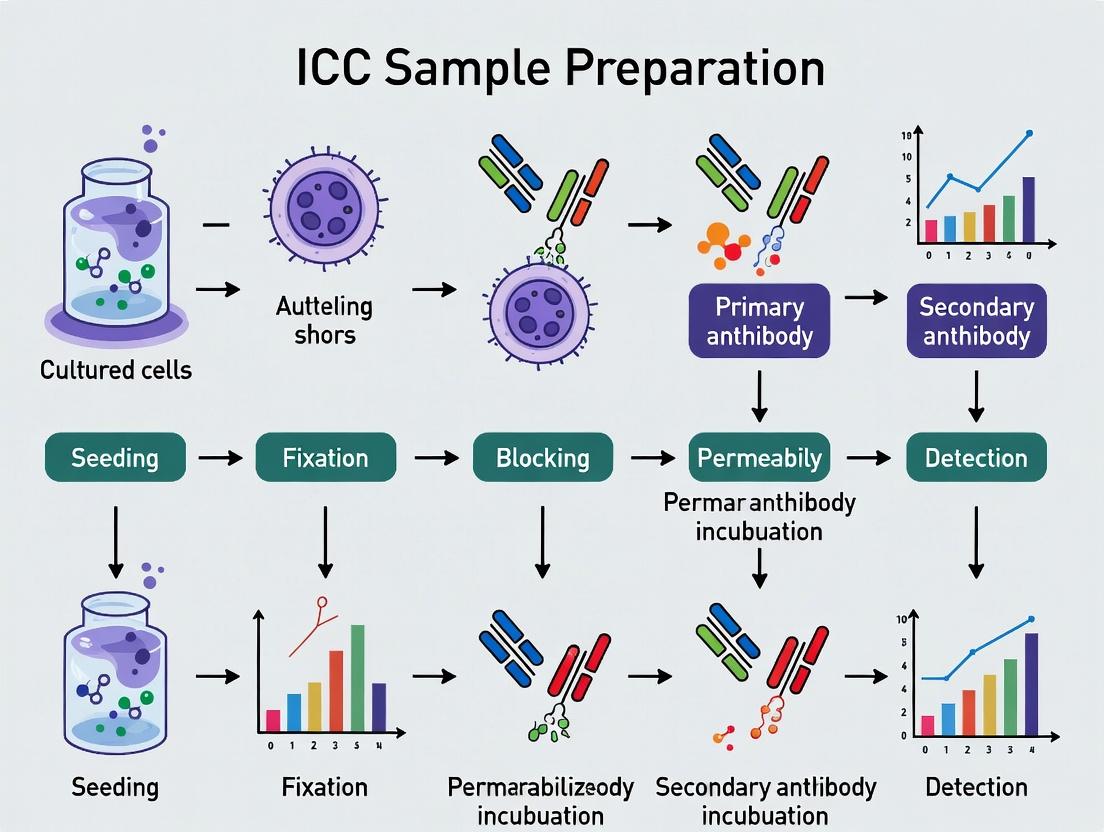
This comprehensive guide provides researchers and drug development scientists with a detailed, step-by-step methodology for preparing high-quality samples for Immunocytochemistry (ICC).
Mastering ICC Sample Prep: A Complete Guide for Cultured Cells & Cell Suspensions
Abstract
This comprehensive guide provides researchers and drug development scientists with a detailed, step-by-step methodology for preparing high-quality samples for Immunocytochemistry (ICC). Covering the full workflow from foundational principles to advanced validation, it explores the critical differences and best practices for adherent cultured cells versus non-adherent suspensions. The article delivers practical protocols, expert troubleshooting tips for common artifacts, and guidance on optimizing fixation, permeabilization, and blocking to ensure specific, reproducible staining. It concludes with essential validation strategies and comparative analyses to confirm assay reliability for biomedical research and preclinical applications.
ICC Fundamentals: Understanding Your Cell Sample for Optimal Prep
Defining ICC and Its Critical Role in Cell-Based Research & Drug Discovery
Immunocytochemistry (ICC) is a core technique for visualizing the presence, subcellular localization, and relative abundance of specific antigens within cultured cells. It plays a critical role in cell biology, cancer research, neuroscience, and drug discovery by providing spatial and morphological context that western blotting or PCR cannot.
Thesis Context: This article details application notes and protocols framed within a broader thesis on optimizing ICC sample preparation for both adherent and suspension cell cultures, a critical step for generating reliable, publication-quality data.
Application Notes
1. Target Validation in Drug Discovery: ICC is indispensable for confirming that a drug candidate modulates its intended protein target within a relevant cellular context. It can show on-target engagement, changes in localization (e.g., nuclear translocation of a transcription factor), or downregulation of a protein.
2. Biomarker Identification & Analysis: In cancer research, ICC is used to detect and quantify expression of prognostic or predictive biomarkers (e.g., HER2, PD-L1) in cell lines, aiding in patient stratification models and therapeutic development.
3. Mechanism of Action (MoA) Studies: By staining for markers of apoptosis (cleaved caspase-3), DNA damage (γ-H2AX), or cell cycle phase (Ki-67), ICC helps elucidate a compound's phenotypic effects and MoA.
4. Neuroscience and Cellular Morphology: ICC enables detailed visualization of neuronal processes, synaptic proteins, and glial markers, critical for neurodegenerative disease research and neurotoxicity screening.
Key Quantitative Metrics in ICC Analysis:
Table 1: Common Quantitative and Semi-Quantitative Readouts in ICC
| Readout | Typical Measurement | Application Example | Common Analysis Tool |
|---|---|---|---|
| Fluorescence Intensity | Mean intensity per cell/nucleus | Quantifying target protein expression level | ImageJ, CellProfiler |
| Subcellular Localization | Cytoplasmic/Nuclear ratio | Measuring transcription factor translocation | ImageJ (Ratio plugins) |
| Percentage Positive Cells | % of DAPI+ cells with signal above threshold | Determining transfection efficiency or cell population response | Manual count, automated segmentation |
| Colocalization | Pearson's or Mander's coefficients | Assessing protein-protein interaction proximity | ImageJ (Coloc 2), Imaris |
Experimental Protocols
Protocol 1: Basic ICC for Adherent Cells
This protocol is optimized for common cell lines (e.g., HEK293, HeLa) grown on coverslips.
A. Materials & Reagents (The Scientist's Toolkit) Table 2: Essential Reagents for ICC
| Reagent/Solution | Function | Key Consideration |
|---|---|---|
| Poly-L-Lysine or Cell-Tak | Coats coverslip to enhance cell adhesion | Critical for difficult-to-attach or primary cells. |
| Paraformaldehyde (PFA) 4% | Cross-linking fixative; preserves morphology. | Freshly prepared or aliquoted, stored at -20°C. |
| Triton X-100 or Saponin | Detergent for permeabilization of cell membranes. | Triton for cytoplasmic/nuclear targets; Saponin for delicate epitopes or membrane-bound antigens. |
| Blocking Serum (e.g., BSA, NGS) | Reduces non-specific antibody binding. | Should match the host species of the secondary antibody. |
| Primary Antibody | Binds specifically to the target antigen. | Must be validated for ICC; optimize concentration. |
| Fluorophore-conjugated Secondary Antibody | Binds to primary antibody for detection. | Must target host species of primary; consider brightness and photostability. |
| Mounting Medium with DAPI | Preserves sample and counterstains nuclei. | Use anti-fade medium for longevity. |
B. Detailed Workflow
- Cell Seeding: Sterilize 12mm glass coverslips in 70% ethanol, air dry, and place in a 24-well plate. Coat if necessary. Seed cells at an appropriate density to reach 60-80% confluence at the time of fixation.
- Fixation: Aspirate culture medium. Add 4% PFA (500 µL/well) and incubate for 15 min at room temperature (RT).
- Permeabilization: Wash 3x with PBS (5 min/wash). Add 0.1% Triton X-100 in PBS (500 µL/well) for 10 min at RT.
- Blocking: Wash 1x with PBS. Add blocking solution (e.g., 3% BSA in PBS, 300 µL/well) for 60 min at RT.
- Primary Antibody Incubation: Prepare primary antibody in blocking solution. Apply 50-100 µL droplet onto a parafilm. Invert coverslip onto droplet (cells facing down). Incubate for 1-2 hours at RT or overnight at 4°C in a humidified chamber.
- Secondary Antibody Incubation: Return coverslip to well, cell-side up. Wash 3x with PBS (5 min/wash). Incubate with fluorophore-conjugated secondary antibody (in blocking solution) for 45-60 min at RT in the dark.
- Mounting: Wash 3x with PBS (5 min/wash). Perform a final rinse in dH₂O to remove salts. Mount coverslip onto a glass slide using ~10 µL of mounting medium with DAPI. Seal edges with clear nail polish.
Protocol 2: ICC for Suspension Cells (e.g., Jurkat, PBMCs)
This protocol uses cytospin centrifugation to attach cells to slides.
- Cell Preparation: Harvest and wash cells twice in PBS. Count and adjust concentration to 0.5-1 x 10^6 cells/mL in PBS or culture medium.
- Cytospin: Assemble cytospin funnel with slide and filter card. Add 100-200 µL cell suspension per chamber. Centrifuge at 300 x g for 5 min.
- Fixation & Staining: Immediately after cytospin, while slides are still slightly damp, immerse slide in coplin jar with 4% PFA for 15 min. From this point, follow Protocol 1 from Step 3 (Permeabilization) onwards, performing all washes and incubations by immersing slides in coplin jars or using a humidified slide staining chamber with carefully applied droplets.
Visualization
ICC Workflow for Adherent Cells
ICC Elucidates Drug Mechanism of Action
ICC Protocol for Suspension Cells
Introduction Within the broader thesis on ICC sample preparation, the fundamental divergence between adherent and suspension cell systems dictates distinct preparatory workflows. The core challenge lies in preserving cytological architecture and antigen accessibility while transitioning from a native growth state to a fixed, permeable state on a slide. This application note details the critical differential steps, protocols, and considerations for these two primary cell culture models.
Core Differences Summary
Table 1: Comparison of Key Sample Preparation Steps
| Preparation Step | Adherent Cultures | Cell Suspensions (PBMCs, Blood, Suspension Lines) |
|---|---|---|
| Harvesting | Enzymatic (Trypsin) or mechanical detachment; risk of epitope damage. | Already in suspension; may require density gradient centrifugation (e.g., Ficoll-Paque) for PBMCs. |
| Cell Washing | Post-detachment to remove trypsin/EDTA and serum. | Multiple washes to remove plasma proteins, platelets, or separation medium. |
| Cytospin/Centrifugation | Often not required; cells can be seeded directly onto slides/wells. | Critical step. Cytocentrifugation deposits cells onto slides while maintaining morphology. |
| Fixation Timing | Can be fixed in situ on growth surface, preserving cell-extracellular matrix interactions. | Fixed after attachment to slide, often post-cytospin. |
| Fixation Method | Direct application of fixative to culture vessel. | Immersion of slide in fixative or droplet application to cell pellet. |
| Permeabilization | Often combined with detergent in fixation buffer (e.g., 0.1% Triton X-100 in paraformaldehyde). | Typically a separate, post-fixation step. Critical for larger immune cells (e.g., lymphocytes). |
| Drying & Adhesion | Cells naturally adhere during culture. | Slides must be pre-coated (e.g., poly-L-lysine); air-drying post-cytospin aids adhesion. |
Detailed Protocols
Protocol 1: ICC for Adherent Cells Grown on Coverslips Objective: To fix and permeabilize adherent cells while preserving spatial and subcellular context.
- Culture: Seed cells onto sterile coverslips placed in a multi-well plate.
- Wash: Aspirate medium. Wash cells gently with 1X PBS, pre-warmed to 37°C.
- Fix: Incubate in 4% paraformaldehyde (PFA) in PBS for 15 minutes at room temperature (RT).
- Permeabilize: Incubate in 0.1% Triton X-100 in PBS for 10 minutes at RT.
- Block: Incubate in blocking buffer (e.g., 3% BSA in PBS) for 1 hour at RT.
- Proceed to primary antibody staining.
Protocol 2: ICC for Peripheral Blood Mononuclear Cells (PBMCs) via Cytospin Objective: To deposit suspension cells onto a slide while maintaining integrity for ICC.
- Isolate PBMCs: Layer diluted blood over Ficoll-Paque. Centrifuge at 400 × g for 30 minutes at RT (brake off). Harvest PBMC layer.
- Wash: Wash cells twice in PBS containing 1% BSA and 2 mM EDTA.
- Count & Adjust: Resuspend cell pellet at 1 × 10^6 cells/mL in complete medium or PBS.
- Cytocentrifuge: Load 100-200 µL of cell suspension into a cytospin funnel. Centrifuge at 100 × g for 5 minutes onto a poly-L-lysine-coated slide.
- Fix: Immediately immerse slide in 4% PFA for 15 minutes at RT. Do not let cells dry before fixation.
- Permeabilize: Immerse slide in ice-cold 100% methanol for 10 minutes at -20°C (or use 0.1% Triton X-100).
- Block & Stain: Proceed with blocking and antibody staining as for adherent cells.
Visualization: Workflow Diagrams
Diagram Title: ICC Workflow Comparison: Adherent vs Suspension Cells
Diagram Title: Decision Path for ICC Sample Preparation
The Scientist's Toolkit: Essential Research Reagent Solutions
Table 2: Key Reagents and Their Functions
| Reagent/Material | Primary Function | Key Consideration |
|---|---|---|
| Poly-L-Lysine Coated Slides | Provides a cationic surface to enhance adhesion of suspension cells during cytospin. | Prevents cell loss during subsequent wash steps. |
| Ficoll-Paque Density Gradient Medium | Isolates PBMCs from whole blood via density centrifugation. | Critical for obtaining pure lymphocyte/monocyte populations. |
| Cytocentrifuge | Instrument to deposit suspension cells onto a defined area of a slide via low-speed centrifugation. | Centrifugal force and time must be optimized to preserve morphology. |
| Paraformaldehyde (PFA), 4% | Cross-linking fixative. Preserves protein structure and cellular architecture. | Fresh or freshly thawed aliquots recommended for optimal fixation. |
| Methanol (100%, cold) | Precipitating fixative and permeabilizing agent. Effective for many nuclear and cytoplasmic antigens. | Can destroy some epitopes; requires compatibility testing. |
| Triton X-100 / Saponin | Detergent-based permeabilization agents. Create pores in lipid membranes for antibody access. | Concentration and incubation time are critical to avoid over-extraction. |
| Bovine Serum Albumin (BSA) | Blocking agent to reduce nonspecific antibody binding. | Used at 1-5% in PBS or as a component of antibody dilution buffers. |
Effective Immunocytochemistry (ICC) is foundational for cellular and drug discovery research, enabling visualization of protein expression, localization, and interactions within cultured cells and suspension systems. The success of an ICC experiment hinges on three interdependent pillars: precise knowledge of the target antigen's subcellular localization, rigorous validation of antibody compatibility for fixed and permeabilized samples, and unambiguous alignment with overarching experimental goals. This protocol, framed within a thesis on advanced ICC sample preparation, provides researchers and drug development professionals with a structured, evidence-based approach to planning and executing high-quality ICC experiments.
Core Considerations & Data Synthesis
Antigen Localization
Understanding the expected subcellular compartment of your target dictates all subsequent sample preparation steps. Mismatched protocols can lead to false negatives or artifactual localization.
Table 1: Antigen Localization and Corresponding ICC Protocol Requirements
| Localization | Fixation Recommendation | Permeabilization Requirement | Primary Antibody Host/Clonality Consideration |
|---|---|---|---|
| Cell Surface | 4% PFA, 10-15 min, 4°C | Mild (0.1% Triton X-100, 5 min) OR None | Prefer monoclonal for specific epitope targeting |
| Cytoplasmic | 4% PFA or Methanol/Acetone | Required (0.2-0.5% Triton, 10-15 min) | Polyclonal may increase detection sensitivity |
| Nuclear | 4% PFA | Required (0.5% Triton, 15-20 min) | Check for cross-reactivity with other nuclear proteins |
| Mitochondrial | 4% PFA | Required (0.1% Digitonin, 10 min) | Verify organelle specificity via knockout controls |
| Cytoskeletal | Cold Methanol (-20°C, 10 min) | Often intrinsic to fixation | Monoclonal antibodies (e.g., anti-alpha-Tubulin) preferred |
Antibody Compatibility
A critical, often overlooked step is validating that the primary antibody recognizes its epitope after the chosen fixation and permeabilization steps. Recent searches of vendor databases and publications indicate that >30% of antibodies fail in ICC under standard conditions if not explicitly validated.
Table 2: Antibody Validation Checklist for ICC
| Validation Criteria | Acceptable Result | Typical Failure Rate (Literature Estimate) |
|---|---|---|
| ICC-Application Specific Citation | Peer-reviewed publication using same fixation | ~25% of antibodies lack direct ICC citation |
| Knockout/Knockdown Control | Loss of signal in KO/KD cells | Essential for 95% confidence; <10% of users routinely perform |
| Isotype Control Staining | No specific signal | Standard practice; identifies 15-20% of non-specific binders |
| Titration Optimization | Signal-to-noise ratio >5:1 | 60% of protocols use manufacturer suggestion without titration |
| Cross-Reactivity Check (BLAST) | No high homology to off-target proteins | Particularly critical for polyclonals and novel targets |
Experimental Protocols
Protocol: Pre-Experimental Antibody & Condition Validation
Objective: To systematically determine optimal fixation, permeabilization, and antibody conditions for a novel target in HeLa cells.
Materials:
- HeLa cells cultured on 8-well chambered slides.
- Candidate primary antibodies (at least two different clones or host species if available).
- Validated positive control antibody (e.g., anti-beta-Actin).
- Fixatives: 4% PFA in PBS, 100% Methanol (pre-chilled to -20°C).
- Permeabilization agents: 0.1%, 0.25%, 0.5% Triton X-100 in PBS; 0.1% Digitonin.
- Blocking buffers: 1% BSA/PBS, 5% normal serum/PBS.
- Secondary antibodies with minimal cross-reactivity, conjugated to Alexa Fluor 488, 555, or 647.
- Nuclear stain (e.g., DAPI, Hoechst 33342).
- Mounting medium.
Method:
- Plate cells at 70% confluency and allow to adhere for 24h.
- Fixation Matrix: Fix separate wells with:
- A: 4% PFA, 15 min, RT.
- B: Methanol, 10 min, -20°C.
- C: 4% PFA followed by methanol (post-fixation), 5 min each.
- Permeabilization Matrix: For each fixation group, treat with:
- i: No permeabilization.
- ii: 0.1% Triton X-100, 5 min.
- iii: 0.5% Triton X-100, 15 min.
- iv: 0.1% Digitonin, 10 min.
- Blocking: Block all wells with chosen buffer (1% BSA) for 1h at RT.
- Antibody Titration: Apply primary antibody at three concentrations (e.g., 1:100, 1:500, 1:1000) in duplicate wells. Include no-primary and isotype controls.
- Incubation: Incubate overnight at 4°C in a humidified chamber.
- Wash & Secondary: Wash 3x with PBS, apply appropriate secondary antibody (1:1000) for 1h at RT, protected from light.
- Counterstain & Mount: Wash 3x, apply DAPI (300 nM) for 5 min, wash, and mount.
- Imaging & Analysis: Image using consistent settings on a confocal microscope. Quantify signal intensity (target channel) and background (isotype control channel) for Signal-to-Noise Ratio (SNR) calculation.
Optimal Condition Selection: Choose the condition yielding the highest SNR with correct expected localization, confirmed by the positive control.
Protocol: Co-Localization Analysis for Pathway Validation
Objective: To validate the involvement of a target protein in a specific signaling pathway by assessing co-localization with a pathway marker.
Method:
- Prepare cells using the optimal fixation/permeabilization conditions determined in Protocol 3.1.
- Perform sequential immunostaining:
- Apply primary antibody for Target Protein (Host: Rabbit) and primary antibody for Pathway Marker (e.g., Phospho-ERK; Host: Mouse) simultaneously in blocking buffer.
- Incubate overnight at 4°C.
- Wash 3x with PBS.
- Apply anti-Rabbit IgG-Alexa Fluor 555 and anti-Mouse IgG-Alexa Fluor 488 for 1h at RT.
- Acquire high-resolution z-stack images (0.2 µm slices) on a confocal microscope.
- Analysis: Use ImageJ/Fiji with JACoP plugin or similar software to calculate Manders' Overlap Coefficients (M1 & M2) and Pearson's Correlation Coefficient (PCC) for 10+ cells. PCC >0.5 suggests significant co-localization.
The Scientist's Toolkit: Research Reagent Solutions
Table 3: Essential Materials for ICC Optimization
| Item | Function & Rationale |
|---|---|
| Poly-D-Lysine Coated Coverslips | Enhances adherence of suspension cells and delicate primary cultures, preventing loss during processing. |
| Crosslinking Fixative (4% PFA) | Preserves protein structure and cellular architecture by forming covalent crosslinks; ideal for most localization studies. |
| Precipitating Fixative (Cold Methanol) | Precipitates proteins, often better for retaining antigenicity of some phosphorylation sites and cytoskeletal elements. |
| Digitonin | Cholesterol-binding detergent; selectively permeabilizes the plasma membrane while leaving nuclear envelope intact—ideal for cytoplasmic or mitochondrial targets. |
| Triton X-100 or Tween-20 | Non-ionic detergents for general permeabilization of lipid membranes; concentration and time are critical variables. |
| Normal Serum from Secondary Host | Used in blocking buffer to reduce non-specific binding of secondary antibodies. |
| Glycine (0.1 M) | Quenching agent for aldehyde fixatives, reduces autofluorescence from unreacted PFA. |
| Antibody Diluent with Carrier Protein | Stabilizes diluted antibodies during long incubations; often contains BSA and sodium azide. |
| ProLong Diamond or similar antifade mountant | Presves fluorescence signal during storage and imaging; contains DAPI for nuclear counterstain in some formulations. |
| Validated Positive Control Antibody | Essential procedural control to confirm protocol is working (e.g., anti-Tubulin for cytoplasm, anti-Lamin B1 for nucleus). |
Visualizations
Diagram Title: ICC Experimental Design & Workflow Logic
Diagram Title: ICC Validates Target in PI3K-AKT-mTOR Pathway
Immunocytochemistry (ICC) for cultured cells and cell suspensions is a cornerstone technique in cell biology and drug discovery research. Consistent and high-quality results depend on a rigorous, standardized approach to sample preparation. This article provides detailed application notes and protocols framed within a thesis on optimizing ICC for quantitative analysis in research and development.
The Scientist's Toolkit: Essential Reagents for ICC
Table 1: Core Reagents and Equipment for ICC Sample Preparation
| Item | Primary Function | Key Considerations & Examples |
|---|---|---|
| Fixatives | Preserve cellular morphology and antigenicity by cross-linking or precipitating proteins. | 4% Paraformaldehyde (PFA): Gold standard for most targets; cross-links proteins. Methanol: Precipitates proteins; good for intracellular antigens; permeabilizes. Acetone: Precipitates proteins; used for frozen/cytoskeletal antigens. |
| Permeabilization Agents | Allow antibodies to access intracellular epitopes by disrupting the lipid membrane. | Triton X-100 (0.1-0.5%): Non-ionic detergent. Saponin (0.1%): Mild, cholesterol-specific; used for delicate membrane proteins. Tween-20 (0.1%): Mild alternative for surface antigens only. |
| Blocking Buffers | Reduce non-specific antibody binding by saturating reactive sites. | BSA (1-5%): Standard protein blocker. Normal Serum (1-10%): Matches host species of secondary antibody. Casein: Effective in phosphate buffers. |
| Primary Antibodies | Specifically bind to the target antigen. | Monoclonal (specific) vs. polyclonal (sensitive). Must be validated for ICC. Titration is critical (typical range: 1:100 - 1:1000). |
| Secondary Antibodies | Conjugated to fluorophores; bind to primary antibody for detection. | Must be raised against host species of primary antibody. Multiple fluorophores available (e.g., Alexa Fluor 488, 568, 647). |
| Mounting Media | Preserve fluorescence and provide refractive index matching for microscopy. | Antifade Media: Contains agents (e.g., DABCO, p-phenylenediamine) to reduce photobleaching. Aqueous: For immediate viewing. Hard-setting (e.g., with Polyvinyl Alcohol): For permanent seals. DAPI-containing: For nuclear counterstaining. |
| Coverslips/Plates | Substrate for cell growth. | #1.5 Thickness (0.17mm): Optimal for high-resolution microscopy. Glass: Best for image quality. Poly-D-Lysine/Collagen Coated: Enhances cell adhesion. |
| Humidified Chamber | Prevents evaporation of small antibody volumes during incubation. | Simple DIY chambers using pipette tip boxes with wet paper towels. |
Detailed Application Notes & Protocols
Protocol 1: Standard ICC for Adherent Cultured Cells
This protocol is optimized for 4% PFA fixation and Triton X-100 permeabilization, suitable for most cytoplasmic and nuclear targets.
Materials:
- Cells grown on poly-D-lysine coated #1.5 glass coverslips in a multi-well plate.
- 1X Phosphate Buffered Saline (PBS), pH 7.4.
- 4% Paraformaldehyde (PFA) in PBS, freshly prepared or aliquoted from frozen stock.
- Permeabilization/Blocking Buffer: 0.3% Triton X-100, 5% Normal Serum (from secondary host species) in PBS.
- Antibody Dilution Buffer: 1% BSA, 0.1% Triton X-100 in PBS.
- Primary and fluorescent secondary antibodies.
- DAPI (1 µg/mL in PBS or in mounting media).
- Antifade Mounting Medium.
- Nail polish.
Procedure:
- Fixation: Aspirate culture medium. Gently wash cells twice with warm (37°C) PBS. Add enough 4% PFA to cover cells (e.g., 500 µL/well of 24-well plate). Incubate for 15 minutes at room temperature (RT).
- Washing: Aspirate PFA. Wash cells 3 x 5 minutes with PBS on a gentle rocker. Note: PFA waste must be disposed of as hazardous chemical waste.
- Permeabilization & Blocking: Incubate cells with Permeabilization/Blocking Buffer for 60 minutes at RT. This step permeabilizes membranes and blocks non-specific sites.
- Primary Antibody Incubation: Prepare primary antibody in Antibody Dilution Buffer. Centrifuge briefly before use. Place a 50-100 µL drop of antibody solution on a piece of Parafilm in a humidified chamber. Invert the coverslip (cell-side-down) onto the drop. Incubate overnight at 4°C. Alternatively, incubate for 1-2 hours at RT.
- Washing: Return the coverslip to the well, cell-side-up. Wash 3 x 10 minutes with PBS + 0.05% Tween-20 (PBST) on a rocker.
- Secondary Antibody Incubation: Prepare fluorophore-conjugated secondary antibody (e.g., 1:500 dilution) in Antibody Dilution Buffer, protected from light. Incubate on Parafilm as in Step 4 for 60 minutes at RT in the dark.
- Washing & Counterstaining: Wash 3 x 10 minutes with PBST in the dark. Incubate with DAPI solution for 5 minutes at RT. Perform a final wash with PBS for 5 minutes.
- Mounting: Place a small drop (~10 µL) of antifade mounting medium on a clean glass slide. Carefully invert the coverslip (cell-side-down) onto the medium, avoiding bubbles. Gently blot excess liquid and seal edges with clear nail polish. Store slides flat at 4°C in the dark.
Protocol 2: ICC for Non-Adherent Cell Suspensions
This protocol is for cells in suspension (e.g., lymphocytes, cell line derivatives) using a cytospin to attach cells to slides.
Materials:
- Cytocentrifuge (cytospin).
- Cytoslides and cytofunnels.
- All solutions from Protocol 1.
Procedure:
- Cell Preparation: Wash cell suspension twice in PBS by centrifugation (300 x g, 5 min). Resuspend to a density of 0.5-1 x 10^6 cells/mL in PBS or culture medium.
- Cytospin: Load 100-200 µL of cell suspension into a cytofunnel. Cytospin at 300-500 rpm for 5 minutes to adhere cells to the slide.
- Fixation & Staining: Immediately after cytospin, while slides are still slightly damp, place them in a coplin jar with 4% PFA for 15 min at RT. Proceed with washes, permeabilization/blocking, and antibody incubations (Steps 2-7 from Protocol 1), performing all steps with slides in a humidified staining box. Use ~100-200 µL of solution to cover the cell spot.
- Mounting: Apply mounting medium and a coverslip directly over the cell spot. Seal with nail polish.
Quantitative Data Summary
Table 2: Optimization Parameters for Key ICC Steps
| Step | Parameter | Recommended Range | Impact of Deviation |
|---|---|---|---|
| Fixation (4% PFA) | Time | 10-20 min (RT) | Under-fixation: poor morphology. Over-fixation: antigen masking. |
| Permeabilization (Triton X-100) | Concentration | 0.1% (surface) - 0.5% (intra.) | Too high: disrupts morphology/ organelle integrity. Too low: poor Ab penetration. |
| Blocking | Time | 30-60 min (RT) | Insufficient blocking leads to high background noise. |
| Primary Antibody | Incubation | O/N at 4°C or 1-2h at RT | O/N at 4°C often increases signal-to-noise ratio. |
| Secondary Antibody | Concentration | Manufacturer's rec. (often 1:500-1:1000) | Too high: non-specific binding. Too low: weak signal. |
| DAPI | Concentration | 1 µg/mL | Too high: saturated nuclear signal. Too low: faint nuclei. |
ICC Workflow for Adherent Cells
Reagent Selection Logic for Antigen Preservation
Application Notes & Protocols Thesis Context: Optimizing Immunocytochemistry (ICC) Sample Preparation for Cultured Cells and Suspensions in Drug Discovery
Hazard Identification & Quantitative Risk Assessment
Effective ICC workflows necessitate handling multiple hazardous agents. A risk-based approach is fundamental.
Table 1: Quantitative Exposure Limits & Hazard Classification for Common ICC Reagents
| Reagent/Chemical | Primary Hazard(s) | OSHA PEL (8-hr TWA) | ACGIH TLV | NFPA Health Rating | Required PPE (Minimum) |
|---|---|---|---|---|---|
| Paraformaldehyde (Fixative) | Toxic, Corrosive, Suspect Carcinogen | 0.1 ppm (as formaldehyde) | 0.1 ppm (Ceiling) | 3 | Nitrile gloves (≥0.11mm), lab coat, safety goggles, fume hood |
| Methanol (Fixative/Permeabilizer) | Flammable, Toxic | 200 ppm | 200 ppm | 1 | Chemical-resistant gloves, lab coat, splash protection, fume hood |
| Triton X-100 (Detergent) | Irritant | Not established | Not established | 1 | Nitrile gloves, lab coat, safety glasses |
| DAPI (Nucleic Acid Stain) | Mutagen, Potential Carcinogen | Not established | Not established | 2 | Nitrile gloves, lab coat, safety goggles, designated waste stream |
| Human Cell Suspensions (Untreated) | Biological (BSL-2) | N/A | N/A | N/A | Gloves, lab coat, biological safety cabinet, face protection |
| Sodium Azide (Preservative) | Toxic, Explosive (when mixed with metals) | 0.1 ppm (as azide) | 0.01 ppm (Skin) | 3 | Nitrile gloves, lab coat, fume hood, avoid metal plumbing |
Data sourced from current SDS databases and institutional safety guidelines (2024). PEL: Permissible Exposure Limit. TLV: Threshold Limit Value.
Detailed Experimental Protocols
Protocol 2.1: Safe Fixation of Adherent Cultures for ICC
Objective: To preserve cellular architecture while inactivating biohazards (e.g., infected cultures).
- Primary Containment: Perform all steps in a Class II Biological Safety Cabinet (BSC) for potentially infectious cultures. For non-infectious materials, a chemical fume hood is mandatory when handling fixatives.
- Aspiration & Wash: Aspirate culture media into a liquid biohazard waste container. Gently wash cells with 2 mL of pre-warmed, sterile 1X PBS per well (12-well plate). Aspirate waste.
- Fixation: Prepare 4% Paraformaldehyde (PFA) in PBS in a fume hood. Do not heat to dissolve; use commercially prepared, aliquoted solutions or prepare under controlled, ventilated conditions.
- Application: Apply 1 mL of 4% PFA per well. Incubate for 15 minutes at room temperature (RT) within the BSC or fume hood.
- Deactivation & Removal: Aspirate PFA into a dedicated chemical waste container labeled for hazardous fixative waste. Rinse cells 3x with 2 mL of PBS. All wash waste is considered contaminated and must be collected as hazardous liquid waste.
- Storage: Fixed cells can be stored in PBS at 4°C for up to 1 week. Seal plate with parafilm.
Protocol 2.2: Safe Staining with DAPI for Nuclear Visualization
Objective: To label nuclei with appropriate mutagen handling precautions.
- Preparation: Prepare a 1 mg/mL stock solution of DAPI in water or DMSO in a fume hood. Aliquot and store at -20°C, protected from light. Label clearly: "MUTAGEN - DAPI."
- Working Solution: Dilute stock to a final concentration of 300 nM (approx. 1:3000 dilution) in PBS or antibody dilution buffer. Prepare only the volume needed.
- Application (Post-Antibody Incubation): After secondary antibody steps and final PBS washes, apply 200-500 µL of DAPI working solution per well. Incubate for 5 minutes at RT, protected from light.
- Containment & Clean-up: Perform all pipetting on absorbent pads. Use tips with filters to prevent aerosol contamination.
- Final Wash: Remove DAPI solution to a dedicated DAPI/Mutagen Waste container. Wash cells 3x with PBS, collecting all wash waste in the same dedicated container.
- Mounting: Mount with an aqueous, anti-fade mounting medium. Wipe any residual fluid from the slide with a disposable wipe, which must be disposed of as solid hazardous waste.
Protocol 2.3: Decontamination & Waste Segregation Workflow
Objective: To ensure proper inactivation and disposal of all hazardous materials.
- Solid Waste: Contaminated tips, tubes, and wipes go into autoclave bags for biohazardous waste or solid chemical waste bins as appropriate.
- Liquid Waste: Segregate into clearly labeled, chemically compatible containers:
- Fixative Waste: PFA, formaldehyde, glutaraldehyde.
- Organic Solvent Waste: Methanol, acetone, DMSO.
- DAPI/Mutagen Waste: All liquids exposed to DAPI.
- Biological Liquid Waste: Media, washes from unfixed BSL-2 materials (must be inactivated with bleach or autoclaved).
- Surface Decontamination: After protocol completion, decontaminate BSC/fume hood and work surfaces with 70% ethanol (for general cleaning) followed by a 10% bleach solution (for biological inactivation). Rinse with water to prevent corrosion.
Visualizations
ICC Workflow with Critical Safety Steps Highlighted
Hazardous Waste Segregation and Decontamination Pathway
The Scientist's Toolkit: Essential Research Reagent Solutions
Table 2: Key Reagents for Safe and Effective ICC Sample Preparation
| Item | Function & Safety-Specific Properties | Rationale for Selection |
|---|---|---|
| Pre-prepared, Sealed 4% PFA Ampules | Ready-to-use fixative. Eliminates inhalation risk from powder weighing and solution heating. | Maximizes researcher safety, ensures consistent fixation, saves time. |
| DAPI, 10 mg/mL, Pre-diluted in Antifade Mountant | Combines nuclear stain with fade retardant. Pre-dilution minimizes direct handling of mutagenic powder. | Reduces mutagen exposure risk, simplifies protocol, improves signal longevity. |
| Paraformaldehyde Neutralizing Buffer | Contains reagents (e.g., sodium bisulfite) to polymerize and neutralize residual formaldehyde in waste. | Converts hazardous liquid waste to less hazardous solid polymer for safer disposal. |
| BSL-2 Rated Cell Culture Media | Contains antibiotics/antimycotics appropriate for handling potentially infectious human cell suspensions. | Primary barrier against biological hazard proliferation in culture. |
| Chemical-Compatible, Labeled Waste Containers | Dedicated, color-coded containers for fixative, mutagen, solvent, and biohazard waste. | Prevents dangerous chemical interactions, ensures regulatory compliance. |
| Barrier Filter Pipette Tips (Aerosol-Resistant) | Prevent liquid and aerosol from entering pipette body during aspiration of hazardous liquids. | Critical for preventing contamination of equipment and exposure during biohazard/DAPI handling. |
| Nitrile Gloves (0.11mm+ thickness, ASTM rated) | Provide chemical permeation resistance for solvents and fixatives. | Superior protection over latex or thin vinyl; must be changed immediately if contaminated. |
| Absorbent Bench Protector Pads (Solid-Back) | Create a contained, liquid-absorbent work surface. | Contains spills, simplifies clean-up of splashes from hazardous reagents. |
Step-by-Step ICC Protocols: From Harvest to Blocking
This protocol forms the foundational chapter of a thesis on Immunocytochemistry (ICC) sample preparation, addressing the critical pre-analysis phase for cultured cells and suspensions research. Proper adherent cell preparation is paramount for generating morphologically accurate, reproducible, and biologically relevant ICC data, which directly impacts downstream analysis in cell biology and drug development.
Research Reagent Solutions (The Scientist's Toolkit)
| Item | Function & Explanation |
|---|---|
| Poly-L-Lysine | A cationic polymer that coats negatively charged surfaces (e.g., glass, plastic), enhancing cellular attachment via electrostatic interactions. |
| Collagen I | Extracellular matrix protein coating that mimics the in vivo basement membrane, promoting attachment and signaling for many epithelial and fibroblastic cells. |
| Fibronectin | A glycoprotein coating that mediates cell adhesion and spreading by binding to integrin receptors, crucial for cell migration and differentiation studies. |
| Matrigel | A basement membrane matrix extract rich in laminin, collagen IV, and growth factors, used for complex 3D culture models and specialized differentiation protocols. |
| 0.25% Trypsin-EDTA | Proteolytic enzyme (trypsin) combined with a chelating agent (EDTA) to dissociate cell-cell and cell-matrix adhesions for gentle and effective cell detachment. |
| Cell Culture-Grade PBS | Phosphate-buffered saline used for rinsing cells without osmotic shock and for diluting coating solutions. |
| Defined Fetal Bovine Serum (FBS) | Serum provides essential growth factors, hormones, and attachment factors that support proliferation and health of many adherent cell lines. |
| Suitable Cell Culture Medium | Formulated with essential nutrients (amino acids, vitamins, glucose), buffering systems, and supplements specific to the cell type. |
Quantitative Data on Common Coating Strategies
Table 1: Characteristics and Applications of Common Surface Coatings
| Coating Agent | Typical Working Concentration | Incubation Time/Temp | Key Target Cell Types | Primary Mechanism |
|---|---|---|---|---|
| Poly-L-Lysine | 0.01% - 0.1% (w/v) | 1 hr, RT or 37°C | Neuronal cells, HeLa, HEK293 | Electrostatic adhesion |
| Collagen I | 5-50 µg/mL | 1 hr, 37°C or O/N, 4°C | Fibroblasts, epithelial cells, hepatocytes | Integrin-mediated adhesion |
| Fibronectin | 1-10 µg/mL | 1-2 hrs, 37°C | Endothelial cells, stem cells, fibroblasts | Integrin-mediated adhesion |
| Matrigel | 50-300 µg/mL (diluted) | 1 hr, 37°C (gels) | iPSCs, organoids, epithelial cells | Multi-receptor engagement |
Experimental Protocol: Standardized Seeding & Coating Workflow
A. Surface Coating Protocol
- Dilution: Prepare the chosen coating solution in sterile, cell culture-grade PBS or distilled water at the desired concentration (see Table 1).
- Application: Add enough solution to cover the growth surface of the culture vessel (e.g., 1 mL for a 35-mm dish, 50 µL per well for a 96-well plate).
- Incubation: Incubate according to parameters in Table 1.
- Rinsing & Drying: Aspirate the coating solution. Rinse the surface twice with sterile PBS. Allow the vessel to air dry completely in a sterile laminar flow hood.
- Storage: Coated vessels can be used immediately or sealed and stored at 4°C for up to one week.
B. Cell Seeding Protocol for Optimal ICC
- Cell Harvest: Culture source cells to 70-80% confluence. Aspirate medium, rinse with PBS, and add pre-warmed 0.25% Trypsin-EDTA. Incubate at 37°C until cells detach (2-5 min).
- Neutralization & Counting: Neutralize trypsin with complete medium containing serum. Centrifuge cell suspension (120 x g, 5 min), resuspend in fresh medium, and count using a hemocytometer or automated cell counter.
- Seeding Density Calculation: Calculate the required cell volume to achieve the optimal density. For a standard monolayer in a 96-well plate, this is typically 15,000 - 50,000 cells/cm². Example: For a 96-well plate (well growth area ~0.32 cm²), seed approximately 5,000-16,000 cells per well in 100 µL medium.
- Seeding: Add the calculated cell suspension to the pre-coated culture vessel. Gently rock the vessel side-to-side and front-to-back to ensure even distribution.
- Growth & Monitoring: Place vessels in a 37°C, 5% CO₂ humidified incubator. Monitor attachment and confluence daily. Proceed to fixation for ICC when cells reach the desired confluence (typically 60-80% for optimal morphology and antibody penetration).
Visualizations
Adherent Cell Preparation Workflow
Mechanism of Cell Adhesion to Coatings
Within the broader thesis on optimizing Immunocytochemistry (ICC) sample preparation, this protocol addresses the critical transition from a cell suspension to an analyzable sample. The method of cell deposition directly influences cell morphology, antigen preservation, and staining quality. This document details three core techniques—concentration by centrifugation, cytospin, and adhesion—providing application notes for their use in cultured cells and primary suspension research for drug development and diagnostic assays.
Application Notes: Method Selection Guide
The choice of method depends on cell type, subsequent analysis, and the target antigens.
- Concentration by Centrifugation: Ideal for creating a loose pellet for bulk processing or embedding. Best for robust cells where high recovery is critical, but may promote clumping.
- Cytospin Centrifugation: The gold standard for preparing diagnostic smears from low-cellularity fluids (e.g., CSF, pleural effusions). It concentrates cells onto a defined area while preserving morphology, essential for rare cell analysis.
- Adhesion Methods (Slide/Chamber): Preferred for experiments requiring subsequent live-cell imaging, sequential staining, or when simulating in-vivo adherent conditions. Coating substrates (e.g., Poly-L-Lysine, collagen) enhance attachment for semi-adherent or sensitive primary cells.
Table 1: Comparative Analysis of Cell Deposition Methods
| Method | Optimal Cell Number | Key Advantage | Primary Limitation | Best For |
|---|---|---|---|---|
| Simple Concentration | High (>1x10⁶) | High cell recovery, simple protocol | Poor monolayer, cell clumping | Preparation for pellet embedding or RNA/DNA extraction. |
| Cytospin | Low (5x10⁴ – 2x10⁵) | Excellent cell morphology, minimal loss | Specialized equipment required, cell stress | Clinical cytology, low-count samples (e.g., CSF, blood). |
| Static Adhesion | Variable | Maintains native state, allows for live imaging | Slow, uneven plating for some cells | Cultured adherent cell lines, time-course experiments. |
| Coated-Surface Adhesion | Variable | Enhances attachment of sensitive cells | Additional coating step required | Primary cells, neurons, stem cells, semi-adherent lines. |
Detailed Experimental Protocols
Protocol 2.1: Cell Concentration by Centrifugation
Objective: To create a concentrated cell pellet from a suspension.
- Harvest cells and transfer suspension to a conical centrifuge tube.
- Centrifuge at 300 x g for 5 minutes at 4°C (or appropriate for cell type).
- Carefully decant or aspirate supernatant without disturbing the pellet.
- Gently resuspend the pellet in a small, known volume of PBS or desired medium for counting or direct application to a substrate.
Protocol 2.2: Cytospin Preparation
Objective: To deposit cells evenly onto a microscope slide in a defined focal area.
- Assemble the cytospin funnel and clip with a labeled microscope slide and filter card.
- Load 100-200 µL of cell suspension (adjusted to ~1x10⁵ cells/mL) into the sample chamber.
- Centrifuge in a cytocentrifuge at 500 rpm (approx. 30-50 x g) for 3-5 minutes.
- Immediately and carefully disassemble the chamber. Air-dry the slide for 5-10 minutes before fixation for ICC.
Protocol 2.3: Adhesion via Coated Chamber Slides
Objective: To allow cells to adhere naturally to a coated surface, mimicking physiological conditions.
- Surface Coating: Apply a thin layer of Poly-L-Lysine (0.01%) or appropriate extracellular matrix (e.g., collagen I, 50 µg/mL) to the well. Incubate 1 hour at 37°C or overnight at 4°C. Aspirate and air-dry completely.
- Seed the prepared cell suspension at the desired density into each chamber.
- Allow cells to adhere in a humidified incubator (37°C, 5% CO₂) for 4-24 hours.
- Verify adherence via light microscopy before proceeding to fixation and ICC staining.
Visualizations
Decision Workflow for ICC Sample Preparation Method
The Scientist's Toolkit: Research Reagent Solutions
Table 2: Essential Materials for Cell Suspension Preparation
| Item | Function & Application Notes |
|---|---|
| Conical Centrifuge Tubes (15/50 mL) | Standardized vessels for safe centrifugation and pellet formation. |
| Cytocentrifuge & Cytofunnels | Specialized equipment to deposit cells via centrifugal force onto slides. |
| Chamber Slides (e.g., Lab-Tek) | Microscope slides with attached wells for culturing and staining adherent cells. |
| Poly-L-Lysine Solution (0.01%) | Positively charged coating polymer that enhances attachment of most mammalian cells. |
| Collagen I, Rat Tail | Extracellular matrix protein coating for cells requiring specific integrin signaling. |
| Cell Strainer (40-70 µm) | Removes cell clumps to ensure a single-cell suspension for even deposition. |
| Hypotonic Lysis Buffer | For selective RBC lysis in primary blood/bone marrow samples before cytospin. |
| Cyto-Protoectant | Additive to cytospin medium to minimize cellular distortion during air-drying. |
| Serum-Free Medium | Used for final cell resuspension to avoid protein interference during adhesion. |
Within the context of immunocytochemistry (ICC) sample preparation for cultured cells and suspensions research, the choice of fixation method is a critical initial determinant of experimental success. This decision directly impacts antigen preservation, cellular morphology, and the signal-to-noise ratio in subsequent imaging. The two predominant methodologies—cross-linking fixation with paraformaldehyde (PFA) and precipitation fixation with organic solvents like methanol or acetone—operate via distinct biochemical mechanisms, leading to divergent advantages and limitations. These Application Notes provide a comparative analysis, detailed protocols, and a framework for selecting the optimal fixation strategy based on experimental objectives.
Mechanisms of Action
Paraformaldehyde (PFA): PFA is a polymer that, when depolymerized in solution, yields monomeric formaldehyde. Formaldehyde creates covalent methylene bridges (-CH2-) between primary amines, sulfhydryl groups, and other nucleophilic sites on adjacent proteins. This results in a three-dimensional meshwork that physically stabilizes the native protein architecture and subcellular structures.
Methanol/Acetone: These organic solvents act by rapid dehydration and precipitation of cellular proteins and lipids. They remove water, disrupt hydrophobic interactions, and cause proteins to denature and coagulate into an insoluble network. This process often permeabilizes the membrane simultaneously.
| Parameter | Paraformaldehyde (PFA) Cross-linking | Methanol/Acetone Precipitation |
|---|---|---|
| Primary Mechanism | Covalent cross-links between proteins | Protein denaturation & precipitation |
| Morphology Preservation | Excellent; fine structural detail maintained | Good overall shape, but can cause shrinkage/distortion |
| Antigen Preservation | Preserves conformational epitopes; may mask some | Reveals linear epitopes; can destroy conformational ones |
| Permeabilization Required | Yes, a separate step (e.g., Triton X-100) is typically needed | Often occurs during fixation (especially with methanol) |
| Best For | Labile structures, membrane proteins, multi-labeling, subsequent super-resolution imaging | Intracellular antigens, phosphorylated proteins, transcription factors |
| Key Limitation | Potential epitope masking; requires optimization of permeabilization | Poor preservation of membrane integrity; can inactivate some fluorescent proteins |
| Typical Concentration | 2-4% in PBS | 100% Methanol, or 1:1 Methanol:Acetone, or 100% Acetone |
| Fixation Time/Temp | 10-20 min at Room Temperature (RT) | 5-15 min at -20°C |
| Sample Compatibility | Cell suspensions, adherent cultures, tissues | Adherent cultures (suspensions can clump) |
Detailed Protocols
Protocol 1: PFA Fixation for Adherent Cells
Application: Preserving cytoskeletal architecture and membrane proteins for multi-color ICC.
- Culture cells on sterile, poly-lysine coated coverslips in a multi-well plate.
- Aspirate culture medium and wash cells gently with pre-warmed 1X Phosphate-Buffered Saline (PBS).
- Fix with freshly prepared 4% PFA in PBS (pH 7.4) for 15 minutes at RT.
- Aspirate PFA (dispose as hazardous chemical waste) and wash cells 3 x 5 minutes with 1X PBS.
- Permeabilize with 0.1-0.5% Triton X-100 in PBS for 10 minutes at RT.
- Wash 3 x 5 minutes with PBS. Proceed to blocking and antibody staining.
Protocol 2: Cold Methanol/Acetone Fixation for Intracellular Antigens
Application: Staining for nuclear or cytosolic antigens (e.g., transcription factors, phospho-proteins).
- Pre-chill 100% methanol (or acetone) to -20°C.
- Aspirate culture medium from adherent cells on coverslips and wash briefly with PBS.
- Immediately immerse the coverslip in the cold methanol for 10 minutes at -20°C. For suspensions: Add cold methanol drop-wise to pelleted cells while vortexing gently, then incubate.
- Remove and air-dry the coverslip for 1-2 minutes.
- Rehydrate and wash with PBS 3 x 5 minutes. Proceed directly to blocking and staining (no additional permeabilization needed).
Visualization
PFA Cross-linking Fixation Mechanism
Methanol Precipitation Fixation Mechanism
Fixation Method Decision Workflow
The Scientist's Toolkit: Key Research Reagent Solutions
| Reagent/Material | Function & Rationale |
|---|---|
| Paraformaldehyde (PFA), 16-32% Ampules | Stable, electron microscopy-grade stock for precise, fresh preparation of working solutions, minimizing unwanted cross-linking byproducts. |
| Phosphate-Buffered Saline (PBS), 10X | Isotonic buffer for washing cells, diluting fixatives, and preparing antibody solutions to maintain physiological pH and osmolarity. |
| Triton X-100 or Tween-20 | Non-ionic detergents used for permeabilizing PFA-fixed membranes. Concentration (0.1-0.5%) is critical for antibody access without destroying morphology. |
| Methanol, Molecular Biology Grade | High-purity solvent for precipitation fixation, free of contaminants that could cause autofluorescence or non-specific antibody binding. |
| Bovine Serum Albumin (BSA) or Normal Serum | Used in blocking buffers (1-5%) to occupy non-specific protein-binding sites, reducing background staining. |
| Poly-L-Lysine or Collagen-Coated Coverslips | Provides a charged surface to enhance adherence of cells, especially suspensions, preventing loss during fixation and washing steps. |
| Sodium Borohydride (NaBH₄) | Quenches free aldehyde groups post-PFA fixation, reducing background autofluorescence, especially critical for sensitive detection. |
| Antigen Retrieval Buffers (e.g., Citrate) | Solutions for heat-mediated epitope retrieval (HIER) to reverse PFA-induced cross-linking that may mask the target antigen. |
Within the broader thesis on optimizing immunocytochemistry (ICC) sample preparation for cultured cells and suspensions, the selection and timing of permeabilization are critical. Permeabilization disrupts the plasma membrane to allow antibodies access to intracellular targets. The choice between detergents like Triton X-100 and saponin, and the timing of their application, profoundly impacts epitope preservation, cellular morphology, and experimental success. These Application Notes provide a current, detailed guide for researchers and drug development professionals.
Key Detergent Characteristics and Mechanisms
Chemical and Functional Properties
Triton X-100 is a non-ionic, polyoxyethylene-based detergent that solubilizes lipids, creating permanent pores in both the plasma and internal membranes. Saponin, a plant-derived glycoside, complexes with membrane cholesterol to create transient, reversible pores, primarily in the plasma membrane, leaving internal organelles largely intact.
Quantitative Comparison of Detergents
Table 1: Comparative Properties of Triton X-100 and Saponin
| Property | Triton X-100 | Saponin |
|---|---|---|
| Chemical Nature | Non-ionic, synthetic | Natural glycoside |
| Primary Mechanism | Solubilizes phospholipids | Binds/cholesterol to create pores |
| Membrane Specificity | Universal (all membranes) | Cholesterol-dependent (plasma membrane) |
| Pore Permanence | Permanent | Transient, reversible |
| Typical Working Concentration | 0.1% - 0.5% (v/v) | 0.05% - 0.2% (w/v) |
| Standard Incubation Time | 5 - 20 minutes | 10 - 30 minutes |
| Key Advantage | Strong permeabilization, consistent for dense targets | Preserves intracellular structures & antigenicity |
| Primary Limitation | Can disrupt morphology/antigenicity; removes soluble proteins | Weak for targets behind organelle membranes |
| Optimal For | Nuclear, cytoskeletal, or densely packed antigens; fixed samples | Membrane-associated antigens, live-cell pre-fix, labile epitopes |
Detailed Experimental Protocols
Protocol 1: Triton X-100 Permeabilization for Nuclear and Cytoskeletal Targets
This protocol is optimized for cultured adherent cells fixed with 4% paraformaldehyde (PFA) for 10-15 minutes.
Materials (The Scientist's Toolkit):
- Phosphate-Buffered Saline (PBS): Washing and dilution buffer.
- Bovine Serum Albumin (BSA) or Serum: Blocking agent to reduce non-specific antibody binding.
- Triton X-100 (10% stock solution): Permeabilizing agent.
- Paraformaldehyde (4% in PBS): Fixative.
- Primary & Secondary Antibodies: Target-specific and fluorescent conjugates.
- Mounting Medium with DAPI: For preserving and counterstaining samples.
Procedure:
- Fixation: Aspirate culture medium. Wash cells once with room-temperature PBS. Add 4% PFA for 10-15 minutes at room temperature.
- Wash: Rinse cells 3 times with PBS, 5 minutes per wash.
- Permeabilization & Blocking: Prepare a solution of 0.3% Triton X-100 and 3% BSA in PBS. Apply to cells for 15 minutes at room temperature. This step simultaneously permeabilizes and blocks.
- Primary Antibody Incubation: Dilute primary antibody in 1% BSA/PBS. Apply to cells. Incubate in a humidified chamber for 1 hour at room temperature or overnight at 4°C.
- Wash: Wash 3 times with PBS, 5 minutes per wash.
- Secondary Antibody Incubation: Apply fluorescent-conjugated secondary antibody (diluted in 1% BSA/PBS) for 45-60 minutes at room temperature, protected from light.
- Final Wash & Mounting: Wash 3 times with PBS. Apply a drop of mounting medium containing DAPI and place a coverslip. Seal if necessary. Image using a fluorescence microscope.
Protocol 2: Saponin Permeabilization for Membrane-Associated and Labile Antigens
This protocol is ideal for cell surface receptors with intracellular domains, or when preserving organelle integrity is paramount.
Materials (The Scientist's Toolkit):
- Saponin Powder: Cholesterol-dependent permeabilizing agent.
- Saponin Buffer (0.1% saponin, 1% BSA in PBS): Must be prepared fresh for optimal activity.
- Paraformaldehyde (4% in PBS): Fixative.
- Glycine (0.1 M in PBS): Quenching agent for residual fixative.
- Primary & Secondary Antibodies: Must be diluted in saponin-containing buffer for all steps post-permeabilization.
- Mounting Medium: Aqueous or hardening medium suitable for the microscope system.
Procedure:
- Fixation: Fix cells with 4% PFA for 10 minutes at room temperature.
- Quenching & Wash: Quench residual PFA with 0.1 M glycine in PBS for 10 minutes. Wash 2x with PBS.
- Permeabilization/Blocking: Incubate cells with freshly prepared Saponin Buffer (0.1% saponin, 1% BSA in PBS) for 30 minutes at room temperature. Crucially, all subsequent antibody and wash steps must contain 0.1% saponin to maintain pore integrity.
- Primary Antibody Incubation: Dilute primary antibody in Saponin Buffer. Incubate as per Protocol 1.
- Washes: Perform all washes (3x5 min) with PBS containing 0.1% saponin.
- Secondary Antibody Incubation: Dilute secondary antibody in Saponin Buffer and incubate for 45-60 minutes, protected from light.
- Final Washes & Mounting: Perform two final washes with PBS containing 0.1% saponin, followed by one wash with PBS alone to reduce background. Mount and image.
Timing Considerations and Integrated Workflow
Permeabilization timing can be varied for optimization. For difficult nuclear antigens, a brief post-fixation Triton X-100 treatment (5 min) may be beneficial. Saponin incubation can be extended to 45 minutes for denser cells or spheroids. A sequential approach (saponin followed by a low-concentration Triton X-100) can be used for targets within organelles while preserving overall morphology.
Detergent Selection Decision Workflow
Table 2: Empirical Results from Optimized Protocols
| Condition | Target (Example) | Signal Intensity (A.U.) | Background (A.U.) | Morphology Score (1-5) | Recommended Use Case |
|---|---|---|---|---|---|
| 0.3% Triton X-100, 15 min | Nuclear Antigen (e.g., PCNA) | 9500 ± 1200 | 450 ± 80 | 3 (Some cytoplasmic loss) | High-resolution nuclear imaging |
| 0.1% Saponin, 30 min | Cytoplasmic Vesicle Antigen | 7200 ± 900 | 280 ± 60 | 5 (Excellent preservation) | Co-localization studies with organelle markers |
| No Permeabilization | Intracellular Target | 850 ± 200 | 150 ± 30 | 5 | Negative control |
| 0.5% Triton X-100, 30 min | Microtubules | 9800 ± 1100 | 1100 ± 250 | 2 (Severely extracted) | Last resort for refractory antigens |
| Sequential: Saponin then 0.1% Triton | Mitochondrial Protein | 8900 ± 1000 | 500 ± 90 | 4 | Targets within membrane-bound organelles |
For the broader thesis on ICC standardization, the following is concluded: Triton X-100 is the robust, standard choice for most fixed-cell applications requiring deep penetration. Saponin is the superior, gentle alternative for preserving membrane integrity and antigenicity of labile targets. Timing should be minimized to the effective minimum. The critical rule is to match the detergent and protocol to the subcellular localization and vulnerability of the target antigen. Validation with positive and negative controls is non-negotiable for high-quality research and drug development applications.
Within the broader thesis on optimizing immunofluorescence (ICC) sample preparation for cultured cells and suspensions, effective blocking is a critical determinant of signal-to-noise ratio. Non-specific antibody binding to off-target sites creates background, obscuring specific antigen detection. This application note evaluates three primary blocking strategies: normal serum, Bovine Serum Albumin (BSA), and commercial blocking buffers, providing protocols and data to guide selection.
Blocking Agent Mechanisms & Comparison
Blockers reduce background by saturating non-specific binding sites on the sample and the solid support (e.g., slide, plate). The choice of agent depends on the primary antibody host, target antigen, and assay system.
Table 1: Characteristics of Common Blocking Agents
| Blocking Agent | Typical Concentration | Key Mechanism | Best For | Potential Drawbacks |
|---|---|---|---|---|
| Normal Serum (e.g., Goat, Donkey) | 5-10% v/v | Contains immunoglobulins that bind Fc receptors; proteins occupy non-specific sites. | Blocking secondary antibody cross-reactivity; general ICC. | Risk of antigen masking; batch variability; may contain target antigens. |
| Bovine Serum Albumin (BSA) | 1-5% w/v | Inert protein adsorbs to hydrophobic sites; low immunogenicity. | Phospho-specific antibodies; minimizing interference with serum-derived antigens. | Less effective for Fc receptor blocking; may contain bovine Igs. |
| Commercial Protein-Free Blockers | As per manufacturer | Synthetic polymers or casein-based; often formulated for specific applications. | High sensitivity assays; multi-color staining; minimizing animal-source interference. | Cost; proprietary formulations. |
| Non-Fat Dry Milk | 5% w/v | Casein proteins block non-specific sites. | Low-cost Western blotting. | Contains biotin and phosphoproteins; not recommended for phospho-ICC or biotin-based detection. |
Table 2: Quantitative Comparison of Background Reduction*
| Blocking Condition | Mean Background Fluorescence (AU) ± SD | Signal-to-Boise Ratio (Target Antigen) | Cost per 100 mL (USD) |
|---|---|---|---|
| No Block | 1550 ± 210 | 1.5 | 0.00 |
| 5% BSA (IgG-Free) | 420 ± 85 | 8.2 | 2.50 |
| 5% Normal Goat Serum | 380 ± 92 | 9.1 | 15.00 |
| Commercial Protein-Free Block | 295 ± 45 | 11.5 | 45.00 |
| 5% Non-Fat Dry Milk | 510 ± 120 | 6.8 | 0.50 |
*Representative data from HeLa cell ICC for a nuclear antigen using rabbit primary and Alexa Fluor 488 goat anti-rabbit secondary. AU = Arbitrary Units.
Detailed Protocols
Protocol 1: Standard Blocking Procedure for Cultured Cell ICC
This protocol follows fixation and permeabilization steps for adherent cells.
- Preparation: After permeabilization, wash cells 3x with gentle agitation in PBS-T (0.1% Tween 20 in PBS), 5 minutes per wash.
- Blocking Solution Application: Prepare fresh blocking solution (see formulations below). Aspirate final wash and immediately add enough blocking solution to completely cover the sample (e.g., 100 µL per well of a 96-well plate).
- Incubation: Incubate at room temperature for 1 hour in a humidified chamber to prevent evaporation. For high background or challenging targets, incubate at 4°C overnight.
- Primary Antibody Application: Do not wash after blocking. Dilute the primary antibody in the same blocking solution used in step 2. Aspirate blocking solution and immediately add the primary antibody dilution. Proceed with standard ICC.
Protocol 2: Blocking for Cell Suspension ICC
- After fixation and permeabilization, pellet cells at 300 x g for 5 minutes. Carefully aspirate supernatant.
- Resuspend pellet in 1 mL PBS-T. Repeat wash twice.
- Resuspend cell pellet in 100-200 µL of chosen blocking buffer.
- Incubate for 1 hour at room temperature with gentle rotation.
- Pellet cells (300 x g, 5 min). Proceed by resuspending directly in primary antibody diluted in blocking buffer.
Protocol 3: Formulating Common Blocking Buffers
- 5% Normal Serum Buffer: Add 5 mL of serum from the host species of the secondary antibody to 95 mL of PBS-T. Filter sterilize (0.45 µm) and store at 4°C for up to one week.
- 2% BSA Buffer: Dissolve 2 g of protease-free, IgG-free BSA in 100 mL of PBS-T. Do not vortex; mix gently by inversion. Filter (0.2 µm) and aliquot. Store at 4°C for 2 weeks or at -20°C for longer.
- Commercial Blocker: Prepare exactly as per manufacturer's instructions, noting recommended temperature and duration.
The Scientist's Toolkit
Table 3: Essential Reagents for ICC Blocking & Background Reduction
| Reagent | Function & Importance |
|---|---|
| IgG-Free BSA (Protease-Free) | High-purity standard for minimizing cross-reactivity and protein degradation. |
| Normal Serum (Secondary Host) | Provides species-specific immunoglobulins for effective Fc receptor blockade. |
| PBS (pH 7.4) | Isotonic buffer for maintaining cell morphology during washes. |
| Tween 20 or Triton X-100 | Detergent for permeabilization (Triton) and reducing non-specific hydrophobic interactions in wash buffers (Tween). |
| Humidified Chamber | Prevents evaporation of small reagent volumes during incubations, which increases background. |
| Parafilm or Hydrophobic Pen | Creates a physical barrier to minimize reagent volume needed and prevent cross-contamination on slides. |
| Fluorophore-Conjugated Secondary Antibody (Cross-Adsorbed) | Antibodies pre-adsorbed against serum proteins of multiple species to enhance specificity. |
Visualizing Blocking Strategy Logic & Workflow
Blocking Strategy Decision Workflow
Standard ICC Blocking and Antibody Application Steps
For routine ICC with cultured cells, 5% normal serum from the secondary antibody host offers a robust balance of efficacy and cost. When working with phospho-specific antibodies or where serum components might interfere, IgG-free BSA is superior. Commercial protein-free blockers, while costly, provide the highest signal-to-noise ratios in demanding applications. The chosen blocker must be used for both the blocking step and antibody dilutions to maintain consistency. This systematic approach to blocking is foundational to achieving high-quality, reproducible data in cell-based assay research and drug development.
Solving Common ICC Problems: Artifacts, Weak Signal, and High Background
Diagnosing and Fixing Poor Cell Adhesion or Loss During Washes
Introduction and Thesis Context Immunocytochemistry (ICC) is a cornerstone technique in cell biology and drug development, enabling the visualization of protein expression and localization within cultured cells and cell suspensions. A central pillar of a robust ICC workflow, and the broader thesis on optimizing sample preparation, is the preservation of an intact, adherent monolayer throughout the rigorous fixation, permeabilization, and washing steps. Catastrophic cell loss or compromised morphology not only invalidates quantitative data but also wastes precious samples and time. This application note systematically addresses the root causes of poor cell adhesion during ICC washes and provides validated protocols for remediation, ensuring reliable, high-quality data for research and preclinical studies.
Diagnostic Table: Common Causes of Cell Loss The following table summarizes primary failure modes, their indicators, and underlying mechanisms.
| Cause Category | Specific Issue | Observational Clues | Primary Mechanism |
|---|---|---|---|
| Substrate Coating | Inadequate or degraded coating. | Random cell loss, uneven detachment. | Lack of specific ligands (e.g., fibronectin, collagen) for integrin-mediated adhesion. |
| Cell Health & Confluence | Low cell viability at seeding; under- or over-confluence. | Detached cells prior to fixation; overly dense centers detaching as a sheet. | Apoptosis; compromised ECM production; excessive metabolic waste. |
| Fixation | Under-fixation; inappropriate fixative. | Cells appear "washed away"; granular or blurred morphology. | Incomplete cross-linking of proteins to cytoskeleton and substrate. |
| Permeabilization | Over-permeabilization; harsh detergents. | Cells appear fragile, fragmented. | Solubilization of membrane and cytoskeletal proteins critical for adhesion. |
| Wash Buffer & Technique | High ionic strength/pH; direct stream impact. | Cells lost preferentially in center of well where buffer stream hits. | Disruption of ionic/charge-based interactions; physical shear force. |
| Environmental Factors | Incorrect CO₂, humidity, or temperature during steps. | Variable loss between experiments. | Stress-induced cell rounding and altered metabolism. |
Experimental Protocols for Diagnosis and Remediation
Protocol 1: Systematic Adhesion Diagnostic Assay Objective: To isolate the specific step in the ICC protocol where cell loss is occurring.
- Plate Cells: Seed cells on standard and test-coated coverslips in a 24-well plate. Incubate to desired confluence (e.g., 70%).
- Stepwise Processing & Fixation: Process wells in parallel, but fix at different points:
- Well A: Fix immediately (baseline confluence).
- Well B: Wash 1x with PBS, then fix.
- Well C: Fix, then wash 1x with PBS.
- Well D: Fix and permeabilize (0.1% Triton X-100, 10 min), then wash.
- Well E: Complete full ICC protocol (including antibody incubations).
- Stain & Quantify: Stain all nuclei with Hoechst 33342. Image 5 random fields per well. Quantify nuclei count per field using image analysis software (e.g., ImageJ).
- Analysis: Compare cell counts between wells to identify the step with the greatest percentage loss.
Protocol 2: Optimization of Coating for Problematic Cell Types (e.g., Primary Cells, Suspension Cells) Objective: To empirically determine the optimal adhesion substrate.
- Prepare Coating Solutions: Prepare sterile solutions of Poly-L-Lysine (PLL, 0.1 mg/mL), Fibronectin (10 µg/mL), Collagen I (50 µg/mL), and Matrigel (diluted 1:50).
- Coat Coverslips: Apply enough solution to cover the surface of multi-well plate inserts or coverslips. Incubate 1-2 hours at 37°C (or as per manufacturer for Matrigel). Aspirate and wash once with sterile PBS. Allow to air dry in a sterile hood.
- Seed Cells: Seed a standardized number of cells onto each coated surface and a non-coated control. Incubate for an appropriate attachment period (e.g., 4-24h).
- Fix and Assess: Gently wash once with warm, serum-containing medium to remove non-adherent cells. Fix and stain nuclei. Quantify adherent cells per field.
Protocol 3: Gentle Wash and Buffer Formulation Objective: To minimize shear stress and chemical disruption during washes.
- Buffer Preparation: Prepare a standardized wash buffer: 1X PBS, pH 7.4, supplemented with 1 mM CaCl₂ and 0.5 mM MgCl₂ (PBS⁺⁺). Divalent cations help maintain cadherin-mediated cell-cell adhesion.
- Technique Modification:
- Aspiration: Always tip the plate and aspirate from the meniscus at the edge. Never aspirate directly from the monolayer.
- Dispensing: Use a serological pipette to gently add buffer against the sidewall of the well. Alternatively, use a squirt bottle set to a gentle stream.
- Volume & Agitation: Use sufficient volume (e.g., 500 µL for a 24-well) to avoid drying. Perform washes by gentle rocking, not shaking.
- Validation: Compare cell loss rates between standard PBS wash and PBS⁺⁺ wash using the diagnostic assay (Protocol 1).
Visualization: ICC Adhesion Optimization Workflow
Diagram Title: ICC Cell Adhesion Troubleshooting Workflow
The Scientist's Toolkit: Essential Research Reagent Solutions
| Reagent/Material | Function & Rationale |
|---|---|
| Poly-L-Lysine (PLL) | Cationic polymer that non-specifically enhances electrostatic attachment of cells, especially for weakly adherent lines. |
| Fibronectin | Extracellular matrix protein promoting specific integrin (α5β1) binding, ideal for many primary and epithelial cells. |
| Collagen Type I | Major ECM component providing adhesion ligands for a wide range of cell types via integrins α2β1 and α11β1. |
| Matrigel | Basement membrane extract providing a complex, physiological 3D matrix for sensitive or primary cells. |
| PBS⁺⁺ (w/ Ca²⁺/Mg²⁺) | Wash buffer preserving cadherin interactions and membrane integrity, reducing detachment from shear. |
| Paraformaldehyde (PFA) | Primary fixative for ICC; cross-links proteins, preserving structure. 4% is standard; weak fixation is a common failure point. |
| Triton X-100 | Non-ionic detergent for membrane permeabilization. Concentration (0.1-0.5%) and time must be tightly controlled to prevent damage. |
| Saponin | Milder, cholesterol-dependent permeabilizing agent; useful for delicate cells or when preserving membrane-bound antigens. |
| Humidified Chamber | Prevents evaporation and sample drying during antibody incubations, which can cause non-specific binding and cell stress. |
| Coverslips (#1.5 thickness) | Optimal for high-resolution microscopy. Can be pre-coated and sterilized for use. |
Within the broader thesis on ICC sample preparation for cultured cells and suspensions, the critical balance between fixation and permeabilization forms the cornerstone of reliable intracellular target detection. Over-fixation can mask epitopes, induce autofluorescence, and compromise structural integrity, while under-permeabilization prevents antibody access, yielding false-negative results. This application note provides current, optimized protocols and quantitative guidelines to navigate this equilibrium, ensuring reproducibility in research and drug development.
Table 1: Common Fixatives and Their Optimal Conditions
| Fixative | Concentration | Recommended Fixation Time (Cultured Cells) | Recommended Fixation Time (Suspensions) | Temperature | Key Considerations & Primary Use |
|---|---|---|---|---|---|
| Formaldehyde (Paraformaldehyde, PFA) | 2-4% | 10-20 minutes | 20-30 minutes | Room Temp or 4°C | Standard for most targets; over-fixation >30 min can mask epitopes. |
| Methanol | 100% (ice-cold) | 5-10 minutes | 5-10 minutes | -20°C | Precipitating fixative; permeabilizes; can denature some proteins. |
| Acetone | 100% (ice-cold) | 5-10 minutes | 5-10 minutes | -20°C | Similar to methanol; harsher; good for cytoskeletal targets. |
| Glutaraldehyde | 0.1-0.25% | 5-15 minutes | 10-20 minutes | 4°C | Excellent for ultrastructure; high autofluorescence; requires quenching. |
| Ethanol | 70-100% (ice-cold) | 10-15 minutes | 10-15 minutes | -20°C | Milder precipitant than methanol/acetone. |
Table 2: Common Permeabilization Agents and Protocols
| Agent | Concentration | Incubation Time | Temperature | Key Considerations & Target Compatibility |
|---|---|---|---|---|
| Triton X-100 | 0.1-0.5% in PBS | 5-15 minutes | Room Temp | Standard non-ionic detergent; may extract some membrane proteins. |
| Saponin | 0.1-0.5% in PBS | 10-20 minutes | Room Temp | Mild, cholesterol-dependent; reversible pore formation; often used with PFA fixation. |
| Tween-20 | 0.1-0.5% in PBS | 10-15 minutes | Room Temp | Very mild; suitable for delicate epitopes or when some membrane integrity is needed. |
| Methanol/Acetone | 100% | 5-10 min (fix+perm) | -20°C | Combined fixation & permeabilization; can disrupt structure. |
| Digitonin | 0.001-0.01% in PBS | 5-10 minutes | 4°C | Very precise, cholesterol-specific; minimal protein extraction; ideal for organelle markers. |
Detailed Experimental Protocols
Protocol 1: Standard PFA Fixation with Triton X-100 Permeabilization (for Cultured Adherent Cells)
This protocol is optimal for most cytoplasmic and nuclear proteins. Materials:
- 4% Paraformaldehyde (PFA) in PBS, pH 7.4
- Phosphate-Buffered Saline (PBS)
- 0.1% Triton X-100 in PBS
- Blocking solution (e.g., 1-5% BSA or serum in PBS)
- Humidified chamber
Method:
- Culture & Stimulation: Grow cells on sterile coverslips in a multi-well plate. Perform experimental treatments as required.
- Washing: Aspirate media. Gently rinse cells twice with warm (37°C) PBS to remove serum and debris.
- Fixation: Add enough 4% PFA to cover cells (e.g., 500 µL/well of a 24-well plate). Incubate for 15 minutes at room temperature.
- Wash: Aspirate PFA. Wash cells 3 x 5 minutes with PBS on a rocking platform.
- Permeabilization: Incubate cells with 0.1% Triton X-100 in PBS for 10 minutes at room temperature.
- Wash: Aspidrate permeabilization buffer. Wash cells 2 x 5 minutes with PBS.
- Blocking: Incubate with blocking solution for 30-60 minutes at room temperature in a humidified chamber.
- Proceed to primary antibody incubation.
Protocol 2: Mild Saponin-Based Permeabilization for Labile Epitopes or Membrane-Associated Antigens
Ideal for GPCRs, some phosphorylated targets, or when using PFA/Glutaraldehyde mixes. Materials:
- 4% PFA in PBS
- PBS
- 0.1% Saponin / 1% BSA in PBS (Permeabilization/Blocking Buffer)
- Humidified chamber
Method:
- Fixation: Fix cells as described in Protocol 1, Steps 1-4.
- Combined Permeabilization & Blocking: Incubate cells with 0.1% Saponin / 1% BSA in PBS for 30 minutes at room temperature in a humidified chamber. Note: Saponin pores are reversible; all subsequent antibody and wash steps must contain 0.1% saponin to maintain permeability.
- Primary Antibody: Dilute primary antibody in 0.1% Saponin / 1% BSA buffer. Incubate as per standard.
- Washes & Secondary: Perform all washes and secondary antibody incubation using PBS or buffer containing 0.1% saponin.
Protocol 3: Cold Methanol Fixation/Permeabilization for Suspension Cells (e.g., Lymphocytes)
Efficient one-step protocol for cytoplasmic or cytoskeletal targets in non-adherent cells. Materials:
- Ice-cold 100% Methanol
- PBS
- Blocking solution (e.g., 1-5% BSA in PBS)
- Microcentrifuge tubes
Method:
- Harvest & Wash: Pellet suspension cells (300 x g, 5 min). Wash once with PBS.
- Fix/Perm: Resuspend cell pellet gently in ice-cold methanol to a concentration of ~1x10^6 cells/mL. Incubate for 10 minutes on ice.
- Rehydration: Slowly add 5-10 volumes of PBS to the methanol-cell suspension while gently vortexing. Pellet cells (500 x g, 5 min).
- Wash: Wash cells 2 x 5 minutes with PBS.
- Blocking: Resuspend cell pellet in blocking solution. Incubate for 30 minutes at room temperature.
- Proceed to antibody staining steps. Cells can be spotted onto slides or stained in suspension.
Visualizing the Optimization Workflow and Impact
Diagram 1: The Fixation-Permeabilization Decision Tree
Diagram 2: Molecular Outcome of Optimal vs. Over-Fixation
The Scientist's Toolkit: Essential Research Reagent Solutions
Table 3: Key Reagents for Fixation & Permeabilization Optimization
| Reagent | Function & Role in Optimization | Key Considerations |
|---|---|---|
| Paraformaldehyde (PFA), 16-32% Aqueous Stocks | Gold-standard crosslinking fixative. Provides tunable fixation strength by dilution (2-4%) and time control. | Aliquot and store at -20°C. Avoid freeze-thaw. Always pH to 7.4 before use. |
| Methanol, Molecular Biology Grade | Precipitating fixative and permeabilizer. Useful for suspension cells and targets resistant to PFA. | Must be ice-cold for effective fixation. Can shrink cells and dissolve membranes. |
| Triton X-100 or Alternative (e.g., Tergitol) | Non-ionic detergent for robust permeabilization post-PFA fixation. Creates pores in lipid bilayers. | Concentration is critical (0.1-0.5%). Higher concentrations can extract proteins. |
| Saponin, High Purity | Mild, cholesterol-dependent permeabilizing agent. Ideal for delicate epitopes and membrane proteins. | Pores are reversible. Must be included in all subsequent buffers for efficacy. |
| Digitonin | Cholesterol-specific, precise permeabilizer. Excellent for preserving organelle integrity (e.g., mitochondria). | Very low working concentration (0.001-0.01%). Requires optimization for each cell type. |
| Glycine (1M stock in PBS) | Quenching agent. Neutralizes residual PFA aldehydes to reduce background and stop fixation. | Standard step: incubate 5-10 min with 0.1M glycine after PFA fixation and wash. |
| Bovine Serum Albumin (BSA), Fraction V or IgG-Free | Primary blocking agent to reduce non-specific antibody binding. Often included in permeabilization buffers. | Use at 1-5%. Ensure it is compatible with your detection system (e.g., minimal endogenous biotin). |
| Normal Serum (from secondary host species) | Alternative/complementary blocking agent. Provides generic IgG to block Fc receptors. | Use at 1-5%. Must be serum from the species in which the secondary antibody was raised. |
| Antigen Retrieval Reagents (e.g., Citrate Buffer, EDTA) | Used post-fixation to reverse over-fixation by breaking excess crosslinks and unmasking epitopes. | Heat-induced epitope retrieval (HIER) is common. May be necessary for some nuclear/FFPE-adapted targets. |
In the context of immunofluorescence (IF) and immunohistochemistry (IHC) sample preparation for cultured cells and suspensions, two pervasive challenges are weak specific signal and high background autofluorescence. This document provides application notes and detailed protocols to address these issues, which are critical for obtaining publication-quality data in drug development and basic research.
Table 1: Comparison of Signal Amplification Methods
| Method | Mechanism | Approximate Signal Increase | Best For | Key Limitation |
|---|---|---|---|---|
| Tyramide Signal Amplification (TSA) | Enzyme-driven deposition of tyramide-conjugated fluorophores | 10-100 fold | Low-abundance targets | Signal diffusion if over-incubated |
| Use of High-Quality/Validated Antibodies | Optimal antigen-antibody affinity | 5-50 fold (vs. poor antibody) | All applications | Cost and availability |
| Indirect Staining (Secondary Antibody) | Multiple secondaries bind primary antibody | 5-20 fold | Most routine applications | Increased non-specific background risk |
| Conjugated Polymer or Nanocrystal Tags | High photon output per tag | 10-30 fold | Multicolor, prolonged imaging | Potential quenching or blinking |
Table 2: Efficacy of Autofluorescence Quenchers
| Quencher Type | Primary Mechanism | Target Autofluorescence (λ ex/em) | Reduction Efficacy | Compatibility Notes |
|---|---|---|---|---|
| TrueVIEW (Vector Labs) / Autofluorescence Eliminator | Chemical quenching via specific reactions | Broad spectrum, esp. ~540/570 nm | 70-95% | Compatible with most fluorophores |
| Sudan Black B | Lipofuscin pigment masking | Broad spectrum | 50-80% | Can quench some red fluorophores |
| Borohydride Treatment | Reduces Schiff bases via reduction | Aldehyde-induced, broad | 60-90% | Harsh, may affect some epitopes |
| CuSO4 in NH4Cl Buffer | Reduces aldehyde-induced fluorescence | Aldehyde-induced, broad | 40-70% | Mild, good for antigen preservation |
Detailed Protocols
Protocol 3.1: Tyramide Signal Amplification (TSA) for Weak Targets in Cultured Cells
Objective: Amplify a weak immunofluorescence signal from a low-abundance protein. Materials: Fixed/permeabilized cells, primary antibody, HRP-conjugated secondary antibody, TSA fluorophore kit (e.g., Cy3, FITC), hydrogen peroxide, amplification buffer, wash buffer. Procedure:
- Perform standard IF staining up to and including incubation with an HRP-conjugated secondary antibody. Wash thoroughly.
- Prepare the tyramide working solution according to kit instructions (typically a 1:50 to 1:200 dilution of the stock in amplification buffer).
- Incubate samples with the tyramide working solution for 2-10 minutes at room temperature. Critical: Optimize time to avoid over-amplification and diffusion.
- Stop the reaction by washing cells 3 x 5 minutes with copious wash buffer.
- Counterstain nuclei (with DAPI, preferably after TSA) and mount for imaging.
Protocol 3.2: Quenching Excessive Autofluorescence in Fixed Cell Suspensions
Objective: Reduce broad-spectrum background autofluorescence in fixed immune cells or tissue culture samples. Materials: Fixed cells (on slides or in suspension), TrueVIEW Autofluorescence Quenching Kit (Vector Labs) or 0.1% Sudan Black B in 70% ethanol, PBS, mounting medium. Procedure using TrueVIEW:
- After completing all immunostaining and final PBS washes, remove excess liquid.
- Apply enough TrueVIEW reagent to cover the sample. Incubate for 5 minutes at room temperature, protected from light.
- Do not wash. Remove excess reagent and immediately apply aqueous mounting medium (e.g., VECTASHIELD) and a coverslip.
- Visualize within 24 hours for optimal results. Procedure using Sudan Black B:
- After final PBS wash, incubate sample in 0.1% Sudan Black B solution (in 70% ethanol) for 20 minutes at room temperature.
- Wash extensively with PBS (4 x 5 minutes) to remove all traces of dye.
- Mount with an appropriate aqueous or hardening mounting medium.
Visualizations
Title: TSA Signal Amplification Workflow
Title: Autofluorescence Sources and Quenching Pathways
The Scientist's Toolkit
Table 3: Essential Research Reagent Solutions
| Item | Function & Rationale |
|---|---|
| Validated High-Affinity Primary Antibodies | Core reagent for specificity; validation in the specific application (ICC/IF) is critical to avoid weak signal and background. |
| Tyramide Signal Amplification (TSA) Kits (e.g., Opal, Alexa Fluor TSA) | Provide enzyme-mediated, high-gain signal amplification for detecting low-abundance targets. |
| HRP or Polymer-based Enzyme-Conjugated Secondaries | Required for catalyzing the TSA reaction. Polymer systems offer higher conjugation ratios. |
| TrueVIEW or Similar Commercial Quenchers | Ready-to-use, specific chemical reagents that rapidly quench broad autofluorescence with minimal impact on true signal. |
| Sudan Black B | Low-cost, effective chemical for masking lipofuscin-derived autofluorescence, particularly in immune cells and tissues. |
| Sodium Borohydride Solution (0.1% - 1% in PBS) | Potent reducer of aldehyde-induced autofluorescence from paraformaldehyde fixation. |
| High-Performance Mounting Medium with Antifade | Preserves fluorophore intensity and quenches some photo-induced background (e.g., VECTASHIELD, ProLong Diamond). |
| Optimized Blocking Buffer (e.g., with 5% BSA, 0.1% Triton, 10% normal serum) | Reduces non-specific antibody binding, a key factor in improving signal-to-noise ratio (SNR). |
Within the broader thesis on optimizing immunocytochemistry (ICC) for cultured cells and suspensions, managing non-specific background is paramount. Non-specific antibody binding obscures true signal, compromises data quantification, and leads to erroneous biological conclusions. This application note details systematic strategies for identifying the sources of background and implementing targeted solutions to achieve high signal-to-noise ratios essential for drug development and basic research.
Non-specific binding arises from multiple factors. The table below summarizes common sources, their manifestations, and diagnostic experiments.
Table 1: Sources and Diagnostics of Non-Specific Binding
| Source Category | Specific Cause | Typical Manifestation | Diagnostic Experiment |
|---|---|---|---|
| Protein-Protein Interactions | Hydrophobic/Ionic interactions between antibody and cellular components. | Diffuse, even staining across cell and background. | Use isotype control (same host, Ig class, conjugation, no target specificity). |
| Fc Receptor Binding | Antibody Fc region binding to FcγRs on immune cells (e.g., macrophages). | Staining in irrelevant cell types or regions. | Use Fc block (anti-CD16/32), or Fab fragment antibodies. |
| Tissue/Cell Components | Endogenous enzymes (Peroxidase, Phosphatase) or biotin. | Background in enzyme-based (HRP, AP) or biotin-streptavidin detection. | Quench with H₂O₂/levamisole or block with free streptavidin/biotin. |
| Improper Assay Conditions | Low antibody dilution, long incubation, high permeabilization. | High signal but poor cellular definition. | Titrate antibody; optimize incubation time and detergent concentration. |
| Cross-Reactivity | Antibody binding to epitopes with similar sequences on off-target proteins. | Unexpected subcellular localization or banding in ICC/WB. | Use genetic knockout/knockdown controls; validate with second antibody. |
| Non-Optimal Fixation | Over-fixation creating cross-linked epitopes that trap antibodies. | High, granular background. | Titrate fixative concentration and duration; use antigen retrieval. |
| Secondary Antibody Only | Secondary antibody binding directly to cells. | Background present in "no primary" control. | Include "secondary only" and "no primary" controls in every experiment. |
Core Protocols for Background Identification
Protocol 3.1: The Essential Control Panel for ICC
Purpose: To systematically identify the source of background staining in cultured adherent cells or suspensions. Materials: Fixed & permeabilized cells, primary antibody (specific and isotype control), blocking buffer, fluorescent-conjugated secondary antibody, mounting medium with DAPI. Workflow:
- Plate Cells: Seed cells onto multi-well imaging plates. Culture until desired confluency.
- Fix & Permeabilize: Fix with 4% PFA for 15 min at RT. Permeabilize with 0.1% Triton X-100 for 10 min.
- Block: Incubate with blocking buffer (e.g., 5% normal serum from secondary host species, 1% BSA in PBS) for 1 hour at RT.
- Divide into Control Wells:
- Experimental: Apply target-specific primary antibody.
- Isotype Control: Apply matched isotype control antibody at same concentration.
- Secondary Only: Apply only blocking buffer (no primary).
- Unstained: No antibodies.
- Primary Incubation: Dilute antibodies in blocking buffer. Incubate overnight at 4°C. Wash 3x with PBS.
- Secondary Incubation: Apply fluorophore-conjugated secondary antibody (e.g., 1:1000) for 1 hour at RT in dark. Wash 3x.
- Mount & Image: Mount with DAPI medium. Image all wells under identical acquisition settings.
Interpretation: Compare experimental well to controls. Signal in isotype control indicates non-specific Fc/hydrophobic binding. Signal in secondary-only indicates secondary antibody cross-reactivity.
Protocol 3.2: Fc Receptor Blocking for Suspension Cells
Purpose: To eliminate background from Fc-mediated binding, critical for hematopoietic lineages. Materials: Suspension cells (e.g., PBMCs), Fc block (anti-CD16/CD32), flow cytometry buffer (PBS + 2% FBS). Workflow:
- Harvest & Wash: Pellet cells, wash once with flow buffer.
- Fc Block: Resuspend cell pellet in Fc block antibody (1 µg per 10⁶ cells in 100 µL) or purified normal IgG from the host species of the primary antibody.
- Incubate: Keep on ice for 15-20 minutes.
- Stain: Without washing, add the fluorochrome-conjugated primary antibody (or primary + secondary) directly to the tube. Proceed with standard staining protocol.
Optimization Protocols for Background Reduction
Protocol 4.1: Titration of Primary and Secondary Antibodies
Purpose: To determine the optimal antibody concentration that maximizes signal-to-noise. Workflow:
- Prepare a serial dilution of the primary antibody in blocking buffer (e.g., from manufacturer's recommended concentration down to 1:100 of that).
- Apply dilutions to identical cell samples in parallel. Follow standard ICC.
- Image and quantify mean fluorescence intensity (MFI) of target region and an adjacent background region.
- Plot MFI (Signal) and Background vs. Antibody Concentration. The optimal dilution is at the plateau of the signal curve before the background curve increases sharply.
Table 2: Example Titration Data for Anti-α-Tubulin in HeLa Cells
| Primary Ab Dilution | Target MFI | Background MFI | S/N Ratio |
|---|---|---|---|
| 1:50 | 15,500 | 2,100 | 7.4 |
| 1:200 | 12,300 | 850 | 14.5 |
| 1:500 | 9,800 | 420 | 23.3 |
| 1:1000 | 7,200 | 250 | 28.8 |
| 1:2000 | 3,100 | 180 | 17.2 |
Protocol 4.2: Blocking Buffer Optimization
Purpose: To evaluate different blocking agents for specific applications. Method: Treat replicate cell samples with different blocking buffers for 1 hour prior to primary antibody application. Compare S/N ratios.
- 5% Normal Serum (from secondary host): Provides species-specific proteins to saturate non-specific sites.
- 1-5% BSA: General protein blocker, good for phosphorylated targets.
- 0.1-1% Gelatin: Useful for reducing background in intracellular staining.
- Commercial Protein-Free Blockers: Often contain proprietary mixtures of polymers and proteins for aggressive blocking.
- Combination: e.g., 5% serum + 1% BSA + 0.1% Triton X-100 for demanding targets.
The Scientist's Toolkit: Research Reagent Solutions
Table 3: Essential Materials for Managing Background
| Reagent/Solution | Primary Function | Key Consideration |
|---|---|---|
| Normal Serum (e.g., Goat, Donkey) | Blocks non-specific interactions via species-specific proteins. | Must be from the host species of the secondary antibody. |
| Purified Inert Proteins (BSA, Casein, Gelatin) | Blocks hydrophobic and ionic binding sites on cells and substrate. | BSA is universal; casein is effective for phospho-epitopes. |
| Fab Fragment Secondary Antibodies | Eliminates Fc-mediated binding to Fc receptors. | Essential for staining immune cells; reduces background. |
| Fc Block (anti-CD16/32) | Specifically blocks mouse FcγIII/II receptors. | Critical for mouse myeloid or lymphoid suspension cells. |
| Enzyme Blockers (e.g., Levamisole, Sodium Azide) | Inhibits endogenous alkaline phosphatase or peroxidase. | Used in enzymatic detection (not fluorescence). |
| Biotin/Avidin Blocking Kits | Sequesters endogenous biotin. | Necessary for tissues rich in biotin (e.g., liver, kidney). |
| Validated Isotype Controls | Matched Ig class, subtype, and conjugation to primary antibody. | Distinguish specific vs. non-specific binding. Must be used at same concentration. |
| High-Stringency Wash Buffers (e.g., with Tween-20, Triton X-100) | Removes loosely bound antibodies. | Concentration critical; too high can damage antigen. |
Visual Summaries
Application Notes
Effective detection of low-abundance targets in immunocytochemistry (ICC) is a critical challenge in cell biology and drug discovery research. This protocol integrates advanced antigen retrieval (AR) techniques with signal amplification kits to maximize specificity and sensitivity for cultured cells and suspension preparations, a core component of thesis research on optimizing ICC sample preparation.
Key Findings from Current Literature:
- Heat-induced epitope retrieval (HIER) using citrate buffer (pH 6.0) remains the gold standard for most targets, but enzymatic retrieval is superior for certain membrane-bound epitopes.
- Signal amplification kits (e.g., Tyramide Signal Amplification - TSA) can increase detection sensitivity by 10-1000x compared to standard indirect ICC.
- Optimization of AR time and temperature is antigen-dependent and crucial for preserving cellular morphology.
Quantitative Data Summary:
Table 1: Comparison of Antigen Retrieval Methods for ICC
| Method | Typical Buffer/Condition | Optimal pH | Incubation Time/Temp | Best For | Key Consideration |
|---|---|---|---|---|---|
| Heat-Induced (HIER) | Citrate Buffer | 6.0 | 20 min, 95-100°C | Nuclear, cytoplasmic antigens | Can damage fine structures if overdone. |
| Heat-Induced (HIER) | Tris-EDTA/EGTA | 9.0 | 15-20 min, 95-100°C | Phospho-epitopes, some transmembrane | Higher pH can unmask more epitopes. |
| Enzymatic | Trypsin | 7.6-7.8 | 5-10 min, 37°C | Extracellular matrix, some membrane antigens | Digestion time must be tightly controlled. |
| Enzymatic | Proteinase K | 7.5 | 5 min, RT | Formalin-sensitive epitopes | Harsh; can destroy morphology. |
| Combined | HIER followed by mild enzymatic | pH 6.0 or 9.0 | HIER first, then short enzyme | Difficult, heavily cross-linked antigens | Highest risk of cell detachment. |
Table 2: Performance Metrics of Signal Amplification Kits
| Kit Type | Principle | Approx. Signal Gain vs Standard ICC | Primary Use Case | Major Limitation |
|---|---|---|---|---|
| Tyramide (TSA) | HRP-catalyzed deposition of tyramide-conjugates | 100-1000x | Detecting extremely low-abundance targets | Signal diffusion risk; requires HRP quenching. |
| Biotin-Streptavidin (e.g., ABC) | Avidin-Biotin complex binding multiple enzymes | 10-50x | General sensitivity enhancement | Endogenous biotin can cause background. |
| Polymer/Decor polymer | Multiple secondary antibodies on a polymer backbone | 5-20x | Routine enhancement with simplicity | Lower gain than TSA. |
| Nanoparticle-based | Gold/Silver precipitation or fluorescent nanocrystals | Variable (can be very high) | Multiplexing, electron microscopy | Specialized equipment for development. |
Experimental Protocols
Protocol 1: Optimized Heat-Induced Epitope Retrieval for Adherent Cells
Objective: To unmask target epitopes in cultured adherent cells fixed with 4% paraformaldehyde (PFA). Materials: See "The Scientist's Toolkit" below. Procedure:
- Culture and Fixation: Grow cells on poly-L-lysine-coated coverslips. Fix with 4% PFA for 15 min at RT. Permeabilize with 0.25% Triton X-100 for 10 min.
- Antigen Retrieval Setup: Preheat a water bath or vegetable steamer to 95-100°C. Prepare 1x citrate-based antigen retrieval buffer (pH 6.0).
- Retrieval: Place slides/coverslips in a coplin jar filled with preheated buffer. Incubate for 20 minutes at 95-100°C.
- Cooling: Remove the jar and let it cool at room temperature for 30 minutes.
- Washing: Rinse cells 3x with PBS (pH 7.4).
- Blocking: Proceed with standard blocking (e.g., 5% BSA, 1 hour).
Protocol 2: Signal Amplification using a Tyramide (TSA) Kit
Objective: To significantly amplify a weak immunofluorescence signal for a low-abundance target. Materials: Commercial Tyramide Signal Amplification kit (Fluorophore-conjugated), hydrogen peroxide, appropriate primary/secondary HRP-conjugated antibodies. Procedure:
- Standard ICC: Perform primary antibody incubation (overnight, 4°C) and washing steps as usual.
- HRP-Conjugate: Incubate with HRP-conjugated secondary antibody (e.g., anti-rabbit HRP) for 1 hour at RT. Wash thoroughly 4x over 20 minutes.
- Tyramide Working Solution: Prepare Tyramide-fluorophore working solution per kit instructions (typically a 1:50 to 1:100 dilution in provided buffer).
- Amplification Reaction: Apply the working solution to the sample. Incubate for precisely 2-10 minutes (optimize time to minimize background). Critical: Keep in the dark.
- Reaction Stop: Wash aggressively 4x over 20 minutes with PBS or the kit's wash buffer.
- Counterstain and Mount: Counterstain nuclei (e.g., DAPI) and mount with antifade medium.
The Scientist's Toolkit: Essential Research Reagent Solutions
| Item | Function in ICC Optimization |
|---|---|
| Citrate-Based Unmasking Buffer (10x) | Low-pH buffer for HIER; breaks protein cross-links to expose epitopes. |
| Tris-EDTA Buffer (pH 9.0) | High-pH buffer for HIER; effective for many phosphorylated targets. |
| Recombinant Proteinase K | Enzyme for proteolytic AR; cleaves peptides to unmask hidden epitopes. |
| Tyramide Signal Amplification Kit | Contains tyramide-fluorophore conjugates & reaction buffer for ultra-sensitive detection. |
| HRP-Conjugated Secondary Antibody | Drives the catalytic deposition of tyramide in TSA. |
| Hydrogen Peroxide (3%) | Quenches endogenous peroxidase activity before HRP-based steps. |
| Polymer-Based Detection Kit | Offers moderate signal amplification with simple, one-step secondary incubation. |
| ProLong Antifade Mountant with DAPI | Preserves fluorescence and provides nuclear counterstain for imaging. |
Visualization Diagrams
Title: ICC Workflow with AR and Amplification
Title: Tyramide Signal Amplification Mechanism
Validating Your ICC Assay: Controls, Quantification, and Method Comparison
Application Notes
In the context of immunocytochemistry (ICC) for cultured cells and suspensions, the implementation of a rigorous control panel is non-negotiable for generating interpretable and publication-quality data. These controls are foundational to the broader thesis that meticulous sample preparation and validation directly dictate the reliability of downstream analysis in basic research and drug development.
No-Primary Control: This control omits the primary antibody, applying only the secondary antibody and detection system. Its purpose is to identify non-specific binding, endogenous fluorescence, or elevated background from the secondary antibody. A signal in this control invalidates positive staining.
Isotype Control: This uses an immunoglobulin of the same class (e.g., IgG1, IgG2a) and species as the primary antibody but with no specificity for the target antigen. It matches the primary antibody's protein concentration. It controls for non-specific Fc receptor binding or other protein-protein interactions mediated by the antibody's constant region.
Positive Control: A cell line or sample known to express the target antigen at measurable levels. It verifies that the entire ICC protocol—fixation, permeabilization, antibody staining, and detection—is functioning correctly.
Negative Cell Control: A cell line or sample verified to lack expression of the target antigen. It confirms the specificity of the primary antibody for its intended target.
The quantitative impact of omitted controls is significant, leading to high rates of irreproducible data. Proper use of this control panel allows researchers to confidently attribute observed signals to specific antigen-antibody interactions.
Table 1: Expected Outcomes for Essential ICC Controls
| Control Type | Primary Antibody | Secondary Antibody | Expected Signal | Interpretation of Unexpected Signal |
|---|---|---|---|---|
| Experimental Sample | Target-specific | Yes | Positive in antigen-expressing cells | N/A |
| No-Primary Control | Omitted | Yes | None | Secondary antibody non-specificity or autofluorescence. |
| Isotype Control | Non-specific (matching isotype) | Yes | None | Fc receptor binding or non-specific protein interactions. |
| Positive Cell Control | Target-specific | Yes | Strong Positive | Protocol failure if signal is weak/absent. |
| Negative Cell Control | Target-specific | Yes | None | Primary antibody off-target binding. |
Table 2: Common Pitfalls Identified by Controls
| Pitfall | Primary Control Identifying It | Recommended Action |
|---|---|---|
| Secondary antibody aggregation | No-Primary Control | Ultracentrifuge secondary antibody; titrate. |
| Endogenous peroxidase/alkaline phosphatase activity | No-Primary Control (with enzyme-based detection) | Use enzyme inhibitors or alternative detection. |
| Fc receptor binding (in immune cells) | Isotype Control | Use Fc receptor block; validate with isotype. |
| Antibody lot variability | Positive & Negative Cell Controls | Re-titrate with new lot; use validated controls. |
| Over-fixation masking epitope | Positive Control | Optimize fixation time/permeabilization. |
Experimental Protocols
Protocol 1: Standard ICC with Control Panel for Adherent Cells
Reagents: Cultured cells, target-specific primary antibody, species/isotype-matched control Ig, fluorescently labeled secondary antibody, fixation buffer (e.g., 4% PFA), permeabilization buffer (e.g., 0.1% Triton X-100), blocking buffer (e.g., 5% BSA/ serum), DAPI, mounting medium.
Workflow:
- Culture & Plate Cells: Seed cells onto coverslips in a multi-well plate. Include wells for positive and negative control cell lines.
- Fixation: Aspirate media. Add 4% PFA for 15 min at RT. Wash 3x with PBS.
- Permeabilization: Add 0.1% Triton X-100 for 10 min. Wash 3x with PBS.
- Blocking: Incubate with blocking buffer for 1 hour at RT.
- Primary Antibody Incubation:
- Experimental: Add target-specific primary antibody diluted in blocking buffer.
- Isotype Control: Add matched isotype control at identical concentration.
- No-Primary Control: Add blocking buffer only.
- Incubate 1-2 hours at RT or overnight at 4°C. Wash 3x with PBS.
- Secondary Antibody Incubation: Add appropriate fluorescent secondary antibody (diluted in blocking buffer) to ALL wells, including the No-Primary control. Incubate 1 hour at RT in the dark. Wash 3x with PBS.
- Counterstain & Mount: Incubate with DAPI (1 µg/mL) for 5 min. Wash. Mount coverslip with antifade medium.
Protocol 2: Isotype Control Preparation and Matching
Objective: To prepare a matched control for a mouse anti-human CD3ε IgG1 monoclonal antibody.
- Identify the primary antibody's host species (mouse) and isotope/subclass (IgG1).
- Procure a mouse IgG1, κ monoclonal antibody with no known specificity to human antigens (e.g., against a plant protein or irrelevant peptide).
- Concentration Matching: Determine the working concentration of the primary antibody (e.g., 5 µg/mL). Prepare the isotype control at the exact same protein concentration (5 µg/mL).
- Use identical dilution buffer, incubation time, and temperature as the primary antibody.
- Process the isotype control slide alongside the experimental sample through the entire ICC protocol.
Diagrams
Diagram 1: ICC Result Validation Logic Flow
Diagram 2: Integrated ICC Control Panel Workflow
The Scientist's Toolkit: Research Reagent Solutions
Table 3: Essential Materials for ICC Control Experiments
| Item | Function & Rationale |
|---|---|
| Validated Positive Control Cell Slide | Commercially prepared slide with cells expressing a panoply of antigens. Serves as a universal positive control for antibody performance and protocol integrity. |
| Isotype Control Antibody Cocktails | Pre-mixed cocktails of non-specific Igs (IgG, IgM) from a given species. Simplifies matching when the primary antibody's exact subclass is unknown. |
| Protein Block (e.g., BSA, Serum, Casein) | Reduces non-specific background staining by saturating reactive sites on the sample. Choice depends on sample type (e.g., normal serum from secondary host). |
| Fc Receptor Blocking Reagent | Specifically blocks Fc receptors on live or fixed cells (critical for immune cells), preventing false-positive signal from antibody constant regions. |
| Secondary Antibody Removal Aid | A concentrated buffer designed to efficiently remove unbound secondary antibodies, reducing background in the No-Primary control. |
| Autofluorescence Quencher | Chemical agents (e.g., Vector TrueVIEW, Sudan Black B) that reduce endogenous fluorescence, clarifying signal in the No-Primary control. |
| Multichannel Pipette & Reservoir | Enables simultaneous, consistent application of reagents (especially blocking and washing buffers) across all control and test wells, reducing variability. |
| Validated Knockout Cell Line | CRISPR-engineered cell line lacking the target antigen. Provides a definitive biological negative control, superior to presumed negative lines. |
Within the broader thesis on optimizing immunocytochemistry (ICC) for cultured cells and suspensions, antibody specificity verification is the critical foundation. Irreproducible or ambiguous staining in ICC often stems from non-specific antibody binding. This document details three robust, complementary experimental strategies—siRNA/Knockdown, Competition with Peptide Block, and Multiple Antibody Validation—integrated into a definitive ICC sample preparation workflow to ensure the reliability of target protein localization data in cellular research and drug development.
Key Verification Strategies: Protocols and Data
siRNA or Genetic Knockdown
This method provides genetic evidence of specificity by reducing the target protein prior to ICC.
Protocol: siRNA Knockdown in Cultured Adherent Cells for ICC
- Day 1: Seeding. Seed cells (e.g., HeLa, HEK293) in a 24-well plate containing sterile glass coverslips at 30-50% confluence in complete medium without antibiotics.
- Day 2: Transfection.
- Prepare two solutions:
- Solution A: Dilute 5 pmol of target-specific siRNA or non-targeting scrambled (SCR) control siRNA in 50 µL of serum-free, antibiotic-free medium (e.g., Opti-MEM).
- Solution B: Dilute 1-2 µL of a suitable transfection reagent (e.g., Lipofectamine RNAiMAX) in 50 µL of the same medium.
- Combine Solutions A and B, mix gently, and incubate for 15-20 min at RT.
- Add the 100 µL complex dropwise to cells in 500 µL of complete medium. Gently swirl.
- Prepare two solutions:
- Day 3-4: Incubation. Incubate cells for 48-72 hours to allow for maximal protein knockdown.
- Day 4/5: Fixation and ICC. Perform standard ICC (fixation, permeabilization, blocking, primary antibody incubation, fluorophore-conjugated secondary antibody incubation, mounting). Critical: Process siRNA-treated and SCR control cells identically and in parallel.
- Imaging & Analysis. Acquire images with identical acquisition settings for both conditions. Quantify fluorescence intensity per cell.
Quantitative Data Summary: Table 1: Representative Data from siRNA Knockdown Validation of Antibody X against Protein Y.
| Condition | Mean Fluorescence Intensity (AU) ± SD | % Reduction vs. SCR | p-value (t-test) | Conclusion |
|---|---|---|---|---|
| Non-targeting SCR siRNA | 10,250 ± 1,120 | -- | -- | Baseline signal |
| Target-specific siRNA | 2,310 ± 540 | 77.5% | <0.0001 | Antibody signal is specific |
| No Primary Antibody | 205 ± 85 | 98.0% | <0.0001 | Background level |
Competition with Peptide Block
This method uses the immunizing antigen to competitively inhibit specific antibody binding.
Protocol: Peptide Blocking Control for ICC
- Prepare Peptide-Antibody Mixtures (Pre-adsorption).
- Test Condition: Combine 1 µg of the primary antibody with a 5-10 fold molar excess of the immunizing peptide in 100 µL of antibody dilution buffer (e.g., PBS with 1% BSA). Vortex gently.
- Control Condition: Prepare an identical aliquot of antibody with dilution buffer only (no peptide).
- Incubate. Incubate both mixtures at 4°C for 2 hours or at room temperature for 1 hour with gentle agitation.
- Proceed with ICC. Seed and fix cells (cultured or suspension) on coverslips following standard protocols. Perform blocking.
- Apply the pre-adsorbed antibody mixture (Test) to one sample.
- Apply the control antibody mixture (Control) to a matched sample.
- Complete ICC. Continue with standard secondary antibody incubation, mounting, and imaging under identical settings for both samples.
Quantitative Data Summary: Table 2: Representative Data from Peptide Blocking Validation.
| Condition | Mean Fluorescence Intensity (AU) ± SD | % Signal Remaining | Interpretation |
|---|---|---|---|
| Antibody Alone (Control) | 8,750 ± 950 | 100% | Total antibody signal |
| Antibody + Specific Peptide | 1,100 ± 320 | 12.6% | Specific signal is blocked |
| Antibody + Non-specific Peptide | 8,650 ± 890 | 98.9% | Specific signal remains |
| Secondary Only | 180 ± 65 | 2.1% | Background |
Validation with Multiple Antibodies
Corroboration using antibodies targeting different, non-overlapping epitopes of the same protein.
Protocol: Multi-Antibody Validation for ICC
- Antibody Selection. Source at least two well-characterized antibodies raised against distinct, non-overlapping epitopes of the target protein (e.g., N-terminal vs. C-terminal).
- Parallel Staining. Prepare identical cell samples (cultured or suspension). Perform ICC in parallel, using each primary antibody according to its optimal protocol. Critical: Use isotype-specific secondary antibodies or perform stains sequentially to avoid cross-reactivity if co-localization is assessed.
- Pattern Comparison. Image samples using identical microscope settings. Compare the subcellular localization patterns qualitatively and quantify intensity correlation if performed on the same sample.
Quantitative Data Summary: Table 3: Representative Data from Multiple Antibody Validation.
| Antibody (Epitope) | Reported Localization | Observed Localization (ICC) | Correlation Coeff. (vs. Ab-1) | Specificity Support |
|---|---|---|---|---|
| Ab-1 (N-term, Rabbit) | Nuclear & Cytoplasmic | Nuclear & Cytoplasmic | 1.00 | Reference |
| Ab-2 (C-term, Mouse) | Nuclear & Cytoplasmic | Nuclear & Cytoplasmic | 0.94 | Strong |
| Ab-3 (Internal, Rabbit) | Nuclear | Nuclear (No Cytoplasmic) | 0.62 (Nuclear only) | Partial/Epitope-specific |
| Isotype Control | -- | Diffuse, low signal | 0.05 | Negative Control |
Integrated Verification Workflow for ICC
A recommended sequence incorporating all three strategies into an ICC thesis project.
The Scientist's Toolkit: Research Reagent Solutions
Table 4: Essential Reagents and Materials for Specificity Verification.
| Item | Function in Verification | Example/Notes |
|---|---|---|
| Validated siRNAs | Genetic knockdown of target mRNA. | ON-TARGETplus (Dharmacon) or Silencer Select (Thermo). Include non-targeting scramble control. |
| Transfection Reagent | Deliver siRNA into cultured cells. | Lipofectamine RNAiMAX (Thermo) for high efficiency, low toxicity. |
| Immunizing Peptide | Compete for antibody binding in block. | Synthetic peptide matching antibody epitope (≥15 aa). From antibody vendor or custom synthesis. |
| Validated Primary Antibodies | Multiple epitope validation. | Choose antibodies from different host species or clones targeting distinct, published epitopes. |
| Fluorophore-conjugated Secondary Antibodies | Detect primary antibody localization. | Use cross-adsorbed antibodies to minimize cross-reactivity. For multiplexing, ensure spectral separation. |
| Cell Lines (Wild-type & Knockout) | Ultimate negative control. | CRISPR-generated KO cell lines provide definitive specificity testing. |
| Image Analysis Software | Quantify fluorescence intensity. | Fiji/ImageJ, CellProfiler, or commercial packages (e.g., Nikon NIS-Elements, ZEN). |
Immunocytochemistry (ICC) is a cornerstone technique in cell biology and drug development, allowing for the visualization and quantification of specific proteins or antigens within cultured cells and cell suspensions. Within the broader thesis context of optimizing ICC sample preparation, the transition from qualitative assessment to robust, quantitative image analysis is critical. This application note details the principles, protocols, and tools for extracting meaningful, reproducible quantitative data from ICC images, moving beyond simple observation to statistically powered results.
Fundamental Principles of Quantitative Image Analysis
Quantitative ICC analysis involves converting pixel intensity and distribution into numerical data representing target expression, localization, and co-localization. Key metrics include:
- Fluorescence Intensity: Measures antigen abundance.
- Cell Count and Morphology: Quantifies the number of cells and features like area, perimeter, and shape descriptors.
- Subcellular Localization: Determines the distribution of signal between compartments (e.g., nuclear vs. cytoplasmic).
- Co-localization Analysis: Assesses the degree of spatial overlap between two or more fluorescent labels.
Experimental Protocols for Image Acquisition & Analysis
Protocol 3.1: Standardized Image Acquisition for Quantification
Objective: To acquire consistent, high-quality, and unbiased fluorescence images suitable for quantitative analysis. Materials: Fixed and stained ICC samples (from prior thesis protocols), fluorescence microscope or high-content imaging system with a stable light source, and a 20x or 40x objective lens (NA ≥ 0.75). Methodology:
- Calibration: Perform flat-field correction using a uniform fluorescent slide to correct for uneven illumination.
- Thresholding: Set exposure times for each channel to avoid pixel saturation (e.g., ensure maximum pixel intensity is below 90% of the camera's dynamic range). Use the same exposure time for all samples within an experiment.
- Sampling: Acquire images from a minimum of 10 random, non-overlapping fields per condition, or use automated tiling to cover a significant cell population.
- Controls: Include positive, negative (secondary antibody only), and autofluorescence controls in each imaging session.
- Metadata: Save all images with consistent naming and retain acquisition parameters (exposure, gain, binning).
Protocol 3.2: Workflow for Single-Target Intensity Quantification
Objective: To quantify the mean fluorescence intensity of a target antigen per cell. Software: Fiji/ImageJ or commercial packages (e.g., CellProfiler, HCS Analysis Software). Methodology:
- Preprocessing: Open the image. Apply flat-field correction if not done by the microscope. Subtract background using a rolling ball or background subtraction algorithm.
- Segmentation (Cell Identification):
- Use the DAPI (nuclear) channel to identify individual nuclei. Apply a Gaussian blur (σ=2), then auto-threshold (e.g., Otsu method) to create a binary mask.
- Use the "Watershed" function to separate touching nuclei.
- For whole-cell analysis: Dilate the nuclear mask to approximate the whole cell cytoplasm, or use a membrane/cell boundary stain (e.g., Phalloidin) to create a separate mask.
- Measurement: Set measurements to include "Area," "Mean Gray Value," and "Integrated Density." Analyze particles (size: 50-infinity pixels²) on the binary mask.
- Data Export: Results are exported to a spreadsheet. Calculate corrected total cell fluorescence (CTCF):
CTCF = Integrated Density – (Area of selected cell * Mean fluorescence of background readings).
Protocol 3.3: Co-localization Analysis Protocol
Objective: To quantify the degree of overlap between two different fluorescent labels (e.g., Protein A and Protein B). Software: Fiji/ImageJ with JACoP plugin or specialized software like Imaris. Methodology:
- Channel Alignment: Precisely align the two channels using control slides with multi-color beads to correct for chromatic aberration.
- Background Subtraction: Subtract background from each channel individually.
- Region of Interest (ROI) Definition: Define ROIs based on cell segmentation (Protocol 3.2).
- Calculation: Within the ROIs, calculate correlation coefficients:
- Pearson's Correlation Coefficient (PCC): Measures the linear relationship of pixel intensities (-1 to +1). Values >0.5 often indicate significant co-localization.
- Manders' Overlap Coefficients (M1 & M2): Measure the fraction of each signal overlapping with the other (0 to 1).
- Thresholding: Apply costes thresholding to eliminate noise from the calculation automatically.
Data Presentation: Key Quantitative Outputs
| Metric Category | Specific Measurement | Typical Output | Biological Interpretation |
|---|---|---|---|
| Expression Level | Corrected Total Cell Fluorescence (CTCF) | Arbitrary Fluorescence Units (AU) | Relative protein/antigen abundance. |
| Mean Fluorescence Intensity (MFI) | Arbitrary Fluorescence Units (AU) | Average signal strength per pixel/cell. | |
| Cellular Response | Percentage of Positive Cells | % of Total Cells | Population response (e.g., % phosphorylated). |
| Cell Count per Field | Integer | Proliferation or cytotoxic effect. | |
| Morphology | Cell/Nuclear Area | µm² or pixels² | Size changes (e.g., hypertrophy, shrinkage). |
| Form Factor (4π*Area/Perimeter²) | 0 to 1 (1=perfect circle) | Shape complexity. | |
| Localization | Nuclear to Cytoplasmic Ratio | Ratio (N/C) | Translocation events (e.g., NF-κB, FOXO). |
| Co-localization | Pearson's Correlation Coefficient | -1 to +1 | Linear intensity correlation between channels. |
| Manders' Overlap Coefficients | 0 to 1 | Fraction of each protein co-localizing. |
Visualization of Workflows and Pathways
Diagram 1: Quantitative ICC Analysis Pipeline
Diagram 2: Key Signaling Pathway Readouts by ICC
The Scientist's Toolkit: Research Reagent Solutions
Table 2: Essential Materials for Quantitative ICC Analysis
| Item Category | Specific Product/Type | Function in Quantitative ICC |
|---|---|---|
| Microscopy System | High-Content Imager or automated Epifluorescence Microscope | Enables automated, multi-field acquisition with consistent settings, essential for statistically robust datasets. |
| Objective Lens | Plan-Apochromat 20x or 40x (High NA) | Provides the necessary resolution, field of view, and light collection efficiency for single-cell analysis. |
| Calibration Slides | Fluorescent plastic slides or multi-color bead slides | Used for flat-field correction and chromatic aberration alignment, critical for intensity accuracy and co-localization. |
| Analysis Software | Fiji/ImageJ (Open Source), CellProfiler, or commercial HCS analysis suites | Provides algorithms for segmentation, background subtraction, and measurement extraction from image sets. |
| Validated Antibodies | Phospho-specific, Monoclonal (preferred) | High specificity and lot-to-lot consistency are paramount for reliable intensity measurements across experiments. |
| Mounting Medium | Anti-fade mounting medium with DAPI (e.g., ProLong Diamond) | Preserves fluorescence signal over time, prevents photobleaching during acquisition, and provides a nuclear counterstain. |
| Cell Culture Vessels | Black-walled, clear-bottom 96- or 384-well plates | Minimizes optical crosstalk and provides a standardized imaging surface for high-throughput applications. |
| Positive/Negative Controls | Cells with known overexpression/knockdown of target, isotype controls | Essential for validating staining specificity and setting analysis thresholds (positive signal vs. background). |
Within the broader thesis on optimizing immunocytochemistry (ICC) sample preparation for cultured cells and suspensions, selecting the appropriate detection method is critical. This analysis compares three cornerstone techniques—Immunocytochemistry (ICC), Immunofluorescence (IF) on tissue sections, and Flow Cytometry—to guide researchers in aligning method choice with experimental goals.
| Parameter | Immunocytochemistry (ICC) | Immunofluorescence (IF) on Tissue | Flow Cytometry |
|---|---|---|---|
| Sample Type | Cultured adherent cells, cytospins from suspensions | Tissue sections (frozen or FFPE) | Single-cell suspensions (from culture or tissue) |
| Primary Output | Localization of antigen within cell architecture | Localization of antigen within tissue architecture & cell context | Quantitative expression levels per cell for single or multiple antigens |
| Spatial Context | High (subcellular detail preserved) | Very High (tissue morphology preserved) | None (cells in suspension) |
| Throughput | Low to medium (manual imaging) | Low (manual imaging) | High (thousands of cells/sec) |
| Multiplexing Capacity | Low to medium (typically 2-4 targets, spectral overlap) | Low to medium (typically 2-4 targets, spectral overlap) | High (10+ targets with modern cytometers) |
| Quantification | Semi-quantitative (intensity analysis) | Semi-quantitative (intensity analysis) | Highly Quantitative (precise fluorescence metrics) |
| Key Equipment | Fluorescence microscope | Fluorescence or confocal microscope | Flow cytometer |
| Live Cell Analysis | Possible with specific protocols | No | Yes (with viability dyes) |
| Typical Time to Data | 2-3 days (fixation, staining, imaging) | 2-5 days (sectioning, staining, imaging) | 1 day (sample prep, acquisition, analysis) |
Decision Framework and Key Applications
Choose ICC When: Your research question requires subcellular localization of a target (e.g., nuclear vs. cytoplasmic protein, cytoskeletal arrangement) in cultured cells or prepared cytospins. It is ideal for confirming overexpression or knockdown in cell lines and assessing morphological changes.
Choose Tissue IF When: Your question revolves around cellular context within a tissue microenvironment. This is essential for translational research, pathology, and understanding cell-cell interactions, vascularization, or disease pathology in intact tissue architecture.
Choose Flow Cytometry When: You need high-throughput, quantitative data on antigen expression levels across large populations of single cells. It is indispensable for immunophenotyping, cell cycle analysis, apoptosis assays, and sorting specific subpopulations for downstream analysis.
Detailed Protocols
Protocol 1: ICC for Cultured Adherent Cells (From Thesis Framework)
Application: Detection of phosphorylated signaling proteins (e.g., p-ERK) upon stimulation. Key Reagents:
- 4% Paraformaldehyde (PFA) in PBS: Fixation.
- 0.1% Triton X-100 in PBS: Permeabilization.
- 1% Bovine Serum Albumin (BSA)/PBS: Blocking agent.
- Primary Antibody (e.g., anti-p-ERK): Target-specific binding.
- Fluorescently-labeled Secondary Antibody: Signal generation.
- DAPI (4',6-diamidino-2-phenylindole): Nuclear counterstain.
- Antifade Mounting Medium: Preserves fluorescence.
Methodology:
- Culture & Stimulation: Plate cells on sterile coverslips in a dish. Treat with stimulus (e.g., growth factor) for desired time.
- Fixation: Aspirate media. Add 4% PFA for 15 min at RT. Wash 3x with PBS.
- Permeabilization: Incubate with 0.1% Triton X-100 for 10 min. Wash 3x with PBS.
- Blocking: Incubate with 1% BSA/PBS for 1 hour at RT.
- Primary Antibody: Apply antibody diluted in blocking buffer overnight at 4°C. Wash 3x with PBS.
- Secondary Antibody: Apply fluorescent secondary antibody (light-protected) for 1 hour at RT. Wash 3x with PBS.
- Counterstaining: Incubate with DAPI (1 µg/mL) for 5 min. Wash.
- Mounting: Mount coverslip on slide using antifade medium. Seal. Image using a fluorescence microscope.
Protocol 2: Multiplex Flow Cytometry for Cell Surface Markers
Application: Immunophenotyping of immune cell suspensions from co-culture assays. Key Reagents:
- Fluorescence-Activated Cell Sorting (FACS) Buffer: PBS with 2% FBS and 1 mM EDTA.
- Fc Receptor Block: To reduce non-specific antibody binding.
- Conjugated Antibody Cocktail: Multiple antibodies directly tagged with distinct fluorochromes.
- Viability Dye (e.g., propidium iodide, LIVE/DEAD fixable dyes): Distinguishes live/dead cells.
- Fixation Buffer (optional): 1-4% PFA for stabilizing stained cells.
Methodology:
- Harvest & Wash: Create single-cell suspension. Centrifuge (300 x g, 5 min), aspirate supernatant, resuspend in FACS buffer.
- Viability Staining: Incubate with viability dye as per manufacturer's protocol. Wash.
- Fc Block: Incubate with Fc block for 10-15 min on ice.
- Surface Staining: Add pre-titrated antibody cocktail. Vortex gently. Incubate for 30 min in the dark on ice.
- Wash: Add 2 mL FACS buffer, centrifuge, aspirate. Repeat.
- Fixation (optional): Resuspend in fixation buffer for 20 min on ice if analysis is not immediate.
- Resuspension & Acquisition: Resuspend in FACS buffer. Pass through a cell strainer into FACS tube. Acquire data on flow cytometer using appropriate compensation controls.
Protocol 3: Immunofluorescence on Frozen Tissue Sections
Application: Co-localization analysis of two markers in tumor microenvironment. Key Reagents:
- Optimal Cutting Temperature (O.C.T.) Compound: Tissue embedding medium.
- Cryostat: For sectioning.
- Triton X-100 or Saponin: Permeabilization.
- Species-specific normal sera: Blocking.
- Primary antibodies from different hosts.
- Fluorophore-conjugated secondary antibodies with minimal cross-reactivity.
- Antifade mounting medium with DAPI.
Methodology:
- Sectioning: Embed fresh tissue in O.C.T., freeze. Cut 5-10 µm sections on cryostat, mount on slides. Air dry. Store at -80°C.
- Fixation & Permeabilization: Thaw slides. Fix in ice-cold acetone or 4% PFA for 10 min. Wash in PBS. Permeabilize with 0.25% Triton X-100 for 10 min. Wash.
- Blocking: Apply blocking buffer (e.g., 5% normal serum from secondary host) for 1 hour.
- Primary Antibodies: Apply mixture of validated primary antibodies diluted in blocking buffer. Incubate in humid chamber overnight at 4°C. Wash thoroughly.
- Secondary Antibodies: Apply mixture of cross-adsorbed secondary antibodies for 1 hour at RT, protected from light. Wash thoroughly.
- Mounting & Imaging: Apply mounting medium with DAPI, add coverslip. Seal. Image using a confocal microscope.
Visualizations
Title: Method Selection Decision Tree
Title: Standard ICC Workflow for Cultured Cells
The Scientist's Toolkit: Key Research Reagent Solutions
| Reagent/Category | Function in Experiments | Key Considerations |
|---|---|---|
| Fixatives (PFA, Methanol) | Preserve cellular/tissue architecture and immobilize antigens. | PFA is standard for most epitopes; methanol is better for some phosphorylated proteins but can disrupt morphology. |
| Permeabilizers (Triton X-100, Saponin, Tween-20) | Create pores in membranes to allow antibody access to intracellular targets. | Concentration and detergent type are critical for preserving organelle integrity and antigenicity. |
| Blocking Agents (BSA, Normal Sera, Casein) | Bind to non-specific sites to reduce background staining. | Match serum species to secondary antibody host. Protein-free blockers can be used for phospho-specific antibodies. |
| Validated Primary Antibodies | Specifically bind to the target antigen of interest. | Critical to validate for the specific application (ICC, IF, Flow). Check datasheets for recommended protocols. |
| Cross-Adsorbed Secondary Antibodies | Bind to primary antibody with high specificity, conjugated to a fluorophore or enzyme. | Cross-adsorption minimizes cross-reactivity in multiplexing. Fluorophore choice depends on filter sets/laser lines. |
| Antifade Mounting Media | Preserve fluorescence signal during microscopy storage. | Contains reagents (e.g., DABCO, p-phenylenediamine) to reduce photobleaching. Often includes DAPI for nuclear stain. |
| Viability Dyes (PI, 7-AAD, Fixable Dyes) | Distinguish live from dead cells in flow cytometry and imaging. | Fixable dyes allow subsequent fixation steps. Membrane-impermeant dyes like PI are used for live/dead gating. |
| Fc Receptor Block | Block non-specific binding of antibodies to Fc receptors on immune cells (Flow/IF). | Essential for accurate immunophenotyping, reduces false positives. Use serum or purified blocking protein. |
Assessing Reproducability and Rigor for Publication and Regulatory Compliance
Application Note AN-101: A Standardized ICC Protocol for Quantifying Biomarker Expression in Cultured Cells
1. Introduction Immunocytochemistry (ICC) is a cornerstone technique for validating target engagement and cellular responses in drug discovery. This application note presents a standardized, high-content compatible protocol for ICC sample preparation from adherent and suspension cell lines, designed to maximize reproducibility and meet the data rigor requirements of both high-impact publications and regulatory submissions (e.g., FDA ICH Q2(R1)).
2. Quantitative Data Summary: Impact of Protocol Standardization
Table 1: Variability in Biomarker Quantification Under Different Preparation Conditions
| Protocol Variable | Coefficient of Variation (CV) | Signal-to-Noise Ratio (SNR) | Inter-Experiment Reproducibility (p-value) |
|---|---|---|---|
| Fixation Time (10 min vs. 20 min) | 25% vs. 12% | 8.5 vs. 15.2 | p < 0.01 |
| Permeabilization Agent (Triton X-100 vs. Saponin) | 18% vs. 8%* | 12.1 vs. 14.0 | p = 0.03 |
| Antibody Validation (Validated vs. Non-Validated) | 10% vs. 45% | 16.5 vs. 5.8 | p < 0.001 |
| Automated vs. Manual Staining | 7% vs. 22% | 15.8 vs. 13.4 | p < 0.01 |
| *Saponin showed lower CV for cytoplasmic targets. |
Table 2: Regulatory Compliance Checklist for ICC Data Packages
| Requirement | Documentation | Acceptance Criterion |
|---|---|---|
| Assay Specificity | Isotype control, Knockout/Knockdown validation data. | ≥90% signal reduction in controls. |
| Linearity & Range | Serial dilution of target cells or antigen. | R² ≥ 0.98 over dynamic range. |
| Repeatability (Intra-assay) | 10 replicates within one plate. | CV ≤ 15%. |
| Intermediate Precision (Inter-assay) | 3 experiments, 3 analysts, 3 days. | CV ≤ 20%. |
| Robustness | Deliberate minor changes to fixation time, antibody incubation. | CV remains ≤ 20%. |
3. Detailed Experimental Protocols
Protocol 3.1: Standardized ICC for Adherent Cells (High-Content Imaging)
- Cell Seeding: Seed HeLa or HEK293 cells in a black-walled, clear-bottom 96-well plate at 8,000 cells/well. Culture for 24h in complete medium.
- Fixation (Standardized): Aspirate medium. Add 100 µL/well of pre-warmed (37°C) 4% formaldehyde in PBS. Incubate for 15 minutes at room temperature (RT). Critical: Timing must be consistent.
- Permeabilization & Blocking: Aspirate fixative. Wash 3x with 150 µL PBS. Add 100 µL/well of blocking buffer (PBS + 1% BSA + 0.1% saponin + 5% normal goat serum) for 60 minutes at RT.
- Primary Antibody Incubation: Prepare primary antibody in blocking buffer. Include: Target antibody, isotype control, and no-primary control wells. Add 50 µL/well. Incubate overnight at 4°C in a humidified chamber.
- Secondary Detection: Wash 3x with PBS + 0.1% Tween-20 (PBST). Add 50 µL/well of fluorophore-conjugated secondary antibody (1:1000 in blocking buffer). Incubate for 60 minutes at RT, protected from light.
- Nuclear Counterstain & Mounting: Wash 3x with PBST. Add 100 µL/well of PBS containing DAPI (300 nM) and NucBlue Live ReadyProbes Reagent. Incubate 10 minutes. Seal plate for imaging.
Protocol 3.2: ICC for Suspension Cells (e.g., Jurkat, PBMCs)
- Cell Processing: Harvest cells, wash once with PBS. Count and adjust to 1x10^6 cells/mL in PBS.
- Cytospin Preparation: Load 100 µL cell suspension per chamber onto a cytospin funnel. Centrifuge at 300 rpm for 5 minutes onto a poly-L-lysine-coated slide.
- Fixation & Staining: Immediately immerse slide in pre-warmed 4% formaldehyde for 15 min at RT. Proceed with Permeabilization/Blocking and subsequent staining steps as in Protocol 3.1, performing all incubations in a humidified slide chamber.
4. Visualizations
Standardized ICC Workflow for Rigorous Data
Signaling Pathway Validated by ICC
5. The Scientist's Toolkit: Essential Research Reagent Solutions
Table 3: Key Reagents for Reproducible ICC
| Reagent/Material | Function & Importance for Rigor | Example Product/Catalog |
|---|---|---|
| Validated Primary Antibodies | Target-specific binding; Critical for specificity. Must be validated for ICC. | CST XP Monoclonal Antibodies |
| Isotype Control Antibodies | Distinguish specific from non-specific binding; Essential negative control. | Rabbit IgG Isotype Control |
| Cell Line Authentication Kit | Confirms cell line identity; Prevents misidentification crises. | STR Profiling Service |
| Matrix-Coated Microplates | Ensures consistent cell adhesion and morphology for imaging. | Corning BioCoat Poly-D-Lysine 96-well |
| Pre-formulated Fixative | Standardizes fixation chemistry and time; improves inter-experiment consistency. | Thermo Fisher Scientific IHC Zinc Fixative |
| Multiplexable Nuclear Stain | Allows precise segmentation of nuclei for high-content analysis. | Hoechst 33342 or NucBlue Live |
| Automated Liquid Handler | Reduces pipetting variability in large-scale or dose-response experiments. | Integra ViaFlo Assist |
| Antifade Mounting Medium | Preserves fluorophore signal intensity for quantifiable imaging over time. | Vector Laboratories Vectashield |
Conclusion
Successful ICC experiments are built upon a foundation of meticulous sample preparation, tailored to the specific nature of the cell sample—whether adherent or in suspension. By understanding the underlying principles, following optimized protocols, and systematically applying troubleshooting and validation strategies, researchers can generate highly reliable and specific data. This rigorous approach to ICC is indispensable for advancing fundamental cell biology, accurately assessing drug effects on cellular targets, and generating robust preclinical data. Future directions include increased integration with automated imaging platforms, multiplexing with greater spectral resolution, and the development of more refined fixation-compatible antibodies for emerging targets, further solidifying ICC's role in translational research.