Mastering IHC Controls: A Comprehensive Guide to Positive & Negative Validation for Research & Drug Development
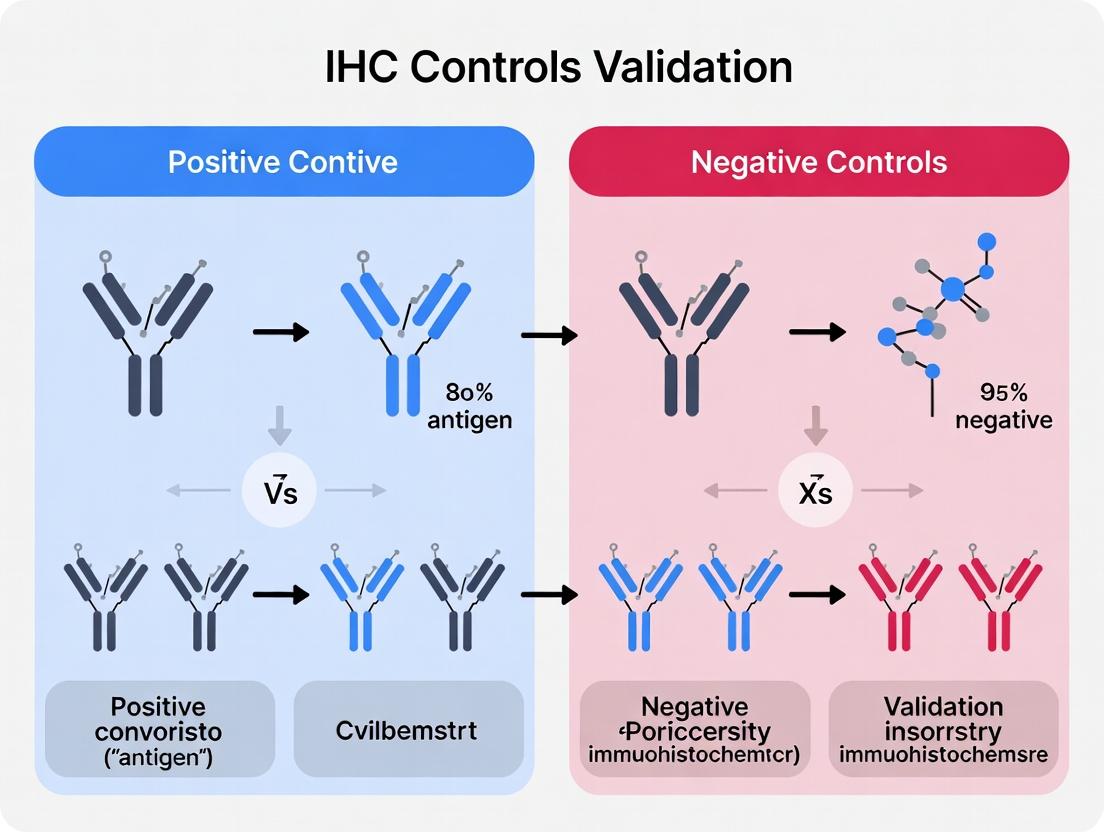
This article provides a complete framework for implementing robust Immunohistochemistry (IHC) control strategies, essential for researchers and drug development professionals.
Mastering IHC Controls: A Comprehensive Guide to Positive & Negative Validation for Research & Drug Development
Abstract
This article provides a complete framework for implementing robust Immunohistochemistry (IHC) control strategies, essential for researchers and drug development professionals. It covers the foundational theory behind controls, detailed methodological protocols for tissue and assay validation, systematic troubleshooting for common pitfalls, and comparative validation approaches to ensure assay specificity, sensitivity, and reproducibility. The guide emphasizes best practices aligned with regulatory standards to generate reliable, publication- and submission-quality data.
Why IHC Controls Are Non-Negotiable: Building a Foundation for Valid Biomarker Data
Technical Support Center
Troubleshooting Guides & FAQs
Q1: My positive control tissue shows no staining. What are the potential causes?
- A: This indicates a failure in the assay's detection system. Follow this troubleshooting protocol:
- Verify Reagent Integrity: Check expiration dates of primary antibody, detection kit (HRP/DAB), and buffer solutions.
- Check Instrumentation: Confirm the automated stainer (if used) dispensed all reagents correctly. Manually run a simple control slide.
- Validate Detection System: Perform a system control using an antibody against a ubiquitously expressed protein (e.g., Beta-actin) on the same control tissue.
- Test Individual Components: Use a known working DAB chromogen on a slide with a dot of HRP enzyme to rule out chromogen failure.
Q2: My negative control (no primary antibody) shows unexpected, high background staining. How do I resolve this?
- A: Nonspecific background suggests detection system issues or non-optimal blocking.
- Increase Blocking: Extend incubation time with normal serum or protein block (e.g., from 30 to 60 minutes). Consider using a species-specific blocking buffer.
- Optimize Antibody Dilution: Titrate the secondary antibody/HRP polymer. High concentrations cause nonspecific binding.
- Check Sample Endogenous Activity: For HRP-based systems, ensure endogenous peroxidase blocking (3% H₂O₂) was performed for the full recommended time. For AP systems, use Levamisole.
- Wash Stringently: Increase wash volume, duration, and number of washes between steps. Add a mild detergent (e.g., 0.05% Tween-20) to wash buffers.
Q3: My patient sample is negative, but the external positive control tissue is appropriately stained. Is my result valid?
- A: Yes, this is a critical outcome. The functional positive control validates the entire staining protocol. The negative result in the patient sample is therefore technically reliable and suggests the target antigen is not expressed or is below the detection limit in the test sample under these conditions.
Q4: How do I handle inconsistent staining in my tissue-specific positive control?
- A: Inconsistency often relates to pre-analytical variables. Implement this QC protocol:
- Section Thickness: Calibrate microtome for uniform 4-5 μm sections.
- Fixation Control: Ensure control tissue was fixed in 10% Neutral Buffered Formalin for 18-24 hours, identical to test samples.
- Antigen Retrieval: Monitor pH and temperature of retrieval buffer meticulously. Perform retrieval validation experiments (see table below).
- Use Multi-Tissue Control Blocks: Create blocks with multiple control tissues to monitor intra-run variability.
Experimental Protocols & Data
Protocol 1: Establishing a Comprehensive Control Panel
- Objective: To validate every component of an IHC assay for a new target.
- Methodology:
- Tissue Selection: Procure a multi-tissue microarray (TMA) containing known positive and negative tissues for the target.
- Slide Preparation: Cut serial sections (4μm) from the TMA.
- Staining Conditions: On separate serial sections, run:
- Test Condition: Optimized primary antibody.
- Negative Control 1: Isotype control or non-immune serum.
- Negative Control 2: No primary antibody (buffer only).
- Positive Control: Antibody against a ubiquitously expressed structural protein (e.g., Vimentin).
- Detection: Use standardized detection system (e.g., polymer-HRP/DAB).
- Analysis: Score staining intensity (0-3+) and distribution by a pathologist. Specific staining must be present only in the test condition and known positive tissues.
Protocol 2: Titration and Validation of Primary Antibody
- Objective: To determine optimal dilution for specific signal with minimal background.
- Methodology:
- Prepare slides with appropriate positive control tissue.
- Perform a dilution series of the primary antibody (e.g., 1:50, 1:100, 1:200, 1:500, 1:1000) under standardized conditions.
- Include the two negative controls (isotype and no primary) for each run.
- Score signal-to-noise ratio. The optimal dilution is the highest dilution that yields strong, specific staining with a clean background.
Table 1: Validation Results for Anti-ER (Clone SP1) IHC Assay
| Control Type | Tissue Used | Expected Result | Acceptance Criterion | Pass Rate (n=20 runs) |
|---|---|---|---|---|
| Positive Control | Breast Ca (ER+) | Strong nuclear staining | ≥95% cells, intensity 3+ | 100% |
| Negative Tissue Control | Tonsil | No nuclear staining | 0% cells stained | 100% |
| Method Negative Control | Breast Ca (ER+) | No staining | 0% cells stained | 100% |
| System Control (Beta-actin) | Breast Ca (ER+) | Cytoplasmic staining | ≥90% cells, intensity ≥2+ | 100% |
Table 2: Impact of Antigen Retrieval pH on Staining Intensity (Score 0-3+)
| Retrieval Buffer pH | Known Positive Tissue (n=5) | Known Negative Tissue (n=5) | Background Score (0-3+) |
|---|---|---|---|
| pH 6.0 Citrate | 2.8 ± 0.3 | 0.1 ± 0.1 | 0.5 ± 0.2 |
| pH 8.0 EDTA | 3.0 ± 0.0 | 0.0 ± 0.0 | 0.2 ± 0.1 |
| pH 9.0 Tris-EDTA | 2.5 ± 0.4 | 0.2 ± 0.2 | 0.8 ± 0.3 |
Visualizations
Decision Tree for IHC Control Interpretation
IHC Direct Detection Signaling Pathway
The Scientist's Toolkit: Key Research Reagent Solutions
| Item | Function | Example/Note |
|---|---|---|
| Multi-Tissue Control Block | Contains known positive/negative tissues for multiple targets. Run alongside every assay to monitor performance across runs. | Commercial or lab-constructed TMA. |
| Isotype Control | Matches the host species, immunoglobulin class, and concentration of the primary antibody. Distinguishes specific from non-specific Fc receptor binding. | Mouse IgG1, kappa for a murine monoclonal. |
| Antigen Retrieval Buffers | Reverse formaldehyde-induced cross-links to expose epitopes. pH choice (6 vs 9) is target-dependent and critical. | Citrate (pH 6.0), Tris-EDTA (pH 9.0). |
| Polymer-Based Detection System | Secondary antibody conjugated to an enzyme-labeled polymer backbone. Increases sensitivity and reduces background vs traditional methods. | HRP-polymer anti-mouse/rabbit. |
| Chromogen with Enhancer | Enzyme substrate that yields an insoluble, colored precipitate. Metal-enhanced versions boost signal intensity. | DAB with cobalt or nickel enhancement. |
| Automated Staining Platform | Provides consistent, reproducible application of reagents and timing, essential for standardized control performance. | Platforms from Leica, Roche, Agilent. |
| Hematoxylin Counterstain | Stains nuclei blue, providing architectural context and confirming tissue viability after processing. | Harris's, Mayer's, or Gill's formulations. |
The Critical Role of Controls in Research Reproducibility and Regulatory Compliance
Troubleshooting Guides & FAQs
Q1: My positive control tissue shows weak or no staining in my IHC experiment. What should I check? A: This indicates a potential failure in the assay procedure. Follow this troubleshooting protocol:
- Reagent Validation: Verify the expiration dates of all reagents, especially the primary antibody and detection kit. Prepare fresh aliquots of buffer solutions.
- Equipment Calibration: Confirm the pH of wash buffers (typically 7.2-7.6). Check the temperature and incubation times of the heat-induced epitope retrieval (HIER) system.
- Control Tissue Suitability: Ensure the positive control tissue section contains the known antigen. Re-cut from the block or obtain a new validated control slide.
- Protocol Review: Re-validate every step, including fixation time, retrieval method, and incubation times, against the antibody's data sheet.
Q2: My negative control shows unexpected positive staining. How do I interpret and resolve this? A: Non-specific staining in the negative control invalidates the experiment. The cause must be identified.
- If using an isotype control: The staining may be due to endogenous enzyme activity or non-specific binding of the detection system. Quench endogenous peroxidase/alkaline phosphatase more thoroughly and ensure adequate protein blocking.
- If using a no-primary antibody control: The staining is likely due to the detection system. Titrate the secondary antibody/conjugate to the lowest effective concentration and increase the stringency of washes.
- If using a knockout/knockdown tissue control: Unexpected staining suggests off-target antibody binding. The antibody may require re-validation for specificity under your specific IHC conditions.
Q3: How many controls are necessary for a GLP-compliant IHC study for drug development? A: Regulatory guidance (e.g., FDA, EMA) emphasizes a rigorous, multi-tiered control strategy. The table below summarizes the minimum control requirements for a single analyte.
Table 1: Minimum IHC Control Requirements for GLP-Compliant Studies
| Control Type | Purpose | Requirement per Experimental Run | Acceptable Result |
|---|---|---|---|
| Positive Tissue Control | Confirms assay sensitivity and protocol execution. | One slide with known high antigen expression. | Strong, specific staining in expected cells. |
| Negative Tissue Control | Confirms assay specificity. | One slide with known absent/low antigen (or knockout tissue). | No specific staining. |
| No-Primary Antibody Control | Detects non-specific signal from detection system. | One slide of test tissue incubated with diluent only. | No staining. |
| Isotype Control | Detects non-specific Fc receptor or protein binding. | One slide of test tissue incubated with irrelevant Ig. | Staining pattern distinct from specific signal. |
| System Suitability Control | Benchmarks staining intensity for scoring. | Tissue microarray with graded antigen expression levels. | Staining gradient correlates with known expression. |
Q4: What is the recommended protocol for validating a new antibody for IHC in a regulated environment? A: A comprehensive validation protocol is required. Below is a core methodology.
Experimental Protocol: IHC Antibody Validation for Regulated Research Objective: To establish the specificity, sensitivity, and reproducibility of a primary antibody for IHC. Materials: See "The Scientist's Toolkit" below. Method:
- Specificity Verification:
- Perform Western blot on cell lysates with known antigen expression. The antibody should recognize a single band at the correct molecular weight.
- Use siRNA/shRNA to knock down the target gene in a relevant cell line. Compare IHC staining on paired knockout/wild-type cell pellets or on tissues from conditional knockout animal models.
- Titration & Optimization:
- Perform a checkerboard titration of the primary antibody (e.g., 1:50, 1:100, 1:200, 1:500) against different epitope retrieval conditions (citrate pH 6.0, EDTA pH 8.0, enzymatic).
- Select the combination that yields strong specific signal in the positive control with a clean background in the negative control.
- System Precision (Reproducibility):
- Run the optimized assay on the same control tissues across three different days, by two different operators, using different reagent lots.
- Calculate the inter- and intra-assay coefficient of variation (CV). For qualitative assays, results must be concordant; for quantitative analysis, CV should typically be <15-20%.
- Documentation: Compile all data, including images of all controls, titration results, and precision metrics, into a formal Validation Report.
Diagram: IHC Antibody Validation & Troubleshooting Workflow
Diagram Title: IHC Control Failure Decision Tree
The Scientist's Toolkit: Essential Reagents for IHC Validation
Table 2: Key Research Reagent Solutions for IHC Controls & Validation
| Item | Function in IHC Control Strategy |
|---|---|
| Validated Positive Control Tissue | Tissue with known, stable expression of the target antigen. Serves as a benchmark for assay sensitivity and protocol performance. |
| Certified Negative Control Tissue | Tissue confirmed to lack the target antigen (e.g., knockout tissue, isogenic cell line pellet). Critical for assessing specificity. |
| Recombinant Target Protein | Used in western blot or peptide absorption assays to confirm antibody binding specificity. |
| Isotype Control Immunoglobulin | Matched to the host species and Ig class of the primary antibody. Identifies non-specific binding via Fc receptors. |
| Multitissue Microarray (TMA) | Contains dozens of tissues on one slide. Excellent for assessing antibody specificity across a broad biological range. |
| Cell Line Pellets (Knockout/WT) | Formalin-fixed, paraffin-embedded pellets of genetically engineered cells. The gold standard negative control for antibody specificity. |
| Detection System Kit (HRP/AP) | A standardized, pre-optimized kit (e.g., polymer-based) to amplify signal while minimizing background. Essential for reproducibility. |
Welcome to the IHC Control Validation Technical Support Center. This resource is designed to support researchers in the execution and troubleshooting of control experiments, a critical component for validating findings within IHC-based research and drug development projects.
FAQs & Troubleshooting Guides
Q1: My positive control tissue shows weak or no staining, but my experimental slides look strong. What does this mean? A: This indicates a potential failure in your assay reagents or protocol, not a successful experiment. Your experimental staining is likely non-specific. First, check reagent integrity (e.g., primary antibody expiration, HRP polymer activity). Verify that you applied the positive control tissue correctly. Repeat the assay with fresh reagents, ensuring all incubation times and temperatures are strictly followed.
Q2: My negative control (no primary antibody) shows unexpected staining. What are the likely causes? A: Unexpected staining in the negative control indicates non-specific binding or endogenous enzyme activity. Troubleshoot as follows:
- Endogenous Peroxidase: Ensure your peroxidase blocking step was performed for the correct duration. Increase blocking time or use a stronger concentration.
- Non-Specific Protein Binding: Increase the concentration of the protein blocking serum. Ensure the blocking serum is from the same species as the secondary antibody host.
- Secondary Antibody Issues: The secondary antibody may be binding non-specifically. Include an isotype control. Ensure the secondary is validated for IHC and used at the correct dilution.
Q3: When is an isotype control necessary versus a primary omission control? A: Both are negative controls but answer different questions. Use the table below to decide:
| Control Type | What It Controls For | When It Is Mandatory |
|---|---|---|
| Primary Omission | Background from assay system (secondary, detection, endogenous activity) | Every experiment. Baseline for system noise. |
| Isotype Control | Non-specific Fc receptor binding of the primary antibody's immunoglobulin class. | When working with unknown tissues, immune cells, or when background is high despite a clean omission control. |
Q4: My tissue control (for a multi-tissue array) shows variable staining for a ubiquitously expressed protein. How do I interpret this? A: Variable staining in a known tissue control suggests technical inconsistency across the slide. Check for uneven reagent application, slide tilt during incubation, or drying of sections. Ensure the tissue control is from the same block and processed identically. If variability persists, consider using a standardized multi-tissue control block.
Q5: How frequently should I run full control sets in my IHC experiments? A: The frequency depends on the validation stage of your assay:
- Assay Development/Optimization: Full controls (positive, negative, isotype) on every slide.
- Validated Routine Assay: Full controls at least once per staining run/batch. Include a positive and negative on every slide if using automated stainers.
- Critical Drug Development Study: Full controls for every experimental group to account for any batch-to-batch or inter-group variability.
Experimental Protocols for Key Control Experiments
Protocol 1: Comprehensive Control Slide Setup for a New Antibody
Objective: To validate the specificity and optimal conditions for a novel primary antibody in IHC. Methodology:
- Slide Layout: Label 5 serial sections of a multi-tissue array (containing known positive and negative tissues).
- Staining Conditions:
- Slide 1: Experimental Condition (Primary Ab at optimized dilution).
- Slide 2: Positive Control (Alternative, well-validated antibody for the same target).
- Slide 3: Negative Control 1 (Primary Omission - replace primary with antibody diluent).
- Slide 4: Negative Control 2 (Isotype Control - replace primary with same species/isotype IgG at same concentration).
- Slide 5: Tissue Control (for a housekeeping protein, e.g., β-actin, to assess tissue integrity).
- Shared Steps: Perform identical deparaffinization, antigen retrieval, blocking, detection, and counterstaining on all slides in the same run.
- Analysis: Compare staining patterns. Signal should be present only in Slide 1 (matching pattern of Slide 2) and the tissue control slide. Slides 3 & 4 should be clean.
Protocol 2: Titration of Primary Antibody with Controls
Objective: To determine the optimal working dilution that provides strong specific signal with minimal background. Methodology:
- Prepare a serial dilution of the primary antibody (e.g., 1:50, 1:100, 1:200, 1:500, 1:1000).
- For each dilution, stain two serial tissue sections: one with the primary antibody and one with a corresponding isotype control at the same protein concentration.
- Score both signal intensity (0-3+) and background in the isotype control (0-3+). The optimal dilution is the highest dilution that yields maximal specific signal (experimental slide) with minimal background in its paired isotype control.
Data Presentation: Control Interpretation Guide
| Control Type | Expected Result | Interpretation of Unexpected Result | Corrective Action |
|---|---|---|---|
| Positive Control | Strong, specific staining in known positive tissue. | Weak/No staining. | Assay failure. Check reagent sequence, activity, and protocol. |
| Negative (Omission) | No specific staining. Background only. | Specific staining present. | High background. Increase blocking; check endogenous enzyme quenching. |
| Isotype Control | Staining equivalent to or less than omission control. | Staining greater than omission control. | Primary antibody binds non-specifically. Titrate antibody or change retrieval method. |
| Tissue Control | Consistent, expected staining pattern. | Absent or patchy staining. | Tissue over-fixed or antigen destroyed. Optimize retrieval; check tissue quality. |
The Scientist's Toolkit: Research Reagent Solutions
| Item | Function in IHC Controls |
|---|---|
| Multi-Tissue Microarray (TMA) Blocks | Contain multiple tissue types on one slide, enabling simultaneous positive and negative tissue controls. |
| Cell Line Pellet Controls | Formalin-fixed pellets of cells with known target expression (positive) or null expression (negative). |
| Validated Primary Antibodies | Crucial for reliable positive control staining. Must be IHC-validated with cited protocols. |
| Isotype-matched Immunoglobulins | Used at the same concentration as the primary antibody to control for non-specific Fc binding. |
| Antigen Retrieval Buffers (pH 6 & 9) | Critical for unmasking epitopes; optimal pH must be determined for each target during validation. |
| HRP/DAB Detection Kits | Must be validated for high sensitivity and low background. Batch consistency is key. |
| Automated IHC Stainer | Provides superior reproducibility for control and experimental slides by standardizing all incubation times. |
IHC Control Validation & Troubleshooting Workflow
Signaling Pathway for Control Validation Logic
FAQs and Troubleshooting
Q1: Why is my positive control tissue staining negative or very weak? A: This indicates a failure in the IHC procedure. Troubleshoot in this order:
- Reagent Degradation: Check the expiry of the primary antibody and detection system components (especially HRP enzyme and chromogen). Repeat with a new aliquot.
- Protocol Error: Verify antigen retrieval conditions (time, pH, method). Ensure all incubation steps (blocking, primary, secondary) were performed for the correct duration and temperature.
- Instrument Failure: Confirm that automated stainers are dispensing reagents properly and that water baths/steamers for retrieval are at correct temperature.
- Sample Over-fixation: Excessively fixed control tissue can mask epitopes. Try extended antigen retrieval or a different retrieval method (e.g., switch from citrate pH6 to EDTA pH9).
Q2: How do I select the appropriate positive control for a new antibody? A: Follow this validated workflow:
- Consult antibody datasheet or published literature for known expressing tissues/cell lines.
- Cross-reference with protein atlas databases (e.g., Human Protein Atlas) for independent confirmation of expression levels and localization.
- Use a multi-tissue block (MTB) containing a panel of tissues to empirically verify expected staining patterns.
- For novel targets, use a cell line transfected to express the target antigen (transfected cell pellet) alongside a non-transfected negative control.
Q3: My positive control shows acceptable staining, but my test tissues are negative. Does this validate a negative result? A: Not conclusively. The positive control validates the staining protocol, but your test tissue may have issues:
- Biological Negativity: The target may truly not be expressed.
- Pre-analytical Variables: Test tissue may be over-fixed, have extensive necrosis, or contain inhibitors not present in the control.
- Epitope Differences: A mutation or splice variant in the test tissue may affect antibody binding.
- Solution: Include a second, independent positive control tissue that is more closely matched to your test samples (e.g., same organ, similar fixation) to rule out pre-analytical factors.
Q4: How often should I validate or re-validate my positive control material? A: Establish a strict schedule:
- Initial Validation: Full characterization upon first use.
- Ongoing Validation: With each new lot of primary antibody or detection kit.
- Periodic Re-validation: Every 6-12 months for stable cell line pellets or tissue microarrays (TMAs); each new batch for lysates or transfected cells.
Q5: What are the acceptance criteria for a positive control in a quantitative IHC assay? A: Define objective metrics prior to assay validation.
| Metric | Acceptance Criterion | Measurement Method |
|---|---|---|
| Staining Intensity | H-Score or % positivity within ±15% of historical mean | Image analysis or semi-quantitative pathologist scoring |
| Background Staining | Signal-to-noise ratio > 5:1 | Comparison to negative control ROI |
| Cellular Localization | Correct pattern (membranous, nuclear, etc.) in >95% of target cells | Microscopic evaluation |
| Inter-assay Precision | Coefficient of Variation (CV) < 20% for quantitative readouts | Analysis across multiple assay runs |
Experimental Protocols
Protocol 1: Creation of a Transfected Cell Line Pellet Control
- Culture & Transfection: Culture appropriate cell line (e.g., HEK293). Transfect with plasmid containing target gene using validated method (lipofection, electroporation). Maintain parallel non-transfected culture.
- Harvest: At 48-72h post-transfection, trypsinize cells, centrifuge (300 x g, 5 min).
- Fixation: Resuspend cell pellet in 10% Neutral Buffered Formalin for 18-24 hours at 4°C.
- Pellet Formation: Centrifuge fixed cells, carefully aspirate supernatant. Resuspend in warm (45°C) 2% agarose. Re-centrifuge immediately to form a tight pellet. Solidify on ice.
- Processing & Embedding: Trim agarose plug, process through graded alcohols and xylene, embed in paraffin.
- Validation: Cut sections and stain with the IHC protocol. Confirm expression in transfected pellet and absence in non-transfected control via microscopy and/or Western blot.
Protocol 2: Multi-Tissue Block (MTB) Validation for Antibody Specificity
- Tissue Selection: Obtain remnant FFPE blocks from surgical pathology representing 10-20 diverse organs (e.g., tonsil, liver, kidney, prostate/breast, colon, spleen).
- Coring: Using a tissue microarrayer, extract 1-2mm cores from donor blocks in triplicate.
- Assembly: Insert cores into a recipient paraffin block in a predefined, mapped pattern.
- Sectioning: Cut 4µm sections, float onto charged slides, dry.
- Staining & Analysis: Perform IHC with the new antibody under optimized conditions. Evaluate staining pattern, intensity, and specificity against known literature and database entries. Inconsistent or off-target staining indicates potential antibody cross-reactivity.
Signaling Pathway & Workflow Diagrams
Title: Positive Control Selection and Validation Workflow
Title: Core IHC Detection Pathway for Positive Signal
The Scientist's Toolkit: Research Reagent Solutions
| Item | Function in Positive Control Validation |
|---|---|
| FFPE Multi-Tissue Blocks | Contain multiple tissue types in one block; efficient for initial antibody specificity screening and control selection. |
| Cell Line Pellets (Transfected) | Provide a consistent, renewable source of target antigen; crucial for validating antibodies against targets not abundantly expressed in normal tissues. |
| Tissue Microarray (TMA) | Contains dozens to hundreds of tissue cores on one slide; enables high-throughput validation of staining across many samples. |
| Recombinant Protein | Used in Western blot or dot blot to confirm primary antibody specificity prior to IHC use. |
| Validated Reference Antibodies | Antibodies with well-characterized performance for the same target (different clone or host species); used for orthogonal confirmation of staining pattern. |
| Chromogen (DAB, AEC) | Enzyme substrate that produces a visible, localized precipitate upon reaction with HRP or AP. Choice affects sensitivity and compatibility with counterstains. |
| Antigen Retrieval Buffers (Citrate, EDTA, Tris-EDTA) | Reverses formaldehyde-induced cross-links to expose epitopes; pH and buffer choice are critical for optimal staining. |
| Automated IHC Stainer | Provides consistent, reproducible application of reagents, reducing operator-dependent variability in control and test staining. |
| Digital Slide Scanner & Image Analysis Software | Enables objective, quantitative assessment of staining intensity and distribution in control tissues for precise validation. |
Technical Support Center
Troubleshooting Guides & FAQs
Q1: My unstained control shows unexpected fluorescence. What could be the cause? A: This is typically due to autofluorescence or reagent impurities.
- Troubleshooting Steps:
- Check Cell/Tissue Type: Certain cells (e.g., red blood cells, neurons, hepatocytes) and tissues fixed with aldehydes have intrinsic autofluorescence. Review literature for your sample.
- Change Excitation/Emission Wavelengths: If possible, use longer wavelengths to minimize autofluorescence interference.
- Treat with Reducing Agents: Incubate aldehyde-fixed samples with sodium borohydride (0.1% w/v) for 10-30 minutes to reduce autofluorescence.
- Use a Dye Quencher: Commercial autofluorescence quenching kits are available.
- Verify Buffer/PBS Quality: Particulates or contaminants in buffers can cause background. Filter buffers through a 0.22 µm filter.
- Assess Instrumentation: Ensure microscope or flow cytometer optics are clean and properly calibrated with appropriate negative controls.
Q2: My isotype control staining is as high as my specific antibody signal. How do I resolve this? A: High isotype background indicates non-specific Fc receptor binding or antibody aggregation.
- Troubleshooting Steps:
- Block Fc Receptors: For immune cells (especially mouse, human), use a commercial Fc receptor block or add 2-5% normal serum from the host species of your detection secondary antibody for 20 minutes prior to isotype/primary antibody incubation.
- Titrate Antibodies: Both isotype and primary antibodies may be used at too high a concentration. Perform a checkerboard titration to find the optimal dilution.
- Check Antibody Integrity: Centrifuge antibody vials at 12,000-14,000 x g for 10 minutes to pellet aggregates. Use only the supernatant.
- Increase Stringency of Wash Buffer: Add 0.1% Tween-20 or increase salt concentration (e.g., 0.3-0.5 M NaCl) to washes.
- Use F(ab)₂ Fragment Antibodies: Switch to F(ab)₂ fragment primary antibodies and corresponding isotype controls to eliminate Fc-mediated binding.
Q3: The No-Primary Antibody control shows high background. What does this signify? A: This points to issues with the detection system or endogenous enzyme activity.
- Troubleshooting Steps:
- Endogenous Peroxidase Activity (for HRP systems): Treat tissue sections with 0.3% hydrogen peroxide in methanol for 15-30 minutes in the dark. For flow cytometry, use a peroxide-containing fixative.
- Endogenous Alkaline Phosphatase Activity (for AP systems): Add 1-5 mM levamisole to the substrate solution. It inhibits intestinal-type AP but not tissue-nonspecific or placental AP.
- Secondary Antibody Cross-Reactivity: Ensure the secondary antibody is adsorbed against the species of your sample tissue. Use a secondary antibody dilution buffer with 2-5% serum from the sample species.
- Non-Optimal Secondary Antibody Concentration: Titrate the secondary antibody. High concentrations lead to non-specific binding.
- Endogenous Biotin (for ABC or streptavidin systems): Use a commercial endogenous biotin blocking kit or sequentially apply avidin and biotin blocks before primary antibody incubation.
Q4: When are each of the three main negative controls necessary? A: The requirement is context-dependent, as summarized below.
| Control Type | Primary Purpose | Essential For | May Be Omitted When |
|---|---|---|---|
| Unstained | Sets baseline autofluorescence & instrument settings. | All flow cytometry; fluorescence microscopy. | Chromogenic IHC with clear binary (brown/blue) readout. |
| Isotype | Identifies background from antibody Fc region & non-specific protein binding. | Experiments with cells expressing Fc receptors; any new antibody validation. | Using well-validated, cell-type-specific antibodies with established protocols; using F(ab)₂ fragments. |
| No-Primary | Identifies background from detection system (secondary Ab, enzymes, avidin-biotin). | All new IHC/ICC protocols; when changing detection systems. | Protocol is thoroughly optimized and validated for the specific tissue/assay. |
Q5: How do I quantify background from negative controls for publication? A: Use quantitative metrics to set positivity gates or thresholds.
- For Flow Cytometry: Use the Mean Fluorescence Intensity (MFI) of ≥95% of the isotype control population to set the positive gate. Report the Stain Index (SI) for your primary antibody: SI = (MFIpositive - MFIisotype) / (2 × SDisotype). An SI > 3 is generally acceptable.
- For Microscopy (Fluorescence): Measure the mean pixel intensity in several regions of interest (ROIs) from the negative control sample. Set a threshold at mean + 3 standard deviations. Report the signal-to-noise ratio: SNR = (Mean Intensitysample) / (Mean Intensitynegative control).
- For Chromogenic IHC: Use H-DAB intensity calibration and image analysis software to quantify optical density. Background in negative controls should be below a defined OD threshold (e.g., OD < 0.1).
Experimental Protocols
Protocol 1: Comprehensive Negative Control Setup for Flow Cytometry (Surface Antigen)
- Prepare Single-Cell Suspension.
- Aliquot Cells: Create three tubes: (1) Unstained, (2) Isotype Control, (3) Specific Antibody.
- Fc Receptor Blocking: Resuspend cells in 100 µL of FACS buffer (PBS + 1% BSA + 0.1% NaN₃) containing Fc block (e.g., anti-CD16/32 for mouse cells) or 2% normal serum. Incubate on ice for 10 minutes.
- Antibody Staining: Without washing, add directly:
- Tube 1: Nothing (Unstained).
- Tube 2: Isotype control antibody (matched to primary antibody host species, Ig class, and conjugated fluorophore). Use the same µg/µL concentration as the primary antibody.
- Tube 3: Specific primary antibody.
- Incubate for 30 minutes on ice in the dark.
- Wash: Add 2 mL FACS buffer, centrifuge at 300 x g for 5 min. Decant supernatant. Repeat once.
- Resuspend & Analyze: Resuspend in 300-500 µL FACS buffer. Analyze immediately on a flow cytometer, collecting data for all tubes with identical voltage/amplifier settings.
Protocol 2: Negative Controls for Chromogenic IHC (Formalin-Fixed Paraffin-Embedded Tissue)
- Deparaffinize & Rehydrate sections through xylene and graded alcohols.
- Antigen Retrieval as required for your target.
- Peroxidase Block: Apply 3% H₂O₂ for 10 minutes to quench endogenous peroxidase activity. Rinse.
- Blocking: Apply protein block (e.g., 5% normal serum, 1% BSA in PBS) for 30 minutes.
- Apply Controls & Primary Antibody: On sequential sections or using a hydrophobic barrier pen to create wells on a single slide, apply:
- No-Primary Control: Protein block only (or irrelevant IgG from same species at same concentration).
- Isotype Control: A non-specific antibody of the same isotype, subclass, and concentration as the primary antibody.
- Specific Primary Antibody.
- Incubate for 1 hour at room temp or overnight at 4°C.
- Detection: Wash. Apply labeled secondary antibody (e.g., HRP-polymer). Wash. Apply chromogen (e.g., DAB). Monitor development.
- Counterstain & Mount: Counterstain with hematoxylin, dehydrate, clear, and mount.
Visualization
Title: Logical Flow for Implementing Negative Controls
Title: IHC Workflow with Negative Control Points
The Scientist's Toolkit: Research Reagent Solutions
| Item | Function in Negative Controls & IHC |
|---|---|
| Fc Receptor Blocking Solution | Prevents non-specific binding of antibodies (both isotype and specific) to Fc receptors on immune cells, reducing background. |
| Normal Serum | Used as a component of blocking buffers. Should be from the species of the secondary antibody to prevent cross-reactivity. |
| Validated Isotype Control | An antibody of the same species, isotype, subclass, and conjugate as the primary antibody, but with no known specificity to the target. |
| Sodium Borohydride (NaBH₄) | A reducing agent used to diminish autofluorescence in aldehyde-fixed tissues by reducing Schiff bases and other fluorescent groups. |
| Levamisole | An inhibitor used to block endogenous alkaline phosphatase activity in tissues when using AP-based detection systems. |
| Avidin/Biotin Blocking Kit | Sequential application of avidin and biotin blocks saturates endogenous biotin, preventing non-specific signal in avidin-biotin complex (ABC) methods. |
| Polymer-HRP Secondary Systems | Highly sensitive detection systems that minimize non-specific binding compared to traditional avidin-biotin systems, reducing background. |
| Hydrophobic Barrier Pen | Allows application of multiple different controls (isotype, no-primary) on a single tissue section, ensuring identical processing conditions. |
In Immunohistochemistry (IHC) research, particularly within the context of thesis-driven positive/negative control validation, understanding the distinct roles of biological and technical controls is paramount. This technical support center addresses common experimental pitfalls and provides clear protocols to ensure robust and interpretable results.
Troubleshooting Guides & FAQs
Q1: My positive control tissue shows no staining. What could be wrong? A: This indicates a potential technical failure. First, verify the protocol steps using the Technical Control Troubleshooting Table below. The most common issues are related to antigen retrieval or detection system failure.
Q2: My target tissue is negative, but my biological positive control (known expressing tissue) stains correctly. How should I interpret this? A: This is a valid negative result for your target tissue. The successful staining of the biological positive control confirms that the entire IHC protocol worked. This validates that the lack of signal in your test sample is due to the absence of the target antigen, not a technical error.
Q3: My negative control tissue (known non-expressing) shows faint, non-specific staining. What steps should I take? A: This suggests high background. First, titrate your primary antibody to the optimal dilution. If background persists, consider the following: increase serum blocking time, add a washing step after blocking, or include a protein block specific to your detection system's species.
Q4: How do I validate a new antibody using controls? A: Follow a hierarchical validation protocol:
- Technical Control: Use a cell line or tissue known to express the target (biological positive control) to confirm the antibody works.
- Biological Negative Control: Use a known negative tissue.
- Assay Control: Run a no-primary-antibody control (replaced with buffer or isotype control) on your test tissue to identify non-specific binding from the detection system.
Key Control Data & Protocols
Table 1: Purpose and Interpretation of IHC Controls
| Control Type | Purpose | Example | Expected Result | Interpretation of Deviation |
|---|---|---|---|---|
| Biological Positive | Confirms assay works and antibody binds its target | Tissue with known high antigen expression (e.g., normal colon for CEA). | Strong, specific staining. | No stain: Technical failure. Invalidates entire run. |
| Biological Negative | Confirms staining is specific to the target antigen. | Tissue known to lack the antigen. | No specific staining. | Specific stain: Suggests antibody cross-reactivity; assay not specific. |
| Technical (Procedural) | Isolates errors in specific protocol steps. | No-primary-antibody control; isotype control. | No specific staining. | Stain in no-primary: Background from detection kit. Stain in isotype: Non-specific Fc binding. |
| Endogenous Control | Checks for non-specific signals from tissue. | Detection system alone (secondary Ab/Chromogen only). | No staining. | Staining present: Endogenous enzyme (e.g., peroxidase, phosphatase) activity not blocked. |
Table 2: Troubleshooting Common Technical Control Failures
| Problem | Possible Cause | Solution |
|---|---|---|
| All controls & samples negative | Depleted/Inactive detection reagents, incorrect buffer pH. | Test detection system on a validated control slide. Check buffer pH. Use fresh reagents. |
| High background in all sections | Over-concentrated primary/secondary antibody, inadequate blocking, insufficient washing. | Titrate antibodies. Extend blocking time (30-60 min). Increase wash volume/duration. |
| Patchy, uneven staining | Incomplete tissue dehydration, uneven reagent application, sections drying out. | Ensure proper hydration/dehydration in processing. Use a hydrophobic barrier pen. Keep slides humidified. |
| Weak positive control stain | Suboptimal antigen retrieval, expired primary antibody, short incubation time. | Optimize retrieval method (time/pH). Test new antibody aliquot. Extend primary incubation (overnight at 4°C). |
Experimental Protocols
Protocol 1: Hierarchical Control Validation for a New Antibody
Objective: To establish specificity and optimal conditions for a new primary antibody in IHC. Methodology:
- Slide Preparation: Cut serial sections from a multi-tissue block containing a known positive tissue, a known negative tissue, and the target tissue of interest.
- Antigen Retrieval: Perform standardized heat-induced epitope retrieval (HIER) in citrate buffer (pH 6.0) for 20 minutes.
- Blocking: Block endogenous peroxidase with 3% H₂O₂, then block non-specific protein binding with 5% normal serum for 30 minutes.
- Primary Antibody Incubation: Apply the new antibody at a range of dilutions (e.g., 1:50, 1:100, 1:200, 1:500) to separate sections of the multi-tissue block. Include a no-primary control (buffer only).
- Detection: Use a standard polymer-based HRP detection system and DAB chromogen. Counterstain with hematoxylin.
- Analysis: Identify the dilution that gives strong, specific signal in the known positive tissue with minimal background in the known negative tissue. This is the optimal dilution.
Protocol 2: No-Primary Antibody Control Protocol
Objective: To control for non-specific staining generated by the detection system or endogenous enzyme activity. Methodology:
- Treat the test tissue section identically to all other slides in the experiment except for the primary antibody step.
- Replace the primary antibody with antibody diluent buffer or an irrelevant isotype-matched immunoglobulin at the same concentration.
- Proceed identically with all subsequent steps (secondary antibody, chromogen, counterstain).
- Any staining observed is due to the detection system or endogenous activity and must be discounted from experimental results.
Visualization: IHC Control Validation Workflow
Title: IHC Control Validation Decision Workflow
The Scientist's Toolkit: Key Research Reagent Solutions
| Item | Function in IHC Control Experiments |
|---|---|
| Multi-Tissue Control Block | A paraffin block containing an array of tissues with known antigen expression profiles. Serves as concurrent biological positive/negative controls on every slide. |
| Isotype Control Immunoglobulin | An irrelevant antibody of the same class (IgG, IgM) and species as the primary antibody. Used to identify non-specific binding via Fc receptors. |
| Antigen Retrieval Buffers | Citrate (pH 6.0) and EDTA/TRIS (pH 9.0) buffers. Reverse formaldehyde-induced cross-links to expose epitopes; choice affects antibody binding and is critical for control validity. |
| Protein Block (e.g., Normal Serum) | 5-10% serum from the species of the secondary antibody. Reduces non-specific background staining by blocking charged sites on the tissue section. |
| Polymer-based HRP Detection Kit | Contains secondary antibody and enzyme (HRP) conjugated to a dextran polymer backbone. Increases sensitivity and reduces background compared to traditional methods. Key for clear control interpretation. |
| Chromogen (DAB) | 3,3'-Diaminobenzidine. Enzyme substrate yielding a permanent brown precipitate. Concentration and incubation time must be standardized to prevent false-positive background in controls. |
| Hematoxylin Counterstain | Provides contrasting blue nuclear staining, allowing for histological assessment of control and test tissue architecture. |
Implementing Your IHC Control Strategy: A Step-by-Step Protocol for Researchers
Technical Support Center: Troubleshooting IHC Control Strategies
FAQs & Troubleshooting Guides
Q1: What are the most common causes of false-negative results when transitioning a validated antibody from a Tissue Microarray (TMA) to a whole tissue section? A: The primary causes are antigen retrieval inconsistency due to larger section size, antibody dilution miscalculation for increased tissue area, and increased background masking weak signals. Ensure your retrieval method (heat-induced or enzymatic) is uniformly applied across the entire slide. Re-titrate the antibody on a representative whole section, as the optimal dilution may differ from the TMA core.
Q2: How do I determine the appropriate number and placement of control cores on a custom TMA? A: Follow a structured design. Include a minimum of two positive and two negative control cores per 50-100 experimental cores. Distribute them across the array to monitor edge effects and staining uniformity. Use tissues with known expression levels (confirmed by whole-section IHC) or cell line pellets with known antigen status.
Q3: My positive control stains perfectly, but my experimental tissue is negative. What should I check? A: This indicates the staining protocol is functional, but the target antigen may be absent or below detection in your sample. First, verify the expected expression in your experimental tissue using literature or RNA data. Then, check for pre-analytical variables: prolonged ischemia time, over-fixation (which can mask epitopes), or use of a different fixative type (e.g., unbuffered formalin) compared to your control tissue.
Q4: How can I systematically address high, non-specific background staining on whole sections? A: Implement a stepwise troubleshooting approach:
- Increase blocking: Extend incubation time with serum or protein block (e.g., to 1 hour).
- Optimize primary antibody incubation: Titrate to find the lowest concentration that gives specific signal. Ensure the section does not dry out.
- Adjust wash stringency: Increase the number of washes or add a mild detergent (e.g., 0.05% Tween-20) to PBS.
- Review detection system: Ensure the secondary antibody is highly cross-adsorbed against immunoglobulins from species other than the primary host. Consider using an endogenous enzyme block (for enzymes like peroxidase) if needed.
Q5: What constitutes a valid negative control for IHC, and when is each type used? A: Valid negative controls are non-interchangeable and serve specific purposes. See the table below.
| Control Type | Protocol Modification | Purpose | Ideal Use Case |
|---|---|---|---|
| No Primary Antibody | Omit primary antibody; apply buffer only. | Detects non-specific binding of the detection system or endogenous enzyme activity. | Routine validation for every new detection kit or batch. |
| Isotype Control | Replace primary with a non-specific IgG from the same host species, subclass, and concentration. | Assess non-specific Fc receptor or protein-binding. | Critical for antibodies on immune cells (e.g., lymphoid tissue). |
| Absorption Control | Pre-incubate primary antibody with a blocking peptide (antigen). | Confirms antibody specificity for the target epitope. | Mandatory for validating a new antibody or confirming off-target staining. |
| Tissue Negative | Use a tissue known to lack the target antigen (genetically negative or confirmed). | Assess background in a biologically relevant matrix. | Gold standard when such tissue is available (e.g., knockout tissue). |
Experimental Protocols for Control Validation
Protocol 1: Establishing a TMA Control Core Validation Workflow
- Selection: Identify candidate control tissues from well-characterized whole sections (archival blocks). For a positive control, select tissue with moderate, homogeneous expression. For negative, select tissue confirmed absent.
- Correlation: Perform IHC on the donor whole section and the resulting TMA core. Use identical protocols.
- Quantification: Use image analysis software to quantify staining intensity (H-score or % positive cells) on both whole section and triplicate TMA cores.
- Validation Criterion: The mean intensity of the TMA cores must be within 15% of the whole-section value, and the coefficient of variation (CV) among the replicate cores must be <20%.
- Documentation: Create a validation card for the TMA slide, listing control core locations, expected staining intensity, and acceptable CV.
Protocol 2: Whole-Section Antibody Titration Using a Control TMA
- Prepare a multi-core TMA: Include 1-2 validated positive control tissue cores and 1 negative control core.
- Titration: Apply a range of primary antibody dilutions (e.g., 1:50, 1:100, 1:200, 1:400, 1:800) to sequential TMA sections.
- Staining & Analysis: Process slides identically. Score each core for specific signal intensity and background.
- Determine Optimal Dilution (O.D.): Select the dilution that yields the highest specific signal (positive core) with the cleanest background (negative core). The O.D. is the starting point for whole-section optimization.
- Scale-up: Apply the O.D. to a whole section of the control tissue. Adjust dilution slightly if necessary to account for increased non-specific tissue interactions, then lock down the final protocol.
Visualizing the Control Strategy Workflow
Title: IHC Control Strategy Development Workflow
Title: Troubleshooting High Background Staining
The Scientist's Toolkit: Key Research Reagent Solutions
| Item | Function in Control Strategy |
|---|---|
| Certified Positive Control Tissue Blocks | Pre-validated tissues providing consistent, reliable positive signals for specific markers. Essential for assay standardization across batches and labs. |
| Multitissue TMA Blocks | Contain arrays of control tissues for multiple markers. Enable simultaneous validation of several antibodies or staining runs, saving time and reagents. |
| Isotype Control Antibodies | Matched in species, immunoglobulin class, and concentration to the primary antibody. Critical for distinguishing specific binding from Fc-mediated or charge-based background. |
| Blocking Peptides (Antigens) | Synthetic peptides corresponding to the antibody's epitope. Used in absorption controls to definitively prove antibody specificity by competitive inhibition. |
| Cell Line Microarray Pellets | Formalin-fixed, paraffin-embedded pellets of cells with known antigen expression (positive or knockout). Provide a consistent, homogeneous biological control independent of tissue variability. |
| Retrieval Buffer pH Kits | Buffers at various pH (6.0, 8.0, 9.0). Systematic testing is required to unlock the epitope for a given antibody-antigen pair, especially critical when standardizing for whole sections. |
| Sensitive Chromogenic Detection Kits | Polymer-based systems that amplify signal with low background. Necessary for detecting low-abundance targets on whole sections where background accumulation is a greater risk. |
| Automated Stainer Compatibility Reagents | Antibodies and kits validated for use on specific automated platforms. Ensures reproducibility and uniformity, particularly for large whole-section studies. |
Sourcing and Pre-Validating Control Tissues and Cell Pellet Blocks
Technical Support Center: Troubleshooting & FAQs
Q1: What are the most critical validation parameters when sourcing commercially available control tissues? A1: Critical validation parameters include: 1) Confirmed positive and negative IHC status for the target antigen via a standardized method, 2) Detailed patient history (age, sex, pathology), 3) Tissue fixation and processing details (fixative type, duration, processing cycle), 4) Certification of ethical sourcing and informed consent, and 5) Batch-to-batch consistency data. For a thesis on validation requirements, always request the vendor's validation report and cross-validate a sample block in your own lab.
Q2: How do I pre-validate a cell line for creating in-house cell pellet blocks for IHC controls? A2: Follow this detailed protocol:
- Cell Culture & Characterization: Culture the chosen cell line (e.g., HeLa for positive, HEK-293 for negative) under standard conditions. Validate cell identity via STR profiling.
- Antigen Status Confirmation: Confirm target antigen expression via Western blot (for protein) and RT-qPCR (for mRNA). Use known positive and negative cell lysates as controls.
- Pellet Formation: Harvest 5x10^6 cells, wash with PBS, and centrifuge at 300xg for 5 min. Re-suspend in 1ml of 4% neutral buffered formalin (NBF) for 1 hour at room temperature for fixation.
- Processing: Centrifuge fixed cells, aspirate NBF, and re-suspend in 70% ethanol. Transfer to a tissue processing cassette embedded in 2% agarose to prevent dispersion.
- Embedding & Sectioning: Process the pellet through a standard ethanol/xylene paraffin-embedding cycle. Section at 4µm thickness.
- Final Validation: Perform IHC on the cell pellet block alongside known tissue controls. Only use blocks showing consistent, homogeneous expected staining (positive or negative).
Q3: Our positive control tissue shows weak or heterogeneous staining. What are the primary causes? A3: This common issue stems from pre-analytical variables:
| Potential Cause | Diagnostic Check | Corrective Action |
|---|---|---|
| Antigen Degradation | Check tissue age and storage. | Source freshly harvested blocks (<5 years old). Store at 4°C in desiccated environment. |
| Over-fixation | Review fixation details from vendor. | Optimize antigen retrieval time/temperature; consider protease-induced epitope retrieval for over-fixed tissues. |
| Improper Processing | Inquire about processor cycle delays. | Use controls processed similarly to test samples. Create in-house blocks with standardized protocol. |
| Section Age | Note section storage time. | Use freshly cut sections (<2 weeks old) and store at -20°C. |
| Batch Variability | Test multiple blocks from same vendor lot. | Request new validation data or switch to a more reliable supplier. |
Q4: How can I ensure my negative control tissue is truly negative? A4: A true negative control must be validated using multiple orthogonal methods.
- Method 1: IHC with Multiple Antibodies: Use at least two different antibody clones targeting different epitopes of the same antigen. Consistent absence of staining supports true negativity.
- Method 2: Genetic Confirmation: For proteins where negativity is due to gene deletion or mutation, perform FISH or PCR analysis on the control tissue block to confirm the genetic alteration.
- Method 3: Mass Spectrometry: Use laser capture microdissection to collect cells from the control tissue and perform targeted mass spectrometry to confirm the absence of the target protein.
- Protocol Note: Always run a positive control antibody (e.g., beta-actin) on the negative tissue to confirm overall protein integrity and IHC protocol functionality.
Q5: What is the optimal workflow for integrating pre-validated controls into a new IHC assay development thesis project? A5: Implement a systematic workflow.
Title: IHC Control Validation Workflow
Q6: How do I troubleshoot high background staining in my cell pellet control blocks? A6: High background in cell pellets is often due to non-specific antibody binding or residual embedding medium.
- Troubleshooting Protocol:
- Increase Blocking: Extend protein block incubation to 1 hour at room temperature. Use 5% normal serum from the secondary antibody host species + 1% BSA.
- Optimize Antibody Dilution: Perform a checkerboard titration of primary antibody against different concentrations of blocking agent.
- Aggressive Washes: Include 0.025% Triton X-100 in PBS wash buffers (3 x 5 min washes post-primary and post-secondary).
- Check Agarose: Ensure the agarose used to embed the pellet is high-grade, low-melting point, and free of contaminants. Run an agarose-only control section.
- Secondary Antibody Control: Omit primary antibody. If background persists, switch to a polymer-based detection system or use a different secondary.
The Scientist's Toolkit: Research Reagent Solutions
| Item | Function & Importance in Control Validation |
|---|---|
| Formalin-Fixed, Paraffin-Embedded (FFPE) Tissue Microarray (TMA) | Contains multiple validated control cores in one block. Essential for high-throughput validation of antibody specificity across tissues. |
| Recombinant Protein Lysates (Positive/Negative) | Used in Western blot to confirm antibody specificity before IHC. Provides a clean, defined positive control. |
| Isotype Control Antibody | Matches the host species and Ig class of the primary antibody. Critical for distinguishing specific signal from non-specific background in IHC. |
| Cell Line with CRISPR/Cas9 Knockout | Genetically engineered to lack the target antigen. Provides the gold standard molecularly-defined negative control for antibody validation. |
| Multiplex IHC/IF Validation Kits | Allow co-localization of target antigen with multiple lineage markers. Confirms staining is specific to expected cell types in complex tissues. |
| Antigen Retrieval Buffer Optimization Kit | Contains citrate, EDTA, and Tris-based buffers. Systematic testing identifies optimal retrieval conditions for each antibody-control pair. |
Q7: What quantitative metrics should be documented when pre-validating controls for a thesis? A7: Create a validation summary table for each control block.
| Control ID: A549p53Pos | Validation Metric | Result | Acceptance Criteria | Method |
|---|---|---|---|---|
| Antigen Specificity | Staining Pattern | Nuclear | Matches known localization | IHC (Clone DO-7) |
| Signal Intensity | H-Score | 280 | >150 | Digital Image Analysis |
| Homogeneity | % of Positive Cells | 95% | >90% | Manual count (3 fields) |
| Specificity Check | Isotype Control Staining | 0 (Negative) | H-Score < 10 | IHC |
| Orthogonal Confirm. | Western Blot Band | 53 kDa | Single band at correct MW | WB (Lysate from same cell line) |
| Genetic Basis | TP53 Status | Wild-type | Confirmed | Vendor STR/SEQ Report |
Q8: Describe the signaling pathway logic for using phospho-protein controls in IHC. A8: Phospho-specific IHC requires paired positive (stimulated) and negative (unstimulated/inhibited) controls to validate antibody specificity for the phosphorylated epitope, not just total protein.
Title: Logic for Phospho-Protein Control Generation
Troubleshooting Guides & FAQs
Q1: My positive control tissue shows weak or no staining, even though it should be strongly positive. What are the primary causes? A: This indicates a potential failure in the staining protocol or reagent degradation. Follow this systematic check:
- Primary Antibody: Verify dilution is correct, check expiration date, and ensure it has not undergone repeated freeze-thaw cycles.
- Detection System: Confirm all detection kit reagents (e.g., HRP polymer, chromogen) were added in the correct sequence and are not expired. Prepare fresh chromogen substrate immediately before use.
- Antigen Retrieval: Ensure retrieval solution is at correct pH (e.g., pH 6 for citrate, pH 9 for EDTA/Tris) and that the retrieval time/temperature was maintained.
- Sample Integrity: Over-fixation (e.g., >48 hours in formalin) can mask epitopes. Consider extending antigen retrieval time.
Q2: My negative control shows unexpected, non-specific staining. How do I identify the source? A: Non-specific staining in negative controls invalidates the experiment. The source depends on the control type used.
- If using a No Primary Antibody Control: Staining indicates endogenous enzyme activity (e.g., peroxidase, phosphatase) or non-specific binding of the detection system. Apply/confirm proper endogenous enzyme blocking steps.
- If using an Isotype Control: Staining suggests Fc receptor binding or non-specific protein-protein interactions. Increase the concentration of the protein block (e.g., normal serum, BSA) and optimize antibody dilution in a diluent with carrier protein.
- If using a Tissue Negative Control: Faint staining in expected negative areas may be acceptable. Strong, specific-looking staining may indicate antibody cross-reactivity or insufficient blocking.
Q3: How do I select the correct positive control for a novel or less-characterized target? A: A tiered validation approach is required within the context of your thesis research on validation requirements.
- Cell Line Control: Use a transfected cell line known to express the target protein, pelletized and fixed in FFPE blocks.
- Multi-Tissue Control (Best Practice): Use a multi-tissue microarray (TMA) containing known positive tissues, validated by an orthogonal method (e.g., Western blot, mRNA in situ hybridization).
- Internal Controls: Identify and report any known internal positive controls within your test tissue (e.g., normal epithelium adjacent to tumor).
Table 1: Interpretation of IHC Control Results and Required Actions
| Control Type | Expected Result | Unexpected Result | Possible Cause | Required Action |
|---|---|---|---|---|
| Positive Tissue Control | Strong, specific staining in known positive cells. | Weak or absent staining. | Protocol failure, expired reagents, incorrect retrieval. | Troubleshoot protocol. Do not interpret test slides. |
| Negative Control (No Primary) | No staining. | Staining present. | Inadequate enzyme block, non-specific detection binding. | Optimize blocking; include secondary-only control. |
| Isotype Control | Background/non-specific pattern only. | Specific cellular staining. | Insufficient protein blocking, antibody aggregation. | Increase block concentration; ultracentrifuge antibody. |
| Tissue Negative Control | No staining in target cell population. | Staining in target cells. | Antibody cross-reactivity, off-target binding. | Perform peptide competition; validate with second antibody. |
Experimental Protocol: Establishing a Multi-Tissue Positive Control Block
Objective: To create a reusable FFPE block containing multiple control tissues for parallel processing with experimental samples. Materials: See "Research Reagent Solutions" below. Methodology:
- Tissue Selection: Obtain FFPE tissue scraps or cores (2-4mm) from organs known to express a wide range of common targets (e.g., tonsil, liver, kidney, carcinoma cell pellet).
- Donor Block Preparation: Warm donor FFPE blocks to room temperature. Using a biopsy punch or needle, carefully extract 2-3 tissue cores from each donor block.
- Mold Assembly: Place the cores in close proximity in a standard histology mold.
- Embedding: Completely fill the mold with molten, low-melt paraffin wax (~56-58°C). Avoid creating bubbles.
- Orientation & Sectioning: Allow the block to solidify. Trim the face and section at 4-5µm. Mount sections on charged slides.
- Validation: Stain the new multi-tissue control block with antibodies for known markers (e.g., CD3 for T-cells in tonsil, Cytokeratin for epithelium) to confirm antigen preservation and staining performance.
Diagram: IHC Control Integration Workflow
Title: IHC Control Validation and Staining Workflow
The Scientist's Toolkit: Research Reagent Solutions
Table 2: Essential Materials for IHC Control Integration
| Item | Function in Control Protocols |
|---|---|
| Multi-Tissue Microarray (TMA) | A single slide containing dozens of tissue spots. Serves as a universal positive control for antibody validation and batch-to-batch protocol monitoring. |
| Cell Pellet Control Blocks | FFPE blocks of known positive/negative cell lines. Critical for validating antibodies for targets not abundantly expressed in normal tissues. |
| Isotype Control Antibody | An immunoglobulin of the same species, subclass, and conjugation as the primary antibody, but with irrelevant specificity. Identifies non-specific background staining. |
| Peptide for Competition | The specific antigenic peptide used to generate the primary antibody. Used in a peptide absorption control to confirm antibody specificity. |
| Charged Microscope Slides | Positively charged slides to ensure tissue adhesion during rigorous antigen retrieval steps, preventing control tissue loss. |
| pH-Calibrated Antigen Retrieval Buffers | Critical for consistent epitope unmasking. Citrate (pH 6.0) and EDTA/Tris (pH 9.0) buffers cover most antigen retrieval needs. |
Frequently Asked Questions (FAQs)
Q1: What are the essential positive and negative controls for validating co-localization in a 5-plex IHC assay targeting immune checkpoint markers (PD-1, PD-L1, LAG-3, TIM-3, CD8)? A1: Controls must validate both individual marker specificity and co-expression patterns.
- Individual Marker Positive Control: Known positive tissue (e.g., tonsil for PD-L1, inflamed tissue for PD-1) stained in singleplex for each antibody.
- Individual Marker Negative Control: Isotype controls for each primary antibody host species, or tissues known to lack the target, run in the full multiplex panel.
- Co-localization Positive Control: A cell line pellet or tissue with a known, published co-expression pattern (e.g., a specific tumor region where PD-1+CD8+ T cells and PD-L1+ tumor cells are known to interact). This validates the assay's ability to detect multiple targets simultaneously.
- Sequential Staining Control: A slide where one primary antibody is omitted in each sequential round to check for absent cross-reactivity or off-target binding from subsequent reagents.
- Autofluorescence Control: An unstained slide to assess tissue autofluorescence in each detection channel.
Q2: During multiplex IHC, I observe unexpected co-localization signals. How do I troubleshoot whether this is true biological co-expression or an artifact? A2: Follow this systematic troubleshooting guide.
- Check Antibody Specificity: Run single-plex IHC for each suspect antibody. Compare the single-plex staining pattern to the multiplex pattern. Artifactual co-localization often disappears in singleplex.
- Perform a Sequential Omission Test: Re-run the multiplex assay multiple times, each time omitting one primary antibody. If the "co-localized" signal persists when the primary for Target A is omitted, it indicates cross-reactivity or spectral bleed-through from Target B's detection system.
- Validate with Linearity: Titrate each primary antibody. True biological signal will decrease proportionally. Artifacts may remain strong or appear non-linear.
- Assess Spectral Unmixing: If using fluorescence, ensure your spectral library is built from single-plex stained controls, not antibody diluent alone. Improper unmixing is a major cause of false co-localization.
- Confirm with Orthogonal Methods: Isolate the cell population of interest via laser capture microdissection (LCM) and perform RNA-seq or use a different multiplex technique (e.g., CODEX) for confirmation.
Q3: How do I effectively validate my antibody stripping/elution steps in sequential multiplex IHC to prevent signal carryover? A3: Implement a "Signal Erasure Control" protocol.
- Method: After completing a full cycle of staining (primary Ab, detection, visualization), apply your stripping/elution protocol (e.g., heat, low pH, denaturing agents). Then, re-apply only the detection system (fluorophore-conjugated secondary or tyramide) from the previous cycle. Image the slide.
- Interpretation: No signal should be detectable. Any residual signal indicates incomplete stripping, which will lead to false co-localization in subsequent cycles. This control must be performed for each detection system used in the panel.
Q4: My multiplex IHC shows high background or nonspecific staining. What are the key optimization points? A4: Focus on blocking and antibody dilution.
- Enhanced Blocking: Use a double block: first with 3% serum from the host species of your secondary antibodies for 30 minutes, followed by a protein block (e.g., 2.5% BSA) for another 30 minutes.
- Cross-Adsorbed Secondaries: Always use secondary antibodies that have been cross-adsorbed against the serum proteins of other species present in the assay.
- Titration is Critical: Titrate every primary antibody in the multiplex environment, not in singleplex. Optimal concentration is often 2-5x higher in multiplex due to competing interactions.
- Check Polymer Systems: If using polymer-based detection, ensure polymers are not aggregating. Include a detergent (e.g., 0.05% Tween-20) in wash buffers.
Experimental Protocols
Protocol 1: Validation of Co-localization Using Sequential Omission
Purpose: To distinguish true co-localization from technical artifacts like antibody cross-reactivity or spectral bleed-through.
- Sectioning: Cut consecutive 4µm tissue sections from your FFPE block (n=6 sections minimum).
- Deparaffinization & Antigen Retrieval: Perform standard deparaffinization and a validated antigen retrieval method (e.g., citrate buffer, pH 6.0, 95°C, 20 min).
- Multiplex Staining:
- Section 1: Stain with the full multiplex panel (Antibodies A, B, C...).
- Section 2: Stain with the panel omitting primary Antibody A.
- Section 3: Stain with the panel omitting primary Antibody B.
- Repeat for each primary antibody in the panel.
- Imaging: Acquire images from the identical anatomical region on all sections using the same exposure settings.
- Analysis: In the full panel (Section 1), identify a region of putative co-localization for A and B. Inspect the corresponding regions in Sections 2 and 3. True co-localization requires that signal for A disappears only when A is omitted, and signal for B disappears only when B is omitted.
Protocol 2: Establishing a Linear Dynamic Range for Quantitative Co-localization
Purpose: To ensure that signal intensity for each channel is proportional to target antigen density, enabling reliable quantitative co-localization metrics (e.g., Mander's coefficients).
- Generate a Control Material: Use a cell line microarray (CMA) constructed from cells with known, graded expression levels (negative, low, medium, high) for your targets.
- Staining: Stain the CMA with your multiplex IHC panel using your standard protocol.
- Image Acquisition: Use a calibrated scanner or microscope. Ensure no pixels are saturated (all pixel intensities < 4095 for 12-bit systems). Use identical exposure times across all slides.
- Quantification: Measure the mean signal intensity (DAB optical density or fluorescence intensity) for each target in each cell spot.
- Linear Regression: Plot known antigen density (or a proxy like RNA expression level from the cell lines) against measured signal intensity. A correlation coefficient (R²) > 0.95 is desirable for quantitative work.
- Application: Use the linear range defined from the CMA to set your analysis thresholds for tissue samples, ensuring quantitation is performed within the validated range.
Data Presentation
Table 1: Essential Controls for Multiplex IHC Co-localization Studies
| Control Type | Purpose | Recommended Tissue/Cell Line | Interpretation of Valid Result |
|---|---|---|---|
| Single-Plex Positive | Verify each antibody works independently. | Known positive tissue for each target (e.g., tonsil, placenta, spleen). | Clear, expected staining pattern for each target alone. |
| Isotype Negative | Assess non-specific binding of primary antibodies. | Same tissue as experimental, replace primary with isotype. | No specific staining in all channels. |
| Sequential Omission | Identify antibody cross-reactivity or detection carryover. | Experimental tissue, omit one primary per run. | Signal is absent only when its specific primary is omitted. |
| Signal Erasure | Confirm complete stripping between rounds. | Control tissue after stripping. | No residual signal from previous detection step. |
| Autofluorescence | Identify tissue-specific background. | Unstained experimental tissue section. | Allows digital subtraction of background fluorescence. |
| Co-localization Positive | Validate ability to detect true co-expression. | Tissue/cell pellet with well-characterized co-expression. | Correct pattern and degree of co-localization is reproduced. |
Table 2: Common Artifacts in Co-localization Studies & Solutions
| Artifact | Possible Cause | Troubleshooting Solution |
|---|---|---|
| False Positive Co-localization | Spectral bleed-through (fluorescence), incomplete stripping, antibody cross-reactivity. | Optimize spectral unmixing, perform Signal Erasure control, conduct Sequential Omission test. |
| False Negative Co-localization | Antigen masking, steric hindrance from large detection polymers, low sensitivity. | Use epitope retrieval, switch to smaller Fab fragments, titrate antibodies for higher concentration. |
| High Uniform Background | Inadequate blocking, over-concentrated detection polymer. | Implement double-blocking protocol, dilute polymer HRP/AP conjugate. |
| Punctate Nonspecific Stain | Polymer aggregation, precipitate in antibody solution. | Centrifuge polymer reagent before use; filter all antibody solutions. |
| Signal Loss in Later Rounds | Over-stripping damaging subsequent epitopes. | Shorten stripping time or lower temperature; re-optimize retrieval for later rounds. |
The Scientist's Toolkit: Research Reagent Solutions
| Item | Function in Multiplex IHC Co-localization Studies |
|---|---|
| Isotype Control Antibodies | Matched to host species and immunoglobulin class of primary antibodies; essential for negative controls. |
| Cell Line Microarray (CMA) | Contains cell lines with known, graded expression; critical for validating antibody linearity and dynamic range. |
| Cross-Adsorbed Secondary Antibodies | Minimize off-target binding in complex panels; essential for reducing background. |
| Tyramide Signal Amplification (TSA) Reagents | Provide high sensitivity and allow sequential staining; different fluorophores enable high-plex panels. |
| Antibody Elution Buffer (Low pH) | Gently removes primary/secondary antibodies without damaging most epitopes for sequential staining. |
| Multispectral Imaging System | Captures full emission spectrum per pixel; enables spectral unmixing to resolve overlapping fluorophores. |
| Validated Positive Control Tissue | Tissues with documented, stable expression patterns for targets of interest; the benchmark for assay performance. |
Visualizations
Multiplex IHC Co-localization Troubleshooting Workflow
Control Strategy for Valid Co-localization Data
Troubleshooting Guides & FAQs
Q1: What are the most critical controls to run alongside my quantitative IHC assay? A: The minimum essential controls are: 1) Primary Antibody Omission Control: Omit the primary antibody to detect non-specific binding of secondary antibodies or endogenous enzyme activity. 2) Isotype Control: Use an irrelevant antibody of the same isotype and concentration to assess non-specific Fc receptor binding. 3) Biological Positive Control: A known positive tissue sample. 4) Biological Negative Control: A known negative tissue sample (e.g., tissue with a knockout of the target). 5) Staining Reproducibility Control: A consistent tissue control block (like a multi-tissue microarray) included in every run.
Q2: My digital analysis software is giving highly variable positivity scores between serial sections. What could be the cause? A: This typically stems from pre-analytical or thresholding issues.
- Pre-analytical Variables: Ensure consistent section thickness (recommended 4-5 µm), fixation time (standardize to 24-48 hours in neutral buffered formalin), and antigen retrieval conditions (time, temperature, pH) across all slides.
- Thresholding Issues: Manually set thresholds are a major source of variability. Implement a thresholding control slide stained with a chromogen only (no antibody) to define the background optical density. Use this value to set a consistent, objective threshold for all subsequent scans.
Q3: How do I validate that my image analysis algorithm is accurately segmenting cells and quantifying stain? A: Perform a manual vs. algorithmic correlation study.
- Randomly select 5-10 regions of interest (ROIs) from your scanned slides.
- Have 2-3 trained pathologists manually score the % positivity and staining intensity (e.g., H-score) for each ROI.
- Run your algorithm on the same ROIs.
- Statistically compare the results (e.g., using Pearson correlation or intraclass correlation coefficient (ICC)). An ICC >0.9 indicates excellent agreement.
Q4: The staining intensity in my positive control tissue is decreasing over multiple assay runs. How should I troubleshoot? A: This indicates assay drift. Follow this checklist:
- Reagent Stability: Check expiration dates. Note the open-date of liquid reagents (especially hydrogen peroxide in DAB kits). Aliquot antibodies to avoid freeze-thaw cycles.
- Antibody Titration: Re-titrate the primary antibody using the positive control tissue. A previously optimal dilution may change as the antibody ages.
- Antigen Retrieval Buffer: Freshly prepare or use a freshly opened buffer stock. pH can drift over time.
- Chromogen Incubation: Ensure the incubation time is consistent and the chromogen is prepared correctly immediately before use.
Q5: What quantitative metrics should I report to ensure my qIHC data is scientifically rigorous? A: Report the following metrics in your methods:
- Positivity Index: Percentage of positive cells within a defined region.
- Staining Intensity: Mean optical density of the positive signal, calibrated using a neutral density filter slide.
- Combined Score: Such as H-Score (range 0-300) or Allred score for breast cancer markers.
- Control Values: Always report the values obtained from your positive and negative biological controls, and the background from your antibody omission control.
Essential Data & Protocols
Table 1: Core qIHC Controls and Their Purpose
| Control Type | Description | Purpose in Digital Analysis | Acceptable Outcome |
|---|---|---|---|
| Primary Antibody Omission | No primary antibody applied. | Defines background/non-specific signal for threshold setting. | No specific staining. Chromogen deposit only in highly pigmented areas or endogenous peroxidases. |
| Isotype Control | Irrelevant antibody matching host species and isotype. | Identifies non-specific binding via Fc receptors. | Staining pattern distinct from primary antibody; overall positivity <2%. |
| Biological Positive | Tissue with known, documented high target expression. | Verifies entire staining protocol works; used for algorithm training. | Consistent, strong positive signal across runs (CV <15% for quantified intensity). |
| Biological Negative | Tissue with known absent/low expression (e.g., knockout). | Confirms antibody specificity; sets lower limit of detection. | Minimal to no staining. |
| Threshold Control | Slide stained with chromogen only (DAB) post-retrieval. | Objectively defines the optical density cutoff for "positive" pixels. | Allows software to set a universal, reproducible intensity threshold. |
Table 2: Common Digital Analysis Metrics and Their Calculation
| Metric | Formula/Description | Application |
|---|---|---|
| Percent Positivity | (Positive Pixels / Total Tissue Pixels) * 100 |
Useful for nuclear/membranous markers with clear on/off expression. |
| H-Score | ∑ (PI * I) = (1 * % weak) + (2 * % moderate) + (3 * % strong) |
Semiquantitative; accounts for intensity heterogeneity. Range 0-300. |
| Allred Score | Combines proportion score (0-5) and intensity score (0-3). | Standard for estrogen/progesterone receptor in breast cancer. |
| Optical Density (OD) | OD = log10 (Max Intensity / Measured Intensity) |
Quantifies stain amount independent of scanner brightness. Requires calibration. |
Protocol: Validation of Antibody Specificity for qIHC
Objective: To confirm that the observed staining pattern is due to specific antibody-antigen interaction. Materials: Test tissue, biological positive & negative control tissues, target primary antibody, isotype control antibody, validated IHC detection kit. Method:
- Perform antigen retrieval on all slides under identical conditions.
- Apply the primary antibody at the optimized dilution to the test tissue and positive control.
- Apply the isotype control antibody to a serial section of the test tissue.
- Omit the primary antibody on another serial section of the test tissue (buffer only).
- Apply the primary antibody to the biological negative control tissue.
- Complete staining with detection kit and chromogen per protocol.
- Scan all slides under identical magnification and exposure settings.
- Analysis: The specific signal should be present only in the test and positive control tissues with the primary antibody. Staining in the isotype, omission, or negative control slides invalidates the quantification for that run.
Visualizations
Title: qIHC Digital Analysis Workflow
Title: qIHC Problem Diagnosis Tree
The Scientist's Toolkit: Research Reagent Solutions
| Item | Function in qIHC Controls |
|---|---|
| Formalin-Fixed, Paraffin-Embedded (FFPE) Cell Line Microarray | Contains pellets of cell lines with known target expression (positive/negative), providing a consistent, multi-sample control for run-to-run reproducibility. |
| Multitissue Core Needle Biopsy Array | A custom TMA containing small cores of validated positive and negative control tissues, conserving precious samples while enabling full protocol validation on each slide. |
| Pre-Titrated, Validated Primary Antibody Cocktails | Ready-to-use antibody mixtures with optimized concentrations, reducing lot-to-lot variability and titration workload for specific markers (e.g., breast cancer panel). |
| Chromogen-Only Staining Kit | A modified DAB or other chromogen kit designed to produce a uniform, weak background stain for creating dedicated threshold control slides. |
| Digital Slide Calibration Scale | A physical slide with known optical density patches used to calibrate the scanner, ensuring intensity measurements are accurate and comparable across instruments and time. |
| Automated Stainers with Protocol Lock | Instrumentation that allows the lead scientist to lock down validated staining protocols (times, temperatures, volumes) to prevent unintentional operator-induced variability. |
| Image Analysis Software with Batch Processing | Software that allows the same analysis algorithm (with locked thresholds, segmentation rules, and metrics) to be applied to an entire experiment's slides in one batch. |
Introduction Within the framework of a thesis on IHC (Immunohistochemistry) positive and negative control validation requirements, meticulous documentation is not merely good practice—it is a scientific and regulatory imperative. A Control Validation Log is a critical document that provides an auditable trail, proving that assay controls performed as expected for every experiment, thereby validating the resulting experimental data. This guide establishes a technical support center for implementing and maintaining this essential record.
FAQs & Troubleshooting Guides
Q1: What specific entries must be recorded in an IHC Control Validation Log for each experiment run? A: Each log entry must include:
- Experiment ID and Date
- Target Antigen and Antibody (Catalog #, Lot #, Clone, Dilution)
- Tissue/Sample Type (including block/ slide identifier)
- Control Type: Positive Tissue Control, Negative Tissue Control, Isotype Control, No-Primary Antibody Control, etc.
- Expected Result: (e.g., "Strong membranous staining in tumor cells").
- Observed Result: Scored using a validated scale (e.g., 0, 1+, 2+, 3+ for intensity; 0-100% for extent).
- Pass/Fail Judgment: Based on pre-defined acceptance criteria.
- Analyst Name and Reviewer Signature.
Q2: Our negative control tissue shows weak, non-specific staining. What are the primary troubleshooting steps? A: Follow this systematic guide:
- Verify Fixation: Prolonged fixation can increase non-specific background. Ensure control and test tissues have matched fixation times.
- Check Antibody Dilution/Optimization: The primary antibody may be too concentrated. Re-titrate using a known positive control.
- Assay Protocol Review:
- Epitope Retrieval: Over-retrieval can unmask non-specific sites. Try less aggressive time/pH conditions.
- Blocking: Ensure sufficient incubation time with serum or protein block (e.g., 5-10% normal serum from the secondary antibody host).
- Wash Buffers: Increase wash volume, duration, and number of washes post-primary and post-secondary antibody.
- Secondary Antibody Specificity: Ensure the secondary antibody is adsorbed against immunoglobulins from the species of your tissue sample.
Q3: How do I define quantitative "Pass" criteria for my positive and negative controls? A: Criteria must be established during assay validation and documented in your SOP. Common benchmarks are summarized below:
Table 1: Example Quantitative Criteria for IHC Control Validation
| Control Type | Metric | Example "Pass" Criterion |
|---|---|---|
| Positive Tissue Control | Staining Intensity (Scale 0-3+) | Score ≥ 2+ in expected cellular compartment |
| Staining Extent | ≥ 70% of target cells exhibit specific staining | |
| Negative Tissue Control | Staining Intensity | Score ≤ 1+ in any compartment |
| Isotype/No-Primary Control | Staining Intensity | Score = 0 in all compartments |
Q4: What is the experimental protocol for validating a new positive control tissue? A: Objective: To confirm a candidate tissue reliably expresses the target antigen at demonstrable levels. Method:
- Sectioning: Cut 5 serial sections from the candidate control tissue block.
- Staining: Perform IHC on all slides using the standardized protocol. Include a known negative control tissue and a no-primary antibody control.
- Titration: Use a range of primary antibody dilutions (e.g., 1:50, 1:100, 1:200, 1:500) to assess optimal signal-to-noise.
- Scoring: Two independent, trained pathologists/scientists score the slides blinded, using a validated scoring system (e.g., H-score, Allred score).
- Analysis: Calculate inter-observer concordance (e.g., Cohen's kappa >0.7). The tissue passes if it shows consistent, specific, and expected staining across replicates and reviewers at the optimal dilution.
Experimental Workflow for IHC Control Validation
Title: IHC Control Validation and Data Acceptance Workflow
The Scientist's Toolkit: Key Research Reagent Solutions
Table 2: Essential Materials for IHC Control Validation
| Item | Function in Control Validation |
|---|---|
| Validated Positive Control Tissue | Provides a known benchmark for expected staining pattern, intensity, and extent. Essential for run-to-run reproducibility. |
| Appropriate Negative Control Tissue | Tissue known to lack the target antigen. Distinguishes specific signal from background/non-specific staining. |
| Isotype Control Antibody | Matched IgG from the same host species as the primary antibody, at the same concentration. Controls for non-specific Fc receptor binding. |
| Primary Antibody Diluent (without Ab) | Serves as the "No-Primary Antibody" control to identify staining artifacts from the detection system or endogenous enzymes. |
| Reference Standard Slides | Archival slides from past valid runs, scored by an expert. Used for comparative qualification of new reagent lots or instruments. |
| Automated Staining Platform | Ensures consistent application of reagents, incubation times, and temperatures, reducing operator-induced variability in controls. |
IHC Control Failure: Diagnosing Problems and Optimizing Your Assay Performance
Troubleshooting Guides & FAQs
FAQ 1: My positive control fails. What does this mean and how do I troubleshoot?
Answer: A failed positive control invalidates your entire experiment, indicating a fundamental problem with your protocol or reagents.
- Interpretation: The expected signal is absent. This means your assay conditions are not working, so any negative results from your test samples are unreliable.
- Common Causes & Solutions:
- Reagent Degradation: Check antibody expiration dates. Aliquot and store antibodies appropriately to avoid freeze-thaw cycles.
- Protocol Error: Verify all steps, especially epitope retrieval conditions (time, pH, method) and primary antibody incubation time/temperature. Re-run the protocol with fresh buffers.
- Instrument Failure: Ensure your automated stainer (if used) is dispensing reagents correctly. For manual protocols, confirm that slides did not dry out during incubation.
FAQ 2: My negative control shows staining. What are the possible causes?
Answer: Staining in the negative control indicates non-specific binding or background, compromising the specificity of your results.
- Interpretation: Any positive signal in your test samples could be artifactual, not true target detection.
- Common Causes & Solutions:
- Endogenous Enzymatic Activity: For HRP-based detection, use an endogenous peroxidase blocking step (e.g., 3% H₂O₂). For AP, use levamisole.
- Non-Specific Antibody Binding: Optimize antibody dilution and include a protein block (e.g., serum from the species of your secondary antibody). Use a high-quality isotype control for your primary antibody.
- Over-Fixation: Excessive formalin fixation can cause non-specific trapping. Optimize fixation time and use appropriate antigen retrieval.
- Detection System Issues: The polymer or avidin-biotin system may bind non-specifically. Include a secondary antibody-only control and ensure proper blocking.
FAQ 3: How do I validate a new antibody for IHC?
Answer: Validation requires a multi-pronged approach to confirm specificity and optimal conditions.
- Core Validation Protocol:
- Knockout/Knockdown Control: Use tissue or cell lines genetically lacking the target protein. Complete absence of signal confirms specificity.
- Orthogonal Validation: Compare IHC staining pattern with another method (e.g., Western blot, mRNA in situ hybridization) on the same sample.
- Peptide Blocking: Pre-incubate the primary antibody with its target immunogenic peptide. Staining should be significantly reduced or eliminated.
- Dilution Series: Perform a checkerboard titration of primary antibody vs. detection system to find the optimal signal-to-noise ratio.
FAQ 4: What is the recommended control tissue for IHC?
Answer: Use well-characterized tissue microarrays (TMAs) or multi-tissue blocks that contain both known positive and known negative tissues for your target.
Table: Quantitative Control Tissue Assessment Criteria
| Control Type | Tissue Example (for a common target) | Expected Result | Acceptability Threshold |
|---|---|---|---|
| Strong Positive | Tonsil (for CD3) | Intense, specific staining in >90% of expected cells. | >85% concordance with established literature. |
| Weak Positive | Reactive liver (for CK7) | Faint but distinct staining in specific ducts. | Clear signal above background in relevant structures. |
| Negative | Skeletal muscle (for CD31) | No staining in parenchyma; internal vessels serve as positive internal control. | Absolute negativity in non-target cells. |
Essential Experimental Protocols
Protocol: Standard IHC Control Slide Setup for Validation
Purpose: To systematically run all necessary controls for assay validation. Materials: See "Scientist's Toolkit" below. Method:
- Section your test sample, a known positive control tissue, and a known negative control tissue onto the same slide to ensure identical processing.
- Deparaffinize and rehydrate slides through xylene and graded alcohols.
- Perform antigen retrieval using the validated method (heat-induced, pH 6.0 citrate buffer for 20 mins).
- Block endogenous peroxidase with 3% H₂O₂ for 10 minutes.
- Apply protein block for 20 minutes.
- Apply primary antibodies as follows:
- Section 1 (Test): Target antibody at optimized concentration.
- Section 2 (Positive Control): Target antibody.
- Section 3 (Negative Control 1): Isotype control antibody.
- Section 4 (Negative Control 2): Primary antibody diluent only.
- Incubate for 1 hour at room temperature or overnight at 4°C.
- Apply labeled polymer secondary antibody for 30 minutes.
- Develop with DAB chromogen for 5 minutes, monitor microscopically.
- Counterstain with hematoxylin, dehydrate, clear, and mount.
Protocol: Peptide Blocking Control Experiment
Purpose: To confirm the specificity of primary antibody binding. Method:
- Prepare two aliquots of your primary antibody at the working dilution.
- To the test aliquot, add a 5-10 fold molar excess of the immunogenic peptide. To the control aliquot, add an equal volume of buffer or a irrelevant peptide.
- Incubate both aliquots at 4°C overnight with gentle agitation.
- The next day, centrifuge briefly to pellet any aggregates.
- Apply the peptide-blocked antibody to one section of your test tissue and the control antibody to an adjacent section.
- Complete the IHC protocol from the detection step onward.
- Interpretation: A significant reduction (>70%) in staining intensity with the peptide-blocked antibody confirms specificity.
Visualizations
Title: IHC Control Result Interpretation Decision Tree
Title: Standard IHC Detection Cascade Workflow
The Scientist's Toolkit: Key Research Reagent Solutions
Table: Essential Materials for IHC Control Validation
| Reagent/Material | Function & Importance in Controls |
|---|---|
| Validated Positive Control Tissue | Provides a known biological reference for expected staining pattern and intensity. Essential for every run. |
| Isotype Control Antibody | Matches the host species, Ig class, and concentration of the primary antibody. Critical for identifying non-specific Fc receptor or protein binding. |
| Immunogenic Blocking Peptide | Synthetic peptide matching the antibody's epitope. The gold standard for confirming antibody specificity via blocking experiments. |
| Tissue Microarray (TMA) | Contains multiple tissue cores on one slide. Enables efficient screening of antibody performance across many tissues for specificity assessment. |
| Cell Line Pellet Controls (WT & KO) | Formalin-fixed pellets of cells with and without the target gene. Provide a consistent, defined system for specificity validation. |
| Polymer-Based Detection System | Increases sensitivity and reduces background vs. traditional methods. Using the same system across experiments is key for control consistency. |
| Automated Stainer | Provides superior reproducibility for control and test sample processing by eliminating manual timing and dispensing variables. |
Troubleshooting Weak or Absent Staining in Positive Controls
FAQs and Troubleshooting Guides
Q1: What are the primary causes of weak or absent staining in a positive control tissue? A: The primary causes can be categorized as follows: (1) Reagent Issues: Degraded or improperly diluted primary antibody, expired detection kit components, or compromised substrate. (2) Protocol Issues: Inadequate antigen retrieval, over-fixation, insufficient antibody incubation times, or incorrect reagent application order. (3) Instrument/Equipment Issues: Depleted liquid on automated stainers, clogged spray nozzles, or incorrect program parameters. (4) Sample Issues: Over- or under-fixed control tissue, use of an inappropriate control for the target, or tissue degradation.
Q2: How do I systematically troubleshoot this problem? A: Follow a stepwise verification protocol:
- Verify the Control Tissue: Confirm the control tissue is known to express the target antigen strongly. Check for tissue integrity.
- Verify Reagent Integrity and Protocol: Check expiration dates. Re-prepare fresh buffers (especially antigen retrieval buffer). Confirm the protocol sequence, timings, and temperatures against the validated method.
- Run a Multi-Control Slide: Include a known-valid primary antibody, the test antibody, and a negative control (e.g., isotype or no primary) on the same slide to isolate the issue.
- Check Instrumentation: For automated systems, run maintenance cycles, check reagent volumes, and verify dispensing.
Q3: What quantitative metrics indicate a "weak" positive control? A: Weakness is often relative to established lab benchmarks. Common quantitative and semi-quantitative metrics are summarized below:
Table 1: Metrics for Assessing Positive Control Staining Strength
| Metric | Method | Optimal Result (Benchmark) | Weak Staining Indicator |
|---|---|---|---|
| H-Score | Semi-quantitative: (3 x % strong + 2 x % moderate + 1 x % weak) | >150-200 (target-dependent) | Score drop >30% from historical median |
| Positive Pixel Count | Digital image analysis (e.g., Aperio, HALO) | >20% strong positive pixels (target-dependent) | Strong positive pixels <10% |
| Staining Intensity | Visual scale: 0 (negative) to 3+ (strong) | Consistent 3+ in known positive areas | Intensity ≤1+ |
| Signal-to-Noise Ratio | Image analysis: Mean optical density of target region vs. background | Ratio >5:1 | Ratio <2:1 |
Q4: What is a definitive experimental protocol to confirm the root cause is antigen retrieval? A: Protocol: Antigen Retrieval Optimization via pH and Method Comparison
- Cut serial sections (4-5 μm) from the positive control block.
- Deparaffinize and hydrate slides through xylene and graded alcohols to water.
- Divide slides into groups for different retrieval conditions:
- Group A: Citrate buffer, pH 6.0, heat-induced epitope retrieval (HIER) in pressure cooker (95-100°C, 20 min).
- Group B: Tris-EDTA buffer, pH 9.0, HIER in water bath (95-100°C, 40 min).
- Group C: Protease-induced epitope retrieval (PIER) with pepsin or proteinase K (37°C, 10 min).
- Group D: No retrieval (control).
- Cool slides (for HIER) and rinse in distilled water.
- Process all slides identically from this point: block endogenous peroxidase, apply same primary antibody dilution, detection system, and DAB chromogen with identical timings.
- Counterstain, dehydrate, clear, and mount.
- Compare staining intensity and completeness across groups. A marked improvement in one condition indicates suboptimal retrieval was the root cause.
Q5: How does troubleshooting positive controls fit into the broader thesis on IHC validation? A: Within the thesis framework, consistent positive control performance is a non-negotiable requirement for assay verification and validation. A failed positive control invalidates the entire experiment's run, as it breaches the core principles of the assay validation hierarchy. The troubleshooting process directly tests the robustness and reproducibility pillars of validation. Identifying the root cause (e.g., reagent lot change, protocol drift) provides critical data for establishing the assay's acceptance criteria and performance specifications, which are central to the thesis.
The Scientist's Toolkit: Research Reagent Solutions
Table 2: Essential Reagents for IHC Troubleshooting
| Item | Function in Troubleshooting |
|---|---|
| Validated Positive Control Tissue Microarray (TMA) | Contains multiple known positive and negative tissue cores. Serves as a universal control to rule out tissue-specific issues. |
| Rabbit/Mouse IgG Isotype Control | Matched to the host species and concentration of the primary antibody. Critical for distinguishing specific signal from background/non-specific binding. |
| Externally Validated Reference Antibody | An antibody known to work for the target on the control tissue. Used to test whether the problem is with the primary antibody or other protocol steps. |
| Freshly Prepared Antigen Retrieval Buffers (pH 6.0 Citrate & pH 9.0 Tris-EDTA) | To test and optimize the unmasking of epitopes, a very common point of failure. |
| Detection System Kit (HRP or AP-based) from major vendor | A fresh, in-date kit replaces the entire detection pathway to isolate problems with secondary antibody, enzyme complex, or chromogen. |
| Liquid DAB Chromogen Substrate | Provides consistent, high-contrast signal. Prepared liquid formulations are more reliable than tablet-based ones for troubleshooting. |
| Automated Stainer Maintenance Kit | Includes probes, cleaning solutions, and tubing to address instrument-specific failures in reagent dispensing. |
Diagnostic Workflow Diagram
IHC Validation Hierarchy Diagram
Antigen Retrieval Optimization Pathway
Troubleshooting Non-Specific Staining or Background in Negative Controls
Thesis Context: This guide is part of a comprehensive thesis on IHC control validation, emphasizing the critical role of troubleshooting negative controls to ensure assay specificity and the accurate interpretation of research and diagnostic data in drug development.
FAQs & Troubleshooting Guide
Q1: What are the most common causes of non-specific staining in a negative control (e.g., a no-primary antibody control)?
A: Non-specific staining in negative controls primarily indicates that signal is not originating from specific antibody-antigen binding. Common causes include:
- Endogenous Enzymes: Inadequately blocked endogenous peroxidase or alkaline phosphatase activity.
- Endogenous Biotin: High levels of endogenous biotin, especially in tissues like liver, kidney, and brain.
- Non-Specific Protein Interactions: Charge-mediated or hydrophobic interactions between the detection system components and tissue.
- Over-fixation: Excessive aldehyde fixation can create aldehyde groups that bind detection reagents.
- Tissue Damage/Edge Artifact: Drying, crushing, or folding of tissue sections.
- Polymer Detection System Issues: Non-specific polymer adherence or improper dilution.
- Autofluorescence: In immunofluorescence, natural fluorescence from certain tissue components.
Q2: How can I systematically troubleshoot high background in my negative control?
A: Follow this systematic approach:
- Verify Reagents: Confirm the correct omission of the primary antibody and check all other reagent concentrations and expiration dates.
- Increase Blocking: Extend the blocking step time (e.g., from 30 min to 1-2 hours) or try a different blocking agent (e.g., serum from the secondary antibody host species, BSA, or casein).
- Optimize Wash Stringency: Increase the number of washes and consider adding a mild detergent (e.g., 0.05% - 0.1% Tween-20) to your wash buffer.
- Titrate Detection System: Perform a chessboard titration of your secondary antibody/polymer and chromogen. Over-concentration is a frequent culprit.
- Incorporate Specific Blocking Steps: Use an avidin/biotin blocking step for endogenous biotin or a specific enzyme block (e.g., Levamisole for AP).
- Evaluate Fixation: If over-fixation is suspected, reduce fixation time or use a retrieval method optimized for your antigen.
Q3: What is the recommended experimental protocol to identify the source of endogenous biotin interference?
A: Use the following sequential control experiment protocol:
Materials: Tissue sections, avidin solution, biotin solution, standard IHC detection reagents.
Protocol:
- Deparaffinize and rehydrate tissue sections. Perform antigen retrieval as usual.
- Block endogenous peroxidase (if using HRP-based systems).
- Apply an Avidin Block (ready-to-use solution or 0.1% avidin in PBS) for 15 minutes at room temperature (RT). Rinse gently.
- Apply a Biotin Block (ready-to-use solution or 0.01% biotin in PBS) for 15 minutes at RT. Rinse gently.
- (Note: The avidin block step must come before the biotin block to be effective.)
- Proceed with your standard IHC protocol (applying primary antibody or proceeding directly to detection for a negative control).
- Interpretation: A significant reduction in background staining in the avidin/biotin-blocked negative control versus an untreated negative control confirms endogenous biotin interference.
Q4: Are there quantitative thresholds for acceptable background in a validated IHC assay?
A: While acceptance criteria are assay-specific, the following table summarizes common quantitative metrics used in assay validation for diagnostic and pre-clinical drug development:
Table 1: Quantitative Metrics for Assessing Negative Control Background
| Metric | Description | Typical Benchmark for Validated Assays |
|---|---|---|
| Signal-to-Background Ratio (SBR) | Mean signal intensity (positive target area) / Mean background intensity (negative control). | Should be >3:1, with higher ratios (e.g., >5:1) required for quantitative assays. |
| Background Intensity Units | Absolute intensity measured in negative control tissue (e.g., via digital image analysis). | Must be below a pre-defined threshold (assay-specific) and consistent across runs. |
| % Area Stained in Negative Control | Percentage of tissue area in the negative control that shows any stain uptake above a set threshold. | Should be <5% (and typically limited to known problematic areas like necrotic zones). |
| Inter-Run CV of Background | Coefficient of Variation of background intensity across multiple assay runs. | Should be <20-25%, indicating stable, reproducible background levels. |
Experimental Protocols
Protocol: Comprehensive Blocking for Polymer-Based IHC
Objective: To eliminate non-specific staining from multiple common sources in a single robust protocol.
Workflow:
- Dewax & Hydrate: Standard xylene and ethanol series.
- Antigen Retrieval: Perform appropriate heat-induced or enzymatic retrieval.
- Peroxidase Block: Incubate with 3% H₂O₂ in methanol or PBS for 10-15 min. Rinse.
- Wash: 3 x 2 min in wash buffer (PBS or TBS, optionally with 0.05% Tween-20).
- Protein Block: Incubate with 5-10% normal serum (or proprietary protein block) for 30 min at RT. Do not rinse.
- Primary Antibody: Apply diluted primary antibody in diluent (often containing protein) for specified time. Rinse, then wash 3 x 2 min.
- Polymer Incubation: Apply HRP- or AP-labeled polymer for 30 min at RT. Rinse, then wash 3 x 2 min.
- Detection: Apply chromogen (DAB, AEC, etc.) for precise time. Monitor under microscope.
- Counterstain & Mount.
Key Insight: The protein block (Step 5) is applied just before the primary antibody and is not rinsed away, allowing it to remain present during the primary incubation to prevent non-specific binding.
Diagram Title: IHC Blocking & Detection Workflow
Protocol: Control Experiment for Non-Specific Polymer Binding
Objective: To determine if background is caused by the polymer detection system binding directly to tissue elements.
Procedure:
- Prepare two serial negative control slides (No Primary Antibody).
- On Slide A: Follow your standard protocol, applying the polymer after the blocking step.
- On Slide B: After the blocking step, omit the polymer and proceed directly to the chromogen/substrate incubation step.
- Compare staining. If Slide B is clean but Slide A shows staining, the background is from non-specific polymer binding. If both slides show similar staining, the background is likely from endogenous enzyme activity or chromogen issues.
The Scientist's Toolkit: Research Reagent Solutions
Table 2: Essential Reagents for Troubleshooting IHC Background
| Reagent | Primary Function in Troubleshooting | Key Consideration |
|---|---|---|
| Normal Serum | Protein block to reduce charge/hydrophobic interactions. Use serum from the secondary antibody host species. | Inexpensive, effective. May contain contaminants. |
| Commercial Protein Blocks | Proprietary mixtures (casein, BSA, etc.) for superior, consistent blocking. | Often more effective than serum, lot-to-lot consistency is key. |
| Avidin/Biotin Blocking Kit | Sequentially blocks endogenous biotin and avidin binding sites. | Essential for tissues rich in endogenous biotin when using ABC or LSAB methods. |
| Enzyme Blocks (e.g., Levamisole) | Inhibits endogenous alkaline phosphatase (AP). | Does not affect bacterial-derived AP used in some detection systems. |
| Chromogen-Only Solution | Control reagent to test for endogenous enzyme activity. | Applying only the chromogen reveals if background is from the detection system or the tissue itself. |
| High-Stringency Wash Buffer | PBS/TBS with 0.1% Tween-20 or Triton X-100. | Reduces non-specific binding; may disrupt weak antibody-antigen interactions. |
| Polymer Detection System | Pre-formed, dextran-based polymer conjugated with enzymes and secondary antibodies. | Offers high sensitivity with lower non-specific binding than traditional streptavidin-biotin systems. |
Diagram Title: Background Source Diagnostic Flowchart
Optimizing Antibody Dilution and Antigen Retrieval Using Control Tissues
Troubleshooting Guides & FAQs
Q1: What are the primary signs that my antibody dilution is incorrect? A: Non-specific background staining across the entire tissue section or weak/no specific signal in expected positive areas indicates incorrect dilution. A serial dilution test using positive control tissue is required to identify the optimal concentration.
Q2: My positive control tissue shows weak signal despite using a validated protocol. What should I check first? A: First, verify antigen retrieval. Incomplete retrieval is a common culprit. Check the pH of your retrieval buffer (e.g., citrate pH 6.0, Tris-EDTA pH 9.0) and ensure the heating method (water bath, pressure cooker, steamer) has reached and maintained the correct temperature and time. Re-optimize if the control tissue type or fixation time differs from the original protocol.
Q3: How do I distinguish true negative results from a technical failure? A: Always run a multi-tissue control block containing known positive and negative tissues. A true negative shows no staining in the target tissue while the internal positive control cells (e.g., stromal cells for a tumor marker) stain appropriately. Technical failure is indicated by a lack of staining in all tissues, including the known positive control.
Q4: What does high background staining in my negative control (no primary antibody) indicate? A: This points to non-specific binding from the detection system or endogenous enzyme activity. Steps include: 1) Check secondary antibody species specificity and concentration. 2) Ensure proper blocking (serum, protein, or commercial blockers). 3) Quench endogenous peroxidase with H₂O₂ or phosphatase enzymes with levamisole. 4) Optimize wash buffer stringency (e.g., adjust salt concentration).
Q5: My antigen retrieval works for some antibodies but not others on the same tissue. Why? A: Different epitopes have varying sensitivity to fixation and require different retrieval conditions. A study by Matkowskyj et al. (2013) demonstrated that for a panel of antibodies (e.g., Cytokeratin, CD20, p53), optimal pH ranged from 6.0 to 10.0. A two-tier retrieval approach (low and high pH) using control tissues is recommended for screening new antibodies.
Q6: How many positive control tissues should I use for validation? A: For robust validation, use at least three known positive cases with varying expression levels (weak, moderate, strong) and at least two known negative cases. This establishes the assay's dynamic range and specificity.
Data Presentation
Table 1: Optimization Grid for Antibody Dilution and Antigen Retrieval
| Antibody Target | Suggested Starting Dilution | Optimal Retrieval Buffer pH (Range) | Retrieval Method & Time | Key Control Tissue |
|---|---|---|---|---|
| Cytokeratin AE1/AE3 | 1:100 | 6.0 (Citrate) | Pressure Cooker, 10 min | Tonsil, Skin |
| Estrogen Receptor (ER) | 1:50 | 9.0 (Tris-EDTA) | Water Bath, 40 min | Breast Carcinoma |
| CD3 | 1:150 | 6.0 - 8.0 | Steamer, 30 min | Tonsil, Spleen |
| p53 | 1:200 | 9.0 - 10.0 | Pressure Cooker, 15 min | Colon Carcinoma |
| Ki-67 | 1:200 | 6.0 (Citrate) | Steamer, 20 min | Tonsil, Lymph Node |
Table 2: Troubleshooting Matrix for Common IHC Issues
| Problem | Possible Cause | Diagnostic Check Using Controls | Solution |
|---|---|---|---|
| No Staining | Primary antibody inactivation, retrieval failure | Run a previously working antibody on the same control tissue. | Validate retrieval system, use fresh antibody aliquot. |
| Patchy/Uneven Staining | Inadequate tissue processing, uneven heating during retrieval | Use control tissue processed in the same batch. | Ensure uniform fixation; check retrieval device for hot spots. |
| High Background | Antibody concentration too high, inadequate blocking | Assess negative control (no primary) and IgG isotype control. | Titrate antibody, increase blocking time/concentration. |
| Weak Specific Signal | Under-fixation, over-retrieval, low antibody titer | Use control tissue with known strong positivity. | Optimize fixation time; shorten retrieval; increase antibody concentration. |
Experimental Protocols
Protocol 1: Checkerboard Titration for Antibody Optimization
- Sectioning: Cut 5μm sections from a well-characterized positive control tissue block.
- Antigen Retrieval: Perform standardized heat-induced epitope retrieval (HIER) at pH 6.0 and pH 9.0.
- Dilution Series: Prepare a series of primary antibody dilutions (e.g., 1:50, 1:100, 1:200, 1:400, 1:800).
- Staining: Process slides with the detection system of choice (e.g., polymer-based HRP).
- Analysis: Score slides for specific signal intensity (0-3+) and background (0-3+). The optimal dilution yields maximal specific signal with minimal background.
Protocol 2: Validation of Antigen Retrieval Methods
- Tissue Selection: Use a multi-tissue microarray (TMA) containing tissues with known antigen expression and negative tissues.
- Retrieval Conditions: Treat serial sections from the same TMA with:
- Citrate Buffer (pH 6.0), heat for 10, 20, 30 min.
- Tris-EDTA Buffer (pH 9.0), heat for 10, 20, 30 min.
- Protease-induced epitope retrieval (PIER) for 5-10 min.
- Staining: Apply the primary antibody at a mid-range dilution.
- Evaluation: Compare staining intensity, completeness, and cellular localization across conditions. The optimal condition provides consistent, specific staining with intact morphology.
Diagrams
Title: IHC Troubleshooting Decision Tree
Title: IHC Validation Phases with Control Integration
The Scientist's Toolkit: Research Reagent Solutions
| Item | Function & Rationale |
|---|---|
| Multi-Tissue Control Block (MTCB) | A single block containing multiple tissue types with known expression profiles. Enables simultaneous validation of staining specificity and sensitivity across tissues. |
| Antigen Retrieval Buffers (Citrate pH 6.0, Tris-EDTA pH 9.0) | Solutions used to break protein cross-links formed by formalin fixation, thereby exposing epitopes for antibody binding. pH choice is epitope-dependent. |
| Polymer-based Detection System | A secondary antibody complex linked to numerous enzyme (HRP/AP) molecules. Increases sensitivity and reduces non-specific background compared to traditional avidin-biotin systems. |
| Rabbit Monoclonal Negative Control Ig | An isotype-matched immunoglobulin from the same host species as the primary antibody (e.g., rabbit). Used to identify non-specific binding from the detection system. |
| Endogenous Enzyme Blocking Solution | e.g., 3% H₂O₂ in methanol. Quenches endogenous peroxidase activity present in red blood cells and some leukocytes to prevent false-positive signals. |
| Protein Block (e.g., BSA, Normal Serum) | An inert protein solution applied before the primary antibody to occupy non-specific binding sites on the tissue, reducing background staining. |
| Automated IHC Stainer | Provides consistent, reproducible application of reagents, timing, and temperatures, critical for standardizing protocols across runs and labs. |
Addressing Batch-to-Batch Variability in Reagents Using Controls
Technical Support Center
Troubleshooting Guides & FAQs
Q1: My positive control tissue shows weak or negative staining with a new antibody lot, despite previous lots working perfectly. What is the issue and how do I resolve it? A: This is a classic symptom of batch-to-batch variability in the primary antibody. The effective concentration or affinity may differ. Follow this validation protocol:
- Parallel Staining: Stain your positive control slides with both the old (if available) and new lots simultaneously, using the exact same protocol.
- Titration: Perform a dilution series (e.g., 1:50, 1:100, 1:200, 1:500) with the new lot on the control tissue.
- Assessment: Compare signal intensity and background. Select the dilution for the new lot that matches the optimal staining index of the old lot.
Q2: My negative control shows unexpected faint positivity. How should I interpret my experimental results? A: Any staining in the negative control invalidates the run. This indicates non-specific binding or reagent contamination.
- Troubleshooting Steps:
- Confirm Reagent Specificity: Ensure the antibody diluent or detection system components have not changed.
- Check Tissue: Use a different block of known negative tissue.
- System Check: Run a secondary antibody-only control (omit primary). If this stains positive, the issue is with the detection system.
- Protocol Review: Verify all rinse steps are sufficient and that endogenous enzyme blocking was performed correctly.
Q3: How many control samples are statistically sufficient to validate a new reagent lot? A: While regulatory guidelines (e.g., CLIA, CAP) often mandate daily controls, for rigorous lot validation, a minimum of three independent runs is recommended. The data below summarizes variability metrics from a typical validation study.
Table 1: Lot Validation Study Results - Staining Intensity Scores
| Control Tissue Sample | Lot A (Old) H-Score | Lot B (New) H-Score | % Difference | Pass/Fail (≤15% Diff) |
|---|---|---|---|---|
| Positive Control 1 | 280 | 265 | -5.4% | Pass |
| Positive Control 2 | 195 | 225 | +15.4% | Fail |
| Positive Control 3 | 310 | 295 | -4.8% | Pass |
| Negative Control | 5 | 10* | +100% | Fail |
| Note: Elevated background in negative control requires investigation. |
Q4: What is a detailed protocol for validating a new detection system (e.g., HRP-polymer) lot? A: Experimental Protocol: Detection System Comparative Validation Objective: To ensure consistent sensitivity and specificity between reagent lots. Materials: See "Scientist's Toolkit" below. Method:
- Prepare serial sections of a well-characterized multitissue block containing positive and negative tissues.
- Deparaffinize, rehydrate, and perform antigen retrieval identically on all slides.
- Apply the same primary antibody under identical conditions.
- Divide slides into two groups: Group 1: Apply current detection kit. Group 2: Apply new lot detection kit.
- Develop with identical DAB incubation times.
- Counterstain, dehydrate, and mount.
- Analysis: Use digital pathology software to quantify staining intensity (H-score or % positive cells) in identical ROIs. Calculate the coefficient of variation (CV) between groups. A CV > 15% typically indicates unacceptable variability.
Q5: How do I document control results for audit or publication within my thesis on IHC validation? A: Maintain a detailed control log. For each experiment, record:
- Reagent IDs (Antibody Cat#, Lot#, Detection Kit Lot#)
- Control tissue block ID
- Staining results for positive, negative, and no-primary controls.
- Any deviations from SOP.
- A table format is highly recommended for clarity.
The Scientist's Toolkit: Key Research Reagent Solutions
| Item | Function in Control & Validation |
|---|---|
| Multitissue Control Block | Contains multiple tissues with known antigen expression levels (positive, negative, variable). Allows simultaneous validation of multiple targets and assessment of specificity. |
| Cell Line Microarray (CMA) | Comprised of cell pellets with known, stable expression profiles. Provides a homogeneous, renewable source for quantitative lot-to-lot comparison. |
| Primary Antibody Diluent (Protein-based) | Stabilizes antibody, reduces non-specific background binding. Consistent diluent is critical for reproducible antibody concentration. |
| Automated Staining Platform | Eliminates manual timing and reagent application variability, isolating the reagent lot as the primary variable. |
| Digital Pathology & Image Analysis Software | Enables objective, quantitative measurement of staining intensity (H-score, % positivity) rather than subjective visual scoring. |
Visualizations
Diagram 1: IHC Reagent Lot Validation Workflow
Diagram 2: IHC Control Hierarchy for Valid Results
FAQ & Troubleshooting Guides
Q1: Our positive control shows weak or no staining, despite the tissue being known to express the target. What are the primary causes?
A: This artifact indicates a failure in the detection system or antigen retrieval. Primary causes include:
- Expired or Inactivated Primary Antibody: Check antibody lot and storage conditions.
- Inadequate Antigen Retrieval: Epitope may still be masked. Optimize retrieval time, pH, and method (heat-induced vs. enzymatic).
- Over-fixation: Excessive formalin fixation can cause excessive cross-linking. Consider extended retrieval time.
- Detection System Failure: Check enzyme (HRP/AP) activity by using a chromogen alone. Ensure hydrogen peroxide substrate is fresh.
Q2: Our negative control (no primary antibody) shows unexpected positive staining. How do we diagnose the source of this non-specific signal?
A: Non-specific staining in the negative control invalidates the experiment. Follow this diagnostic tree:
| Observation in Negative Control | Most Likely Cause | Troubleshooting Action |
|---|---|---|
| Diffuse, even background across tissue | Endogenous enzyme activity not blocked | Use fresh 3% H₂O₂ (for HRP) or Levamisole (for AP). Increase blocking time. |
| Background on edges or folded tissue | Edge artifact or trapping | Ensure even section thickness, avoid folds, and ensure adequate solution coverage. |
| Staining in specific cell types (e.g., neutrophils, liver) | Endogenous biotin or Fc receptor binding | Use an avidin/biotin blocking kit. Use a species-matched serum block or Fc receptor blocker. |
| Punctate or granular staining | Inadequate blocking or dirty slides | Increase protein block concentration/time. Filter all antibodies/buffers. Ensure slides are thoroughly cleaned. |
Q3: What does it mean when the isotype control shows staining patterns identical to the specific primary antibody?
A: This indicates the signal is due to non-specific antibody binding, not specific antigen-antibody interaction.
- Cause: The antibody concentration is too high, leading to hydrophobic or ionic interactions with non-target proteins.
- Solution: Titrate the primary antibody to find the optimal dilution that gives specific signal with minimal background in the isotype control.
Q4: Our positive control works, but the experimental tissue is negative. How do we rule out a false negative?
A: A working positive control validates the protocol but does not guarantee the experimental tissue will stain. To rule out false negatives:
- Verify Target Presence: Use a different antibody targeting a non-overlapping epitope of the same antigen.
- Check Tissue Integrity: Ensure the experimental tissue was not under-fixed or over-digested during retrieval.
- Optimize for Specific Tissue: Some tissues require unique retrieval conditions. Re-optimize retrieval time/pH specifically for the experimental tissue type.
Q5: How do we interpret a stained tissue control that does not match its expected profile (e.g., normal colon shows strong positivity for a tumor marker)?
A: This flags potential antibody cross-reactivity or poor antibody specificity.
- Validate Antibody: Check the datasheet for recognized isoforms or known cross-reactivities via siRNA knockdown or knockout tissue validation.
- Use Orthogonal Validation: Correlate IHC findings with mRNA in situ hybridization or a different analytical method (e.g., Western blot from microdissected tissue).
Detailed Experimental Protocol: Validating Antibody Specificity & Retrieval
Objective: To systematically identify the cause of artifact staining using controls.
Materials:
- Test and control tissue sections
- Validated primary antibody and matched isotype control
- Detection system (e.g., Polymer-based HRP)
- Antigen retrieval buffer (e.g., Citrate pH 6.0, EDTA pH 9.0)
- Blocking serum, endogenous enzyme block
Workflow:
Diagram Title: IHC Artifact Diagnostic Workflow
The Scientist's Toolkit: Key Research Reagent Solutions
| Reagent / Material | Function in IHC Validation |
|---|---|
| Validated Positive Control Tissue Microarray (TMA) | Contains cores of tissues with known antigen expression levels, providing a consistent multi-tissue control for every run. |
| Primary Antibody with KO/Knockdown Validation | Antibody whose specificity is confirmed using genetic methods (knockout tissue, siRNA), reducing risk of off-target binding. |
| Polymer-based Detection System | Amplifies signal while reducing non-specific binding compared to traditional avidin-biotin systems (avoiding endogenous biotin). |
| pH-specific Antigen Retrieval Buffers | Citrate (pH 6.0) and EDTA/TRIS (pH 9.0) buffers for unmasking epitopes cross-linked by formalin fixation. |
| Automated IHC Stainer | Provides superior reproducibility and timing consistency for staining protocols compared to manual methods. |
| Multiplex IHC Validation Kits | Allow co-localization of target antigen with a second, definitively known marker to confirm cellular context and specificity. |
A meta-review of IHC troubleshooting studies reveals the following prevalence of common issues:
Table 1: Frequency and Resolution of Common IHC Artifacts
| Artifact Type | Approximate Frequency in Failed Runs* | Most Effective Resolution (% Success) |
|---|---|---|
| High Background in Negative Control | 45% | Optimization of blocking steps (92%) |
| Weak/No Staining in Positive Control | 30% | Antigen retrieval re-optimization (88%) |
| Non-specific Isotype Control Staining | 15% | Primary antibody titration (95%) |
| Incorrect Localization in Stained Tissue Control | 10% | Antibody re-validation via orthogonal method (98%) |
*Data synthesized from recent IHC quality assurance studies (2020-2023).
Beyond the Basics: Advanced Validation & Comparative Analysis for Rigorous IHC
Technical Support Center
FAQ & Troubleshooting Guide
Q1: We are developing a new IHC assay for a research target. What level of analytical testing is required? A: For pure research (non-regulated) use, a full GLP-compliant validation is not required. You should perform a method "qualification" or "fit-for-purpose" validation. This involves establishing core performance characteristics like specificity, sensitivity (detection limit), and repeatability to ensure the assay is reliable for your experimental questions. A full validation is mandated only when the data will be submitted to a regulatory agency (e.g., FDA, EPA) under GLP.
Q2: Our CRO states they will "verify" our IHC assay for a GLP toxicology study. Is this sufficient? A: No, for a novel assay used to generate data for a GLP study, a complete validation is required. "Verification" is the process of confirming that a previously validated assay performs as intended in your laboratory, with your personnel and equipment. If the assay has not been formally validated before, you cannot merely verify it for GLP use.
Q3: How do I troubleshoot high background staining in my validated IHC assay? A: High background often indicates off-target antibody binding or inadequate blocking.
- Check Antibody Specificity: Use a relevant negative control tissue (confirming it lacks the target antigen). Increase primary antibody dilution.
- Review Detection System: Ensure the detection kit (e.g., HRP-polymer) is compatible and not over-amplified. Shorten the chromogen (DAB) incubation time.
- Optimize Blocking: Extend the blocking step with serum or protein block from the same species as the detection system. Include a endogenous enzyme block step.
Q4: What are the minimum control requirements for IHC in a regulated (GLP) study? A: The following controls must be included for each batch of stains:
- Positive Tissue Control: A tissue section known to express the target at the expected level.
- Negative Tissue Control: A tissue section known to be devoid of the target antigen.
- Reagent Negative Control (Isotype/No Primary): The most critical control, where the primary antibody is replaced with buffer or an irrelevant antibody of the same isotype and concentration.
Q5: Our positive control tissue shows weak staining, failing the run. What should we investigate? A: This indicates a technical failure in the staining protocol.
- Protocol Execution: Verify all reagent incubation times and temperatures.
- Reagent Integrity: Check expiration dates. Prepare fresh working solutions, especially the hydrogen peroxide in the DAB substrate.
- Equipment: Confirm that the automated stainer (if used) dispensed all reagents properly. Check pH of wash buffers and antigen retrieval solution.
Experimental Protocol: Core IHC Assay Validation for GLP Studies
Protocol Title: Determination of Assay Sensitivity (Detection Limit) and Specificity for a Novel IHC Assay.
Objective: To establish the lowest level of target antigen detectable by the assay and confirm the signal is specific.
Materials:
- FFPE cell pellets or tissues with a characterized range of target expression (negative, low, medium, high).
- Validated primary antibody and matched isotype control.
- Automated or manual IHC staining platform.
- Detection system kit (e.g., polymer-based HRP).
- DAB Chromogen and Hematoxylin counterstain.
Methodology:
- Staining Run: Stain serial sections of the characterization tissues with the specific primary antibody and the isotype control antibody in parallel.
- Titration: Include a dilution series of the primary antibody (e.g., 1:50, 1:100, 1:200, 1:500) to identify the optimal dilution that provides strong specific signal with minimal background.
- Scoring: Two independent, qualified pathologists score the slides in a blinded manner.
- Analysis for Sensitivity: The detection limit is defined as the lowest antibody dilution that yields a specific, reproducible signal in the "low" expression sample, while the isotype control is negative.
- Analysis for Specificity: Specificity is confirmed when the isotype control shows no staining in all tissues and when staining pattern aligns with known cellular localization (e.g., membrane, nucleus).
Key Validation Parameters & Acceptance Criteria Table
| Parameter | Research Use (Qualification) | GLP Study (Full Validation) | Typical Acceptance Criteria |
|---|---|---|---|
| Accuracy | Compare to an orthogonal method (e.g., IF, RNAscope) on a subset of samples. | Required. Must use a scientifically sound reference method. | ≥ 80% concordance with reference method. |
| Precision (Repeatability) | Intra-assay precision: stain 3 replicates in one run. | Required. Includes intra-assay, inter-assay, and inter-operator precision. | Coefficient of Variation (CV) < 20% for semi-quantitative scores. |
| Specificity | Demonstrate with isotype control and/or siRNA knockdown if possible. | Required. Must use multiple controls: isotype, negative tissue, and method-specific (e.g., peptide block). | No staining in all negative control slides. |
| Sensitivity | Establish optimal antibody dilution. | Required. Define the limit of detection (LoD) using characterized samples. | Clear differentiation between negative and low-expressing samples. |
| Robustness | Note critical steps (e.g., antigen retrieval time). | Required. Deliberately vary key parameters (e.g., incubation times ±10%). | Assay results remain within predefined precision limits. |
Research Reagent Solutions Toolkit
| Item | Function in IHC Validation/Verification |
|---|---|
| Characterized FFPE Tissues/Cell Pellets | Provide known positive/negative samples for determining specificity, sensitivity, and as run controls. |
| Validated Primary Antibody with Lot-Specific Data | Ensures reproducibility. The core reagent for target detection. |
| Matched Isotype Control Antibody | The essential control for distinguishing specific signal from background/non-specific Fc binding. |
| Polymer-based Detection System | Provides sensitive, specific amplification of the primary antibody signal with low background. |
| Automated IHC Stainer | Standardizes the staining protocol, improving precision and reproducibility essential for validation. |
| External Positive Control Slides | Commercially available slides to monitor assay performance across multiple staining batches over time. |
Diagram: Decision Tree for Assay Validation vs. Verification
Diagram: Core IHC Validation Experimental Workflow
Technical Support Center: Troubleshooting & FAQs for IHC Validation Experiments
This support center addresses common challenges encountered during the validation of Immunohistochemistry (IHC) assays, a critical component of research on IHC controls and validation requirements.
Frequently Asked Questions (FAQs)
Q1: During assay validation, my positive control tissue shows weak or absent staining, while the negative control shows no staining. What could be wrong? A: This indicates a potential failure in the primary antibody detection step. First, verify that all reagent incubation times and temperatures were followed precisely. Check the expiration dates of the detection kit components (e.g., HRP polymer, DAB chromogen). The most common issue is the degradation or improper preparation of the hydrogen peroxide substrate in the DAB solution. Prepare a fresh DAB chromogen solution immediately before use. Additionally, ensure the primary antibody was diluted correctly using the recommended diluent (often containing protein blockers).
Q2: I observe high non-specific background staining across my test and control tissues. How can I resolve this? A: Excessive background often stems from inadequate blocking or over-fixation. Ensure you are using an appropriate blocking serum (e.g., from the same species as the secondary antibody) for a sufficient time (30-60 min). Optimize the concentration of your primary antibody; too high a concentration is a frequent cause. If tissues are over-fixed, you may need to implement an antigen retrieval step (heat-induced or enzymatic) and titrate its duration. Also, include a control where the primary antibody is replaced with an isotype-matched IgG from the same host species.
Q3: My negative control tissue (known absent antigen) shows unexpected positive staining. What does this mean? A: This is a critical failure of assay specificity. It suggests cross-reactivity or non-specific binding. Verify the specificity of your primary antibody using Western Blot or a knockdown/knockout tissue sample if available. Ensure the secondary antibody is adsorbed against serum proteins from the species of your tissue sample to prevent cross-reactivity. Check for endogenous enzyme activity (e.g., endogenous peroxidases blocked with H2O2, endogenous biotin if using avidin-biotin systems).
Q4: How do I quantitatively determine the sensitivity and specificity of my IHC assay? A: Sensitivity and specificity require comparison to a "gold standard" method. Use a well-characterized tissue microarray (TMA) containing cores with known status (positive via another validated method like FISH or PCR, and confirmed negatives). Score your IHC results blinded to the known status. Calculate metrics based on the cross-tabulation of results.
Table 1: Example Data for Sensitivity & Specificity Calculation
| Gold Standard Positive | Gold Standard Negative | Total | |
|---|---|---|---|
| IHC Positive | 45 (True Positive, TP) | 5 (False Positive, FP) | 50 |
| IHC Negative | 5 (False Negative, FN) | 45 (True Negative, TN) | 95 |
| Total | 50 | 50 | 100 |
- Sensitivity = TP / (TP + FN) = 45/50 = 90%
- Protocol: Use serial dilutions of primary antibody on known positive samples to find the limit of detection.
- Specificity = TN / (TN + FP) = 45/50 = 90%
- Protocol: Test on known negative tissues, including those with conditions known to cause cross-reactivity.
- Precision (Positive Predictive Value, PPV) = TP / (TP + FP) = 45/50 = 90%
Q5: What constitutes an adequate sample size for a robust validation study? A: Sample size should be justified statistically. For initial validation, a minimum of 20-30 known positive and 20-30 known negative samples is often recommended to provide reasonable confidence intervals for sensitivity and specificity estimates. Use power analysis software (e.g., 80% power, 5% alpha) to determine the precise number needed based on your expected effect size and the prevalence of the marker in your target population.
Experimental Protocols for Key Validation Experiments
Protocol 1: Determination of Optimal Primary Antibody Dilution (Titration) Objective: To establish the antibody concentration that provides strong specific signal with minimal background. Method:
- Select a confirmed positive control tissue section.
- Prepare a series of primary antibody dilutions (e.g., 1:50, 1:100, 1:200, 1:500, 1:1000) in antibody diluent.
- Apply each dilution to sequential tissue sections under identical processing conditions (antigen retrieval, blocking, incubation time/temperature).
- Process all slides with the same detection system and chromogen.
- Score the signal intensity and background staining. The optimal dilution is the highest dilution (lowest concentration) that yields maximum specific staining with minimal background.
Protocol 2: Assessment of Inter-Observer and Intra-Observer Reproducibility Objective: To quantify the precision and reliability of the scoring method. Method:
- Select a representative set of 20-30 stained slides covering the range of expression (negative, weak, moderate, strong).
- Have at least two trained pathologists/observers score the slides independently using the defined scoring criteria (e.g., H-score, percentage positivity).
- For intra-observer reproducibility, the same observer re-scores the same slides in a blinded fashion after a suitable interval (e.g., 2 weeks).
- Analyze agreement using statistical measures like Cohen's Kappa coefficient (for categorical scores) or Intraclass Correlation Coefficient (ICC) for continuous scores.
Visualization: IHC Validation Workflow & Metrics Relationship
Diagram Title: IHC Assay Development and Validation Workflow
The Scientist's Toolkit: Essential Research Reagent Solutions
Table 2: Key Reagents for IHC Assay Validation
| Reagent / Material | Function in Validation | Key Consideration |
|---|---|---|
| Validated Positive Control Tissue | Provides a consistent known-positive sample to confirm assay functionality in each run. | Should be a tissue type with known, stable, and homogeneous expression of the target antigen. |
| Validated Negative Control Tissue | Tissue known to lack the target antigen. Critical for assessing specificity and background. | Ideally, use tissue isogenic or similar to the test tissue but antigen-negative. |
| Isotype Control Antibody | A non-immune immunoglobulin matching the host species and isotype of the primary antibody. | Distinguishes specific staining from non-specific Fc receptor or protein binding. |
| Tissue Microarray (TMA) | Contains multiple tissue cores on one slide, enabling high-throughput, parallel analysis of many samples under identical conditions. | Essential for robust statistical analysis of sensitivity/specificity. |
| Antigen Retrieval Solutions (Citrate Buffer, EDTA, Tris-EDTA) | Reverses formaldehyde-induced cross-linking to expose epitopes. | The pH and method (heat-induced, enzymatic) must be optimized for each antibody-antigen pair. |
| Protein Blocking Serum | Reduces non-specific binding of antibodies to tissue. | Typically from the same species as the secondary antibody. |
| Chromogen (e.g., DAB, AEC) | Enzymatic substrate that produces a visible, localized precipitate at the site of antigen-antibody binding. | Choice impacts permanence and compatibility with counterstains. DAB is most common. |
| Automated Image Analysis Software | Provides objective, quantitative scoring of staining intensity and percentage of positive cells. | Reduces observer bias and is critical for reproducible, high-precision data in validation studies. |
Using Controls for Comparative Method Studies (e.g., IHC vs. RNA-seq, vs. Western Blot)
Technical Support Center: Troubleshooting & FAQs
Q1: In a comparative study of protein expression using IHC and Western Blot, my IHC shows strong positive staining, but the Western Blot shows a weak or absent band. What are the primary causes and solutions?
A: This common discrepancy often stems from method-specific sensitivities and artifacts.
- Primary Cause - Post-translational Modifications & Epitope Accessibility: IHC detects epitopes in fixed tissue, which may be exposed differently than in denatured WB samples. A phosphorylation-specific antibody may detect active protein in IHC but fail in WB if the phosphorylation site is lost during sample preparation.
- Primary Cause - Off-target Binding in IHC: The positive IHC signal could be non-specific. Without proper controls, false positives are common.
- Solution Protocol: 1) Validate Antibody Specificity: Perform a knockout/knockdown validation control for both IHC and WB. Use a CRISPR-Cas9 generated cell line or tissue lacking the target protein as a negative control. 2) Optimize Sample Prep for WB: For membrane proteins or complexes, modify lysis buffer (e.g., add stronger detergents, use sonication). Include protease and phosphatase inhibitors. 3) Use Complementary Controls: Employ a fluorescent Western Blot or immunoprecipitation followed by mass spectrometry to confirm the identity of the WB band.
Q2: When correlating RNA-seq data with IHC, a high mRNA transcript count does not correspond to detectable protein via IHC. How should I troubleshoot this?
A: This highlights the biological and technical gaps between transcriptomics and proteomics.
- Primary Cause - Biological Regulation: The transcript may be subject to translational repression, rapid protein turnover, or export from the tissue.
- Primary Cause - IHC Sensitivity Threshold: The protein may be present below the detection limit of your IHC protocol.
- Solution Protocol: 1) Employ a Positive Tissue Control: Use a tissue known to express the protein at high levels (from literature or protein atlas) to confirm your IHC protocol works. 2) Incorporate an Amplification Step: For IHC, use a tyramide signal amplification (TSA) kit to increase sensitivity. 3) Utilize Orthogonal Protein Validation: Perform a Western Blot on a lysate from the same tissue block to confirm protein presence/absence. 4) Control for RNA Quality: Re-assess the RNA Integrity Number (RIN) from your extracted RNA; degraded RNA can lead to inaccurate quantitation.
Q3: For a phospho-protein target, what are the essential controls required when comparing data from multiplex immunofluorescence (mIF) and Western Blot?
A: Phospho-specific antibodies require rigorous controls due to lability of modifications.
- Essential Controls & Protocol:
- Phosphatase Treatment Control: Treat duplicate tissue sections or cell pellets with lambda phosphatase prior to staining. The signal should be abolished in both mIF and WB. Protocol: Incubate tissue section or lysate with 400 U lambda phosphatase for 1 hour at 30°C in provided buffer.
- Stimulus/Inhibitor Control: Use a known biological control: treat cells with a pathway agonist (e.g., EGF for EGFR pathway) to induce phosphorylation, or an inhibitor to reduce it. Process treated and untreated samples in parallel for both mIF and WB.
- Total Protein Load Control: In WB, always probe for the total (non-phosphorylated) protein and a housekeeping protein (e.g., GAPDH, β-Actin). In mIF, consider a sequential stain for total protein on a serial section.
Data Presentation: Key Quantitative Comparisons of Techniques
Table 1: Comparative Analysis of Primary Techniques for Biomarker Validation
| Parameter | Immunohistochemistry (IHC) | Western Blot (WB) | RNA-seq |
|---|---|---|---|
| Target Molecule | Protein (in situ) | Protein (denatured) | RNA |
| Sensitivity | Moderate (fm-pg per cell) | High (pg-ag) | Very High (single transcript) |
| Quantitation | Semi-quantitative (H-score, DAB) | Semi-Quantitative (Density) | Fully Quantitative (FPKM, TPM) |
| Spatial Context | Preserved | Lost | Usually Lost (bulk) |
| Throughput | Medium | Low-Medium | High |
| Key Control Required | Isotype, No Primary, Tissue Microarray | Knockout Lysate, Loading Control | Spike-in RNAs, Housekeeping Genes |
Experimental Protocols
Protocol 1: Knockout Validation Control for Antibody Specificity
- Obtain or Generate KO Material: Use a commercial KO cell line (e.g., from ATCC) or generate one via CRISPR-Cas9 editing. Validate genomic deletion via PCR and sequencing.
- Prepare Paired Samples: Process isogenic wild-type (WT) and KO cell pellets identically. For IHC, pellet cells in agarose, fix in formalin, and embed in paraffin (FFPE). For WB, lyse cells in RIPA buffer.
- Parallel Staining/Blotting: Perform IHC on serial sections of WT and KO cell blocks using the same antibody. Run WB on WT and KO lysates side-by-side.
- Interpretation: A valid, specific antibody will show signal in WT and no signal in KO samples for both techniques.
Protocol 2: Orthogonal Protein Detection Workflow for RNA-Protein Discrepancy
- Sample Division: Divide a single tissue sample into three aliquots immediately upon collection.
- Parallel Processing: Aliquot 1: Place in RNAlater for RNA-seq. Aliquot 2: Flash-freeze for WB. Aliquot 3: Fix in 10% NBF for 24h for IHC/IF.
- Correlative Analysis: Perform RNA-seq and identify target. Perform IHC/IF for the corresponding protein. Use the frozen aliquot for WB and/or mass spectrometry to confirm IHC findings.
Mandatory Visualizations
Title: Troubleshooting Flow for Discrepant Results in Comparative Studies
Title: Orthogonal Validation Protocol for Multi-Method Comparison
The Scientist's Toolkit: Research Reagent Solutions
Table 2: Essential Controls and Reagents for Comparative Studies
| Reagent / Material | Primary Function | Example in Use |
|---|---|---|
| CRISPR-Cas9 KO Cell Line | Provides a genetically-engineered negative control to confirm antibody specificity. | Used in Protocol 1 to validate antibody signals across IHC and WB. |
| Lambda Protein Phosphatase | Removes phosphate groups from proteins; critical control for phospho-specific antibodies. | Treatment of tissue lysate/section to abolish phospho-signal (see FAQ3). |
| Pathway Agonist/Antagonist | Provides a known biological positive/negative control for dynamic targets. | EGF stimulation for EGFR phosphorylation studies across methods. |
| RNA Integrity Spike-in (e.g., ERCC) | External RNA controls added prior to extraction to assess technical variability in RNA-seq. | Controls for quantification accuracy when correlating RNA to protein. |
| Tyramide Signal Amplification (TSA) Kit | Amplifies weak signals in IHC/IF to match sensitivity of other methods. | Used when protein is detected by WB but not IHC (FAQ2). |
| Isotype Control Antibody | Matches the host species and immunoglobulin class of the primary antibody. | Distinguishes non-specific background binding from specific signal in IHC/mIF. |
| Housekeeping Protein Antibodies | Load and normalization controls for Western Blot and sometimes IHC. | β-Actin, GAPDH, Histone H3 antibodies ensure equal loading across WB lanes. |
Controls in Companion Diagnostic (CDx) Development and Clinical Trial Assays
Technical Support Center
FAQs & Troubleshooting Guides
Q1: What are the essential control types for IHC-based CDx assay validation, and how are their acceptance criteria determined? A: The essential controls are categorized as follows. Acceptance criteria are statistically derived from pre-validation studies to ensure assay robustness and are aligned with regulatory guidance (e.g., FDA, EMA).
Table 1: Essential IHC Controls for CDx Validation
| Control Type | Purpose | Typical Acceptance Criterion |
|---|---|---|
| Positive Tissue Control | Verifies assay run performance for stain detection. | ≥ 95% of runs must show expected strong positive staining. |
| Negative Tissue Control | Confirms assay specificity and lack of background. | ≥ 95% of runs must show no specific staining. |
| Reagent Negative Control | Detects non-specific binding of detection system. | Must show no specific staining in 100% of runs. |
| Internal Positive Control (Normal Tissue) | Assesses tissue integrity and pre-analytical variables. | Must show expected staining pattern in 100% of evaluable cases. |
| Internal Negative Control (Tumor Adjacent) | Assesses in-situ specificity. | Should show no or significantly less staining than tumor. |
| Cut-off/Reference Controls | Calibrates scoring and defines clinical decision points. | Must score within one scoring increment of established value in ≥ 95% of runs. |
Q2: Our assay's positive control shows declining stain intensity over time. What is the troubleshooting workflow? A: Follow this systematic workflow to identify the root cause.
Diagram Title: Troubleshooting Low IHC Control Staining
Q3: Can you provide a protocol for establishing a positive control cell line for a novel biomarker CDx assay? A: Here is a detailed protocol for generating a stable cell line control.
Protocol: Generation of a Genetically Engineered Positive Control Cell Line Objective: To create a cell line stably expressing the biomarker of interest for use as a xenograft-derived tissue control.
- Vector Design: Clone the full-length human gene cDNA for the biomarker into a mammalian expression vector (e.g., pcDNA3.1) with a selectable marker (e.g., neomycin resistance).
- Cell Transfection: Transfect the construct into an appropriate, well-characterized cell line (e.g., HEK293, NIH/3T3) using a validated method (e.g., lipofection, electroporation).
- Selection & Expansion: Culture cells in medium containing the selection antibiotic (e.g., G418) for 2-3 weeks. Isolate single-cell clones using cloning rings or limiting dilution.
- Clone Screening: Screen expanded clones for biomarker expression using:
- qRT-PCR: For mRNA expression level.
- Western Blot: For protein expression and size confirmation.
- IHC: Using the clinical assay prototype to confirm expected localization and staining intensity.
- Characterization: Select the top 2-3 clones showing consistent, strong expression. Perform karyotyping and mycoplasma testing.
- Xenograft Generation: Implant the selected clone(s) subcutaneously into immunodeficient mice (n=5). Allow tumors to grow to ~1cm³.
- Tissue Processing: Harvest tumors, fix in 10% Neutral Buffered Formalin for 24 hours, process, and embed in paraffin (FFPE).
- Validation: Cut FFPE blocks and test the xenograft tissue across multiple assay runs alongside known positive/negative samples to establish consistency and define scoring criteria.
The Scientist's Toolkit: Key Research Reagent Solutions
Table 2: Essential Materials for IHC Control Development
| Item | Function in Control Development |
|---|---|
| CRISPR/Cas9 Gene Editing Kit | For creating isogenic cell lines (knock-in/knock-out) as precise positive/negative controls. |
| Recombinant Protein/Peptide | For spike-in controls in lysate-based assays or for antibody specificity blocking experiments. |
| FFPE Cell Line Pellets | Commercially available characterized cell pellets for assay standardization and reproducibility. |
| Multitissue Microarrays (MTAs) | Contain multiple cancer and normal tissues for comprehensive antibody validation and control selection. |
| Digital Pathology/Image Analysis Software | For quantitative assessment of control staining intensity and heterogeneity. |
| Stable Cell Line Generation System | Lentiviral or transposon-based systems for reliable, long-term expression of target biomarkers. |
Q4: How do the validation requirements for clinical trial assays (CTAs) differ from those for final approved CDx assays? A: While the principles are similar, the scope and rigor differ, as summarized below.
Table 3: Key Differences in Control Validation: CTA vs. CDx
| Validation Parameter | Clinical Trial Assay (CTA) | Final Approved CDx Assay |
|---|---|---|
| Control Sample Sourcing | Often research-grade or prototype controls. | Fully validated, clinically representative controls with robust supply chain. |
| Number of Validation Runs | Typically 3-6 independent runs. | Often 20+ runs, sometimes across multiple sites/lots. |
| Acceptance Criteria Stringency | Focus on demonstrating "fit-for-purpose" for trial enrollment. | Must meet predefined, locked statistical criteria for clinical decision-making. |
| Documentation & Change Control | May have more flexibility for protocol amendments. | Requires rigorous, locked procedures and extensive documentation for PMA/510(k). |
| Reagent Lot Validation | May use a single lot; bridging studies for new lots. | Requires formal validation of multiple reagent lots with established acceptance criteria. |
Q5: What is the critical signaling pathway relationship for a PD-L1 IHC CDx, and how are controls integrated? A: The IFN-γ pathway is a key inducer of PD-L1 expression, and controls must verify this biological context.
Diagram Title: PD-L1 Expression Pathway & IHC Control Integration
Benchmarking Your Controls Against Public Repositories and Best Practices (e.g., CPTAC, HPA).
Technical Support Center
Troubleshooting Guide & FAQs
Q1: My negative control shows unexpected, high background staining. What could be the cause and how do I resolve it?
A: High background in negative controls often indicates non-specific antibody binding or improper blocking.
- Primary Causes & Solutions:
- Insufficient Blocking: Extend blocking time (e.g., 1-2 hours at room temperature) with appropriate serum (e.g., 5% normal serum from the species of the secondary antibody).
- Antibody Concentration Too High: Titrate the primary antibody. Consult HPA or vendor datasheets for a starting point, then perform a checkerboard assay.
- Non-Specific Secondary Antibody: Use a secondary antibody pre-adsorbed against the species of your tissue sample. Include a secondary-only control.
- Endogenous Enzyme Activity (HRP systems): Quench with 3% H₂O₂ for 15 minutes. For Alkaline Phosphatase, use levamisol in the substrate solution.
- Over-fixation: Optimize antigen retrieval time; over-fixed tissue may require longer retrieval but can increase background.
Q2: My positive control tissue stains as expected, but my experimental tissue is negative for a known antigen. What should I check?
A: This discrepancy suggests issues specific to the experimental sample.
- Step-by-Step Check:
- Verify Antigen Presence: Cross-reference the CPTAC Assay Portal or HPA Tissue Atlas to confirm expected expression in your tissue type.
- Check Fixation & Processing: Experimental and control tissues must have identical fixation protocols (type, duration). Prolonged fixation can mask epitopes.
- Optimize Antigen Retrieval: The optimal method (Heat-Induced, Enzyme-Induced) and buffer (citrate, EDTA, Tris-EDTA) are antigen-specific. Use protocols from CPTAC or peer-reviewed publications for your target.
- Confirm Antibody Specificity: Perform a western blot on a lysate from your experimental tissue to confirm the antibody recognizes the correct band. Consider knockout/knockdown validation as per IHC best practices.
Q3: When benchmarking against public repository data (e.g., HPA), my staining intensity scores are consistently lower. How should I align my protocols?
A: Repositories use standardized, validated protocols. Key alignment steps include:
- Protocol Harmonization: Directly adopt the core protocol steps from the repository.
- Reagent Matching: Use the same clone/catalog number of primary antibody and detection system if possible.
- Scoring System Calibration: Use the repository's described scoring system (e.g., HPA's intensity and fraction scales). Train multiple observers to ensure inter-rater reliability.
- Control Tissue: Source the same type of positive control tissue used in the repository (e.g., tonsil for many immune markers).
Q4: What are the mandatory controls for a validated IHC experiment within a drug development context?
A: Regulatory frameworks (e.g., CLIA, GLP) require a robust panel.
| Control Type | Purpose | Acceptable Result | Failure Implication |
|---|---|---|---|
| Negative Control (Reagent) | Detect non-specific secondary antibody or detection system binding. | No staining. | High background invalidates experiment. |
| Negative Control (Isotype) | Assess non-specific Fc receptor or protein binding of the primary antibody. | No specific staining. | Primary antibody binding may be non-specific. |
| Positive Tissue Control | Confirm entire IHC protocol works. | Expected strong staining in known cell types. | Protocol failure; experimental results invalid. |
| Internal Positive Control | Assess tissue integrity and protocol run conditions. | Expected staining in known cell types WITHIN the experimental slide. | Variable pre-analytical conditions across the slide. |
| Experimental Tissue Control (Knockout/knockdown) | Confirm antibody specificity for the target antigen. | Absent or drastically reduced staining. | Antibody specificity is not proven. |
Key Experimental Protocols for Validation
Protocol 1: Checkerboard Titration for Antibody Optimization
- Objective: Determine optimal primary antibody and detection system concentrations.
- Method:
- Using a known positive control tissue section, create a grid for testing.
- Test a range of primary antibody concentrations (e.g., 0.1, 0.5, 1, 2, 5 µg/mL) against a range of detection system dilutions (e.g., 1:50, 1:100, 1:200, 1:500).
- Score each combination for specific signal intensity and background. The optimal pair gives strong specific signal with minimal background in the negative control.
Protocol 2: Antigen Retrieval Method Comparison
- Objective: Identify the optimal retrieval method for a new antibody-target pair.
- Method:
- Serial sections of FFPE positive control tissue are subjected to different retrieval conditions:
- Heat-Induced Epitope Retrieval (HIER): Citrate buffer (pH 6.0), Tris-EDTA (pH 9.0), varying times (10-40 min).
- Protease-Induced Epitope Retrieval (PIER): Proteinase K, pepsin, trypsin (varying concentrations and times).
- All sections are stained concurrently with the same antibody dilution and detection system.
- Staining intensity and clarity are compared to select the condition yielding the strongest specific signal with best morphology.
- Serial sections of FFPE positive control tissue are subjected to different retrieval conditions:
The Scientist's Toolkit: Research Reagent Solutions
| Item | Function in IHC Control Benchmarking |
|---|---|
| Validated Primary Antibodies | Antibodies with published data in repositories (CPTAC, HPA) or peer-reviewed literature demonstrating specificity (e.g., by knockout validation). |
| Multiplex IHC Detection Kits | Enable detection of multiple antigens on one slide, allowing internal positive controls and co-localization studies within a single experimental sample. |
| Cell Line Microarrays (XLs) | Slides containing formalin-fixed pellets of cell lines with known expression (positive) or knockout (negative) for specific targets, providing standardized controls. |
| Tissue Microarrays (TMAs) | Contain cores of multiple positive and negative control tissues on one slide, ensuring identical staining conditions for all controls. |
| Antigen Retrieval Buffers | A suite of buffers (Citrate pH 6, Tris-EDTA pH 9, etc.) is essential for optimizing epitope exposure for different antibody targets. |
| Signal Amplification Kits | Tyramide-based (TSA) or polymer-based kits can enhance sensitivity for low-abundance targets, but require rigorous negative controls to manage background. |
Visualizations
IHC Troubleshooting Decision Tree
IHC Control Validation & Benchmarking Workflow
Technical Support Center
Troubleshooting Guide & FAQs
Q1: My positive control tissue shows weak or absent expected staining. What are the primary causes and solutions?
A: This indicates a failure in the assay's detection system. Follow this diagnostic protocol.
Experimental Protocol for Troubleshooting Weak Positive Control Staining:
- Verify Antigen Integrity: Use a new, optimally fixed tissue section from the same block. Over-fixation can mask epitopes.
- Check Primary Antibody:
- Confirm correct dilution using a titration experiment.
- Validate antibody specificity via western blot or using a knockout tissue control.
- Check Detection System:
- Ensure all detection reagents (secondary antibody, enzyme conjugate, chromogen) are within expiration and were added in correct sequence.
- Prepare fresh chromogen substrate solution.
- Check Equipment: Calibrate and ensure proper function of automated stainers or manual incubation timers.
Q2: My negative control (e.g., IgG) shows unexpected, non-specific staining. How do I identify the source?
A: Non-specific staining invalidates the experiment. Systematically eliminate variables.
Experimental Protocol for Investigating High Background/Negative Control Staining:
- Assess Tissue: Endogenous enzymes (peroxidase, alkaline phosphatase) or biotin can cause background. Apply respective blocking steps (3% H₂O₂, avidin/biotin block) for longer durations.
- Optimize Blocking: Increase concentration (e.g., to 5-10%) and incubation time (e.g., 1 hour) of normal serum from the host species of the detection antibody.
- Titrate Primary Antibody: Excessive antibody concentration is a common cause. Perform a serial dilution series.
- Check Detection Amplification: Over-amplification from detection kits can cause diffuse staining. Shorten incubation times with amplification reagents.
Q3: How do I validate a new primary antibody for IHC in an audit-ready manner?
A: A robust validation protocol is essential for meeting peer-review standards.
Experimental Protocol for Primary Antibody Validation:
- Define Application: Document the specific IHC platform (e.g., automated stainer, manual), antigen retrieval method, and tissue type.
- Use Relevant Controls:
- Positive Control Tissue: Tissue with known, documented expression of the target.
- Negative Control Tissue: Tissue known to be null for the target (e.g., knockout tissue).
- Assay Controls: Include the tissue with omission of the primary antibody (replaced with diluent or isotype control).
- Demonstrate Specificity: Use two orthogonal methods:
- siRNA/CRISPR Knockdown: Compare staining in treated vs. untreated cells/tissue.
- Adsorption Control: Pre-incubate the antibody with its target peptide (10-20x molar excess). Staining should be significantly reduced or eliminated.
- Document Everything: Record all parameters (catalog #, lot #, dilutions, incubation times, retrieval conditions) in a standardized form.
Research Reagent Solutions Toolkit
| Item | Function in IHC Controls & Validation |
|---|---|
| Validated Positive Control Tissue Microarray (TMA) | Contains cores of tissues with confirmed expression of multiple targets. Enables simultaneous staining of positive controls for many antibodies on one slide. |
| Isotype Control (e.g., Rabbit IgG) | Matches the host species and immunoglobulin class of the primary antibody. Serves as the optimal negative control for non-specific Fc receptor binding. |
| Target Peptide / Blocking Peptide | Used in antibody adsorption experiments to confirm antibody specificity by competing for antigen binding. |
| Endogenous Enzyme Block | 3% H₂O₂ blocks endogenous peroxidase; Levamisole blocks endogenous alkaline phosphatase. Critical for clean background. |
| Serum Block | Normal serum from the secondary antibody host species blocks non-specific protein-binding sites on tissue. |
| Signal Amplification Kit (e.g., Polymeric HRP) | Increases sensitivity for low-abundance targets. Must be titrated to avoid high background in negative controls. |
| Automated IHC Stainer | Provides superior reproducibility and consistency for audit-ready workflows compared to manual staining. |
| Digital Slide Scanner & Image Analysis Software | Enables quantitative, objective assessment of staining intensity and distribution for validation data. |
Data Presentation: IHC Control Strategy Failure Rates & Impact
Table 1: Common Causes of IHC Assay Failure in Peer-Reviewed Submissions (Representative Data)
| Failure Root Cause | Frequency in Reviewed Manuscripts* | Typical Reviewer Request |
|---|---|---|
| Inadequate/Negative Control Omitted | 45% | "Repeat experiments with appropriate isotype and no-primary antibody controls." |
| Positive Control Not Shown or Weak | 32% | "Provide data demonstrating assay functionality for the target." |
| Antibody Validation Lacking | 60% | "Provide validation data (e.g., knockdown, adsorption) for antibody specificity." |
| Insufficient Experimental Replicates (n<3) | 28% | "Statistical analysis requires a minimum of n=3 independent experiments." |
*Hypothetical composite data for illustration based on common critique themes.
Visualizations
Title: Audit-Ready IHC Control Strategy Decision Tree
Title: IHC Workflow with Integrated Control Strategy
Conclusion
A meticulously designed and consistently executed IHC control strategy is the bedrock of credible immunohistochemistry. It transforms subjective staining patterns into objective, reliable data that withstands scientific scrutiny and regulatory evaluation. By integrating the foundational principles, methodological rigor, troubleshooting insights, and advanced validation frameworks outlined here, researchers and drug developers can confidently generate data that accelerates discovery, supports robust publications, and de-risks the path to clinical application. The future of IHC lies in standardization, digitization, and AI-driven analysis, all of which will rely even more heavily on impeccably characterized control materials and procedures to ensure accuracy and reproducibility across the global research community.