Navigating CAP Guidelines: A Practical Guide to IHC Assay Validation for Biomarker Studies
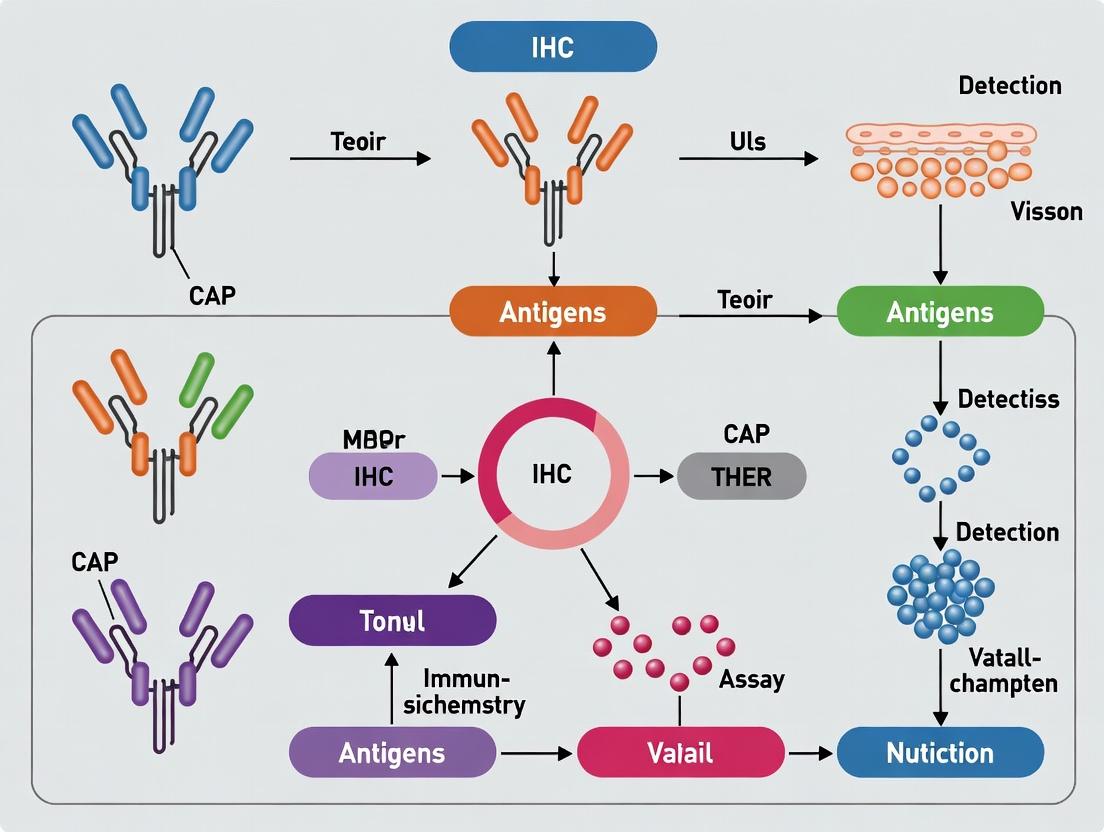
This comprehensive article provides researchers, scientists, and drug development professionals with an actionable roadmap for immunohistochemistry (IHC) assay validation aligned with College of American Pathologists (CAP) guidelines.
Navigating CAP Guidelines: A Practical Guide to IHC Assay Validation for Biomarker Studies
Abstract
This comprehensive article provides researchers, scientists, and drug development professionals with an actionable roadmap for immunohistochemistry (IHC) assay validation aligned with College of American Pathologists (CAP) guidelines. We cover foundational principles, step-by-step methodological application, troubleshooting strategies, and comparative validation frameworks to ensure robust, reproducible, and clinically relevant IHC results for precision medicine and therapeutic development.
IHC Validation 101: Understanding CAP Requirements and Core Principles
The Critical Role of IHC in Biomarker Discovery and Companion Diagnostics
Within the framework of advancing CAP (College of American Pathologists) assay validation guidelines, immunohistochemistry (IHC) remains an indispensable cornerstone in oncology and pathology. Its ability to provide spatial context for protein biomarker expression within the tissue architecture is unmatched, making it critical for both biomarker discovery and the development of companion diagnostics (CDx). This technical guide explores the methodologies, validation protocols, and applications that anchor IHC in this pivotal role.
IHC in the Biomarker Development Pipeline
Biomarker discovery and CDx development follow a structured pipeline where IHC is integral at multiple stages, from initial research to clinical validation.
Diagram Title: IHC in the Biomarker & CDx Development Pipeline
Core Experimental Protocols
The reliability of IHC data hinges on standardized, reproducible protocols. The following represents a detailed methodology for a typical IHC assay used in biomarker assessment.
Protocol: Automated IHC Staining for Predictive Biomarker Analysis
- Tissue Sectioning & Baking: Cut formalin-fixed, paraffin-embedded (FFPE) tissue sections at 4µm. Bake slides at 60°C for 1 hour.
- Deparaffinization & Rehydration: Process slides through xylene (3 changes, 5 min each) and graded alcohols (100%, 95%, 70% - 2 min each) to water.
- Antigen Retrieval: Perform heat-induced epitope retrieval (HIER) using a pressure cooker or decloaking chamber with a citrate-based (pH 6.0) or EDTA-based (pH 9.0) buffer for 20-30 minutes. Cool for 20 minutes.
- Peroxidase Blocking: Incubate with 3% hydrogen peroxide for 10 minutes to quench endogenous peroxidase activity.
- Protein Block: Apply a serum-free protein block for 10 minutes to reduce non-specific background staining.
- Primary Antibody Incubation: Apply optimized, validated primary antibody (e.g., anti-PD-L1, anti-HER2) at a specified dilution. Incubate for 60 minutes at room temperature or overnight at 4°C.
- Detection System: Apply a labeled polymer-horseradish peroxidase (HRP) secondary detection system (e.g., polymer-based detection) for 30 minutes.
- Chromogen Visualization: Apply 3,3'-Diaminobenzidine (DAB) chromogen for 5-10 minutes, monitoring development under a microscope.
- Counterstaining & Mounting: Counterstain with hematoxylin for 30-60 seconds, blue, dehydrate, clear, and mount with a permanent mounting medium.
Quantitative Data in IHC Validation
Robust validation requires quantitative assessment of assay performance. Key metrics are summarized below.
Table 1: Key Analytical Validation Metrics for IHC Assays (CAP/CLIA Framework)
| Validation Parameter | Target Acceptance Criteria | Typical Measurement Method |
|---|---|---|
| Precision (Repeatability) | ≥95% agreement | Intra-run, inter-run, inter-operator reproducibility using controls and patient samples. |
| Accuracy | ≥90% concordance | Comparison to a reference method (e.g., orthogonal IHC platform, flow cytometry). |
| Analytical Sensitivity (LOD) | Consistent detection at lowest expected expression level. | Titration of antibody on cell lines or tissues with known low expression. |
| Analytical Specificity | No non-specific staining in negative controls. | Assessment of staining in off-target tissues/cell lines and with isotype controls. |
| Robustness/Ruggedness | Consistent results under minor variable changes. | Testing effects of antigen retrieval time, antibody incubation time/temp variations. |
| Linearity/Reportable Range | Consistent scoring across expression gradient. | Staining and scoring of a tissue microarray with known expression gradient. |
Table 2: Common IHC Scoring Algorithms for Companion Diagnostics
| Biomarker | Scoring Algorithm | Clinical Cut-off Definition |
|---|---|---|
| PD-L1 (22C3 pharmDx) | Tumor Proportion Score (TPS) | Percentage of viable tumor cells with partial or complete membrane staining. Cut-off: ≥1% for certain indications. |
| HER2 (HercepTest) | 0 to 3+ scale based on membrane staining intensity and completeness. | Positive: 3+ (uniform, intense membrane staining in >10% of cells). Equivocal: 2+. |
| Mismatch Repair (MMR) | Nuclear staining in tumor vs. internal control for MLH1, PMS2, MSH2, MSH6. | Deficient (dMMR): Loss of nuclear expression in tumor cells for one or more proteins. |
The Scientist's Toolkit: Key Research Reagent Solutions
Table 3: Essential Materials for IHC-Based Biomarker Research
| Item Category | Specific Example/Function | Critical Role in Workflow |
|---|---|---|
| Validated Primary Antibodies | Rabbit monoclonal anti-PD-L1 (clone 28-8); Mouse monoclonal anti-HER2 (clone 4B5). | Specific biomarker detection. Clone validation is essential for reproducibility and CDx alignment. |
| Detection Systems | Polymer-based HRP detection kits (e.g., EnVision, UltiVision). | Signal amplification and visualization. Reduces non-specific background vs. traditional avidin-biotin. |
| Antigen Retrieval Buffers | Citrate buffer (pH 6.0), Tris-EDTA buffer (pH 9.0). | Reverses formalin-induced cross-linking to expose epitopes. pH optimization is clone-specific. |
| Chromogen Substrates | DAB (brown precipitate), AEC (red precipitate). | Forms the visible precipitate at the antigen site. DAB is stable and permanent. |
| Automated Staining Platforms | Ventana Benchmark, Leica BOND, Dako Autostainer Link. | Ensures standardized, high-throughput, and reproducible staining essential for clinical translation. |
| Control Tissues | Multi-tissue blocks (MTBs) with known positive/negative regions. | Essential for daily run validation, monitoring assay precision, and troubleshooting. |
Pathway Context: IHC Informs Therapeutic Targeting
IHC localizes key proteins within signaling pathways, informing drug mechanism and patient selection.
Diagram Title: IHC Biomarkers Identify Therapeutic Targets
Adherence to rigorous validation guidelines, such as those from CAP, transforms IHC from a qualitative research tool into a quantitative, clinically definitive technology. Through standardized protocols, quantitative performance metrics, and precise reagent systems, IHC enables the translation of biomarker discovery into robust companion diagnostics that guide personalized therapy, ultimately improving patient outcomes. The continuous evolution of CAP awareness and guidelines ensures that IHC assays meet the stringent demands of modern precision medicine.
Within the context of advancing IHC assay validation guideline awareness and compliance research, a critical operational framework is provided by the College of American Pathologists (CAP) Anatomic Pathology checklist. Requirements ANP.22900 and ANP.22950 are central to ensuring the analytical validity of immunohistochemistry (IHC) assays in clinical and research settings. This guide provides a technical dissection of these requirements, clarifying mandatory elements versus recommendations, and detailing associated experimental protocols.
Analysis of Mandatory Requirements
The CAP checklist uses specific language to denote requirement levels. "Must" and "shall" indicate mandatory elements, while "should" indicates a recommendation. The following table summarizes the core mandates of ANP.22900 and ANP.22950 based on the current checklist.
Table 1: Mandatory vs. Recommended Elements of CAP ANP.22900 & ANP.22950
| Checklist Requirement | Key Requirement Text (Summarized) | Mandatory (Must/Shall) | Recommended (Should) |
|---|---|---|---|
| ANP.22900 - Validation of Antibodies | Documentation of antibody validation for clinical use. | YES | - |
| Validation for each antibody clone and platform. | YES | - | |
| Use of appropriate controls. | YES | - | |
| Establishment of expected reactivity. | - | YES | |
| ANP.22950 - Analytic Sensitivity & Specificity | Determination of analytic sensitivity (e.g., titration). | YES | - |
| Determination of analytic specificity (e.g., cross-reactivity). | YES | - | |
| Use of defined positive and negative control tissues/cells. | YES | - | |
| Verification for each specimen type. | YES | - | |
| Re-verification upon major change. | YES | - |
Detailed Experimental Protocols for Compliance
Protocol 1: Antibody Titration for Analytic Sensitivity (ANP.22950)
Objective: To determine the optimal antibody concentration that provides the strongest specific signal with minimal background. Methodology:
- Specimen Selection: Use a well-characterized, known positive tissue sample with heterogeneous antigen expression levels.
- Serial Dilution: Prepare a series of antibody dilutions (e.g., 1:50, 1:100, 1:200, 1:400, 1:800) from the vendor-recommended starting concentration.
- Staining Run: Process all dilutions on consecutive slides in a single IHC run using identical protocols for antigen retrieval, detection, and visualization.
- Evaluation: A pathologist or qualified scientist scores each dilution for:
- Intensity of specific staining (0-3+ scale).
- Background/non-specific staining.
- Clarity of staining localization.
- Optimal Concentration Selection: The dilution that yields strong, specific staining (typically 2-3+) with the lowest acceptable background is selected for clinical use. Documentation includes all raw data and the rationale for the chosen dilution.
Protocol 2: Assessment of Analytic Specificity (ANP.22900 & ANP.22950)
Objective: To confirm the antibody binds only to its intended target antigen. Methodology:
- Tissue Microarray (TMA) Construction: Assemble a TMA containing:
- Known positive tissues.
- Known negative tissues.
- Tissues with potential cross-reacting homologous proteins.
- Tissues with unrelated but abundant proteins (e.g., cytokeratins in epithelium).
- Blocking/Pepitde Competition Assay:
- Pre-incubate the working antibody dilution with a 5-10 fold molar excess of the target immunizing peptide for 1 hour.
- Use the pre-adsorbed antibody mixture to stain the TMA alongside the standard antibody.
- Evaluation: Specificity is confirmed by:
- Loss of signal in the peptide-blocked slide compared to the standard slide.
- Appropriate staining only in relevant cell types on the TMA.
- Absence of staining in negative tissues.
- Western Blot Correlation (Optional but Recommended): Perform western blot on relevant cell lysates to confirm recognition of a single band at the expected molecular weight.
Visualization of IHC Validation Workflow
Title: Mandatory CAP IHC Validation Workflow
The Scientist's Toolkit: Essential Research Reagents & Materials
Table 2: Key Reagent Solutions for CAP-Compliant IHC Validation
| Item | Function in Validation | Critical for CAP Requirement |
|---|---|---|
| Validated Antibody Clone | Primary reagent targeting the antigen of interest. Must include clone ID and vendor. | ANP.22900 (Core) |
| Positive Control Tissue | Tissue with known expression of the target antigen at variable levels. Used for titration and run control. | ANP.22950 (Mandatory) |
| Negative Control Tissue | Tissue confirmed to lack the target antigen. Assesses specificity and background. | ANP.22950 (Mandatory) |
| Tissue Microarray (TMA) | Contains multiple tissue types for efficient specificity and cross-reactivity screening. | ANP.22950 (Recommended Best Practice) |
| Immunizing Peptide | Synthetic peptide matching the antibody's epitope. Used for blocking/competition assays to prove specificity. | ANP.22900/ANP.22950 (Critical for Specificity) |
| Isotype Control Antibody | An irrelevant antibody of the same class (IgG). Distinguishes specific from non-specific Fc binding. | ANP.22950 (Recommended) |
| Cell Line Pellet Controls | Fixed cell pellets with known antigen status (positive/negative). Provide consistent material for verification. | ANP.22950 (Useful for Reproducibility) |
| Automated Staining Platform | Provides standardized, reproducible conditions for antibody application and detection. Essential for assay consistency. | ANP.22900/ANP.22950 (Mandatory for Clinical Use) |
Compliance with CAP ANP.22900 and ANP.22950 is non-negotiable for clinical IHC. The mandatory core requires documented, clone-specific validation establishing both analytic sensitivity and specificity on relevant specimen types. The protocols and tools outlined provide a roadmap for researchers and drug developers to build robust, reproducible IHC assays that meet regulatory scrutiny, thereby advancing the reliability of biomarker data in translational research.
Within the context of advancing CAP (College of American Pathologists) awareness for IHC (Immunohistochemistry) assay validation, precise understanding of key regulatory and methodological terms is paramount. This guide delineates the core concepts of Analytical Validation, Clinical Validation, Verification, and Qualification, framing them within the requirements for robust IHC assay development and compliance in drug development and clinical research.
Foundational Definitions
Analytical Validation: The process of establishing that the performance characteristics of a test (e.g., an IHC assay) meet the specified requirements for its intended analytical purpose. It answers: "Does the test measure the analyte accurately and reliably?"
Clinical Validation (also Clinical Utility): The process of establishing that the test result correlates with a clinical phenotype, diagnosis, prognosis, or predicts a therapeutic response in the intended use population. It answers: "Is the test result associated with a clinically meaningful endpoint?"
Verification: The confirmation, through objective evidence, that specified requirements have been fulfilled. In a laboratory setting, this often refers to the process of establishing that a validated test performs as expected when implemented in a user's specific environment (e.g., a clinical lab verifying a manufacturer's claims).
Qualification: A graded, fit-for-purpose process of planning and evaluating the extent to which a method (or instrument) is suitable for its intended purpose. It is often used in context of biomarkers (Biomarker Qualification) for a specific context of use with regulatory agencies.
Table 1: Key Performance Metrics in IHC Assay Validation
| Metric | Typical Target (IHC Example) | Purpose in Analytical Validation |
|---|---|---|
| Accuracy | >90% concordance with orthogonal method (e.g., FISH, NGS) | Measures closeness to a reference true value. |
| Precision (Repeatability & Reproducibility) | CV <15% for quantitative; >95% agreement for semi-quantitative | Assesses assay consistency within-run, between-run, between-operators, and across sites. |
| Analytical Sensitivity (Limit of Detection) | Detection at 1+ staining level with low antigen expression cell lines | Lowest amount of analyte that can be reliably detected. |
| Analytical Specificity | No staining in isotype/negative controls; expected staining pattern. | Includes interference (cross-reactivity) and robustness (to pre-analytical variables). |
| Reportable Range | All Score 0, 1+, 2+, 3+ intensities are distinguishable. | Range of results an assay can produce without dilution. |
| Reference Range | Defined positive/negative cut-offs based on clinical cohort. | Establishes expected values in a target population. |
Table 2: Distinction Between Core Terms in a CAP IHC Guideline Context
| Term | Primary Question | Typical Performer | Context in IHC Laboratory |
|---|---|---|---|
| Analytical Validation | Can we measure the biomarker reliably? | Assay Developer / Manufacturer | Initial establishment of assay performance characteristics. |
| Verification | Does it work here as claimed? | Implementing Clinical Laboratory | Confirming manufacturer's validated claims per CAP checklist (e.g., ANP.22900). |
| Clinical Validation | Does the result predict patient outcome? | Clinical Trial Sponsor / Researcher | Linking assay result (e.g., PD-L1 expression) to therapeutic response. |
| Qualification | Is the biomarker acceptable for this use? | Drug Developer with Regulatory Agency | Submitting evidence for using a biomarker in drug development decisions. |
Experimental Protocols for Key Experiments
Protocol 1: Analytical Validation of an IHC Assay for a Novel Biomarker
Objective: Establish precision, accuracy, and sensitivity of a new IHC assay. Materials: See "Scientist's Toolkit" below. Methodology:
- Precision (Reproducibility):
- Select 30 cases spanning expression levels (negative, low, high).
- Stain each case in three separate runs (different days, lots of detection system).
- Use two trained pathologists to score slides blinded.
- Calculate inter-observer, inter-run, and inter-lot concordance using Cohen's kappa (for categorical scores) or Coefficient of Variation (for quantitative image analysis).
- Accuracy:
- Identify a cohort with results from a validated orthogonal method (e.g., 20 cases with known HER2 amplification status by FISH).
- Perform IHC staining.
- Calculate percent agreement, sensitivity, and specificity against the orthogonal method.
- Analytical Sensitivity (Limit of Detection):
- Use a cell line microarray with cells expressing a titrated amount of target antigen (via CRISPR knockdown or siRNA).
- Stain the microarray alongside routine controls.
- The LOD is the lowest antigen-expressing cell line that yields consistent, discernible specific staining above background.
Protocol 2: Laboratory Verification of a Commercial IHC Assay
Objective: Verify a purchased IVD or RUO IHC kit per CAP guidelines. Methodology:
- Define Acceptability Criteria: From manufacturer's package insert.
- Precision Verification: Run 5 positive and 3 negative clinical samples in duplicate over 3 days. Require >95% within-lab concordance.
- Accuracy Verification: Stain 10 archived samples with known status (per prior testing at a reference lab). Require 100% concordance.
- Reportable Range: Ensure all expected staining patterns (0-3+) are observed in the verification samples.
- Documentation: Compile data, compare to criteria, and approve the assay for clinical use in the Laboratory Information System.
Visualizations
Title: Relationship of Key Terms in Assay Lifecycle
Title: IHC Assay Workflow & Key Variables
The Scientist's Toolkit: Key Research Reagent Solutions for IHC Validation
Table 3: Essential Materials for IHC Assay Validation Experiments
| Item | Function in Validation/Verification | Key Considerations |
|---|---|---|
| FFPE Cell Line Microarrays | Provide controlled, multi-sample slides for precision, LOD, and specificity studies. | Should include positive, negative, and gradient expression controls. |
| Validated Primary Antibodies | Specifically bind the target epitope. Critical for accuracy. | Clone specificity, species reactivity, vendor validation data. |
| Detection Systems (Polymer HRP/AP) | Amplify signal from primary antibody binding. Major variable in sensitivity. | Sensitivity level, background, compatibility with primary antibody species. |
| Automated Stainers | Standardize the analytical phase, improving reproducibility. | Protocol transferability, reagent dispensing precision, temperature control. |
| Reference Standard Slides | Slides with pre-characterized staining for inter-laboratory comparison. | Used for proficiency testing and verification accuracy checks. |
| Digital Image Analysis Software | Provides quantitative, objective scoring for continuous data (e.g., H-score, % positivity). | Essential for reducing observer variability in precision studies. |
| Control Tissues (Positive/Negative) | Run with each batch to monitor assay performance (precision over time). | Should be well-characterized and representative of clinical samples. |
Immunohistochemistry (IHC) is a cornerstone technique in pathology and research, enabling the visualization of protein expression within the morphological context of tissue. Within the framework of Clinical Laboratory Improvement Amendments (CLIA) and College of American Pathologists (CAP) accreditation, rigorous validation of IHC assays is not optional but mandatory. This whitepaper, framed within a broader thesis on CAP awareness research, details the four non-negotiable pillars of IHC validation: Specificity, Sensitivity, Precision, and Robustness. Adherence to these pillars ensures the analytical reliability required for diagnostic decision-making, biomarker discovery, and therapeutic development.
Pillar 1: Specificity
Specificity confirms that the antibody binds exclusively to its intended target antigen. Lack of specificity leads to false-positive results, compromising data integrity.
Key Validation Experiments:
- Genetic Validation: Use of CRISPR/Cas9 or siRNA to knock out/down the target gene, followed by IHC to demonstrate loss of signal.
- Orthogonal Validation: Comparison of IHC results with an independent method (e.g., mRNA in situ hybridization, western blot) on serial sections.
- Adsorption Control: Pre-incubation of the primary antibody with its cognate peptide antigen (in 10-100x molar excess) to competitively inhibit binding, resulting in abolished or significantly reduced staining.
- Isotype Control: Use of a non-targeting immunoglobulin of the same species and isotype as the primary antibody at the same concentration.
Quantitative Data Summary:
| Specificity Control Method | Expected Result | Acceptability Criterion |
|---|---|---|
| Genetic Knockout/Knockdown | >90% reduction in staining intensity | Staining score ≤ 1 (on 0-3 scale) in KO cells/tissue. |
| Peptide Adsorption | >80% reduction in staining intensity | Significant qualitative reduction (e.g., H-score reduction >80%). |
| Isotype Control | No specific staining | Staining limited to background/non-specific patterns. |
Detailed Protocol: Peptide Adsorption Control
- Materials: Primary antibody, immunizing peptide (synthetic), phosphate-buffered saline (PBS).
- Procedure:
- Prepare a working solution of the primary antibody at the validated concentration in antibody diluent.
- In a separate tube, combine the primary antibody at the same concentration with a 50-fold molar excess of the immunizing peptide.
- Incubate the antibody-peptide mixture at 4°C for 2-24 hours with gentle agitation.
- Apply the pre-adsorbed mixture to one test tissue section and the standard primary antibody to an adjacent serial section.
- Perform the IHC protocol identically for both slides.
- Compare staining. Validated specific staining will be abolished or markedly reduced in the pre-adsorbed sample.
Pillar 2: Sensitivity
Sensitivity measures the lowest level of antigen concentration that an assay can reliably detect. It ensures that low-expressing targets are not missed (false negatives).
Key Validation Experiments:
- Titration of Primary Antibody: A checkerboard titration against a range of antigen retrieval conditions to establish the optimal signal-to-noise ratio.
- Use of Cell Line Microarrays (CLMAs): Arrays containing cell lines with known, graded expression levels (confirmed by mass spectrometry) of the target protein.
- Assessment of Limit of Detection (LOD): Using tissue samples with known low expression or serial dilutions of a positive control sample.
Quantitative Data Summary:
| Sensitivity Metric | Typical Measurement Method | Target Performance |
|---|---|---|
| Optimal Antibody Titer | Titration curve (Signal vs. Concentration) | Titer that yields maximum specific signal with minimal background. |
| Limit of Detection (LOD) | Staining of low-expressing cell lines/tissues | Consistent, reproducible weak-positive stain (H-score > 5 above negative). |
| Dynamic Range | Staining across CLMA with expression gradient | Linear correlation (R² > 0.85) between IHC score and known protein level. |
Detailed Protocol: Checkerboard Titration for Optimization
- Materials: Primary antibody, positive control tissue, antigen retrieval solutions (e.g., citrate pH 6, EDTA pH 9), detection kit.
- Procedure:
- Cut serial sections from a positive control tissue block.
- Perform antigen retrieval using two different methods (e.g., pH 6 and pH 9) on separate slide batches.
- Apply a series of primary antibody dilutions (e.g., 1:50, 1:100, 1:200, 1:400, 1:800) to slides from each retrieval condition.
- Complete the IHC protocol with consistent detection and visualization steps.
- Score each slide for intensity (0-3+) and distribution (0-100%). Calculate an H-score (range 0-300).
- Plot H-score vs. antibody dilution for each retrieval condition. The optimal condition is the pairing that produces the highest achievable H-score at the lowest background.
Pillar 3: Precision
Precision evaluates the reproducibility of the assay, encompassing repeatability (intra-assay, intra-observer, intra-instrument) and reproducibility (inter-assay, inter-observer, inter-instrument, inter-site).
Key Validation Experiments:
- Intra-run & Inter-run Precision: Staining the same control sample multiple times within a single run and across different runs/days.
- Inter-observer Precision: Multiple trained pathologists/scoring the same set of slides blinded.
- Inter-site Precision (for multi-center studies): Identical protocol and control materials used across different laboratories.
Quantitative Data Summary:
| Precision Type | Metrics | CAP Guideline Target (Example) |
|---|---|---|
| Intra-assay (Repeatability) | Coefficient of Variation (CV) of H-scores | CV < 10% for semi-quantitative scores. |
| Inter-assay (Reproducibility) | Intraclass Correlation Coefficient (ICC) | ICC > 0.90 for continuous scores; Kappa > 0.80 for categorical scores. |
| Inter-observer | Cohen's Kappa (categorical) or ICC (continuous) | Kappa ≥ 0.60 (good), ≥ 0.80 (excellent). |
Detailed Protocol: Inter-run Precision Assessment
- Materials: Validated positive control tissue block, whole IHC reagent set.
- Procedure:
- Include the same positive control tissue on every IHC run for a period of 20 independent runs.
- Ensure the control is processed identically to test samples in each run.
- After staining, score the control slide from each run using the validated scoring method (e.g., H-score, percentage positive).
- Calculate the mean, standard deviation (SD), and coefficient of variation (CV = SD/mean x 100%) for the 20 scores.
- The assay is considered precise if the CV meets the pre-defined acceptability criterion (e.g., <15%).
Pillar 4: Robustness
Robustness is the measure of an assay's reliability when subjected to small, deliberate variations in procedural parameters. It identifies critical steps in the protocol.
Key Validation Experiments: A robustness test varies key operational parameters one at a time (OFAT) or using a factorial design:
- Antigen Retrieval Time: ± 10% variation from standard time.
- Primary Antibody Incubation: Time (± 20%) and Temperature (room temp vs. 4°C).
- Detection System Incubation Times: ± 10% variation.
Quantitative Data Summary:
| Varied Parameter | Acceptable Range | Impact Metric |
|---|---|---|
| Retrieval Time | Standard time ± 5 minutes | H-score change < 10% from baseline. |
| Primary Antibody Incubation Time | Standard time ± 10 minutes | No qualitative change in staining pattern; intensity change < 1+ grade. |
| Reaction Temperature | 20°C - 25°C | No qualitative change; CV of scores < 5%. |
Detailed Protocol: Robustness Testing for Antigen Retrieval
- Materials: Positive control tissue, antigen retrieval system.
- Procedure:
- Select the standard retrieval time (e.g., 20 minutes in a pressure cooker).
- Process serial sections from the same block under three conditions: Standard Time (20 min), Short Time (15 min), and Long Time (25 min).
- Keep all subsequent steps (antibody, detection, etc.) strictly identical.
- Score all slides. Record both the overall staining pattern (qualitative) and the quantitative score (e.g., H-score).
- The retrieval step is considered robust if the staining pattern is consistent and the quantitative scores across the three times have a CV of <10%.
The Scientist's Toolkit: Essential Research Reagent Solutions
| Item | Function in IHC Validation |
|---|---|
| Cell Line Microarray (CLMA) | Contains cell pellets with known, quantified protein expression levels for sensitivity calibration and dynamic range assessment. |
| Tissue Microarray (TMA) | Contains multiple patient tissue cores on one slide for high-throughput, parallel analysis of assay precision and specificity across tissues. |
| CRISPR-modified Isogenic Cell Lines | Genetically engineered pairs (wild-type vs. knockout) for definitive confirmation of antibody specificity. |
| Multiplex IHC Detection Kits | Enable simultaneous detection of multiple antigens on one section, requiring validation of each channel for specificity without cross-talk. |
| Automated Staining Platforms | Provide superior reproducibility and robustness versus manual staining by standardizing incubation times, temperatures, and reagent application. |
| Standardized Digital Image Analysis Software | Enables quantitative, objective scoring of IHC stains (e.g., H-score, % positivity) critical for precision and robustness metrics. |
| Reference Standard Tissues | Well-characterized tissue controls with known antigen expression levels, used for run-to-run normalization and inter-laboratory calibration. |
Visualizing the IHC Validation Workflow & Relationships
IHC Validation Pillars Logical Flow
Specificity Validation Experiments
Within the broader context of IHC assay validation guideline CAP awareness research, constructing a robust validation plan is paramount for ensuring assay reliability, reproducibility, and regulatory compliance. This guide details a comprehensive framework addressing variables across the entire testing continuum.
Pre-Analytical Variables
Pre-analytical variables encompass all factors from sample acquisition to processing before the assay is run.
Key Variables & Controls:
- Tissue Acquisition & Handling: Type of biopsy, ischemia time, surgical method.
- Fixation: Fixative type (e.g., 10% Neutral Buffered Formalin), concentration, duration, temperature, and tissue-to-fixative volume ratio.
- Processing & Embedding: Dehydration, clearing, infiltration schedules; paraffin block orientation and storage conditions.
- Sectioning: Section thickness, water bath temperature, adhesive type.
- Antigen Retrieval: Method (heat-induced, enzymatic), pH, time, temperature, buffer composition.
Experimental Protocol for Evaluating Fixation Time:
- Sample Preparation: Divide a homogeneous tissue sample (e.g., tumor resection) into multiple, equally-sized fragments immediately upon collection.
- Variable Application: Immerse fragments in standardized 10% NBF for varying durations (e.g., 6, 12, 24, 48, 72 hours) at room temperature.
- Processing: Process all fragments simultaneously through identical dehydration, clearing, and paraffin embedding protocols.
- Sectioning: Cut serial sections of uniform thickness (4-5 µm) from each block.
- Staining & Analysis: Stain all sections in a single IHC run for a robust target and a labile antigen. Perform quantitative image analysis (e.g., H-score, percentage positivity) and assess morphology.
- Data Interpretation: Determine the optimal fixation window that preserves morphology and antigenicity without introducing variability.
Table 1: Impact of Pre-Analytical Variables on IHC Results
| Variable | Typical Range Tested | Optimal Target | Observed Effect on IHC Signal (Example Data) |
|---|---|---|---|
| Formalin Fixation Time | 6-72 hours | 18-24 hours | Signal intensity decreased by ~40% after 72 hrs for labile antigens (n=15 cases) |
| Section Thickness | 3-8 µm | 4-5 µm | Coefficient of variance (CV) increased from 8% (4µm) to 22% (8µm) (n=10 runs) |
| Antigen Retrieval pH | pH 6.0, pH 8.0, pH 9.0 | Target-dependent | pH 9.0 yielded 50% higher H-score for ER, while pH 6.0 was optimal for p53 (n=20 cases) |
| Cold Ischemia Time | 10-60 minutes | <30 minutes | Ki-67 proliferation index increased by average of 15% after 60 mins (n=12 samples) |
Analytical Variables
Analytical variables pertain to the actual execution of the IHC assay.
Key Variables & Controls:
- Reagent Validation: Primary antibody clone, concentration, incubation time/temperature; detection system (polymer, ABC).
- Instrumentation: Stainer platform (manual/automated), reagent dispensing, wash efficiency, heating/cooling uniformity.
- Protocol: Step durations, temperatures, rinse buffers.
- Controls: Use of positive, negative, and external control tissues in each run.
Experimental Protocol for Antibody Titration:
- Section Preparation: Select a control tissue cell line pellet block with known, homogeneous expression of the target.
- Dilution Series: Prepare a logarithmic series of primary antibody dilutions (e.g., 1:50, 1:100, 1:200, 1:500, 1:1000).
- Staining: Stain serial sections using each dilution on the same automated stainer under otherwise identical conditions.
- Analysis: Perform quantitative digital image analysis to plot antibody dilution against signal intensity (mean optical density) and background.
- Determination: Identify the optimal dilution as the point providing maximal specific signal with minimal background (highest signal-to-noise ratio), typically on the plateau of the dilution curve.
Post-Analytical Variables
Post-analytical variables involve the interpretation, reporting, and data management of results.
Key Variables & Controls:
- Interpretation: Scoring system (e.g., H-score, Allred, % positivity), pathologist training/concordance, use of digital image analysis (DIA).
- Reporting: Report format, critical value alerts, integration with laboratory information system (LIS).
- Data Storage: Storage of digital slides, raw data, and audit trails.
Experimental Protocol for Intra- and Inter-Observer Concordance Study:
- Sample Set: Assemble a validation set of 50-100 IHC slides representing the full spectrum of staining results (negative, weak, moderate, strong).
- Blinded Review: Multiple trained pathologists independently score each case using the defined scoring criteria, without knowledge of others' scores or clinical data.
- Statistical Analysis: Calculate inter-observer concordance using Cohen's or Fleiss' Kappa statistic. For intra-observer concordance, have each pathologist re-score the same set in a different order after a washout period (e.g., 2 weeks).
- Acceptance Criterion: Establish a minimum Kappa value (e.g., >0.7) for assay validation. Implement remedial training if criteria are not met.
Table 2: Analytical Validation Performance Metrics
| Performance Characteristic | Experimental Method | Acceptance Criterion (Example) |
|---|---|---|
| Precision (Repeatability) | 10 replicates of 3 controls (low, mid, high) in one run. | CV of H-score < 10% for mid/high expressors. |
| Precision (Reproducibility) | Same controls stained across 3 runs, 3 days, 2 technicians. | CV < 15% for mid/high expressors. |
| Accuracy | Compare IHC results to a gold standard (e.g., FISH, MSI) on known samples. | Concordance > 95% with 95% CI lower bound >90%. |
| Analytical Sensitivity | Stain serial dilutions of cell line pellets with known antigen copy number. | Detect target at ≤ 5% tumor cell positivity. |
| Analytical Specificity | Block with peptide or isotype control; stain relevant normal tissues. | Absence of staining with blocking; expected tissue-specific pattern. |
| Robustness | Deliberately vary key steps (e.g., retrieval time ±10%, antibody incubation ±1hr). | All results remain within acceptable precision limits. |
The Scientist's Toolkit: Key Research Reagent Solutions
Table 3: Essential Materials for IHC Assay Validation
| Item | Function in Validation |
|---|---|
| Multi-tissue Microarray (TMA) Blocks | Contain multiple tissue types/controls on one slide for parallel testing of specificity, precision, and accuracy under identical conditions. |
| Cell Line Pellet Blocks with Known Expression | Provide biologically homogeneous and reproducible controls for titration, precision, and sensitivity studies. |
| Validated Primary Antibody Clones | Crucial for specificity. Clone selection, with documented performance data (e.g., CAP IHC guidelines), is foundational. |
| Automated IHC Stainer & Reagents | Ensures consistent reagent application, timing, and temperatures, critical for controlling analytical variability. |
| Digital Pathology Scanner & Image Analysis Software | Enables quantitative, objective scoring (H-score, % positivity) for quantitative studies of variables and precision. |
| Reference Standards | Commercially available or internally characterized tissues with known status for the target, used to establish accuracy. |
Workflow and Pathway Visualizations
Diagram 1: Comprehensive IHC Assay Validation Workflow
Diagram 2: IHC Validation Plan Components & Relationships
From Protocol to Practice: A Step-by-Step CAP-Compliant IHC Validation Workflow
Introduction Within the rigorous framework of IHC assay validation, as emphasized by the College of American Pathologists (CAP) guidelines, the initial and most critical step is the comprehensive characterization of antibody specificity. This foundational phase ensures that observed staining patterns are attributable to the target antigen and not to cross-reactivity, nonspecific binding, or background. In the context of drug development and clinical research, failure at this stage can invalidate downstream data, leading to erroneous conclusions. This guide details the essential methodologies of genetic (knock-out/KO and knock-down/KD) and isoform specificity testing, providing the technical foundation for CAP-compliant antibody validation.
1. The Imperative of Genetic Validation Genetic validation provides the most definitive evidence of antibody specificity by correlating the presence or absence of the target protein (via genetic manipulation) with the presence or absence of immunohistochemical (IHC) signal.
1.1 Knock-out (KO) Validation
- Principle: Utilization of cell lines or tissues where the gene encoding the target protein has been completely inactivated. A specific antibody should show a complete loss of signal in the KO sample compared to the wild-type (WT) or isogenic control.
- Detailed Protocol:
- Source Selection: Obtain genetically engineered KO cell lines (e.g., via CRISPR-Cas9, TALEN) or tissues from KO animal models. Isogenic WT controls are mandatory.
- Sample Preparation: Culture KO and WT cells identically. Prepare cell pellets or grow cells on chamber slides. For tissues, process KO and WT samples in parallel.
- Parallel Processing: Fix, embed, and section all samples simultaneously. Perform IHC staining in the same run, using the same reagent batches.
- Analysis: Compare staining intensity and pattern. Quantification via H-score or percentage of positive cells is recommended. The ideal result is a complete absence of specific staining in the KO sample.
1.2 Knock-down (KD) Validation
- Principle: Utilization of RNA interference (siRNA/shRNA) to transiently or stably reduce target protein expression. A specific antibody should show a significant reduction in signal intensity correlating with protein downregulation.
- Detailed Protocol:
- Transfection: Transfect target cells with validated siRNA pools targeting the gene of interest and a non-targeting scrambled siRNA control.
- Optimization: Harvest cells at a predetermined optimal time point (e.g., 48-72 hours) post-transfection. A portion must be lysed for Western blot (WB) analysis to confirm protein reduction.
- Correlative Analysis: Prepare IHC samples (cell pellets or slides) from the same transfection experiment. IHC staining intensity must correlate quantitatively with the degree of protein reduction confirmed by WB.
Quantitative Data Summary: Genetic Validation
| Validation Type | Ideal Outcome | Acceptable Outcome | Failed Outcome | Key Control |
|---|---|---|---|---|
| Knock-out (KO) | 100% signal loss in KO vs. WT. | >95% signal reduction. | Significant residual staining in KO. | Isogenic wild-type cell line/tissue. |
| Knock-down (KD) | Strong correlation (R² >0.9) between IHC signal intensity and WB protein level. | Significant (p<0.05) reduction in IHC H-score in KD vs. control. | No statistically significant change in IHC signal despite WB confirmation. | Scrambled siRNA + WB protein quantification. |
2. Assessing Isoform Specificity For targets with multiple splice variants or protein family members, demonstrating that an antibody binds only the intended isoform is crucial.
- Principle: Test antibody reactivity against a panel of cell lines exogenously expressing individual isoforms or highly homologous family members.
- Detailed Protocol:
- Panel Construction: Generate or source cell lines (e.g., HEK293) transiently or stably expressing V5- or GFP-tagged versions of each isoform/family member. Include an empty vector control.
- Parallel Staining: Perform IHC on cell pellets from all lines in a single experiment.
- Analysis: Specific antibody should stain only the cell line expressing the target isoform. Cross-reactivity with other isoforms constitutes a failure. Tag-specific antibodies (anti-V5/GFP) confirm expression of all constructs.
Experimental Workflow for Antibody Specificity Testing
The Scientist's Toolkit: Key Research Reagent Solutions
| Reagent / Material | Function in Specificity Testing |
|---|---|
| CRISPR-Cas9 KO Cell Lines | Provides a gold-standard, genetically defined null background for confirming antibody signal dependency on the target gene. |
| Validated siRNA/shRNA Pools | Enables knock-down validation, correlating graded protein loss with IHC signal reduction. |
| Isogenic Wild-Type Control Lines | The essential paired control for KO lines, isolating the genetic variable. |
| Expression Vectors for Isoforms | Plasmids containing cDNA for target and off-target isoforms to test cross-reactivity. |
| Tag-Specific Antibodies (e.g., anti-V5, anti-GFP) | Controls to confirm expression of transfected isoforms in specificity panels. |
| Cell Line Authentication Service | Critical to confirm the genetic identity of all cell lines used, a core CAP requirement. |
| Programmable Slide Stainer | Ensures consistent, reproducible reagent application and incubation times across all validation samples. |
3. Data Integration and CAP Compliance The results from KO/KD and isoform testing must be thoroughly documented as part of the antibody validation report. CAP guidelines emphasize the need for "evidence of specificity," which these experiments directly provide. This documented evidence chain is indispensable for assays used in preclinical and clinical-stage drug development.
Within the rigorous framework of IHC assay validation for CAP (College of American Pathologists) guideline compliance, antibody titration is a critical, non-negotiable step. The primary goal is to empirically determine the antibody concentration that yields the highest specific signal (target antigen staining) with the lowest non-specific background noise. This optimization is fundamental to achieving the accuracy, reproducibility, and linearity required for clinical and research applications.
The Core Principle: Defining the Working Window
The optimal antibody dilution is not the strongest possible signal, but the dilution at the inflection point of the signal-to-noise (S/N) ratio curve. A high-concentration antibody saturates both specific and non-specific epitopes, increasing background. A too-dilute antibody loses specific signal. The working window lies between these extremes.
Experimental Protocol: The Checkerboard Titration
This is the gold-standard method for simultaneous optimization of primary and secondary antibodies.
Materials:
- Tissue microarray (TMA) containing positive (known antigen expression) and negative (no/low antigen expression) controls.
- Primary antibody (pAb) of interest.
- Detection system (e.g., HRP-polymer conjugated secondary antibody).
- Antigen retrieval solution (appropriate pH).
- Blocking solution (e.g., serum, protein block).
- Chromogen (DAB, AEC) and counterstain.
Methodology:
- Sectioning & Retrieval: Cut TMA sections, bake, deparaffinize, and perform standardized antigen retrieval.
- Blocking: Apply endogenous enzyme block followed by protein block.
- Primary Antibody Titration: Prepare a 2-fold serial dilution series of the pAb (e.g., 1:50, 1:100, 1:200, 1:400, 1:800, 1:1600).
- Secondary Antibody Titration (if required): For non-polymer systems, prepare a similar dilution series for the secondary antibody.
- Application: Apply the pAb dilutions in vertical columns on the TMA. If titrating secondary, apply secondary dilutions in horizontal rows, creating a "checkerboard."
- Detection & Visualization: Complete the IHC protocol with chromogen application, counterstaining, and mounting.
- Analysis: Score slides using a semi-quantitative system (e.g., H-score) for signal intensity in positive tissue and for background in negative tissue.
Data Analysis and Determination of Optimal Dilution
Quantitative analysis is key. The following metrics should be calculated for each dilution:
- Signal Intensity (Positive Control): 0-3+ scale or quantitative image analysis mean optical density.
- Background (Negative Control): 0-3+ scale.
- Signal-to-Noise Ratio (S/N): Calculated as (Signal Intensity - Background Intensity) / Background Intensity, or as a simple ratio.
Table 1: Example Titration Data for Anti-XYZ Antibody (Clone ABC123)
| Primary Ab Dilution | Signal (Positive Tissue) | Background (Negative Tissue) | S/N Ratio | Notes |
|---|---|---|---|---|
| 1:50 | 3+ | 3+ | 1.0 | Excessive background, saturation |
| 1:100 | 3+ | 2+ | 1.5 | High signal, moderate background |
| 1:200 | 3+ | 1+ | 2.0 | Optimal: Peak S/N |
| 1:400 | 2+ | 0.5+ | 3.0* | Good S/N but signal loss |
| 1:800 | 1+ | 0 | N/A | Insufficient signal |
*S/N appears higher but is driven by very low background, with significant loss of specific signal.
The optimal dilution is 1:200, providing maximal specific signal with manageable background. This dilution should be used for all subsequent validation steps.
Visualizing the Optimization Workflow
Title: IHC Antibody Titration and Optimization Workflow
The Scientist's Toolkit: Key Research Reagent Solutions
Table 2: Essential Materials for IHC Antibody Titration
| Item | Function & Importance for Titration |
|---|---|
| Tissue Microarray (TMA) | Contains multiple tissue cores on one slide, enabling parallel testing of all antibody dilutions under identical conditions. Critical for reproducibility. |
| Validated Positive & Negative Control Tissues | Provides the benchmark for specific signal and background noise assessment. Non-negotiable for CAP compliance. |
| Primary Antibody Reference Standard | A standardized aliquot of the antibody to be used throughout validation and subsequent clinical testing, ensuring lot-to-lot consistency. |
| Polymer-based Detection System | Amplifies signal with high sensitivity and typically lower background compared to older methods (e.g., ABC). Reduces one variable in optimization. |
| Automated Stainer | Eliminates manual timing and application inconsistencies, a key variable control for CAP-validated assays. |
| Digital Pathology/Image Analysis System | Enables quantitative, objective scoring of signal intensity and background, moving beyond subjective visual assessment. |
| Antigen Retrieval Buffer (pH 6.0 & 9.0) | The two standard retrieval solutions; optimal pH must be determined and locked down prior to final antibody titration. |
| Chromogen (DAB) | The most common chromogen for clinical IHC. Must be prepared and used with consistent incubation times to avoid variable signal intensity. |
Within the comprehensive framework of IHC assay validation guideline CAP awareness research, the establishment of a robust Limit of Detection (LoD) and the implementation of definitive controls are critical milestones. This step ensures the assay's sensitivity is quantitatively defined and that each run is monitored for technical reliability, directly supporting diagnostic accuracy and reproducibility in research and drug development.
Defining the Limit of Detection (LoD)
The LoD is the lowest analyte concentration that can be consistently distinguished from a blank sample. For IHC, this is often the minimum level of antigen expression detectable above background.
Experimental Protocol for LoD Determination
- Cell Line Selection & Preparation: Use isogenic cell lines or xenografts with well-characterized, graded expression levels of the target antigen (e.g., 0, 1+, 2+, 3+ by an orthogonal method). Create a formalin-fixed, paraffin-embedded (FFPE) cell line microarray.
- Serial Dilution Approach: Alternatively, use a cell line with known high expression. Create a series of sample dilutions (e.g., through mixing with negative cells or peptide blocking) to simulate decreasing antigen concentration.
- Staining and Evaluation: Subject the dilution series to the full IHC protocol. Each dilution level should be replicated multiple times (n≥3) across multiple runs and days.
- Data Analysis: Have multiple, blinded pathologists or trained analysts score the stains. The LoD is the lowest concentration where the stain is consistently identified as positive (e.g., ≥95% detection rate).
Table 1: Example Data from a Theoretical HER2 IHC LoD Study
| Antigen Level (Cells/mL) | Replicate 1 Score | Replicate 2 Score | Replicate 3 Score | Detection Rate (%) |
|---|---|---|---|---|
| 1000 (High) | 3+ | 3+ | 3+ | 100 |
| 100 | 2+ | 2+ | 2+ | 100 |
| 10 | 1+ | 1+ | 1+ | 100 |
| 1 | 1+ | 0 | 1+ | 67 |
| 0 (Negative) | 0 | 0 | 0 | 0 |
In this example, the LoD is determined to be the 10 cells/mL level, where a 100% detection rate is maintained.
Defining Positive and Negative Controls
Controls are non-negotiable elements for verifying assay performance in each run.
Positive Controls
- Systemic (On-Slide) Control: A tissue known to express the target at a defined, moderate level (e.g., 2+). It validates the entire staining procedure.
- Internal Control: Normal adjacent tissue or a ubiquitously expressed antigen within the test sample that serves as a biological reference.
Negative Controls
- Background/Reagent Control: Use of an isotype-matched irrelevant primary antibody or antibody diluent alone to assess non-specific staining.
- Tissue Control: A tissue known to be devoid of the target antigen.
- Inhibition Control: Pre-adsorption of the primary antibody with its target peptide to competitively inhibit specific binding.
Experimental Protocol for Control Validation
- Control Tissue Selection: Identify and validate candidate tissues for positive and negative expression via multiple orthogonal assays (e.g., PCR, Western blot).
- Embedding and Sectioning: Integrate control tissues into every run, preferably on the same slide as the test sample (multitissue block) or on a companion slide.
- Acceptance Criteria Definition: Establish precise, objective criteria for control acceptance (e.g., "The moderate positive control must show 2+ membrane staining in >80% of target cells; the negative control must show only faint, non-specific cytoplasmic blush").
Table 2: Essential Controls for IHC Assay Validation
| Control Type | Purpose | Acceptance Criterion Example |
|---|---|---|
| Moderate Positive | Verifies sensitivity of the assay is within defined parameters. | ≥70% of tumor cells show 2+ membrane staining. |
| Negative Tissue | Assesses specificity and background. | No specific membrane staining observed. |
| Reagent (No Primary) | Identifies non-specific signal from detection system or endogenous biotin. | Only hematoxylin counterstain is visible. |
| Patient Internal | Evaluates tissue fixation and pre-analytical variables for each case. | Appropriate staining in expected normal structures. |
The Scientist's Toolkit: Key Research Reagent Solutions
Table 3: Essential Materials for LoD and Control Studies
| Item | Function in Experiment |
|---|---|
| Validated Cell Lines (e.g., from ATCC) | Provide a reproducible source of biological material with defined antigen expression levels for constructing LoD dilution series. |
| FFPE Multitissue Microarray Blocks | Enable high-throughput, simultaneous staining of multiple control and test samples under identical conditions, reducing run-to-run variability. |
| Isotype Control Antibodies | Critical for performing the negative reagent control to distinguish specific signal from antibody Fc-region or charge-based non-specific binding. |
| Blocking Peptides/Antigens | Used for competitive inhibition assays to confirm antibody specificity and as part of LoD determination via serial blocking. |
| Reference Standard Tissues (e.g., from biobanks) | Well-characterized tissues that serve as the gold standard for establishing positive and negative control tissues. |
| Automated IHC Staining Platform | Ensures consistent and reproducible application of reagents, a prerequisite for accurate LoD determination and control validation. |
| Digital Pathology & Image Analysis Software | Allows for quantitative, objective scoring of staining intensity and percentage positivity, moving LoD determination from qualitative to quantitative. |
Experimental Workflow for Establishing LoD & Controls
Core IHC Detection Signaling Pathway
Within the framework of comprehensive IHC assay validation, as emphasized by CAP guidelines and associated research, precision testing is a critical determinant of assay robustness. Precision, encompassing both repeatability (intra-run) and reproducibility (intermediate conditions), quantifies the random variation inherent in an assay system. This technical guide details the methodologies, data analysis, and essential components for executing a rigorous precision study for IHC assays in a drug development and research context.
Core Concepts and Experimental Design
Precision is evaluated using multiple replicates of samples with known antigen expression levels across predefined variables.
- Repeatability (Intra-run): Variation observed when the assay is performed multiple times in a single run by one operator using the same equipment and reagents.
- Reproducibility (Intermediate Precision): Variation introduced by changes in routine operational conditions, such as different days, different operators, or different sites.
A nested experimental design is typically employed to isolate variance components attributable to each factor.
Detailed Experimental Protocols
Sample Selection and Preparation
- Samples: Select 3-5 patient or cell line samples with antigen expression spanning the assay's dynamic range (negative, low-positive, high-positive). Embed samples in a single block or multiple identical blocks for consistent sectioning.
- Replicates: For each sample condition (e.g., Operator 1, Day 1), a minimum of 3 non-consecutive tissue sections are stained.
- Blinding: Operators should be blinded to sample identity and expected outcome during scoring.
Staining and Analysis Protocol
- Staining Run: Execute staining according to the fully optimized, locked-down Standard Operating Procedure (SOP).
- Microscopy & Digitization: Acquire whole slide images using a calibrated scanner at a standardized magnification (e.g., 20x).
- Quantification: Utilize validated digital image analysis (DIA) algorithms for objective quantification. Common endpoints include H-score, percentage of positive cells, or continuous optical density measures.
- Statistical Analysis: Perform analysis of variance (ANOVA) to decompose total variance into components for each factor (e.g., day, operator, sample).
Quantitative Data Presentation
Table 1: Example Precision Study Results for a Candidate IHC Assay (H-Score)
| Sample (Expression Level) | Repeatability (Intra-run CV%) | Reproducibility (Inter-day CV%) | Reproducibility (Inter-operator CV%) | Overall Precision (Total CV%) |
|---|---|---|---|---|
| Sample A (Negative/Low) | 8.5% | 12.3% | 10.1% | 15.7% |
| Sample B (Moderate) | 6.2% | 9.8% | 8.4% | 12.0% |
| Sample C (High) | 5.1% | 8.1% | 7.3% | 10.5% |
| Acceptance Criteria | < 10% | < 15% | < 15% | < 20% |
CV% = Coefficient of Variation (Standard Deviation / Mean) x 100%. Acceptance criteria are example thresholds based on CAP guidance and assay context.
Table 2: Nested ANOVA Variance Component Analysis
| Source of Variation | Variance Component Estimate | % Contribution to Total Variance |
|---|---|---|
| Between Samples | 4550.2 | 85.1% |
| Between Days | 120.5 | 2.3% |
| Between Operators | 185.3 | 3.5% |
| Residual (Repeatability) | 490.1 | 9.2% |
| Total Variance | 5346.1 | 100% |
Visualizing Precision Testing Workflows and Relationships
Diagram 1: IHC precision testing workflow from design to reporting.
Diagram 2: Hierarchical breakdown of total assay variance components.
The Scientist's Toolkit: Key Research Reagent Solutions
Table 3: Essential Materials for IHC Precision Testing
| Item | Function & Importance in Precision Testing |
|---|---|
| FFPE Reference Cell Lines | Commercially available cell pellets with characterized, stable antigen expression. Provide consistent positive/negative controls across all runs and sites, critical for monitoring reproducibility. |
| Validated Primary Antibody | The core detection reagent. Batch-to-batch consistency is paramount. A single, large lot is ideal for a multi-site precision study. |
| Automated Staining Platform | Ensures standardized reagent application, incubation times, and temperatures, minimizing operator-induced variability (inter-operator CV). |
| Calibrated Digital Slide Scanner | Provides high-resolution, consistent whole slide images for analysis. Regular calibration ensures inter-day and inter-site comparability. |
| Validated DIA Algorithm | Removes subjective scorer bias. The algorithm must be locked down and validated to ensure the same analytical steps are applied to all images. |
| Statistical Software (e.g., JMP, R) | Required for performing nested ANOVA and calculating variance components to precisely attribute variation to each tested factor. |
Robustness testing is a critical, yet often underemphasized, component of comprehensive immunohistochemistry (IHC) assay validation. Within the framework of the College of American Pathologists (CAP) guidelines and broader regulatory expectations, robustness—or the demonstration of a method's reliability under small, deliberate variations—is essential for establishing assay credibility. This whitepaper details the systematic approach to Step 5, focusing on deliberate minor changes to staining protocols and equipment. The goal is to provide a practical, evidence-based guide that aligns with the rigor demanded by CAP checklist requirements (e.g., ANP.22900) and ensures that IHC results remain consistent and reliable in real-world laboratory settings where minor fluctuations are inevitable.
Core Principles of Robustness Testing in IHC
Robustness testing evaluates the assay's susceptibility to intentional, minor variations in pre-analytical and analytical conditions. Unlike reproducibility, which assesses major changes like different operators or sites, robustness probes the assay's "tolerance limits." The variations introduced should be within the laboratory's standard operating procedure (SOP) ranges. The primary readout is the stability of staining intensity, distribution, and specificity, often quantified using H-scores, Allred scores, or digital image analysis metrics.
Key Parameters for Deliberate Variation
Based on current literature and CAP guidance, the following parameters are primary targets for robustness testing.
Table 1: Key Staining Protocol Parameters for Robustness Testing
| Parameter | Typical "Nominal" Condition | Deliberate Minor Variation(s) | Primary Impact Assessed |
|---|---|---|---|
| Primary Antibody Incubation | Concentration: Vendor recommendation; Time: Standard protocol. | Concentration: ±10-20%; Time: ±10-15%. | Staining intensity, background, specificity. |
| Antigen Retrieval | pH: Standard buffer (e.g., pH 6.0 or 9.0); Time: Standard protocol. | pH: ±0.5 pH units; Time: ±10-20%. | Epitope retrieval efficiency, staining intensity. |
| Detection System Incubation | Time: Per manufacturer. | Time: ±25%. | Signal amplification, background noise. |
| Staining Platform | Automated stainer A (primary). | Automated stainer B (same model/ different model). | Reproducibility across identical/similar equipment. |
| Reagent Lot | Lot #X of detection kit. | Lot #Y of detection kit. | Inter-lot reagent variability. |
| DAB Development | Time: Standard visual endpoint. | Time: ±20-30%. | Chromogen precipitation, background. |
Experimental Protocol for Robustness Testing
Objective: To determine the impact of minor, deliberate changes in antigen retrieval time and primary antibody concentration on the staining outcome for HER2 IHC (as a model assay).
Materials: Formalin-fixed, paraffin-embedded (FFPE) cell line controls with known HER2 expression (0, 1+, 2+, 3+). Consecutive tissue sections cut at 4 µm.
Methodology:
- Experimental Matrix: Create a full-factorial design testing two variables:
- Antigen Retrieval Time: Nominal (20 min), Low (16 min), High (24 min).
- Primary Antibody Concentration: Nominal (1:200), Low (1:240), High (1:160).
- Staining: Stain all sections in a single run on a validated automated stainer (e.g., Ventana Benchmark Ultra) to minimize other variables.
- Assessment: Slides are evaluated by at least two qualified pathologists in a blinded manner. Scoring uses the ASCO/CAP HER2 IHC scoring guidelines.
- Quantitative Analysis: Digital image analysis (DIA) is performed on scanned slides to obtain continuous data (e.g., membrane staining intensity, completeness).
- Acceptance Criteria: The assay is considered robust if the categorical score (0, 1+, 2+, 3+) does not change for any control across the tested variations. DIA metrics should not show a statistically significant shift (e.g., >15% change from nominal mean) outside the assay's established repeatability standard deviation.
The Scientist's Toolkit: Essential Materials for Robustness Testing
| Item | Function in Robustness Testing |
|---|---|
| FFPE Cell Line Microarrays | Provide standardized, multiplexed controls with known expression levels across multiple test cases on one slide. |
| Whole Slide Image Scanner | Enables high-resolution digitization of slides for archiving, remote review, and quantitative DIA. |
| Digital Image Analysis Software | Provides objective, continuous data metrics (intensity, area, H-score) complementary to pathologist scoring. |
| Automated Stainers | Ensure precise, reproducible dispensing and timing of reagents; essential for testing equipment variability. |
| pH-Calibrated Buffer Systems | Critical for precise antigen retrieval variation experiments; requires regular calibration. |
| Certified Reference Materials | Commercially available tissues with validated biomarker expression levels for assay benchmarking. |
Data Presentation and Analysis
Table 2: Example Robustness Testing Results for a Hypothetical HER2 IHC Assay
| Control (Expected Score) | Condition (Ab Conc./Retrieval Time) | Pathologist Score (Avg.) | DIA H-Score (Mean ± SD) | % Change from Nominal |
|---|---|---|---|---|
| 3+ Cell Line | Nominal (1:200 / 20 min) | 3+ | 285 ± 12 | Baseline |
| Low Ab / Low Time (1:240 / 16 min) | 3+ | 270 ± 15 | -5.3% | |
| High Ab / High Time (1:160 / 24 min) | 3+ | 295 ± 18 | +3.5% | |
| 2+ Cell Line | Nominal (1:200 / 20 min) | 2+ | 185 ± 10 | Baseline |
| Low Ab / Low Time (1:240 / 16 min) | 2+ | 165 ± 14 | -10.8% | |
| High Ab / High Time (1:160 / 24 min) | 2+ | 200 ± 11 | +8.1% | |
| 1+ Cell Line | Nominal (1:200 / 20 min) | 1+ | 85 ± 8 | Baseline |
| Low Ab / Low Time (1:240 / 16 min) | 1+ | 70 ± 9 | -17.6%* | |
| High Ab / High Time (1:160 / 24 min) | 1+ | 95 ± 10 | +11.8% | |
| 0 Cell Line | Nominal (1:200 / 20 min) | 0 | 5 ± 3 | Baseline |
| Low Ab / Low Time (1:240 / 16 min) | 0 | 5 ± 2 | 0% | |
| High Ab / High Time (1:160 / 24 min) | 0 | 10 ± 4 | +100% |
Note: While the categorical score remained 1+, the 17.6% drop in H-score highlights a sensitivity to under-staining conditions at low expression levels. *Note: The 100% increase is from a very low baseline but absolute intensity remains within the "0" scoring range. Demonstrates the importance of pre-defined, clinically relevant acceptance criteria.*
Visualizing the Robustness Testing Workflow & Decision Logic
Diagram 1 Title: IHC Robustness Testing Experimental Workflow
Diagram 2 Title: Data Analysis & Acceptance Decision Logic
Systematic robustness testing, as outlined in Step 5, is non-negotiable for a CAP-compliant IHC assay validation. It moves the assay from a state of "works under perfect conditions" to "reliable under expected operational variances." The data generated not only fulfills regulatory requirements but also informs the laboratory's quality control plans by identifying which protocol steps require the strictest control. Integrating these findings into the assay's SOP and training programs elevates overall laboratory quality and ensures patient results are dependable, thereby fulfilling the core mission of CAP guidelines and precision medicine.
Resolving Common Pitfalls: Troubleshooting Your IHC Assay for CAP Compliance
Within the framework of CAP (College of American Pathologists) IHC assay validation guidelines, the standardization of pre-analytical variables is paramount for assay reproducibility and clinical reliability. This guide provides a technical deep-dive into the critical pre-analytical phases of fixation, tissue processing, and antigen retrieval, offering evidence-based mitigation strategies for researchers, scientists, and drug development professionals.
Fixation: Variables and Mitigation
Fixation preserves tissue morphology and antigenicity. Inconsistent fixation is a leading cause of inter-laboratory variance in IHC.
Key Variables:
- Fixative Type & pH: Neutral buffered formalin (NBF) is standard. Acidic or unbuffered formalin can cause hydrolysis and mask epitopes.
- Fixation Delay (Ischemia Time): Prolonged delay induces enzymatic degradation and hypoxia-related epitope loss.
- Fixation Duration: Under-fixation leads to poor morphology and antigen loss; over-fixation causes excessive cross-linking and epitope masking.
- Tissue Thickness & Volume Ratio: Standard is 4mm thickness with a 10:1 fixative-to-tissue volume ratio.
Mitigation Protocol (Based on CAP Guidelines):
- Grossing: Slice tissue to ≤4mm thickness promptly after excision.
- Fixation: Immerse in sufficient 10% NBF (pH 7.2-7.4) within 60 minutes of excision.
- Duration: Fix for 6-72 hours at room temperature. Validate optimal time for each antigen.
- Validation: Include control tissues with known, standardized fixation times in every assay run.
Table 1: Impact of Fixation Variables on IHC Outcomes
| Variable | Optimal Condition | Suboptimal Condition | Quantitative Impact on Signal Intensity (vs. Optimal) |
|---|---|---|---|
| Fixation Delay | ≤60 min | 6 hours | Mean decrease of 45% (Range: 20-70%)* |
| Fixative pH | NBF, pH 7.2-7.4 | Unbuffered Formalin, pH ~4.0 | Mean decrease of 60% (Range: 40-85%) |
| Fixation Duration | 18-24 hours | 96 hours (Over-fixation) | Mean decrease of 55% (Range: 30-90%) |
| Tissue Thickness | 4mm | 10mm | Central core signal loss up to 80% |
*Data synthesized from recent CAP proficiency survey analyses and published validation studies.
Tissue Processing & Embedding: Variables and Mitigation
Processing dehydrates and infiltrates tissue with paraffin. Incomplete processing affects sectioning and antigen accessibility.
Mitigation Protocol (Standardized Processing):
- Use a validated, automated processor.
- Program cycles to ensure complete dehydration (e.g., 70% to 100% ethanol) and clearing (xylene or substitutes).
- Infiltrate with molten paraffin (56-58°C) under vacuum for sufficient time (e.g., 2x 1-hour cycles).
- Embed ensuring correct orientation. Cool blocks rapidly on a chilled plate to minimize crystalline formation.
Antigen Retrieval (AR): Variables and Mitigation
AR reverses formaldehyde-induced cross-links. It is the most critical step for recovering masked epitopes.
Key Variables:
- Method: Heat-Induced Epitope Retrieval (HIER) vs. Proteolytic-Induced Epitope Retrieval (PIER).
- Buffer Chemistry & pH: Citrate (pH 6.0), Tris-EDTA (pH 9.0), and other proprietary buffers.
- Heating Platform: Pressure cooker, water bath, steamer, or automated decloaking chamber.
- Time & Temperature: Must be precisely controlled and reproducible.
Experimental Protocol for AR Optimization (HIER):
- Section Cutting: Cut 4µm sections onto charged slides. Dry at 60°C for 60 min.
- Deparaffinization: Bathe slides in xylene (3 changes, 5 min each).
- Rehydration: Sequential baths in 100%, 95%, 70% ethanol (3 min each), then dH₂O.
- Buffer Selection: Test three parallel retrieval systems:
- A: 10mM Sodium Citrate, pH 6.0
- B: 1mM Tris-EDTA, pH 9.0
- C: Proprietary high-pH buffer (e.g., pH 10)
- HIER: Using a calibrated pressure cooker or decloaker, heat slides in buffer to 121°C and hold for 10 minutes.
- Cooling: Cool slides in retrieval buffer at room temperature for 30 min.
- Staining: Proceed with standard IHC protocol (peroxidase blocking, primary antibody, detection, chromogen, counterstain).
- Analysis: Evaluate for strongest specific signal and lowest background. Document optimal buffer/pH for each antibody.
Table 2: Antigen Retrieval Buffer Efficacy for Common Targets
| Target Antigen Class | Recommended AR Method | Optimal Buffer pH | Typical HIER Conditions | Signal Improvement vs. No AR |
|---|---|---|---|---|
| Nuclear (e.g., ER, p53) | HIER | High (9.0-10.0) | 121°C, 10 min | 15 to 25-fold |
| Cytoplasmic (e.g., Cytokeratins) | HIER | Low (6.0) | 121°C, 10 min | 8 to 15-fold |
| Membrane (e.g., HER2, CD20) | HIER | Variable (6.0-9.0) | 121°C, 10-15 min | 5 to 10-fold |
| Labile Epitopes (e.g., MIB1/Ki-67) | Mild PIER | Enzymatic (e.g., trypsin) | 37°C, 5-10 min | 3 to 5-fold |
The Scientist's Toolkit: Key Reagent Solutions
| Item | Function in Mitigating Pre-Analytical Variables |
|---|---|
| Neutral Buffered Formalin (10%) | Gold-standard fixative; buffered to pH 7.2-7.4 to prevent acid-induced epitope damage. |
| Validated Automated Tissue Processor | Ensures consistent, complete dehydration, clearing, and infiltration to prevent processing artifacts. |
| Low-Melting Point Paraffin (56-58°C) | Minimizes heat-induced antigen damage during embedding. |
| Charged/Plus Microscope Slides | Prevents tissue section detachment during stringent AR and washing steps. |
| HIER Buffers (Citrate pH 6.0, Tris-EDTA pH 9.0) | Critical for breaking protein cross-links; pH specificity is antigen-dependent. |
| Calibrated Pressure Cooker/Decloaking Chamber | Provides consistent, high-temperature heating for robust and reproducible HIER. |
| Primary Antibody Diluent with Stabilizers | Extends antibody shelf-life and improves consistency of staining across runs. |
| Multitissue Control Blocks | Contain tissues with known antigen expression and fixation profiles for run-to-run validation. |
Visualizing Workflows and Relationships
Within the rigorous framework of CAP (College of American Pathologists) IHC assay validation guidelines, the management of analytical challenges is paramount for ensuring assay specificity, sensitivity, and reproducibility. This whitepaper provides an in-depth technical guide to diagnosing and resolving three pervasive issues in immunohistochemistry (IHC): non-specific staining, high background, and weak target signal. Effective troubleshooting of these parameters is critical for generating reliable, publication-quality data and for the successful development and validation of diagnostic and therapeutic biomarkers in drug development.
Systematic Diagnosis of IHC Challenges
A methodical approach is required to isolate the root cause of staining artifacts. The following table summarizes primary causes and diagnostic indicators.
Table 1: Diagnostic Summary of Common IHC Challenges
| Challenge | Primary Causes | Key Diagnostic Indicators |
|---|---|---|
| Non-Specific Staining | Off-target antibody binding, endogenous enzyme activity, polyclonal antibody cross-reactivity. | Staining in irrelevant tissue types or cellular compartments; pattern inconsistent with known antigen distribution. |
| High Background | Inadequate blocking, over-fixation, excessive antibody concentration, incomplete washing. | Diffuse, uniform staining across the entire tissue section, obscuring specific signal. |
| Weak/Low Signal | Under-fixation, antigen masking, low antibody titer, suboptimal epitope retrieval, degraded reagents. | Faint or absent staining in positive control tissues; requires high magnification to visualize. |
| High Background & Weak Signal | Improper antibody dilution balance, poor buffer conditions (pH, ionic strength). | Elevated noise overwhelms a faint specific signal, resulting in a low signal-to-noise ratio. |
Detailed Experimental Protocols for Mitigation
Protocol 2.1: Optimization of Blocking and Antibody Incubation
Objective: Reduce high background and non-specific staining through strategic blocking and antibody titration.
- Deparaffinization & Rehydration: Use fresh xylene and graded ethanol series.
- Epitope Retrieval: Employ pH 6.0 citrate or pH 9.0 EDTA/Tris buffer based on antigen profile. Perform validation for retrieval time (20-40 min) and method (steamer vs. pressure cooker).
- Endogenous Blocking: Incubate with 3% H₂O₂ in methanol for 10 min to quench peroxidase activity (for HRP systems). Use levamisole or specific inhibitors for alkaline phosphatase.
- Protein Blocking: Apply a 5-10% solution of normal serum (from the species of the secondary antibody) or proprietary blocking proteins for 30 min at room temperature (RT). For challenging tissues, use 2-5% BSA with 0.1% Tween-20.
- Primary Antibody Incubation:
- Perform a checkerboard titration using serial dilutions of the primary antibody (e.g., 1:50, 1:100, 1:200, 1:500) over different incubation times (1h at RT vs. overnight at 4°C).
- Dilute antibody in a dedicated antibody diluent or PBS with 1% BSA.
- Include a known positive and negative tissue control on every slide.
- Washing: Wash slides 3x for 5 min each in PBS-T (0.05% Tween 20) with gentle agitation.
- Secondary Antibody/Detection: Apply polymer-based detection system (e.g., HRP-polymer) for 30 min at RT. Re-wash as in step 6.
- Visualization & Counterstain: Develop with DAB chromogen for ≤10 min, monitor under microscope. Counterstain with hematoxylin, dehydrate, clear, and mount.
Protocol 2.2: Antigen Retrieval Optimization for Weak Signal
Objective: Unmask epitopes without inducing tissue damage or high background.
- Test Variables in Parallel: Cut serial sections from a positive control tissue block.
- Buffer Comparison: Treat slides with either citrate (pH 6.0), Tris-EDTA (pH 9.0), or a proprietary high-pH buffer.
- Method/Time Matrix: Use a combination of heating methods (pressure cooker, steamer, water bath) and incubation times (10, 20, 30 minutes).
- Cooling: Allow slides to cool in retrieval buffer at RT for 20-30 minutes post-heating.
- Proceed with Standard IHC: Follow Protocol 2.1 from step 3 onward.
- Analysis: Select the condition yielding the strongest specific signal with the lowest background. Document precisely for CAP-compliant SOPs.
The Scientist's Toolkit: Essential Reagents & Materials
Table 2: Key Research Reagent Solutions for IHC Troubleshooting
| Item | Function & Rationale |
|---|---|
| Validated Positive/Negative Control Tissues | Essential for distinguishing assay failure from true negative results; mandated by CAP guidelines. |
| Monoclonal vs. Polyclonal Primary Antibodies | Monoclonal antibodies offer higher specificity, reducing non-specific staining. Polyclonals may offer higher sensitivity but require rigorous validation. |
| Polymer-based Detection Systems | Amplify signal (addressing weak signal) while reducing non-specific binding common in biotin-avidin systems (reducing background). |
| Automated Staining Platform | Ensures reagent consistency, precise incubation timing, and reproducible washing, minimizing technical variability. |
| Chromogen (DAB, AEC) | DAB is stable and offers high resolution but requires careful titration to prevent high background. AEC is alcohol-soluble and suitable for fluorescent co-localization. |
| Antigen Retrieval Buffers (Citrate, EDTA, Tris) | Critical for unmasking formalin-fixed epitopes; pH and composition must be optimized per target antigen. |
| Serum/Protein Blocking Solutions | Reduce non-specific Fc receptor binding and hydrophobic interactions between detection reagents and tissue. |
| Antibody Diluent with Stabilizers | Maintains antibody stability during incubation, preventing aggregate formation that causes background. |
Data-Driven Optimization and Validation
Quantitative image analysis is integral to CAP-aware validation. Measure signal-to-noise ratio (SNR) and staining intensity in defined regions of interest (ROI).
Table 3: Quantitative Metrics for IHC Assay Validation
| Parameter | Measurement Method | Target Threshold (Example) |
|---|---|---|
| Signal Intensity | Mean optical density (OD) of DAB in positive ROI. | Positive control OD ≥ 0.5; Negative control OD ≤ 0.1. |
| Background Intensity | Mean OD in a negative tissue region or empty area. | Background OD ≤ 0.15. |
| Signal-to-Noise Ratio (SNR) | (Mean Signal OD) / (Std. Dev. of Background OD). | SNR > 5 for robust detection. |
| Percentage Positivity | % of target cells with staining above a defined OD threshold. | Must match expected biological expression range. |
| Inter-Assay Precision | Coefficient of variation (%CV) of staining intensity across multiple runs. | %CV < 20% for semi-quantitative assays. |
Visualizing the Troubleshooting Workflow
Title: IHC Troubleshooting Decision and Solution Pathway
Addressing non-specific staining, high background, and weak signal requires a systematic, data-driven approach grounded in the principles of assay validation. By integrating rigorous reagent optimization, quantitative analysis, and standardized protocols, researchers can develop robust, reproducible IHC assays that meet the stringent requirements of CAP guidelines. This ensures the generation of reliable data critical for both basic research and the translational pipeline in drug development.
1. Introduction: Context within IHC Assay Validation & CAP Guidelines
The validation of immunohistochemistry (IHC) assays is paramount for reproducibility in research and clinical diagnostics. The College of American Pathologists (CAP) guidelines, particularly within the Anatomic Pathology Checklist (ANP.22975), emphasize the need for robust validation of quantitative image analysis algorithms. This technical guide addresses a critical pillar of that validation: the optimization of digital image analysis (DIA) workflow components—threshold setting, segmentation, and quantification—to ensure consistent, accurate, and reliable biomarker quantification. Adherence to these principles is essential for drug development professionals and researchers aiming for CAP-compliant, publication-ready data.
2. Core Principles of Digital Image Analysis Optimization
2.1. Threshold Setting: Defining Signal from Noise Thresholding converts a grayscale image into a binary mask. The selection method drastically impacts downstream quantification.
- Global vs. Adaptive Thresholding: Global methods (e.g., Otsu, IsoData) apply a single value to the entire image, suitable for homogeneous staining. Adaptive thresholding (e.g., local mean or Gaussian) calculates thresholds for small regions, superior for uneven illumination or background.
- Consistency through Fixed Reference: For assay validation, establishing a fixed threshold based on a validated control slide is recommended. This threshold should be locked for the entire study batch to enable comparative analysis.
2.2. Segmentation: Accurate Object Delineation Segmentation partitions the image into meaningful objects (e.g., cells, nuclei, membranes).
- Watershed and Edge Detection: Commonly used for separating touching nuclei.
- Machine Learning (ML)/AI-Based Segmentation: Deep learning models (U-Net) trained on manually annotated examples provide superior accuracy for complex morphologies and are becoming the gold standard for high-fidelity segmentation in validated workflows.
2.3. Quantification Consistency: Metrics and Normalization Consistent quantification requires standardized metrics and normalization strategies to account for pre-analytical variables.
- Common Metrics: H-Score, Allred Score, Positive Pixel Count, Membrane Intensity.
- Normalization: Use of internal reference stains (e.g., hematoxylin counterstain quantification for cellularity) or external controls for batch correction is critical.
3. Experimental Protocols for Validation
Protocol 1: Determining Optimal Threshold Using Receiver Operating Characteristic (ROC) Analysis
- Sample Preparation: Select a training set of IHC slides (n=10-20) with known positive and negative expression levels, as confirmed by pathologist manual scoring.
- Image Acquisition: Scan slides under identical lighting, exposure, and magnification conditions (e.g., 20x objective).
- Manual Annotation: A pathologist delineates regions of interest (ROIs) and classifies cells/tissue as positive or negative to create a "ground truth" mask.
- Automated Analysis: Apply a range of threshold values (e.g., 0-255 in grayscale) to the same ROIs using the DIA software.
- Data Collection: For each threshold, calculate the True Positive Rate (Sensitivity) and False Positive Rate (1-Specificity) against the ground truth.
- Analysis: Plot ROC curve. The optimal threshold is typically the value closest to the top-left corner of the plot (Youden's J statistic) or a pre-defined sensitivity/specificity target (e.g., 95% sensitivity).
Protocol 2: Assessing Segmentation Accuracy with Dice Similarity Coefficient
- Ground Truth Creation: Manually segment 50-100 representative cells/nuclei from diverse images to create binary masks.
- Algorithmic Segmentation: Apply the automated segmentation algorithm (e.g., watershed, U-Net) to the same images.
- Comparison: Calculate the Dice Coefficient (2 * |Area of Overlap| / (|Area of Manual Mask| + |Area of Auto Mask|)) for each object pair.
- Acceptance Criterion: Establish a minimum acceptable mean Dice score (e.g., ≥0.85) for the algorithm to be considered validated for the specific tissue and marker.
Protocol 3: Inter- and Intra-Run Quantification Consistency
- Sample Set: Use a tissue microarray (TMA) with cores representing a stain intensity gradient.
- Intra-Run Consistency: Analyze the same TMA slide five times in a single automated run. Calculate the Coefficient of Variation (CV%) for the quantification metric (e.g., H-Score) per core.
- Inter-Run Consistency: Re-scan and re-analyze the same TMA slide on five separate days. Calculate the CV% per core across days.
- Acceptance Criterion: For a validated assay, both intra- and inter-run CVs should be ≤10% for the majority of cores.
4. Summarized Quantitative Data from Current Literature (2023-2024)
Table 1: Comparison of Thresholding Methods in IHC Analysis
| Threshold Method | Best Use Case | Average Accuracy vs. Pathologist (%) | Consistency (CV%) |
|---|---|---|---|
| Otsu's Global | Homogeneous staining, high contrast | 82% | 8.5% |
| Adaptive Local Mean | Uneven background/illumination | 91% | 5.2% |
| ML-Based Pixel Classifier | Complex background, necrotic tissue | 96% | 3.1% |
Table 2: Segmentation Algorithm Performance Metrics
| Segmentation Algorithm | Dice Coefficient (Mean ± SD) | Processing Speed (cells/sec) | Robustness to Clumping |
|---|---|---|---|
| Traditional Watershed | 0.79 ± 0.12 | 120 | Low |
| U-Net (Pre-trained) | 0.88 ± 0.08 | 45 | Medium |
| U-Net (Domain-Specific Training) | 0.94 ± 0.04 | 40 | High |
5. Visualization of Workflows and Relationships
DIA Validation Workflow for CAP-Compliant IHC
Root Cause & Optimization Strategy Map
6. The Scientist's Toolkit: Essential Research Reagents & Solutions
Table 3: Key Materials for Validated IHC Digital Image Analysis
| Item / Solution | Function in DIA Workflow | Example & Purpose |
|---|---|---|
| Validated Primary Antibody | Target-specific detection. | Rabbit monoclonal anti-PD-L1 (Clone 22C3); used as the key biomarker stain for quantification. |
| Automated IHC Stainer | Ensures staining reproducibility. | BenchMark ULTRA system; standardizes staining protocol to minimize pre-analytical variance. |
| Whole Slide Scanner | High-fidelity digital conversion. | Leica Aperio AT2; provides high-resolution, consistent digital slides for analysis. |
| Pathologist-Annotated Slides | Ground truth for algorithm training/validation. | Sets of slides with manual scores (H-score, % positivity) used to train ML models and validate output. |
| Image Analysis Software | Platform for executing DIA protocols. | HALO, Visiopharm, QuPath; enables implementation of thresholding, segmentation, and quantification algorithms. |
| Stain Normalization Software | Corrects batch-to-batch color variation. | OpenCV-based tools or commercial packages; aligns color spectra across slides run on different days. |
| Reference Control TMA | Longitudinal consistency monitoring. | Custom TMA with cell lines or tissues expressing high, low, and negative target levels; used for inter-run QC. |
1. Introduction
Within the critical framework of IHC assay validation and guideline awareness research, as underscored by the College of American Pathologists (CAP), post-analytical errors represent a significant, often under-addressed, challenge. While pre-analytical and analytical phases are rigorously controlled, the final interpretation, scoring, and reporting of IHC data are susceptible to variability that can directly impact diagnostic accuracy, patient stratification in clinical trials, and drug development outcomes. This technical guide examines the core post-analytical error domains—pathologist training, scoring adherence, and reporting discrepancies—through the lens of recent research and validation studies, providing actionable methodologies for mitigation.
2. Quantitative Analysis of Post-Analytical Discrepancies
Recent studies investigating IHC interpretation, particularly for biomarkers like PD-L1, HER2, and hormone receptors, quantify the scope of post-analytical challenges. Data is synthesized in Table 1.
Table 1: Summary of Recent Studies on IHC Post-Analytical Variability
| Biomarker & Context | Study Design | Key Discrepancy Rate | Primary Identified Cause | Reference (Example) |
|---|---|---|---|---|
| PD-L1 (NSCLC, 22C3) | Multi-institutional review of 100 cases by 5 pathologists | Overall concordance: 78% (95% CI: 73-82). Major discordance (pos/neg flip): 9% of cases. | Threshold application (TPS ≥1% vs. ≥50%), tumor cell vs. immune cell scoring. | Rimm et al., 2022 |
| HER2 (Breast Cancer, ASCO/CAP Guidelines) | Re-assessment of 500 historical cases against central lab. | 12% of originally reported cases re-categorized upon central review (most IHC 2+ to 1+). | Subjective interpretation of incomplete membrane staining intensity for IHC 2+. | CAP Q-Probes Study, 2023 |
| ER (Breast Cancer) | Inter-laboratory proficiency testing survey (150 labs). | 4.2% of participants submitted an incorrect result on a clinically significant low-positive (1-10%) case. | Distinguishing true weak positivity from background/artifact; scoring adherence for low-expression cases. | NordiQC Ring Trial, 2023 |
| Ki-67 (Neuroendocrine Tumors) | Blinded scoring by 3 specialists on 50 tumor images. | Coefficient of variation (CV) for proliferative index: 18.5% (range 5-40%). | Selection of "hot-spot" vs. global assessment area; manual vs. digital counting methods. | Anthony et al., 2023 |
3. Experimental Protocols for Validating Scoring Adherence
3.1 Protocol: Digital Image Analysis (DIA) Concordance Study
- Objective: To quantify inter-observer variability and establish a DIA tool as an adjudication reference.
- Materials: A scanned whole-slide image (WSI) set of 50 IHC-stained cases encompassing the full expression spectrum (negative, low, high).
- Method:
- Blinded Review: Three trained pathologists independently score each WSI according to validated clinical guidelines (e.g., TPS for PD-L1, H-score for ER).
- DIA Algorithm Application: A pre-validated DIA algorithm segments tumor tissue and quantifies staining (positive cell percentage, intensity).
- Concordance Analysis: Calculate intraclass correlation coefficient (ICC) for continuous scores (H-score) and Cohen's/Fleiss' kappa for categorical scores (0, 1+, 2+, 3+). Discrepancies are flagged.
- Consensus Review: Pathologists and a DIA expert re-examine flagged cases in a moderated session to identify root causes (e.g., tissue artifact misclassification, intensity threshold perception).
- Outcome: A report detailing ICC/Kappa values, a list of common interpretive pitfalls, and refined scoring rules for the laboratory.
3.2 Protocol: Prospective Reporting Discrepancy Audit
- Objective: To identify and classify errors in the final report transcription and synthesis.
- Materials: 200 consecutive finalized IHC reports and their corresponding pathologist worksheet/score sheets.
- Method:
- Data Abstraction: A trained technologist extracts the following from the worksheet and final report into a database: Biomarker, staining intensity, percentage, score/grade, and clinical interpretation comment.
- Discrepancy Identification: An algorithm compares worksheet data to final report data. Any mismatch is flagged (e.g., worksheet "H-score 180" vs. report "H-score 118").
- Error Categorization: A senior pathologist reviews flags to categorize errors: Transcription (numeric typo), Interpretive (wrong score category applied), or Omission (critical comment not included).
- Root Cause Analysis: The laboratory process for report generation (manual entry, voice recognition, template use) is audited for each error type.
- Outcome: A quality metric (e.g., reporting error rate per 100 reports) and a process improvement plan targeting the most frequent error category.
4. Visualizing the Error Mitigation Workflow
Diagram 1: Post-Analytical Error Mitigation Workflow (96 chars)
5. The Scientist's Toolkit: Key Research Reagent Solutions
Table 2: Essential Materials for IHC Validation & Proficiency Studies
| Item | Function & Rationale |
|---|---|
| Multitissue Microarray (TMA) | Contains multiple tumor types and normal tissues with known biomarker status on a single slide. Enables high-throughput validation of antibody performance and scoring consistency across many cases. |
| Validated Control Cell Lines | Pelleted formalin-fixed, paraffin-embedded (FFPE) cell lines with characterized, stable expression levels (negative, low, high) of the target antigen. Serves as a run-to-run analytical control. |
| Whole Slide Imaging (WSI) Scanner | Digitizes entire IHC slides at high resolution. Essential for remote/pathologist-independent review, Digital Image Analysis (DIA), and creating permanent archives for proficiency testing. |
| CAP-Accredited Proficiency Test (PT) Programs | External, blinded slide challenges (e.g., CAP, NordiQC). Provides an objective benchmark for a laboratory's staining and interpretation accuracy compared to peers. |
| Digital Image Analysis (DIA) Software | Quantifies staining intensity and percentage objectively. Used as a secondary adjudicator to reduce inter-observer variability and establish quantitative thresholds. |
| Structured Reporting Template | Electronic report with mandatory fields for intensity, percentage, score, and interpretation. Reduces transcription errors and ensures all guideline-required elements are addressed. |
6. Conclusion
Mitigating post-analytical errors is not merely an exercise in quality control but a fundamental component of robust IHC assay validation, directly aligning with CAP guideline principles. As the data demonstrates, variability in scoring and reporting is quantifiable and significant. Implementation of standardized protocols, integration of DIA as an adjudication tool, rigorous proficiency testing, and closed-loop audit systems are essential strategies. For researchers and drug developers, ensuring the accuracy and reproducibility of the IHC data used for patient enrollment and biomarker discovery is paramount, and a focus on the post-analytical phase is critical to achieving this goal.
Within the framework of advancing CAP (College of American Pathologists) awareness research for IHC (Immunohistochemistry) assay validation guidelines, the creation of audit-ready documentation is not merely an administrative task—it is a critical scientific and regulatory imperative. This guide provides a technical roadmap for generating a validation report and Standard Operating Procedure (SOP) that withstands rigorous internal and external audit scrutiny, ensuring data integrity, reproducibility, and compliance.
Core Principles of Audit-Ready Documentation
Audit-ready documentation is characterized by the ALCOA+CCEA principles: Attributable, Legible, Contemporaneous, Original, Accurate, Complete, Consistent, Enduring, and Available. Within the context of IHC validation, this translates to a meticulous, data-driven narrative that links every claim to robust experimental evidence.
Part 1: The Validation Report
The validation report is the definitive record of the assay's performance characteristics. It must tell a complete, unambiguous story of the validation process.
Recommended Structure and Content
- Title Page: Assay name, version, document ID, authors, approvers, dates, and project identifier.
- Approval and Revision History: A clear log of all changes.
- Table of Contents.
- Executive Summary: A high-level overview of the validation scope, key acceptance criteria, and conclusion.
- Introduction and Objective: State the intended use of the assay, the analyte, and the specific validation objectives framed within relevant guidelines (e.g., CAP, CLSI, ICH).
- Materials and Methods:
- The Scientist's Toolkit: A detailed list of all critical reagents and equipment.
| Category | Item/Reagent | Specification/Catalog # | Function in Validation | Vendor |
|---|---|---|---|---|
| Primary Antibody | Anti-[Target] Mouse Monoclonal | Clone XYZ, Conc. 1mg/ml | Specific binding to target antigen of interest. | ABC Biotech |
| Detection System | Polymer-based HRP Detection Kit | Kit #123 | Amplifies signal and enables visualization via chromogen. | IHC Solutions Inc. |
| Tissue Controls | Multi-tissue Microarray (TMA) | TMA-#VAL-2023 | Contains defined positive, negative, and variable expression tissues for system suitability. | Tissue Bank Co. |
| Chromogen | 3,3'-Diaminobenzidine (DAB) | Ready-to-use substrate | Forms an insoluble brown precipitate at the antigen site. | DAB Systems Ltd. |
| Antigen Retrieval | EDTA Buffer, pH 9.0 | High-pH retrieval solution | Unmasks epitopes altered by formalin fixation. | Lab Essentials |
| Slide Scanner | High-Resolution Digital Scanner | Model SlideScan 9000 | Enables whole slide imaging and quantitative analysis. | Digital Pathology Corp. |
- Experimental Design and Results: The core of the report. Present data for each validation performance characteristic.
Performance Characteristics & Data Presentation
Summarize all quantitative data in structured tables. Below is an example framework based on current CAP and CLSI guidelines.
Table 1: Analytical Specificity (Cross-Reactivity) Assessment
| Potential Cross-Reactive Analyte | Tissue/Cell Line Tested | Staining Result (0-3+) | Interpretation (Specific/Non-Specific) |
|---|---|---|---|
| Analyte A (Homolog, 85% similarity) | Recombinant Cell Line A | 0 | No significant cross-reactivity |
| Analyte B (Common in tissue) | Normal Liver Tissue | 1+ (focal) | Minimal, non-specific binding; acceptable |
| ... | ... | ... | ... |
Table 2: Precision (Reproducibility) Data - Inter-Assay Variation
| Tissue Sample | Target Expression Level | Run 1 (H-Score) | Run 2 (H-Score) | Run 3 (H-Score) | Mean H-Score | %CV | Meets Criteria (<20% CV)? |
|---|---|---|---|---|---|---|---|
| TMA Core A (High) | Strong, Diffuse | 285 | 270 | 290 | 281.7 | 3.6% | Yes |
| TMA Core B (Low) | Weak, Focal | 45 | 55 | 50 | 50.0 | 10.0% | Yes |
| TMA Core C (Negative) | Absent | 5 | 0 | 2 | 2.3 | 108%* | N/A (Low Signal) |
*%CV for near-zero values is inherently high and not analytically meaningful.
Table 3: Analytical Sensitivity (Limit of Detection - LOD) Determination
| Cell Line Dilution Series (% Tumor Cells) | Replicate 1 Result | Replicate 2 Result | Replicate 3 Result | Detection Rate | Conclusion (Detected Yes/No) |
|---|---|---|---|---|---|
| 100% | Positive | Positive | Positive | 3/3 | Yes |
| 10% | Positive | Positive | Positive | 3/3 | Yes |
| 5% | Positive | Positive | Negative | 2/3 | LOD = 10% |
| 1% | Negative | Negative | Negative | 0/3 | No |
Data Analysis and Acceptance Criteria
Explicitly state the pre-defined, justified acceptance criteria for each parameter (e.g., "Inter-assay precision CV ≤20% for samples with H-score >50"). Document any deviations and their impact assessment.
A definitive statement on whether the validation succeeded, the assay's defined performance characteristics, and its approved clinical/research use.
Part 2: The Standard Operating Procedure (SOP)
The SOP translates the validated method into actionable, error-proof instructions for daily use.
Essential SOP Sections
- Purpose & Scope: Clearly states what the procedure does and does not cover.
- Responsibilities: Who performs, reviews, and approves the procedure and resulting data.
- Materials and Reagents: Reference to the specific, locked-down "Scientist's Toolkit" from the validation report.
- Safety Precautions: Handling of hazardous reagents (e.g., DAB).
- Procedure: A numbered, step-by-step guide. It must be clear enough for a trained technician to execute without ambiguity.
- Quality Control: Mandatory daily run controls (positive, negative) and acceptance criteria for the run.
- Troubleshooting Guide: A table of common problems, potential causes, and corrective actions.
- References & Appendices: Links to the master validation report, equipment SOPs, and data sheets.
Linking the SOP to the Validation Report
Every critical parameter in the SOP (e.g., incubation time, antibody dilution) must be traceable to the data in the validation report. This creates an unbreakable chain of evidence.
Visualizing the Documentation and Validation Ecosystem
Diagram 1: The Documentation Lifecycle & Audit Trail
Visualizing the Core IHC Validation Experimental Workflow
Diagram 2: Core IHC Validation Experimental Workflow
In the context of CAP guideline awareness, robust documentation is the tangible output of scientific rigor. An audit-ready validation report and its derivative SOP form an interdependent system that ensures the IHC assay is not only scientifically valid but also operates in a state of controlled compliance. By adhering to the structures, data presentation standards, and traceability outlined herein, researchers and drug development professionals create a fortress of data integrity that readily meets the demands of any audit.
Beyond the Checklist: Advanced Validation Strategies and Comparative Analysis
The College of American Pathologists (CAP) Anatomic Pathology Checklist requirements (ANP.22900 and ANP.22950) mandate the verification and validation of immunohistochemistry (IHC) assays. A cornerstone of this process is the use of orthogonal methods—techniques based on different physicochemical principles—to confirm IHC results. This guide details the technical execution and interpretation of correlative studies linking IHC to in situ hybridization (ISH), Western blot, and next-generation sequencing (NGS), providing a framework for robust assay validation as per CAP awareness initiatives.
Orthogonal Methodologies: Principles and Correlation Rationale
| Orthogonal Method | Measured Aspect | Primary Correlation Purpose | Typical Concordance Target |
|---|---|---|---|
| In Situ Hybridization (ISH) | Nucleic acid (DNA/RNA) presence and localization within tissue architecture. | Confirm mRNA expression or gene amplification suggested by protein IHC. Distinguish on-target from off-target staining. | >90% for amplification (e.g., HER2); >85% for mRNA expression. |
| Western Blot | Specific protein molecular weight and relative quantity from lysed tissue. | Verify antibody specificity and detect potential cross-reactivity or degradation products not discernible by IHC. | Strong qualitative correlation; semi-quantitative correlation requires careful normalization. |
| Next-Generation Sequencing (NGS) | Nucleotide sequence (genomic DNA, RNA). | Correlate protein overexpression/mutation/loss with underlying genetic alterations (mutations, fusions, copy number variations). | Variable by target; e.g., >95% for ALK fusions (IHC vs. RNA-seq). |
Detailed Experimental Protocols
Protocol: Correlating IHC with RNA-ISH (e.g., for Immune Checkpoints)
- Sample: Consecutive sections (4-5 µm) from the same FFPE block used for IHC.
- Pre-treatment: Bake slides at 60°C for 1 hour. Deparaffinize and rehydrate. Perform target retrieval using EDTA-based buffer (pH 8.0) at 95°C for 15 min.
- Protease Digestion: Apply protease (e.g., Pepsin, 3-5 mg/mL) for 10-15 minutes at 40°C. Rinse.
- Hybridization: Apply target-specific, fluorescently labeled RNA probe. Co-denature at 75°C for 5 min, then hybridize at 40°C overnight in a humidified chamber.
- Stringency Washes: Wash with saline-sodium citrate buffer (SSC) at 55°C.
- Signal Amplification & Detection: Use tyramide signal amplification (TSA) system per manufacturer's instructions. Counterstain with DAPI, mount.
- Analysis: Co-localization assessment via fluorescence microscopy or digital image analysis on serial sections. Score positive cells/area and compare to IHC H-score.
Protocol: Correlating IHC with Western Blot for Specificity Validation
- Sample Preparation: Macrodissect relevant area from FFPE scrolls or frozen tissue based on IHC map. Use laser capture microdissection for precise correlation.
- Protein Extraction: For FFPE, use commercial extraction buffer (e.g., containing 20 mM Tris-HCl, pH 9.0, 2% SDS) at 100°C for 20 min, then 80°C for 2 hrs.
- Gel Electrophoresis: Load 10-20 µg of protein per lane on a 4-12% Bis-Tris gel. Include molecular weight marker and positive/negative control lysates.
- Transfer & Blocking: Transfer to PVDF membrane. Block with 5% non-fat dry milk in TBST for 1 hour.
- Immunoblotting: Incubate with the same primary antibody used for IHC (optimized dilution in blocking buffer) overnight at 4°C. Use a different antibody clone for confirmation.
- Detection: Use HRP-conjugated secondary antibody and chemiluminescent substrate. Image.
- Analysis: Confirm the presence of a single band at the expected molecular weight, correlating its intensity with IHC staining intensity.
Protocol: Correlating IHC with NGS (e.g., for Mutation-Associated Biomarkers)
- Sample Selection: Select cases with IHC results spanning negative, weak, moderate, and strong staining.
- Nucleic Acid Extraction: Extract DNA and/or RNA from adjacent sections or cores (≥1mm³) of the same FFPE block. Use areas with >20% tumor cell content.
- NGS Library Preparation: Use targeted hybridization-capture or amplicon-based panels covering the gene(s) of interest. For fusion detection, employ RNA-based sequencing.
- Sequencing & Bioinformatics: Perform sequencing on an appropriate platform (e.g., Illumina). Align reads, call variants (SNVs, indels, CNVs, fusions) with appropriate filters.
- Correlation Analysis: Tabulate genetic findings against IHC scores. For example, correlate TP53 IHC overexpression (mutant pattern) with TP53 mutation calls.
Data Presentation: Quantitative Correlation Table
Table 1: Example Correlation Data from a Hypothetical PD-L1 Validation Study
| Case ID | IHC Result (TPS%) | RNA-ISH (Signals/Cell) | Western Blot (Relative Density) | NGS (TMB mut/Mb) | Concordance Notes |
|---|---|---|---|---|---|
| PT-01 | 80% | 25.1 | 8.5 | 42.1 | Strong correlation across all methods. |
| PT-02 | 5% | 1.2 | 0.9 | 5.2 | Negative concordance. |
| PT-03 | 60% | 22.5 | 7.8 | 38.7 | Correlation supports IHC cutoff. |
| PT-04 | 10% (heterogeneous) | 15.3 | 2.1 | 12.4 | RNA-ISH highlights heterogeneity; WB lower due to dilution effect. |
| PT-05 | 0% | 0.8 | 1.2* | 8.1 | WB shows non-specific band; confirms need for orthogonal specificity check. |
*Non-specific band at different MW on full membrane.
Visualizing Workflows and Relationships
Title: Workflow for IHC Validation Using Orthogonal Methods
Title: Logical Path from CAP Guidelines to Correlative Studies
The Scientist's Toolkit: Key Research Reagent Solutions
Table 2: Essential Materials for IHC Orthogonal Correlation Studies
| Item | Function/Application | Key Considerations |
|---|---|---|
| FFPE Tissue Sections (Serial) | Provides identical morphological context for IHC, ISH, and microdissection for WB/NGS. | Ensure sectioning is consecutive (4-5 µm) and mounted on positively charged or adhesive slides. |
| Target Retrieval Buffers (EDTA, pH 8.0 / Citrate, pH 6.0) | Unmasks epitopes (IHC) and nucleic acid targets (ISH). | Optimization is critical; pH and buffer type can dramatically affect results for both IHC and ISH. |
| Validated Primary Antibodies (Clone-Specified) | Specific detection of target protein in IHC and Western Blot. | For correlation, using the same validated lot across IHC and WB is ideal for consistency. |
| RNAscope or ViewRNA ISH Probes | Sensitive, specific detection of target RNA in FFPE tissue with single-molecule visualization. | Allows multiplexing and direct spatial correlation with IHC on adjacent sections. |
| Laser Capture Microdissection System | Enables precise isolation of specific cell populations (e.g., tumor vs. stroma) for downstream WB or NGS. | Essential for accurate correlation in heterogeneous tissues. |
| FFPE DNA/RNA Extraction Kits | High-quality nucleic acid isolation from archived tissues for NGS. | Assess DNA integrity number (DIN) and RNA quality number (RQN) for sequencing suitability. |
| Targeted NGS Panels (Hybridization-Capture) | Simultaneous assessment of mutations, CNVs, and fusions in a curated gene set from limited FFPE input. | Panels should include the gene(s) relevant to the IHC target (e.g., HER2, ALK, MSH2). |
| Digital Image Analysis Software | Quantifies IHC staining (H-score, TPS) and ISH signal (dots/cell) objectively for statistical correlation. | Reduces observer bias and enables high-throughput analysis for large validation cohorts. |
This whitepaper is framed within the broader research thesis investigating awareness and implementation of the College of American Pathologists (CAP) guidelines for immunohistochemistry (IHC) assay validation. In the context of precision medicine and companion diagnostics, ensuring clinical concordance between assay results generated on different analytical platforms and in different laboratories is paramount. This guide provides a technical framework for assessing this concordance, a critical component of robust assay validation as underscored by CAP and other regulatory bodies.
Core Principles of Concordance Assessment
Clinical concordance assessment moves beyond simple analytical comparison to evaluate whether different assays yield the same clinical interpretation for patient samples. This is crucial for IHC biomarkers like PD-L1, HER2, ER, and PR, where therapeutic decisions hinge on the result.
Key Definitions:
- Clinical Concordance: The agreement in clinical classification (e.g., positive/negative, high/low) between two assay systems.
- Analytical Concordance: The correlation of continuous or semi-quantitative measurements (e.g., H-score, percentage of stained cells).
- Platform: A specific combination of instrument, reagent, and protocol (e.g., Ventana SP263 assay on a BenchMark ULTRA system).
- Site-to-Site Reproducibility: The consistency of results for the same assay protocol performed across different laboratories.
Methodological Framework for Comparison Studies
Study Design and Sample Selection
A robust concordance study requires a well-characterized sample set that reflects the clinical spectrum of the disease.
Protocol: Sample Cohort Assembly
- Retrospective Archival Tissues: Obtain formalin-fixed, paraffin-embedded (FFPE) tissue blocks under an approved IRB protocol.
- Sample Stratification: Select a minimum of 100 cases to cover the dynamic range of the biomarker. The cohort should be enriched for cases around the clinical decision point (e.g., 1-5% for PD-L1).
- Reference Diagnosis: Ensure all cases have a confirmed diagnosis by a board-certified pathologist.
- Pre-Analytical Variable Documentation: Record fixation time, cold ischemia time, and block age for each sample.
- Sectioning: Cut consecutive sections of appropriate thickness (typically 4-5 µm) for each assay platform to be tested.
Experimental Protocol for Parallel Testing
Protocol: Staining and Evaluation for Concordance Study
- Blinding: De-identify all slides and assign a unique study code.
- Randomization: Randomize the order of staining across platforms and days to avoid batch effects.
- Staining: Perform IHC according to the manufacturer's Instructions for Use (IFU) for each platform/laboratory combination. Include platform-specific controls.
- Digital Slide Scanning: Scan all slides at 20x magnification using a high-resolution whole-slide scanner.
- Pathologist Evaluation:
- Primary Evaluation: At least two pathologists, blinded to platform and other results, score each case according to the clinically validated scoring algorithm for that assay.
- Adjudication: Establish a process for resolving discrepant scores (e.g., a third senior pathologist reviews).
- Centralized Review: For multi-laboratory studies, consider a subsequent centralized review of discordant cases.
Data Analysis and Interpretation
Statistical Methods
Data should be analyzed for both analytical and clinical agreement.
Primary Metrics:
- Percent Positive Agreement (PPA) and Percent Negative Agreement (PNA): More informative than overall percent agreement in imbalanced cohorts.
- Cohen's Kappa (κ): Measures agreement beyond chance. κ > 0.8 indicates excellent agreement.
- Intraclass Correlation Coefficient (ICC): For continuous scores (e.g., H-score), ICC > 0.9 indicates excellent reliability.
- Confidence Intervals: Report 95% CIs for all agreement statistics.
Table 1: Example Concordance Data for a Theoretical PD-L1 Assay Comparison (N=150)
| Metric | Assay B vs. Assay A (Reference) | 95% Confidence Interval |
|---|---|---|
| Overall % Agreement | 92.7% | (87.5%, 96.1%) |
| Positive % Agreement (PPA) | 88.3% | (79.4%, 93.8%) |
| Negative % Agreement (PNA) | 95.6% | (89.2%, 98.3%) |
| Cohen's Kappa (κ) | 0.85 | (0.77, 0.92) |
| Intraclass Correlation (ICC) | 0.93 | (0.90, 0.95) |
Analysis of Discordant Cases
A critical step is the root-cause analysis of discordant results.
Protocol: Discordance Review
- Re-examine discrepant cases for pre-analytical factors (tissue quality, necrosis, edge artifacts).
- Re-stain discrepant cases if material permits.
- Evaluate staining patterns (membranous vs. cytoplasmic, tumor vs. immune cell).
- Consider orthogonal testing (e.g., RNA in situ hybridization, next-generation sequencing) if applicable.
Visualization of Workflows and Relationships
Diagram 1: Core workflow for clinical concordance study.
Diagram 2: Key factors influencing IHC assay concordance.
The Scientist's Toolkit: Key Research Reagent Solutions
Table 2: Essential Materials for IHC Concordance Studies
| Item | Function / Purpose | Example / Notes |
|---|---|---|
| Characterized FFPE TMA | Provides a controlled set of tissues for inter-platform/lab comparison. Enables staining of dozens of cases on a single slide. | Commercial TMAs or internally constructed. Must be validated. |
| Reference Standard Antibodies | Well-validated, independent antibody clones used for orthogonal confirmation or as a comparator. | Certified reference materials from organizations like NIBSC. |
| Isotype & Negative Control Reagents | Essential for distinguishing specific from non-specific staining on each platform. | Platform-specific negative control IgGs. |
| Automated IHC Instrument Calibrators | Ensures proper fluidics, temperature, and timing on automated stainers. Critical for reproducibility. | Vendor-provided calibration slides and solutions. |
| Digital Pathology Image Analysis Software | Enables quantitative, objective scoring and reduces inter-observer variability. | Algorithms for cell segmentation, membrane detection, and scoring. |
| Slide Scanning Quality Control Slides | Validates scanner focus, color fidelity, and dynamic range before digitizing study slides. | Fluorescent and brightfield calibration slides. |
| Validated Retrieval Buffers | Directly impacts epitope recovery. Consistency is key for concordance. | Use the same buffer lot across a study if possible. |
| External Proficiency Testing (PT) Modules | Provides an independent assessment of a lab's staining and scoring performance against a peer group. | CAP PT programs or commercial EQA schemes. |
Within the framework of CAP guideline awareness for IHC assay validation, establishing robust long-term performance monitoring is a critical and mandated component. This technical guide details the implementation of ongoing Proficiency Testing (PT) and Quality Control (QC) protocols to ensure the analytical validity of IHC assays over time, addressing both regulatory requirements and scientific rigor in drug development research.
The Regulatory and Scientific Imperative
The College of American Pathologists (CAP) guidelines, particularly within the ANP.22900 checklist for IHC validation, emphasize continuous monitoring. This aligns with FDA and EMA expectations for companion diagnostics and preclinical research. The core thesis is that a single validation event is insufficient; longitudinal data is essential to detect drift, monitor reagent lot changes, and ensure consistent performance in a regulated research environment.
Core Components of a Long-Term Monitoring Program
Proficiency Testing (External Quality Assessment)
PT involves the periodic testing of externally provided, pre-characterized tissue samples to benchmark laboratory performance against a peer group or reference standard.
Protocol: Implementation of a Quarterly PT Program
- Sample Acquisition: Source validated, challenging tissue microarrays (TMAs) from certified PT providers (e.g., NordiQC, UK NEQAS) or an internal consortium. Samples should span expected expression levels (negative, weak, moderate, strong).
- Blinded Analysis: Integrate PT slides into the routine workflow without special handling. Process them alongside clinical or research samples using the standard operating procedure for the target IHC assay (e.g., PD-L1, HER2, Ki-67).
- Evaluation & Scoring: Two qualified pathologists/scientists independently score the PT slides using the validated scoring algorithm. Discrepancies trigger consensus review.
- Data Submission & Analysis: Submit results to the PT provider within the deadline. Upon receipt of the peer group report, perform a gap analysis.
Table 1: Example PT Performance Metrics Analysis (Hypothetical Data)
| PT Cycle | Analyte (Clone) | Sample ID | Lab Score | Peer Group Consensus | Pass/Fail | Corrective Action |
|---|---|---|---|---|---|---|
| Q1 2024 | PD-L1 (22C3) | TMA-B-01 | TPS 45% | TPS 40-55% | Pass | None |
| Q1 2024 | PD-L1 (22C3) | TMA-B-02 | TPS 5% | TPS <1% (Negative) | Fail | Re-train on low-expression criteria; re-validate assay threshold. |
| Q2 2024 | HER2 (4B5) | TMA-C-05 | 2+ (IHC) | 3+ (IHC) | Fail | Review antigen retrieval; verify reagent lot performance. |
Internal Quality Control: Daily, Weekly, and Longitudinal
Internal QC uses control tissues embedded in every run to monitor precision and reproducibility.
Protocol: Tiered Internal QC Strategy
- Run Controls: Include a known positive and negative tissue control on every slide. Record staining intensity, background, and any artifacts.
- QC Dashboard: Track quantitative (e.g., H-score, % positive cells) and qualitative metrics for control tissues over time using statistical process control (SPC) charts.
- Westgard Rules Application: Apply multi-rule QC logic (e.g., 1:3s, 2:2s) to objective IHC scoring data from control tissues to identify random error and systematic shifts.
Table 2: Statistical QC Metrics for a Weekly Control Tissue (Hypothetical 6-Month Data)
| Metric | Target Value | Mean (Observed) | Standard Deviation | Current CV% | Acceptable Range (Mean ± 3SD) |
|---|---|---|---|---|---|
| H-Score | 180 | 175.2 | 12.4 | 7.1% | 138.0 - 212.4 |
| % Positive Cells | 65% | 62.8% | 4.1% | 6.5% | 50.5% - 75.1% |
| Stain Intensity (1-3 scale) | 2.5 | 2.4 | 0.2 | 8.3% | 1.8 - 3.0 |
Data Integration & Response Protocols
A monitoring system is ineffective without a defined response. Establish an Investigation & Corrective Action (ICA) protocol for PT failures or QC rule violations.
Diagram Title: IHC QC/PT Failure Investigation & Corrective Action Workflow
The Scientist's Toolkit: Essential Research Reagent Solutions for IHC QC
Table 3: Key Reagents & Materials for IHC Performance Monitoring
| Item | Function in Monitoring | Example/Notes |
|---|---|---|
| Validated Control Tissue Microarrays (TMAs) | Provide consistent multi-tissue controls for daily runs and longitudinal tracking. | Commercial (e.g., Pantomics) or lab-constructed TMAs with cores of known reactivity. |
| Proficiency Testing Samples | External benchmark for accuracy and inter-laboratory comparison. | Sourced from NordiQC, UK NEQAS, CAP. Must be blinded. |
| Reference Standard Slides | Gold-standard stained slides used for scorer calibration and re-training. | Archived slides from initial assay validation, scored by an expert panel. |
| Stable, Lot-Tracked Detection Kits | Ensures consistency in chromogen detection. Critical for quantitative IHC. | Use kits with extended lot expiry and high lot-to-lot consistency. Document all lot numbers. |
| Automated Staining Platform QC Reagents | Monitors instrument performance (dispensing, heating, timing). | System-specific reagents (e.g., Ventana Insight QC Kit, Leica DRS Quality Monitor). |
| Digital Pathology & Image Analysis Software | Enables objective, quantitative analysis of control tissue H-scores, % positivity. | Platforms like HALO, Visiopharm, QuPath for reproducible longitudinal data tracking. |
| Statistical Process Control (SPC) Software | Analyzes longitudinal QC data, applies Westgard rules, generates Levey-Jennings charts. | Integrated into LIS, standalone (e.g., QCNet), or built in R/Python. |
Advanced Monitoring: Assay Drift Detection via Longitudinal Data Analysis
Diagram Title: Advanced IHC Assay Drift Detection & Root Cause Analysis
For researchers and drug developers operating under the CAP IHC validation framework, long-term performance monitoring is non-negotiable. A dual-pronged strategy integrating external Proficiency Testing with a rigorous, data-driven internal QC program, supported by a defined investigative protocol, ensures the generation of reliable, reproducible IHC data. This is fundamental to robust translational research and the development of credible biomarkers for therapeutic development.
Navigating FDA vs. CAP vs. CLIA Requirements for Different Stages of Development
Within the context of advancing CAP awareness research for IHC assay validation, a clear understanding of the regulatory and accreditation landscape is paramount. For researchers and drug development professionals, navigating the distinct but sometimes overlapping requirements of the U.S. Food and Drug Administration (FDA), the College of American Pathologists (CAP), and the Clinical Laboratory Improvement Amendments (CLIA) is critical for successful assay development and deployment from research to clinical diagnostics.
Regulatory & Accreditation Framework Definitions
FDA (U.S. Food and Drug Administration): A federal agency regulating drugs, biological products, and medical devices, including in vitro diagnostic devices (IVDs). FDA approval/clearance is a market authorization for a specific intended use.
CLIA (Clinical Laboratory Improvement Amendments): Federal regulatory standards (administered by CMS) that apply to all clinical laboratory testing on humans in the U.S. CLIA certification is based on test complexity and ensures laboratory quality, but does not approve clinical validity of tests.
CAP (College of American Pathologists): A professional organization that provides laboratory accreditation programs. CAP standards meet and often exceed CLIA requirements. CAP accreditation is a voluntary, peer-reviewed benchmark of excellence.
Requirement Comparison by Development Stage
Table 1: Primary Focus and Jurisdiction
| Entity | Primary Focus | Legal Basis | Oversight Type |
|---|---|---|---|
| FDA | Safety & efficacy of medical products (drugs, devices) | Federal Food, Drug, and Cosmetic Act | Regulatory (Mandatory for market) |
| CLIA | Analytical quality of lab testing | Public Law 100-578 (1988) | Regulatory (Mandatory for clinical labs) |
| CAP | Overall quality management of lab | Private, non-profit org. | Accreditation (Voluntary, peer-based) |
Table 2: Key Requirements Across Development Stages
| Stage of Development | FDA Pathway (for IVDs) | CLIA Requirements | CAP Accreditation |
|---|---|---|---|
| Basic Research | Generally not applicable. | Not applicable. | Not applicable. |
| Assay Development & Analytical Validation | Design Controls (21 CFR 820.30) for devices. Pre-sub meetings encouraged. | Not applicable unless used for patient reports. | Not applicable. |
| Clinical Validation (for LDTs) | Required for Premarket Approval (PMA) or 510(k). Clinical study data submission. | Lab must establish performance specs (Accuracy, Precision, Reportable Range, etc.) as per CLIA ’88. | CAP Checklist GEN.55000 (Method Validation): Requires similar but often more stringent validation protocols, including use of CAP-published validation guidelines for IHC. |
| Clinical Use (as LDT) | Enforcement discretion may apply (policy evolving). IVDs require approval/clearance. | CLIA Certification: Lab must have certificate. Follow established performance specs, QC, proficiency testing (PT). | CAP Inspection: Biannual. Includes all CLAI reqs plus additional standards (e.g., ANP.22900 for IHC antibody validation, ANP.23900 for assay validation). |
| Post-Market / Clinical Use | Quality System Regulation, Post-Market Surveillance, IVDR. | Ongoing QC, semi-annual PT, biennial inspections. | Ongoing QC, CAP-designed PT programs (e.g., NORDIQC for IHC), continuous compliance with checklists. |
Detailed Experimental Protocols for IHC Validation Aligned with CAP/CLIA
A core tenet of CAP awareness research is the rigorous validation of IHC assays. The following protocol is aligned with CAP Checklist ANP.22900 (Antody Validation) and CLIA regulations for high-complexity testing.
Protocol 1: Comprehensive Analytical Validation for a Predictive IHC Assay
Objective: To establish and document analytical sensitivity, specificity, precision, and reportable range for a new IHC assay detecting a specific biomarker.
Materials & Reagents:
- Tissue microarray (TMA) containing known positive and negative cases (validated by an orthogonal method).
- Test antibody and detection system.
- Appropriate controls: positive tissue control, negative tissue control, reagent (negative) control.
- Calibrated microscope and scoring system.
Methodology:
- Analytical Specificity/Sensitivity (Interfering Substances):
- Procedure: Perform IHC on a panel of tissues with known potential interferents (e.g., necrosis, edge artifact, mucin). Score staining intensity and location.
- Acceptance Criteria: Staining pattern is specific to target antigen without non-specific background.
- Precision (Reproducibility):
- Intra-run: Stain the same TMA across 3 replicates in the same run. Calculate Cohen's kappa for inter-observer agreement.
- Inter-run: Stain the same TMA across 3 different runs/days/operators. Calculate percent agreement or kappa.
- Acceptance Criteria: Kappa >0.80 indicates excellent agreement.
- Reportable Range (Analytical Measurement Range):
- Procedure: Use a cell line titration or a TMA with a known gradient of expression (0+, 1+, 2+, 3+). Establish the range over which the assay provides a consistent, linear response.
- Acceptance Criteria: All expected intensity levels are distinguishable and reproducible.
- Limit of Detection (LOD):
- Procedure: Serial dilution of primary antibody on a known weakly positive sample. The LOD is the lowest antibody concentration yielding a specific, reproducible stain.
- Acceptance Criteria: LOD is established and documented; working concentration is at least 2x LOD.
Protocol 2: Clinical Validation for a Companion Diagnostic (Aligning with FDA)
Objective: To correlate IHC assay results with clinical outcome (e.g., response to a specific therapy) for potential FDA submission as a companion diagnostic.
Methodology:
- Retrospective Cohort Study:
- Use archival tissue samples from a completed clinical trial cohort.
- Perform IHC assay using the fully analytically validated method (Protocol 1).
- Score results blinded to clinical outcome data.
- Statistical Analysis:
- Pre-specify a scoring algorithm and cut-point for positivity.
- Analyze concordance between IHC result and clinical response (e.g., Objective Response Rate) using sensitivity, specificity, and predictive values.
- Perform survival analyses (PFS, OS) stratified by IHC result.
- Acceptance Criteria (for FDA submission): The assay must demonstrate a statistically significant and clinically meaningful association between the biomarker status and the therapeutic outcome.
Visualization of Pathways and Workflows
Regulatory Decision Pathway for IHC Assays
IHC Validation Protocol Guided by Standards
The Scientist's Toolkit: Key Research Reagent Solutions for IHC Validation
Table 3: Essential Materials for IHC Validation Experiments
| Item | Function in Validation | Example/Criteria |
|---|---|---|
| Validated Positive Control Tissue | Provides a consistent, known positive result for each run; essential for monitoring precision. | Tissue microarray (TMA) block with core from cell line or patient tissue with known, stable expression. |
| Negative Control Tissue | Assesses specificity and background staining. | Isotype control antibody or tissue known to lack the target antigen. |
| Tissue Cohort with Known Expression | Serves as the test set for determining accuracy, reportable range, and LOD. | Archival samples with results confirmed by an orthogonal method (e.g., FISH, PCR). |
| Antibody Dilution Series | Used to establish the optimal working concentration and the Limit of Detection (LOD). | A 5-10 point serial dilution of the primary antibody from a high concentration. |
| Automated Staining Platform | Increases inter-run precision and reproducibility, a key factor for CAP/CLIA compliance. | Benchmarked platforms from vendors like Roche, Agilent, or Leica. |
| Whole Slide Imaging & Analysis System | Enables quantitative, reproducible scoring and digital archiving of validation data. | Systems that allow for automated quantification of staining intensity and percentage. |
| CAP Proficiency Testing Survey | External validation of assay performance against peer labs. | Participation in CAP NORDIQC or other relevant PT programs. |
Introduction
Within the broader context of advancing CAP guideline awareness and implementation in precision oncology, the validation of immunohistochemistry (IHC) assays for biomarkers like PD-L1 or HER2 is a critical milestone. This case study outlines a comprehensive, CAP-compliant validation framework for a laboratory-developed test (LDT) targeting these clinically significant proteins. Adherence to the College of American Pathologists (CAP) guidelines, particularly the "Principles of Analytic Validation of Immunohistochemical Assays" (Arch Pathol Lab Med. 2014;138:1432–1443) and subsequent updates, ensures the assay's reliability for clinical decision-making in drug development and patient stratification.
The CAP Validation Framework: Core Principles and Metrics
CAP guidelines mandate a rigorous, multi-parameter validation to establish an assay's analytic performance characteristics. The following table summarizes the key parameters, their acceptance criteria, and the experimental intent.
Table 1: Core Analytic Validation Parameters and Acceptance Criteria
| Parameter | Definition | Experimental Approach | Typical Acceptance Criterion |
|---|---|---|---|
| Precision | Reproducibility of results across variables. | Intra-run, inter-run, inter-operator, inter-instrument, and inter-day testing. | ≥95% agreement (for categorical results) or CV <10% (continuous). |
| Accuracy | Concordance with a reference method or expected result. | Comparison to a previously validated assay (HER2) or clinically qualified assay (PD-L1). | Overall Percent Agreement (OPA) ≥90%; Positive/Negative Percent Agreement (PPA/NPA) ≥85%. |
| Analytic Sensitivity | Lowest detectable amount of analyte. | Staining dilution series of known positive controls. | Consistent detection at the established assay cutoff. |
| Analytic Specificity | Assay's ability to measure only the intended target. | Blocking/adsorption with recombinant protein; assessment of off-target staining in negative tissues. | Elimination of signal with specific blocking; no inappropriate staining. |
| Robustness | Resilience to deliberate, minor changes in protocol. | Modifying incubation times, temperatures, or reagent concentrations within limits. | Maintained performance per precision/accuracy criteria. |
| Reportable Range | The range of results that can be reliably quantified. | Staining of tissues with known expression levels (0 to 3+ for HER2; 0-100% TPS for PD-L1). | Linear or stepwise correlation across the clinical range. |
Experimental Protocols for Key Validation Studies
1. Protocol for Precision (Reproducibility) Testing
- Objective: To assess intra- and inter-assay variability.
- Materials: A tissue microarray (TMA) containing 20-30 cases spanning the entire range of expected results (negative, low-positive, high-positive) and control tissues.
- Methodology:
- Run the IHC assay on the same TMA slide set across five independent runs (inter-run).
- Within a single run, evaluate staining in five non-adjacent sections of the same TMA (intra-run).
- Involve two trained technologists to score slides independently (inter-operator).
- Use two identical, properly calibrated staining instruments (inter-instrument).
- Analysis: Calculate the percent agreement for categorical scores (e.g., HER2 0/1+/2+/3+) or the coefficient of variation (CV) for continuous scores (e.g., PD-L1 Tumor Proportion Score). Results must meet pre-defined acceptance criteria (e.g., ≥95% overall agreement).
2. Protocol for Accuracy (Concordance) Testing
- Objective: To establish correlation with a validated reference method.
- Materials: A set of 60-100 archival patient samples with results from the reference assay (e.g., FDA-approved HER2 or PD-L1 assay).
- Methodology:
- Cut serial sections from each sample block.
- Stain one section with the reference method (if in-house) or obtain historical data.
- Stain the adjacent section with the new LDT under validation.
- Ensure blinding of pathologists to the reference results during LDT scoring.
- Analysis: Generate a 2x2 contingency table. Calculate Overall Percent Agreement (OPA), Positive Percent Agreement (PPA, sensitivity), and Negative Percent Agreement (NPA, specificity). For HER2, also assess concordance for amplified vs. non-amplified cases if in-situ hybridization (ISH) data is available.
Visualization of Workflow and Pathways
The Scientist's Toolkit: Essential Research Reagent Solutions
Table 2: Key Reagents and Materials for IHC Validation
| Item | Function | Critical Consideration |
|---|---|---|
| Validated Primary Antibody | Binds specifically to the target antigen (PD-L1/HER2). | Clone selection (e.g., 22C3/SP142 for PD-L1; 4B5 for HER2) and optimal dilution must be determined. |
| Detection System (Polymer-HRP) | Amplifies the primary antibody signal for visualization. | Must be compatible with the primary antibody species and yield high signal-to-noise. |
| Chromogen (e.g., DAB) | Enzyme substrate that produces a visible, stable precipitate. | Batch-to-batch consistency is vital for staining reproducibility. |
| Tissue Controls | Formalin-fixed, paraffin-embedded cell lines or tissues with known expression levels. | Must include strong positive, weak positive, and negative controls for each run. |
| Antigen Retrieval Buffer | Reverses formaldehyde-induced cross-links to expose epitopes. | pH (e.g., pH 6 or pH 9) and retrieval method (heat-induced) must be optimized for the target. |
| Automated IHC Stainer | Provides consistent and standardized processing of slides. | Regular maintenance and calibration are required for precision studies. |
| Whole Slide Scanner | Digitizes slides for quantitative or remote pathologist review. | Enables more precise scoring of PD-L1 TPS and supports digital pathology workflows. |
Data Summary and Reporting
All validation data must be compiled into a final report that directly addresses each CAP guideline requirement. The report should include summary tables like the one below, which presents hypothetical but representative accuracy results.
Table 3: Example Accuracy Concordance Results for a PD-L1 Assay (N=100)
| Metric | Calculation | Result | CAP-Compliant Target | Pass/Fail |
|---|---|---|---|---|
| Overall Percent Agreement (OPA) | (True Pos + True Neg) / All Cases | 94% (88/94*) | ≥90% | Pass |
| Positive Percent Agreement (PPA) | True Pos / (True Pos + False Neg) | 91% (42/46) | ≥85% | Pass |
| Negative Percent Agreement (NPA) | True Neg / (True Neg + False Pos) | 96% (46/48) | ≥85% | Pass |
| Note: 6 cases were excluded due to insufficient tissue in one of the paired sections. |
Conclusion
Successful CAP-compliant validation of a PD-L1 or HER2 IHC assay is a systematic, data-driven process. By meticulously designing experiments to address precision, accuracy, sensitivity, specificity, and robustness, laboratories can generate robust evidence of assay reliability. This structured approach not only fulfills regulatory and accreditation requirements but, more importantly, ensures that the assay delivers trustworthy results essential for guiding therapy in drug development and clinical practice, thereby reinforcing the critical thesis of widespread and rigorous CAP guideline adoption.
Conclusion
A rigorous, CAP-aware IHC validation is not merely a regulatory hurdle but the cornerstone of reliable biomarker data, essential for robust research and credible clinical decision-making. By mastering the foundational principles, implementing a systematic methodological workflow, proactively troubleshooting, and adopting advanced comparative validation strategies, researchers can ensure their IHC assays yield precise, reproducible, and clinically actionable results. As precision medicine evolves, adherence to these guidelines will be paramount for developing the next generation of companion diagnostics and targeted therapies, ultimately strengthening the translational bridge between the laboratory and the clinic.