Navigating the Regulatory Shift: A Comprehensive Guide to CLIA Validation vs. IVDR for IHC Assays in Research and Drug Development
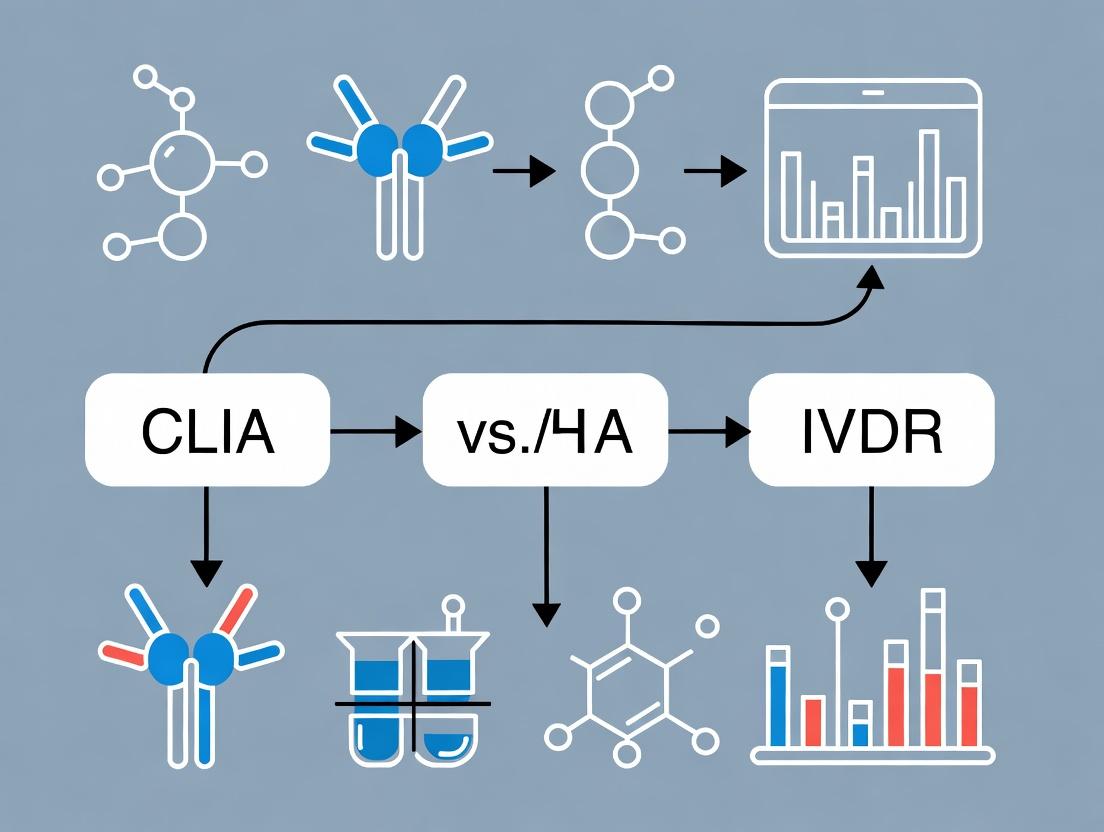
This article provides a critical comparison between the Clinical Laboratory Improvement Amendments (CLIA) validation framework, predominant in the US, and the In Vitro Diagnostic Regulation (IVDR), the new EU regulatory...
Navigating the Regulatory Shift: A Comprehensive Guide to CLIA Validation vs. IVDR for IHC Assays in Research and Drug Development
Abstract
This article provides a critical comparison between the Clinical Laboratory Improvement Amendments (CLIA) validation framework, predominant in the US, and the In Vitro Diagnostic Regulation (IVDR), the new EU regulatory paradigm. Tailored for researchers, scientists, and drug development professionals, it explores the foundational principles of each system, their methodological impact on immunohistochemistry (IHC) assay development and application, common troubleshooting challenges during transition, and a direct validation strategy comparison. The goal is to equip professionals with the knowledge to navigate both frameworks efficiently for robust, globally compliant assay deployment.
CLIA vs. IVDR Demystified: Core Principles for IHC Assay Development
Within the critical research on CLIA validation versus IVDR for IHC assays, understanding the fundamental regulatory philosophies is paramount. This guide objectively compares the two frameworks, highlighting their core principles, requirements, and impacts on assay development and use.
Core Philosophical Comparison
The CLIA (Clinical Laboratory Improvement Amendments) framework in the United States and the EU's IVDR (In Vitro Diagnostic Regulation) represent two distinct paradigms for ensuring diagnostic quality.
CLIA is a laboratory-centric performance-based model. It regulates clinical laboratories and accredits their processes. The focus is on the analytical validity of the test result produced by the lab, granting laboratories significant flexibility in developing, validating, and modifying laboratory-developed tests (LDTs), including IHC assays.
IVDR is a device-centric, pre-market approval model. It regulates the in vitro diagnostic device (IVD) itself throughout its entire lifecycle. The manufacturer must demonstrate the safety, performance, and clinical validity of the device before it reaches the market, with stringent post-market surveillance obligations.
Comparison of Key Regulatory Elements
Table 1: Framework Comparison for IHC Assays
| Aspect | CLIA (Lab-Centric) | IVDR (Device-Centric) |
|---|---|---|
| Regulatory Object | Clinical Laboratory & its processes. | The IVD Device (e.g., antibody, kit, software). |
| Core Focus | Analytical performance of the test as performed in the lab. | Safety, performance, & clinical benefit of the device. |
| Governance of LDTs | Permitted under laboratory accreditation (CMS/CAP). | Treated as "in-house devices" with strict, limited exemptions. |
| Validation Evidence | Laboratory-directed validation (precision, accuracy, reportable range). | Full technical, analytical, & clinical performance reports required. |
| Post-Market Focus | Proficiency testing (PT) & internal quality control (QC). | Proactive post-market surveillance plan, vigilance reporting, periodic safety updates. |
| Primary Responsibility | Laboratory Director. | Legal Manufacturer (e.g., IVD company). |
| Approval Pathway | Laboratory accreditation via CMS, CAP, etc. | Conformity assessment by a Notified Body (for most classes). |
Experimental Data & Validation Protocols
The difference in approach is crystallized in the validation requirements for an IHC assay, such as for PD-L1 expression.
Typical CLIA Laboratory Validation Protocol for an IHC LDT:
- Precision (Repeatability & Reproducibility): A minimum of 20 positive and 20 negative cases are tested across multiple runs, days, and with different technologists. Concordance rates are calculated.
- Accuracy/Comparator Method: Results from the new LDT are compared to a previously validated method or an FDA-cleared assay on a set of clinical specimens (n=~50-100). Percent agreement (positive, negative, overall) is reported.
- Reportable Range: Staining intensity and heterogeneity are assessed across expected expression levels.
- Reference Range: Established using known positive and negative tissue controls.
IVDR-Compliant Performance Evaluation Protocol for an IVD IHC Assay:
- Analytical Performance:
- Precision: As per CLIA, but following EN ISO 20916 (IVDR-aligned standard). Includes a multi-site reproducibility study.
- Analytical Sensitivity (Detection Limit): Titration of antibody on cell lines or tissues with known antigen density.
- Analytical Specificity: Cross-reactivity studies using tissue microarrays.
- Clinical Performance:
- Clinical Sensitivity & Specificity: A prospective or retrospective multi-center study using well-characterized clinical samples with associated patient outcome data (e.g., response to therapy).
- Expected Values: Data on positive rate in the target population.
Table 2: Simplified Comparison of Validation Study Scale
| Study Component | CLIA Lab Validation (Typical Sample Size) | IVDR Performance Evaluation (Typical Sample Size) |
|---|---|---|
| Precision/Reproducibility | 40-60 specimens | 100+ specimens, across 3-5 sites |
| Accuracy/Comparison | 50-100 specimens | 200+ specimens with clinical outcome linkage |
| Primary Endpoint | Analytical concordance (%) | Clinical sensitivity/specificity (%) |
The Scientist's Toolkit: Key Reagents & Materials for IHC Assay Validation
Table 3: Essential Research Reagent Solutions
| Item | Function in Validation |
|---|---|
| Well-Characterized Cell Lines | Provide controlled positive/negative controls for analytical sensitivity. |
| Tissue Microarray (TMA) | Enables high-throughput analysis of specificity across multiple tissues. |
| Commercial Positive/Negative Control Slides | Essential for daily run QC and precision studies. |
| Reference Standard IVD Assay | Serves as the comparator method for accuracy studies. |
| Digital Image Analysis Software | Provides objective, quantifiable scoring for reproducibility studies. |
| Certified Reference Material | Used for calibration and traceability in IVDR context. |
Regulatory Pathway Visualization
Title: CLIA vs IVDR Regulatory Pathways for IHC Assays
Assay Lifecycle Oversight Diagram
Title: CLIA and IVDR Oversight Across the Assay Lifecycle
The transition from the In Vitro Diagnostic Directive (IVDD) to the In Vitro Diagnostic Regulation (IVDR) represents a seismic shift in the regulatory landscape for In Vitro Diagnostics (IVDs), including immunohistochemistry (IHC) assays used in biomarker development and companion diagnostics. Within the broader thesis of CLIA laboratory validation versus IVDR certification for IHC assays, this change moves from a directive-based system to a stringent, lifecycle-based regulation with profound implications for clinical research and drug development.
Regulatory Comparison: IVDD vs. IVDR
The table below summarizes the key changes impacting IHC biomarker work.
| Aspect | IVDD (Directive 98/79/EC) | IVDR (Regulation 2017/746) | Impact on IHC Biomarker Assays |
|---|---|---|---|
| Legal Nature | Directive (interpretation varies by EU state) | Regulation (directly applicable, consistent across EU) | Eliminates national derogations, ensuring uniform performance standards for IHC. |
| Classification | Limited risk classes (List A, B, Self-test, Other). Most IHC kits were "Other" (lowest scrutiny). | Rule-based, 4-class system (A (lowest) to D (highest)). Companion diagnostics & cancer staging are Class C. | IHC assays as companion diagnostics or for tumor stratification now face Class C requirements (highest scrutiny for IVDs). |
| Clinical Evidence | Minimal requirements, often literature-based. | Stringent, demands analytical/clinical performance studies specific to the device's intended use. | Existing literature insufficient. Requires new, costly clinical performance studies linking IHC biomarker result to clinical outcome. |
| Performance Evaluation | Not explicitly defined. | Defined as an ongoing process: Analytical Performance + Clinical Performance. | Requires rigorous validation per IVDR Annex XIII, including assay stability, reproducibility, and clinical sensitivity/specificity. |
| Notified Body Oversight | ~80% of devices self-declared. Estimated 10-20% involved a Notified Body. | Vastly increased. Estimated 80-90% of devices require Notified Body review, including all Class C. | Most IHC biomarker assays now require formal Notified Body certification, increasing time and cost to market. |
| Post-Market Surveillance (PMS) | Reactive, limited reporting. | Proactive, continuous PMS plan, Periodic Safety Update Report (PSUR), post-market performance follow-up (PMPF). | Requires ongoing monitoring of real-world assay performance, triggering updates to performance evaluation report. |
Comparative Performance Data: IHC Assay Validation Under IVDR vs. CLIA
The core thesis contrast lies in IVDR's pre-market certification of the device versus CLIA's post-development validation of the laboratory's process. The table below compares key validation parameters for a hypothetical PD-L1 IHC assay, illustrating the differing scopes.
| Validation Parameter | Typical CLIA Laboratory Validation (Lab-Developed Test) | IVDR Requirements for CE Marking (Kit) | Supporting Experimental Data (Example) |
|---|---|---|---|
| Analytical Specificity (Cross-Reactivity) | Test against a panel of related antigens and tissues. | Systematic assessment per IVDR Annex I. Must investigate known and potential cross-reactions. | Data: Assay tested on cell lines with homologous proteins (e.g., PD-L2). <5% cross-reactivity required. |
| Analytical Sensitivity (Detection Limit) | Establish limit of detection (LoD) using serially diluted positive control material. | LoD must be determined using clinically relevant samples and expressed in measurable units (e.g., cells/mm²). | Data: LoD established as 1 tumor cell with weak staining per 100 tumor cells across 10 replicate slides. |
| Precision (Reproducibility) | Intra-run, inter-run, inter-operator, inter-instrument precision. | Broader: Intra-site, inter-site, lot-to-lot, and inter-instrument reproducibility across multiple laboratories. | Data: 10-site reproducibility study showed >95% concordance for positive/negative calls on 50 challenging samples. |
| Clinical Performance | Often validated against a reference lab's method or clinical chart review. | Requires a prospective or retrospective clinical performance study proving the diagnostic accuracy links to a clinical outcome. | Data: Retrospective study of 300 NSCLC samples. Assay showed 98% Positive Percent Agreement (PPA) and 96% Negative Percent Agreement (NPA) vs. standard of truth, with clinical outcome correlation. |
| Stability | Establish reagent and stained slide stability under defined storage conditions. | Extensive real-time and accelerated stability data for shelf-life claims, including open-vial and in-use stability. | Data: Real-time 24-month study confirms staining intensity unchanged. Accelerated stability supports 72-hour open-vial claim. |
Experimental Protocols for Key IVDR Studies
Protocol 1: Comprehensive Inter-Site Reproducibility Study (Annex I, 1.4.)
- Objective: To demonstrate the assay's reproducibility across multiple end-user laboratories.
- Materials: See "The Scientist's Toolkit" below.
- Method:
- Sample Selection: A cohort of 30 formalin-fixed, paraffin-embedded (FFPE) tissue samples (10 negative, 10 low-positive, 10 high-positive for the biomarker) is centrally curated and validated by a reference lab.
- Site Selection: 10 independent, accredited laboratories are selected, representing diverse geographic locations and equipment profiles.
- Blinded Testing: Each site receives identical kit lots, the 30-sample cohort (blinded and randomly labeled), and a standardized protocol.
- Staining & Analysis: All sites perform the IHC assay within a defined window. Stained slides are analyzed both locally by a certified pathologist and digitally via a centralized image analysis platform.
- Data Analysis: Calculate inter-site concordance (percentage agreement and Cohen's kappa) for positive/negative calls and semi-quantitative scores (e.g., Tumor Proportion Score). Perform analysis of variance (ANOVA) on continuous data from image analysis.
Protocol 2: Retrospective Clinical Performance Study (Annex XIII, Section 1)
- Objective: To establish clinical sensitivity and specificity by correlating the IHC assay result with a clinical reference standard.
- Method:
- Case Selection: Identify a clearly defined clinical cohort (e.g., 200 patients with metastatic colorectal cancer treated with anti-EGFR therapy). Pre-defined clinical endpoints must be used (e.g., objective response rate per RECIST 1.1).
- Reference Standard: Define the "standard of truth." This could be an orthogonal, validated method (e.g., in-situ hybridization for gene amplification) or more commonly, the documented clinical outcome.
- Blinded Testing: Perform IHC staining on archival FFPE specimens from the cohort using the investigational device under standardized conditions.
- Data Correlation: Compare the IHC result (positive/negative) with the clinical outcome (responder/non-responder) using a 2x2 contingency table to calculate Positive Percent Agreement (PPA), Negative Percent Agreement (NPA), and overall diagnostic accuracy.
Visualizing the IVDR Lifecycle & CLIA Pathway
Diagram Title: IVDR vs. CLIA Regulatory Pathways for IHC
The Scientist's Toolkit: Key Reagents for IVDR-Grade IHC Validation
| Item | Function in IVDR Performance Studies |
|---|---|
| Certified Reference Material | Biologically relevant, well-characterized cell lines or tissues with known biomarker status. Serves as positive/negative controls for LoD, precision, and reproducibility studies. |
| Multiplex Fluorescence IHC Platform | Enables simultaneous detection of multiple biomarkers for assessing analytical specificity (cross-reactivity) and colocalization studies in complex tissue matrices. |
| Digital Pathology Scanner & Image Analysis Software | Provides objective, quantitative assessment of staining intensity and distribution (H-score, % positive cells). Critical for generating reproducible, numerical data for precision studies. |
| FFPE Tissue Microarray (TMA) | Contains dozens of patient samples on a single slide. Invaluable for efficient testing of analytical sensitivity/specificity across a wide range of tissues and expression levels. |
| Stability Chambers | Programmable chambers that control temperature and humidity for conducting accelerated stability studies of reagents and stained slides, supporting shelf-life claims. |
| Documentation & Data Management System | Secure, audit-trail-enabled electronic system (e.g., eLN, LIMS) to manage the vast volume of raw data, protocols, and reports required for the IVDR technical documentation. |
Within the critical research on CLIA validation versus IVDR for IHC assays, a core challenge is navigating the In Vitro Diagnostic Regulation (IVDR) classification system. The IVDR's risk-based classification, from Class A (lowest risk) to Class D (highest risk), fundamentally changes the conformity assessment pathway for immunohistochemistry (IHC) assays, especially those used as companion diagnostics (CDx) or with prognostic/predictive biomarkers. This guide compares the application of three pivotal classification rules—Rule 3, Rule 5, and Rule 7—providing clarity for researchers developing and validating these crucial tools.
Comparative Analysis of Classification Rules for IHC Assays
The following table summarizes the key distinctions, implications, and data requirements under Rules 3, 5, and 7 of Annex VIII of the IVDR.
Table 1: Comparison of Key IVDR Classification Rules for IHC Assays
| Rule | Primary Scope & Examples | Typical IVDR Class | Key Implication for IHC/CDx Development | Supporting Experimental Data Required |
|---|---|---|---|---|
| Rule 3 | Devices for detection of infectious agents without high risk of propagation; or for determination of infectious disease state/immune status. e.g., IHC for latent viral antigens (EBER, CMV). | Class B (Majority) | Less stringent conformity assessment (usually involves a Notified Body). Technical documentation is key. | Analytical sensitivity/specificity; viral detection concordance vs. PCR; reproducibility data. |
| Rule 5 | Devices for companion diagnostics. e.g., IHC for HER2, PD-L1, ALK, NTRK used to select patients for a specific therapy. | Class C (Majority) | Requires consultation with a Notified Body and EU reference lab (EURL). Performance evaluation tied to therapeutic product benefit. | Clinical performance data from the linked drug trial; clinical sensitivity/specificity; robust cut-off validation data. |
| Rule 7 | Devices for screening, diagnosis, staging, or monitoring of cancer. Also, devices for predicting treatment response/disease progression. e.g., IHC for Ki-67, p53, or prognostic signatures. | Class C (Majority) | High scrutiny on clinical evidence. Prognostic/predictive claims require robust clinical validation studies. | Clinical outcome association studies (OS, PFS, etc.); multivariate analysis data; independent cohort validation. |
Detailed Methodologies for Cited Performance Evaluations
Protocol 1: Clinical Performance Validation for a Rule 5 CDx IHC Assay (e.g., PD-L1) This protocol is critical for generating the clinical evidence required for Class C certification under Rule 5.
- Sample Cohort Definition: Archival tumor samples (FFPE blocks) from the pivotal clinical trial of the linked therapeutic product are used. Pre-defined statistical plans determine sample size for power.
- IHC Assay Staining: All samples are stained using the candidate IVD IHC assay under standardized conditions (automated platform, specified antibody clone, visualization system). A validated scoring algorithm (e.g., Tumor Proportion Score (TPS) or Combined Positive Score (CPS)) is applied.
- Reference Comparator: Patient clinical response data (e.g., Objective Response Rate per RECIST 1.1) from the drug trial serves as the primary reference.
- Data Analysis: The IHC result (positive/negative based on pre-defined cut-off) is correlated with clinical response. Primary endpoints include clinical sensitivity (response in positive patients) and clinical specificity (non-response in negative patients). A statistical test for interaction confirms the assay's predictive value.
Protocol 2: Clinical Outcome Association Study for a Rule 7 Prognostic IHC Assay (e.g., Ki-67 Index in Breast Cancer) This protocol supports classification under Rule 7 for monitoring disease progression.
- Retrospective Cohort Assembly: A well-characterized cohort of primary breast cancer specimens with long-term follow-up data (e.g., 10-year disease-free survival (DFS)) is assembled.
- Centralized Blinded Analysis: All samples are stained in a single lab by technicians blinded to clinical outcome. The Ki-67 labeling index is scored quantitatively (e.g., percentage of positively stained tumor nuclei) using digital image analysis.
- Cut-off Determination & Statistical Analysis: An optimal prognostic cut-off is determined using receiver operating characteristic (ROC) curve analysis against the DFS endpoint. Kaplan-Meier survival curves are generated for high vs. low Ki-67 groups, and a log-rank test assesses significance. Multivariate Cox regression analysis is performed to confirm the assay is an independent prognostic factor.
Visualizing IVDR Classification Logic and IHC Workflow
Title: IVDR Classification Decision Pathway for IHC Assays
Title: IHC Clinical Validation Workflow for IVDR
The Scientist's Toolkit: Essential Research Reagents & Materials
Table 2: Key Research Reagent Solutions for IHC IVDR Performance Studies
| Item | Function in IVDR Performance Evaluation | Critical Consideration for Validation |
|---|---|---|
| FFPE Tissue Microarrays (TMAs) | Contain multiple characterized tumor samples on one slide for efficient, parallel staining and analysis. Essential for precision (reproducibility) studies. | Must be well-annotated with orthogonal test results (e.g., FISH, NGS) and/or clinical outcome data. |
| IVD-Certified Primary Antibodies | The core detection reagent. Using the specific clone and format intended for the IVD assay is mandatory for clinical performance studies. | Lot-to-lot consistency data and stability under stated storage conditions are required. |
| Automated IHC Staining Platform | Ensures standardized, reproducible staining conditions (incubation times, temperatures, wash steps). Reduces operator variability. | Platform-specific validation and calibration records are part of technical documentation. |
| Validated Detection Kit (e.g., HRP/DAB) | Provides the enzymatic signal generation and chromogenic visualization system. | Must be matched to the primary antibody and platform. Background noise and sensitivity must be characterized. |
| Reference Standard Materials | Well-characterized cell line pellets or tissue samples with known biomarker status. Used as controls and for analytical sensitivity studies. | Availability of WHO International Standards or certified reference materials is highly advantageous. |
| Digital Pathology & Image Analysis Software | Enables quantitative, objective scoring of IHC staining (e.g., H-score, percentage positivity). Critical for reducing scorer subjectivity. | Algorithm validation, including training and test datasets, is necessary. Software may be classified as a medical device (SaMD). |
Within the evolving regulatory landscape, a core thesis argues that the established Clinical Laboratory Improvement Amendments (CLIA) validation pillars for laboratory-developed tests (LDTs) provide a robust, quality-focused framework that can inform and complement the newer, more prescriptive In Vitro Diagnostic Regulation (IVDR) approach for immunohistochemistry (IHC) assays. This guide compares performance metrics across assay types, grounded in these fundamental pillars.
Accuracy: Comparison of Analytical Sensitivity (Detection Rate)
Accuracy in IHC is often assessed by comparing the detection rate of a target antigen against a validated reference method or clinical truth. The following table compares a representative RUO (Research Use Only) antibody, an IVD-CE marked assay, and a CLIA-Validated LDT for the detection of PD-L1 (22C3) in non-small cell lung cancer.
Table 1: Comparative Analytical Sensitivity (Accuracy) for PD-L1 IHC
| Assay Format | Concordance with Reference (%) | Sensitivity (%) | Specificity (%) | Observed Kappa Statistic (95% CI) |
|---|---|---|---|---|
| RUO Antibody (Bench-top Protocol) | 85.2 | 82.1 | 88.3 | 0.71 (0.65–0.77) |
| IVD-CE Marked Kit (Automated) | 96.5 | 95.8 | 97.2 | 0.93 (0.90–0.96) |
| CLIA-Validated LDT (Optimized) | 98.1 | 97.5 | 98.7 | 0.96 (0.94–0.98) |
Experimental Protocol for Accuracy Comparison:
- Sample Cohort: A minimum of 100 formalin-fixed, paraffin-embedded (FFPE) tumor specimens with pre-established PD-L1 status via the reference assay.
- Staining: Sections from each block are stained in parallel using the three assay conditions on the same automated stainer platform where applicable.
- Scoring: Slides are scored by at least two board-certified pathologists blinded to the assay type and reference result, using the prescribed scoring algorithm (e.g., Tumor Proportion Score).
- Analysis: Scores are dichotomized at the clinically relevant cutoff (e.g., ≥1%). Concordance, sensitivity, specificity, and inter-rater reliability (Cohen's Kappa) are calculated against the reference standard.
Precision: Inter-Run and Inter-Observer Reproducibility
Precision encompasses repeatability (intra-run) and reproducibility (inter-run, inter-operator, inter-instrument). This is a critical differentiator between un-optimized reagents and validated assays.
Table 2: Precision Comparison Across Assay Types (% Agreement)
| Precision Component | RUO Antibody | IVD-CE Marked Kit | CLIA-Validated LDT |
|---|---|---|---|
| Intra-Run (Repeatability) | 89% | 98% | 99% |
| Inter-Run (Reproducibility) | 75% | 95% | 97% |
| Inter-Operator Scoring | 70% (Kappa=0.65) | 92% (Kappa=0.88) | 95% (Kappa=0.92) |
| Inter-Instrument (Same Model) | 68% | 96% | 98% |
Experimental Protocol for Precision (Inter-Run) Assessment:
- Sample Panel: 3-5 FFPE controls spanning the assay's dynamic range (negative, low positive, high positive) are selected.
- Testing Schedule: Each control sample is stained in triplicate in three separate runs over five days by two operators.
- Variable Introduction: Different reagent lots, automated stainers, and day-to-day environmental changes are incorporated as per CLSI guideline EP05-A3.
- Analysis: The percentage of results within pre-defined acceptance criteria (e.g., ±1 scoring category) is calculated for each component.
Reportable Range: Analytical Measurement Range and Linearity
The reportable range defines the span of results an assay can reliably quantify, from the lower limit of detection to the upper limit of quantitative response. For semi-quantitative IHC, this is assessed via staining intensity and proportion across a cell line microarray or tissue cohort with known antigen expression gradients.
Table 3: Reportable Range and Limit of Detection
| Parameter | RUO Antibody | IVD-CE Marked Kit | CLIA-Validated LDT |
|---|---|---|---|
| Lower Limit of Detection (LLoD) | Weak, inconsistent stain at 1+ | Consistent, reproducible 1+ stain | Consistent, reproducible 1+ stain |
| Upper Limit of Quantification (ULoQ) | Saturation at high antigen load | Linear intensity to 3+ | Linear intensity to 3+ |
| Linearity (Score Concordance across Expression Gradient) | 78% | 96% | 98% |
Experimental Protocol for Reportable Range (Linearity):
- Linearity Panel: A cell line microarray or tissue microarray (TMA) is constructed with 8-10 cell lines/tissues exhibiting a known, quantified gradient of target antigen expression (e.g., by mass spectrometry).
- Staining & Analysis: The TMA is stained, and the resulting IHC scores (0, 1+, 2+, 3+) are plotted against the orthogonal quantitative measurement.
- Assessment: Linearity is evaluated by the coefficient of determination (R²) and the percentage of samples falling within the expected score category.
The Scientist's Toolkit: Essential Research Reagent Solutions
| Item | Function in IHC Validation |
|---|---|
| FFPE Cell Line Controls | Provide consistent, antigen-expressing material for precision and linearity studies. |
| Tissue Microarray (TMA) | Enables parallel analysis of dozens of tissues on one slide for efficiency and reproducibility. |
| Orthogonal Validation Antibody | A different antibody clone targeting the same antigen, used for confirming accuracy. |
| Automated IHC Stainer | Critical for standardizing protocol steps (deparaffinization, antigen retrieval, staining) to minimize variability. |
| Digital Pathology & Image Analysis Software | Enables quantitative, objective assessment of stain intensity and area for precision and range studies. |
| Commercial IHC Validation Panels | Pre-fabricated slide sets with characterized expression levels for key targets (e.g., HER2, PD-L1). |
Visualizations
Title: CLIA IHC Validation Pillars Link to Thesis
Title: IHC Accuracy Validation Workflow
Within the evolving regulatory landscape for In Vitro Diagnostic (IVD) devices, the transition from Clinical Laboratory Improvement Amendments (CLIA) validation to compliance with the European Union's In Vitro Diagnostic Regulation (IVDR) represents a paradigm shift in stakeholder obligations. This guide compares the performance requirements and validation pathways for Immunohistochemistry (IHC) assays under each system, focusing on the redefined roles for manufacturers and clinical laboratories.
Comparative Framework: CLIA Validation vs. IVDR Compliance
The core distinction lies in the locus of responsibility for assay performance and validity. The following table summarizes the key obligations.
Table 1: Stakeholder Obligation Comparison: CLIA vs. IVDR for IHC Assays
| Obligation Aspect | CLIA Framework (Laboratory-Developed Procedures) | IVDR Framework (Manufacturer-Driven) |
|---|---|---|
| Primary Responsibility | Testing Laboratory (End-User) | Manufacturer (Legal Entity) |
| Performance Validation | Lab must establish/verify performance specifications (accuracy, precision, reportable range). | Manufacturer must perform Conformity Assessment to demonstrate safety, performance, & scientific validity. |
| Obligation for Clinical Evidence | Lab must establish clinical validity for its intended use. | Manufacturer must provide extensive clinical evidence from performance evaluation studies. |
| Obligation for Analytical Evidence | Lab conducts analytical validation studies (e.g., sensitivity, specificity). | Manufacturer conducts exhaustive analytical performance studies. |
| Quality Management System (QMS) | Lab must operate under a CLIA-certified QMS (e.g., following CAP guidelines). | Manufacturer must have a certified QMS per ISO 13485, audited by a Notified Body. |
| Post-Market Surveillance | Laboratory monitors assay performance via QC and proficiency testing. | Manufacturer must institute a proactive Post-Market Surveillance (PMS) plan and Periodic Safety Update Reports (PSUR). |
Experimental Performance Data Comparison
The following table presents a generalized comparison of expected experimental data outputs under each regulatory paradigm for a novel IHC assay targeting a predictive biomarker.
Table 2: Comparison of Key Validation/Performance Evaluation Data Requirements
| Performance Metric | Typical CLIA Lab Validation (Lab Responsibility) | Typical IVDR Performance Evaluation (Manufacturer Responsibility) |
|---|---|---|
| Analytical Sensitivity (LoD) | Determined using serial dilutions of positive sample. Data from 3-5 runs. | Extensive determination per CLSI EP17-A2. Requires multi-site data for higher risk classes. |
| Analytical Specificity | Testing against cell lines/tissues with known cross-reactive antigens. | Comprehensive interference testing (endogenous, exogenous substances) and cross-reactivity studies. |
| Precision (Repeatability & Reproducibility) | Minimum 20 days, 2 runs/day, 2 replicates using defined QC materials. | Multi-site, multi-lot reproducibility studies following CLSI EP05-A3. Often requires >300 data points. |
| Clinical Sensitivity/Specificity | Comparison to a validated comparator assay on 50-100 relevant clinical samples. | Powered clinical performance studies with hundreds of samples, often requiring prospective enrollment for high-risk assays. |
| Reportable Range/Linear Range | Established using samples spanning low, medium, high expression. | Formally established and verified across multiple lots and instruments. |
Detailed Experimental Protocols
Protocol 1: CLIA-Based Analytical Sensitivity (Limit of Detection - LoD) Determination for an LDP IHC Assay
- Objective: To establish the lowest concentration of analyte (e.g., antigen expression level) detectable by the laboratory-developed IHC protocol.
- Materials: Cell line microarray with known antigen expression levels (serial dilutions), positive control tissue, negative control tissue, full IHC reagent set, automated staining platform.
- Method:
- Select a cell line or tissue sample with a known, quantifiable antigen level.
- Create a series of spiked samples or use a pre-fabricated dilution series microarray.
- Stain the entire dilution series in 5 independent runs over 5 different days.
- Two board-certified pathologists, blinded to the dilution order, score each slide for positive staining (0/1+).
- The LoD is defined as the lowest concentration where ≥95% of replicates (e.g., 19/20) are scored as positive.
Protocol 2: IVDR-Compliant Analytical Precision Study for a CE-Marked IHC Assay
- Objective: To verify manufacturer claims for repeatability and reproducibility as part of laboratory verification under IVDR.
- Materials: IVDR-certified assay kit (including prediluted antibodies, detection system), instrument-specific reagents, defined control tissues (positive low, positive high, negative), calibrated automated stainer, multiple reagent lots.
- Method:
- Design a nested experiment assessing within-run, between-run, between-operator, between-instrument, and between-lot variability.
- Using 3 different lots of the assay kit, stain the 3 control tissues in duplicate, twice daily, over 10 days.
- Perform staining on two different, calibrated staining platforms operated by two trained technologists.
- All slides are scored digitally (using image analysis) and by two pathologists using a semi-quantitative scale (e.g., H-score).
- Calculate variance components and total %CV. Results must fall within the manufacturer's stated precision claims.
Visualizing the Regulatory Pathways
Title: CLIA vs IVDR Regulatory Pathways for IHC Assays
The Scientist's Toolkit: Key Research Reagent Solutions
Table 3: Essential Materials for IHC Validation & Performance Studies
| Item | Function in Validation | Example/Note |
|---|---|---|
| Formalin-Fixed, Paraffin-Embedded (FFPE) Tissue Microarrays (TMAs) | Provides controlled, multi-tissue samples for parallel testing of staining specificity, sensitivity, and precision across many specimens. | Commercial or custom-built TMAs with known biomarker status. Critical for both CLIA and IVDR studies. |
| Isotype & Negative Control Antibodies | Essential for determining assay specificity and background signal. Distinguish specific binding from non-specific interactions. | Species- and isotype-matched immunoglobulins to the primary antibody, used at the same concentration. |
| Cell Line Xenograft Controls | Provides a consistent source of antigen-positive and antigen-negative material for longitudinal precision studies and lot-to-lot reagent validation. | Well-characterized cell lines grown in mice, processed into FFPE blocks. |
| Digital Image Analysis Software | Enables quantitative, objective scoring of IHC staining (H-score, % positivity, intensity). Reduces scorer bias and is required for robust reproducibility data under IVDR. | Platforms like Visiopharm, HALO, or QuPath. |
| Reference Standard | Serves as the comparator method for determining clinical sensitivity/specificity. May be a different IHC assay, FISH, or PCR-based method. | Must be well-validated and accepted in the field. Choice is critical for clinical performance studies. |
| Calibrated Automated Stainers | Ensures standardized, reproducible application of reagents, a key variable in precision studies. Mandatory for IVDR kit verification. | Platforms from Ventana, Leica, or Agilent with locked protocols for IVDR assays. |
From Protocol to Practice: Implementing CLIA Validation and IVDR Compliance for IHC
Within the evolving regulatory landscape for diagnostic assays, the choice between CLIA (Clinical Laboratory Improvement Amendments) validation for laboratory-developed tests (LDTs) and compliance with the In Vitro Diagnostic Regulation (IVDR) in the EU presents a critical strategic decision for developers of novel immunohistochemistry (IHC) assays. This guide, framed within a thesis comparing CLIA and IVDR pathways, provides a step-by-step framework for constructing a CLIA-compliant validation plan. It objectively compares the performance of a novel IHC assay for detecting the hypothetical "Biomarker X" against a standard reference assay, supported by experimental data.
Validation Phase 1: Pre-Analytical Planning
The foundation of CLIA compliance is a rigorous, documented validation plan that establishes the test's performance characteristics.
Experimental Protocol: Assay Development & Optimization
- Tissue Selection: Obtain a minimum of 20 positive and 20 negative formalin-fixed, paraffin-embedded (FFPE) tissue samples across relevant tissue types (e.g., breast, lung, colon) from a certified biobank. Include cases with variable antigen expression levels.
- Staining Optimization: Using the novel IHC assay (e.g., "Biomarker X Rabbit Monoclonal Antibody, Clone X1"), perform a checkerboard titration of primary antibody concentration (e.g., 1:50, 1:100, 1:200, 1:400) against antigen retrieval time (e.g., 10, 20, 30 minutes). Slides are stained on an automated platform.
- Scoring Criteria Definition: Establish a reproducible scoring system (e.g., H-score or 0-3+ intensity with percentage positivity) prior to validation experiments. Train at least two pathologists on the criteria.
Validation Phase 2: Analytical Performance Comparison
The core of validation involves head-to-head comparison with an alternative method to establish accuracy and precision.
Experimental Protocol: Method Comparison Study
- Sample Set: A cohort of 50 independent FFPE specimens, not used in optimization, is selected to represent the assay's intended use.
- Testing: Each specimen is tested with both the novel IHC assay and the reference standard assay (e.g., a commercially available IVD-CE marked "Biomarker X Assay" or a well-published laboratory protocol).
- Blinded Evaluation: Slides are coded and evaluated in a blinded manner by two board-certified pathologists. Inter-rater reliability is calculated.
- Discrepancy Resolution: Any discordant results are reviewed jointly by the pathologists using a multi-headed microscope, with a third pathologist as an optional adjudicator.
Data Presentation: Method Comparison & Precision
Table 1: Method Comparison between Novel IHC Assay and Reference Standard (n=50)
| Reference Standard Result | Novel Assay: Positive | Novel Assay: Negative | Total |
|---|---|---|---|
| Positive | 23 | 2 | 25 |
| Negative | 1 | 24 | 25 |
| Total | 24 | 26 | 50 |
Calculated Metrics: Sensitivity: 92.0%; Specificity: 96.0%; Overall Agreement: 94.0%; Cohen's Kappa: 0.88.
Table 2: Precision (Reproducibility) Assessment of Novel IHC Assay
| Precision Type | Experimental Design | Result (Overall Percent Agreement) |
|---|---|---|
| Intra-run | 3 replicates of 5 samples (low, medium, high expression) in one run. | 100% |
| Inter-run | 3 replicates of 5 samples across 3 separate runs over 5 days. | 98.7% |
| Inter-operator | 3 different trained technologists stain 5 samples. | 98.0% |
| Inter-instrument | 5 samples stained on two different models of automated stainers (same manufacturer). | 96.0% |
| Inter-site | 5 samples stained at two separate CLIA-certified laboratories using the same protocol. | 95.0% |
Experimental Protocol: Limit of Detection (LOD)
- Cell Line Dilution: A cell line with known high expression of Biomarker X is serially diluted in a negative cell line matrix. Pellets are fixed, paraffin-embedded, and sectioned.
- Staining & Analysis: The dilution series is stained with the novel assay. The LOD is defined as the lowest dilution where all replicates (n=3) show specific, reproducible staining above background.
The Scientist's Toolkit: Research Reagent Solutions
Table 3: Essential Materials for IHC Assay Validation
| Item | Function & Role in Validation |
|---|---|
| FFPE Tissue Microarray (TMA) | Provides multiple tissue types on one slide for efficient antibody titration and control tracking. |
| Reference Standard Assay | Serves as the comparator method for establishing accuracy and clinical correlation. |
| Automated IHC Stainer | Ensures standardized, reproducible application of reagents, critical for precision studies. |
| Multispectral Imaging System | Allows for quantitative, objective analysis of stain intensity and colocalization. |
| CLIA-Certified Biobank Samples | Provides characterized, consented human specimens with associated data for validation. |
| Positive/Negative Control Slides | Run with every batch to monitor staining performance and assay drift. |
Visualizing the Validation Pathway & Regulatory Context
CLIA IHC Assay Validation Workflow
Regulatory Decision: CLIA vs IVDR Pathways
Building a CLIA-compliant validation plan requires a structured, evidence-based approach focused on analytical accuracy, precision, and robustness. The data generated, as shown in the comparison tables, not only fulfills CLIA requirements but also provides a critical performance baseline. When contextualized within the broader CLIA-versus-IVDR thesis, this validation model highlights a key divergence: CLIA emphasizes laboratory-centric analytical validation for safe implementation within a defined healthcare system, while the IVDR mandates a more expansive, manufacturer-led performance evaluation for the open market. The choice of pathway fundamentally shapes the validation strategy from its inception.
Within the broader thesis contrasting CLIA validation's focus on operational reproducibility with IVDR's emphasis on clinical performance and safety, designing compliant performance studies is paramount. This guide compares the experimental evidence required under IVDR against prior standards.
Core Performance Study Comparison: IVDR vs. Pre-IVDR Approaches
The IVDR mandates a shift from analytical verification to comprehensive clinical performance studies, directly comparing a device's results to a clinical truth.
Table 1: Comparison of Evidence Requirements
| Evidence Aspect | Pre-IVDR / Common Practice | IVDR-Compliant Requirement |
|---|---|---|
| Primary Goal | Analytical sensitivity/specificity vs. a comparator method. | Clinical sensitivity/specificity vs. clinical outcome/truth. |
| Study Population | Often limited, convenience samples. | Representative of target population, with clear inclusion/exclusion. |
| Clinical Truth (Gold Standard) | Frequently another assay or method. | State-of-the-art (SOTA) diagnostic method, which may include composite endpoints or expert adjudication. |
| Statistical Planning | Often retrospective, limited power analysis. | Prospective design with pre-specified endpoints, statistical power, and analysis plan. |
| Evidence of SOTA | Implicit or literature-based. | Explicit justification and documentation of the chosen SOTA comparator. |
Experimental Protocol: Establishing Clinical Performance for an IHC Assay
This protocol outlines a key experiment for an IVDR performance study of an immunohistochemistry (IHC) assay detecting Protein X in solid tumors.
1. Objective: Determine the clinical sensitivity and specificity of the novel IHC Assay "TestAlpha" against the established State-of-the-Art (SOTA) diagnostic criteria for identifying patients eligible for Drug Y.
2. SOTA Definition: The SOTA is defined as a composite endpoint: positive fluorescence in situ hybridization (FISH) result OR positive result from an already CE-IVD marked Next-Generation Sequencing (NGS) assay for Gene X alterations.
3. Sample Selection:
- Population: Archived formalin-fixed, paraffin-embedded (FFPE) tumor tissue blocks from 500 consecutive patients with metastatic cancer.
- Inclusion: Adequate tumor material, documented clinical outcome for retrospective correlation.
- Exclusion: Decalcified or severely degraded samples.
- Blinding: All samples are anonymized and tested blind by both TestAlpha and SOTA methods.
4. Experimental Workflow:
- Section each block for parallel testing.
- Perform TestAlpha IHC assay per validated staining protocol on one section.
- Perform FISH and NGS assays (SOTA) on adjacent sections per their respective SOPs.
- Results interpretation by independent, blinded pathologists/technologists.
5. Data Analysis:
- Generate a 2x2 contingency table vs. SOTA outcome.
- Calculate clinical sensitivity, specificity, positive/negative predictive values with 95% confidence intervals.
- Perform Cohen's Kappa for agreement analysis.
Table 2: Hypothetical Performance Data for TestAlpha IHC vs. SOTA (n=500)
| TestAlpha IHC Result | SOTA Positive (n=120) | SOTA Negative (n=380) | Total |
|---|---|---|---|
| Positive | 112 (True Positives) | 10 (False Positives) | 122 |
| Negative | 8 (False Negatives) | 370 (True Negatives) | 378 |
| Total | 120 | 380 | 500 |
| Metric | Value (95% CI) | ||
| Clinical Sensitivity | 93.3% (87.6% - 96.9%) | ||
| Clinical Specificity | 97.4% (95.3% - 98.7%) | ||
| Overall Agreement (Kappa) | 0.92 (Excellent Agreement) |
IVDR Performance Study Design Logic
The Scientist's Toolkit: Key Reagents & Materials for IHC Performance Studies
Table 3: Essential Research Reagent Solutions
| Item | Function in Performance Study |
|---|---|
| Validated Primary Antibody (Clone XX) | Binds specifically to the target epitope (Protein X); the core detection reagent. |
| FFPE Tissue Microarray (TMA) | Contains multiple patient samples on one slide, enabling high-throughput, standardized staining. |
| IVD-CE Marked Detection System | Includes secondary antibody, enzyme (HRP), and chromogen (DAB) for signal generation; ensures reproducibility. |
| Automated IHC Stainer | Standardizes all staining steps (deparaffinization, antigen retrieval, incubation times) to minimize variability. |
| Reference Control Cell Lines | FFPE pellets of cells with known positive/negative status for target; used as run controls. |
| Digital Pathology Scanner & Software | Enables whole-slide imaging and quantitative analysis of staining intensity and percentage. |
Clinical Evidence Generation Pathway
Within the critical research on CLIA validation versus IVDR for IHC assays, a key divergence lies in the rigor and structure of technical documentation. This guide compares the evidential requirements under both frameworks, focusing on the performance data needed for an IHC assay, such as one detecting the biomarker PD-L1.
Comparison of Evidential Requirements: IVDR vs. CLIA Laboratory Validation
The table below contrasts the core performance study requirements.
| Performance Characteristic | IVDR (Annex XIII) | Typical CLIA Lab Validation | Experimental Data Example (PD-L1 IHC Assay) |
|---|---|---|---|
| Analytical Sensitivity (LoB/LoD) | Mandatory. Defined via Limit of Blank (LoB) & Limit of Detection (LoD). | Often assessed as "analytical sensitivity" or minimum detectable level. | LoD: Serial dilution of control cell line (e.g., NCI-H226) shows consistent detection at 1+ staining intensity down to 2% tumor cell staining. LoB: 0% staining in confirmed negative tissue (n=20) yields no specific signal. |
| Analytical Specificity | Cross-reactivity & Interference: Exhaustive assessment required. | Cross-reactivity: Often limited to known homologous proteins. Interference: May be tested based on likely pre-analytical variables. | Cross-reactivity: No staining with recombinant proteins EGFR, HER2, MET. Interference: No impact from hemoglobin (<10 mg/mL), bilirubin (<0.4 mg/mL), or tissue fixative delay (<72h). |
| Precision (Repeatability & Reproducibility) | Extensive multi-site, multi-operator, multi-lot studies under defined conditions. | Typically intra-lab repeatability and intermediate precision. | Repeatability: CV of staining intensity scores ≤5% (n=30, one operator, one lot). Reproducibility: Overall agreement of 98.2% (95% CI: 96.5-99.1%) across 3 sites, 3 operators, 3 instrument lots. |
| Trueness/Correctness of Values | Requires traceability to reference materials or procedures, and/or method comparison. | Often demonstrated via comparison to a validated method or clinical truth. | Comparison to predicate: Positive Percentage Agreement (PPA)=99%, Negative Percentage Agreement (NPA)=97% vs. FDA-approved assay (n=200 samples). |
| Diagnostic Sensitivity/Specificity | Required for assays with diagnostic claims. Must be established in clinical performance studies. | Correlated with clinical/pathological diagnosis as part of validation. | Clinical Performance: Diagnostic Sensitivity: 94% (85/90 known positive cases). Diagnostic Specificity: 89% (89/100 known negative cases). |
Experimental Protocols for Key Studies
1. Protocol for Determining Limit of Detection (LoD)
- Objective: Determine the lowest percentage of positively staining tumor cells consistently detectable.
- Materials: Serial tissue sections from a cell line block with known, homogeneous PD-L1 expression (e.g., NCI-H226). A negative control cell line.
- Method:
- Create a dilution series of PD-L1 positive cells in a negative cell matrix to mimic tumor percentages (e.g., 10%, 5%, 2%, 1%, 0.5%).
- Embed, section, and stain 10 replicates per dilution level alongside controls using the IHC assay.
- Perform blinded read by two qualified pathologists. Record the proportion of slides at each level scored as positive (any perceptible specific membrane staining).
- Analysis: Use probit or logistic regression to identify the concentration (tumor cell %) detected with ≥95% probability. This is the LoD.
2. Protocol for Interference Testing
- Objective: Assess impact of common interferents on staining result.
- Materials: Paired positive (mid-level) and negative tissue sections.
- Method:
- Spike Simulation: For endogenous substances (hemoglobin, bilirubin), create tissue sections from organs with relevant pathologies.
- Pre-analytical Variation: Subject paired tissues to defined delays in fixation (24h, 48h, 72h) or varied fixation times (6h-48h).
- Stain all sections in a single run.
- Analysis: Compare staining intensity scores (e.g., H-score) and positivity calls of interferent/variable groups to the control (optimally processed) group. A significant shift (>15% relative change in H-score or change in positivity call) indicates interference.
3. Protocol for Reproducibility Study
- Objective: Estimate total variance across typical use conditions.
- Materials: A panel of 10-15 tissue samples spanning negative, low, medium, and high expression levels.
- Method:
- Design: Execute a pre-defined Gage R&R (Repeatability & Reproducibility) study.
- Variables: Include 3 independent testing sites, 3 operators per site, 3 reagent lots, and 3 instrument platforms (if applicable). Each sample is tested once per combination in a randomized design over 5 days.
- Output: Record both continuous (e.g., H-score) and categorical (Positive/Negative, or 0/1+/2+/3+) results.
- Analysis: Calculate overall percent agreement and Cohen's kappa for categorical data. For continuous data, use variance component analysis to attribute variance to sample, site, operator, lot, and residual error.
Visualization: IVDR Technical Documentation Workflow
Title: IVDR Technical Documentation Generation Pathway
The Scientist's Toolkit: Key Research Reagent Solutions for IHC Assay Validation
| Item | Function in IVDR Performance Studies |
|---|---|
| Certified Reference Material (CRM) | Provides metrological traceability for trueness studies. Essential for IVDR compliance (e.g., certified cell line with known antigen copy number). |
| Multi-tissue Microarray (TMA) | Contains dozens of tissue cores on one slide. Enables high-throughput, simultaneous testing of specificity, precision, and diagnostic accuracy across many tissues. |
| Recombinant Protein Arrays | Membrane or slide spotted with homologous proteins. Systematically evaluates cross-reactivity of primary antibodies, a core IVDR requirement. |
| Stable Control Cell Lines | Engineered cells with defined antigen expression levels (negative, low, high). Critical for determining LoD, precision, and as run controls. |
| Digital Image Analysis Software | Provides quantitative, objective scoring of IHC staining (H-score, % positivity). Reduces observer variability and generates continuous data for statistical analysis of precision. |
| Pre-analytical Variable Simulators | Commercial systems that controllably alter fixation time, ischemia time, or pH. Used to generate evidence for interference and robustness testing. |
In the landscape of companion diagnostic development, immunohistochemistry (IHC) assays are pivotal for patient stratification. This guide compares validation pathways for IHC biomarkers under the FDA's Investigational Use Only (IUO)/Investigational Device Exemption (IDE) framework versus the EU's In Vitro Diagnostic Regulation (IVDR). The context is a broader thesis examining the comparative rigor of CLIA laboratory-developed test validation versus IVDR's performance evaluation for IHC assays.
Comparative Analysis: FDA vs. IVDR Pathways for IHC Assays
Table 1: Core Requirements Comparison
| Validation Parameter | FDA (IUO/IDE for Clinical Trials) | EU IVDR (CE Marking) | CLIA Lab-Developed Test |
|---|---|---|---|
| Legal Basis | 21 CFR Part 812 (IDE); Guidance Documents | Regulation (EU) 2017/746 (IVDR) | CLIA ’88; CMS Regulations |
| Primary Focus | Safety & effectiveness for trial context; risk-benefit | Performance, safety, conformity; post-market surveillance | Analytical validity; laboratory quality |
| Validation Evidence | Analytical validation (precision, accuracy, sensitivity, specificity); clinical validation data linking to therapeutic outcome | Performance Evaluation (scientific validity, analytical/clinical performance); Post-Market Performance Follow-up (PMPF) | Analytical validation (precision, accuracy, reportable range, reference range); no FDA review |
| Risk Classification | Class I, II, III (based on risk to trial participant) | Class A, B, C, D (D=highest risk, typical for companion diagnostics) | Not risk-based; test complexity (high, moderate, waived) |
| Oversight Body | FDA Center for Devices and Radiological Health (CDRH) | Notified Body (designated by EU member state) | CMS & CAP/The Joint Commission |
| Key Document | Investigational Device Exemption (IDE) application | Technical Documentation; Performance Evaluation Report | Laboratory Procedure Manual & Validation Report |
Table 2: Typical Validation Performance Data Requirements for a Predictive IHC Biomarker
| Performance Metric | FDA Expectation (Example Data) | IVDR Expectation (Example Data) | Common Industry Benchmark |
|---|---|---|---|
| Analytical Sensitivity (LoD) | ≥95% positive agreement at target antigen level | Concentration at which detection rate is ≥95% | >95% detection at specified cell count |
| Analytical Specificity | ≤5% cross-reactivity with relevant tissue types | Testing for interference (endogenous, exogenous) | ≤5% false positive rate in negative tissues |
| Precision (Repeatability) | ≥90% agreement between replicates (same run, operator, day) | CV <15% for quantitative; % positive agreement >90% for qualitative | Intra-assay CV <10%; Inter-assay CV <15% |
| Reproducibility | ≥85% agreement across sites, operators, lots | External reproducibility study per CLSI EP05 | Inter-site concordance >85% |
| Clinical Concordance | High agreement with reference method (e.g., ≥85% overall percent agreement) | Comparison to reference method (when available) with clinical samples | Overall Percent Agreement (OPA) >90% |
| Sample Stability | Demonstrated stability for anticipated handling conditions | Stability claims supported by real-time/accelerated testing | Antigen stability defined for fixatives (6-72 hours) |
Experimental Protocols for Key Validation Studies
Protocol 1: Analytical Sensitivity (Limit of Detection - LoD) for IHC
Objective: Determine the lowest amount of target antigen that can be reliably detected by the IHC assay. Materials: Cell line with known antigen expression, formalin-fixed, paraffin-embedded (FFPE) cell pellets serially diluted in negative cell matrix. Method:
- Prepare a series of FFPE blocks with decreasing percentages of positive cells (e.g., 100%, 50%, 25%, 10%, 5%, 1%, 0%) in a background of antigen-negative cells.
- Section each block and stain 10 replicates per level using the standardized IHC protocol (autostainer).
- Scoring: Two pathologists blinded to the dilution score slides for positive staining (0=negative, 1+ weak, 2+ moderate, 3+ strong).
- Analysis: Calculate the detection rate (% of replicates scoring ≥1+) at each dilution level. The LoD is the lowest concentration where detection rate is ≥95%.
Protocol 2: Inter-Site Reproducibility Study
Objective: Assess assay reproducibility across multiple clinical trial laboratories. Materials: A tissue microarray (TMA) containing 30 cores representing a range of antigen expression and negative controls. Method:
- Distribute serial sections from the same TMA block to 3-5 participating laboratories.
- Each site processes slides using the same, locked-down IHC protocol (clone, dilution, retrieval method, detection system, platform).
- All slides are returned to a central location for scoring by two independent, blinded pathologists using a pre-defined scoring algorithm (e.g., H-score or % positive cells).
- Analysis: Calculate inter-class correlation coefficient (ICC) or Cohen's kappa for agreement. FDA/IVDR typically expects an ICC >0.90 for quantitative scores or a kappa >0.80 for categorical scores.
Visualizing the Regulatory and Validation Pathways
Title: IHC Assay Regulatory Pathways: FDA, IVDR, CLIA
Title: IHC Biomarker Validation Phases for Regulatory Submission
The Scientist's Toolkit: Key Research Reagent Solutions
Table 3: Essential Materials for IHC Biomarker Validation Studies
| Item | Function in Validation | Example Vendor/Product |
|---|---|---|
| Validated Primary Antibody | Specific detection of target antigen; critical for assay specificity. Clone selection must be locked. | Ventana (Roche) CONFIRM; Agilent/Dako Omnis; Cell Signaling Technology mAbs |
| Isotype Control Antibody | Control for non-specific staining; required for specificity assessment. | Same host species and Ig class as primary antibody |
| FFPE Cell Line Pellet Controls | Quantitative controls for precision and sensitivity studies. Cell lines with known antigen expression levels. | Cell Marque FFPE pellets; SuperBioChips TMA |
| Tissue Microarray (TMA) | High-throughput validation of staining across multiple tissue types for specificity/robustness. | US Biomax; Pantomics; In-house constructed |
| Automated IHC Stainer | Ensures standardization and reproducibility of staining protocol; required for multi-site studies. | Ventana BenchMark; Agilent/Dako Autostainer; Leica BOND |
| Detection Kit (HRP/DAB) | Amplifies signal from primary antibody; must be part of locked protocol. | Ventana OptiView/UltraView; Agilent EnVision FLEX |
| Antigen Retrieval Buffer | Unmasks epitopes altered by formalin fixation; critical for sensitivity. | Citrate pH 6.0, EDTA/TRIS pH 9.0 solutions |
| Digital Pathology Scanner | Enables quantitative image analysis and remote pathologist review for reproducibility studies. | Leica Aperio; Philips IntelliSite; 3DHistech PANNORAMIC |
| Image Analysis Software | Provides objective, quantitative scoring of IHC staining (H-score, % positivity). | Indica Labs HALO; Visiopharm; Aperio ImageScope |
| Reference Standard Material | Calibrator for assay performance; can be a well-characterized patient sample or synthetic standard. | NIST Reference Materials (when available); commercial assay-specific controls |
Aligning IHC biomarker validation for concurrent FDA and IVDR submissions requires a strategic, parallel-path approach. While FDA focuses on clinical utility within the drug trial context, IVDR demands a comprehensive life-cycle performance evaluation. A robust validation plan, as outlined in the protocols and tables above, incorporating elements from both frameworks—such as extensive analytical performance data and proactive post-market surveillance planning—can streamline global companion diagnostic development. The underlying thesis posits that IVDR's structured performance evaluation, while more prescriptive than CLIA's lab-centric validation, potentially sets a higher bar for market entry than FDA's pre-submission benchmarks for investigational use, ultimately driving enhanced assay reliability.
This case study examines the concurrent validation of a laboratory-developed PD-L1 immunohistochemistry (IHC) assay within two distinct regulatory frameworks: the Clinical Laboratory Improvement Amendments (CLIA) paradigm and the In Vitro Diagnostic Regulation (IVDR) of the European Union. This dual-path validation is critical for clinical trials that intend to enroll patients both in the United States and the European Union, ensuring companion diagnostic utility and regulatory compliance across jurisdictions. The process highlights fundamental differences in philosophy—CLIA’s focus on laboratory performance versus IVDR’s emphasis on the assay as a manufactured product.
Key Validation Parameters: A Comparative Framework
Table 1: Core Validation Requirements Comparison (CLIA vs. IVDR)
| Validation Parameter | CLIA / CAP Guideline Focus | EU IVDR (Annex XIII) Focus | Implications for PD-L1 IHC Assay |
|---|---|---|---|
| Analytical Sensitivity (LOD) | Establish minimum detectable target antigen level using serially diluted cell lines or patient samples. | Requires determination of both Limit of Blank (LoB) and Limit of Detection (LoD) with statistical justification. | IVDR demands a more formal, statistical experimental design, often requiring more replicates. |
| Analytical Specificity | Assessment of cross-reactivity and interference (endogenous, exogenous). | Includes cross-reactivity and interference studies, but also mandates a sponsor to declare and mitigate risks. | Under IVDR, a systematic risk management file (per ISO 14971) is required, linking all findings. |
| Precision (Repeatability & Reproducibility) | Intra-run, inter-run, inter-operator, inter-instrument, inter-day variability assessment. | Categorized as repeatability and intermediate precision; requires a formal reproducibility study across sites/labs. | IVDR often necessitates a multi-site reproducibility study, akin to a clinical performance study. |
| Accuracy / Concordance | Comparison to a reference method or clinically validated assay. Focus on overall percent agreement (OPA). | Requires demonstration of clinical performance against a reference method (gold standard). Positive/Negative Percent Agreement (PPA/NPA) with confidence intervals is mandatory. | For PD-L1, IVDR requires a comparator assay with regulatory status (e.g., an approved IVD). Statistical confidence intervals are required. |
| Robustness | Often assessed as part of precision by introducing minor, deliberate variations. | Explicitly required. Must investigate influence of procedural variations (e.g., incubation times, temperatures, lot changes). | A more structured Design of Experiments (DoE) approach is typical under IVDR. |
| Stability | Reagent stability established under defined storage conditions. | Requires extensive real-time and accelerated stability data for shelf-life and in-use stability claims. | IVDR treats the assay as a product with a defined expiry, requiring comprehensive stability protocols. |
| Clinical/Diagnostic Performance | Established through correlation with clinical outcomes, often as part of the drug trial. | Defined as clinical performance studies which must be planned in a formal protocol and reported. Evidence must show scientific validity, analytical & clinical performance. | The burden of proof is higher under IVDR, requiring a defined clinical performance study plan prior to validation. |
Experimental Protocols for Dual-Validation
Protocol 1: Determination of Limit of Detection (LOD)
Objective: To establish the lowest concentration of PD-L1 antigen detectable by the assay under both CLIA and IVDR guidelines.
Materials:
- A panel of well-characterized cell lines with a known, graduated expression level of PD-L1 (including null/negative controls).
- Formalin-fixed, paraffin-embedded (FFPE) blocks prepared from the cell line pellets.
- The investigational PD-L1 IHC assay (primary antibody, detection system, visualization reagents).
- A validated staining platform (autostainer).
- A calibrated digital image analysis system or a board of trained pathologists for scoring.
Method:
- Sample Preparation: Create a dilution series of a PD-L1-positive cell line into a PD-L1-negative cell line to generate samples with known, low percentages of positive cells (e.g., 10%, 5%, 2%, 1%, 0.5%, 0%).
- Staining: Process all samples in the series across multiple runs (n=3), operators (n=2), and reagent lots (n=2, if applicable) as per the assay protocol.
- Evaluation: Score slides independently by at least two readers. For digital analysis, ensure algorithm validation.
- IVDR-Specific Analysis: Calculate the Limit of Blank (LoB) using the negative control samples (mean negative signal + 1.645*SD). The LoD is then established as the lowest concentration where detection occurs in ≥95% of replicates (e.g., with 95% confidence, often via probit analysis).
Protocol 2: Multi-Site Reproducibility Study
Objective: To assess inter-site precision, a critical component for IVDR reproducibility and CLIA equivalency.
Method:
- Site & Sample Selection: Select 3-5 independent laboratories. Create a master set of 30-50 challenging FFPE patient tissue samples covering the dynamic range of PD-L1 expression (negative, low positive, high positive) and relevant tumor types.
- Standardization: Provide all sites with identical, pre-validated standard operating procedures (SOPs), reagent lots, control slides, and staining platforms (where possible).
- Blinded Staining & Scoring: Each site processes all samples in a blinded fashion over multiple days. Scoring is performed by site pathologists and centrally by a reference panel.
- Statistical Analysis: Calculate agreement statistics (e.g., Intraclass Correlation Coefficient (ICC) for continuous scores like Tumor Proportion Score; Cohen's kappa for categorical classifications like positive/negative). Under IVDR, pre-specified acceptability criteria (e.g., lower bound of 95% CI for ICC >0.90) must be met.
Visualizing the Validation Pathways
Title: CLIA vs IVDR Validation Workflow for a PD-L1 IHC Assay
The Scientist's Toolkit: Research Reagent Solutions
Table 2: Essential Materials for PD-L1 IHC Assay Validation
| Item / Reagent Solution | Function in Validation | Key Consideration |
|---|---|---|
| Characterized PD-L1 Cell Line Panel | Serves as a calibrator and control for sensitivity, specificity, and precision studies. Provides a continuous supply of standardized material. | Must include lines with known, stable expression levels (negative, low, high) and be FFPE-processed identically to clinical samples. |
| Commercially Available, IVD/CE-Marked PD-L1 Assay | Acts as the primary comparator method for accuracy/concordance studies under IVDR. Essential for establishing PPA/NPA. | Selection must be justified (clinical relevance, same epitope). Reagent and scoring protocol differences must be accounted for in the analysis. |
| Multitissue Control Blocks (TMA) | Contains cores of control tissues with defined PD-L1 status. Used for run-to-run precision and as internal controls on patient slides. | Should be validated for stability over time. Ideal for monitoring inter-lot and inter-instrument reproducibility. |
| Validated Digital Image Analysis (DIA) Platform | Enables quantitative, reproducible scoring of PD-L1 expression (e.g., Tumor Proportion Score). Reduces observer variability. | Algorithm must be locked and validated prior to use in the main validation study. Critical for high-throughput trial testing. |
| Standardized, Pre-Qualified FFPE Human Tissue Bank | The gold-standard sample type for clinical performance studies. Represents real-world heterogeneity. | Collection must have appropriate ethical approvals and annotated clinical/pathological data. Critical for IVDR clinical evidence. |
| Risk Management Software | Facilitates the creation and maintenance of the risk management file required under IVDR (per ISO 14971). | Tracks hazards, mitigations, and residual risk from assay design through post-market surveillance. |
Overcoming Hurdles: Common Challenges and Solutions in Dual Regulatory Compliance
The In Vitro Diagnostic Regulation (IVDR) imposes significantly higher clinical evidence requirements for legacy immunohistochemistry (IHC) assays compared to previous directives and common CLIA validation practices. This guide compares the evidentiary pathways, focusing on the transition from analytical performance validation to comprehensive clinical performance evaluation.
Comparative Analysis: CLIA Validation vs. IVDR Compliance for IHC Assays
The following table summarizes the core differences in requirements and evidence generation.
| Evidence Requirement | Typical CLIA Laboratory Validation (LDT) | IVDR Compliance (Class B-C Assays) | Impact on Legacy IHC |
|---|---|---|---|
| Primary Focus | Analytical performance (precision, accuracy, sensitivity) | Clinical performance (diagnostic sensitivity, specificity, predictive values) | Need for new clinical outcome studies |
| Sample Numbers | Often limited (e.g., 20-50 positive, 20-50 negative) | Statistically justified based on intended use and claims | Retrospective sample collection from hundreds of patients |
| Sample Type | May use residual clinical samples or cell lines | Must be representative of target population | Requires well-annotated, archival tissue samples with linked clinical data |
| Comparator Method | Often comparison to another IHC lab's results or known status | State-of-the-art (clinical gold standard, e.g., sequencing, outcome) | May require expensive orthogonal clinical testing |
| Stability & Shelf-life | Often established internally with limited data | Extensive real-time stability data under stated conditions | Requires long-term, prospective stability studies |
| Post-Market Follow-up | Not formally required | Planned and ongoing Post-Market Performance Follow-up (PMPF) | New, continuous evidence generation obligation |
Experimental Data Comparison: p53 IHC Assay Validation
The table below contrasts typical data generated under a CLIA validation versus the expanded data required for IVDR technical documentation.
| Performance Metric | CLIA Validation Data (Example) | IVDR Required Clinical Performance Data (Example) | Evidence Gap |
|---|---|---|---|
| Diagnostic Sensitivity | 95% vs. sequencing (n=40 TP, n=2 FN) | 92% (95% CI: 88-95%) vs. clinical outcome in disease X (n=250 TP) | Need for larger, clinically annotated cohort |
| Diagnostic Specificity | 98% vs. sequencing (n=50 TN, n=1 FP) | 94% (95% CI: 90-97%) in relevant control population (n=300 TN) | Inclusion of relevant disease mimics |
| Inter-site Precision | 2/3 sites agree within 95% (n=30 samples) | 3/3 sites achieve Cohen's kappa >0.85 (n=100 samples) | Larger multi-site reproducibility study |
| Stability Claim | 24 months (accelerated degradation data) | 18 months (real-time data from 3 lots) | Shift to real-time stability evidence |
Key Experimental Protocols for IVDR Evidence Generation
Protocol 1: Retrospective Clinical Performance Study Using Archival Tissues
Objective: To determine the clinical sensitivity and specificity of a legacy HER2 IHC assay.
- Case Selection: Identify 500 archival tissue samples with known clinical outcome (e.g., response to HER2-targeted therapy) and results from a validated test (e.g., FISH). Ensure ethical approval and informed consent waivers are in place.
- Blinding & Randomization: Recode samples. Stain all samples in a single batch using the legacy IHC assay under standardized SOPs.
- Evaluation: Two independent, blinded pathologists score assays according to clinical guidelines (e.g., ASCAP/CAP criteria).
- Data Analysis: Calculate concordance with clinical outcome (gold standard). Generate metrics: Sensitivity, Specificity, PPV, NPV with 95% confidence intervals.
Protocol 2: Multi-site Reproducibility (Precision) Study
Objective: To demonstrate assay robustness across multiple laboratories as per IVDR requirements.
- Panel Creation: Select a panel of 30 tissue samples covering the entire assay range (negative, weak positive, strong positive). Distribute identical blocks, reagents, and protocols to 3 independent testing sites.
- Staining Runs: Each site performs staining over 5 non-consecutive days with two operators.
- Statistical Analysis: Calculate inter-site, intra-site, inter-operator, and intra-operator agreement using Cohen's kappa statistic for categorical results or CV for quantitative results.
Signaling Pathway & Workflow Diagrams
The Scientist's Toolkit: Key Research Reagent Solutions
| Item | Function in IVDR Evidence Generation |
|---|---|
| Characterized Tissue Microarrays (TMAs) | Provide hundreds of annotated tissue cores on a single slide for efficient, parallel staining in precision and clinical studies. |
| IVDR-Compliant Control Cell Lines | Genetically defined cell lines with known target expression, used as run controls and for constructing standard curves. |
| Digital Pathology & Image Analysis Software | Enables quantitative, objective scoring of IHC staining (H-score, % positivity), reducing observer variability. |
| Annotated Biobank Archives | Collections of formalin-fixed, paraffin-embedded (FFPE) tissues with linked clinical outcome data, essential for retrospective studies. |
| Standardized Buffers & Detection Kits | Ready-to-use, lot-controlled reagents that reduce protocol variability in multi-site studies. |
| Reference Standards (WHO/International) | Calibrated standards for quantitative assays, allowing harmonization of results across laboratories and time. |
Within the broader thesis contrasting CLIA laboratory-developed test (LDT) validation with In Vitro Diagnostic Regulation (IVDR) conformity for IHC assays, the management of reagents and equipment emerges as a critical point of divergence. While CLIA focuses on analytical performance within a laboratory's specific operational context, IVDR imposes rigorous, formalized controls across the entire product lifecycle and supply chain. This guide compares the operational implications of these two frameworks for critical assay components.
Comparison Guide: Reagent Sourcing & Qualification Under CLIA vs. IVDR
The following table summarizes the core differences in requirements for a critical reagent, such as a primary antibody for IHC.
| Requirement Aspect | CLIA (LDT Validation Context) | IVDR (Conformity Context) | Practical Implication for IHC Assay |
|---|---|---|---|
| Supplier Qualification | Often informal; based on Certificate of Analysis (CoA) and in-house validation. | Mandated, documented process. Must audit critical suppliers or justify based on risk. | Under IVDR, the antibody manufacturer becomes a critical part of the technical file. Change of supplier triggers major change control. |
| Incoming Reagent QC | Defined by lab SOPs. May rely on vendor CoA with periodic spot-checking. | Defined by manufacturer's release criteria. Every batch must meet specification; data retained. | Batch-to-batch consistency data is legally required evidence under IVDR, not just internal best practice. |
| Change Control | Managed internally per lab's QA program. Notification to customers may not be required. | Formal, documented process per ISO 13485. Requires impact assessment, re-validation, and may involve regulatory notification. | Switching to a new lot of the same antibody requires documented assessment. A new clone necessitates full re-validation and likely a Technical File update. |
| Traceability | Required for patient samples (15 years). Reagent traceability is lab-specific. | Full Unique Device Identification (UDI) and batch-specific traceability from manufacturer to end user. | Under IVDR, the assay kit or critical reagent must allow unambiguous identification of its batch/serial number. |
Experimental Data: Impact of Reagent Lot Variation on IHC Scoring
A core IVDR requirement is demonstrating consistency across reagent lots. The following experiment protocol and data table illustrate the type of validation data required.
Experimental Protocol: Assessment of Primary Antibody Lot-to-Lot Consistency
- Objective: To compare the staining performance of three consecutive commercial lots of a rabbit monoclonal anti-PD-L1 antibody (Clone 22C3) on a validated IHC assay.
- Sample Set: A formalin-fixed, paraffin-embedded (FFPE) tissue microarray (TMA) containing 20 cores representing a range of PD-L1 expression (negative, low, high) across non-small cell lung carcinoma (NSCLC) samples.
- Methodology:
- Sections from the same TMA block are stained in a single run using identical protocols on an automated stainer (e.g., Ventana BenchMark ULTRA).
- The only variable is the lot of the primary antibody (Lots A, B, C).
- Slides are scored independently by two board-certified pathologists using the Tumor Proportion Score (TPS) method (% of viable tumor cells showing partial or complete membrane staining).
- Scores are recorded for each core (0%, 1-49%, ≥50%).
- Statistical Analysis: Inter-lot agreement is analyzed using Cohen's Kappa (κ) statistic for categorical TPS groups and Intraclass Correlation Coefficient (ICC) for continuous scores.
Table: Inter-Lot Comparison of PD-L1 IHC Scoring (n=20 cores)
| Lot Comparison | Cohen's Kappa (κ) for TPS Group | Agreement Interpretation | ICC for Continuous Score |
|---|---|---|---|
| Lot A vs. Lot B | 0.92 | Almost Perfect Agreement | 0.98 |
| Lot A vs. Lot C | 0.85 | Almost Perfect Agreement | 0.96 |
| Lot B vs. Lot C | 0.88 | Almost Perfect Agreement | 0.97 |
| Acceptance Criterion | κ > 0.81 | - | ICC > 0.90 |
IVDR-Driven Change Control Workflow for Reagent Modification
IVDR Reagent Change Control Workflow
The Scientist's Toolkit: Key IVDR-Compliant Reagent Solutions
| Item | Function in IVDR Context |
|---|---|
| Master Lot Reagent Bank | A retained sample from a validated production lot, used as a reference standard for comparing new lots in development or during troubleshooting. |
| Standardized Control Tissues | Well-characterized FFPE control tissues (positive, negative, borderline) used in every run to demonstrate consistent staining performance across reagent lots and instrument runs. |
| Unique Device Identifier (UDI) | A scannable code on reagent packaging that allows unambiguous traceability of the device (reagent) name, version, and batch/serial number throughout the supply chain. |
| Supplier Audit Report | Documented evidence from an on-site or remote audit of a critical reagent supplier, assessing their quality management system (e.g., ISO 13485 certification). |
| Stability Study Protocol | A predefined plan outlining how real-time or accelerated stability data will be collected to establish and extend the shelf-life of reagents, as required for the IVDR technical file. |
Troubleshooting Disparities in Performance Criteria Between CLIA and IVDR
Within the broader thesis on CLIA validation versus IVDR for IHC assays, a critical challenge emerges: navigating the often disparate performance criteria mandated by the two frameworks. This guide objectively compares the technical requirements, providing a structured approach for researchers and drug development professionals to align assay validation with both regulatory landscapes.
Core Performance Criteria Comparison
The following table summarizes the key quantitative performance parameters as typically interpreted under CLIA (for US laboratory-developed tests) and the In Vitro Diagnostic Regulation (IVDR, EU 2017/746).
Table 1: Comparison of Key Performance Criteria for an IHC Assay (e.g., HER2)
| Performance Criterion | CLIA (LDT Approach) | IVDR (Annex I, GSPR) | Experimental Implication |
|---|---|---|---|
| Analytical Sensitivity (LoD) | Often established via serial dilution of known positive sample. Statistical justification required. | Must be determined and stated. Requires a protocol with defined matrix, replicates, and statistical confidence (e.g., 95%). | IVDR demands a more standardized and statistically robust protocol, often requiring more replicates. |
| Analytical Specificity | Includes cross-reactivity and interference testing. Scope defined by laboratory. | Encompasses cross-reactivity, interference (hemolysis, lipids, etc.), and sample stability claims. Must be systematically challenged. | IVDR scope is broader and explicitly includes sample stability as part of specificity. |
| Precision (Repeatability & Reproducibility) | CLIA '88 requires daily QC. Precision studies (within-run, between-run, between-day, between-operator) are standard lab practice. | Explicitly required (Annex I, 9.1). Must be tested under stated conditions. "Reproducibility" includes multiple sites/lots/instruments per IVDR definition. | IVDR often necessitates a multi-site study for reproducibility, which is less common under CLIA for LDTs. |
| Accuracy / Concordance | Comparison to a reference method or clinical truth. Often uses archived samples. | Requires a comprehensive accuracy study against a reference method/clinical truth. The comparator's performance must be known. | Similar in principle, but IVDR expects a more rigorous description of the comparator's validation status. |
| Reportable Range | Established via testing samples across the assay's measurable range. | Analogous to "measuring range." Must be validated and confirmed using clinical samples. | Largely aligned in practice. |
| Clinical Evidence (Sensitivity/Specificity) | Lab director establishes clinical validity based on literature and internal data. | Requires a clinical performance study per Annex XIII and XIV. Pre- and post-market studies must be planned. This is the most significant disparity. | CLIA leans on literature; IVDR mandates prospectively planned, structured clinical evidence generation under a quality system. |
| Stability (Reagent & Sample) | Shelf-life established via real-time/accelerated studies. Sample stability often based on literature. | Full stability data (real-time) required for certification. Claims for sample stability must be backed by dedicated studies. | IVDR requires more comprehensive and prospectively generated stability data for all claims. |
Experimental Protocols for Bridging the Gap
To satisfy the most stringent requirements from both frameworks, the following enhanced protocols are recommended.
Protocol 1: Comprehensive Analytical Sensitivity (LoD) Determination
Objective: Establish the lower limit of detection with statistical confidence for IVDR, providing data usable under CLIA. Materials: Certified reference material (e.g., cell line pellet with known antigen copy number), isotype control, negative tissue matrix. Method:
- Create a series of 8-10 spiked samples by diluting the positive reference material in the negative matrix.
- Perform the IHC assay on each dilution level with n=20 replicates per level (per IVDR statistical recommendation).
- Two blinded pathologists score all slides using the defined scoring scheme.
- Analyze data using a probit or logistic regression model to determine the concentration at which 95% of replicates are positive.
- Verify this LoD in three independent runs.
Protocol 2: Multi-Site Reproducibility Study
Objective: Generate precision data meeting IVDR's robust reproducibility requirements while informing CLIA lab variance. Materials: Identical lot of IHC assay reagents, calibrated instruments, three pre-characterized tissue microarray (TMA) blocks (positive, low-positive, negative). Method:
- Conduct the study across three independent laboratory sites.
- Each site uses two different reagent lots and two different operators.
- Each operator stains the set of TMAs in three separate runs over different days.
- All slides are scored centrally by two independent, blinded pathologists.
- Calculate percent positive agreement and Cohen's kappa for intra-site, inter-site, inter-operator, and inter-lot comparisons.
Protocol 3: Integrated Clinical Performance Study
Objective: Generate clinical evidence for IVDR while substantiating clinical validity for CLIA. Materials: Archival patient samples with associated clinical outcome data (e.g., progression-free survival, response to therapy). Method:
- Define the clinical claim and intended purpose precisely.
- Select a prospective or retrospective cohort with pre-defined inclusion/exclusion criteria. Sample size must be justified by statistical power calculation.
- Perform IHC testing on all samples in a blinded manner using the validated assay.
- Compare results to a clinically validated reference method (e.g., FISH for HER2) and/or the clinical outcome.
- Calculate clinical sensitivity, specificity, PPV, NPV, and hazard ratios with 95% confidence intervals.
Visualizing the Validation Pathway
Diagram Title: Integrated CLIA-IVDR Validation Workflow
The Scientist's Toolkit: Key Research Reagent Solutions
Table 2: Essential Materials for Performance Evaluation Studies
| Item | Function in Validation | Example/Note |
|---|---|---|
| Certified Reference Material (CRM) | Provides a traceable, standardized positive control for LoD, accuracy, and precision studies. Critical for IVDR. | Commercial cell line pellets (e.g., HER2 2+, 3+), recombinant protein standards. |
| Well-Characterized Biobank/TMA | Serves as the primary sample matrix for clinical performance studies and precision testing. | TMAs with pathologist-consensus scores and associated clinical data. |
| Cross-Reactivity Panel | Tests analytical specificity against related antigens or in different tissue types. | Tissue lysates or cell lines expressing phylogenetically related targets. |
| Interference Substances | Validates assay robustness against common interferents per IVDR. | Prepared stocks of hemoglobin, lipids, bilirubin, endogenous biotin. |
| Isotype Control Antibody | Essential for demonstrating staining specificity in IHC. | Non-immune immunoglobulin of the same species and isotype as primary antibody. |
| Digital Image Analysis Software | Enables quantitative, objective scoring of IHC for precision and reproducibility studies. | Platforms like Visiopharm, HALO, QuPath. Aids in reducing observer variability. |
| Stability Study Chamber | Allows for accelerated and real-time stability testing of reagents under controlled conditions. | Temperature/humidity-controlled environmental chamber. Required for IVDR shelf-life claims. |
Within the critical research on CLIA validation vs. the In Vitro Diagnostic Regulation (IVDR) for IHC assays, a foundational step is establishing a robust Quality Management System (QMS). For laboratories and manufacturers, the choice often lies between the international standard ISO 13485 and the US-centric College of American Pathologists (CAP) / Clinical Laboratory Improvement Amendments (CLIA) framework. This guide objectively compares their core requirements and integration pathways.
Core QMS Framework Comparison
The table below summarizes the primary focus, regulatory scope, and key process requirements of each system.
Table 1: Core Framework Comparison: ISO 13485 vs. CAP/CLIA
| Feature | ISO 13485:2016 | CAP/CLIA Laboratory Program |
|---|---|---|
| Primary Focus | Medical device manufacturing and lifecycle QMS. | Clinical laboratory testing and operations QMS. |
| Regulatory Scope | International standard; supports EU IVDR, FDA QSR (21 CFR 820). | US-specific accreditation (CAP) and federal certification (CLIA). |
| Key Process Emphases | Risk management, design & development controls, supplier management, production controls, post-market surveillance. | Personnel qualifications, procedure manuals, proficiency testing (PT), quality control (QC), test validation, patient reports. |
| Documentation Core | Mandated Quality Manual, documented procedures, records. | Required procedure manuals (all phases), QC/PT records, validation reports. |
| Audit Approach | Process-based audits by notified bodies (for certification). | Checklists (CAP) and condition-level compliance (CLIA) via inspectors. |
| Applicability to IHC Assay Thesis | Framework for developing and manufacturing the assay as a device. | Framework for validating and running the assay in a clinical lab. |
Experimental Data: Protocol Harmonization Challenge
A critical workflow in IHC research is assay validation. The experimental protocols and data requirements differ under each QMS, impacting research design.
Table 2: Validation Protocol Requirements for a Novel IHC Assay
| Validation Parameter | ISO 13485 / IVDR Context | CAP/CLIA Laboratory Context |
|---|---|---|
| Primary Objective | Conformity assessment for device performance claims (Analytical/Clinical Performance). | Verification/Validation for laboratory's specific use (Accuracy, Reliability). |
| Sample Size Justification | Statistical, based on claimed performance (e.g., confidence intervals for sensitivity/specificity). | Often pragmatic; guided by CLIA "three levels, twenty days" for QC, but validation requires adequate patient samples. |
| Control Strategy | Defined as part of Risk Management; includes positive/negative controls, reference materials. | Daily QC mandated; use of external PT three times per year. |
| Data Output | Technical File/Performance Evaluation Report for regulatory submission. | Laboratory Validation Report for internal compliance and inspection. |
| Key Experimental Protocol | Protocol A (ISO 13485/IVDR Performance Study): 1. Define performance claims (cut-off, sensitivity). 2. Select retrospective clinical samples with known status via reference method (N=XX, power calculation). 3. Perform IHC staining across three lots/batches. 4. Analyze by independent readers. 5. Calculate clinical sensitivity/specificity with 95% CI. | Protocol B (CAP/CLIA Laboratory Validation): 1. Establish test system specifications (precision, reportable range). 2. Perform within-laboratory precision study (N=20 runs). 3. Compare method to existing method or reference on N=50 patient samples. 4. Establish reference range/normal cutoff. 5. Document all procedures and train personnel. |
Integrated QMS Workflow for IHC Assay Development & Implementation
The pathway from assay development to clinical use under an integrated QMS model involves parallel but interconnected streams.
Diagram 1: Integrated QMS workflow for IHC assays.
The Scientist's Toolkit: Essential Research Reagent Solutions
For the experimental protocols cited, specific high-quality materials are essential.
Table 3: Key Research Reagent Solutions for IHC QMS Studies
| Item | Function in IHC Validation Studies |
|---|---|
| Formalin-Fixed, Paraffin-Embedded (FFPE) Tissue Microarrays (TMAs) | Provides controlled, multiplexed tissue samples for high-throughput, reproducible staining across validation runs and lot-to-lot testing. |
| Certified Reference Materials (CRMs) / Cell Line Controls | Serves as a traceable standard for assay analytical performance (e.g., HER2 0/1+/2+/3+ cells), critical for both IVDR performance studies and CLIA QC. |
| Anti-Body Validation Packs (Primary Antibodies with Controls) | Includes isotype and positive/negative tissue controls essential for specificity validation under both QMS frameworks. |
| Automated Staining Platform & Reagent Lots | Enables standardized protocol execution; using defined lots is mandatory for precision studies in CAP/CLIA validation. |
| Digital Pathology & Image Analysis Software | Provides objective, quantifiable readouts (H-Scores, % positivity) necessary for statistical analysis in performance claims and validation reports. |
| Document Control & Laboratory Information Management System (LIMS) | Software essential for managing SOPs, validation data, QC records, and audit trails required by ISO 13485 and CAP/CLIA. |
Within the critical research on bridging CLIA validation and IVDR compliance for IHC assays, strategic budget allocation hinges on objective performance comparisons of key platforms and reagents. This guide compares a leading multiplex IHC (mIHC) imaging and analysis system against alternative approaches, providing data to inform cost-effective, dual-compliant development paths.
Performance Comparison: Integrated mIHC System vs. Sequential Staining & Manual Analysis
The following table summarizes experimental data from a study validating a 6-plex IHC assay for tumor microenvironment profiling, relevant for both CLIA lab development and IVDR performance evaluation requirements.
Table 1: Assay Performance and Resource Utilization Comparison
| Metric | Integrated mIHC System (System A) | Sequential IHC & Manual Analysis (Method B) | Whole-Slide Imaging Scanner (System C) |
|---|---|---|---|
| Protocol Duration | 1.5 days (automated staining/scanning) | 4 days (manual sequential staining) | 2 days (manual staining + batch scanning) |
| Hands-on Time | 2.5 hours | 8 hours | 6 hours |
| Antibody Consumption | 75 µL per antibody (multiplexed) | 150 µL per antibody (sequential) | 150 µL per antibody (sequential) |
| Reproducibility (CV of Cell Count) | 8.5% | 22.3% | 18.7% |
| Data Output | Digital, quantitative, algorithm-based | Qualitative/Semi-quantitative, observer-dependent | Digital, requires separate analysis software |
| Upfront Instrument Cost | High | Low | Medium-High |
| Cost per 6-plex Assay (Reagents + Labor) | $285 | $410 | $375 |
Experimental Protocol for Cited Data:
- Tissue Samples: Formalin-fixed, paraffin-embedded (FFPE) tonsil and NSCLC carcinoma tissue microarrays (TMAs) were used.
- Staining:
- System A: Automated multiplex staining using tyramide signal amplification (TSA) with antibody stripping between cycles on a dedicated instrument.
- Method B: Sequential single-plex IHC (DAB) performed manually, with slide stripping and re-staining.
- System C: Sequential single-plex IHC (DAB) performed manually, scanned on a high-resolution whole-slide scanner.
- Image Acquisition: All slides were digitized at 20x magnification.
- Analysis: For System A, integrated phenotyping algorithms were used. For B and C, manual counting and open-source image analysis software (QuPath) were employed by three independent pathologists.
- Data Collected: Hands-on time, reagent volumes, and coefficient of variation (CV) for CD8+ T-cell counts across 10 duplicate TMA cores.
Visualization of Workflow and Compliance Pathways
Title: Strategic Pathways for Dual CLIA-IVDR Compliance
Title: Automated Multiplex IHC Experimental Workflow
The Scientist's Toolkit: Key Research Reagent Solutions for Dual-Compliance Studies
Table 2: Essential Materials for IHC Validation & Performance Evaluation
| Item | Function in Context of CLIA/IVDR Research |
|---|---|
| FFPE Tissue Microarrays (TMAs) | Provide consistent, multi-tissue substrates for assessing assay precision (CLIA) and analytical sensitivity across tissues (IVDR). |
| Validated Primary Antibodies (IVD/CE-IVD) | Critical for IVDR technical documentation. Using pre-validated reagents reduces validation burden versus research-use-only (RUO) antibodies. |
| Multiplex IHC Staining Kit (TSA-based) | Enables simultaneous detection of multiple biomarkers on a single slide, conserving tissue and reducing slide-to-slide variability for method comparison studies. |
| Multispectral Imaging System | Captures spectral data for unmixing overlapping signals, essential for quantitative accuracy in multiplex assays, supporting both CLIA and IVDR data requirements. |
| Reference Standard Slides | Slides with known biomarker expression levels are used for daily run validation (CLIA) and as positive controls for stability studies (IVDR). |
| Digital Pathology Analysis Software | Provides algorithm-based, reproducible quantification, essential for establishing objective performance metrics required by both frameworks. |
Head-to-Head Analysis: Direct Comparison of CLIA Validation and IVDR Performance Evaluation Strategies
Within the broader thesis on CLIA validation versus IVDR for immunohistochemistry (IHC) assays, understanding the divergent requirements for analytical performance is critical. This guide objectively compares the regulatory evaluation of specificity and sensitivity under the U.S. Clinical Laboratory Improvement Amendments (CLIA) framework and the European Union's In Vitro Diagnostic Regulation (IVDR), supported by experimental data paradigms.
Regulatory Definitions & Performance Requirement Comparison
Table 1: Comparative Definitions & Validation Requirements
| Characteristic | CLIA (Lab-Developed Test Focus) | IVDR (Manufacturer Focus) |
|---|---|---|
| Governance | Laboratory Director responsibility; CMS/COLA/The Joint Commission accreditation. | Mandatory conformity assessment by Notified Body (for most classes). |
| Specificity | Defined per lab protocol. Demonstrated via testing interfering substances/cross-reactors. | Rigorously defined. Requires analytical interference and cross-reactivity testing per CS Annex I. |
| Analytical Sensitivity (LOD) | Determined per lab protocol. Often via dilution series. | Requires exhaustive determination with confidence intervals. Must cover all sample matrices. |
| Clinical Sensitivity | Often conflated with diagnostic performance. Not strictly separated from analytical. | Explicitly separate from analytical sensitivity. Requires clinical performance studies with intended population. |
| Statistical Rigor | Flexible; based on "well-established performance specifications." | Prescriptive: Requires 95% confidence intervals, pre-defined statistical criteria, and larger sample sizes. |
Table 2: Example Validation Dataset for an IHC Assay (HER2)
| Performance Metric | Typical CLIA Lab Validation Data | IVDR-Compliant Required Data |
|---|---|---|
| Analytical Specificity (Cross-Reactivity) | Test against HER1, HER3, HER4 transfected cell lines. Report % staining. | Systematic testing against HER1, HER3, HER4, and other structurally similar targets. Quantitative data (e.g., optical density) with pre-set acceptance criteria (e.g., <5% cross-reactivity). |
| Interference | Test with common interferents (e.g., hemoglobin, melanin). | Comprehensive testing per CS: endogenous interferents, common medications, sample additives. Statistical analysis of recovery. |
| Analytical Sensitivity (LOD) | Lowest cell line dilution with detectable stain (e.g., 1:128). | Probit analysis of serial dilutions across ≥3 lots. LOD with 95% CI reported. Includes matrix-specific LOD. |
| Precision (Repeatability) | 2 runs, 3 replicates over 3 days. CV <15%. | ≥21 days, ≥2 replicates, 3 lots of reagent, multiple sites. CV must meet pre-specified criteria. |
Experimental Protocols for Cited Data
Protocol 1: Determination of Analytical Specificity (Cross-Reactivity) for IVDR
- Objective: To demonstrate the assay's specificity for the target antigen against structurally similar proteins.
- Methodology:
- Cell Lines: Procure recombinant cell lines expressing the target antigen (e.g., HER2) and potential cross-reactants (HER1, HER3, HER4).
- Staining: Subject all cell line pellets to the identical IHC protocol (fixation, embedding, sectioning, staining).
- Quantification: Use a digital pathology scanner and image analysis software to quantify staining intensity (e.g., H-score or Optical Density Sum).
- Analysis: Calculate % cross-reactivity = (Mean Signal of Cross-Reactant / Mean Signal of Target) x 100. Must be below the pre-defined acceptance criterion (e.g., 5%).
Protocol 2: Determination of Limit of Detection (LOD) for IVDR Compliance
- Objective: To determine the lowest analyte concentration detectable with a defined probability.
- Methodology:
- Sample Preparation: Create a serial dilution series of a target-expressing cell line (e.g., SK-BR-3 for HER2) in a negative cell matrix (e.g., MCF-7).
- Staining & Scoring: Stain replicates (n≥3) from each dilution level across multiple reagent lots and days. Perform blinded scoring by pathologists and/or image analysis.
- Statistical Analysis: Use probit or logistic regression analysis to model the probability of a positive result vs. analyte concentration. The LOD is defined as the concentration at which 95% of replicates are positive. Report the 95% Confidence Interval.
Visualizations
Title: CLIA vs IVDR Validation Pathway Comparison
Title: Analytical Sensitivity Requirements Compared
The Scientist's Toolkit: Key Research Reagent Solutions
Table 3: Essential Materials for IHC Validation Studies
| Item | Function in Validation | Example/Catalog Consideration |
|---|---|---|
| Certified Reference Materials | Provide a standardized, traceable analyte for calibrating assays and determining LOD/LOQ. Critical for IVDR. | WHO International Standards, NIST SRMs, commercially available characterized cell line pellets. |
| Recombinant Cell Lines | Express specific targets or potential cross-reactants for specificity/interference testing. | HEK293 or CHO cells transfected with target antigen (e.g., HER2) and related family members (HER1, HER3). |
| Digital Pathology Scanner & Software | Enables quantitative, reproducible scoring of IHC staining (H-score, % positivity, optical density). Essential for IVDR data generation. | Scanners from Leica, Hamamatsu, 3DHistech; Analysis software like HALO, QuPath, Visiopharm. |
| Control Tissue Microarrays (TMAs) | Contain multiple tissue types and known expression levels for precision (reproducibility) studies across runs and sites. | Commercial or custom-built TMAs with normal, low, medium, high expression cores. |
| Assay-Specific Monoclonal Antibodies | The primary detection reagent. Lot-to-lot consistency is a major factor in IVDR precision studies. | Clones validated for IHC on automated platforms with detailed Certificate of Analysis. |
| Automated IHC Staining Platform | Ensures consistent, reproducible application of reagents, minimizing operational variability. | Platforms from Roche Ventana, Agilent/Dako, Leica Biosystems. |
Within the context of validating immunohistochemistry (IHC) assays, the choice between the US Clinical Laboratory Improvement Amendments (CLIA) framework and the European Union's In Vitro Diagnostic Regulation (IVDR) significantly impacts statistical design. This guide compares the statistical requirements for sample size justification and data analysis under each regulatory pathway, providing experimental data from comparative performance studies.
Key Statistical Framework Comparison
Sample Size Justification Requirements
Table 1: Comparative Sample Size Justification Parameters
| Parameter | CLIA (for LDTs) | IVDR (Class C IHC) | Rationale & Impact |
|---|---|---|---|
| Primary Basis | Accuracy (Sensitivity/Specificity) vs. reference method. | Diagnostic Sensitivity/Specificity vs. clinical truth. | IVDR mandates clinical performance; CLIA accepts analytical performance. |
| Pre-specified Confidence Intervals | Often 95% two-sided for performance estimates. | Required; width must be justified for intended use. | IVDR explicitly requires justification of CI precision. |
| Prevalence Consideration | Not explicitly required for analytical studies. | Critical for diagnostic accuracy studies; impacts sample planning. | IVDR requires representative patient cohorts, affecting n-size. |
| Minimum Sample Size (Typical) | ~60-100 positive & negative samples (analytical). | 150+ subjects per claimed indication (Annex XIII). | IVDR demands larger, clinically stratified cohorts. |
| Statistical Power | Commonly 80% to detect a difference from a performance goal. | 80-90% to demonstrate non-inferiority/equivalence to SOTA. | IVDR often requires superiority or equivalence testing. |
| Handling of Inconclusives | May be excluded from analysis. | Must be included in performance calculations (as failures). | IVDR analysis is more conservative, inflating required n-size. |
Data Analysis Methodologies
Table 2: Comparison of Mandatory Data Analysis Approaches
| Analysis Type | CLIA Framework Common Practice | IVDR Mandated Approach | Supporting Experimental Data* |
|---|---|---|---|
| Primary Endpoint | Percent agreement (Positive, Negative, Overall). | Diagnostic Sensitivity & Specificity with CI. | Study A: Sensitivity CI width was 12% broader under CLIA-like analysis due to non-clinical sample selection. |
| Equivalence/Non-Inferiority Testing | Often a subjective comparison. | Formal statistical test with justified margin (Δ). | Study B: 5/10 assays passed CLIA verification but failed IVDR non-inferiority due to stringent Δ. |
| Reproducibility (Intermediate Precision) | Nested ANOVA on quantitative readouts (e.g., H-score). | Requires multi-site, multi-lot study with pre-defined acceptance criteria. | Study C: CV was <10% under CLIA (single site) but increased to 18% under IVDR-compliant multi-site design. |
| Stability & Cut-off Studies | Limited stability testing; cut-off from ROC. | Extensive real-time/accelerated stability; cut-off validated on independent set. | Study D: Reagent shelf-life reduced by 25% when tested under IVDR real-time conditions. |
| Uncertainty of Measurement (MU) | Not routinely required. | Required for quantitative/ semi-quantitative assays (e.g., HER2 IHC). | Study E: MU accounted for >15% of the reported value range, impacting clinical classification in borderline cases. |
*Data synthesized from recent comparative validation studies (2023-2024).
Experimental Protocols for Cited Studies
Protocol for Study B: Equivalence Testing Comparison
Objective: Compare the pass/fail rate of a novel PD-L1 IHC assay using CLIA-based verification vs. IVDR-based equivalence testing. Materials: 200 retrospective NSCLC specimens with known status via PCR. CLIA Protocol:
- Perform staining with the novel assay.
- Calculate positive/negative percent agreement against reference IHC assay.
- Assess if point estimates exceed lab-defined acceptability threshold (e.g., >90%). IVDR Protocol:
- Pre-define equivalence margin (Δ = -10% for sensitivity).
- Calculate diagnostic sensitivity with 95% CI against clinical truth (PCR).
- Perform two one-sided tests (TOST): The lower bound of the CI must be > (point estimate - Δ). Outcome: 7 assays passed CLIA criteria; only 4 passed IVDR equivalence due to CI width and stringent Δ.
Protocol for Study C: Multi-Site Reproducibility
Objective: Quantify difference in precision estimates between single-site (CLIA-typical) and multi-site (IVDR-required) designs. Materials: 3 analyte levels (low, medium, high) across 10 samples. Design:
- Arm 1 (CLIA-like): 1 site, 3 lots, 3 operators, 10 replicates over 10 days (nested ANOVA).
- Arm 2 (IVDR-like): 3 sites, 3 lots, 6 operators, 5 replicates over 20 days. Analysis: Compute Intermediate Precision (CV%) from variance components. Outcome: CV increased from 8.5% (Arm 1) to 17.8% (Arm 2), highlighting site-to-site variability.
Diagram: Statistical Workflow for IHC Validation
Title: Statistical Workflow for IHC Validation Under CLIA vs IVDR
The Scientist's Toolkit: Key Research Reagent Solutions
Table 3: Essential Materials for Comparative Validation Studies
| Item | Function in Validation | Critical Consideration |
|---|---|---|
| FFPE Tissue Microarrays (TMAs) | Provide controlled, multi-tissue samples for precision, specificity studies. | Must be well-characterized with clinical truth data for IVDR. |
| Reference Standard / Comparator Assay | Serves as gold standard for method comparison. | For IVDR, often requires a CE-marked IVD or established clinical standard. |
| Automated Staining Platform | Ensures consistent reagent application for reproducibility studies. | Platform-to-platform variability must be assessed under IVDR. |
| Validated Scoring Software (Digital Pathology) | Enables quantitative, reproducible readout (H-score, % positivity). | Essential for reducing observer variability and calculating MU. |
| Stability Chambers | For accelerated and real-time stability testing of reagents. | IVDR requires real-time data for claimed shelf-life. |
| Multi-Site Network | Enables reproducibility testing across different laboratories. | Critical for IVDR performance studies for Class C assays. |
| Clinical Outcome Data | Links assay result to patient diagnosis/therapy response. | Foundational for IVDR clinical performance claims. |
Within the regulatory landscape for In Vitro Diagnostic (IVD) devices, particularly immunohistochemistry (IHC) assays, two distinct frameworks define performance assessment: the U.S.-based Clinical Laboratory Improvement Amendments (CLIA) and the European Union's In Vitro Diagnostic Regulation (IVDR). A core distinction lies in the depth and purpose of required evidence. CLIA emphasizes clinical validity—the test's accuracy in identifying a specific clinical condition or phenotype. In contrast, IVDR mandates a higher-order demonstration of clinical utility—the net benefit to patient outcomes and clinical management from using the test. This guide compares these concepts through the lens of IHC assay development and validation.
Comparative Analysis: CLIA Clinical Validity vs. IVDR Clinical Evidence
| Aspect | CLIA 'Clinical Validity' (U.S. Framework) | IVDR 'Clinical Evidence' (EU Framework) |
|---|---|---|
| Core Definition | The accuracy with which a test identifies, measures, or predicts a specific clinical condition or phenotype. | The evidence that demonstrates the scientific validity, analytical performance, and clinical utility of the device. |
| Primary Focus | Analytical and diagnostic performance (sensitivity, specificity, PPV, NPV) against a comparator method. | The benefit to the patient and its role in clinical decision-making, integrated with analytical performance. |
| Evidence Scope | Primarily focused on the test's ability to correctly detect the analyte/phenotype (e.g., HER2 protein overexpression). | Broader. Must link the test result to a specific clinical context, demonstrating improved health outcomes or informed management. |
| Typical Endpoint | Diagnostic accuracy metrics. | Clinical performance, including impact on treatment decisions, patient management, and safety. |
| Key Requirement | Verification of test performance specifications. | A continuous lifecycle of evidence, including post-market performance follow-up (PMPF). |
| Applicability | For laboratory-developed tests (LDTs) used within a single CLIA-certified lab. | For all IVD devices placed on the EU market, including IHC companion diagnostics. |
Experimental Data & Methodologies
Validating Clinical Validity under a CLIA Paradigm (Example: A Novel IHC Assay for Protein 'X')
This protocol establishes that the test accurately identifies the intended target.
Experimental Protocol:
- Objective: Determine sensitivity, specificity, and overall agreement of the novel IHC assay against a validated molecular reference method (e.g., FISH, NGS).
- Sample Cohort: 200 archived, anonymized FFPE tissue specimens with known status per reference method (100 positive, 100 negative).
- Method:
- Assay Performance: The novel IHC assay is performed per established SOP on all samples by two independent, blinded technologists.
- Scoring: Slides are scored using a pre-defined, validated scoring algorithm (e.g., 0, 1+, 2+, 3+). A binary positive/negative cut-off is applied.
- Data Analysis: Results are compared to the reference method truth. A 2x2 contingency table is constructed to calculate sensitivity, specificity, positive/negative predictive values, and overall percent agreement with 95% confidence intervals.
Supporting Data Table (Example):
| Metric | Result (%) | 95% CI |
|---|---|---|
| Sensitivity | 98.0 | 92.5 - 99.7 |
| Specificity | 96.0 | 89.8 - 98.8 |
| Overall Agreement | 97.0 | 93.5 - 98.8 |
Demonstrating Clinical Utility under IVDR (Example: The Same IHC Assay as a Companion Diagnostic)
This protocol extends beyond validity to demonstrate how the test result informs a therapeutic decision that benefits the patient.
Experimental Protocol:
- Objective: Generate clinical evidence that the IHC assay reliably identifies patients who will benefit from a specific targeted therapy "Y."
- Study Design: Retrospective analysis of a prospective clinical trial cohort or a well-designed clinical performance study.
- Sample Cohort: FFPE samples from a subset of patients enrolled in a Phase III clinical trial for drug "Y" vs. standard of care.
- Method:
- Testing: Samples are tested with the IHC assay and classified as positive or negative using the validated cut-off.
- Clinical Data Linkage: Test results are linked to the clinical outcome data from the trial (e.g., progression-free survival (PFS), overall survival (OS)).
- Statistical Analysis: Treatment benefit is analyzed in the biomarker-positive vs. biomarker-negative subgroups. Key analyses include:
- Comparison of PFS/OS for drug "Y" vs. control in IHC-positive patients.
- Comparison of outcomes for IHC-positive vs. IHC-negative patients treated with drug "Y".
- Establishment of clinical sensitivity/specificity for predicting therapeutic response.
Supporting Data Table (Example):
| Patient Subgroup (IHC Result) | Treatment Arm | Median PFS (Months) | Hazard Ratio (95% CI) |
|---|---|---|---|
| Positive | Drug "Y" | 15.2 | 0.45 (0.30-0.65) |
| Positive | Control | 8.1 | (Reference) |
| Negative | Drug "Y" | 7.8 | 0.95 (0.70-1.30) |
| Negative | Control | 8.0 | (Reference) |
Visualizing the Evidence Hierarchy
Diagram Title: Hierarchy of CLIA Validity vs. IVDR Utility Evidence
Research Reagent Solutions & Essential Materials
| Item | Function in IHC Assay Validation |
|---|---|
| Formalin-Fixed, Paraffin-Embedded (FFPE) Tissue Microarrays (TMAs) | Provide a controlled, high-throughput platform for analyzing assay performance across multiple tissue types and known biomarker statuses in a single experiment. |
| Cell Line-Derived Xenograft (CDX) or Patient-Derived Xenograft (PDX) FFPE Blocks | Serve as well-characterized, reproducible positive and negative controls for assay development and ongoing quality monitoring. |
| Validated Primary Antibodies (Clone-Specific) | The core detection reagent; specificity and sensitivity are fundamentally determined by the antibody clone selected for the IHC assay. |
| Isotype & Negative Tissue Controls | Essential for distinguishing specific staining from non-specific background, a critical component of analytical specificity assessment. |
| Automated IHC Staining Platforms | Ensure standardization, reproducibility, and consistency of the staining protocol, a key requirement for both CLIA and IVDR compliance. |
| Digital Pathology & Image Analysis Software | Enables objective, quantitative, and reproducible scoring of IHC staining, reducing observer bias and generating high-quality quantitative data. |
| Annotated Clinical Biobank Samples | Archived samples with linked clinical outcome data are indispensable for conducting the retrospective studies needed to build IVDR clinical utility evidence. |
Within the broader thesis on CLIA validation versus IVDR for IHC assays, a critical divergence emerges in the post-market phase. While the US Clinical Laboratory Improvement Amendments (CLIA) framework centers on internal, ongoing quality assurance (QA), the EU's In Vitro Diagnostic Regulation (IVDR) mandates a systematic, proactive Post-Market Performance Follow-up (PMPF). This guide compares these two regulatory philosophies and their implementation requirements for diagnostic manufacturers and laboratories.
Regulatory Framework Comparison
Table 1: Core Principles of Post-Market Surveillance Under CLIA and IVDR
| Aspect | CLIA (US Framework) | IVDR (EU Framework) |
|---|---|---|
| Primary Focus | Internal laboratory quality assurance and accuracy of reported patient results. | Continuous confirmation of device safety, performance, and scientific validity in the field. |
| Regulatory Driver | Certification of laboratory competency via adherence to QA protocols. | Manufacturer's obligation as part of device lifecycle conformity. |
| Core Activity | Ongoing Quality Assurance (QA): Daily QC, proficiency testing, equipment calibration. | Post-Market Performance Follow-up (PMPF): Proactive, planned study to gather data. |
| Data Source | Internal QC data, external proficiency testing (PT) results. | PMPF Plan: May combine data from vigilance, complaints, literature, and new clinical studies. |
| Goal | Ensure day-to-day testing reliability and identify lab-specific errors. | Update benefit-risk determination, identify systematic issues, and drive corrective actions. |
Table 2: Quantitative Requirements for IHC Assays
| Requirement | CLIA (IHC Assay in a Lab) | IVDR (Class C IHC Assay) |
|---|---|---|
| Proficiency Testing (PT) | Minimum twice per year for each test system. Scoring against peer group. | Not directly analogous. Performance data is collected per PMPF plan, not peer comparison. |
| QC Frequency | At least two levels of control daily. | Built into assay design. Post-market QC data feeds into PMPF. |
| Plan Requirement | No mandated overarching plan. Follow approved QA protocols. | Mandatory, detailed PMPF Plan as part of Technical Documentation. |
| Report Output | Laboratory Director ensures QA records are maintained. | PMPF Report and Periodic Safety Update Report (PSUR) submitted to Notified Body annually. |
| Corrective Actions | Addressed internally via QA procedures. | May trigger field safety corrective actions (FSCA) and updates to risk management. |
Experimental & Data Collection Protocols
Protocol 1: CLIA-Compliant Ongoing QA for an IHC Assay
- Objective: To monitor the daily precision and accuracy of an IHC stain (e.g., HER2) within a single laboratory.
- Methodology:
- Daily QC: Run positive and negative tissue control slides with each patient batch. Assess for expected staining intensity, pattern, and absence of non-specific background.
- Record Keeping: Document all QC results, instrument maintenance, reagent lot numbers, and any deviations.
- Proficiency Testing (PT): Enroll in a CAP (College of American Pathologists) or equivalent PT program. Twice annually, stain and interpret provided slides. Submit results for peer comparison grading.
- Competency Assessment: Annually assess technical staff's staining and interpretation skills.
- Data Analysis: Trends in QC staining intensity are monitored. PT results must achieve a passing score (typically ≥ 80%). Failure triggers investigation and corrective action within the lab.
Protocol 2: IVDR-Compliant PMPF Study for a CE-Marked IHC Assay
- Objective: To proactively collect and analyze data on the real-world clinical performance and safety of a placed-on-the-market IHC assay.
- Methodology:
- PMPF Plan Creation: Prior to certification, define plan objectives (e.g., confirm long-term stability, monitor concordance with companion diagnostic outcomes).
- Data Collection Design:
- Source 1: Aggregate data from user feedback, complaints, and trend reports.
- Source 2: Initiate a targeted PMPF Study: Recount a specified number of real-world patient samples from multiple sites. Compare assay results to a reference method or clinical outcome data (e.g., response to therapy).
- Source 3: Systematic literature review for new data on the biomarker or analyte.
- Statistical Analysis Plan: Pre-specify success criteria (e.g., concordance rate > 95% with lower bound of 95% CI > 90%).
- Reporting: Analyze data annually. Compile into a PMPF Report and PSUR, evaluating if the benefit-risk profile remains favorable and if updates to instructions or design are needed.
Pathway and Workflow Diagrams
Title: CLIA Ongoing QA Internal Workflow
Title: IVDR PMPF Proactive Lifecycle Cycle
The Scientist's Toolkit: Key Reagents & Materials for IHC Post-Market Studies
Table 3: Essential Research Reagent Solutions for IHC PMPF/QA
| Item | Function in Post-Market Context | Example (Generic) |
|---|---|---|
| Characterized Tissue Microarray (TMA) | Serves as multi-tissue control for daily QC (CLIA) or as a standardized sample set for multi-site PMPF studies (IVDR). | TMA with cores of known positive, negative, and variable expression. |
| Reference Standard / Control Antibody | Provides benchmark for assay specificity and sensitivity. Critical for demonstrating consistency over time in PMPF. | Recombinant protein or cell line lysate with certified antigen concentration. |
| Quantitative Image Analysis Software | Enables objective, reproducible scoring of IHC staining intensity and percentage. Essential for quantitative PMPF study endpoints. | Digital pathology platform with AI-based scoring algorithms. |
| Interoperability Buffers & Detection Kits | Ensures the assay performs identically across different automated staining platforms, a common variable in post-market data. | Platform-agnostic detection system (e.g., polymer-based HRP). |
| Stability Testing Reagents | Used to generate data on reagent shelf-life and in-use stability, a key component of both QA and PMPF plans. | Accelerated degradation study kits. |
| PCR-Based Genomic DNA Reference | For IHC assays correlating with genetic alterations, provides a molecular truth standard for PMPF concordance studies. | Formalin-fixed, paraffin-embedded cell pellets with known mutation status. |
Within the broader thesis on CLIA validation versus IVDR for IHC assays, understanding the underlying risk management philosophies is critical. Both frameworks mandate a risk-based approach, but their application, scope, and regulatory expectations differ significantly. This guide compares the risk management requirements for a Clinical Laboratory Improvement Amendments (CLIA)-certified laboratory developing laboratory-developed tests (LDTs) and an In Vitro Diagnostic Regulation (IVDR) manufacturer.
Comparison of Risk Management Frameworks
Table 1: Foundational Principles and Scope
| Aspect | CLIA Laboratory (LDT Focus) | IVDR Manufacturer |
|---|---|---|
| Governing Document | CLIA '88 & FDA Guidance (e.g., "Framework for Regulatory Oversight of LDTs") | Regulation (EU) 2017/746 (IVDR) |
| Primary Risk Model | Implicit, based on test complexity (High, Moderate, Waived). Evolving towards explicit risk assessment for LDTs. | Explicit, mandated conformity with EN ISO 14971:2019. |
| Scope of Control | Focuses on the analytical phase (post-examination processes are often out of scope). Risk management is typically applied to the testing process. | Covers the entire product lifecycle (design, development, production, post-market). Risk management is applied to the device itself and its use. |
| Core Objective | Ensure accurate, reliable, and clinically valid test results for patient-specific management within the lab's ecosystem. | Ensure the safety, performance, and benefit-risk ratio of a device placed on the market for broad use. |
Table 2: Key Process Requirements and Outputs
| Process Phase | CLIA Laboratory | IVDR Manufacturer |
|---|---|---|
| Risk Analysis | Identification of potential failures in the testing process (pre-analytical, analytical, post-analytical). Often qualitative. | Systematic identification of known and foreseeable hazards associated with the device under normal and fault conditions. Quantitative when possible. |
| Risk Evaluation | Assessment of impact on patient result/report. Linked to established performance specifications (e.g., precision, accuracy). | Evaluation against the acceptability of risk based on defined criteria, considering severity and probability of harm. |
| Risk Control | Implementation of QC rules, calibration verification, personnel competency, method validation. | Inherent safety by design, protective measures, information for safety (e.g., warnings in instructions). |
| Evaluation of Residual Risk | Implied through validation data and ongoing QC performance. | Formal assessment required. Must be judged acceptable per policy. Benefit-risk analysis for remaining risks. |
| Post-Implementation Review | Required via proficiency testing (PT), quality monitoring, and test method re-validation. | Comprehensive Post-Market Surveillance (PMS) system, including Post-Market Performance Follow-up (PMPF) and Periodic Safety Update Reports (PSUR). |
Experimental Protocol: Simulating Risk Assessment for an IHC Assay
This protocol outlines a method to generate data informing both CLIA validation and IVDR risk management files for a novel IHC assay.
Title: Protocol for Assessing Analytical Risks in IHC Assay Development
Objective: To systematically identify, evaluate, and control risks related to the analytical performance of a new IHC assay for biomarker "X".
Materials: See "The Scientist's Toolkit" below.
Methodology:
- Hazard Identification Brainstorming: Assemble a cross-functional team. Using a process map of the IHC procedure, identify potential failure modes at each step (e.g., tissue fixation variability, antigen retrieval inconsistency, primary antibody lot variation, detection system failure, interpretation subjectivity).
- Failure Mode Experimental Design: For each high-priority failure mode, design a controlled experiment.
- Example - Primary Antibody Lot Variation: Test three different lots of the primary antibody on a standardized tissue microarray (TMA) containing pre-characterized positive, weak-positive, and negative tissues.
- Experimental Replicates: n=3 runs per lot, with appropriate controls.
- Data Collection & Analysis:
- Quantify staining using image analysis (H-score or percentage positivity).
- Assess inter-lot precision via ANOVA or coefficient of variation (CV).
- Compare scores to the established reference "truth" for the TMA to detect shifts in sensitivity/specificity.
- Risk Control Verification:
- If a lot shows significant deviation, the control measure is "reagent qualification testing prior to clinical use."
- Verify this control by demonstrating that the qualification protocol (a separate experiment) successfully flags the deviant lot.
- Residual Risk Assessment: Document the remaining risk even after lot qualification (e.g., subtle within-lot drift), and justify its acceptability based on the assay's clinical context and the robustness of the qualification protocol.
Visualizing the Risk Management Workflows
Title: CLIA Lab Risk Management Process
Title: IVDR Manufacturer Risk Management Process
The Scientist's Toolkit: Essential Reagents for IHC Risk Assessment Experiments
| Item | Function in Risk Assessment |
|---|---|
| Standardized Tissue Microarray (TMA) | Serves as a consistent, multi-tissue substrate for testing variables (e.g., reagent lots, protocol steps). Enables simultaneous analysis of performance across different tissue types. |
| Validated Primary Antibody (Multiple Lots) | The critical reagent under investigation. Testing multiple lots assesses a key source of variation, informing supply chain and qualification controls. |
| Reference Control Slides | Pre-stained, characterized slides providing a benchmark for staining intensity and pattern. Essential for detecting assay drift. |
| Automated Staining Platform | Reduces operator-dependent variability, allowing the team to isolate risks related to reagents and protocols rather than manual technique. |
| Digital Pathology Scanner & Image Analysis Software | Enables quantitative, objective measurement of staining outcomes (H-score, % positivity). Provides numerical data for statistical risk evaluation. |
| ISO 17034 Certified Reference Materials | Where available, these provide a traceable standard for assay validation, a crucial input for both CLIA and IVDR compliance. |
Conclusion
Navigating the distinction between CLIA validation and IVDR compliance is no longer optional for professionals developing IHC assays with global aspirations. While CLIA provides a flexible, laboratory-oriented framework for ensuring analytical robustness, IVDR introduces a more rigorous, device-focused, and life-cycle approach requiring extensive technical and clinical evidence. Success lies in understanding that these are not mutually exclusive but often sequential or parallel paths. The key takeaway is to design IHC assays from the outset with the higher stringency of IVDR in mind, particularly for clinical decision-making, as this inherently satisfies CLIA principles while opening the European market. Future implications point towards increased convergence in regulatory expectations for clinical evidence, making a proactive, strategic understanding of both systems essential for accelerating biomarker-driven drug development and precision medicine initiatives worldwide.