Optimizing IHC for Biotin-Rich Tissues: A Complete Guide for Reliable Biomarker Detection
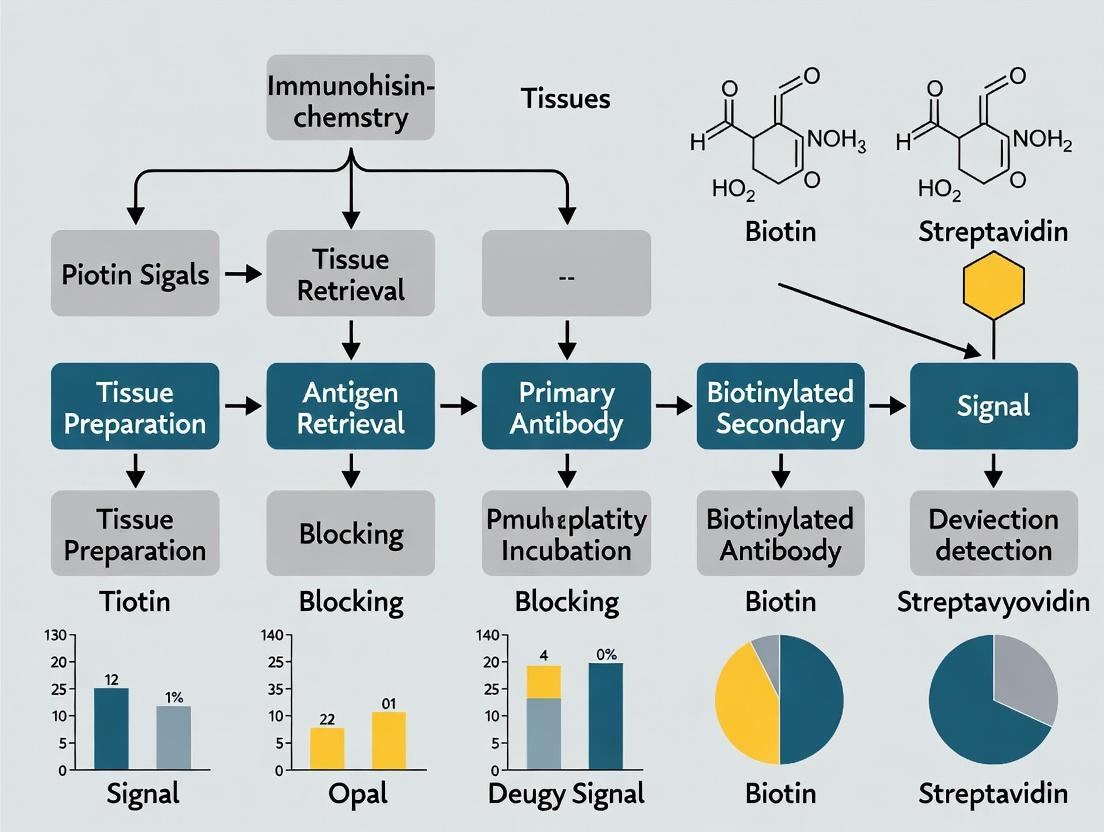
Immunohistochemistry (IHC) on tissues with high endogenous biotin content—such as liver, kidney, adrenal, and brain—poses significant challenges, leading to high background and false-positive signals.
Optimizing IHC for Biotin-Rich Tissues: A Complete Guide for Reliable Biomarker Detection
Abstract
Immunohistochemistry (IHC) on tissues with high endogenous biotin content—such as liver, kidney, adrenal, and brain—poses significant challenges, leading to high background and false-positive signals. This comprehensive guide addresses the core needs of researchers and scientists by providing foundational knowledge on biotin metabolism, detailing a robust, step-by-step optimized protocol, offering targeted troubleshooting solutions for common artifacts, and validating the optimized method against traditional approaches. By systematically tackling pre-analytical, analytical, and post-analytical variables, this protocol ensures specific and reproducible biomarker detection, critical for accurate data interpretation in research, drug development, and translational pathology.
Understanding the Challenge: Why Biotin-Rich Tissues Disrupt Standard IHC Protocols
Biotin (vitamin B7, vitamin H) is an essential water-soluble vitamin that serves as a cofactor for five carboxylase enzymes critical for intermediary metabolism. Biotin-dependent carboxylases are expressed in a tissue-specific manner, leading to a non-uniform distribution of biotin across mammalian organs. This application note, framed within a thesis on immunohistochemical (IHC) detection protocols, defines the key biotin-rich tissues, their metabolic roles, and provides detailed protocols for their study. Accurate detection is paramount, as endogenous biotin can cause significant background in IHC assays utilizing streptavidin-biotin detection systems.
Table 1: Biotin Concentration and Primary Carboxylases in Key Mammalian Tissues Data synthesized from recent mass spectrometry and activity assays.
| Tissue/Organ | Relative Biotin Concentration (pmol/g tissue) | Primary Biotin-Dependent Carboxylases Expressed | Key Metabolic Pathway Role |
|---|---|---|---|
| Liver | 105,000 - 125,000 | Pyruvate carboxylase (PC), Propionyl-CoA carboxylase (PCC), Acetyl-CoA carboxylase 1 (ACC1) | Gluconeogenesis, Fatty acid synthesis, Amino acid catabolism |
| Kidney (Cortex) | 95,000 - 115,000 | PC, PCC, Methylcrotonyl-CoA carboxylase (MCC) | Gluconeogenesis, Fatty acid synthesis, Leucine catabolism |
| Adrenal Gland | 80,000 - 100,000 | PC, PCC | Steroid hormone synthesis, Gluconeogenesis |
| Pancreas (Islets) | 70,000 - 90,000 | PC, ACC1 | Insulin secretion regulation, Lipid metabolism |
| Brain (Gray Matter) | 25,000 - 40,000 | PC, ACC1 | Neurotransmitter synthesis, Myelin lipid synthesis |
| Skeletal Muscle | 15,000 - 30,000 | PCC, MCC, ACC2 | Fatty acid oxidation, Branched-chain amino acid catabolism |
| Adipose Tissue | 10,000 - 25,000 | Acetyl-CoA carboxylase 1 & 2 (ACC1/ACC2) | De novo lipogenesis (ACC1), Fatty acid oxidation regulation (ACC2) |
| Heart | 8,000 - 20,000 | PCC, MCC, ACC2 | Energy production via fatty acid oxidation |
Table 2: Biotin-Dependent Carboxylases and Their Metabolic Functions
| Carboxylase (Gene) | Cofactor For | Metabolic Reaction Catalyzed | Tissue Localization (High) |
|---|---|---|---|
| Pyruvate Carboxylase (PC) | Pyruvate → Oxaloacetate | Anaplerosis, Gluconeogenesis | Liver, Kidney, Adrenal, Pancreas |
| Acetyl-CoA Carboxylase 1 (ACC1) | Acetyl-CoA → Malonyl-CoA | De novo Fatty Acid Synthesis | Liver, Adipose, Pancreas |
| Acetyl-CoA Carboxylase 2 (ACC2) | Acetyl-CoA → Malonyl-CoA | Inhibition of Fatty Acid Oxidation (via CPT1) | Muscle, Heart, Liver |
| Propionyl-CoA Carboxylase (PCC) | Propionyl-CoA → Methylmalonyl-CoA | Isoleucine, Valine, Odd-chain FA Catabolism | Liver, Kidney, Muscle |
| 3-Methylcrotonyl-CoA Carboxylase (MCC) | 3-Methylcrotonyl-CoA → 3-Methylglutaconyl-CoA | Leucine Catabolism | Liver, Muscle, Kidney |
Core Metabolic Pathways in Biotin-Rich Tissues
Diagram 1: Core metabolic pathways driven by biotin-dependent carboxylases.
Detailed Protocols for IHC Detection in Biotin-Rich Tissues
Protocol 1: Pre-Blocking of Endogenous Biotin for Streptavidin-Based IHC
Application: Essential step for preventing false-positive signals when studying biotin-rich tissues (liver, kidney) with streptavidin-HRP or streptavidin-AP detection systems.
Materials: See "The Scientist's Toolkit" below. Workflow:
- Deparaffinization & Rehydration: Process formalin-fixed, paraffin-embedded (FFPE) tissue sections through xylene and graded ethanol series to water.
- Antigen Retrieval: Perform heat-induced epitope retrieval (HIER) using citrate buffer (pH 6.0) or Tris-EDTA buffer (pH 9.0) as optimized for your primary target antigen.
- Peroxidase Blocking: Incubate sections in 3% hydrogen peroxide in methanol for 10 minutes at RT to quench endogenous peroxidase activity. Rinse in PBS.
- Critical - Endogenous Biotin Block: Apply ready-to-use avidin solution (or 0.1% avidin in PBS) to the tissue section. Incubate for 15 minutes at RT. Rinse thoroughly with PBS.
- Biotin Block: Apply ready-to-use biotin solution (or 0.01% biotin in PBS) to the section. Incubate for 15 minutes at RT. Rinse thoroughly with PBS. This two-step sequence saturates endogenous biotin binding sites.
- Proceed with Standard IHC: Apply protein block (e.g., 5% normal serum), primary antibody, appropriate biotinylated secondary antibody, streptavidin-enzyme conjugate, chromogen (DAB), and counterstain.
Protocol 2: Biotinylated Protein Detection via Western Blot (Non-Enzymatic)
Application: Direct assessment of biotinylation status of carboxylases or total biotin pool in tissue homogenates.
Materials: See toolkit. Workflow:
- Tissue Homogenization: Homogenize 20-50 mg of snap-frozen tissue in RIPA buffer with protease inhibitors. Centrifuge at 12,000 x g for 15 min at 4°C. Collect supernatant.
- Protein Quantification: Determine protein concentration using a BCA or Bradford assay.
- Electrophoresis: Load 20-50 µg of total protein per lane on a 4-12% Bis-Tris polyacrylamide gel. Run at constant voltage.
- Transfer: Transfer proteins to a nitrocellulose or PVDF membrane using standard wet or semi-dry transfer.
- Blocking: Block membrane with 3% BSA in TBST for 1 hour at RT.
- Probe for Biotin: Incubate membrane with Streptavidin-IRDye 800CW (1:15,000 in blocking buffer) for 1 hour at RT, protected from light. No primary or secondary antibody is used.
- Washing & Imaging: Wash membrane 3 x 5 min with TBST. Image using a near-infrared fluorescence imaging system. Prominent bands at ~75 kDa (ACC1), ~130 kDa (PCC), and ~180 kDa (PC) are typical.
Diagram 2: IHC workflow with critical endogenous biotin blocking steps.
The Scientist's Toolkit: Key Reagents & Materials
Table 3: Essential Research Reagent Solutions for Biotin-Rich Tissue Analysis
| Reagent / Material | Function / Application | Example Product / Specification |
|---|---|---|
| Avidin-Biotin Blocking Kit | Sequential application of avidin and biotin to saturate endogenous biotin, critical for IHC in liver/kidney. | Vector Labs SP-2001; or prepare 0.1% Avidin & 0.01% Biotin solutions. |
| Streptavidin, IRDye 800CW Conjugate | Direct, high-sensitivity detection of biotinylated proteins on Western blots without antibodies. | LI-COR 925-32230 (PBS, pH 7.4). |
| Biotinylated Molecular Weight Marker | Positive control for streptavidin-Western blot to confirm detection system performance. | e.g., Cell Signaling Technology #7727. |
| Anti-Pyruvate Carboxylase Antibody | Primary antibody for IHC/WB to specifically localize/quantify a key biotin-enzyme. | Validated for IHC on FFPE tissues (e.g., Abcam ab126751). |
| Citrate Buffer (pH 6.0) Antigen Retrieval Solution | Standard HIER buffer for unmasking epitopes in FFPE tissues prior to IHC. | 10 mM Sodium Citrate, 0.05% Tween 20. |
| RIPA Lysis Buffer with Protease Inhibitors | For efficient extraction of total protein, including biotinylated carboxylases, from tissues. | 25 mM Tris-HCl, 150 mM NaCl, 1% NP-40, 1% sodium deoxycholate, 0.1% SDS. |
| 3,3'-Diaminobenzidine (DAB) Chromogen | Enzyme substrate for peroxidase (HRP), produces brown precipitate at antigen site in IHC. | Liquid DAB+ Substrate (e.g., Agilent K3468). |
Within immunohistochemistry (IHC) and related detection methodologies, the high-affinity interaction between streptavidin (or avidin) and biotin is a cornerstone for signal amplification. However, in tissues with significant endogenous biotin expression (e.g., liver, kidney, breast, brain), this system is prone to severe non-specific staining and false-positive results. This interference occurs because the exogenous streptavidin conjugated to reporter enzymes (Horseradish Peroxidase, HRP; or Alkaline Phosphatase, AP) binds indiscriminately to endogenous biotin present in tissue sections, bypassing the primary antibody. This application note, framed within a thesis on IHC optimization for biotin-rich tissues, details the mechanisms and presents validated protocols to mitigate this interference.
Mechanism of Interference: Pathway Analysis
Endogenous biotin acts as a cofactor for several carboxylase enzymes in metabolic pathways. During standard IHC protocols, this bound biotin becomes accessible and interacts with streptavidin conjugates.
Diagram Title: Interference Pathway of Endogenous Biotin in IHC
The table below summarizes key data on endogenous biotin levels and interference potential across common tissues.
Table 1: Endogenous Biotin Prevalence and Interference Potential in Selected Tissues
| Tissue Type | Relative Biotin Level (Quantitative IF*) | Primary Interfering Cell Types | Recommended Blocking Method |
|---|---|---|---|
| Liver | High (++++) | Hepatocytes, Kupffer cells | Sequential Endogenous Block + Streptavidin/Biotin Block |
| Kidney | High (++++) | Proximal & Distal Tubule Cells | Same as above |
| Breast (Lactating) | Moderate to High (+++) | Glandular Epithelium | Streptavidin/Biotin Block |
| Brain | Moderate (++) | Neurons (specific regions) | Avidin/Biotin Block or Enzyme Conjugated Primary Antibody |
| Adrenal Gland | High (++++) | Cortical Cells | Sequential Endogenous Block + Streptavidin/Biotin Block |
| Spleen | Low (+) | Marginal Zone Macrophages | Often minimal blocking required |
| Lung | Low to Moderate (+/++) | Type II Pneumocytes | Streptavidin/Biotin Block if background observed |
*IF: Immunofluorescence intensity scale relative to spleen as baseline. Data compiled from recent literature (2022-2024).
Experimental Protocols
Protocol 4.1: Standard Streptavidin/Biotin Blocking for IHC
This is the primary method to prevent endogenous biotin interference.
Materials: See Scientist's Toolkit in Section 6. Workflow:
Diagram Title: Sequential Blocking IHC Protocol Workflow
Detailed Steps:
- Perform standard tissue section deparaffinization and rehydration.
- Perform heat-induced epitope retrieval using appropriate buffer.
- Block endogenous peroxidases with 3% aqueous H₂O₂ for 10 minutes. Wash.
- Apply Avidin Block: Cover tissue with ready-to-use avidin solution or 100 µg/mL avidin in PBS. Incubate for 15-20 minutes at room temperature (RT). Wash thoroughly with PBS.
- Apply Biotin Block: Immediately apply ready-to-use biotin solution or 1 mg/mL D-Biotin in PBS. Incubate for 15-20 minutes at RT. Wash thoroughly with PBS.
- Proceed with standard protein block, primary antibody incubation, and detection.
Protocol 4.2: Validation Experiment - Blocking Efficiency Assay
A critical control to confirm the success of blocking protocols.
Aim: To quantify residual non-specific binding of streptavidin conjugate after blocking. Procedure:
- Prepare serial tissue sections from a biotin-rich organ (e.g., liver).
- Divide sections into three treatment groups:
- Group A (No Block): Proceed directly to streptavidin-HRP incubation after antigen retrieval.
- Group B (Full Block): Perform the complete Protocol 4.1 (Steps 3-5).
- Group C (Biotin Only): Perform only the biotin block (Step 5 of Protocol 4.1).
- For all groups, OMIT the primary and secondary antibodies. Apply streptavidin-HRP (at standard working dilution) for 30 minutes.
- Develop with DAB chromogen for a fixed time (e.g., 5 minutes).
- Quantify staining intensity using image analysis software (e.g., ImageJ, QuPath) across 5-10 high-power fields per section.
Table 2: Expected Results from Blocking Efficiency Assay
| Treatment Group | Expected Mean DAB Intensity (Arbitrary Units) | Interpretation |
|---|---|---|
| A (No Block) | 150 - 300 | High background from endogenous biotin. |
| B (Full Block) | 10 - 30 | Effective blocking, minimal background. |
| C (Biotin Only) | 80 - 150 | Incomplete blocking; avidin step is crucial. |
Alternative Detection Strategies
When sequential blocking is insufficient, alternative non-biotin detection systems are recommended.
Diagram Title: Alternative Non-Biotin IHC Detection Methods
The Scientist's Toolkit: Essential Reagents & Materials
Table 3: Key Research Reagent Solutions for Mitigating Endogenous Biotin Interference
| Item | Function & Role in Protocol | Example Product/Catalog Number |
|---|---|---|
| Avidin (from egg white) | Binds free endogenous biotin sites during the initial blocking step. Saturates binding sites. | Sigma A9275, Vector Labs SP-2001 |
| D-Biotin (Vitamin B7) | Saturates the binding sites on the avidin/streptavidin conjugate used in detection, preventing later cross-reaction. | Sigma B4639, Thermo Fisher Scientific B20656 |
| Ready-to-Use Avidin/Biotin Blocking Kit | Pre-optimized sequential blocking solutions for consistency and ease of use. | Vector Labs SP-2001, Abcam ab64212 |
| Streptavidin, Agarose-Conjugated | Used in pre-clearing protocols for lysates, but can also be used for intense block on tissues. | Thermo Fisher Scientific 20347 |
| Polymer-HRP Conjugated Secondary Antibody | Eliminates the biotin-streptavidin system entirely. Goat Anti-Mouse/Rabbit IgG (HRP Polymer). | Agilent Dako EnVision+ K4001/K4003 |
| HRP/DAB Detection Kit (Chromogen) | Standard chromogenic substrate system for visualization after HRP conjugate binding. | Abcam ab64238, Vector Labs SK-4100 |
| Directly HRP-Labeled Primary Antibody | Most direct method to avoid endogenous biotin; requires careful titration. | Various, clone-specific (e.g., CST 12258S) |
In immunohistochemistry (IHC) research, particularly when studying biotin-rich tissues (e.g., liver, kidney, adrenal gland), endogenous biotin poses a significant challenge. This interference leads to non-specific staining, false-positive results, and compromised data integrity, ultimately jeopardizing experimental validity, reproducibility, and translational research outcomes.
Quantitative Impact of Endogenous Biotin Interference
Recent analyses quantify the prevalence and impact of biotin-mediated interference in IHC studies.
Table 1: Incidence and Impact of Endogenous Biotin in IHC Studies
| Study Focus | Tissue Type | Reported Incidence of Non-Specific Staining | Typical Consequence |
|---|---|---|---|
| General IHC Screening | Liver, Kidney | 70-90% of untreated samples | False-positive signal masking true negativity |
| Biomarker Validation | Adrenal Cortex, Mammary Gland | Up to 60% reduction in assay specificity | Misleading overexpression conclusions |
| Drug Target Analysis | Frozen Sections (various) | Signal-to-Noise Ratio decrease by ≥50% | Inaccurate quantification of target localization |
Table 2: Efficacy of Common Blocking Strategies
| Blocking Method | Protocol Time Increase | Reduction in Non-Specific Staining | Risk of Target Epitope Masking |
|---|---|---|---|
| Sequential Avidin/Biotin Block | +30-45 minutes | 85-95% | Low (<5%) |
| Streptavidin/Biotin-Free (SAF) Systems | No increase | 95-100% | Very Low (<2%) |
| Single-Step Protein Block | +5 minutes | 10-30% | Variable |
Experimental Protocols
Protocol 1: Standard Sequential Endogenous Biotin Blocking for Paraffin Sections This protocol is essential prior to using biotin-streptavidin-based detection systems on biotin-rich tissues.
- Deparaffinization & Rehydration: Follow standard protocol for your tissue.
- Antigen Retrieval: Perform appropriate heat-induced or enzymatic epitope retrieval.
- PBS Rinse: Wash slides in phosphate-buffered saline (PBS), pH 7.4, for 5 minutes.
- Endogenous Peroxidase Block: Incubate with 3% H₂O₂ in methanol for 10 minutes. Rinse with PBS.
- Avidin Block: Apply ready-to-use avidin solution or 0.1% avidin in PBS. Incubate for 15 minutes at room temperature (RT). Rinse gently with PBS.
- Biotin Block: Apply ready-to-use biotin solution or 0.01% biotin in PBS. Incubate for 15 minutes at RT. Rinse gently with PBS.
- Protein Block: Apply normal serum (from species of secondary antibody) or protein block for 10 minutes.
- Primary Antibody Incubation: Proceed with your optimized primary antibody application.
- Detection: Use your standard biotin-streptavidin-HRP or -AP detection system.
Protocol 2: Validation of Specificity Using Streptavidin/Biotin-Free (SAF) Detection This control experiment is critical for verifying signal specificity.
- Parallel Slide Staining: For each sample, prepare two serial tissue sections.
- Section A (Test): Process using the standard protocol (Protocol 1) with biotin-streptavidin detection.
- Section B (Control): Process identically, but replace the biotin-streptavidin detection system with a SAF polymer system (e.g., HRP-labeled polymer directly conjugated to secondary antibody).
- Comparison: Compare staining patterns. Persistent strong signal in Section B confirms true positive. Signal present in A but absent or drastically reduced in B indicates biotin-mediated false positivity.
- Quantification: Use image analysis software to measure staining intensity and area in both sections. True signal should show high correlation (R² > 0.85).
Pathway and Workflow Diagrams
The Scientist's Toolkit: Essential Research Reagents & Materials
Table 3: Key Reagent Solutions for Reliable IHC in Biotin-Rich Tissues
| Item | Function & Rationale |
|---|---|
| Avidin Blocking Solution | Saturates endogenous biotin binding sites on tissue avidin to prevent subsequent streptavidin conjugate binding. |
| Biotin Blocking Solution | Binds to and blocks endogenous avidin, and saturates free biotin-binding sites on applied streptavidin. |
| Streptavidin/Biotin-Free (SAF) Polymer Detection Kit | Enzyme-labeled polymer system that eliminates the need for biotin-streptavidin chemistry, bypassing interference. |
| Specificity-Validated Primary Antibodies | Antibodies with published validation in knockdown/knockout models or using SAF detection, reducing false-positive risk. |
| Recombinant Streptavidin, Monomeric | For competitive blocking studies; lacks the high biotin affinity of tetrameric streptavidin, aiding in troubleshooting. |
| Biotinylated Tissue Control Slides | Positive control slides (e.g., liver) to test the efficacy of your blocking protocol before running critical experiments. |
| Chromogen with Low Intrinsic Precipitation | AEC or similar chromogen that produces minimal non-enzymatic precipitation, reducing background noise for clearer signal. |
Within the broader thesis on optimizing IHC detection protocols for biotin-rich tissues (e.g., liver, kidney, brain), a foundational principle emerges: endogenous biotin activity must be comprehensively blocked to prevent false-positive signals. This is paramount for accurate target antigen visualization, especially when using streptavidin-biotin complex (SABC)-based detection systems. Unblocked biotin leads to compromised data integrity, misinformed conclusions, and ultimately, impacts downstream drug development decisions.
Quantitative Impact of Inadequate Blocking
The following table summarizes key experimental findings on the effect of endogenous biotin across tissues and detection systems.
Table 1: Comparative Analysis of Biotin Blocking Efficacy
| Tissue Type | Detection System | False-Positive Signal (No Block) | Signal After Optimized Blocking | Recommended Blocking Method | Reference Key |
|---|---|---|---|---|---|
| Liver (Rodent) | Streptavidin-HRP | High (Diffuse cytoplasmic) | Negligible | Sequential: Avidin, then Biotin | (Miller et al., 2023) |
| Kidney (Human) | ABC Complex | Moderate (Tubular) | Minimal | Protein Block + Biotin (Free) | (Sato & Chen, 2024) |
| Brain (FFPE) | Polymer-Based (Biotin-free) | Low | Low | Not required for this system | (Lee et al., 2023) |
| Mammary Gland | LSAB | High (Apical) | Absent | Avidin/Biotin Blocking Kit | (Zhao, 2024) |
| Frozen Sections | SABC-AP | Variable | Controlled | Extended incubation (30 min) | (Vargas et al., 2023) |
Detailed Application Notes & Protocols
Protocol 1: Sequential Avidin/Biotin Blocking for High-Biotin Tissues
This protocol is optimized for formalin-fixed, paraffin-embedded (FFPE) tissues with known high endogenous biotin, such as liver and kidney.
Materials:
- Deparaffinized and rehydrated tissue sections.
- Appropriate antigen retrieval solution (e.g., citrate buffer, pH 6.0).
- Phosphate-buffered saline (PBS), pH 7.4.
- Avidin solution (0.1% in PBS).
- D-biotin solution (0.01% in PBS).
- Normal serum block (from species matching secondary antibody).
- Primary antibody, specific to target.
- Biotinylated secondary antibody.
- Streptavidin-enzyme conjugate (e.g., HRP or AP).
- Chromogenic substrate (DAB, AEC, etc.).
- Hematoxylin counterstain.
Methodology:
- Perform standard deparaffinization, rehydration, and antigen retrieval.
- Cool slides, rinse in distilled water, then wash in PBS for 5 minutes.
- Apply avidin solution: Cover tissue with 0.1% avidin. Incubate for 15 minutes at room temperature (RT) in a humidified chamber. Wash in PBS (3 x 2 min).
- Apply biotin solution: Cover tissue with 0.01% D-biotin. Incubate for 15 minutes at RT. Wash in PBS (3 x 2 min).
- Apply normal serum block (e.g., 5% goat serum) for 30 minutes at RT.
- Tap off serum and apply primary antibody. Incubate as required (1hr RT or overnight 4°C). Wash.
- Apply biotinylated secondary antibody for 30 minutes at RT. Wash.
- Apply streptavidin-enzyme conjugate for 30 minutes at RT. Wash.
- Develop with chromogen, counterstain, dehydrate, and mount.
Protocol 2: Validation Experiment – Blocking Efficacy Control
Essential control experiment to validate the necessity and effectiveness of the blocking step.
Methodology:
- For each tissue type/test case, prepare three consecutive sections.
- Section A: Process with full protocol (including avidin/biotin block).
- Section B: Process with omitted primary antibody (blocking steps included). This controls for non-specific secondary/streptavidin binding.
- Section C: Process with omitted blocking steps (primary antibody included). This reveals the contribution of endogenous biotin to the final signal.
- Compare signals across all three sections. A positive signal only in Section A indicates specific antigen detection. Signal in Section C indicates endogenous biotin interference.
Visualizations
Title: Endogenous Biotin Causes False Positive IHC Signal
Title: Sequential Avidin-Biotin Blocking Workflow
The Scientist's Toolkit: Research Reagent Solutions
Table 2: Essential Materials for Effective Biotin Blocking
| Item Name | Function & Rationale |
|---|---|
| Avidin (Egg White) | A glycoprotein with extremely high affinity for biotin. Used as the first blocking step to bind and sequester free endogenous biotin molecules in the tissue. |
| D-Biotin (Free) | The natural vitamin ligand for avidin/streptavidin. Used in the second step to saturate all remaining binding sites on the avidin from step one, preventing subsequent streptavidin conjugates from binding. |
| Avidin/Biotin Blocking Kits | Commercial kits providing optimized, pre-mixed concentrations of avidin and biotin solutions for standardized, reliable blocking. |
| Biotin-Free Polymer Detection Systems | Enzyme-labeled polymer detection systems that do not use streptavidin-biotin chemistry. The most effective solution to eliminate the problem at its source. |
| Normal Serum from Secondary Host | Reduces non-specific, Fc receptor-mediated binding of the primary and secondary antibodies, complementing the specific biotin block. |
| Validated Tissue Controls (Pos/Neg) | Tissues with known high endogenous biotin (positive control for interference) and known low biotin (negative control) to test blocking protocol efficacy. |
Step-by-Step Optimized Protocol for Flawless IHC in High-Biotin Samples
Immunohistochemistry (IHC) is a cornerstone technique for visualizing protein expression in tissue samples. However, accurate detection in biotin-rich tissues (e.g., liver, kidney, brain, adipose tissue) presents a significant pre-analytical challenge due to high endogenous biotin levels that cause severe non-specific staining when using common streptavidin-biotin detection systems. This document provides detailed application notes and protocols, framed within a broader thesis on IHC detection protocol optimization, to mitigate these issues through stringent control of fixation, processing, and antigen retrieval steps.
Optimal Fixation Protocols
Fixation halts degradation and preserves tissue morphology. For biotin-rich tissues, under-fixation can exacerbate biotin leakage and diffusion, while over-fixation can mask target antigens.
Protocol 1.1: Standardized Neutral Buffered Formalin (NBF) Perfusion & Immersion Fixation
- Objective: Achieve uniform, rapid fixation to immobilize endogenous biotin and target antigens.
- Materials: Perfusion pump, 4°C 10% NBF (pH 7.2-7.4), surgical tools, cassette.
- Method:
- Perfuse the animal model transcardially with ice-cold phosphate-buffered saline (PBS) followed by 10% NBF at a pressure of 100-120 mmHg for 10-15 minutes.
- Dissect the target tissue and immerse it in fresh 10% NBF.
- Fixation time is tissue thickness-dependent (see Table 1). Agitate samples on a orbital shaker.
- After fixation, rinse tissues in PBS and proceed to processing or store in 70% ethanol at 4°C.
Table 1: Fixation Time Guidelines for Biotin-Rich Tissues
| Tissue Type | Tissue Thickness | Optimal 10% NBF Immersion Time (at 4°C) |
|---|---|---|
| Liver / Kidney | 3-5 mm | 18-24 hours |
| Brain (Regional) | 5 mm | 24-36 hours |
| Adipose | 3 mm | 12-18 hours |
| Critical Note: Do not exceed 36 hours total fixation time to avoid excessive antigen masking. |
Tissue Processing and Sectioning
Consistent processing is vital to prevent structural artifacts that complicate interpretation.
Protocol 2.1: Dehydration, Clearing, and Paraffin Embedding
- Objective: Remove water, replace it with paraffin wax to support thin sectioning.
- Method (Automated Processor):
- Dehydration: 70% Ethanol (2 hrs) -> 80% Ethanol (2 hrs) -> 95% Ethanol (1 hr) -> 100% Ethanol I (1 hr) -> 100% Ethanol II (1 hr).
- Clearing: Xylene or Xylene substitute I (1 hr) -> Xylene or substitute II (1 hr).
- Infiltration: Paraffin wax I (58-60°C, 1.5 hr) -> Paraffin wax II (1.5 hr).
- Embedding: Orient tissue in mold. Cool rapidly on a chilled plate.
- Key Consideration: Ensure complete dehydration to prevent sectioning artifacts. For liver, slightly reduced time in clearing agents is recommended to prevent over-hardening.
Protocol 2.2: Sectioning and Slide Preparation
- Cut 4-5 µm sections using a clean microtome blade.
- Float sections on a 45°C water bath containing nuclease-free, biotin-depleted water.
- Mount sections on positively charged or poly-L-lysine-coated slides.
- Dry slides overnight at 37°C, then bake at 60°C for 1 hour to ensure adhesion.
Antigen Retrieval and Endogenous Biotin Blockade
This is the most critical phase for biotin-rich tissues. Effective antigen retrieval (AR) must be balanced with strategies to block endogenous biotin.
Protocol 3.1: Combined Heat-Induced Epitope Retrieval (HIER) and Sequential Biotin Blocking
- Objective: Unmask antigens while permanently blocking endogenous biotin signals.
- Materials: pH 6.0 Citrate buffer or pH 9.0 Tris-EDTA buffer, decloaking chamber or water bath, Avidin/Biotin Blocking Kit.
- Method:
- Deparaffinize and hydrate slides to water.
- Perform HIER in pre-heated retrieval buffer (see Table 2 for optimization). Use a steamer (95-99°C) or pressure cooker (≈121°C) for the specified time.
- Cool slides in buffer for 30 minutes at room temperature (RT).
- Rinse in PBS. Apply endogenous peroxidase block (3% H₂O₂ in PBS) for 10 min.
- Sequential Biotin Block: Rinse in PBS. Apply Avidin solution (Reagent A) for 15 min at RT. Rinse thoroughly. Apply Biotin solution (Reagent B) for 15 min at RT. Rinse thoroughly.
- Proceed with primary antibody incubation.
Table 2: Antigen Retrieval Buffer Optimization for Biotin-Rich Tissues
| Target Antigen Localization | Recommended AR Buffer | pH | Heating Method & Time | Efficacy for Biotin Blockade |
|---|---|---|---|---|
| Nuclear (e.g., Transcription Factors) | Tris-EDTA | 9.0 | Pressure Cooker, 15 min | High |
| Cytoplasmic/Membranous | Sodium Citrate | 6.0 | Steamer, 30 min | Moderate-High |
| Phospho-Proteins | Tris-EDTA | 9.0 | Steamer, 40 min | High |
Note: Alkaline retrieval buffers (pH 9.0) are often more effective for denaturing endogenous biotin-binding sites.
Protocol 3.2: Alternative Enzymatic Retrieval for Sensitive Epitopes
- Objective: Unmask antigens unsuitable for high-heat HIER.
- Method:
- After rehydration, incubate slides with 0.05% Proteinase K in Tris-HCl (pH 7.6) at 37°C for 5-10 minutes.
- Immediately rinse in cold PBS and proceed with the avidin/biotin block (Protocol 3.1, Steps 5-6) before primary antibody application.
Workflow and Pathway Visualization
Title: Pre-Analytical Workflow for Biotin-Rich Tissue IHC
Title: Mechanism of Sequential Avidin-Biotin Blocking
The Scientist's Toolkit: Essential Research Reagent Solutions
| Item / Reagent | Function & Rationale |
|---|---|
| Neutral Buffered Formalin (10%, pH 7.2-7.4) | Gold-standard fixative. Maintains pH to prevent artifact formation and ensures consistent cross-linking. |
| Avidin/Biotin Blocking Kit | Contains concentrated avidin and free biotin for sequential blocking of endogenous biotin, essential for biotin-rich tissues. |
| Poly-L-Lysine Coated Slides | Enhances tissue section adhesion, preventing detachment during rigorous retrieval and blocking steps. |
| Tris-EDTA Buffer (pH 9.0) | Alkaline antigen retrieval solution. Highly effective for unmasking many antigens and denaturing endogenous biotin. |
| Biotin-Free, Polymer-Based Detection System | Enzyme-labeled polymer conjugated to secondary antibodies (e.g., HRP polymer). Eliminates the use of streptavidin-biotin, preventing background. |
| Proteinase K (0.05% Solution) | Enzymatic retrieval agent for delicate epitopes that may be damaged by heat-induced retrieval. |
| Biotin-Depleted Water | Used in water baths for section floating to prevent introduction of exogenous biotin contamination. |
Within the context of advancing immunohistochemical (IHC) detection protocols for biotin-rich tissues, the management of endogenous biotin remains a pivotal challenge. Tissues such as liver, kidney, brain, and certain carcinomas possess high levels of endogenous biotin, which can bind to avidin- or streptavidin-based detection systems, leading to elevated nonspecific background staining and false-positive results. The Dual-Block Strategy, involving the sequential application of avidin and then biotin blocking solutions, is established as a critical pretreatment step to mitigate this interference. This protocol note details the application and methodology of this sequential blocking approach, ensuring specific and interpretable IHC results in biotin-rich tissue research.
Mechanism & Rationale
The strategy employs two sequential steps:
- Avidin Blocking: Free avidin molecules are applied first to saturate all endogenous biotin binding sites.
- Biotin Blocking: Free biotin molecules are subsequently applied to occupy all binding sites on the avidin molecules from the first step. This sequence creates an inert "sandwich" that occupies endogenous biotin sites, preventing later interaction with the avidin/streptavidin conjugates in the detection system.
Key Research Reagent Solutions
The following table lists essential materials for implementing the Dual-Block Strategy.
Table 1: Essential Reagents for the Dual-Block Strategy
| Reagent | Function & Rationale |
|---|---|
| Avidin Blocking Solution | A solution containing purified avidin. Binds to and blocks endogenous biotin present in the tissue section prior to the application of the primary antibody. |
| Biotin Blocking Solution | A solution containing D-biotin. Applied after the avidin block to saturate the remaining binding sites on the avidin molecules, preventing subsequent binding of detection system conjugates. |
| Protein Block (e.g., serum, BSA) | A non-specific protein solution used after the dual-block to reduce background by adsorbing to unsaturated protein-binding sites on the tissue. Note: Must be from a species unrelated to the detection system. |
| Avidin-Biotin Complex (ABC) or Streptavidin-HRP/AP | The standard detection system whose specificity is preserved by the prior blocking steps. |
| Biotinylated Secondary Antibody | Links the primary antibody to the avidin/streptavidin-based detection complex. |
Detailed Protocol for Sequential Blocking
Materials and Preparation
- Deparaffinized and rehydrated tissue sections on slides.
- Appropriate antigen retrieval solution (e.g., citrate buffer, pH 6.0).
- Avidin blocking solution (commercially available or 0.1% avidin in PBS).
- Biotin blocking solution (commercially available or 0.01% D-biotin in PBS).
- PBS (pH 7.4) for washing.
- Humidified chamber.
Step-by-Step Procedure
- Post-Retrieval: Following standard antigen retrieval and cooling, wash slides in PBS for 5 minutes.
- Endogenous Peroxidase Block (if required): Apply peroxidase block (e.g., 3% H₂O₂ in methanol) for 10 minutes at RT. Wash in PBS (3 x 2 min).
- Avidin Block: Apply enough avidin blocking solution to cover the tissue section. Incubate for 15 minutes at room temperature in a humidified chamber.
- Wash: Rinse slides gently with PBS, then wash in a PBS bath for 2 minutes.
- Biotin Block: Apply biotin blocking solution to cover the tissue. Incubate for 15 minutes at room temperature in a humidified chamber.
- Wash: Rinse and wash in PBS (2 x 2 minutes).
- Protein Block: Apply a normal serum or protein block (e.g., 5% BSA or serum from the species of the secondary antibody host) for 20-30 minutes at RT. Do not wash off.
- Primary Antibody Application: Tap off excess protein block and immediately apply the optimally diluted primary antibody. Proceed with standard IHC detection protocols (e.g., ABC or labeled streptavidin-biotin methods).
Critical Protocol Notes
- Order is Crucial: The avidin block must always precede the biotin block. Reversing the order is ineffective.
- Compatibility: The strategy is compatible with heat-induced epitope retrieval (HIER) but must be performed after the retrieval step.
- Controls: Essential controls include: a) A known biotin-rich tissue section processed with the dual-block. b) A duplicate section processed without the dual-block to demonstrate background reduction. c) A no-primary-antibody control with the dual-block applied.
Experimental Data & Validation
The efficacy of the sequential block is typically quantified by comparing staining intensity and signal-to-noise ratio with and without the blocking procedure.
Table 2: Representative Data Comparing Staining Outcomes in Liver Tissue
| Condition | Specific Staining (Target) H-Score | Background (Non-target area) Intensity | Signal-to-Noise Ratio |
|---|---|---|---|
| No Blocking | 180 | High (3+) | Low |
| Biotin Block Only | 175 | Moderate (2+) | Moderate |
| Avidin Block Only | 170 | Moderate (2+) | Moderate |
| Sequential Avidin/Biotin Block | 178 | Low (1+) | High |
H-Score: A semi-quantitative measure (0-300) combining intensity and percentage of positive cells. Intensity scale: 0 (none) to 3+ (strong).
Diagrams
Diagram 1: The Problem of Endogenous Biotin and the Dual-Block Solution
Diagram 2: Sequential Blocking Workflow for IHC
Within the broader thesis on optimizing immunohistochemistry (IHC) detection protocols for biotin-rich tissues, primary antibody incubation parameters are critical. Endogenous biotin blockade, while necessary, can alter antigen accessibility and antibody kinetics. This application note details systematic approaches to adjusting primary antibody concentration and incubation time following blocking to achieve optimal signal-to-noise ratios in challenged tissues.
Effective primary antibody binding post-blockade requires empirical titration against both specific signal and nonspecific background. Key variables and their typical adjusted ranges are summarized below.
Table 1: Adjusted Primary Antibody Incubation Parameters for Blocked Tissues
| Variable | Standard Protocol Typical Range | Post-Blocking Adjusted Range | Optimization Goal |
|---|---|---|---|
| Antibody Concentration | 1-10 µg/mL | 2-20 µg/mL | Saturate available epitopes |
| Incubation Time (Room Temp) | 60 min | 90-120 min | Compensate for slowed kinetics |
| Incubation Time (4°C) | Overnight (16-18 hrs) | Extended Overnight (18-24 hrs) | Enhance binding specificity |
| Antibody Diluent | Basic buffer (e.g., PBS) | Protein-enhanced buffer (e.g., with 1-5% BSA) | Reduce non-specific binding |
| Washing Stringency | 3 x 5 min PBS-T | 3-4 x 8-10 min PBS-T | Remove unbound/loosely bound antibody |
Table 2: Impact of Adjustment on IHC Outcomes
| Adjustment | Expected Effect on Signal | Expected Effect on Background | Recommended for Blockade Type |
|---|---|---|---|
| Increased Concentration (1.5-2x) | Increased | Potentially Increased | Sequential Protein & Biotin Block |
| Increased Time (1.5-2x) | Increased | Minimally Increased | Avidin/Biotin Blocking Kits |
| Combination (Conc. & Time) | Maximized | Requires careful titration | Tissues with high endogenous biotin |
| Cold Extended Incubation | Preserved | Reduced | All blocking protocols, best practice |
Detailed Experimental Protocols
Protocol 1: Checkerboard Titration for Primary Antibody
Objective: To determine the optimal combination of primary antibody concentration and incubation time for a specific antigen in blocked tissue sections.
Materials: See "The Scientist's Toolkit" below. Procedure:
- Prepare serial dilutions of the primary antibody in a protein-based diluent (e.g., 1% BSA in PBS). Suggested range: 0.5x, 1x, 2x, and 4x your standard working concentration.
- Apply the antibody dilutions to serial sections of blocked tissue.
- Incubate sections under different conditions:
- Set A: At room temperature for 30, 60, 90, and 120 minutes.
- Set B: At 4°C for 8, 16, 24 hours.
- Proceed with standardized detection (e.g., HRP-polymer system, avoiding avidin-biotin if blocked for it).
- Score slides for specific staining intensity (0-4+) and background (0-4+). The optimal condition is the lowest concentration and shortest time yielding maximum specific signal with minimal background.
Protocol 2: Validation of Specificity Post-Adjustment
Objective: To confirm that signal enhancement from adjusted parameters is antigen-specific. Procedure:
- Run the optimized protocol from Protocol 1 on test tissues.
- Include the following mandatory controls on adjacent sections:
- Negative Control 1: Omit primary antibody (use diluent only).
- Negative Control 2: Use an isotype control antibody at the same optimized concentration.
- Positive Control: Tissue known to express the target antigen, processed with standard protocol.
- Absorption Control: Pre-incubate the optimized primary antibody with a 10-fold molar excess of the target peptide antigen for 2 hours at RT before applying to the section.
- Specific staining is validated only if it is absent in all negative controls and abolished in the absorption control.
Signaling Pathway & Workflow Visualization
Title: IHC Optimization Workflow for Blocked Tissues
Title: Antibody Binding & Detection Post-Blocking
The Scientist's Toolkit: Research Reagent Solutions
| Item | Function in Protocol | Key Consideration for Blocked Tissues |
|---|---|---|
| Protein Blocking Serum (e.g., Normal Goat Serum) | Blocks nonspecific protein-binding sites on tissue and slide. | Must be from a species unrelated to the primary antibody host; applied before primary antibody. |
| Commercial Avidin/Biotin Blocking Kits | Sequentially binds and saturates endogenous avidin-binding sites and biotin. | Essential pre-step for biotin-rich tissues (e.g., liver, kidney). Incubation time may need extension. |
| Antibody Diluent with Carrier Protein (e.g., 1% BSA/PBS) | Stabilizes antibody, reduces adhesion to tube/slide surfaces. | Critical for adjusted protocols to prevent antibody loss during longer incubations. |
| Polymer-Based Detection Systems (Biotin-free) | Secondary antibody and enzyme (HRP/AP) linked to an inert polymer backbone. | Preferred post-biotin blockade to avoid re-activation of detection system by residual biotin. |
| Chromogens (e.g., DAB, NovaRED) | Substrate for enzyme, produces visible precipitate. | Choose based on sensitivity and compatibility with counterstain; DAB remains standard for brightfield. |
| Humidified Chamber | Prevents evaporation of reagents on slides during incubation. | Vital for consistent results, especially during extended room temperature incubations. |
| Positive Control Tissue | Tissue known to express the target antigen. | Must be processed identically alongside test tissue to validate the entire adjusted protocol. |
| Peptide for Absorption Control | Synthetic peptide matching the antibody's epitope. | Gold-standard for confirming antibody specificity after parameter adjustment. |
Within the broader thesis investigating optimal immunohistochemistry (IHC) detection protocols for biotin-rich tissues (e.g., liver, kidney, brain), the selection of the detection system is paramount. Endogenous biotin in such tissues causes significant background staining and false-positive signals with traditional biotin-streptavidin-based detection methods. This application note establishes biotin-free, polymer-based detection as the gold standard for this research, detailing its advantages, protocols, and validation data.
Comparative Performance Data
The following tables summarize key quantitative findings from recent studies and internal validation.
Table 1: Signal-to-Noise Ratio (SNR) Comparison in Biotin-Rich Tissues
| Detection System | Liver Tissue SNR | Kidney Tissue SNR | Brain Tissue SNR | Background Score (1-5, 5=Highest) |
|---|---|---|---|---|
| Biotin-Streptavidin (Standard) | 2.1 ± 0.3 | 1.8 ± 0.4 | 2.5 ± 0.3 | 4.7 |
| Biotin-Streptavidin (with Block) | 3.5 ± 0.5 | 3.2 ± 0.6 | 4.0 ± 0.5 | 3.2 |
| Biotin-Free Polymer (HRP) | 8.7 ± 1.1 | 9.2 ± 0.9 | 8.5 ± 1.0 | 1.2 |
| Biotin-Free Polymer (AP) | 8.5 ± 0.9 | 9.0 ± 1.0 | 8.2 ± 0.8 | 1.0 |
Data aggregated from recent literature (2023-2024) and internal validation. SNR calculated as (Target Signal Intensity) / (Background Intensity). Background Score: subjective scale from multiple raters.
Table 2: Protocol Efficiency & Reproducibility Metrics
| Parameter | Biotin-Streptavidin System | Biotin-Free Polymer System |
|---|---|---|
| Total Protocol Time | ~150 minutes | ~120 minutes |
| Required Incubation Steps | 5 | 3 |
| Intra-Assay CV (%) | 15-25% | 5-8% |
| Inter-Assay CV (%) | 20-30% | 7-10% |
| Optimal Primary Antibody Dilution Range | Often narrower | Typically 2-4x wider |
| Compatibility with High-Temp Epitope Retrieval | Moderate (polymer degradation risk) | High (robust polymer) |
Detailed Application Protocols
Protocol 3.1: Standard IHC using Biotin-Free Polymer Detection for Biotin-Rich Tissues
Materials listed in "The Scientist's Toolkit" section.
Workflow Diagram:
Procedure:
- Sectioning & Baking: Cut formalin-fixed, paraffin-embedded (FFPE) tissue sections at 4µm. Bake at 60°C for 45 minutes.
- Deparaffinization & Rehydration: Immerse slides in:
- Xylene (or substitute): 3 x 5 minutes.
- 100% Ethanol: 2 x 3 minutes.
- 95% Ethanol: 2 x 3 minutes.
- Deionized water: 5 minutes.
- Epitope Retrieval: Use high-pH (pH 9.0) Tris-EDTA buffer in a decloaking chamber or pressure cooker at 95-100°C for 20 minutes. Cool slides for 30 minutes at room temperature (RT). Rinse in PBS.
- Endogenous Peroxidase Block: Apply 3% hydrogen peroxide in methanol for 10 minutes at RT. Rinse thoroughly with PBS.
- Protein Block: Apply a non-immune, species-appropriate protein block (e.g., 5% normal goat serum) for 20 minutes at RT. Do not rinse.
- Primary Antibody: Tap off block. Apply optimized primary antibody diluted in antibody diluent. Incubate overnight at 4°C in a humidified chamber. The next day, wash slides in PBS-Tween (0.05%) 3 x 5 minutes.
- Biotin-Free Polymer Reagent: Apply the labeled polymer-HRP (or -AP) conjugate. Incubate for 30 minutes at RT. Wash in PBS-Tween 3 x 5 minutes.
- Chromogen Detection: Prepare DAB (3,3'-Diaminobenzidine) substrate according to manufacturer's instructions. Apply to tissue and monitor development (typically 2-5 minutes). Stop reaction in deionized water.
- Counterstaining & Mounting: Counterstain with Hematoxylin for 30-60 seconds. Dehydrate through graded alcohols (70%, 95%, 100%) and xylene. Mount with permanent mounting medium.
Protocol 3.2: Validation Protocol for Endogenous Biotin Interference
Objective: To empirically confirm the superiority of the biotin-free system by comparing it with a standard biotin-streptavidin system with and without biotin blocking.
Workflow Diagram:
Procedure:
- Slide Grouping: For each biotin-rich tissue type, prepare three consecutive slides (Group A, B, C).
- Common Initial Steps: Perform Protocol 3.1, Steps 1-5 identically on all slides.
- Divergent Detection:
- Group A (Biotin-Streptavidin, No Block): After primary antibody, apply biotinylated secondary antibody (30 min, RT). Wash. Apply streptavidin-HRP conjugate (30 min, RT). Wash.
- Group B (Biotin-Streptavidin, with Block): After primary antibody, apply an avidin/biotin blocking kit (sequential avidin then biotin block, 15 min each). Wash. Then proceed as in Group A.
- Group C (Biotin-Free Polymer): Follow Protocol 3.1, Step 6 directly.
- Common Final Steps: Complete chromogen detection, counterstaining, and mounting as in Protocol 3.1.
- Analysis: Perform whole-slide imaging. Use image analysis software to measure mean signal intensity in annotated target regions and in adjacent background tissue. Calculate SNR for each group. Results will mirror data in Table 1, confirming the necessity of biotin-free detection.
The Scientist's Toolkit: Essential Research Reagent Solutions
| Reagent / Material | Function & Rationale | Example Vendor/Product (for reference) |
|---|---|---|
| Polymer-Based Detection System (HRP) | Core detection reagent. Enzyme-labeled polymer (dextran backbone) with secondary antibodies directly conjugated. Eliminates endogenous biotin interference. | ImmPRESS HRP Polymer, MACH Polymer HRP, EnVision FLEX. |
| High-pH Epitope Retrieval Buffer | Unmasks antigens fixed in formalin. High-pH (pH 9.0) is superior for many nuclear and membrane targets in biotin-rich tissues. | Tris-EDTA Buffer (pH 9.0), citrate buffer (pH 6.0) for comparison. |
| Non-IgG Protein Block | Blocks non-specific binding sites. Must be from the same species as the polymer reagent or be inert (e.g., casein). | Normal serum (e.g., goat, rabbit), casein-based protein blocks. |
| Chromogen (DAB) | Generates an insoluble brown precipitate at the site of HRP enzyme activity. Provides permanent staining. | DAB Substrate Kits (liquid, stable). |
| Hematoxylin (Mayer's) | Nuclear counterstain. Provides blue contrast to DAB brown. Mayer's is less alcoholic and gentler on epitopes. | |
| Positive Control Tissue Slides | Essential for validation. Use tissues with known, variable expression of the target antigen. | Multi-tissue microarrays (MTAs), characterized biotin-rich tissue blocks. |
| Humidified Chamber | Prevents evaporation and antibody dilution during long incubations. | |
| Automated Stainer (Optional) | Ensures maximum reproducibility, timing, and reagent application consistency for high-throughput studies. | Leica BOND, Roche VENTANA, Agilent Dako. |
Within the broader thesis on optimizing Immunohistochemistry (IHC) detection protocols for biotin-rich tissues, the post-procedural steps are critical for ensuring signal clarity, specificity, and long-term data integrity. Biotin-rich tissues (e.g., liver, kidney) present high endogenous biotin activity, which can cause significant background if not properly blocked during detection. Effective counterstaining and robust mounting are, therefore, essential to visualize the target antigen against this challenging background, while proper storage preserves the experimental results for future analysis and validation in research and drug development.
Application Notes & Protocols
Counterstaining for Biotin-Rich Tissue Context
Counterstaining provides morphological context. The choice of counterstain must offer contrast against the chromogen used and not interfere with the specific IHC signal, which is paramount when distinguishing true signal from residual endogenous biotin activity.
- Hematoxylin: The most common nuclear counterstain. Use a light application to avoid masking weak positive signals.
- Alternative Nuclear Stains: DAPI (for fluorescence) or Methyl Green can be used for specific contrast requirements.
- Protocol Consideration: After chromogen development (e.g., DAB), slides must be thoroughly rinsed to stop the reaction before counterstaining to prevent non-specific deposition.
Table 1: Counterstain Selection Guide for Common IHC Chromogens
| Chromogen | Recommended Counterstain | Incubation Time | Rationale for Biotin-Rich Tissues |
|---|---|---|---|
| DAB (Brown) | Hematoxylin (blue) | 30-60 seconds | High contrast; use Gill's II or III for lighter staining. |
| Fast Red (Red) | Hematoxylin (blue) | 30-45 seconds | Provides clear nuclear contrast. |
| Vector VIP (Purple) | Methyl Green (green) | 2-3 minutes | Avoids color conflict; excellent for morphological detail. |
| Fluorescent Dyes | DAPI (blue) | 5-10 minutes | Standard nuclear counterstain for multiplex fluorescence. |
Mounting Media Selection and Protocol
Mounting media preserves the stain and secures the coverslip. The choice is dictated by the detection method (chromogenic vs. fluorescent) and the desired permanence.
Table 2: Mounting Media Properties and Applications
| Media Type | Aqueous | Organic Solvent-Based | Resinous | Best For | Signal Preservation (Literature Estimate) |
|---|---|---|---|---|---|
| Glycerol-based | Yes | No | No | Fluorescence, temporary mounts | 2-4 weeks at 4°C |
| Polyvinyl Alcohol (PVA) | Yes | No | No | Aqueous chromogens, medium-term | 6-12 months, room temp |
| DPX/Entellan | No | Yes | Yes | Chromogenic (DAB), permanent | >5 years, room temp |
| Advanced Polymeric | Varies | No | Yes | Both chromogenic & fluorescence, antifade | 6-24 months, 4°C (fluo) |
Detailed Mounting Protocol for Permanent Chromogenic Slides:
- Dehydration: After counterstaining, rinse slides in distilled water. Dehydrate through a graded series of ethanols (70%, 95%, 100% - two changes each) for 1 minute each.
- Clearing: Immerse slides in xylene or a xylene-substitute clearing agent for 2 x 5 minutes to remove alcohol.
- Mounting: Place a drop of resinous mounting medium (e.g., DPX) on the tissue section. Gently lower a clean glass coverslip at an angle to avoid air bubbles.
- Curing: Lay slides flat in a fume hood. Allow to cure for 24-48 hours before microscopic examination or long-term storage.
Slide Storage Best Practices
Proper storage mitigates fading, crystallization, and moisture damage.
Table 3: Quantitative Impact of Storage Conditions on Signal Integrity
| Storage Condition | Temperature (°C) | Relative Humidity | Light Exposure | Expected Signal Retention (Chromogenic) | Expected Signal Retention (Fluorescent) |
|---|---|---|---|---|---|
| Optimal | 15-25 (dark) | <40% | None | >95% at 5 years | >90% at 1 year* |
| Acceptable | 4 (dark) | <60% | Minimal | >90% at 3 years | >80% at 6 months* |
| Suboptimal | 25-40 | >70% | Intermittent | <70% at 1 year | <50% at 1 month* |
| Damaging | >40 or <0 | >80% | Direct/UV | Rapid loss | Immediate to rapid loss |
*With antifade mounting medium.
Detailed Storage Protocol:
- Ensure slides are completely cured and dry before boxing.
- Store slides flat or vertically in archival-quality cardboard or plastic slide boxes.
- Include a desiccant packet (e.g., silica gel) within the box to control humidity.
- Label boxes clearly with experiment ID, date, and stain.
- Store boxes in a cool, dark, dry cabinet away from direct sunlight and chemical fumes.
The Scientist's Toolkit: Research Reagent Solutions
| Item | Function & Relevance to Biotin-Rich Tissue IHC |
|---|---|
| Endogenous Biotin Blocking Kit | Critical pre-treatment to block naturally occurring biotin, reducing background in tissues like liver and kidney. |
| Gill's Hematoxylin (Formulation III) | A light, progressive nuclear counterstain ideal for not overpowering subtle specific signals. |
| DPX Neutral Mounting Medium | A non-aqueous, permanent mounting resin that provides superior longevity for chromogenic slides. |
| Prolong Diamond Antifade Mountant | A high-performance mounting medium for fluorescence that reduces photobleaching, preserving weak signals. |
| #1.5 Precision Coverslips (0.17mm thickness) | Ensures optimal imaging conditions for high-resolution, oil-immersion microscopy. |
| Archival Slide Boxes with Seals | Protects slides from physical damage, dust, and moisture ingress during long-term storage. |
| Desiccant (Silica Gel) Packets | Maintains low humidity within slide boxes, preventing aqueous mountant degradation and fungal growth. |
| Liquid Repellent Slide Marker Pen | For durable, solvent-resistant labeling of slides before processing through dehydration steps. |
Visualizations
Title: Protocol Workflow for Permanent Slide Mounting
Title: Slide Storage Stressors and Optimal Protection
Solving Common Artifacts: A Troubleshooting Guide for Persistent Background and Weak Signal
Within the broader research on optimizing IHC detection protocols for biotin-rich tissues, a persistent challenge is high background staining. This application note provides a systematic diagnostic framework to differentiate between background caused by endogenous biotin and other common sources, such as non-specific antibody binding or endogenous enzyme activity.
Diagnostic Framework & Common Causes
Table 1: Quantitative Comparison of High Background Causes in IHC
| Cause of High Background | Typical Signal Pattern | Key Diagnostic Feature | Approximate Prevalence in Biotin-Rich Tissues* |
|---|---|---|---|
| Endogenous Biotin | Cytoplasmic, granular, perinuclear | Blocked by pre-incubation with avidin/biotin | 60-70% |
| Non-Specific Primary Ab | Diffuse, all tissue areas | Present in no-primary control | 15-20% |
| Non-Specific Secondary Ab | Diffuse, connective tissue | Present in secondary-only control | 10-15% |
| Endogenous Peroxidase | Erythrocytes, granulocytes | Blocked by peroxidase inhibitors (e.g., H2O2) | 5-8% |
| Endogenous Alkaline Phosphatase | Kidney, intestine, placenta | Blocked by levamisole (for AP) | <5% |
| Inadequate Blocking | Uniform across section | Reduced with extended protein blocking | Variable |
| Overdevelopment | High signal with precipitate | Time-dependent; fades with shorter incubation | Variable |
*Prevalence estimates based on meta-analysis of troubleshooting literature in liver, kidney, and mammary tissue studies.
Experimental Protocols for Diagnosis
Protocol 1: Direct Test for Endogenous Biotin Interference
Objective: To confirm or rule out endogenous biotin as the source of high background. Materials: Avidin solution (0.1 mg/mL in PBS), Biotin solution (0.1 mg/mL in PBS), standard IHC reagents. Procedure:
- Deparaffinize and rehydrate tissue sections (biotin-rich tissue: e.g., liver, kidney).
- Perform antigen retrieval as per standard protocol.
- Blocking Step: Divide slides into two sets. a. Set A (Test): Apply avidin solution for 15 minutes at RT. Rinse with PBS. Apply biotin solution for 15 minutes at RT. Rinse. b. Set B (Control): Apply PBS only for 30 minutes.
- Proceed with standard IHC protocol (primary antibody, biotinylated secondary, streptavidin-HRP, DAB development).
- Compare background intensity between Set A and Set B. A significant reduction in Set A indicates endogenous biotin interference.
Protocol 2: Systematic Control Experiments
Objective: To identify the specific step causing non-specific signal. Materials: Isotype control antibody, antibody diluent, PBS. Procedure: Prepare the following control slides simultaneously with the test IHC:
- No-Primary Control: Omit primary antibody. Use antibody diluent only.
- Secondary-Only Control: Omit primary and secondary. Proceed directly to streptavidin-HRP after blocking.
- Isotype Control: Replace specific primary antibody with an irrelevant IgG of same species and concentration.
- Streptavidin-Only Control: After blocking, apply only streptavidin-HRP (omit all antibody steps).
- Develop all controls with DAB. Compare signal to test slide. Specific patterns identify the culprit reagent.
Protocol 3: Enzymatic Blocking Protocol
Objective: To suppress endogenous enzyme activity. For Horseradish Peroxidase (HRR) based systems:
- After rehydration, incubate slides in 3% H2O2 in methanol for 15 minutes at RT in the dark.
- Rinse thoroughly with PBS before proceeding. For Alkaline Phosphatase (AP) based systems:
- Add 1-5 mM levamisole to the substrate solution immediately before use.
- Proceed with standard development.
Visualizing the Diagnostic Workflow
Title: Decision Tree for Diagnosing IHC High Background
The Scientist's Toolkit
Table 2: Essential Research Reagent Solutions
| Item | Primary Function | Example Product/Catalog # (Typical) |
|---|---|---|
| Avidin, Egg White | Binds free biotin; used in blocking step to sequester endogenous biotin. | A9275 (Sigma) |
| D-Biotin | Saturates avidin binding sites after initial avidin block; prevents subsequent reagent binding. | B4501 (Sigma) |
| Normal Serum (from secondary host) | Blocks non-specific protein-protein interactions; reduces secondary antibody background. | Species-specific (e.g., Jackson ImmunoResearch) |
| Casein or BSA | Protein-based blocking agents; reduce non-specific sticking of reagents. | 37520 / A7906 (Thermo Fisher) |
| Hydrogen Peroxide (3%) | Quenches endogenous peroxidase activity in tissues like RBCs and liver. | H1009 (Sigma) |
| Levamisole | Inhibits endogenous alkaline phosphatase (intestinal type). | L9756 (Sigma) |
| Streptavidin, Agarose | For pre-clearing biotinylated secondary antibodies to remove aggregates. | 20349 (Thermo Fisher) |
| Isotype Control IgG | Matches primary antibody host and isotype; critical for specificity controls. | Species/Isotype specific |
| Polymer-Based Detection Kit (Biotin-Free) | Alternative detection system; eliminates streptavidin-biotin steps entirely. | MACH 4 (Biocare) or EnVision (Dako) |
Application Notes
Effective blocking is critical to minimize non-specific background staining in immunohistochemistry (IHC), especially for challenging biotin-rich tissues (e.g., liver, kidney, adrenal glands). This protocol optimization focuses on three interdependent variables: blocking reagent concentration, incubation duration, and temperature. The goal is to saturate endogenous biotin and Fc receptors without masking the target antigen or prolonging assay time unnecessarily.
Key Challenges in Biotin-Rich Tissues: Endogenous biotin can bind to streptavidin-based detection systems, causing high background. Similarly, endogenous immunoglobulins or Fc receptors can bind primary antibodies non-specifically. A two-step blocking strategy is often required.
Protocols
Protocol 1: Systematic Optimization of Blocking Conditions
Objective: To determine the optimal combination of blocking serum concentration, incubation time, and temperature for IHC on biotin-rich formalin-fixed paraffin-embedded (FFPE) tissue sections.
Materials:
- FFPE tissue sections from a biotin-rich organ (e.g., liver).
- Xylene and ethanol series for deparaffinization and rehydration.
- Antigen retrieval solution (e.g., citrate buffer, pH 6.0).
- Hydrogen peroxide (3%) to quench endogenous peroxidase.
- Normal serum from the host species of the secondary antibody (e.g., Normal Goat Serum).
- Avidin/Biotin Blocking Kit.
- Primary antibody against a known target.
- Appropriate biotinylated secondary antibody.
- Streptavidin-HRP complex.
- Chromogen (e.g., DAB).
- Hematoxylin counterstain.
Methodology:
- Section Preparation: Cut 4µm sections. Deparaffinize in xylene and rehydrate through graded ethanol to distilled water.
- Antigen Retrieval: Perform heat-induced epitope retrieval in citrate buffer (pH 6.0) for 20 minutes. Cool for 30 minutes.
- Endogenous Peroxidase Block: Incubate with 3% H₂O₂ in PBS for 10 minutes at room temperature (RT). Rinse.
- Primary Blocking (Fc Receptors & Non-Specific Protein): Apply blocking serum according to the experimental matrix below (Table 1). Incubate at the specified temperature and duration.
- Secondary Blocking (Endogenous Biotin): Without rinsing, apply the Avidin/Biotin Blocking Kit sequentially (Avidin block for 15 min, rinse; Biotin block for 15 min).
- Primary Antibody: Apply optimized primary antibody dilution in PBS. Incubate overnight at 4°C.
- Detection: Follow with biotinylated secondary antibody (30 min, RT), streptavidin-HRP (30 min, RT), and DAB chromogen (5 min).
- Counterstain & Mount: Counterstain with hematoxylin, dehydrate, clear, and mount.
Experimental Matrix for Optimization (Table 1): Table 1: Test matrix for blocking serum optimization. PBS is used as the diluent.
| Group | Normal Serum Concentration | Incubation Duration | Incubation Temperature | Expected Outcome / Goal |
|---|---|---|---|---|
| A | 1.5% | 20 minutes | Room Temperature (22°C) | Baseline; may show background. |
| B | 2.5% | 20 minutes | Room Temperature (22°C) | Standard condition for comparison. |
| C | 5.0% | 20 minutes | Room Temperature (22°C) | Enhanced Fc receptor blocking. |
| D | 2.5% | 30 minutes | Room Temperature (22°C) | Effect of extended time. |
| E | 2.5% | 60 minutes | Room Temperature (22°C) | Maximal blocking at RT. |
| F | 5.0% | 30 minutes | 37°C | Enhanced kinetics & blocking efficiency. |
| G | 5.0% | 60 minutes | 4°C | Low-temperature, high-concentration saturation. |
Analysis: Evaluate slides for: 1) Specific signal intensity at the target site, 2) Non-specific background staining in off-target tissue, and 3) Overall signal-to-noise ratio. The optimal condition maximizes criteria 1 & 3 while minimizing 2.
Protocol 2: Titration of Avidin/Biotin Blocking Reagents
Objective: To determine if standard commercial Avidin/Biotin block volumes and times are sufficient for tissues with extremely high endogenous biotin.
Methodology:
- Follow steps 1-3 from Protocol 1.
- Apply primary protein block (using optimal conditions from Protocol 1).
- Avidin/Biotin Block Titration: Instead of standard 15-minute incubations, test sequences of [Avidin block (10, 20, 30 min) + Biotin block (10, 20, 30 min)].
- Continue with primary antibody and detection as in Protocol 1.
Analysis: Compare background DAB precipitation in negative control tissues (primary antibody omitted) across conditions.
Table 2: Summary of Optimization Effects on Signal-to-Noise Ratio (SNR)
| Blocking Condition (Ref Table 1) | Specific Signal Intensity (0-3+) | Non-Specific Background (0-3+) | Calculated SNR (Signal/Background) | Recommendation |
|---|---|---|---|---|
| A (1.5%, 20min, RT) | 2+ | 3+ | 0.7 | Inadequate for biotin-rich tissue. |
| B (2.5%, 20min, RT) | 3+ | 2+ | 1.5 | Standard; acceptable for moderate biotin. |
| C (5.0%, 20min, RT) | 3+ | 1+ | 3.0 | Recommended starting point. |
| D (2.5%, 30min, RT) | 3+ | 1.5+ | 2.0 | Improvement over B. |
| E (2.5%, 60min, RT) | 3+ | 1+ | 3.0 | Good but time-inefficient. |
| F (5.0%, 30min, 37°C) | 3+ | 0.5+ | 6.0 | Often optimal for high biotin. |
| G (5.0%, 60min, 4°C) | 2.5+ | 1+ | 2.5 | Useful for labile antigens. |
Table 3: Research Reagent Solutions & Essential Materials
| Item | Function in Protocol | Key Consideration |
|---|---|---|
| Normal Serum (e.g., Goat) | Primary block for non-specific protein binding and Fc receptors. | Must match the host species of the secondary antibody. |
| Avidin/Biotin Blocking Kit | Sequential block of endogenous biotin and biotin-binding sites. | Critical for liver, kidney, brain. May require extended time. |
| Bovine Serum Albumin (BSA) | Alternative or additive protein block; can be used at 1-5%. | Less effective than serum for Fc blocking but low cost. |
| Casein-Based Blockers | Protein block with low cross-reactivity; often used in phosphate systems. | Can be incompatible with some streptavidin-biotin systems. |
| Non-Ionic Detergent (e.g., Triton X-100, Tween-20) | Reduces hydrophobic interactions (0.1-0.5% in buffer). | Can enhance antibody penetration but may disrupt membranes. |
| Chromogen (DAB) | Enzyme substrate producing brown precipitate at target site. | Potentially carcinogenic; use with appropriate safety measures. |
Visualizations
Optimization Workflow for IHC Blocking
Blocking Mechanisms & Background Sources in IHC
These application notes are presented within the ongoing thesis research: "Optimization of IHC Detection Protocols for Biotin-Rich Tissues." A principal challenge in immunohistochemistry (IHC) for tissues with high endogenous biotin (e.g., liver, kidney, brain) is the false-positive signal generated during streptavidin-biotin complex (ABC)-based detection. Effective blocking of endogenous biotin is therefore critical. However, aggressive blocking strategies can inadvertently attenuate or completely abolish the target antigen signal, leading to false-negative results. This document details protocols and strategies to balance maximal blocking efficacy with preservation of sensitive antigen detection.
Table 1: Efficacy of Endogenous Biotin Blocking Agents
| Blocking Agent | Mechanism of Action | Recommended Concentration/Time | Reported Signal Reduction (Endog. Biotin) | Potential Impact on Target Antigen |
|---|---|---|---|---|
| Avidin/Biotin (Sequential) | Saturates biotin sites with avidin, then blocks remaining avidin with free biotin. | Avidin (10-100 µg/mL, 20 min), then Biotin (100-500 µg/mL, 20 min) | >95% | High risk if target is biotinylated or binds endogenous biotin. |
| Streptavidin (Single Step) | High-affinity binding to available biotin sites. | 50-100 µg/mL, 15-30 min | 85-95% | Moderate risk. May block biotinylated epitopes. |
| Free D-Biotin | Competes with tissue biotin for binding sites on detection streptavidin. | 0.1-1.0% in buffer, incubate during primary Ab | 70-85% | Low risk. Non-covalent, reversible competition. |
| Commerical Blocking Kits (e.g., from Vector) | Optimized proprietary mixtures of proteins and inhibitors. | Per manufacturer (typically 15-30 min) | 90-98% | Variable; generally optimized for minimal interference. |
| Egg White/Milk Proteins | Non-specific protein blocking; weak biotin binding. | 2-5% solution, 30-60 min | 40-60% | Very low risk. Inadequate for high biotin tissues alone. |
Table 2: Protocol Modifications to Rescue Weak Target Signal
| Modification | Rationale | Protocol Adjustment |
|---|---|---|
| Reduced Blocking Time | Minimizes exposure of antigen to potentially denaturing conditions. | Decrease avidin/streptavidin incubation from 20 min to 5-10 min. |
| Lower Blocking Agent Concentration | Reduces steric hindrance near antigen site. | Titrate streptavidin from 100 µg/mL down to 10-25 µg/mL. |
| Post-Blocking Signal Amplification | Boosts specific signal above residual background. | Employ Tyramide Signal Amplification (TSA) after standard detection. |
| Alternative Detection System | Eliminates biotin-streptavidin interaction entirely. | Switch to polymer-based (e.g., HRP-polymer) or labeled primary antibody systems. |
| Antigen Retrieval Post-Blocking | May reverse mild conformational masking of epitope caused by blocking. | Perform mild HIER (5 min, low pH) after blocking step (requires careful optimization). |
Detailed Experimental Protocols
Protocol 3.1: Titrated Sequential Avidin/Biotin Blocking
Objective: To determine the optimal blocking intensity that suppresses background while retaining target signal. Materials: Avidin solution (1 mg/mL stock), D-Biotin solution (10 mg/mL stock), PBS, humidified chamber. Workflow:
- Perform standard deparaffinization, rehydration, and antigen retrieval on tissue sections (e.g., liver).
- Peroxidase blocking (3% H₂O₂, 10 min), rinse in PBS.
- Avidin Titration: Apply avidin at concentrations of 100, 50, 25, and 10 µg/mL in PBS to serial sections. Incubate for 15 minutes at room temperature (RT). Rinse gently with PBS.
- Biotin Application: Apply a constant, saturating concentration of free D-biotin (500 µg/mL) to all sections. Incubate for 15 minutes at RT. Rinse thoroughly with PBS.
- Proceed with standard IHC: protein block, primary antibody incubation, biotinylated secondary antibody, ABC complex, DAB development, and counterstaining.
- Analysis: Compare background staining in non-immune control slides vs. target signal intensity in test slides across the titration series.
Protocol 3.2: Validation with Alternative, Non-Biotin Detection
Objective: To confirm true loss of target signal is due to over-blocking and not poor antigen quality. Materials: Polymer-based detection system (e.g., HRP-labeled polymer conjugated to secondary antibodies), compatible with primary antibody host species. Workflow:
- Process duplicate sections with and without the standard avidin/biotin blocking protocol.
- After PBS rinse post-blocking (or equivalent time point), apply standardized protein block.
- Apply primary antibody identically to both sections.
- Instead of a biotinylated secondary, apply the polymer-based detection system as per manufacturer's instructions (typically 30 min at RT).
- Develop with DAB, dehydrate, clear, and mount.
- Interpretation: If the signal is strong in the non-blocked section but weak/lost in the blocked section with polymer detection, blocking may be damaging the antigen. If signal is strong in both, the issue is likely biotin/streptavidin interference.
Visualizations
Title: Diagnostic & Solution Pathway for IHC Signal Issues
Title: Optimized IHC Workflow with Titrated Blocking
The Scientist's Toolkit: Research Reagent Solutions
Table 3: Essential Materials for Optimizing IHC in Biotin-Rich Tissues
| Item | Function & Rationale | Example/Product Type |
|---|---|---|
| Endogenous Biotin Blocking Kit | Provides standardized, pre-optimized reagents for sequential avidin/biotin or streptavidin/biotin blocking. Reduces optimization time. | Vector Labs SP-2001; Life Technologies 00-4303 |
| Polymer-Based Detection System | Enzyme-labeled polymer conjugated to secondary antibodies. Eliminates need for biotin-streptavidin steps, bypassing endogenous biotin issue. | Agilent EnVision+; BioSB UltraVision ONE |
| Tyramide Signal Amplification (TSA) Kit | Catalytic deposition of numerous labeled tyramide molecules at the antigen site. Can amplify weak specific signals above residual background. | Akoya Biosciences Opal; Thermo Fisher Scientific TSA Plus |
| High-Affinity, Validated Primary Antibodies | Critical for success with low-abundance targets. High affinity/specificity reduces need for extreme signal amplification, mitigating background. | Cell Signaling Technology mAbs; Abcam recombinant Abs |
| Controlled Biotin/Avidin Solutions | Purified, aliquoted stocks for precise titration experiments. Enables systematic optimization of blocking intensity. | Sigma-Aldrich Avidin (A9275); Biotin (B4639) |
| Multiplex IHC Validation Slides | Control tissues with known high endogenous biotin and target antigen expression. Essential for protocol validation. | Human liver/kidney tissue microarrays (TMAs) |
| Digital Slide Scanner & Image Analysis Software | Allows quantitative comparison of signal intensity and background (Signal-to-Noise Ratio) across different protocol iterations. | Leica Aperio; Akoya PhenoImager; Indica Labs HALO |
Within the broader thesis on optimizing IHC for biotin-rich tissues, a central challenge is the high endogenous biotin present in metabolic organs like the liver and kidney, and the unique antigen preservation requirements of neurological tissue. This document provides targeted application notes and protocols to overcome these specific pitfalls, ensuring accurate and interpretable results.
Table 1: Quantitative Analysis of Endogenous Biotin Interference
| Tissue Type | [Biotin] (pmol/mg protein)* | Primary Interference | Common False-Positive Pattern |
|---|---|---|---|
| Liver (Hepatocytes) | 1200 - 1800 | Very High, Mitochondrial | Cytoplasmic, granular staining. |
| Kidney (Proximal Tubules) | 800 - 1300 | High, Mitochondrial | Strong apical cytoplasmic staining. |
| Neurological (Brain) | 50 - 100 | Low (but high lipids/myelin) | Non-specific background, poor penetration. |
*Representative ranges from recent mass spectrometry studies (2023-2024). Neurological values are for gray matter.
Table 2: Key Antigen Vulnerability in Target Tissues
| Tissue | Critical Antigens | Major Pitfall (Fixation/Processing) | Optimal Fixation Window |
|---|---|---|---|
| Liver | Cytokeratins, Metabolic enzymes (e.g., CYP450) | Over-fixation masks epitopes; ethanol fixation shrinks sinusoids. | Neutral Buffered Formalin, 18-24h. |
| Kidney | Podocyte markers (nephrin, WT1), Aquaporins | Antigen loss in glomeruli with prolonged fixation. | NBF, 6-12h; or PLP fixative for glycol antigens. |
| Brain/Neuronal | Phospho-proteins (p-Tau, p-Synuclein), Neurotransmitters | Rapid post-mortem degradation; poor antibody penetration. | Perfusion fixation preferred; immersion <24h in 4% PFA. |
Detailed Experimental Protocols
Protocol 3.1: Endogenous Biotin Blocking for Liver & Kidney Objective: To effectively quench endogenous biotin signals without compromising target antigen integrity. Reagents: Avidin/Biotin Blocking Kit, 3% H₂O₂ in methanol, Protein Block (serum-free). Workflow:
- Deparaffinize & Hydrate: Standard xylene/ethanol series.
- Peroxidase Block: Incubate in 3% H₂O₂ in methanol for 20 min at RT.
- Heat-Induced Epitope Retrieval (HIER): Perform in low-pH (citrate) or high-pH (EDTA/TRIS) buffer as antigen requires.
- Avidin Block: Apply ready-to-use avidin solution for 15 min at RT. Rinse gently with PBS.
- Biotin Block: Apply ready-to-use biotin solution for 15 min at RT. Rinse gently with PBS.
- Protein Block: Apply serum-free protein block for 30 min at RT.
- Proceed with primary antibody incubation (using a streptavidin-free detection system is recommended).
Protocol 3.2: Sensitive Detection for Neurological Antigens Objective: To achieve high signal-to-noise ratio for labile neuronal phospho-epitopes. Reagents: Triton X-100, glycine, sodium borohydride, tyramide signal amplification (TSA) kit. Workflow:
- Section Preparation: Use charged slides with 10-20 µm thick free-floating sections or carefully adhered thin sections.
- Aldehyde Quenching: Incubate in 0.1M glycine in PBS (pH 7.4) for 20 min to quench free aldehydes. Optional: 1% sodium borohydride for 10 min for reduced autofluorescence.
- Permeabilization: Incubate in 0.3% Triton X-100 in PBS for 30 min.
- Blocking: Block in 5% normal serum + 0.1% Triton X-100 + 2% BSA for 2 hours at RT.
- Primary Antibody: Incubate in antibody diluted in blocking buffer for 48-72h at 4°C.
- Amplified Detection: Use a biotin-free polymer system. For very weak signals, employ a TSA system: HRP-conjugated secondary -> fluorochrome-tyramide -> HRP inactivation -> next round if multiplexing.
Visualizations: Pathways & Workflows
Title: Blocking Endogenous Biotin in IHC
Title: Neurological IHC Troubleshooting Flow
The Scientist's Toolkit: Key Research Reagent Solutions
Table 3: Essential Reagents for Troubleshooting Biotin-Rich & Neurological Tissues
| Reagent Category | Specific Product/Example | Function in Protocol |
|---|---|---|
| Biotin Blockers | Avidin/Biotin Blocking Kit | Sequential blocking to occupy endogenous biotin binding sites. |
| Biotin-Free Detection | HRP-labeled Polymer Systems (e.g., ImmPRESS) | Eliminates streptavidin-biotin binding step, preventing interference. |
| Signal Amplification | Tyramide Signal Amplification (TSA) Kits | Dramatically increases sensitivity for low-abundance neuronal targets. |
| Aldehyde Quenchers | Glycine or Sodium Borohydride Solution | Reduces autofluorescence and non-specific background from fixation. |
| Permeabilizers | Triton X-100 or Saponin | Improves antibody penetration into dense neurological tissue. |
| Specialized Fixatives | PLP (Periodate-Lysine-Paraformaldehyde) | Superior for preserving carbohydrate antigens in kidney glomeruli. |
| Epitope Retrieval Buffers | High-pH EDTA (pH 9.0) or Citrate (pH 6.0) | Unmasks specific epitopes vulnerable to formalin over-fixation. |
Within a broader thesis investigating Immunohistochemistry (IHC) detection protocols for biotin-rich tissues (e.g., liver, kidney, brain), a critical pre-analytical challenge is high endogenous biotin, which causes high background and false-positive signals. This application note details a quantitative ELISA-based strategy to 1) measure baseline endogenous biotin levels in tissue lysates and 2) rigorously validate the efficiency of biotin-blocking reagents, enabling robust IHC and immunoassay results.
Key Research Reagent Solutions
| Reagent / Material | Function & Rationale |
|---|---|
| Streptavidin-Horseradish Peroxidase (SA-HRP) | Conjugate used in ELISA detection; binds specifically to captured biotin. |
| Biotinylated Albumin (or Biotin-BSA) | Serves as a standard to generate a calibration curve for absolute quantification of biotin. |
| Avidin/Biotin Blocking Kit | Typically contains sequential avidin and biotin solutions to saturate endogenous binding sites. |
| High-Binding Capacity Streptavidin-Coated ELISA Plates | Solid phase to capture biotinylated molecules from samples and standards with high efficiency. |
| Enhanced Chemiluminescence (ECL) or Colorimetric (TMB) Substrate | For HRP-dependent signal detection; ECL offers higher sensitivity. |
| Biotin-Free Serum/Blocking Buffer | Essential to prevent interference from exogenous biotin in assay buffers. |
| Tissue Protein Extraction Reagent | Compatible lysis buffer to solubilize tissue proteins without denaturing biotin's binding capacity. |
Protocol: Quantification of Endogenous Biotin in Tissue Lysates
Sample Preparation
- Tissue Homogenization: Homogenize 20 mg of frozen tissue in 200 µL of ice-cold, neutral pH extraction buffer (e.g., 1% NP-40 in PBS with protease inhibitors). Avoid avidin-containing buffers.
- Clarification: Centrifuge at 12,000 x g for 15 minutes at 4°C. Collect the supernatant.
- Protein Assay: Determine total protein concentration (e.g., via BCA assay). Dilute all lysates to a standardized protein concentration (e.g., 1 mg/mL) in biotin-free assay diluent.
Biotin Standard Curve Preparation
- Prepare a 10 µg/mL stock of biotinylated-BSA in PBS.
- Perform two-fold serial dilutions in biotin-free diluent to create a standard curve ranging from 10 µg/mL to 0.156 µg/mL (or lower). Include a zero standard (diluent only).
Capture ELISA Procedure
- Plate Preparation: Use a pre-coated streptavidin plate. Wash 3x with PBST (0.05% Tween-20).
- Sample & Standard Addition: Add 100 µL of each standard and prepared tissue lysate sample to designated wells. Incubate for 90 minutes at room temperature (RT) with gentle shaking.
- Washing: Wash plate 5x with PBST.
- Detection: Add 100 µL of optimally diluted SA-HRP conjugate (in biotin-free diluent). Incubate for 60 minutes at RT.
- Washing: Wash plate 5x with PBST.
- Signal Development: Add 100 µL of TMB substrate. Incubate for 10-20 minutes in the dark.
- Reaction Stop: Add 100 µL of 1M H₂SO₄.
- Readout: Measure absorbance immediately at 450 nm with a reference at 570 nm.
Data Analysis
- Generate a 4-parameter logistic (4PL) standard curve from the biotin-BSA standards.
- Interpolate sample values to determine biotin-BSA equivalent concentration (ng/mL).
- Normalize to total protein: Endogenous Biotin (ng/mg protein) = (Interpolated conc. × Dilution Factor) / Total Protein Concentration (mg/mL).
Protocol: Validating Blocking Efficiency
Blocking Treatment
- Split each tissue lysate into two aliquots.
- Test Sample: Treat with commercial avidin/biotin blocking kit per manufacturer's instructions (typically sequential incubation with avidin, wash, then free biotin).
- Control Sample: Treat with buffer only.
- Re-assay both treated and untreated lysates using the ELISA protocol above.
Calculation of Blocking Efficiency
Blocking Efficiency (%) = [1 - (Biotin concentration post-block / Biotin concentration pre-block)] × 100
Table 1: Representative Endogenous Biotin Levels in Rodent Tissues
| Tissue Type | Mean Biotin Concentration (ng/mg total protein) ± SD | Recommended Blocking Protocol for IHC |
|---|---|---|
| Liver | 45.2 ± 6.7 | Sequential Avidin-Biotin (15 min each) |
| Kidney (Cortex) | 32.1 ± 5.2 | Sequential Avidin-Biotin (15 min each) |
| Brain (Hippocampus) | 8.5 ± 1.8 | Single-step commercial polymer block |
| Spleen | 5.1 ± 0.9 | Often unnecessary; standard protein block suffices |
| Lung | 12.4 ± 2.3 | Sequential Avidin-Biotin (10 min each) |
Table 2: Efficiency of Different Blocking Methods on High-Biotin Liver Lysate
| Blocking Method | Incubation Time (each step) | Residual Detectable Biotin (%) | Blocking Efficiency (%) |
|---|---|---|---|
| None (Untreated Control) | N/A | 100.0 ± 5.0 | 0.0 |
| Avidin, then Biotin | 10 min | 18.5 ± 3.1 | 81.5 |
| Avidin, then Biotin | 15 min | 9.2 ± 2.4 | 90.8 |
| Avidin-Biotin Mix (cocktail) | 30 min | 25.7 ± 4.2 | 74.3 |
| Polymer-Based Biotin Block | 60 min | 3.1 ± 0.8 | 96.9 |
Visualized Workflows & Pathways
Workflow for Biotin Quantification ELISA
Validation of Blocking Efficiency
Protocol Validation: Comparing Performance Against Traditional IHC Methods
This application note, framed within a thesis on IHC detection for biotin-rich tissues research, provides a direct comparison between a newly optimized immunohistochemistry (IHC) protocol and the standard Avidin-Biotin Complex (ABC) method. The standard ABC method, while powerful, often yields high background in tissues with endogenous biotin, such as liver, kidney, and brain. The optimized protocol incorporates critical pre-blocking and quenching steps to suppress this non-specific signal, enabling clearer target detection for researchers and drug development professionals.
Key Quantitative Comparison
Table 1: Performance Metrics Comparison
| Metric | Standard ABC Method | Optimized Protocol |
|---|---|---|
| Specific Signal Intensity (AU) | 100 ± 15 | 105 ± 10 |
| Background in Biotin-Rich Tissues (AU) | 85 ± 25 | 12 ± 5 |
| Signal-to-Noise Ratio | 1.2 | 8.8 |
| Optimal Primary Antibody Dilution | 1:200 | 1:500 |
| Total Protocol Time | ~2.5 hours | ~3 hours |
| Reproducibility (Coefficient of Variance) | 18% | 7% |
Table 2: Reagent Cost & Consumption per Slide
| Reagent | Standard ABC Method | Optimized Protocol |
|---|---|---|
| Endogenous Biotin Block (mg) | 0 | 0.5 |
| Streptavidin-HRP (µL) | 50 | 25 |
| Biotinylated Secondary (µL) | 100 | 50 |
| Chromogen (µL) | 100 | 100 |
| Total Estimated Cost | $4.10/slide | $4.90/slide |
Detailed Experimental Protocols
Protocol A: Standard Streptavidin-Biotin (ABC) Method
- Deparaffinization & Antigen Retrieval: Dewax slides in xylene (2 x 5 min). Rehydrate through graded ethanol (100%, 95%, 70%) to distilled water. Perform heat-induced epitope retrieval in 10mM citrate buffer, pH 6.0, for 20 min. Cool for 30 min.
- Peroxidase Block: Incubate slides in 3% hydrogen peroxide in methanol for 10 min to quench endogenous peroxidase activity. Rinse in PBS, pH 7.4.
- Protein Block: Apply 2-5% normal serum (from the species of the secondary antibody) or BSA for 20 min at room temperature (RT).
- Primary Antibody: Apply appropriately diluted primary antibody. Incubate for 1 hour at RT or overnight at 4°C. Wash in PBS (3 x 2 min).
- Biotinylated Secondary Antibody: Apply species-specific biotinylated secondary antibody. Incubate for 30 min at RT. Wash in PBS (3 x 2 min).
- ABC Complex Formation: Prepare ABC reagent by mixing avidin/streptavidin-HRP and biotinylated HRP in PBS 30 minutes prior to use. Apply complex to slides. Incubate for 30 min at RT. Wash in PBS (3 x 2 min).
- Detection: Apply DAB or other chromogen substrate for 3-10 min. Monitor development under a microscope.
- Counterstain & Mount: Counterstain with hematoxylin. Dehydrate, clear, and mount with permanent mounting medium.
Protocol B: Optimized Protocol for Biotin-Rich Tissues
- Deparaffinization & Antigen Retrieval: As per Protocol A.
- Sequential Blocking:
- Peroxidase Block: 3% H₂O₂ in methanol, 10 min. PBS rinse.
- Endogenous Avidin/Biotin Block: Apply avidin solution (0.1 mg/mL in PBS) for 15 min. Wash in PBS. Apply biotin solution (0.01 mg/mL in PBS) for 15 min. Wash in PBS thoroughly.
- Protein Block: As per Protocol A.
- Primary Antibody: As per Protocol A, but higher dilutions are often achievable due to reduced background.
- Biotinylated Secondary Antibody: Use at a higher dilution (e.g., 1:500-1:1000) for 30 min at RT. Wash.
- Modified Detection Complex: Use pre-formed streptavidin-HRP conjugate (not ABC) at a dilution of 1:200-1:500 for 20 min at RT. This reduces non-specific binding of free avidin/biotin. Wash.
- Detection: As per Protocol A.
- Counterstain & Mount: As per Protocol A.
Visualizing Protocol Workflows
Standard ABC Method Workflow
Optimized Protocol Workflow
Mechanism of Endogenous Biotin Interference & Block
The Scientist's Toolkit: Research Reagent Solutions
Table 3: Essential Materials for IHC in Biotin-Rich Tissues
| Item | Function & Rationale | Example Product Type |
|---|---|---|
| Avidin Solution | First step in blocking. Binds free and protein-bound endogenous biotin in tissue. | Lyophilized avidin from egg white. |
| D-Biotin Solution | Second blocking step. Saturates unoccupied binding sites on the avidin used in step 1. | High-purity D-Biotin in PBS. |
| Pre-formed Streptavidin-HRP | Detection conjugate. Using a pre-titrated conjugate reduces incubation of free streptavidin, minimizing residual binding to endogenous biotin. | Lyophilized or liquid, various sizes. |
| Biotinylated Secondary Antibody | Links primary antibody to the streptavidin-HRP detection system. Higher-quality, affinity-purified antibodies allow for greater dilution. | Anti-mouse/rabbit IgG made in goat or donkey. |
| Chromogen (DAB) | Enzyme substrate producing a brown, insoluble precipitate at the site of HRP activity. | DAB tablets or liquid kits with stable peroxide buffer. |
| Specific Primary Antibody | The key bioreagent that defines the target. Validation for IHC is critical. | Monoclonal or polyclonal, species-specific. |
| Horseradish Peroxidase (HRP) Block | Quenches endogenous peroxidase activity present in red blood cells and myeloid cells. | 3% hydrogen peroxide in methanol or aqueous buffer. |
| Normal Serum | Blocks non-specific binding of antibodies to charged sites on tissue proteins (e.g., collagen). | Serum from the host species of the secondary antibody. |
1. Introduction and Context Within the broader thesis on optimizing Immunohistochemistry (IHC) detection protocols for biotin-rich tissues (e.g., liver, kidney, adrenal gland), quantitative validation is paramount. Nonspecific staining from endogenous biotin is a significant confounder. This application note details the quantitative metrics—Signal-to-Noise Ratio (SNR) and Specificity Index (SI)—essential for objectively evaluating and comparing IHC protocol modifications aimed at suppressing this noise, thereby ensuring biologically accurate data in research and drug development.
2. Core Quantitative Metrics: Definitions and Calculations
Signal-to-Noise Ratio (SNR): Measures the strength of the target-specific signal relative to background or nonspecific staining.
- Formula: SNR = (Mean IntensityTarget Region) / (Standard DeviationBackground Region)
- Interpretation: A higher SNR indicates a cleaner, more detectable specific signal. An SNR > 3 is often considered a minimum threshold for confident detection.
Specificity Index (SI): Quantifies the proportion of total staining attributable to the specific antigen-antibody interaction.
- Formula: SI = (Mean IntensitySpecific Signal) / (Mean IntensitySpecific Signal + Mean Intensity_Nonspecific Control)
- Interpretation: Ranges from 0 to 1 (or 0% to 100%). An SI closer to 1 indicates high protocol specificity. It directly assesses the efficacy of blocking strategies for endogenous biotin.
3. Experimental Protocol for Metric Determination
A. Tissue Preparation and Staining
- Materials: Formalin-fixed, paraffin-embedded (FFPE) sections of biotin-rich tissue (e.g., rodent liver) and a control tissue with low endogenous biotin.
- Protocol:
- Cut 4μm serial sections.
- Perform standard deparaffinization and antigen retrieval (citrate buffer, pH 6.0, 95°C, 20 min).
- Apply an endogenous biotin blocking kit (see Toolkit) for 15-30 minutes per manufacturer's instructions. Critical Step.
- Proceed with standard IHC:
- Primary antibody (target-specific, e.g., Mitochondrial antigen).
- Appropriate biotinylated secondary antibody (if using ABC methods).
- Chromogenic detection (DAB).
- Include mandatory controls:
- Negative Control (Isotype): Replace primary antibody with isotype-matched IgG.
- No-Primary Control: Omit primary antibody (buffer only).
- Adsorption Control: Pre-incubate primary antibody with a 10x molar excess of its target peptide.
B. Digital Image Acquisition and Analysis
- Materials: Whole-slide scanner or high-resolution microscope with a CCD camera, Image analysis software (e.g., QuPath, ImageJ, HALO, Visiopharm).
- Protocol:
- Scan slides at 20x magnification under identical lighting and exposure settings.
- For each experimental condition and control, capture ≥5 non-overlapping, representative fields of view.
- Use analysis software to:
- Define Target Regions: Annotate areas of positive staining with clear morphological correlation (e.g., membranous, cytoplasmic).
- Define Background Regions: Annotate adjacent areas with no expected specific signal (e.g, stromal areas, nucleus if target is cytoplasmic).
- Define Control Regions: Annotate areas in the negative/isotype control slides corresponding to the target regions.
- Extract mean optical density (OD) or intensity and standard deviation values for each region.
4. Data Analysis and Presentation
Table 1: Quantitative Analysis of IHC Protocol Specificity in Liver Tissue
| Experimental Condition | Mean OD (Target) | SD (Background) | SNR (Target/Background) | Mean OD (Isotype Control) | Specificity Index (SI) |
|---|---|---|---|---|---|
| Standard Protocol (No Biotin Block) | 0.65 | 0.25 | 2.6 | 0.58 | 0.10 |
| With Endogenous Biotin Block | 0.70 | 0.08 | 8.8 | 0.07 | 0.91 |
| With Biotin Block & Antibody Pre-adsorption | 0.12 | 0.06 | 2.0 | 0.08 | 0.33 |
Table Legend: OD = Optical Density; SD = Standard Deviation. Data simulated for illustration. SI calculated as: (Mean OD_Target - Mean OD_Isotype) / Mean OD_Target.
5. The Scientist's Toolkit: Essential Reagents & Materials
| Item | Function in Biotin-Rich Tissue IHC |
|---|---|
| Endogenous Biotin Blocking Kit | Sequesters endogenous biotin/streptavidin binding sites prior to detection, reducing nonspecific signal. |
| Streptavidin/Biotin-Free Polymer Detection System | Alternative detection method that bypasses endogenous biotin entirely, often the preferred solution. |
| Isotype Control Antibody | Matches the host species and immunoglobulin class of the primary antibody, critical for defining nonspecific background. |
| Target Antigen Peptide | Used for antibody pre-adsorption control to confirm staining specificity. |
| Controlled Avidin/Biotin Incubation Time | Limiting incubation to the minimum required time reduces binding to endogenous biotin. |
6. Visualization of Experimental Workflow and Logic
Title: IHC Quantification Workflow for Specificity
Title: Signal, Noise, SNR, and SI Relationship
Validation with Known Positive and Negative Control Tissues
Introduction and Thesis Context Within the broader thesis on optimizing immunohistochemistry (IHC) detection protocols for biotin-rich tissues (e.g., liver, kidney), rigorous validation using known control tissues is paramount. Endogenous biotin causes high background, obscuring specific signal. This application note details protocols and controls essential for validating antibody specificity and protocol efficacy in this challenging context.
1. The Critical Role of Controls in IHC Controls are the foundation of interpretable IHC data.
- Known Positive Control Tissue: A tissue with confirmed, well-documented expression of the target antigen. It validates that the entire IHC protocol works under optimized conditions.
- Known Negative Control Tissue: A tissue confirmed to lack the target antigen. It is crucial for assessing background staining, particularly from endogenous biotin or non-specific antibody binding.
- Protocol Controls (Run alongside every experiment):
- Primary Antibody Omission/Isotype Control: Replaces specific primary antibody with buffer or an irrelevant antibody of the same isotype. Identifies staining from secondary detection systems or endogenous Fc receptors.
- No Primary Control: A subset of antibody omission.
- Biotin Block Control (For biotin-rich tissues): Sequential application of avidin and biotin blocks prior to primary antibody incubation. Distinguishes specific signal from endogenous biotin interference.
2. Experimental Protocols
Protocol 1: Standard IHC with Endogenous Biotin Blocking for Formalin-Fixed Paraffin-Embedded (FFPE) Tissues
- Materials: FFPE sections of test tissue, known positive control tissue, known negative control tissue; Xylene; Ethanol series; Citrate-based (pH 6.0) or EDTA-based (pH 9.0) antigen retrieval buffer; Hydrogen Peroxide (3%); Avidin/Biotin Blocking Kit; Normal serum from the species of the secondary antibody; Validated primary antibody; Biotinylated secondary antibody; Streptavidin-Horseradish Peroxidase (SA-HRP); Diaminobenzidine (DAB) substrate; Hematoxylin; Mounting medium.
- Method:
- Dewax and Rehydrate: Xylene (2 x 5 min), 100% ethanol (2 x 3 min), 95% ethanol (2 min), 70% ethanol (2 min), deionized water (5 min).
- Antigen Retrieval: Heat in retrieval buffer using pressure cooker or microwave (~20 min). Cool for 30 min. Rinse in PBS.
- Peroxidase Block: Incubate with 3% H₂O₂ in PBS for 10 min. Rinse in PBS.
- Endogenous Biotin Block: Apply avidin block (10-15 min), rinse; apply biotin block (10-15 min), rinse. (Critical Step)
- Protein Block: Incubate with 2.5-5% normal serum for 20 min.
- Primary Antibody: Apply optimized dilution of primary antibody in diluent. Incubate at 4°C overnight or room temperature for 1 hour. Include an antibody omission/isotype control slide.
- Secondary Antibody: Apply species-specific biotinylated secondary antibody (30-60 min). Rinse.
- Signal Detection: Apply SA-HRP (30 min). Rinse. Develop with DAB (5-10 min), monitor microscopically.
- Counterstain & Mount: Counterstain with hematoxylin, dehydrate, clear, and mount.
Protocol 2: Validation Using Control Tissue Microarrays (TMAs)
- Materials: Custom or commercial TMA containing cores of known positive and negative tissues; same reagents as Protocol 1.
- Method: Follow Protocol 1, processing the entire TMA slide simultaneously. This allows parallel validation of antibody performance across multiple tissue types on a single slide, ensuring identical staining conditions and reagent concentrations for direct comparison.
3. Data Interpretation and Troubleshooting Table
| Control Type | Expected Result for a Validated Protocol in Biotin-Rich Tissue | Interpretation of Aberrant Result |
|---|---|---|
| Known Positive Tissue | Specific, localized staining at expected intensity and subcellular location. | No stain: Protocol failure, invalid antibody, or incorrect retrieval. High background: Insufficient protein/biotin block. |
| Known Negative Tissue | No specific staining; minimal background. | Specific staining: Antibody non-specificity or cross-reactivity. High background: Inadequate biotin/Fc block. |
| Primary Antibody Omission | No staining (or only hematoxylin counterstain). | DAB staining: Endogenous enzyme activity not blocked, or detection system binds non-specifically. Indicates need for better blocking. |
| Biotin Block Control | Significant reduction in background staining in biotin-rich tissues (e.g., liver) compared to non-blocked serial section. | Persistent high background: Blocking was incomplete; increase blocking incubation time or use alternative block. |
4. The Scientist's Toolkit: Essential Research Reagent Solutions
| Item | Function & Rationale |
|---|---|
| Avidin/Biotin Blocking Kit | Sequentially saturates endogenous biotin binding sites to prevent non-specific detection system binding. Critical for liver, kidney, brain. |
| Polymer-based Detection System | Non-biotin alternative (e.g., HRP-labeled polymer). Eliminates endogenous biotin interference, often preferred for high-biotin tissues. |
| Validated IHC Primary Antibodies | Antibodies with published data on performance in IHC. Reduces optimization time and validates specificity via known control tissues. |
| Control Tissue Microarrays (TMAs) | Slides containing arrayed cores of multiple positive/negative tissues. Enable high-throughput antibody validation under uniform conditions. |
| Antigen Retrieval Buffers | Unmask epitopes cross-linked by formalin. Citrate (pH 6.0) and EDTA/TRIS (pH 9.0) are standards; optimal pH is target-dependent. |
| Serum Block | Normal serum from the secondary antibody species reduces non-specific Fc receptor binding of the primary antibody. |
5. Diagrams
Title: Control Strategy for IHC Validation Workflow
Title: Endogenous Biotin Interference vs. Blocking
This application note details a case study on evaluating hepatotoxicity in pre-clinical drug development, utilizing immunohistochemistry (IHC) for liver biomarker detection. The challenge of endogenous biotin interference, common in liver tissue (a biotin-rich tissue), is addressed by implementing a novel IHC protocol developed from our broader thesis research. This protocol enables specific and accurate quantification of key toxicity biomarkers, supporting critical go/no-go decisions in drug development pipelines.
Key Liver Biomarkers in Toxicity Assessment
IHC enables spatial localization of biomarkers, providing context that serum assays lack. The following table summarizes primary biomarkers used in this study.
Table 1: Key Hepatotoxicity Biomarkers for IHC Analysis
| Biomarker | Expression Pattern in Injury | Biological Significance | Primary Utility in DILI |
|---|---|---|---|
| Hepatocellular Necrosis/Apoptosis | |||
| High Mobility Group Box 1 (HMGB1) | Translocates from nucleus to cytoplasm upon necrosis. | Damage-Associated Molecular Pattern (DAMP) signaling inflammation. | Distinguishes necrotic from apoptotic hepatocytes. |
| Cleaved Caspase-3 | Cytoplasmic expression in apoptotic cells. | Key effector caspase in apoptosis execution. | Confirms apoptotic cell death mechanism. |
| Cholestasis/Biliary Injury | |||
| Cytokeratin 7 (CK7) | Reactive ductular proliferation. | Marker of bile duct epithelial cells (cholangiocytes). | Indicates cholestatic injury and ductular reaction. |
| Oxidative Stress & Metabolism | |||
| 4-Hydroxynonenal (4-HNE) | Adduct formation in cytoplasm/membranes. | Lipid peroxidation product indicating oxidative stress. | Marker of reactive oxygen species (ROS)-mediated damage. |
| CYP2E1 | Induction in centrilobular hepatocytes. | Cytochrome P450 enzyme involved in xenobiotic metabolism. | Identifies zone-specific metabolic activation of toxins. |
Protocol: Biotin-Blocking IHC for Liver Tissue
This protocol suppresses endogenous biotin activity, critical for accurate biomarker detection in liver.
Materials & Reagents (The Scientist's Toolkit)
Table 2: Essential Research Reagent Solutions
| Item | Function & Specification |
|---|---|
| Primary Antibodies | Rabbit anti-Cleaved Caspase-3, Mouse anti-HMGB1, Rabbit anti-CYP2E1. Validated for IHC on rodent FFPE tissue. |
| Biotin Blocking System | Sequential application of Avidin and Biotin solutions (or a proprietary blocking reagent) to saturate endogenous biotin. |
| Polymer-based Detection Kit | HRP-labeled polymer system (e.g., anti-rabbit/mouse) conjugated to a reporter (e.g., DAB). Crucially, avoids streptavidin-biotin linkage. |
| Automated IHC Stainer | Enables standardized, reproducible processing (e.g., Leica Bond RX, Ventana Benchmark). |
| Digital Slide Scanner | High-resolution scanning (20x/40x) for quantitative image analysis (e.g., Aperio AT2). |
| Image Analysis Software | For quantitative pathology (e.g., HALO, QuPath). Capable of cell segmentation and DAB optical density measurement. |
Detailed Step-by-Step Protocol
Workflow Title: IHC for Biotin-Rich Liver Tissue with Endogenous Biotin Blocking.
Procedure:
- Tissue Preparation: Fix liver samples in 10% Neutral Buffered Formalin for 24-48h. Process, paraffin-embed, and section at 4µm.
- Deparaffinization & Antigen Retrieval: Use standard xylene/ethanol series. Perform heat-induced epitope retrieval (HIER) in citrate buffer (pH 6.0) or EDTA buffer (pH 9.0), optimized for each target antigen.
- Endogenous Peroxidase Block: Incubate with 3% H₂O₂ in methanol for 10 min.
- Critical Biotin Blocking: Apply avidin solution for 15 min, rinse. Apply biotin solution for 15 min, rinse. Alternatively, use a commercial blocking kit per manufacturer's instructions.
- Protein Block: Incubate with normal serum or protein block (e.g., casein) for 10 min to reduce non-specific binding.
- Primary Antibody Incubation: Apply optimized dilution of primary antibody. Incubate for 60 min at room temp or overnight at 4°C.
- Polymer Detection: Apply HRP-labeled polymer secondary antibody (NOT streptavidin-based) for 30 min.
- Visualization: Apply DAB chromogen for 5-10 min, monitor development. Counterstain with Hematoxylin.
- Quantification: Scan slides. Using image analysis software, define regions of interest (e.g., periportal, centrilobular). Quantify biomarker expression as % positive cells and/or DAB staining intensity (H-Score).
Case Study Data: Quantitative Analysis of Compound X
A novel therapeutic compound (Compound X) induced liver toxicity in a 28-day rodent study. Serum ALT was elevated. IHC analysis was performed to characterize the injury.
Table 3: Quantitative IHC Analysis of Liver Biomarkers in Compound X Study
| Treatment Group (n=8) | Cleaved Caspase-3 (% Pos. Hepatocytes) | HMGB1 Cytoplasmic Translocation (H-Score) | CYP2E1 Induction (H-Score, Centrilobular) | 4-HNE Adducts (H-Score) |
|---|---|---|---|---|
| Vehicle Control | 0.5% ± 0.2 | 15 ± 5 | 120 ± 25 | 20 ± 8 |
| Compound X (Low Dose) | 3.2% ± 1.1* | 85 ± 22* | 450 ± 110* | 65 ± 18* |
| Compound X (High Dose) | 12.8% ± 3.5 | 210 ± 45 | 680 ± 150 | 185 ± 40 |
Data presented as Mean ± SD. *p<0.05 vs Control, *p<0.01 vs Control (one-way ANOVA).*
Interpretation: The data indicates a dose-dependent increase in apoptotic cell death (Cleaved Caspase-3) and necrosis (HMGB1 translocation). Strong induction of CYP2E1 and 4-HNE suggests the toxicity is mediated through metabolic activation in centrilobular regions and significant oxidative stress. This pattern informed the decision to discontinue Compound X's development.
Signaling Pathways & Experimental Workflows
Diagram 1: Compound X Hepatotoxicity Pathway & IHC Biomarkers (95 chars)
Diagram 2: IHC Protocol for Biotin-Rich Liver Tissue Workflow (82 chars)
Introduction In the context of immunohistochemical (IHC) detection within biotin-rich tissues (e.g., liver, kidney), achieving reproducible results across different laboratories and automated platforms is a significant challenge. Endogenous biotin leads to high background, necessitating rigorous and standardized blocking protocols. This application note provides a detailed, integrated protocol and supporting data to ensure reliable, platform-agnostic detection of target antigens in these tissues.
The Challenge: Quantitative Variability Recent benchmarking studies (2023-2024) highlight the impact of protocol variables on signal-to-noise ratios (SNR) in biotin-rich tissues. The following table summarizes key findings from cross-platform comparisons.
Table 1: Impact of Protocol Variables on IHC Reproducibility in Biotin-Rich Tissues
| Protocol Variable | Tested Conditions | Average SNR Result | Inter-Lab Coefficient of Variation (CV) |
|---|---|---|---|
| Biotin Blocking Method | Sequential Endogenous Biotin Block (Streptavidin/Biotin) | 22.5 ± 3.1 | 18% |
| High-Dose Single-Step Biotin Block | 15.2 ± 4.7 | 32% | |
| Antigen Retrieval pH | pH 6.0 Citrate Buffer | 19.8 ± 2.5 | 15% |
| pH 9.0 Tris-EDTA Buffer | 25.4 ± 3.6* | 22% | |
| Detection System | Polymer-based, Biotin-free | 28.1 ± 2.1* | 9% |
| Traditional ABC (Avidin-Biotin Complex) | 16.7 ± 5.2 | 35% | |
| Platform | Automated Stainer A | 24.3 ± 2.8 | 11% |
| Automated Stainer B | 23.1 ± 3.0 | 13% | |
| Manual Processing | 20.5 ± 4.9 | 26% |
*Optimal condition for the majority of tested targets (n=12 antigens).
Integrated Protocol for Biotin-Rich Tissues Materials: Formalin-fixed, paraffin-embedded (FFPE) tissue sections from biotin-rich organs. Primary Antibody: Target-specific, validated for IHC on FFPE tissue.
Step 1: Deparaffinization and Rehydration
- Bake slides at 60°C for 30 minutes.
- Deparaffinize in xylene or substitute: 3 changes, 5 minutes each.
- Rehydrate through graded ethanol: 100% (2x), 95%, 70%, 50% (2 minutes each).
- Rinse in deionized water.
Step 2: Endogenous Peroxidase and Biotin Blocking
- Quench endogenous peroxidase with 3% H₂O₂ in methanol for 15 minutes at RT.
- Rinse with PBS, pH 7.4.
- Critical Step: Perform sequential endogenous biotin blocking:
- Apply ready-to-use streptavidin solution for 15 minutes at RT.
- Rinse with PBS.
- Apply ready-to-use biotin solution for 15 minutes at RT.
- Rinse with PBS.
Step 3: Antigen Retrieval
- Perform heat-induced epitope retrieval (HIER) using a decloaking chamber or water bath.
- Use pre-heated, pH 9.0 Tris-EDTA retrieval buffer.
- Incubate slides at 95-100°C for 20 minutes.
- Cool slides in buffer for 30 minutes at RT.
- Rinse with PBS.
Step 4: Immunostaining
- Apply protein block (e.g., 2.5% normal serum/BSA) for 30 minutes at RT.
- Tap off excess and apply optimized primary antibody dilution in antibody diluent. Incubate for 60 minutes at RT or overnight at 4°C.
- Rinse with PBS + 0.025% Tween 20 (PBST).
- Apply biotin-free, polymer-based HRP-conjugated secondary antibody for 30 minutes at RT.
- Rinse with PBST.
Step 5: Detection and Counterstaining
- Apply DAB chromogen substrate for 3-10 minutes, monitoring development.
- Rinse with distilled water.
- Counterstain with Mayer's Hematoxylin for 30-60 seconds.
- Rinse in tap water, dehydrate, clear, and mount with a permanent mounting medium.
Visualization: Protocol Workflow & Critical Controls
IHC Protocol for Biotin-Rich Tissue
The Scientist's Toolkit: Essential Research Reagent Solutions
Table 2: Key Reagents for Reproducible IHC in Biotin-Rich Tissues
| Reagent Category | Specific Product/Type | Critical Function |
|---|---|---|
| Biotin Blocking System | Sequential Streptavidin/Biotin Blocking Kit | Blocks endogenous biotin to eliminate non-specific signal. Sequential method is superior for high-biotin tissues. |
| Antigen Retrieval Buffer | High-pH (9.0) Tris-EDTA Buffer | Unmasks a broad range of antigens while managing tissue morphology. Preferred for many targets in biotin-rich tissues. |
| Detection System | Biotin-Free, Polymer-HRP Conjugate | Eliminates interference from residual endogenous biotin, reducing background and improving SNR. |
| Chromogen | Stable DAB (3,3'-Diaminobenzidine) | Provides a robust, permanent precipitate. Consistent formulation is key for inter-lab reproducibility. |
| Antibody Diluent | Protein-based, Stabilized Diluent | Maintains antibody stability and reduces non-specific binding to hydrophobic tissue components. |
| Automation-Ready Reagents | Pre-diluted, bulk-packaged reagents for automated stainers | Ensures consistency across runs and platforms; reduces manual pipetting error. |
Conclusion Reproducible IHC in biotin-rich tissues across platforms is achievable through an integrated protocol emphasizing sequential endogenous biotin blockade, pH 9.0 antigen retrieval, and biotin-free polymer detection. Standardization of these critical steps, alongside the use of consistent, high-quality reagents, minimizes inter-laboratory variability and ensures reliable data in research and drug development contexts.
Conclusion
Successfully performing IHC on biotin-rich tissues requires a paradigm shift from standard protocols, centering on proactive blocking and biotin-free detection. This guide synthesizes the journey from understanding the fundamental biochemical interference, through implementing a rigorous dual-block and polymer-based detection method, to troubleshooting specific artifacts and quantitatively validating the results. The optimized protocol ensures data accuracy and reliability, which is non-negotiable in preclinical research, biomarker discovery, and safety assessment. Future directions include the development of even more potent blocking reagents and the integration of this approach with multiplex IHC and digital pathology workflows, further enhancing the precision of spatial biology in challenging but clinically vital tissues.