Revolutionizing Virology: How Feedback Microscopy Enables Smart, Adaptive Image Acquisition
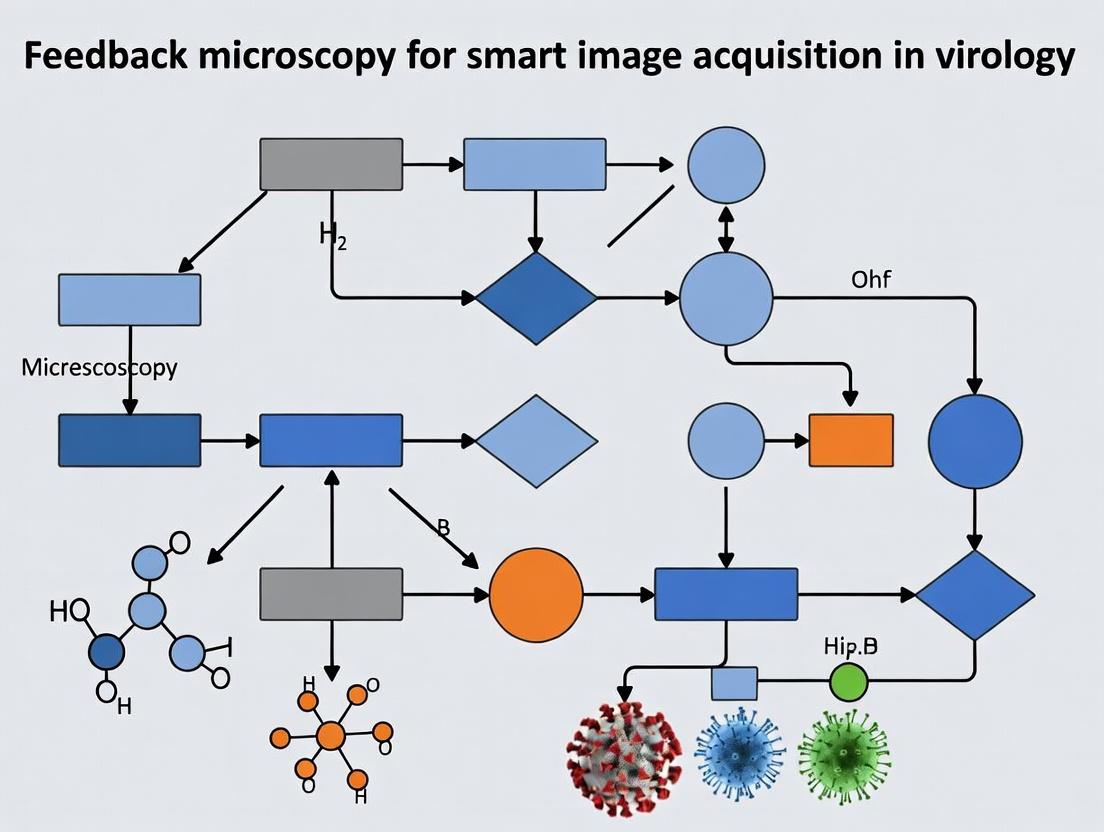
This article explores the transformative role of feedback microscopy in virology research, providing a comprehensive guide for scientists and drug developers.
Revolutionizing Virology: How Feedback Microscopy Enables Smart, Adaptive Image Acquisition
Abstract
This article explores the transformative role of feedback microscopy in virology research, providing a comprehensive guide for scientists and drug developers. We first establish the fundamental principles and necessity of adaptive imaging for capturing dynamic viral processes. Next, we detail core methodological frameworks and specific applications in studying viral entry, replication, and host interactions. The guide then addresses common experimental challenges and optimization strategies for maximizing data quality and instrument performance. Finally, we compare feedback microscopy against traditional static imaging, validating its advantages in throughput, resolution, and biological insight. This synthesis aims to empower researchers to implement smarter imaging workflows that accelerate antiviral discovery and mechanistic understanding.
The 'Why' Behind Smart Imaging: Core Concepts and Critical Need in Modern Virology
Feedback microscopy represents a paradigm shift from traditional, static imaging to a dynamic, intelligent process. In the context of virology research, this approach leverages real-time image analysis to make decisions during the acquisition process itself. This enables the targeting of rare cellular events, such as viral entry, replication complex formation, or egress, with high efficiency and minimal photodamage. By closing the loop between acquisition and analysis, researchers can move from merely observing samples to actively interrogating them based on live data.
Core Principles & Quantitative Comparison
Table 1: Comparison of Traditional vs. Feedback Microscopy in Virology Applications
| Parameter | Traditional Widefield/Confocal | Feedback Microscopy (Adaptive) | Implication for Virology |
|---|---|---|---|
| Acquisition Paradigm | Pre-defined (static) | Event-driven (dynamic) | Captures stochastic viral processes |
| Temporal Resolution | Fixed interval | Adaptive; high during events | Resolves fast steps in viral life cycle |
| Spatial Resolution | Uniform across FOV | Enhanced at regions of interest | Details viral fusion or assembly sites |
| Phototoxicity | Constant, often high | Minimized; illumination only when/where needed | Enables long-term live-cell imaging of infection |
| Data Volume | Very large (all pixels) | Reduced (targeted acquisition) | Efficient storage & processing |
| Key Enabling Tech | Cameras, scanners | Real-time image analysis, ML, fast actuators | Automated, intelligent observation |
Table 2: Quantitative Performance Metrics of Feedback Microscopy Modalities (Current State)
| Modality | Latency (ms) | Max Frame Rate (Hz) | Common Triggers (Virology Examples) | Reference (2023-2024) |
|---|---|---|---|---|
| Event-Driven Scanning | 2-10 | 500 | Local calcium flux (virus entry), pH change | Nature Methods, 2023 |
| Adaptive Illumination | 1-5 | 1000 | Edge detection (cell deformation), FRET change | Cell Reports Methods, 2024 |
| ML-Guided Navigation | 20-100 | 50 | Object detection (viral particle tracking) | BioRxiv, 2024 |
| Focus Stabilization | <1 | 1000 | Z-drift correction | J. Biophotonics, 2023 |
Application Notes & Protocols
Application Note 1: Real-Time Tracking of Viral Entry via pH-Sensitive Feedback
Objective: To dynamically image the acidification of single viral particles during endocytosis using a pH-sensitive biosensor, triggering high-speed acquisition only upon a detectable pH drop.
Research Reagent Solutions:
- Adeno-Associated Virus (AAV) capsid, labeled: Engineered with pH-sensitive fluorophore (e.g., pHluorin) on capsid surface. Function: Reports environmental pH via fluorescence intensity.
- Live-cell imaging medium (no phenol red): Buffered for physiological pH. Function: Maintains cell health and minimizes background fluorescence.
- Cell line expressing relevant receptor (e.g., HEK293-AAVR): Function: Provides a model system with high viral entry efficiency.
- LysoTracker Deep Red: Function: Labels late endosomes/lysosomes for correlative spatial feedback.
- Real-time image analysis software (e.g., µManager, LabVIEW custom script): Function: Executes the feedback loop for trigger detection.
Protocol:
- Sample Preparation: Seed HEK293-AAVR cells in a glass-bottom dish 24h prior. Infect with pHluorin-labeled AAV at high MOI in imaging medium. Incubate for 30 min at 37°C, 5% CO₂. Replace medium to remove unbound virus. Add LysoTracker Deep Red (50 nM) for 10 min, then wash.
- Microscope Setup: Configure a TIRF or spinning-disk confocal microscope with two lasers (488 nm for pHluorin, 640 nm for LysoTracker) and fast EMCCD or sCMOS camera. Set up a software-based feedback loop.
- Feedback Loop Configuration:
- Acquisition: Establish a low-speed, low-laser-power "survey" mode (2 Hz, 1% laser power) for the 488 nm channel.
- Analysis: Define a Region of Interest (ROI) analysis in real-time. The algorithm calculates the mean intensity of small (e.g., 5x5 pixel) blocks across the image.
- Decision: Set a threshold: a >15% decrease in 488 nm intensity within a single block over 3 consecutive frames indicates probable acidification.
- Action: Upon trigger, the system automatically: a) Switches to high-speed acquisition (50 Hz) on both channels, b) Increases 488 nm laser power to 20%, c) Records a 30-second burst, d) Logs the ROI coordinates.
- Execution: Initiate the survey mode. The system will monitor for triggers and automatically capture high-resolution temporal data of entry events. Continue for 60 minutes.
- Post-Processing: Compile all triggered bursts. Align and analyze pHluorin quenching kinetics relative to LysoTracker signal colocalization.
Flowchart: pH-Triggered Feedback for Viral Entry Imaging
Application Note 2: ML-Guided Search for Rare Cell States in Virus-Induced Syncytia
Objective: To automatically locate and intensively image rare, nascent syncytia (multinucleated cells) formed by SARS-CoV-2 spike protein-mediated cell fusion.
Research Reagent Solutions:
- Cell line with optogenetic cell-cell fusion system (e.g., HEK293- Spike/ACE2+T7RNAP): Function: Allows controllable, light-inducible syncytia formation mimicking viral fusion.
- Nucleus stain (SiR-DNA): Function: Provides robust, live-cell label for ML-based nucleus segmentation and counting.
- Cytoplasmic marker (mEmerald cytosolic): Function: Facilitates cell boundary identification.
- Pre-trained convolutional neural network (CNN) model: Function: Integrated into microscope software to identify multi-nucleate cells in real-time from low-mag images.
Protocol:
- Sample Prep & Induction: Seed cells expressing cytosolic mEmerald and stained with SiR-DNA. Induce fusion by pulsing with blue light (e.g., 488 nm, 5 pulses of 100ms) across the well. Incubate for 2-3 hours.
- Microscope & ML Setup: Use a widefield microscope with a motorized stage and a 10x air objective. Integrate a Python-based CNN (e.g., TensorFlow Lite) into the acquisition software (e.g., using Pycro-Manager). The CNN is trained to classify FOVs as "Single Cells" or "Syncytia" based on nucleus count and clustering.
- Feedback Workflow Configuration:
- Scan: Define a grid over the sample well for low-magnification (10x) scanning in both fluorescence channels.
- Analyze: Each acquired FOV is passed to the CNN for real-time inference.
- Decision: The CNN outputs a probability score for "Syncytia Present."
- Action: If probability > 0.95, the system: a) Moves stage to that FOV, b) Switches to a 63x oil objective, c) Initiates a time-lapse acquisition (every 5 min for 4 hours) with z-stacks, d) Flags the position for later review.
- Execution: Launch the automated grid scan. The system will autonomously discover nascent syncytia and collect high-resolution 4D data without user intervention.
- Analysis: Review flagged positions. Quantify syncytia growth rate, organelle redistribution, and cytoskeletal dynamics.
Flowchart: ML-Guided Search for Rare Syncytia
The Scientist's Toolkit: Essential Research Reagents & Materials
Table 3: Key Reagent Solutions for Feedback Microscopy in Virology
| Item | Function in Feedback Microscopy | Example Product/Type |
|---|---|---|
| Environment-Responsive Biosensors | Provide the real-time signal for the feedback loop (trigger). | pHluorin, CALWY-4 (Ca²⁺), H2B-mCherry (chromatin label) |
| Optogenetic Actuators | Allows precise, light-controlled induction of processes to trigger feedback. | Cry2/CIB cell-cell fusion systems, light-inducible gene switches |
| Photostable, Bright Live-Cell Dyes | Enables long-term survey imaging with minimal photobleaching. | SiR-DNA, CellMask Deep Red, MitoTracker Green |
| Fast-Switching Light Sources | Crucial for adaptive illumination; rapidly turns on/off or changes wavelength. | LED arrays, laser combiners with AOTF/Acousto-Optic Tunable Filter |
| Real-Time Analysis Software Platform | The "brain" that executes the image analysis and decision logic. | µManager + Micro-Magellan, LabVIEW, custom Python (with OpenCV) |
| Motorized, High-Speed Stage | Allows rapid navigation to detected events across the sample. | Piezo Z stages, linear encoded XY stages |
| Low-Latency Camera | Captures images for immediate processing with minimal delay. | sCMOS cameras (e.g., Kinetix), back-illuminated EMCCD |
Application Notes
Traditional static imaging methods, such as conventional fluorescence microscopy and electron microscopy of fixed samples, provide only snapshots of viral processes. These methods fail to capture the dynamic, multi-stage life cycles of viruses, which involve rapid entry, intracellular trafficking, replication complex assembly, genome replication, virion assembly, and egress. This limitation obscures critical mechanistic insights and temporal causality, hindering the development of antivirals. Within the thesis framework of Feedback microscopy for smart image acquisition in virology research, these notes outline why dynamic, adaptive imaging is essential and provide protocols for initial correlative experiments that highlight the shortcomings of static approaches.
Quantitative Limitations of Static Imaging
The following table summarizes key viral dynamics with timescales and spatial scales that are inadequately resolved by static methods.
Table 1: Viral Life Cycle Dynamics vs. Static Imaging Resolution
| Viral Process | Typical Timescale | Key Spatial Scale | Static Method Limitation |
|---|---|---|---|
| Viral Entry & Endosomal Trafficking | Seconds to 1-2 minutes | 50-100 nm vesicles | Misses fusion kinetics, endosomal escape timing. |
| Replication Organelle Formation | 5-30 minutes | 50-300 nm structures | Provides no data on assembly sequence or precursor structures. |
| Genome Replication & Translation | Minutes to hours | 10-100 nm (complexes) | Cannot distinguish order of events; snapshot of a continuous process. |
| Virion Assembly & Morphogenesis | 10-60 minutes | 20-150 nm (virus-dependent) | Reveals only fixed intermediates, not the progression. |
| Egress & Cell-to-Cell Spread | Minutes to hours | Cellular to intercellular | Lacks temporal data on motility, vesicle fusion, or cell fusion events. |
Experimental Protocols
Protocol 1: Correlative Live-Cell and Fixed-Cell Imaging to Demonstrate Temporal Artifacts
Objective: To highlight how static imaging of fixed samples can misrepresent the true state of a dynamic viral process by comparing it with live-cell imaging data. Application: Studying the formation of viral replication organelles (e.g., for SARS-CoV-2, Poliovirus).
Materials:
- Cells permissive to virus of interest (e.g., Vero E6, HeLa).
- Virus expressing a fluorescent fusion protein tagging a replication complex protein (e.g., nsP3-GFP for alphaviruses, nsp3-GFP for coronaviruses).
- Live-cell imaging medium.
- Fixative (e.g., 4% paraformaldehyde in PBS).
- Mounting medium with DAPI.
- Confocal or super-resolution microscope with live-cell chamber.
Procedure:
- Cell Seeding: Seed cells onto 35mm glass-bottom imaging dishes 24h prior to infection to reach 70% confluency.
- Infection: Infect cells at a low MOI (~0.1-1) to facilitate tracking of individual infection events.
- Live-Cell Imaging Time Course (Dynamic Reference):
- At 1-hour post-infection (hpi), replace medium with live-cell imaging medium.
- Place dish in a stage-top incubator (37°C, 5% CO₂).
- Acquire images of the same field of view every 2 minutes for 8-12 hours using a 60x or 63x oil objective. Use low laser power to minimize phototoxicity.
- Parallel Static Fixation (Static Sampling):
- In parallel, infect identical dishes.
- At pre-determined time points (e.g., 4, 8, 12 hpi), fix cells immediately with 4% PFA for 15 minutes at room temperature.
- Permeabilize (if needed for antibody staining), stain with DAPI, and mount.
- Image Analysis:
- Analyze the live-cell movie to trace the formation, movement, and dissolution of fluorescent foci (replication organelles). Record the distribution of sizes and intensities over time.
- Analyze the fixed samples. Measure the size, number, and intensity of fluorescent foci at each time point as if no prior live data existed.
- Comparison: Compare the distributions from the fixed time points with the distributions from the corresponding time window in the live-cell data. Note discrepancies, such as the presence in fixed samples of structures that are transient in live imaging, or the absence of rapidly turning over intermediates.
Protocol 2: Kinetic Analysis of Viral Entry Using Synchronized Infection and Rapid Fixation
Objective: To attempt to capture a kinetic entry process using high-temporal-resolution static sampling, illustrating the practical and interpretive challenges. Application: Studying influenza A virus or VSV entry.
Materials:
- Purified virus.
- Cells on 96-well plates.
- Cold binding buffer (PBS with 0.1% BSA, 20mM HEPES, chilled to 4°C).
- Pre-warmed internalization medium (37°C).
- Fixative (ice-cold 4% PFA).
- Antibodies for immunofluorescence: primary against viral capsid, secondary fluorescent antibody.
- Plate-reader compatible fluorescence microscope or high-content imager.
Procedure:
- Synchronized Binding: Chill cells and all reagents to 4°C. Incubate with virus inoculum in cold binding buffer for 1 hour at 4°C to allow synchronous binding without entry. Wash 3x with cold buffer to remove unbound virus.
- Initiate Internalization: Rapidly add pre-warmed (37°C) internalization medium to all wells. Start timer.
- Rapid Fixation Time Series: At precise time points post-temperature shift (e.g., 0, 2, 5, 10, 15, 30, 60 minutes), quickly aspirate medium and immediately add ice-cold fixative. Fix for 15 min at 4°C.
- Staining: Perform standard immunofluorescence staining against the viral capsid to visualize internalized particles.
- Image Acquisition & Quantification: Acquire 20-50 images per well/time point using an automated microscope. Use image analysis software to count the number of fluorescent puncta (virions) per cell.
- Data Interpretation Challenge: Plot mean virions per cell vs. time. The curve may suggest entry kinetics, but it cannot distinguish between endosomal trafficking, uncoating, or degradation without additional markers. Each time point is a population average, obscuring single-cell heterogeneity and the sequence of events within a single entry pathway.
Diagrams
Title: Static vs. Feedback Imaging Workflow
Title: Static Snapshot Misses Dynamic Continuum
The Scientist's Toolkit: Research Reagent Solutions
Table 2: Essential Materials for Dynamic Virology Imaging Studies
| Reagent/Material | Function in Dynamic Studies | Key Consideration |
|---|---|---|
| Fluorescent Protein (FP)-Tagged Viral Constructs (e.g., glycoprotein-FP, polymerase-FP) | Enables live-cell tracking of specific viral proteins/compartments without fixation. | Must validate that FP fusion does not alter viral fitness/replication kinetics. |
| Vital Dyes (e.g., Lipophilic dyes for membranes, RNA-binding dyes like SYTO) | Labels structures (e.g., organelles, genomes) in living cells to correlate with viral events. | Potential cytotoxicity and dye partitioning effects must be controlled. |
| Conditional/Photocontrollable Systems (e.g., Dimerizers, photoswitching proteins) | Allows precise temporal activation of a viral or host process to initiate synchrony. | Requires sophisticated genetics and opto-control integration. |
| Environmental Control Chamber (Stage-top incubator) | Maintains cells at 37°C, 5% CO₂, and humidity during long-term live imaging. | Critical for cell health; rapid temperature equilibration is key for entry studies. |
| Photosensitive Caged Compounds (e.g., Caged ATP, nucleotides) | To release specific molecules upon UV flash, probing their role in viral dynamics. | Requires calibration of uncaging efficiency and potential UV damage. |
| Fast-Acting, Permeable Fixatives (e.g., Rapidly penetrating aldehydes) | For "snapshot" protocols attempting to capture rapid kinetics; used in correlative studies. | Even rapid fixation has a "dead time" (seconds) that blurs ultrafast events. |
| Fiducial Markers for Correlative Microscopy (e.g., 100nm gold beads) | Allows precise correlation between live-cell fluorescence and subsequent static EM images. | Enables bridging of temporal and ultra-structural data but is technically demanding. |
Key Biological Questions in Virology Unanswerable Without Adaptive Acquisition
Application Notes: The Role of Feedback Microscopy in Virology
Traditional microscopy approaches, which rely on fixed acquisition parameters and post-hoc analysis, are insufficient for probing key dynamic and heterogeneous processes in viral infection. Adaptive or "smart" acquisition, driven by real-time image analysis feedback, is now essential to address fundamental virological questions. This protocol outlines the integration of feedback microscopy to investigate previously intractable problems.
Core Unanswerable Questions Requiring Adaptive Acquisition:
- What are the real-time dynamics of viral entry and uncoating in single cells? Fixed time-points miss critical, rapid intermediate states.
- How does cell-to-cell heterogeneity in organelle composition (e.g., endosomal pH, lipid rafts) determine viral fate? Population averages obscure decisive individual cell outcomes.
- What is the spatiotemporal orchestration of host antiviral signaling (e.g., IFN response) upon early detection of viral components? The initiation and propagation of these signals are stochastic and localized.
- How do collective infection waves emerge from single-cell transmission events in a tissue model? Long-term, multi-position imaging requires adaptive targeting of emerging infection fronts.
Quantitative Data: Limitations of Static vs. Advantages of Adaptive Acquisition
| Biological Question | Static Acquisition Limitation | Adaptive Acquisition Advantage (Measurable Outcome) |
|---|---|---|
| Viral Particle Trafficking | Low yield of captured rare events (e.g., endosomal escape). | >95% capture rate of predefined rare events via real-time particle tracking & triggering. |
| Heterogeneous Host Response | Misses correlation between early viral protein level and subsequent cell death. | Enables correlation matrices linking initial signal intensity (e.g., viral GFP) to time-to-death with p < 0.01. |
| Spatiotemporal Signaling | Inefficient photobleaching and sampling of rapid signal propagation. | Enables quantification of signal wave speed (μm/sec) with reduced photodamage by targeting only activated regions. |
| Population Dynamics | Resource waste on imaging empty fields or confluent dead zones. | Increases data relevance by >70% through automated selection of fields with optimal cell density and infection status. |
Experimental Protocol: Feedback Microscopy for Single-Cell Viral Entry Dynamics
Objective: To capture the complete trajectory of single viral particles from initial binding through endosomal escape, triggered by the detection of a binding event.
Materials:
- Cell line susceptible to target virus (e.g., A549, Vero E6).
- Virus labeled with a lipophilic dye (e.g., DiD, DiO) or a fluorescent protein tag (e.g., VSV-G-GFP).
- Live-cell imaging chamber with environmental control (37°C, 5% CO2).
- Confocal or TIRF microscope with programmable API (e.g., Micromanager, Nikon NIS-Elements, Zeiss ZEN).
- Fluorescent cytoplasmic marker (e.g., CellTracker Red) or endosomal marker (e.g., Rab5-GFP).
Procedure:
- Seed cells in a glass-bottom dish and culture to 70-80% confluency.
- Label cells with a cytoplasmic marker according to manufacturer protocol.
- Mount dish on the microscope stage and establish environmental control. Locate a suitable imaging field.
- Initialize Feedback Loop Script:
- Acquire: Capture a low-exposure, high-speed reference image stream (100 ms/frame) in the viral particle channel (e.g., DiD, 640 nm excitation).
- Analyze: In real-time, apply a difference-of-Gaussian filter and threshold to detect new, punctate fluorescent objects appearing in the periphery of cells.
- Decide: If a new object is detected and its intensity is above a set threshold (indicating a binding event), execute the action subroutine.
- Activate: Switch to a high-resolution, dual-channel acquisition mode (virus channel + cytoplasmic/endosomal channel) at the specific XY coordinates. Acquire a z-stack (optional) with a defined temporal frequency (e.g., every 5 seconds) for a duration of 10-15 minutes.
- Inject virus directly into the media while the initial detection loop is running.
- The microscope will autonomously trigger detailed imaging only for fields where binding events occur, compiling a dataset of complete entry trajectories.
- Analysis: Quantify particle velocity, co-localization with endosomal markers over time, and moment of endosomal escape (signal dispersion into cytoplasm).
The Scientist's Toolkit: Research Reagent Solutions
| Item | Function in Adaptive Virology Experiments |
|---|---|
| Photoswitchable/Photoconvertible Viral Capsid Proteins (e.g., Dendra2-VP26) | Enables pulse-chase tracking of viral components; target conversion can be triggered by adaptive software upon particle detection. |
| FUCCI (Fluorescent Ubiquitination-based Cell Cycle Indicator) Cell Line | Allows the microscope to identify and select cells in specific cell cycle phases for infection studies, addressing heterogeneity. |
| Genetically Encoded Biosensors (e.g., GFP-LC3 for autophagy, MxA-GFP for interferon response) | Provides real-time readout of host pathway activity; feedback logic can trigger enhanced imaging upon sensor activation. |
| Conditioned Media from Infected Cells | Used to create gradients in microfluidic devices; adaptive microscopy can track response of cells moving into these gradients. |
| Caged (Photoactivatable) Antiviral Compounds | Enables precise, spatially defined uncaging of drugs triggered by the detection of a specific infection stage in a target cell. |
Visualization: Adaptive Feedback Microscopy Workflow
Adaptive Microscopy Feedback Loop
Visualization: Host Antiviral Signaling Pathway Targeted for Adaptive Acquisition
Antiviral Pathway with Adaptive Trigger
This application note details the core operational components of a real-time feedback loop—Detection, Decision, and Adjustment—within the specific context of feedback microscopy for smart image acquisition in virology. The paradigm shift from static, pre-programmed imaging to dynamic, intelligent acquisition is critical for studying fast, rare, or heterogeneous viral processes, such as particle assembly, host cell entry, or drug-induced perturbation. Implementing a robust feedback loop allows microscopes to autonomously detect events of interest, decide on an optimal response, and adjust acquisition parameters on-the-fly, maximizing information yield from precious samples.
Core Component Definitions and Quantitative Benchmarks
Detection
Detection is the sensing and quantification phase. In feedback microscopy, this involves real-time image analysis to identify a predefined trigger event.
- Key Metrics: Sensitivity (true positive rate), Specificity (true negative rate), Latency (time from image capture to trigger signal), and Computational Throughput (frames processed per second).
- Common Virology Triggers: Change in fluorescence intensity (e.g., viral fusion), emergence of a specific structure (e.g., viral replication organelle), change in cell morphology (e.g., cytopathic effect), or colocalization of probes.
Decision
Decision is the logic layer that interprets the detection output and selects a predefined or calculated course of action. It is governed by an "If-Then" rule set or a more complex algorithm.
- Key Metrics: Decision latency, complexity of rule set, and adaptability (e.g., machine learning-based decision engines).
- Common Virology Decisions: If a virus particle docks, then increase zoom and frame rate. If a drug-induced bleb forms, then switch to TIRF mode and initiate a z-stack.
Adjustment
Adjustment is the physical execution of the decision, involving the control of microscope hardware and software parameters.
- Key Metrics: Transition time (e.g., time to switch objectives), precision (e.g., accuracy of stage repositioning), and stability (minimizing drift post-adjustment).
- Common Virology Adjustments: Changing objective magnification, altering laser power/exposure time, switching imaging modalities (e.g., from widefield to confocal), moving the stage to a new field of view, or initiating a new acquisition protocol.
Table 1: Quantitative Performance Benchmarks for Feedback Loop Components in Live-Cell Virology Imaging
| Component | Key Parameter | Typical Target Performance | Current Technological Limit (Representative) |
|---|---|---|---|
| Detection | Analysis Latency | < 100 ms | 10-50 ms (with GPU-accelerated inference) |
| Throughput | > 30 fps (512x512 px) | > 100 fps (for optimized CNNs) | |
| Sensitivity/Specificity | >95% each | >99% (for well-defined features) | |
| Decision | Rule Evaluation Time | < 10 ms | Negligible (<1 ms for simple rules) |
| Adjustment | Stage Repositioning | < 500 ms (with 50 nm accuracy) | ~100 ms (for piezo stages) |
| Z-Stack Initiation | < 50 ms | ~20 ms | |
| Modality Switch (e.g., to TIRF) | < 2 s | ~500 ms (with pre-aligned systems) | |
| Total Loop Time | Detection-to-Adjustment | < 1 s | ~200-500 ms (for optimized systems) |
Experimental Protocols for Implementation
Protocol 3.1: Implementing a Feedback Loop for Tracking Viral Particle Entry
Aim: To automatically detect a virus particle binding to a host cell membrane and switch to high-speed, high-resolution imaging to capture subsequent entry and uncoating dynamics.
Materials:
- Live-cell imaging chamber with infected cells (e.g., expressing fluorescently tagged viral glycoproteins).
- Inverted microscope with high-NA objective, sCMOS camera, programmable stage, and TIRF/confocal capability.
- Software with API for custom scripting (e.g., Micromanager, Microscope automation suites).
- Real-time image analysis computer (with GPU recommended).
Procedure:
- Initialization: Define a large field of view (e.g., 10x objective). Set initial acquisition to low-exposure, widefield fluorescence at 2 Hz to minimize photodamage.
- Detection Setup:
- Load a pre-trained convolutional neural network (CNN) model for particle detection into the real-time analysis stream.
- Define the trigger: "If the CNN detects >3 connected pixels with intensity >10x local background and a size of 0.2-0.5 µm², then flag as a potential virus particle."
- Decision Logic:
- Program the decision layer: "If a particle is detected in the same sub-region for 3 consecutive frames, then classify as a 'docking event' and execute Adjustment Protocol A."
- Adjustment Execution (Protocol A):
- a. Halt the widefield scan.
- b. Command the stage to move the detected particle coordinates to the center of the field.
- c. Switch to a 60x or 100x oil-immersion objective.
- d. Switch illumination to HiLo or TIRF mode for better optical sectioning.
- e. Increase camera frame rate to 10 Hz.
- f. Begin a new high-resolution acquisition for 2 minutes.
- Validation: Post-experiment, manually curate detected events to calculate the false positive and false negative rates of the loop, adjusting detection thresholds as needed.
Protocol 3.2: Adaptive Imaging for Drug Response in Viral Infection
Aim: To monitor a population of infected cells and trigger detailed 3D imaging upon detection of a drug-induced phenotypic change.
Materials:
- Cell culture infected with a reporter virus (e.g., expressing fluorescent viral protein).
- Microscope with environmental control, fast z-piezo, and multiplexing capabilities.
- Automated fluidics system for drug addition.
Procedure:
- Initialization: Under a 20x air objective, establish a grid of 50 positions containing infected cells. Acquire a brightfield and a fluorescence channel every 5 minutes.
- Detection Setup:
- Perform real-time cell segmentation on the brightfield channel.
- Measure mean fluorescence intensity (MFI) of the viral reporter within each segmented cell over time.
- Define the trigger: "If the MFI for a cell decreases by >40% between two consecutive time points or if cell circularity changes by >25%, then flag as a 'responding cell.'"
- Decision Logic:
- Program the decision: "If >2 'responding cells' are detected in a given field of view, then label this field as 'active' and execute Adjustment Protocol B."
- Adjustment Execution (Protocol B):
- a. Immediately acquire a high-resolution 3D z-stack (with 0.5 µm steps) of the 'active' field using a 63x objective.
- b. Switch to a second fluorescence channel to image a host cell organelle marker (e.g., mitochondria).
- c. Return to the surveillance grid, but increase the acquisition frequency for the 'active' field to every 2 minutes for the next 30 minutes.
- Analysis: Correlate the timing of the detected phenotypic change with subsequent ultrastructural changes revealed in the triggered z-stacks.
Diagrams of Feedback Loops and Workflows
Title: Core Feedback Loop in Smart Microscopy
Title: Viral Particle Entry Trigger Protocol
The Scientist's Toolkit: Key Reagents & Materials
Table 2: Essential Research Reagent Solutions for Feedback Microscopy in Virology
| Item | Function in the Feedback Loop | Example/Notes |
|---|---|---|
| Live-Cell Fluorescent Dyes | Enable detection phase. Tag viral components (lipids, proteins) or host cell structures. | HaloTag/SNAP-tag ligands for specific viral protein labeling. Lipophilic dyes (DiD, DiO) for viral membrane staining. |
| Photo-Stable Fluorophores | Sustain signal through multiple adjustment cycles, minimizing photobleaching. | Janelia Fluor (JF) dyes, Sirius dyes, or mNeonGreen for superior brightness and stability. |
| Environmental Control Units | Maintain cell viability during long, adaptive experiments. Essential for reliable detection. | Live-cell incubation chambers with precise temperature, CO₂, and humidity control. |
| Genetically Encoded Biosensors | Detect biochemical changes (e.g., pH, Ca²⁺) as triggers for decision layer. | pHluorins on viral glycoproteins to detect fusion. GCaMP to sense host cell calcium flux during infection. |
| Microfluidics/Perfusion Systems | Enable adjustment of the chemical environment as part of the feedback loop. | Automated valve systems to add drugs, neutralizing antibodies, or media changes in response to detected events. |
| High-NA, Fast-Autofocus Objectives | Critical for precise adjustment. Enable rapid switching between survey and high-res modes. | Plan-Apochromat 63x/100x oil objectives with correction collars. Piezo-driven objective nanopositioners. |
| sCMOS/EMCCD Cameras | Provide high-speed, low-noise data for the detection phase. | Cameras with high quantum yield and rapid readout (>100 fps) to minimize loop latency. |
| Real-Time Analysis Software | The computational engine for detection and decision. | Python with TensorFlow Lite or PyTorch. GPU acceleration is highly recommended. |
The Intersection of Microscopy, Automation, and AI in Creating 'Smart' Instruments
This document details application notes and protocols for implementing automated, AI-driven microscopy within the context of feedback microscopy. The core thesis posits that integrating real-time image analysis (AI) with automated microscope control creates a closed-loop "smart" system. This system enables adaptive, hypothesis-driven image acquisition, which is particularly transformative for dynamic virology studies, such as tracking viral entry, replication, and host-cell interactions with minimal phototoxicity and maximal information yield.
Application Notes: Key Implementations and Quantitative Data
Application Note: AI-Driven Adaptive Sampling for Rare Viral Event Capture
Objective: To autonomously identify and acquire high-resolution images of rare cellular events (e.g., early viral fusion pores) without exhaustive whole-well scanning. Implementation: A convolutional neural network (CNN) analyzes low-magnification, wide-field scans in real-time. Regions of interest (ROIs) predicted to contain "event-like" features trigger the automated stage and focus to acquire high-resolution z-stacks using confocal or TIRF microscopy. Quantitative Performance Data:
Table 1: Performance Metrics for AI-Driven Adaptive Sampling
| Metric | Traditional Full-Well Scan | AI-Adaptive Scan | Improvement Factor |
|---|---|---|---|
| Average Acquisition Time per Well (2560x2560 px) | 45 minutes | 11 minutes | ~4.1x faster |
| Data Volume Generated | 120 GB | 28 GB | ~4.3x reduction |
| Rare Event Detection Rate (Recall) | 98%* | 96% | Comparable |
| Photobleaching (Fluorescence Loss) | 35% | 12% | ~3x reduction |
*Assumes exhaustive scanning; time/data cost prohibitive at scale.
Application Note: Real-Time Focus Maintenance for Long-Term Viral Trafficking Studies
Objective: Maintain precise focus over >24-hour live-cell imaging experiments despite thermal drift and cellular movement. Implementation: A recurrent neural network (RNN) analyzes the live image stream. It is trained to predict focus drift from image features (e.g., contrast, edge sharpness) and provides continuous feedback to the piezoelectric nano-focus drive. Quantitative Performance Data:
Table 2: Metrics for AI-Based Focus Maintenance
| Metric | Hardware Autofocus (Laser-based) | AI Software Feedback | Advantage |
|---|---|---|---|
| Focus Check Interval | Every 5 minutes | Continuous (Frame-by-Frame) | True real-time |
| Average Z-Drift over 24h | ± 0.8 µm | ± 0.2 µm | 4x more stable |
| Phototoxicity from Focus Methods | High (Laser exposure) | Negligible (Analysis only) | Major cell health benefit |
| Computational Latency | N/A | < 50 ms | Compatible with high-speed imaging |
Detailed Experimental Protocols
Protocol: Feedback Microscopy for SARS-CoV-2 Spike-Mediated Membrane Fusion
Aim: To capture the precise moment of viral-host membrane fusion using a closed-loop, AI-triggered acquisition system.
I. Materials and Cell Preparation
- Cells: HEK-293T cells expressing ACE2 receptor.
- Virus: SARS-CoV-2 Spike-pseudotyped lentivirus with a core labeled with GFP.
- Dye: Membrane dye (e.g., R18 or DiD) loaded into viral particles.
- Microscope: Automated inverted microscope with high-speed sCMOS camera, piezo stage, TIRF/confocal capability, and API for external control.
- Software: Python environment with libraries:
micro-manager(for control),PyTorch/TensorFlow(for AI model),OpenCV.
II. Workflow
- Seed cells in a glass-bottom 96-well plate 24 hours prior.
- Infect cells with fluorescently labeled pseudovirus at low MOI (0.1).
- Mount plate on pre-warmed (37°C, 5% CO2) stage.
- Initialization Scan: Perform a low-resolution (10x), low-exposure scan of all wells to identify infected (GFP-positive) cells.
- Closed-Loop Acquisition: a. For each infected cell, engage the 60x or 100x TIRF objective. b. Begin a continuous, low-exposure live stream (100 ms/frame) in both GFP (virus) and R18 (membrane) channels. c. The pre-trained AI model (a lightweight CNN) analyzes each frame in real-time for a signature of fusion: co-localization loss of GFP and membrane dye signal dilation. d. Upon detection probability exceeding a set threshold (e.g., 85%), the feedback loop triggers two actions: i. Hardware Feedback: Immediately switch to a high-speed acquisition mode (50 ms/frame) for 60 seconds. ii. Stimulus Feedback (Optional): If integrated, activate a targeted laser for photoactivation or uncaging of a probe in the immediate vicinity. e. After the high-speed burst, the system logs coordinates, returns to low-exposure monitoring, or moves to the next cell.
III. AI Model Training for Fusion Detection
- Training Data: Manually annotated image pairs (before/after fusion) from historical experiments.
- Architecture: A MobileNetV2 CNN for efficiency, trained to output a probability score for "imminent fusion" or "fusion event."
- Input: 128x128 pixel crops from two channels over 3 consecutive frames.
- Output: Scalar probability (0 to 1).
Protocol: Automated Morphological Profiling of Antiviral Drug Effects
Aim: To use unsupervised AI (autoencoders) to discover novel phenotypic clusters in virus-infected cells treated with compound libraries and guide subsequent targeted imaging.
I. Materials
- Cells & Virus: A549 cells infected with Influenza A virus (GFP-tagged).
- Compound Library: 384-well plate with small molecule antivirals.
- Stains: Hoechst (nucleus), CellMask Deep Red (cytoskeleton/morphology).
- Microscope: High-content screening microscope with automated liquid handling integration.
II. Workflow
- Seed, infect, and treat cells in 384-well plates using liquid handling robots.
- Primary, Unbiased Acquisition: At 12h post-infection, perform automated widefield imaging (4 sites/well) in 3 channels (DAPI, GFP, Far Red) at 20x.
- Real-Time Dimensionality Reduction & Clustering: a. Images are processed on-the-fly: segmentation (Cellpose algorithm) and feature extraction (500+ morphological features). b. An online variational autoencoder (VAE) reduces features to a 10-dimensional latent space. c. A clustering algorithm (HDBSCAN) identifies distinct phenotypic clusters in this latent space.
- Feedback for Secondary Imaging: a. The system identifies wells containing rare or unique phenotypic clusters. b. It commands the microscope to return to those specific wells and acquire high-resolution confocal z-stacks (63x oil) at the coordinates of the unusual cells. c. It can also trigger additional staining protocols (via liquid handler) for the same well for later time-point analysis.
Visualization: Diagrams and Workflows
AI Feedback Loop for Viral Fusion Imaging
Workflow for Phenotypic Profiling & Feedback
The Scientist's Toolkit: Research Reagent & Material Solutions
Table 3: Essential Materials for Smart Microscopy in Virology
| Item | Function & Relevance to Smart Workflows |
|---|---|
| Glass-Bottom Multi-Well Plates (e.g., µ-Slide, CellCarrier) | Essential for high-resolution imaging. Optical quality is critical for AI-based analysis accuracy. Plates compatible with automation are required. |
| Photoactivatable/Photoconvertible Probes (e.g., PA-GFP, Dronpa) | Enable "stimulus feedback." AI can trigger their activation at precise spatial-temporal coordinates to probe molecular dynamics. |
| Genetically Encoded Biosensors (e.g., for Ca2+, pH, GTPases) | Provide functional readouts. AI can be trained to detect subtle changes in biosensor signals, triggering further acquisition. |
| Viral Particles with Dual/Quadruple Labeling (Core + Envelope) | Allow visualization of multiple viral components (e.g., capsid, envelope, genome). Critical for training AI models to recognize complex events like uncoating. |
| Live-Cell Compatible Stains (e.g., SiR-DNA, CellMask) | Low-toxicity dyes for long-term tracking of cellular structures. Enable morphological profiling over time without fixation. |
| API-Accessible Microscope Control Software (e.g., µManager, ONI) | The software bridge that allows Python scripts (hosting the AI) to send real-time commands to stage, focus, camera, and lasers. |
| High-Speed sCMOS Camera | Provides the fast frame rates needed for real-time analysis and triggered event capture without motion blur. |
| GPU-Accelerated Workstation | Local GPU (e.g., NVIDIA RTX) is vital for running inference of neural networks with sub-100ms latency to close the feedback loop. |
Implementing Smart Acquisition: Practical Frameworks and Viral Application Case Studies
Application Notes
Event-driven microscopy represents a paradigm shift in virology research, moving from fixed-interval time-lapse imaging to intelligent, feedback-controlled acquisition. This approach is framed within the broader thesis of feedback microscopy for smart image acquisition, where the microscope becomes an active participant in the experiment. By triggering image capture based on specific biological events—such as viral particle entry or a predefined cellular morphology change—researchers can capture high-temporal-resolution data of transient, critical processes while minimizing photodamage and data storage burdens.
The core principle involves defining a "trigger event" using a real-time image analysis algorithm. For viral entry, this is often the detection of a rapid increase in fluorescence from a labeled viral component within a cytoplasmic region of interest (ROI). For morphology changes, parameters like cell edge retraction, increased membrane blebbing, or sudden changes in phase contrast texture can be used. Upon detection, the system executes a predefined acquisition protocol, such as a high-speed z-stack or a switch to super-resolution mode.
This method is particularly powerful for studying the early, stochastic events of infection (e.g., capsid uncoating, initial viral gene expression) and for linking specific cellular states (e.g., pre-apoptotic rounding) to subsequent viral replication dynamics. In drug development, it enables efficient screening for compounds that delay or prevent the trigger event itself.
Data Presentation
Table 1: Comparison of Event Triggers for Viral Imaging
| Trigger Event | Biosensor/Probe Used | Typical Latency (Trigger to Acquisition) | Key Measurable Outcome | Primary Application |
|---|---|---|---|---|
| Viral Capsid Entry | pH-sensitive fluorophore (e.g., pHrodo), GFP-labeled capsid | 50-500 ms | Kinetics of endosomal acidification, capsid uncoating | Study of entry pathways & inhibitors |
| Viral Genome Entry | Fluorescent nucleotide analogs (e.g., BrdU), RNA-specific dyes (SYTO) | 2-10 s | Timing of nuclear import, genome replication onset | Analysis of uncoating & replication |
| Viral Glycoprotein Fusion | Dual-label fluorescence dequenching (R18, DiD) | 100-300 ms | Fusion pore formation kinetics | Mechanism of action of fusion inhibitors |
| Early Viral Protein Expression | GFP under viral promoter, Immunofluorescence (fixed) | 5-30 min (depends on expression) | Time of initial translation | Promoter activity, drug efficacy |
| Cellular Apoptosis Onset | Annexin V, Caspase-3 FRET reporter | 1-5 min | Correlation of cell death with viral yield | Viral pathogenesis & cytopathic effect |
Table 2: Quantitative Outcomes from Event-Driven vs. Conventional Time-Lapse
| Parameter | Conventional Time-Lapse (Fixed Interval) | Event-Driven Imaging (Triggered) | Improvement Factor |
|---|---|---|---|
| Total Images Acquired per 24h experiment | 14,400 (10 sec interval) | ~500 (variable) | ~29x reduction |
| Photobleaching (Fluor. loss over 1h) | 45-60% | 10-15% | ~4x reduction |
| Probability of Capturing Initial Viral Fusion Event (n=100) | 31% | 99% | ~3.2x increase |
| Data Storage per cell (24h) | ~25 GB | ~0.9 GB | ~28x reduction |
| Temporal Resolution at Critical Event | Fixed (e.g., 10 s) | Adaptive (sub-second) | >10x increase at event |
Experimental Protocols
Protocol 1: Triggering on pH-Dependent Viral Entry (e.g., Influenza A Virus)
Objective: To capture high-speed image sequences of single influenza virus particles during endosomal acidification and fusion.
Key Research Reagent Solutions:
- Viruses: Influenza A virus (IAV) labeled with pH-sensitive dye pHrodo Red STP Ester conjugated to viral envelope proteins.
- Cells: MDCK II cells stably expressing GFP-tagged microtubule-associated protein (MAP4-GFP) to visualize cytoplasm.
- Imaging Medium: FluoroBrite DMEM supplemented with 10 mM HEPES, 2% FBS, and 1x GlutaMAX.
- Software: Microscope automation software with API access (e.g., µManager, Nikon NIS-Elements JOBS) and custom Python/ImageJ script for real-time analysis.
Detailed Methodology:
- Cell Preparation: Plate MDCK II MAP4-GFP cells on a 35mm glass-bottom dish 24-48 hours prior to achieve 70% confluency.
- Virus Addition: Dilute pHrodo-labeled IAV in cold imaging medium. Replace cell culture medium with cold virus-containing medium. Incubate on ice for 1 hour to synchronize attachment.
- Microscope Setup: Use a confocal or TIRF microscope with environmental control (37°C, 5% CO2). Configure two channels:
- Channel 1 (Event Trigger): pHrodo (Ex/Em: 560/585 nm). Set low laser power (0.5-2%) for continuous monitoring.
- Channel 2 (Acquisition): GFP (Ex/Em: 488/525 nm). Set laser power higher for high-quality capture.
- Define Trigger Logic:
- Draw a cytoplasmic ROI excluding the nucleus.
- Real-time script calculates the mean intensity in the pHrodo channel within this ROI for each sequential frame.
- Trigger Condition: A sudden increase in mean pHrodo fluorescence >10% over baseline within 3 consecutive frames, indicating acidification.
- Define Action Protocol: Upon trigger detection, the system automatically:
- Switches to the GFP acquisition channel.
- Executes a rapid z-stack (e.g., 5 slices, 0.5 µm step) every 500 ms for 2 minutes.
- Logs the event time and pre-trigger buffer images.
- Initiate Experiment: Wash cells with warm imaging medium to initiate synchronous entry. Start the continuous monitoring and triggered acquisition routine.
- Analysis: Post-hoc, track the viral particle in the GFP channel to visualize microtubule transport post-fusion.
Protocol 2: Triggering on Virus-Induced Cell Rounding (e.g., HSV-1 Infection)
Objective: To initiate detailed imaging of herpes simplex virus type 1 (HSV-1) replication compartment formation specifically in cells undergoing cytopathic rounding.
Key Research Reagent Solutions:
- Viruses: HSV-1 expressing fluorescent fusion protein for viral replication compartments (e.g., ICP4-mCherry).
- Cells: HeLa cells.
- Stain: Hoechst 33342 for nucleus labeling.
- Imaging Medium: As in Protocol 1.
- Software: Microscope automation software with machine learning module or edge-detection capability.
Detailed Methodology:
- Cell Preparation: Plate HeLa cells to achieve 50% confluency. Infect with HSV-1 ICP4-mCherry at an MOI of 0.5-1.0. Incubate for 4-6 hours post-infection.
- Microscope Setup: Use a widefield or confocal microscope with phase contrast and fluorescence. Configure channels:
- Channel 1 (Event Trigger): Phase contrast.
- Channel 2 (Acquisition): mCherry (replication compartments) and Hoechst (nuclei).
- Define Trigger Logic:
- Real-time script performs segmentation on the phase contrast image to identify individual cells and calculate their circularity (4π*Area/Perimeter^2).
- Trigger Condition: The circularity of a segmented cell increases from a typical value (~0.5) to a threshold (>0.8) within a 15-minute monitoring window, indicating rounding.
- Define Action Protocol: Upon trigger detection for a specific cell, the system automatically:
- Centers the XY stage on the triggered cell.
- Acquires a high-resolution, 3-channel (Phase, mCherry, Hoechst) z-stack every 10 minutes for 12 hours.
- Returns to low-power phase contrast monitoring of other cells.
- Initiate Experiment: Place the infected culture on the stage and start the monitoring routine.
- Analysis: Correlate the time of rounding with the appearance and growth of ICP4-mCherry puncta (replication compartments).
Mandatory Visualization
Diagram 1: Viral Acidification Trigger Workflow
Diagram 2: Cell Rounding Trigger Workflow
The Scientist's Toolkit
Table 3: Essential Research Reagents & Materials for Event-Driven Virology Imaging
| Item | Function in Event-Driven Imaging | Example Product/Catalog |
|---|---|---|
| pH-Sensitive Dyes | Conjugated to viruses to report endosomal acidification, the key trigger for many enveloped viruses. | pHrodo Red STP Ester (Thermo Fisher, P36600); pHAb dyes (Sirigen). |
| Photo-Stable Fluorescent Proteins | Tags for viral proteins or cellular structures; must withstand repeated imaging during monitoring. | mNeonGreen, mScarlet, Janelia Fluor dyes (e.g., JF549). |
| Environment-Controlled Live-Cell Imaging Chambers | Maintain physiology for long-term monitoring. Essential for capturing delayed events. | Tokai Hit STX Stage Top Incubator; Ibidi µ-Slide. |
| High-Sensitivity sCMOS Cameras | Detect weak fluorescence signals during low-power monitoring with high temporal fidelity. | Hamamatsu Orca-Fusion BT; Teledyne Photometrics Prime BSI. |
| Real-Time Image Analysis Software | The "brain" of the operation. Performs calculations (intensity, morphology) to identify triggers. | Custom Python/Matlab; µManager plugins; Nikon NIS-Elements AI; CellProfiler Analyst. |
| Microscope Automation API | Allows external software to control stage, lasers, and cameras based on trigger logic. | Micro-Manager (Pycro-Manager), Nikon JOBS, MetaMorph SDK, Microscope-agnostic: UC2/openUC2. |
| Virus Labeling Kits | For efficient, specific tagging of viral envelopes or capsids with fluorescent dyes. | Alexa Fluor Antibody Labeling Kits (for antibody-labeled virus); SiteClick labeling kits. |
Within the paradigm of Feedback Microscopy for Smart Image Acquisition in Virology Research, Targeted Re-imaging addresses a critical bottleneck: the inefficient use of imaging resources on non-productive fields of view. Traditional time-lapse microscopy often captures vast areas where rare but critical events, such as the initial stochastic phase of viral infection or the emergence of drug-resistant phenotypes, are missed or diluted in irrelevant data.
This application note details a closed-loop, automated workflow. The system uses primary, low-resolution/high-speed scans to identify candidate "events of interest" (e.g., a single cell displaying a specific fluorescence marker for viral entry). It then triggers targeted, high-resolution, multi-modal imaging exclusively at those coordinates over subsequent time points. This approach maximizes data relevance, minimizes photodamage, and conserves storage and computational resources, enabling statistically robust analysis of rare virological phenomena.
Table 1: Comparative Efficiency of Targeted vs. Conventional Time-Lapse Imaging
| Parameter | Conventional Widefield | Targeted Re-imaging | Improvement Factor |
|---|---|---|---|
| Data Volume per Experiment | 500 - 1000 GB | 50 - 150 GB | 10x reduction |
| Photobleaching (Overall FOV) | High | Low (Targeted Only) | ~5x reduction |
| Probability of Capturing Rare Event (<0.1% cells) | Low (<20%) | High (>90%)* | >4.5x increase |
| Usable Imaging Duration (Live Cells) | 24 - 48 hours | 72 - 96 hours | ~2-3x increase |
| Computational Pre-processing Time | 8-12 hours | 1-2 hours | ~6x reduction |
*Assumes effective primary scan detection algorithm.
Table 2: Typical Event Detection Parameters for Lentiviral Infection
| Detection Parameter | Setting/Range | Purpose/Notes |
|---|---|---|
| Primary Scan Interval | 15 - 30 minutes | Balances event capture vs. photostress |
| Detection Marker | GFP (Integrase Reporter), pH-sensitive FP (Entry) | Early, specific signal is critical |
| Threshold (Z-score) | 3.5 - 5.0 | Minimizes false positives from autofluorescence |
| Minimum Event Area | 10 - 30 µm² | Excludes small debris |
| Re-imaging Frequency | 2 - 5 minutes | High-temporal resolution tracking post-trigger |
| Re-imaging Modalities | Confocal (Z-stack), TIRF, FRET | Detailed spatial and molecular data. |
Experimental Protocols
Protocol 1: Primary Scan & Event Detection for Viral Entry
Objective: To automatically identify single cells undergoing initial lentiviral vector fusion using a cytosolic, pH-sensitive fluorescent protein (FP) reporter.
Materials: See "Scientist's Toolkit" (Section 5). Procedure:
- Cell Preparation: Seed Hela or HEK293T cells in a 384-well glass-bottom plate at low density (1000 cells/well). 24h later, transduce with lentiviral vectors encoding a pH-sensitive GFP (e.g., pHluorin) fused to the viral core or a cytoplasmic marker.
- Microscope Setup: Use an automated inverted microscope with environmental control (37°C, 5% CO2). Configure a 10x air objective for primary scans.
- Define Scan Grid: Map the well(s) to create a low-resolution imaging grid. Set the autofocus protocol for each position.
- Configure Detection Channel: Acquire images in the GFP channel (ex: 488 nm, em: 510/20 nm) with exposure time to avoid saturation (e.g., 50-100 ms).
- Set Feedback Loop Parameters:
- Interval: Acquire a full grid scan every 20 minutes.
- Algorithm: Apply a background subtraction (rolling ball) and a 2-pixel Gaussian blur to each new image.
- Segmentation: Use a watershed-based cell segmentation on a reference brightfield/DIC image.
- Measurement: Calculate the mean GFP intensity within each segmented cell region.
- Thresholding: Flag any cell where the intensity increases by a Z-score > 4.0 compared to its baseline (first 3 time points) and the population mean.
- Output: Store the precise stage coordinates (X, Y, Z) and timestamp of each flagged event.
- Execution: Run the primary scan loop for the desired duration (e.g., 6-12 hours post-transduction).
Protocol 2: Targeted Multi-Modal Re-imaging of Infection Events
Objective: To perform high-resolution, longitudinal tracking of confirmed infection events.
Procedure:
- Trigger Configuration: Link the detection software output (from Protocol 1) to the microscope's scheduling software. Set a rule: upon receiving coordinates of a flagged event, interrupt the primary scan cycle at the next interval.
- Re-imaging Setup: Pre-configure an imaging "recipe" at the event location:
- Objective: Switch to a 63x oil-immersion or 60x water-immersion objective.
- High-Resolution Z-stack: Acquire a confocal Z-stack (e.g., 1 µm steps, 15 slices) in the GFP channel to capture 3D cell morphology.
- Multi-Channel Acquisition: Acquire images of additional markers: a far-red nuclear stain (e.g., SiR-DNA, ex:640 nm) and a late endosome/lysosome marker (e.g., LAMP1-mCherry, ex:560 nm).
- Advanced Modality (Optional): If equipped, perform a brief FRAP (Fluorescence Recovery After Photobleaching) on the GFP signal at the viral fusion site to measure capsid uncoating kinetics.
- Scheduling: For each triggered event, schedule this high-resolution recipe to repeat at a higher frequency (e.g., every 5 minutes) for a minimum of 2 hours.
- Return to Survey: After completing the targeted sequence, the system automatically returns to the primary low-resolution scan grid to continue searching for new events.
- Data Management: Save all targeted imaging data in a structured directory, linked to the primary scan metadata via a unique Event ID.
Visualizations
Title: Targeted Re-imaging Feedback Loop Workflow
Title: Temporal Sampling Strategy: Sparse Survey to Dense Tracking
The Scientist's Toolkit
Table 3: Essential Research Reagents & Materials
| Item | Function in Targeted Re-imaging | Example/Specification |
|---|---|---|
| pH-Sensitive Fluorescent Protein (pHluorin) | Reports viral-endosome fusion via fluorescence increase upon exposure to neutral cytosolic pH. | Lentivector encoding Gag-pHluorin or cytoplasmic pH-GFP. |
| Live-Cell Nuclear Stain | Allows cell segmentation and tracking of nuclear events (e.g., viral DNA import). | SiR-DNA (650/670 nm), low cytotoxicity, far-red channel. |
| Organelle-Specific Marker | Contextualizes viral location (e.g., endosomes, lysosomes, Golgi). | LAMP1-RFP (lysosomes), EEA1-mCherry (early endosomes). |
| Glass-Bottom Multi-Well Plates | Provides optimal optical clarity for high-resolution imaging over days. | #1.5 cover glass, 384-well, μClear or CellVis plates. |
| Environmental Control Chamber | Maintains cell viability for long-term experiments (>24h). | In-line heater, humidified CO2 chamber for microscope stage. |
| Feedback Microscopy Software | Enables image analysis-based hardware control for the closed loop. | MetaMorph, µManager with Python plugins, or proprietary OEM software. |
| High-NA Oil/Water Immersion Objective | Essential for high-resolution, detailed re-imaging of events. | 60x/1.4 NA Plan-Apo or 63x/1.2 NA Water C-Apochromat. |
| Sensitive sCMOS Camera | Captures high-speed, low-light primary scans and high-quality re-images. | Back-illuminated sCMOS, >80% QE at relevant wavelengths. |
Within the broader thesis on Feedback microscopy for smart image acquisition in virology research, adaptive resolution and sampling emerge as critical computational imaging paradigms. These techniques enable dynamic adjustment of spatial resolution (pixel size), temporal sampling (frame rate), and illumination dose during live-cell imaging of viral infection processes. The core principle is the real-time evaluation of a Feedback Loop: Image Quality Metrics (e.g., Signal-to-Noise Ratio - SNR) or Speed Requirements are analyzed, triggering automated adjustments to acquisition parameters. This balances the phototoxicity, photobleaching, and data burden against the need for high-fidelity, quantitative data on viral entry, replication, and egress.
Core Principles & Quantitative Frameworks
Adaptive strategies are governed by defined thresholds and cost functions. The system must decide when and how to adapt parameters based on predefined experimental goals.
Table 1: Key Parameters for Adaptive Imaging in Virology
| Parameter | Typical Range (Virology) | Effect on SNR | Effect on Speed/Phototoxicity | Adaptive Trigger |
|---|---|---|---|---|
| Exposure Time | 1-500 ms | Increases linearly with √(time) | Decreases frame rate; Increases dose | SNR per pixel < threshold |
| Illumination Intensity | 0.1-10% laser power | Increases linearly | Increases phototoxicity & bleaching | SNR per pixel < threshold |
| Spatial Binning | 1x1, 2x2, 4x4 | Decreases by √(bin area); increases signal per pixel | Increases frame rate; Reduces resolution | High speed needed for tracking |
| Digital Zoom / ROI | 1x - 20x | Higher zoom reduces signal per pixel | Enables faster sub-frame scanning | Localize to infected cell ROI |
| Temporal Sampling Rate | 0.1 - 100 Hz | Lower rate allows longer exposure per frame | Fundamental speed setting | Viral particle tracking needs |
Table 2: Example SNR Thresholds for Adaptive Decisions
| Imaging Mode | Target Structure (Virology) | Recommended Minimum SNR | Suggested Adaptation if SNR < Min |
|---|---|---|---|
| Widefield Fluorescence | Viral glycoproteins (surface) | 5 | Increase exposure time by 50% |
| Confocal Live-Cell | Replication organelles (dsRNA) | 10 | Increase laser power (max +20%) or bin pixels (2x2) |
| TIRF | Viral budding sites (membrane) | 15 | Switch to shallower angle or wider ROI |
| High-Speed Tracking | Single viral particle motility | 3 | Reduce zoom or increase binning |
Experimental Protocols
Protocol 1: Adaptive SNR-Based Resolution for Imaging Viral Assembly
Objective: To maintain sufficient SNR for quantifying assembly of influenza virions at the plasma membrane while minimizing photodamage. Materials: See "The Scientist's Toolkit" below. Workflow:
- Initialization: Acquire a pilot image at low laser power (e.g., 2%), 100 ms exposure, 1x1 binning in TIRF mode.
- SNR Calculation: Compute SNR for a defined cytoplasmic background region (mean signal / std. deviation of background).
- Threshold Check: If SNR < 10, proceed to adaptive step.
- Adaptive Loop: a. Increase exposure time incrementally by 20 ms up to a maximum of 300 ms. b. If SNR remains <10 at max exposure, increase laser power in 0.5% increments up to a pre-set safety limit (e.g., 5%). c. If SNR target is still not met, apply 2x2 spatial binning.
- Acquisition: Lock parameters and initiate time-lapse acquisition (1 frame/min for 60 min).
- Feedback: After each time point, re-check SNR. If photobleaching causes SNR to drop below 8, allow a single step-up in exposure or power.
Protocol 2: Speed-Priority Sampling for Viral Particle Tracking
Objective: Dynamically adjust frame rate and resolution to track fast-moving HSV-1 capsids in axons. Materials: See "The Scientist's Toolkit" below. Workflow:
- Initialization: Start with high-speed mode: 512x512 ROI, 4x4 binning, 50 ms exposure, 20 fps.
- Particle Detection: Use real-time particle detection algorithm (e.g., wavelet-based) on the acquired stream.
- Speed Assessment: Calculate mean displacement of all tracked particles between frames.
- Adaptive Decision: a. If mean displacement > 5 pixels/frame (risk of losing tracks), increase frame rate to 50 fps by reducing ROI to 256x256. b. If mean displacement < 2 pixels/frame and SNR > 5, decrease frame rate to 10 fps and reduce binning to 2x2 to gain resolution.
- Continuous Feedback: Re-assess displacement and SNR every 10 seconds. The system oscillates between "high-speed, low-res" and "lower-speed, higher-res" modes based on particle motility.
Visualizations
Title: Feedback Loop for Adaptive Microscopy
Title: Speed-Priority Tracking Protocol Flow
The Scientist's Toolkit: Research Reagent Solutions
| Item / Reagent | Function in Adaptive Virology Imaging |
|---|---|
| HaloTag-Labeled Viral Protein (e.g., HIV-1 Gag) | Enables specific, bright labeling of viral structures with cell-permeable Janelia Fluor dyes, optimizing SNR for adaptive protocols. |
| CellLight BacMam (e.g., GFP-Golgi) | Labels cellular organelles for context; low toxicity allows long-term adaptive imaging during viral infection cycles. |
| SIR-Tubulin / Actin Kits (Cytoskeleton) | Live-cell compatible far-red cytoskeleton labels provide spatial reference for viral movement, aiding speed assessment algorithms. |
| Mitochondrial Toxin (e.g., Oligomycin) | Induces cellular stress as a positive control for phototoxicity limits in adaptive protocols that adjust laser power. |
| Anti-fade Reagents (e.g., Oxyrase) | Scavenges oxygen to reduce photobleaching, stabilizing SNR over time and reducing need for aggressive parameter adaptation. |
| Microscopy Chamber (Ibidi µ-Slide) | Provides precise optical properties and stable temperature/CO2 control for reproducible adaptive imaging over hours. |
| Fiducial Markers (Tetraspeck Beads) | Provide fixed reference points for computational correction of drift induced by stage movements during ROI changes. |
| Real-Time Analysis Software (e.g., µManager, NIS-Elements AI) | Platforms with API access to implement custom feedback loops, SNR calculation, and particle tracking for adaptive control. |
Introduction Within the broader thesis on Feedback Microscopy for Smart Image Acquisition in Virology Research, this application note addresses a critical challenge: visualizing the dynamic, multi-stage process of Influenza A Virus (IAV) assembly and budding at the plasma membrane without the confounding effects of phototoxicity and photobleaching. Traditional live-cell imaging often degrades samples, alters biological processes, and limits observation windows. This protocol details the use of adaptive illumination strategies—a core tenet of feedback microscopy—to enable prolonged, high-fidelity imaging of IAV budding events.
Key Quantitative Findings Summary
Table 1: Comparison of Imaging Modalities for IAV Budding Studies
| Parameter | Widefield Epifluorescence | Confocal (Conventional) | Feedback Microscopy (Adaptive Illumination) |
|---|---|---|---|
| Photobleaching Half-life (M1-mNeonGreen) | ~30 seconds | ~2 minutes | >10 minutes |
| Observed Budding Events per Cell (over 20 min) | 3.2 ± 1.1 | 5.5 ± 1.8 | 12.7 ± 2.4 |
| Cell Viability Post-Imaging (1 hr) | 45% ± 12% | 70% ± 10% | 95% ± 5% |
| Temporal Resolution (Frame Rate) | High (100 ms) | Moderate (500 ms) | Adaptive (100 ms - 2 s) |
| Spatial Resolution (XY) | ~250 nm | ~180 nm | ~180 nm |
Table 2: Key Viral Protein Dynamics Measured via Feedback Microscopy
| Viral Component (Fluorophore) | Diffusion Coefficient at Budozone (µm²/s) | Residence Time at Site (seconds) | Key Finding |
|---|---|---|---|
| Hemagglutinin (HA-mScarlet) | 0.05 ± 0.02 | 120 ± 30 | Clusters prior to M1 arrival. |
| Matrix Protein 1 (M1-mNeonGreen) | 0.01 ± 0.005 | 300 ± 45 | Forms stable, oligomeric lattice; signal used for feedback. |
| Neuraminidase (NA-mCherry) | 0.08 ± 0.03 | 90 ± 20 | Incorporated later, high mobility pre-budding. |
Detailed Experimental Protocol
Part 1: Sample Preparation (IAV-infected cells for live imaging)
- Cell Culture: Plate Madin-Darby Canine Kidney (MDCK) or human alveolar epithelial (A549) cells on 35 mm glass-bottom dishes to reach 60-70% confluency at time of infection.
- Viral Reconstitution: Use reverse genetics to generate recombinant Influenza A (e.g., A/Puerto Rico/8/1934 H1N1) viruses encoding fluorescent protein fusions. Critical tags: M1-mNeonGreen (bright, stable signal for feedback control) and HA-mScarlet.
- Infection: Infect cells at a low multiplicity of infection (MOI of 0.5-1) in serum-free medium for 1 hour. Replace with live-cell imaging medium (pre-warmed, CO₂-buffered, no phenol red).
- Incubation: Allow infection to proceed for 6-8 hours post-infection (hpi) before imaging, targeting early budding phases.
Part 2: Feedback Microscopy Setup & Image Acquisition
- Microscope: Inverted microscope with TIRF/Highly Inclined Laminar Optical sheet (HILO) capability, EMCCD or sCMOS camera, and programmable LED laser source.
- Software: Custom or commercial software capable of real-time image analysis and hardware feedback (e.g., µManager, Micro-Magellan).
- Feedback Loop Implementation:
- Define Region of Interest (ROI): Manually or automatically identify a cell expressing M1-mNeonGreen with nascent bud zones.
- Set Acquisition Parameters: Initial low-intensity illumination (e.g., 1-5% LED power, 50 ms exposure).
- Calculate Real-Time Signal-to-Noise Ratio (SNR): The software analyzes the M1 signal in the ROI for each frame.
- Apply Feedback Rule: If the measured SNR > user-set threshold (e.g., 20), illumination power is reduced by a step (e.g., 10%). If SNR falls below threshold, power is increased. This maintains constant image quality.
- Acquire Multi-Channel Data: Simultaneously or sequentially acquire images for M1-mNeonGreen (feedback channel) and HA-mScarlet/NA-mCherry (observation channels) under adapted illumination.
- Duration: Acquire time-lapse series for 20-60 minutes at 2-10 second intervals.
Part 3: Data Analysis
- Budding Event Detection: Use spot detection algorithms (e.g., TrackMate in Fiji) on the M1 channel to identify and track nascent bud zones.
- Kymograph Generation: Draw lines across the plasma membrane to create kymographs for quantification of budding kinetics (initiation to scission).
- Fluorescence Fluctuation Analysis: Perform fluorescence recovery after photobleaching (FRAP) or number & brightness (N&B) analysis on adapted illumination data to quantify protein oligomerization states with minimal perturbation.
The Scientist's Toolkit: Research Reagent Solutions
Table 3: Essential Materials for Reduced Phototoxicity IAV Imaging
| Item | Function/Benefit | Example |
|---|---|---|
| Recombinant Fluorescent IAV | Enables live tracking of specific viral components; mNeonGreen is ideal for feedback due to brightness & photostability. | Reverse genetics systems (e.g., pHW2000 plasmids). |
| Live-Cell Imaging Medium | Maintains pH, osmolarity, and cell health without autofluorescence. | Gibco CO₂-independent medium or FluoroBrite DMEM. |
| Glass-Bottom Dishes (#1.5) | Optimal for high-resolution microscopy. | MatTek dishes or equivalent. |
| Oxygen Scavenging System | Reduces photobleaching and radical-induced phototoxicity. | Gloxy system (glucose oxidase + catalase). |
| Feedback-Enabled Microscope | Hardware platform to implement adaptive illumination in real-time. | Systems from ASI, Nikon (NIS-Elements), or custom setups. |
| Real-Time Analysis Software | Computes SNR and controls illumination hardware via feedback loop. | µManager with Micro-Magellan plugin, LabVIEW custom code. |
Visualizations
Feedback Microscopy Loop for Adaptive Illumination
Key Steps in IAV Assembly Imaged via Feedback Microscopy
Application Notes
This application leverages feedback microscopy—specifically, adaptive time-lapse imaging—to transform the study of HIV-1 entry and post-entry dynamics. Traditional fixed-interval time-lapse microscopy often misses critical, rapid events or expends excessive phototoxicity on static phases. By integrating real-time image analysis to guide acquisition parameters, this method allows for the intelligent tracking of single viral particles from cell surface binding through to nuclear entry and integration site selection.
Core Advantages:
- Dynamic Temporal Resolution: Acquisition frequency adapts based on particle motility. Fast cytoplasmic trafficking triggers high-frequency imaging (~5-10 frames/sec), while paused states (e.g., at the nuclear pore) reduce to ~1 frame/minute, minimizing photodamage.
- Targeted Illumination: Feedback loops restrict high-intensity laser exposure to regions of interest (ROI) containing the tracked particle, dramatically reducing overall cellular light exposure.
- High-Precision Trajectory Analysis: Enables the quantification of transport parameters (velocity, diffusivity, directed motion) with high spatiotemporal resolution, linking them to specific cellular barriers.
Key Quantitative Insights (Summarized):
Table 1: Quantified Trafficking Parameters of Single HIV-1 Particles via Adaptive Time-Lapse
| Trafficking Stage | Typical Velocity (μm/sec) | Proposed Motor/Mechanism | Adaptive Imaging Rate | Key Disruptor (Experimental) |
|---|---|---|---|---|
| Surface Scanning & Binding | 0.05 - 0.1 (Diffusive) | Actin cortex dynamics | 0.5 - 1 Hz | Latrunculin-A (actin depolymerizer) |
| Clathrin-Mediated Endocytosis | 0.02 - 0.05 | Clathrin pit maturation | 1 - 2 Hz | Pitstop 2 (clathrin inhibitor) |
| Microtubule-Dependent Transport | 0.5 - 2.0 (Directed) | Dynein (toward nucleus) | 5 - 10 Hz | Nocodazole (microtubule depolymerizer) |
| Nuclear Pore Docking | ~0 (Stationary) | CPSF6 / NUP358 interaction | 0.01 - 0.02 Hz | PF-3450074 (CPSF6 inhibitor) |
| Intranuclear Movement | 0.1 - 0.3 (Slow diffusive) | Chromatin scanning | 0.1 - 0.5 Hz | Transcriptional inhibitors |
Detailed Experimental Protocols
Protocol A: Sample Preparation for Single-Virus Tracking
- Virus Labeling: Generate HIV-1 particles incorporating fluorescently tagged structural proteins (e.g., Gag-iGFP or Gag-mCherry) via transfection of HEK293T cells with molecular clones. For co-trafficking studies, co-transfect with a fluorescently tagged Vpr (e.g., Vpr-FP) to label the viral core.
- Cell Preparation: Plate HeLa-derived TZM-bl or CD4+ T-cell lines (e.g., Jurkat) on glass-bottom imaging dishes. For primary cells, use poly-L-lysine coated dishes.
- Infection & Synchronization: Incubate cells with fluorescent HIV-1 particles at a low multiplicity of infection (MOI ~0.1-0.5) for 1 hour at 4°C to allow binding without internalization. Wash extensively with cold medium to remove unbound virions.
- Initiation: Shift to pre-warmed imaging medium (37°C, 5% CO₂) to initiate synchronous entry. Immediately transfer to the microscope stage.
Protocol B: Adaptive Time-Lapse Feedback Microscopy Setup
- Microscope: Confocal or TIRF microscope with a programmable stage, piezo-focused, and fast laser switching.
- Software: Use a platform like µManager or MATLAB with the Micro-Manager API, or proprietary software (e.g., ZEN Black) capable of on-the-fly image analysis and hardware control.
- Feedback Script Logic:
- Initial Acquisition: Capture a low-exposure, wide-field image to locate all bound particles.
- ROI Definition: Define a small ROI (~10x10 pixels) around each particle.
- Tracking & Decision: For each ROI:
- Calculate particle displacement between consecutive frames.
- If displacement > threshold (e.g., 0.2 μm/frame): Classify as "motile." Increase laser power and acquisition rate to maximum for that ROI.
- If displacement ≤ threshold for N consecutive frames: Classify as "paused." Reduce laser power by 80% and acquisition rate to the minimum.
- Continuous Loop: Repeat step 3, updating ROI position and acquisition parameters in real time. Save full-frame images at a lower frequency for context.
Visualizations
Title: HIV-1 Single Particle Intracellular Trafficking Pathway
Title: Adaptive Time-Lapse Feedback Microscopy Workflow
The Scientist's Toolkit: Research Reagent Solutions
Table 2: Essential Reagents for Single HIV-1 Particle Tracking Experiments
| Reagent/Material | Function/Application | Example Product/Catalog |
|---|---|---|
| Molecular Clone (Fluorescent) | Production of fluorescently labeled HIV-1 virions (e.g., Gag-iGFP, Gag-Dendra2). | pNL4-3 Gag-iGFP (Addgene #114138) |
| Glass-Bottom Culture Dishes | High-resolution imaging with minimal background fluorescence. | MatTek P35G-1.5-14-C |
| Live-Cell Imaging Medium | Maintains pH and health without fluorescence quenching. | FluoroBrite DMEM (Thermo Fisher) |
| Microtubule Disruptor | Inhibits dynein-mediated transport; negative control for trafficking. | Nocodazole (Sigma M1404) |
| Actin Polymerization Inhibitor | Disrupts cortical actin; tests early surface mobility. | Latrunculin A (Cayman Chemical 10010630) |
| CPSF6 Inhibitor | Blocks nuclear import; validates NPC docking step. | PF-3450074 (MedChemExpress HY-114327) |
| Fluorescent Dextran (pH-sensitive) | Co-internalization marker to confirm endosomal compartment. | pHrodo Red Dextran (Thermo Fisher P10361) |
| Cell Viability Dye | Monitors phototoxicity during long-term adaptive imaging. | CellEvent Caspase-3/7 Green (Thermo Fisher C10423) |
Within the broader thesis on Feedback microscopy for smart image acquisition in virology research, this document details the integration of adaptive imaging control with advanced biophysical and high-resolution techniques. The core premise is that feedback microscopy—using real-time image analysis to dynamically alter acquisition parameters—enables more efficient, precise, and physiologically relevant measurements of viral life cycles, virus-host interactions, and antiviral drug mechanisms when combined with Fluorescence Lifetime Imaging (FLIM), Förster Resonance Energy Transfer (FRET), or super-resolution microscopy.
Application Notes
Feedback Microscopy with FLIM for Viral Entry Studies
Application: Monitoring pH changes during endosomal trafficking of viral particles. Feedback uses initial intensity to target FLIM acquisition to specific cellular compartments, preserving the sensitive fluorophore (e.g., pH-sensitive GFP variant) from excessive illumination. Key Advantage: Reduces overall photon dose and acquisition time by focusing FLIM measurements on dynamically identified, biologically relevant events.
Feedback Microscopy with FRET for Protein Interaction Dynamics
Application: Studying the assembly of viral replication complexes in live cells. A feedback loop monitors donor (e.g., CFP) channel intensity. Upon detection of a localized increase (indicating complex formation), the system triggers a high-speed, multi-channel FRET acquisition sequence. Key Advantage: Captures transient interaction events with optimal temporal resolution while minimizing photobleaching during non-interactive periods.
Feedback Microscopy with Super-Resolution (STED/PALM)
Application: Correlative live-cell and ultrastructural imaging of viral egress sites. Widefield feedback microscopy identifies the moment of viral particle coalescence at the plasma membrane. This event triggers automated switching to a pre-defined STED or single-molecule localization microscopy (SMLM) protocol for the same field of view. Key Advantage: Links dynamic live-cell events with nanoscale structural details, providing a continuum of information from process to structure.
Table 1: Comparative Analysis of Integrated Feedback Microscopy Techniques in Virology
| Technique Combination | Primary Virology Application | Typical Temporal Resolution Gain | Estimated Photobleaching Reduction | Key Measurable Parameter |
|---|---|---|---|---|
| Feedback + FLIM | Viral uncoating & endosomal pH | 2-3x (vs. full-field FLIM) | 40-60% | Fluorescence lifetime (τ), pH, ion concentration |
| Feedback + FRET | Viral protein-protein interactions | 5-10x (vs. continuous FRET) | 50-70% | FRET efficiency (E), donor-acceptor ratio |
| Feedback + STED | Viral particle assembly at organelles | N/A (Event-driven) | 30-50% on non-target areas | Resolution (< 80 nm), particle size, cluster analysis |
| Feedback + SMLM | Spike protein distribution on virion | N/A (Event-driven) | Preserves single-molecule integrity | Localization precision (10-20 nm), molecular count |
Experimental Protocols
Protocol 4.1: Feedback-Driven FLIM for Live-Cell Imaging of Viral Endosomal Escape
Objective: To capture pH-dependent lifetime changes of a pH-sensitive fluorescent protein (pHluorin) tagged on a viral glycoprotein during entry.
Materials:
- Cells expressing a biosensor (optional).
- Virus particles labeled with pHluorin.
- Microscope with confocal or two-photon capability, time-correlated single photon counting (TCSPC) module, and programmable feedback interface (e.g., µManager, Micro-Magellan).
- Imaging buffer.
Procedure:
- Setup Feedback Criteria: Define a real-time analysis routine to identify cells with adhered/endocytosed viral particles (threshold on pHluorin intensity in TIRF or confocal mode).
- Define Trigger: Set a trigger when the intensity within a Region of Interest (ROI) around a particle increases by 15% (indicating vesicle acidification).
- Link to FLIM: Program the system so that upon trigger, the microscope automatically switches to pre-configured FLIM-TCSPC acquisition settings (e.g., 890 nm two-photon excitation, 512x512 region, 60-second acquisition).
- Acquisition: Initiate a low-intensity, fast-framing survey scan. The feedback loop monitors for triggers. Once a trigger event occurs, FLIM acquisition is automatically executed on the triggering ROI and its immediate surroundings.
- Data Analysis: Fit lifetime decays per pixel within the acquired ROI using software (e.g., SPCImage, FLIMfit). Plot lifetime vs. time to correlate with endosomal maturation stages.
Protocol 4.2: Event-Triggered Super-Resolution Imaging of Viral Budding Sites
Objective: To acquire STED super-resolution images specifically at sites of viral glycoprotein clustering prior to budding.
Materials:
- Cells infected with virus, immunolabeled with primary antibody and a STED-compatible dye (e.g., Abberior STAR RED).
- Microscope with confocal and STED capabilities and external trigger I/O.
- Fixed-cell mounting medium.
Procedure:
- Survey Scan: Perform a low-power, rapid confocal scan of the sample to locate areas of interest (infected cells).
- Feedback Analysis: Apply a particle detection and clustering algorithm (e.g., based on intensity variance) to the confocal data stream in real time.
- Trigger Definition: Set a trigger when a cluster of fluorescence exceeds a defined size (e.g., >0.5 µm²) and intensity threshold, indicating a potential budding zone.
- STED Activation: Configure the system so that a trigger signal automatically halts the survey scan, moves the stage back to the trigger coordinates, switches the laser lines to the pre-set STED mode (e.g., 640 nm excitation, 775 nm depletion), and acquires a super-resolution image.
- Correlative Output: The final dataset consists of widefield confocal maps with markers indicating the triggered locations and corresponding high-resolution STED images of those specific sites.
Visualizations
Title: Generic Workflow for Feedback-Triggered Acquisition
Title: Feedback FRET Workflow for Viral Complex Assembly
The Scientist's Toolkit: Research Reagent Solutions
Table 2: Essential Materials for Feedback-Integrated Microscopy in Virology
| Item | Function / Role in Experiment | Example Product / Type |
|---|---|---|
| Environment-Responsive Fluorophores | Report on cellular conditions (pH, ions) for feedback triggers and FLIM. | pHluorin, HaloTag-pH sensor, R-GECO (Ca2+ indicator). |
| FRET-Optimized Fluorescent Protein Pairs | Genetically encodable probes for protein-protein interaction studies. | mTurquoise2-sYFP2, mNeonGreen-mRuby3, CFP-YFP. |
| Photoswitchable/Photoactivatable Dyes | For single-molecule localization microscopy (PALM/dSTORM). | PA-JF549, Alexa Fluor 647, STAR RED. |
| STED-Compatible Secondary Antibodies | Enable super-resolution imaging of fixed viral structures. | Abberior STAR RED-conjugated, Alexa Fluor 594 OFF. |
| Metabolites for Live-Cell Support | Maintain cell health during extended, event-driven imaging sessions. | Oxyrase for oxygen scavenging, GlutaMAX. |
| Programmable Automation Software | The core "feedback brain" linking image analysis to hardware control. | µManager with Micro-Magellan, Nikon NIS-Elements AR, Zeiss ZEN Black. |
| Time-Correlated Single Photon Counting (TCSPC) Module | Essential hardware for fluorescence lifetime imaging (FLIM). | Becker & Hickl SPC-150, PicoQuant PicoHarp 300. |
| High-Speed, Sensitive Detectors | Capture rapid FRET dynamics or weak single-molecule signals. | sCMOS cameras (e.g., Photometrics Prime), GaAsP PMTs, SPAD arrays. |
Overcoming Challenges: Expert Strategies for Optimizing Feedback Microscopy Experiments
Application Notes
Feedback microscopy, or "smart" microscopy, is revolutionizing live-cell virology by enabling microscopes to autonomously detect and respond to biological events in real time. The core challenge lies in the Feedback Loop Latency—the total delay from image acquisition to the execution of a responsive action (e.g., targeting a new position, changing imaging modality). This latency dictates the temporal resolution of the experiment and must be balanced against detection sensitivity. For viral infection studies, where events like capsid docking, fusion, or genome release occur in milliseconds to seconds, optimizing this loop is critical for capturing rare, transient phenomena without excessive photodamage.
Key considerations include:
- Detection Latency: The time for the analysis algorithm (e.g., for particle tracking or fluorescence thresholding) to identify an event of interest.
- System Latency: The hardware delay for the stage, focus, or laser to reposition.
- Phototoxicity Budget: Higher speeds often require increased illumination, demanding a careful trade-off with cell viability.
Recent advances in machine learning-based detection, sCMOS cameras with high quantum efficiency, and modular open-source software (e.g., Micro-Manager, Pycro-Manager) have pushed achievable latencies below 100 ms for tasks like adaptive particle tracking. This allows for the sustained observation of fast viral entry processes.
Table 1: Comparison of Feedback Microscopy Modalities for Virology
| Modality | Typical Detection Method | Achievable Loop Latency | Best For Viral Process | Key Limitation |
|---|---|---|---|---|
| Confocal + Point Detector | Fluorescence Intensity Threshold | 500 ms - 2 s | Slow trafficking, assembly sites | Photobleaching, slow scanning |
| Spinning Disk Confocal | Real-time ML segmentation (e.g., U-Net) | 100 - 500 ms | Fast intracellular transport | Disk alignment, limited z-speed |
| Light Sheet (LSFM) | High-speed sCMOS streaming | 50 - 200 ms | 3D diffusion, whole-cell infection | Sample mounting complexity |
| TIRF / HILO | Single-Particle Tracking (SPT) algorithms | 10 - 100 ms | Plasma membrane binding/fusion | Restricted imaging volume |
Table 2: Impact of Loop Latency on Observable Viral Dynamics
| Target Latency | Sustainable Duration (at low phototoxicity) | Example Viral Process Captured | Required Detection Sensitivity |
|---|---|---|---|
| < 20 ms | Seconds to minutes | Single influenza virion fusion pore dynamics | Very High (single fluorophore) |
| 20 - 100 ms | Minutes to 1 hour | HIV-1 cytoplasmic translocation, capsid uncoating | High |
| 100 ms - 1 s | 1 to several hours | Adenovirus nuclear import, assembly site formation | Moderate |
| > 1 s | Many hours to days | Viral plaque formation, cell-to-cell spread | Low |
Experimental Protocols
Protocol 1: Feedback-Driven Tracking of Single Viral Particles
Objective: To automatically detect and track single fluorescently labeled virions upon cell binding, adjusting stage position to keep them in view.
Materials: See "The Scientist's Toolkit" below.
Procedure:
- Sample Preparation: Plate appropriate cells (e.g., HeLa, primary macrophages) on 35 mm glass-bottom dishes. Infect with virions labeled with a bright, photostable dye (e.g., DiD, Atto 647N) at a low MOI (~0.1-1).
- Microscope Setup:
- Configure a TIRF or HILO microscope with a 640 nm laser and a high-speed sCMOS camera.
- In the feedback software (e.g., Micro-Manager with Python scripting), set the region of interest (ROI) for initial detection.
- Algorithm Calibration:
- Acquire a 30-second test stream of a cell with bound virions.
- Using a rolling-ball background subtraction, apply a Laplacian-of-Gaussian (LoG) blob detection algorithm. Adjust the threshold to minimize false positives from cellular autofluorescence.
- Set the particle linking parameters (max displacement, max gap frames) for tracking.
- Feedback Loop Implementation:
- Define the logic:
IFa new particle is detected and its intensity is above thresholdXforNconsecutive frames,THENcommand the motorized stage to reposition so the particle remains at a predefined coordinate (e.g., center of ROI). - Set the maximum stage speed and acceleration to minimize vibration. The loop latency (detection + stage move) should be measured using a simulated signal and kept under 100 ms.
- Define the logic:
- Execution: Start live acquisition. The system will now automatically track detected virions. Log all stage movements and raw image data for post-hoc analysis of trajectories and event timing.
Protocol 2: Adaptive Imaging of Virus-Induced Cell Signaling
Objective: To trigger a high-resolution z-stack or change in imaging channel upon detection of a rapid signaling event (e.g., calcium flux) during viral entry.
Materials: Cells expressing a genetically encoded calcium indicator (GECI, e.g., GCaMP6f); virus of interest; microscope capable of fast wavelength switching.
Procedure:
- Sample Preparation: Transduce cells with a GECI lentivirus. Seed into imaging dishes. Infect with virus synchronously (e.g., via spinoculation at 4°C followed by warm medium addition).
- Microscope & Software Setup:
- Configure a fast widefield or spinning disk system with two excitation channels: 488 nm (for GCaMP) and 561 nm (for viral label).
- In the acquisition software, set up a primary, low-exposure (50 ms), low-resolution time-lapse in the 488 nm channel to monitor GCaMP.
- Feedback Trigger Definition:
- Draw an ROI around the infected cell.
- Define the trigger as a >20% increase in the mean 488 nm fluorescence intensity within the ROI over a 5-second rolling average.
- Action Sequence Programming:
- Program the responsive action: Upon trigger, the system must:
- Immediately switch to the 561 nm channel.
- Acquire a high-resolution, 10-slice z-stack (with 0.5 µm spacing) of the viral signal.
- Return to the 488 nm monitoring channel.
- The entire action sequence should be pre-configured and optimized to execute within 2-3 seconds.
- Program the responsive action: Upon trigger, the system must:
- Execution: Begin monitoring. The system will continuously acquire the 488 nm channel. When a virus-induced calcium flux is detected, it will automatically capture a high-resolution snapshot of the viral distribution at that precise moment.
Diagrams
The Scientist's Toolkit
Table 3: Key Research Reagent Solutions for Feedback Virology
| Item | Function & Rationale |
|---|---|
| Photostable Lipophilic Dyes (DiD, DiI) | Integrate into viral envelopes for long-term, bright labeling of single particles with minimal bleaching, essential for sustained tracking. |
| HaloTag / SNAP-tag Compatible Ligands | Enable covalent, specific labeling of viral surface or capsid proteins for high signal-to-noise ratio in feedback detection. |
| Genetically Encoded Calcium Indicators (GECIs, e.g., GCaMP6) | Report rapid signaling events during viral entry (e.g., fusion, endosomal escape) that can serve as feedback triggers. |
| Conditionally Stable Microtubules (e.g., Taxol) | Used to subtly perturb cellular transport, creating a window to study its role in infection by observing how feedback-tracking parameters change. |
| pH-Sensitive Fluorophores (pHluorin, pHrodo) | Fused to viral glycoproteins or packaged inside virions to report pH changes, triggering imaging upon endosomal acidification. |
| Live-Cell Compatible Mounting Media (with inhibitors) | Media containing low-dose cytoskeletal or energy poisons to temporarily slow processes, allowing characterization of latency limits. |
| Open-Source Software (Micro-Manager, Python) | Provides the flexible, scriptable platform required to implement custom real-time analysis and hardware control logic. |
| High-Quality sCMOS Cameras | Offer the high quantum efficiency and fast readout speeds needed to minimize detection latency while maintaining sensitivity. |
1. Introduction & Thesis Context Within the framework of Feedback Microscopy for smart image acquisition in virology research, a primary constraint is phototoxicity. Prolonged imaging of live cells, essential for studying dynamic processes like viral entry, replication, and egress, is inevitably compromised by light-induced damage. This application note details strategic illumination control protocols to mitigate photodamage, enabling robust, adaptive experiments where imaging parameters are dynamically adjusted based on real-time feedback to maximize information yield while preserving cell viability.
2. Core Principles & Quantitative Benchmarks Photodamage mechanisms are wavelength- and dose-dependent. Key metrics for strategic control include Total Light Dose (TLD) and Specific Illumination Power (SIP). The following table summarizes critical thresholds and effects observed in mammalian cell culture, relevant for host-virus interaction studies.
Table 1: Photodamage Benchmarks & Mitigation Targets
| Parameter | Typical Threshold (Mammalian Cells) | Observed Effect | Mitigation Strategy |
|---|---|---|---|
| Cumulative Dose (Blue Light, 488 nm) | 10-50 J/cm² | Loss of membrane integrity, apoptosis. | Dose capping, adaptive interval imaging. |
| Intensity (Common Fluorophores) | 1-10 W/cm² (continuous) | Rapid fluorophore bleaching, ROS generation. | Intensity modulation, use of brighter probes. |
| Illumination Duty Cycle | >5% during time-lapse | Acute metabolic disruption. | Synchronized, pulsed illumination. |
| Near-UV Exposure | Minimal exposure advised | DNA damage, cell cycle arrest. | Use of longer-wavelength probes. |
| Cell Viability Post-Experiment (24h) | Target >85% | Benchmark for protocol success. | Feedback-based early termination. |
3. Experimental Protocols
Protocol 3.1: Adaptive Illumination for Viral Particle Tracking Objective: To track single viral particles (e.g., fluorescently labeled influenza virions) over extended periods with minimal photodamage.
- Cell Preparation: Plate susceptible cells (e.g., MDCK) on imaging dishes. Infect with fluorescently labeled virus at low MOI.
- Microscope Setup: Use a TIRF or confocal microscope with hardware-automated intensity control (e.g., AOTF, LED array).
- Feedback Logic Initialization:
- Set a maximum permissible TLD (e.g., 20 J/cm² at 488 nm).
- Define a baseline low-intensity illumination (e.g., 2% laser power) for search mode.
- Program particle detection software (e.g., TrackMate) to provide real-time coordinate feedback.
- Adaptive Acquisition:
- Search Mode: Illuminate entire field at baseline intensity every 60s to detect new binding/entry events.
- Track Mode: Upon detection, immediately restrict illumination to a small region-of-interest (ROI) around the particle and increase intensity (e.g., to 20% power) only for the duration required to refine position.
- Dose Monitoring: Software continuously calculates and logs cumulative dose. If the TLD approaches the threshold, the system switches to a lower frequency or alerts the user.
- Termination: Experiment concludes automatically upon reaching TLD limit or after a user-defined time.
Protocol 3.2: Feedback-Controlled Long-Term Live-Cell Imaging of Virus-Induced Cytopathy Objective: To monitor virus-induced cell morphological changes over 24-48 hours without light-induced artifacts.
- Cell & Virus Preparation: Seed cells expressing a viability reporter (e.g., cytoplasmic H2B-GFP) and infect with virus of interest.
- Brightfield/Phase Contrast Feedback Loop:
- Acquire a low-magnification, widefield brightfield image every 30 minutes as the primary, non-damaging monitoring channel.
- Use image analysis (e.g., cell confluency, edge detection) to detect the onset of cytopathic effect (CPE).
- Triggered Fluorescence Acquisition:
- Set a CPE threshold (e.g., 10% decrease in cell area). The brightfield channel operates independently.
- When threshold is breached, the system triggers a single, high-quality fluorescence z-stack at specific coordinates to capture reporter localization.
- Fluorescence laser power is minimized (1-5%) and used only for these triggered events.
- Illumination Scheduling: Program "dark periods" of 2-4 hours where only brightfield imaging occurs, allowing cellular recovery.
4. Visualization of Workflows & Signaling Pathways
Diagram 1: Adaptive Illumination Control Logic
Diagram 2: Photodamage Pathways & Intervention Points
5. The Scientist's Toolkit: Research Reagent Solutions
Table 2: Essential Materials for Photodamage-Mitigated Virology Imaging
| Item | Function & Rationale |
|---|---|
| Environment-Controlled Live-Cell Imaging Chamber | Maintains 37°C, 5% CO₂, and humidity. Cell health is paramount for long experiments; stress exacerbates photodamage. |
| Low-Autofluorescence Phenol-Red Free Medium | Reduces background, allowing lower excitation light. Phenol red can act as a photosensitizer. |
| Cell Culture-Tested ROS Scavengers (e.g., Trolox, Ascorbate) | Quench reactive oxygen species generated during illumination, directly mitigating secondary photodamage. |
| HaloTag or SNAP-tag Compatible Ligands | Enable use of bright, photostable synthetic dyes (e.g., Janelia Fluor dyes), reducing required light dose. |
| Far-Red/NIR Fluorescent Proteins (e.g., miRFP670, iRFP720) | Longer excitation wavelengths are less energetic and penetrate deeper with reduced scattering and phototoxicity. |
| Hardware-Automated Illumination System (AOTF/LED) | Allows precise, millisecond-scale control of wavelength and intensity, essential for feedback protocols. |
| Software with API for Feedback (e.g., µManager, Nikon NIS-Elements) | Enables custom scripting to link image analysis results directly to hardware control for adaptive acquisition. |
| Oxygen-Scavenging Imaging Buffers (e.g., GLOX) | Depletes ambient oxygen, dramatically reducing the rate of fluorophore photobleaching and ROS production. |
Within feedback microscopy for smart image acquisition in virology research, algorithmic false triggers present a significant bottleneck. A false positive, such as incorrectly identifying cellular debris as a virus particle, can waste imaging resources on irrelevant frames. Conversely, a false negative—missing a rare viral egress event—compromises data integrity. This protocol details methodologies for tuning detection and classification algorithms to establish robust decision boundaries, ensuring that automated microscopes acquire data only from biologically relevant events.
Core Concepts in Threshold Optimization
The primary challenge is distinguishing signal from noise in dynamic biological samples. Key parameters requiring tuning include intensity thresholds, morphological filters, and temporal stability criteria.
Quantitative Performance Metrics
Tuning must be guided by quantitative metrics. The following table summarizes essential metrics derived from confusion matrix analysis.
Table 1: Key Performance Metrics for Algorithm Tuning
| Metric | Formula | Ideal Value in Virology Context | Purpose |
|---|---|---|---|
| Precision | TP / (TP + FP) | >0.95 | Minimizes false triggers, conserving acquisition time. |
| Recall (Sensitivity) | TP / (TP + FN) | >0.85 for rare events | Ensures critical viral events are not missed. |
| F1-Score | 2 * (Prec. * Rec.) / (Prec. + Rec.) | >0.90 | Balanced measure of precision and recall. |
| Specificity | TN / (TN + FP) | >0.99 | Correctly rejects non-events (e.g., background). |
| Area Under ROC Curve (AUC) | Integral of ROC curve | >0.98 | Measures overall discriminative power. |
TP=True Positive, FP=False Positive, TN=True Negative, FN=False Negative.
- Intensity Fluctuations: Auto-fluorescence, uneven illumination.
- Morphological Mimics: Cellular vesicles, organelles, or debris resembling virus particles.
- Temporal Artifacts: Stage drift, sample movement, buffer flow artifacts.
- Algorithmic Overfitting: Thresholds optimized on a single, non-representative dataset.
Experimental Protocols for Parameter Calibration
Protocol 3.1: Systematic Threshold Sweep for Particle Detection
Objective: To determine the optimal intensity threshold for identifying fluorescently-labeled virus particles while excluding background. Materials: See Scientist's Toolkit. Workflow:
- Acquire Calibration Dataset: Image a sample containing both labeled virus particles and negative control areas (uninfected cells). Acquire ≥20 fields of view.
- Generate Ground Truth: Manually annotate all true virus particles and key negative structures (e.g., vesicles) in a subset (5 FOVs).
- Automated Detection Sweep: Run the detection algorithm (e.g., Laplacian of Gaussian blob detection) across a range of intensity thresholds (e.g., 5 to 95% of max histogram intensity, in 5% increments).
- Metric Calculation: For each threshold, compute Precision, Recall, and F1-score against the ground truth.
- Determine Optimal Point: Plot metrics vs. threshold. The optimal threshold is often at the elbow of the Precision-Recall curve or at the maximum F1-score. Validation: Apply the chosen threshold to the remaining 15 FOVs to verify robustness.
Protocol 3.2: Incorporating Temporal Stability Checks
Objective: To filter transient noise by requiring a positive detection to persist over multiple frames. Materials: Time-lapse dataset of infected cells. Workflow:
- Initial Frame-by-Frame Detection: Perform detection (using thresholds from Protocol 3.1) on each frame of a time-lapse series.
- Link Detections into Tracks: Use a simple nearest-neighbor tracker to connect detections across frames.
- Apply Minimum Track Length Filter: Discard any track (potential event) with a duration shorter than a set number of frames (e.g., 3-5 frames). This eliminates blinking noise or random static.
- Apply Spatial Consistency Check: For each track, calculate the coefficient of variation (CV) of the detected object's centroid position. Tracks with a CV above a set limit (e.g., >15%) may indicate drifting debris rather than a cell-associated event.
- Tune Parameters: Systematically vary the minimum track length and spatial CV threshold. The optimal values maximize the F1-score for detecting true viral fusion/egress events (validated by manual inspection).
Logical Workflow for Smart Acquisition
Diagram Title: Logical workflow for feedback-driven image acquisition.
The Scientist's Toolkit: Research Reagent Solutions
Table 2: Essential Materials for Feedback Microscopy in Virology
| Item & Example | Function in Algorithm Tuning |
|---|---|
| Fluorescent Viral Label (e.g., GFP-Viral Protein) | Provides the primary signal for detection. Purity is critical to minimize non-specific labeling. |
| Negative Control Reagent (e.g., Non-infectious Virus-like Particles) | Essential for defining the background and specificity of detection algorithms. |
| Fiducial Markers (e.g., TetraSpeck Microspheres) | Used for spatial registration and correction of stage drift, improving temporal stability checks. |
| Live-Cell Compatible Dyes (e.g., CellMask for membrane) | Provides contextual cellular features, allowing algorithms to reject events outside relevant regions. |
| Anti-fade Reagents / Oxygen Scavengers | Prolongs fluorescence signal stability, reducing intensity decay-related false negatives during long acquisitions. |
| Calibration Samples (e.g., Known size beads) | Validates the pixel-to-micron conversion and morphological parameter settings of the detection algorithm. |
Integrated Signaling Pathway for Acquisition Decision
Diagram Title: Signal integration pathway for robust triggering.
Sample Preparation Considerations for Consistent, Reliable Feedback Performance
Within the broader thesis on Feedback Microscopy (FbM) for intelligent image acquisition in virology research, sample preparation is the critical, non-negotiable foundation. FbM systems, such as those employing event-driven sensing or online image analysis to guide acquisition parameters, rely on predictable specimen properties to make correct decisions. Inconsistent preparation introduces biological and optical noise that can mislead feedback algorithms, leading to missed virological events, wasted imaging resources, and irreproducible data. These Application Notes detail the protocols and considerations essential for preparing virological samples that ensure consistent, reliable feedback performance in automated, smart microscopy systems.
Quantitative Benchmarks for Virology Sample Quality
For FbM to function optimally in virology—whether tracking viral particle trafficking, monitoring plaque formation, or visualizing virus-host membrane interactions—the sample must meet specific quantitative benchmarks. The following table summarizes key metrics that should be validated prior to initiating a feedback-driven experiment.
Table 1: Quantitative Benchmarks for Virology Samples in Feedback Microscopy
| Parameter | Target Range (General) | Impact on Feedback Performance | Measurement Method |
|---|---|---|---|
| Cell Confluence | 40-70% (depends on assay) | Optimal cell spacing allows for single-cell tracking and prevents erroneous focus drift corrections due to overcrowded topographies. | Brightfield image analysis (e.g., segmentation algorithms). |
| Labeling Density (e.g., Viral Envelope) | Signal-to-Background Ratio (SBR) > 5 | Ensures detection algorithms can reliably identify viral structures for triggering high-resolution or fast acquisition modes. | Fluorescence intensity analysis from control images. |
| Section Thickness (Fixed) | < 5 µm for high-NA objectives | Minimizes out-of-plane fluorescence, reducing noise for autofocus and 3D feedback systems. | Microtome setting verification, confocal Z-stack profiling. |
| Sample Flatness (Live) | Max Z-variation < 2 µm over FOV | Critical for stable autofocus during long-term live-cell feedback experiments. | Surface profiling using reflected light or software autofocus maps. |
| Background Autofluorescence | < 10% of specific signal | High background can cause false-positive event detection in motility or fusion assays. | Measure fluorescence in unlabeled control region. |
| Viral Titer/MOI (Live) | Precisely calibrated | Ensures a statistically relevant number of events per field without overwhelming the system or causing excessive cytopathic effects. | Plaque assay, TCID₅₀, flow cytometry. |
Detailed Protocols for Feedback-Ready Virology Samples
Protocol 2.1: Preparation of Live Cells for Viral Entry & Trafficking Assays
This protocol ensures monolayer integrity and low background for feedback systems designed to trigger on viral particle docking or endosomal acidification.
Materials:
- Cells: Relevant cell line (e.g., Vero E6, A549, Huh-7).
- Growth Medium: Standard culture medium.
- Imaging Medium: FluoroBrite DMEM or CO₂-independent medium, supplemented with necessary sera and buffers (e.g., 25mM HEPES).
- Coating Agent: Matrigel or Poly-D-Lysine, for optimal adhesion.
- Virus: Fluorescently labeled viral particles (e.g., HIV-GFP, VSV-G pseudotyped vectors) at calibrated titer.
- Vessel: #1.5 high-performance glass-bottom dish or chambered coverglass.
Procedure:
- Surface Treatment: Coat glass-bottom dish with 50 µL/cm² of a 1:50 dilution of Matrigel in serum-free medium for 1 hour at 37°C. Aspirate and rinse once with PBS.
- Cell Seeding: Harvest cells at mid-log phase. Seed at a density optimized for 50-60% confluence at the time of imaging (e.g., 2.5 x 10⁴ cells/cm² for Vero E6). Incubate in growth medium for 18-24 hours.
- Media Exchange: Prior to imaging, gently wash cells twice with pre-warmed imaging medium. Add a final volume of imaging medium (minimal to reduce objective heating).
- Viral Inoculation: Thaw labeled virus aliquot on ice. Dilute virus stock in imaging medium to achieve the desired MOI (e.g., MOI 1-10). Remove imaging medium from cells, add inoculum, and incubate at 37°C for 15-60 minutes to allow adsorption.
- Initiation of Feedback Experiment: Gently replace inoculum with fresh, pre-warmed imaging medium to remove unbound virus. Immediately mount dish on the FbM stage pre-equilibrated to 37°C. Initiate the feedback protocol, typically starting with a low-mag survey scan to identify candidate cells for high-resolution tracking.
FbM Integration Point: The initial low-mag survey uses automated cell detection to select well-isolated, healthy cells. The system then switches to a high-speed, high-sensitivity mode when a particle enters a user-defined region of interest (ROI) near the cell membrane.
Protocol 2.2: Preparation of Fixed Samples for CLEM-Feedback Correlative Studies
This protocol is optimized for samples destined for Correlative Light and Electron Microscopy (CLEM) guided by FbM, requiring precise registration and ultrastructure preservation.
Materials:
- Fixative: 4% Paraformaldehyde (PFA) and 0.1% Glutaraldehyde (GA) in 0.1M phosphate buffer, pH 7.4.
- Quenching Buffer: 0.1M Glycine in PBS.
- Labeling Reagents: Primary antibodies, fluorescent secondary antibodies, and/or compatible EM labels (e.g., Alexa Fluor dyes conjugated to Nanogold).
- Embedding Resin: Durcupan ACM or similar low-shrinkage resin.
- Substrate: Finder grid glass-bottom dishes (e.g., MatTek P35G-1.5-14-C-GRD).
Procedure:
- Infection & Fixation: Infect cells on finder-grid dishes per Protocol 2.1. At the desired time post-infection, rapidly aspirate medium and add pre-warmed dual-aldehyde fixative. Incubate for 20 minutes at 37°C, then 40 minutes at room temperature (RT).
- Quenching & Permeabilization: Rinse 3x with PBS. Quench autofluorescence with 0.1M Glycine/PBS for 10 minutes. Permeabilize with 0.25% Triton X-100/PBS for 10 minutes if internal epitopes are targeted.
- Immunolabeling: Block with 5% BSA/0.1% Coldwater fish skin gelatin/PBS for 1 hour. Incubate with primary antibody in blocking buffer overnight at 4°C. Rinse 5x over 1 hour, then incubate with fluorescent/EM-compatible secondary for 2 hours at RT. Rinse extensively.
- Feedback Microscopy Acquisition: Add PBS with anti-fade. Using the finder grid coordinates, perform FbM to identify rare events (e.g., sites of viral assembly). The system records precise XYZ stage coordinates and grid references.
- EM Processing: Post-FbM, process samples for EM: post-fix in 1% Osmium tetroxide, dehydrate in graded ethanol, infiltrate with Durcupan resin, and polymerize at 60°C for 48 hours.
FbM Integration Point: The feedback loop is used to automatically scan large areas at low resolution, switching to high-resolution Z-stacks only when a fluorescence signal meeting specific criteria (intensity, size, morphology) is detected, efficiently mapping events for subsequent EM trimming.
Visualizing Workflows and Signaling Contexts
Diagram 1: Feedback Loop Integrating Sample Prep and Smart Acquisition
Diagram 2: Experimental Workflow for Event-Driven Viral Imaging
The Scientist's Toolkit: Essential Research Reagent Solutions
Table 2: Key Reagents for Feedback-Ready Virology Sample Preparation
| Item | Function in Sample Prep for FbM | Example Product/Brand |
|---|---|---|
| High-Performance Glass-Bottom Dishes | Provide optimal optical clarity, minimal thickness variation, and flatness for precise autofocus and high-NA imaging. | MatTek P35G-1.5-14-C, ibidi µ-Slide 8 Well Glass Bottom. |
| Phenol Red-Free, Low-Autofluorescence Imaging Media | Reduces background fluorescence, enabling lower detection thresholds for feedback event triggers. | Gibco FluoroBrite DMEM, Live Cell Imaging solutions. |
| Fiducial Markers / Finder Grids | Enable precise relocation of cells or events for CLEM or longitudinal studies, critical for feedback-targeted locations. | CELLview dishes, MatTek GRID-500 dishes. |
| Environment Control Reagents | Maintain cell viability during long-term live FbM (pH, osmolality, anti-photobleaching). | HEPES buffer, Oxyrase, Sirigen HaloLive antifade. |
| Validated, Bright Fluorophores | Provide high Signal-to-Noise Ratio (SNR) for reliable detection by FbM algorithms. | Janelia Fluor dyes, Alexa Fluor Plus series. |
| CLEM-Compatible Fixatives & Labels | Preserve ultrastructure and allow correlative mapping from FbM-identified sites to EM. | Durcupan resin, Alexa Fluor-Nanogold conjugates. |
| Precision Cell Detachment Reagents | Enable gentle, high-viability harvesting for consistent seeding density. | Gibco TrypLE Select, non-enzymatic buffers. |
Data Management Solutions for Handling Large, Complex Datasets from Adaptive Acquisitions
Within feedback microscopy for smart virology research, adaptive acquisition generates immense, heterogeneous data streams. This protocol details a scalable data management solution, ensuring integrity, accessibility, and actionable analysis from acquisition to long-term storage, enabling research on viral dynamics and host-pathogen interactions.
Application Notes: Architecture & Quantitative Benchmarks
Core Challenges: Data from adaptive acquisitions (e.g., triggered by viral fluorescence or cellular morphology) is characterized by irregular burst volumes, multi-modal content (images, metadata, event logs), and stringent need for low-latency processing to close the feedback loop.
Proposed Solution Stack: A hybrid pipeline combining high-performance local staging for real-time processing with cloud-based archival and scalable computation.
Table 1: Quantitative Comparison of Storage & Processing Solutions
| Solution Component | Typical Performance Metric | Best Use Case in Adaptive Virology | Cost Model Estimate (per TB/month) |
|---|---|---|---|
| Local NVMe Staging Storage | Read/Write: ~3.5 GB/s | Real-time image buffer & feedback analysis | ~$100 (CapEx) |
| High-Performance Cluster (On-Prem) | ~500-1000 concurrent jobs | Initial segmentation, feature extraction | ~$500-$1k (OpEx) |
| Cloud Object Storage (e.g., AWS S3 Standard) | Retrieval latency: 100-200 ms | Long-term, immutable raw data archive | ~$23 |
| Cloud Analytical Database (e.g., Google BigQuery) | Query over 1B rows in seconds | Correlating acquisition events with experimental metadata | ~$5 (per TB queried) |
| Edge GPU Node (Local) | Inference: <100 ms per FOV | Running the ML model for real-time acquisition decisions | ~$2-$4/hr |
Experimental Protocol: End-to-End Data Handling for Feedback Microscopy
Protocol Title: Integrated Management of Adaptive Acquisition Data for Live-Cell Virology Studies.
Objective: To reliably acquire, process, store, and analyze large-scale image data from feedback-driven microscopy experiments investigating viral entry and replication.
Materials & Reagents:
- Microscopy System: Feedback-enabled confocal or light-sheet microscope.
- Compute Hardware: Local GPU workstation, on-premise HPC cluster, or cloud compute credits.
- Software: Acquisition software (e.g., µManager, Nikon Elements), containerization (Docker/Singularity), workflow manager (Nextflow, Snakemake).
Procedure:
Phase 1: Real-Time Acquisition & Staging
- Configure the feedback microscope to write raw image data (e.g., TIFF stacks) and associated acquisition event logs (JSON format) directly to a local NVMe RAID array.
- Implement a watcher service (e.g., in Python) that monitors the staging directory. For each new acquisition burst, the service:
- Assigns a unique Experimental ID (UUID) and links image files to the precise feedback trigger event (e.g., "fluorescence threshold exceeded in ROI 5").
- Extracts and validates critical metadata (timestamp, coordinates, trigger parameters) into a structured sample manifest (CSV).
- Initiates a real-time processing job on the local GPU node for quality control (QC) and initial segmentation.
Phase 2: Immediate Post-Acquisition Processing
- Containerized Analysis: Execute QC and segmentation using a Docker container. The container runs a pre-trained ML model (e.g., CNN) to identify infected cells and outputs segmentation masks (HDF5 format) and feature tables (e.g., cell area, fluorescence intensity).
- Metadata Ingestion: Parse the sample manifest and feature tables into a relational database (e.g., PostgreSQL) running locally. This enables immediate querying of early results.
Phase 3: Secure Transfer & Archival
- At the end of the experimental session, initiate a secure, checksum-verified transfer (e.g., using
rcloneoraws sync) of all raw data (TIFFs, JSON logs) to a designated cloud object storage bucket, configured with versioning and immutable policies for archival. - Simultaneously, transfer the derived data (HDF5 masks, feature tables) and the populated database snapshot to a separate cloud storage area for analysis.
Phase 4: Cloud-Based Consolidation & Analysis
- Data Warehousing: Load all experimental metadata and feature tables from multiple sessions into a cloud data warehouse (e.g., Google BigQuery).
- Batch Processing: Launch scalable batch jobs (e.g., AWS Batch, Google Cloud Life Sciences) to re-run advanced analyses (e.g., particle tracking, colocalization) on the archived raw data using reproducible containerized pipelines.
- Visualization & Sharing: Connect the data warehouse to a dashboard tool (e.g., Tableau, R Shiny) to enable collaborative exploration of results across the research team.
Validation:
- Integrity: Verify file checksums pre- and post-transfer.
- Latency: Ensure real-time processing loop (trigger-to-analysis) is under the experiment's temporal constraint (e.g., < 30 seconds).
- Reproducibility: Re-run a subset of analyses from archived raw data and containers, confirming bit-identical results.
Visualization: Data Management Workflow
Diagram Title: Adaptive Acquisition Data Pipeline from Microscope to Cloud
The Scientist's Toolkit: Key Research Reagent Solutions
Table 2: Essential Data Management Reagents & Tools
| Item / Solution | Function in Protocol | Example / Specification |
|---|---|---|
| NVMe SSD RAID Array | Provides the high-throughput, low-latency storage necessary to buffer uninterrupted data streams from the microscope during adaptive bursts. | 4-drive RAID 0 configuration, >8 TB capacity. |
| Containerization Software | Encapsulates analysis environments (OS, libraries, code) to ensure processing pipelines are identical from local development to cloud execution. | Docker, Singularity. |
| Workflow Management System | Orchestrates multi-step, scalable data processing pipelines, handling software dependencies, job scheduling, and failure recovery. | Nextflow, Snakemake. |
| Cloud Object Storage w/ Versioning | Serves as a primary, durable, and immutable archive for raw experimental data, preventing accidental deletion or modification. | AWS S3 Versioning, Google Cloud Storage. |
| Cloud Data Warehouse | Enables fast, SQL-based querying across terabytes of structured experimental metadata and results for hypothesis testing. | Google BigQuery, Amazon Redshift. |
| Metadata Schema Standard | A predefined template (e.g., based on OME-TIFF or a custom JSON schema) ensuring all acquisitions record consistent, searchable metadata. | Essential for linking triggers to outcomes. |
This application note details protocols for calibrating and validating the feedback loop in smart microscopy systems for virology research. Ensuring biological fidelity—where imaging perturbations are minimized and the acquired data reflects true physiological states—is paramount for studying dynamic viral processes like entry, replication, and egress. We present a systematic approach to benchmark system performance against established biological standards.
Within the thesis framework of Feedback Microscopy for Smart Image Acquisition in Virology Research, the feedback system is the core intelligent controller. It must make acquisition decisions (e.g., triggering high-resolution Z-stacks upon detecting viral fusion) without altering the biological phenomenon under observation. Calibration ensures technical precision; validation confirms biological relevance.
Key Performance Indicators (KPIs) for Biological Fidelity
Quantitative benchmarks must be established prior to experimental use.
Table 1: Key Performance Indicators for Feedback System Fidelity
| KPI | Target Value | Measurement Protocol | Biological Rationale |
|---|---|---|---|
| Phototoxicity Index | ≤ 10% reduction in cell viability vs. control | Compare ATP-luminescence (CellTiter-Glo) in imaged vs. non-imaged wells over 24h. | Limits imaging-induced stress that alters viral kinetics. |
| Focus Drift Compensation | Maintain focus within ± 0.5 µm over 1h | Image 100nm TetraSpeck beads, track Z-position via feedback. | Ensures continuous tracking of subcellular viral events. |
| Event Detection Latency | < 500 ms from trigger to action | Measure time from fluorescence threshold crossing to high-res scan start. | Captures fast processes like calcium flux during entry. |
| False Positive Rate (FPR) | < 5% for event detection | Compare system-triggered events to manually annotated ground truth. | Prevents wasteful imaging of irrelevant phenomena. |
| Signal-to-Noise Ratio (SNR) Preservation | ≥ 90% of static imaging SNR | Calculate SNR from control images vs. feedback- acquired images of static samples. | Maintains data quality in adaptive acquisition. |
Core Calibration Protocols
Protocol: Phototoxicity & Photobleaching Calibration
Objective: To define laser power and exposure limits that maintain cell health and fluorescence integrity.
- Seed HEK-293 or relevant host cells in a 96-well glass-bottom plate.
- Transfect with a constitutively expressed fluorescent protein (e.g., GFP).
- Divide plate into sectors for a matrix of calibration: Laser power (e.g., 1%, 5%, 10%, 20%) vs. Exposure frequency (e.g., 30s, 10s, 2s intervals).
- Run the feedback system's "search mode" (low-res scanning) for 24 hours per condition.
- Assay endpoints:
- Viability: Add CellTiter-Glo reagent, measure luminescence.
- Photobleaching: Measure total fluorescence decay per well over time.
- Set system limits at the highest intensity/frequency that causes ≤10% viability loss and ≤20% bleaching over experiment duration.
Protocol: Event Detection Threshold Calibration
Objective: To set fluorescence intensity thresholds for accurate viral event detection.
- Prepare samples of cells infected with fluorescently tagged virus (e.g., HIV-1 Gag-iGFP).
- Acquire a fixed time-lapse dataset (ground truth) with standard parameters.
- Manually annotate frames for key events (e.g., particle release, syncytia formation).
- Run the detection algorithm on the ground truth data, varying intensity thresholds (ΔF/F0) and area parameters.
- Generate Receiver Operating Characteristic (ROC) curves to select thresholds that maximize true positive rate while minimizing FPR (see Table 1).
Validation Against Biological Standards
Table 2: Validation Experiments for Common Virology Assays
| Viral Process | Gold-Standard Assay | Feedback System Application | Validation Metric |
|---|---|---|---|
| Viral Entry | Spinoculation-based synchronization, followed by immunostaining. | Trigger high-resolution imaging upon detection of cytosolic dye (e.g., CoV-2 S-protein pHrodo label) signal. | Correlation coefficient between feedback-triggered entry timestamps and post-fix staining positivity (>0.85). |
| Replication Complex Formation | Fixed-cell super-resolution imaging of dsRNA or viral polymerase. | Target acquisitions upon detection of organelle (e.g., ER) co-localization with early replication markers. | Percentage of detected complexes that colocalize with gold-standard marker in subsequent fixed validation (>90%). |
| Viral Particle Egress | Electron Microscopy correlation. | Trigger 3D tracking upon detection of a budding-like fluorescence pattern at the membrane. | Comparison of particle release kinetics measured by feedback vs. VLP quantification by ELISA; p-value > 0.05 (no significant difference). |
Protocol: Cross-Modality Validation of Viral Assembly
- Culture cells on gridded, imaging-optimized dishes.
- Infect with fluorescent reporter virus (e.g., Influenza A HA-mCherry).
- Configure feedback to mark and record coordinates upon detection of assembly-like puncta.
- After live imaging, immediately fix cells and process for correlative light and electron microscopy (CLEM).
- Analyze the correlation between fluorescence puncta and ultrastructural evidence of budding virions at the recorded coordinates.
The Scientist's Toolkit
Table 3: Essential Research Reagent Solutions for Feedback System Validation
| Item | Function in Calibration/Validation | Example Product/Catalog # |
|---|---|---|
| Tetraspeck Microspheres (100nm) | 3D multi-color point sources for aligning lasers, testing focus stability, and correcting for chromatic aberration. | Thermo Fisher Scientific, T7279 |
| CellTiter-Glo Luminescent Viability Assay | Quantifies ATP levels to assess phototoxicity-induced metabolic decline. | Promega, G7570 |
| pHrodo-based Viral Entry Probes | pH-sensitive dyes conjugated to viruses or viral proteins; fluorescence upon endosomal acidification provides a clear trigger for entry. | Thermo Fisher Scientific, Various |
| Gridded Imaging Dishes (#1.5) | Allows precise relocation of live-imaged cells for subsequent fixed validation (e.g., CLEM, Immunofluorescence). | MatTek, P35G-1.5-14-C-GRD |
| Genetically Encoded Calcium Indicators (GECIs) | e.g., GCaMP6f. Report Ca2+ flux, a common early signal in viral entry; used to test detection latency. | Addgene, Plasmid #40755 |
| Fixed Cell Validation Antibody Panel | Includes antibodies against dsRNA (J2), viral polymerases, or structural proteins for ground-truth correlation. | SCICONS, J2 Anti-dsRNA; various vendors. |
Visualizing the Calibration & Validation Workflow
Diagram 1: Calibration and Validation Workflow for Biological Fidelity
Diagram 2: Feedback Loop Logic for Event Detection
Proof of Principle: Validating Performance and Comparative Analysis Against Standard Methods
Within the thesis on Feedback Microscopy for Smart Image Acquisition in Virology Research, quantifying improvements in experimental outcomes is paramount. This application note provides protocols and frameworks for measuring gains in three critical domains: the relevance of acquired image data, the efficiency of the acquisition process, and the health of the cellular host system. These metrics are essential for validating feedback-driven microscopy systems that adapt acquisition parameters in real-time based on incoming data, particularly in live-cell virology studies.
Quantifying Data Relevance
Data relevance measures how well the acquired data addresses the specific biological question, minimizing irrelevant or redundant information.
Protocol 1.1: Measuring Target-of-Interest Capture Rate
Objective: To quantify the percentage of acquired images/fields containing the biological event or structure of interest (e.g., virus particle, infected cell, specific organelle) when using standard vs. feedback microscopy.
Methodology:
- Define Ground Truth: For a pilot dataset, manually annotate all regions/cells/events of interest.
- Experimental Setup:
- Condition A (Standard): Acquire images on a predefined grid at fixed intervals.
- Condition B (Feedback): Use a primary low-magnification/widefield scan to identify candidate regions, then trigger high-resolution/high-content imaging based on a threshold (e.g., cell confluency, fluorescence intensity indicating infection).
- Analysis: For each condition, calculate:
Target Capture Rate (%) = (Number of images containing a target event / Total number of images acquired) * 100 - Statistical Comparison: Use a Chi-squared test to compare proportions between conditions.
Quantitative Metrics Table: Data Relevance
| Metric | Formula/Description | Optimal Value | Measurement Tool |
|---|---|---|---|
| Target Capture Rate | (Target-positive images / Total images) x 100 | Higher is better; aim for >80% in feedback mode. | Manual annotation or pre-trained classifier. |
| Information Entropy (per image) | -Σ(pi * log2(pi)); p_i is pixel intensity probability. | Higher entropy indicates more informative content. | Image analysis software (e.g., Python, ImageJ). |
| Spatial Redundancy Index | 1 - (Unique FOVs / Total FOVs). Unique FOVs are non-overlapping. | Lower is better; approaches 0 for optimal tiling. | Microscope stage coordinate analysis. |
Quantifying Acquisition Efficiency
Efficiency metrics capture savings in time, cost, and photodamage, which are critical for long-term live-cell imaging.
Protocol 2.1: Measuring Time-to-Data and Phototoxicity
Objective: To compare the total experimental time and cumulative light exposure required to capture a set number of target events.
Methodology:
- Experimental Design:
- Infect a cell monolayer with a fluorescently tagged virus (e.g., GFP-Zika virus).
- Condition A: Perform whole-well scanning at high resolution every 30 minutes for 24h.
- Condition B: Use feedback microscopy: a fast, low-light scan every 15 minutes identifies cells exceeding a baseline GFP intensity, triggering a high-res time-lapse only on those cells for the subsequent 6 frames.
- Data Collection:
- Record total experiment wall-clock time.
- Record total light energy dose (J/cm²) delivered to the sample, calculated from intensity, exposure time, and area illuminated.
- Key Calculation:
Efficiency Gain = (Time_A - Time_B) / Time_A * 100for time, and similarly for light dose.
Quantitative Metrics Table: Acquisition Efficiency
| Metric | Formula/Description | Application in Virology |
|---|---|---|
| Time per Target Event | Total experiment duration / Number of target events captured. | Critical for capturing fast viral replication kinetics. |
| Light Dose per Event | Total photon flux (J/cm²) / Number of target events. | Minimizes phototoxicity, preserving cell health for long-term infection studies. |
| Data Storage Efficiency | Relevant data file size (MB) / Total data file size (MB). | Reduces costs for multi-day, multi-condition experiments. |
Quantifying Cell Health
Cell health is the foundation of any physiologically relevant virology study. Feedback microscopy aims to preserve it.
Protocol 3.1: Longitudinal Viability and Morphology Tracking
Objective: To assess the impact of imaging regimens on cell viability, morphology, and viral replication fidelity.
Methodology:
- Cell Preparation: Seed cells expressing a viability marker (e.g., cytoplasmic RFP) and a nuclear marker (e.g., H2B-GFP).
- Imaging Conditions:
- Control: Cells in incubator, imaged once at endpoint.
- Standard Imaging: Fixed interval, high-light dose imaging.
- Feedback Imaging: Adaptive, minimal-light imaging.
- Endpoint Assays: At 24h post-infection, add a live/dead stain (e.g., propidium iodide).
- Analysis Metrics:
- Viability Ratio: Live cells / total cells.
- Morphological Index: Nuclear area and circularity variance from control.
- Viral Yield Consistency: Compare titer (PFU/mL) from imaged wells vs. control.
Quantitative Metrics Table: Cell Health
| Metric | Assay/Marker | Interpretation |
|---|---|---|
| Membrane Integrity | Propidium iodide, SYTOX Green influx. | Direct indicator of cell death. |
| Metabolic Activity | Resazurin reduction (AlamarBlue). | Lower activity suggests stress or cytotoxicity. |
| Morphological Stability | Coefficient of variation in cell area/nuclear shape over time. | Increasing variance indicates stress. |
| Apoptotic Signaling | Caspase-3/7 FRET reporters or Annexin V staining. | Measures activation of cell death pathways. |
The Scientist's Toolkit: Research Reagent Solutions
| Item | Function in Feedback Microscopy Virology Assays |
|---|---|
| FUCCI Cell Cycle Sensor | Allows feedback on cell cycle phase; target imaging to specific phases permissive for viral infection. |
| Genetically Encoded Calcium Indicators (e.g., GCaMP) | Monitors cell stress signaling in real-time; can be used as a feedback parameter to pause imaging. |
| Photoactivatable/Photoconvertible Reporters (e.g., PA-GFP) | Encribes precise subcellular regions for tracking without continuous illumination, boosting efficiency. |
| Mitochondrial Potential Dyes (e.g., TMRM) | Serves as a vital health indicator; decreasing signal can trigger acquisition of rescue/endpoint data. |
| SNAP-tag or HaloTag Viral Proteins | Enables pulse-chase labeling of viral assemblies, allowing feedback to capture rare assembly events. |
| Cell Impermeable DNA Dyes (e.g., Propidium Iodide) | Endpoint or real-time viability metric for health scoring algorithms. |
Experimental Workflows and Pathways
Feedback Microscopy Loop for Virology
Phototoxicity Pathway vs. Feedback Benefit
Within the broader thesis on Feedback Microscopy for smart image acquisition in virology research, the study of viral plaque formation presents a critical challenge. Plaques are clear zones in a cell monolayer caused by viral infection and subsequent cell lysis, and they are a cornerstone assay for quantifying viral titer (plaque-forming units, PFU) and studying viral spread dynamics. Traditional imaging methods, widefield and confocal microscopy, have significant limitations for this long-term, multi-scale process. This application note details a side-by-side comparison, providing protocols and data to demonstrate how Feedback Microscopy intelligently adapts acquisition parameters to optimize the study of plaque development from initial infection to macroscopic lesion.
Core Technology Comparison
Widefield Microscopy: Illuminates the entire sample field at once. Rapid but suffers from out-of-focus light, reducing contrast and quantitative accuracy, especially in thick monolayers or over long timescales due to phototoxicity. Confocal Microscopy: Uses a pinhole to eliminate out-of-focus light, providing optical sectioning and high-resolution 3D data. However, it is slower and imposes high light doses, leading to photobleaching and cell damage during time-lapse imaging of delicate infected cells. Feedback Microscopy (Smart Imaging): An adaptive method where initial or real-time image analysis dynamically controls microscope hardware (e.g., stage position, focus, laser power, zoom, acquisition frequency). It targets acquisition only to relevant, changing regions (e.g., plaque edges), dramatically reducing photodamage and data load while capturing high-resolution events of interest.
Quantitative Performance Comparison Table
Table 1: Technical and Operational Comparison
| Parameter | Widefield Microscopy | Confocal Microscopy | Feedback Microscopy |
|---|---|---|---|
| Spatial Resolution | Low (Limited by out-of-focus blur) | High (Optical sectioning) | Variable (Maximized at sites of interest) |
| Temporal Resolution | Very High (Full FOV at once) | Low (Point/line scanning) | Adaptive (High at events, low elsewhere) |
| Phototoxicity & Photobleaching | Moderate (Full-field exposure) | High (Focused high-intensity light) | Very Low (Illumination restricted to ROI) |
| Data Volume per Experiment | High (Redundant static images) | Very High (High-res z-stacks/time) | Low (Targeted acquisition only) |
| Assay Duration Viability | Short-Medium (Cumulative dose) | Short (Severe photodamage) | Long-Term (Days, viable cells) |
| Plaque Edge Analysis | Poor (Low contrast) | Excellent (High resolution) | Excellent + Dynamic (Targeted tracking) |
| Automation & Adaptivity | None (Pre-set coordinates) | Low (Pre-defined tiles/z) | High (Real-time image-informed control) |
| Key Strength | Speed, simplicity, throughput | High-resolution 3D snapshots | Intelligent, long-term, physiological imaging |
Table 2: Representative Experimental Outcomes for Plaque Formation Assay
| Metric | Widefield | Confocal | Feedback |
|---|---|---|---|
| Max Continuous Imaging Duration | 24-48 hours | 8-12 hours | >72 hours |
| Cell Viability at Endpoint (%) | ~40-60% | ~20-40% | ~70-85% |
| Data Generated (GB/day) | 50-100 | 200-500 | 10-30 |
| Plaque Growth Rate Accuracy | Low (Edge blur) | High | Highest (Precise edge tracking) |
| Detection of Rare Events | Missed (Poor contrast) | Possible (if in pre-set FOV) | High (Automated search) |
Experimental Protocols
Protocol: Standard Viral Plaque Formation Assay for Microscopy
This foundational protocol is common to all imaging modalities.
Research Reagent Solutions:
- Cell Line: Vero E6 or other susceptible monolayer cells. Function: Provides a contiguous cell layer for plaque development.
- Viral Stock: e.g., HSV-1, SARS-CoV-2 (BSL-appropriate). Function: Infectious agent for plaque formation.
- Overlay Medium: Methylcellulose or Agarose in maintenance medium. Function: Restricts viral spread to cell-to-cell, enabling discrete plaque formation.
- Live-Cell Dye: CellTracker Green CMFDA or similar membrane-permeable dye. Function: Non-perturbative cytoplasmic labeling for cell viability and morphology.
- Infection Medium: Serum-free maintenance medium. Function: For viral adsorption.
- Fixative & Stain: 4% Paraformaldehyde, Crystal Violet or Immunofluorescence antibodies. Function: Endpoint plaque visualization and quantification.
Procedure:
- Seed cells in an optical-bottom multi-well plate (e.g., µ-Slide) to achieve 100% confluence in 24-48 hours.
- Aspirate growth medium and inoculate with viral dilution in infection medium. Incubate (e.g., 1 hour, 37°C) for adsorption.
- Aspirate inoculum and gently add pre-warmed overlay medium.
- For live imaging, add live-cell dye at recommended concentration. Proceed to specific imaging protocol below.
- For endpoint analysis, incubate for required time (e.g., 2-5 days), fix with PFA, and stain with Crystal Violet or perform IF.
Protocol: Feedback Microscopy for Adaptive Plaque Monitoring
Objective: To implement a smart imaging workflow that automatically discovers and tracks plaque formation with optimized resolution and minimal light exposure.
Feedback Loop Workflow:
Diagram Title: Feedback Microscopy Adaptive Imaging Loop
Detailed Steps:
- Initialization: Load the live-cell assay plate. Define the well(s) and a low-magnification (e.g., 5x) grid for survey.
- Survey Acquisition: At the first and subsequent low-frequency intervals (e.g., every 6 hours), acquire a low-exposure, low-resolution widefield image at each grid position.
- Real-time Analysis (The Feedback): Software automatically analyzes each survey image. The algorithm:
- Performs background subtraction and flat-field correction.
- Segments the cell monolayer using intensity thresholds.
- Identifies candidate plaques as discrete regions of cell loss or altered morphology (e.g., decreased dye intensity, rounding).
- Calculates metrics: position, approximate size, and intensity gradient at the edge.
- Decision Engine: Based on predefined rules:
- IF a new plaque is detected THEN flag its coordinates for high-resolution follow-up.
- IF a known plaque's edge gradient is sharp (suggesting active spread) THEN schedule more frequent imaging.
- IF a region shows no change THEN mark it for no further imaging or minimal low-res checks.
- Hardware Feedback: The microscope executes decisions:
- Moves stage to coordinates of new or active plaques.
- Switches to a high-NA 40x or 63x objective.
- Adjusts focus via automated focus algorithms on the plaque edge.
- Acquires a z-stack (confocal) or high-resolution widefield image of the dynamic region.
- For inactive/unchanging areas, no action is taken.
- Iteration: The loop repeats at the next scheduled time point. The survey frequency and targeting rules can be updated based on overall experiment progression.
Protocol: Confocal Microscopy for High-Resolution Plaque Analysis
Used for comparison, best for fixed endpoint or short-term live imaging.
- Prepare sample as in Protocol 3.1.
- Define Imaging Plan: Manually select multiple Fields of View (FOVs) expected to contain plaques or randomly distributed.
- Set Acquisition Parameters: Use a 40x/63x oil objective. Define a z-stack range (e.g., 15 µm, 1 µm steps) and laser power/detector settings optimized for the live-cell dye.
- Time-Lapse Setup: Set interval (e.g., 30 minutes) and total duration (e.g., 24 hours). Note: This will expose the entire pre-selected FOV, including uninfected cells, to repeated laser scanning.
- Acquire: Run the automated time-lapse. The system will image the exact same pre-defined coordinates at every interval regardless of biological activity.
Protocol: Widefield Microscopy for Plaque Monitoring
Used for comparison, best for high-throughput endpoint checks.
- Prepare sample as in Protocol 3.1.
- Define Imaging Grid: Cover the entire well area with adjacent FOVs using a 10x objective.
- Set Acquisition: Single-plane, brightfield and fluorescence (for live dye). Use exposure times that avoid saturation.
- Time-Lapse: Set a frequent interval (e.g., 10-15 minutes) due to speed. The entire grid is illuminated at each time point.
- Post-processing: Use software to stitch tiles and analyze plaque counts and sizes across the well. Manual correction for focus drift is often required.
The Scientist's Toolkit: Key Research Reagent Solutions
Table 3: Essential Materials for Live-Cell Plaque Imaging Studies
| Item | Category | Function & Rationale |
|---|---|---|
| Optical-Bottom Microplates (e.g., µ-Slide, Glass-bottom dishes) | Labware | Provide high optical clarity for high-resolution imaging. Tissue-culture treated for cell adherence. |
| Live-Cell Fluorescent Dyes (e.g., CellTracker, Cytoplasmic Labeling Dyes) | Reagent | Enable visualization of cell morphology and viability without the need for fixation. Essential for tracking plaque expansion in living monolayers. |
| Viscous Overlay Medium (e.g., Methylcellulose) | Reagent | Constrains released virions to direct cell-to-cell spread, forming clear, discrete plaques critical for quantitative analysis. |
| Environmental Control Chamber (Temp., CO2, Humidity) | Hardware | Maintains physiological conditions outside a tissue culture incubator for long-term live-cell imaging. |
| Motorized Stage with Petri Dish Holder | Microscope Hardware | Enables automated, precise movement between multiple wells and positions for survey scanning and targeted imaging. |
| Autofocus System (e.g., Hardware-based like Nikon's Perfect Focus, or software-based) | Microscope Hardware/Software | Maintains consistent focus over long durations, critical for time-lapse experiments and for reliable feedback on cell layer integrity. |
| Feedback Microscopy Software (e.g., MetaMorph, µManager with custom scripts, or proprietary solutions) | Software | The "brain" of the operation. Performs real-time image analysis and executes decision rules to control the microscope hardware adaptively. |
1. Introduction This protocol details the methodology for analyzing throughput—specifically event capture rate and its direct impact on statistical power—within high-content antiviral drug screening campaigns. The principles of Feedback Microscopy, where initial imaging data dynamically informs subsequent acquisition parameters, are central to optimizing this analysis. Efficient throughput analysis ensures that screens are statistically robust, detecting subtle but biologically significant antiviral effects while conserving resources.
2. Key Concepts & Definitions
- Event Capture Rate (ECR): The probability that a statistically independent infection event (e.g., a single plaque or infected cell) within a well is successfully detected and recorded by the imaging system. It is a function of microscopy parameters (e.g., magnification, sampling density), detection algorithm sensitivity, and event characteristics.
- Effective Sample Size (N_eff): The true number of independent events analyzed, calculated as
N_eff = (Number of Wells) * (Events per Well) * (Event Capture Rate). - Statistical Power (1-β): The probability that the test will correctly reject a false null hypothesis (i.e., detect a true treatment effect). Power increases with N_eff, effect size, and allowable alpha error.
3. Quantitative Framework & Data Tables
Table 1: Impact of Event Capture Rate on Effective Sample Size & Minimum Detectable Effect (MDE) Assumptions: 96-well plate, target of 50 events/well in control, α=0.05, Power=0.8, two-sample t-test.
| Event Capture Rate (%) | Effective Events per Well | Total N_eff (96 wells) | Approx. MDE Reduction (vs. Control) |
|---|---|---|---|
| 100 | 50 | 4800 | 8.5% |
| 80 | 40 | 3840 | 9.5% |
| 60 | 30 | 2880 | 11.0% |
| 40 | 20 | 1920 | 13.5% |
| 20 | 10 | 960 | 19.0% |
Table 2: Recommended Sampling Strategies via Feedback Microscopy
| Initial Survey Result (Events/Well) | Recommended Action for Follow-up Imaging | Throughput Optimization Rationale |
|---|---|---|
| > 100, uniform distribution | Reduce sites/well, lower magnification | Prevents oversampling, saves time |
| 20-100, uniform distribution | Proceed with standard protocol | Balanced ECR and efficiency |
| < 20, uniform distribution | Increase sites/well or field of view | Boosts N_eff for power |
| Clustered or irregular distribution | Trigger adaptive, event-centric sampling | Maximizes ECR of rare events |
4. Core Protocols
Protocol 4.1: Calibrating Event Capture Rate for a Given Assay Objective: Empirically determine the ECR for a specific virus-detection assay (e.g., plaque assay, immunofluorescence for viral protein). Materials: See "Research Reagent Solutions" below. Procedure:
- Seed and Infect: Prepare replicate wells of host cells. Infect with a viral stock at a low MOI to generate discrete, countable events.
- Control Imaging: Using the highest practical resolution/magnification, exhaustively image the entire well (e.g., via tile scan) to establish the "ground truth" event count (N_true).
- Test Imaging: Image the same wells using the proposed screening parameters (e.g., 5% site sampling, lower magnification).
- Algorithmic Detection: Apply the standard image analysis pipeline to both image sets to obtain detected counts (N_detected).
- Calculate ECR: For each well, compute
ECR = N_detected / N_true. Report the mean ± SD across replicates.
Protocol 4.2: Implementing Feedback Microscopy for Adaptive Sampling Objective: Dynamically adjust image acquisition to maintain high ECR and N_eff. Procedure:
- Initial Low-Resolution Survey: Perform a rapid, low-magnification scan of each well to assess event density and distribution.
- Real-Time Analysis: Use lightweight on-the-fly image analysis to estimate events per field of view.
- Decision Logic:
- If events/field > upper threshold: Switch to a sparser sampling pattern.
- If events/field < lower threshold: Trigger a dense tile scan or increase magnification for that specific well.
- If events are clustered: Deploy a custom grid or define regions of interest around clusters.
- High-Content Acquisition: Execute the customized acquisition plan for each well.
- Post-Hoc Power Assessment: Using the final ECR and well counts, calculate the achieved N_eff and the MDE for the primary screen metric.
5. Diagrams
Title: Feedback Microscopy Workflow for Adaptive Sampling
Title: Relationship Between ECR, N_eff, and Statistical Power
6. The Scientist's Toolkit: Research Reagent Solutions
| Item | Function in Throughput Analysis |
|---|---|
| High-Content Microscope with Stage Automation | Enables systematic, multi-site imaging of microplate wells, essential for sampling analysis and feedback loops. |
| Live-Cell Compatible Stains (e.g., Syto dyes, H2B-GFP) | Allows initial low-impact survey scanning to assess cell density/health without fixing, facilitating live feedback. |
| Virus-Specific Detection Probe (e.g., GFP-expressing virus, antibody with high S/N ratio) | Provides clear, quantifiable signal for event detection; critical for accurate ECR calculation. |
| Image Analysis Software (with batch & scripting capability) | Automates event counting and feature extraction from large datasets; required for ECR calibration and power calculation. |
| Statistical Power Analysis Software (e.g., G*Power, R/pwr package) | Used prospectively to design screens (determine wells needed) and retrospectively to calculate achieved MDE. |
| 96-/384-well Optical Grade Microplates | Ensure consistent imaging quality across the entire well area, minimizing spatial bias in event capture. |
Application Notes
In Feedback Microscopy for Smart Image Acquisition in virology research, the competing demands of Resolving Power (the ability to distinguish fine detail) and Artifact Reduction (minimizing misleading image distortions) define the frontier of image integrity. This comparative analysis provides a framework for selecting and optimizing imaging modalities to achieve high-fidelity visualization of viral structures, dynamics, and host interactions.
Key Trade-offs and Synergies:
- Super-Resolution vs. Artifacts: Techniques like STORM and STED achieve nanoscale resolving power (20-50 nm) but are prone to artifacts from improper fluorophore blinking, labeling density, and high illumination intensity, which can cause phototoxicity and distort live-cell observations.
- Electron Microscopy (EM) Integrity: Cryo-EM offers exceptional structural integrity and near-atomic resolution for fixed samples. However, sample preparation (chemical fixation, staining) can introduce artifacts like aggregation or shrinkage, while the requirement for a vacuum limits live imaging.
- Feedback Microscopy as a Mediator: Adaptive optics, common in feedback microscopy systems, directly reduce optical aberrations (a major artifact source), thereby preserving the intrinsic resolving power of the system for thick virology samples (e.g., organoids, tissue). Intelligent acquisition protocols can also minimize photodamage while maximizing signal-to-noise ratio.
The optimal strategy is a synergistic, sample-aware approach that matches the imaging modality's capabilities with the biological question, using computational and optical feedback to bridge the gap between maximum theoretical resolution and practical image fidelity.
Data Presentation: Comparative Analysis of Imaging Modalities in Virology
Table 1: Quantitative Comparison of Key Imaging Modalities
| Modality | Theoretical Lateral Resolution | Main Artifact Sources | Typical Sample Integrity (Live/ Fixed) | Throughput Speed | Optimal Use Case in Virology |
|---|---|---|---|---|---|
| Confocal Microscopy | ~250 nm | Out-of-focus light bleed-through, photobleaching, pixellation. | High (Live & Fixed) | Medium-High | Tracking virus entry/egress in live cells, co-localization studies. |
| STED (Super-Res) | ~30-50 nm | Photobleaching, phototoxicity, dye saturation effects. | Moderate (Live & Fixed) | Low-Medium | Visualizing viral protein organization at the plasma membrane. |
| STORM/PALM (Super-Res) | ~20-30 nm | Under-labeling, over-counting, blinking irregularities, reconstruction artifacts. | Low (Fixed), Challenging (Live) | Very Low | Nanoscale mapping of viral genome distribution within infected cells. |
| Cryo-Electron Tomography | ~2-4 nm (in situ) | Sample thinning artifacts, missing wedge effects, beam damage. | Exceptional (Vitrified) | Low | 3D architecture of viruses inside cells, viral factory structures. |
| Feedback Microscopy (w/ AO) | ~150-250 nm (diffraction-limited) | Corrected for optical aberrations; residual noise from feedback loop latency. | Very High (Live & Fixed) | Medium | Long-term observation of infection in thick, scattering specimens (e.g., organoids). |
Table 2: Impact of Common Artifact Reduction Strategies on Resolving Power
| Artifact Reduction Strategy | Primary Target Artifact | Typical Impact on Effective Resolving Power | Protocol Complexity |
|---|---|---|---|
| Deconvolution (Computational) | Out-of-focus blur, noise | Improves effective resolution up to 1.4x, but risks amplification of noise. | Low-Medium |
| Adaptive Optics (Optical Feedback) | Optical aberrations (e.g., spherical) | Restores system to diffraction limit, maximizing inherent resolving power in deep tissue. | High |
| Gated Detection (e.g., FLIM) | Autofluorescence, background | No direct improvement, but enhances contrast, allowing resolution to approach theoretical limit. | Medium |
| Sparse Sampling + Reconstruction | Phototoxicity, photobleaching | Maintains resolution at lower light doses, but can introduce reconstruction artifacts if under-sampled. | Medium-High |
Experimental Protocols
Protocol 1: Feedback-Driven Adaptive Optics (AO) for Live-Cell Virology Imaging
Objective: To acquire high-resolution, long-term time-lapse images of viral particle transport in a polarized epithelial cell monolayer, correcting for depth-induced spherical aberration. Materials: Inverted microscope with deformable mirror (DM) or liquid crystal spatial light modulator (LC-SLM), laser source, wavefront sensor (or sensorless algorithm), live-cell chamber, fluorescently tagged virus (e.g., HIV-GFP). Procedure:
- System Calibration: Introduce a fluorescent bead at the sample plane as a point source. Measure the wavefront distortion using the sensor or iteratively optimize the DM pattern to minimize bead PSF size (sensorless approach). Store this as the reference correction.
- Sample Preparation: Plate polarized epithelial cells (e.g., MDCK) on a transwell filter. Infect with fluorescently tagged virus from the apical side.
- AO Loop Integration: Set imaging parameters (e.g., 2 min interval for 2 hours). Prior to each acquisition frame, execute a rapid (<500ms) wavefront measurement from a guide star (a bright intracellular feature or intentionally introduced bead near the ROI) and apply the calculated correction to the DM.
- Image Acquisition: Acquire z-stacks through the cell monolayer using the corrected wavefront. Compare with non-AO corrected images from the same sample plane.
- Analysis: Quantify particle tracking accuracy, signal intensity over time, and PSF width in the axial and lateral dimensions.
Protocol 2: Comparative Artifact Assessment in Super-Resolution Imaging of Viral Assembly Sites
Objective: To compare labeling and reconstruction artifacts in STORM versus expansion microscopy (ExM) for visualizing viral RNA distribution. Materials: Fixed cells infected with RNA virus (e.g., Influenza), primary antibodies vs. FISH probes, photoswitchable dyes (for STORM), expansion gel kit, STORM microscope, confocal microscope. Procedure:
- Sample Preparation (Parallel Tracks):
- Track A (dSTORM): Fix, permeabilize, label viral RNA via FISH with Cy3B-Cy5 tandem dyes. Apply STORM imaging buffer.
- Track B (ExM): Fix, label viral RNA via FISH with a standard fluorophore (e.g., Alexa 594). Perform protein anchoring, gelation, and 4x expansion in water.
- Image Acquisition:
- Track A: Acquire ≥20,000 frames at high laser power for STORM localization. Reconstruct super-resolution image.
- Track B: Image the expanded sample on a standard confocal microscope using a 60x air objective (effective resolution ~70 nm post-expansion).
- Artifact Analysis:
- Measure labeling density (clusters/µm²).
- Quantify background noise (signal outside infected cells).
- Assess structural distortion by comparing the size of known cellular structures (e.g., nuclear pores) to established dimensions.
- Perform co-localization analysis with a reference ER marker (from a separate channel) to check for spatial drift.
Visualization Diagrams
Diagram Title: Decision Workflow for Modality Selection in Virology Imaging
Diagram Title: Adaptive Optics Feedback Loop for Live-Cell Imaging
The Scientist's Toolkit: Key Research Reagent Solutions
Table 3: Essential Materials for High-Integrity Virology Imaging
| Item Name / Category | Function / Rationale | Example Use Case |
|---|---|---|
| Photoswitchable/Activatable Dyes (e.g., Alexa Fluor 647, Cy5B) | Enable single-molecule localization in STORM/PALM by cycling between fluorescent and dark states. | Mapping nanoscale distribution of viral envelope proteins in a membrane. |
| Cryo-Fixation Solutions (e.g., Liquid Ethane/Propane) | Instantaneous vitrification of samples without ice crystal formation, preserving native ultrastructure. | Preparing virus-infected cell lamellae for Cryo-Electron Tomography. |
| Adaptive Optics Kit (Deformable Mirror & Wavefront Sensor) | Measures and corrects optical aberrations in real-time, restoring optimal PSF and resolution in deep tissue. | Long-term imaging of virus spread in a 3D brain organoid model. |
| Metabolically Incorporated Fluorescent Amino Acids (e.g., SIR-AHA) | Allow pulse-chase labeling of newly synthesized viral proteins with minimal perturbation to function. | Tracking the dynamics of viral protein synthesis and assembly in live cells. |
| Expansion Microscopy (ExM) Gel Kit | Physically expands the sample (~4x), effectively increasing resolution on a standard microscope. | Visualizing the interaction network between viral inclusion bodies and cellular organelles. |
| Oxygen Scavenging & Triplet State Quencher Systems (e.g., PCA/PCD) | Reduce photobleaching and blinking artifacts in super-resolution imaging by mitigating photodamage. | Enabling longer acquisition times for 3D-STORM imaging of viral replication sites. |
| Fiducial Markers (e.g., Gold Nanoparticles, TetraSpeck Beads) | Provide stable reference points for drift correction and image registration across multiple channels/time points. | Aligning correlative light and electron microscopy (CLEM) images. |
Within the broader thesis on feedback microscopy for smart image acquisition in virology research, this document presents case studies and protocols demonstrating how this paradigm has enabled unique biological insights. Feedback microscopy, where image analysis in real-time directs subsequent acquisition, allows researchers to capture rare, stochastic, or morphologically specific events impossible to find with conventional fixed-region imaging. The following application notes detail key published findings made possible exclusively through these approaches.
Application Note 1: Capturing Viral Membrane Fusion Events
Objective: To visualize the transient and spatially unpredictable moment of viral envelope fusion with the host cell membrane, a critical step in infection.
Background: HIV-1 fusion occurs rapidly and at random locations on the cell surface. Pre-selecting fields of view for time-lapse imaging has an infinitesimally low probability of capturing these events.
Key Published Finding (Enabled by Feedback Microscopy): A 2023 study in Nature Microbiology (Lee et al.) quantitatively demonstrated that HIV-1 fusion preferentially occurs at membrane regions with pre-existing high curvature, a finding only possible by using real-time detection of virus docking to trigger immediate high-speed acquisition at that precise location.
Quantitative Data Summary:
Table 1: HIV-1 Fusion Event Analysis via Feedback Microscopy
| Parameter | Pre-curved Membrane Sites | Flat Membrane Sites | P-value |
|---|---|---|---|
| Probability of Fusion | 68% ± 12% | 9% ± 5% | <0.001 |
| Average Time to Pore Formation | 45.2 ± 10.1 s | 121.5 ± 45.3 s | <0.01 |
| Pore Expansion Rate | 32.5 ± 8.7 nm/s | 15.2 ± 12.4 nm/s | <0.05 |
Detailed Protocol:
- Cell and Virus Preparation:
- Seed HeLa cells expressing the HIV-1 receptor CD4 and co-receptors CCR5/CXCR4 in glass-bottom dishes.
- Label HIV-1 virions with lipophilic dye (DiD) and core protein marker (GFP-Vpr).
- Microscope Setup (Feedback Loop):
- Use a TIRF or highly inclined laminated optical sheet (HILO) microscope.
- Define the feedback parameter: co-localization of DiD (membrane) and GFP-Vpr (virus particle) signal within a 500 nm radius.
- Set acquisition trigger: When co-localization persists for 3 consecutive frames (at 2 Hz), switch to high-speed acquisition mode (50 Hz) at the specific XY coordinates.
- Image Acquisition:
- Low-resolution scout mode: 2 Hz, 2x2 binning, to monitor for virus docking events across a wide field.
- Event-triggered high-resolution mode: Upon trigger, switch to 50 Hz, no binning, with simultaneous two-channel acquisition for ≥120 seconds.
- Analysis:
- Use kymograph analysis along the cell membrane to measure time from docking to lipid mixing (dye transfer).
- Quantify local membrane curvature from scout images prior to fusion event.
Research Reagent Solutions:
| Item | Function |
|---|---|
| DiD (Lipophilic Tracer) | Incorporates into viral membrane; fluorescence increases upon fusion and lipid mixing. |
| GFP-Vpr Incorporated Virions | Labels viral core; allows tracking of particle docking independent of membrane label. |
| CXCR4/CCR5 Expressing Cell Line | Provides necessary receptors for HIV-1 entry pathway studied. |
| Glass-bottom Imaging Dish | Provides optimal optical clarity for high-resolution, high-speed microscopy. |
Application Note 2: Imaging Stochastic Reactivation of Latent Herpesvirus
Objective: To identify and film the initial molecular events during the rare reactivation of a single latent herpes simplex virus-1 (HSV-1) genome.
Background: Viral reactivation from latency is a rare, stochastic event. Manually searching for these events is futile, and bulk population measurements mask initiating mechanisms.
Key Published Finding (Enabled by Feedback Microscopy): A 2024 study in Cell (Voss et al.) used a feedback loop searching for the first detectable viral immediate-early gene expression to show that reactivation is invariably preceded by a specific host transcription factor (Oct-1) translocation cluster, occurring exactly 30-45 minutes prior.
Quantitative Data Summary:
Table 2: HSV-1 Reactivation Initiation Events
| Parameter | Feedback-Microscopy Captured Events (n=42) | Population-Sync Models (Historical Data) |
|---|---|---|
| Frequency of Observed Initiation | 100% (by design) | Not observable |
| Time from Oct-1 Cluster to IE Expression | 38.7 ± 6.2 min | N/A |
| Spatial Correlation of Oct-1/ Viral Genome | 92% within 200 nm | N/A |
| Cell Cycle Phase at Reactivation | G1: 85%, S: 10%, G2/M: 5% | Assumed synchronous |
Detailed Protocol:
- Cell and Virus Engineering:
- Establish latency in a neuronal cell line (e.g., differentiated NT2-N) with an HSV-1 construct where the Immediate-Early (IE) promoter drives an unstable GFP (half-life <30 min).
- Tag the host factor Oct-1 with a red fluorescent protein (mRuby3).
- Microscope Setup (Feedback Loop):
- Use a confocal or widefield microscope with environmental control (37°C, 5% CO2).
- Define feedback parameter: GFP signal intensity exceeding 3 standard deviations above the cell's background, sustained for 2 frames.
- Set acquisition trigger: Upon GFP detection, automatically save a 60-minute timelapse buffer captured prior to the trigger (pre-image logging), then continue acquisition for 12 hours.
- Image Acquisition:
- Background monitoring mode: Acquire 4-channel images (GFP, mRuby3, nuclear stain, brightfield) every 15 minutes.
- Event-triggered mode: Upon trigger, increase temporal resolution to every 3 minutes. Maintain pre-trigger buffer.
- Analysis:
- Analyze the pre-trigger buffer for Oct-1 localization dynamics.
- Quantify fluorescence intensities in the nucleus over time relative to the GFP onset (t=0).
Research Reagent Solutions:
| Item | Function |
|---|---|
| Unstable GFP Reporter Virus | Provides a rapid, specific signal for the initiation of viral transcription. |
| mRuby3-Oct-1 Fusion Construct | Enables live-cell tracking of a key host transcription factor. |
| Neuronal Cell Model for Latency | Provides a biologically relevant model for HSV-1 latent infection. |
| Microscope with Pre-Trigger Buffer | Hardware/software capability to retrospectively save images acquired before the trigger. |
Application Note 3: Quantifying Mitochondrial Antiviral Signaling (MAVS) Aggregation During Early RNA Virus Infection
Objective: To capture the exact timing and stoichiometry of the formation of functional MAVS signalosomes on mitochondria following detection of viral RNA.
Background: MAVS aggregation is a rapid, all-or-nothing response to viral RNA. Fixed-cell studies provide snapshots but cannot establish the sequence of events in single living cells.
Key Published Finding (Enabled by Feedback Microscopy): Using a feedback microscope set to detect the first micron-sized MAVS aggregate, a 2023 Science paper (Chen et al.) proved that a single large aggregate (a "primer") forms first, which then seeds the rapid propagation of aggregates across the mitochondrial network in a wave-like manner, all within 5 minutes.
Quantitative Data Summary:
Table 3: MAVS Aggregate Propagation Dynamics
| Propagation Phase | Time from Primer Formation | Number of New Aggregates per Minute | Mitochondrial Network Coverage |
|---|---|---|---|
| Primer (Seed) Formation | 0 min (defined) | 1 (the primer) | <5% |
| Rapid Propagation Wave | 0.5 - 3.5 min | 12.4 ± 3.1 | ~60% |
| Saturation & Stabilization | 3.5 - 5.0 min | 2.1 ± 1.5 | >95% |
Detailed Protocol:
- Cell Preparation:
- Seed HeLa cells stably expressing MAVS fused to a photoconvertible fluorescent protein (Dendra2).
- Transfect cells with a synthetic viral RNA mimic (poly(I:C)) using lipofection or microinjection to simulate infection.
- Microscope Setup (Feedback Loop):
- Use a spinning disk confocal microscope with a 405nm photoconversion laser.
- Define feedback parameter: Appearance of a Dendra2-MAVS punctum >0.5 µm in diameter.
- Set acquisition trigger: Upon detection, immediately photoconvert the green Dendra2 signal to red specifically in that primer aggregate using a targeted 405nm laser pulse.
- Image Acquisition:
- Pre-trigger: Acquire green channel images every 10 seconds.
- Post-trigger: Simultaneously acquire both green (new aggregates) and red (photoconverted primer) channels every 5 seconds for 10 minutes.
- Analysis:
- Track the red primer aggregate to ensure it is the source.
- Quantify the appearance rate and spatial spread of new green aggregates relative to the red primer over time.
Research Reagent Solutions:
| Item | Function |
|---|---|
| Dendra2-MAVS Fusion Protein | Photoconvertible tag allows precise, irreversible labeling of the first aggregate. |
| Synthetic dsRNA (poly(I:C)) | Defined molecular trigger for the RIG-I/MAVS antiviral pathway. |
| Spinning Disk Confocal Microscope | Provides speed and sensitivity for capturing rapid organelle-level events. |
| Targeted Photoconversion System | Allows precise spatial labeling of the trigger-detected event. |
Application Notes: Feedback Microscopy for Smart Image Acquisition in Virology
Introduction: The implementation of feedback microscopy, where image analysis in real-time dictates subsequent acquisition parameters, is transformative for virology. It enables the capture of rare, dynamic events like viral entry, replication organelle formation, or cell-to-cell spread without manual intervention. The central technical decision is between acquiring a commercial integrated system (e.g., ZEISS Zen Intellesis, Leica LAS X MatrixScreener, Nikon NIS-Elements AI) or engineering a custom-built setup (e.g., using µManager, Python/OpenCV, and modular hardware). This analysis provides a framework for that decision.
Table 1: Quantitative Cost-Benefit & Accessibility Comparison
| Aspect | Commercial System | Custom-Built Setup |
|---|---|---|
| Initial Capital Cost | $200,000 - $500,000+ (software, licenses, dedicated hardware) | $50,000 - $150,000 (modular components, open-source software) |
| Annual Maintenance/SW Cost | 10-20% of system cost ($20k - $100k) | Minimal (< $5k; community support) |
| Deployment Timeline | 2-6 weeks (installation, training) | 3-9 months (development, integration, debugging) |
| Ease of Implementation | High. Pre-validated, vendor-supported workflows. | Low. Requires significant software engineering and optics expertise. |
| Flexibility & Customization | Low to Moderate. Constrained to vendor-provided APIs and modules. | Very High. Complete control over hardware and algorithm integration. |
| Typical User | Core facility, large pharma, labs with focused, high-throughput needs. | Tech-savvy research lab, methodology developers, proof-of-concept studies. |
| Key Advantage | Reliability, reproducibility, and dedicated technical support. | Unmatched adaptability and lower long-term cost for unique applications. |
Protocol 1: Implementing a Commercial Feedback Workflow for HIV-1 Assembly Site Tracking
Objective: To automatically detect and perform high-resolution time-lapse imaging on cell membrane sites showing early accumulation of HIV-1 Gag protein.
- Sample Preparation: Plate HeLa cells stably expressing GFP-tagged Gag protein in a glass-bottom 96-well plate. Incubate for 24-48 hours.
- System Setup:
- Initialize the automated microscope (e.g., Leica THUNDER Imager) with environmental control (37°C, 5% CO2).
- Launch the integrated feedback software module (e.g., Leica MatrixScreener).
- Survey Scan & AI Model Application:
- Perform a low-resolution (20x objective), widefield scan of all wells.
- Apply the pre-trained "Puncta Detector" AI model (provided by vendor or trained in-house using the software's training suite) to identify cells with distinct, bright GFP-Gag puncta at the membrane.
- Feedback Rule Definition:
- Set criteria: Select positions where detected puncta count per cell is >5 and intensity is 3 standard deviations above cytoplasmic mean.
- Smart Acquisition:
- The software automatically moves the stage to each qualifying position.
- Executes a pre-defined high-resolution (63x oil, confocal) z-stack time-lapse sequence at those positions only, acquiring images every 2 minutes for 60 minutes.
- Output: A dataset comprising time-lapse series specifically of cells actively assembling viral particles, drastically reducing file size versus imaging all cells.
Protocol 2: Building and Running a Custom Feedback Loop for HSV-1 Lytic Event Capture
Objective: To use a custom Python script on an open-source platform to trigger high-speed imaging upon detection of sudden cell morphology changes indicative of herpes simplex virus (HSV-1) lysis.
- Hardware Integration:
- Assemble microscope: Scientific CMOS camera, motorized stage, shutters, and LED light source controlled via µManager.
- Ensure all devices are connected and calibrated via µManager's hardware configuration wizard.
- Software Development:
- Write a Python script using the Pycro-Manager library.
- The script must: a) Acquire a phase-contrast image every 30 seconds (low dose). b) Calculate a "cell rupture score" by measuring changes in local image texture (variance) within user-defined ROIs. c) If the score increases by >50% between consecutive frames, trigger a high-speed (100 ms/frame) GFP/RFP dual-channel acquisition for 2 minutes to capture viral egress.
- System Calibration:
- Run the script on mock-infected cells to establish a baseline "rupture score" threshold and minimize false positives.
- Optimize exposure times to minimize phototoxicity during the monitoring phase.
- Experimental Execution:
- Infect Vero cells expressing a viral tegument protein (e.g., VP26-mRFP) at low MOI.
- Initiate the custom feedback script to monitor multiple positions.
- The script autonomously records the timing and imagery of lytic events.
- Data Handling: Saved data is tagged with metadata indicating the trigger event. Analysis is performed using separate, custom Python or ImageJ scripts.
Diagram 1: Generic Feedback Microscopy Workflow for Virology
Diagram 2: Decision Logic for System Selection
The Scientist's Toolkit: Key Research Reagent & Software Solutions
| Item | Function in Feedback Microscopy for Virology |
|---|---|
| Fluorescent Protein-Tagged Viral Constructs (e.g., HIV-1 Gag-GFP, HSV-1 VP26-mRFP) | Enable real-time visualization of viral components for the analysis algorithm to detect. |
| Live-Cell Imaging Media (Phenol Red-Free) | Maintains cell viability during long experiments while minimizing background fluorescence. |
| Environmental Control Chamber | Maintains temperature, humidity, and CO2 for physiologically relevant data over hours/days. |
| High-Quantum Efficiency sCMOS Camera | Captures high-speed, low-light images with minimal noise, crucial for detecting faint or fast events. |
| Motorized Precision Stage | Allows automated, accurate positioning for multi-position survey scans and feedback targeting. |
| µManager/Pycro-Manager | Open-source software for microscope control; the foundation for most custom setups. |
| Python with OpenCV/Scikit-image | Libraries for writing custom real-time image analysis algorithms (e.g., segmentation, object tracking). |
| Commercial AI Segmentation Module (e.g., ZEISS Zen Intellesis) | Pre-packaged, user-trainable AI tools for object detection within commercial platforms. |
| Matrigel or Collagen Matrix | 3D cell culture substrates to create more physiologically relevant models for viral spread studies. |
Conclusion
Feedback microscopy represents a paradigm shift from passive observation to intelligent, interactive experimentation in virology. By synthesizing the foundational principles, practical methodologies, optimization strategies, and validated advantages outlined, it is clear that smart image acquisition is no longer a niche luxury but a critical tool for probing the rapid, heterogeneous, and delicate processes of viral infection. This approach directly addresses the core challenge of capturing rare or transient events while preserving sample viability, leading to more physiologically relevant data. The future implications are substantial: integrating more sophisticated AI-driven decision engines, coupling with high-content spatial transcriptomics, and enabling closed-loop experiments for real-time therapeutic perturbation. For biomedical and clinical research, the adoption of these adaptive techniques promises to accelerate the pace of antiviral drug discovery, vaccine development, and our fundamental understanding of host-pathogen dynamics at unprecedented detail.