The Definitive Guide to Antibody Titration: Optimizing IHC and ICC Protocols for Reproducible Research
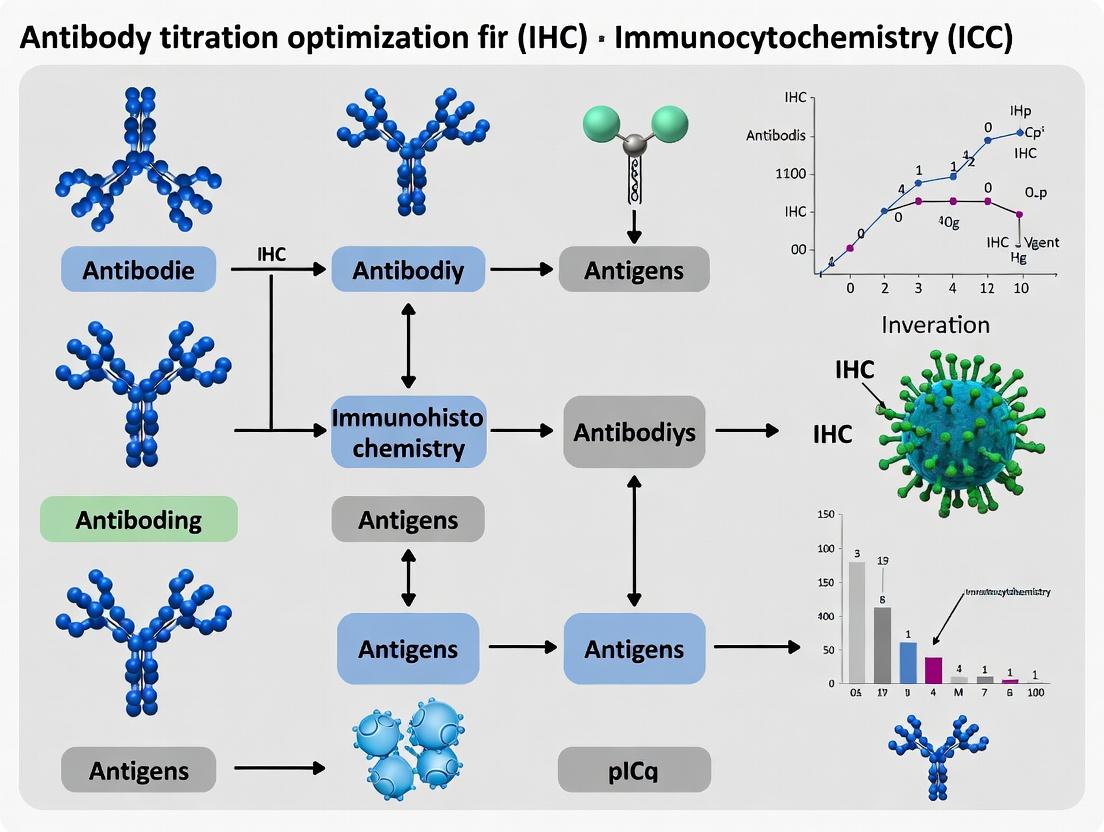
This comprehensive guide provides researchers, scientists, and drug development professionals with a systematic framework for antibody titration optimization in Immunohistochemistry (IHC) and Immunocytochemistry (ICC).
The Definitive Guide to Antibody Titration: Optimizing IHC and ICC Protocols for Reproducible Research
Abstract
This comprehensive guide provides researchers, scientists, and drug development professionals with a systematic framework for antibody titration optimization in Immunohistochemistry (IHC) and Immunocytochemistry (ICC). Covering foundational principles, robust methodological workflows, advanced troubleshooting strategies, and validation benchmarks, the article aims to enhance specificity, signal-to-noise ratio, and reproducibility. Readers will learn to establish reliable protocols that minimize background staining, conserve precious reagents, and generate publication-quality data, ultimately strengthening the translational impact of their imaging-based research.
Why Titration is Non-Negotiable: The Science Behind IHC/ICC Antibody Optimization
Troubleshooting Guides & FAQs
Q1: My positive control shows weak or no signal after titration. What is the primary cause? A: The most common cause is antibody over-dilution. Titration is not merely finding a dilution factor; it is determining the optimal antibody concentration that balances specific signal against background. If you start with a dilution series that is too broad (e.g., 1:100 to 1:10,000), you may miss the optimal point. Perform a pilot test with a narrower range (e.g., 1:50, 1:100, 1:200, 1:400, 1:800) on a known positive sample. Also, verify antigen integrity and retrieval conditions.
Q2: I have high background staining across all titers, including my negative control. How do I resolve this? A: High uniform background indicates non-specific binding or insufficient blocking. This moves the titration curve upward but does not change its shape. First, increase your blocking step: use 5-10% normal serum from the host species of your secondary antibody for 1 hour at room temperature. Ensure your wash buffers contain a mild detergent (e.g., 0.1% Tween-20). Consider using a high-quality antibody diluent with carrier proteins and polymers to reduce non-specific interactions.
Q3: How do I distinguish between specific signal and background noise during titration analysis? A: Quantify the signal-to-noise ratio (SNR) for each titer. Use image analysis software to measure the mean signal intensity in your target region (positive) versus an irrelevant tissue area or cell compartment (background). The optimal titer is not the one with the highest absolute signal, but the one with the highest SNR. This point represents the "saturation" point before the hook effect.
Q4: What does a "hook effect" look like in IHC/ICC titration, and why does it occur? A: In a hook effect, signal intensity decreases at higher antibody concentrations (lower dilutions) due to antibody overcrowding, which inhibits proper complex formation with the secondary antibody or leads to precipitate formation. It manifests as weaker staining at, for example, a 1:100 dilution compared to a 1:500 dilution on the same sample. Your titration series must include high concentrations to identify this plateau and decline.
Q5: My titration results are inconsistent between experiment runs. What are the key variables to standardize? A: The critical variables are:
- Antigen Retrieval: Time, temperature, and pH must be identical. Use a calibrated water bath or steamer.
- Fixation Time: Over- or under-fixation dramatically alters antigen availability.
- Incubation Times & Temperatures: Standardize primary antibody incubation (e.g., always overnight at 4°C on a flat shelf).
- Detection System Lot: Different lots of detection kits (e.g., HRP-polymer) can vary. Validate new lots.
- Sample Thickness: For tissue, ensure consistent section thickness (e.g., 4 µm) across runs.
Table 1: Example Titration Results for Anti-p53 Antibody (Clone DO-7) in Formalin-Fixed Paraffin-Embedded Human Tonsil
| Primary Antibody Dilution | Mean Signal Intensity (Target Nuclei) | Mean Background Intensity (Cytoplasm) | Signal-to-Noise Ratio (SNR) | Staining Specificity Score (1-5) |
|---|---|---|---|---|
| 1:50 | 215 | 85 | 2.5 | 2 (High Background) |
| 1:100 | 185 | 45 | 4.1 | 3 (Moderate) |
| 1:200 | 165 | 22 | 7.5 | 5 (Optimal) |
| 1:400 | 140 | 18 | 7.8 | 4 (Good) |
| 1:800 | 95 | 15 | 6.3 | 4 (Good) |
| 1:1600 | 55 | 14 | 3.9 | 3 (Weak) |
| No Primary (Neg Ctrl) | 12 | 10 | 1.2 | 1 (None) |
Table 2: Troubleshooting Common Titration Problems & Solutions
| Problem Symptom | Potential Root Cause | Recommended Action |
|---|---|---|
| No stain in any condition | Invalid primary antibody or detection system | Run a validated positive control tissue/cell line with the same protocol. |
| Patchy, uneven staining | Inconsistent drying of sections/slides during incubation | Ensure slides are placed in a humidified chamber for all incubations. |
| High speckled background | Precipitation of antibody or chromogen | Centrifuge diluted primary antibody before use. Filter DAB substrate before application. |
| Nuclear stain in cytoplasm | Cross-reactivity or over-fixation | Titrate retrieval time (e.g., 10, 20, 30 min). Include a species-specific isotype control. |
| Weak stain at low dilution (Hook Effect) | Antibody or detection reagent overcrowding | Test higher antibody concentrations (e.g., 1:25, 1:50) to map the full curve. |
Experimental Protocols
Protocol 1: Comprehensive Checkerboard Titration for IHC/ICC Objective: To simultaneously optimize primary antibody and detection system reagent concentrations.
- Sample Preparation: Use a single, well-characterized positive control sample (FFPE tissue section or fixed cell pellet). Apply to multiple slides or divide a multi-well slide.
- Antigen Retrieval: Perform standardized heat-induced epitope retrieval (HIER) on all slides simultaneously.
- Blocking: Block all slides with 3% H₂O₂ (if using HRP) and then 10% normal serum for 1 hour.
- Checkerboard Setup: Prepare a matrix of primary antibody dilutions (e.g., 1:100, 1:200, 1:400, 1:800) and detection system dilutions (e.g., Undiluted, 1:2, 1:5 of polymer-HRP). Apply combinations to designated sample areas.
- Incubation & Detection: Incubate primary antibody overnight at 4°C. Apply appropriate secondary or polymer system per dilution plan. Develop with DAB for identical, timed duration.
- Analysis: Score each combination for SNR and specificity. The optimal pair is the one that gives the clearest positive signal with the cleanest background at the lowest reagent concentrations.
Protocol 2: Serial vs. Parallel Dilution for Titration Accuracy Objective: To minimize compounding dilution errors.
- Serial Dilution: Making a 1:1000 dilution by sequentially making 1:10, then 1:100, then 1:1000. This is error-prone due to cumulative pipetting inaccuracies.
- Parallel Dilution (Recommended): Prepare all working dilution tubes directly from the stock antibody. For a 1:1000 dilution, add 1 µL of stock to 999 µL of diluent in a single step. This method provides independent data points and is essential for generating a reliable titration curve.
Visualization: Diagrams & Workflows
Diagram Title: Antibody Titration Optimization Workflow for IHC/ICC
Diagram Title: Signal vs. Noise Relationship in Antibody Titration
The Scientist's Toolkit: Key Research Reagent Solutions
Table 3: Essential Materials for Antibody Titration Experiments
| Reagent / Material | Primary Function in Titration | Key Consideration for Optimization |
|---|---|---|
| Validated Positive Control Sample | Provides a consistent source of known antigen expression to compare signal across titers. | Use a cell line or tissue with homogeneous, moderate expression. Avoid over-expressing systems. |
| High-Specificity Primary Antibody | The reagent being titrated. Must be well-characterized for IHC/ICC. | Monoclonal antibodies generally offer better specificity. Check vendor validation data. |
| Antibody Diluent with Stabilizers | To maintain antibody stability during incubation and reduce non-specific binding. | Choose a diluent compatible with your detection system. Avoid diluents with azide if using HRP. |
| Polymer-Based Detection System | Amplifies signal without the non-specificity often associated with biotin-streptavidin. | Titrate the detection polymer independently. New lots require re-validation. |
| Chromogen (e.g., DAB, AP Red) | Produces the visible precipitate at the antigen site. | Development time is critical. Keep consistent for all slides in a titration series. |
| Automated Slide Stainer | Provides superior reproducibility for incubation times, temperatures, and wash volumes. | If used, ensure the fluidics system is clean and reagents are freshly loaded. |
| Whole Slide Imaging System | Enables quantitative, digital analysis of signal intensity across the entire sample. | Use consistent lighting and exposure settings for all slides in an experiment. |
Troubleshooting Guide & FAQs
Q1: In my IHC experiment, I am seeing high background staining across the entire tissue section. What are the primary causes and solutions?
A: High non-specific background is often caused by insufficient blocking, over-concentration of the primary antibody, or inadequate washing.
- Solution: First, ensure your blocking step uses an appropriate serum (from the same species as your secondary antibody) or a commercial blocking buffer for 1 hour at room temperature. Re-titrate your primary antibody, testing a dilution series that is 2-5 times more dilute than the manufacturer's recommendation. Increase wash stringency by adding a mild detergent (e.g., 0.05% Tween-20) to your PBS or TBS buffer and perform three 5-minute washes after each incubation step.
Q2: My positive control shows good signal, but my experimental sample has weak or no specific signal. How should I troubleshoot?
A: This indicates the protocol is working, but the target expression or antigen accessibility in your sample may be low.
- Solution: Optimize antigen retrieval. If using heat-induced epitope retrieval (HIER), test different buffer pH levels (citrate pH 6.0 vs. Tris-EDTA pH 9.0) and retrieval times. Consider enzymatic retrieval (e.g., proteinase K) for some targets. Ensure your fixation time is not excessive, as over-fixation can mask epitopes. Finally, perform a wider primary antibody titration on your experimental tissue to find the optimal signal-to-noise ratio.
Q3: I am observing non-specific nuclear staining in my ICC. What is the likely cause and how can I fix it?
A: Non-specific nuclear staining frequently results from antibody cross-reactivity or from the secondary antibody binding to charged components in the nucleus.
- Solution: Include a relevant isotype control for your primary antibody. Ensure your secondary antibody is highly cross-adsorbed against immunoglobulins from other species. Increase the concentration of your blocking agent (e.g., 5% BSA) and consider adding 0.1% Triton X-100 to the blocking and antibody dilution buffers to reduce hydrophobic interactions.
Q4: My staining is patchy or uneven across the tissue section. What step in the protocol is most likely responsible?
A: Uneven staining is typically a technical artifact from inconsistent procedure.
- Solution: Ensure the tissue section never dries out during the entire procedure. During incubations, place slides in a level, humidified chamber. When applying antibodies or reagents, cover the entire section consistently with sufficient volume using a pipette. Avoid bubbles. Perform all washes by gently immersing and agitating slides in Coplin jars or a staining dish; do not aim the stream of buffer directly at the tissue.
Key Quantitative Data for Antibody Titration
Table 1: Example Primary Antibody Titration Results (IHC on FFPE Mouse Liver)
| Primary Antibody Dilution | Specific Signal Intensity (0-3) | Background Intensity (0-3) | Signal-to-Background Ratio | Optimal Score (Yes/No) |
|---|---|---|---|---|
| 1:50 | 3 (Strong) | 3 (High) | 1.0 | No |
| 1:200 | 3 (Strong) | 2 (Moderate) | 1.5 | No |
| 1:500 | 2.5 (Moderate-Strong) | 1 (Low) | 2.5 | Yes |
| 1:1000 | 2 (Moderate) | 0.5 (Very Low) | 4.0 | Yes (Best) |
| 1:2000 | 1 (Weak) | 0 (None) | N/A | No |
Table 2: Effect of Blocking Time on Background Staining (ICC on HeLa Cells)
| Blocking Buffer Incubation Time | Mean Background Fluorescence (A.U.) | Specific Signal Fluorescence (A.U.) |
|---|---|---|
| 15 minutes | 1550 ± 210 | 3200 ± 450 |
| 30 minutes | 850 ± 95 | 3150 ± 410 |
| 60 minutes | 450 ± 60 | 3100 ± 380 |
| 120 minutes | 430 ± 55 | 3050 ± 400 |
Experimental Protocol: Antibody Titration & Validation for IHC
Title: Serial Dilution Protocol for Determining Optimal Primary Antibody Concentration.
Methodology:
- Sample Preparation: Cut serial sections from a single FFPE tissue block containing known positive and negative tissue structures.
- Deparaffinization & Rehydration: Follow standard steps: Xylene (2 x 5 min), 100% Ethanol (2 x 2 min), 95% Ethanol (2 min), 70% Ethanol (2 min), rinse in dH₂O.
- Antigen Retrieval: Perform HIER in pre-heated citrate buffer (pH 6.0) at 95-100°C for 20 minutes. Cool for 30 min at room temperature.
- Peroxidase Blocking: Incubate with 3% H₂O₂ in methanol for 15 min to quench endogenous peroxidase activity. Wash in PBS (pH 7.4) for 5 min.
- Blocking: Apply 200 µL of normal serum (from species of secondary antibody) diluted in 2.5% BSA/PBS for 1 hour at room temperature in a humidified chamber.
- Primary Antibody Incubation: Prepare a serial dilution of the primary antibody (e.g., 1:50, 1:200, 1:500, 1:1000, 1:2000) in 2.5% BSA/PBS. Apply each dilution to separate, pre-identified sections. Include a no-primary control (buffer only). Incubate at 4°C overnight in a humidified chamber.
- Secondary Antibody Incubation: Wash slides in PBS-T (0.05% Tween-20) 3 x 5 min. Apply appropriate HRP-conjugated secondary antibody (e.g., 1:500 dilution) for 1 hour at room temperature.
- Detection: Wash 3 x 5 min in PBS-T. Apply DAB chromogen substrate for 2-10 minutes, monitoring development. Rinse in dH₂O.
- Counterstaining & Mounting: Counterstain with Hematoxylin for 30-60 seconds. Rinse, dehydrate, clear, and mount with a permanent mounting medium.
- Analysis: Evaluate slides under a microscope. The optimal dilution provides strong specific staining in known positive structures with minimal to no background in negative areas.
Visualizations
Title: IHC Antibody Titration Optimization Workflow
Title: Factors Affecting Signal vs. Background Balance
The Scientist's Toolkit: Research Reagent Solutions
Table 3: Essential Reagents for IHC/ICC Titration Experiments
| Reagent / Solution | Primary Function | Key Consideration for Optimization |
|---|---|---|
| Primary Antibody | Binds specifically to the target antigen of interest. | The most critical variable. Must be validated for IHC/ICC. Requires empirical titration for each tissue/cell type. |
| Antigen Retrieval Buffer (Citrate, Tris-EDTA) | Reverses formaldehyde-induced cross-linking to expose epitopes. | pH and buffer choice are target-dependent. Test both high and low pH for new targets. |
| Blocking Serum / BSA | Occupies non-specific binding sites on the tissue and slide. | Should match the host species of the secondary antibody. Use 2-5% concentration in buffer. |
| Wash Buffer (PBS-T / TBS-T) | Removes unbound antibodies and reagents. | Addition of a mild detergent (Tween-20, Triton X-100) is crucial for reducing background. |
| Secondary Antibody (HRP/ Fluorescent-conjugated) | Binds to the primary antibody and carries the detection system. | Must be highly cross-adsorbed. Optimal dilution (often 1:500-1:2000) should be determined. |
| Chromogen (DAB, AEC) | Enzymatic substrate that produces a visible precipitate at the antigen site. | Concentration and development time must be standardized to prevent high background. |
| Mounting Medium (Aqueous / Permanent) | Preserves the stained sample under a coverslip for microscopy. | Use anti-fade medium for fluorescence. Use permanent, non-aqueous medium for DAB-stained slides. |
Troubleshooting Guide & FAQs
Q1: My IHC staining is consistently weak or negative, even with a high antibody concentration. What could be the primary cause? A: The most common cause is masked epitopes due to over-fixation, particularly with formalin. Excessive cross-linking can hide antigens, making them inaccessible to the antibody regardless of titer. The solution is to optimize antigen retrieval. Begin by testing a standardized EDTA-based (pH 9.0) heat-induced epitope retrieval (HIER) protocol alongside a citrate-based (pH 6.0) protocol. If retrieval is already used, increase the retrieval time incrementally (e.g., 10, 20, 30 minutes in a decloaking chamber).
Q2: How does the cellular abundance of my target antigen directly influence the starting dilution for titration? A: Antigen abundance is inversely proportional to the optimal antibody concentration. For high-abundance targets (e.g., structural proteins like Cytokeratin), you will require a higher dilution (e.g., 1:5000 to 1:20000) to achieve specific staining without high background. For low-abundance targets (e.g., some phosphorylated signaling proteins), you will need a more concentrated antibody (e.g., 1:50 to 1:200). Always refer to the datasheet as a starting point and titrate in a log-series dilution around it.
Q3: After switching from frozen to FFPE tissue, my previously optimized ICC antibody dilution yields no signal. How should I proceed? A: This indicates a fixation and retrieval issue. Formalin-fixed, paraffin-embedded (FFPE) tissues require antigen retrieval, while frozen sections often do not. You must re-optimize the protocol from scratch. Perform a checkerboard titration testing at least three antibody dilutions against two different antigen retrieval methods (e.g., pH 6.0 citrate vs. pH 9.0 EDTA). The optimal dilution for FFPE will likely be different from that for frozen samples.
Q4: What is the definitive experiment to distinguish high background due to over-titration from non-specific binding due to inadequate blocking? A: Run a series of critical controls in parallel:
- No Primary Antibody Control: Only secondary antibody. High background indicates issues with the secondary antibody or blocking.
- IgG Isotype Control: Use at the same concentration as your primary antibody. High background indicates non-specific Fc receptor or protein binding.
- Antibody Titration Series: If background decreases in a concentration-dependent manner across the series (weakest at highest dilution), over-titration is the cause. If background remains high even at very high dilutions, inadequate blocking or retrieval is the issue.
Q5: For a novel antibody, what is the most efficient experimental design to simultaneously optimize for antigen abundance, fixation, and retrieval? A: Employ a multi-factorial optimization experiment. Use a tissue microarray (TMA) containing samples with known high and low target expression. Test:
- Two fixations types/formalin fixation times (if possible).
- Two retrieval buffers (pH 6.0 and pH 9.0).
- Five antibody dilutions (e.g., 1:100, 1:500, 1:1000, 1:5000, 1:10000). Score staining intensity and background for each condition to identify the optimal combination.
Table 1: Effect of Antigen Abundance on Typical Optimal Antibody Dilution Ranges
| Antigen Abundance Level | Example Targets | Typical IHC/ICC Dilution Range | Recommended Titration Start Point |
|---|---|---|---|
| Very High | Cytokeratin, Vimentin, β-actin | 1:5,000 – 1:100,000 | 1:10,000 |
| High | ER, PR, Common CD markers | 1:200 – 1:5,000 | 1:1,000 |
| Low | Phospho-proteins (p-AKT, p-ERK), Rare cytokines | 1:50 – 1:500 | 1:200 |
| Very Low | Caspase-cleaved targets, Some viral antigens | 1:10 – 1:200 | 1:50 |
Table 2: Antigen Retrieval Method Comparison for Formalin-Fixed Tissues
| Retrieval Method | Buffer pH & Type | Primary Use Case | Typical Incubation (Decloaker) | Impact on Optimal Ab Dilution |
|---|---|---|---|---|
| Heat-Induced (HIER) | 6.0 (Sodium Citrate) | Majority of nuclear & cytoplasmic proteins | 20-30 min, 95-100°C | Allows for higher dilutions (2-10x) vs. no retrieval |
| Heat-Induced (HIER) | 9.0 (EDTA/Tris) | Difficult, cross-linked targets (e.g., some transmembrane) | 20-40 min, 95-100°C | May require different dilution than pH 6.0 retrieval |
| Enzymatic | Protease (e.g., Trypsin) | N/A for most modern IHC; historical use | 5-15 min, 37°C | Can be harsh; often increases background, limiting dilution. |
Experimental Protocols
Protocol 1: Checkerboard Titration for Simultaneous Optimization of Retrieval and Antibody Dilution Objective: To systematically determine the optimal combination of antigen retrieval condition and primary antibody concentration. Materials: FFPE tissue sections, two antigen retrieval buffers (pH 6.0 Citrate and pH 9.0 EDTA), primary antibody, detection kit, blocking serum. Method:
- Deparaffinize and rehydrate FFPE sections.
- Divide sections into two groups for the two retrieval buffers.
- Perform HIER for each group using standard protocol (20 min at 95-100°C, cool for 30 min).
- Perform peroxidase blocking and protein blocking.
- Apply primary antibody in a dilution series (e.g., 1:100, 1:500, 1:1000, 1:5000) to sections from each retrieval group.
- Incubate, wash, and apply labeled polymer/secondary antibody.
- Develop with DAB, counterstain, dehydrate, and mount.
- Analyze: The condition yielding the highest signal-to-noise ratio is optimal.
Protocol 2: Direct Titration for Quantifying Impact of Fixation Time Objective: To assess the effect of formalin fixation duration on the required antibody dilution. Materials: Tissue samples (e.g., mouse liver), neutral buffered formalin, cassettes, primary antibody. Method:
- Fix matched tissue samples in formalin for different durations (e.g., 6h, 24h, 48h, 72h).
- Process all samples identically for paraffin embedding.
- Cut sections and mount on slides.
- Perform a single, optimized antigen retrieval protocol on all sections.
- Apply a wide dilution series of the primary antibody (e.g., 5-6 dilutions spanning 1:50 to 1:5000) across sections from each fixation time.
- Complete staining with a standardized detection protocol.
- Compare: The optimal dilution for a 6h fix may be 1:2000, while for a 72h fix it may shift to 1:500 due to epitope masking.
Diagrams
Title: Core Variables Directing Optimal Antibody Dilution
Title: IHC Staining Workflow with Optimization Points
The Scientist's Toolkit: Key Research Reagent Solutions
| Item | Function in Optimization |
|---|---|
| pH 6.0 Sodium Citrate Buffer | Standard antigen retrieval buffer for unmasking a wide range of epitopes cross-linked by formalin fixation. |
| pH 9.0 EDTA/Tris Buffer | High-pH antigen retrieval buffer for more stubborn epitopes, often targets in the cell membrane or heavily cross-linked. |
| Humidified Slide Chamber | Essential for consistent, even incubation of antibodies on tissue sections, preventing evaporation and edge artifacts. |
| Tissue Microarray (TMA) | Contains multiple tissue cores on one slide, enabling high-throughput, parallel testing of optimization conditions. |
| Recombinant Protein Lysate (Positive Control) | Provides a known source of target antigen for Western blot validation of antibody specificity before IHC use. |
| IgG Isotype Control | Matched to the host species and immunoglobulin class of the primary antibody; critical for identifying non-specific binding. |
| Serum-Free Protein Block | Reduces non-specific background staining by blocking hydrophobic and charged sites on tissue, superior to animal serum in some cases. |
| Digital Slide Scanner & Analysis Software | Enables objective, quantitative measurement of staining intensity and signal-to-noise ratio across optimization experiments. |
Technical Support Center
Troubleshooting Guide: Common IHC/ICC Titration Issues
Issue 1: High Background Staining (False Positives)
- Problem: Non-specific antibody binding obscures true signal.
- Likely Cause: Primary antibody concentration is too high.
- Solution: Perform a checkerboard titration. Reduce primary antibody concentration by serial dilution (e.g., 1:100, 1:200, 1:500, 1:1000). Re-optimize using a positive control and a negative control (e.g., tissue known to express the target and one known not to).
Issue 2: Weak or No Specific Signal (False Negatives)
- Problem: Target is present but not detected.
- Likely Cause: Primary antibody concentration is too low, epitope is masked, or antigen retrieval is insufficient.
- Solution: First, confirm antigen retrieval protocol is appropriate for your target and fixative. If retrieval is optimal, increase primary antibody concentration systematically. Also, verify antibody specificity with a knockout control.
Issue 3: Inconsistent Staining Between Runs
- Problem: Variable results despite using same protocol.
- Likely Cause: Inaccurate pipetting during antibody dilution or changes in incubation times/temperature.
- Solution: Prepare master mixes of diluted antibody for all slides in an experiment. Use calibrated pipettes and enforce strict adherence to incubation parameters. Implement a detailed lab protocol.
Frequently Asked Questions (FAQs)
Q1: How do I systematically determine the optimal primary antibody dilution? A: Perform a checkerboard titration experiment. Test a range of primary antibody dilutions (e.g., 1:50 to 1:2000) against a range of detection system dilutions. Include all necessary controls. The optimal dilution is the highest dilution that gives strong specific signal with minimal background.
Q2: My positive control works, but my experimental samples are negative. Is this a titration problem? A: Not necessarily. First, confirm the target is expressed in your experimental samples using an alternative method (e.g., Western blot, RNA-seq). If expression is confirmed, poor antigen retrieval or over-fixation of your specific samples may be the issue, leading to a false negative.
Q3: How often should I re-titrate an antibody? A: Re-titrate whenever a critical reagent changes: a new antibody lot, a new batch of detection kit, or a major change in tissue processing protocol. Even with stable reagents, it is good practice to validate the titration annually.
Table 1: Effects of Primary Antibody Concentration on Staining Outcomes
| Antibody Dilution | Specific Signal Intensity | Background Staining | Interpretation Risk | Resource Efficiency |
|---|---|---|---|---|
| Too High (e.g., 1:50) | Very Strong | High | High False Positive | Low (Wastes Antibody) |
| Optimal (e.g., 1:500) | Strong | Low/Low-Medium | Accurate Result | High |
| Too Low (e.g., 1:5000) | Weak/Absent | Very Low | High False Negative | Low (Wastes Samples & Time) |
Table 2: Resource Cost of Poor Titration in a Mid-Scale Study
| Scenario | Antibody Wasted | Slides/Samples Wasted | Personnel Time Lost | Project Delay Risk |
|---|---|---|---|---|
| No Initial Titration | ~200 µg | 15-30 slides | 10-20 hours | High |
| Full Checkerboard Titration | ~50 µg | 5-10 slides | 4-8 hours | Low |
| Using Vendor's "Recommended" Dilution | Variable | 5-15 slides | 5-15 hours | Medium |
Detailed Experimental Protocols
Protocol 1: Checkerboard Titration for Primary and Secondary Antibodies
Objective: To simultaneously optimize the concentration of primary and detection antibodies. Materials: Positive control tissue sections, antibody diluent, primary antibody, detection system (e.g., HRP polymer), DAB chromogen, hematoxylin. Method:
- Prepare a series of primary antibody dilutions (e.g., 1:100, 1:200, 1:500, 1:1000).
- Prepare a series of detection system dilutions (e.g., neat, 1:2, 1:5) as per kit guidelines.
- Apply the primary antibody dilutions in vertical columns on the slide.
- Apply the detection system dilutions in horizontal rows, creating a grid.
- Follow standard IHC steps: incubation, washing, DAB application, counterstaining.
- Analyze under a microscope. The optimal pair is the highest primary antibody dilution combined with the highest detection system dilution that yields strong specific signal and lowest background.
Protocol 2: Validation of Titration with Comprehensive Controls
Objective: To confirm staining specificity after identifying an optimal dilution. Materials: Optimized antibody dilution, control tissues/slides. Method:
- Positive Control: A tissue known to express the target antigen. Must show positive staining.
- Negative Control: A tissue known not to express the target. Must show no staining.
- No-Primary Antibody Control (Replacement Control): Incubate with antibody diluent or isotype control instead of primary antibody. Must show no specific staining. Essential for identifying background from detection system.
- Absorption/Neutralization Control: Pre-incubate the primary antibody with a blocking peptide (excess of the target antigen). Specific staining should be significantly reduced or absent.
- Run all controls concurrently with experimental samples using the optimized protocol.
Signaling Pathway & Experimental Workflow Diagrams
Title: Consequences of Poor Antibody Titration
Title: IHC Antibody Titration Optimization Workflow
The Scientist's Toolkit: Key Research Reagent Solutions
Table 3: Essential Materials for IHC/ICC Titration Optimization
| Reagent/Material | Function in Titration | Key Consideration |
|---|---|---|
| Validated Positive Control Tissue/Slides | Provides a known benchmark for specific signal strength. | Must be consistent between titration runs. |
| Tissue Microarray (TMA) | Contains multiple tissue cores on one slide, enabling high-throughput comparison of conditions. | Ideal for checkerboard titrations. |
| Antibody Diluent with Protein (e.g., with BSA) | Stabilizes diluted antibodies and reduces non-specific binding to slides. | More consistent than PBS alone. |
| Monoclonal Primary Antibody | Recognizes a single epitope; generally offers better specificity and reproducibility for titration. | Preferred over polyclonal for standardized assays. |
| Polymer-based Detection System | Amplifies signal with high sensitivity and low background. Reduces need for separate secondary titration. | Choose one compatible with your sample type. |
| Chromogen (DAB or AP/RED) | Produces the visible precipitate. Different substrates offer varying sensitivity and contrast. | DAB is common; choose based on counterstain and microscope. |
| Liquid Coverslipping Mountant | Preserves stained slides for long-term imaging and analysis. | Use an aqueous, non-fading mountant for chromogenic IHC. |
The Direct Link Between Titration and Experimental Reproducibility
Troubleshooting Guides & FAQs for Antibody Titration in IHC/ICC
FAQ 1: Why is my IHC staining inconsistent between experiments despite using the same protocol? Answer: Inconsistent staining is most frequently caused by suboptimal or unvalidated antibody concentration. Even with the same protocol, lot-to-lot variability in antibody production, slight changes in antigen retrieval efficiency, or variations in tissue fixation can shift the optimal titer. An antibody concentration that is too high leads to high background and non-specific binding, while one that is too low results in weak or false-negative signals. The core solution is to perform a rigorous titration for each new antibody lot and under any major change in experimental conditions.
FAQ 2: How do I differentiate between specific signal and high background during titration? Answer: The inclusion of proper controls in your titration series is non-negotiable. For each concentration tested, you must run:
- A No-Primary Antibody Control (Secondary only) to identify background from the detection system.
- An Isotype Control (for monoclonal antibodies) at the same concentration as your test antibody to assess non-specific Fc binding.
- A Tissue/Cell Control known to be negative for the target antigen. Specific signal will show a clean, localized pattern (e.g., nuclear, cytoplasmic, membranous) that intensifies with optimal concentration and then plateaus or becomes diffuse. Background staining will appear diffuse, non-localized, and often present in negative controls.
FAQ 3: My titration curve shows a plateau but the signal-to-noise ratio is still poor. What's the next step? Answer: A signal plateau indicates you have reached saturation for the available epitopes. If noise remains high, the issue is not concentration alone. You must troubleshoot other parameters in tandem with titration:
- Epitope Retrieval: Test different retrieval methods (heat-induced, enzymatic), pH levels (6.0, 8.0, 9.0), and time. Over-retrieval can damage tissue architecture, while under-retrieval masks epitopes.
- Blocking: Increase blocking time (1-2 hours), try different blocking agents (serum, BSA, casein), or add a blocking step for endogenous enzymes (peroxidase, phosphatase) or biotin.
- Detection System: Consider switching to a polymer-based detection system which typically offers higher specificity and lower background than avidin-biotin systems.
FAQ 4: How many data points are sufficient for a reliable antibody titration? Answer: A minimum of 5-6 serial dilutions (e.g., 1:50, 1:100, 1:200, 1:400, 1:800, 1:1600) is recommended to accurately define the dynamic range and identify the optimal working concentration. Running duplicates or triplicates at each dilution is critical for assessing reproducibility. The goal is to capture the inflection point where the signal-to-noise ratio is maximized.
Key Quantitative Data from Antibody Titration Studies
Table 1: Impact of Antibody Titration on IHC Readout Metrics
| Antibody Dilution | H-Score (Mean) | Background Intensity (Units) | Signal-to-Noise Ratio | Inter-Assay CV (%) |
|---|---|---|---|---|
| 1:50 | 285 | 85 | 3.4 | 25% |
| 1:200 | 260 | 35 | 7.4 | 12% |
| 1:400 (Optimal) | 255 | 15 | 17.0 | 8% |
| 1:800 | 180 | 10 | 18.0 | 15% |
| 1:1600 | 95 | 8 | 11.9 | 22% |
Table 2: Effect of Titration Validation on Experimental Reproducibility
| Experimental Parameter | Without Validated Titer | With Validated Titer | Improvement |
|---|---|---|---|
| Inter-User Variability | 32% CV | 9% CV | 72% |
| Inter-Lab Reproducibility (Success Rate) | 65% | 95% | 46% |
| Lot-to-Lot Consistency | Often requires re-optimization | Consistent performance with minor verification | Significant time savings |
Detailed Experimental Protocol: Checkerboard Titration for IHC
Objective: To determine the optimal combination of primary and secondary antibody concentrations for maximum specific signal with minimal background.
Materials: See "The Scientist's Toolkit" below.
Method:
- Sectioning & Mounting: Cut paraffin-embedded tissue sections at 4-5 µm. Mount on positively charged slides. Dry overnight at 37°C.
- Deparaffinization & Rehydration: Immerse slides in xylene (3 x 5 min), followed by a graded ethanol series (100%, 100%, 95%, 70% - 2 min each). Rinse in distilled water.
- Antigen Retrieval: Perform heat-induced epitope retrieval in a pressure cooker or water bath using 10mM Sodium Citrate buffer (pH 6.0) or Tris-EDTA buffer (pH 9.0) for 20 minutes. Cool slides for 30 min at room temperature.
- Peroxidase Blocking: Incubate with 3% hydrogen peroxide solution for 10 min to quench endogenous peroxidase activity. Rinse with wash buffer (e.g., PBS + 0.025% Triton X-100).
- Protein Blocking: Apply a protein-based blocking solution (e.g., 5% normal serum from the host of the secondary antibody) for 1 hour at room temperature in a humidified chamber.
- Checkerboard Titration:
- Prepare a serial dilution of the primary antibody (e.g., 1:100, 1:200, 1:400, 1:800) in antibody diluent.
- Prepare a serial dilution of the conjugated secondary antibody (e.g., 1:200, 1:400, 1:800) in antibody diluent.
- Apply the primary antibody dilutions in vertical columns on the slide. Apply the secondary antibody dilutions in horizontal rows, creating a grid where each unique combination is tested.
- Incubate with primary antibody overnight at 4°C in a humidified chamber.
- Detection: Rinse slides 3 x 5 min in wash buffer. Apply the appropriate secondary antibody dilution for 1 hour at room temperature. Rinse again 3 x 5 min.
- Signal Development: Apply the chromogen substrate (e.g., DAB) for a strictly timed duration (e.g., 5 min) for all sections. Stop the reaction by immersing in distilled water.
- Counterstaining & Mounting: Counterstain with hematoxylin for 30-60 seconds. Dehydrate through graded ethanols and xylene. Mount with a permanent mounting medium.
- Analysis: Visualize under a microscope. The optimal combination is the one that yields the highest specific signal intensity with the lowest non-specific background, typically found at the midpoint of the titration curves.
Visualization: Antibody Titration Optimization Workflow
Titration Workflow for Reproducible IHC
Signal vs. Background at Different Titers
The Scientist's Toolkit: Key Research Reagent Solutions
Table 3: Essential Materials for Antibody Titration in IHC/ICC
| Item | Function & Rationale |
|---|---|
| Validated Primary Antibody | Core reagent. Use antibodies with published application data (IHC/ICC). Lot number documentation is critical. |
| Antibody Diluent with Stabilizer | Preserves antibody integrity during incubation, reduces non-specific sticking, and improves consistency. |
| Polymer-Based Detection System | Offers high sensitivity and low background by avoiding endogenous biotin. Preferred for titration. |
| Chromogen (e.g., DAB, AEC) | Enzyme substrate for signal visualization. Must be prepared fresh and timed precisely. |
| Antigen Retrieval Buffer (Citrate/EDTA) | Unmasks epitopes cross-linked by formalin fixation. pH choice is target-dependent. |
| Blocking Serum | From the same species as the secondary antibody, reduces Fc receptor-mediated non-specific binding. |
| Positive Control Tissue/Cell Slide | Tissue known to express the target at a defined level; essential for validating the entire protocol. |
| Humidified Staining Chamber | Prevents evaporation of reagents during long incubations, ensuring consistent concentration and staining. |
| Digital Slide Scanner or CCD Camera | For objective, quantitative assessment of staining intensity across the titration series. |
A Step-by-Step Protocol: From Checkerboard Assays to Finalized IHC/ICC Workflows
Technical Support Center
Troubleshooting Guide & FAQs
Q1: My tissue sections show high, uniform, non-specific background staining across all compartments. What is the primary cause and how do I resolve it? A1: The primary cause is often insufficient blocking or use of an incorrect primary antibody dilution buffer. Non-specific interactions are frequently mediated by hydrophobic or ionic forces.
- Solution: Re-optimize your blocking step. Use a buffer containing a protein blocker (e.g., 5% normal serum from the host species of your secondary antibody) and a detergent like 0.1-0.3% Triton X-100 (if permeability is required). Ensure your primary antibody is diluted in an optimized buffer. Consider switching to a commercial IHC/ICC antibody diluent that contains stabilizing and blocking agents.
Q2: I observe weak or no specific signal despite using a previously validated antibody. What steps should I take? A2: This is commonly an epitope masking or retrieval issue for IHC, or a fixation over-fixation problem for ICC.
- Solution (IHC): Systematically test different antigen retrieval methods. Begin with heat-induced epitope retrieval (HIER) using citrate (pH 6.0) and Tris-EDTA (pH 9.0) buffers. See Table 1 for protocol.
- Solution (ICC): Titrate your fixation time and concentration. For formaldehyde, test between 4% for 10 minutes and 4% for 20 minutes at room temperature. Consider alternative fixatives like ice-cold methanol.
Q3: My negative control (no primary antibody) shows staining. What does this indicate? A3: This indicates non-specific binding of your secondary antibody or endogenous enzyme activity.
- Solution:
- Secondary Antibody Control: Include a secondary antibody-only control. If positive, increase the concentration of the protein blocker in your diluent/blocking buffer or select a secondary antibody with minimal cross-reactivity.
- Endogenous Enzyme Activity: For HRP-based detection, quench with 3% H₂O₂ for 15 minutes. For AP-based detection, use levamisole in the substrate solution.
Q4: How do I select the optimal buffer for diluting my primary antibody for titration? A4: The optimal buffer should stabilize the antibody, minimize non-specific binding, and be compatible with your sample type.
- Recommendation: Use a commercial IHC/ICC antibody diluent as a starting point. These are formulated with BSA, stabilizing proteins, and low-concentration detergent. For a DIY buffer, a common base is PBS or TBS with 1% BSA and 0.1% sodium azide (if applicable). Avoid using buffers with high concentrations of irrelevant serum for blocking and as a diluent, as this can dilute the primary antibody's effective concentration.
Table 1: Antigen Retrieval Buffer Comparison
| Retrieval Method | Buffer Composition | Typical pH | Optimal For | Incubation Time & Temp |
|---|---|---|---|---|
| Heat-Induced (HIER) | Sodium Citrate | 6.0 | Many phosphorylated epitopes, nuclear antigens | 20-40 min at 95-100°C |
| Heat-Induced (HIER) | Tris-EDTA | 8.0-9.0 | Cytoplasmic/membrane proteins, some nuclear | 20-40 min at 95-100°C |
| Enzymatic | Trypsin | ~8.0 | Extracellular matrix proteins, collagen | 10-20 min at 37°C |
| Enzymatic | Proteinase K | 7.4 | Highly cross-linked formalin-fixed tissues | 5-15 min at RT |
Table 2: Key Controls for Antibody Titration
| Control Type | Purpose | Expected Result | Failure Implication |
|---|---|---|---|
| Primary Antibody Titration Series | Determine optimal signal-to-noise ratio | A dilution showing strong specific signal with clean background | Sub-optimal staining (weak or noisy) |
| No Primary Antibody | Detect non-specific secondary antibody binding | No staining | Secondary antibody requires further optimization |
| Isotype Control | Assess non-specific Fc receptor binding | Staining equivalent to secondary-only control | Indicates need for better blocking |
| Tissue/Cell Positive Control | Confirm protocol/antibody functionality | Strong, specific staining | Protocol or reagent failure |
| Tissue/Cell Negative Control | Confirm antibody specificity | No staining | Antibody lacks specificity for target |
Experimental Protocols
Protocol: Heat-Induced Epitope Retrieval (HIER) for Formalin-Fixed Paraffin-Embedded (FFPE) Tissues
- Deparaffinization & Rehydration: Bake slides at 60°C for 1 hr. Process through xylene (3 x 5 min), 100% ethanol (2 x 2 min), 95% ethanol (2 x 2 min), 70% ethanol (2 x 2 min), and finally distilled water.
- Retrieval Buffer: Fill a plastic coplin jar with 200-250 mL of pre-warmed citrate (pH 6.0) or Tris-EDTA (pH 9.0) buffer.
- Heating: Place jar in a water bath or vegetable steamer pre-heated to 95-100°C. Submerge slides and incubate for 20 minutes.
- Cooling: Remove the jar from heat and allow it to cool at room temperature for 20-30 minutes.
- Rinsing: Gently rinse slides with distilled water, then transfer to wash buffer (PBS or TBS).
Protocol: Blocking for IHC/ICC to Reduce Background
- Post-Retrieval Wash: Rinse slides/coverslips 3 x 5 min in wash buffer.
- Permeabilization (if required for intracellular targets): Incubate with 0.1-0.5% Triton X-100 in wash buffer for 10-15 min at RT. Skip for membrane targets only.
- Endogenous Enzyme Block: Incubate with 3% H₂O₂ in methanol (for HRP) or levamisole (for AP) for 15 min.
- Protein Block: Incubate with blocking buffer (e.g., 5% normal serum + 1% BSA in wash buffer) for 1 hour at RT in a humidified chamber.
Mandatory Visualizations
Diagram 1: IHC Titration Optimization Workflow
Diagram 2: Key Controls for Specificity Validation
The Scientist's Toolkit
Table 3: Essential Research Reagent Solutions for IHC/ICC Titration
| Item | Function & Rationale |
|---|---|
| Commercial Antibody Diluent | Pre-formulated buffer providing optimal pH, ionic strength, and protein stabilizers to minimize aggregation and non-specific binding during titration. |
| Normal Serum (from secondary host) | Used in blocking buffer to saturate non-specific protein-binding sites (e.g., Fc receptors) on the tissue/cell sample. |
| Phosphate-Buffered Saline (PBS) / Tris-Buffered Saline (TBS) | Standard isotonic wash buffers. TBS is preferred for phosphorylated targets due to phosphate in PBS. |
| Antigen Retrieval Buffers (Citrate, Tris-EDTA) | Break protein cross-links formed during fixation to expose hidden epitopes for antibody binding. |
| Detergent (Triton X-100, Tween-20) | Increases permeability for intracellular targets (Triton) or reduces surface tension during washes (Tween). |
| Hydrogen Peroxide (3% H₂O₂) | Quenches endogenous peroxidase activity to prevent high background in HRC-based detection. |
| Bovine Serum Albumin (BSA) | A common, inexpensive protein added to blocking buffers and antibody diluents to reduce non-specific adsorption. |
| Enzyme-Conjugated Secondary Antibody | Target-specific probe that binds to the Fc region of the primary antibody, enabling visual detection. Must be validated for IHC/ICC. |
Technical Support Center
Troubleshooting Guides & FAQs
Q1: Why is my immunohistochemistry (IHC) staining absent or very weak after performing a checkerboard titration? A: Weak or absent staining is most often due to insufficient primary antibody binding or detection system failure.
- Primary Antibody Issues:
- Cause: The antibody concentration is too low for the target antigen abundance, or the antibody has lost activity.
- Solution: Verify the antibody's recommended concentration range from the datasheet. Ensure the antibody has been stored correctly and is not expired. Re-centrifuge reconstituted antibodies before use. Repeat the titration, extending the range to higher concentrations.
- Detection System Issues:
- Cause: The detection reagent (e.g., HRP polymer, secondary antibody) concentration is too low, or the reagent is inactive.
- Solution: Titrate the detection reagent independently. Ensure the detection system is compatible with the primary antibody host species. Check that the enzyme substrate (e.g., DAB) is fresh and prepared correctly.
- Antigen Retrieval:
- Cause: Inadequate epitope unmasking, especially for formalin-fixed, paraffin-embedded (FFPE) tissues.
- Solution: Optimize antigen retrieval time and pH. Consider both heat-induced (HIER) and proteolytic-induced methods.
Q2: Why is there high non-specific background staining across all titration points? A: Excessive background indicates non-specific binding or inadequate blocking.
- Blocking:
- Cause: Insufficient blocking of endogenous enzymes or non-specific protein binding sites.
- Solution: Increase blocking serum concentration or duration. Use a blocking solution matched to the detection system (e.g., normal serum from the same species as the secondary antibody). For endogenous peroxidases, use a longer incubation with hydrogen peroxide.
- Antibody Specificity:
- Cause: Primary antibody concentration is too high, leading to off-target binding.
- Solution: The optimal concentration from your checkerboard should be the lowest that gives a strong specific signal. Include a negative control (no primary antibody) to identify detection system background.
- Washing:
- Cause: Inadequate washing between steps leaves unbound reagents that contribute to background.
- Solution: Increase wash volume, duration, and number of washes. Use a buffered wash solution with a detergent (e.g., 0.025% Tween-20 in PBS/TBS).
Q3: How do I interpret a checkerboard grid where the signal plateaus at high concentrations? A: A signal plateau indicates the detection system is saturated. The optimal condition is typically at the inflection point just before the plateau, maximizing signal-to-noise ratio.
- Interpretation: Identify the well where a decrease in antibody concentration first causes a noticeable drop in specific signal intensity, while background remains low. This point represents the most efficient use of antibody.
- Action: If the plateau is very broad, you may choose a concentration in the lower-middle of the plateau to conserve reagent. Always correlate with morphological detail under the microscope—high concentrations can sometimes obscure detail.
Q4: What should I do if my checkerboard results are inconsistent across replicates? A: Inconsistency points to procedural variability.
- Cause & Solution:
- Reagent Application: Ensure consistent volume application across slides/wells using calibrated pipettes. Consider using an automated stainer for large grids.
- Incubation Conditions: Perform all incubations in a humidified chamber to prevent evaporation and edge effects. Maintain consistent temperature and timing.
- Sample Variability: Use consecutive tissue sections or cells from the same passage/preparation plated identically. Include a internal positive control tissue on each slide if possible.
Data Presentation
Table 1: Example Checkerboard Titration Results for a Mouse Monoclonal Antibody (FFPE Tissue)
| Primary Antibody Dilution | Detection System Dilution (HRP Polymer) | Signal Intensity (0-3) | Background (0-3) | Specific Staining Score (Signal - Background) |
|---|---|---|---|---|
| 1:50 | 1:100 | 3 | 3 | 0 |
| 1:50 | 1:200 | 3 | 2 | 1 |
| 1:50 | 1:400 | 2 | 1 | 1 |
| 1:100 | 1:100 | 3 | 2 | 1 |
| 1:100 | 1:200 | 3 | 1 | 2 (Optimal) |
| 1:100 | 1:400 | 2 | 0 | 2 |
| 1:200 | 1:100 | 2 | 2 | 0 |
| 1:200 | 1:200 | 2 | 1 | 1 |
| 1:200 | 1:400 | 1 | 0 | 1 |
| No Primary (Control) | 1:200 | 0 | 0 | 0 |
Intensity Scale: 0=None, 1=Weak, 2=Moderate, 3=Strong.
Experimental Protocols
Protocol: Checkerboard (Grid) Titration for IHC/ICC Optimization
Objective: To simultaneously determine the optimal concentration of primary antibody and detection reagent.
Materials: See "The Scientist's Toolkit" below.
Method:
- Sample Preparation: Cut consecutive FFPE tissue sections or plate identical ICC cells on multi-well slides. Perform standardized antigen retrieval (if required) and blocking for all slides.
- Grid Layout: Create a template defining the combinations of primary antibody and detection reagent dilutions to be tested.
- Primary Antibody Incubation: Apply different dilutions of the primary antibody (e.g., 1:50, 1:100, 1:200, 1:400) to designated areas/slides. Incubate according to standard protocol (typically 1 hour at RT or overnight at 4°C). Include a negative control (diluent only).
- Wash: Rinse slides 3 x 5 minutes in wash buffer.
- Detection Reagent Incubation: Apply different dilutions of the labeled polymer/horseradish peroxidase (HRP) or alkaline phosphatase (AP) detection system (e.g., 1:100, 1:200, 1:400) in a crossed pattern over the primary antibody dilutions.
- Wash: Rinse slides 3 x 5 minutes in wash buffer.
- Visualization: Apply chromogen (e.g., DAB) for a fixed, consistent time (e.g., 5 minutes). Stop the reaction in water.
- Counterstaining & Mounting: Counterstain with hematoxylin, dehydrate, clear, and mount.
- Analysis: Evaluate staining under a microscope. Score specific signal intensity and background for each combination. The optimal pair delivers the highest specific signal with the lowest background.
Mandatory Visualization
The Scientist's Toolkit
Table 2: Essential Research Reagent Solutions for Checkerboard Titration
| Item | Function in Experiment |
|---|---|
| Primary Antibody | Binds specifically to the target antigen of interest. The target of the titration. |
| Labeled Polymer Detection System (e.g., HRP- or AP-based) | Amplifies the primary antibody signal for visualization. Often a polymer conjugated with enzymes and secondary antibodies. |
| Chromogen Substrate (e.g., DAB, AEC, Fast Red) | Enzymatic conversion produces a visible, insoluble precipitate at the antigen site. |
| Antigen Retrieval Buffer (e.g., Citrate pH 6.0, EDTA pH 9.0) | Unmasks epitopes cross-linked by fixation, critical for FFPE tissues. |
| Blocking Serum (e.g., Normal Goat Serum) | Reduces non-specific background staining by occupying hydrophobic or charged sites. |
| Protein Block (e.g., BSA, Casein) | Additional inert protein used to block non-specific binding. |
| Wash Buffer with Detergent (e.g., PBS/TBS with 0.025% Tween-20) | Removes unbound reagents between steps, reducing background. |
| Humidified Slide Chamber | Prevents evaporation of small reagent volumes during incubations, ensuring consistency. |
| Multi-well Slide or Hydrophobic Barrier Pen | Allows application of different reagents to a single slide in a defined grid pattern. |
This technical support center provides solutions for common issues encountered during serial dilution preparation, a foundational technique for antibody titration optimization in Immunohistochemistry (IHC) and Immunocytochemistry (ICC) research.
Troubleshooting Guides & FAQs
Q1: My final antibody dilution yields inconsistent staining across my IHC slides. What could be the source of error in my dilutions?
A: Inconsistent staining often stems from improper mixing during serial dilution. Each dilution step must be mixed thoroughly via pipette mixing or vortexing before the next transfer. Inadequate mixing creates concentration gradients, leading to variable final antibody concentrations. Always use a fresh pipette tip for each transfer to prevent carryover.
Q2: I am observing high background noise in my ICC experiments despite using the calculated optimal antibody dilution. Could my dilution preparation be a factor?
A: Yes. A common cause is the improper preparation or use of the diluent. Ensure your diluent (e.g., antibody diluent, PBS with carrier protein) is compatible with your antibody and cells. Always prepare dilutions immediately before use to prevent antibody degradation. Background can also increase if dilutions are prepared in contaminated buffers.
Q3: How do I accurately prepare a wide-range serial dilution (e.g., 1:10 to 1:100,000) for initial antibody titration without using excessive amounts of expensive antibody?
A: Implement a two-step serial dilution strategy. First, prepare a concentrated intermediate stock (e.g., a 1:100 dilution from the neat antibody). Second, perform your main serial dilution series (e.g., 1:10, 1:50, 1:250, 1:1250, etc.) using this intermediate stock as your starting point. This conserves the primary antibody while maintaining accuracy.
Q4: What is the impact of using different tube types or volumes on dilution accuracy?
A: Tube shape and working volume are critical. Using a tube that is too large for a small volume (e.g., 100 µL in a 15 mL tube) increases loss due to adhesion and evaporation. Always match the container to the volume. Use low-protein-binding microcentrifuge tubes for high-dilution steps to prevent adsorptive loss.
Q5: How can I verify the accuracy of my serial dilution technique?
A: Perform a mock dilution series using a colored dye (e.g., Coomassie Blue) or a solution with a known concentration measurable by spectrophotometry (e.g., BSA). The observed concentration at each step should match the theoretical calculation, validating your pipetting and mixing technique.
Key Quantitative Data for Serial Dilution Planning
Table 1: Common Serial Dilution Schemes for Antibody Titration
| Target Final Dilution Range | Recommended Dilution Factor per Step | Typical Number of Steps | Example Series (from Intermediate Stock) | Total Volume per Dilution (Recommended) |
|---|---|---|---|---|
| Narrow (e.g., fine-tuning) | 1:2 or 1:3 | 4-6 | 1:500, 1:1000, 1:2000, 1:4000 | 200 - 500 µL |
| Broad (e.g., initial titer) | 1:5 or 1:10 | 5-8 | 1:100, 1:500, 1:2500, 1:12500, 1:62500 | 200 - 1000 µL |
| Logarithmic (wide range) | 10-fold (1:10) | 4-6 | 1:10, 1:100, 1:1000, 1:10000 | 500 - 1000 µL |
Table 2: Impact of Pipetting Error on Final Concentration
| Assumed Inaccuracy in Volumetric Transfer | Error in Final Dilution (for a 1:10,000 dilution prepared via 4-step 1:10 serial dilution) | Potential Effect on IHC/ICC Staining |
|---|---|---|
| ± 0.5 µL (on 50 µL transfer) | ~ ± 1% final concentration | Minimal, likely undetectable |
| ± 2 µL (on 50 µL transfer) | ~ ± 4% final concentration | May cause subtle intensity variation |
| ± 5 µL (on 50 µL transfer) | ~ ± 10% final concentration | Likely visible staining inconsistency |
Detailed Experimental Protocols
Protocol: Accurate Serial Dilution for Antibody Titration in IHC/ICC
Objective: To prepare a 7-point, 5-fold serial dilution of a primary antibody for optimal concentration determination.
Materials: See "The Scientist's Toolkit" below.
Method:
- Diluent Preparation: Prepare an adequate volume of recommended antibody diluent (e.g., 1X PBS with 1% BSA, 0.1% Triton X-100, and 0.05% sodium azide). Filter sterilize if required. Pre-cool on ice if the antibody is heat-sensitive.
- Labeling: Label seven microcentrifuge tubes (D1 through D7).
- Intermediate Stock: Prepare an intermediate stock of the antibody at a 1:100 dilution in diluent. Mix thoroughly by gentle vortexing for 5-10 seconds.
- First Dilution (D1): Add 400 µL of diluent to tube D1. Add 100 µL of the 1:100 intermediate stock to tube D1. This creates a 1:500 final dilution (100 µL of 1:100 in 500 µL total = 1:500). Mix thoroughly via pipette aspiration (10 times) or gentle vortexing.
- Serial Dilution:
- Add 400 µL of diluent to tubes D2 through D7.
- From tube D1 (1:500), transfer 100 µL to tube D2 (containing 400 µL diluent). Mix thoroughly. This is a 1:2500 dilution.
- From tube D2, transfer 100 µL to tube D3. Mix thoroughly. This is a 1:12500 dilution.
- Continue this process through tube D7, creating a dilution series: 1:500, 1:2500, 1:12500, 1:62500, 1:312500, 1:1562500, 1:7812500.
- Application: Apply the diluted antibodies from tubes D1-D7 to your IHC/ICC samples immediately or store according to the antibody's specifications.
Visual Workflows
Serial Dilution Workflow for Antibody Titration
Interpreting Titration Results to Find Optimal Dilution
The Scientist's Toolkit: Research Reagent Solutions
| Item | Function in Serial Dilution & Titration |
|---|---|
| Antibody Diluent (Commercial or Lab-Made) | A buffered solution (often PBS or TBS) containing stabilizers (e.g., BSA, gelatin) and preservatives to maintain antibody stability and reduce non-specific binding. |
| Low-Protein-Binding Microcentrifuge Tubes | Plastic tubes treated to minimize protein adsorption to walls, crucial for preserving the concentration of highly diluted antibodies. |
| Positive Displacement or Air Displacement Pipettes (Calibrated) | Essential for accurate volumetric transfers. Positive displacement pipettes are preferred for viscous antibody solutions. |
| Sterile, Filtered Pipette Tips | Prevents aerosol contamination and ensures accurate volume delivery. Use filter tips for master diluent stocks. |
| Microcentrifuge Tube Rack (Coolable) | Provides stable organization for dilution series. A coolable rack helps maintain antibody integrity during lengthy setup. |
| Vortex Mixer or Pipette Mixer | Ensures homogenous mixing at each dilution step, eliminating concentration gradients that cause experimental variability. |
| Digital Lab Notebook or Spreadsheet Software | For precise calculation of dilution schemes, recording lot numbers, volumes, and observations—critical for reproducibility. |
Troubleshooting Guides and FAQs
Q1: During quantitative analysis, my image analysis software reports unexpectedly high or low staining intensity values despite the sample appearing correct under the visual qualitative assessment. What could be the cause?
A: This common discrepancy often stems from improper image acquisition settings or software thresholding. First, ensure microscope light source (halogen or LED) is properly calibrated and warmed up. For digital cameras, verify that the exposure time and gain are not saturated. A saturated pixel (value of 255 for an 8-bit image) provides no quantitative information. Always capture images in a linear range and use the same acquisition settings for all samples within an experiment. Second, check the background subtraction and thresholding algorithm in your analysis software. An incorrectly set global threshold can include non-specific background or exclude faint positive signal. Use positive and negative control samples to define appropriate thresholds.
Q2: I observe high non-specific background staining across my entire tissue section or cell sample, obscuring the specific signal. How can I troubleshoot this?
A: High background is frequently an issue during antibody titration optimization. The primary causes and solutions are:
- Primary Antibody Concentration Too High: This is the most common cause. Re-titrate your antibody using a broader dilution series.
- Inadequate Blocking: Increase blocking time or try a different blocking agent (e.g., serum from the host species of the secondary antibody, BSA, or commercial blocking buffers).
- Secondary Antibody Cross-Reactivity: Ensure the secondary antibody is pre-adsorbed against the species of your sample tissue or cells. Increase the dilution of the secondary antibody.
- Endogenous Enzyme Activity (for enzymatic detection): For Horseradish Peroxidase (HRP) systems, treat samples with 3% H₂O₂ for 10-15 minutes to quench endogenous peroxidases. For Alkaline Phosphatase (AP) systems, use levamisole in the substrate solution.
- Over-fixation: Excessive fixation can increase non-specific binding. Optimize fixation time and consider antigen retrieval if the target is masked.
Q3: My positive control stains well, but my experimental samples show weak or no signal. What steps should I take?
A: This indicates a problem with the experimental sample or antigen accessibility, not the detection system.
- Check Antigen Presence: Verify via literature or other methods that your target is expressed in your experimental sample.
- Optimize Antigen Retrieval: For formalin-fixed paraffin-embedded (FFPE) samples, antigen retrieval is critical. Test both heat-induced epitope retrieval (HIER) using citrate or EDTA buffers at different pH values and enzymatic retrieval (e.g., proteinase K).
- Fixation Issues: Under-fixation can lead to antigen loss. Ensure samples are fixed promptly and with the correct fixative (e.g., 10% Neutral Buffered Formalin). For ICC, consider alternative fixatives like ice-cold methanol or 4% PFA.
- Antibody Compatibility: Confirm the antibody is validated for IHC/ICC and for your specific sample type (e.g., FFPE, frozen, specific species).
Q4: What are the key metrics for quantitative assessment, and how should I report them?
A: Quantitative analysis moves beyond "positive/negative." Key metrics should be reported in a standardized table. See Table 1 for a summary.
Table 1: Key Quantitative Metrics for Staining Assessment
| Metric | Description | Typical Tool/Software Measurement | Relevance in Titration Optimization |
|---|---|---|---|
| Integrated Optical Density (IOD) | Sum of the optical densities of all positive pixels. | ImageJ (Measure), QuPath, HALO | Measures total target antigen load in a region. Optimal dilution maximizes target IOD while minimizing background IOD. |
| Positive Pixel Area/Percentage | Area or percentage of the region of interest (ROI) classified as positive stain. | Any pixel-classification software. | Helps determine the extent of antigen expression. Should plateau at optimal dilution. |
| Staining Intensity (Mean/Median) | Average optical density or pixel value within the positive area or entire ROI. | Basic measurement in all analysis platforms. | Indicates the concentration of antigen at sites of expression. Should be robust at optimal dilution. |
| Signal-to-Noise Ratio (SNR) | Ratio of specific signal intensity to background intensity. | Calculated as (Mean Signal - Mean Background) / SD_Background. | The primary figure of merit. The optimal antibody dilution maximizes SNR. |
| H-Score | Semi-quantitative index (0-300) combining intensity and percentage of positive cells. | Often manually scored or via advanced image analysis. | Useful for heterogeneous staining; common in clinical and drug development research. |
Experimental Protocols
Protocol 1: Checkerboard Titration for Primary and Secondary Antibody Optimization
Objective: To simultaneously determine the optimal combination of primary and secondary antibody concentrations that yield the highest signal-to-noise ratio.
Materials:
- Test tissue section (FFPE or frozen) or cell pellet with known antigen expression.
- Primary antibody and its isotype control.
- Secondary detection system (e.g., HRP-conjugated polymer system).
- Standard IHC/ICC reagents: buffers, blockers, chromogen (DAB), hematoxylin.
Methodology:
- Prepare a series of primary antibody dilutions (e.g., 1:50, 1:100, 1:200, 1:400, 1:800) in antibody diluent.
- Prepare a series of secondary detection system dilutions or ready-to-use concentrations as per manufacturer guidelines (e.g., Undiluted, 1:2, 1:5).
- Apply the primary antibody dilutions in vertical columns on the slide.
- Apply the secondary system dilutions in horizontal rows, creating a grid (checkerboard) where each well/tissue section receives a unique combination.
- Complete the staining protocol with standardized DAB incubation and counterstaining.
- Perform quantitative microscope-based analysis as per Protocol 2 for each condition.
Protocol 2: Quantitative Digital Image Analysis Workflow
Objective: To acquire and analyze stained images to generate the quantitative metrics listed in Table 1.
Materials:
- Light microscope with a calibrated digital camera.
- Image analysis software (e.g., ImageJ/FIJI, QuPath, commercial platforms like HALO, Visiopharm).
- Stained slides from titration experiment.
Methodology:
- Image Acquisition: Using a 20x or 40x objective, capture images from 5-10 representative fields of view (FOV) per slide/condition. Ensure exposure time, gain, and white balance are identical for all images. Save in a lossless format (e.g., .tiff).
- Color Deconvolution (for DAB/Hematoxylin): Use software to separate the DAB (brown) stain channel from the hematoxylin (blue) counterstain channel.
- Region of Interest (ROI) Definition: Manually or automatically define the tissue or cellular area, excluding folds, tears, or artifacts.
- Thresholding: Apply a consistent thresholding algorithm to the DAB channel to classify pixels as "positive" or "negative." Set the threshold using the negative control slide (primary antibody omitted or isotype control) such that less than 1-2% of the area is falsely classified as positive.
- Measurement: Apply the fixed threshold to all experimental images. Measure the required metrics (Area, IOD, Mean Intensity) for the positive compartment and the total ROI.
- Background Subtraction & Calculation: Measure the mean intensity in a clear, unstained area of each image. Subtract this background value from the signal mean intensity. Calculate SNR and H-Score as needed.
- Data Compilation: Tabulate results for each antibody dilution combination (from Protocol 1). The condition with the highest SNR and a robust positive area is typically optimal.
Diagrams
Title: Quantitative Image Analysis Workflow
Title: Antibody Concentration Impact on Signal and SNR
The Scientist's Toolkit: Key Research Reagent Solutions
Table 2: Essential Materials for IHC/ICC Titration & Analysis
| Item | Function in Titration Optimization & Analysis |
|---|---|
| Validated Primary Antibody with Isotype Control | The specific probe for the target antigen. The isotype control is critical for distinguishing specific binding from non-specific Fc receptor or protein interaction. |
| Polymer-Based Secondary Detection System | Amplifies the primary antibody signal. Polymer systems (e.g., HRP-polymer) offer high sensitivity and low background compared to traditional avidin-biotin. |
| Chromogen (e.g., DAB, AEC) | Enzyme substrate that produces a visible, insoluble precipitate at the site of antibody binding. DAB is common and permanent for quantitative brightfield analysis. |
| Antigen Retrieval Buffers (Citrate pH 6.0, EDTA pH 9.0) | Unmask epitopes cross-linked by formalin fixation, dramatically impacting antibody binding and signal strength. |
| Protein Block (Serum, BSA, Casein) | Reduces non-specific binding of antibodies to tissue proteins, a key variable for minimizing background. |
| Digital Slide Scanner or Calibrated Microscope Camera | Enables consistent, high-resolution image capture across all samples, which is the foundation of reliable quantitative analysis. |
| Image Analysis Software (Open-source: QuPath, FIJI; Commercial: HALO, Visiopharm) | Performs critical tasks: color separation, thresholding, and quantitative measurement of staining metrics. |
| Standardized Control Tissue Microarray (TMA) | Contains cores of tissues with known antigen expression levels (negative, weak, moderate, strong). Essential for inter-experiment reproducibility and assay validation in drug development. |
Technical Support & Troubleshooting Center
Frequently Asked Questions (FAQs)
Q1: Why is the optimal antibody dilution often different between IHC (tissue) and ICC (cell) applications? A: The primary criteria differ due to sample architecture and antigen accessibility. IHC deals with dense tissue matrices and cross-linked proteins (from fixation), requiring higher antibody concentrations to penetrate and bind. ICC uses cultured cells fixed as a monolayer, offering direct antigen access, typically allowing for higher dilutions (lower concentration). Autofluorescence from tissues may also necessitate higher dilutions to improve signal-to-noise ratio.
Q2: My positive control shows signal, but my experimental sample is negative at the same dilution. What should I troubleshoot? A: This indicates an issue with your specific sample, not the antibody itself. Follow this checklist:
- Antigen Preservation: Over-fixation (esp. in IHC) can mask epitopes. Try an antigen retrieval step (heat-induced or enzymatic) for IHC.
- Permeabilization (ICC): Ensure your detergent (e.g., Triton X-100) adequately permeabilizes the cellular membrane to allow antibody access to intracellular targets.
- Sample Variability: Confirm the target antigen is expressed in your specific experimental sample (e.g., check via mRNA).
- Blocking: Increase blocking time or try a different blocking agent (e.g., serum, BSA, casein).
Q3: I have high background staining across my sample. How can I resolve this? A: High background is often due to non-specific antibody binding or inadequate washing.
- For IHC: Increase the dilution of your primary antibody. Endogenous peroxidase/alkaline phosphatase activity might not be fully quenched; extend quenching time.
- For ICC: Optimize your blocking buffer (e.g., use 5% normal serum from the secondary antibody host). Increase the number and duration of washes post-primary and post-secondary antibody. Consider using a different detergent (e.g., Tween-20) in wash buffers.
- General: Titrate your secondary antibody; it is a common source of background. Ensure it is adsorbed against the sample species.
Q4: What is a systematic way to determine the optimal starting dilution for a new antibody? A: Perform a checkerboard titration. Test a range of primary antibody dilutions against a range of secondary antibody dilutions on control samples. This identifies the combination that gives the strongest specific signal with the lowest background. See the Experimental Protocol below.
Experimental Protocols
Protocol 1: Checkerboard Titration for Initial Optimization
Purpose: To empirically determine the optimal combination of primary and secondary antibody concentrations.
Materials: See "Research Reagent Solutions" table.
Method:
- Prepare serial dilutions of the primary antibody (e.g., 1:50, 1:100, 1:200, 1:500, 1:1000) in antibody dilution buffer.
- Prepare serial dilutions of the conjugated secondary antibody (e.g., 1:100, 1:200, 1:500, 1:1000).
- On control slides (known positive), apply the different primary antibody dilutions. Include a no-primary control.
- Incubate, wash, then apply the different secondary antibody dilutions in a grid pattern.
- Develop, counterstain, and mount.
- Score slides for specific signal intensity and background. The optimal pair is the highest primary antibody dilution that yields strong specific signal with the lowest secondary antibody concentration giving minimal background.
Protocol 2: Validation of Optimal Dilution via Signal-to-Noise Ratio (SNR) Assessment
Purpose: To quantitatively validate the selected dilution from Protocol 1.
Method:
- Using the optimal secondary dilution, prepare 3-5 slides stained with the chosen optimal primary antibody dilution and two dilutions above and below it (e.g., 1:200, 1:500, 1:1000).
- Perform IHC/ICC identically for all slides.
- Using image analysis software, measure the mean signal intensity in positive cells/regions (Signal).
- Measure the mean signal intensity in a negative region or cells (Noise/Background).
- Calculate SNR = (Mean Signal Intensity) / (Mean Background Intensity).
- The dilution yielding the highest SNR is scientifically optimal, balancing specificity and cost-effectiveness.
Data Presentation
Table 1: Key Criteria for Dilution Optimization in IHC vs. ICC
| Criteria | Immunohistochemistry (IHC) | Immunocytochemistry (ICC) |
|---|---|---|
| Sample Type | Tissue sections (3D architecture) | Cultured cells (monolayer) |
| Fixation | Often formalin, cross-linking | Often paraformaldehyde, acetone (permeabilizing) |
| Primary Concern | Penetration, epitope retrieval | Membrane permeabilization, antigen accessibility |
| Typical Starting Dilution* (for same antibody) | Lower (e.g., 1:50 - 1:200) | Higher (e.g., 1:200 - 1:1000) |
| Key Optimization Step | Antigen retrieval method & time | Permeabilization agent concentration & time |
| Major Background Source | Endogenous enzymes, non-specific tissue binding | Non-specific intracellular binding, autofluorescence |
*Always refer to the manufacturer's datasheet as a starting point.
Table 2: Troubleshooting Guide: Symptoms, Causes, and Solutions
| Symptom | Likely Cause (IHC) | Likely Cause (ICC) | Recommended Solution |
|---|---|---|---|
| Weak/No Signal | Over-fixation, no antigen retrieval | Inadequate permeabilization, wrong fixative | Optimize retrieval (IHC). Optimize perm buffer (ICC). |
| High Background | Inadequate blocking, [Ab] too high | Secondary [Ab] too high, dirty slides | Titrate primary & secondary down. Enhance blocking. |
| Speckled/Nuclear Background | Endogenous biotin (if using ABC) | Antibody precipitation | Use a biotin-blocking kit (IHC). Centrifuge antibodies before use. |
| Uneven Staining | Inconsistent drying, uneven reagent application | Cells detaching, bubbles during incubation | Ensure slides remain hydrated. Use a humidified chamber. |
Visualizations
Title: Workflow for Optimal Antibody Dilution Determination
Title: Key Factors Driving IHC vs ICC Dilution Differences
The Scientist's Toolkit: Research Reagent Solutions
Table 3: Essential Materials for Antibody Titration Experiments
| Item | Function & Importance |
|---|---|
| Validated Positive Control Sample | Tissue or cell line with confirmed target expression. Non-negotiable for establishing baseline protocol. |
| Antibody Dilution Buffer | Stabilizes antibodies and reduces non-specific binding (e.g., PBS with 1% BSA and 0.1% Tween-20). |
| Humidified Chamber | Prevents evaporation of small antibody volumes applied to slides, ensuring consistent concentration. |
| Signal Detection System | HRP/AP polymer systems (e.g., polymer-based secondaries) offer high sensitivity and low background for titration. |
| Antigen Retrieval Buffer (IHC) | Citrate (pH 6.0) or EDTA/TRIS (pH 9.0) buffers to reverse formalin-induced epitope masking. |
| Permeabilization Agent (ICC) | Detergent (e.g., 0.1-0.5% Triton X-100, Saponin) to allow intracellular antibody access. |
| Serum for Blocking | Normal serum from the species of the secondary antibody to block non-specific binding sites. |
| Image Analysis Software | Allows quantitative measurement of signal and background intensity for objective SNR calculation. |
Documenting and Standardizing the Finalized Protocol for Your Lab
This technical support center provides troubleshooting and FAQs for researchers standardizing antibody titration protocols for Immunohistochemistry (IHC) and Immunocytochemistry (ICC), within the broader thesis context of Antibody Titration Optimization.
Frequently Asked Questions (FAQs) & Troubleshooting
Q1: After standardization, my positive control shows weak or no signal. What should I check? A: This typically indicates reagent degradation or procedural error. First, verify the expiry dates of your primary antibody and detection kit components (e.g., HRP polymer, chromogen). Repeat the protocol using a fresh aliquot of the target retrieval solution (e.g., citrate buffer, pH 6.0) and ensure the incubation time with the chromogen (e.g., DAB) is strictly followed. Confirm that your blocking serum matches the host species of the detection system's secondary reagent.
Q2: I observe high non-specific background staining across my tissue sections. How can I resolve this? A: Excessive background often stems from inadequate blocking or over-titrated primary antibody. First, increase your blocking step time (e.g., use 10% normal serum for 1 hour at room temperature). Re-titrate your primary antibody using a wider dilution series. Consider including a secondary-only control to confirm the specificity of your detection system. For IHC, ensure thorough washing after deparaffinization to remove residual paraffin.
Q3: My standardized ICC protocol yields inconsistent staining between replicates in a 96-well plate. A: Inconsistency in ICC often relates to cell health and handling. Ensure cells are fixed uniformly (e.g., 4% PFA for 15 minutes at room temperature for all wells) and permeabilized consistently (e.g., 0.1% Triton X-100 for 10 minutes). Use a multichannel pipette for all reagent addition and washing steps to ensure uniformity. Check that cells are not drying out during the procedure by working quickly or using a humidified chamber.
Q4: The optimized titration works for one tissue type but not another. Is this normal? A: Yes. Different tissues have varying levels of antigen accessibility, endogenous enzymes, and non-specific binding sites. A protocol must be validated for each tissue type. You may need to re-optimize the antigen retrieval method (e.g., switch from heat-induced epitope retrieval in citrate to protease-induced retrieval) and potentially adjust the primary antibody dilution for the new tissue.
Q5: How do I document the finalized protocol to ensure lab-wide reproducibility? A: Create a detailed, step-by-step Standard Operating Procedure (SOP) document. It must include precise reagent catalog numbers, lot numbers (where critical), exact concentrations/dilutions, incubation times and temperatures, wash buffer compositions (e.g., 1X PBS, 0.025% Tween-20, pH 7.4), and equipment settings (e.g., pressure cooker settings for antigen retrieval). Include high-quality reference images of expected positive and negative control results.
The following table summarizes data from a pilot titration experiment for a theoretical anti-pSTAT3 antibody (Rabbit monoclonal) on formalin-fixed, paraffin-embedded (FFPE) tonsil tissue, used to establish the final protocol.
Table 1: Antibody Titration Results for Anti-pSTAT3 (FFPE Tonsil)
| Primary Antibody Dilution | Signal Intensity (0-3+) | Background Score (0-3+) | Specific Staining Localization | Optimal? |
|---|---|---|---|---|
| 1:50 | 3+ | 3+ (High) | Nuclear & Cytoplasmic | No |
| 1:100 | 3+ | 2+ (Moderate) | Primarily Nuclear | No |
| 1:200 | 2+ (Strong) | 0-1+ (Low) | Nuclear, crisp | Yes |
| 1:400 | 1+ (Faint) | 0 | Nuclear, patchy | No |
| 1:800 | 0 | 0 | None | No |
| Negative Control (No 1°) | 0 | 0 | None | - |
Signal/Background Score: 0= None, 1+= Weak, 2+= Moderate, 3+= Strong.
Experimental Protocol: Finalized IHC Protocol for pSTAT3
Title: Standardized IHC Protocol for Nuclear Phospho-STAT3 Detection in FFPE Tissue.
1. Deparaffinization & Rehydration:
- Bake slides at 60°C for 60 min.
- Immerse in xylene (3 changes, 5 min each).
- Hydrate through graded ethanols: 100% (2x), 95%, 70% (2 min each).
- Rinse in distilled water (dH₂O).
2. Antigen Retrieval (Heat-Induced, HIER):
- Place slides in preheated 10mM Sodium Citrate Buffer, pH 6.0.
- Perform pressure cooker retrieval: Bring to full pressure (~15 psi) for 5 minutes.
- Cool at room temperature for 30 minutes.
- Wash in 1X Phosphate Buffered Saline (PBS), pH 7.4 (2 x 5 min).
3. Peroxidase Blocking & Protein Block:
- Incubate with 3% Hydrogen Peroxide (H₂O₂) in PBS for 10 min to quench endogenous peroxidases.
- Wash in 1X PBS (2 x 5 min).
- Incubate with Protein Block (10% Normal Goat Serum in PBS) for 1 hour at room temperature.
4. Primary Antibody Incubation:
- Tap off blocking serum. Apply primary antibody (Rabbit anti-pSTAT3) at the optimized dilution of 1:200 in Antibody Diluent (e.g., 1% BSA in PBS).
- Incubate overnight at 4°C in a humidified chamber.
5. Detection (Polymer-Based System):
- Wash in 1X PBS (3 x 5 min).
- Apply HRP-labeled Polymer conjugated with anti-Rabbit IgG for 30 min at room temperature.
- Wash in 1X PBS (3 x 5 min).
6. Chromogen Development & Counterstaining:
- Prepare DAB (3,3'-Diaminobenzidine) substrate according to manufacturer's instructions. Apply to tissue and monitor development for 2-5 minutes.
- Stop reaction by immersing in dH₂O.
- Counterstain with Hematoxylin for 30-60 seconds. Rinse in tap water.
- Dehydrate through graded ethanols (70%, 95%, 100%) and clear in xylene (2 changes).
7. Mounting & Analysis:
- Coverslip using permanent mounting medium.
- Analyze under a brightfield microscope.
Visualization: Antibody Titration Optimization Workflow
Diagram Title: Antibody Titration Optimization and SOP Development Workflow
The Scientist's Toolkit: Key Research Reagent Solutions
Table 2: Essential Reagents for IHC/ICC Antibody Titration
| Reagent | Function in Protocol | Key Consideration for Standardization |
|---|---|---|
| Primary Antibody | Binds specifically to target antigen. | Aliquot upon receipt to avoid freeze-thaw cycles. Record clone, host species, and lot number in SOP. |
| Antigen Retrieval Buffer (e.g., Citrate, pH 6.0; EDTA, pH 9.0) | Reverses formaldehyde-induced cross-links, exposing epitopes. | The optimal pH and method (heat vs. enzyme) are antigen-specific and must be fixed in the SOP. |
| Protein Blocking Serum (e.g., Normal Goat/Donkey Serum) | Reduces non-specific binding of detection reagents. | Must be from the same species as the secondary antibody host (e.g., use Normal Goat Serum if using anti-Rabbit IgG made in goat). |
| Antibody Diluent | Medium for diluting primary and secondary antibodies. | Often contains protein (BSA) and stabilizers. Use the same commercial or in-house formulation consistently. |
| Polymer-HRP Detection System | Amplifies signal via enzyme-labeled polymer chains. | Contains the secondary antibody. Choose one-step (directly against primary host) for simplicity in SOP. |
| Chromogen (e.g., DAB, AEC) | Enzyme substrate that produces a visible precipitate. | DAB is permanent but toxic. SOP must define precise preparation and incubation timing. |
| Counterstain (e.g., Hematoxylin) | Provides contrast by staining nuclei. | SOP must specify type (e.g., Mayer's) and immersion time for consistency. |
| Mounting Medium | Preserves stain and enables microscopy. | Specify aqueous (for fluorescent ICC/IHC) or permanent resin-based (for DAB). |
Solving Common Staining Problems: An Expert Troubleshooting Guide for IHC/ICC
Troubleshooting Guides & FAQs
FAQ 1: What are the primary causes of high, nonspecific background in IHC/ICC? High background is typically caused by nonspecific antibody binding or inadequate removal of unbound reagents. The main culprits are:
- Insufficient Blocking: Incomplete saturation of nonspecific protein-binding sites on the tissue/cell sample or the solid support.
- Low Wash Stringency: Inadequate removal of excess, unbound primary or secondary antibodies due to insufficient ionic strength, detergent concentration, volume, or duration of washes.
- Antibody Over-concentration: Using a primary or secondary antibody at too high a titer, which increases off-target binding.
- Endogenous Activity: Unquenched endogenous enzymes (e.g., peroxidases, phosphatases) or endogenous immunoglobulins.
FAQ 2: How do I systematically troubleshoot high background? Follow this logical diagnostic workflow:
Diagnostic Path for High Background
FAQ 3: What are the best practices for effective blocking? The choice of blocking agent is target- and sample-dependent. A comparison of common agents is below.
Table 1: Common Blocking Reagents for IHC/ICC
| Blocking Agent | Typical Concentration | Mechanism | Best For | Considerations |
|---|---|---|---|---|
| Normal Serum | 2-10% (from host of secondary Ab) | Occupies nonspecific Fc receptor & protein binding sites. | General use; reduces secondary Ab background. | Must match species of secondary Ab host. May contain cross-reactive immunoglobulins. |
| BSA (Bovine Serum Albumin) | 1-5% in buffer | Inert protein saturates charged sites. | General protein-based blocking. | Inexpensive, simple. Less effective for highly charged or Fc-mediated binding. |
| Non-Fat Dry Milk | 1-5% in buffer | Casein proteins block charged sites. | ELISA, Western Blot. | Can contain endogenous biotin/phosphatases; not recommended for corresponding detection systems. |
| Tris-Buffered Saline with Tween (TBST) | 0.1% Tween-20 | Detergent reduces hydrophobic interactions. | Always used in washes; can aid blocking. | Rarely sufficient alone; used in combination with protein blockers. |
| Avidin/Biotin Block | Sequential application | Saturates endogenous biotin. | Tissues with high biotin (liver, kidney). | Essential when using streptavidin-biotin detection systems. |
| Specialized Commercial Blockers | As per manufacturer | Proprietary protein/ polymer mixtures. | Challenging targets/ tissues; multipurpose. | Often highly effective but more costly. |
FAQ 4: How can I optimize wash stringency to reduce background? Wash stringency is controlled by ionic strength, detergent concentration, and physical parameters. A stringent wash buffer disrupts weak, nonspecific ionic and hydrophobic interactions.
Protocol: High-Stringency Wash Buffer Preparation
- Solution: 1X PBS or TBS.
- Increased Ionic Strength: Add NaCl to a final concentration of 0.3-0.5 M.
- Detergent: Add Tween-20 (0.1% v/v is standard; increase to 0.2-0.5% for high background) or Triton X-100 (0.1-0.2% v/v).
- Method: Perform 3 washes post-primary and post-secondary antibody incubation.
- Volume: Use a large volume (e.g., 5-10X the volume covering the sample).
- Duration: Agitate samples for 5-10 minutes per wash. For fixed tissues, consider gentle rocking on a platform shaker.
Table 2: Impact of Wash Parameters on Background
| Parameter | Low Stringency (High Risk of Background) | High Stringency (Recommended for Troubleshooting) |
|---|---|---|
| Buffer | Water or low-salt buffer | PBS/TBS with 0.3-0.5M NaCl |
| Detergent | None or low (<0.05%) | 0.2-0.5% Tween-20 |
| Number of Washes | 1-2 quick rinses | 3 x 5-10 minute washes |
| Wash Volume | Just covering sample | Large volume exchange (5-10X cover volume) |
| Agitation | None | Continuous gentle rocking/shaking |
The Scientist's Toolkit: Key Research Reagent Solutions
Table 3: Essential Reagents for Background Troubleshooting
| Item | Function & Role in Optimization |
|---|---|
| Normal Serum (e.g., Goat, Donkey) | Provides species-specific proteins to block Fc receptors and nonspecific sites. Crucial when using polyclonal antibodies or sensitive detection. |
| Bovine Serum Albumin (BSA), Fraction V | A general, inexpensive blocking protein. Used in blocking buffers and as a diluent for antibodies. |
| High-Quality Tween-20 or Triton X-100 | Non-ionic detergents critical for wash buffers to reduce hydrophobic interactions and lower surface tension for effective reagent removal. |
| Commercial HRP/AP Polymer Detection Kits | Pre-optimized, polymer-based secondary systems (e.g., EnVision, ImmPRESS) offer high sensitivity with inherently lower background than traditional avidin-biotin systems. |
| Endogenous Enzyme Blocking Solutions | Ready-to-use hydrogen peroxide blocks peroxidase; levamisole blocks intestinal alkaline phosphatase. Essential controls. |
| Antibody Diluent with Stabilizers | Commercial diluents often contain optimized protein blockers and stabilizers to maintain antibody integrity and reduce nonspecific binding. |
Core Experimental Protocol: Antibody Titration for Optimal Signal-to-Noise
Objective: To determine the optimal primary antibody dilution that yields maximal specific signal with minimal nonspecific background. Materials: Serial dilutions of primary antibody in recommended diluent (e.g., 1% BSA in TBST), fixed cells or tissue sections, appropriate blocking solution, detection system, substrate, counterstain. Method:
- Sample Preparation: Process identical sample batches (cells/tissues) simultaneously to minimize variability.
- Blocking: Apply optimized blocking solution (e.g., 5% normal serum + 1% BSA in TBST) for 1 hour at room temperature.
- Primary Antibody Incubation: Apply a serial dilution of the primary antibody (e.g., 1:50, 1:100, 1:200, 1:500, 1:1000, plus a no-primary control) to separate sample batches. Incubate under recommended conditions (time/temperature).
- High-Stringency Washes: Wash all samples 3 times for 5 minutes each with a stringent wash buffer (0.3M NaCl, 0.2% Tween-20 in TBS).
- Detection & Visualization: Apply the same detection system (secondary antibody, polymer conjugate, etc.) and development time to all samples.
- Analysis: Compare signal intensity at the target location versus background in non-target areas. The optimal dilution is the highest dilution that gives strong specific signal with negligible background.
Antibody Concentration Impact on Signal & Background
This technical support center provides troubleshooting guidance for signal issues in IHC/ICC within the context of antibody titration optimization research.
Troubleshooting Guides & FAQs
Q1: After performing a standard antibody titration, I still get no signal. What are my primary amplification options? A1: First, verify the integrity of your detection system. If confirmed, implement signal amplification.
- Tyramide Signal Amplification (TSA): Uses horseradish peroxidase (HRP) to catalyze the deposition of numerous labeled tyramide molecules at the antigen site, offering 100-1000x signal amplification.
- Polymer-Based Systems: Multivalent polymers conjugated with multiple antibodies and enzyme molecules (e.g., HRP or AP) increase the label-to-antibody ratio.
- Biotin-Streptavidin Amplification: A secondary antibody conjugated to biotin binds multiple enzyme-labeled streptavidin molecules. Note: Endogenous biotin may cause background.
Q2: My signal is weak and diffuse after antigen retrieval (AR). How should I re-optimize the retrieval step? A2: Weak signal post-AR often indicates suboptimal epitope exposure. Re-optimization requires methodical testing.
- pH Titration: Test a range of retrieval buffer pH (e.g., 6.0, 8.0, 9.0, 10.0) for 20 minutes at a fixed temperature/time.
- Time/Temperature Optimization: If pH change is insufficient, adjust heating time (10-40 mins) or temperature (95-121°C, for pressure cooking methods).
- Method Switch: Consider changing from heat-induced epitope retrieval (HIER) to proteolytic-induced epitope retrieval (PIER) for specific difficult antigens, though PIER risks tissue morphology.
Q3: What are the key controls to include when troubleshooting signal issues? A3:
- Positive Control Tissue/Cells: Known to express the target antigen.
- Primary Antibody Omission Control: Incubate with diluent only. Any signal indicates non-specific binding of the detection system.
- Isotype Control: Use an irrelevant antibody of the same species and isotype at the same concentration. Signal indicates non-specific Fc receptor or protein binding.
- Endogenous Enzyme Control: For HRP, treat with H₂O₂ block alone; for Alkaline Phosphatase (AP), use levamisole block. Incubate with chromogen alone to check for endogenous activity.
Q4: High background persists after amplification. How can I mitigate this? A4: Amplification can amplify background. Key steps:
- Titrate the Amplification Reagent: Just like the primary antibody, the amplification system (e.g., TSA reagent concentration, incubation time) requires optimization.
- Increase Blocking: Extend blocking time (≥1 hour) with serum from the species of the detection antibody, or use commercial protein blocks.
- Optimize Washes: Increase stringency with buffers containing detergents (e.g., 0.05% Tween-20).
- Quench Autofluorescence: Use treatments like Sudan Black B or TrueVIEW autofluorescence quencher if applicable.
Table 1: Common Antigen Retrieval Buffer Comparison
| Buffer Type | Typical pH Range | Best For | Considerations |
|---|---|---|---|
| Citrate-Based | 6.0 - 6.2 | Many nuclear antigens (e.g., ER, p53), phosphorylated epitopes | Most common; gentle on morphology. |
| Tris-EDTA | 8.0 - 9.0 | Membrane proteins, some cytoplasmic antigens | Higher pH may improve retrieval for challenging targets. |
| High-pH Glycine | 9.5 - 10.0 | Difficult epitopes, especially in heavily cross-linked FFPE tissue | Can damage tissue architecture if overdone. |
Table 2: Signal Amplification Methods: Key Parameters
| Method | Amplification Factor | Key Variable to Titrate | Risk of Background |
|---|---|---|---|
| Polymer (HRP/AP) | 10-50x | Polymer incubation time (5-30 min) | Low-Medium |
| Biotin-Streptavidin | 50-100x | Streptavidin-enzyme concentration | High (if endogenous biotin not blocked) |
| Tyramide (TSA) | 100-1000x | Tyramide reagent concentration & incubation time (1-10 min) | High (requires precise optimization) |
Experimental Protocols
Protocol 1: Re-Optimization of Antigen Retrieval via pH Gradient Objective: To determine the optimal pH for epitope retrieval. Materials: FFPE tissue sections, citrate buffer (pH 6.0), Tris-EDTA buffers (pH 8.0, 9.0), decloaking chamber or microwave, standard IHC detection reagents. Method:
- Cut serial sections from the same FFPE block.
- Deparaffinize and hydrate slides.
- Perform HIER using three different buffers (pH 6.0, 8.0, 9.0) for 20 minutes at 95-100°C.
- Cool slides for 30 minutes at room temperature in buffer.
- Proceed with identical IHC protocol (primary antibody, detection, chromogen) for all slides.
- Compare signal intensity and background across pH conditions.
Protocol 2: Implementing Tyramide Signal Amplification (TSA) Objective: To amplify a weak specific signal. Materials: Standard IHC reagents up to and including primary antibody, hydrogen peroxide block, tyramide working solution (fluorophore or biotin conjugate), amplification diluent. Method:
- Complete steps through primary antibody incubation and subsequent washes.
- Incubate with HRP-conjugated secondary antibody for 30 minutes. Wash.
- Incubate with prepared tyramide working solution for 1-10 minutes (OPTIMIZE THIS TIME). Wash thoroughly.
- (For fluorescent tyramide): Apply mounting medium with DAPI and image.
- (For biotinylated tyramide): Incubate with Streptavidin-HRP conjugate for 15-30 min, wash, apply chromogen, counterstain, and mount.
Visualizations
Title: Signal Failure Root Cause & Solution Map
Title: Tyramide Signal Amplification (TSA) Workflow
The Scientist's Toolkit: Research Reagent Solutions
| Item | Function in Troubleshooting Signal |
|---|---|
| pH-graded Antigen Retrieval Buffers | Systematic testing kit (e.g., pH 6.0 citrate, pH 8.0 Tris-EDTA, pH 9.0 Tris-EDTA) to optimize epitope exposure. |
| Tyramide Signal Amplification (TSA) Kit | Provides reagents for high-gain signal amplification, crucial for low-abundance targets. Contains tyramide conjugate, amplification diluent, and necessary buffers. |
| Polymer-Based Detection System | HRP or AP-labeled polymer conjugated with secondary antibodies. Increases sensitivity over traditional methods with lower background than biotin systems. |
| Serum Block (Species-Specific) | From the species of the detection antibody. Critical for blocking non-specific binding sites to reduce background, especially after AR. |
| Endogenous Enzyme Block | Hydrogen peroxide block (for HRP) or levamisole (for AP). Prevents false-positive signal from tissue enzymes. |
| High-Affinity Primary Antibody, Validated for IHC/ICC | Well-characterized antibody is the foundation. Validated for specific applications ensures specificity and performance. |
| Positive Control Tissue Microarray (TMA) | Contains cores of tissues with known expression levels of various targets. Essential for validating entire IHC protocol and troubleshooting. |
Troubleshooting Guides & FAQs
FAQ 1: My positive control tissue shows weak or no staining with a previously validated antibody from a new batch. What should I do?
- Answer: This is a classic sign of batch-to-batch variability. First, re-validate the new batch via titration. Perform a checkerboard titration assay using the new and old antibody batches side-by-side on the same control slide. Prepare serial dilutions (e.g., 1:50, 1:100, 1:200, 1:400, 1:800) for each batch. Use the same antigen retrieval, detection system, and development time. The optimal dilution may shift. If the new batch consistently underperforms, contact the supplier with your titration data to request a replacement.
FAQ 2: Staining intensity varies between slides processed in the same run, despite using the same protocol. How can I troubleshoot?
- Answer: This points to protocol execution variability. Key checks:
- Reagent Homogeneity: Ensure all liquid reagents (antibodies, detection systems) are thoroughly mixed before application. Centrifuge small vials briefly to gather contents.
- Section Thickness: Verify microtome settings; inconsistent section thickness (e.g., 3µm vs. 5µm) drastically affects antigen accessibility and staining intensity.
- Antigen Retrieval: Check that the retrieval buffer volume and pH are consistent. Use a calibrated pH meter. Ensure the retrieval method (water bath vs. pressure cooker) has reached and maintained the target temperature for the exact time.
- Coverage: Use a hydrophobic pen to create identical reaction areas on each slide. Apply reagents evenly and ensure slides are level in a humidified chamber to prevent evaporation-induced edge effects.
FAQ 3: How do I standardize a protocol across multiple users or labs to minimize variability?
- Answer: Create a detailed, step-by-step Standard Operating Procedure (SOP) that includes:
- Precise Reagent Specifications: Catalog numbers, lot numbers (where critical), and preparation instructions.
- Equipment Calibration: Requirements for pH meters, heaters, etc.
- Timers: Exact times for each step, including rinse durations.
- Control Tissues: Mandatory inclusion of defined positive, negative, and background controls in every run.
- Validation: Require new users to perform the protocol alongside an experienced user until their results fall within an acceptable pre-defined variance (e.g., <15% difference in H-Score or percentage positivity).
Key Experimental Protocols
Protocol 1: Checkerboard Titration for New Antibody Batch Validation Objective: To determine the optimal working concentration for a new antibody batch and compare it to the old batch. Materials: See "Research Reagent Solutions" table. Method:
- Cut serial sections from a well-characterized, formalin-fixed, paraffin-embedded (FFPE) control tissue block.
- Deparaffinize, rehydrate, and perform standardized antigen retrieval as per your established protocol.
- Block endogenous peroxidase and non-specific binding sites.
- Using a Pap Pen, create grids on the slides. Apply the primary antibody dilutions. For example:
- Old Batch: 1:100, 1:200, 1:400.
- New Batch: 1:50, 1:100, 1:200, 1:400.
- Include a negative control (diluent or isotype control) for each batch.
- Incubate at a standardized temperature and time (e.g., 1 hour at room temperature).
- Apply the same detection kit (Polymer-HRP) and chromogen (DAB) to all slides, with identical incubation times.
- Counterstain, dehydrate, clear, and mount.
- Score slides blindly using quantitative (e.g., image analysis) or semi-quantitative (e.g., H-Score) methods.
Protocol 2: Inter-User Reprodubility Test Objective: To assess and minimize operator-dependent variability. Method:
- SOP Distribution: Provide all users with the same, detailed SOP for a specific IHC stain.
- Common Reagent Master Mixes: Prepare master mixes of key reagents (primary antibody, detection system, DAB) and aliquot identically for all users.
- Common Tissue Microarray (TMA): Provide each user with serial sections from the same TMA block containing a range of expected antigen expression.
- Parallel Processing: Each user processes their slides independently on the same day.
- Centralized Analysis: All slides are scored by a single, experienced pathologist or using a centralized image analysis system.
- Data Comparison: Calculate the coefficient of variation (CV) for staining intensity scores across users. Aim for a CV < 15-20%. Use the results to refine the SOP and/or provide targeted training.
Table 1: Example Checkerboard Titration Results for Anti-p53 Antibody (Clone DO-7)
| Antibody Batch | Dilution | Staining Intensity (H-Score: 0-300) | Background Score (0-3) | Signal-to-Noise Ratio |
|---|---|---|---|---|
| Old (Lot# A123) | 1:100 | 285 | 1 (Low) | High |
| Old (Lot# A123) | 1:200 | 260 | 0 (Negligible) | Optimal |
| Old (Lot# A123) | 1:400 | 190 | 0 | Good |
| New (Lot# B456) | 1:50 | 295 | 2 (Moderate) | Moderate |
| New (Lot# B456) | 1:100 | 280 | 1 | High |
| New (Lot# B456) | 1:200 | 255 | 0 | Optimal |
| New (Lot# B456) | 1:400 | 180 | 0 | Good |
| Negative Control | Diluent Only | 5 | 0 | N/A |
Conclusion: The optimal dilution for the new batch (Lot# B456) shifted from 1:200 to 1:100 to achieve comparable results to the old batch at 1:200.
Table 2: Inter-User Variability Assessment for CD3 Staining
| User | Mean H-Score (Core 1) | Mean H-Score (Core 2) | Mean H-Score (Core 3) | Standard Deviation | % CV vs. Group Mean |
|---|---|---|---|---|---|
| SOP + Training | |||||
| User A | 165 | 158 | 170 | 6.0 | 3.5% |
| User B | 160 | 162 | 168 | 4.0 | 2.5% |
| User C | 170 | 155 | 165 | 7.6 | 4.5% |
| Group Mean (Trained) | 165 | 158 | 168 | 5.2 | 3.5% |
| Without SOP | |||||
| User D | 140 | 190 | 125 | 35.0 | 24.8% |
| User E | 205 | 150 | 175 | 27.5 | 19.8% |
Conclusion: The use of a detailed SOP and common reagents significantly reduces inter-user variability (%CV <5% vs. >20%).
Diagrams
Title: IHC Staining Variability Root Cause Analysis
Title: Protocol Standardization & Validation Workflow
The Scientist's Toolkit: Research Reagent Solutions
| Item | Function & Importance for Standardization |
|---|---|
| Validated Control Tissue Microarray (TMA) | Contains multiple tissue cores with known antigen expression levels (negative, low, medium, high). Serves as the gold standard for batch testing and daily run validation. |
| Primary Antibody Reference Standard | A aliquoted, well-titrated batch of antibody reserved solely for validating new lots or troubleshooting. Stored at -80°C for long-term stability. |
| Polymer-based Detection System | Provides high sensitivity and low background. Using the same system across experiments reduces a major variable. Purchase in bulk for large studies. |
| Automated Staining Platform | Removes manual timing and application variability. Calibration and maintenance schedules are critical. |
| Chromogen (e.g., DAB) from Single Lot | Different DAB lots can vary in potency and precipitate size. Purchasing a sufficient quantity from a single lot for an entire study is ideal. |
| Buffers with pH Monitoring | Antigen retrieval citrate/EDTA buffer and wash buffers (PBS/TBS) must have tightly controlled pH. Use calibrated meters and record pH for each batch. |
| Digital Image Analysis Software | Enables quantitative, objective scoring of staining intensity (e.g., H-Score, % positivity), removing subjective bias from post-analytical variability. |
Troubleshooting Guides & FAQs
Q1: During a multiplex IHC experiment with TSA, I see high background and nonspecific signal. What are the primary causes and solutions?
A: High background in TSA multiplexing is often due to incomplete quenching or excessive tyramide deposition. Follow this protocol:
- Primary Antibody Incubation: Titrate antibody to optimal concentration (see Table 1).
- HRP-Conjugated Secondary: Incubate for 30 minutes at room temperature.
- Tyramide Conjugate Working Solution: Dilute in amplification buffer immediately before use. Incubation time is critical; start with 2-10 minutes.
- Stringent Quenching: Apply a hydrogen peroxide solution (3% H2O2 in PBS) for 10-20 minutes to inactivate residual HRP. Alternatively, heat-induced epitope retrieval (HIER) between rounds can effectively strip antibodies and HRP.
- Validate with Controls: Include a no-primary-antibody control and a single-plex TSA control for each marker.
Q2: When performing sequential TSA rounds for multiplexing, my previously stained marker's signal diminishes or disappears. How can I prevent this?
A: Signal loss is typically from the harsh stripping conditions required between rounds. Optimization is key:
- Adjust HIER Conditions: Instead of a full citrate buffer retrieval at high heat, try a milder retrieval (e.g., 10 mM sodium citrate, pH 6.0, at 90°C for 10 min) or use a lower-pH retrieval buffer.
- Test Stripping Resistance: Use Table 1 to choose antibody-epitope pairs known to withstand moderate retrieval. Monoclonal antibodies to linear epitopes often survive better.
- Order Staining Strategically: Stain the least robust epitope in the first cycle and the most stable in the final cycle.
Q3: My phenotyping data is inconsistent when integrating TSA-amplified and direct fluorescence markers. How do I balance signal intensity across channels?
A: This requires sequential optimization of each layer to prevent signal bleed-over and imbalance.
- Optimize Direct Conjugates First: Perform antibody titration for directly conjugated antibodies (e.g., CD45-FITC) on a separate slide to determine the concentration that gives a clear, non-saturating signal.
- Optimize TSA Cycle Separately: On a different slide, optimize the TSA cycle for the low-abundance target independently, aiming for a strong but non-diffuse signal.
- Integrate and Re-titrate: When combining, you will likely need to reduce the concentration of the TSA primary antibody by 50-80% to bring its amplified signal into a linear range comparable to the direct conjugate.
- Spectral Unmixing: If using a multispectral imaging system, acquire single-stain controls for each marker to create a reference library for accurate unmixing.
Q4: What are the critical controls for validating a 4-plex TSA-IF experiment targeting immune cell phenotypes in tumor tissue?
A: Essential controls include:
- Individual Marker Controls: Single-plex stain for each antibody/TSA combination.
- Primary Antibody Omission Control: For each TSA cycle, omit the primary antibody to check for nonspecific secondary or tyramide binding.
- TSA Only Control: Apply only the tyramide reagent (no HRP conjugate) to detect nonspecific deposition.
- Biological Validation: Use a tissue section with known high and low expression of the target phenotype.
- Fluorescence Cross-Talk Control: Image each channel independently to check for bleed-through.
Data Tables
Table 1: Example Antibody Titration Data for a 3-Plex TSA/IHC Panel
| Target | Clone | Host | Recommended Conc. (µg/mL) | Optimized TSA Conc. (µg/mL) | Epitope Stability | TSA Fluorophore |
|---|---|---|---|---|---|---|
| CD8 | C8/144B | Mouse | 0.5-1.0 | 0.1 | High | TSA-Plus, Cy3 |
| PD-1 | EH33 | Rabbit | 1.0-2.0 | 0.25 | Medium | TSA-Plus, FITC |
| Keratin 18 | DC10 | Mouse | 1.0 | 2.0* | Low | TSA-Plus, Cy5 |
*Higher concentration required due to antigen loss after multiple retrieval cycles.
Table 2: Common TSA Troubleshooting Matrix
| Problem | Possible Cause | Solution |
|---|---|---|
| Weak/No Signal | Inactive HRP, Tyramide outdated, Short incubation | Use fresh reagents, extend tyramide incubation to 10 min. |
| High Background | Incomplete HRP quenching, Over-amplification | Increase H2O2 quenching time; Reduce tyramide incubation to 2-5 min. |
| Speckled Signal | Precipitated tyramide, Dried tissue section | Filter tyramide working solution; Keep section hydrated. |
| Signal Bleed-Through | Tyramide signal too strong, Spectral overlap | Reduce primary Ab concentration; Use narrow-band filters. |
Experimental Protocols
Protocol 1: Sequential TSA Multiplexing for IHC (3-plex)
- Deparaffinization & Antigen Retrieval: Perform HIER using citrate buffer (pH 6.0) at 95°C for 20 min.
- Peroxidase Block: Incubate with 3% H2O2 for 15 min.
- Protein Block: Apply serum-free protein block for 30 min.
- First Primary Antibody: Incubate with optimally titrated mouse anti-CD8 (0.1 µg/mL) overnight at 4°C.
- HRP Secondary: Apply anti-mouse HRP polymer for 30 min at RT.
- TSA Amplification: Apply Cy3-tyramide in amplification buffer for 5 min.
- HRP Quenching: Inactivate HRP with 3% H2O2 for 15 min.
- Antigen Retrieval (Mild): Perform a second HIER cycle (95°C, 10 min) to strip antibodies.
- Repeat Cycle: Repeat steps 4-8 for rabbit anti-PD-1 (0.25 µg/mL) with FITC-tyramide.
- Final Cycle: Repeat steps 4-7 for mouse anti-Keratin 18 (2.0 µg/mL) with Cy5-tyramide (omit final quenching).
- Counterstain & Mount: Apply DAPI and mount with antifade medium.
Protocol 2: Antibody Titration for TSA Optimization (Checkerboard)
- Prepare serial dilutions of the primary antibody (e.g., 2.0, 0.5, 0.125, 0.031 µg/mL).
- Apply to serial tissue sections or a multi-tissue microarray.
- Follow a standard IHC protocol ending with a consistent TSA incubation time (e.g., 5 min).
- Image all slides under identical exposure settings.
- Select the lowest concentration that provides maximum specific signal-to-noise ratio. This becomes your optimized TSA concentration.
Visualization
Title: Sequential TSA Multiplexing Workflow
Title: Antibody Titration for TSA Signal Optimization
The Scientist's Toolkit: Research Reagent Solutions
| Item | Function in TSA Multiplexing & Phenotyping |
|---|---|
| Tyramide Signal Amplification (TSA) Kits | Provides optimized tyramide reagents conjugated to various fluorophores (FITC, Cy3, Cy5) for signal amplification of low-abundance targets. |
| HRP-Conjugated Polymers | Secondary detection systems with multiple HRP enzymes per polymer, significantly increasing sensitivity for TSA. |
| Multiplex IHC/IF Validation Slides | Pre-made tissue microarrays with known expression patterns of multiple markers, essential for panel validation and troubleshooting. |
| Antibody Diluent with Stabilizers | Preserves antibody stability during long incubations and reduces nonspecific background binding in sequential protocols. |
| Antifade Mounting Medium with DAPI | Preserves fluorescence photostability during storage and imaging, and provides nuclear counterstain for phenotyping. |
| pH-Stable Antigen Retrieval Buffers | Crucial for sequential staining; different pH (6.0 vs 9.0) can be used to selectively retrieve antigens while preserving prior signals. |
Leveraging Digital Pathology and Image Analysis for Objective Titration Decisions
Technical Support Center
Troubleshooting Guides & FAQs
Q1: During whole slide image (WSI) acquisition, my images appear blurry or out of focus in specific regions. What could be the cause and how can I resolve this?
- A: This is often due to uneven tissue thickness or a tilted slide. First, ensure your slide is properly secured and the scanner's calibration is up-to-date. For pre-existing images, most digital pathology platforms (e.g., QuPath, HALO, Indica Labs) offer software-based focus correction or z-stacking tools. Re-scanning with the scanner's "z-stack" or "extended depth of field" feature enabled will capture multiple focal planes and synthesize a fully in-focus image, which is critical for accurate downstream analysis.
Q2: My image analysis algorithm fails to segment target cells accurately, either missing positive cells (false negatives) or capturing too much background (false positives). How can I improve this?
- A: This typically indicates a need for algorithm parameter optimization or re-training. First, verify your antibody staining is specific and has optimal signal-to-noise ratio (refer to Titration Protocol A). For machine learning-based tools, manually annotate a larger and more diverse training set of cells (50-100 positive, 50-100 negative) from different regions and slides to retrain the classifier. For threshold-based tools, use the intensity distribution data from your positive and negative control slides to set a more objective threshold (see Table 1).
Q3: The quantitative H-Score or Positive Pixel Count varies significantly between duplicate slides stained with the same antibody dilution. What are the key troubleshooting steps?
- A: This points to variability in the staining protocol or tissue heterogeneity.
- Staining Protocol: Check reagent freshness, incubation times, and temperature consistency. Ensure your automated stainer (if used) is properly maintained.
- Image Analysis: Confirm the analysis region of interest (ROI) is consistently placed and of equal area. For heterogeneous tissues, increase the number of analyzed fields or use whole-slide analysis.
- Experimental Design: Always include a biological replicate and a technical replicate (same tissue block, stained in the same run) to distinguish biological from technical variance. Use the control slides from your titration series for normalization.
Q4: How do I determine the optimal antibody dilution from my titration experiment data objectively?
- A: The optimal dilution is not simply the highest signal. It is the point that maximizes the Signal-to-Noise Ratio (SNR) or the Positive-to-Negative Ratio (P/N) while maintaining specific staining patterns. Plot your quantitative metrics (e.g., H-Score, Positive Cell %) against antibody dilution (see Table 1). The optimal point is often at the inflection point before the curve plateaus, where further dilution causes a sharp drop in specific signal. Compare this to the isotype control or negative tissue control to ensure background is minimal.
Data Presentation
Table 1: Example Quantitative Data from an Anti-p53 Antibody Titration Experiment (IHC, Breast Carcinoma)
| Antibody Dilution | H-Score (Mean ± SD) | Positive Cell % | Integrated Optical Density (IOD) | Signal-to-Noise Ratio* | Recommended? |
|---|---|---|---|---|---|
| 1:50 | 285 ± 32 | 85% | 12,450,000 | 15.2 | No (High Background) |
| 1:200 | 270 ± 28 | 82% | 11,900,000 | 28.5 | Yes (Optimal) |
| 1:500 | 240 ± 25 | 78% | 10,050,000 | 30.1 | Yes |
| 1:1000 | 185 ± 30 | 65% | 8,200,000 | 22.4 | Borderline |
| 1:2000 | 95 ± 22 | 35% | 4,100,000 | 9.8 | No (Signal Loss) |
| Negative Control | 18 ± 5 | 2% | 750,000 | 1.0 | Control |
*SNR calculated as (Mean IOD of Sample) / (Mean IOD of Negative Control).
Experimental Protocols
Protocol A: Digital Pathology Workflow for Antibody Titration Optimization
Objective: To systematically determine the optimal primary antibody concentration for IHC/ICC using quantitative digital image analysis.
Materials: See "The Scientist's Toolkit" below.
Method:
- Slide Preparation: Generate a serial dilution of the primary antibody (e.g., 1:50, 1:200, 1:500, 1:1000, 1:2000). Include a negative control (no primary antibody or isotype control). Stain tissue sections or cells using your standard IHC/ICC protocol. Use the same lot of detection system and DAB chromogen for all slides.
- Whole Slide Imaging: Scan all slides at 20x magnification (0.5 µm/pixel resolution is standard) using a calibrated digital slide scanner. Ensure consistent lighting and focus settings. Save images in a lossless format (e.g., .svs, .ndpi, .tif).
- Image Analysis Setup:
- Import WSIs into your analysis software (e.g., QuPath).
- For each titration batch, manually annotate 5-10 representative Regions of Interest (ROIs) per slide, focusing on areas with expected antigen expression.
- Define and train a cell detection algorithm: Set parameters for nucleus detection (DAB optical density, size) and cytoplasm expansion.
- Classify cells as "Positive" or "Negative" based on DAB intensity in the membrane/cytoplasm/nucleus. Set thresholds using the negative control slide to define baseline background.
- Batch Analysis & Data Export: Run the trained classifier on all ROIs across all dilution slides. Export quantitative data: Number of cells, Positive %, H-Score (calculated as: 3 x (% strongly intense) + 2 x (% moderately intense) + 1 x (% weakly intense), range 0-300), and mean optical density.
- Data Interpretation: Plot metrics vs. dilution. The optimal dilution is identified at the point where the Positive % or H-Score is high and the Signal-to-Noise Ratio peaks, before the curve plateaus and where specific morphological staining is retained.
Mandatory Visualization
Title: Digital Pathology Titration Optimization Workflow
Title: Logic for Optimal Antibody Dilution Decision
The Scientist's Toolkit
Table 2: Key Research Reagent Solutions for Digital Pathology Titration
| Item | Function in Experiment | Example/Note |
|---|---|---|
| Validated Primary Antibody | Binds specifically to the target antigen of interest. The concentration of this reagent is being optimized. | Use antibodies with cited IHC/ICC protocols. Always check species reactivity. |
| Automated IHC/ICC Stainer | Provides consistent and reproducible staining for all slides in a titration series, minimizing protocol variance. | e.g., Leica Bond, Ventana Benchmark, Agilent Dako. |
| Digital Slide Scanner | Converts physical glass slides into high-resolution Whole Slide Images (WSIs) for quantitative analysis. | e.g., Aperio (Leica), Hamamatsu, 3DHistech. 20x objective is standard. |
| Digital Pathology Analysis Software | Platform for viewing, annotating, and quantitatively analyzing WSI data. Enables objective scoring. | e.g., QuPath (open-source), Indica Labs HALO, Visiopharm, Aperio ImageScope. |
| Chromogen (e.g., DAB) | Enzyme substrate that produces a brown, insoluble precipitate at the site of antibody binding. Signal is quantified. | DAB is most common. Ensure fresh preparation to avoid precipitate artifacts. |
| Counterstain (e.g., Hematoxylin) | Stains nuclei, providing tissue architecture context and aiding in automated cell segmentation. | |
| Positive Control Tissue Slide | Tissue known to express the target antigen. Validates the entire staining and imaging protocol. | Use for initial algorithm training. |
| Negative Control Tissue/Isotype Control | Tissue lacking the antigen or an irrelevant primary antibody. Essential for defining background noise. | Critical for setting thresholds and calculating SNR. |
Ensuring Reliability: Validation Strategies and Comparative Analysis of Detection Systems
Troubleshooting Guides & FAQs
Q1: My IHC staining shows high background across the entire tissue section. What are the primary causes and solutions? A: High, uniform background is often due to non-specific antibody binding or inadequate blocking.
- Troubleshooting Steps:
- Verify Antibody Titration: Re-titrate the primary antibody. Over-concentration is the most common cause.
- Check Blocking: Ensure the blocking serum matches the host species of the secondary antibody and is applied for a sufficient time (30-60 min).
- Optimize Wash Buffers: Increase the number and duration of washes post-primary and post-secondary antibody. Consider adding a mild detergent (e.g., 0.05% Tween-20) to PBS.
- Assay Controls: Run the essential negative controls (see Table 1).
Q2: I have specific staining, but also unexpected, off-target localization. How do I determine if my antibody is specific? A: This signals potential cross-reactivity. Implement rigorous validation controls.
- Troubleshooting Steps:
- Run a Knockout/Knockdown Control: Use tissue or cells genetically engineered to lack the target antigen. Staining should be absent.
- Use an Orthogonal Validation Method: Confirm expression patterns via RNA in situ hybridization or a different antibody targeting a separate epitope.
- Perform Peptide Competition: Pre-incubate the primary antibody with its target immunizing peptide. Specific staining should be abolished.
Q3: My staining results are inconsistent between runs, despite using the same protocol. What should I check? A: Inconsistency often stems from variable pre-analytical conditions or reagent instability.
- Troubleshooting Steps:
- Standardize Fixation: Ensure tissue fixation time and type (e.g., 10% NBF, 24h) are identical.
- Control Antigen Retrieval: Monitor retrieval solution pH, temperature, and time meticulously. Use a calibrated water bath or decloaking chamber.
- Check Reagent Age & Storage: Note the opening date of antibodies and detection kits. Aliquot and store at recommended temperatures.
- Include a Positive Control Slide: A known positive sample in every run monitors assay performance.
Q4: After antigen retrieval, my tissue sections are detached or damaged. How can I prevent this? A: This is typically due to harsh retrieval conditions or poor slide adhesion.
- Troubleshooting Steps:
- Use Charged or Adhesive-Coated Slides.
- Oven-Bake Slides: After tissue mounting, bake slides at 58-60°C for 30-60 minutes.
- Optimize Retrieval: For heat-induced epitope retrieval (HIER), ensure the solution is already at the target temperature (95-100°C) before inserting slides. Avoid vigorous boiling.
- Cool Slides: Allow the retrieval vessel to cool at room temperature for 20-30 minutes before handling slides.
Table 1: Essential IHC/ICC Controls for Rigorous Validation
| Control Type | Purpose | Experimental Protocol | Expected Result |
|---|---|---|---|
| Primary Omission | Detects nonspecific binding of the detection system (secondary antibody, polymer, chromogen). | Omit the primary antibody. Apply all other reagents (block, secondary, detection). | No staining. |
| Isotype Control | Assesses Fc receptor or nonspecific binding from the primary antibody's immunoglobulin class. | Use an irrelevant antibody (same species, isotype, concentration) as the primary antibody. | No specific staining matching the target pattern. |
| Negative Tissue/Cell Control | Verifies specificity in a biological context known to lack the target antigen. | Use a cell line or tissue type confirmed (e.g., by WB, RNA-seq) not to express the target. | No staining. |
| Genetic Knockout | Gold standard for antibody specificity confirmation. | Use tissue or cells from a KO animal or following CRISPR/siRNA knockdown of the target gene. | Absence of staining compared to wild-type. |
| Peptide Blocking | Confirms the antibody binds specifically to the intended epitope. | Pre-adsorb the primary antibody with a 5-10x molar excess of the immunizing peptide for 1-2 hours at RT before applying to tissue. | Significant reduction or elimination of specific staining. |
| Positive Tissue Control | Validates the entire IHC protocol is working. | Include a tissue/cell sample with known, documented expression of the target in every experiment. | Strong, specific staining in the expected localization. |
Experimental Protocol: Antibody Titration Optimization for IHC
Objective: To determine the optimal dilution of a primary antibody that provides strong specific signal with minimal background.
Materials:
- Tissue sections or cells known to express the target (positive control).
- Tissue sections or cells known not to express the target (negative control).
- Primary antibody to be titrated.
- Validated IHC/ICC detection kit (secondary antibody, detection polymer, chromogen).
- Buffers (PBS, antigen retrieval, blocking serum).
Method:
- Prepare Slides: Section or plate positive and negative control samples. Perform identical fixation and antigen retrieval on all slides.
- Prepare Antibody Dilutions: Using the antibody diluent, prepare a series of primary antibody dilutions. A typical range spans from the manufacturer's suggested dilution, then 2x, 5x, 10x, and 20x this concentration (e.g., 1:50, 1:100, 1:250, 1:500, 1:1000).
- Apply Antibodies: After blocking, apply each dilution to adjacent serial sections or wells containing both positive and negative control material. Incubate under standardized conditions (time, temperature).
- Complete Staining: Apply the detection system (secondary antibody, polymer, chromogen) and counterstain uniformly across all slides.
- Microscopic Evaluation: Using a standardized microscope and camera settings, evaluate slides.
- Positive Control Tissue: Identify the dilution that yields the strongest, most specific signal with correct subcellular localization.
- Negative Control Tissue: Identify the dilution where nonspecific background staining is minimal or absent.
- Determine Optimal Dilution: The optimal dilution is the one that gives the highest signal-to-noise ratio, providing intense specific staining on the positive control with no staining on the negative control.
Visualizing the Validation Workflow
Diagram Title: Antibody Titration & Control Validation Workflow
The Scientist's Toolkit: Essential Research Reagent Solutions
Table 2: Key Reagents for IHC/ICC Validation & Titration
| Reagent | Function & Importance in Validation |
|---|---|
| Validated Positive Control Tissue/ Cell Pellet Array | Contains cores of tissues/cells with known expression profiles. Serves as the essential benchmark for assay performance and inter-experiment consistency. |
| Genetic Knockout Tissue Sections | The gold-standard negative control for confirming antibody specificity by demonstrating absence of staining when the target gene is deleted. |
| Immunizing Peptide | Used in peptide blocking experiments to competitively inhibit specific antibody binding, confirming epitope specificity. |
| Isotype Control Antibody | An irrelevant antibody matched to the primary antibody's host species, immunoglobulin class, and concentration. Critical for identifying Fc-mediated nonspecific binding. |
| High-Stringency Wash Buffer | PBS or TBS with added detergent (e.g., 0.05-0.1% Tween-20). Reduces non-specific hydrophobic and ionic interactions, lowering background. |
| Species-Appropriate Blocking Serum | Normal serum from the species in which the secondary antibody was raised. Blocks charged sites on tissue to prevent non-specific secondary antibody binding. |
| Charged Microscope Slides | Provide electrostatic adhesion for tissue sections, preventing detachment during aggressive antigen retrieval steps. |
| pH-Calibrated Antigen Retrieval Buffers | Critical for recovering epitopes masked by formalin fixation. Precise pH (e.g., citrate pH 6.0, Tris/EDTA pH 9.0) is target-dependent and must be consistent. |
Troubleshooting Guide & FAQs
Q1: During ABC method titration, I observe high background staining even at low primary antibody concentrations. What could be the cause? A: This is often due to endogenous biotin or non-specific binding of the avidin/biotin complex. Perform an endogenous biotin blocking step prior to applying the ABC reagent. Incubate sections with an avidin solution, followed by a biotin solution. Also, ensure your blocking serum matches the species of the secondary antibody. Titrate your ABC reagent itself; too high a concentration is a common culprit.
Q2: My polymer-based system yields weak or no signal despite increasing primary antibody concentration. How can I troubleshoot this? A: First, verify that the polymer reagent is compatible with your primary antibody species (e.g., anti-mouse polymer won't work with a rabbit primary). Check the age of the polymer reagent; these systems are sensitive to degradation. Ensure the tissue is not over-fixed, as this can mask epitopes. A mandatory antigen retrieval step (heat-induced or enzymatic) is almost always required. Finally, confirm the hydrogen peroxide in your substrate is fresh.
Q3: With the ABC method, my signal seems to plateau and then decrease at higher primary antibody concentrations. Why? A: This is a known "prozone effect" or "high-dose hook effect" specific to multivalent systems like ABC. At very high primary antibody concentrations, the antibodies saturate the antigen but become so densely packed that the large ABC complex cannot bind effectively, leading to a false decrease in perceived signal. The solution is to always perform a full titration curve and not assume "more antibody equals more signal."
Q4: How do I choose between a polymer and ABC system for a new, untitrated antibody? A: Start with a polymer-based system for its simplicity and lower background. It requires fewer optimization steps (no biotin blocking) and is generally more sensitive at standard incubation times. Use the ABC method if you need the absolute maximum possible signal amplification for a very low-abundance target, or if you are working with an antibody historically used with ABC protocols.
Q5: The polymer-based detection shows unexpected non-specific nuclear staining. What should I do? A: This can indicate over-amplification or excessive incubation time with the DAB substrate. Reduce the polymer reagent incubation time and/or the substrate development time. Alternatively, include a more potent blocking agent, such as 2-5% BSA or casein, in your buffer. Verify that your primary antibody is not known for nuclear cross-reactivity.
Quantitative Comparison Data
Table 1: Performance Characteristics of Detection Systems
| Parameter | Polymer-Based Systems | Avidin-Biotin Complex (ABC) |
|---|---|---|
| Typical Incubation Time | 20-30 minutes (single step) | 60+ minutes (multiple steps) |
| Endogenous Biotin Interference | None | High (requires blocking) |
| Sensitivity (Relative) | High (5-10x more sensitive than direct methods) | Very High (can exceed polymer) |
| Background Risk | Low to Moderate | Moderate to High |
| Optimal Primary Antibody Conc. | Often 2-10x lower than for ABC | Higher concentration typically required |
| Hook Effect Risk | Low | High |
| Protocol Steps Post-Primary | 3-4 (Block, Polymer, Substrate) | 5-6 (Block, Biotin-Secondary, ABC, Substrate) |
Table 2: Recommended Troubleshooting Actions for Common Problems
| Problem | Polyber-Based First Action | ABC Method First Action |
|---|---|---|
| High Background | Reduce polymer incubation time; optimize blocking. | Block endogenous biotin; titrate ABC reagent. |
| Weak/No Signal | Check reagent compatibility; refresh antigen retrieval. | Increase primary antibody concentration; check ABC complex preparation. |
| Inconsistent Staining | Ensure even drying of reagents; use a humidified chamber. | Ensure fresh preparation of ABC complex (use within 30 mins). |
| High Signal Plateau | Dilute primary antibody further; reduce substrate time. | Perform full titration to identify hook effect; use mid-range concentration. |
Experimental Protocols
Protocol 1: Titration of Primary Antibody Using a Polymer-Based Detection System
- Section Preparation: Cut paraffin-embedded tissue sections (4-5 µm). Deparaffinize and rehydrate through xylene and graded ethanol series to water.
- Antigen Retrieval: Perform heat-induced epitope retrieval in appropriate buffer (e.g., citrate buffer, pH 6.0 or EDTA/TRIS, pH 9.0) using a pressure cooker or steamer for 10-20 minutes. Cool for 30 minutes.
- Peroxidase Blocking: Incubate with 3% hydrogen peroxide in methanol for 10 minutes to quench endogenous peroxidase activity. Rinse with wash buffer (e.g., PBS or TBS).
- Protein Block: Apply a protein block (e.g., 5% normal serum or 3% BSA) for 20 minutes at room temperature (RT).
- Primary Antibody Incubation: Apply primary antibody in a series of doubling dilutions (e.g., 1:50, 1:100, 1:200, 1:400, 1:800) in diluent buffer. Incubate for 1 hour at RT or overnight at 4°C.
- Polymer Reagent: Apply species-specific horseradish peroxidase (HRP)- or alkaline phosphatase (AP)-polymer conjugate for 30 minutes at RT. Rinse thoroughly.
- Substrate Development: Incubate with chromogenic substrate (e.g., DAB for HRP) for 3-10 minutes. Monitor development under a microscope.
- Counterstain & Mount: Counterstain with hematoxylin, dehydrate, clear, and mount with a permanent medium.
Protocol 2: Titration of Primary Antibody Using the ABC Method
- Steps 1-4: Follow Protocol 1, steps 1-4.
- Endogenous Biotin Blocking (Critical): After protein block, sequentially apply an avidin solution for 15 minutes, rinse, then apply a biotin solution for 15 minutes. Rinse thoroughly.
- Primary Antibody Incubation: Apply titrated primary antibody as in Protocol 1, Step 5.
- Biotinylated Secondary Antibody: Apply a biotinylated anti-species secondary antibody (e.g., goat anti-rabbit IgG) at manufacturer's recommended dilution for 30-60 minutes at RT. Rinse.
- ABC Complex Formation & Application: Prepare the ABC complex (e.g., Vectastain Elite ABC-HRP) by mixing avidin and biotinylated enzyme (HRP) in buffer 30 minutes prior to use. Apply the pre-formed complex to the section for 30-60 minutes at RT. Rinse thoroughly.
- Steps 7-8: Follow Protocol 1, steps 7-8 for substrate development and mounting.
Diagrams
Diagram 1: Polymer-Based Detection Workflow
Diagram 2: ABC Method Detection Workflow
Diagram 3: Signal Amplification Comparison
The Scientist's Toolkit: Research Reagent Solutions
Table 3: Essential Materials for Detection System Titration
| Reagent/Material | Function | Key Consideration for Titration |
|---|---|---|
| Validated Primary Antibody | Binds specifically to the target antigen. | The critical variable for titration. Use a wide range of dilutions in a controlled manner. |
| Polymer-HRP/Anti-Species Conjugate | Single reagent linking primary antibody to multiple enzyme molecules for amplification. | Choose the correct species (anti-rabbit, anti-mouse). Concentration is usually fixed; focus on incubation time. |
| Biotinylated Secondary Antibody | Bridges primary antibody to the ABC complex via its biotin tags. | Must match primary antibody host species. Concentration may need optimization alongside ABC. |
| Avidin-Biotin Complex (ABC) Kit | Pre-formed or on-site mixed complex of avidin and biotinylated enzyme for extreme amplification. | Must be prepared fresh 30 min before use. The ratio of avidin to biotinylated enzyme is critical. |
| Chromogenic Substrate (e.g., DAB) | Enzyme substrate that produces a colored precipitate at the site of antibody binding. | Concentration and development time must be consistent across all titration points for fair comparison. |
| Endogenous Enzyme Block | Blocks native peroxidase/alkaline phosphatase to prevent false-positive signal. | Use appropriate block for your enzyme system (e.g., H2O2 for HRP). |
| Serum Blocking Solution | Reduces non-specific binding of detection reagents to tissue. | Should match the species of the secondary antibody or polymer reagent. |
| Endogenous Biotin Block | Blocks naturally occurring biotin in tissues (critical for ABC). | Sequential avidin then biotin application is the standard method. |
| Antigen Retrieval Buffer | Unmasks epitopes cross-linked by formalin fixation. | pH (citrate pH 6.0, Tris/EDTA pH 9.0) is antigen-dependent and must be optimized first. |
| Positive Control Tissue | Tissue known to express the target antigen at variable levels. | Essential for validating the entire staining protocol and titration series. |
Troubleshooting Guides & FAQs
Frequently Asked Questions
Q1: Why is my monoclonal antibody (mAb) giving a clean but weak signal in IHC, even at high concentrations? A: Monoclonal antibodies bind a single epitope. If this epitope is masked by fixation or has low abundance, signal will be weak. Titration may not resolve this. Troubleshoot by: (1) Using antigen retrieval methods optimized for your target epitope (e.g., citrate vs. EDTA buffer). (2) Testing a different clone from another host species. (3) Validating target accessibility via mRNA in situ hybridization.
Q2: My polyclonal antibody (pAb) produces high background staining in ICC. How can I improve specificity during titration? A: Polyclonal sera contain heterogeneous immunoglobulins. To resolve: (1) Increase titration to find the optimal signal-to-noise ratio; often a lower concentration than recommended reduces background. (2) Pre-adsorb the antibody against fixed cells/tissue from a knockout model or related tissue lacking the antigen. (3) Include a blocking step with 5% normal serum from the host species of the secondary antibody for 1 hour at RT.
Q3: During titration, at what point should I decide an antibody is unsuitable? A: Use the data from your titration series. An antibody is likely unsuitable if, across a ≥10-fold concentration range (e.g., 0.1 µg/mL to 10 µg/mL), the signal-to-noise ratio remains below 2:1 for the specific staining versus the isotype/no-primary control. See Table 1 for quantitative benchmarks.
Q4: How does fixation affect the titration curve of mAbs vs. pAbs? A: Fixation (especially over-fixation) can cross-link and mask epitopes. Monoclonal antibodies are more susceptible to complete signal loss if their single epitope is masked. Polyclonal antibodies, recognizing multiple epitopes, may retain some signal but with altered affinity. Always titrate the antibody using your exact fixation protocol.
Q5: For flow cytometry, how does antibody titration differ between mAbs and pAbs? A: The core principle is similar, but pAbs require more stringent controls. Key differences:
- mAb: Titrate against known positive and negative cell populations. Use fluorescence minus one (FMO) controls.
- pAb: Include a pre-immune serum control at the same protein concentration in your titration series to account for non-specific Fc receptor or other binding.
Experimental Protocols & Data
Protocol 1: Standard Titration for IHC/ICC
Objective: Determine optimal primary antibody concentration. Materials: See "Research Reagent Solutions" table. Method:
- Prepare a serial dilution of the primary antibody (e.g., 10 µg/mL, 2 µg/mL, 0.4 µg/mL, 0.08 µg/mL) in antibody diluent.
- Apply diluted antibodies to adjacent, identically processed tissue sections or cell culture wells.
- Process all slides identically through staining protocol (blocking, secondary, detection).
- Capture images under identical exposure settings.
- Quantify signal intensity in target area and background using image analysis software (e.g., ImageJ).
- Plot Signal/Background ratio vs. antibody concentration. The optimal concentration is at the shoulder of the curve before the plateau.
Protocol 2: Cross-Adsorption for Polyclonal Antibody Specificity
Objective: Reduce non-specific background of a pAb for ICC. Method:
- Fix and permeabilize cells known to be negative for the target antigen (e.g., knockout line, irrelevant cell type).
- Incubate the diluted polyclonal antiserum with these fixed cells for 1 hour at 4°C.
- Centrifuge at 12,000 x g for 10 min to pellet cell debris.
- Carefully collect the supernatant, which is now pre-adsorbed antibody, and use it immediately for staining.
Data Presentation
Table 1: Titration Benchmarking Results for a Common Target (e.g., Beta-Actin)
| Antibody Type | Clone / Catalog # | Recommended Conc. (µg/mL) | Optimal Conc. Found (µg/mL) | Signal (Target) @ Optimal | Background (Negative Control) | Signal/Background Ratio | Specificity Score (1-5) |
|---|---|---|---|---|---|---|---|
| Monoclonal | AC-15 | 1.0 | 0.25 | 15,400 AU | 1,200 AU | 12.8 | 5 |
| Polyclonal | Poly6221 | 2.0 | 0.5 | 18,200 AU | 3,100 AU | 5.9 | 3 |
| Monoclonal | D6A8 | 1.0 | 2.0 | 8,500 AU | 950 AU | 8.9 | 4 |
| Polyclonal | - | 5.0 | 1.25 | 22,000 AU | 8,500 AU | 2.6 | 2 |
AU: Arbitrary Fluorescence Units. Specificity Score: 5=Excellent, 1=Poor.
Diagrams
Diagram 1: Antibody Selection & Titration Workflow
Diagram 2: Signal & Background Relationship in Titration
The Scientist's Toolkit: Research Reagent Solutions
| Item | Function in Titration Experiment |
|---|---|
| Validated Positive Control Sample | Tissue or cells with known, moderate expression of the target. Essential for confirming protocol and antibody activity. |
| Validated Negative Control Sample | Tissue/cells with no expression (e.g., knockout, siRNA-treated). Critical for assessing non-specific binding and background. |
| Isotype Control (for mAbs) | An irrelevant antibody of the same class (IgG1, IgG2a, etc.) at the same concentration. Distinguishes specific from Fc-mediated binding. |
| Pre-Immune Serum (for pAbs) | Serum from the same host animal collected prior to immunization. The most accurate control for polyclonal specificity. |
| Antibody Diluent (Commercial) | Standardized, protein-rich buffer (e.g., with BSA) to prevent antibody adsorption to tubes and maintain stability during serial dilution. |
| Phosphate-Buffered Saline (PBS) with Tween 20 (0.1%) | Standard wash buffer to reduce non-ionic interactions and lower background across all antibody types. |
| Signal Detection System | Consistent, enzyme- or fluorophore-based detection kit (e.g., HRP/DAB, polymer-conjugated fluorophore) used across the entire titration series. |
| Automated Liquid Handler or Calibrated Pipettes | Essential for generating accurate, reproducible serial dilutions, especially over a large concentration range. |
Correlating Staining with Orthogonal Techniques (WB, IF) for Specificity Confirmation
Technical Support Center: Troubleshooting & FAQs
Q1: My IHC/ICC staining is strong, but my Western blot shows no signal or a band at the wrong molecular weight. What could be the cause? A: This is a classic sign of antibody cross-reactivity or epitope masking. In IHC/ICC, fixation can expose or create epitopes not present in denatured WB samples. Conversely, the denaturation in WB may destroy conformational epitopes recognized in IHC.
- Troubleshooting Steps:
- Verify Antibody Specification: Check the datasheet to confirm it is validated for both applications (IHC/ICC and WB).
- Optimize Sample Prep: For WB, ensure complete protein denaturation and reduction. For IHC, try antigen retrieval optimization.
- Use Positive Controls: Include a cell lysate or tissue known to express the target at the correct MW in your WB.
- Try an Alternative Antibody: Target a different epitope or region of the protein.
Q2: My immunofluorescence (IF) shows expected localization, but Western blot reveals multiple non-specific bands. How do I confirm which band is correct? A: Orthogonal validation is key. Use siRNA knockdown or CRISPR knockout of your target gene.
- Experimental Protocol:
- Transfert cells with target-specific siRNA or use a knockout cell line.
- Prepare samples: one set for IF, one for WB.
- Perform IF and WB in parallel.
- Analysis: The specific band in WB and the specific IF signal should diminish or disappear in the knockdown/knockout samples, while non-specific signals remain.
Q3: How can I use WB to titrate my primary antibody for IHC/ICC? A: WB provides a semi-quantitative method to determine the optimal antibody concentration that minimizes off-target binding.
- Detailed Protocol:
- Prepare a lysate from the tissue or cells you will use for IHC/ICC.
- Run a WB with a serial dilution of your primary antibody (e.g., 1:100, 1:500, 1:1000, 1:5000).
- Identify the dilution where only the band of the expected molecular weight is visible, with minimal background.
- Use this dilution as a starting point for IHC/ICC titration, factoring in that IHC may require a higher concentration due to fixation.
Q4: When correlating IF and IHC from the same antibody, the subcellular localization looks different. Is this normal? A: Not necessarily. Differences can arise from fixation methods (IF often uses PFA; IHC may use harsher fixatives), epitope accessibility, or amplification systems. Confirm specificity with: 1. Isotype controls for both techniques. 2. Peptide blocking: Pre-incubate the antibody with its immunizing peptide. The signal should be abolished in both IF and IHC. 3. Compare to a validated reference antibody from an orthogonal technique (e.g., a GFP-tagged construct for live-cell localization).
Table 1: Common Discrepancies Between IHC/ICC and WB & Suggested Solutions
| Discrepancy Observed | Likely Cause | Orthogonal Validation Experiment | Expected Outcome for Valid Antibody |
|---|---|---|---|
| Strong IHC, No WB Band | Conformational epitope (lost in WB denaturation); Cross-reactivity | Knockdown/Knockout + IHC | Loss of IHC signal confirms specificity |
| Correct WB Band, Diffuse IHC | Epitope masked in native tissue; Over-fixation | Antigen retrieval optimization; Enzymatic unmasking | Improved, specific localization |
| Multiple WB Bands, Clean IF | Cross-reactive linear epitopes in WB | Knockdown/Knockout + WB | Only the correct molecular weight band disappears |
| Different Localization (IF vs IHC) | Technique-dependent artifact | Peptide blocking; Alternative antibody | Consistent localization pattern after blocking |
Table 2: Primary Antibody Titration Guide Using WB as a Filter
| WB Antibody Dilution | Band Specificity (Expected MW) | Background Bands | Recommended IHC Starting Dilution | Confidence Level for Specificity |
|---|---|---|---|---|
| 1:100 | Strong specific band | Multiple high-intensity bands | 1:200 - 1:500 | Low - requires further validation |
| 1:500 | Clear specific band | 1-2 faint bands | 1:1000 | Medium - good candidate |
| 1:1000 | Clear specific band | None | 1:2000 | High - optimal for titration |
| 1:5000 | Faint specific band | None | 1:5000 - 1:10000 | High - may be used for concentrated targets |
Experimental Protocols
Protocol: siRNA Knockdown for Antibody Specificity Confirmation
- Cell Seeding: Plate appropriate cells in two sets: one for WB, one for IF/ICC.
- Transfection: Transfert cells with siRNA targeting your gene of interest. Use a non-targeting siRNA as a negative control.
- Incubation: Incubate for 48-72 hours to allow for protein knockdown.
- Sample Preparation:
- WB Samples: Lyse cells in RIPA buffer with protease inhibitors. Determine protein concentration.
- IF/ICC Samples: Fix cells with 4% PFA for 15 min, permeabilize with 0.1% Triton X-100.
- Parallel Staining/Analysis:
- Run WB (load equal protein amounts) and perform IF/ICC using the same antibody dilution.
- Probe WB for a loading control (e.g., GAPDH, β-Actin).
- Analysis: Compare signal intensity in siRNA vs. control samples. A specific antibody will show reduced signal in both WB and IF/ICC from the knockdown sample.
Protocol: Peptide Blocking Control for IHC/ICC
- Prepare Peptide-Antibody Mix: Incubate your primary antibody at working concentration with a 5-10 fold molar excess of the immunizing peptide for 1-2 hours at room temperature.
- Prepare Control Antibody: Incubate the same antibody dilution with PBS or an irrelevant peptide.
- Apply to Samples: Treat replicate sample sections or cells with the peptide-blocked antibody and the control antibody.
- Complete Staining: Proceed with the standard IHC/ICC protocol (secondary antibody, detection).
- Analysis: Specific staining should be significantly reduced or absent in the peptide-blocked sample compared to the control.
Diagrams
Title: Specificity Confirmation Workflow for IHC/ICC Antibodies
Title: Epitope Accessibility Across Techniques
The Scientist's Toolkit: Research Reagent Solutions
Table 3: Essential Reagents for Orthogonal Specificity Confirmation
| Reagent / Solution | Primary Function in This Context | Key Consideration |
|---|---|---|
| Target-Specific siRNA or CRISPR-Cas9 System | Genetically knock down/out the target protein to serve as a negative control for antibody specificity. | Use a validated construct with high knockdown efficiency; include non-targeting controls. |
| Immunizing Peptide | Compete for antibody binding in blocking experiments to confirm on-target staining. | Should be the exact sequence used to generate the antibody; high purity is critical. |
| Phosphate-Buffered Saline (PBS) / Triton X-100 | Standard washing and permeabilization buffers for IF/ICC. | Optimize permeabilization concentration and time for your target antigen. |
| RIPA Lysis Buffer | Efficiently extract total protein for Western blot analysis from duplicate samples. | Include fresh protease and phosphatase inhibitors to prevent degradation. |
| Validated Loading Control Antibodies (e.g., anti-GAPDH, anti-β-Actin) | Ensure equal protein loading in WB and assess knockdown efficiency. | Choose a control expressed uniformly across samples and not affected by experimental conditions. |
| HRP or Fluorophore-conjugated Secondary Antibodies | Enable detection in WB and IF/ICC, respectively. | Must be highly cross-adsorbed against host serum proteins to minimize background. |
| Antigen Retrieval Buffers (Citrate, EDTA, Tris-EDTA) | Unmask epitopes hidden by formalin fixation and paraffin embedding in IHC. | pH and heating method (pressure cooker, steamer, water bath) require optimization. |
TECHNICAL SUPPORT CENTER
FAQs & Troubleshooting Guides
Q1: How do I determine if my primary antibody is over-concentrated during titration? A: Over-concentration manifests as high background staining in negative control tissues (e.g., tissues known not to express the target) and/or non-specific nuclear staining. The signal-to-noise ratio will be poor, and cellular morphology may be obscured. The solution is to continue serial dilution until you achieve a sharp, specific signal with minimal background. Quantitative analysis of staining intensity vs. dilution will plateau at high concentrations.
Q2: My titration series shows no signal at any dilution. What are the key checkpoints? A:
- Antibody Validation: Confirm the antibody is validated for IHC on your specific tissue type (e.g., mouse brain, human FFPE tumor). Check the datasheet for recommended starting dilution and antigen retrieval methods.
- Antigen Retrieval: This is critical for FFPE tissues. Ensure the pH of your retrieval buffer (e.g., pH 6 vs. pH 9) is appropriate for your target antigen. Perform an optimization if necessary.
- Detection System: Check that all components of your detection kit (secondary antibody, HRP, chromogen) are functional and compatible. Ensure the chromogen (DAB) is fresh and properly prepared.
- Sample: Verify that the tissue expresses the target at detectable levels using a positive control slide.
Q3: How does antibody titration impact the quantitative analysis of drug efficacy in preclinical models? A: Accurate titration is foundational for quantitative IHC (qIHC). An over-concentrated antibody saturates the signal, eliminating the linear relationship between antigen abundance and staining intensity, which is required for reliable statistical comparison between treatment and control groups. Proper titration ensures staining intensity differences reflect true biological changes induced by the drug, not technical artifact.
Q4: What is the optimal method for designing a primary antibody titration experiment? A: Follow this detailed protocol:
Protocol: Chessboard Titration for Primary and Secondary Antibody Optimization
- Sectioning: Cut consecutive sections from the same FFPE tissue block containing both positive and negative tissue regions.
- Slide Labeling: Label slides for a matrix (chessboard) of conditions.
- Deparaffinization & Rehydration: Bake slides at 60°C for 1 hour, then process through xylene and graded ethanol series to water.
- Antigen Retrieval: Perform heat-induced epitope retrieval (HIER) using a pressure cooker or decloaking chamber in the appropriate buffer (e.g., citrate, pH 6.0) for 20 minutes. Cool slides for 30 minutes.
- Peroxidase Blocking: Incubate in 3% H₂O₂ in methanol for 15 minutes to quench endogenous peroxidase activity.
- Blocking: Apply a protein block (e.g., 2.5–5% normal serum from the secondary antibody host species) for 1 hour at room temperature (RT).
- Primary Antibody Application: Apply the primary antibody in a serial dilution series (e.g., 1:50, 1:100, 1:200, 1:400, 1:800) diluted in antibody diluent. Include a no-primary control. Incubate overnight at 4°C in a humidified chamber.
- Secondary Antibody Application: Apply a polymer-based HRP-conjugated secondary antibody at multiple dilutions (e.g., neat, 1:2, 1:5) according to the chessboard matrix. Incubate for 1 hour at RT.
- Chromogen Detection: Apply DAB chromogen substrate for a strictly controlled, uniform time (e.g., 5 minutes) across all slides.
- Counterstaining & Mounting: Counterstain with hematoxylin, dehydrate, clear, and mount with a permanent medium.
- Analysis: Scan slides and use image analysis software to quantify staining intensity (e.g., optical density) in specific regions of interest (ROIs). The optimal dilution is the highest dilution that yields maximal specific signal with minimal background.
Q5: How do I standardize staining intensity measurements across multiple titration runs? A: Use internal and external controls rigorously.
- Internal Controls: Exploit inherent tissue features (e.g., non-immunoreactive cell populations, stromal elements) as negative internal controls within each section.
- External Controls: Include a consistent reference tissue sample (e.g., a cell pellet or tissue microarray with known antigen expression levels) on every slide run.
- Calibration: Utilize a calibrated optical density filter or a digital pathology system with validated qIHC algorithms that can separate the DAB signal from the hematoxylin counterstain.
Data Presentation
Table 1: Example Primary Antibody Titration Data for Anti-pERK in Mouse Xenograft Tumors
| Antibody Dilution | Mean Optical Density (Tumor) | Standard Deviation | Background (Stroma) OD | Signal-to-Noise Ratio | Optimal Score* |
|---|---|---|---|---|---|
| 1:50 | 0.85 | 0.10 | 0.25 | 3.4 | Suboptimal |
| 1:100 | 0.82 | 0.08 | 0.12 | 6.8 | Optimal |
| 1:200 | 0.80 | 0.09 | 0.08 | 10.0 | Optimal |
| 1:400 | 0.65 | 0.12 | 0.05 | 13.0 | Acceptable |
| 1:800 | 0.30 | 0.15 | 0.04 | 7.5 | Suboptimal |
| No Primary | 0.05 | 0.02 | 0.04 | 1.25 | Negative Control |
*Optimal Score based on combination of high specific signal, low background, and low variance.
The Scientist's Toolkit: Key Research Reagent Solutions
| Item | Function in IHC Titration |
|---|---|
| Validated Primary Antibody | Target-specific binding agent. Critical to select an antibody certified for IHC application and species. |
| Polymer-based HRP Detection System | Amplifies the primary antibody signal with high sensitivity and low background. Reduces non-specific staining common with traditional avidin-biotin systems. |
| DAB Chromogen Kit (with Substrate Buffer) | Enzymatic conversion produces a brown, insoluble precipitate at the antigen site. Must be used with precise timing for quantification. |
| pH-specific Antigen Retrieval Buffers | Unmasks epitopes cross-linked by formalin fixation. pH (6.0 citrate or 9.0 EDTA/Tris) is target-dependent and must be optimized. |
| Automated Slide Stainer | Provides exceptional reproducibility for incubation times, temperatures, and reagent application, essential for standardized qIHC. |
| Whole Slide Scanner & qIHC Software | Enables high-resolution digitization and quantitative analysis of staining intensity, percentage of positive cells, and subcellular localization. |
| Multiplex IHC Validation Controls | For drug mechanism studies, use control tissues/tumors with known pathway activation status (e.g., pAKT high vs. low) to validate staining patterns. |
Visualizations
Title: IHC Staining and Quantification Workflow
Title: Drug MOA Analysis via Quantitative IHC Targets
Conclusion
Mastering antibody titration is a critical, investment-worthy process that directly underpins the validity and translational potential of IHC and ICC data. By understanding the foundational science, implementing a rigorous methodological workflow, adeptly troubleshooting issues, and employing comprehensive validation, researchers can achieve protocols that are both robust and reproducible. The future of biomedical imaging lies in quantitative, multiplexed analyses, for which precise titration is the essential first step. Embracing these optimization principles will accelerate biomarker discovery, enhance therapeutic target evaluation, and contribute to more reliable diagnostic and preclinical research outcomes.