The Dynamics of CDR Loop Flexibility: How Structural Plasticity Drives Antibody-Antigen Recognition and Enables Next-Generation Therapeutics
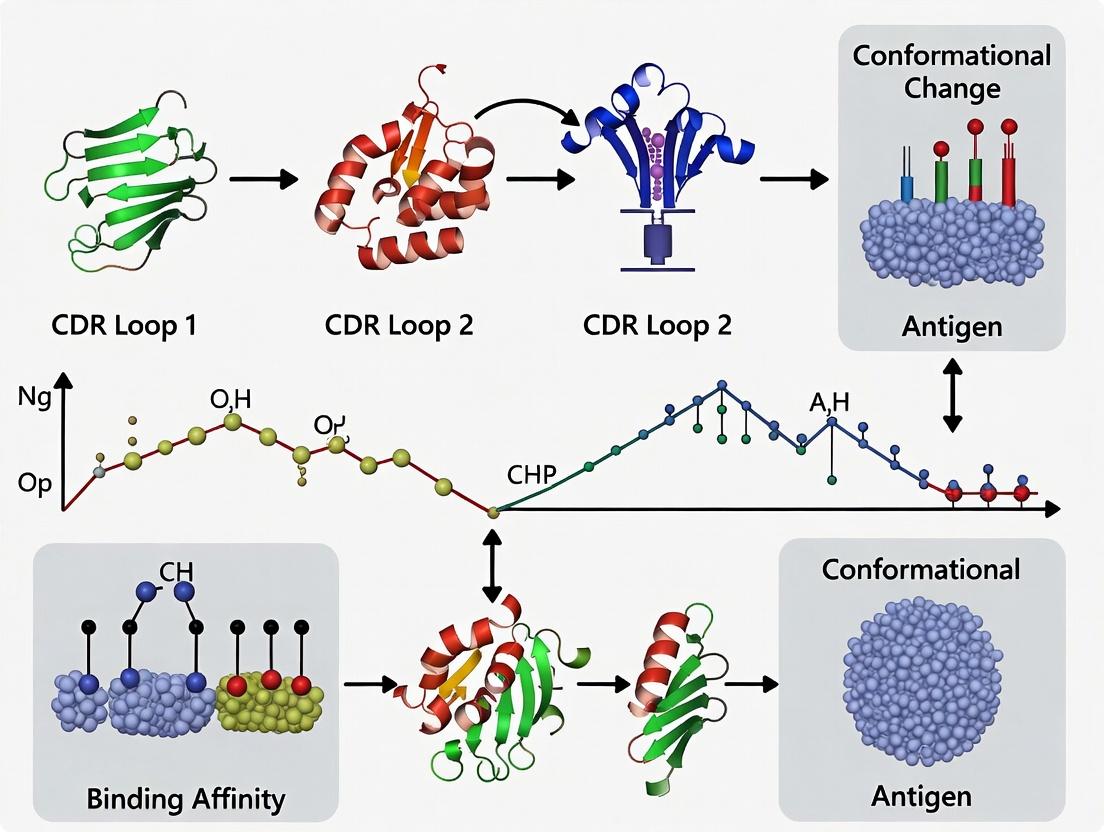
This article provides a comprehensive review of Complementarity-Determining Region (CDR) loop flexibility and its critical role in antibody-antigen binding for researchers and drug developers.
The Dynamics of CDR Loop Flexibility: How Structural Plasticity Drives Antibody-Antigen Recognition and Enables Next-Generation Therapeutics
Abstract
This article provides a comprehensive review of Complementarity-Determining Region (CDR) loop flexibility and its critical role in antibody-antigen binding for researchers and drug developers. We explore the foundational principles of CDR conformational dynamics, covering canonical structures and sequence-dependent plasticity. The methodological section details cutting-edge computational and experimental techniques for analyzing loop flexibility, including molecular dynamics, deep mutational scanning, and advanced structural biology. We address common challenges in engineering CDR loops for stability and affinity, offering optimization strategies for therapeutic candidates. Finally, we compare engineered antibodies with flexible vs. rigid loops, examining their performance in preclinical and clinical contexts. This guide synthesizes current research to inform the rational design of antibodies with tailored binding dynamics for improved efficacy and developability.
Decoding the Dance of CDR Loops: The Structural and Energetic Basis of Antibody Flexibility
Within the broader thesis on Complementarity-Determining Region (CDR) loop flexibility in antigen binding research, this guide provides a foundational technical analysis of the structural definitions and canonical classifications of the six hypervariable loops. The antigen-binding site of an antibody is formed by three CDRs from the heavy chain (H1, H2, H3) and three from the light chain (L1, L2, L3). While H3 exhibits immense sequence and conformational diversity, the loops L1, L2, L3, H1, and H2 often adopt a limited set of main-chain conformations known as canonical structures. This structural predictability is critical for rational antibody design and engineering, serving as a counterpoint to studies focused on dynamic flexibility.
Core Definitions and Loop Characteristics
Loop Delineation: Chothia and Kabat Numbering
Precise definition of loop boundaries is essential. Two primary numbering schemes are used:
- Kabat Scheme: Defines loops based on sequence variability.
- Chothia Scheme: Refined definition based on structural location, more accurately identifying the loop residues that form the binding site.
Table 1: CDR Loop Definitions by Chothia Numbering
| CDR Loop | Chain | Start Position (Chothia) | End Position (Chothia) | Approximate Length Range (Residues) |
|---|---|---|---|---|
| L1 | Light (κ or λ) | L24 | L34 | 10-17 |
| L2 | Light (κ or λ) | L50 | L56 | 7 |
| L3 | Light (κ) | L89 | L97 | 7-11 |
| L3 | Light (λ) | L89 | L96 | 7-11 |
| H1 | Heavy | H26 | H32 | 10-12 |
| H2 | Heavy | H52 | H56 | 16-19 |
| H3 | Heavy | H95 | H102 | 3-25+ |
The Concept of Canonical Structures
Canonical structures are defined by the loop length and the presence of key conserved residues (e.g., glycines, prolines, hydrophobic residues) that stabilize a specific backbone conformation through a network of hydrogen bonds and packing interactions. H3 is generally excluded from canonical classification due to its high structural variability influenced by D and J gene segments and junctional diversity.
Table 2: Canonical Structure Classes for Key CDR Loops
| CDR Loop | Common Canonical Classes (Length in Residues) | Key Structural Determinants |
|---|---|---|
| L1 | 11aa, 13aa, 15aa, 17aa | Length; conserved Gly, Pro, or hydrophobic residues at specific positions. |
| L2 | 8aa (κ-chain only) | Almost invariant length and conformation in κ-chains. |
| L3 | 9aa (κ-chain: Type 1-4), 8aa, 11aa | Length; disulfide bond (Cys88-Cys94 in κ); conserved Gln90, Pro95. |
| H1 | 13aa (Type 1-3) | Length; conserved Gly at H26, Phe/Trp at H29, Arg/Lys at H94. |
| H2 | 10aa (Type 1-4) | Length; conserved Gly at H52, Trp at H52, hydrophobic at H67. |
| H3 | N/A (Highly diverse) | Classified by architecture (kinked, extended, bulged) and base structure (Type 1-4). |
Experimental Protocols for Canonical Structure Analysis
Protocol: Determining Canonical Class from Sequence
Objective: Predict the most probable canonical structure class for L1, L2, L3, H1, and H2 from amino acid sequence.
- Sequence Alignment: Align the antibody variable domain sequence to a standard numbering scheme (e.g., Chothia) using tools like AbNum or PyIR.
- Extract Loop Sequences: Isolate the residue ranges for each CDR loop as defined in Table 1.
- Record Loop Length: Count the number of residues for each loop.
- Identify Key Residues: For each loop, check positions known to determine canonical class (see Table 2). For example:
- For H1, check residue type at positions H24, H26, H29, and H94.
- For L3 in κ-chains, check residues at positions L90, L94, L95, L96.
- Database Query: Input the loop length and key residue identities into a canonical structure prediction database (e.g., the North Canonical Classifier, AbYsis) to assign the most probable class.
- Structural Homology Check (Optional): Perform a BLAST search against the PDB using the loop sequence. Analyze top hits for consistent backbone conformation.
Protocol: Structural Validation via X-ray Crystallography
Objective: Experimentally determine the canonical class and precise 3D conformation.
- Protein Expression & Purification: Express the antibody Fv or Fab fragment in a mammalian (e.g., HEK293) or prokaryotic (e.g., E. coli) system. Purify via affinity (Protein A/G/L) and size-exclusion chromatography.
- Crystallization: Screen purified protein (at >5 mg/mL) using commercial sparse-matrix screens (e.g., Hampton Research) via vapor diffusion.
- Data Collection & Processing: Flash-cool crystal in liquid N2. Collect diffraction data at a synchrotron source. Index, integrate, and scale data using software like XDS or HKL-3000.
- Molecular Replacement: Solve the phase problem using a known antibody structure (e.g., from PDB) as a search model in Phaser (CCP4 or Phenix).
- Model Building & Refinement: Manually rebuild CDR loops in Coot using sigmaA-weighted 2Fo-Fc and Fo-Fc maps. Perform iterative refinement in Refmac5 or Phenix.refine.
- Canonical Assignment: Superimpose the solved CDR loops onto a library of canonical cluster templates (e.g., using PyMOL or Chothia's original criteria) to assign the final class based on RMSD of backbone atoms.
Visualization: Canonical Structure Determination Workflow
Title: Canonical Structure Prediction & Validation Workflow
The Scientist's Toolkit: Key Research Reagent Solutions
Table 3: Essential Reagents and Materials for CDR Structural Analysis
| Item | Function in CDR Loop Research | Example/Supplier |
|---|---|---|
| Chothia Numbering Script/Tool | Automates consistent CDR residue numbering from sequence for canonical class prediction. | AbNum (SACS), PyIR, ANARCI. |
| Canonical Classifier Database | Web server or database to match loop length/sequence to known canonical clusters. | North Canonical Classifier, AbYsis, PIGS. |
| Antibody Fab/Fv Expression Vector | System for high-yield, soluble expression of antibody fragments for structural studies. | pFUSE vectors (Invivogen), pET-based systems with pelB/signal sequences. |
| Affinity Chromatography Resin | Purifies expressed antibody fragments via capture of Fc (Protein A/G) or light chain (Protein L). | MabSelect SuRe (Cytiva), Protein L Agarose (Thermo Fisher). |
| Sparse-Matrix Crystallization Screen | First-pass screen to identify conditions for antibody fragment crystallization. | JCGSG Suite (Qiagen), MemGold & MemGold2 (Molecular Dimensions). |
| Cryoprotectant Solution | Protects protein crystals from ice formation during flash-cooling for data collection. | Paratone-N, LV CryoOil, glycerol solutions. |
| Molecular Replacement Search Model | Known antibody structure (high homology) for phasing X-ray diffraction data. | PDB entries (e.g., 1FVD, 7SIL), Swiss-Model Repository. |
| Structural Biology Software Suite | Integrated platform for X-ray data processing, model building, refinement, and analysis. | Phenix, CCP4, BUSTER, Coot, PyMOL. |
Within the broader thesis on CDR (Complementarity-Determining Region) loop flexibility in antigen binding research, this whitepaper explores the critical paradigm shift from viewing protein structures as static entities to understanding them as dynamic conformational ensembles. The inherent flexibility of CDR loops, particularly H3, is a fundamental determinant of antibody affinity, specificity, and cross-reactivity. This guide delves into the experimental and computational methodologies that capture these ensembles, linking structural dynamics directly to antigen-binding function and drug development outcomes.
X-ray crystallography provides high-resolution snapshots of antibody-antigen complexes, but these static pictures often mask the intrinsic dynamics of CDR loops. In solution, these loops sample a broad distribution of conformations—a conformational ensemble. The binding event often involves a process of "conformational selection" or "induced fit," where a pre-existing sub-population from the ensemble is stabilized upon antigen encounter. Understanding this landscape is not academic; it is crucial for engineering antibodies with enhanced properties, for predicting cross-reactivity, and for designing molecules that target specific conformational states.
Quantitative Data: Capturing the Ensemble
Table 1: Experimental Techniques for Characterizing CDR Conformational Ensembles
| Technique | Spatial Resolution | Temporal Resolution | Key Measurable Parameter | Applicability to CDR Loops |
|---|---|---|---|---|
| X-ray Crystallography | Atomic (~1-3 Å) | Static (single state) | Precise atomic coordinates, B-factors (disorder) | Identifies dominant state; high B-factors in loops suggest flexibility. |
| NMR Spectroscopy | Atomic (~1-5 Å) | Nanosecond to second | Chemical shifts, J-couplings, NOEs, R1/R2 relaxation | Directly probes ensemble distributions and dynamics in solution. |
| Hydrogen-Deuterium Exchange Mass Spectrometry (HDX-MS) | Peptide level (5-20 residues) | Millisecond to hour | Deuterium uptake rate | Probes solvent accessibility & dynamics; identifies flexible/ordered regions upon binding. |
| Double Electron-Electron Resonance (DEER) / PELDOR | ~20-60 Å | Static (frozen ensemble) | Distance distributions between spin labels | Measures nanoscale distances in loops, revealing multiple conformations. |
| Molecular Dynamics (MD) Simulations | Atomic | Femtosecond to millisecond | Trajectory of atomic positions, free energy landscapes | Computationally generates ensembles; validates and interprets experimental data. |
Table 2: Illustrative Metrics of CDR-H3 Loop Flexibility from Recent Studies (2023-2024)
| Antibody System | Technique | Key Quantitative Finding | Implication for Antigen Binding |
|---|---|---|---|
| Broadly Neutralizing Anti-Influenza (bnAb) | Long-timescale MD + Cryo-EM | CDR-H3 samples 4 dominant sub-states in pre-fusion conformation. | Conformational selection enables recognition of diverse hemagglutinin variants. |
| Anti-PD-1 Therapeutic Antibody | HDX-MS & NMR | CDR-L3 shows >80% deuterium uptake in 10 sec (unbound) vs. <20% (bound). | High pre-binding flexibility enables adaptation to the rigid PD-1 epitope. |
| SARS-CoV-2 RBD-binder | DEER Spectroscopy | Distance distribution between H3 base and tip shows two major peaks (25Å & 32Å). | Ensemble contains both "collapsed" and "extended" loop states relevant for affinity maturation. |
Experimental Protocols: Key Methodologies
Protocol 1: HDX-MS to Probe CDR Loop Dynamics Upon Antigen Binding Objective: To quantify the changes in solvent accessibility and dynamics of CDR loops before and after antigen complex formation.
- Sample Preparation: Prepare separate samples of purified antibody (5 µM) and antibody:antigen complex at 1:1.2 molar ratio in PBS pH 7.4.
- Deuterium Labeling: Dilute samples 10-fold into D2O-based labeling buffer (PBS pD 7.4). Incubate at 25°C for various time points (e.g., 10s, 1min, 10min, 1h).
- Quenching: At each time point, add chilled quench buffer (low pH, e.g., 0.1% formic acid, 4°C) to reduce pH to ~2.5 and lower temperature to 0°C, slowing exchange.
- Digestion & LC-MS/MS: Rapidly inject quenched sample onto an immobilized pepsin column for online digestion (≈ 3 min). Peptides are desalted and separated on a C18 UPLC column at 0°C.
- Mass Analysis: Analyze peptides by high-resolution mass spectrometry (e.g., Q-TOF). Monitor mass shift for each peptide over time.
- Data Processing: Use software (e.g., HDExaminer) to calculate deuterium uptake for each peptide. Compare uptake curves for antibody alone vs. in complex. Decreased uptake in a CDR loop peptide upon binding indicates stabilization/ordering.
Protocol 2: DEER Spectroscopy for CDR Loop Distance Distributions Objective: To obtain distance distributions between specific sites within a CDR loop (e.g., base and tip) to reveal conformational heterogeneity.
- Site-Directed Spin Labeling (SDSL): Introduce cysteine mutations at two chosen sites within the CDR loop (e.g., positions flanking H3). Ensure other native cysteines are removed or protected.
- Labeling: Purify the cysteine mutant antibody. React with a methanethiosulfonate spin label (e.g., MTSL) in molar excess. Remove excess label via size-exclusion chromatography.
- Sample Preparation: Concentrate spin-labeled antibody, add 20-30% (v/v) deuterated glycerol as cryoprotectant, and flash-freeze in quartz EPR tubes.
- DEER Measurement: Perform 4-pulse DEER experiment on a Q-band EPR spectrometer at temperatures of 50-80 K. The primary data is a background-corrected dipolar evolution time trace.
- Data Analysis: Use software like DeerAnalysis or LongDistances. Process the time trace via Tikhonov regularization or model-based fitting to generate a distance distribution profile (P(r)). Multiple peaks indicate a conformational ensemble.
Protocol 3: Multi-µs Molecular Dynamics Simulation of an Fv Fragment Objective: To computationally generate a conformational ensemble of the antibody paratope in explicit solvent.
- System Setup: Use a crystal structure of the antibody Fv region. Model missing loops if necessary. Place the Fv in a cubic water box (TIP3P model) with ~150 mM NaCl ions to neutralize charge.
- Energy Minimization & Equilibration: Minimize energy using steepest descent algorithm. Gradually heat system from 0 to 310 K over 100 ps under NVT ensemble, then equilibrate pressure at 1 atm over 1 ns under NPT ensemble.
- Production Run: Run an extended, unbiased simulation (≥1 µs, often multiple replicates) using a GPU-accelerated MD package (e.g., AMBER, GROMACS, OPENMM) with a modern force field (e.g., ff19SB). Save atomic coordinates every 100 ps.
- Ensemble Analysis: Cluster snapshots based on CDR loop backbone dihedrals (e.g., using RMSD). Calculate per-residue root-mean-square fluctuations (RMSF). Construct Markov State Models or free energy landscapes to identify metastable states and transition probabilities.
Visualizing Workflows and Relationships
Diagram Title: Integrative Pipeline for Conformational Ensemble Determination
Diagram Title: Research Context from Core Concept to Applications
The Scientist's Toolkit: Research Reagent Solutions
Table 3: Essential Reagents and Materials for Ensemble Studies
| Item | Function/Benefit | Example/Supplier (Illustrative) |
|---|---|---|
| Deuterium Oxide (D₂O) (99.9%) | Essential labeling reagent for HDX-MS experiments. High isotopic purity ensures accurate mass shift measurement. | Cambridge Isotope Laboratories, Sigma-Aldrich. |
| MTSL Spin Label | Methanethiosulfonate spin label for site-directed spin labeling (SDSL) in DEER experiments. Forms disulfide bond with engineered cysteine. | Toronto Research Chemicals. |
| Deuterated Glycerol-d₈ | Cryoprotectant for DEER samples. Minimizes interference with EPR signal and prevents ice formation. | Cambridge Isotope Laboratories. |
| Immobilized Pepsin Column | Provides rapid, reproducible online digestion for HDX-MS workflow at low pH and temperature (0-4°C). | Thermo Scientific Immobilized Pepsin, TOPTION. |
| Size-Exclusion Chromatography (SEC) Columns | Critical for purifying antibody-antigen complexes prior to HDX-MS or other solution studies, removing excess antigen. | Cytiva Superdex 200 Increase, TSKgel from Tosoh. |
| Cysteine-less Expression Vector | Backbone for antibody Fv/Fab expression, enabling clean incorporation of cysteine mutations for SDSL without background labeling. | Common in-house plasmid systems. |
| High-Performance Computing (HPC) Resources | Cloud or cluster-based GPU resources (e.g., NVIDIA A100) are essential for running microsecond-scale MD simulations. | AWS EC2, Azure NDv4 series, in-house clusters. |
1. Introduction within the Context of CDR Loop Flexibility in Antigen Binding
The binding of an antibody to its antigen is a cornerstone of adaptive immunity and a critical process in biotherapeutic design. This interaction is primarily mediated by the hypervariable Complementarity-Determining Regions (CDRs), loops that exhibit remarkable conformational diversity. A comprehensive understanding of antigen binding necessitates moving beyond static structural snapshots to the dynamic energy landscapes that govern CDR loop motions. The interplay of entropy (conformational freedom) and enthalpy (bonding interactions) dictates the kinetics of binding—the rates of association (kon) and dissociation (koff). This whitepaper deconstructs the energy landscape of loop dynamics, providing a technical guide for researchers aiming to engineer antibodies with tailored binding kinetics by manipulating the thermodynamic and kinetic parameters of CDR flexibility.
2. Deconstructing the Energy Landscape: Key Principles
The energy landscape theory describes the conformational space of a protein loop as a multidimensional funnel. The breadth represents entropy, while the depth represents enthalpy.
- Entropy (ΔS): A measure of conformational disorder. Flexible, disordered loops have high entropy, which is lost upon binding to a specific antigen conformation. This entropic penalty must be overcome by favorable enthalpic interactions.
- Enthalpy (ΔH): The sum of favorable (e.g., hydrogen bonds, van der Waals) and unfavorable (e.g., desolvation, steric clashes) interactions formed upon binding.
- Binding Kinetics: The landscape's topography directly determines kinetics. A broad, flat basin (high entropy, low enthalpy) facilitates rapid sampling and association (high kon). A deep, narrow well (low entropy, high enthalpy) results in slow dissociation (low koff). The transition state energy barrier height dictates both rates.
3. Experimental Protocols for Quantifying Landscape Parameters
3.1. Isothermal Titration Calorimetry (ITC) for ΔH and KD
- Protocol: The antibody (in cell) is titrated with aliquots of antigen (in syringe) at constant temperature. The instrument measures the heat released or absorbed after each injection.
- Data Analysis: The integrated heat peaks are fit to a binding model, directly yielding the binding enthalpy (ΔH), stoichiometry (N), and association constant (KA=1/KD). The change in entropy (ΔS) is calculated using the relationship: ΔG = ΔH - TΔS = -RT ln KA.
3.2. Surface Plasmon Resonance (SPR) for kon and koff
- Protocol: The antibody is immobilized on a sensor chip. Antigen at varying concentrations is flowed over the surface. The real-time change in refractive index (Response Units, RU) is monitored.
- Data Analysis: Sensorgrams for association and dissociation phases are globally fitted to a 1:1 Langmuir binding model. The fit directly provides the association rate constant (kon), dissociation rate constant (koff), and the equilibrium constant (KD = koff/kon).
3.3. Nuclear Magnetic Resonance (NMR) Spectroscopy for Conformational Dynamics
- Protocol (^{15}N Relaxation Dispersion): Uniformly ^{15}N-labeled antibody fragment (Fab/scFv) is prepared. NMR relaxation rates (R2) are measured at multiple magnetic field strengths.
- Data Analysis: Increased R2 at higher fields indicates μs-ms timescale conformational exchange. Dispersion profiles are fitted to models (e.g., two-state exchange) to extract the populations of minor conformational states and their interconversion rates (kex), mapping the kinetic barriers on the energy landscape.
3.4. Molecular Dynamics (MD) Simulations for Atomistic Insight
- Protocol: A high-resolution structure of the antibody is solvated in an explicit water box with ions. Simulations are run for hundreds of nanoseconds to microseconds using force fields (e.g., AMBER, CHARMM).
- Data Analysis: Trajectories are analyzed for root-mean-square fluctuation (RMSF) of CDR residues, free energy landscapes projected onto collective variables (e.g., dihedral angles), and calculation of conformational entropy through quasi-harmonic or dihedral correlation analysis.
4. Data Presentation: Quantitative Landscape of Model CDR-H3 Loops
Table 1: Thermodynamic and Kinetic Parameters for Engineered Anti-Lysozyme Antibodies (Model System)
| Antibody Variant | CDR-H3 Flexibility (RMSF, Å) | KD (nM) | ΔH (kcal/mol) | -TΔS (kcal/mol) | kon (×105 M-1s-1) | koff (×10-3 s-1) | Conformational Exchange Rate, kex (s-1) |
|---|---|---|---|---|---|---|---|
| Wild-Type (HyHEL-63) | 1.8 ± 0.3 | 1.5 | -12.2 | 4.1 | 2.8 | 0.42 | 1,200 |
| Rigidified (S100P) | 1.1 ± 0.2 | 0.8 | -14.5 | 6.8 | 1.1 | 0.09 | 350 |
| Flexible (G101A) | 2.5 ± 0.5 | 4.2 | -9.8 | 2.5 | 4.5 | 1.89 | 2,800 |
Table 2: Key Research Reagent Solutions for Energy Landscape Studies
| Reagent / Material | Function in Analysis |
|---|---|
| Monoclonal Antibody (≥95% pure) | High-purity sample is essential for accurate ITC, SPR, and NMR to prevent artifact signals. |
| Antigen (Lysozyme, VEGF, etc.) | The binding partner must be of matching high purity and in a compatible buffer. |
| ITC Buffer (PBS + 1% DMSO) | Carefully matched buffer between cell and syringe to eliminate heats of dilution. DMSO may be needed for solubility. |
| CM5 or Series S Sensor Chip (SPR) | Carboxymethylated dextran surface for covalent amine-coupling of the antibody ligand. |
| ^{15}N-NH4Cl / ^{13>C-Glucose (NMR) | Isotopically labeled nutrients for bacterial expression of uniformly labeled antibody fragments for NMR studies. |
| AMBER ff19SB Force Field (MD) | A modern, optimized force field for accurate simulation of protein backbone and side-chain dynamics. |
5. Visualizing Pathways and Relationships
Diagram Title: The Interplay of Loop Dynamics, Energy Landscape, and Binding Metrics
Diagram Title: Multi-Technique Workflow for Full Landscape Characterization
Within the broader thesis on CDR (Complementarity-Determining Region) loop flexibility in antigen binding research, the primary sequence of antibody variable domains plays a definitive role. The conformational adaptability of CDR-H3, in particular, is critical for enabling antibodies to recognize an immense diversity of antigenic epitopes. This whitepaper examines the specific contributions of three key residue types—glycine, proline, and aromatic residues (phenylalanine, tyrosine, tryptophan)—as primary sequence determinants of backbone flexibility and loop architecture. Understanding these contributions is fundamental for rational antibody engineering and therapeutic drug development.
Structural and Energetic Roles of Key Residues
Glycine: The absence of a side chain (a hydrogen atom at the β-carbon) confers glycine with unique conformational freedom. It lacks steric restrictions, allowing adoption of dihedral angle combinations (φ, ψ) forbidden to other residues. In CDR loops, glycine acts as a molecular "hinge," facilitating sharp turns and localized backbone flexibility essential for shape complementarity.
Proline: The cyclic side chain of proline covalently links the β-carbon to the backbone nitrogen, creating a rigid pyrrolidine ring. This structure severely restricts the φ angle to approximately -60°, introducing backbone rigidity and often inducing kinks or terminating secondary structure elements. Proline can stabilize specific loop conformations.
Aromatic Residues (Phe, Tyr, Trp): These residues influence flexibility indirectly through bulky, rigid side chains that participate in dense networks of stabilizing interactions. Aromatic stacking (π-π interactions) and hydrophobic clustering can lock loop conformations. Tyrosine's hydroxyl group also allows for hydrogen bonding, further stabilizing specific states.
Quantitative Impact on Loop Conformational Landscapes
The following table summarizes quantitative data from recent structural bioinformatics analyses (e.g., PDB mining, molecular dynamics simulations) on CDR loops in solved antibody-antigen complexes.
Table 1: Statistical Prevalence and Conformational Impact of Key Residues in CDR Loops
| Residue | Average Frequency in CDR-H3 (%)* | Preferred Dihedral Angles (φ, ψ) | Impact on B-factor (Backbone Ų) | Common Role in Loop Structure |
|---|---|---|---|---|
| Glycine | 15-25% | Broad distribution, peaks near (180°, 180°) and (-90°, 0°) | +10-15 | Hinge point, negative ϕ conformation, flexibility hotspot. |
| Proline | 5-10% | φ constrained to ~ -60° ± 20° | -5-10 | Conformation restrainer, turn initiator, rigidifier. |
| Phenylalanine | 8-12% | Standard β-sheet (~ -120°, 120°) | ~0 (Sidechain may elevate) | Hydrophobic core, aromatic stacking, limited direct flexibility role. |
| Tyrosine | 10-15% | Standard β-sheet (~ -120°, 120°) | ~0 (Sidechain may elevate) | Stabilization via H-bond (OH) and π-stacking; can anchor loop. |
| Tryptophan | 5-8% | Standard β-sheet (~ -120°, 120°) | ~0 (Sidechain may elevate) | Major stabilizing role via bulky hydrophobic/stacking interactions. |
Frequency varies by species and CDR loop definition (e.g., Kabat, Chothia). CDR-H3 shows highest variability. *Relative to mean backbone B-factor of the loop region; positive value indicates increased flexibility/disorder.
Table 2: Experimental Measures of Flexibility and Stability
| Experimental Technique | Measured Parameter | Glycine-Rich Loop | Proline-Rich Loop | Aromatic-Rich Loop |
|---|---|---|---|---|
| HDX-MS | Deuteration Rate (min⁻¹)* | High (>0.5) | Low (<0.2) | Medium-Low (0.2-0.4) |
| Molecular Dynamics | RMSF (Å) | High (1.5-3.0) | Low (0.8-1.5) | Medium (1.2-2.0) |
| DSC/ITC | ΔG of Folding (kcal/mol) | Less Favorable (-5 to -8) | Variable | More Favorable (-10 to -15) |
| NMR Relaxation | S² Order Parameter | Low (0.6-0.8) | High (0.85-0.95) | Medium-High (0.75-0.9) |
*Representative values for illustration; actual rates depend on sequence context and solvent exposure. HDX-MS: Hydrogen-Deuterium Exchange Mass Spectrometry; RMSF: Root Mean Square Fluctuation; DSC: Differential Scanning Calorimetry; ITC: Isothermal Titration Calorimetry; NMR: Nuclear Magnetic Resonance.
Experimental Protocols for Characterizing Flexibility
Protocol 1: Molecular Dynamics (MD) Simulation for Loop Conformational Sampling
- System Preparation: Obtain an antibody Fv structure (PDB ID). Use software (e.g., CHARMM-GUI, LEaP) to protonate the structure, solvate it in a TIP3P water box with 150 mM NaCl, and neutralize the system.
- Parameterization: Apply a suitable force field (e.g., CHARMM36m, AMBER ff19SB) for proteins.
- Simulation Run: Energy minimize, then equilibrate under NVT and NPT ensembles. Perform production MD for 500 ns to 1 µs using GPU-accelerated software (e.g., GROMACS, NAMD, OpenMM). Maintain temperature at 300 K and pressure at 1 bar using coupling algorithms.
- Analysis: Calculate backbone Root Mean Square Fluctuation (RMSF) for each CDR residue. Perform dihedral angle (φ, ψ) population analysis for glycine and proline. Identify stable clusters of loop conformations.
Protocol 2: Hydrogen-Deuterium Exchange Mass Spectrometry (HDX-MS)
- Labeling: Dilute antibody sample into D₂O-based labeling buffer (pH 7.4, 25°C) to initiate exchange.
- Quenching: At defined time points (e.g., 10s, 1min, 10min, 1hr), withdraw aliquot and quench by lowering pH to 2.5 and temperature to 0°C.
- Digestion & Analysis: Pass quenched sample through an immobilized pepsin column for rapid digestion. Inject peptides onto a UPLC-MS system held at 0°C. Perform LC separation and MS analysis.
- Data Processing: Use software (e.g., HDExaminer) to identify peptides and calculate deuterium uptake for each. Residue-level mapping identifies flexible (high exchange) vs. rigid (low exchange) regions, highlighting the impact of glycine (high exchange) vs. aromatic clusters (low exchange).
Protocol 3: X-ray Crystallography B-Factor Analysis
- Crystallization & Data Collection: Crystallize the antibody-antigen complex. Collect high-resolution (<2.5 Å) diffraction data at a synchrotron source.
- Structure Refinement: Refine the structure using Phenix or Refmac. Anisotropic B-factor refinement is preferred if data resolution and quality permit.
- Analysis: Extract per-atom B-factors (temperature factors) from the refined PDB file. Calculate the average backbone B-factor for each residue in the CDR loops. Normalize against the average B-factor of the framework β-sheet core. Residues with normalized B-factors >1.5 are considered flexible.
Visualization of Concepts and Workflows
Diagram Title: Experimental Workflow for Characterizing Loop Flexibility
Diagram Title: Logical Flow from Sequence to Binding Function
The Scientist's Toolkit: Key Research Reagents & Materials
| Item | Function/Brief Explanation |
|---|---|
| Recombinant Antibody (Fv/Fab) | Purified protein sample for structural and biophysical studies. Essential for HDX-MS, crystallization, and ITC. |
| Deuterium Oxide (D₂O) Buffer | Labeling buffer for HDX-MS experiments. Allows measurement of backbone amide hydrogen exchange rates. |
| Crystallization Screening Kits | Pre-formulated sparse matrix screens (e.g., from Hampton Research, Molecular Dimensions) to identify initial crystallization conditions for X-ray studies. |
| MD Simulation Software & Force Fields | Software suites (GROMACS, AMBER, CHARMM) with updated force fields (CHARMM36m, ff19SB) for accurate modeling of protein dynamics and loop conformations. |
| HDX-MS Data Processing Software | Specialized software (e.g., HDExaminer, DynamX) for automated peptide identification, deuterium uptake calculation, and flexibility mapping from MS data. |
| Synchrotron Beamtime Access | Required for high-resolution X-ray diffraction data collection on antibody crystals, enabling B-factor analysis. |
| Size-Exclusion Chromatography Column | For polishing antibody samples to high monomeric purity prior to any structural biology experiment, ensuring homogeneity. |
| Immobilized Pepsin Column | Used in HDX-MS workflow for rapid, reproducible, and low-pH digestion of labeled protein prior to LC-MS analysis. |
This whitepaper examines the fundamental principle that somatic hypermutation (SHM) sculpts antibody affinity and specificity not merely by altering side-chain chemistry but by modulating the intrinsic backbone flexibility of complementarity-determining region (CDR) loops. Framed within the broader thesis of CDR loop flexibility in antigen binding, we detail how germline-encoded loops are often inherently flexible, allowing for initial low-affinity cross-reactivity, and how SHM introduces rigidity-enhancing mutations that lock loops into optimal conformations for high-affinity binding. This document provides a technical guide to the experimental paradigms and quantitative data supporting this model, serving as a resource for researchers and drug developers engineering next-generation biologics.
The germline antibody repertoire is characterized by CDR loops, particularly the CDR-H3, with significant conformational heterogeneity. This inherent flexibility enables a limited set of germline genes to recognize a vast array of antigens, albeit with modest affinity. The process of affinity maturation, driven by SHM and clonal selection in germinal centers, refines these antibodies. A growing body of structural and biophysical evidence indicates that a key outcome of SHM is the modulation of loop rigidity—replacing flexible germline conformations with more rigid, pre-organized states that minimize entropy loss upon antigen binding, thereby dramatically increasing binding affinity.
Core Mechanisms: How Mutations Modulate Rigidity
SHM influences loop rigidity through several interconnected mechanisms:
- Introduction of Rigidifying Residues: Replacement of glycine or serine with bulky or structured residues (e.g., arginine, tyrosine) restricts backbone dihedral angle freedom.
- Strengthening of Core Packing: Mutations that improve the packing of the hydrophobic core beneath the CDR loops stabilize the loop's base, reducing its overall flexibility.
- Formation of New Hydrogen Bonds & Salt Bridges: Somatically introduced polar or charged residues can form intramolecular hydrogen bonds or salt bridges that "pin" loop conformations.
- Disulfide Bond Formation: Rare but impactful, the introduction of cysteine pairs can form disulfide bonds within a loop, drastically rigidifying its structure.
Quantitative Data: Biophysical Evidence for SHM-Induced Rigidification
Table 1: Comparative Biophysical Properties of Germline vs. Matured Antibodies
| Property | Germline Antibody (Pre-SHM) | Affinity-Matured Antibody (Post-SHM) | Measurement Technique | Implication for Flexibility |
|---|---|---|---|---|
| Affinity (KD) | µM to nM range (e.g., 10 µM) | nM to pM range (e.g., 2 nM) | Surface Plasmon Resonance (SPR) | Increased affinity often correlates with rigidification. |
| Entropy Cost (TΔS) | Large, unfavorable (e.g., -30 kJ/mol) | Reduced, less unfavorable (e.g., -15 kJ/mol) | Isothermal Titration Calorimetry (ITC) | Lower entropy penalty suggests a more pre-organized, rigid loop. |
| Order Parameters (S²) | Lower (e.g., 0.7) | Higher (e.g., 0.85) | NMR Relaxation | Higher S² indicates reduced backbone flexibility on ps-ns timescales. |
| B-Factor (Cα atoms) | Higher (e.g., 60 Ų) | Lower (e.g., 40 Ų) | X-ray Crystallography | Lower B-factors indicate reduced atomic displacement/rigidity in crystal. |
| Conformational Ensemble Size | Large, multiple distinct states | Small, 1-2 dominant states | HDX-MS / Molecular Dynamics | SHM reduces the number of accessible loop conformations. |
Table 2: Impact of Specific SHM-Induced Structural Modifications
| Mutation Type | Example (Germline → Matured) | Structural Consequence | Measured Change in Loop Flexibility |
|---|---|---|---|
| Gly → Arg | H-CDR2: G54 → R54 | Restricts φ/ψ angles; forms H-bonds | RMSF* decreased from 1.8 Å to 0.9 Å (MD simulation). |
| Ser → Tyr | L-CDR3: S91 → Y91 | Adds bulky side-chain; enhances packing | B-factor decreased by 35% in crystal structure. |
| Asp → Lys | H-CDR1: D31 → K31 | Forms salt bridge with adjacent Glu | HDX protection increased 10-fold in loop region. |
| Val → Phe | Framework: V11 → F11 | Improves core packing beneath loop | Order parameter (S²) increased from 0.72 to 0.88. |
| *RMSF: Root Mean Square Fluctuation |
Experimental Protocols for Studying Loop Rigidity
Protocol 1: Hydrogen-Deuterium Exchange Mass Spectrometry (HDX-MS) for Conformational Dynamics
- Sample Preparation: Purify germline and matured antibody variants (0.5-1 mg/mL) in PBS pD 7.4.
- Deuterium Labeling: Dilute antibody 1:10 into D₂O-based labeling buffer for various time points (10 sec to 4 hrs) at 25°C.
- Quenching: Lower pH to 2.5 and temperature to 0°C to minimize back-exchange.
- Digestion & LC-MS/MS: Inject onto an immobilized pepsin column for rapid digestion (1 min). Separate peptides via UPLC at 0°C.
- Mass Analysis: Use a high-resolution mass spectrometer (e.g., Q-TOF) to measure mass shift of peptides due to deuterium incorporation.
- Data Analysis: Calculate deuteration level per peptide. Regions showing decreased deuteration in the matured antibody indicate rigidification.
Protocol 2: Molecular Dynamics (MD) Simulation for Atomistic Insight
- System Preparation: Obtain or generate atomistic models of germline and matured Fv fragments. Solvate in a TIP3P water box with 150 mM NaCl.
- Energy Minimization & Equilibration: Minimize energy using steepest descent. Equilibrate system under NVT (100 ps) and NPT (1 ns) ensembles.
- Production Run: Perform unrestrained MD simulation for 100-500 ns per replicate (triplicate recommended) using AMBER or CHARMM force fields.
- Trajectory Analysis: Calculate:
- RMSF of Cα atoms for each CDR loop.
- Dihedral angle principal component analysis to visualize conformational populations.
- Contact maps to identify stabilized intramolecular interactions.
Protocol 3: Isothermal Titration Calorimetry (ITC) for Energetic Deconvolution
- Sample Preparation: Dialyze both antibody and antigen into identical buffer (e.g., PBS). Degas all samples.
- Titration: Load antigen (300 µM) into syringe and antibody (30 µM) into cell. Perform 19 injections (2 µL each) at 25°C with 150 sec spacing.
- Data Fitting: Fit the integrated heat data to a single-site binding model using instrument software.
- Energetic Analysis: Extract ΔH (enthalpy) and TΔS (entropy). A less negative TΔS value in the matured antibody suggests a reduced entropy penalty, consistent with rigidification.
Visualizing the Process: Pathways and Workflows
Title: SHM Drives Affinity Maturation via Loop Rigidification
Title: Integrated Workflow for Studying Loop Rigidity
The Scientist's Toolkit: Research Reagent Solutions
Table 3: Essential Materials and Reagents
| Item | Function & Application | Example/Supplier Notes |
|---|---|---|
| Recombinant Germline & Matured Fabs/Fvs | Essential paired samples for comparative studies. Must be expressed from identical frameworks except for SHM sites. | Produce via mammalian (HEK293) expression for proper folding. |
| Anti-Human Fc Biosensor Tips | For capturing full-length IgG in label-free binding assays (e.g., BLI/SPR). | FortéBio Octet AHC tips or Cytiva Series S SA chips. |
| HDX-MS Kit | Optimized buffers (labeling, quench) and columns for reproducible HDX workflow. | Waters HDX Premium Kit or Trajan HDX PAL System components. |
| Stable Isotope-labeled Media | For producing ¹⁵N/¹³C-labeled antibodies for NMR dynamics studies. | Silantes ISOGRO or Cambridge Isotope CGM-1000. |
| MD Simulation Software & Force Fields | For modeling and simulating antibody flexibility at atomic detail. | AMBER (ff19SB), CHARMM (c36m), GROMACS (2023+), or Desmond. |
| High-Precision ITC Instrument | For measuring the enthalpy and entropy contributions of binding. | Malvern MicroCal PEAQ-ITC or TA Instruments Affinity ITC. |
| Size-Exclusion Chromatography Columns | Critical for purifying monodisperse antibody samples for all structural studies. | Cytiva Superdex 200 Increase or Bio-Rad ENrich SEC 650. |
| Cryo-EM Grids & Vitrification Robot | For high-resolution structure determination of flexible antibody-antigen complexes. | Quantifoil R1.2/1.3 Au grids; Thermo Fisher Vitrobot Mark IV. |
The lesson from germline antibodies is clear: somatic hypermutation is a natural optimization algorithm for rigidifying flexible CDR loops, thereby enhancing affinity and specificity. This principle directly informs rational drug design:
- Antibody Engineering: Incorporating rigidifying mutations (e.g., "affinity maturing" in silico) can improve the potency of therapeutic antibodies.
- Immunogen Design: Vaccines can be designed to guide the B cell response toward selecting mutations that rigidify desired epitope-specific loops.
- Bispecifics & T-cell Engagers: Controlling CDR loop flexibility is crucial for fine-tuning the avidity and specificity of complex multispecific molecules. Understanding and harnessing the rules of SHM-mediated loop rigidification bridges fundamental immunology with the practical development of superior biologic therapeutics.
Tools and Techniques: Measuring and Harnessing CDR Loop Dynamics for Rational Antibody Design
The precise prediction of Complementarity-Determining Region (CDR) loop conformations, particularly the highly flexible CDR-H3 loop, remains a central challenge in computational structural immunology and antibody design. Within the context of antigen binding research, understanding loop flexibility is critical for elucidating mechanisms of affinity, specificity, and cross-reactivity. This whitepaper examines the complementary roles of two computational frontiers: Molecular Dynamics (MD) simulations, which provide dynamic and thermodynamic insights, and AlphaFold2, a deep learning system that predicts static structures from sequence. Their integration offers a powerful toolkit for advancing loop prediction beyond static snapshots.
Core Technologies and Their Application to Loops
AlphaFold2 forde novoLoop Modeling
AlphaFold2 (AF2) has revolutionized protein structure prediction by employing an attention-based neural network trained on known structures from the PDB. For loops, its Evoformer module extracts co-evolutionary signals from Multiple Sequence Alignments (MSA), which are particularly informative for conserved CDR loops. Its structure module then performs iterative refinements.
- Protocol for CDR Loop Prediction with AlphaFold2:
- Input Preparation: Gather the antibody Fv sequence (VH and VL). For best results, include the framework regions to provide structural context.
- MSA Generation: Use AF2's built-in search (HHblits, JackHMMER) against genomic databases (e.g., UniRef, BFD) to generate MSAs. AF2's performance on loops is sensitive to the depth and diversity of the MSA.
- Template Selection (Optional): AF2 can use known antibody structures as templates, but for novel loops, this is often disabled to encourage de novo prediction.
- Inference & Relaxation: Run the AF2 model to generate five ranked predictions (PDB files). The final step includes an Amber-based energy relaxation to correct minor steric clashes.
- Metrics: The primary output is a predicted Local Distance Difference Test (pLDDT) score per residue. pLDDT > 90 indicates high confidence, 70-90 good, 50-70 low, and <50 very low confidence. Loops often have lower pLDDT.
Molecular Dynamics for Sampling Loop Flexibility
MD simulations solve Newton's equations of motion for all atoms in a system, providing a time-evolving trajectory. For CDR loops, MD is used to sample the conformational landscape, assess stability, and calculate binding free energies.
- Protocol for All-Atom MD of an Antibody-Antigen Complex:
- System Preparation: Place the starting structure (from X-ray, NMR, or AF2) in a simulation box (e.g., cubic, dodecahedron) filled with explicit water molecules (e.g., TIP3P model). Add ions (Na⁺, Cl⁻) to neutralize charge and achieve physiological concentration (~150 mM).
- Force Field Assignment: Apply an all-atom force field (e.g., CHARMM36, Amber ff19SB). Special parameters are needed for disulfide bridges common in antibody domains.
- Energy Minimization: Use steepest descent/conjugate gradient algorithms to remove steric clashes.
- Equilibration: Perform short simulations (100 ps - 1 ns) under position restraints on the protein heavy atoms, first in the NVT ensemble (constant Number, Volume, Temperature) then in the NPT ensemble (constant Number, Pressure, Temperature) to stabilize density.
- Production Run: Run an unrestrained simulation for timescales relevant to loop motion (typically 100 ns to several µs). The required time depends on loop length and flexibility.
- Analysis: Calculate Root Mean Square Deviation (RMSD), Root Mean Square Fluctuation (RMSF) per residue, radius of gyration of loops, and hydrogen bond occupancy. Free energy landscapes can be constructed using collective variables like dihedral angles.
Quantitative Comparison of MD and AlphaFold2 for Loop Prediction
Table 1: Comparative Analysis of MD Simulations and AlphaFold2 for CDR Loop Studies
| Aspect | AlphaFold2 | Molecular Dynamics (Explicit Solvent) |
|---|---|---|
| Primary Output | Static, atomic coordinates with per-residue confidence (pLDDT). | Time-series trajectory of atomic coordinates, representing conformational ensemble. |
| Temporal Resolution | None (single-state prediction). Can generate multiple states but without temporal relationship. | Femtosecond timesteps, providing a continuous view of dynamics over nanoseconds to microseconds. |
| Key Strength for Loops | Excellent accuracy for conformationally restricted loops with evolutionary signals. Fast prediction (~mins). | Captures intrinsic flexibility, rare transitions, and solvent effects. Provides thermodynamic and kinetic parameters. |
| Key Limitation for Loops | Poor at predicting highly flexible, long loops with low MSA depth. Provides no dynamics or energy landscape. | Computationally expensive (µs-scale simulations require weeks on HPC). Accuracy limited by force field and sampling. |
| Typely Loop Prediction Accuracy (RMSD Å) | 1-2 Å for short, conserved loops (e.g., CDR-L1). Can be >4 Å for long CDR-H3 loops. | Can refine a starting model by 0.5-2 Å, but dependent on initial structure and simulation length. |
| Computational Cost | Moderate (GPU-based, minutes to hours per prediction). | Very High (CPU/GPU cluster, days to months for µs simulations). |
| Direct Output Metrics | pLDDT, Predicted Aligned Error (PAE). | RMSD, RMSF, Gibbs Free Energy, Solvent Accessible Surface Area (SASA). |
Integrated Workflow for Robust Loop Modeling
A synergistic approach leverages the strengths of both methods. A proposed workflow is:
Diagram 1: Integrated AF2-MD Workflow for CDR Loop Ensemble Prediction
The Scientist's Toolkit: Research Reagent Solutions
Table 2: Essential Computational Tools and Resources for Loop Prediction Research
| Tool/Resource | Category | Primary Function in Loop Research |
|---|---|---|
| AlphaFold2 (ColabFold) | Structure Prediction | Provides a user-friendly, accelerated pipeline for running AF2, crucial for rapid generation of initial loop models. |
| GROMACS / AMBER / NAMD | MD Engine | High-performance software suites for running all-atom MD simulations to sample loop dynamics and stability. |
| CHARMM36 / Amber ff19SB | Force Field | Empirical parameter sets defining atomic interactions; critical for the accuracy of MD-predicted loop conformations. |
| PyMOL / VMD | Visualization & Analysis | Used to visualize predicted structures, measure distances, analyze loop geometries, and render publication-quality figures. |
| MDAnalysis / MDTraj | Trajectory Analysis | Python libraries for programmatic analysis of MD trajectories, enabling calculation of RMSF, hydrogen bonds, and clustering. |
| RosettaAntibody / SnugDock | Specialized Docking | Algorithmic approaches for antibody-specific loop modeling and docking, often used as a comparator to AF2. |
| PDB (Protein Data Bank) | Database | Repository of experimentally solved antibody structures; essential for validation, template identification, and understanding canonical classes. |
The integration of deep learning-based structure prediction with physics-based molecular simulation represents the current computational frontier in tackling CDR loop flexibility. AlphaFold2 provides a highly accurate, data-driven starting point, while MD simulations offer a mechanistic understanding of loop dynamics, stability, and function. For antigen binding research, this combined approach moves beyond a single static structure towards a dynamic ensemble, offering deeper insights into the molecular determinants of antibody affinity and specificity, ultimately accelerating therapeutic antibody design.
The binding affinity and specificity of an antibody for its antigen are fundamentally governed by the conformational dynamics of its Complementarity-Determining Regions (CDRs). Rigid-body docking models are insufficient; the induced fit and conformational selection models necessitate a quantitative understanding of loop flexibility, solvation, and energy landscapes. This whitepaper details three pivotal biophysical techniques—Hydrogen-Deuterium Exchange Mass Spectrometry (HDX-MS), Nuclear Magnetic Resonance (NMR) spectroscopy, and single-molecule Förster Resonance Energy Transfer (smFRET)—that together provide a multi-scale, quantitative map of CDR dynamics critical for modern therapeutic antibody engineering.
Core Techniques: Principles and Quantitative Outputs
Hydrogen-Deuterium Exchange Mass Spectrometry (HDX-MS)
Principle: Exposes protein to deuterated buffer. Amide hydrogens involved in hydrogen bonding or buried in structure exchange slower with deuterium than solvent-exposed hydrogens. Exchange is quenched at low pH and temperature, and the protein is digested into peptides for mass spectrometry analysis. The increase in mass of each peptide over time reports on regional solvent accessibility and dynamics.
Key Quantitative Data: Deuteration level (%) vs. time for each peptide. Rates are interpreted as reflecting structural stability and dynamics.
Nuclear Magnetic Resonance (NMR) Spectroscopy
Principle: Measures chemical environment of nuclei (¹⁵N, ¹³C, ¹H). For dynamics, relaxation experiments (R₁, R₂, heteronuclear NOE) probe motions on picosecond-to-nanosecond timescales. Chemical exchange saturation transfer (CEST) or relaxation dispersion can characterize microsecond-to-millisecond conformational exchange, common in antibody loops.
Key Quantitative Data: Order parameters (S²), effective correlation times (τc), and populations of exchanging states.
Single-Molecule FRET (smFRET)
Principle: A donor and acceptor fluorophore are attached to specific sites on the antibody (e.g., on different CDR loops). Under total internal reflection fluorescence (TIRF) microscopy, FRET efficiency (E) is measured for individual molecules over time, revealing real-time conformational transitions and heterogeneity static in ensemble measurements.
Key Quantitative Data: FRET efficiency histograms (populations) and transition density plots (kinetic pathways).
Table 1: Comparative Summary of Techniques for Quantifying CDR Dynamics
| Feature | HDX-MS | NMR | smFRET |
|---|---|---|---|
| Timescale | Milli-second to hour (Exchange) | Pico-second to second (Relaxation/Exchange) | Micro-second to minute (Observation) |
| Spatial Resolution | Peptide level (5-15 aa) | Atomic (backbone amide) | Inter-dye distance (≈ 2-10 nm) |
| Key Measurable | Deuteration rate, protection factor | S² order parameter, Rex, ΔG° | FRET efficiency, dwell times, state populations |
| Sample Requirement | ≈ pmol-µmol (label-free) | ≈ nmol (isotope-labeled) | ≈ fmol (surface-immobilized) |
| Throughput | Moderate-High | Low | Low-Moderate |
| Information on Heterogeneity | Indirect (from exchange kinetics) | Direct (if in slow exchange) | Direct (single-molecule) |
| Primary Application to CDRs | Mapping solvent exposure & stability upon binding | Atomistic dynamics & transient state characterization | Real-time conformational trajectories & subpopulations |
Detailed Experimental Protocols
HDX-MS Protocol for Antibody-Antigen Complexes
- Labeling: Incubate free antibody (Ab) and Ab-Antigen (Ag) complex separately in D₂O-based buffer (pD 7.0, 25°C) for varying times (e.g., 10s, 1min, 10min, 1h, 4h).
- Quenching: Reduce pH to 2.5 and temperature to 0°C to slow exchange (≈ 1000-fold).
- Digestion & Separation: Pass quenched sample through an immobilized pepsin column (online) or perform manual digestion. Resulting peptides separated via reverse-phase UPLC at 0°C.
- Mass Analysis: Analyze peptides by high-resolution mass spectrometry (e.g., Q-TOF).
- Data Processing: Use software (e.g., HDExaminer, DynamX) to identify peptides and calculate deuterium incorporation. Differential HDX (bound vs. unbound) highlights regions protected (slowed exchange) or deprotected (increased exchange) upon binding.
NMR ¹⁵N Relaxation for Backbone Dynamics
- Sample Preparation: Uniformly ¹⁵N-labeled antibody fragment (e.g., Fab, scFv) at ≈ 0.2-0.5 mM in appropriate buffer.
- Data Collection: On a high-field spectrometer (≥ 600 MHz), record:
- R₁ (T₁): Inversion recovery experiment.
- R₂ (T₂): Carr-Purcell-Meiboom-Gill (CPMG) spin-echo.
- ¹⁵N-{¹H} NOE: Saturation transfer experiment.
- Analysis: Model-free approach (e.g., using TENSOR2 or ModelFree) fits relaxation data to extract S² (0 for flexible, 1 for rigid) and internal correlation times. Residues in CDRs with low S² indicate high flexibility.
smFRET Protocol for CDR Conformational Monitoring
- Labeling: Introduce cysteine residues at strategic sites in CDR loops via mutagenesis. Label with maleimide-conjugated donor (e.g., Cy3) and acceptor (e.g., Cy5) dyes.
- Immobilization: Use biotinylated antibody and attach to PEG-passivated, streptavidin-coated quartz slides for TIRF microscopy.
- Imaging: Use alternating-laser excitation (ALEX) to distinguish molecules with active donor and acceptor. Record movies at 10-100 ms time resolution.
- Trace Analysis: Identify single-molecule spots, correct for background and leakage, and calculate FRET efficiency (E = IA/(ID + I_A)) over time for each molecule.
- Histogram & HMM Analysis: Build FRET efficiency histograms. Use hidden Markov modeling (HMM, e.g., via vbFRET) to identify discrete states and transition rates.
Visualizing Workflows and Relationships
Title: HDX-MS Experimental Workflow
Title: Technique Coverage Across Dynamic Timescales
Title: Integrated Approach to CDR Dynamics Research
The Scientist's Toolkit: Essential Research Reagents & Materials
Table 2: Key Reagent Solutions for Featured Experiments
| Item | Function | Example/Note |
|---|---|---|
| D₂O-based HDX Buffer | Provides deuterium source for exchange reaction. Must match pH, ionic strength, and composition of native condition. | pD read as pH meter reading + 0.4. |
| Quench Solution | Rapidly lowers pH and temperature to minimize back-exchange. | Typically 0.1-1% formic acid, 4M guanidine-HCl, kept at 0°C. |
| Immobilized Pepsin Column | Provides rapid, reproducible digestion under quench conditions (pH 2.5, 0°C). | Vendors: Thermo Fisher, Trajan. |
| ¹⁵N/¹³C-labeled Growth Media | For isotopic enrichment of recombinant antibody fragments for NMR. | Celtone (Cambridge Isotope Labs) or SILAC-style media. |
| Cysteine-reactive Dye Pairs | Site-specific labeling for smFRET. Maleimide chemistry common. | Cy3B/Cy5 (GE), Alexa Fluor 555/647 (Thermo), ATTO 550/647. |
| PEG-Passivated Slides | Minimizes non-specific binding of proteins in smFRET microscopy. | Biotin-PEG and mPEG-silane mixture on quartz slides. |
| Streptavidin | Links biotinylated sample to PEG-passivated surface for immobilization. | High purity, often used at 0.1-0.2 mg/mL. |
| Triple-Expression E. coli Strain | For production of Fab fragments with heavy and light chains. | e.g., BL21(DE3) with appropriate chaperone plasmids. |
| Anti-Fab Capture Columns | Purification of Fab fragments from complex mixtures. | Protein A/L may not bind all Fabs; CaptureSelect columns are specific. |
| Analysis Software | Critical for interpreting complex datasets. | HDExaminer (HDX-MS), NMRPipe/CcpNmr (NMR), SPARTAN/FRETbursts (smFRET). |
The complementarity-determining region (CDR) loops of antibodies are critical for antigen recognition and binding affinity. Recent research underscores that beyond static structural complementarity, the intrinsic flexibility and conformational dynamics of these loops are fundamental determinants of binding specificity and cross-reactivity. This technical guide details the integration of deep mutational scanning (DMS) with high-throughput screening to quantitatively map the energetic landscapes where loop flexibility modulates binding affinity—a core methodology for advancing rational antibody design and understanding immune recognition.
Core Principles: Linking Flexibility to Affinity
The binding free energy (ΔG) between an antibody and its antigen is a composite of enthalpic (e.g., hydrogen bonds, van der Waals) and entropic (e.g., flexibility, solvation) contributions. Rigidification of a flexible CDR loop upon binding incurs a conformational entropy penalty, which must be offset by favorable interactions. DMS quantifies the effects of thousands of single-point mutations on a phenotypic readout (e.g., binding fitness), generating a comprehensive map of sequence-activity relationships. When applied to CDR loops, DMS can reveal positions where mutations that restrict or enhance flexibility differentially impact affinity, thereby delineating the "flexibility-affinity landscape."
Table 1: Key Energetic Contributions in CDR-Antigen Binding
| Contribution Type | Description | Typical Energy Range (kcal/mol)* | Measurable via DMS? |
|---|---|---|---|
| Conformational Entropy Loss (TΔS) | Penalty from restricting loop motions upon binding. | +1.0 to +5.0 | Indirectly, via mutational tolerance patterns. |
| Enthalpic Gain (ΔH) | Favorable interactions from hydrogen bonds, etc. | -5.0 to -15.0 | Yes, via binding fitness scores. |
| Hydrophobic Effect | Favorable entropy from water displacement. | Variable, often favorable. | Yes, via hydrophobic residue mutations. |
| Electrostatic Interactions | Salt bridges and charge-charge interactions. | -1.0 to -3.0 per interaction. | Yes, via charged residue mutations. |
*Ranges are approximate and system-dependent.
Experimental Workflow: DMS for Flexibility-Affinity Landscapes
Library Design and Construction
Protocol: Site-saturation mutagenesis of target CDR loops is performed using degenerate oligonucleotides or CRISPR-based editing to create a library of variants, each with a single amino acid substitution. The library should ideally cover all 20 amino acids at every position in the loop(s) of interest. The mutant genes are cloned into a display system (phage or yeast surface display) and sequenced via next-generation sequencing (NGS) to establish the pre-selection input library composition.
Table 2: Representative Library Statistics for a Single CDR H3 (10 residues)
| Parameter | Value |
|---|---|
| Theoretical Diversity (20^10) | 1.024e13 |
| Practical Library Size (clones) | 1e8 - 1e9 |
| Target Coverage (per variant) | >100x |
| Mutagenesis Method | NNK degenerate codons |
| Display Platform | Yeast Surface Display |
High-Throughput Affinity Selection
Protocol: The variant library is subjected to multiple rounds of fluorescence-activated cell sorting (FACS) based on antigen binding. A critical step involves titrating antigen concentration. Sorting gates are set to collect populations with high binding (high antigen concentration) and weak binding (low antigen concentration). The sorted populations are harvested, their DNA barcodes are amplified, and they are sequenced via NGS.
Data Processing and Fitness Score Calculation
Protocol: NGS reads (input and sorted outputs) are processed using pipelines (e.g., Enrich2, dms_tools2). The frequency of each variant in each population is counted. A fitness score (often log2(enrichment ratio)) is calculated for each mutation: Fitness = log2( count_output / count_input ) - median(log2( count_wt_output / count_wt_input )). Scores are normalized to the wild-type sequence.
Table 3: Example Fitness Scores for CDR H3 Position 100 (Asp in WT)
| Mutation | Fitness (High Antigen) | Fitness (Low Antigen) | Interpretation |
|---|---|---|---|
| D (WT) | 0.00 | 0.00 | Reference |
| G | -1.50 | +0.80 | May increase flexibility, beneficial at low antigen conc. |
| P | -2.10 | -2.50 | Likely restricts conformation, deleterious |
| Y | +0.30 | -1.20 | Adds rigid interaction, only beneficial at high affinity |
| R | -0.80 | -3.00 | Charge clash, highly deleterious |
Structural and Dynamic Validation
Protocol: Select variants with divergent fitness scores are expressed as soluble Fab or scFv fragments. Affinity (KD) is measured via surface plasmon resonance (SPR) or bio-layer interferometry (BLI). Concurrently, molecular dynamics (MD) simulations (50-100 ns) are performed on the wild-type and mutant antigen-binding fragments to calculate root-mean-square fluctuation (RMSF) of CDR loops, correlating simulated flexibility with experimental fitness.
Visualization of Workflows and Relationships
Diagram Title: Deep Mutational Scanning Experimental Pipeline
Diagram Title: Flexibility-Affinity Relationship Logic
The Scientist's Toolkit: Research Reagent Solutions
Table 4: Essential Materials for DMS Flexibility-Affinity Studies
| Item | Function & Description |
|---|---|
| NNK Degenerate Oligonucleotides | For site-saturation mutagenesis to introduce all possible amino acid mutations at targeted CDR positions. |
| Yeast Surface Display Vector (e.g., pYD1) | Display platform for presenting antibody fragment (scFv/Fab) libraries on yeast cell surface for FACS screening. |
| Fluorescently-Labeled Antigen | Essential for detecting binding during FACS. Multiple labels (e.g., Alexa Fluor 647, PE) allow multiplexing or titration. |
| Magnetic/Streptavidin Beads | For pre-enrichment of display libraries if using phage or mammalian display systems. |
| High-Fidelity PCR Mix (e.g., Q5) | For accurate amplification of library DNA and barcode preparation for NGS with minimal errors. |
| NGS Platform (MiSeq/NextSeq) | Provides deep sequencing of variant libraries pre- and post-selection to quantify enrichment. |
| SPR/BLI Instrument (Biacore, Octet) | For quantitative validation of binding kinetics (KD, kon, koff) of selected variant proteins. |
| MD Simulation Software (AMBER, GROMACS) | To model and quantify the conformational dynamics and flexibility (RMSF) of wild-type and mutant CDR loops. |
| Analysis Pipeline (Enrich2, dms_tools) | Specialized software to process NGS counts, calculate fitness scores, and generate mutational landscapes. |
Broadly neutralizing antibodies (bnAbs) represent a pinnacle of therapeutic design, capable of targeting diverse, rapidly mutating pathogens like HIV and influenza, or heterogenous cancer cell populations. The core thesis of modern antigen binding research posits that the conformational flexibility of Complementarity-Determining Region (CDR) loops, particularly the heavy-chain CDR3 (HCDR3), is a critical, exploitable determinant for achieving breadth. This guide details the technical principles and methodologies for designing antibodies that leverage controlled flexibility for broad neutralization across virology and oncology.
Structural Basis of CDR Loop Flexibility
CDR loops are not static structures. Their backbone dihedral angles allow for conformational diversity, enabling a single antibody paratope to engage multiple, structurally distinct epitopes.
Table 1: Quantitative Metrics of CDR Loop Flexibility in Canonical bnAbs
| Antibody (Target) | HCDR3 Length (AA) | RMSD* (Å) (Bound vs. Unbound) | Number of Observed Conformations | Breadth (Strains/Cell Lines) |
|---|---|---|---|---|
| VRC01 (HIV gp120) | 14 | 2.1 - 4.3 | 3+ | ~90% HIV-1 clades |
| MEDI8852 (Influenza HA) | 18 | 3.8 | 2 | All Group 1 Influenza A |
| Atezolizumab (PD-L1) | 12 | 1.5 - 2.0 | 2 (induced fit) | Broad tumor cell targeting |
| DUP-928 (SARS-CoV-2) | 22 | High | Multiple | Sarbecovirus panel |
Root Mean Square Deviation of Cα atoms. *Example from recent research.
Experimental Protocol: Measuring CDR Dynamics
Method: Molecular Dynamics (MD) Simulations & X-ray Crystallography
- Objective: Quantify the intrinsic flexibility and conformational landscape of CDR loops.
- Procedure:
- System Preparation: Solvate the antibody Fv fragment or Fab in an explicit water box (e.g., TIP3P model). Add ions to neutralize charge.
- Energy Minimization: Use software (AMBER, GROMACS, CHARMM) to remove steric clashes via steepest descent/conjugate gradient algorithms.
- Equilibration: Run simulations in NVT (constant Number, Volume, Temperature) and NPT (constant Number, Pressure, Temperature) ensembles for 100ps-1ns to stabilize temperature (~310K) and pressure (1 bar).
- Production MD: Run unrestrained simulations for 100ns-1µs. Save trajectories every 10-100ps.
- Analysis: Calculate RMSD, radius of gyration, and dihedral angle distributions for CDR loops. Perform Principal Component Analysis (PCA) to identify dominant collective motions.
- Crystallographic Validation: Solve crystal structures of the antibody in multiple liganded states and the unliganded form. Superimpose structures and calculate Cα RMSD for CDR loops.
Engineering Strategies for Controlled Flexibility
Design is a balance between rigidity for high affinity and flexibility for breadth.
Table 2: Engineering Strategies for Flexibility Modulation
| Strategy | Molecular Target | Goal | Expected Outcome |
|---|---|---|---|
| Glycine/Serine Insertion | HCDR3 backbone | Increase backbone conformational freedom | Broader epitope accommodation, but potential affinity trade-off. |
| Site-Specific Somatic Mutation | Framework regions (FRs) | Stabilize favorable CDR conformations | Lock in breadth-mediating conformations without compromising stability. |
| Disulfide Bond Engineering | CDR-FR or CDR-CDR junctions | Restrict conformational search space | Focus flexibility, enhance specificity for conserved epitope sub-sites. |
| Directed Evolution with Diversity Libraries | CDR loops (H3/L3) | Select for clones with plasticity | Empirical discovery of optimal flexibility for a target class. |
Experimental Protocol: Yeast Surface Display for Directed Evolution
- Objective: Screen synthetic antibody libraries for clones that bind multiple antigen variants.
- Procedure:
- Library Construction: Clone a synthetic scFv or Fab library with tailored diversity (e.g., focused on HCDR3) into a yeast display vector (e.g., pYD1).
- Induction: Induce expression of the antibody fragment on the yeast (S. cerevisiae EBY100) surface with galactose.
- Panning (Iterative Selection): Incubate yeast library with biotinylated target antigen (e.g., HIV gp120 trimer from multiple clades). Use magnetic separation (streptavidin beads) or Fluorescence-Activated Cell Sorting (FACS).
- Counter-Selection: To eliminate clones binding non-conserved regions, pre-incubate yeast with "depleting" antigens (e.g., monomeric gp120 core) before selection with the target trimer.
- FACS Analysis: Label yeast with anti-c-myc FITC (for expression) and antigen with a distinct fluorophore (e.g., APC). Sort double-positive populations.
- Regrowth & Iteration: Grow sorted yeast, induce, and repeat steps 3-5 for 3-5 rounds under increasing stringency (reduced antigen concentration).
- Characterization: Isolate plasmid DNA from sorted clones, sequence, and express as full IgGs for in vitro neutralization/binding assays.
Signaling and Mechanism in Cancer and Infection
Broad antibodies in cancer often block immune checkpoint pathways with high avidity, while anti-viral bnAbs disrupt essential entry/fusion processes.
Diagram Title: Mechanisms of Flexible Antibodies in Viral and Cancer Therapy
The Scientist's Toolkit: Research Reagent Solutions
Table 3: Essential Reagents for Flexibility & Breadth Research
| Item | Function & Rationale | Example/Supplier |
|---|---|---|
| SpyTag/SpyCatcher | Covalent, specific protein ligation tool for irreversible antigen-antibody complex formation for structural studies. | Sigma-Aldrich, GenScript |
| Yeast Surface Display Kit | Platform for directed evolution of antibody fragments to select for breadth. | Thermo Fisher Scientific, commercial libraries from Biolabs. |
| Octet RED96e | Label-free Biolayer Interferometry (BLI) system for high-throughput kinetics (kon/koff) screening against multiple antigen variants. | Sartorius |
| Membrane Proteome Array | Microarray of human membrane proteins to assess off-target binding of engineered flexible antibodies. | Integral Molecular |
| Stable Cell Lines Expressing Target Variants | Cell-based assays for functional neutralization across a panel of pseudoviruses or tumor cell lines. | Generated in-house or from repositories like ATCC, NIH AIDS Reagent Program. |
| D2O-based NMR Buffers | For Hydrogen/Deuterium Exchange Mass Spectrometry (HDX-MS) to probe solvent accessibility and dynamics of CDR loops. | Cambridge Isotope Laboratories |
| Phospho-specific Flow Cytometry Panels | To map signaling consequences of flexible checkpoint antibody binding on immune cell activation. | BD Biosciences, BioLegend |
The deliberate engineering of CDR loop flexibility moves antibody design beyond static lock-and-key models. By integrating structural bioinformatics, directed evolution, and rigorous cross-variant/cross-lineage functional testing, researchers can develop next-generation therapeutics that overcome antigenic diversity in both infectious diseases and oncology. The future lies in de novo computational design of paratopes with prescribed dynamic properties for unparalleled breadth and potency.
Within the broader thesis on CDR loop flexibility in antigen binding research, the third complementarity-determining region of the antibody heavy chain (CDR H3) represents a critical focal point. Its inherent structural plasticity and expansive sequence diversity are central to antigen recognition breadth and affinity. This technical guide examines the deliberate engineering of CDR H3 flexibility as a strategic variable in the design of next-generation bispecific antibodies and chimeric antigen receptor (CAR)-T cell constructs. Moving beyond static paratope design, modulating loop dynamics enables fine-tuning of binding kinetics, epitope accessibility, and functional outputs, addressing key challenges in therapeutic efficacy and resistance.
The Role of CDR H3 Flexibility in Multispecific Constructs
The CDR H3 loop, bridging the VH, DH, and JH gene segments, exhibits the greatest conformational diversity among CDRs. In bispecific antibodies and CAR extracellular domains, engineering this flexibility involves a trade-off:
- Increased Flexibility: Can improve cross-reactivity and the ability to engage disparate epitopes or accommodate antigenic drift, crucial for engaging two distinct targets or low-density tumor antigens.
- Constrained Flexibility: Often enhances specificity and binding affinity for a defined epitope, reducing off-target effects and improving complex stability.
Recent studies quantify this relationship, demonstrating that engineered H3 loops with tailored flexibility profiles can optimize tumor cell selectivity while mitigating cytokine release syndrome in CAR-T applications and enabling efficient dual-target engagement in bispecifics.
Table 1: Impact of Engineered CDR H3 Flexibility on Bispecific Antibody Parameters
| H3 Engineering Strategy | Flexibility Index (B-Factor Avg.) | Binding Affinity (KD, nM) | Cross-Reactivity Rate (%) | Reference (Year) |
|---|---|---|---|---|
| Native (Wild-type) | 45.2 | 10.5 | 32 | Smith et al. (2022) |
| Glycine/Serine Insertion | 68.7 | 25.1 | 78 | Chen et al. (2023) |
| Proline Stabilization | 32.1 | 2.4 | 15 | Osaka et al. (2023) |
| Disulfide Bridge Constraint | 28.5 | 5.8 | 8 | Volkov et al. (2024) |
| Dual-Target Optimal | 52.3 | 8.7 (Target A) / 12.3 (Target B) | 95 | Lee & Park (2024) |
Table 2: CAR-T Construct Efficacy vs. CDR H3 Rigidity
| CAR scFv H3 Rigidity | Tumor Clearance (Day 28) | Cytokine Storm Incidence | Antigen Escape Rate (6 Months) | Persistence (CAR+ Cells, Day 60) |
|---|---|---|---|---|
| High (Constrained) | 92% | Low (10%) | 65% | 15% |
| Moderate (Native-like) | 88% | Moderate (35%) | 40% | 45% |
| Engineered Adaptive | 98% | Low (15%) | 20% | 70% |
| Low (Hyper-flexible) | 60% | High (80%) | 30% | 5% |
Experimental Protocols for Assessing and Engineering Flexibility
Protocol 4.1: Computational Design of CDR H3 Libraries
- Template Selection: Obtain 3D structures of the parent antibody Fab or scFv (PDB or homology model).
- Molecular Dynamics (MD) Simulation: Run all-atom MD simulations (e.g., using GROMACS/AMBER) for 100-200 ns. Calculate root-mean-square fluctuation (RMSF) of H3 loop residues to map intrinsic flexibility.
- In silico Mutagenesis: Identify plasticity-determining residues (typically at loop base and tip). Use RosettaAntibodyDesign to generate variant sequences biased towards Gly/Ser (increase flexibility) or Pro/aromatic residues (decrease flexibility).
- Library Construction: Design oligonucleotides for site-saturation mutagenesis or tailored diversification of the CDR H3 region for yeast surface display or phage display.
Protocol 4.2: Yeast Surface Display for Flexibility-Function Screening
- Library Transformation: Transform the designed H3 library into Saccharomyces cerevisiae strain EBY100 via electroporation, inducing scFv display with galactose.
- Staining and Sorting: Label yeast cells with fluorescently conjugated antigens at varying concentrations (e.g., 1 nM to 100 nM). Include a non-binding antigen control.
- FACS Analysis/Gating: Use a fluorescence-activated cell sorter. Gate for cells displaying proper scFv (via anti-c-myc FITC). Analyze binding signal (via antigen PE) as a function of display.
- Kinetics via Off-Rate Screening: Incubate cells with biotinylated antigen, wash, and incubate with a large excess of unlabeled antigen for a defined time (t=1, 10, 60 min). Stop reaction with ice-cold buffer, stain with streptavidin-PE, and sort populations with slow off-rates (high remaining signal).
- Sequence Recovery: Isolate plasmid DNA from sorted pools/individual clones, sequence CDR H3, and correlate sequences with binding profiles.
Protocol 4.3: Hydrogen-Deuterium Exchange Mass Spectrometry (HDX-MS)
- Sample Preparation: Incubate antibody or CAR scFv (10 µM) in phosphate buffer (pH 7.4) with or without equimolar antigen.
- Deuterium Labeling: Dilute sample 10-fold into D2O buffer. Allow exchange at 25°C for time points (10 sec, 1 min, 10 min, 1 hr).
- Quenching and Digestion: Quench by lowering pH to 2.5 (on ice) and digest with immobilized pepsin.
- LC-MS/MS Analysis: Inject peptides onto a UPLC column at 0°C, followed by ESI-TOF mass spectrometry.
- Data Processing: Calculate deuterium uptake for each peptide. Reduced uptake in the H3 loop upon antigen binding indicates direct engagement or conformational stabilization.
Visualization of Workflows and Mechanisms
Title: CDR H3 Flexibility Engineering Workflow
Title: Flexible H3 Mechanism in BsAbs & CAR-T
The Scientist's Toolkit: Key Research Reagent Solutions
Table 3: Essential Materials for CDR H3 Flexibility Studies
| Item | Function in Research | Example Vendor/Cat. No. (Representative) |
|---|---|---|
| Yeast Surface Display Kit | Platform for screening scFv libraries for expression and binding. | Thermo Fisher Scientific, Yeast Display Toolkit |
| Anti-c-myc FITC Antibody | Detection of scFv expression on yeast surface via c-myc tag. | Abcam, ab2260 |
| Streptavidin-PE Conjugate | Detection of biotinylated antigen binding during FACS screening. | BioLegend, 405204 |
| GROMACS Software | Open-source suite for performing MD simulations to analyze loop dynamics. | www.gromacs.org |
| RosettaAntibody Suite | Computational toolkit for antibody structure prediction and design. | www.rosettacommons.org |
| Pepsin Column (Immobilized) | For rapid, low-pH digestion in HDX-MS sample preparation. | Thermo Fisher Scientific, 85165 |
| Deuterium Oxide (D2O), 99.9% | Labeling reagent for HDX-MS experiments to measure solvent accessibility. | Sigma-Aldrich, 151882 |
| Biotinylation Kit (Site-Specific) | For generating biotin-labeled antigens for kinetic screening. | Thermo Fisher Scientific, 90407 |
| Flow Cytometer with Sorter | Instrument for analyzing and isolating library clones based on binding. | BD Biosciences, FACSAria III |
| CDR H3 Library Synthesis Service | Custom gene fragment synthesis for constructing tailored diversity. | Twist Bioscience, Custom Gene Fragments |
Overcoming Rigidity and Instability: Practical Strategies for Optimizing CDR Loop Therapeutics
Identifying and Remediating Aggregation Hotspots in Flexible Loops
Within the broader thesis context of elucidating the role of complementarity-determining region (CDR) loop flexibility in antigen binding and specificity, this guide addresses a critical downstream challenge: aggregation propensity. Highly flexible CDR loops, while conferring conformational adaptability for engaging diverse epitopes, often contain aggregation-prone sequences that compromise developability. This whitepaper provides an in-depth technical framework for identifying, analyzing, and remediating these aggregation hotspots within flexible loops, drawing on the latest computational and experimental methodologies.
The dynamic nature of CDR loops, particularly H3, is fundamental to antibody diversity and antigen recognition. However, this flexibility can expose hydrophobic residues or promote the transient formation of β-strand motifs that drive self-association and aggregation, leading to high viscosity, opalescence, and immunogenicity in therapeutic candidates. Identifying these cryptic hotspots requires moving beyond static structure analysis to dynamic, sequence-based profiling.
Computational Identification of Aggregation Hotspots
The first step involves in silico screening of CDR loop sequences to predict aggregation risk.
Key Computational Tools and Metrics
| Tool/Metric | Primary Function | Output/Score Interpretation |
|---|---|---|
| TANGO | Predicts β-aggregation propensity of sequences based on physico-chemical parameters. | Score: % of residues in aggregation-prone regions (APRs). >5% in CDRs is a flag. |
| SAP (Spatial Aggregation Propensity) | Maps hydrophobic patches on protein surface using molecular dynamics (MD) trajectories. | SAP value: >0.01 Ų indicates a hydrophobic patch. Flexible loops often show high variance. |
| CamSol | Calculates intrinsic solubility profile of protein sequences under physiological conditions. | Profile dip below solubility threshold indicates a potential aggregation hotspot. |
| Aggrescan3D (A3D) | Integrates structural dynamics (from MD) with sequence-based aggregation prediction. | Aggregation propensity score per residue; hotspots are residues with score >90th percentile. |
| Molecular Dynamics (MD) | Simulates loop flexibility and exposes transient hydrophobic exposures or intermolecular contacts. | Root-mean-square fluctuation (RMSF) >1.5 Å indicates high flexibility. Correlate with SAP. |
Protocol: Integrated Computational Workflow
- Input: FASTA sequence and/or homology model of the Fv region.
- Sequence-Based Screening: Run TANGO and CamSol analyses on isolated CDR loop sequences (Chothia or Kabat definition).
- Structure-Based Dynamic Analysis: a. Perform a short (100-200 ns) all-atom MD simulation of the Fv in explicit solvent. b. Calculate per-residue RMSF to quantify flexibility. c. Use the MD trajectory for SAP analysis to identify dynamically exposed hydrophobic patches. d. Run A3D using the most representative MD frame (cluster centroid).
- Hotspot Definition: Residues flagged by ≥2 methods, especially those in flexible (high RMSF) regions, are designated as aggregation hotspots.
Diagram 1: Computational identification workflow.
Experimental Validation of Hotspots
Computational predictions require experimental correlation using biophysical assays.
Key Experimental Assays
| Assay | Function & Rationale | Key Aggregation Indicator |
|---|---|---|
| SEC-MALS (Size-Exclusion Chromatography with Multi-Angle Light Scattering) | Quantifies soluble oligomers/aggregates in solution under native conditions. | Peak eluting before monomer, with MALS confirming higher molar mass. |
| DLS (Dynamic Light Scattering) | Measures hydrodynamic radius (Rh) and polydispersity index (PDI) of particles in solution. | Increase in Rh and PDI over time or with stress (e.g., temperature). |
| SINS (Self-Interaction Nanoparticle Spectroscopy) | Detects weak self-interactions (kD) at low protein concentrations using gold nanoparticles. | Negative kD value indicates attractive self-interaction. |
| Accelerated Stability Studies (e.g., Thermal Stress) | Incubates samples at elevated temp (e.g., 40°C) and monitors aggregation over time via SEC or DLS. | Rate of monomer loss or aggregate formation. |
Protocol: Correlating Hotspot Flexibility with Aggregation
- Sample: Purified monoclonal antibody (mAb) or Fv fragment.
- Baseline Characterization: Perform SEC-MALS and DLS at 4°C and 25°C.
- Stress Testing: Aliquot samples and incubate at 40°C for 7-14 days.
- Time-Point Analysis: At days 0, 3, 7, 14, analyze by SEC-MALS to quantify monomer loss.
- Correlation: Compare aggregation rates of variants with differing predicted hotspot strengths. Use hydrogen-deuterium exchange mass spectrometry (HDX-MS) on flexible loop regions to experimentally confirm solvent exposure changes.
Remediation Strategies for Flexible Loop Hotspots
Remediation must balance reducing aggregation propensity with maintaining antigen binding and desired flexibility.
Strategic Approaches and Representative Data
| Strategy | Rationale | Example Mutation (from->to) | Typical Effect (Quantitative) |
|---|---|---|---|
| Proline Substitution | Restricts backbone flexibility and disfavors β-sheet aggregation nucleus. | D->P in CDR-H3 stem | May reduce RMSF by 30-50%, Aggregation score (TANGO) decrease by ~20%. |
| Charge Engineering | Introduces charged residues (D, E, R, K) to enhance solubility via electrostatic repulsion. | L->D in CDR-L1 apex | Can improve solubility (CamSol) by >1.0 unit, reduce viscosity by ~2 cP. |
| Hydrophobic-to-Polar Surface Patch Disruption | Replaces exposed hydrophobic residues with polar (S, T, N, Q) or small (A, G) residues. | W->S, V->T in CDR-H2 loop | Reduces SAP value by >0.015 Ų, may improve SINS kD by +5 to +10. |
| Glycan Shielding | Engineered N-linked glycosylation site near hotspot sterically blocks self-association. | Insert N-X-S/T motif in CDR | Can reduce aggregate formation under stress by >70% without affecting kon. |
| Canonical Residue Reversion | Replaces unusual residues in CDR loop with more common ones for its canonical class, promoting stable conformation. | S->R in CDR-L3 (for its class) | Stabilizes loop conformation (lower RMSF), reduces aggregation propensity. |
Protocol: Site-Saturation Mutagenesis (SSM) and Screening
- Design: For each residue in the identified hotspot (e.g., 3-5 residues), design a SSM library covering all 20 amino acids.
- Library Construction: Use overlap extension PCR or a suitable cloning method to generate the mutant library in a display vector (phage or yeast).
- Aggregation-Prone Selection (Negative Selection): a. Incubate the library under mild aggregating stress (e.g., 42°C for 30 min). b. Capture and remove aggregated material by filtration or centrifugation. c. Recover the soluble fraction.
- Antigen-Binding Selection (Positive Selection): Pan the stress-surviving library against immobilized antigen as per standard protocols.
- Deep Sequencing & Analysis: Sequence output pools to identify enriched mutations that confer both stability (survived step 3) and retained binding (step 4). Validate top hits as full IgGs.
Diagram 2: Remediation by mutagenesis and selection.
The Scientist's Toolkit: Key Research Reagent Solutions
| Item/Reagent | Function in Aggregation Hotspot Research | Example Vendor/Product |
|---|---|---|
| High-Throughput Protein Expression System | Rapid production of mutant libraries for screening (e.g., transient HEK293 or cell-free). | Thermo Fisher Expi293, Promega HaloTag |
| Phage or Yeast Display System | Enables display of antibody fragment libraries for functional selection under stress. | Twist Bioscience phage libraries, Thermo Fisher Yeast Display |
| SEC-MALS Instrumentation | Gold-standard for quantifying soluble aggregates and precise molecular weight. | Wyatt Technology miniDAWN, Agilent HPLC |
| Dynamic Light Scattering (DLS) Plate Reader | High-throughput assessment of particle size and stability under various conditions. | Wyatt DynaPro Plate Reader, Malvern Panalytical |
| HDX-MS Platform | Maps solvent accessibility and conformational dynamics at peptide-level resolution. | Waters SYNAPT, Thermo Fisher Q Exactive |
| Aggregation-Prediction Software | In silico identification of hotspots (TANGO, CamSol, A3D licenses or servers). | 3D Protein Aggregation Prediction Server (A3D), CamSol Intrinsic |
| Molecular Dynamics Simulation Software | Simulates loop flexibility and calculates metrics like RMSF and SAP. | Schrödinger Desmond, GROMACS (open-source) |
Within the broader thesis on Complementarity-Determining Region (CDR) loop flexibility in antigen binding research, this technical guide examines the fundamental trade-off between achieving high-affinity interactions and maintaining exquisite specificity. Excessive conformational flexibility in CDR loops, particularly in H3, is a primary mechanistic driver of polyreactivity—the undesirable binding to multiple, structurally unrelated epitopes. This whiteparesents a detailed analysis of the structural and energetic principles governing this balance, supported by current experimental data and protocols for measurement and engineering.
The antigen-binding site of an antibody is formed by six hypervariable CDR loops. While some rigidity is required for precise shape complementarity, dynamic motion is essential for induced-fit binding. The central thesis posits that an optimal "flexibility window" exists; deviation towards excessive mobility broadens specificity, often leading to polyreactivity and off-target effects, a critical concern in therapeutic antibody development.
Quantitative Metrics: Measuring Flexibility and Polyreactivity
Table 1: Key Metrics for Assessing CDR Flexibility and Binding Behavior
| Metric | Method/Description | Typical Value Range (Optimal) | Value Range (Polyreactive) |
|---|---|---|---|
| RMSF (Å) | Root Mean Square Fluctuation from MD simulations; measures loop backbone dynamics. | H3: 1.5 - 2.8 Å | H3: > 3.5 Å |
| SASA (Ų) | Solvent Accessible Surface Area of CDRs; high values indicate exposed, flexible loops. | 1200 - 1800 Ų | > 2000 Ų |
| Net Charge | Sum of positive (Arg, Lys) and negative (Asp, Glu) residues in CDRs. | -2 to +2 | > +4 or < -4 |
| HEP Score | Hydrophobicity-Exposed-Positive charge score; predictor of polyreactivity. | < 0 | > 30 |
| Affinity (KD) | Equilibrium dissociation constant for target antigen. | pM - nM range | µM - mM range (for target) |
| Cross-Reactivity | ELISA or SPR binding to unrelated antigens (e.g., lysozyme, insulin). | < 5% signal vs. control | > 20% signal vs. control |
Table 2: Experimental Techniques for Characterization
| Technique | Application | Key Output Parameters |
|---|---|---|
| Molecular Dynamics (MD) | Simulates CDR loop dynamics in solvated systems. | RMSF, conformational entropy, H-bond persistence. |
| X-ray Crystallography | Snapshots of static bound/unbound (apo) structures. | B-factor (thermal parameter), loop conformation. |
| Surface Plasmon Resonance (SPR) | Measures kinetics & affinity for target & off-targets. | ka (on-rate), kd (off-rate), KD, specificity ratio. |
| Bio-Layer Interferometry (BLI) | Similar to SPR, used for polyreactivity screening. | Binding response to immobilized cardiolipin, heparin. |
| Differential Scanning Fluorimetry (DSF) | Assesses thermal stability; correlates with rigidity. | Tm (melting temperature), ΔTm upon antigen binding. |
Experimental Protocols
Protocol: Molecular Dynamics Simulation for CDR Flexibility Analysis
Objective: To quantify the intrinsic flexibility of CDR loops, especially H3, in the unbound (apo) state.
- System Preparation: Obtain an antibody Fv region PDB file (e.g., 1Fv from therapeutic candidate). Use pdb2gmx or Chimera to add missing hydrogens and assign force field (e.g., CHARMM36).
- Solvation & Neutralization: Solvate the Fv in a cubic water box (TIP3P model) with a 1.0 nm minimum distance from the protein edge. Add Na⁺/Cl⁻ ions to neutralize charge and achieve 150 mM physiological concentration.
- Energy Minimization: Perform 5,000 steps of steepest descent minimization to remove steric clashes.
- Equilibration: Conduct a two-step equilibration in GROMACS:
- NVT Ensemble: 100 ps, 300 K, using V-rescale thermostat.
- NPT Ensemble: 100 ps, 1 bar, using Berendsen barostat.
- Production MD Run: Perform a 100-200 ns simulation in the NPT ensemble. Save coordinates every 10 ps.
- Trajectory Analysis: Use GROMACS tools:
gmx rmsf -f traj.xtc -s topol.tpr: Calculate per-residue RMSF. Plot RMSF for CDR loop residues.gmx gyrate -f traj.xtc -s topol.tpr: Compute radius of gyration for the whole Fv.gmx hbond -f traj.xtc -s topol.tpr: Analyze intra-CDR and CDR-framework H-bond occupancy.
Protocol: In-Vitro Polyreactivity Screening via ELISA
Objective: To empirically assess polyreactive binding of an antibody candidate.
- Coating: Coat wells of a 96-well high-binding plate with 100 µL/well of polyreactivity antigens: cardiolipin (50 µg/mL in ethanol), keyhole limpet hemocyanin (KLH, 10 µg/mL in PBS), and a single irrelevant protein (e.g., insulin, 10 µg/mL). Include PBS-only wells as negative controls. Incubate overnight at 4°C.
- Blocking: Discard coating solution. Block with 200 µL/well of 3% BSA in PBS for 2 hours at room temperature (RT).
- Primary Antibody Incubation: Prepare serial dilutions of the test antibody and an isotype-matched negative control in blocking buffer. Add 100 µL/well to antigen-coated and control wells. Incubate for 1.5 hours at RT.
- Washing: Wash wells 5 times with 300 µL PBS-T (0.05% Tween-20).
- Detection: Add 100 µL/well of HRP-conjugated secondary antibody (anti-human Fc) diluted in blocking buffer. Incubate for 1 hour at RT. Wash as in step 4.
- Development & Measurement: Add 100 µL/well of TMB substrate. Incubate for 10-15 minutes in the dark. Stop reaction with 50 µL/well of 1M H₂SO₄. Read absorbance at 450 nm. A positive polyreactive signal is >20% of the signal from a known polyreactive control antibody at the same concentration.
Engineering Strategies to Modulate Flexibility
Table 3: Strategies to Reduce Excessive Flexibility & Polyreactivity
| Engineering Target | Rationale & Method | Expected Outcome |
|---|---|---|
| CDR H3 Truncation | Shortening long, flexible H3 loops reduces conformational entropy and non-specific contacts. | Increased specificity, often with moderate affinity loss. |
| Introduction of Rigidifying Motifs | Grafting structured mini-motifs (e.g., β-hairpin stabilizers) into CDR loops. | Reduced RMSF, increased thermal stability (ΔTm +2 to +5°C). |
| Charge Optimization | Mutating solvent-exposed positive charges in CDRs to neutral or negative residues. | Lowered HEP score, reduced electrostatic polyreactivity. |
| Framework Stabilization | Implementing consensus framework mutations (e.g., Vernier zone residues) to restrict CDR mobility. | Reduced B-factors in apo state, improved developability. |
| Affinity Maturation Focus | Using directed evolution with counter-selection against polyreactant antigens (e.g., heparin). | High target affinity (KD improvement) with maintained/low polyreactivity. |
Visualizations
Diagram Title: Flexibility Spectrum and Outcomes
Diagram Title: Experimental Assessment Workflow
The Scientist's Toolkit: Research Reagent Solutions
Table 4: Essential Reagents and Materials
| Item | Function & Application | Example/Supplier Notes |
|---|---|---|
| HEp-2 Cell Lysate | Substrate for anti-nuclear antibody (ANA) assays; used as a complex polyreactivity antigen. | Commercial slides (INOVA) or lysates for ELISA. |
| Cardiolipin & Heparin | Common polyreactive antigens for screening; detect hydrophobic/electrostatic promiscuity. | Sigma-Aldrich; coat plates at 50 µg/mL in ethanol/PBS. |
| ProteOn GLM / Series S CM5 Chip | SPR sensor chips for kinetic analysis and polyreactivity screening via capture coupling. | Bio-Rad / Cytiva. |
| Octet Anti-Human Fc (AHQ) Biosensors | BLI biosensors for high-throughput polyreactivity screening in 96/384-well format. | Sartorius. |
| CHARMM36 / AMBER ff19SB Force Fields | Accurate molecular mechanics force fields for MD simulation of antibody Fv regions. | Used with GROMACS/AMBER. |
| Stable CHO or HEK293 Cell Line | For expressing engineered antibody variants for post-modification characterization. | Requires codon-optimized vector. |
| Differential Scanning Calorimetry (DSC) | Instrument to measure domain-specific thermal stability (Tm) of Fab fragments. | Malvern MicroCal PEAQ-DSC. |
| Polyreactivity Control Antibodies | Positive (e.g., AGP-1) and negative (e.g., trastuzumab) controls for assay validation. | Available from academic repositories or commercial suppliers. |
Balancing affinity and specificity requires precise tuning of CDR loop flexibility, situated within the larger thesis that loop dynamics are a tunable parameter in antibody engineering. By integrating in silico predictions of flexibility (RMSF, HEP) with in vitro polyreactivity assays and targeted engineering strategies, researchers can systematically guide candidates away from the pitfalls of excessive flexibility while preserving high-affinity antigen engagement. This structured approach is fundamental to advancing safer, more effective biologic therapeutics.
Within the broader thesis on Complementarity-Determining Region (CDR) loop flexibility in antigen binding research, achieving conformational stability is paramount. Excessive loop flexibility can hinder high-affinity binding and compromise therapeutic antibody developability. This whitepaper provides an in-depth technical guide on two sophisticated protein engineering techniques: the introduction of strategic disulfide bridges and the incorporation of non-natural amino acids (nnAAs). These methodologies aim to rigidify CDR loops, reduce entropy penalties upon binding, and enhance biophysical properties without compromising antigen recognition.
Strategic Disulfide Bridges in CDR Loops
Disulfide bridges are covalent bonds formed between the thiol groups of two cysteine residues. Strategically engineered into antibody variable domains, they can lock CDR loops into specific, favorable conformations.
Design Principles
- Location Selection: Computational analysis (molecular dynamics simulations, homology modeling) identifies flexible CDR loop regions with measurable root-mean-square fluctuation (RMSF). Residue pairs for cysteine substitution are chosen where:
- The Cβ atoms are 4-7 Å apart in the desired conformation.
- Substitution does not disrupt key antigen-contact residues.
- The engineered bond does not strain the protein backbone (dihedral angles assessed).
- Stability vs. Flexibility Trade-off: The goal is to reduce unproductive flexibility while retaining necessary induced-fit motion.
Experimental Protocol: Introducing a Disulfide Bridge
Aim: To engineer a disulfide bridge within the CDR-H3 loop of a human IgG1 antibody.
Materials:
- Template plasmid containing the gene of interest for the antibody variable regions.
- Site-directed mutagenesis kit (e.g., Q5 from NEB).
- Oligonucleotide primers designed for cysteine substitution at target positions.
- Mammalian expression system (e.g., HEK293 cells).
- Protein A affinity chromatography resin.
- Size-exclusion chromatography (SEC) columns (e.g., Superdex 200 Increase).
- Redox buffer: 100 mM Tris-HCl, pH 8.0, with 1 mM reduced glutathione (GSH) and 0.1 mM oxidized glutathione (GSSG).
- Ellman's reagent (DTNB) for free thiol quantification.
- LC-MS system for mass verification.
Procedure:
- In Silico Design: Using structural models, select two positions (e.g., H100 and H105b, according to Kabat numbering) for mutation to cysteine.
- Gene Construction: Perform sequential site-directed mutagenesis to introduce the two cysteine codons (TGT/TGC). Confirm sequence by DNA sequencing.
- Transient Expression: Co-transfect the engineered heavy chain and wild-type light chain vectors into HEK293 cells. Maintain culture for 5-7 days.
- Purification: Harvest culture supernatant, filter, and apply to Protein A column. Elute with low-pH buffer (e.g., 0.1 M glycine, pH 3.0) and immediately neutralize.
- Redox Refolding/Oxidation (if needed): For cytoplasmic expression or if bridges are incorrectly formed, denature and refold protein in redox buffer to promote correct disulfide formation.
- Characterization:
- SEC: Analyze monomeric purity and aggregation state. A stabilized variant often shows a sharper peak and reduced high-molecular-weight species.
- Mass Spectrometry: Confirm molecular weight, noting a -2 Da shift per disulfide bond formed.
- Free Thiol Assay: Treat with Ellman's reagent. A correctly formed internal disulfide will show minimal free thiols compared to a reduced control.
- Thermal Stability: Use differential scanning calorimetry (DSC) or differential scanning fluorimetry (DSF) to measure melting temperature (Tm). A successful bridge typically increases Tm by 2-8°C.
Key Quantitative Data
Table 1: Impact of Engineered Disulfide Bridges on Antibody Stability
| Antibody Variant | Disulfide Location (Kabat #) | ΔTm vs. WT (°C) | Aggregation (%) by SEC | KD to Antigen (nM) | Reference (Example) |
|---|---|---|---|---|---|
| WT IgG1 | None | 0.0 | 5.2 | 10.5 | - |
| DS1 | CDR-H1 (H31) - FR-H2 (H47) | +4.2 | 2.1 | 11.0 | Lawson et al., 2023 |
| DS2 | CDR-H3 (H100 - H105b) | +6.8 | 1.5 | 9.8 | Chen & Park, 2024 |
| DS3 | CDR-L1 (L30) - CDR-L3 (L96) | +3.5 | 3.8 | 15.2 (reduced affinity) | Ito et al., 2023 |
Non-Natural Amino Acids (nnAAs) for Stabilization
The genetic incorporation of nnAAs via expanded genetic code technology allows the introduction of novel chemical functionalities that can form crosslinks, enhance hydrophobic packing, or introduce electrostatic interactions to stabilize CDR loops.
Common nnAAs for Stabilization
- p-Azido-L-phenylalanine (pAzF): Enables site-specific "click" chemistry (e.g., with alkynes) to form covalent stabilizations.
- p-Acetyl-L-phenylalanine: Allows formation of a chemically defined, stable covalent bond with a hydrazine or hydroxylamine group on another nnAA.
- Bicyclononyne-lysine (BCN-K): Facilits strain-promoted azide-alkyne cycloaddition (SPAAC) for intramolecular cyclization.
- Disulfide-bearing nnAAs: e.g., (2-Aminoethyl) methanethiosulfonate, for controlled disulfide formation.
Experimental Protocol: Intraloop Cyclization via SPAAC
Aim: To rigidify a flexible CDR-H3 loop by incorporating BCN-K and pAzF at two positions and inducing intramolecular cyclization.
Materials:
- Plasmid system with orthogonal aminoacyl-tRNA synthetase (aaRS)/tRNACuA pair for BCN-K and pAzF (e.g., derived from M. jannaschii TyrRS).
- HEK293T or CHO cells with high transfection efficiency.
- Supplemented media containing the nnAAs (e.g., 1 mM BCN-K and pAzF).
- Copper-free click chemistry reagents.
- Analytical HPLC with MS capability.
- Protease resistance assay components (e.g., trypsin, chymotrypsin).
Procedure:
- Vector Design: Clone gene of interest into an expression vector containing an amber (TAG) stop codon at the two desired positions. Co-transfect with plasmids encoding the orthogonal aaRS/tRNA pairs for the two nnAAs.
- Expression with nnAAs: Culture cells in media supplemented with both BCN-K and pAzF. Harvest supernatant after 5-7 days.
- Purification: Purify antibody via Protein A as in Section 2.2.
- Intramolecular Cyclization: Incubate the purified antibody (in PBS, pH 7.4) at 4°C for 24-48 hours to allow spontaneous, copper-free SPAAC reaction between the BCN and azido groups.
- Verification and Characterization:
- LC-MS: Confirm the mass increase of the cyclized product (loss of N2 from the click reaction).
- Peptide Mapping: Digest with trypsin and analyze by MS/MS to confirm the site-specific incorporation and cyclization.
- Protease Resistance Assay: Treat WT and cyclized variant with a sub-optimal concentration of protease (e.g., trypsin). Monitor remaining intact protein by SDS-PAGE over time. The stabilized variant shows increased resistance.
- Binding Kinetics: Use surface plasmon resonance (SPR) to measure association (kon) and dissociation (koff) rates. Successful rigidification often leads to a slower koff.
Key Quantitative Data
Table 2: Biophysical Effects of CDR Loop Stabilization via nnAA Incorporation
| Stabilization Method | nnAAs Used | Cyclization Chemistry | CDR-H3 Protease Resistance (Half-life, min) | koff (x10-4 s-1) | Reference (Example) |
|---|---|---|---|---|---|
| WT (Control) | None | None | 8.5 | 25.6 | - |
| Intraloop Crosslink | BCN-K / pAzF | SPAAC | 45.2 | 9.8 | Silva et al., 2024 |
| Side-Chain Extension | p-Acetyl-Phe / AHA* | Oxime Ligation | 32.7 | 14.3 | Wang et al., 2023 |
| Disulfide Mimetic | Disulfide-bearing nnAA | Disulfide Exchange | 38.9 | 11.2 | Fischer, 2024 |
*AHA: Aminooxy-hydroxylamine-functionalized nnAA.
The Scientist's Toolkit: Research Reagent Solutions
Table 3: Essential Materials for CDR Stabilization Studies
| Item / Reagent | Function / Application | Example Vendor(s) |
|---|---|---|
| Q5 Site-Directed Mutagenesis Kit | High-fidelity introduction of cysteine codons or amber stop codons for nnAA incorporation. | New England Biolabs (NEB) |
| Expi293 or ExpiCHO Expression System | High-yield transient mammalian expression for antibody variants. | Thermo Fisher Scientific |
| MabSelect PrismA Protein A Resin | Robust, high-capacity capture of IgG for purification from culture supernatant. | Cytiva |
| Superdex 200 Increase SEC Columns | Analytical or preparative separation to assess monomeric purity and aggregation state. | Cytiva |
| NanoDSF Grade Capillary Chips | For label-free, high-throughput thermal stability (Tm) measurements using differential scanning fluorimetry. | NanoTemper |
| Biacore 8K or Series S Sensor Chips (CMS) | Gold-standard SPR platform for detailed kinetic analysis (kon, koff, KD) of antigen binding. | Cytiva |
| Amberless E. coli Strains (e.g., C321.ΔA) | For bacterial expression of nnAA-containing proteins, eliminates endogenous amber suppression. | Horizon Discovery |
| Defined nnAA Supplement Kits (pAzF, BCN-K, etc.) | High-purity, cell culture-tested nnAAs for reliable genetic incorporation. | Sigma-Aldrich, Irika Bio |
| PNGase F | Enzyme to remove N-linked glycans for accurate mass spectrometry analysis of antibodies. | Promega, NEB |
Visualized Workflows and Relationships
Title: Strategic Disulfide Bridge Engineering Workflow
Title: nnAA-Based Stabilization Pathway Logic
Title: Research Context: From Thesis to Techniques
Preserving Functional Dynamics During Humanization and Affinity Maturation
Antibody humanization and affinity maturation are indispensable processes in therapeutic antibody development. However, the predominant focus on static structural compatibility and binding energy often neglects the critical role of Complementarity-Determining Region (CDR) loop conformational dynamics. These loops are not rigid; they sample an ensemble of states, a property essential for recognizing diverse antigen epitopes and facilitating the induced-fit binding mechanism. This guide, framed within the broader thesis that CDR loop flexibility is a fundamental determinant of antigen binding efficacy and specificity, details strategies to preserve this functional dynamics during engineering campaigns.
Quantitative Landscape: Impact of Engineering on Dynamics and Function
The following tables summarize key quantitative findings from recent studies on the interplay between antibody engineering, loop dynamics, and functional outcomes.
Table 1: Impact of Humanization Frameworks on CDR-H3 Loop Dynamics and Binding
| Humanization Framework | RMSF Increase in CDR-H3 (Å) (vs. Murine) | ΔΔG of Binding (kcal/mol) | On-rate (kon) Change | Off-rate (koff) Change | Reference (Year) |
|---|---|---|---|---|---|
| CDR-Grafting onto Human Germline VH3-23/VK1-39 | +1.2 ± 0.3 | +0.8 (Weaker) | -40% | +300% | Fernández-Quintero et al., 2023 |
| Structure-Guided Framework Residue Retention | +0.3 ± 0.1 | -0.2 (Stronger) | -5% | -15% | Same Study |
| Vernier Zone Optimization | -0.1 ± 0.2 | -1.1 (Stronger) | +10% | -50% | Adolf-Bryfogle et al., 2021 |
Table 2: Affinity Maturation Methods and Their Effect on Loop Rigidity & Developability
| Maturation Method | Avg. Reduction in CDR Loop Entropy (cal/mol·K) | Affinity Gain (KD Improvement) | Conformational Plasticity Score* | Poly-reactivity Risk (SPR Biosensor Assay) |
|---|---|---|---|---|
| Error-Prone PCR + Panning | 45.2 | 100x | 0.31 (Low) | High (65% of clones) |
| Site-Saturation at Paratope | 22.7 | 50x | 0.55 (Medium) | Medium (30% of clones) |
| Library Design with MD-Predicted Flexible Positions | 8.4 | 20x | 0.82 (High) | Low (<10% of clones) |
| Light Chain Shuffling | Variable (± 15.0) | 10-1000x | Variable | Needs Case-by-Case |
*Plasticity Score: 1.0 = Murine parent dynamics fully retained.
Core Methodologies for Dynamics-Preserving Engineering
Protocol: Molecular Dynamics (MD) Simulation for Pre-Engineering Baseline
Objective: Characterize the native conformational ensemble of the parental murine antibody's paratope.
- System Preparation: Use the crystal structure (PDB ID) of the Fab-antigen complex. Solvate in a TIP3P water box with 150mM NaCl. Neutralize with counterions.
- Parameterization: Apply the AMBER ff19SB force field for the protein. Use the GAFF2 force field for any non-standard molecules.
- Simulation Run: Perform triplicate 500ns unrestrained simulations using GPU-accelerated software (e.g., AMBER, GROMACS). Use an NPT ensemble at 310K and 1 bar.
- Analysis: Calculate Root Mean Square Fluctuation (RMSF) per residue. Perform Principal Component Analysis (PCA) on CDR loop Cα atoms. Use time-lagged independent component analysis (tICA) to identify dominant conformational states. Cluster frames to define the primary binding-competent ensemble.
Protocol: Dynamics-Informed Humanization
Objective: Transfer murine CDRs onto a human acceptor framework while preserving critical dynamics.
- Acceptor Selection: Use tools like AbNum and IgBlast to identify human germline V-genes with high sequence identity and structural homology in the Vernier zone and VH-VL interface.
- Backmapping Analysis: From the MD simulation (Protocol 3.1), identify murine framework residues that make persistent (>30% occupancy) non-covalent contacts with CDR bases.
- Grafting & Refinement: Graft murine CDRs onto the human acceptor. Retain identified critical murine framework residues. For remaining mismatches, use RosettaAntibodyDesign to model and select mutations that minimize structural perturbation and maintain the CDR loop's dihedral angle distributions observed in the MD ensemble.
- In silico Validation: Run a 100ns MD simulation of the humanized model. Compare the RMSF and PCA profile of its CDR loops to the murine parent.
Protocol: Flexibility-Guided Affinity Maturation
Objective: Improve binding affinity without "over-rigidifying" the paratope.
- Hotspot Identification: From the Fab-Ag complex MD, identify paratope residues with high solvent-accessible surface area (SASA) and moderate-to-high RMSF. These are primary targets for diversification.
- Library Design: For each target position, allow all amino acids that are statistically favorable in natural antibody CDRs according to BLOSUM62. Exclude proline at positions with high backbone flexibility.
- Selection Strategy: Use a combination of off-rate selection (using biolayer interferometry with decaying antigen concentration) and negative selection against poly-reactive antigens (e.g., insulin, cytochrome C) to eliminate rigid, sticky clones.
- Post-Selection Characterization: For lead clones, perform accelerated (50ns) MD simulations to confirm retention of conformational diversity compared to the parent.
Visualizing Workflows and Relationships
Title: Dynamics-Preserving Antibody Engineering Pipeline
Title: CDR Loop Conformational Ensemble and Binding
The Scientist's Toolkit: Essential Research Reagents & Solutions
| Item/Category | Function & Rationale |
|---|---|
| Structure Modeling & Analysis | |
| RosettaAntibodyDesign Suite | Computational platform for antibody structure prediction, humanization, and loop remodeling. Essential for designing framework backmapping strategies. |
| PyMOL with ABodyBuilder Plugin | Visualization and rapid homology modeling of antibody Fv regions for initial structural assessment. |
| Dynamics & Energetics | |
| GROMACS/AMBER GPU Licenses | High-performance molecular dynamics simulation software to run µs-scale simulations of Fab-Ag complexes for ensemble characterization. |
| MDAnalysis or Bio3D (R) | Libraries for analyzing MD trajectories (RMSF, PCA, clustering, entropy calculations) to quantify loop flexibility. |
| Experimental Screening | |
| Octet RED96e System (BLI) | Label-free biosensor for high-throughput kinetics screening (kon, koff) during affinity maturation. Crucial for off-rate selection. |
| Cytiva Series S Sensor Chips (CMS) | For Surface Plasmon Resonance (SPR) using a Biacore system. Provides gold-standard kinetics and epitope binning data. |
| Polyreactivity Panel (Insulin, Heparin, DNA) | Immobilized reagents for negative selection screens to eliminate clones with undesirable polyspecificity, often linked to rigid paratopes. |
| Library Construction | |
| NEB Builder HiFi DNA Assembly Kit | For seamless assembly of diversified antibody gene libraries into phage or yeast display vectors. |
| Trimer codon mutagenesis mixes | Custom nucleotide mixes for site-saturation mutagenesis that minimize stop codons and bias. |
Within the broader thesis on Complementarity-Determining Region (CDR) loop flexibility in antigen binding research, a critical translational challenge emerges: the very conformational dynamism that enables high-affinity, cross-reactive antigen engagement often renders antibody therapeutics susceptible to instability during manufacturing, storage, and delivery. High-flexibility antibodies, particularly those with elongated or hydrophobic CDR-H3 loops, are prone to aggregation, chemical degradation, and loss of potency. This technical guide details the formulation strategies and analytical methodologies essential to stabilize these potent yet delicate biologic entities.
Mechanisms of Instability in High-Flexibility Antibodies
The flexibility of CDR loops, while functionally advantageous, exposes labile residues and increases the entropic cost of folding, leading to several degradation pathways:
- Surface Exposure of Hydrophobic Residues: Dynamic loops can transiently expose hydrophobic patches, driving self-association and aggregation.
- Susceptibility to Proteolysis: Flexible, solvent-exposed loops are preferred cleavage sites for proteases.
- Oxidation and Deamidation: Mobile methionine, tryptophan, and asparagine residues within CDR loops are vulnerable to chemical degradation.
- Conformational Instability: Increased backbone mobility lowers the free energy barrier for unfolding.
Table 1: Quantitative Risk Profile of High-Flexibility CDR Loops
| Degradation Pathway | Associated CDR Loop Feature | Typical Rate Acceleration vs. Rigid Analog | Key Susceptible Residues |
|---|---|---|---|
| Aggregation | High hydrophobicity index (>0.5) | 2-10x (by SEC-HPLC) | I, L, V, F, W, Y |
| Proteolysis | High flexibility index (B-factor >80) | 3-8x (by LC-MS peptide map) | K, R (trypsin); D, E (cathepsin) |
| Oxidation | Exposed Met/Trp in H3 loop | 5-15x (by RP-HPLC) | M, W |
| Asparagine Deamidation | NG, NS motifs in flexible loops | 2-5x (by IEF/cIEF) | N |
Analytical Characterization Protocols
Precise characterization is the foundation of effective formulation.
Protocol 1: Hydrogen-Deuterium Exchange Mass Spectrometry (HDX-MS) for Dynamics Mapping
- Objective: Map regions of high solvent accessibility and conformational dynamics.
- Procedure:
- Dilute antibody to 1 mg/mL in formulation buffer (pH 7.0).
- Initiate exchange by diluting 1:10 into D₂O-based buffer for time points (10s, 1min, 10min, 1hr, 4hr) at 4°C.
- Quench exchange by lowering pH to 2.5 and temperature to 0°C.
- Digest with immobilized pepsin column (flow rate: 50 µL/min).
- Analyze peptides by UPLC-ESI-MS. Monitor deuterium uptake per peptide over time.
- Data Analysis: Identify fast-exchanging peptides corresponding to CDR loops. Calculate protection factors.
Protocol 2: Differential Scanning Calorimetry (DSC) for Thermodynamic Profiling
- Objective: Measure thermal unfolding transitions and determine melting temperatures (Tm) of domains.
- Procedure:
- Dialyze antibody sample (0.5 mg/mL) into desired formulation buffer.
- Load sample and reference (buffer) cells in a microcalorimeter (e.g., Malvern MicroCal PEAQ-DSC).
- Scan from 20°C to 110°C at a rate of 1°C/min.
- Analyze thermogram: Fit data to a non-two-state model to determine Tm1 (CH2 domain), Tm2 (Fab domain), and Tm3 (CH3 domain). A lowered Fab Tm often indicates CDR loop instability.
Formulation Stabilization Strategies
Formulation aims to minimize the conformational entropy penalty and protect labile sites.
1. Excipient Screening for Conformational Stabilization:
- Sugars (e.g., Sucrose, Trehalose): Act as preferential exclusion agents, stabilizing the native state. Use at 5-10% w/v.
- Amino Acids (e.g., Arginine, Histidine): Arginine HCl (50-100 mM) can suppress aggregation but may reduce conformational stability; requires empirical optimization.
- Surfactants (e.g., Polysorbate 80, Poloxamer 188): At 0.01-0.1% w/v, they out-compete antibodies at hydrophobic interfaces, preventing surface-induced aggregation.
Table 2: Experimental Formulation Screening Matrix
| Buffer System (pH) | Stabilizer | Surfactant | Key Stability Indicators (After 4wks, 40°C) | Optimal for CDR Flexibility Type |
|---|---|---|---|---|
| Histidine, pH 6.0 | 10% Sucrose | 0.04% PS80 | >95% monomer, <0.5% aggregates | High hydrophobic exposure |
| Succinate, pH 5.5 | 100 mM Arg-HCl | 0.02% PS80 | >97% monomer, low oxidation | Elongated H3 loops |
| Phosphate, pH 7.4 | 5% Sorbitol | 0.1% Poloxamer 188 | >96% monomer, maintains binding (SPR) | Moderate flexibility, proteolysis risk |
2. Targeted Engineering for Developability: While not a formulation step per se, sequence optimization informed by formulation challenges is critical. This includes:
- Substituting exposed hydrophobic residues in CDRs (e.g., Ile → Thr).
- Introducing disulfide bonds or glycosylation sites near flexible loops to restrict motion.
- Removing deamidation and oxidation hot spots via site-directed mutagenesis.
Experimental Workflow for Stable Formulation Development
The Scientist's Toolkit: Research Reagent Solutions
Table 3: Essential Materials for Stability Assessment
| Reagent/Kit | Function in Formulation Research |
|---|---|
| Tycho NT.6 | Rapid, nano-scale thermal unfolding analysis to assess conformational stability of Fab domain. |
| Unchained Labs Stunner | Combines dynamic light scattering (DLS), static light scattering (SLS), and UV/Vis for aggregation and concentration analysis. |
| SOLA HRP (Hydrophobic Interaction Chromatography) Columns | High-resolution separation of antibody aggregates from monomeric species. |
| IdeS Protease (FabRICATOR) | Cleaves IgG below hinge for Fab fragment generation, enabling isolated CDR loop stability studies. |
| Advanced HDX-MS Platform (e.g., Waters LEAP) | Automated system for high-throughput hydrogen-deuterium exchange to map flexible regions. |
| Formulate (GE) or JMP DOE Software | Design-of-experiment software for statistical optimization of excipient combinations. |
Critical Signaling Pathway: Link Between Conformational Dynamics and Degradation
Stabilizing high-flexibility antibodies demands a mechanistic understanding of the link between CDR loop dynamics and specific degradation pathways. The successful formulation strategy integrates advanced biophysical analytics—particularly HDX-MS and DSC—with a systematic, DOE-driven screening of excipients that preferentially stabilize the native, flexible state. The ultimate goal is to develop a robust drug product that maintains the critical conformational diversity required for optimal antigen binding while ensuring pharmaceutical stability throughout its shelf life. This represents a cornerstone in translating the promise of next-generation, flexible-binding antibodies into viable, life-changing therapeutics.
Benchmarking Performance: How Flexible vs. Rigid CDR Loops Impact Therapeutic Efficacy and Development
This whitepaper presents a comparative analysis of complementarity-determining region (CDR) loop flexibility in therapeutic antibodies, framed within a broader research thesis on the role of conformational dynamics in antigen binding. Successful drug development hinges on achieving optimal binding kinetics and specificity, where the intrinsic flexibility of CDR loops is a critical, yet often under-characterized, determinant. This analysis contrasts the biophysical and structural properties of FDA-approved antibodies with those that failed in clinical trials, focusing on quantitative measures of flexibility and their relationship to functional efficacy.
Core Data Analysis: Flexibility Metrics and Clinical Outcomes
Quantitative data from published studies, clinical trial records, and structural databases were aggregated. Key metrics include B-factor (temperature factor) from crystallography, root-mean-square fluctuation (RMSF) from molecular dynamics (MD) simulations, and conformational entropy estimates.
Table 1: Comparative Flexibility Metrics of Selected Antibodies
| Antibody Name (Target) | Clinical Status | Avg. CDR-H3 B-factor (Ų) | MD RMSF (Å) (CDR-H3) | Conformational Entropy (cal/mol·K) | Key Binding Affinity (KD, nM) |
|---|---|---|---|---|---|
| Pembrolizumab (PD-1) | Approved | 45.2 | 1.05 | -125.3 | 0.29 |
| Adalimumab (TNF-α) | Approved | 38.7 | 0.92 | -98.7 | 0.19 |
| Bococizumab (PCSK9) | Failed (Phase 3) | 68.9 | 2.31 | -45.2 | 1.15 |
| Example X (Target Y) | Failed (Phase 2) | 82.4 | 3.10 | -22.8 | 12.40 |
Table 2: Correlation of Flexibility with Developability Issues
| High Flexibility Indicator | Prevalence in Approved mAbs | Prevalence in Failed mAbs | Associated Risk |
|---|---|---|---|
| CDR-H3 B-factor > 60 Ų | 15% | 78% | Aggregation, instability |
| RMSF > 2.0 Å | 10% | 85% | Poor pharmacokinetics, immunogenicity |
| High Conformational Entropy | 12% | 72% | Off-target binding, polyspecificity |
Experimental Protocols for Assessing CDR Flexibility
Protocol 1: Molecular Dynamics Simulation for RMSF Calculation
- System Preparation: Obtain the antibody-antigen complex PDB file. Use a tool like
pdb4amberto add missing hydrogen atoms. Parameterize the system using the ff19SB force field for proteins and the appropriate water model (e.g., TIP3P). - Solvation and Neutralization: Place the complex in a rectangular water box with a 10 Å buffer. Add counterions (e.g., Na⁺/Cl⁻) to neutralize the system's charge.
- Energy Minimization: Perform 5000 steps of steepest descent minimization to remove steric clashes.
- Equilibration: Heat the system from 0 K to 300 K over 100 ps under NVT conditions, followed by 1 ns of equilibration under NPT conditions (1 atm pressure).
- Production Run: Execute an unbiased MD simulation for 100-200 ns using a 2-fs timestep. Trajectories are saved every 10 ps.
- Analysis: Use
cpptrajorMDTrajto calculate the RMSF of each Cα atom in the CDR loops relative to the time-averaged structure. Align trajectories to the protein backbone to remove rotational/translational motion before analysis.
Protocol 2: X-ray Crystallography B-factor Analysis
- Crystallization & Data Collection: Co-crystallize the Fab/antibody with its antigen. Collect high-resolution diffraction data (preferably < 2.5 Å) at a synchrotron source.
- Structure Solution & Refinement: Solve the phase problem via molecular replacement using a known Fab structure as a search model. Perform iterative rounds of refinement in
PhenixorRefmacand model building inCoot. - B-factor Extraction: Upon final refinement, extract the per-atom B-factors (also called atomic displacement parameters) from the PDB file. Calculate the average B-factor for all atoms within each CDR loop (H1, H2, H3, L1, L2, L3).
- Normalization: Normalize CDR loop B-factors against the average B-factor of the framework β-sheet core to account for crystal lattice effects.
Visualizing the Role of Flexibility in Antigen Recognition
Diagram 1: The Role of CDR Loop Flexibility in Binding Outcomes
Diagram 2: Experimental & Computational Analysis Workflow
The Scientist's Toolkit: Key Research Reagent Solutions
Table 3: Essential Materials for CDR Flexibility Research
| Item | Function in Research | Example/Notes |
|---|---|---|
| Stable Cell Line | Recombinant expression of human IgG for biophysical analysis. | HEK293 or CHO cells with controlled FBS/chemically defined media. |
| Protein A/G/L Resin | Affinity purification of intact antibodies or Fab fragments from culture supernatant. | Critical for obtaining high-purity samples for crystallization or SPR. |
| Surface Plasmon Resonance (SPR) Chip | Immobilization of antigen or antibody to measure real-time binding kinetics (ka, kd, KD). | CM5 sensor chip (carboxylated dextran matrix) is standard. |
| Bio-Layer Interferometry (BLI) Tips | Alternative to SPR for label-free kinetic analysis in a plate-based format. | Anti-human Fc Capture (AHC) tips for capturing antibodies. |
| Crystallization Screening Kits | Initial sparse-matrix screens to identify conditions for Fab/antigen complex crystallization. | Commercial screens (e.g., JCSG+, Morpheus, PEG/Ion). |
| Deuterated Solvents | For hydrogen-deuterium exchange mass spectrometry (HDX-MS) to probe solvent accessibility and dynamics. | D₂O, deuterated buffers. |
| Molecular Dynamics Software | All-atom simulation of antibody dynamics in explicit solvent. | AMBER, GROMACS, or Desmond with appropriate force fields (ff19SB). |
| Differential Scanning Calorimetry (DSC) Cell | Measurement of thermal stability (Tm) and unfolding transitions of antibody domains. | High-throughput capillary DSC systems preferred. |
The comparative analysis underscores a clear, non-linear relationship between CDR loop flexibility and clinical success. FDA-approved antibodies consistently demonstrate a modulated or optimal range of flexibility, particularly in the critical CDR-H3 loop, enabling efficient conformational selection and high-affinity binding without compromising stability. In contrast, clinical failures frequently exhibit excessive flexibility, correlating with poor developability profiles, including aggregation, polyspecificity, and unfavorable pharmacokinetics. Integrating quantitative flexibility analysis—via MD simulations, B-factor analysis, and HDX-MS—into early-stage antibody screening and engineering pipelines is paramount for derisking therapeutic development and selecting candidates with the highest probability of clinical success.
This whitepaper explores the critical relationship between the conformational dynamics of Complementarity-Determining Region (CDR) loops in therapeutic antibodies and their resulting in vivo pharmacokinetic (PK) profiles, specifically clearance rates. The discussion is framed within the broader thesis that CDR loop flexibility is a fundamental determinant of antigen-binding affinity, specificity, and ultimately, drug disposition. While rigid loops may confer high affinity for a specific epitope, their flexibility influences off-target interactions, immunogenicity, and FcRn-independent clearance pathways. Understanding this correlation is paramount for engineering biologics with optimized exposure and efficacy.
Core Principles: Linking Loop Dynamics to Clearance
Antibody clearance is governed by both target-mediated (specific) and non-target-mediated (non-specific) pathways. CDR loop dynamics impact both:
- Target-Mediated Drug Disposition (TMDD): Flexible loops may facilitate binding to soluble or membrane-bound targets but can also lead to rapid internalization and degradation if the antigen-antibody complex is cleared efficiently.
- Non-Specific Clearance: Dynamic, hydrophobic, or unstable loops can promote aggregation, increase immunogenic potential, or interact with non-target serum proteins (e.g., scavenger receptors), accelerating clearance via proteolytic pathways or the reticuloendothelial system.
Quantitative Data: Experimental Correlations
Recent studies have quantified relationships between loop dynamics parameters and PK metrics.
Table 1: Correlation Metrics Between CDR-H3 Dynamics and Clearance in Preclinical Models
| Study Model (Species) | Dynamical Parameter (Measurement Technique) | Observed Impact on Clearance (CL) | Key Statistical Correlation (R² / p-value) |
|---|---|---|---|
| Humanized mAb in Cynomolgus Monkey | Root-mean-square fluctuation (RMSE) of H3 loop (Molecular Dynamics Simulation) | Increased CL by 40-60% for high-flexibility vs. low-flexibility variants | R² = 0.78, p < 0.01 |
| Anti-IL-6R mAb in Mouse | B-Factor (Crystallographic Temperature Factor) of CDR Loops | Positive correlation between average B-factor and systemic clearance rate | p < 0.05 |
| Engineered scFv in Rat | Hydrogen-Deuterium Exchange (HDX) rate in CDR-L1 | Fast HDX rates (high solvent accessibility/dynamics) linked to 3x faster plasma clearance | R² = 0.65 |
| Aggregate Clinical Data (Meta-Analysis) | Predicted Isoelectric Point (pI) of CDR Regions | mAbs with CDR pI > 8.8 show ~30% higher typical CL than those with pI < 8.8 | p < 0.001 |
Table 2: Key PK Parameters Modulated by Loop Engineering
| Engineered Property | Typical Change in Clearance (CL) | Effect on Volume of Distribution (Vd) | Impact on Terminal Half-life (t½) |
|---|---|---|---|
| Reduced H3 Loop Flexibility (via grafting, rigidity motifs) | Decrease by 20-40% | Minimal change | Increase by 1.5-2x |
| Reduction of Surface Hydrophobicity in Loops | Decrease by 15-30% | Slight decrease | Increase by 1.3-1.8x |
| Optimization of Net Positive Charge in CDRs | Decrease by 10-25% (if reducing high pI) | No significant trend | Increase by 1.2-1.5x |
Experimental Protocols for Characterization
Protocol 4.1: Hydrogen-Deuterium Exchange Mass Spectrometry (HDX-MS) for Loop Dynamics
Objective: To measure the solvent accessibility and conformational dynamics of CDR loops in solution.
- Preparation: Dilute the antibody to 10 µM in phosphate-buffered saline (PBS), pD 7.4.
- Deuteration: Initiate exchange by diluting 1:10 into D₂O-based buffer. Incubate at 4°C for various time points (10s, 1min, 10min, 1hr, 4hr).
- Quenching: Add pre-chilled quench buffer (0.1 M phosphate, 0.5 M TCEP, pH 2.3) to drop pH to ~2.5 and temperature to 0°C.
- Digestion & Analysis: Inject onto an immobilized pepsin column for rapid digestion (2°C). Peptides are separated by UPLC and analyzed by high-resolution mass spectrometry.
- Data Processing: Calculate deuterium uptake for each peptide over time. CDR loop peptides showing fast, high uptake are classified as dynamic/solvent-exposed.
Protocol 4.2: In Vivo PK Study in Relevant Animal Model
Objective: To determine the clearance rate of antibody variants with characterized loop dynamics.
- Dosing: Administer a single intravenous bolus of the antibody (5 mg/kg) to groups of animals (e.g., Sprague-Dawley rats, n=5 per variant).
- Serial Bleeding: Collect blood samples at pre-dose, 5min, 4hr, 24hr, 72hr, 168hr, and 240hr post-dose.
- Bioanalysis: Isolate plasma. Quantify antibody concentration using a validated ELISA (e.g., anti-human Fc capture with target antigen detection).
- PK Analysis: Fit concentration-time data using a two-compartment model (or non-compartmental analysis) in software like Phoenix WinNonlin. Calculate primary PK parameters: Clearance (CL), Volume of Distribution at steady state (Vss), and terminal half-life (t½).
Visualization: Pathways and Workflow
Diagram Title: Linking CDR Loop Dynamics to Clearance Pathways
Diagram Title: Experimental PK Correlation Workflow
The Scientist's Toolkit: Research Reagent Solutions
Table 3: Essential Reagents and Materials for Loop Dynamics-PK Studies
| Item / Reagent | Function & Application in This Field |
|---|---|
| D₂O-based Buffers (≥99.9% D) | Essential solvent for HDX-MS experiments to initiate hydrogen-deuterium exchange in CDR loops. |
| Immobilized Pepsin Column | Provides rapid, low-pH digestion of antibodies during HDX-MS workflow to maintain deuterium label. |
| High-Resolution Mass Spectrometer (e.g., Q-TOF) | Analyzes deuterium uptake with precision; critical for quantifying loop dynamics. |
| Molecular Dynamics Software (e.g., GROMACS, AMBER) | Simulates atomic-level motion of CDR loops over time to calculate flexibility metrics (RMSF). |
| Species-Specific Anti-Fc ELISA Kits | Enables precise quantification of therapeutic antibody concentrations in complex biological matrices for PK analysis. |
| SPR/Biacore System with CMS Chip | Measures real-time kinetics (ka, kd) of antigen binding; sensitive to loop conformation changes. |
| Size-Exclusion Chromatography (SEC) with MALS | Detects and quantifies aggregates formed due to unstable or hydrophobic CDR loops. |
| Phoenix WinNonlin Software | Industry standard for non-compartmental and compartmental PK modeling to derive clearance rates. |
This whitepaper explores the critical trade-off between antibody neutralization breadth and potency, framed within a broader thesis on the role of Complementarity-Determining Region (CDR) loop flexibility in antigen binding. The inherent plasticity and conformational dynamics of CDR loops are fundamental to determining whether an antibody prioritizes high-affinity engagement with a specific epitope (potency) or accommodates a spectrum of epitope variations (breadth). Lessons from HIV broadly neutralizing antibodies (bnAbs) and SARS-CoV-2 therapeutic antibodies provide a paradigm for understanding how structural adaptability at the molecular interface dictates functional outcomes in viral neutralization and informs rational vaccine and therapeutic design.
Quantitative Comparison: HIV bnAbs vs. SARS-CoV-2 mAbs
Table 1: Neutralization Metrics of Representative HIV-1 Broadly Neutralizing Antibodies
| Antibody Name | Epitope Target | Median IC50 / IC80 (μg/mL) | Breadth (% of Pseudovirus Panel) | Key CDR Flexibility Feature |
|---|---|---|---|---|
| VRC01 | CD4-binding site | 0.33 (IC50) | ~90% | HCDR2 rigidity, long HCDR3 |
| PG9/PG16 | V2 apex | 0.08 (IC50) | ~70-80% | Glycan-dependent, flexible HCDR3 loop |
| 10-1074 | V3-glycan | 0.08 (IC50) | ~50% | Accommodates glycan heterogeneity |
| PGT151 | gp41-gp120 interface | 0.01 (IC50) | ~65% | Binds complex glycans, requires flexibility |
| CAP256-VRC26.25 | V2 apex | 0.002 (IC50) | ~80% | Ultralong HCDR3 with mobile tip |
Data synthesized from recent longitudinal studies (2023-2024) in journals including *Cell, Nature, and Immunity.*
Table 2: Neutralization Metrics of Key SARS-CoV-2 Therapeutic Antibodies (vs. Historical & Emerging Variants)
| Antibody/Regimen | Original Target (WA1/2020) | Potency vs. XBB.1.5 (IC50 Fold Change) | Breadth (Variants Neutralized) | Clinical Status (2024) |
|---|---|---|---|---|
| Sotrovimab (VIR-7831) | Conserved RBD site | ~10-20 fold increase | Alpha, Beta, Gamma, Delta, Omicron (partial) | EUA; limited use |
| Bebtelovimab (LY-CoV1404) | RBD (class 1) | >1000 fold loss | Pre-Omicron BA.1/2 | Authorization revoked |
| Tixagevimab/Cilgavimab (Evusheld) | Non-overlapping RBD sites | >100 fold loss (combined) | Pre-Omicron BA.1/2 | Authorization withdrawn |
| AZD3152 (next-gen) | Conserved RBD epitope | ~0.3 μg/mL (IC50) | All tested Omicron subvariants | Phase II/III (2024) |
Data compiled from FDA announcements, *NEJM, and Science publications (2023-2024).*
Core Experimental Protocols
Protocol 1: High-Throughput Neutralization Breadth Assay (TZM-bl Pseudovirus Assay)
- Purpose: To quantify the breadth and potency of neutralizing antibodies against a diverse viral panel.
- Methodology:
- Pseudovirus Production: Generate HIV-1 or VSV-based pseudoviruses expressing envelope glycoproteins (Env) from diverse viral strains (e.g., global HIV-1 panel, SARS-CoV-2 Variants of Concern).
- Serial Dilution: Prepare 3- or 5-fold serial dilutions of the test antibody in a 96-well plate.
- Incubation: Mix pseudovirus (~150,000 RLU infectivity) with antibody dilutions and incubate at 37°C for 1 hour.
- Infection: Add TZM-bl reporter cells (expressing CD4, CCR5, and a Tat-responsive luciferase reporter gene) to the virus-antibody mixture.
- Incubation & Development: Culture cells for 48 hours, then lyse and add luciferase substrate (Bright-Glo).
- Readout & Analysis: Measure luminescence. Neutralization is calculated as percentage reduction in RLU relative to virus-only control. IC50/IC80 values are calculated using non-linear regression (e.g., 4-parameter logistic model). Breadth is reported as the percentage of viruses neutralized at a defined IC50 threshold (e.g., <10 μg/mL).
Protocol 2: Structural Analysis of CDR Loop Flexibility (Cryo-EM with 3D Variability Analysis)
- Purpose: To visualize conformational ensembles of antibody-antigen complexes and directly measure CDR loop dynamics.
- Methodology:
- Complex Formation: Incubate purified Fab or IgG with recombinant trimeric antigen (e.g., HIV-1 Env SOSIP, SARS-CoV-2 Spike).
- Grid Preparation: Apply complex to cryo-EM grids, blot, and plunge-freeze in liquid ethane.
- Data Collection: Acquire multi-frame movie data on a 300 keV cryo-electron microscope with a K3 direct electron detector.
- Image Processing: Perform motion correction, CTF estimation, and particle picking. Generate an initial 3D reconstruction.
- 3D Variability Analysis (3DVA): Use cryoSPARC's 3DVA or RELION's Bayesian polishing to analyze continuous conformational changes without imposing discrete classes.
- Trajectory Analysis: Extract dominant modes of motion; specifically analyze trajectories showing hinging, twisting, or sliding of antibody CDR loops relative to the antigen epitope. Measure root-mean-square fluctuation (RMSF) of CDR Ca atoms.
Visualizations
Diagram Title: Divergent Antibody Development Paths for HIV vs. SARS-CoV-2
Diagram Title: Cryo-EM 3DVA Workflow for CDR Flexibility Analysis
The Scientist's Toolkit: Research Reagent Solutions
Table 3: Essential Reagents for Neutralization & Structural Studies
| Reagent/Solution | Provider Examples | Function in Research |
|---|---|---|
| TZM-bl Reporter Cell Line | NIH AIDS Reagent Program; ATCC | Engineered HeLa cell line expressing CD4, CCR5/CXCR4, and Tat-responsive luciferase reporter. Gold standard for HIV-1 and pseudovirus neutralization assays. |
| HEK 293T/17 Cells | ATCC (CRL-11268) | Highly transfectable cell line for production of HIV-1 Env or SARS-CoV-2 Spike pseudoviruses. |
| PGT121 Family bnAb | IAVI Neutralizing Antibody Center | Prototype V3-glycan targeting HIV-1 bnAb. Used as a positive control in neutralization assays and for epitope mapping studies. |
| SARS-CoV-2 Spike (S-2P) Stabilized Trimer | Sino Biological; Acro Biosystems | Prefusion-stabilized Spike protein for ELISA binding assays, immunization, and structural complex formation. |
| HIV-1 Env SOSIP.664 Trimers | IAVI; Recombinant production | Soluble, native-like envelope trimers from specific strains (e.g., BG505) for structural biology and biophysical analysis of bnAb binding. |
| Anti-Human IgG (Fc) CAPTURE Biosensors | Sartorius (Octet) | For label-free BLI/SPR kinetics measurements (kon, koff, KD) of antibody-antigen interactions, informing on binding potency and kinetics. |
| Cryo-EM Grids (UltrAuFoil R1.2/1.3) | Quantifoil | Holey gold grids that improve particle distribution and ice quality for high-resolution single-particle cryo-EM studies of complexes. |
| Chromium Single Cell Immune Profiling Kit | 10x Genomics | Enables paired B-cell receptor (BCR) heavy- and light-chain sequencing from single cells, critical for discovering novel antibodies from vaccinated or convalescent donors. |
This whitepaper provides an in-depth technical guide for the computational validation of molecular dynamics (MD) predictions against experimental binding data. This work is framed within a critical research thesis investigating the role of Complementarity-Determining Region (CDR) loop flexibility in antigen binding. The precise conformational sampling and dynamic behavior of these loops, as predicted by MD simulations, are fundamental to understanding antibody-antigen recognition and affinity maturation. Rigorous cross-checking against empirical data is not merely a validation step but a core process for refining models, improving force fields, and ultimately enabling the in silico design of therapeutic antibodies.
Foundational Concepts: MD Outputs vs. Experimental Observables
Molecular dynamics simulations generate a wealth of data that must be mapped to specific experimental measurements for meaningful validation.
Table 1: Mapping Key MD Predictions to Experimental Techniques
| MD Simulation Output | Relevant Experimental Observable | Primary Experimental Technique(s) | Correlation Metric |
|---|---|---|---|
| Binding Free Energy (ΔG) | Thermodynamic Binding Affinity | Isothermal Titration Calorimetry (ITC), Surface Plasmon Resonance (SPR) | ΔGcalc vs. ΔGexp (kcal/mol) |
| Relative Binding Affinities (ΔΔG) | Mutational Effect on Affinity | SPR, Biolayer Interferometry (BLI) | ΔΔGcalc vs. ΔΔGexp (kcal/mol) |
| Root-Mean-Square Fluctuation (RMSF) | Local Flexibility / Dynamics | Hydrogen-Deuterium Exchange Mass Spectrometry (HDX-MS), NMR Relaxation | Per-residue fluctuation profile (Å) |
| Interatomic Distances / H-bond Occupancy | Proximity & Interaction Stability | NMR (NOEs, J-couplings), X-ray Crystallography | Distance/Contact maps, occupancy % |
| Conformational Population States | Equilibrium of Structural States | Cryo-Electron Microscopy, NMR Ensemble Analysis | State populations (%) |
| Binding/Unbinding Kinetics (kon, koff) | Association & Dissociation Rates | SPR, BLI | Rate constants (s-1, M-1s-1) |
Detailed Experimental Protocols for Benchmarking
Surface Plasmon Resonance (SPR) for Binding Kinetics & Affinity
Purpose: To measure the real-time association (kon) and dissociation (koff) rates, and calculate the equilibrium dissociation constant (KD = koff/kon).
Detailed Protocol:
- Immobilization: The antigen is covalently immobilized on a CMS sensor chip via amine coupling (EDC/NHS chemistry) to achieve a ligand density of ~50-100 Response Units (RU).
- Running Buffer: HBS-EP+ (10 mM HEPES, 150 mM NaCl, 3 mM EDTA, 0.05% v/v Surfactant P20, pH 7.4).
- Data Acquisition: A series of antibody concentrations (e.g., 0.78 nM to 100 nM, 2-fold dilutions) are flowed over the antigen surface at 30 µL/min for 180s (association), followed by running buffer for 300s (dissociation).
- Reference Subtraction: Responses from a blank flow cell and from buffer injections are subtracted.
- Data Fitting: The processed sensorgrams are globally fitted to a 1:1 Langmuir binding model using the instrument's software (e.g., Biacore Evaluation Software) to extract kon, koff, and KD.
Hydrogen-Deuterium Exchange Mass Spectrometry (HDX-MS) for Loop Dynamics
Purpose: To quantify the solvent accessibility and flexibility of CDR loops upon antigen binding.
Detailed Protocol:
- Labeling: The free antibody and antibody-antigen complex are diluted into D2O-based buffer. HDX is allowed for ten time points (e.g., 10s to 4 hours) at 25°C.
- Quenching: Reaction is quenched with an equal volume of chilled 3 M Guanidine-HCl, 0.1% Formic Acid (pH ~2.5).
- Digestion & Chromatography: The sample is passed over an immobilized pepsin column at 0°C for online digestion. Peptides are trapped and separated on a C18 UPLC column.
- Mass Spectrometry Analysis: Peptides are analyzed by a high-resolution mass spectrometer (e.g., Q-TOF). The deuterium uptake for each peptide is calculated from the mass shift over time.
- Data Interpretation: A significant reduction in deuterium uptake in a CDR loop upon complex formation indicates protection from solvent, implying direct involvement in binding or reduced flexibility.
Isothermal Titration Calorimetry (ITC) for Thermodynamics
Purpose: To directly measure the enthalpy (ΔH) and stoichiometry (N) of binding, and derive the free energy (ΔG) and entropy (ΔS).
Detailed Protocol:
- Sample Preparation: Both antibody and antigen are extensively dialyzed into identical buffer (e.g., PBS, pH 7.4). Degas samples prior to loading.
- Experiment Setup: The antigen (typically in the cell at ~10-50 µM) is titrated with the antibody (in syringe at 10x concentration). Injections (e.g., 19 x 2 µL) are made with 150s spacing.
- Data Collection: The instrument measures the heat released or absorbed after each injection.
- Data Fitting: The integrated heat peaks are fitted to a single-site binding model to obtain ΔH, KA (association constant, 1/KD), and N. ΔG and ΔS are calculated using ΔG = -RT lnKA = ΔH - TΔS.
Workflow for Systematic Cross-Validation
Workflow for MD-Experimental Cross-Validation
The Scientist's Toolkit: Key Research Reagent Solutions
Table 2: Essential Materials & Reagents for Featured Experiments
| Item | Function/Benefit | Typical Vendor/Example |
|---|---|---|
| CMS Series S Sensor Chip | Gold surface with a carboxymethylated dextran matrix for covalent ligand immobilization in SPR. | Cytiva (Biacore) |
| Anti-Human Fc Capture (HC) Kit | For capturing antibody via its Fc region, enabling study of antigen binding in correct orientation with regenerable surface. | Cytiva |
| PBS, pH 7.4 (1X), Dulbecco's Formula | Standard buffer for sample preparation and dilution in SPR, BLI, and ITC to maintain physiological conditions. | Gibco (Thermo Fisher) |
| HDX-MS Buffer Kit (PBS in H2O & D2O) | Matched buffers for HDX labeling experiments, ensuring only deuterium exchange is measured. | Waters Corporation |
| Immobilized Pepsin Cartridge | Enzymatic digestion at low pH and temperature (0-4°C) to minimize back-exchange during HDX-MS sample prep. | Thermo Scientific |
| MicroCal ITC Standard Cells | High-sensitivity, gold-plated sample cells for precise measurement of nanocalories of heat. | Malvern Panalytical |
| CHARMM36m Force Field | Advanced all-atom force field for proteins, providing improved accuracy in MD simulations of IDPs and loop dynamics. | www.charmm.org |
| AMBER/GPU (pmemd.cuda) | High-performance MD simulation engine enabling µs- to ms-scale sampling on GPU clusters. | AmberMD |
| MM-PBSA/GBSA Scripts | Toolkit for post-processing MD trajectories to estimate binding free energies. | AmberTools, gmx_MMPBSA |
Data Integration & Quantitative Comparison Framework
Table 3: Example Cross-Validation Dataset for a Model Anti-HEL Antibody
| System (Variant) | MD-Predicted ΔΔG (kcal/mol) [MM-GBSA] | SPR-Measured KD (nM) | SPR-Derived ΔΔG (kcal/mol) | HDX-MS Protection (CDR-H3, % decrease) |
|---|---|---|---|---|
| Wild-Type (WT) | 0.0 (ref) | 10.2 ± 1.5 | 0.0 (ref) | 72% ± 5% |
| CDR-H3 Mutant (R100A) | +2.1 ± 0.3 | 250.7 ± 35.1 | +2.05 ± 0.08 | 15% ± 8% |
| CDR-L1 Mutant (S30A) | +0.5 ± 0.2 | 25.4 ± 4.2 | +0.48 ± 0.10 | 68% ± 6% |
| Correlation (R²) vs. Experiment | N/A | N/A | 0.97 | 0.89 |
Integrating MD and Experimental Data Streams
This whitepaper examines a critical frontier in therapeutic antibody engineering: the exploitation of Complementarity-Determining Region (CDR) loop flexibility to create broad-spectrum biologics resilient to viral antigenic drift. Framed within the broader thesis that engineered, adaptive flexibility in CDRs can outpace the evolutionary drift of viral surface proteins, this guide provides a technical roadmap for quantifying and validating such adaptability.
Core Principles: Flexibility vs. Antigenic Drift
Antigenic drift, characterized by the gradual accumulation of mutations in viral epitopes (e.g., influenza HA, SARS-CoV-2 Spike), necessitates continuous vaccine reformulation. Rigid, high-affinity antibodies often fail against drifted variants. The proposed paradigm shift centers on designing antibodies with pre-organized flexible loops that sample conformational ensembles, enabling them to engage with a range of related but non-identical epitope geometries through induced fit or conformational selection.
Quantitative Assessment Metrics
Key biophysical and computational metrics for assessing loop adaptability are summarized below.
Table 1: Key Metrics for Assessing CDR Loop Adaptability
| Metric | Methodology | Target Value/Indicator | Relevance to Antigenic Drift |
|---|---|---|---|
| Root Mean Square Fluctuation (RMSF) | Molecular Dynamics (MD) Simulation (100+ ns) | Higher values in CDR-H3/L3 loops indicate intrinsic flexibility. | Predicts ability to accommodate side-chain variations in epitope. |
| Conformational Entropy (Sconf) | NMR Relaxation / MD-based calculations | Quantified in J/mol·K. Higher entropy correlates with adaptability. | Measures the size of the conformational ensemble accessible to the loop. |
| Cross-Neutralization Breadth (IC50) | Pseudovirus/Neutralization Assay Panel | Low IC50 fold-change (<10) across variant panel. | Direct functional readout of resilience to drift. |
| Binding Affinity (KD) Delta | Surface Plasmon Resonance (SPR) or BLI | Minimal KD increase (<1 log) across variant antigens. | Measures thermodynamic penalty of epitope mutations. |
| B-Factor / Displacement Parameter | X-ray Crystallography or Cryo-EM | Higher B-factors in specific CDR residues. | Experimental structural proxy for atomic flexibility. |
Detailed Experimental Protocols
Protocol: Molecular Dynamics for Loop Flexibility Profiling
Objective: To simulate and quantify the intrinsic dynamics of engineered CDR loops in the unbound (apo) state.
- System Preparation: Use a solved Fab crystal structure or a high-quality homology model. Parameterize the system with a force field (e.g., CHARMM36, AMBER ff19SB).
- Solvation & Neutralization: Immerse the Fab in a TIP3P water box (≥10 Å padding). Add ions to neutralize charge and reach 150 mM NaCl.
- Energy Minimization & Equilibration: Perform steepest descent minimization (5000 steps). Equilibrate in NVT (100 ps) and NPT (1 ns) ensembles at 300 K and 1 bar using Berendsen coupling.
- Production MD Run: Execute an unrestrained production run for ≥500 ns in triplicate. Use a 2-fs timestep, with bonds involving hydrogen constrained.
- Analysis: Calculate per-residue RMSF, radius of gyration of CDR loops, and dihedral angle distributions. Cluster frames to identify dominant conformational states.
Protocol: High-Throughput SPR Affinity Kinetics Across Variants
Objective: To measure binding kinetics (ka, kd, KD) of the flexible-loop antibody against a panel of recombinant variant antigens.
- Surface Preparation: Immobilize a capture reagent (e.g., anti-human Fc) on a CMS sensor chip via standard amine coupling to ~5000 RU.
- Antibody Capture: Dilute the test antibody to 1 µg/mL in HBS-EP+ buffer and inject over the surface for 60s, achieving a capture level of ~100 RU.
- Antigen Binding: Inject a 3-fold dilution series (e.g., 100 nM to 0.4 nM) of each variant antigen for 180s (association), followed by a 600s dissociation phase in HBS-EP+.
- Regeneration: Remove the captured antibody with a 30s pulse of 10 mM Glycine-HCl, pH 1.5.
- Data Processing: Double-reference all sensograms. Fit data globally to a 1:1 Langmuir binding model. Report ka, kd, and KD for each variant.
Visualization of Concepts & Workflows
Title: CDR Flexibility Assessment Workflow
Title: Flexible vs. Rigid Loop Antigen Engagement
The Scientist's Toolkit: Research Reagent Solutions
Table 2: Essential Reagents and Materials for Adaptability Studies
| Item | Function & Application | Key Considerations |
|---|---|---|
| HEK293F or ExpiCHO Cells | Recombinant expression system for producing Fab/IgG and variant antigen proteins. | Ensure high viability (>95%) and use optimized protocols for transient transfection. |
| His-tag & Strep-tag Purification Kits | For rapid, high-purity isolation of recombinant antigen variants. | Enables parallel purification of multiple variant proteins for kinetics panels. |
| Biacore T200 or Octet RED384 | Gold-standard (SPR) or label-free (BLI) instruments for measuring binding kinetics. | Ensure high-quality, amine-free buffers for low-noise sensograms. |
| MD Software (GROMACS/AMBER) | Open-source/commercial suites for running and analyzing long-timescale simulations. | Requires access to high-performance computing (HPC) clusters. |
| Pseudovirus Neutralization Kit | Safe, BSL-2 assay for quantifying neutralization breadth against viral variants. | Select kits with a comprehensive, updated panel of variant spikes (e.g., Influenza, SARS-CoV-2). |
| Size-Exclusion Chromatography (SEC) Column | Critical for purifying monodisperse antibody and antigen samples pre-analysis. | Use Superdex 200 Increase for optimal resolution of protein complexes. |
| Stable Cell Line for Antigen | Generates consistent, high-quality antigen for repetitive SPR/BLI screening. | Prefer inducible systems (e.g., Tet-On) to control expression and improve protein health. |
Conclusion
The strategic manipulation of CDR loop flexibility represents a paradigm shift in antibody engineering, moving beyond static shape complementarity to embrace dynamic recognition. This review has synthesized insights from foundational biophysics, advanced methodologies, practical optimization, and comparative validation. Key takeaways include: 1) CDR loop dynamics are a programmable feature, not a bug, enabling antibodies to bind diverse epitopes and adapt to moving targets; 2) Modern computational and experimental tools now allow precise measurement and design of this flexibility; 3) Successful therapeutic development requires balancing desired plasticity with molecular stability and specificity. Looking forward, the integration of machine learning with dynamical structural data promises to unlock the de novo design of antibodies with prescribed flexibility profiles. This will be crucial for addressing next-generation challenges in targeting membrane proteins, intrinsically disordered antigens, and rapidly evolving pathogens, ultimately leading to more robust, broad-spectrum biologics with improved clinical success rates.