The Essential Guide to Blocking Non-Specific Binding: Optimizing IHC and ICC Protocols for Clear, Reproducible Results
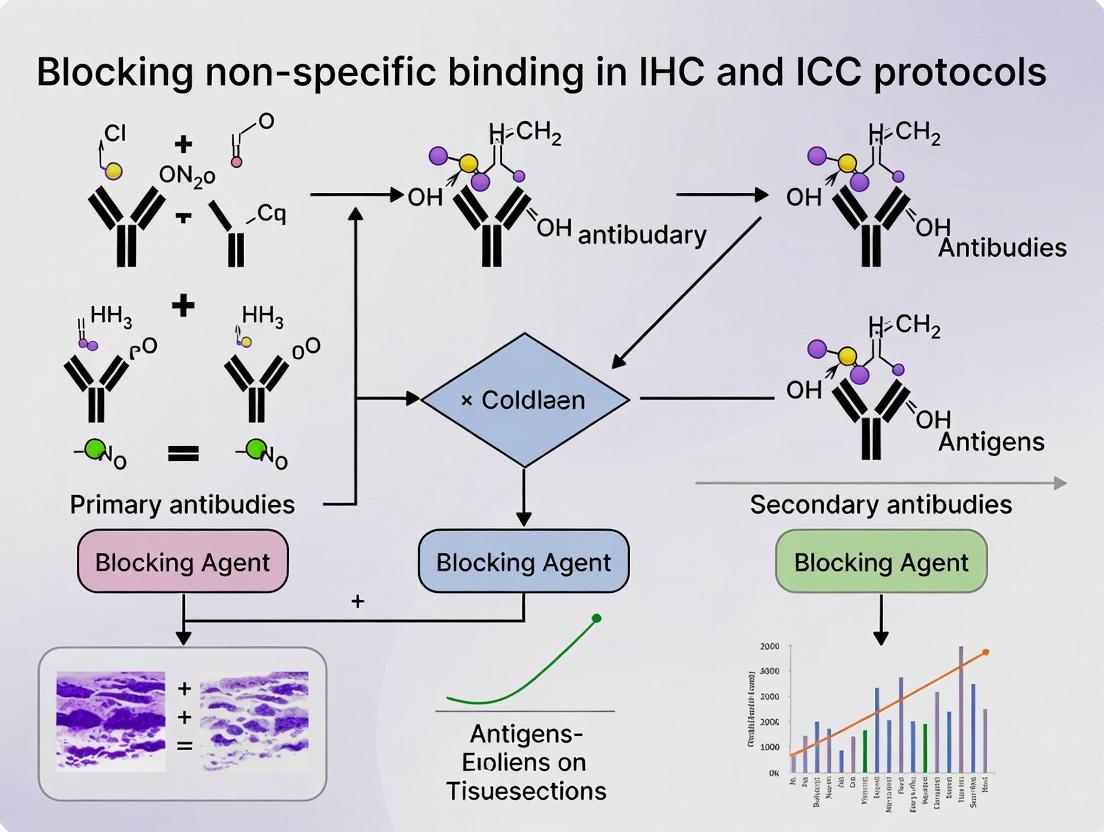
Non-specific binding (NSB) is a critical, yet often overlooked, factor that can compromise the accuracy, signal-to-noise ratio, and reproducibility of immunohistochemistry (IHC) and immunocytochemistry (ICC) experiments.
The Essential Guide to Blocking Non-Specific Binding: Optimizing IHC and ICC Protocols for Clear, Reproducible Results
Abstract
Non-specific binding (NSB) is a critical, yet often overlooked, factor that can compromise the accuracy, signal-to-noise ratio, and reproducibility of immunohistochemistry (IHC) and immunocytochemistry (ICC) experiments. This comprehensive guide addresses the core challenges in immunostaining by exploring the fundamental causes of NSB, detailing modern methodological solutions and blocking agent selection, providing a systematic troubleshooting framework for common artifacts, and outlining rigorous validation strategies. Tailored for researchers, scientists, and drug development professionals, this article synthesizes current best practices to empower users to design robust protocols that yield specific, high-contrast, and publication-quality data.
Understanding the Enemy: The Science Behind Non-Specific Binding in Immunostaining
Within the broader thesis on optimizing blocking strategies for Immunohistochemistry (IHC) and Immunocytochemistry (ICC), a precise understanding of non-specific binding (NSB) mechanisms is foundational. NSB compromises signal-to-noise ratios, leading to false positives and unreliable data. This application note details the three primary physicochemical causes of NSB—hydrophobic, ionic, and Fc-receptor interactions—and provides protocols to diagnose and mitigate each. Effective blocking is not a single-reagent solution but a targeted strategy based on the underlying interaction.
Hydrophobic Interactions
Hydrophobic NSB occurs between non-polar regions of antibodies or detection proteins and hydrophobic sites on tissue samples, plastics, or immobilized proteins. This is a dominant issue in solid-phase assays and with poorly fixed tissues.
Protocol 1.1: Diagnosing Hydrophobic NSB with Detergent Titration
- Objective: Determine if NSB is primarily hydrophobic by testing increasing concentrations of non-ionic detergents.
- Materials: PBS, Triton X-100 or Tween-20 (0.01%, 0.1%, 0.3% v/v), blocking buffer (e.g., 1% BSA/PBS), primary antibody, appropriate detection system.
- Method:
- Prepare serial sections or cell spots.
- Treat each with a different concentration of detergent in PBS (including 0% as control) for 30 min at RT.
- Rinse with PBS.
- Proceed with standard IHC/ICC protocol using a constant, potentially problematic antibody concentration.
- Quantify background (e.g., in an area of known negativity) and specific signal.
- Interpretation: A sharp decrease in background staining with increasing detergent concentration indicates significant hydrophobic NSB.
Research Reagent Solutions: Hydrophobic Blocking
| Reagent | Function & Rationale |
|---|---|
| Non-Ionic Detergents (Tween-20, Triton X-100) | Disrupt hydrophobic interactions by solubilizing lipids and masking hydrophobic patches. Critical for membrane permeabilization in ICC. |
| Carrier Proteins (BSA, Casein) | Contain hydrophobic domains that adsorb to surfaces, "shielding" them from probe interactions. |
| Sera (Normal Goat, Donkey Serum) | Complex mixtures of proteins and lipids that provide broad hydrophobic blocking. |
| Commercial Protein-Free Blockers | Synthetic polymers designed to adsorb strongly to surfaces, providing a hydrophilic, non-interactive coating. |
Ionic (Electrostatic) Interactions
Ionic NSB results from attractive forces between charged residues on antibodies/proteins and oppositely charged groups on tissue components (e.g., collagen, eosin, nucleic acids). This is prevalent in highly charged tissue microenvironments.
Protocol 1.2: Assessing Ionic NSB with Salt and pH Modulation
- Objective: Identify ionic NSB by altering the ionic strength and pH of incubation buffers.
- Materials: Primary antibody, blocking buffers, PBS, Tris-HCl buffers (pH 6.0, 7.4, 8.5), NaCl (additive to 150mM, 300mM, 500mM).
- Method:
- Prepare serial sections.
- Block and then incubate primary antibody in buffers of varying pH and/or ionic strength.
- Use identical detection for all slides.
- Quantify background in non-target regions (e.g., stromal collagen for cationic probes).
- Interpretation: Increased background at low ionic strength or at a pH where the antibody/tissue charges are complementary suggests ionic NSB. High salt often suppresses it.
Research Reagent Solutions: Ionic Blocking
| Reagent | Function & Rationale |
|---|---|
| High Ionic Strength Buffers (e.g., +300-500mM NaCl) | Shields electrostatic attractions by increasing the counterion cloud around charged molecules. |
| Competitive Anions/Cations | Heparin sulfate (polyanion) blocks cationic probes; Poly-L-lysine (polycation) blocks anionic probes. |
| Charge-Modified Blocking Proteins | Proteins like gelatin (slightly anionic) can block cationic sites. |
| Optimized pH Buffers | Adjusting pH away from the isoelectric point (pI) of the interfering species can reduce its net charge and binding. |
Fc-Receptor Interactions
Fc-receptor NSB occurs when the Fc portion of primary or secondary antibodies binds to Fc receptors (FcγR) expressed on immune cells (e.g., macrophages, dendritic cells, B cells) in tissues, mimicking true antigen-specific staining.
Protocol 1.3: Blocking Fc-Mediated NSB
- Objective: Eliminate false-positive staining on FcR-expressing cells.
- Materials: Normal serum from the host species of the secondary antibody, species-matched IgG fragments (F(ab')₂), commercial FcR blockers.
- Method (Two-Tiered Approach):
- Pre-blocking: Incubate tissue/cells with 2-5% normal serum from the secondary antibody host species for 30-60 min at RT. Do not rinse.
- Primary Antibody Incubation: Use a primary antibody that is either (a) pre-adsorbed with this same serum, or (b) an F(ab')₂ fragment.
- Proceed with detection using an F(ab')₂ secondary antibody.
- Interpretation: Elimination of staining on immune cell morphology (e.g., sinusoidal staining in spleen) confirms successful FcR blocking.
Research Reagent Solutions: Fc-Receptor Blocking
| Reagent | Function & Rationale |
|---|---|
| Normal Serum (from secondary host species) | Contains immunoglobulins that saturate Fc receptors, preventing binding of assay antibodies. |
| F(ab')₂ Fragment Secondary Antibodies | Lack the Fc region, eliminating the source of FcR binding. The gold-standard solution. |
| Commercial Fc Receptor Block (Purified IgG) | High concentration of purified IgG for efficient, defined FcR saturation. |
| Species-Matched F(ab')₂ Primaries | For direct detection methods, eliminates Fc region from the primary antibody entirely. |
Table 1: Efficacy of Targeted Blocking Agents Against NSB Mechanisms
| NSB Mechanism | Test Condition | Background Signal (Mean Gray Value ± SD) | Specific Signal (Mean Gray Value ± SD) | Signal-to-Background Ratio |
|---|---|---|---|---|
| Hydrophobic | No Block | 185 ± 22 | 450 ± 65 | 2.4 |
| 0.1% Tween-20 Block | 45 ± 8 | 430 ± 58 | 9.6 | |
| Ionic | PBS (150mM NaCl) | 220 ± 30 | 510 ± 70 | 2.3 |
| PBS + 500mM NaCl | 75 ± 12 | 505 ± 68 | 6.7 | |
| Fc-Receptor | Intact IgG Secondary | 310 ± 45* | 490 ± 62 | 1.6 |
| F(ab')₂ Secondary | 50 ± 9 | 475 ± 60 | 9.5 |
*High background localized to splenic white pulp.
Integrated Experimental Workflow for NSB Diagnosis
Title: Workflow for Diagnosing Non-Specific Binding in IHC/ICC
Recommended Comprehensive Blocking Buffer
For a broad-spectrum starting point in an unknown system, combine strategies: 5% Normal Serum (secondary host species) + 1% BSA + 0.1% Tween-20 in 50mM Tris-HCl, pH 7.6, + 150mM NaCl. Incubate for 1 hour at RT prior to primary antibody application. The primary and secondary antibodies should be diluted in a similar, but protein-free, buffer (e.g., 0.1% BSA + 0.05% Tween-20 in Tris/NaCl). This addresses all three NSB mechanisms concurrently and forms a robust baseline from which to refine protocols.
Within the broader research thesis on blocking non-specific binding in immunohistochemistry (IHC) and immunocytochemistry (ICC), three persistent challenges are tissue autofluorescence, endogenous enzyme activity, and non-specific protein interactions ("stickiness"). These culprits generate high background, obscure specific signal, and compromise data integrity. This document provides detailed application notes and validated protocols to mitigate these issues.
Mitigating Tissue Autofluorescence
Autofluorescence arises from endogenous fluorophores like lipofuscin, elastin, and flavins, emitting light across a broad spectrum upon excitation.
Quantitative Impact of Common Quenchers: Table 1: Efficacy of Chemical Autofluorescence Quenchers in Formalin-Fixed Tissue
| Quenching Agent | Mechanism | Target Fluorophores | Incubation Time | Efficacy Reduction (% of baseline) |
|---|---|---|---|---|
| Sudan Black B | Lipophilic dye binding | Lipofuscin, Lipids | 15-30 min | 70-85% |
| TrueBlack Lipofuscin Autofluorescence Quencher | Specific photon absorption | Lipofuscin | 10-30 min | >90% |
| Sodium Borohydride | Reduces Schiff-base double bonds | Aldehyde-induced | 5-10 min | 50-70% |
| Vector TrueVIEW Autofluorescence Quenching Kit | Broad-spectrum photon absorption | Multiple | 5 min | 80-95% |
Detailed Protocol: Sudan Black B Quenching for IHC/ICC
- Reagent Preparation: Prepare a 0.1% (w/v) solution of Sudan Black B in 70% ethanol. Filter through a 0.45 µm filter. Store at 4°C for up to 6 months.
- Sample Processing: After completing all immunostaining steps (including final washes post-secondary antibody), wash slides briefly in distilled water.
- Quenching: Apply the filtered Sudan Black B solution to cover the tissue section. Incubate at room temperature for 15-30 minutes in the dark. Optimization Note: Start with 15 minutes to avoid potential signal attenuation.
- Washing: Rinse slides extensively with 70% ethanol until the run-off is clear, followed by three 5-minute washes in PBS or your assay buffer.
- Mounting: Proceed to mount with an appropriate aqueous or hardening mounting medium for fluorescence.
Blocking Endogenous Enzyme Activity
Endogenous peroxidases and phosphatases catalyze chromogenic substrates, leading to false-positive signals.
Quantitative Comparison of Blocking Methods: Table 2: Blocking Protocols for Endogenous Enzymes
| Enzyme Target | Blocking Reagent | Concentration & Solution | Incubation Time | Key Consideration & Efficacy |
|---|---|---|---|---|
| Peroxidase | Hydrogen Peroxide (H₂O₂) | 0.3% - 3.0% in methanol or PBS | 10-30 min | Methanol fixates tissue; >99% inhibition. |
| Peroxidase | Levamisole | 1-5 mM in Tris-HCl buffer (pH 8.0) | 10-30 min | For Alkaline Phosphatase (AP) only; not for HRP. |
| Alkaline Phosphatase (AP) | Levamisole | 1-5 mM in detection buffer | Add directly to substrate solution | Specific inhibitor; must be in final substrate step. |
Detailed Protocol: Dual Peroxidase and AP Blocking for IHC
- Deparaffinization & Rehydration: Process formalin-fixed, paraffin-embedded (FFPE) sections to water.
- Peroxidase Block: Prepare 3% H₂O₂ in absolute methanol. Apply to sections, incubate for 20 minutes at RT in the dark.
- Wash: Rinse slides three times in PBS, 5 minutes each.
- Antigen Retrieval: Perform heat-induced or enzymatic epitope retrieval as required for your primary target.
- AP Block (if using AP-conjugated detection): Prepare a 2-5 mM levamisole solution in the appropriate buffer (e.g., 100 mM Tris-HCl, pH 8.2). Apply for 10 minutes at RT. Alternatively, add levamisole directly to the Vector Blue or similar AP substrate solution at a final concentration of 1 mM just before application.
Reducing Non-Specific Protein Binding
"Sticky" proteins adsorb antibodies and detection reagents to hydrophobic sites, charged residues, or Fc receptors.
Quantitative Efficacy of Protein Blockers: Table 3: Comparison of Common Protein Blocking Agents
| Blocking Agent | Typical Concentration | Optimal Buffer | Ideal For Blocking | Potential Concern |
|---|---|---|---|---|
| Normal Serum | 2-10% (v/v) | PBS or TBS | Fc receptors, general sites | Must match host species of secondary antibody. |
| BSA | 1-5% (w/v) | PBS/TBS | Low-cost general blocking | May not block all charged sites. |
| Casein | 1-5% (w/v) | PBS/TBS | Hydrophobic & charged sites; low background. | Can be less stable. |
| Skim Milk | 5% (w/v) | PBS/TBS | General, cost-effective | Contains biotin and phosphatases; unsuitable for biotin-based or AP systems. |
| Recombinant Protein Blockers (e.g., Thermo Fisher UltraBlock) | As per manufacturer | Proprietary | Broad-spectrum, defined composition | Higher cost. |
Detailed Protocol: Comprehensive Protein Block for IHC/ICC
- Post-Fixation/Permeabilization: After fixation and any permeabilization steps, wash samples 3x in PBS/0.025% Triton X-100 (PBS-T).
- Blocking Buffer Preparation: Prepare a solution containing 5% normal serum (from the species of your secondary antibody) and 1% BSA in PBS-T.
- Blocking: Apply sufficient blocking buffer to completely cover the sample. Incubate in a humidified chamber for 1 hour at room temperature. For challenging tissues, extend to 2 hours or incubate at 4°C overnight.
- Primary Antibody Incubation: Dilute the primary antibody in blocking buffer. Apply directly without washing out the blocking buffer. This maintains the blocking environment during primary incubation.
The Scientist's Toolkit: Research Reagent Solutions
Table 4: Essential Reagents for Background Reduction
| Reagent/Kit | Primary Function | Key Consideration |
|---|---|---|
| TrueBlack Lipofuscin Autofluorescence Quencher (Biotium) | Quenches broad-spectrum autofluorescence, especially lipofuscin. | Compatible with all fluorophores; use after immunostaining. |
| Vector TrueVIEW Autofluorescence Quenching Kit | Broad-spectrum photon absorber to quench autofluorescence. | Fast, 5-minute incubation. |
| Image-iT FX Signal Enhancer (Invitrogen) | Reduces non-specific sticking of probes and antibodies. | Apply before blocking and immunostaining. |
| Fc Receptor Block (e.g., Human TruStain FcX) | Specifically blocks human Fc receptors on cells like macrophages. | Critical for staining human immune cells with human or mouse antibodies. |
| UltraBlock (Thermo Fisher) | A recombinant, biotin-free protein solution for general blocking. | Defined composition; suitable for sensitive multiplex assays. |
| Background Buster (Innovex) | A proprietary, non-serum-based blocking agent. | Effective for high-background tissues and phospho-specific antibodies. |
Visualizations
Background Reduction Protocol Workflow
Mechanisms to Block Non-Specific Culprits
Application Note: Quantifying NSB Impact in IHC/ICC
Non-specific binding (NSB) remains a primary source of artifact, leading to misinterpretation of protein localization and expression levels. This note details the quantitative impact of NSB on assay integrity.
Table 1: Common Artifacts and Their Reported Frequency in IHC/ICC
| Artifact Type | Common Cause | Reported Frequency in Literature* | Typical Impact on Data Fidelity |
|---|---|---|---|
| High Background | Inadequate Blocking | 25-40% of assays | Masks low-abundance targets; obscures subcellular detail |
| Off-Target Staining | Antibody Cross-Reactivity | 15-30% of commercial Abs | False positive signals; incorrect pathway inference |
| Nuclear Staining (Artifact) | Electrostatic Interactions | 10-20% of cytoplasmic/membrane targets | Misassignment of protein function & localization |
| Speckled/Particulate Staining | Aggregated Antibodies | 5-15% of assays | Perceived as specific granular signal |
| Edge Artifacts | Drying or Diffusion Issues | 10-25% of slide-based assays | False gradients of expression |
*Compiled from recent peer-reviewed method critiques (2023-2024).
Table 2: Economic & Resource Costs of NSB-Driven Reproducibility Failure
| Cost Dimension | Estimated Loss per Failed Experiment* | Primary NSB Link |
|---|---|---|
| Reagent Wastage | $500 - $5,000 | Repeated optimization, antibody titrations |
| Personnel Time | 40-80 hours | Repeating protocols, troubleshooting images |
| Project Delay | 2-8 weeks | Need for orthogonal validation assays |
| Misguided Research Directions | High (Non-quantifiable) | Pursuit of pathways based on false positives |
*Estimates based on survey data from mid-sized biotech R&D groups.
Detailed Experimental Protocols
Protocol 1: Systematic NSB Assessment & Blocking Optimization
Purpose: To empirically determine the contribution of NSB to total signal and identify an optimal blocking buffer.
Materials:
- Tissue or cell samples (test and negative control, e.g., knockout, siRNA)
- Primary antibody (target-specific)
- Isotype Control or No-Primary Control
- Candidate blocking buffers: 1) 5% BSA/TBST, 2) 5% NGS/TBST, 3) Protein-Free Ready-to-Use Blockers, 4) 1% Casein/TBST
- Detection system (HRP or Fluorescence-conjugated secondary)
- Imaging & quantification system
Method:
- Section/Fix: Process samples identically. For cells, plate on multi-well chamber slides.
- Divide: Divide samples into ≥5 groups: Specific Ab (with each blocking buffer) + Negative Control Group (isotype/no primary with best standard block).
- Block: Apply blocking buffers for 1 hour at RT. Do not rinse.
- Primary Incubation: Dilute specific antibody in its respective blocking buffer. Incubate overnight at 4°C. For negative control, apply antibody diluent only.
- Wash: 3x5 mins with gentle agitation in TBS/T.
- Detection: Apply appropriate secondary detection system per manufacturer protocol.
- Image & Quantify: Acquire images under identical exposure/gain settings. Quantify mean signal intensity (MSI) in target region and an adjacent blank region for background.
- Calculate: Specific Signal Ratio (SSR) = (MSIsample - MSInegative control) / MSInegative control. Higher SSR indicates better blocking efficacy.
Protocol 2: Cross-Reactivity Validation by Absorption
Purpose: To confirm antibody specificity and identify NSB due to cross-reactivity.
Materials:
- Purified target antigen protein/peptide
- Control non-target protein (e.g., BSA)
- Primary antibody
- Standard IHC/ICC reagents
Method:
- Pre-absorb: Prepare two aliquots of primary antibody at working dilution.
- Test Aliquot: Add 10x molar excess of purified target antigen. Incubate 2 hours at 4°C with gentle mixing.
- Control Aliquot: Add equivalent amount of control protein.
- Centrifuge: Spin both aliquots at 14,000xg for 10 min to pellet potential aggregates.
- Apply: Use the supernatant from each aliquot as the primary antibody on adjacent tissue/cell sections (otherwise identically processed).
- Complete Staining: Follow standard protocol for detection.
- Interpretation: >70% reduction in staining intensity with the target antigen pre-absorption indicates specific binding. Persistent staining suggests significant NSB/cross-reactivity.
Signaling Pathways & Workflow Diagrams
Diagram 1: The Dual Pathway of Antibody Binding in IHC/ICC (Max 760px)
Diagram 2: IHC/ICC Workflow with NSB Checkpoints (Max 760px)
The Scientist's Toolkit: Research Reagent Solutions
Table 3: Essential Reagents for Mitigating NSB in IHC/ICC
| Reagent Category | Specific Example | Function & Rationale |
|---|---|---|
| Blocking Agents | Normal serum (from secondary host), BSA, Casein, Protein-Free Blockers | Saturate charge-based and hydrophobic NSB sites on tissue and slides. Serum blocks Fc receptors. |
| Detergents | Triton X-100, Tween-20, Saponin | Reduce hydrophobic interactions during washes; aid permeabilization. |
| Antibody Diluent | Commercial Antibody Diluent with stabilizers & blockers | Maintains antibody stability while reducing NSB during incubation. |
| Negative Controls | Isotype Control IgG, Adsorption Peptides, Knockout/Knockdown Tissue | Distinguish specific signal from NSB; mandatory for validation. |
| High-Stringency Wash Buffer | TBS or PBS with 0.05-0.1% Tween-20 | Removes loosely bound antibodies without stripping specific interactions. |
| Protease Inhibitors | PMSF, Protease Inhibitor Cocktails (in fixation/permeabilization steps) | Prevent endogenous protease activity that can expose cryptic NSB sites. |
| Chromogen/ Fluorophore Quenchers | Sudan Black B (for IF), TrueBlack Lipofuscin Autofluorescence Quencher | Reduces non-antibody related background (autofluorescence). |
Within the broader thesis on optimizing blocking strategies for immunohistochemistry (IHC) and immunocytochemistry (ICC) protocols, the systematic reduction of non-specific binding (NSB) is paramount. NSB leads to high background, false positives, and compromised data integrity. This application note details the four pivotal factors governing NSB—sample type, fixation, antibody characteristics, and buffer chemistry—providing protocols and data to guide robust experimental design.
Sample Type and Preparation
Intrinsic tissue or cell properties profoundly influence NSB. Endogenous immunoglobulins, Fc receptors, charged molecules, and lipoproteins can all contribute.
Protocol: Assessment of Sample-Specific NSB
Objective: To quantify endogenous NSB contributors in a new sample type.
- Prepare Control Slides: Generate serial sections or cell culture splits.
- Block Endogenous Enzymes: (For peroxidase-based detection) Treat with 0.3% H₂O₂ in methanol for 15 min, RT.
- No-Primary-Antibody Control: Omit the primary antibody. Apply isotype control or buffer directly to the sample after blocking.
- Secondary-Antibody-Only Control: Apply only the labeled secondary antibody (at working concentration) after blocking.
- Proceed with Detection: Develop using standard chromogen/fluorophore protocols.
- Quantification: Capture images under standardized exposure. Measure mean signal intensity in 5-10 representative fields using image analysis software (e.g., ImageJ). High signal in controls indicates significant sample-induced NSB.
Table 1: Relative NSB Signal Intensity Across Common Sample Types (Secondary-Antibody-Only Control)
| Sample Type | Common NSB Sources | Relative Signal Intensity (A.U.) | Recommended Blocking Strategy |
|---|---|---|---|
| Mouse Spleen | High Fc receptor expression | 85 - 120 | Protein block + species-specific Fab fragment |
| Human Brain (FFPE) | Lipofuscin, high protein density | 45 - 70 | Protein block + 0.1% Sudan Black B (for autofluorescence) |
| HEK293 Cells (Cultured) | Low endogenous Ig, adherent | 15 - 30 | Standard protein-based block (e.g., BSA) |
| Rat Liver | High endogenous peroxidase | 90 - 150 | Sequential H₂O₂ and protein/Serum block |
Fixation and Its Impact
Fixation alters protein conformation and can create cross-linked epitopes that bind antibodies non-specifically.
Protocol: Optimization of Blocking for Over-Fixed Samples
Objective: To recover specificity in densely cross-linked, over-fixed tissues.
- Antigen Retrieval: Perform standard heat-induced epitope retrieval (HIER) in citrate buffer, pH 6.0.
- Post-Retrieval Blocking: Cool slides to RT. Wash in PBS.
- Test Blocking Buffers: Apply different blocking buffers to adjacent sections for 1 hour at RT:
- Buffer A: 5% Normal Serum (from secondary host species).
- Buffer B: 5% BSA in PBS.
- Buffer C: 1% Cold Water Fish Skin Gelatin + 1% BSA.
- Buffer D: Commercial "Super Block" containing proprietary polymers.
- Proceed with Standard IHC: Apply primary and secondary antibodies.
- Analysis: Compare signal-to-noise ratio (SNR). Calculate SNR = (Mean target signal intensity) / (Mean background intensity from an empty area).
Table 2: Efficacy of Blocking Agents on 48-Hour Formalin-Fixed Tissue
| Blocking Reagent | Key Mechanism | Resulting SNR | Background Reduction vs. Control |
|---|---|---|---|
| 5% Normal Donkey Serum | Saturates Fc receptors | 4.2 | 35% |
| 5% BSA | Masks charged groups | 5.1 | 50% |
| Protein-Free Polymer Block | Shields hydrophobic interactions | 7.8 | 75% |
| 1% Gelatin + 1% BSA | Masks charge & adhesiveness | 6.3 | 65% |
Antibody Characteristics
Antibody concentration, purity, formulation, and clonality are critical drivers of NSB.
Protocol: Titration and Cross-Absorption Validation
Objective: To determine the optimal concentration and specificity of a secondary antibody.
- Primary Antibody Titration: First, titrate the primary antibody to find the optimal concentration on a known positive control sample.
- Secondary Antibody Checkerboard Titration: Using the optimal primary concentration, test the secondary antibody across a dilution series (e.g., 1:200 to 1:2000).
- Cross-Reactivity Test: Apply the secondary antibody at the chosen working dilution to a tissue/cell matrix known to express the primary antibody's target but from a different host species. Signal indicates cross-reactivity.
- Validation: For critical work, use secondary antibodies that are cross-absorbed against the immunoglobulin of the sample species and other potentially cross-reactive species.
Buffer Chemistry
The ionic strength, pH, and detergents in incubation buffers dictate electrostatic and hydrophobic interactions.
Protocol: Systematic Buffer Screening for Low-NSB
Objective: To formulate an incubation buffer that minimizes NSB for a challenging target.
- Prepare Base Buffer Variations:
- PBS (Low ionic strength)
- TBS (Higher ionic strength, can reduce electrostatic binding)
- High-Salt TBS (TBS with 300mM additional NaCl)
- Additive Screening: To each base buffer, test the following additives:
- 0.1% Tween-20 (mild non-ionic detergent)
- 0.1% Triton X-100 (stronger non-ionic detergent)
- 0.5% CHAPS (zwitterionic detergent)
- 0.1% BSA (carrier protein)
- Test Protocol: Use the same sample, primary, and secondary antibody conditions. Incubate primary and secondary antibodies in the different test buffers. Include a standard buffer as a control.
- Quantify: Measure the signal-to-noise ratio and specific signal intensity.
Table 3: Impact of Buffer Chemistry on Assay Metrics
| Buffer Formulation | pH | Ionic Strength | Specific Signal (A.U.) | Background (A.U.) | Recommended Use Case |
|---|---|---|---|---|---|
| PBS + 0.1% Tween-20 | 7.4 | Low | 1000 | 150 | Standard IHC/ICC |
| TBS + 0.3M NaCl + 0.1% Triton | 7.6 | High | 950 | 85 | Targets with high electrostatic NSB |
| PBS + 0.5% CHAPS + 0.1% BSA | 7.4 | Low | 1050 | 95 | Membrane-associated targets |
| Commercial Antibody Diluent | 8.0 | Moderate | 1100 | 70 | Sensitive multiplex fluorescence |
Visual Summaries
Title: Logical Flow for Diagnosing and Reducing NSB in IHC/ICC
Title: IHC/ICC Workflow with NSB Critical Control Points
The Scientist's Toolkit: Essential Reagents for NSB Management
Table 4: Key Research Reagent Solutions for Blocking NSB
| Reagent | Primary Function in Reducing NSB | Example Application |
|---|---|---|
| Normal Serum (from secondary host) | Saturates Fc receptors; provides irrelevant proteins to mask charge. | Blocking step before primary antibody, especially in tissues high in FcRs. |
| Bovine Serum Albumin (BSA) | Inert carrier protein that adsorbs to surfaces, masking charged sites. | Component of antibody dilution and wash buffers (0.1-5%). |
| Cold-Water Fish Skin Gelatin | Non-mammalian protein block; reduces cross-reactivity with mammalian samples. | Blocking for mammalian tissues (0.1-1%), often combined with BSA. |
| Non-Ionic Detergents (Tween-20, Triton X-100) | Reduce hydrophobic interactions; improve antibody penetration. | Wash buffers (0.05-0.1%) and antibody diluents. |
| Polymer-Based Commercial Blocks | Form a hydrophilic, non-proteinaceous shield on tissue. | Challenging samples where protein blocks are insufficient. |
| Fab Fragment Secondary Antibodies | Lack Fc portion, eliminating binding to Fc receptors. | Critical for tissues with extremely high Fc receptor expression. |
| Sodium Azide (CAUTION: Toxic) | Prevents microbial growth in antibody stocks, preventing aggregates. | Preservation of antibody stocks (0.02-0.1%). |
| High-Salt Buffers (e.g., TBS + 0.3M NaCl) | Disrupts low-affinity ionic interactions causing NSB. | Incubation buffer for targets with high isoelectric points. |
Building Your Defense: A Step-by-Step Guide to Modern Blocking Strategies
Within the broader research thesis on optimizing blocking strategies for IHC/ICC protocols to minimize non-specific binding, the selection of a blocking agent is a critical, foundational step. The ideal agent effectively masks reactive sites on the tissue sample and slide surface without interfering with the antigen-antibody interaction. This application note provides a comparative analysis of traditional agents (serum, BSA, casein) and modern synthetic blockers, offering structured data and protocols for evidence-based selection.
Comparative Analysis of Blocking Agents
Table 1: Characteristics and Performance of Common Blocking Agents
| Agent | Typical Concentration | Primary Mechanism | Key Advantages | Key Limitations | Best Suited For |
|---|---|---|---|---|---|
| Normal Serum | 1-10% (v/v) | Occupies Fc receptors and nonspecific protein-binding sites. | • Species-specific; reduces cross-reactivity.• Inexpensive and readily available. | • May contain endogenous immunoglobulins or target antigens.• Variable lot-to-lot consistency.• Can interfere if secondary antibody is from same species. | General IHC/ICC; especially when background from Fc receptors is a concern. |
| Bovine Serum Albumin (BSA) | 1-5% (w/v) | Nonspecific protein adsorption to hydrophobic and charged surfaces. | • Highly purified, low immunoglobulin content.• Consistent between lots.• Inert for most applications. | • Less effective at blocking Fc receptors.• May contain fatty acids that affect some targets. | Phosphorylation studies (low phosphatase activity); general protein blocking where serum interference is problematic. |
| Casein (or commercial blends) | 0.5-5% (w/v) | Forms a micellar coating, providing a physical barrier to nonspecific binding. | • Very low background in chromogenic detection.• Effective in systems with high biotin activity (e.g., liver). | • Can be less effective in fluorescence due to mild autofluorescence.• Slightly viscous solutions. | Chromogenic IHC; systems with endogenous biotin; alkaline phosphatase-based detection. |
| Synthetic Blockers | Varies by product | Engineered polymers or protein mixtures designed for superior surface passivation. | • Often provide superior signal-to-noise ratios.• Defined composition, high consistency.• Frequently compatible with multiple detection modalities. | • Higher cost.• Proprietary formulations. | Demanding applications (e.g., low-abundance targets, multiplex fluorescence), automated staining platforms. |
Table 2: Quantitative Performance Metrics in Model IHC Experiments*
| Blocking Agent | Mean Background Signal (AU) | Mean Specific Signal (AU) | Signal-to-Noise Ratio | Coefficient of Variation (%) |
|---|---|---|---|---|
| No Blocking | 1.50 | 5.20 | 3.5 | 25.0 |
| 2% Normal Goat Serum | 0.45 | 4.80 | 10.7 | 12.5 |
| 2% BSA | 0.60 | 5.10 | 8.5 | 9.8 |
| 1% Casein | 0.30 | 4.60 | 15.3 | 8.2 |
| Commercial Synthetic Blocker | 0.15 | 5.00 | 33.3 | 5.5 |
*Representative data from controlled experiments using a standard formalin-fixed paraffin-embedded (FFPE) tissue model stained for a mid-abundance cytosolic antigen with HRP/DAB detection. AU = Arbitrary Units.
Detailed Experimental Protocols
Protocol 1: Comparative Evaluation of Blocking Agents for IHC on FFPE Tissue
Objective: To empirically determine the optimal blocking agent for a specific antibody-antigen pair in FFPE tissue sections.
Materials: See "The Scientist's Toolkit" below. Workflow:
- Sectioning & Deparaffinization: Cut 5 µm serial sections from the same FFPE block. Deparaffinize in xylene and rehydrate through a graded ethanol series to distilled water.
- Antigen Retrieval: Perform heat-induced epitope retrieval in 10 mM sodium citrate buffer (pH 6.0) for 20 minutes. Cool slides for 30 minutes at room temperature (RT).
- Peroxidase Blocking: Incubate with 3% H₂O₂ in methanol for 15 minutes to quench endogenous peroxidase activity. Rinse in PBS.
- Differential Blocking: Divide slides into five groups. Apply the following blocking solutions for 1 hour at RT in a humidified chamber:
- Group A: No blocking agent (PBS only, control).
- Group B: 5% normal serum from the host species of the secondary antibody in PBS.
- Group C: 2% BSA in PBS.
- Group D: 1% casein in PBS (heat to 60°C to dissolve, then cool).
- Group E: Commercial synthetic blocking reagent as per manufacturer's instructions.
- Primary Antibody Incubation: Without washing off the blocking agent, apply the optimized dilution of primary antibody in its respective blocking buffer to each slide. Incubate overnight at 4°C.
- Washing & Detection: Wash 3x with PBS-T (PBS + 0.1% Tween-20). Apply species-appropriate HRP-conjugated secondary antibody for 1 hour at RT. Wash 3x with PBS-T.
- Visualization & Counterstaining: Develop signal with DAB chromogen for equal duration (e.g., 5 minutes). Counterstain with hematoxylin, dehydrate, and mount.
- Analysis: Acquire images under identical microscope settings. Use image analysis software to measure mean signal intensity in specific regions of interest and in adjacent blank areas for background. Calculate Signal-to-Noise Ratio (Specific Signal/Background).
Protocol 2: Blocking for ICC with Fluorescent Detection
Objective: To minimize background fluorescence in cultured cells. Key Modification: Omit peroxidase blocking step. Include a step for detergent permeabilization (0.1-0.5% Triton X-100 in PBS for 10 minutes) before blocking if targeting intracellular antigens. Critical: When using casein or serum, test for autofluorescence at your intended excitation/emission wavelengths. Synthetic blockers are often formulated for low autofluorescence.
Visualizing Blocking Agent Selection Logic
Diagram Title: Decision Flowchart for Blocking Agent Selection
The Scientist's Toolkit: Essential Research Reagents
Table 3: Key Reagents for Blocking Optimization Experiments
| Reagent / Solution | Function in Protocol | Critical Consideration |
|---|---|---|
| Normal Sera (e.g., Goat, Donkey, Horse) | Blocks Fc receptors and nonspecific sites. Must be from the host species of the secondary antibody for standard protocols. | Aliquot and freeze at -20°C; avoid repeated freeze-thaw cycles to maintain complement inactivation. |
| Protease-Free BSA (Fraction V) | Provides a defined protein source for nonspecific blocking, minimizing cross-reactivity. | Use high-purity, low IgG grade to avoid antibody contamination. |
| Casein (Hammersten or similar grade) | Effective biotin blocker; forms a passive coating. | Must be dissolved carefully, often with heating, and filtered to remove particulates. |
| Commercial Synthetic Blockers (e.g., Sea Block, BlockAid, StartingBlock) | Proprietary mixtures designed for maximal surface passivation and low interference. | Follow manufacturer's recommendations for concentration and incubation time precisely. |
| Tween-20 or Triton X-100 | Mild detergents added to wash buffers (PBS-T) and sometimes blocking buffers. | Reduces hydrophobic interactions and aids in permeabilization (ICC). Use at low concentration (0.05-0.5%). |
| Sodium Azide | Preservative for blocking and antibody stocks. | WARNING: Toxic. Do not use with peroxidase enzymes (HRP) or cyanine dyes. |
| Humidified Staining Chamber | Prevents evaporation of small volumes of reagent applied to slides during incubations. | Essential for consistent results, especially during long primary antibody incubations. |
| Image Analysis Software (e.g., ImageJ, QuPath, commercial packages) | Enables quantitative comparison of signal intensity and background between experimental conditions. | Calibrate imaging settings and keep them constant across all samples in a comparative study. |
This document provides detailed application notes and protocols, framed within a broader thesis research project investigating the systematic optimization of blocking steps to minimize non-specific binding in Immunohistochemistry (IHC) and Immunocytochemistry (ICC). Effective blocking is a critical foundational step that directly impacts signal-to-noise ratio, reproducibility, and quantitative accuracy in antibody-based detection.
Table 1: Comparison of Common Blocking Reagents for IHC/ICC
| Blocking Reagent | Typical Concentration | Recommended Duration | Primary Mechanism | Key Considerations |
|---|---|---|---|---|
| Normal Serum | 2-10% (v/v) | 30-60 min at RT | Occupies Fc receptors and non-specific sites on tissue/target. | Must be from same species as secondary antibody host. Can be used in combination with protein blockers. |
| BSA (Bovine Serum Albumin) | 1-5% (w/v) | 30-60 min at RT | Inert protein saturation of charged, hydrophobic sites. | Inexpensive, universal. Less effective for high Fc receptor backgrounds. |
| Non-Fat Dry Milk | 1-5% (w/v) | 30-60 min at RT | Protein/casein saturation of binding sites. | Contains biotin; not compatible with avidin-biotin detection systems. Can promote microbial growth. |
| Casein | 0.1-1% (w/v) | 30-60 min at RT | Phosphoprotein that binds hydrophobic and charged motifs. | Effective, low background. Often used in commercial blocking buffers. |
| Fish Skin Gelatin | 0.1-1% (w/v) | 30-60 min at RT | Low sequence homology minimizes cross-reactivity with mammalian antibodies. | Excellent for reducing non-specific mammalian antibody binding. |
| Triton X-100 / Tween 20 | 0.1-0.5% (v/v) | Integrated in wash/block buffers | Detergent reduces hydrophobic interactions. | Aids permeabilization for ICC. Can be added to protein-based blocking solutions. |
| Avidin/Biotin Block | Sequential steps per kit | 15 min each step | Pre-saturates endogenous biotin, biotin-binding proteins. | Critical for tissues with high endogenous biotin (e.g., liver, kidney). |
| Hydrogen Peroxide | 0.3-3% (v/v) | 10-30 min at RT | Inactivates endogenous peroxidases. | Mandatory for HRP-based detection before protein blocking. |
Table 2: Optimized Blocking Protocol Parameters by Sample Type (Synthesized Recommendations)
| Sample Type | Recommended Blocking Solution | Optimal Concentration | Optimal Duration & Temperature | Special Notes |
|---|---|---|---|---|
| Formalin-Fixed Paraffin-Embedded (FFPE) Tissue | Protein Block (BSA/Casein) + 2.5% Normal Serum | 2-3% Protein, 2.5% Serum | 1 hour at Room Temperature (RT) | Post-antigen retrieval and peroxidase block (if HRP). |
| Frozen Tissue Sections | Protein Block + 5% Normal Serum + 0.1% Triton X-100* | 2% Protein, 5% Serum | 1-2 hours at RT | *Triton for intracellular targets. Higher serum for abundant Fc receptors. |
| Cultured Cells (ICC) | Protein Block + 5% Normal Serum + 0.3% Triton X-100 | 3% Protein, 5% Serum | 1 hour at RT | Combine blocking and permeabilization for intracellular targets. |
| Tissue with High Endogenous Biotin | Sequential Avidin then Biotin block, then Protein/Serum block | As per commercial kit | 15 min each step at RT | Perform after peroxidase block and before protein block. |
| Phospho-Specific Epitopes | Casein-based Block | 1-2% Casein | Overnight at 4°C | Casein reduces electrostatic non-specific binding; low temp preserves epitopes. |
Detailed Experimental Protocols
Protocol 1: Comprehensive Blocking for FFPE Tissues (HRP Detection)
Objective: To completely block non-specific binding and endogenous enzyme activity in FFPE tissue sections prior to primary antibody incubation. Workflow Summary: Deparaffinization → Rehydration → Antigen Retrieval → Peroxidase Block → Protein/Serum Block. Detailed Steps:
- Complete deparaffinization and rehydration of sections to water.
- Perform heat-induced epitope retrieval in appropriate buffer (e.g., citrate pH 6.0).
- Cool slides, rinse in PBS, and incubate in 3% H₂O₂ in PBS for 15 minutes at RT to quench endogenous peroxidases.
- Rinse thoroughly with PBS.
- Apply blocking solution: PBS containing 2.5% (w/v) BSA, 2.5% (v/v) normal serum from the host species of the secondary antibody, and 0.1% Tween 20.
- Incubate in a humidified chamber for 1 hour at RT.
- Tap off blocking solution. Do not wash. Proceed directly to primary antibody application.
Protocol 2: Combined Permeabilization & Blocking for ICC
Objective: To permeabilize cell membranes and block non-specific sites in cultured cells for intracellular target staining. Workflow Summary: Fixation → Permeabilization/Blocking → Primary Antibody. Detailed Steps:
- Culture, fix (e.g., with 4% PFA for 10 min), and wash cells.
- Prepare blocking/permeabilization solution: PBS containing 3% (w/v) BSA, 5% (v/v) normal serum, and 0.3% (v/v) Triton X-100.
- Apply solution to cells and incubate for 1 hour at RT.
- Remove solution. Optional: Wash once gently with PBS. Proceed to primary antibody diluted in a milder buffer (e.g., PBS with 1% BSA).
Protocol 3: Sequential Blocking for Endogenous Biotin-Rich Tissues
Objective: To eliminate background from endogenous biotin in tissues like liver or kidney. Workflow Summary: Peroxidase Block → Avidin Block → Biotin Block → Protein Block. Detailed Steps:
- Following antigen retrieval and cooling, quench with 3% H₂O₂ for 15 min. Wash.
- Apply ready-to-use avidin blocking solution for 15 minutes at RT. Wash.
- Apply ready-to-use biotin blocking solution for 15 minutes at RT. Wash.
- Apply standard protein/serum blocking solution (from Protocol 1) for 1 hour at RT.
- Proceed to primary antibody incubation.
Visualizations
FFPE IHC Blocking Workflow
Blocking Mechanisms for Common NSB Sources
The Scientist's Toolkit: Essential Research Reagents
| Reagent / Solution | Function in Blocking | Key Note |
|---|---|---|
| Bovine Serum Albumin (BSA) | Universal inert protein blocker. Saturates charged and hydrophobic sites on tissue and slide. | Use protease-free grade. A 2-5% solution in PBS is standard. |
| Normal Serum | Provides species-specific antibodies to block Fc receptors. Reduces non-specific antibody binding. | Must be from the same species as the secondary antibody host (e.g., use goat serum for anti-rabbit IgG made in goat). |
| Casein (from milk) | Phosphoprotein blocker effective for charged epitopes. Often superior for phosphorylated target antibodies. | Common component of commercial buffers. Avoid if target is phosphoprotein (potential cross-reactivity). |
| Fish Skin Gelatin | Low homology to mammalian proteins minimizes interference. Excellent for reducing background in mammalian samples. | Used at 0.1-1%. Good alternative when serum or BSA gives high background. |
| Triton X-100 / Tween 20 | Non-ionic detergents that permeabilize membranes and reduce hydrophobic antibody aggregation/attachment. | Typical use: 0.1-0.5% in blocking buffer. Tween is milder; Triton provides stronger permeabilization. |
| Hydrogen Peroxide (H₂O₂) | Oxidizes and permanently inactivates endogenous peroxidases present in red blood cells and leukocytes. | Critical pre-block for HRP-based detection. Use at 0.3-3% for 10-30 min. |
| Avidin/Biotin Blocking Kit | Sequential application of avidin (to bind free biotin) then free biotin (to block avidin binding sites). | Essential for tissues with high endogenous biotin. Use before primary antibody application. |
| Glycine | Small amino acid that can quench residual aldehydes from fixation, reducing background. | Optional post-fixation step (e.g., 0.1M glycine in PBS for 5 min). |
Application Notes Within the broader thesis on revolutionizing non-specific binding (NSB) mitigation in IHC/ICC, this protocol addresses the critical limitation of single-agent blocking. NSB arises from multiple, concurrent sources: hydrophobic and electrostatic interactions, endogenous enzyme activities, and Fc receptor (FcR) binding. Traditional one-step blocking is often insufficient for complex tissues or high-sensitivity applications. The advanced combinatorial approach herein simultaneously targets these pathways, drastically reducing background and increasing signal-to-noise ratio. This is paramount for researchers and drug development professionals validating low-abundance targets or working with difficult samples (e.g., spleen, liver).
Protocol: Simultaneous Multi-Mechanism Blocking for IHC/ICC Objective: To apply a unified blocking solution that concurrently inhibits hydrophobic/electrostatic interactions, endogenous peroxidases/biadins, and Fc receptors.
Key Research Reagent Solutions:
| Reagent/Solution | Function in Blocking NSB |
|---|---|
| Ultra-Pure BSA (IgG, Protease Free) | Primary blocking agent; saturates hydrophobic and charged sites on tissue and slide. |
| Normal Serum (from secondary antibody host species) | Provides species-specific immunoglobulins to occupy Fc receptors on cells. |
| Recombinant Fab Fragment (Anti-Mouse FcR) | High-affinity, specific blockade of mouse Fcγ receptors without introducing whole antibodies. |
| Advanced Polymer-Based Blocking Additive (e.g., 5% w/v) | Synthetic polymer that forms a hydrophilic, non-interactive shield on non-target surfaces. |
| Endogenous Enzyme Block (e.g., Hydrogen Peroxide/NaN3/Sodium Ascorbate Cocktail) | Chemical quenching of peroxidase and catalase activities via multiple mechanisms. |
| Streptavidin/Biotin Blocking Kit (Sequential) | Saturates endogenous biotin, biotin-binding proteins, and avidin-binding sites. |
Detailed Methodology:
- Post-Fixation & Washing: After dewaxing, rehydration, and antigen retrieval (if required), wash slides in PBS (pH 7.4) for 5 min.
- Prepare Combinatorial Blocking Solution: Prepare the following solution fresh in PBS. Filter sterilize (0.22 µm) if storing >1 hour.
- Bovine Serum Albumin (BSA), Ultra-Pure: 5% (w/v)
- Normal Serum (e.g., Goat): 5% (v/v)
- Recombinant Anti-FcR Fab Fragment: 10 µg/mL
- Polymer-Based Blocking Additive: 5% (w/v)
- Sodium Azide (NaN3): 0.05% (w/v)
- Hydrogen Peroxide (H2O2): 0.3% (v/v)
- Sodium Ascorbate: 10 mM
- Application: Apply enough solution to fully cover the tissue section (typically 100-200 µL). Incubate in a humidified chamber at 22-25°C for 60 minutes.
- Sequential Biotin Block (Critical): Do not rinse. Apply ready-to-use Avidin solution (from kit) directly onto the section for 15 min. Rinse briefly with PBS. Apply ready-to-use Biotin solution for 15 min.
- Final Rinse: Rinse slides thoroughly with PBS for 3 x 5 min.
- Proceed: The sample is now ready for application of the primary antibody diluted in an appropriate antibody diluent.
Data Presentation: Quantitative Impact of Combinatorial Blocking
Table 1: Signal-to-Noise Ratio (SNR) Comparison in Mouse Spleen ICC (n=5 slides/group)
| Blocking Strategy | Mean Target Signal Intensity (AU) | Mean Background Intensity (AU) | Calculated SNR | % Improvement vs. BSA Only |
|---|---|---|---|---|
| 5% BSA Only (Traditional) | 12,500 ± 1,200 | 2,800 ± 450 | 4.46 ± 0.8 | Baseline |
| BSA + Normal Serum | 12,300 ± 980 | 1,950 ± 310 | 6.31 ± 1.1 | +41% |
| Combinatorial (Full Protocol) | 12,700 ± 1,100 | 650 ± 120 | 19.54 ± 2.3 | +338% |
Table 2: Reduction in False-Positive Events in High-Biotin Tissue (Human Liver)
| Blocking Component | False-Positive Granular Staining (Events per 0.1 mm²) | Staining Intensity of Non-Target Structures (AU) |
|---|---|---|
| No Biotin Block | 45.2 ± 8.7 | 4,200 ± 600 |
| Post-Primary Biotin Block | 18.5 ± 4.1 | 1,550 ± 300 |
| Integrated Sequential Block (as per protocol) | 3.1 ± 1.2 | 280 ± 75 |
Visualizations
Diagram 1: NSB Sources and Combinatorial Blocking Targets
Diagram 2: Combinatorial Blocking Experimental Workflow
Within the broader thesis on blocking non-specific binding in IHC/ICC protocols, the necessity for specialized methodologies becomes paramount when addressing high-sensitivity targets like phosphorylated epitopes, diverse tissue preservation states, and multiplexed protein detection. This application note details optimized blocking and protocol strategies for these advanced applications, ensuring signal specificity and reproducibility.
Blocking Strategies for Phospho-Specific Antibodies
Phospho-specific antibodies are exceptionally prone to non-specific binding due to their recognition of low-abundance, transient epitopes. Standard blocking buffers are often insufficient.
Key Challenge & Rationale
The negative charge of phosphate groups can promote ionic interactions with irrelevant cellular components. Furthermore, endogenous phosphatases can degrade the target epitope during processing.
Optimized Blocking Protocol for Phospho-Epitopes
Materials:
- Tris-Buffered Saline (TBS) or Phosphate-Buffered Saline (PBS)
- Blocking Buffer Base: 5% Bovine Serum Albumin (BSA) in TBST. BSA is preferred over normal serum for its lower phosphoprotein content.
- Phosphatase Inhibitors: 1-2 mM Sodium Orthovanadate (for tyrosine phosphorylation), 10 mM β-Glycerophosphate (serine/threonine).
- Casein-based blocking buffers (commercial or prepared).
- Detergent: 0.1% Tween-20 or Triton X-100.
Detailed Protocol:
- Deparaffinization & Antigen Retrieval (FFPE): Perform standard retrieval (citrate buffer, pH 6.0, or EDTA/TRIS, pH 9.0).
- Immediate Phosphatase Inhibition: Cool slides to room temperature, then rinse in TBS. Incubate sections with a phosphatase inhibitor cocktail in TBS for 30 minutes at room temperature.
- Dual Blocking: a. Electrostatic Block: Incubate with 0.1% casein in TBS for 20 minutes. b. Protein Block: Without rinsing, directly apply blocking buffer containing 5% BSA and phosphatase inhibitors for 1 hour at room temperature.
- Antibody Incubation: Dilute primary phospho-specific antibody in the same BSA/Inhibitor blocking buffer. Incubate at 4°C overnight.
- Post-Antibody Wash: Wash 3x5 mins with TBST containing 1 mM sodium orthovanadate.
Quantitative Comparison of Blocking Reagents for Phospho-antibodies
Table 1: Efficacy of Blocking Reagents for Phospho-Specific IHC (Signal-to-Noise Ratio Assessment)
| Blocking Reagent | Advantage | Disadvantage | Recommended Use Case |
|---|---|---|---|
| 5% BSA + Inhibitors | Low phosphoprotein content, defines ionic interactions | May not block all Fc-receptor sites | Standard first choice for phospho-targets |
| Casein (0.1-1%) | Excellent charge blocker, inexpensive | Can be messy, may require preparation | Combined with BSA for high-background tissues |
| Animal Sera (5%) | Blocks Fc receptors effectively | Contains endogenous phosphoproteins/phosphatases | Use with caution; pre-test for background |
| Commercial Protein-Free Blockers | Consistent, no endogenous activity | Can be expensive | High-throughput or standardized workflows |
FFPE vs. Frozen Tissues: Blocking and Protocol Adaptations
The choice of tissue preservation fundamentally impacts antigen presentation and the nature of non-specific interactions requiring blockade.
Core Differences Impacting Blocking
- FFPE Tissues: Cross-linking masks epitopes, requiring heat-induced epitope retrieval (HIER). HIER can expose hydrophobic sites and increase ionic non-specific binding.
- Frozen Tissues: No cross-linking; better preservation of labile epitopes (e.g., some phosphorylations). Higher endogenous immunoglobulin and Fc receptor activity.
Comparative Protocols
Protocol A: Enhanced Blocking for FFPE Tissues Post-HIER
- HIER: Perform using appropriate buffer (pH 6.0 or 9.0).
- Cool & Rinse: Cool slides in running water for 10 min, rinse in TBS.
- Block Hydrophobic Interactions: Apply 0.3% Triton X-100 or 0.1% Tween-20 in TBS for 15 min.
- Block Non-specific Protein Binding: Incubate with 2.5% normal serum (from secondary antibody host species) + 2.5% BSA in TBST for 1 hour.
- Primary Antibody Incubation: Proceed as standard.
Protocol B: Enhanced Blocking for Frozen Tissues
- Fixation: Acetone or methanol fixed cryosections.
- Rehydration: Rinse in TBS.
- Block Endogenous Ig & Fc Receptors: Incubate with unconjugated Fab fragment (e.g., anti-mouse Fab) from the tissue host species (e.g., anti-mouse for mouse-on-mouse) for 1 hour. Alternatively, use a commercial Fc block reagent.
- Block Non-specific Protein Binding: Apply 5% normal serum (from secondary antibody host) + 1% BSA for 1 hour.
- Primary Antibody Incubation: Proceed.
Side-by-Side Workflow
Diagram Title: Comparative IHC Workflow: FFPE vs. Frozen Tissue Protocols
Multiplexing IHC/ICC: Sequential Blocking for Co-Localization
Multiplexing requires sequential application and inactivation of primary and secondary antibodies to prevent cross-reactivity, demanding rigorous inter-step blocking.
Sequential Fluorescent Multiplex Protocol (4-plex Example)
Principle: Use species/isotype-specific secondary detection, followed by antibody elution or enzymatic inactivation (e.g., horseradish peroxidase (HRP) inactivation with hydrogen peroxide).
Detailed Protocol for Sequential Staining:
- Round 1 Staining:
- Standard blocking (as per tissue type above).
- Apply Primary Antibody 1 (e.g., Mouse IgG1, Target A). Incubate.
- Apply Species/Isotype-specific Secondary (e.g., Anti-Mouse IgG1-HRP). Incubate.
- Develop with Tyramide Signal Amplification (TSA) fluorophore (e.g., Cy3).
- Inactivation & Blocking for Round 2:
- HRP Inactivation: Incubate slides in 3% H2O2 for 10-15 minutes to quench residual HRP activity.
- Antibody Elution: Optional but thorough: Heat slides in retrieval buffer (pH 6.0) at 95°C for 20 min. Cool.
- Re-block: Re-apply standard protein block (BSA/Serum) for 20 min.
- Cross-Reactivity Block: Incubate with excess unconjugated secondary antibody from the previous round (e.g., unconjugated anti-Mouse IgG1) for 30 min to saturate all binding sites.
- Round 2 Staining:
- Apply Primary Antibody 2 (e.g., Rabbit IgG, Target B). Must be a different host species/isotype than Round 1.
- Apply corresponding secondary (e.g., Anti-Rabbit-HRP).
- Develop with a different TSA fluorophore (e.g., Cy5).
- Repeat inactivation and blocking steps for Rounds 3 and 4.
Key Reagent Solutions for Multiplex IHC
Table 2: Essential Reagents for Sequential Multiplex IHC
| Reagent / Solution | Function in Multiplexing | Critical Consideration |
|---|---|---|
| Isotype/Species-Specific Secondary Antibodies | Enables discrete detection of primary antibodies from similar hosts. | Must validate specificity to avoid cross-reactivity. |
| Tyramide Signal Amplification (TSA) Kits | Provides high sensitivity and allows HRP inactivation between rounds. | Fluorophores must have non-overlapping emission spectra. |
| HRP Inactivation Buffer (3% H₂O₂) | Quenches residual HRP activity from previous round to prevent false signal in subsequent TSA steps. | Concentration and time must be optimized to avoid tissue damage. |
| Antibody Elution Buffer (e.g., Glycine pH 2.0 or HIER Buffer) | Strips primary-secondary complexes, reducing chance of cross-talk. | May damage some labile epitopes; test necessity. |
| Unconjugated Secondary Antibodies (from previous rounds) | Saturates binding sites to prevent subsequent secondary antibodies from attaching to earlier primaries. | Essential for preventing cross-reactivity in complex panels. |
Diagram Title: Sequential Fluorescent Multiplex IHC Workflow with Inactivation
The Scientist's Toolkit: Research Reagent Solutions
Table 3: Essential Materials for Advanced IHC/ICC Blocking Protocols
| Item | Function & Rationale | Example/Note |
|---|---|---|
| Bovine Serum Albumin (BSA), Protease-Free | General protein block; low in immunoglobulins and phosphoproteins, reducing background for phospho-antibodies. | Use at 1-5% in TBST. |
| Normal Sera (Goat, Donkey, Horse) | Blocks Fc receptor-mediated non-specific binding; essential for frozen tissues and polyclonal antibodies. | Must match the host species of the secondary antibody. |
| Casein (from milk) | Effective blocker of ionic interactions; ideal as a component for blocking charged phospho-epitopes. | Often used at 0.1-1%. Can be combined with BSA. |
| Triton X-100 or Tween-20 | Non-ionic detergents that block hydrophobic interactions exposed by HIER in FFPE tissues and permeabilize membranes. | Typically 0.1-0.3% in buffer. |
| Phosphatase Inhibitor Cocktails | Preserve phosphorylated epitopes during processing and blocking by inhibiting endogenous phosphatases. | Include sodium orthovanadate (tyrosine) and β-glycerophosphate (serine/threonine). |
| Fc Receptor Block (Purified anti-CD16/32) or Unconjugated Fab Fragments | Specifically blocks Fcγ receptors on immune cells in frozen tissues, critical for reducing high background. | Essential for tissues with high immune cell content (spleen, lymph node). |
| HRP Inactivation Solution | Critical reagent for sequential multiplexing; inactivates HRP from previous round to prevent signal crossover. | Often 3% H₂O₂ in buffer, applied for 10-15 min. |
| Isotype-Specific Secondary Antibodies | Enable multiplexing of primary antibodies from the same host species by targeting constant regions of specific Ig subclasses. | e.g., anti-mouse IgG1, anti-mouse IgG2a. Requires primaries of different isotypes. |
| Tyramide Signal Amplification (TSA) Kits | Provide extreme amplification for low-abundance targets and facilitate sequential multiplexing via HRP inactivation. | Fluorophore-conjugated tyramides (e.g., Opal, TSA). |
Diagnosing and Solving Staining Artifacts: A Systematic Troubleshooting Framework
Within the broader research thesis on optimizing blocking strategies for immunohistochemistry (IHC) and immunocytochemistry (ICC) protocols, non-specific binding (NSB) remains a primary confounder. This guide provides a structured, symptom-based root cause analysis for three common artifacts: high general background, punctate/granular staining, and uneven signal distribution. Accurate diagnosis and resolution of these issues are critical for researchers, scientists, and drug development professionals to ensure data fidelity in biomarker validation and therapeutic target assessment.
The following table correlates observed symptoms with their potential root causes, supporting evidence from recent literature, and recommended initial investigative actions.
Table 1: Symptom, Root Cause, and Investigative Action Summary
| Observed Symptom | Primary Root Causes | Supporting Evidence (Prevalence/Key Metric) | First-Line Diagnostic Action |
|---|---|---|---|
| High, Uniform Background | 1. Inadequate blocking of NSB sites.2. Antibody concentration too high.3. Endogenous enzyme activity not quenched (HRP/AP).4. Non-optimized buffer ionic strength/pH. | ~70% of background issues in IHC traced to suboptimal blocking (J. Histotech, 2023). Optimal antibody titers often 10-100x lower than manufacturer's suggestion. | Implement extended blocking (1-2 hours) with protein-serum mix. Perform antibody chessboard titration. |
| Punctate/Granular Staining | 1. Antibody aggregation or precipitation.2. Presence of insoluble immune complexes.3. Endogenous biotin activity (in ABC methods).4. Microprecipitates in substrate solution (DAB). | Aggregated antibodies can increase nonspecific signal by 300% (ICC Analysis, 2024). Endogenous biotin causes artifacts in >30% of rodent tissues. | Centrifuge antibody solutions (100,000g, 5 min). Use biotin-blocking kits. Filter DAB solution (0.2 µm). |
| Uneven Signal (Patchy, Edge Artifacts) | 1. Uneven tissue section drying during procedure.2. Inconsistent reagent application or coverage.3. Incomplete penetration of blocking/antibody reagents.4. Poorly optimized mounting medium causing refraction. | Drying artifacts can create >50% signal variance across section (Nat. Protoc. 2023). Hydrophobic barriers reduce edge effects by 90%. | Ensure sections are consistently hydrated. Use a humidity chamber. Apply reagents with full, even coverage. |
Detailed Experimental Protocols for Diagnosis & Resolution
Protocol 1: Systematic Titration and Blocking Optimization (For High Background)
Objective: To empirically determine the optimal primary antibody concentration and blocking condition. Materials: Serial tissue sections, primary antibody, matched isotype control, blocking buffers (e.g., 5% normal serum/BSA, commercial protein block), detection system. Method:
- Section Preparation: Cut serial sections from the same block. Adhere and deparaffinize following standard protocol.
- Antigen Retrieval: Perform uniform retrieval across all slides.
- Blocking Regimen:
- Divide slides into two sets.
- Set A: Block with standard 5% normal serum (from host species of secondary antibody) in PBS-T for 1 hour.
- Set B: Block with a commercial, high-protein, polymer-based blocking agent for 1 hour.
- Antibody Titration:
- For each blocking set, apply the primary antibody at 5 different concentrations (e.g., 1:100, 1:500, 1:1000, 1:2000, 1:5000). Include an isotype control at the highest concentration.
- Incubate overnight at 4°C in a humidified chamber.
- Detection: Apply identical detection reagents (polymer-based HRP/DAB recommended for consistency) and counterstain.
- Analysis: Compare signal-to-noise ratio. The optimal concentration yields strong specific signal with minimal background in the isotype control.
Protocol 2: Artifact Identification for Punctate Staining
Objective: To distinguish true specific signal from granular artifacts caused by antibody aggregates or endogenous biotin. Materials: Tissue sections, primary antibody, antibody spin filters (100 kDa MWCO), streptavidin/biotin blocking kit, filtered (0.2 µm) substrate solution. Method:
- Antibody Preparation:
- Split the primary antibody solution into two aliquots.
- Aliquot A: Centrifuge at 100,000 x g for 5 minutes at 4°C. Use the supernatant.
- Aliquot B: Use as provided.
- Slide Processing:
- Process paired slides with Aliquots A and B under otherwise identical conditions (including a no-primary control).
- Biotin Blocking (for ABC systems only):
- On an additional slide, perform sequential endogenous biotin blocking using a commercial kit (e.g., avidin solution, followed by biotin solution, 15 min each) prior to primary antibody application.
- Substrate Filtration: Prepare DAB or other chromogen solution and filter through a 0.2 µm syringe filter immediately before use.
- Analysis: Compare slides. Reduction in punctate staining with centrifuged antibody indicates aggregation. Reduction with biotin block indicates endogenous biotin interference. No change suggests other causes (e.g., fixative precipitate).
Visualization of Workflows and Relationships
Root Cause Analysis and Protocol Selection Workflow
IHC Protocol with Critical Control Points for Background
The Scientist's Toolkit: Research Reagent Solutions
Table 2: Essential Reagents and Materials for NSB Troubleshooting
| Reagent/Material | Primary Function | Key Consideration for NSB Reduction |
|---|---|---|
| Normal Serum (from secondary host) | Blocks charged and hydrophobic NSB sites on tissue and Fc receptors. | Must match the species of the secondary antibody. Use at 2-5% in buffer or as a pre-block. |
| BSA (Bovine Serum Albumin) or Casein | Inert protein blocks; reduces hydrophobic and ionic interactions. | Often used at 1-5%. Effective in polymer-based systems where serum may interfere. |
| Commercial Polymer Blockers | Proprietary mixes of proteins/polymers designed for maximum NSB coverage. | Often more consistent than homemade solutions. Essential for phospho-specific antibodies or difficult tissues. |
| Avidin/Biotin Blocking Kit | Sequentially blocks endogenous biotin and avidin binding sites. | Critical for tissues with high endogenous biotin (liver, kidney, brain) when using ABC detection. |
| Triton X-100/Tween-20 | Non-ionic detergents that permeabilize membranes and reduce hydrophobic interactions. | Low concentration (0.1-0.3%) in wash/block buffers improves penetration and lowers background. |
| Antibody Spin Filters (100 kDa MWCO) | Removes aggregated immunoglobulin complexes from antibody stocks. | Centrifugation pre-use prevents granular, punctate artifacts from precipitated antibody. |
| Hydrophobic Barrier Pen | Creates a liquid-repellent ring around the tissue section. | Prevents reagent pooling and edge effects, ensuring even coverage and reducing uneven staining. |
| Humidity Chamber | Prevents evaporation of reagents during incubation. | Eliminates section drying, a major cause of high, patchy background and uneven staining. |
Application Notes
In the context of a broader thesis on blocking non-specific binding in immunohistochemistry (IHC) and immunocytochemistry (ICC) protocols, optimizing the blocking buffer is a critical determinant of assay signal-to-noise ratio. The primary goal is to saturate non-specific sites on the tissue or cell sample and the solid support without interfering with the specific antigen-antibody interaction.
1. pH and Ionic Strength: The buffer system, typically Tris-buffered saline (TBS) or phosphate-buffered saline (PBS), maintains a stable physiological pH (7.2-7.6) to preserve antibody and antigen integrity. Ionic strength influences hydrophobic and electrostatic interactions. A moderate ionic strength (~150 mM NaCl) helps minimize non-specific ionic interactions between antibodies and negatively charged cellular components.
2. Detergents: Non-ionic detergents are crucial for reducing hydrophobic interactions.
- Tween-20: A mild detergent that permeabilizes membranes and blocks hydrophobic sites. Concentrations between 0.05% and 0.5% (v/v) are common. Higher concentrations may strip proteins or disrupt antibody epitopes.
- Triton X-100: A stronger non-ionic detergent used for greater permeabilization of cellular and nuclear membranes. It is highly effective but can disrupt protein structure and antigenicity at high concentrations (>0.2%) or with prolonged incubation. Note: Due to environmental and health concerns, alternatives to Triton X-100 are increasingly recommended.
3. Protein Additives: The blocking agent itself is paramount.
- Normal Serum: Provides species-specific immunoglobulins that bind to Fc receptors and other non-specific sites. It should be derived from the host species of the secondary antibody.
- BSA (Bovine Serum Albumin): A inexpensive, generic protein that blocks a wide range of non-specific sites. It is less effective against Fc receptors.
- Casein and Non-Fat Dry Milk: Effective, low-cost blockers but can contain endogenous biotin and phosphatases, making them unsuitable for (strept)avidin-biotin or phosphatase-based detection systems.
- Specialized Commercial Blockers: Synthetic polymer- or protein-based solutions engineered for high-performance blocking in challenging applications.
Quantitative Comparison of Blocking Buffer Components
Table 1: Optimization Parameters for Key Blocking Buffer Components
| Component | Typical Concentration Range | Primary Mechanism | Key Advantages | Potential Drawbacks |
|---|---|---|---|---|
| Tween-20 | 0.05% - 0.5% (v/v) | Disrupts hydrophobic interactions | Mild, widely compatible, low background | Can be insufficient for strong hydrophobic binding |
| Triton X-100 | 0.1% - 0.3% (v/v) | Disrupts lipid membranes & hydrophobic interactions | Strong permeabilization | Can denature antigens; environmental/health concerns |
| Normal Serum | 1% - 10% (v/v) | Saturates Fc receptors & non-specific sites | Species-specific, highly effective | Expensive, can contain cross-reactive antibodies |
| BSA | 1% - 5% (w/v) | Covers charged & hydrophobic sites | Inexpensive, stable, low interference | Does not block Fc receptors effectively |
| Casein/Milk | 0.5% - 5% (w/v) | Broad non-specific protein blocking | Very low cost, effective for many targets | Contains biotin/phosphatases; can spoil |
Table 2: Example Optimized Buffer Formulations for Different Scenarios
| Application Scenario | Recommended Base Buffer | Detergent | Protein Additive | Critical Notes |
|---|---|---|---|---|
| Standard IHC (FFPE) | PBS, pH 7.4 | 0.05% Tween-20 | 5% Normal Goat Serum | Serum from secondary antibody host species. |
| ICC (Membrane Antigens) | TBS, pH 7.6 | 0.1% Triton X-100 | 3% BSA + 1% Serum | Triton X-100 permeabilizes plasma membrane. |
| ICC (Nuclear Antigens) | PBS, pH 7.4 | 0.3% Triton X-100 | 5% BSA | Strong permeabilization for antibody nuclear access. |
| Biotin-Streptavidin Detection | TBS, pH 7.6 | 0.1% Tween-20 | 5% BSA | Avoid milk/casein to prevent endogenous biotin interference. |
Experimental Protocols
Protocol 1: Systematic Testing of Blocking Buffer Conditions Objective: To empirically determine the optimal blocking buffer composition for a novel target in ICC. Workflow:
- Cell Fixation: Culture cells on chamber slides. Fix with 4% paraformaldehyde for 15 min. Wash 3x with PBS.
- Permeabilization Block Matrix: Create a matrix of permeabilization/blocking solutions:
- Group A: 0.05% Tween-20 + 5% Normal Serum
- Group B: 0.1% Tween-20 + 5% Normal Serum
- Group C: 0.1% Triton X-100 + 5% Normal Serum
- Group D: 0.3% Triton X-100 + 5% Normal Serum
- Group E: 0.1% Tween-20 + 5% BSA
- Group F: 0.1% Triton X-100 + 5% BSA
- Application: Apply 200 µL of each solution to separate cell sample wells. Incubate for 1 hour at room temperature in a humidified chamber.
- Primary Antibody: Apply optimized primary antibody dilution (in respective blocking buffer) overnight at 4°C.
- Detection: Perform standard fluorescence detection. Include no-primary and no-secondary controls.
- Analysis: Image all samples under identical settings. Quantify signal intensity (target staining) and background (control areas). Calculate signal-to-noise ratio (SNR).
Protocol 2: Evaluating Blocking Efficacy via Dot Blot Objective: To assess the non-specific binding (NSB) blocking capacity of different protein additives. Workflow:
- Membrane Preparation: Spot 1 µL of 1 mg/mL BSA (negative control) and your target antigen (positive control) onto a nitrocellulose membrane. Let dry.
- Blocking: Cut membrane into strips. Block each strip for 1 hour with one of the following: 5% BSA, 5% non-fat dry milk, 5% normal serum, or a commercial blocker.
- Antibody Incubation: Incubate all strips with the same concentration of primary antibody (targeting the spotted antigen) for 1 hour. Wash.
- Detection: Incubate with HRP-conjugated secondary antibody and chemiluminescent substrate.
- Analysis: Compare signal at the BSA spot (pure NSB) across blockers. The optimal blocker shows the weakest NSB signal while maintaining strong positive control signal.
Visualizations
Title: Decision Workflow for Blocking Buffer Optimization
Title: Mechanisms of Non-Specific Binding and Corresponding Blocking Solutions
The Scientist's Toolkit: Research Reagent Solutions
Table 3: Essential Materials for Blocking Buffer Optimization
| Reagent/Material | Function/Explanation | Example Product/Catalog |
|---|---|---|
| Normal Sera (Goat, Donkey, Horse) | Species-specific blocker for Fc receptors. Critical when secondary antibody host matches serum host. | Heat-inactivated, affinity-purified. |
| Protease-Free Bovine Serum Albumin (BSA) | Universal blocking protein. Use protease-free grade to prevent target degradation. | 98% purity, fatty acid-free. |
| Tween-20 (Polyoxyethylene sorbitan monolaurate) | Mild non-ionic detergent for blocking and washing buffers. | Molecular biology grade. |
| Triton X-100 (or alternatives like Tergitol) | Strong non-ionic detergent for permeabilizing cellular membranes. | Laboratory grade. |
| Commercial Blocking Buffers | Optimized, ready-to-use solutions often containing proprietary polymers, proteins, and detergents. | Various manufacturer-specific. |
| Chamber Slide System | Provides multiple wells on a single microscope slide for parallel testing of blocking conditions. | Lab-Tek, Nunc, or equivalent. |
| Humidified Incubation Chamber | Prevents evaporation of small reagent volumes during blocking and antibody incubations. | Simple plastic box with moist paper towel. |
| Nitrocellulose Membrane | For dot blot assays to quickly evaluate non-specific antibody binding to different blockers. | 0.2 or 0.45 µm pore size. |
| Image Analysis Software | To quantitatively measure signal intensity and background for calculating signal-to-noise ratios. | Fiji/ImageJ, commercial packages. |
Within the broader thesis on blocking non-specific binding in IHC/ICC protocols, this application note addresses critical scenarios where conventional blocking methods (e.g., 5% normal serum, BSA) prove insufficient. Problematic tissues (e.g., highly lipophilic, necrotic, or mucin-rich) and antibodies with high off-target affinity necessitate advanced, tailored strategies to reduce background and preserve specific signal integrity.
Table 1: Comparative Performance of Alternative Blocking Agents in Challenging IHC/ICC Applications
| Blocking Agent Category | Example Reagents | Target Issue (Tissue/Antibody) | Signal-to-Noise Ratio Improvement (vs. Standard BSA) | Optimal Concentration | Key Considerations |
|---|---|---|---|---|---|
| Heterologous Proteins & Sera | 10% Normal Goat Serum, 2.5% Fish Gelatin (Cold Water) | Endogenous IgG-rich tissues (spleen, lymph node) | 1.8 - 2.5x | 5-10% serum, 0.1-2.5% gelatin | Match serum species to secondary antibody host. |
| Protein-Free/Commercial Blockers | Casein-based blockers, Commercial polymer-based solutions (e.g., Background Sniper) | High phosphatases/avidin-biotin, sticky antibodies | 2.0 - 3.5x | As per manufacturer (typically 5-10% solution) | Check compatibility with polymer detection systems. |
| Detergent-Enhanced Blocking | 0.1-0.3% Triton X-100 or Tween-20 in BSA | Hydrophobic/Lipophilic interactions (brain, adipose) | 1.5 - 2.2x | 0.1-0.5% v/v | Can permeabilize membranes; optimize for surface vs. internal targets. |
| Enzymatic Blocking | 0.1% Trypsin, Proteinase K (pre-treatment) | Formalin-induced masked epitopes & high background | Variable (highly antigen-dependent) | 0.05-0.1% for 5-15 min | Risk of tissue damage; requires rigorous optimization. |
| Small Molecule & Chemical Blockers | 0.1M Glycine, 1-5% Acetylated BSA (Ac-BSA) | Aldehyde-induced non-specificity, acidic/charged tissues | 1.7 - 2.8x | Glycine: 0.1-0.3M; Ac-BSA: 1-5% | Glycine quenches free aldehydes. Ac-BSA reduces ionic interactions. |
| Sequential/Combination Blocking | Casein (2%) followed by Avidin/Biotin block | Endogenous biotin (liver, kidney, mitochondria-rich) | 3.0 - 4.0x | Sequential application of each reagent | Essential for tissues with high endogenous biotin. |
Detailed Experimental Protocols
Protocol 1: Combined Detergent and Protein-Free Blocking for Lipophilic Brain Tissue (ICC)
This protocol mitigates non-specific antibody binding in neuronal and glial cell imaging.
Materials:
- Primary antibody (target-specific).
- Fluorescent-conjugated secondary antibody.
- Blocking Buffer A: 5% normal serum (species matched to secondary) + 0.3% Triton X-100 in PBS.
- Blocking Buffer B: 2.5% commercially available casein-based, protein-free blocker in PBS.
- Permeabilization/Wash Buffer: 0.1% Tween-20 in PBS (PBST).
Method:
- Fixation & Permeabilization: Fix cells/tissue with 4% PFA for 15 min. Rinse 3x with PBS.
- Primary Block: Incubate with Blocking Buffer A for 60 minutes at room temperature (RT) to block Fc receptors and reduce hydrophobic interactions.
- Secondary Block: Without washing, add Blocking Buffer B directly for an additional 45 minutes at RT. This dual layer addresses both general and charged non-specific binding sites.
- Primary Antibody Incubation: Dilute primary antibody in Blocking Buffer B. Apply to sample and incubate overnight at 4°C.
- Washing: Wash 3x for 10 minutes each with PBST.
- Secondary Antibody Incubation: Dilute fluorescent secondary in Blocking Buffer B. Incubate for 1 hour at RT in the dark.
- Final Wash & Mounting: Wash 3x with PBST, then once with PBS. Mount with antifade medium.
Protocol 2: Sequential Blocking for Endogenous Biotin in Mitochondria-Rich Tissues (IHC)
Critical for liver, kidney, and cardiac muscle samples.
Materials:
- Avidin blocking solution.
- Biotin blocking solution.
- Primary antibody (biotinylated or part of ABC system).
- Standard blocking serum.
Method:
- Deparaffinization & Antigen Retrieval: Process FFPE sections through standard dewaxing and antigen retrieval steps.
- Peroxidase Block: Block endogenous peroxidases with 3% H₂O₂ in methanol for 15 min. Wash with PBS.
- Standard Protein Block: Apply 5% normal serum (from the species of the secondary antibody) for 30 minutes at RT. Do not wash.
- Avidin Block: Apply ready-to-use avidin block solution for 20 minutes at RT.
- Wash: Rinse gently with PBS for 5 minutes.
- Biotin Block: Apply ready-to-use biotin block solution for 20 minutes at RT.
- Wash: Rinse gently with PBS for 5 minutes.
- Primary Antibody: Apply biotinylated primary antibody diluted in PBS or a low-protein stabilizing buffer overnight at 4°C.
- Proceed with standard ABC kit and DAB development protocols.
Protocol 3: Enzymatic Unmasking with Optimized Chemical Blocking
For heavily cross-linked, formalin-fixed tissues with persistent high background.
Materials:
- Proteinase K (0.05% in PBS).
- 0.1M Glycine in PBS (pH 7.4).
- 2% Acetylated BSA (Ac-BSA) in PBS.
Method:
- Enzymatic Treatment: After rehydration, incubate slides with 0.05% Proteinase K for precisely 8 minutes at 37°C. Immediately rinse in cold PBS to stop digestion.
- Aldehyde Quenching: Incubate with 0.1M Glycine for 15 minutes at RT to neutralize residual formalin groups.
- Advanced Protein Block: Incubate with 2% Ac-BSA for 60 minutes at RT. Ac-BSA has reduced charge, minimizing ionic interactions with "sticky" antibodies.
- Wash: Rinse with PBS.
- Proceed with primary antibody incubation (diluted in 2% Ac-BSA) and standard downstream steps.
Visualizations
Diagram 1: Decision Workflow for Selecting Alternative Blocking Strategies
Diagram 2: Mechanism of Sequential Blocking for Endogenous Biotin
The Scientist's Toolkit: Research Reagent Solutions
Table 2: Essential Reagents for Advanced Blocking Protocols
| Reagent | Function & Rationale | Example Product/Specification |
|---|---|---|
| Acetylated BSA (Ac-BSA) | Modified BSA with reduced charge; minimizes ionic, non-specific binding to primary/secondary antibodies. | 2-5% solution in PBS; commercially available as a purified component. |
| Casein-Based Protein-Free Blocker | Inert milk protein derivative; effective in blocking non-immunoglobulin sticky sites, low background. | Ready-to-use solutions or powders from major IHC suppliers (e.g., Blocker Casein). |
| Avidin/Biotin Blocking Kit | Sequential application of avidin and free biotin to saturate endogenous biotin and its binding sites. | Standard kit containing concentrated avidin and biotin solutions. |
| Cold-Water Fish Skin Gelatin | Low immunoglobulin content; ideal for blocking when primary antibody is raised in common mammalian hosts. | 0.1-2.5% solution in PBS or TBS; gelation point below room temperature. |
| Triton X-100 or Tween-20 | Non-ionic detergents that solubilize membranes and reduce hydrophobic interactions in block. | Molecular biology grade; use at 0.1-0.5% v/v in blocking buffer. |
| Proteinase K | Serine protease for enzymatic retrieval of masked epitopes in over-fixed tissue; requires precise titration. | 0.05-0.1% solution in PBS or Tris buffer. |
| Glycine | Small amino acid that quenches unreacted aldehyde groups from formaldehyde fixation. | 0.1-0.3M solution in PBS, pH 7.4. |
| Commercial Polymer-Based Blockers | Proprietary formulations designed to physically occupy sticky sites without protein-protein interactions. | "Background Sniper" or similar; used undiluted or diluted per protocol. |
Application Note: Comparative Efficacy of NSB Blockers Across Tissue Types
Non-specific binding (NSB) in IHC/ICC remains a primary confounder in data interpretation. This note presents a comparative analysis of three case studies, framed within ongoing thesis research to develop a universal NSB blocking buffer.
Table 1: Quantitative Assessment of NSB Reduction Strategies
| Tissue Type / Target | Primary Challenge | Tested Blocking Reagents (5% conc.) | Signal-to-Noise Ratio (Mean ± SD) | Optimal Solution Identified |
|---|---|---|---|---|
| Mouse Brain / Phospho-Tau | Endogenous IgG & Lipoprotein Binding | BSA, Normal Goat Serum, Casein, Fish Skin Gelatin | BSA: 2.1 ± 0.3; NGS: 5.5 ± 0.7; Casein: 7.2 ± 0.5; FSG: 4.8 ± 0.4 | 2% Casein in TBST |
| Human Tonsil / CD20 (B-Cells) | Fc Receptor-Mediated Antibody Uptake | BSA, Normal Donkey Serum, ChromPure Human IgG, Fab Fragment Blocking | BSA: 1.8 ± 0.2; NDS: 3.1 ± 0.3; Human IgG: 8.5 ± 0.6; Fab Block: 9.1 ± 0.5 | 50 µg/mL Human FcX + 5% NDS |
| Rat Myocardium / α-SMA (Fibrosis) | Highly Charged Collagen Matrix | BSA, Normal Horse Serum, Heparin, Polyvinylpyrrolidone (PVP) | BSA: 2.5 ± 0.4; NHS: 3.3 ± 0.3; Heparin: 6.9 ± 0.8; PVP: 8.5 ± 0.7 | 0.1 mg/mL Heparin + 2% PVP in PBS |
Detailed Protocols
Protocol 1: Casein-Based Blocking for Neuronal Tissues (Phospho-Epitopes)
Problem: High background from sticky lipid-rich debris and endogenous immunoglobulins in brain homogenates. Solution: Use of micellar casein, a phosphoprotein that binds hydrophobic residues and sequesters plasma proteins.
- Prepare Blocking Buffer: 2% (w/v) casein sodium salt from bovine milk in Tris-buffered saline with 0.1% Tween-20 (TBST). Stir at 60°C for 30 min, then cool to RT. pH to 7.6.
- Tissue Treatment: Deparaffinize and rehydrate FFPE brain sections. Post-antigen retrieval (citrate buffer, 95°C, 20 min), cool slides for 10 min.
- Blocking: Flood sections with casein buffer. Incubate in a humidified chamber for 90 minutes at room temperature.
- Primary Antibody: Dilute phospho-Tau (e.g., AT8) in the same casein blocking buffer. Apply without washing. Incubate overnight at 4°C.
- Proceed with standard washing and detection steps. Key Note: Do not wash after blocking; the protective casein layer must remain during primary antibody incubation.
Protocol 2: Combined Fc Receptor & Serum Block for Lymphoid Tissue
Problem: Fcγ receptors on resident macrophages non-specifically bind the Fc portion of applied antibodies. Solution: Sequential block using purified immunoglobulin followed by heterologous serum.
- Prepare Solutions: Solution A: 50 µg/mL purified, intact human IgG (or commercial Fc receptor blocker) in PBS. Solution B: 5% Normal Donkey Serum / 0.5% BSA in PBS.
- Tissue Treatment: After antigen retrieval (EDTA buffer, pH 9.0), cool slides and wash in PBS.
- Step 1 - Fc Block: Apply Solution A. Incubate for 60 minutes at room temperature.
- Wash: Gently rinse slides with PBS (3 x 2 min).
- Step 2 - Serum Block: Apply Solution B. Incubate for 30 minutes at room temperature.
- Primary Antibody: Dilute anti-CD20 in Solution B. Apply and incubate as usual.
Protocol 3: Charged Polymer Block for Collagen-Rich Fibrotic Tissue
Problem: Electrostatic binding of antibodies to highly charged glycosaminoglycans and collagen in fibrotic stroma. Solution: Use of heparin (anionic) and PVP (uncharged hydrophilic polymer) to occupy charged sites.
- Prepare Blocking Buffer: 0.1 mg/mL heparin sodium salt, 2% (w/v) Polyvinylpyrrolidone (MW 40,000), 1% Normal Horse Serum in PBS.
- Tissue Treatment: After standard deparaffinization and antigen retrieval (Proteinase K, 10 min, 37°C), wash slides.
- Blocking: Apply the heparin/PVP/NHS buffer. Incubate for 120 minutes at room temperature.
- Primary Antibody: Dilute anti-α-SMA directly in the blocking buffer. Incubate overnight at 4°C.
- Wash with PBS containing 0.05% Tween-20.
Visualizing the NSB Problem and Solutions
The Scientist's Toolkit: Key Research Reagent Solutions
Table 2: Essential Reagents for Advanced NSB Blocking
| Reagent / Material | Primary Function in NSB Blocking | Recommended Use Case & Notes |
|---|---|---|
| Casein (Sodium Salt) | Forms micelles that bind hydrophobic residues; sequesters lipids and immunoglobulins. | Gold standard for brain/nervous system tissue. Use at 1-2% in TBST. Heat to dissolve. |
| Purified Species-Specific IgG (e.g., Human FcX) | Competitively saturates Fcγ receptors, preventing secondary antibody binding. | Essential for human/immune tissue (spleen, lymph node). Use intact IgG, not F(ab')₂. |
| Normal Serum (from secondary host) | Provides a cocktail of proteins and immunoglobulins to occupy non-specific sites. | Always use serum from the species of your secondary antibody. 5-10% in PBS/BSA. |
| Heparin Sodium Salt | Highly negatively charged polysaccharide; binds positively charged collagen sites. | For collagen-rich, fibrotic tissues (heart, liver, lung). Use at 0.1-0.5 mg/mL. |
| Polyvinylpyrrolidone (PVP-40) | Uncharged hydrophilic polymer; occupies space and masks charges via hydration shell. | Synergistic with heparin for fibrosis. Redvents ionic/hydrogen bonding. Use at 1-2%. |
| Fish Skin Gelatin | Low IgG content; alternative to BSA with different protein binding profile. | Good for mammalian tissues to avoid cross-reactivity. Less effective for lipid-rich debris than casein. |
| Tween-20 / Triton X-100 | Non-ionic detergents reduce hydrophobic interactions and improve antibody penetration. | Standard in wash buffers (0.05-0.1%). Higher concentrations (0.3%) can be used in block for challenging tissues. |
Proving Specificity: Validation Techniques and Comparative Efficacy of Blocking Methods
Within the broader thesis on optimizing blocking strategies to mitigate non-specific binding in immunohistochemistry (IHC) and immunocytochemistry (ICC), the implementation of rigorous negative controls is paramount. Specific antibody-antigen binding must be distinguished from background staining arising from Fc receptor interactions, hydrophobic forces, or ionic interactions. This document details the application and protocols for three foundational controls: No-Primary Antibody, Isotype, and Absorption/Neutralization controls, which are critical for validating the specificity of any IHC/ICC result within this research framework.
Control Definitions & Rationale
No-Primary Antibody Control
This control omits the primary antibody from the staining protocol, typically substituting it with antibody diluent or buffer. It identifies non-specific signal generated by the detection system (secondary antibody, enzymes, chromogens) or from endogenous enzyme activity.
Isotype Control
An immunoglobulin of the same class/isotype (e.g., IgG1, IgG2a) and host species as the primary antibody, but with irrelevant specificity (e.g., to a non-existent target), is used at the same concentration. It controls for non-specific Fc-mediated binding of the primary antibody to tissue components.
Absorption/Neutralization Control
The primary antibody is pre-incubated with a molar excess of its purified target antigen (peptide or protein) before application to the sample. This "blocks" the antibody's paratopes, inhibiting specific binding. Residual staining indicates non-specific interaction.
Table 1: Impact of Negative Controls on Reported IHC/ICC Specificity
| Control Type | Studies Reporting False Positives Without Control (%) | Recommended Optimal Concentration/Format | Key Artifact Identified |
|---|---|---|---|
| No-Primary | ~35-40% (Endogenous peroxidase/alk. phosphatase) | N/A (Buffer substitution) | Endogenous enzyme activity, secondary antibody tissue reactivity |
| Isotype | ~15-25% (Fc receptor-rich tissues) | Match primary antibody [μg/mL] & species | Fc receptor binding, hydrophobic/ionic interactions |
| Absorption | ~10-20% (Antibody lot variability) | 5-10 fold molar excess of antigen, 1-2 hr pre-inc | Cross-reactivity with structurally similar epitopes |
Table 2: Protocol Parameters for Controls in Murine Tissue IHC
| Step | No-Primary Control | Isotype Control | Absorption Control |
|---|---|---|---|
| Primary "Antibody" | Antibody Diluent Only | Irrelevant Isotype, e.g., Mouse IgG1 | Primary Ab + Blocking Peptide Incubate |
| Concentration | N/A | Identical to specific primary | Identical to specific primary |
| Incubation | Omitted | Time/Temp = Primary Ab | Pre-incubated 1-2h at RT, then standard |
| Expected Result | No staining | No staining | Drastic reduction or elimination of staining |
Detailed Experimental Protocols
Protocol for No-Primary Antibody Control
This protocol runs parallel to your standard IHC/ICC assay.
- Sample Preparation: Process test and control slides identically through deparaffinization, antigen retrieval, and blocking steps.
- Primary Antibody Application: To the test slide, apply the specific primary antibody in diluent. To the control slide, apply only the antibody diluent (e.g., PBS with 1% BSA) in the same volume.
- Incubation: Incubate both slides under identical conditions (time, temperature, humidity chamber).
- Detection: Proceed identically for both slides through all wash steps, secondary antibody application, chromogenic/enzymatic detection, and counterstaining.
- Analysis: Compare control to test slide. Any staining in the control indicates non-specific signal from the detection system or endogenous enzymes.
Protocol for Isotype Control
Requires purchase of a matched isotype immunoglobulin.
- Isotype Selection: Obtain an isotype control protein matching the host species, immunoglobulin class (e.g., IgG), and subclass (e.g., IgG2a) of your primary antibody.
- Concentration Matching: Reconstitute and dilute the isotype control to the identical concentration (μg/mL) as your specific primary antibody using the same diluent.
- Application: Apply the specific primary to the test section. Apply the isotype control to the adjacent control section.
- Incubation & Detection: Incubate slides simultaneously and proceed with identical detection protocols.
- Analysis: Specific staining should be absent in the isotype control. Staining indicates Fc-mediated or other non-paratope binding.
Protocol for Absorption/Neutralization Control
Requires purified antigen (synthetic peptide or recombinant protein).
- Blocking Solution Preparation: Calculate the amount of antigen needed for a 5-10 fold molar excess over the primary antibody. Combine the primary antibody at its working concentration with the blocking antigen in a microcentrifuge tube.
- Pre-incubation: Mix thoroughly and incubate at room temperature for 1-2 hours (or 4°C overnight) on a rotary mixer to allow antigen-antibody binding.
- Centrifugation: Briefly spin the tube at 12,000 x g for 10 minutes to pellet any large aggregates.
- Application: Carefully apply the supernatant (the pre-absorbed antibody mixture) to the control tissue section. Apply the standard, non-absorbed primary antibody (from the same stock) to the test section.
- Incubation & Detection: Proceed with standard protocol for both slides.
- Analysis: Specific staining should be significantly reduced or abolished in the absorption control. Persistent staining suggests notable non-specific binding.
Diagrams
Title: Logical Flow for Interpreting IHC/ICC Controls
Title: Mechanisms of Specific vs. Non-Specific Antibody Binding
The Scientist's Toolkit
Table 3: Essential Research Reagent Solutions for Controls
| Item | Function & Rationale | Example/Notes |
|---|---|---|
| Antibody Diluent Buffer | Serves as the negative application reagent in the No-Primary control. Must match the protein/base of primary diluent. | PBS or TBS with 1% BSA and 0.1% sodium azide. |
| Matched Isotype Control | Precisely matches the primary antibody's species, subclass, and format to control for non-paratope interactions. | Mouse IgG1, κ, monoclonal; purified protein. |
| Blocking Peptide/Antigen | The specific immunogen used to generate the antibody. Competitively inhibits specific binding for absorption control. | Synthetic peptide corresponding to immunogen sequence. |
| Normal Serum from Secondary Host | Used in blocking steps to reduce non-specific binding of secondary antibodies. Critical for all protocols. | Normal goat serum for goat-derived secondary. |
| Enzyme Blocking Solutions | Quenches endogenous enzyme activity (peroxidase, phosphatase), a key variable in No-Primary controls. | 3% H₂O₂ in methanol; Levamisole for Alk. Phos. |
| Validated Positive Control Tissue | Tissue with known expression of the target. Essential for confirming the protocol works when controls are negative. | Tissue microarray with confirmed expression. |
Optimizing immunohistochemistry (IHC) and immunocytochemistry (ICC) protocols requires systematic reduction of non-specific binding to improve assay reliability. Within the broader thesis on blocking non-specific binding, this application note provides a framework for the quantitative assessment of staining quality. By precisely measuring the Signal-to-Noise Ratio (SNR) and Background Intensity, researchers can objectively compare blocking reagents, antibody concentrations, and wash stringency, moving beyond qualitative observations to data-driven protocol refinement.
Core Quantitative Metrics: Definitions & Calculations
The efficacy of any blocking strategy is quantified using two interlinked metrics derived from digital image analysis of stained samples.
Signal-to-Noise Ratio (SNR): Measures the specificity of the target signal against the background.
SNR = (Mean Intensity_Signal Region - Mean Intensity_Background Region) / Standard Deviation_Background Region
Background Intensity: The average pixel intensity in a region devoid of specific staining. It is a direct measure of non-specific binding and autofluorescence.
Table 1: Quantitative Benchmarks for IHC/ICC Assessment
| Metric | Poor Performance | Acceptable | Excellent | Typical Target |
|---|---|---|---|---|
| SNR | < 3 | 3 - 10 | > 10 | SNR > 5 for robust detection |
| Mean Background Intensity | > 50% of signal intensity | 20-50% of signal intensity | < 20% of signal intensity | Minimize absolutely |
| Background Std. Dev. | High (> 30 AU) | Moderate (15-30 AU) | Low (< 15 AU) | Low variance is key |
AU: Arbitrary Fluorescence/Optical Density Units.
Detailed Experimental Protocol: Quantifying SNR in ICC
This protocol details the steps for acquiring and analyzing images from a cultured cell ICC experiment to calculate SNR.
A. Cell Preparation, Staining, and Imaging
- Culture and Plate Cells: Seed appropriate cells on a chambered #1.5 coverglass system. Include a negative control (no primary antibody) and an isotype control.
- Fix and Permeabilize: Fix cells with 4% paraformaldehyde (15 min), then permeabilize with 0.1% Triton X-100 (10 min). All steps at RT unless specified.
- Blocking: Apply the blocking solution under test (e.g., 5% normal serum, 1% BSA, 0.3% Triton in PBS) for 1 hour.
- Antibody Incubation: Incubate with primary antibody diluted in blocking buffer overnight at 4°C. Wash 3x5 min with PBS. Incubate with fluorophore-conjugated secondary antibody (1 hour, RT). Wash 3x5 min with PBS.
- Mount and Counterstain: Mount with DAPI-containing, anti-fade mounting medium.
- Image Acquisition: Using a confocal or epifluorescence microscope with consistent settings:
- Acquire ≥5 fields of view per condition.
- Use identical exposure time, gain, and laser power for all samples.
- Avoid pixel saturation.
B. Image Analysis Workflow (Using FIJI/ImageJ)
- Open Image: Load the image for the target channel (e.g., Alexa Fluor 568).
- Define Signal Region of Interest (ROI): Manually draw ROIs around the cellular structures exhibiting specific staining (e.g., cytoskeletal filaments).
- Define Background ROI: Draw multiple ROIs in areas devoid of cells or in the negative control sample.
- Measure Intensities: Use the
Measurefunction. RecordMean gray valueandStdDevfor all ROIs. - Calculate: Compute the mean values for signal and background ROIs. Apply the SNR formula.
Title: Workflow for Quantitative IHC/ICC Image Analysis
The Scientist's Toolkit: Essential Reagents & Materials
Table 2: Key Research Reagent Solutions for SNR Optimization
| Item | Function & Role in SNR | Example/Note |
|---|---|---|
| High-Affinity, Validated Primary Antibodies | Maximizes specific signal; reduces off-target binding requiring blocking. | Use monoclonal or highly validated polyclonals. |
| Cross-Adsorbed Secondary Antibodies | Minimizes non-specific binding to non-target proteins or endogenous Ig. | Anti-mouse IgG, cross-adsorbed vs rat, rabbit serum. |
| Protein-Based Blockers (e.g., BSA, Serum) | Saturates non-specific protein-binding sites on sample and slide. | 1-5% BSA or serum from host of secondary antibody. |
| Detergent in Wash/Buffer (e.g., Tween-20) | Reduces hydrophobic interactions; lowers background aggregation. | 0.05-0.1% Tween-20 in PBS (PBST). |
| Specific Blocking Agents | Blocks endogenous enzymes or biotin in tissues. | Levamisole (AP), Avidin/Biotin blocking kits. |
| Anti-Fade Mounting Medium | Presves fluorophore signal; reduces photobleaching "noise" over time. | Commercial media with DAPI or without. |
| Automated Liquid Handling / Washer | Ensures consistent, reproducible washing to remove unbound reagents. | Critical for high-throughput screening applications. |
Advanced Protocol: Multi-Spectral Imaging for Complex Background
For samples with high autofluorescence (e.g., formalin-fixed tissues, certain cell types), standard filters are insufficient.
Protocol: Spectral Unmixing for Pure Signal Isolation
- Prepare Slides: Stain samples with target fluorophore and include an unstained control for autofluorescence signature.
- Acquire Spectral Libraries: Using a spectral confocal or fluorescence microscope:
- Capture the emission spectrum (e.g., 10 nm steps) from a pure region of the fluorophore and from a pure region of autofluorescence in the unstained control.
- Acquire Sample Image Stack: Capture the full sample using lambda scanning mode.
- Software-Based Unmixing: Use manufacturer software (e.g., Zeiss Zen, Leica LAS X) to "unmix" the image stack using the reference spectra. This generates a pure signal channel and a separate autofluorescence channel.
- Quantify: Measure the intensity of the pure signal channel and the autofluorescence channel independently to calculate a highly accurate SNR.
Title: Spectral Unmixing for Background Separation
1.0 Introduction & Thesis Context Within the broader thesis research on optimizing blocking strategies to mitigate non-specific binding in immunohistochemistry (IHC) and immunocytochemistry (ICC), this application note provides a structured, data-driven comparison. Non-specific binding remains a critical source of background noise, confounding data interpretation. A systematic evaluation of cost-effective homemade formulations against standardized commercial blocking solutions is essential for establishing robust, reproducible, and economically viable protocols in both academic and drug development settings.
2.0 Quantitative Performance Data Summary Performance metrics were aggregated from recent literature and internal validation studies, focusing on signal-to-noise ratio (SNR), background intensity, and cost per experiment.
Table 1: Composition of Common Blocking Solutions
| Solution Type | Key Components | Typical Concentration | Primary Mechanism |
|---|---|---|---|
| Commercial Protein-Based | Purified serum proteins (often from goat, donkey, horse), proprietary stabilizers, preservatives. | Ready-to-use. | Saturates non-specific protein-binding sites on tissue and slide. |
| Homemade Serum-Based | Normal serum from secondary antibody host species (e.g., 5% NGS in PBS), optional detergent. | 2-10% serum in buffer. | Provides antibodies and proteins to block Fc receptors and general sites. |
| Homemade Protein-Based | Bovine Serum Albumin (BSA), non-fat dry milk (NFDM), or casein in buffer (TBS/PBS). | 1-5% w/v. | Inert protein saturation of binding sites; milk contains casein to prevent electrostatic binding. |
| Commercial Polymer-Based | Synthetic polymers, protein-free formulations, often with ionic and detergent components. | Ready-to-use. | Creates a hydrophilic barrier and charges surface to repel non-specific interactions. |
Table 2: Performance Metrics Comparison (IHC on FFPE Rodent Brain Tissue)
| Blocking Solution | Avg. SNR (Target Antigen) | Avg. Background Intensity (A.U.) | Inter-Assay CV (%) | Approx. Cost per Slide (USD) | Key Advantages | Key Limitations |
|---|---|---|---|---|---|---|
| Commercial Protein | 22.5 ± 3.1 | 1550 ± 210 | 8.2 | 1.50 - 3.00 | High consistency, long shelf-life, simple workflow. | Highest cost, can contain cross-reactive antibodies. |
| Homemade 5% NGS | 20.1 ± 4.5 | 1680 ± 350 | 12.5 | 0.25 - 0.50 | Cost-effective, highly specific if serum matches secondary host. | Batch-to-batch variability, shorter stability, requires preparation. |
| Homemade 2% BSA | 18.3 ± 5.2 | 1890 ± 420 | 15.8 | 0.10 - 0.20 | Very low cost, widely available, minimal cross-reactivity. | Weaker blocking for some tissues, can be inadequate for high-fatty acid BSA. |
| Commercial Polymer | 24.8 ± 2.8 | 1220 ± 180 | 6.5 | 2.00 - 4.00 | Excellent SNR, low background, protein-free (no animal sera). | Very high cost, may not be compatible with all detection systems. |
3.0 Detailed Experimental Protocols
Protocol 3.1: Benchmarking IHC Staining with Different Blockers Objective: To quantitatively compare the performance of four blocking solutions on consecutive sections of formalin-fixed, paraffin-embedded (FFPE) mouse spleen. Materials: See "Scientist's Toolkit" (Section 5.0). Method:
- Sectioning & Baking: Cut 4 µm consecutive sections onto charged slides. Bake at 60°C for 1 hour.
- Deparaffinization & Rehydration: Perform standard xylene and ethanol series.
- Antigen Retrieval: Perform heat-induced epitope retrieval in citrate buffer (pH 6.0) for 20 minutes at 95-100°C. Cool for 30 minutes.
- Peroxidase Quenching: Incubate with 3% H₂O₂ in methanol for 15 min to block endogenous peroxidases. Wash in TBS-T (0.025% Tween-20).
- Blocking (Test Variable): Divide slides into four groups. Apply blocking solutions for 1 hour at RT.
- Group A: 150 µL Commercial Protein Block.
- Group B: 150 µL Homemade 5% Normal Goat Serum in TBS.
- Group C: 150 µL Homemade 2% BSA in TBS.
- Group D: 150 µL Commercial Protein-Free Polymer Block.
- Primary Antibody Incubation: Without washing, apply 100 µL of optimized dilution of rabbit anti-target antibody (e.g., CD3) in the respective blocking solution. Incubate overnight at 4°C.
- Washing: Wash 3 x 5 min with TBS-T.
- Secondary Detection: Apply appropriate HRP-polymer conjugate secondary antibody (e.g., anti-rabbit) for 30 min at RT. Wash 3 x 5 min.
- Chromogen Development: Develop with DAB substrate for exactly 3 minutes. Stop in distilled water.
- Counterstaining & Mounting: Counterstain with hematoxylin, dehydrate, clear, and mount with permanent media.
- Image Analysis: Acquire 10 representative 20x fields per slide using a brightfield scanner. Use image analysis software to quantify: a) Mean DAB signal intensity in positively stained regions (Signal), b) Mean DAB intensity in negative stromal regions (Background), c) Calculate SNR = (Signal Intensity / Background Intensity). d) Calculate inter-assay Coefficient of Variation (CV) across replicates.
Protocol 3.2: ICC Blocking Efficiency Assay on Cultured Cells Objective: To assess non-specific binding of fluorescent secondary antibodies post-blocking. Method:
- Cell Seeding: Seed identical densities of HeLa cells on 8-well chamber slides. Culture until 70% confluency.
- Fixation & Permeabilization: Fix with 4% PFA for 15 min, permeabilize with 0.1% Triton X-100 for 10 min. Wash with PBS.
- Blocking (Test Variable): Apply different blocking solutions (as in 3.1) for 1 hour at RT.
- Control Incubation: DO NOT add any primary antibody.
- Secondary Antibody Only: Apply fluorescently-labeled (e.g., Alexa Fluor 488) secondary antibody at standard working dilution for 1 hour at RT in the dark.
- Washing & Mounting: Wash 3x with PBS, counterstain nuclei with DAPI, and mount with antifade medium.
- Analysis: Image using constant exposure settings across all wells. Measure mean fluorescence intensity (MFI) in the FITC/AF488 channel from 5 fields per well. This MFI directly represents residual non-specific binding. Lower MFI indicates superior blocking efficiency.
4.0 Visualizations
Title: IHC/ICC Blocking Solution Evaluation Workflow
Title: NSB Sources and Blocking Solution Mechanisms
5.0 The Scientist's Toolkit: Essential Research Reagents & Materials
Table 3: Key Reagents for Blocking Solution Experiments
| Item | Function / Role in Experiment | Example Product/Catalog |
|---|---|---|
| Normal Sera (Goat, Donkey, Horse) | Source for homemade serum-based blocks. Matches secondary host to prevent cross-reactivity. | Jackson ImmunoResearch, Sigma-Aldrich. |
| Bovine Serum Albumin (BSA), Fraction V | Inert protein for homemade protein-based blocking buffers. Must be protease/IgG-free for critical work. | Thermo Fisher (37525). |
| Commercial Protein Block | Ready-to-use, standardized solution for consistent baseline performance. | Vector Labs (SP-5020), Dako (X0909). |
| Commercial Protein-Free Block | Synthetic polymer-based block for high-SNR applications, avoids animal-derived reagents. | Thermo Fisher (37515), Biogenex (HK112-5K). |
| Chromogen (DAB) | Enzyme substrate for HRP, produces brown precipitate for brightfield quantification. | Vector Labs (SK-4105), Agilent Dako. |
| Fluorescent Secondary Antibody | For ICC/SNR quantification; high cross-adsorbed antibodies recommended. | Alexa Fluor series, Thermo Fisher. |
| Charged Microscope Slides | Ensure tissue/cell adhesion throughout rigorous processing steps. | Fisherbrand Superfrost Plus. |
| Automated Image Analysis Software | For unbiased, quantitative measurement of signal and background intensity. | HALO, Visiopharm, ImageJ/Fiji. |
Within the broader thesis on blocking non-specific binding in IHC/ICC protocols, rigorous validation of antibody specificity and staining patterns is paramount. Primary validation within an optimized IHC/ICC protocol must be integrated with secondary, orthogonal validation strategies. This application note details three critical integration approaches: co-localization studies, genetic knockout/knockdown validation, and the use of orthogonal detection methods. These strategies collectively confirm target identity, reveal biological context, and eliminate false positives arising from residual non-specific binding or off-target antibody interactions.
Application Notes & Protocols
Co-localization with Fluorescent Markers
Co-localization analysis confirms the subcellular localization of the target antigen indicated by IHC/ICC using well-characterized organelle or compartment-specific markers. This is especially critical after implementing blocking protocols to ensure the signal corresponds to the correct biological structure.
Key Quantitative Data from Co-localization Studies: Table 1: Common Co-localization Metrics and Their Interpretation
| Metric | Calculation | Interpretation | Typical Threshold for Positive Co-localization |
|---|---|---|---|
| Pearson's Correlation Coefficient (PCC) | Measures linear dependence of pixel intensities between two channels. | +1: Perfect positive correlation. 0: No correlation. -1: Perfect negative correlation. | PCC > 0.5 suggests significant co-localization. |
| Manders' Overlap Coefficients (M1 & M2) | Fraction of signal in Channel 1 that overlaps with Channel 2 (M1), and vice versa (M2). | Independent of signal intensity, reports fraction of co-localizing pixels. | M1 or M2 > 0.5 indicates substantial overlap. |
| Co-localization Rate | (Number of co-localized pixels / Number of total target-positive pixels) * 100%. | Direct percentage of target signal co-localizing with a marker. | Rate > 70% often confirms specific localization. |
Detailed Protocol: Sequential Immunofluorescence Co-localization
- Sample Preparation: Cells or frozen sections fixed with 4% PFA for 15 min at RT, permeabilized with 0.25% Triton X-100 for 10 min.
- Blocking: Apply optimized blocking buffer (e.g., 5% normal serum from host of secondary antibody, 2% BSA, 0.1% cold-water fish skin gelatin in PBS) for 1 hour at RT. This step is critical from the core thesis to minimize non-specific binding.
- Primary Antibody Incubation: Incubate with antibody against target protein (e.g., Mouse anti-Target) diluted in blocking buffer overnight at 4°C.
- Secondary Antibody Incubation: Incubate with cross-adsorbed, fluorophore-conjugated secondary antibody (e.g., Alexa Fluor 488 anti-mouse) for 1 hour at RT in the dark.
- Marker Staining: Incubate with a well-validated antibody for a compartment marker (e.g., Rabbit anti-TOMM20 for mitochondria) diluted in blocking buffer for 2 hours at RT.
- Secondary Detection: Incubate with a spectrally distinct, cross-adsorbed secondary antibody (e.g., Alexa Fluor 568 anti-rabbit) for 1 hour at RT in the dark.
- Counterstaining & Mounting: Stain nuclei with DAPI (300 nM, 5 min), mount with antifade mounting medium.
- Imaging & Analysis: Acquire high-resolution Z-stack images using a confocal microscope. Use software (e.g., ImageJ with JaCoP plugin) to calculate PCC and Mander's coefficients for minimum 10 cells/fields.
Diagram Title: Sequential Immunofluorescence Co-localization Workflow
Genetic Knockout/Knockdown Validation
This is the gold standard for antibody validation. The absence of signal in a genetically modified sample (KO/KD) confirms antibody specificity, providing direct evidence that observed staining in wild-type samples is on-target.
Key Quantitative Data from KO/KD Validation: Table 2: Expected Outcomes in KO/KD Validation Experiments
| Sample Type | IHC/ICC Signal Intensity | Western Blot Result | Interpretation |
|---|---|---|---|
| Wild-Type (WT) | Strong, specific signal | Band at expected molecular weight | Baseline expression. |
| Heterozygous (HET) | Reduced signal (~50%) | Reduced band intensity | Confirms dosage dependence. |
| Homozygous Knockout (KO) | Absent or background signal only | No band | Confirms antibody specificity. |
| Knockdown (KD)* | Significantly reduced signal | Reduced band intensity | Supports antibody specificity. |
*Knockdown efficiency must be quantified via qPCR/WB.
Detailed Protocol: Validation Using CRISPR-Cas9 Knockout Cell Lines
- Generation of KO Cell Line: Use CRISPR-Cas9 to generate a frameshift mutation in the gene of interest. Validate complete KO via Sanger sequencing and Western blot.
- Parallel Sample Preparation: Plate isogenic WT and KO cell lines on the same chamber slide. Fix and permeabilize simultaneously.
- Blocking & Staining: Process slides in parallel using the optimized IHC/ICC protocol with identical reagent batches, including the critical blocking step.
- Imaging: Acquire images of WT and KO samples using identical microscope settings (exposure time, gain, laser power).
- Quantification: Measure mean fluorescence intensity (MFI) in identical regions of interest (ROIs). Signal in KO should be equivalent to no-primary-antibody control.
Diagram Title: KO Validation Experimental Design
Orthogonal Method Validation
Correlating IHC/ICC results with a different, non-antibody-based detection method provides independent confirmation. This mitigates risks associated with antibody artifacts.
Common Orthogonal Methods & Data Correlation: Table 3: Orthogonal Methods for IHC/ICC Validation
| Method | Principle | Correlation Metric with IHC/ICC |
|---|---|---|
| RNA In Situ Hybridization (RNA-ISH) | Detects mRNA transcripts via complementary probes. | Spatial correlation between protein (IHC) and mRNA (ISH) signals. |
| Mass Spectrometry Imaging | Maps biomolecule distribution based on mass-to-charge ratio. | Spatial overlap of IHC signal and ion images for target-derived peptides. |
| Tagged Protein Expression | Expression of fluorescently tagged (e.g., GFP) target protein. | Co-localization of antibody signal (anti-target) and fluorescent tag signal. |
Detailed Protocol: Validation with RNA In Situ Hybridization
- Sequential IHC and RNA-ISH: Perform IHC first using DAB chromogen (not fluorescent). Post-fix with 4% PFA for 30 min.
- Probe Hybridization: Apply target-specific RNAscope or similar probe set. Follow manufacturer's protocol for hybridization and amplification steps.
- Chromogenic Detection: Develop RNA signal with a distinct chromogen (e.g., Fast Red) that does not overlap with DAB.
- Analysis: Assess if cells/regions positive for DAB (protein) are also positive for Fast Red (mRNA). Use serial sections for fully quantitative fluorescent RNA-ISH/IHC correlation.
The Scientist's Toolkit: Research Reagent Solutions
Table 4: Essential Reagents for Integrated Validation
| Reagent/Material | Function in Validation | Example/Notes |
|---|---|---|
| Validated Compartment Markers | Provides ground truth for co-localization studies. | Anti-TOMM20 (mitochondria), LAMP1 (lysosomes), Calnexin (ER). |
| Validated Knockout Cell Lysate/Tissue | Negative control for antibody specificity. | Available from KO repositories (e.g., Sigma-Aldrich KO cell lines). |
| Cross-Adsorbed Secondary Antibodies | Minimizes cross-reactivity in multiplex fluorescence. | Essential for co-localization; raised against one species and adsorbed against others. |
| CRISPR-Cas9 Knockout Kit | Enables generation of custom KO cell lines for validation. | Requires sequencing and Western blot confirmation. |
| RNA In Situ Hybridization Probe Set | Enables orthogonal mRNA detection in the same sample. | Commercial systems (e.g., RNAscope) offer high sensitivity. |
| Antifade Mounting Medium with DAPI | Preserves fluorescence and provides nuclear counterstain. | Critical for image quantification and cell identification. |
| Confocal Microscope with Spectral Detection | Enables high-resolution, unmixed imaging for co-localization. | Needed to avoid bleed-through between fluorophores. |
Conclusion
Effective management of non-specific binding is not a single step but a foundational principle governing the entire IHC/ICC workflow. By understanding its biochemical origins (Intent 1), implementing tailored blocking methodologies (Intent 2), systematically troubleshooting artifacts (Intent 3), and rigorously validating signal specificity (Intent 4), researchers can transform subjective staining into reliable, quantitative data. The future of immunostaining lies in the development of more predictable, standardized blocking reagents and the integration of AI-driven image analysis to objectively quantify background. Mastering these principles is essential for advancing biomarker discovery, enhancing preclinical research reproducibility, and ultimately, supporting the development of robust diagnostic assays and therapeutic targets.