Unlocking Tissue Targeting: A Complete Guide to IHC for Biotherapeutic Biodistribution Analysis
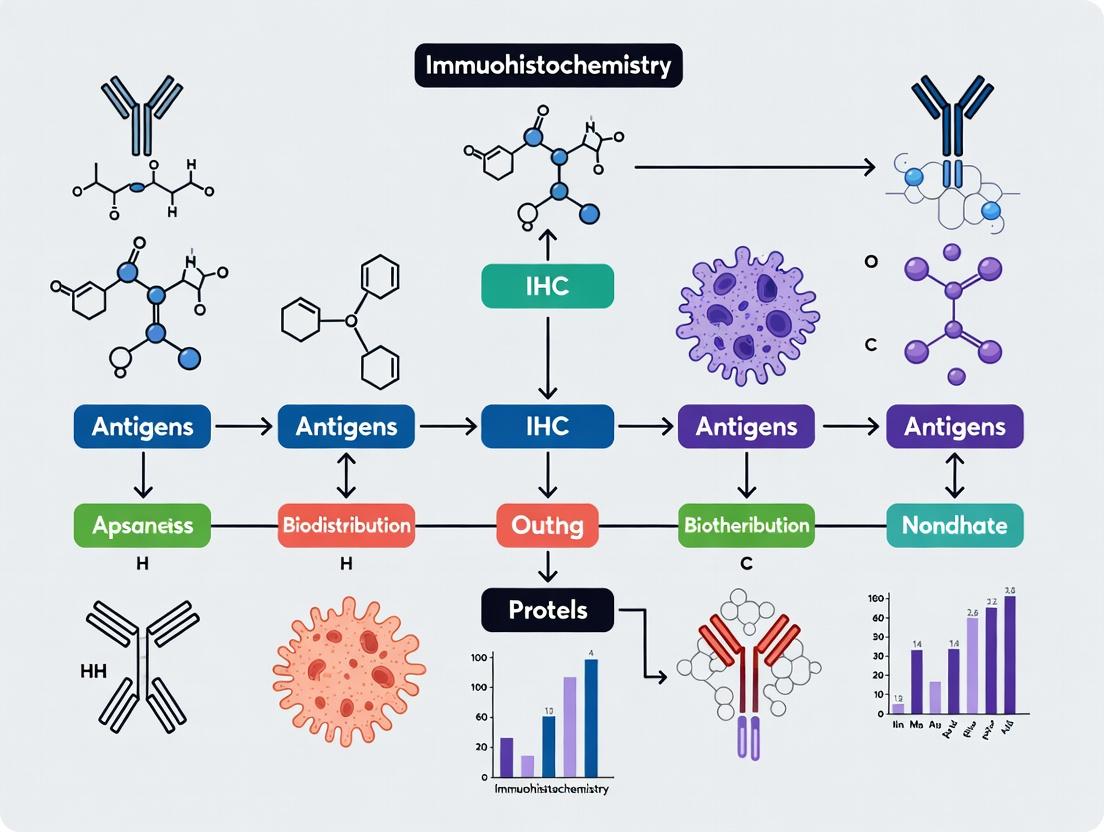
This comprehensive guide details the application of Immunohistochemistry (IHC) for analyzing the biodistribution of biotherapeutics, including monoclonal antibodies, antibody-drug conjugates (ADCs), and cell and gene therapies.
Unlocking Tissue Targeting: A Complete Guide to IHC for Biotherapeutic Biodistribution Analysis
Abstract
This comprehensive guide details the application of Immunohistochemistry (IHC) for analyzing the biodistribution of biotherapeutics, including monoclonal antibodies, antibody-drug conjugates (ADCs), and cell and gene therapies. Targeting researchers and drug development professionals, it covers foundational principles, advanced methodological workflows, common troubleshooting strategies, and essential validation techniques. The article provides actionable insights for obtaining precise, reliable, and interpretable spatial localization data critical for preclinical pharmacokinetics, pharmacodynamics, safety assessment, and translational research.
The Core Role of IHC in Biotherapeutic Biodistribution: From Principles to Strategic Planning
Within the broader thesis on immunohistochemistry (IHC) for biodistribution research, a central pillar is the unequivocal necessity of spatial context. For biotherapeutics—including monoclonal antibodies, antibody-drug conjugates (ADCs), gene therapies, and cell therapies—understanding where a drug localizes at the tissue, cellular, and subcellular levels is as critical as knowing how much is present. Quantitative biodistribution data (e.g., from homogenization and ELISA) provides concentration over time but erases all anatomical information. This is insufficient for biologics, which often have targeted mechanisms of action, exhibit heterogeneous tissue penetration, and can induce on-target, off-tumor toxicity or unexpected accumulation in clearance organs. IHC and its advanced multiplexed and quantitative (qIHC) forms are therefore non-negotiable tools, providing the spatial map that transforms concentration data into mechanistic insight and predictive safety assessment.
Application Notes: The Critical Role of Spatial Data
Key Applications Validated by Current Research (2023-2024)
- Target Engagement Verification: Confirming co-localization of a therapeutic antibody with its intended target antigen in a tumor microenvironment, distinct from mere blood pool presence.
- Off-Target Accumulation Identification: Detecting unexpected drug sequestration in organs like the liver, spleen, or kidney, which can impact efficacy and explain toxicity signals from non-clinical studies.
- PK/PD Modeling Integration: Providing spatial parameters to refine pharmacokinetic/pharmacodynamic models, moving from "plasma concentration vs. effect" to "tissue microenvironment concentration vs. effect."
- Biomarker Development: Identifying spatial patterns of drug distribution that correlate with clinical response, enabling patient stratification.
- ADC & Novel Modality Assessment: Evaluating the differential distribution of the antibody versus the payload for ADCs, or tracking the precise location of viral vectors or engineered cells.
Comparative Data: Homogenization vs. Spatial IHC Analysis
The table below summarizes key comparative insights, synthesizing data from recent studies on oncology biotherapeutics.
Table 1: Comparative Outputs from Homogenization-Based vs. Spatial IHC-Based Biodistribution Studies
| Parameter | Homogenization + LC-MS/ELISA | Spatial IHC / qIHC / Digital Pathology |
|---|---|---|
| Primary Output | Total tissue concentration (ng/g) | Cellular & subcellular localization map |
| Spatial Resolution | None (whole-tissue average) | Single-cell to subcellular resolution |
| Ability to Distinguish Specific vs. Non-Specific Binding | Indirect (requires subtraction) | Direct visualization and quantification |
| Data on Heterogeneity | Lost | Preserved and quantifiable (e.g., % tumor area positive) |
| Impact of Blood Pool Contamination | High (can overestimate tissue uptake) | Low (visual distinction of vasculature) |
| Key Metric for PK Models | Concentration vs. time curve | Concentration in target cell vs. time |
| Typical Turnaround Time | Faster per sample | Slower, but higher information density |
Experimental Protocols
Protocol: Multiplex IHC (mIHC) for Co-localization Analysis of Biologics and Targets
This protocol details a sequential multiplex immunofluorescence (mIF) method for formalin-fixed, paraffin-embedded (FFPE) tissues.
I. Objectives: To simultaneously detect the administered biologic and its target protein, plus relevant microenvironment markers (e.g., CD31 for endothelium, CD8 for T cells) in a single tissue section.
II. Materials & Reagents: See "The Scientist's Toolkit" (Section 5).
III. Methodology:
- Tissue Preparation: Cut 4-5 µm FFPE sections onto charged slides. Bake at 60°C for 1 hour.
- Deparaffinization & Epitope Retrieval:
- Deparaffinize in xylene and graded ethanol series to water.
- Perform Heat-Induced Epitope Retrieval (HIER) using a high-pH (pH 9) retrieval buffer in a pressure cooker for 15 minutes. Cool for 30 minutes.
- Primary Antibody Application (Cyclic Process):
- Cycle 1: Block endogenous peroxidase/peroxide activity (if using HRC systems). Apply primary antibody #1 (e.g., anti-human IgG Fc to detect therapeutic mAb) diluted in antibody diluent. Incubate at 4°C overnight in a humidified chamber.
- Visualization & Signal Deactivation:
- Apply appropriate polymer-based HRP-conjugated secondary antibody. Incubate for 30 min at RT.
- Develop signal using Opal fluorophore (e.g., Opal 520) tyramide signal amplification (TSA) reagent. Apply for 10 minutes.
- Strip Antibodies: Subject slide to another round of HIER (pH 9) in a microwave for 10-15 min to elute the primary-secondary antibody complex, leaving the deposited fluorophore intact.
- Repetition for Multiplexing:
- Repeat Steps 3-4 for each marker (e.g., Cycle 2: Target Antigen → Opal 690; Cycle 3: CD31 → Opal 570; Cycle 4: CD8 → Opal 620).
- Include a DAPI counterstain in the penultimate step.
- Mounting & Imaging:
- Apply autofluorescence quenching reagent if needed.
- Mount with ProLong Diamond Antifade mounting medium.
- Image using a multispectral fluorescence slide scanner (e.g., Vectra Polaris, Akoya Biosciences). Acquire whole slide at 20x magnification.
- Image & Data Analysis:
- Use image analysis software (e.g., HALO, Indica Labs; inForm, Akoya) for spectral unmixing and compartmental analysis.
- Quantify: (a) % of target-positive cells co-localized with the biologic, (b) distance of biologic from nearest blood vessel (CD31+).
IV. Diagram: Multiplex IHC Workflow for Biodistribution
Title: Sequential mIHC Workflow for Spatial Biodistribution
Protocol: Quantitative IHC (qIHC) for Absolute Target Saturation Analysis
This protocol uses controlled reference standards to quantify the amount of bound biologic per unit tissue area.
I. Objectives: To generate a calibrated, quantitative measurement of biotherapeutic density (molecules/µm²) on target cells within a tissue section.
II. Methodology (Key Steps Different from Standard IHC):
- Parallel Staining with Reference Standard: Alongside test tissue sections, stain a multi-tissue reference standard slide containing cell lines or tissues with known, pre-quantified amounts of the target antigen.
- Controlled Development: Use a chromogenic detection system (e.g., DAB) with a strictly controlled development time (e.g., 5 minutes exactly) on an automated stainer.
- Whole Slide Scanning & Densitometry: Scan slides at a single, consistent exposure. Convert the optical density (OD) of the DAB signal in test regions to absolute analyte density using the calibration curve generated from the reference standards.
- Data Reporting: Report data as molecules of therapeutic per cell or per µm² of region of interest (ROI), enabling direct comparison across studies and time points.
Signaling Pathway & Experimental Logic
Diagram: Logic of Spatial Biodistribution Informing Development
Title: Spatial Data Drives Biologics Development Decisions
The Scientist's Toolkit
Table 2: Essential Research Reagent Solutions for IHC-Based Biodistribution
| Reagent / Material | Function / Explanation | Example Vendor/Product |
|---|---|---|
| Anti-Idiotypic Antibody | Primary antibody uniquely recognizing the complementarity-determining region (CDR) of the therapeutic biologic. Critical for specific detection without cross-reactivity to endogenous human IgGs. | Custom generation or vendor-specific (e.g., Abcam, GenScript). |
| Anti-Human Fc Antibody | Primary antibody recognizing the constant region (Fc) of human IgG. Used for detecting human-derived therapeutics in animal tissues. May also detect endogenous human Ig in patient samples. | Commercial clones (e.g, Poly4053, BioLegend). |
| Opal TSA Fluorescent Kits | Tyramide Signal Amplification reagents conjugated to fluorophores (Opal 520, 570, 620, 690, etc.). Enable high-sensitivity, multiplexed detection on standard FFPE in sequential rounds. | Akoya Biosciences. |
| Multiplex IHC Automation System | Automated slide stainer optimized for sequential staining and stripping protocols. Ensures reproducibility and throughput for complex mIHC panels. | Leica BOND RX, Roche VENTANA. |
| Multispectral Imaging System | Microscope or scanner capable of capturing the full emission spectrum per pixel. Allows spectral unmixing to separate overlapping fluorophores and autofluorescence. | Vectra Polaris/PhenoImager (Akoya), Axioscan 7 (Zeiss). |
| qIHC Reference Standards | Slides containing cell pellets or tissue microarrays with pre-quantified antigen expression levels. Used to generate a calibration curve for converting stain intensity to analyte density. | Cell Signaling Technology (CST), ACD. |
| Spatial Analysis Software | Digital pathology image analysis platform for defining ROIs, performing cell segmentation, and quantifying signal intensity and co-localization. | HALO (Indica Labs), Visiopharm, QuPath. |
In the context of biodistribution studies for biotherapeutics, a multimodal analytical strategy is paramount. While immunohistochemistry (IHC) provides spatial context at the cellular level, it is most powerful when integrated with orthogonal techniques like imaging mass spectrometry (IMS), liquid chromatography-mass spectrometry (LC-MS/MS), and quantitative polymerase chain reaction (qPCR). This integrated approach validates findings and delivers a comprehensive understanding of therapeutic localization, concentration, and biological activity.
Quantitative Comparison of Key Biodistribution Modalities
Table 1: Comparative Analysis of Biodistribution Modalities
| Modality | Primary Output | Spatial Resolution | Sensitivity | Quantification Type | Key Advantage | Primary Limitation |
|---|---|---|---|---|---|---|
| IHC | Protein target localization in tissue context | Cellular/Subcellular (~0.5 µm) | Moderate (fm-pg) | Semi-quantitative (can be quantitative with careful controls) | Preserves morphological context; high specificity with validated antibodies. | Requires specific antibody; semi-quantitative without specialized imaging. |
| Imaging MS (e.g., MALDI-IMS) | In situ spatial distribution of m/z features (drug, metabolites, lipids) | ~10-50 µm | High (am-fmol) | Relative Quantification | Label-free, multiplex detection of thousands of analytes simultaneously. | Lower spatial resolution than IHC; complex data analysis; identification can be separate step. |
| LC-MS/MS | Absolute quantification of analyte (drug, biomarker) in tissue homogenate | None (bulk tissue) | Very High (am-fmol) | Absolute Quantification | Gold standard for sensitivity and precise absolute quantification. | Loses all spatial information; requires tissue destruction. |
| qPCR/dPCR | Nucleic acid (transgene, mRNA) concentration in tissue | None (bulk tissue) | Extremely High (single copy) | Absolute Quantification | Exceptional sensitivity for nucleic acids; measures pharmacodynamic response. | No protein or spatial data; results do not confirm functional protein presence. |
Detailed Application Notes & Protocols
Integrated Workflow for Comprehensive Biodistribution
A tiered approach is recommended: Use IHC/IF for spatial screening across major tissues. Perform LC-MS/MS for absolute quantification of the biotherapeutic in target and off-target tissues identified by IHC. Utilize IMS on adjacent sections for label-free co-localization of drug with specific morphological features or endogenous biomarkers. Employ qPCR on tissue lysates from the same organs to correlate protein presence with target engagement (mRNA expression changes).
Diagram Title: Integrated Multimodal Biodistribution Workflow
Protocol: Sequential IHC and MALDI-IMS on Adjacent Tissue Sections
This protocol enables direct correlation of antibody-based detection with label-free molecular imaging.
Materials:
- Fresh-frozen or FFPE tissue sections (5-10 µm thick) on conductive ITO slides or compatible slides.
- Validated primary antibody for the biotherapeutic.
- Appropriate IHC detection kit (e.g., HRP/DAB or fluorescent).
- Matrix for MALDI: α-Cyano-4-hydroxycinnamic acid (CHCA) for small molecules/peptides, sinapinic acid (SA) for proteins.
- MALDI-TOF/TOF or MALDI-FTICR mass spectrometer.
- Optical scanner.
Procedure:
- Sectioning: Cut serial sections. Use one for IHC, the adjacent for IMS.
- IHC Staining: Perform standard IHC protocol (deparaffinization, antigen retrieval, blocking, primary antibody incubation, detection, counterstaining) on the first section. Coverslip with non-permanent aqueous mounting medium if IMS is to be performed on the same section (requires removal later).
- Imaging & Registration: Digitally scan the IHC-stained slide at high resolution.
- IMS Section Preparation:
- For the adjacent section, perform minimal processing. For FFPE, deparaffinize and rehydrate. Do not stain.
- Apply matrix using an automated sprayer (e.g., TM-Sprayer). Optimize conditions (flow rate, passes, temperature) for even crystallization.
- MALDI-IMS Acquisition:
- Load slide into instrument.
- Define acquisition raster (pixel size, e.g., 20 µm).
- Acquire mass spectra in positive or negative ion mode across desired m/z range.
- Include calibration standards.
- Data Co-registration:
- Use histological features (vessel structures, tissue boundaries) visible in both the IHC scan and the optical image of the IMS section to digitally align the two datasets using software (e.g., SCiLS Lab, MSiReader).
- Overlay ion images for the biotherapeutic (identified by accurate mass or MS/MS) with the IHC staining pattern.
Protocol: Correlation of IHC Signal with LC-MS/MS Quantification
This protocol validates IHC staining intensity against a gold-standard quantitative method.
Materials:
- Tissue samples from the same organ.
- Equipment for tissue homogenization (bead mill or sonicator).
- Stable isotope-labeled (SIL) internal standard of the biotherapeutic.
- Protease (e.g., trypsin) if quantifying a protein therapeutic via surrogate peptides.
- LC-MS/MS system (triple quadrupole preferred for MRM).
- Image analysis software (e.g., QuPath, HALO, ImageJ).
Procedure:
- Parallel Sample Processing:
- Divide tissue samples. Process one piece for IHC (fix, embed, section).
- Homogenize a weighed adjacent piece in appropriate lysis buffer. Spike with SIL internal standard immediately.
- LC-MS/MS Sample Prep:
- For large molecule biologics (mAbs, proteins), digest homogenate with trypsin to generate signature peptides.
- Clean up peptides via solid-phase extraction.
- LC-MS/MS Analysis:
- Develop a multiple reaction monitoring (MRM) assay for 2-3 unique peptides from the biotherapeutic and the corresponding SIL peptides.
- Inject samples. Quantify based on peak area ratio (analyte/SIL).
- IHC Quantitative Analysis:
- Scan IHC slides (DAB or fluorescence).
- Using image analysis software, define regions of interest (ROIs).
- Measure staining intensity (optical density for DAB, mean fluorescence intensity for IF) within ROIs.
- Correlation:
- Plot LC-MS/MS concentration (ng/mg tissue) vs. IHC mean intensity for each sample/ROI.
- Use statistical tests (Pearson correlation) to determine if IHC signal reliably reflects absolute concentration trends.
Diagram Title: IHC and LC-MS/MS Correlation Protocol
The Scientist's Toolkit: Essential Research Reagent Solutions
Table 2: Key Reagents for Integrated Biodistribution Studies
| Reagent/Material | Primary Function | Application Notes |
|---|---|---|
| Validated Primary Antibodies | High-affinity, specific binding to biotherapeutic target epitope. Critical for IHC specificity. | Must be rigorously validated for IHC on the study species/tissue. Knockout/knockdown tissue controls are ideal. |
| Stable Isotope-Labeled (SIL) Internal Standards | Enables precise absolute quantification by LC-MS/MS. Corrects for extraction and ionization variability. | Should be identical to analyte except for mass label (e.g., 13C, 15N). Added at the earliest possible step (homogenization). |
| IHC-Compatible MALDI Slides | Conductive-coated slides (e.g., ITO) that allow tissue section mounting for both microscopy and direct MALDI-IMS analysis. | Enables sequential or adjacent section analysis on a compatible platform. |
| Optimized MALDI Matrices | (CHCA, SA, DHB) Crystallize with analyte to facilitate desorption/ionization by laser. Choice depends on analyte m/z. | Automated sprayers provide superior homogeneity and reproducibility over manual spotting. |
| RNAlater / RNA Stabilization Buffer | Preserves RNA integrity in tissues post-collection for accurate downstream qPCR analysis of gene expression. | Crucial for correlating protein (IHC) and drug (MS) localization with pharmacodynamic mRNA changes. |
| Multiplex IHC Detection Kits | Allow simultaneous detection of 2+ markers on one tissue section (e.g., Opal, CODEX). | Elucidates spatial relationships between biotherapeutic, target cells, and immune markers. |
| Tissue Homogenization Kits | Efficient and reproducible lysis of diverse tissue types for downstream LC-MS/MS or PCR. | Bead-based homogenizers are effective for tough tissues. Protease/RNase inhibitors are essential. |
| Digital PCR Assays | Ultra-sensitive, absolute quantification of transgene DNA or low-abundance mRNA without a standard curve. | Ideal for detecting low-level biodistribution (e.g., gene therapy vectors) where qPCR may lack precision. |
Immunohistochemistry (IHC) is a critical tool within the broader thesis on biodistribution of biotherapeutics, enabling spatial resolution of drug-target engagement and biological response. These applications directly inform Pharmacokinetic/Pharmacodynamic (PK/PD) modeling, toxicology assessments, and the translation of preclinical findings to clinical trials.
Application Notes
Supporting PK/PD Modeling
IHC provides spatial PK data by directly visualizing the tissue concentration and distribution of biotherapeutics (e.g., monoclonal antibodies, antibody-drug conjugates) over time. This complements liquid PK from plasma. PD biomarkers (e.g., phosphorylated signaling nodes, cytokine expression) measured via IHC establish the relationship between drug concentration at the site of action and the resulting pharmacological effect.
Informing Toxicology Studies
IHC is indispensable for identifying on-target, off-tissue toxicity and understanding the mechanistic basis of adverse findings. It can reveal unexpected biodistribution to non-target organs, cellular stress responses, or immune cell infiltration in tissues showing histopathological changes.
Enabling Translational Studies
IHC bridges species by assessing target expression and pathway modulation in both preclinical models and human tissues (e.g., from biopsies or tissue microarrays). This validates the relevance of animal models and guides human dose projections by quantifying target occupancy.
Experimental Protocols
Protocol 1: IHC for Biotherapeutic Biodistribution (Direct Method)
Objective: To localize and semi-quantify a human IgG-based biotherapeutic in formalin-fixed, paraffin-embedded (FFPE) rodent tissues. Methodology:
- Sectioning: Cut FFPE tissue blocks at 4-5 µm thickness. Mount on charged slides. Dry overnight at 37°C.
- Deparaffinization & Rehydration:
- Xylene: 2 x 10 minutes.
- Ethanol series: 100% (2x), 95%, 70% - 2 minutes each.
- Rinse in deionized water.
- Antigen Retrieval: Use pH 6.0 citrate buffer. Heat in pressure cooker for 15 minutes. Cool for 30 minutes at room temperature (RT). Rinse in PBS.
- Endogenous Peroxidase Block: Incubate with 3% H₂O₂ in PBS for 10 minutes at RT. Rinse in PBS.
- Protein Block: Incubate with 2.5% normal horse serum for 20 minutes at RT.
- Primary Antibody Application: Apply anti-human IgG Fc antibody (e.g., mouse monoclonal) at optimized dilution (typically 1-5 µg/mL) for 60 minutes at RT.
- Detection: Use a polymer-based HRP-conjugated secondary antibody system (e.g., ImmPRESS HRP) for 30 minutes at RT. Visualize with DAB chromogen (incubate 5-10 minutes).
- Counterstaining & Mounting: Counterstain with hematoxylin for 30 seconds. Dehydrate, clear, and mount with permanent medium.
- Analysis: Score using digital pathology or semi-quantitative H-scores (0-300).
Protocol 2: Multiplex IHC for PD Biomarker and Target Engagement
Objective: To simultaneously detect the biotherapeutic, a phosphorylated signaling protein (PD marker), and a cell lineage marker. Methodology:
- Perform steps 1-4 from Protocol 1.
- First Antigen Staining Cycle:
- Block with appropriate serum.
- Apply primary antibody for Target A (e.g., biotherapeutic).
- Apply HRP-polymer secondary. Develop with Tyramide Signal Amplification (TSA) using fluorophore 1 (e.g., Cy3).
- Inactivate HRP with mild heat or H₂O₂ treatment.
- Second & Third Antigen Cycles: Repeat step 2 with antibodies for phospho-protein (e.g., p-ERK) and lineage marker (e.g., CD68), using distinct TSA fluorophores (e.g., Cy5, FITC).
- Nuclear Stain & Mounting: Apply DAPI. Mount with anti-fade medium.
- Analysis: Acquire images using a multispectral microscope. Use spectral unmixing and colocalization algorithms for quantitative analysis.
Data Presentation
Table 1: IHC-Derived Data Informing Key Drug Development Applications
| Application | Measurable Endpoint (via IHC) | Typical Output Metric | Utility in Development |
|---|---|---|---|
| PK / Biodistribution | Tissue concentration of biotherapeutic | H-score; Positive cells/area; Digital pixel intensity | Defines tissue PK; Identifies distribution to target vs. non-target organs. |
| Target Engagement | Co-localization of drug with target; Downstream pathway modulation | Colocalization coefficient; % p-Target inhibition | Confirms mechanism of action; Informs PK/PD relationship. |
| Pharmacodynamics | Change in phosphorylated signaling proteins, cell proliferation (Ki67), apoptosis (cCasp3) | % Positive cells; Fold-change vs. vehicle | Links exposure to biological effect. |
| Toxicology / Safety | Immune cell infiltration (CD3, CD68); Cellular stress markers (p-H2AX) | Cell count/area; Incidence & severity grade | Identifies mechanism of toxicity; Supports risk assessment. |
| Translational | Target expression in human vs. preclinical species | H-score; Staining intensity & prevalence | Validates animal models; Guides first-in-human dose selection. |
Visualizations
IHC Informs Integrated PK/PD Modeling
IHC-Driven Mechanistic Toxicology Workflow
The Scientist's Toolkit: Key Research Reagent Solutions
| Item | Function in IHC for Biodistribution |
|---|---|
| Anti-Idiotype Antibody | Primary antibody uniquely recognizing the complementary-determining region (CDR) of the biotherapeutic. Crucial for specific detection without cross-reactivity to endogenous IgG. |
| Species-Specific Fab Fragment | Secondary detection reagent (e.g., anti-human Fab-HRP). Minimizes background from endogenous immunoglobulins in tissue, especially for human IgG-based therapeutics. |
| Phospho-Specific Antibodies | Validated monoclonal antibodies detecting activated, phosphorylated signaling proteins (e.g., p-AKT, p-ERK). Key PD biomarkers for demonstrating target engagement and pathway modulation. |
| Tyramide Signal Amplification (TSA) Kits | Enable highly sensitive multiplex IHC by sequentially depositing different fluorophores. Essential for co-localization studies of drug, target, and biomarkers. |
| Multispectral Imaging System | Microscope and software capable of capturing and unmixing the emission spectra of multiple fluorophores. Required for quantitative analysis of multiplex IHC panels. |
| Automated Image Analysis Software | Tools for quantifying staining intensity, H-scoring, and cell counting (e.g., HALO, Visiopharm). Standardizes analysis and reduces observer bias for robust data. |
Within the critical field of immunohistochemistry (IHC) for biotherapeutic biodistribution research, robust and reproducible staining is paramount. The pre-assay phase—encompassing tissue selection, fixation, and antigen retrieval (AR)—is the most determinative step for successful target visualization. These upstream processes directly impact the preservation of both tissue morphology and the target antigen, which is often the biotherapeutic itself or a downstream biomarker. Suboptimal pre-assay handling can introduce significant artifacts, leading to false-negative results or inaccurate quantification of drug distribution, thereby compromising pharmacokinetic and pharmacodynamic analyses in drug development.
Fixation: Balancing Preservation and Epitope Integrity
Fixation halts degradation and preserves tissue architecture. For biodistribution studies, the choice of fixative and fixation time is a critical compromise between optimal morphology and epitope preservation.
Table 1: Common Fixatives in Biodistribution IHC
| Fixative | Mechanism | Key Advantages for Biodistribution | Key Limitations | Typical Fixation Time (at RT) |
|---|---|---|---|---|
| 10% Neutral Buffered Formalin (NBF) | Cross-linking proteins. | Gold standard for morphology; widely used and compatible with most archives. | Can mask epitopes via cross-linking; may require vigorous AR. Over-fixation is common. | 24-72 hours (strictly ≤72h for optimal AR). |
| Paraformaldehyde (PFA) 4% | Similar to NBF but purer, no methanol. | More consistent cross-linking; preferred for sensitive targets. | Similar epitope masking as NBF. | 24-48 hours. |
| Zinc-based Fixatives | Precipitates proteins, less cross-linking. | Superior preservation of labile epitopes (e.g., some cytokines, surface markers). | Inferior long-term morphology; not routine for archiving. | 24-48 hours. |
| Ethanol/Methanol | Dehydration and precipitation. | Preserves many epitopes without cross-linking; often no AR needed. | Poor morphological detail; tissue shrinkage and hardening. | 18-24 hours. |
Protocol: Optimal NBF Fixation for Biodistribution Tissues
- Dissection & Trimming: Immediately following necropsy, place tissue sample into a volume of 10% NBF that is at least 10 times the tissue volume.
- Fixation Duration: Fix at room temperature (20-25°C) for 24-48 hours. For larger organs (e.g., whole mouse liver lobe), perfuse in situ or slice to ≤5mm thickness before immersion.
- Post-Fixation Processing: After fixation, rinse tissues in phosphate-buffered saline (PBS) and process through graded alcohols (70%, 95%, 100%) and xylene for paraffin embedding. Do not exceed 72 hours total fixation time.
- Sectioning: Cut paraffin sections at 3-5µm thickness onto positively charged or adhesive glass slides. Dry slides at 37°C overnight or 60°C for 1 hour.
Tissue Selection and Controls Strategy
A rigorous tissue selection and control scheme is non-negotiable for validating biodistribution IHC assays.
Experimental Design Protocol: Tissue Controls for Biotherapeutic IHC
- Positive Control Tissue: Select a tissue known to express the target antigen or a region from a dosed animal with expected high drug load (e.g., injection site). This validates the entire IHC protocol.
- Negative Control Tissue: Use tissue from an isotype-control dosed or vehicle-dosed animal. This identifies non-specific staining from the detection system or endogenous Ig.
- On-Slide Controls:
- Primary Antibody Omission (No 1° Ab): Replace the primary antibody with antibody diluent or isotype control. Controls for secondary antibody specificity.
- Competition Block: Pre-incubate the primary antibody with a 10-fold molar excess of the target biotherapeutic (competitive peptide) for 1 hour before application. Specific staining should be abolished.
- System Suitability Control (SSC): Include a tissue microarray (TMA) containing cores of known positive and negative tissues on every slide batch to monitor inter-assay reproducibility.
Antigen Retrieval: Reversing Epitope Masking
AR is essential for formalin-fixed, paraffin-embedded (FFPE) tissues to break protein cross-links and expose epitopes. The method must be empirically optimized for each biotherapeutic-target complex.
Table 2: Antigen Retrieval Methods Comparison
| Method | Typical Conditions | Primary Mechanism | Best For | Considerations for Biodistribution |
|---|---|---|---|---|
| Heat-Induced Epitope Retrieval (HIER) | pH 6.0 citrate or pH 9.0 Tris/EDTA buffer, 95-100°C, 20-40 min. | Heat-mediated hydrolysis of cross-links. | Majority of targets; most biotherapeutic antibodies. | pH is critical. pH 9.0 often better for cross-linked biotherapeutic mAbs. Cool slides slowly in buffer to avoid re-masking. |
| Protease-Induced Epitope Retrieval (PIER) | Trypsin, proteinase K, or pepsin, 37°C, 5-30 min. | Enzymatic digestion of proteins. | Some tightly masked or extracellular matrix targets. | Harsh; can damage morphology and delicate epitopes. Use as last resort. |
| Combination HIER + Mild PIER | Brief protease treatment after HIER. | Sequential unmasking. | Extremely refractory epitopes. | Requires extensive optimization to prevent tissue loss. |
Protocol: Standardized HIER for Biodistribution IHC
- Deparaffinization & Hydration: Bake slides at 60°C for 20 min. Process through xylene (2 x 5 min) and graded alcohols (100%, 95%, 70% - 2 min each) to distilled water.
- Buffer Selection: Prepare 1x retrieval buffer (e.g., 10mM Sodium Citrate, pH 6.0, or 1mM EDTA/10mM Tris, pH 9.0). Use a volume sufficient to cover slides completely (typically 1-1.5L in a decloaking chamber).
- Heating: Place slides in a pre-filled, heat-resistant container. Using a pressure cooker, microwave, or commercial decloaker, bring buffer to 95-100°C. Maintain temperature for 20 minutes.
- Cooling: Remove container from heat and allow it to cool at room temperature for 20-30 minutes until the buffer is below 30°C.
- Rinsing: Gently rinse slides in distilled water, then transfer to PBS or Tris-buffered saline (TBS) for subsequent staining steps.
Title: Antigen Retrieval Workflow for FFPE Tissues
Title: Pre-Assay Role in IHC Biodistribution Workflow
The Scientist's Toolkit: Key Research Reagent Solutions
Table 3: Essential Materials for Pre-Assay Optimization
| Item | Function in Pre-Assay Phase | Example/Brand Considerations |
|---|---|---|
| 10% NBF, Pre-buffered | Standardized fixation to halt tissue decay and preserve architecture. | Ensure consistent, neutral pH to prevent acid-induced artifacts. |
| Cassettes & Biocontainers | Secure tissue handling during fixation and processing. | Use labeled, leak-proof cassettes resistant to solvents. |
| Positively Charged Microslides | Prevents tissue section loss during rigorous AR and staining. | Essential for high-temperature HIER protocols. |
| Commercial Antigen Retrieval Buffers (pH 6 & pH 9) | Standardized, reproducible HIER performance. | Preferred over lab-made for inter-lot consistency in GLP studies. |
| Pressure Cooker/Decloaking Chamber | Delivers consistent, high-temperature HIER. | Provides more uniform heating than microwave methods. |
| Hydrophobic Barrier Pen | Creates a barrier around tissue sections to minimize reagent volume and cross-contamination. | Critical for TMAs and when applying different conditions on one slide. |
| Validated Primary Antibody | Specifically detects the biotherapeutic or its target. | Must be validated for IHC on FFPE tissue with appropriate positive/negative controls. |
| Recombinant Biotherapeutic Protein | Serves as a positive control antigen and for competition blocking experiments. | Used to confirm antibody specificity and generate standard curves if quantifying. |
| Multitissue Control Blocks (TMA) | Contains known positive/negative tissues for system suitability testing on every run. | Ensures inter-assay staining consistency and performance monitoring. |
Within the critical path of biotherapeutic development, particularly for modalities like monoclonal antibodies, antibody-drug conjugates (ADCs), and bispecifics, understanding tissue biodistribution via immunohistochemistry (IHC) is paramount. A core thesis underpinning successful biodistribution studies posits that the fidelity and specificity of IHC data are directly dependent on the rigorous epitope characterization of the biotherapeutic and the subsequent rational design of detection reagents. Poorly characterized detection leads to false-positive signals (off-target binding) or false negatives (epitope masking), jeopardizing pharmacokinetic and safety assessments. These application notes detail the integrated protocols for epitope mapping and detection reagent engineering, specifically tailored for IHC-based biodistribution research.
Epitope Characterization: Mapping the Interface
Objective: To precisely define the amino acid residues on the target antigen that are contacted by the biotherapeutic's binding domain (paratope). This informs detection reagent design and predicts potential cross-reactivity.
The following table summarizes quantitative and qualitative outputs from standard epitope characterization techniques.
Table 1: Comparative Analysis of Epitope Characterization Methods
| Method | Principle | Resolution | Throughput | Key Output for IHC Reagent Design |
|---|---|---|---|---|
| Hydrogen-Deuterium Exchange Mass Spectrometry (HDX-MS) | Measures solvent accessibility changes upon ligand binding. | Medium (peptide level) | Medium | Regions of significant protection/ deprotection map the interaction interface. |
| Cross-linking Mass Spectrometry (XL-MS) | Identifies proximal amino acids between antigen and biotherapeutic via covalent crosslinks. | Low-Medium (residue proximity) | Low | Distance restraints defining the epitope-paratope complex structure. |
| Site-Directed Mutagenesis / Alanine Scanning | Systematically replaces candidate residues with alanine to measure binding loss. | High (single residue) | Low | Critical binding residues (≥10-fold KD change); defines "functional epitope." |
| Peptide Microarray / Phage Display | Screens binding against libraries of antigen-derived peptides. | Low (linear sequence) | High | Identifies linear/continuous epitope components; rules out linear motifs. |
| Cryo-Electron Microscopy (Cryo-EM) | Direct visualization of the antigen-biotherapeutic complex. | Atomic to Near-Atomic | Low | 3D structural model of the interface; reveals conformational epitopes. |
Protocol: HDX-MS for Epitope Mapping
Title: Protocol for Epitope Mapping via Hydrogen-Deuterium Exchange Mass Spectrometry.
I. Reagents & Equipment:
- Purified target antigen and biotherapeutic.
- Deuterium oxide (D₂O) buffer (pD 7.4, 25 mM phosphate, 150 mM NaCl).
- Quench buffer (2.4 M Guanidine-HCl, 0.8% Formic Acid, pH 2.4).
- Liquid chromatography system coupled to high-resolution mass spectrometer.
- Automated liquid handler (recommended).
II. Procedure:
- Complex Formation: Incubate antigen with biotherapeutic at 2:1 molar ratio (antigen:therapeutic) for 30 min at 25°C. Include antigen-alone control.
- Deuterium Labeling: Dilute complex and control 1:10 into D₂O buffer. Allow labeling to proceed for five time points (e.g., 10s, 1min, 10min, 1h, 4h) at 25°C.
- Quenching: At each time point, mix 50 µL of labeling reaction with 50 µL of ice-cold quench buffer to reduce pH to ~2.5 and decrease temperature to 0°C.
- Digestion & Separation: Immediately inject quenched sample onto an immobilized pepsin column at 0°C for online digestion (≈3 min). Trap resulting peptides on a C8 trap column.
- Mass Analysis: Elute peptides onto a C18 UHPLC column for separation followed by MS analysis. Use a mass spectrometer with high mass accuracy (e.g., Q-TOF).
- Data Processing: Use dedicated HDX software (e.g., HDExaminer, DynamX) to identify peptides and calculate deuterium uptake for each peptide at each time point. Compare uptake between antigen-alone and complex states.
III. Data Interpretation: Peptides showing a statistically significant reduction in deuterium uptake in the complex state (protection) are part of or proximal to the epitope. Generate a uptake difference plot mapped onto the antigen sequence or structure.
Diagram 1: HDX-MS Epitope Mapping Workflow (76 chars)
Detection Reagent Design for IHC
Objective: To generate a detection reagent that specifically recognizes the biotherapeutic (not the endogenous target) with high affinity, without competing for the epitope, for use in IHC assays of tissue sections.
Strategic Considerations
The core challenge is avoiding epitope masking, where the detection reagent cannot bind because the biotherapeutic is already bound to its target on the tissue. Strategies include:
- Anti-Idiotypic Reagents: Antibodies raised against the unique paratope (idiotype) of the biotherapeutic. These bind a distinct, non-competing site.
- Labeled Biotherapeutic Direct Detection: Using a directly conjugated biotherapeutic (e.g., fluorescent tag) is definitive but often lacks sensitivity and is not usable for most preclinical studies.
- Secondary Detection Against Constant Region: Using antibodies against the biotherapeutic's Fc or constant domain (e.g., anti-human IgG). This is simple but risks detecting endogenous immunoglobulins and cannot differentiate different biotherapeutics of the same subclass.
- Tag-Based Detection: Engineering a peptide tag (e.g., HA, FLAG) onto the biotherapeutic and using anti-tag reagents. Highly specific but requires engineering into the molecule.
Protocol: Generating and Validating Anti-Idiotypic Antibodies for IHC
Title: Protocol for Anti-Idiotypic Antibody Generation and IHC Validation.
I. Immunogen Preparation & Immunization:
- Use the purified, intact biotherapeutic (or its Fab fragment) as immunogen.
- Immunize host species (e.g., rabbit, llama) using standard protocols. Pre-adsorb serum against the target antigen and the host's endogenous immunoglobulin constant regions to remove non-idiotypic antibodies.
II. Hybridoma Generation or Phage Display Selection:
- For hybridomas: Perform fusion, then screen supernatants via ELISA against the immunogen biotherapeutic vs. an isotype-matched irrelevant antibody.
- For phage display: Pan a naive library against the biotherapeutic. Elute binders with low pH or target antigen competition to select for paratope-binders.
III. Critical Specificity Screening (Tiered Assays):
- Epitope Competition ELISA: Confirm that the candidate anti-idiotype (AId) binding is inhibited by pre-incubating the biotherapeutic with its target antigen. Lack of inhibition suggests AId binds a non-paratope region.
- IHC on Target-Expressing Cell Lines: Test AId staining on cells treated with/without the biotherapeutic. Signal should be present only in biotherapeutic-dosed cells.
- IHC on Relevant Tissue: Use tissue from dosed vs. non-dosed animals. Specific signal should localize to expected target-positive cells in dosed samples only.
IV. Affinity Determination: Use surface plasmon resonance (SPR) or biolayer interferometry (BLI) to measure binding affinity (KD) of the AId for the biotherapeutic. Aim for KD ≤ 10 nM for sensitive IHC detection.
Diagram 2: Detection Reagent Design Decision Tree (78 chars)
The Scientist's Toolkit: Key Reagents for Epitope & Detection Workflows
Table 2: Essential Research Reagent Solutions
| Reagent / Material | Function in Context | Key Consideration |
|---|---|---|
| Recombinant Target Antigen | Essential for epitope mapping assays (HDX-MS, SPR) and for blocking/absorption steps in detection validation. | Must match the native, post-translationally modified form found in tissues as closely as possible. |
| Biotherapeutic (Fab/Fragment) | Immunogen for anti-idiotype generation; analyte for mapping. | Using Fab fragments avoids constant region-focused immune responses during AId generation. |
| Isotype-Control Biotherapeutic | Critical negative control for specificity testing during AId screening. | Should be same format/subclass but different antigen specificity. |
| Anti-Idiotypic Antibody (Candidate) | Primary detection reagent for IHC biodistribution studies. | Must be validated in IHC under antigen-saturating conditions to prove non-competition. |
| Phage Display Naive Library | Source of diverse antibody fragments for in vitro selection of AIds. | Enables selection without animal immunization. |
| Surface Plasmon Resonance (SPR) Chip | For kinetic analysis (KA, KD) of biotherapeutic-antigen and AId-biotherapeutic interactions. | CMS chip series allow easy amine coupling of antigen or therapeutic. |
| Multiplex IHC Validation Tissue Microarray | Contains cores of target-positive/Negative tissues from dosed and control animals for high-throughput AId validation. | Accelerates specificity confirmation across multiple tissue types. |
Mastering the IHC Workflow: Step-by-Step Protocols for Biodistribution Studies
Within the context of Immunohistochemistry (IHC) for biodistribution studies of biotherapeutics, the integrity of the target antigen is paramount. Inaccurate biodistribution data, often stemming from poor tissue handling, can lead to false conclusions regarding a drug's efficacy and safety. This application note details a standardized protocol for tissue collection and processing designed to preserve target antigen integrity for optimal IHC analysis.
Critical Pre-Collection Variables & Data
The following table summarizes key variables that must be controlled prior to and during tissue collection. Data is synthesized from current best practices in preclinical research.
Table 1: Key Pre-Collection Variables & Their Impact on Target Integrity
| Variable | Optimal Condition / Range | Impact on Antigen Integrity if Suboptimal | Supporting Data / Rationale |
|---|---|---|---|
| Warm Ischemia Time | < 1 minute (rodent); Minimize (NHP/human) | Rapid antigen degradation/diffusion; increased background. | Studies show >80% signal loss for some labile targets (e.g., phospho-epitopes) after 10 min. |
| Cold Ischemia Time | < 20 minutes (fixation or snap-freezing) | Post-excision degradation and modifications continue. | Prolonged cold ischemia alters RNA/DNA quality and can induce hypoxic artifact. |
| Fixation Type | 10% Neutral Buffered Formalin (NBF) for most targets. | Over-fixation masks epitopes; under-fixation causes poor morphology and autolysis. | NBF provides a balance of penetration and cross-linking. Optimal for >90% of IHC targets. |
| Fixation Duration | 24-72 hours, depending on tissue size (18-24h for mouse). | Under-fixation: degradation. Over-fixation: irreversible epitope masking. | Fixed tissue thickness should not exceed 4mm. Ratio: 10:1 fixative to tissue volume. |
| Snap-Freezing Medium | Optimal Cutting Temperature (O.C.T.) compound or 2-Methylbutane (isopentane) cooled by liquid nitrogen. | Slow freezing causes ice crystal formation, destroying cellular architecture. | Direct immersion in LN2 causes insulating vapor layer, leading to slower freezing and artifact. |
Detailed Protocols
Protocol 1: Perfusion Fixation for Rodent Tissues (Gold Standard)
Objective: To immediately fix tissue in situ, eliminating warm ischemia and providing superior preservation for IHC. Materials: Perfusion pump, 0.9% saline, 10% NBF, surgical tools. Procedure:
- Deeply anesthetize the animal according to approved IACUC protocols.
- Open the thoracic cavity. Insert perfusion cannula into the left ventricle.
- Incise the right atrium to create an outflow.
- Initiate perfusion with ~50-100mL of room-temperature 0.9% saline at a steady pressure (80-100 mmHg for rats) to clear blood.
- Immediately switch to ~200-500mL of 10% NBF. Cessation of tail/jaw twitching indicates successful fixation.
- Excise target organs and immerse them in fresh 10% NBF for 24 hours (post-perfusion fixation) at room temperature.
- Transfer to 70% ethanol for storage or proceed to processing.
Protocol 2: Snap-Freezing for Labile Targets
Objective: To rapidly preserve tissues for antigens destroyed by formalin fixation (e.g., some phosphoproteins, enzymes). Materials: Isopentane, Liquid Nitrogen (LN2), Cryomolds, O.C.T., Forceps, Cryostat. Procedure:
- Excise tissue rapidly (<60 seconds post-euthanasia). Trim to <5mm thickness.
- Partially fill a small beaker with isopentane. Slowly add LN2 until the isopentane becomes viscous and cloudy (~ -70°C to -80°C). Do not use LN2 directly on tissue.
- Embed tissue in O.C.T. in a cryomold, or hold with forceps.
- Submerge the sample completely in the chilled isopentane for 30-60 seconds until fully frozen.
- Transfer the frozen block to a pre-cooled labeled cryovial and store at -80°C.
- Section using a cryostat maintained at -20°C.
Protocol 3: Tissue Processing & Embedding for Formalin-Fixed Samples
Objective: To dehydrate, clear, and infiltrate fixed tissue with paraffin wax for stable, sectionable blocks. Materials: Automated Tissue Processor, graded alcohols, xylene or xylene-substitute, paraffin wax. Procedure:
- Dehydration: Transfer fixed tissues from 70% ethanol through a graded series (80%, 95%, 100%, 100%) for 60-90 minutes each.
- Clearing: Immerse tissue in xylene or a clearing agent (two changes, 60-90 minutes each) to remove alcohol.
- Infiltration: Transfer to molten paraffin wax (two to three changes, 60 minutes each) at 55-60°C under vacuum.
- Embedding: Orient tissue in a mold filled with fresh paraffin. Chill rapidly on a cold plate.
- Storage: Store blocks at 4°C to minimize oxidation.
The Scientist's Toolkit
Table 2: Essential Research Reagent Solutions for Tissue Integrity
| Item | Function & Importance |
|---|---|
| 10% Neutral Buffered Formalin (NBF) | Gold-standard fixative. Buffers prevent acidic formation that harms tissue, while formalin cross-links proteins to preserve structure. |
| RNA/DNA Stabilization Solution | Penetrates tissue to rapidly degrade RNases/DNases, preserving nucleic acids for concurrent genomic analysis from the same sample. |
| Phosphate-Buffered Saline (PBS) | Isotonic buffer used for rinsing blood from tissues or as a diluent, preventing osmotic shock during pre-fixation handling. |
| Optimal Cutting Temperature (O.C.T.) Compound | Water-soluble embedding medium that provides support for frozen tissue during cryosectioning, minimizing chatter. |
| Pre-cooled Isopentane | Cryogenic liquid with high thermal conductivity but low boiling point, enabling rapid freezing without the vapor barrier of LN2. |
| Validated Primary Antibodies for IHC | Antibodies specifically verified for IHC on the species and fixation type used. Critical for specific biodistribution signal. |
| Antigen Retrieval Solutions (Citrate/EDTA) | Breaks protein cross-links formed during fixation to unmask epitopes, a critical step for most IHC on FFPE tissues. |
| Enzymatic Blocking Solutions | Used to quench endogenous peroxidase or alkaline phosphatase activity to prevent false-positive signal in IHC detection. |
Visualizing Workflows and Relationships
IHC Tissue Processing Decision Flow
Integrity Degradation Factors & Solutions
Within biodistribution studies for biotherapeutics, immunohistochemistry (IHC) is a cornerstone technique for visualizing target engagement and tissue localization. The selection of a detection method—direct vs. indirect, chromogenic vs. fluorescence—profoundly impacts sensitivity, specificity, multiplexing capability, and quantitative potential. This article details application notes and protocols to guide researchers in making informed methodological choices aligned with their study goals.
Table 1: Core Characteristics of IHC Detection Methods
| Method | Typical Sensitivity | Spatial Resolution | Multiplex Capacity | Primary Use Case in Biodistribution |
|---|---|---|---|---|
| Direct Chromogenic | Low | High (Brightfield) | Low (1-2) | Simple, high-throughput target confirmation on abundant antigen. |
| Indirect Chromogenic | Medium-High | High (Brightfield) | Low (1-2) | Standard target localization with signal amplification. |
| Direct Fluorescence | Low-Medium | High (Fluorescent) | Medium (3-4) | Co-localization studies with minimal cross-reactivity. |
| Multiplex Fluorescence (Indirect) | High | High (Fluorescent) | High (4-7+) | Complex cellular interaction mapping and spatial phenotyping. |
Table 2: Quantitative Performance Metrics (Typical Values)
| Parameter | Direct Method | Indirect Method (with HRP polymer) | Multiplex Fluorescence (Opal-like) |
|---|---|---|---|
| Signal Amplification | 1:1 (Primary Ab only) | ~10-20x | >50x (via tyramide signal amplification) |
| Typical Signal-to-Noise Ratio | Moderate | High | Very High |
| Protocol Duration (excl. staining) | ~2 hours | ~3 hours | ~6-8 hours (sequential) |
| Antibody Consumption | High | Low | Low |
Experimental Protocols
Protocol 1: Standard Indirect Chromogenic IHC for Biodistribution
Application: Localizing a biotherapeutic (e.g., human IgG) in formalin-fixed, paraffin-embedded (FFPE) tissue sections.
- Deparaffinization & Antigen Retrieval: Bake slides at 60°C for 1 hr. Deparaffinize in xylene and rehydrate through graded ethanol to water. Perform heat-induced epitope retrieval in pH 6.0 citrate buffer using a pressure cooker (121°C, 15 min). Cool for 30 min.
- Peroxidase Blocking: Incubate with 3% H₂O₂ in methanol for 15 min to quench endogenous peroxidase activity. Rinse in PBS.
- Protein Block: Apply 2.5% normal horse serum in PBS for 20 min at room temperature (RT) to reduce non-specific binding.
- Primary Antibody Incubation: Incubate with anti-human IgG monoclonal antibody (e.g., clone M1310B05) diluted in PBS at 4°C overnight in a humidified chamber.
- Secondary Detection: Apply a horseradish peroxidase (HRP)-conjugated polymer anti-mouse secondary reagent for 30 min at RT. Rinse with PBS.
- Chromogen Development: Develop signal with 3,3'-Diaminobenzidine (DAB) substrate for 5-10 min. Monitor under a microscope. Stop reaction in water.
- Counterstaining & Mounting: Counterstain with hematoxylin for 45 sec, blue in Scott's tap water. Dehydrate, clear in xylene, and mount with a permanent mounting medium.
Protocol 2: Multiplex Fluorescence IHC (4-plex) Using Sequential Indirect Detection
Application: Simultaneous detection of biotherapeutic (human IgG), a cellular marker (CD8), a proliferation marker (Ki-67), and nuclear staining.
- Deparaffinization & Multiplex AR: Process slides as in Protocol 1. Use pH 9.0 EDTA retrieval buffer for optimal multiplex epitope exposure.
- Primary/Secondary Block: Incubate with serum-free protein block for 10 min, then with an endogenous enzyme blocker (e.g., dual endogenous enzyme-blocking reagent) for 10 min.
- Cycle 1 - Target 1 (Ki-67):
- Apply anti-Ki-67 rabbit monoclonal (clone D3B5) for 1 hr at RT.
- Apply HRP-conjugated polymer anti-rabbit secondary for 10 min.
- Apply fluorophore-conjugated tyramide (e.g., Opal 520) diluted 1:100 for 10 min.
- Perform microwave treatment (in pH 9.0 buffer) to strip antibodies, preserving deposited fluorophore.
- Cycle 2 - Target 2 (CD8): Repeat Step 3 using anti-CD8 mouse monoclonal (clone C8/144B) and a different fluorophore-tyramide (e.g., Opal 690).
- Cycle 3 - Target 3 (Biotherapeutic): Repeat Step 3 using anti-human IgG antibody and a third fluorophore-tyramide (e.g., Opal 570).
- Nuclear Counterstain & Mounting: Apply spectral DAPI for 5 min. Rinse and mount with anti-fade fluorescent mounting medium.
Visualizations
Title: Direct vs Indirect Detection Pathways
Title: Multiplex Fluorescence IHC Sequential Workflow
The Scientist's Toolkit: Essential Research Reagent Solutions
Table 3: Key Reagents for Advanced IHC in Biodistribution
| Reagent / Solution | Function & Importance | Example Product Types |
|---|---|---|
| Validated Primary Antibodies | High specificity for biotherapeutic (human IgG) and tissue biomarkers is critical for accurate interpretation. | Recombinant rabbit monoclonals, cross-adsorbed anti-human IgG. |
| Polymer-based HRP/DAB Detection Systems | Provides high-sensitivity, low-background amplification for chromogenic IHC. Essential for low-abundance targets. | ImmPRESS HRP Polymer Kits, EnVision+ Systems. |
| Tyramide Signal Amplification (TSA) Reagents | Enables high-level multiplexing by dramatically amplifying weak fluorescent signals and allowing antibody stripping. | Opal Polychromatic Kits, Alexa Fluor Tyramides. |
| Multiplex Antigen Retrieval Buffers | Optimized buffers (citrate pH 6.0, EDTA/TRIS pH 9.0) to expose multiple epitopes simultaneously in FFPE tissue. | pH 6.0 Citrate, pH 9.0 Tris-EDTA. |
| Autofluorescence Quenchers | Reduces tissue autofluorescence, a common background issue in fluorescence IHC, improving signal-to-noise ratio. | Vector TrueVIEW, Sudan Black B. |
| Phenolic Compound-Free Mounting Medium | Preserves fluorescent signal photostability. Essential for long-term storage and high-resolution imaging of multiplex panels. | ProLong Diamond, VECTASHIELD Antifade. |
Optimized Staining Protocols for Common Biotherapeutic Formats (mAbs, ADCs, Fusion Proteins)
Within the critical research area of immunohistochemistry (IHC) for biotherapeutic biodistribution, robust and specific staining protocols are paramount. The success of this analysis hinges on the ability to precisely localize biotherapeutic agents—monoclonal antibodies (mAbs), antibody-drug conjugates (ADCs), and fusion proteins—within tissue architecture. This application note details optimized protocols tailored to the distinct molecular characteristics of these formats, enabling accurate pharmacokinetic and pharmacodynamic assessment.
Key Staining Considerations by Format
The primary challenge in IHC for biodistribution is differentiating the administered biotherapeutic from endogenous immunoglobulins or related proteins. Strategies rely on targeting unique, format-specific epitopes.
| Biotherapeutic Format | Recommended Primary Detection Target | Advantage | Potential Interference |
|---|---|---|---|
| Monoclonal Antibody (mAb) | Anti-human Fcγ (species-specific) | Universal for human(ized) mAbs; high sensitivity. | Endogenous IgG in humanized mouse models. |
| Antibody-Drug Conjugate (ADC) | Anti-payload (e.g., MMAE, DM1) or linker | Highly specific; directly visualizes cytotoxic component. | Payload diffusion upon antibody catabolism. |
| Fusion Protein | Anti-tag (e.g., His, FLAG) or unique junction peptide | Excellent specificity if tag is present; junction targets are ideal. | Tag cleavage in vivo; requires custom reagent generation. |
Detailed IHC Protocols
Protocol 1: Universal Human mAb Detection in Non-Human Primate Tissue
This protocol is optimized for detecting human or humanized IgG-based therapeutics in NHP or rodent tissues.
- Tissue Preparation: Fix tissues in 10% Neutral Buffered Formalin for 24-48h. Process, embed in paraffin, and section at 4-5 µm.
- Deparaffinization & Antigen Retrieval: Deparaffinize and rehydrate slides. Perform heat-induced epitope retrieval (HIER) using Tris-EDTA buffer (pH 9.0) at 95-100°C for 20 minutes. Cool for 30 min.
- Peroxidase Blocking: Incubate slides in 3% H₂O₂ in methanol for 15 min to quench endogenous peroxidase. Rinse in PBS.
- Protein Block: Apply 2.5% normal serum (from the secondary antibody host species) for 30 min at room temperature (RT).
- Primary Antibody: Apply anti-human IgG Fcγ-specific antibody (e.g., mouse anti-human Fc, clone HP6017) at a predetermined optimal dilution (e.g., 1:1000) in PBS. Incubate at 4°C overnight in a humidified chamber.
- Secondary Antibody & Detection: Apply a species-appropriate polymer-based HRP conjugate (e.g., anti-mouse IgG-HRP polymer) for 30 min at RT. Visualize with DAB chromogen for 5-10 min. Monitor development microscopically.
- Counterstaining & Mounting: Counterstain with Hematoxylin for 30-60 sec, blue in Scott's tap water. Dehydrate, clear, and mount with a permanent mounting medium.
Protocol 2: Payload-Specific ADC Detection
This protocol targets the cytotoxic warhead, providing direct evidence of ADC localization.
- Steps 1-4: Follow Protocol 1 for tissue preparation, HIER (note: optimal retrieval may vary with payload), peroxidase, and protein block.
- Primary Antibody: Apply a validated anti-payload antibody (e.g., anti-MMAE, anti-DM1) or anti-linker antibody. Use a higher concentration (e.g., 1:50-1:200) due to lower epitope density. Incubate at 4°C overnight.
- Amplification (Optional but Recommended): For low-abundance targets, use a tyramide signal amplification (TSA) system. After primary antibody (e.g., rabbit anti-payload), apply an HRP-conjugated anti-rabbit polymer, followed by a fluorophore- or HRP-conjugated tyramide reagent per manufacturer's instructions.
- Detection: For standard detection, proceed with appropriate polymer-HRP secondary and DAB. For fluorescent TSA, counterstain with DAPI and mount with an anti-fade medium.
The Scientist's Toolkit: Essential Research Reagents
| Reagent Category | Specific Example | Function in Biodistribution IHC |
|---|---|---|
| Primary Detection Antibodies | Anti-human Fcγ (clone HP6017) | Specifically binds constant region of human(ized) therapeutic mAbs/ADCs. |
| Anti-drug payload (e.g., anti-MMAE) | Binds the cytotoxic component of ADCs; confirms delivery of active moiety. | |
| Detection Systems | Polymer-based HRP/IgG conjugates | Provides high-sensitivity, low-background signal amplification. |
| Tyramide Signal Amplification (TSA) Kits | Essential for detecting low-abundance targets like ADC payloads or fusion proteins. | |
| Antigen Retrieval Buffers | Tris-EDTA (pH 9.0) or Citrate (pH 6.0) | Unmasks epitopes cross-linked during formalin fixation; critical for success. |
| Chromogens & Counterstains | 3,3'-Diaminobenzidine (DAB) | Forms an insoluble brown precipitate at the site of HRP activity. |
| Hematoxylin | Nuclear counterstain provides tissue architecture context. |
Visualizations
ADC Mechanism & IHC Target Logic
Core IHC Staining Workflow
Application Notes
Within the thesis on using immunohistochemistry (IHC) for biodistribution research of biotherapeutics, multiplex IHC (mIHC) is a transformative methodology. It enables the simultaneous visualization of multiple targets within a single tissue section, moving beyond simple detection to spatial phenotyping and functional analysis. This is critical for understanding the complex interplay between a biotherapeutic, its direct target (biomarker), and the resultant immune response in the tumor microenvironment (TME) or diseased tissue.
Key Applications in Biodistribution & Drug Development:
- Spatial Biodistribution Mapping: Precisely co-localize a labeled biotherapeutic (e.g., an antibody-drug conjugate) with its intended cellular target and neighboring immune cells (e.g., CD8+ T cells, macrophages). This confirms on-target engagement and reveals off-target binding.
- Pharmacodynamic (PD) Biomarker Analysis: Assess the effect of therapy by quantifying changes in immune cell infiltration (e.g., increased CD8+/FOXP3+ ratio) and activation states (e.g., PD-1/PD-L1 interaction) in relation to drug presence.
- Tumor Microenvironment Deconvolution: Characterize complex cellular neighborhoods to identify predictive spatial signatures, such as the proximity of cytotoxic T cells to tumor cells expressing the drug target, which may correlate with treatment response.
- Mechanistic Insights: Visualize key signaling pathways (e.g., immune checkpoint axes) activated or suppressed in areas of high biotherapeutic concentration.
Quantitative Data from Representative Studies:
Table 1: Key Metrics from mIHC Studies in Immuno-Oncology
| Study Focus | Panel Targets | Key Quantitative Finding | Implication for Biodistribution |
|---|---|---|---|
| PD-1 Inhibitor Response | CD8, PD-1, PD-L1, Keratin | Responders had >50% of PD-L1+ tumor cells within 10µm of a CD8+ T cell. | Drug efficacy linked to pre-existing immune cell proximity to target. |
| ADC Tumor Penetration | Drug conjugate, Target Antigen, CD31, Ki67 | 80% of target antigen high cells were drug-positive, but only 40% in hypoxic (CA9+) regions. | Heterogeneous drug distribution is influenced by the TME. |
| Myeloid Cell Engagement | Biotherapeutic, CSF1R, CD68, CD163 | Drug co-localized with 75% of M2-like (CD163+) macrophages, indicating specific myeloid uptake. | Identifies a potential on-target, off-tumor cell clearance mechanism. |
Table 2: Comparison of mIHC Detection Methodologies
| Method | Simultaneous Targets | Resolution | Key Advantage | Primary Limitation |
|---|---|---|---|---|
| Multiplexed Fluorescence (Opal/TSA) | 6-8+ | Cellular/Subcellular | Quantitative, highplex, single-section analysis | Autofluorescence, complex spectral unmixing. |
| Cyclic Immunofluorescence (CyCIF, CODEX) | 30-60+ | Cellular/Subcellular | Ultra-highplex, deep phenotyping | Lengthy protocols, specialized instrumentation. |
| Multiplexed Chromogenic IHC | 3-4 | Cellular | Familiar workflow, brightfield microscopy | Limited multiplexity, difficult co-localization quantification. |
Experimental Protocols
Protocol 1: Multiplex Fluorescent IHC using Tyramide Signal Amplification (TSA) for Biodistribution Analysis
Objective: To visualize the co-localization of a biotherapeutic (human IgG), its target biomarker, and immune cell subsets in formalin-fixed, paraffin-embedded (FFPE) tumor tissue.
I. Reagent Preparation:
- Antibody Panel: Primary antibodies from different species (e.g., rabbit anti-human IgG [drug], mouse anti-target protein, rat anti-CD8).
- TSA-Opal Fluorophore Conjugates: Select Opal dyes with minimal spectral overlap (e.g., Opal 520, 570, 650, 690).
- Antigen Retrieval Buffer: pH 9.0 Tris-EDTA buffer.
- Antibody Diluent/Block: Protein blocking buffer (e.g., 10% normal goat serum).
II. Staining Procedure (Sequential):
- Deparaffinization & Antigen Retrieval: Bake slides at 60°C for 1 hr. Deparaffinize in xylene and rehydrate through graded ethanol. Perform heat-induced epitope retrieval in pH 9.0 buffer using a pressure cooker (120°C, 15 min). Cool slides for 30 min.
- Endogenous Peroxidase Block: Incubate with 3% H₂O₂ for 10 min. Rinse in TBST.
- Protein Block: Apply protein block for 10 min at room temperature (RT).
- Primary Antibody Incubation: Apply the first primary antibody (e.g., rabbit anti-human IgG, 1:500) in antibody diluent. Incubate at 4°C overnight in a humidified chamber.
- HRP Polymer Incubation: Apply appropriate HRP-conjugated secondary polymer (e.g., anti-rabbit HRP) for 10 min at RT. Wash.
- TSA Fluorophore Incubation: Apply the corresponding Opal fluorophore (1:100 in Amplification Diluent) for 10 min at RT. Wash.
- Antigen Stripping: Heat slides in retrieval buffer (95°C, 20 min) to strip antibodies while leaving fluorophore intact. Cool and wash.
- Repeat Cycle: Repeat steps 4-7 for each subsequent primary antibody in the panel (e.g., mouse anti-target, then rat anti-CD8), using a different Opal fluorophore each cycle.
- Counterstaining & Mounting: Apply spectral DAPI for 5 min. Wash and mount with anti-fade mounting medium.
III. Image Acquisition & Analysis:
- Acquire images using a multispectral microscope (e.g., Vectra/Polaris or equivalent).
- Use spectral unmixing software to separate the signal of each fluorophore from autofluorescence.
- Utilize image analysis software (e.g., HALO, inForm, QuPath) for:
- Single-cell segmentation (using DAPI).
- Phenotype assignment based on marker expression thresholds.
- Quantification: density, percentage, and spatial metrics (e.g., nearest neighbor distance between drug-positive cells and CD8+ T cells).
TSA mIHC Sequential Staining Workflow
Key TME Interactions Visualized by mIHC
The Scientist's Toolkit
Table 3: Essential Research Reagent Solutions for mIHC
| Reagent/Material | Function & Importance |
|---|---|
| Validated Primary Antibodies (Rabbit, Mouse, Rat) | High specificity and performance in sequential IHC are paramount. Species diversity enables multiplexing. |
| TSA/Opal Fluorophore Kits | Provide enzyme-activated, high-sensitivity fluorescent dyes for sequential detection and signal amplification. |
| Multispectral Imaging System (e.g., Vectra, PhenoImager) | Captures the full emission spectrum per pixel, enabling precise spectral unmixing to separate signals. |
| Spectral Unmixing Software (e.g., inForm, Nuance) | Algorithmically separates overlapping fluorophore signals and removes tissue autofluorescence. |
| Advanced Image Analysis Platform (e.g., HALO, QuPath) | Performs cell segmentation, phenotype classification, and spatial analysis on high-plex image data. |
| Automated Slide Stainer (e.g., BOND, Leica) | Standardizes the lengthy sequential staining protocol, improving reproducibility and throughput. |
| FFPE Tissue Microarray (TMA) | Contains multiple patient samples on one slide, enabling high-throughput validation of findings across a cohort. |
| Tissue Clearing Reagents (optional) | Can enhance antibody penetration for thicker tissue sections, improving 3D visualization of biodistribution. |
In the context of a thesis on immunohistochemistry (IHC) for biodistribution of biotherapeutics, quantitative image analysis is paramount. It transforms subjective visual assessments into objective, reproducible data, enabling precise spatial localization and concentration measurements of therapeutic agents within tissues. This application note details protocols and considerations for extracting meaningful quantitative data from IHC-stained tissue sections to support preclinical and translational research in drug development.
Application Notes: Key Metrics and Data Presentation
Quantitative analysis of biodistribution IHC data focuses on several core metrics. The following table summarizes the primary quantitative outputs and their significance.
Table 1: Core Quantitative Metrics in Biodistribution IHC Analysis
| Metric | Description | Significance in Biodistribution |
|---|---|---|
| H-Score | Semi-quantitative score (0-300) based on staining intensity and percentage of positive cells. | Assesses target engagement and relative drug presence across tissue regions. |
| Positive Pixel Count | Quantifies the number of pixels above a defined intensity threshold. | Provides an area-based measurement of antigen (therapeutic) abundance. |
| Densitometry / Optical Density | Measures the absorption of light by the chromogen, proportional to chromogen concentration. | Offers a physiochemical measure of bound therapeutic, enabling cross-sample comparison. |
| Percentage Positive Area | (% Area) The proportion of the region of interest stained above background. | Useful for understanding the spatial footprint of the biotherapeutic. |
| Cell Counts & Classification | Enumeration of positive vs. negative cells, sometimes with subcellular localization. | Critical for understanding cellular tropism and estimating the number of target cells engaged. |
| Co-localization Coefficients | (e.g., Pearson's, Mander's) Quantifies the overlap of two different signals (e.g., drug and a cell marker). | Confirms specific delivery to target cell types (e.g., tumor vs. stroma). |
Experimental Protocols
Protocol 1: Whole-Slide Digital Imaging and Preprocessing for Quantification
Objective: To acquire high-quality, consistent digital images suitable for quantitative analysis. Materials: See "The Scientist's Toolkit" below. Procedure:
- Slide Scanning: Use a whole-slide scanner with a 20x or 40x objective. Ensure consistent focus and illumination across all slides in the study.
- Format & Resolution: Save images in a lossless format (e.g.,
.svs,.tiff). A resolution of 0.5 µm/pixel is often sufficient for cellular analysis. - QC Check: Visually inspect each digital slide for artifacts, folds, or out-of-focus regions. Annotate or exclude problematic areas.
- Color Deconvolution: Apply a color deconvolution algorithm (e.g., Ruifrok & Johnston method) to separate the DAB chromogen (therapeutic signal) and hematoxylin (counterstain) into distinct grayscale images.
- Background Subtraction: Apply a rolling-ball or top-hat filter to the DAB channel to correct for uneven illumination or non-specific background.
- Region of Interest (ROI) Annotation: Using the image analysis software, annotate ROIs (e.g., tumor parenchyma, specific organ regions, exclusion of necrotic areas). Save ROI coordinates for batch analysis.
Protocol 2: Semi-Quantitative H-Score Analysis
Objective: To generate a validated H-score for comparative analysis of therapeutic presence. Procedure:
- Threshold Definition: Using control slides (positive and negative), set intensity thresholds to classify pixels/cells into four categories: 0 (negative), 1+ (weak), 2+ (moderate), 3+ (strong).
- Automated Scoring: Apply the classifier to annotated ROIs across all slides. The software will generate:
- Percentage of cells (
P) in each intensity category (0, 1+, 2+, 3+).
- Percentage of cells (
- Calculation: Compute the H-Score for each ROI using the formula:
H-Score = (1 × %1+ cells) + (2 × %2+ cells) + (3 × %3+ cells)- Result range: 0 to 300.
- Validation: Have a trained pathologist blindly score a subset of ROIs. Calculate the concordance correlation coefficient (CCC) between manual and automated scores. Aim for CCC > 0.85.
Protocol 3: Quantitative Densitometry and Positive Pixel Count
Objective: To obtain absolute and relative measures of chromogen density. Procedure:
- Calibration: Using a calibrated optical density step tablet scanned alongside tissues, establish a pixel value-to-optical density conversion curve.
- Thresholding: On the deconvoluted DAB image, set a global threshold to distinguish specific staining from background. Use control slides to define this threshold, then apply it uniformly to all experimental slides.
- Analysis:
- Positive Pixel Count: The software counts all pixels above the threshold within the ROI. Report as
Total Positive Pixelsand% Positive Area([Positive Pixels / Total ROI Pixels] * 100). - Densitometry: For each positive pixel, convert its intensity value to Optical Density (OD) using the calibration curve. Report
Mean OD,Max OD, andOD Sum (Integrated Density)for the ROI.
- Positive Pixel Count: The software counts all pixels above the threshold within the ROI. Report as
- Normalization: To control for staining variability between batches, normalize the
OD Sumof each sample to a internal tissue control or a reference standard present on every slide.
Visualization of Workflows and Pathways
Diagram 1: Quantitative IHC Analysis Workflow
Title: IHC Image Analysis Workflow
Diagram 2: Signal Pathway for IHC Detection
Title: IHC Detection Signaling Pathway
The Scientist's Toolkit
Table 2: Essential Research Reagent Solutions for Quantitative IHC Biodistribution
| Item | Function in Quantitative IHC |
|---|---|
| Validated Primary Antibody | Specifically binds to the biotherapeutic or its tag. Validation for IHC-quantification is critical. |
| Polymer-Based Detection System | (e.g., HRP-polymer) Provides high sensitivity and low background, essential for clear signal thresholding. |
| Chromogen (DAB) | 3,3'-Diaminobenzidine. Forms an insoluble, stable brown precipitate. Optimal for densitometry. |
| Automated Stainers | Ensure standardized, reproducible staining conditions across all slides in a study, reducing technical variance. |
| Whole-Slide Scanner | Enables high-resolution digitization of entire tissue sections for comprehensive, unbiased field analysis. |
| Image Analysis Software | (e.g., QuPath, HALO, Visiopharm) Platforms with algorithms for cell segmentation, intensity thresholding, and batch processing. |
| Tissue Microarray (TMA) | Contains multiple tissue cores on one slide, allowing simultaneous staining and analysis of many samples under identical conditions. |
| Multispectral Imaging System | Unmixes overlapping chromogen signals, enabling precise multi-target analysis and improved quantification accuracy. |
Solving Common IHC Challenges: Optimization and Troubleshooting for Clear Results
In the context of immunohistochemistry (IHC) for biodistribution studies of biotherapeutics, high background and non-specific staining present significant challenges. These artifacts can obscure the true signal of the therapeutic agent, leading to inaccurate quantification and localization. Optimizing blocking and wash steps is critical to ensure specificity, sensitivity, and reproducibility, which are paramount for regulatory submissions in drug development.
Core Principles of Background Reduction
Non-specific staining in IHC for biodistribution can arise from:
- Endogenous Enzyme Activity: Peroxidase or alkaline phosphatase in tissues.
- Charge Interactions: Electrostatic binding of detection reagents (e.g., streptavidin, antibodies) to tissue components.
- Hydrophobic Interactions: Non-specific adherence of immunoglobulins.
- Endogenous Biotin: Particularly problematic in tissues like liver, kidney, and brain.
- Fc Receptor Binding: In tissues with immune cells, Fc receptors can bind the Fc portion of primary or secondary antibodies.
The Role of Blocking
Blocking agents work by occupying reactive sites in the tissue section before application of the primary detection system.
The Role of Washes
Effective washing removes unbound reagents and loosely bound non-specific complexes without disrupting the specific antigen-antibody interaction.
Research Reagent Solutions Toolkit
| Reagent / Material | Function in IHC for Biodistribution |
|---|---|
| Normal Serum (e.g., from host species of secondary antibody) | Blocks charged sites and Fc receptors via non-specific immunoglobulins. |
| Protein Blockers (BSA, Casein, Gelatin) | Inert proteins that adsorb to hydrophobic and charged sites on tissue. |
| Avidin/Biotin Blocking Kits | Critical for tissues high in endogenous biotin; sequential application of avidin and biotin saturates binding sites. |
| Enzyme Blockers (e.g., 3% H₂O₂ for HRP, Levamisole for AP) | Quenches endogenous peroxidase or alkaline phosphatase activity. |
| Triton X-100, Tween-20 | Detergents added to wash buffers to reduce hydrophobic interactions and improve reagent penetration. |
| High-Salt Wash Buffers (e.g., with 0.3-0.5M NaCl) | Disrupts weak ionic interactions responsible for non-specific binding. |
| Polymer-Based Detection Systems | Low background systems that avoid avidin-biotin and offer high sensitivity for low-abundance biotherapeutics. |
Optimized Protocols
Comprehensive Pre-Staining Blocking Protocol
- Deparaffinization & Antigen Retrieval: Perform per standard protocol.
- Endogenous Enzyme Block: Incubate slides in 3% H₂O₂ in methanol for 15 minutes at RT. Rinse in PBS.
- Avidin/Biotin Block: (For biotin-based detection systems)
- Apply ready-to-use avidin solution for 15 minutes. Wash in PBS for 5 min.
- Apply ready-to-use biotin solution for 15 minutes. Wash in PBS for 5 min.
- Protein Blocking: Incubate slides in a solution of 2-5% normal serum + 1-3% BSA in PBS for 1 hour at RT in a humidified chamber. Do not rinse. Proceed directly to primary antibody application.
Optimized Washing Protocol for Low Background
- Wash Buffer Formulation: 1X PBS, pH 7.4, with 0.05% Tween-20 (PBST). For stubborn background, a "high-stringency" buffer of PBS with 0.1% Tween-20 and 0.3M NaCl can be used post-primary antibody.
- Wash Technique:
- Post-Primary Antibody: Place slide in Coplin jar with gentle magnetic stirring. Wash with 3 changes of PBST, 5 minutes each.
- Post-Secondary/Detection System: Wash with 3 changes of PBST, 5 minutes each, followed by one 5-minute wash in plain PBS to remove detergent before substrate application.
- Critical Parameter: Use ample buffer volume (≥200 ml per jar) to ensure dilution of unbound reagents.
Experimental Data & Optimization Strategies
Table 1: Impact of Blocking Strategy on Signal-to-Background Ratio (SBR) in Liver Tissue
| Blocking Condition | Mean Target Signal Intensity | Mean Background Intensity | SBR | Suitability for BD Studies |
|---|---|---|---|---|
| No Blocking | 8500 ± 1200 | 3200 ± 450 | 2.7 | Poor - High false-positive risk |
| 5% BSA Only | 8300 ± 1100 | 1800 ± 300 | 4.6 | Moderate |
| Avidin/Biotin + 5% BSA | 8200 ± 900 | 750 ± 150 | 10.9 | Good |
| Avidin/Biotin + 5% NGS + 1% Casein | 8400 ± 800 | 450 ± 90 | 18.7 | Excellent |
Table 2: Effect of Wash Stringency on Specific Staining Integrity
| Wash Buffer (Post-Primary) | Specific Signal Retention (%) | Background Reduction (%) | Recommended Use |
|---|---|---|---|
| PBS (No Detergent) | 100 ± 5 | 25 ± 8 | Low background tissues |
| PBS + 0.05% Tween-20 | 98 ± 4 | 65 ± 7 | Standard for biodistribution |
| PBS + 0.1% Tween-20 + 0.3M NaCl | 92 ± 6 | 85 ± 5 | High background tissues (e.g., spleen) |
Visualizing the Optimization Workflow
IHC Background Troubleshooting and Optimization Workflow
Systematic optimization of blocking and washing protocols is non-negotiable for generating reliable IHC data in biotherapeutic biodistribution studies. A combination of empirical testing using the provided protocols and a mechanistic understanding of interference sources allows researchers to suppress background effectively while preserving the specific signal of the therapeutic agent. The standardized protocols and data presented here provide a framework for achieving the high-quality, reproducible IHC data required for preclinical and regulatory documentation.
Within the context of immunohistochemistry (IHC) for biodistribution studies of biotherapeutics, achieving optimal sensitivity and specificity is paramount. A weak signal can lead to false-negative results, misrepresenting the tissue localization of a therapeutic agent. Conversely, excessive amplification can cause high background, obscuring true signal. This document details advanced signal amplification techniques and the critical practice of titration to balance these factors, ensuring reliable, quantifiable data for regulatory submissions and research accuracy.
Signal Amplification Techniques: Principles and Applications
Signal amplification enhances the detectability of low-abundance targets, a common challenge in biodistribution studies where biotherapeutics may be present in minute quantities. The choice of technique depends on the detection system (chromogenic, fluorescent) and required resolution.
Tyramide Signal Amplification (TSA)
TSA, or Catalyzed Reporter Deposition (CARD), uses horseradish peroxidase (HRP) to catalyze the deposition of labeled tyramide substrates at the site of the primary antibody. This results in a 100-1000 fold increase in signal.
Protocol: Fluorescent TSA for IHC
- Sample Preparation: Perform standard tissue fixation (e.g., 10% NBF), processing, and sectioning (4-5 µm). Deparaffinize and rehydrate.
- Antigen Retrieval: Use appropriate heat-induced or enzymatic retrieval.
- Quenching: Block endogenous peroxidase with 3% H₂O₂ for 10 minutes.
- Protein Block: Apply serum or protein block for 30 minutes.
- Primary Antibody: Incubate with primary antibody (e.g., anti-biotherapeutic) diluted in antibody diluent for 1 hour at RT or overnight at 4°C.
- HRP-Conjugated Secondary: Apply HRP-conjugated polymer (e.g., anti-species) for 30 minutes.
- TSA Reagent Incubation: Apply fluorophore-conjugated tyramide working solution (1:50-1:100 in amplification diluent) for 2-10 minutes. Critical: Optimize time.
- Signal Stripping (Optional for Multiplexing): Apply mild stripping buffer or heat to inactivate HRP without damaging tissue antigens.
- Counterstain & Mount: Apply DAPI and mount with anti-fade medium.
Polymer-Based Detection Systems
These systems replace the traditional biotin-streptavidin complex with dextran polymer chains conjugated with numerous secondary antibodies and enzyme molecules (HRP or AP), providing direct amplification while reducing endogenous biotin interference.
Protocol: Polymer-Based Chromogenic IHC
- Steps 1-4: As per TSA protocol.
- Primary Antibody: Apply as above.
- Polymer Incubation: Apply HRP-labeled polymer (e.g., anti-mouse/rabbit EnVision system) for 30 minutes.
- Chromogen Development: Incubate with DAB+ for 3-10 minutes. Monitor under microscope.
- Counterstain: Hematoxylin for 30-60 seconds.
- Dehydrate, Clear, Mount.
Immunofluorescence Signal Amplification
Beyond TSA, this includes use of high-affinity nanobodies, multiple fluorophore-labeling per secondary antibody, and confocal microscopy optimization.
Table 1: Comparison of Amplification Techniques
| Technique | Mechanism | Amplification Factor | Best For | Key Limitation |
|---|---|---|---|---|
| Tyramide (TSA) | HRP-catalyzed tyramide deposition | 100-1000x | Low-abundance targets, multiplexing | Over-amplification risk, requires optimization |
| Polymer-Based | Dextran polymer with many enzyme/Ab | 10-100x | Routine IHC, high background biotin tissues | Less amplification than TSA |
| Biotin-Streptavidin | Avidin-biotin binding & enzyme conjugation | 50-200x | General use | High endogenous biotin in some tissues |
| Nanobody-Based | Small, high-affinity binders with multiple labels | 10-50x | Deep tissue penetration, super-resolution | Novelty, limited reagent availability |
The Imperative of Titration
Titration is the systematic determination of the optimal dilution for every reagent (primary antibody, amplification system, detection reagent) to maximize signal-to-noise ratio. It is non-negotiable for robust biodistribution data.
Table 2: Example Titration Matrix for a Primary Antibody (Chromogenic Detection)
| Primary Antibody Dilution | Polymer Detection | DAB Incubation Time | Signal Intensity (0-3+) | Background | Optimal Rating |
|---|---|---|---|---|---|
| 1:100 | Ready-to-use | 5 min | 3+ | High (2+) | No |
| 1:500 | Ready-to-use | 5 min | 2+ | Low (1+) | Yes |
| 1:1000 | Ready-to-use | 5 min | 1+ | Minimal (0) | No (Weak) |
| 1:500 | 1:2 Dilution | 7 min | 1+ | Minimal (0) | No |
Protocol: Comprehensive Titration for IHC
- Prepare Control Slides: Use known positive and negative tissue controls.
- Design Matrix: Create a grid varying primary antibody concentration (e.g., 1:100, 1:500, 1:1000, 1:2000) and detection system incubation time (e.g., 3, 5, 7, 10 min for DAB).
- Run IHC: Process all slides in a single run to minimize variability.
- Blinded Evaluation: Score signal intensity and background by 2+ independent observers using a standardized scale.
- Determine Optimum: Select the condition yielding the highest specific signal with the lowest acceptable background. This becomes the standardized protocol.
The Scientist's Toolkit: Research Reagent Solutions
| Item | Function & Relevance in IHC for Biodistribution |
|---|---|
| Validated Anti-Biotherapeutic Primary Ab | Specifically binds to the biotherapeutic of interest (e.g., anti-idiotype). Critical for specificity. |
| Polymer-Based HRP/AP Detection Systems | Provides amplified signal with low background. Essential for sensitive detection. |
| Tyramide Opal Reagents (e.g., Opal 520, 570, 690) | Fluorophore-conjugated tyramides for multiplex TSA. Enables multi-target co-localization. |
| Automated IHC Stainer | Ensures reproducible reagent application, incubation times, and temperatures across slides. |
| Chromeo Tissue Dye or Similar | Tissue landmarking dye for aligning IHC with mass spectrometry or other imaging modalities. |
| Antigen Retrieval Buffers (pH 6, pH 9) | Unmasks epitopes altered by fixation. pH optimization is target-specific. |
| Protein Block (Serum or IgG-free) | Reduces non-specific binding of detection antibodies, lowering background. |
| Fluorescent Anti-fade Mounting Medium | Preserves fluorophore signal during microscopy and storage. |
| Digital Slide Scanner | Enables whole-slide imaging, quantitative analysis, and archival of biodistribution data. |
| Image Analysis Software (e.g., HALO, QuPath) | Quantifies signal intensity, percentage positive cells, and spatial distribution for statistical analysis. |
Logical Workflow for Optimizing IHC Sensitivity
Diagram 1: IHC Sensitivity Optimization Workflow
Tyramide Signal Amplification (TSA) Pathway
Diagram 2: TSA Mechanism for Signal Amplification
Mitigating Cross-Reactivity with Endogenous Ig and Fc Receptors
Application Notes
Within immunohistochemical (IHC) analysis of biotherapeutic biodistribution, cross-reactivity with endogenous immunoglobulins (Igs) and Fc receptors (FcRs) presents a significant confounder. This interference leads to non-specific staining, high background, and false-positive signals, compromising data accuracy. Effective mitigation is critical for the precise localization of antibody, antibody-drug conjugate (ADC), or Fc-fusion protein therapeutics in tissues.
Core Challenges & Quantitative Summary: The table below summarizes key sources of interference and their impact.
Table 1: Sources of IHC Cross-Reactivity & Impact
| Interference Source | Primary Expressed By | Consequence for Bio-IHC | Typical Mitigation Strategy |
|---|---|---|---|
| Endogenous IgG/IgM/IgA | Plasma cells, serum in tissues | Detection system secondary antibodies bind to tissue-resident Igs. | Use species-specific Fab fragments; Apply blocking reagents. |
| Fc Gamma Receptors (FcγR I, II, III) | Myeloid cells (macrophages, DCs), some endothelial cells | Therapeutic antibody Fc domain binds to tissue FcγRs. | Use Fc-block; Engineer detection probe (Fab, Nanobody). |
| Neonatal Fc Receptor (FcRn) | Vascular endothelium, epithelial cells | Binds therapeutic IgG at acidic pH, complicating PK/PD interpretation. | Conduct staining at neutral pH; Use FcRn-blocking peptides. |
| Endogenous Biotin | Liver, kidney, brain | Binds streptavidin-HRP/AP, causing high background. | Apply an endogenous biotin blocking kit. |
| Rheumatoid Factor (IgM anti-IgG) | Present in some serum/tissue | Binds to Fc of primary therapeutic, then detection antibody. | Use anti-IgG F(ab')2 fragments for detection. |
Table 2: Efficacy of Common Blocking Agents (Representative Data)
| Blocking Agent / Method | Target | Reported Reduction in Background Signal* | Key Consideration |
|---|---|---|---|
| Species-Specific Normal Serum | Secondary Ab cross-reactivity | 60-80% | Must match host species of detection antibody. |
| Commercial Fc Receptor Block (e.g., anti-CD16/32) | FcγR I, II, III | 70-90% | Essential for myeloid-rich tissues (spleen, liver). |
| Engineered Monovalent Fab Probes | Both endogenous Ig & FcγR | >90% | Gold standard but can be costly; may reduce sensitivity. |
| Avidin/Biotin Blocking System | Endogenous biotin | 85-95% | Critical for tissues with high biotin content. |
| ChromPure IgG (isotype-matched) | Non-specific protein binding | 40-60% | Reduces general stickiness; often used in combination. |
_Percentage reduction based on comparative pixel density analysis of negative control tissue sections._
Experimental Protocols
Protocol 1: Comprehensive Pre-Treatment for FcγR and Endogenous Ig Blocking Objective: To eliminate non-specific binding of IHC detection reagents to endogenous Fc receptors and Igs in frozen or FFPE tissue sections. Materials: See "Scientist's Toolkit" below. Procedure:
- Dewax, Rehydrate, and Antigen Retrieve (for FFPE) as per standard protocol for your target antigen.
- Peroxidase Blocking: Apply 3% H₂O₂ in PBS for 10 min at RT to quench endogenous peroxidases. Rinse with wash buffer.
- Protein Block: Apply a generic protein block (e.g., 2.5-5% BSA or casein in PBS) for 20 min at RT. Do not rinse.
- Dual Fc and Ig Block (Critical Step):
- Prepare a blocking solution containing 10-50 µg/mL of affinity-purified F(ab')₂ fragments directed against the Ig species of your tissue and the host species of your future detection antibody (e.g., anti-mouse F(ab')₂ + anti-human F(ab')₂ for detecting a human mAb in mouse tissue).
- Simultaneously, add a monoclonal Fc Block antibody (e.g., anti-mouse CD16/32) at manufacturer's recommended concentration.
- Apply this combined blocking solution to the section for 60 minutes at RT.
- Rinse: Gently rinse slides 3x with wash buffer (PBS + 0.025% Triton X-100).
- Primary Therapeutic Application: Proceed to apply the biotherapeutic (the primary "antibody" of interest) in a suitable diluent. Incubate as required.
Protocol 2: Detection Using Pre-Complexed Fab Probes Objective: To utilize monovalent Fab fragments for highly specific detection of the biotherapeutic, minimizing Fc-mediated cross-reactivity. Procedure:
- Complete steps 1-3 from Protocol 1.
- Apply Primary Biotherapeutic: Apply the therapeutic antibody/ADC to the tissue. Incubate and wash thoroughly.
- Prepare Fab Detection Complex:
- Use a biotinylated monovalent Fab fragment specific for the constant region (e.g., CH1) or idiotype of the therapeutic.
- Alternatively, use a directly labeled Fab (e.g., Fab-HRP).
- For amplification: Pre-complex the biotinylated Fab with a streptavidin-poly-HRP conjugate at a 4:1 (Fab:SA-HRP) molar ratio in a separate tube for 10 min at RT prior to application.
- Apply Detection Complex: Apply the Fab or pre-complexed Fab/SA-HRP to the section. Incubate for 45-60 min at RT.
- Wash & Develop: Wash thoroughly 3x with buffer. Apply chromogenic substrate (e.g., DAB) and develop. Counterstain, dehydrate, and mount.
The Scientist's Toolkit
Table 3: Essential Research Reagents for Mitigating Cross-Reactivity
| Reagent / Material | Function & Rationale |
|---|---|
| Anti-CD16/32 (Fc Block) Monoclonal Antibody | Blocks mouse FcγR III/II to prevent therapeutic antibody binding to macrophages, NK cells, etc. |
| Species-Specific F(ab')₂ Fragments | Blocks endogenous Igs in tissue, preventing their recognition by secondary detection antibodies. |
| Biotinylated Monovalent Fab Probes | Provides an Fc-less, monovalent detection tool with superior specificity and reduced background. |
| Endogenous Biotin Blocking Kit | Sequesters free biotin in tissues prior to streptavidin-based detection systems. |
| ChromPure IgG (Isotype Control) | Purified whole IgG used as a blocking agent to occupy non-specific protein binding sites. |
| Polymer-Based HRP Systems (Fab-conjugated) | Provides amplified signal without using biotin-streptavidin, avoiding endogenous biotin issues. |
| High-pH Antigen Retrieval Buffer (e.g., Tris-EDTA, pH 9.0) | Can denature some Fc receptors while revealing target antigen, reducing Fc binding. |
Visualizations
Title: Cross-Reactivity Mitigation Workflow for Bio-IHC
Title: Specific Detection with Fab Probes Post-Blocking
Troubleshooting Poor Antigen Retrieval and Epitope Masking
Within the critical field of biotherapeutic biodistribution research using immunohistochemistry (IHC), the accuracy of data hinges on the successful unmasking and detection of target antigens. Epitope masking, often due to formalin-induced cross-links, and suboptimal antigen retrieval (AR) are primary sources of false-negative results, directly impacting the validity of biodistribution and pharmacokinetic assessments. This document provides detailed protocols and analytical frameworks to diagnose and resolve these issues, ensuring reliable localization of biotherapeutics in tissue specimens.
Quantitative Analysis of Common AR Methods and Outcomes
The efficacy of antigen retrieval is influenced by multiple variables. The following table summarizes key quantitative findings from recent studies evaluating different AR approaches on formalin-fixed, paraffin-embedded (FFPE) tissues.
Table 1: Comparative Efficacy of Antigen Retrieval Methods
| AR Method | Typical pH Range | Optimal Temp/Time | Success Rate for Masked Epitopes* | Common Artifacts |
|---|---|---|---|---|
| Citrate Buffer, Heat-Induced (HIER) | 6.0 | 95-100°C, 20-40 min | ~65-75% | Over-retrieval, tissue detachment |
| Tris-EDTA, HIER | 8.0-9.0 | 95-100°C, 20-40 min | ~75-85% | Higher background, nuclear damage |
| Enzyme-Induced (Pronase) | 7.4-7.8 | 37°C, 10-20 min | ~50-60% for specific epitopes | Loss of morphology, granular staining |
| High-pH (Glycine-EDTA), HIER | 9.5-10.0 | 95-100°C, 15-30 min | ~80-90% for highly cross-linked targets | Increased autofluorescence, brittle tissue |
| Combined Protease/HIER | pH 6.0 + Enzyme | Sequential steps | ~85-95% (stubborn targets) | Severe morphology loss, requires optimization |
*Success rate is an estimated percentage of previously masked epitopes recovered across multiple protein targets, based on recent literature consensus.
Diagnostic Protocol: Systematic Troubleshooting of Failed IHC Staining
Objective: To systematically identify whether poor staining is due to inadequate antigen retrieval, primary antibody failure, or detection system issues.
Protocol Workflow:
Diagram Title: Diagnostic Decision Tree for IHC Failure
Materials & Reagents:
- FFPE tissue sections containing the target antigen (test and positive control).
- Validated positive control slide for the antibody.
- Alternative antibody targeting a different epitope on the same antigen.
- High-sensitivity detection kit (e.g., polymer-based or tyramide signal amplification).
- Standard IHC buffers and retrieval solutions.
Procedure:
- Run Initial Assay: Perform the IHC protocol as originally designed.
- Assess Positive Control: If the external positive control tissue stains correctly, the detection system is functional. Proceed to Step 3. If not, troubleshoot the detection system (reagents, incubation times).
- Test Alternative Antibody: Using the same AR conditions, stain with a well-characterized alternative antibody to the same target. If this works, the original primary antibody or its specific epitope may be the issue.
- Test Signal Amplification: Repeat the original IHC but incorporate a signal amplification step. If a clear signal emerges, the original detection system lacks sufficient sensitivity for the antigen abundance.
- Interpretation: A negative result after all three checks strongly indicates inadequate antigen retrieval or irreversible epitope masking.
Experimental Protocols for Optimized Antigen Retrieval
Protocol: Iterative Antigen Retrieval Optimization
Objective: To empirically determine the optimal buffer pH and heating time for a masked epitope.
The Scientist's Toolkit:
| Research Reagent Solution | Function in Protocol |
|---|---|
| Sodium Citrate Buffer (10mM, pH 6.0) | Standard acidic retrieval buffer; breaks methylene cross-links. |
| Tris-EDTA Buffer (10mM/1mM, pH 9.0) | Alkaline retrieval buffer; effective for nuclear antigens and phospho-epitopes. |
| High-pH Glycine-EDTA Buffer (50mM, pH 10) | Potent retrieval solution for highly cross-linked, refractory epitopes. |
| Decloaking Chamber or Pressure Cooker | Provides consistent, high-temperature heating for HIER. |
| Humidity-controlled Slide Chamber | Prevents slide drying during extended or sequential incubations. |
Procedure:
- Sectioning: Cut sequential 4-5 µm sections from the FFPE block and mount on charged slides.
- Deparaffinization: Bake slides at 60°C for 20 min, then deparaffinize in xylene and rehydrate through graded ethanol to water.
- Retrieval Matrix Setup: Arrange slides for treatment in a matrix of different buffers (pH 6.0, pH 9.0, pH 10) and heating times (10, 20, 30 min at 95-100°C).
- HIER Execution: Perform heat-induced epitope retrieval in pre-heated buffer using a decloaking chamber or water bath, adhering strictly to time and temperature settings.
- Cooling & Washing: Allow slides to cool in buffer for 20 min at room temperature, then rinse in distilled water and PBS.
- Staining: Proceed with the standardized IHC protocol (blocking, primary antibody, detection, chromogen).
- Analysis: Evaluate staining intensity, specificity, and morphological preservation. Select conditions yielding optimal signal-to-noise ratio.
Protocol: Sequential Enzymatic and Heat-Induced Retrieval
Objective: To address severe epitope masking by combining two retrieval mechanisms.
Procedure:
- Deparaffinize & Rehydrate: As per Protocol 4.1, Steps 1-2.
- Protease Digestion: Treat slides with a mild protease (e.g., 0.05% pronase in PBS) for 5-10 minutes at 37°C. Critical: Titrate enzyme concentration/time to avoid tissue damage.
- Rinse: Gently rinse slides in PBS to halt enzymatic activity.
- Standard HIER: Immediately subject slides to standard HIER using a buffer (often pH 9.0) determined from Protocol 4.1.
- Cooling & Washing: Cool and wash as in Protocol 4.1.
- Staining: Complete the IHC protocol. Compare results to either method used alone.
Mechanistic Basis of Epitope Masking and Retrieval
The process of fixation and retrieval involves specific molecular interactions. The following diagram illustrates the mechanism.
Diagram Title: Mechanism of Epitope Masking and HIER Reversal
Robust antigen retrieval is non-negotiable for accurate IHC-based biodistribution studies of biotherapeutics. A systematic, empirical approach to troubleshooting—beginning with the diagnostic protocol and followed by iterative optimization of retrieval conditions—is essential to overcome epitope masking. Implementing these standardized protocols will enhance reproducibility, sensitivity, and specificity, leading to more reliable pharmacokinetic and pharmacodynamic data in drug development.
Preservation Challenges for Labile Targets and Novel Modalities (e.g., mRNA/LNP)
Within a broader thesis investigating immunohistochemistry (IHC) for the biodistribution of biotherapeutics, a critical, often underappreciated, variable is tissue preservation. Accurate spatial mapping of novel therapeutics like mRNA/LNP formulations and their labile targets (e.g., translated protein, intact RNA) is wholly dependent on pre-analytical tissue handling. This application note details the challenges and provides validated protocols to preserve these sensitive analytes for subsequent IHC and in situ hybridization (ISH) analysis, ensuring data reflects true in vivo biodistribution.
The instability of novel modalities necessitates rapid and specific fixation. Standard 10% Neutral Buffered Formalin (NBF) cross-links proteins effectively but is deleterious to RNA integrity and can disrupt LNP structure. Key degradation metrics are summarized below.
Table 1: Impact of Fixation Methods on Analytes for Biodistribution Studies
| Analyte | Standard 10% NBF (24h, RT) | Optimized Method | Preserved Integrity Metric |
|---|---|---|---|
| mRNA (within LNP) | Rapid degradation (<10% intact after 24h) | Fresh-frozen snap-freezing; or PAXgene tissue fixation | RIN >7.0; detectable by ISH |
| LNP Structure | Possible disruption & extraction of lipid components | Rapid freezing or short (4-6h) NBF fixation | Intact vesicular morphology by EM |
| Translated Protein (Target) | Well-preserved (cross-linked) | Standard NBF (if target is stable) | Positive IHC signal |
| Phospho-Epitopes | Often lost due to slow penetration | Cold methanol/acetone or special stabilizers | Positive p-specific IHC signal |
Table 2: Effect of Ischemia Time on Labile Analytes in Tissue
| Post-mortem/Excision Delay | mRNA Integrity (RIN) | Phospho-protein Signal | Recommended Action |
|---|---|---|---|
| <10 minutes | High (≥8.0) | Optimal | Immediate processing |
| 30 minutes | Moderate (~6.0) | Significantly diminished | Snap-freeze or use RNA stabilizer |
| >60 minutes | Low (≤4.0) | Lost | Unreliable for most labile targets |
Detailed Experimental Protocols
Protocol 1: Optimal Tissue Processing for mRNA/LNP Biodistribution (Combined ISH/IHC)
Objective: To preserve both RNA for LNP-delivered mRNA detection and protein for target engagement assessment. Materials: See "Scientist's Toolkit" below. Procedure:
- Dissection & Stabilization: Excise target tissue (<0.5 cm thickness) immediately post-mortem. For RNA priority, place tissue directly into a cryomold filled with O.C.T. compound and snap-freeze in a dry ice/isopentane slurry or liquid nitrogen within 5 minutes of excision. Store at -80°C.
- Sectioning: Cryosection frozen tissue at 5-10 µm thickness. Mount on charged or positively coated slides.
- Fixation (Post-sectioning): Fix air-dried sections in pre-chilled 4% Paraformaldehyde (PFA) in DEPC-treated PBS for 20 minutes at 4°C.
- Permeabilization & Protease Treatment (for ISH): Rinse in DEPC-PBS. Treat with a mild protease (e.g., Proteinase K, 1-10 µg/mL) or detergent for epitope retrieval. Optimization of time/concentration is crucial.
- Combined Detection: Perform RNAscope or BaseScope ISH for the mRNA payload per manufacturer's protocol. Following mRNA detection, proceed with IHC for the translated protein using compatible antibodies and polymer-based detection systems. Use sequential, not simultaneous, detection.
- Mounting & Imaging: Counterstain, mount with anti-fade medium, and image using fluorescence or brightfield microscopy.
Protocol 2: Stabilization of Phospho-Epitopes for PD Biomarker Co-localization
Objective: To preserve phosphorylation states for IHC alongside therapeutic distribution. Procedure:
- Rapid Excision & Freezing: Excise tissue and immediately submerge in liquid nitrogen or the dry ice/isopentane slurry. Do not use formalin at this stage if phospho-target is primary.
- Acetone Fixation of Cryosections: Section frozen tissue as in Protocol 1. Fix slides in pre-chilled 100% acetone at -20°C for 10 minutes.
- Blocking: Air dry, rehydrate in PBS, and block endogenous peroxidases and non-specific sites with 3% BSA/5% normal serum in PBS for 1 hour.
- IHC Staining: Incubate with validated primary antibody against phospho-epitope, followed by appropriate secondary detection. Use streptavidin-free systems to avoid endogenous biotin.
- Sequential Staining for Therapeutic: After imaging the phospho-signal, the same section may be subjected to antigen retrieval (e.g., citrate buffer, 95°C) to unmask and stain for the biotherapeutic (if compatible).
Visualizations
Title: Tissue Fixation Decision Tree for Labile Analytes
Title: LNP Biodistribution & Detection Points
The Scientist's Toolkit: Research Reagent Solutions
| Reagent/Material | Function in Preservation/Detection |
|---|---|
| O.C.T. Compound | Optimal Cutting Temperature medium; water-soluble embedding matrix for snap-frozen tissue, providing support for cryosectioning. |
| RNA Stabilization Reagents (e.g., RNAlater, PAXgene) | Penetrate tissue to rapidly inhibit RNases, preserving RNA integrity during ischemia or before freezing/fixation. |
| Neutral Buffered Formalin (NBF) | Gold-standard cross-linking fixative for proteins and morphology; use limited time for combined assays. |
| Paraformaldehyde (PFA), 4% | A purer, fresher cross-linking fixative than NBF; preferred for sensitive ISH/IHC combinations. |
| Pre-chilled Methanol/Acetone | Precipitating fixatives that rapidly preserve protein conformation and labile post-translational modifications. |
| Protease (e.g., Proteinase K) | Used judiciously in ISH to digest proteins and increase probe accessibility to target RNA without destroying tissue architecture. |
| RNAscope/BaseScope Assay | A proprietary, multiplexed, single-molecule ISH platform with high sensitivity and specificity for detecting RNA in fixed tissue. |
| Charged/Positively Coated Slides | Prevents tissue section detachment during stringent ISH and IHC processing steps. |
| Polymer-based IHC Detection Kits | High-sensitivity, streptavidin-free detection systems essential to avoid background in frozen tissues and for sequential staining. |
Ensuring Data Integrity: Validation, Controls, and Correlative Analysis
Within the context of a thesis on immunohistochemistry (IHC) for biodistribution studies of biotherapeutics, robust assay validation is paramount. This document outlines critical validation steps—Specificity, Sensitivity, and Reproducibility—essential for generating reliable, interpretable data to support pharmacokinetic and pharmacodynamic models in drug development.
Specificity Assays
Specificity confirms the IHC signal originates solely from the target biotherapeutic (e.g., an antibody-drug conjugate or bispecific antibody) and not from non-specific binding or endogenous molecules.
Experimental Protocols
Protocol 2.1.1: Isotype Control Staining
- Purpose: To detect non-specific binding of the primary detection reagent.
- Method: On adjacent tissue sections, replace the primary anti-biotherapeutic antibody with an irrelevant, matched-isotype antibody (e.g., mouse IgG1 for a mouse monoclonal primary) at the same protein concentration. Perform the full IHC protocol. The absence of staining confirms specificity of the primary antibody.
Protocol 2.1.2: Antigen Competition (Blocking) Assay
- Purpose: To demonstrate staining is competitively inhibited by the free target antigen.
- Method: Pre-incubate the primary antibody with a 10-50 fold molar excess of the purified target antigen (e.g., the recombinant protein) for 1 hour at room temperature before applying the mixture to the tissue section. Compare staining intensity to sections stained with the primary antibody alone. Significant reduction (>80%) confirms specificity.
Protocol 2.1.3: Target Knockdown/Knockout Validation
- Purpose: To prove staining requires the presence of the target.
- Method: Use genetically engineered cell lines (e.g., CRISPR-Cas9 knockout) or tissues from target-knockout animals as negative controls. Parallel staining of wild-type and target-null tissues should show specific signal only in the wild-type.
Protocol 2.1.4: Cross-Reactivity Panel
- Purpose: To assess binding to related proteins or tissues from relevant animal species.
- Method: Perform IHC on a tissue microarray containing human and animal (e.g., mouse, monkey) tissues relevant to the toxicology study. Analyze patterns to confirm expected on-target binding and identify potential off-target cross-reactivity.
Key Research Reagent Solutions
Table 1: Essential Reagents for Specificity Assays
| Reagent | Function in Specificity Validation |
|---|---|
| Matched Isotype Control | Distinguishes specific antigen binding from Fc-mediated or other non-specific interactions. |
| Recombinant Target Antigen | Used in competitive blocking assays to confirm antibody-epitope engagement. |
| CRISPR-modified Cell Pellets (Target KO/WT) | Provides definitive biological negative/positive controls for antibody binding. |
| Multi-Species Tissue Microarray | Enables systematic assessment of cross-reactivity across homologs and tissues. |
Sensitivity Assays
Sensitivity determines the lowest detectable level of the biotherapeutic in tissue and ensures the assay can identify relevant low-abundance distributions.
Experimental Protocols
Protocol 3.1.1: Limit of Detection (LOD) Using Spiked Tissue Homogenates
- Purpose: To quantitatively determine the lowest concentration of biotherapeutic detectable.
- Method: Spike known, serially diluted concentrations of the biotherapeutic into homogenates of target-negative tissue. Process these spiked samples alongside unspiked controls using the sample preparation method intended for IHC (e.g., fixation, embedding). Perform IHC and determine the lowest concentration yielding a statistically significant signal above the isotype control (typically using image analysis software to quantify signal/area).
Protocol 3.1.2: Titration of Detection System
- Purpose: To optimize the signal-to-noise ratio.
- Method: Perform checkerboard titrations of the primary antibody and secondary detection reagents (e.g., polymer-HRP) on a known positive control tissue. Select the concentration that provides intense specific signal with minimal background for routine use.
Table 2: Example Sensitivity Data for Anti-Biotherapeutic Antibody (Clone X)
| Assay Type | Matrix | Calculated LOD | Key Parameter Measured |
|---|---|---|---|
| Spiked Homogenate IHC | Mouse Liver Homogenate | 0.05 µg/g tissue | H-Score > 15 (Significant vs. Isotype) |
| Titration on Positive Control | Xenograft Tissue | Optimal Primary Ab: 2 µg/mL | Signal-to-Background Ratio > 5:1 |
| Staining Intensity vs. Dose | Tissue from Dosed Animals | Linear Range: 1-100 µg/g | R² = 0.98 for IHC Score vs. LC-MS/MS concentration |
Sensitivity Assay Workflow for IHC LOD Determination
Reproducibility Assays
Reproducibility ensures the IHC assay yields consistent results within a lab (intra-assay, inter-assay) and between different labs (inter-laboratory).
Experimental Protocols
Protocol 4.1.1: Intra- and Inter-Assay Precision
- Purpose: To measure variability within a single run and between different runs.
- Method: Stain a set of control tissues (negative, low-positive, high-positive) in replicates of 3-5 within a single assay run (intra-assay). Repeat this in 3-5 independent runs performed on different days (inter-assay). Quantify staining (e.g., by H-score or percentage positive cells) using digital pathology. Calculate the coefficient of variation (%CV) for each level.
Protocol 4.1.2: Inter-Observer Reproducibility
- Purpose: To quantify scoring consistency between pathologists/scientists.
- Method: Multiple trained observers independently score the same set of blinded slides (n=20-30) covering the dynamic range of staining. Assess agreement using statistical measures like Intraclass Correlation Coefficient (ICC) for continuous scores or Cohen's Kappa for categorical scores.
Protocol 4.1.3: Inter-Laboratory Transfer
- Purpose: To validate the protocol for use across sites.
- Method: Provide the validated protocol, key reagents (primary antibody, controls), and representative slides to a second laboratory. Both labs stain the same set of pre-defined tissue samples (blinded). Compare results using pre-set acceptance criteria (e.g., concordance >90%).
Table 3: Example Reproducibility Metrics for a Validated IHC Assay
| Precision Type | Tissue Control | Mean Score | Standard Deviation | %CV | Acceptance Met (≤20% CV)? |
|---|---|---|---|---|---|
| Intra-Assay (n=5) | Low Positive | H-score 45 | 3.2 | 7.1% | Yes |
| Intra-Assay (n=5) | High Positive | H-score 180 | 12.6 | 7.0% | Yes |
| Inter-Assay (n=5 runs) | Low Positive | H-score 42 | 5.5 | 13.1% | Yes |
| Inter-Assay (n=5 runs) | High Positive | H-score 175 | 18.9 | 10.8% | Yes |
| Inter-Observer (3 pathologists) | Mixed Set (n=30) | ICC = 0.92 | [95% CI: 0.87-0.96] | N/A | Yes (ICC >0.9) |
Inter-Lab Validation Workflow for IHC Reproducibility
Integrated Validation Workflow
A comprehensive validation strategy integrates these assays sequentially.
Sequential IHC Assay Validation Pathway
Within the context of a thesis on IHC for biodistribution of biotherapeutics, rigorous control strategies are paramount. Specificity and sensitivity of immunohistochemical (IHC) staining are not inherent; they must be demonstrated through systematic validation controls. This document outlines essential application notes and detailed protocols for four critical control categories: Isotype, Tissue, Absorption, and Knockout/Knockdown. Implementation of these controls is essential for generating reliable, interpretable, and publication-quality biodistribution data for novel therapeutic antibodies, antibody-drug conjugates (ADCs), and other protein-based biologics.
Application Notes & Protocols
Isotype Control
Application Note: Isotype controls are used to differentiate true positive staining from non-specific background signal caused by Fc receptor binding or other non-specific interactions of the immunoglobulin framework. This is especially critical in tissues with high endogenous immunoglobulin levels (e.g., spleen, liver) or when using mouse monoclonal antibodies on mouse tissue (mouse-on-mouse).
Detailed Protocol:
- Reagent Preparation: Obtain an immunoglobulin of the same species, subclass (e.g., IgG1, IgG2a), and conjugation (e.g., biotin, HRP) as the primary biotherapeutic-targeting antibody, but with irrelevant specificity (e.g., against a non-existent target like keyhole limpet hemocyanin).
- Parallel Staining: On consecutive tissue sections from the same block used for the test antibody, perform the IHC protocol in parallel.
- Concentration Matching: Use the isotype control at the identical concentration (µg/mL) and under the exact same incubation conditions (time, temperature, diluent) as the primary antibody.
- Interpretation: Any staining observed with the isotype control represents non-specific background. True specific signal from the biotherapeutic must be significantly higher in intensity and distribution than the isotype control stain.
Tissue Control
Application Note: Tissue controls validate the overall IHC protocol's functionality and are categorized as positive and negative controls. They confirm antibody specificity by demonstrating expected staining patterns in known tissues and absence of staining where the target is not expressed.
Detailed Protocol:
- Positive Tissue Control:
- Select a tissue or cell line with a well-characterized, high expression level of the target antigen for the biotherapeutic.
- Process and embed this control tissue identically to the study samples, or use a commercial multi-tissue microarray (TMA).
- Include this control slide in every staining run.
- Expected Result: Consistent, strong specific staining. Lack of signal indicates a failure in the staining protocol (e.g., degraded reagents, improper deparaffinization).
- Negative Tissue Control:
- Select a tissue or cell line confirmed (via RNA-seq, WB) to lack expression of the target antigen.
- Process and stain identically to the study samples.
- Expected Result: No specific staining. Presence of signal suggests antibody non-specificity or cross-reactivity.
Table 1: Example Tissue Control Results for Anti-HER2 ADC Distribution Study
| Control Type | Tissue | Expected Result | Interpretation of Deviation |
|---|---|---|---|
| Positive | HER2+ Breast Carcinoma (IHC 3+) | Strong, complete membranous staining | Protocol failure if absent/weak |
| Negative | Normal Adult Liver | No specific staining | Antibody nonspecificity if present |
| Biotherapeutic Target | Xenograft Tissue | Variable specific staining | Validated biodistribution data |
Absorption (Pre-adsorption) Control
Application Note: This competitive control demonstrates antibody specificity by pre-incubating the primary antibody with an excess of its target antigen (the peptide or recombinant protein). This should abolish or dramatically reduce specific staining, confirming the signal is due to antibody-antigen interaction.
Detailed Protocol:
- Antigen Solution: Prepare a solution of the purified target antigen (e.g., recombinant protein, synthetic peptide) at a molar excess of 5-10x relative to the primary antibody concentration.
- Pre-adsorption: Incubate the primary antibody with the antigen solution for 1-2 hours at room temperature or overnight at 4°C with gentle agitation.
- Centrifugation: Centrifuge the mixture at ~12,000-14,000 x g for 10 minutes to pellet any aggregates.
- Staining: Use the supernatant as the "primary antibody" in the IHC protocol on a serial section.
- Control: In parallel, incubate the primary antibody with only the diluent (e.g., PBS) under the same conditions.
- Interpretation: Significant reduction of staining in the pre-adsorbed sample compared to the control confirms specificity.
Knockout/Knockdown Validation
Application Note: The gold standard for antibody specificity validation. Using genetic techniques (CRISPR-Cas9 KO, siRNA/shRNA KD) to eliminate or reduce target antigen expression provides definitive evidence that observed IHC signal is on-target.
Detailed Protocol using CRISPR-Cas9 Knockout Cells:
- Cell Line Generation: Use CRISPR-Cas9 to generate a clonal cell line with a frameshift mutation in the gene encoding the target antigen. A wild-type (WT) isogenic line serves as control.
- Validation: Confirm knockout via Western blot (absence of protein) and genomic sequencing.
- Xenograft Formation: Subcutaneously implant both KO and WT cells into immunodeficient mice to generate tumors.
- Tissue Processing & Staining: Harvest tumors, fix, process, and embed identically. Perform IHC for the target antigen on serial sections of KO and WT xenografts.
- Interpretation: Specific, high-fidelity antibody will show strong staining in WT tumors and absent (or drastically reduced) staining in KO tumors.
Table 2: Quantitative IHC Scoring in KO/Knockdown Validation
| Cell Line / Tissue | H-Score (0-300) | % Positive Cells | Staining Intensity (0-3+) | Conclusion |
|---|---|---|---|---|
| WT Xenograft | 270 | 95% | 3+ | High target expression |
| KO Xenograft | 15 | 5% | 0-1+ (background) | Specific signal abolished |
| siRNA-KD Cell Pellet | 45 | 20% | 1+ | Significant signal reduction |
Validation Control Strategy for IHC Specificity
Mechanism of the Absorption Control
The Scientist's Toolkit: Research Reagent Solutions
| Item | Function in IHC Controls |
|---|---|
| Isotype Control Ig | Matched irrelevant antibody to identify non-specific Fc-mediated or charge-based background staining. |
| Multi-Tissue Microarray (TMA) | Slide containing multiple positive/negative control tissues for validating antibody specificity and protocol consistency across runs. |
| Recombinant Target Protein/Peptide | Purified antigen for performing absorption/pre-adsorption controls to confirm on-target binding. |
| CRISPR-Cas9 Knockout Cell Line | Genetically engineered cell line lacking the target antigen, providing the definitive negative control for antibody validation. |
| Cell Pellet Array | Paraffin-embedded pellets of control cells (WT, KO, overexpressing) for consistent and efficient antibody validation alongside tissues. |
| Polymer-based Detection System | High-sensitivity, low-background detection kit (e.g., HRP-polymer) optimized for use with formalin-fixed tissues, reducing non-specific signal. |
| Antigen Retrieval Buffers | Citrate (pH 6.0) or EDTA/Tris (pH 9.0) buffers to unmask epitopes altered by fixation, critical for consistent staining across controls and samples. |
| Blocking Serum/Normal Serum | Serum from the species of the secondary antibody to block non-specific protein binding sites on the tissue section. |
Within the broader thesis on utilizing immunohistochemistry (IHC) for the biodistribution analysis of biotherapeutics, a critical challenge is the qualitative or semi-quantitative nature of conventional IHC. This document details application notes and protocols for correlating IHC spatial data with fully quantitative data from liquid chromatography-mass spectrometry (LC-MS) and digital PCR (dPCR). This bridge validates IHC findings and provides absolute quantification of biotherapeutic concentration and nucleic acid biomarkers in tissues, enhancing pharmacokinetic/pharmacodynamic (PK/PD) models in drug development.
Application Notes: Rationale and Data Correlation Strategies
Note 1: Orthogonal Validation. IHC provides crucial spatial context (e.g., target engagement in tumor vs. stroma) but is limited by antibody specificity and signal linearity. LC-MS (for proteins/antibody-drug conjugates) and dPCR (for nucleic acid therapeutics or viral vector genomes) offer specific, absolute quantification in tissue homogenates. Correlating the two validates IHC staining patterns and assigns numerical values to them.
Note 2: Serial Section Analysis. The foundational technique involves consecutive sectioning of a single tissue block: one section for IHC and adjacent sections for LC-MS/dPCR analysis. This proximity minimizes regional variability, enabling direct correlation.
Note 3: Data Normalization. To correlate data, a common denominator is required. IHC signal (e.g., % area or H-score) and quantitative load (ng/mg tissue for LC-MS, copies/μg genomic DNA for dPCR) are both normalized to anatomically defined tissue regions of interest (ROIs).
Quantitative Correlation Data Summary: Table 1: Example Correlation Data from a Mock Study of an ADC in Xenograft Tissue
| Tissue ROI | IHC H-Score (Target Antigen) | LC-MS (ADC Payload; ng/mg tissue) | dPCR (Vector Genome; copies/μg gDNA) | Correlation Coefficient (IHC vs. LC-MS) |
|---|---|---|---|---|
| Tumor Core | 185 ± 22 | 45.2 ± 5.1 | 1.2e5 ± 2.1e4 | R² = 0.89 |
| Tumor Invasive Margin | 240 ± 18 | 78.9 ± 6.7 | 3.5e5 ± 4.0e4 | R² = 0.92 |
| Adjacent Normal Tissue | 15 ± 5 | 1.1 ± 0.3 | < 1.0e2 | N/A |
| Necrotic Region | 10 ± 8 | 35.5 ± 4.9* | 5.4e4 ± 1.1e4 | R² = 0.15 |
*High payload from residual ADC in non-viable tissue, demonstrating IHC's value in distinguishing viable target engagement.
Experimental Protocols
Protocol 3.1: Serial Sectioning for Correlative Analysis
Objective: Generate adjacent tissue sections from FFPE or frozen blocks for IHC and molecular extraction. Materials: Microtome/cryostat, charged slides, RNase-free tubes, laser capture microdissection (LCM) instrument (optional but recommended). Procedure:
- Cut a series of 4-5 μm sections from the tissue block.
- For IHC: Mount 1-2 sections on standard slides. Proceed with staining (Protocol 3.2).
- For LC-MS/dPCR: Mount consecutive sections on specialized PEN foil slides for LCM or directly collect full-section ribbons into sterile, pre-weighed tubes for homogenization.
- If using LCM, stain sections with a rapid, RNA-friendly H&E or IHC-like stain. Microdissect the ROI matching the IHC-analyzed area.
- Transfer dissected tissue or full sections to appropriate lysis buffer for downstream nucleic acid (dPCR) or protein/analyte (LC-MS) extraction.
Protocol 3.2: Quantitative IHC (qIHC) for Bridge Analysis
Objective: Generate standardized, reproducible IHC data amenable to correlation. Materials: Automated IHC stainer, validated primary antibody, detection kit (preferably polymer-based), DAB chromogen, hematoxylin counterstain, scanning microscope, image analysis software (e.g., QuPath, HALO). Procedure:
- Perform IHC on serial sections using a rigorously optimized and validated protocol. Include controls.
- Digitize slides at 20x magnification.
- Annotate ROIs in the digital image precisely corresponding to the tissue dissected for LC-MS/dPCR.
- Use image analysis software to quantify staining within the ROI. Outputs should include H-Score [(% weak x 1) + (% moderate x 2) + (% strong x 3)] or % Positive Area.
- Export numerical data for correlation analysis.
Protocol 3.3: Tissue Processing for LC-MS of Biotherapeutics
Objective: Extract and quantify biotherapeutic (e.g., mAb, ADC payload) from tissue sections. Materials: Lysis buffer (e.g., RIPA with protease inhibitors), bead homogenizer, centrifuge, protein assay kit, trypsin/Lys-C, internal standard (stable isotope-labeled peptide), LC-MS/MS system. Procedure:
- Homogenize the collected tissue (from 3.1) in lysis buffer. Centrifuge to clear debris.
- Quantify total protein concentration of the lysate (Bradford assay).
- Aliquot a mass-normalized amount of lysate (e.g., equivalent to 100 μg total protein).
- Add internal standard and perform enzymatic digestion to generate signature peptides.
- Desalt peptides and analyze by targeted LC-MS/MS (MRM or PRM mode).
- Quantify based on the ratio of analyte-to-internal standard peak area, interpolated from a calibration curve. Report as ng analyte / mg total tissue protein.
Protocol 3.4: Tissue Processing for Digital PCR (dPCR)
Objective: Quantify nucleic acid targets (e.g., viral vector DNA, mRNA) in tissue sections. Materials: DNA/RNA extraction kit (e.g., column-based), nucleic acid quantification instrument, dPCR supermix, target-specific primer/probe sets, droplet or chip-based dPCR system. Procedure:
- Extract nucleic acids from the collected tissue (from 3.1) according to manufacturer protocols. For DNA, include RNase step; for RNA, include DNase step.
- Quantify total nucleic acid yield (ng/μL).
- Set up dPCR reaction with supermix, primers/probe, and a normalized amount of sample (e.g., 50 ng gDNA).
- Generate droplets or partitions and run PCR amplification on a thermal cycler.
- Read partitions and analyze using system software. Apply Poisson correction.
- Report absolute target concentration as copies / μg of total input genomic DNA or RNA.
Visualization: Workflows and Pathways
Title: Correlative Analysis Workflow from Tissue to Data
The Scientist's Toolkit: Research Reagent Solutions
Table 2: Essential Materials for Correlative IHC-Quantitative Analysis
| Item | Function & Application | Example Product Types |
|---|---|---|
| FFPE/Frozen Tissue Sections | The foundational biospecimen for spatial and molecular analysis. Consecutive sections enable direct correlation. | Formalin-fixed paraffin-embedded (FFPE) blocks; Optimal Cutting Temperature (OCT) embedded frozen tissue. |
| Validated IHC Primary Antibodies | Specific detection of the biotherapeutic or its target antigen in tissue. Validation for IHC is critical for correlation accuracy. | Monoclonal antibodies certified for IHC-P or IHC-Fr use. |
| Laser Capture Microdissection (LCM) System | Precisely isolates specific cell populations or ROIs from stained tissue sections for downstream LC-MS/dPCR, ensuring spatial congruence with IHC. | Instruments with UV or IR laser cutting and capture capabilities. |
| Multiplex IHC Detection Kits | Enables simultaneous detection of multiple markers (e.g., therapeutic, cell type markers) on one section, refining the biological context for correlation. | Opal Tyramide Signal Amplification kits; antibody conjugation kits for fluorescent detection. |
| Stable Isotope-Labeled Peptides (SIL) | Internal standards for LC-MS quantification. Identical chemical properties to analyte peptides but distinguishable by mass, correcting for extraction and ionization variability. | Synthetic peptides with 13C/15N-labeled arginine/lysine. |
| dPCR Assay Kits | Pre-validated primer/probe sets for specific, absolute quantification of nucleic acid targets (e.g., transgenes, viral genomes) without a standard curve. | Assays for AAV vector genomes, CRISPR guide RNAs, or therapeutic mRNAs. |
| Image Analysis Software | Converts IHC staining patterns into numerical data (H-score, positive pixel count) within user-defined ROIs for statistical correlation. | QuPath, HALO, Visiopharm, ImageJ with plugins. |
| Tissue Protein Lysis Buffer | Efficiently extracts proteins and biotherapeutics from tissue homogenates or LCM-captured cells for LC-MS analysis while maintaining analyte integrity. | RIPA buffer with protease inhibitors; commercial tissue protein extraction reagents. |
Within the broader thesis on using Immunohistochemistry (IHC) for biodistribution studies of biotherapeutics, the regulatory strategy for assay data is paramount. For Investigational New Drug (IND) or Clinical Trial Application (CTA) submissions, IHC data primarily demonstrates proof of mechanism, target engagement, and preliminary safety. For Biologics License Application (BLA) or Marketing Authorization Application (MAA) submissions, fully validated IHC assays are required as complementary diagnostic or essential pharmacodynamic data, providing critical evidence of therapeutic biodistribution and target presence in patient tissues.
Application Notes
IHC Assay Context of Use & Regulatory Stage
The regulatory expectations for IHC data are intrinsically tied to the declared "Context of Use" (COU) and the phase of development.
Table 1: Regulatory Expectations for IHC Data by Submission Type
| Submission Type | Primary Purpose of IHC Data | Assay Validation Level | Key Regulatory Guidance |
|---|---|---|---|
| IND / CTA (Phase I/II) | Proof of concept, target engagement, exploratory biomarker, initial biodistribution. | Fit-for-purpose analytical validation. Emphasis on specificity, reproducibility. | FDA ICH S12 (2024): Nonclinical Biodistribution Considerations. EMA Guideline on strategies to identify and mitigate risks for first-in-human clinical trials. |
| IND / CTA (Phase III) | Patient selection (enrichment), pharmacodynamic biomarker, definitive biodistribution support. | Advanced validation approaching full ICH validation parameters. | FDA Guidance: Bioanalytical Method Validation (2018). CLSI guidelines (ASCO-CAP inspired principles). |
| BLA / MAA | Definitive patient stratification (companion diagnostic), essential evidence of mechanism, confirmatory biodistribution. | Full validation per ICH Q2(R2). Requires rigorous demonstration of all performance characteristics. | FDA Guidance: Principles for Codevelopment of an In Vitro Companion Diagnostic Device with a Therapeutic Product. EMA Guideline on GCP compliance for biomarker studies. |
Key Validation Parameters for Regulatory Submissions
A comprehensive validation package is required, with stringency escalating from IND to BLA.
Table 2: Core IHC Assay Validation Parameters and Requirements
| Validation Parameter | IND/CTA (Fit-for-Purpose) | BLA/MAA (Fully Validated) | Experimental Protocol Reference |
|---|---|---|---|
| Specificity | Demonstrate binding to target antigen via competing peptide, siRNA, or relevant negative tissue controls. | Extensive characterization using orthogonal methods (e.g., MS, IF), genetic knockdown/knockout models, and a comprehensive panel of normal tissues. | Protocol 1 |
| Sensitivity | Establish Limit of Detection (LOD) using cell line dilutions or titrated antibody. | Formal LOD and Lower Limit of Quantification (LLOQ) determination using standardized reference materials. | Protocol 2 |
| Precision | Intra-assay and inter-assay repeatability assessed with a minimum of 3 replicates. | Rigorous assessment of repeatability, intermediate precision, and reproducibility across operators, days, and sites. | Protocol 3 |
| Robustness | Preliminary assessment of key variables (e.g., antigen retrieval time, antibody incubation time). | Deliberate, systematic variation of all critical protocol steps to define acceptable ranges. | Protocol 4 |
| Stability | Bench-top stability of stained slides. | Full analyte stability in tissue sections (pre-and post-staining), reagent stability, and cut-slide stability. | Protocol 5 |
Experimental Protocols
Protocol 1: Specificity Validation for a Novel Biotherapeutic Target
Objective: To conclusively demonstrate the antibody's specificity for the intended target antigen in formalin-fixed, paraffin-embedded (FFPE) tissues. Materials: See "Scientist's Toolkit" below. Workflow:
- Tissue Selection: Obtain FFPE blocks of (a) target-positive cell line xenograft, (b) target-negative cell line xenograft, (c) human normal tissue microarray.
- Competitive Inhibition: Pre-incubate the primary antibody (1:100 dilution) with a 10-fold molar excess of the immunizing peptide for 1 hour at room temperature. Use antibody incubated with PBS alone as control.
- IHC Staining: Perform automated IHC staining per optimized protocol.
- Orthogonal Confirmation: Perform RNA in situ hybridization (ISH) for the target mRNA on serial sections from the positive and negative xenografts.
- Analysis: Scoring by two independent, blinded pathologists. Positive signal must be abolished by peptide competition and correlate spatially with mRNA signal from ISH.
Protocol 2: Determination of Limit of Detection (LOD)
Objective: To determine the lowest amount of target antigen detectable by the IHC assay. Materials: Cell line pellets with known, quantified target expression levels (e.g., by flow cytometry). Workflow:
- Sample Preparation: Create a dilution series of a high-expressing cell line in a background of null-expressing cells (e.g., 100%, 50%, 25%, 10%, 5%, 1%, 0%). Process into FFPE blocks.
- Staining: Stain full serial sections from each block in the same run.
- Digital Image Analysis: Scan slides and use image analysis software to quantify the percentage of positive cells and staining intensity (H-Score).
- Statistical Analysis: Plot measured value vs. expected percentage. The LOD is defined as the lowest concentration where the signal is statistically distinguishable from the 0% control (p < 0.05 by t-test).
Protocol 3: Precision (Reproducibility) Assessment
Objective: To evaluate the assay's precision across runs, operators, and days. Workflow:
- Sample Set: Create a precision cohort slide set containing 5 replicates each of high-positive, low-positive, and negative FFPE tissues.
- Study Design: Three independent operators will stain the full cohort on three separate days (n=9 total runs).
- Staining & Analysis: Perform IHC per SOP. Use digital pathology for quantitative readout (e.g., H-Score).
- Statistical Analysis: Calculate the coefficient of variation (%CV) for intra-run, inter-run, inter-operator, and total variability. For BLA, total %CV should generally be <20-30% for quantitative assays.
Visualization: IHC Regulatory Pathway
IHC Assay Regulatory Pathway from IND to BLA
The Scientist's Toolkit
Table 3: Essential Research Reagent Solutions for Regulatory IHC
| Item | Function | Example/Consideration for Regulatory Work |
|---|---|---|
| Validated Primary Antibody | Binds specifically to the target antigen of interest. | Critical to document clone, lot number, sourcing, and storage conditions. Requires Certificate of Analysis for GMP-like studies. |
| Isotype Control Antibody | Controls for non-specific binding of the antibody framework. | Must match the host species, isotype, and concentration of the primary antibody. |
| Multiplex IHC Detection System | Enables simultaneous detection of 2+ targets for spatial biology context. | Platforms (e.g., Opal, CODEX) require separate validation for each channel/plex. |
| Reference Standard Tissues | Provide consistent positive and negative controls for every run. | Commercially available FFPE tissue microarrays or in-house characterized cell line xenografts. |
| Automated IHC Stainer | Standardizes the staining process, improving reproducibility. | SOPs must be detailed for pre-treatment, incubation times, temperatures, and reagent handling. |
| Digital Pathology Scanner & Software | Enables whole-slide imaging and quantitative, objective analysis. | Software algorithms must be locked down and validated for BLA submissions. |
| Antigen Retrieval Buffer | Unmasks epitopes obscured by formalin fixation. | pH and buffer composition (e.g., citrate, EDTA) must be optimized and fixed in the SOP. |
| Chromogen/Detection Kit | Produces a visible signal at the site of antibody binding. | DAB is most common; must demonstrate stable signal and lack of non-specific precipitation. |
| Automated Cover-slipper | Provides consistent slide preservation for archival and review. | Important for long-term stability data generation. |
This application note details advanced methodologies for enhancing immunohistochemistry (IHC) analysis within biodistribution studies of biotherapeutics. The integration of digital pathology, artificial intelligence (AI), and spatial biology technologies is critical for achieving high-plex, quantitative, and spatially resolved data, thereby refining pharmacokinetic and pharmacodynamic models in drug development.
Application Notes: Integrated Multi-Modal Analysis
Quantitative AI-Assisted Biodistribution Scoring
Traditional manual scoring of IHC for target engagement and biotherapeutic presence is subjective and low-throughput. AI-based analysis enables the transition to continuous, reproducible quantitative metrics.
Key Application: Use a convolutional neural network (CNN) to identify and quantify positive staining (e.g., for a biotherapeutic or its target) within specific tissue compartments (parenchyma, vasculature, tumor epithelium) from whole-slide images (WSIs). This provides precise biodistribution coefficients (e.g., % Area Positive, Cells/mm², H-Score (AI)).
Spatial Phenotyping for Contextual Biodistribution
Biotherapeutic localization is only meaningful when understood within its cellular and molecular microenvironment. Integrating multiplex IHC (mIHC) or immunofluorescence (IF) with spatial transcriptomics allows for deep phenotyping of cells harboring the biotherapeutic.
Key Application: Co-detection of a biotherapeutic (via a proprietary anti-idiotype antibody) with a 7-plex phenotyping panel (e.g., CD45, CD3, CD68, Pan-CK, CD31, SMA, DAPI) on a single formalin-fixed, paraffin-embedded (FFPE) tissue section using sequential immunofluorescence. AI-based image analysis segments tissue into compartments and identifies the phenotype of every cell, reporting the percentage of biotherapeutic-positive cells per phenotype.
Spatial Transcriptomics Correlation
Understanding the gene expression profiles of cells in proximity to biotherapeutic binding sites can elucidate mechanisms of action and potential resistance.
Key Application: Perform spatial transcriptomics (e.g., 10x Genomics Visium, NanoString GeoMx DSP) on a serial section adjacent to the IHC-stained section. Through image registration, transcriptional profiles can be extracted from regions of high and low biotherapeutic density, identifying differentially expressed pathways.
Protocols
Protocol 1: AI-Driven Quantitative Analysis of IHC Biodistribution Slides
Objective: To objectively quantify biotherapeutic staining intensity and area within user-defined tissue regions of interest (ROIs) from digitized IHC slides.
Materials:
- Digitized whole-slide images (.svs, .ndpi, .tiff format).
- AI analysis software (e.g., QuPath, Halo AI, Indica Labs HALO, or custom Python scripts using TensorFlow/PyTorch).
- GPU-equipped workstation.
- Annotations from a board-certified pathologist for model training.
Procedure:
- Slide Digitization: Scan IHC slides at 20x or 40x magnification (0.5 µm/pixel or 0.25 µm/pixel resolution).
- Annotation & Training Set Creation:
- A pathologist annotates 10-20 WSIs, outlining major tissue compartments (tumor, stroma, necrosis, healthy tissue).
- Within these, annotate examples of positive staining (weak, moderate, strong) and negative staining.
- Split annotations into training (70%), validation (15%), and test (15%) sets.
- Model Training:
- Train a U-Net or similar CNN architecture for semantic segmentation to classify each pixel into categories:
Background,Tissue_Negative,Tissue_Positive_Weak,Tissue_Positive_Moderate,Tissue_Positive_Strong. - Use data augmentation (rotation, flipping, color jitter) to improve generalizability.
- Train a U-Net or similar CNN architecture for semantic segmentation to classify each pixel into categories:
- Inference & Quantification:
- Apply the trained model to new biodistribution WSIs.
- Output metrics per annotated region or per whole slide using the following formulas:
% Area Positive = (Area_Positive_Pixels / Area_Total_Tissue_Pixels) * 100AI H-Score = (1 * %Weak) + (2 * %Moderate) + (3 * %Strong)
Expected Output: A table of quantitative metrics per tissue sample/slide.
Protocol 2: 7-Plex Sequential Immunofluorescence for Spatial Phenotyping
Objective: To identify the cellular phenotype of cells positive for a biotherapeutic in a single FFPE tissue section.
Materials:
- FFPE tissue sections (4-5 µm) on charged slides.
- Opal fluorophores (Akoya Biosciences) (7-Plex: 520, 570, 620, 690, 780, plus DAPI and Cy5 for biotherapeutic).
- Automated staining system (e.g., Leica BOND RX, Akoya PhenoImager HT).
- Primary antibodies for phenotyping and anti-idiotype antibody.
- Microwave or pressure cooker for heat-induced epitope retrieval (HIER).
Procedure:
- Deparaffinization & HIER: Perform standard deparaffinization and HIER in Tris-EDTA buffer (pH 9.0).
- Sequential Staining Cycle (Repeated for each marker):
- Block endogenous peroxidase/peroxidases (if needed).
- Apply primary antibody (e.g., CD68) for 60 minutes.
- Apply HRP-conjugated secondary polymer for 10 minutes.
- Apply Opal fluorophore (e.g., Opal 570) for 10 minutes.
- Perform microwave-based antibody stripping to remove primary/secondary antibodies while leaving fluorophore intact.
- Biotherapeutic Detection: In the final cycle, apply the anti-idiotype primary antibody and detect with a Cy5-conjugated polymer (non-HRP based to avoid cross-reaction).
- Counterstaining & Mounting: Apply DAPI, and mount with anti-fade medium.
- Image Acquisition: Use a multispectral microscope (e.g., Vectra/Polaris, PhenoImager) to capture the entire slide at 20x. Generate spectral libraries to unmix overlapping fluorophore signals.
- Image Analysis:
- Use inForm or Halo AI for cell segmentation (nuclear based on DAPI, cytoplasmic/membrane based on signal).
- Train a random forest classifier to assign each cell a phenotype based on marker expression thresholds.
- Identify biotherapeutic (Cy5) positive cells and export their phenotype.
Expected Output: A single-cell data table listing X, Y coordinates, phenotype, and biotherapeutic signal intensity for every cell.
Data Presentation
Table 1: Comparative Output of Traditional vs. AI-Enhanced IHC Biodistribution Analysis
| Metric | Manual Scoring (Traditional) | AI-Based Segmentation | Advantage |
|---|---|---|---|
| Scoring Output | Ordinal (0, 1+, 2+, 3+) or % area estimate | Continuous % Area Positive, Cells/mm² |
Enables robust statistical analysis, detects subtle changes. |
| Throughput | 20-50 slides/person/day | 200-500 slides/GPU/day | 10x increase in speed, frees expert time. |
| Reproducibility | Moderate (κ ~0.6-0.8) | High (ICC > 0.95) | Reduces inter- and intra-observer variability. |
| Context Awareness | Limited, manual annotation | Automated compartment segmentation (tumor/stroma/necrosis) | Provides precise localization data. |
Table 2: Key Reagent Solutions for Integrated Spatial Biodistribution Studies
| Reagent / Solution | Function | Example Product / Vendor |
|---|---|---|
| Anti-Idiotype Antibody | Highly specific detection of the biotherapeutic in tissue. | Custom rabbit monoclonal; generated against the drug's complementary determining regions. |
| Multiplex IHC/IF Detection Kits | Enables simultaneous detection of 6+ biomarkers on one FFPE section. | Akoya Opal 7-Color Kit, UltiMapper I/O (RareCyte). |
| Spatial Transcriptomics Slides | Captures whole-transcriptome data with morphological context. | 10x Genomics Visium CytAssist, NanoString GeoMx DSP Slides. |
| AI-Powered Image Analysis Software | Performs cell segmentation, phenotyping, and quantification on WSIs. | Indica Labs HALO AI, Akoya inForm, QuPath (open-source). |
| Fluorescent Whole-Slide Scanners | High-resolution digitization of multiplex fluorescence slides. | Akoya PhenoImager HT, RareCyte Orion, Zeiss Axioscan 7. |
Visualization
(Diagram Title: Integrated Spatial Biodistribution Analysis Workflow)
(Diagram Title: Spatial Pharmacology of a Biotherapeutic)
Conclusion
IHC remains an indispensable, spatially resolved tool for elucidating the biodistribution of biotherapeutics, providing irreplaceable context that bulk analytical methods cannot. A successful strategy integrates robust foundational knowledge, a meticulously optimized and controlled workflow, systematic troubleshooting, and rigorous validation aligned with regulatory expectations. As biotherapeutic modalities grow more complex, IHC methodologies are evolving through multiplex fluorescence, quantitative digital pathology, and integration with spatial transcriptomics. Mastering these techniques empowers researchers to accurately map therapeutic engagement, understand mechanisms of action and toxicity, and de-risk the development pathway, ultimately accelerating the delivery of effective and safe biologics to patients.