Viral Architects of Microbial Symbiosis: How Archaeal-Viral Interactions Shape Communities and Offer New Drug Targets
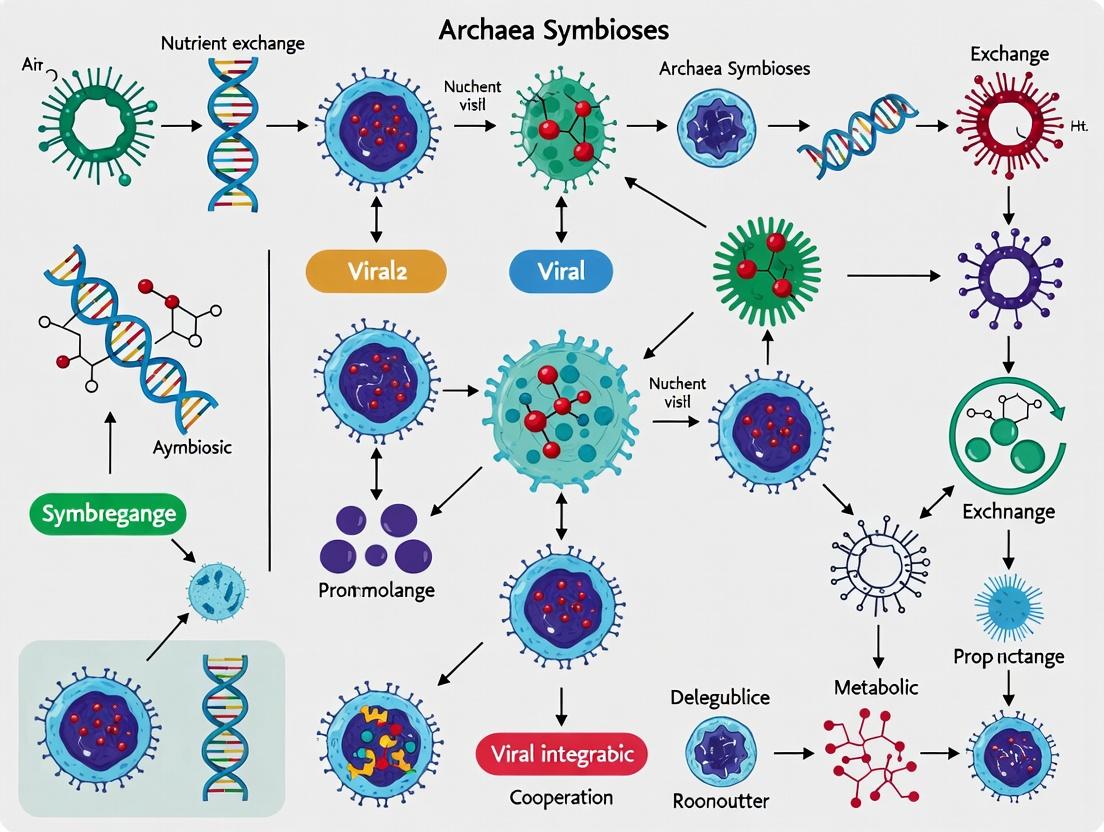
This article synthesizes the latest research on the complex tripartite relationships between archaea, viruses, and their microbial partners.
Viral Architects of Microbial Symbiosis: How Archaeal-Viral Interactions Shape Communities and Offer New Drug Targets
Abstract
This article synthesizes the latest research on the complex tripartite relationships between archaea, viruses, and their microbial partners. We explore the foundational principles of archaeal symbioses, the pivotal role of viruses in mediating and stabilizing these communities, and the methodological tools used to study them. For researchers and drug development professionals, we detail analytical and experimental approaches, common pitfalls in deciphering these interactions, and strategies for validation. Finally, we compare archaeal-viral systems with bacterial models, highlighting unique mechanisms and evaluating their translational potential for novel antimicrobial and therapeutic strategies.
Unveiling the Triad: Foundational Concepts in Archaeal Symbioses and Viral Mediation
Within the complex fabric of microbial communities, archaea are not mere inhabitants but foundational players in global biogeochemical cycles and symbiotic networks. This overview positions key archaeal consortia—specifically methanogenic syntrophs and anaerobic methanotrophs (ANME)—within the broader thesis of archaeal symbioses and their intricate viral interactions (archaeovirome). Understanding these relationships is critical for researchers and drug development professionals, as they represent unique metabolic blueprints and potential reservoirs of novel enzymatic machinery.
Core Consortia and Their Quantitative Dynamics
Methanogens in Syntrophy
Syntrophic interactions, typically between fatty acid-oxidizing bacteria and hydrogenotrophic or acetoclastic methanogens, are the cornerstone of anaerobic digestion. The recent quantification of energy fluxes and population dynamics has refined our understanding of these partnerships.
Table 1: Key Quantitative Parameters in Model Syntrophic Consortia (e.g., *Syntrophobacter spp. with Methanospirillum hungatei).*
| Parameter | Typical Range/Value | Significance |
|---|---|---|
| Interspecies H₂ Threshold | 10-100 nM | Maximum H₂ conc. for bacterium to exergonic oxidation. |
| Interspecies Formate Threshold | 10-50 µM | Alternative electron carrier threshold. |
| Gibbs Free Energy (ΔG) per Reaction | -20 to -30 kJ/mol | Minimum energy quantum for sustaining growth. |
| Growth Rate (µ) of Consortium | 0.02 - 0.08 h⁻¹ | Slower than pure cultures, indicative of metabolic tight coupling. |
| Cell Ratio (Bacterium:Methanogen) | ~1:1 to 1:5 | Varies with substrate and environmental conditions. |
Anaerobic Methane Oxidizers (ANME)
ANME archaea, primarily from the orders Methanoperedenaceae (ANME-2a, -2b, -2c) and Methanosarcinaceae (ANME-1), couple methane oxidation to sulfate, nitrate, or metal reduction via syntrophic partnership with sulfate-reducing bacteria (SRB) or directly via intracellular sulfur cycling.
Table 2: Quantitative Metrics for ANME Consortia (e.g., ANME-2/ *Desulfosarcina aggregates).*
| Parameter | Typical Range/Value | Significance |
|---|---|---|
| Methane Oxidation Rate | 1-10 µmol CH₄ g⁻¹ sediment day⁻¹ | Extremely slow metabolism, challenging cultivation. |
| Aggregation Size | 10² - 10⁴ cells per aggregate | Physical manifestation of the symbiotic unit. |
| ANME:Partner Cell Ratio | 1:1 to 10:1 (ANME:SRB) | Depends on ANME clade and electron transfer mode. |
| Apparent Km for CH₄ | 10-50 µM | High affinity for methane, adapted to low concentrations. |
Methodologies for Studying Archaeal Consortia
Stable Isotope Probing (SIP) for Functional Activity
Objective: To link metabolic function (e.g., methane oxidation, acetate assimilation) to phylogenetic identity within a consortium.
Detailed Protocol:
- Incubation: Anaerobically incubate sediment or enrichment culture with ¹³C-labeled substrate (e.g., ¹³CH₄, ¹³C-acetate) in sealed serum bottles for relevant time periods (weeks to months).
- Termination & Fixation: Preserve community with filter-sterilized paraformaldehyde (final conc. 2-4%) for 1-4 hours at 4°C.
- Density Gradient Centrifugation: Layer fixed, washed cells onto a pre-formed CsCl or Nycodenz density gradient (e.g., 1.65-1.75 g mL⁻¹). Centrifuge at high speed (≥200,000 x g) for 24-48 hours at 4°C.
- Fractionation: Collect gradient fractions by density displacement. Measure density (refractometer) and DNA content (fluorometry).
- Molecular Analysis: Extract DNA from heavy (¹³C-DNA) and light (¹²C-DNA) fractions. Perform 16S rRNA gene amplicon sequencing or metagenomics to identify ¹³C-label-incorporating populations.
Meta-Omics Integration for Consortium Analysis
Objective: To reconstruct metabolic pathways and infer interactions from genomes, transcripts, and proteins.
Detailed Protocol:
- Sample Processing: Collect biomass from enrichment reactors or environmental samples via filtration or centrifugation. Split for parallel DNA, RNA, and protein extraction.
- Sequencing:
- DNA: Prepare metagenomic libraries (e.g., Illumina paired-end, long-read PacBio/ONT) for assembly and binning.
- RNA: Deplete rRNA, construct cDNA libraries for metatranscriptomics.
- Proteins: Perform tryptic digestion, LC-MS/MS for metaproteomics.
- Bioinformatic Workflow:
- Assemble reads, bin contigs into Metagenome-Assembled Genomes (MAGs).
- Annotate MAGs with KEGG/COG/UniProt databases.
- Map metatranscriptomic and metaproteomic reads to MAGs to quantify expression.
- Use network analysis (e.g., metabolite exchange modeling, co-expression) to infer cross-feeding.
Visualizing Pathways and Workflows
Diagram 1: Syntrophic Propionate Oxidation to Methane
Diagram 2: SIP-Metagenomics Workflow for Consortia
The Scientist's Toolkit: Essential Research Reagents & Materials
Table 3: Key Reagent Solutions for Archaeal Consortium Research.
| Reagent/Material | Function/Application | Key Consideration |
|---|---|---|
| ¹³C-labeled substrates (¹³CH₄, ¹³C-acetate, ¹³C-bicarbonate) | Tracer for SIP experiments to identify active metabolizers. | >99% isotopic purity; handle anaerobically. |
| Reducing Agents (Na₂S·9H₂O, Cysteine-HCl, Ti(III) citrate) | Maintains anoxic conditions in media by scavenging O₂. | Filter-sterilize stock solutions; titrate to appropriate redox potential (Eh < -300 mV). |
| Anaerobic Balch Tubes/Serum Bottles (Butyl rubber septa, aluminum crimps) | Provides gas-tight, anoxic cultivation vessel. | Pre-reduce vessel headspace (e.g., N₂/CO₂) and media prior to inoculation. |
| CsCl or Nycodenz | Forms density gradient for separation of ¹³C-labeled (heavy) nucleic acids in SIP. | Ultra-pure grade; prepare solutions with appropriate background buffer (e.g., TE). |
| Methanogen-specific antibiotics (e.g., BESA [2-bromoethanesulfonate], 20 mM) | Selective inhibition of methanogens to confirm their role in a consortium. | Use in controls; can be labile, prepare fresh. |
| Fluorescent In Situ Hybridization (FISH) probes (e.g., ARC915, MG1200, ANME-specific) | Visualizes and quantifies specific archaeal groups in consortia via microscopy. | Requires probe design/validation for novel targets; combine with CARD-FISH for low-activity cells. |
| Percoll/Polyethylene glycol | For gentle separation and size-fractionation of microbial aggregates. | Useful for isolating intact ANME-SRB aggregates for downstream analysis. |
Within the framework of a broader thesis on archaeal symbioses, the study of archaeal viruses reveals a complex continuum of interactions far beyond simple parasitism. These interactions, including virocell metabolism, gene transfer agents (GTAs), and lysogeny, are fundamental to understanding microbial community dynamics, evolution, and the potential for biotechnological and therapeutic applications.
Core Concepts and Current Data
The Symbiotic Spectrum
Archaeal viruses, primarily from the realms Duplodnaviria and Monodnaviria, exhibit diverse life strategies. The paradigm has shifted from viewing them solely as pathogenic entities to recognizing their roles as symbionts, evolutionary partners, and agents of horizontal gene transfer (HGT).
Table 1: Modes of Archaeal Virus-Host Interaction
| Interaction Type | Viral State | Host Outcome | Key Viral Groups (Examples) | Primary Ecological Role |
|---|---|---|---|---|
| Lytic | Virion production | Cell lysis | Haloarchaeal myoviruses, Fuselloviridae | Population control, nutrient cycling |
| Chronic/Non-lytic | Persistent release | Cell survival | Pleolipoviridae, some Siphoviridae | Sustained infection, community stability |
| Lysogenic | Prophage integrated | Genome replication with host | Mitchyoviruses in Methanogenic archaea | Host genome evolution, stress response |
| Virocell | Active replication | Metabolic reprogramming | Giant viruses of Asgard archaea (e.g., Mimiviridae relatives) | Metabolic augmentation, auxiliary functions |
| Gene Transfer Agent (GTA) | Defective prophage-like particles | Horizontal gene transfer | Archaeal GTA gene clusters (e.g., in Methanococcus) | Genetic exchange, adaptation |
Table 2: Quantitative Overview of Archaeal Virus-Host Systems
| Parameter | Tailed dsDNA Viruses (e.g., Myoviridae) | Filamentous/Lipid-Enveloped Viruses (e.g., Pleolipoviridae) | Spindle-Shaped Viruses (e.g., Fuselloviridae) |
|---|---|---|---|
| Known Host Orders | Halobacteriales, Methanobacteriales | Primarily Halobacteriales | Sulfolobales, Thermoproteales |
| Average Genome Size (kbp) | 30 - 150 | 7 - 16 | 15 - 25 |
| Lysogeny Prevalence (% of studied isolates) | ~30-40% | Not typically observed | ~60-70% (highly temperate) |
| GTA-Related Genes Identified | Rare | Not reported | Common in integrated elements |
Virocell Metabolism
The "virocell" concept posits that an infected cell's metabolism is fundamentally redirected toward virion production. In archaea, this involves hijacking unique host machinery (e.g., CRISPR-Cas systems, lipid biosynthesis for enveloped viruses).
Gene Transfer Agents (GTAs) in Archaea
Archaeal GTAs are virus-like particles encoded by host genomes that package random fragments of host DNA. They facilitate widespread HGT without a viral lytic cycle, acting as a communal genetic reservoir.
Lysogeny and Its Consequences
Lysogeny is prevalent in extreme environments. Integrated proviruses can confer new functions via lysogenic conversion (e.g., toxin production, stress resistance). Induction is often linked to environmental stressors like UV damage or chemical inducers.
Experimental Protocols
Protocol: Induction and Quantification of Lysogenic Archaeal Viruses
Objective: To induce and titer viruses from lysogenic archaeal cultures. Materials: See Scientist's Toolkit. Procedure:
- Culture Growth: Grow the archaeal host (e.g., Sulfolobus solfataricus) to mid-log phase (OD600 ~0.3-0.4) in appropriate medium at optimal temperature (75-80°C).
- Induction: Split culture. Treat experimental culture with mitomycin C (final conc. 0.5 µg/mL). Leave control untreated. Incubate for 16-24 hours.
- Clarification: Remove cells by centrifugation (8,000 x g, 20 min, 4°C). Filter supernatant through 0.22 µm PVDF filter.
- Titering (Plaque Assay): a. Prepare soft agar (0.7% agar) with sensitive indicator strain. b. Mix 100 µL of filtered supernatant (serial dilutions in SM buffer) with 200 µL of mid-log indicator cells. c. Pour into base agar plate, let solidify. d. Incubate under anaerobic/appropriate atmospheric conditions at host temperature for 5-7 days. e. Count plaques, calculate plaque-forming units per mL (PFU/mL).
Protocol: Detection and Characterization of GTAs
Objective: To isolate and confirm GTA-mediated gene transfer. Procedure:
- Particle Production: Culture putative GTA-producing archaeal strain to stationary phase. Filter culture supernatant (0.22 µm).
- DNase Treatment: Treat filtrate with DNase I (1 U/µL, 37°C, 30 min) to degrade free DNA. Inactivate enzyme (75°C, 10 min for thermophiles; EDTA for others).
- Particle Lysis & DNA Extraction: Lyse particles with SDS (1% final) and Proteinase K. Extract DNA via phenol-chloroform or commercial kit.
- PCR Analysis: Perform PCR on extracted DNA using host-specific gene primers (e.g., 16S rRNA, housekeeping genes). Amplification confirms packaged host DNA.
- Transduction Assay: Co-incubate filtered, DNase-treated supernatant with a recipient strain (antibiotic-sensitive or auxotrophic mutant). Select for transfer of a marker gene on selective plates. Include DNase-treated supernatant + naked DNA control.
Visualizations
The Scientist's Toolkit: Research Reagent Solutions
Table 3: Essential Research Reagents and Materials
| Item/Category | Example Product/Description | Function in Archaeal Virology |
|---|---|---|
| Specialized Media | DSMZ Medium 182 (for Sulfolobus), ATCC 974 (for halophiles) | Supports growth of specific archaeal hosts under extreme conditions (low pH, high salt, high temp). |
| Inducing Agents | Mitomycin C (e.g., Sigma-Aldrich M4287), Ultraviolet Crosslinkers | Triggers the SOS response and prophage induction in lysogenic archaeal strains. |
| Nucleic Acid Protection | RNase/DNase inhibitors (thermostable), Guanidine thiocyanate lysis buffers | Preserves labile RNA/DNA during extraction from thermophilic or halophilic samples. |
| Filter Materials | PVDF syringe filters (0.22 µm, low protein binding) | Sterile filtration of viral particles from archaeal culture supernatants. |
| Concentration Devices | 100 kDa MWCO centrifugal concentrators (e.g., Amicon Ultra) | Concentrates dilute viral particles or GTAs from large volume supernatants. |
| PCR Enzymes for GC-Rich Templates | Q5 High-Fidelity DNA Polymerase (NEB), GC-rich buffers | Amplifies high-GC% archaeal and viral genomes efficiently and accurately. |
| Metabolic Labeling | Stable isotope-labeled substrates (e.g., 13C-acetate), Click-it chemistry kits | Tracks metabolic flux in virocells and quantifies host resource diversion. |
| Cryo-EM Reagents | Quantifoil R2/2 holey carbon grids, Liquid ethane plungers | Prepares specimens for high-resolution structural analysis of archaeal virions. |
| Bioinformatics Tools | VirSorter2, CheckV, MetaViC pipeline | Identifies viral sequences from archaeal metagenomes and characterizes them. |
This whitepaper explores the sophisticated mechanisms by which viruses, particularly those infecting archaea, act as key mediators of metabolic coupling and horizontal genetic exchange in microbial consortia. Framed within the broader thesis on archaeal symbioses, we detail how viral predation, lysogeny, and carrier functions fundamentally shape community structure, biogeochemical cycles, and evolutionary trajectories in extreme and non-extreme environments.
Core Mechanisms of Viral-Mediated Metabolic Coupling
Viruses facilitate metabolic exchange through direct and indirect mechanisms, creating syntrophic networks.
2.1. Viral Shunt and Metabolic Priming The "viral shunt" converts host biomass into dissolved organic matter (DOM), fueling cross-feeding. In archaeal systems, this is critical in nutrient-limited settings.
- Quantitative Data: Studies in hypersaline mats show viral lysis of Halobacteria releases organic compounds (e.g., amino acids, lipids) at rates sustaining Nanohaloarchaea.
Table 1: Quantified Viral-Mediated Metabolite Release in Model Archaeal Systems
| Viral-Host System | Metabolite Released | Release Rate (amol/cell/lysis event) | Primary Beneficiary Organism | Reference (Type) |
|---|---|---|---|---|
| His1 virus / Haloarcula hispanica | Amino Acids (Pool) | 120-180 | Co-cultured Salinibacter | Lab Experiment (2022) |
| psiM1 / Methanothermobacter | Hydrogen (H₂) | 3500 | Synthrophic Syntrophothermus | Co-culture Study (2023) |
| CrAss-like phage / Candidatus Altiarchaeum | Reduced Sulfur Compounds | N/A (Detected via Metatranscriptomics) | Associated Sulfurovum | Metagenomic Analysis (2023) |
2.2. Auxiliary Metabolic Genes (AMGs) and Metabolic Reprogramming Viruses encode AMGs to redirect host metabolism toward nucleotide and viral component production. In archaea, these often involve unique pathways.
Diagram: Viral AMG Integration in Archaeal Central Metabolism
Title: Viral AMG Redirect of Archaeal Metabolism
2.3. Direct Intercellular Transfer via Viral Capsids Virus-like particles and gene transfer agents (GTAs) package and transfer host-derived genetic material, including metabolic genes.
Mechanisms of Viral-Mediated Genetic Exchange
Viruses are primary vectors for horizontal gene transfer (HGT), driving microbial evolution.
3.1. Generalized and Specialized Transduction in Archaea Archaeal viruses demonstrate efficient transduction, moving host genes between cells.
Experimental Protocol: Quantifying Transduction Frequency in Halophilic Archaea
- Objective: Measure the rate of viral-mediated transfer of a selectable marker (e.g., hdrB gene for mevinolin resistance) between strains of Haloferax volcanii.
- Materials: Donor strain (H26 ΔhdrB with provirus), recipient strain (H53 ΔhdrB), UV light source, MGMT medium ± mevinolin.
- Procedure:
- Induction: Grow donor strain to mid-log phase. Induce prophage via UV irradiation (λ=254nm, dose optimized).
- Lysate Preparation: Filter culture (0.22 μm) to remove cells. Confirm lysate contains viral particles via PCR of capsid gene and plating for PFUs.
- Transduction Assay: Incubate recipient cells with viral lysate (MOI~0.1) in high-Mg²⁺ buffer for 4h. Pellet cells, wash, and plate on selective media (MGMT + mevinolin).
- Controls: Plate recipient alone; donor alone on selective media; lysate alone on media.
- Calculation: Transduction frequency = (CFU on selective plates) / (total PFU in lysate used).
3.2. Metagenomic Insights into Viral Mediated HGT Comparative metagenomics reveals viral sequences harboring host-derived genes.
Table 2: Key Archaeal Viral Families and Associated HGT Traits
| Viral Family | Typical Host Clade | Common Transduced Genes/AMGs | Evidence Level |
|---|---|---|---|
| Haloferax Myoviruses | Haloferax, Haloarcula | CRISPR spacers, Bacteriorhodopsin | Lab Validation & Metagenomics (2023) |
| Methanogenic Caudoviricetes | Methanobacteriales | Hydrogenases, Methyltransferases | Integrated Proviral Genomes (2024) |
| Thermoprotei Spindle Viruses | Sulfolobales | CRISPR operon genes, Sugar transporters | Single-cell Genomics (2022) |
Integrated Experimental Workflow for Studying Viral Interactions
A multi-omics approach is essential for deconvoluting these mechanisms in complex consortia.
Diagram: Integrated Workflow for Analyzing Virus-Mediated Coupling
Title: Viral Interaction Multi-Omic Workflow
The Scientist's Toolkit: Research Reagent Solutions
Table 3: Essential Reagents for Investigating Archaeal Viral Interactions
| Reagent / Material | Function & Application | Example Product / Specification |
|---|---|---|
| Viral Concentration Kits | Concentrate dilute viral particles from environmental or culture samples for metagenomics or EM. | Ion Exchange Chromatography Columns (e.g., Vivaspin with 100kDa MWCO); FeCl₃ Flocculation. |
| DNase I (RNase-free) | Digest free extracellular DNA prior to viral nucleic acid extraction, ensuring analysis of packaged genomes only. | Turbo DNase (Ambion) - Effective in diverse salt/buffer conditions for extremophile samples. |
| Archaeal Viral DNA Polymerases | Amplify viral genomes with high fidelity from low-biomass or GC-rich templates. | KAPA HiFi HotStart (for general use) or specialized polymerases for hyperthermophile viruses. |
| CRISPR-Cas Interference Systems | Knock down or edit specific viral or host genes in situ to study interaction function in archaeal models. | Type I-B or Type III systems tailored for Haloferax or Sulfolobus. |
| Stable Isotope Probing (SIP) Substrates | Trace viral-mediated carbon/nitrogen flux through consortia (e.g., ¹³C-acetate, ¹⁵NH₄Cl). | 99% ¹³C-labeled compounds; used in combination with virocell enrichment. |
| Viral Pseudotyping Systems | Study host range and gene transfer mechanisms by engineering archaeal viral envelopes/capsids. | Haloarchaeal S-layer Vesicle display systems under development. |
| Anaerobic Co-culture Chambers | Maintain anoxic conditions for studying viral interactions in methanogenic or sulfate-reducing archaeal communities. | Coy Laboratory Vinyl Anaerobic Chambers with precise H₂/CO₂/N₂ mix. |
Viruses are non-celluar but integral components of archaeal symbioses, acting as engineers of metabolic networks and genomic plasticity. Future research leveraging advanced in situ techniques, synthetic microbial communities, and computational models will further elucidate their role in global biogeochemistry and offer novel targets for therapeutic intervention, such as anti-viral strategies that modulate microbiome function.
Within the intricate dynamics of microbial communities, archaeal symbioses—ranging from mutualism to parasitism—fundamentally shape ecosystem function. Viral interactions, particularly lysis, are increasingly recognized not merely as a mortality factor but as a central biogeochemical engine. This whitepaper frames viral lysis within the broader thesis of archaeal symbioses, positing that the viral "shunt" of cellular material is a critical, yet underquantified, determinant of nutrient flux and community succession. For researchers and drug developers, understanding these interactions reveals novel antimicrobial targets and insights into microbiome manipulation.
Quantitative Impact of Viral Lysis on Nutrient Flux
Viral lysis converts particulate organic matter (POM) into dissolved organic matter (DOM), a process with distinct stoichiometric outcomes compared to grazing. This "viral shunt" releases nutrients differentially.
Table 1: Stoichiometric Release from Viral Lysis vs. Protist Grazing
| Nutrient/Element | Viral Lysis Release Efficiency | Protist Grazing Release Efficiency | Key Implication |
|---|---|---|---|
| Carbon (C) | High (25-100% as DOC) | Low (15-30% as DOC) | Lysis fuels microbial loop |
| Nitrogen (N) | Variable (30-80% as DIN/DON) | High (50-90% as DIN) | Lysis can retain N in organic phase |
| Phosphorus (P) | High (40-90% as DIP/DOP) | High (60-95% as DIP) | Both pathways remineralize P rapidly |
| Iron (Fe) | Very High (≥90% as organically complexed Fe) | Low (≤10% released) | Lysis is a major Fe source in oligotrophic systems |
Data synthesized from recent metaproteomic and isotopically labeled studies (2021-2023). DOC: Dissolved Organic Carbon; DIN: Dissolved Inorganic Nitrogen; DON: Dissolved Organic Nitrogen; DIP: Dissolved Inorganic Phosphorus; DOP: Dissolved Organic Phosphorus.
Methodological Toolkit for Studying Viral Lysis Impacts
Experimental Protocol 1: Quantifying Viral-Induced Nutrient Release
- Culture Setup: Grow target archaeal host (e.g., Nitrososphaera viennensis) in defined mineral medium to mid-exponential phase.
- Viral Addition: Infect triplicate cultures with purified, concentrated virus (e.g., Nitrososphaera virus NSV1) at an MOI of 5. Include uninfected controls and heat-killed virus controls.
- Monitoring: Track host density via flow cytometry (SYBR Gold stain) and viral abundance via epifluorescence microscopy (SYBR Gold) over 48-72 hours.
- Sampling: At intervals (0, 12, 24, 48h), filter culture aliquots through 0.02µm Anotop filters.
- Analysis: Analyze filtrate for:
- DON/DIN: Using colorimetric assays (e.g., LR/HR methods on segmented flow analyzer).
- DOP/DIP: Using magnesium-induced co-precipitation followed by ascorbic acid method.
- DOC: By high-temperature catalytic oxidation (HTCO).
- Calculation: Net released nutrient = (Concentration in infected culture) - (Concentration in control). Normalize to lysed host cell count.
The Scientist's Toolkit: Key Research Reagent Solutions
| Item | Function in Viral Lysis Studies |
|---|---|
| SYBR Gold/I Green | Nucleic acid stain for enumerating virus-like particles (VLPs) via epifluorescence microscopy or flow cytometry. |
| 0.02µm Anotop/Anodisc Filters | For sterile filtration to separate viral and bacterial/archaeal fractions from dissolved nutrients. |
| CsCl or Sucrose Gradients | For ultracentrifugation-based purification and concentration of viral particles from environmental samples. |
| Isotope-Labeled Substrates (e.g., 15N-NH4, 13C-Bicarbonate) | To trace the fate of nutrients released from lysed cells into the broader microbial community via SIP techniques. |
| Viral Metagenomics Kits (e.g., linker-amplified shotgun libraries) | For direct sequencing of viral assemblages to infer host range and potential biogeochemical functions. |
| Membrane-Inlet Mass Spectrometry (MIMS) | For high-resolution, real-time measurement of gaseous nutrient products (e.g., N2, N2O) from lysed archaeal nitrifiers. |
Viral Modulation of Community Structure
Lysis exerts top-down control, selectively targeting dominant host populations (the "Killing the Winner" hypothesis), thereby maintaining diversity. In archaea-dominated systems (e.g., anaerobic methane oxidizers, nitrifiers), viral predation can regulate key biogeochemical guilds.
Diagram 1: Viral Lysis Feedback on Archaeal Community
Title: Viral Lysis Promotes Microbial Diversity via Nutrient Release
Integrative Signaling in Symbiosis and Viral Defense
Archaeal symbioses often involve intimate physical and metabolic coupling. Viral predation pressure can drive the evolution of defense systems, which in turn influence symbiotic relationships.
Diagram 2: Viral Pressure on Archaeal Symbiosis Pathways
Title: Viral Pressure Influences Archaeal Symbiosis
Viral lysis is a fundamental, stoichiometrically distinct process that drives nutrient cycling and structures microbial communities, with profound implications for understanding archaeal symbioses. Key frontiers include:
- Quantifying the viral shunt in archaea-dominated extreme environments.
- Elucidating the role of viral-encoded auxiliary metabolic genes (AMGs) in archaeal hosts, particularly in methane and sulfur cycles.
- Exploiting viral lysis mechanisms for precise manipulation of microbiomes (phage therapy in archaeal contexts) or for disrupting detrimental archaeal consortia in industrial or medical settings.
This integrated view positions viral lysis not as a mere destructive force, but as a dynamic and essential regulatory layer in the complex network of microbial interactions that govern global biogeochemistry.
This whitepaper examines three key model systems—hydrothermal vents, anaerobic digesters, and the human gut—through the lens of archaeal symbioses and viral interactions. Within the broader thesis that archaea-virus and inter-domain symbiotic relationships are fundamental drivers of community structure, resilience, and function in extreme and engineered environments, these systems provide complementary insights. Hydrothermal vents offer a window into ancient, energy-limited symbioses; anaerobic digesters serve as controllable, engineered meta-communities; and the human gut presents a complex, host-mediated ecosystem with direct translational implications. Viral interactions (including archaeal viruses) in each system act as agents of gene transfer, population control, and metabolic reprogramming, deeply entwined with symbiotic networks.
System-Specific Insights and Comparative Analysis
Hydrothermal Vents: Deep-Sea Archaeal Symbioses
Deep-sea hydrothermal vent ecosystems are dominated by chemosynthetic microbial communities where archaea, particularly methanogens and anaerobic methane oxidizers (ANME), engage in critical syntrophic partnerships with bacterial sulfate-reducers. These consortia are hotspots for novel archaeal viruses (e.g., Fuselloviridae, Bicaudaviridae).
Key Quantitative Data: Table 1: Representative Archaeal Symbioses and Viral Loads in Hydrothermal Vent Systems
| Parameter | Low-Temperature Diffuse Flow | High-Temperature Black Smoker Chimney | Cold Seep Sediments |
|---|---|---|---|
| Dominant Archaeal Partners | Methanocaldococcales, ANME-1 | Ignicoccus, Nanoarchaeota | ANME-2, ANME-3 |
| Bacterial Partner | Delta-/Epsilonproteobacteria | Desulfurobacterium | Sulfate-Reducing Bacteria (Deltaproteobacteria) |
| Typical Virus-to-Microbe Ratio (VMR) | 3-10 | 1-5 | 2-7 |
| Estimated Gene Transfer Rate (via VLPs) | High (10⁻⁴ event/cell/gen) | Moderate (10⁻⁵ event/cell/gen) | High (10⁻⁴ event/cell/gen) |
| Primary Metabolic Link | Hydrogen/Methane Cycling | Sulfur/Hydrogen Oxidation | Anaerobic Methane Oxidation (AOM) |
Experimental Protocol 2.1.1: Metagenomic Sequencing and Viral Tagging for Vent Chimney Samples
- Sample Collection: Use a remotely operated vehicle (ROV) with sterilized bioreactor samplers to collect chimney biofilm or fluid from active venting sites (e.g., Endeavour Segment, Juan de Fuca Ridge). Preserve immediately in RNAlater at in situ pressure where possible.
- Virus-Like Particle (VLP) Isolation: Homogenize sample. Sequential filtration through 0.45µm and 0.22µm polyethersulfone filters. Concentrate VLPs from filtrate via tangential flow filtration (100kDa cutoff) or iron chloride flocculation.
- Nucleic Acid Extraction: For community DNA, use the PowerSoil Pro Kit (Qiagen) on the 0.22µm filter residue. For VLP DNA, treat concentrate with DNase I to remove free DNA, then extract using the Viral DNA Mini Kit (Qiagen).
- Library Prep & Sequencing: Prepare libraries with long-insert kits (e.g., Nextera Mate Pair) for community DNA and standard shotgun kits for VLP DNA. Sequence on both Illumina NovaSeq (for depth) and Oxford Nanopore MinION (for scaffold continuity).
- Bioinformatic Analysis: Co-assemble reads from both fractions using metaSPAdes. Predict viral contigs from the assembly using VirSorter2, CheckV, and phage membership markers. Use CRISPR spacer matching and tRNA homology to link viruses to archaeal hosts.
Anaerobic Digesters: Engineered Archaeal Consortia
Anaerobic digesters are controlled, high-biomass systems for studying methanogenic archaea (Methanosarcina, Methanothrix) in syntrophy with fermentative bacteria. They are prime models for studying lysogeny and prophage dynamics in response to operational parameters.
Key Quantitative Data: Table 2: Operational Parameters and Viral Dynamics in Mesophilic Anaerobic Digesters
| Parameter | Typical Optimal Range | Impact on Archaeal Symbiosis | Impact on Viral Dynamics |
|---|---|---|---|
| Hydraulic Retention Time (HRT) | 15-30 days | Shorter HRT washes out slow-growing methanogens | Induces prophage lytic cycle in stressed hosts |
| Organic Loading Rate (OLR) | 1-4 kg VS/m³/day | High OLR can cause VFA accumulation, inhibiting methanogens | Increased lytic viral production correlated with OLR shocks |
| Temperature | 35-37°C (Mesophilic) | Critical for methanogen enzyme activity | Temperature shifts trigger lysogen-to-lytic switches |
| pH | 6.8-7.4 | Essential for syntrophic VFA degradation | Low pH (<6.5) increases viral decay rates |
| Archaeal Viral Prevalence | 1-3 viral contigs per archaeal genome (prophage) | Prophages may carry auxiliary metabolic genes (AMGs) for stress response | Lytic induction events can reduce methanogenic activity by ~20% |
Experimental Protocol 2.2.1: Tracking Prophage Induction and Host Activity via Metatranscriptomics
- Digester Perturbation: Operate lab-scale continuous stirred-tank reactors (CSTRs) at steady state. Apply a pulse shock (e.g., double the OLR, or shift pH to 6.0 for 12 hours).
- Time-Series Sampling: Collect digester sludge at T=0 (pre-shock), T=2h, 8h, 24h, 72h post-shock. Centrifuge to separate biomass (pellet) and supernatant.
- RNA Extraction: Extract total RNA from pellet using the RNeasy PowerMicrobiome Kit (Qiagen), including a DNase step. Extract RNA from VLPs in supernatant (concentrated via PEG precipitation) for viral transcriptome.
- Metatranscriptomic Library Prep: Deplete rRNA using the Illumina Ribo-Zero Plus kit. Prepare stranded RNA-seq libraries.
- Analysis: Map reads to a curated database of digester archaeal genomes and identified prophages. Quantify expression of host metabolic genes (e.g., mcrA for methanogenesis) and viral lysogeny regulators (e.g., cI) vs. lytic genes (e.g., holin).
Human Gut: Archaea in a Host-Engineered Landscape
The human gut archaeome is dominated by methanogens (Methanobrevibacter smithii) and, in some populations, sulfate-reducing archaea. They engage in cross-feeding symbioses with bacterial fermenters and are implicated in host health through immune modulation and metabolite production. Gut archaeal virome is largely unexplored.
Key Quantitative Data: Table 3: Human Gut Archaea and Associated Metrics in Health and Disease
| Metric/Organism | Healthy Abundance | Inflammatory Bowel Disease (IBD) | Type 2 Diabetes (T2D) | Key Symbiotic Bacterial Partners |
|---|---|---|---|---|
| Methanobrevibacter smithii | 10⁸-10¹⁰ cells/g feces | ↓ Decreased | ↑ Increased | Bacteroides thetaiotaomicron, Ruminococcus spp. |
| Methanosphaera stadtmanae | 10⁵-10⁷ cells/g feces | Variable | No consistent change | Bifidobacterium adolescentis |
| Archaeal Virus (CRISPR Spacer Matches) | 2-5% of total gut CRISPR spacers | Increased diversity? (Emerging data) | Unknown | N/A |
| Primary Metabolic Output | Methane, Scavenging of H₂ | Reduced H₂ scavenging, altered SCFA profiles | Increased methane production | N/A |
| Host Immune Interaction | TLR modulation, low immunogenicity | Potential antigenic trigger in susceptible hosts | Unknown | N/A |
Experimental Protocol 2.3.1: In Vitro Co-culture of Gut Archaea with Bacterial Symbionts and Immune Cells
- Culture Setup: Anaerobically culture Methanobrevibacter smithii DSM 2375 in basal media with H₂:CO₂ (80:20) headspace. Co-culture with Bacteroides thetaiotaomicron VPI-5482 in modified media with fructose.
- Metabolite Monitoring: Measure methane production via gas chromatography, short-chain fatty acids (SCFA) via HPLC, and polysaccharide degradation products (chromogenic assays) over 72h.
- Host Cell Interaction: Differentiate THP-1 monocytes into macrophages. Stimulate macrophages with (a) sterile culture supernatant, (b) heat-killed archaeal cells, or (c) live co-culture effluent (using a transwell system to separate cells and microbes).
- Cytokine Profiling: After 24h stimulation, quantify TNF-α, IL-10, IL-6, and IL-1β in supernatant via multiplex ELISA.
- Analysis: Correlate microbial metabolic data (methane, SCFA) with macrophage cytokine secretion profiles to infer immunomodulatory mechanisms of the symbiosis.
The Scientist's Toolkit: Key Research Reagent Solutions
Table 4: Essential Reagents and Materials for Studying Archaeal Symbioses and Viruses
| Item/Catalog Number | Vendor | Function in Research |
|---|---|---|
| Anaerobic Chamber System (Coy Labs) | Coy Laboratory Products | Creates oxygen-free atmosphere (N₂:H₂:CO₂) for culturing strict anaerobic archaea. |
| FastDNA SPIN Kit for Soil | MP Biomedicals | Robust mechanical and chemical lysis for DNA extraction from tough environmental/archaeal cell walls. |
| Vironomics VLP Enrichment Kit | Norgen Biotek | Streamlined concentration and purification of VLPs from complex liquids (digester sludge, gut contents). |
| CRISPRTarget (Bioinformatics Tool) | N/A (Public Web Tool) | Links viral sequences to archaeal hosts by matching protospacers in viral genomes to CRISPR arrays in host genomes. |
| MetaCHIP Pipeline (GitHub) | N/A (Open Source) | Identifies horizontal gene transfer events, including those potentially virus-mediated, from metagenomic data. |
| ANME-1 & ANME-2 Specific FISH Probes (e.g., ANME-1-350) | Biomers.net | Fluorescent in situ hybridization probes for visualizing anaerobic methanotroph consortia in vent/seep samples. |
| Methanogen Growth Supplement | DSMZ | Defined vitamin and nutrient mix for fastidious archaeal culture. |
| Propidium Monoazide (PMA) | Biotium | Selective dye that penetrates dead/damaged cells; used with PCR to profile only live, intact microbial communities. |
| Methanogenic Activity Assay Kit (Colorimetric) | Sigma-Aldrich | Measures methanogenesis rates via coenzyme F₄₂₀ reduction in cell suspensions or environmental samples. |
Visualizations: Pathways and Workflows
Title: Multi-Omic Pipeline for Symbiosis Research
Title: Anaerobic Oxidation of Methane (AOM) Symbiosis
Title: Prophage Induction Pathway in Engineered Systems
From Sequencing to Synthesis: Methodologies for Analyzing and Engineering Archaeal-Viral Communities
This whitepaper provides a technical guide for deploying integrated multi-omics toolkits to deconvolute the structure and function of uncultured microbial consortia. The methodologies are framed within a broader thesis investigating archaeal symbioses and viral interactions in complex anaerobic ecosystems, such as anaerobic digesters, deep-sea hydrothermal vents, and the human gut. A primary thesis challenge is that key archaeal partners (e.g., methanogens in syntrophic relationships) and their associated viruses (archaeal phages) are largely unculturable, necessitating culture-independent, holistic omics approaches. These toolkits are critical for discovering novel metabolic handoffs, virus-host dynamics, and regulatory mechanisms that govern community stability and function, with direct implications for biotechnology and drug development targeting microbial pathways.
Core Omics Approaches: Principles and Comparative Framework
Each omics layer interrogates a different molecular facet of the consortium. The synergistic integration of these approaches is essential to move from genetic potential (metagenomics) to expressed functions (metatranscriptomics and metaproteomics).
Table 1: Core Comparative Analysis of Omics Approaches for Uncultured Consortia
| Aspect | Metagenomics | Metatranscriptomics | Metaproteomics |
|---|---|---|---|
| Target Molecule | Total DNA (genomic) | Total RNA (primarily mRNA) | Total Proteins & Peptides |
| Information Gained | Taxonomic composition, metabolic potential, viral sequences, CRISPR arrays. | Gene expression profiles, active pathways, regulatory non-coding RNAs. | Functional protein expression, post-translational modifications, metabolic activity. |
| Key Challenge | Gene function assignment; linking viruses to hosts; binning genomes from complex mixes. | RNA instability; host mRNA vs. viral mRNA; rRNA depletion efficiency. | Protein extraction bias; complex data analysis; incomplete reference databases. |
| Thesis Relevance | Identify archaeal and viral genomes, potential symbiotic gene clusters (e.g., hydrogenase genes in syntrophy). | Reveal active symbiosis pathways (e.g., methanogenesis genes under H2 stress); viral lytic/lysogenic activity. | Confirm expressed enzymes in methane metabolism; quantify key viral structural proteins. |
| Typical Yield/Output | 50-100 Gb sequence per high-diversity sample; 10-1000+ Metagenome-Assembled Genomes (MAGs). | 20-50 Gb sequence after rRNA depletion; expression levels for 10,000+ genes. | Identification of 5,000-20,000 unique peptides mapping to 1,000-5,000 protein groups. |
Detailed Experimental Protocols
Protocol: Integrated Multi-Omics Sample Processing for Anaerobic Consortia
- Sample Preservation: For in situ fixation, immediately mix 10 mL of consortium sample (e.g., sediment slurry) with 20 mL of RNAlater Stabilization Solution for DNA/RNA or snap-freeze in liquid N2 for proteomics. For protein, alternative fixation in 5% trichloroacetic acid may be used.
- Cell Lysis: Use a combination of physical and chemical lysis. Homogenize sample with 0.1 mm zirconia/silica beads in a bead beater for 45 sec, followed by incubation with lysozyme (10 mg/mL, 37°C, 30 min) and proteinase K for comprehensive breakage of archaeal and bacterial cells.
- Nucleic Acid Co-Extraction: Use a phenol-chloroform-isoamyl alcohol (25:24:1) phase separation. Precipitate total nucleic acids with isopropanol. Divide the pellet: one for DNA, one for RNA.
- DNA Purification (Metagenomics): Treat with RNase A. Purify using a magnetic bead-based clean-up kit (e.g., AMPure XP). Assess quality via fluorometry (Qubit) and fragment size analysis (Bioanalyzer/Tapestation).
- RNA Purification (Metatranscriptomics): Treat with DNase I. Perform rRNA depletion using a kit targeting bacterial and archaeal rRNA (e.g., RiboZeroPlus). Convert to cDNA using random hexamer and strand-switching protocols for library prep.
- Protein Extraction (Metaproteomics): From a separate aliquot, lyse cells in SDT lysis buffer (4% SDS, 100 mM Tris-HCl, 10 mM DTT). Perform filter-aided sample preparation (FASP). Digest proteins with trypsin/Lys-C overnight at 37°C. Desalt peptides using C18 StageTips.
Protocol: Bioinformatics Workflow for Viral Host Linking
A critical thesis aim is linking archaeal viruses to their hosts.
- Viral Sequence Identification: From metagenomic assemblies, predict Viral Contigs using VirSorter2 and DeepVirFinder.
- CRISPR Spacer Analysis: Extract CRISPR spacer sequences from all MAGs using CRISPRCasFinder.
- Host Prediction: Align viral contigs against the CRISPR spacer database using BLASTn. Matches with 100% identity and full spacer length indicate a historical infection event, linking virus to host.
- Correlation in Activity: Cross-reference the abundance of the linked viral contig (from metagenomic read mapping) and the host MAG's activity (from metatranscriptomic/maproteomic abundance) to infer active infection dynamics.
Visualization of Workflows and Pathways
Diagram 1: Integrated multi-omics workflow.
Diagram 2: Archaeal symbiosis and viral interaction pathways.
The Scientist's Toolkit: Research Reagent Solutions
Table 2: Essential Reagents and Kits for Multi-Omics of Uncultured Consortia
| Item | Function | Example Product/Catalog |
|---|---|---|
| RNA/DNA Stabilizer | Instant in situ stabilization of nucleic acids to preserve in vivo expression profiles. Critical for anaerobic samples upon oxygen exposure. | RNAlater Stabilization Solution (Thermo Fisher, AM7020) |
| Archaeal-Competent Lysis Beads | Mechanical shearing of tough archaeal cell walls (e.g., methanogens) in combination with chemical lysis. | 0.1mm Zirconia/Silica Beads (BioSpec, 11079101z) |
| Archaeal/Bacterial rRNA Depletion Kit | Removal of abundant ribosomal RNA to enrich mRNA for metatranscriptomic sequencing. Must target archaeal rRNA sequences. | RiboZeroPlus rRNA Depletion Kit (Illumina, 20040526) |
| Magnetic Bead Clean-up Kit | Size selection and purification of DNA/RNA libraries; crucial for removing inhibitors prior to sequencing. | AMPure XP Beads (Beckman Coulter, A63881) |
| MS-Grade Trypsin | Proteolytic enzyme for digesting complex protein extracts into identifiable peptides for LC-MS/MS. | Trypsin Platinum, Mass Spec Grade (Promega, VA9000) |
| SDS-based Lysis Buffer | Efficient denaturation and solubilization of diverse membrane and cellular proteins from mixed communities. | SDT Lysis Buffer (4% SDS, 100 mM DTT) |
| C18 Desalting Tips | Desalting and clean-up of peptide mixtures prior to LC-MS/MS injection to improve ionization and data quality. | StageTips with Empore C18 disks (Thermo Fisher, 2215) |
| Internal Standard Spike-Ins | Synthetic proteins/peptides (QconCAT) or defined microbial cells (SILAC) for absolute quantitative metaproteomics. | SpikeTides TQL (JPT Peptide Technologies) |
The study of microbial communities, particularly those involving archaea in extreme or symbiotic environments, is revolutionized by single-cell and virus-focused techniques. Archaea often form intricate symbiotic relationships with bacteria, eukaryotes, and viruses (archaeal viruses) that are critical for biogeochemical cycles. Understanding these interactions requires disentangling the complex web of host-virus dynamics and metabolic cross-talk. Traditional bulk metagenomics averages signals, obscuring the roles of low-abundance keystone archaeal symbionts and their viral predators or partners. The integrated pipeline of Viral Tagging, Fluorescence-Activated Cell Sorting (FACS), and mini-metagenomics provides a targeted approach to physically link viruses to their archaeal hosts and elucidate the genetic basis of these interactions at the single-cell level. This guide details the technical execution of these methods within a research thesis focused on archaeal symbioses.
Core Techniques: Technical Foundations
Viral Tagging
Viral Tagging is a method to link viruses to their specific host cells by fluorescently labeling viral particles and observing their attachment to potential hosts via flow cytometry or microscopy.
Experimental Protocol:
- Viral Concentration & Purification: Concentrate viruses from an environmental sample (e.g., deep-sea hydrothermal vent fluid, anaerobic digester sludge) using tangential flow filtration (100 kDa cutoff) or iron chloride flocculation. Purify via cesium chloride density gradient ultracentrifugation.
- Fluorescent Labeling: Label the purified viral capsids using nucleic acid-binding dyes (e.g., SYBR Gold) at a dilution of 1:10,000 in the dark for 20 min. Alternatively, label via amine-reactive dyes (e.g., Alexa Fluor 488 NHS ester) targeting capsid proteins.
- Host-Virus Incubation: Incubate the labeled viral assemblage with a concentrated, diverse microbial community containing the target archaea. Use a negative control with unlabeled virus.
- Detection: Analyze samples using flow cytometry. Host cells with attached fluorescent viruses will exhibit higher fluorescence than cells alone.
Fluorescence-Activated Cell Sorting (FACS)
FACS enables the physical isolation of single cells or target cell populations based on specific optical parameters, such as light scatter and fluorescence.
Experimental Protocol for Host-Virus Unit Isolation:
- Sample Preparation: After viral tagging, fix the community with 0.5% glutaraldehyde (15 min, 4°C) if downstream sequencing is not required. For sequencing, keep samples alive and sterile-filter the sheath fluid.
- Gating Strategy: Use a flow cytometer equipped with a 488 nm laser.
- Plot Side Scatter (SSC) vs. SYBR Green (or equivalent) DNA stain to identify all microbial cells.
- Within the microbial population, create a secondary gate for high fluorescence in the channel corresponding to the viral tag (e.g., Alexa Fluor 488, 530/30 nm filter).
- Sorting: Sort the double-positive population (host DNA stain + viral tag) into sterile PCR tubes or 96-well plates containing lysis buffer. Sort a population of non-fluorescent cells as a control.
- Validation: Post-sort, analyze a subset of sorted cells via epifluorescence microscopy to confirm viral attachment.
Mini-Metagenomics (Single-Cell & Few-Cell Genomics)
Mini-metagenomics involves the whole-genome amplification and sequencing of genetic material from a small number of sorted cells, bridging single-cell genomics and bulk metagenomics.
Experimental Protocol:
- Cell Lysis & DNA Release: To each well containing sorted cells, add 2 µL of proteinase K and 4 µL of lysozyme/mutanolysin mix (critical for archaeal cell walls). Incubate (50°C, 2 hrs).
- Whole Genome Amplification (WGA): Perform Multiple Displacement Amplification (MDA) using phi29 polymerase and random hexamers. Use reaction volumes of 50-100 µL. Include negative control wells.
- DNA Purification: Clean up MDA product using AMPure XP beads (0.8x ratio).
- Library Preparation & Sequencing: Fragment amplified DNA (Covaris sonicator), prepare sequencing libraries (e.g., Illumina Nextera XT), and sequence on an Illumina MiSeq or HiSeq platform (2x150 bp).
- Bioinformatics Analysis: Assemble reads (SPAdes), bin contigs by differential coverage, and annotate genes. Use tools like VirSorter or CheckV to identify viral sequences within the mini-metagenome.
Table 1: Typical Yield and Success Rates from an Integrated Pipeline (Hypersaline Sediment Sample)
| Step | Metric | Typical Yield/Range | Key Parameters Influencing Yield |
|---|---|---|---|
| Viral Tagging | % of Microbial Community with Attached Tag | 0.5% - 5.0% | Viral abundance, host specificity, label efficiency |
| FACS | Events Sorted per Hour | 500 - 5,000 events/hour | Target population abundance, sorter nozzle size (e.g., 70 µm) |
| Mini-Metagenomics | MDA DNA Yield | 2 - 10 µg | Number of cells sorted, amplification bias |
| Assembly Completeness (for dominant genome) | 30% - 90% | Sequencing depth (~5-10 Gb), contamination level | |
| Viral Sequence Recovery per Sorted Event | 0.1 - 2 viral contigs | Original viral load, sequencing strategy |
Table 2: Comparison of Technique Applications in Archaeal Symbiosis Research
| Technique | Primary Information Gained | Key Limitation | Best Suited for Archaeal Research Question |
|---|---|---|---|
| Viral Tagging | Physical host-virus linkage; infection networks | Does not prove infection, only attachment | Identifying hosts of uncultivated archaeal viruses |
| FACS | Physical isolation of target phenotypes | Requires known differentiable phenotype | Enriching archaeal symbionts or infected cells from consortia |
| Mini-Metagenomics | Genomic context of interaction; MAGs from few cells | Amplification bias, chimeric sequences | Recovering genomes of low-abundance archaea and their co-sorted viral sequences |
Visualized Workflows and Pathways
Workflow: From Sample to Host-Virus Genomic Data
Gating Strategy for Sorting Virus-Associated Hosts
The Scientist's Toolkit: Research Reagent Solutions
Table 3: Essential Materials for the Integrated Viral Tagging-FACS-mini-metagenomics Workflow
| Item | Function in Protocol | Example Product & Notes |
|---|---|---|
| SYBR Gold Nucleic Acid Gel Stain | Fluorescent labeling of viral nucleic acids for tagging. High sensitivity. | Thermo Fisher Scientific S11494. Use at 1:10,000-1:100,000 dilution. |
| Alexa Fluor 488 NHS Ester | Fluorescent labeling of viral capsid proteins for tagging. | Thermo Fisher Scientific A20000. Targets surface amines. |
| Lysozyme & Mutanolysin Mix | Enzymatic lysis of sorted archaeal/bacterial cells. Critical for archaeal peptidoglycan-like walls. | Sigma-Aldrich L4919 & M9901. Use in combination for broad host range. |
| Phi29 DNA Polymerase & Buffer | Core enzyme for Multiple Displacement Amplification (MDA) in mini-metagenomics. | REPLI-g Single Cell Kit (Qiagen 150343). Reduces amplification bias. |
| AMPure XP Beads | Size-selective purification and cleanup of MDA products and sequencing libraries. | Beckman Coulter A63881. Critical for removing primers and enzymes. |
| Nextera XT DNA Library Prep Kit | Preparation of sequencing-ready, indexed libraries from amplified DNA. | Illumina FC-131-1096. Optimized for low-input, fragmented DNA. |
| Sterile Sheath Fluid for Sorters | Fluidics stream for cell sorting. Must be sterile and particle-free for downstream sequencing. | Thermo Fisher Scientific BSH1001. 0.22 µm filtered, suitable for cell sorting. |
| Anaerobic Chamber or Coy Bags | For processing strictly anaerobic archaeal samples without oxygen exposure. | Coy Laboratory Products. Maintains N2/CO2/H2 atmosphere. |
This technical guide outlines methodologies for constructing synthetic archaeal-viral consortia, a critical experimental framework for the broader thesis investigating Archael Symbioses and Viral Interactions in Microbial Communities. While bacterial-viral dynamics are well-studied, archaeal-viral relationships in syntrophic or symbiotic contexts remain underexplored. Defined co-cultures allow for the precise perturbation and measurement of these interactions, enabling researchers to move beyond correlative environmental studies to establish causative mechanisms. This approach is foundational for understanding community stability, nutrient cycling, and the potential for discovering novel antiviral or antimicrobial strategies relevant to drug development.
Core Principles & Community Design
The successful establishment of a synthetic archaeal-viral community requires careful selection of partners based on known or hypothesized interactions. Key design principles include:
- Host-Virus Specificity: Utilize well-characterized archaeal virus isolates with sequenced genomes and defined host ranges (e.g., fuselloviruses for Sulfolobus, pleolipoviruses for halophilic archaea).
- Cultivation Compatibility: Partner organisms must share overlapping, manageable cultivation conditions (temperature, pH, salinity, anaerobic requirements).
- Interaction Rationale: Define the expected interaction—whether lytic, chronic, lysogenic, or symbiotic (e.g., viral defense systems like CRISPR-Cas modulation).
The table below summarizes key quantitative parameters for archaeal host-virus systems used in synthetic community construction.
Table 1: Model Archaeal Host-Virus Systems for Synthetic Communities
| Archaeal Host Species | Virus Name (Family) | Interaction Type | Optimal Growth Conditions | Viral Latency Period | Average Burst Size | Key References (Recent) |
|---|---|---|---|---|---|---|
| Sulfolobus islandicus | SSV1 (Fuselloviridae) | Chronic/Lysogenic | 75-80°C, pH 3.0, Aerobic | Variable, UV-inducible | 10-100 particles/cell | Liu et al., 2021; Mayo-Muñoz et al., 2022 |
| Haloferax volcanii | HFPV-1 (Pleolipoviridae) | Chronic (Budding) | 42°C, 1.7-2.5 M NaCl, Aerobic | Continuous, non-lytic | Not Applicable (Chronic) | Pietilä et al., 2020; Santos-Pinto et al., 2023 |
| Methanococcus maripaludis | MMPV1 (Unclassified) | Chronic | 37°C, Anaerobic, H₂:CO₂ | Continuous | Not Applicable (Chronic) | Nho et al., 2022 |
| Thermococcus kodakarensis | TPV1 (Sphaerolipoviridae) | Lytic | 85°C, Anaerobic, Sulfur | ~90 minutes | ~40 particles/cell | Wang et al., 2022 |
Detailed Experimental Protocols
Protocol 4.1: Establishing a Defined Dual-Component Archaeal-Viral Co-culture
Objective: To initiate and maintain a stable, chronic infection in a chemostat or batch system. Materials: Anaerobic chamber, chemostat system, defined medium, 0.22 µm filters, qPCR machine, fluorescent microscope.
- Host Pre-culture: Grow the archaeal host (e.g., Haloferax volcanii) to mid-exponential phase (OD₆₀₀ ~0.4-0.6) in defined optimal medium.
- Virus Inoculum Preparation: Filter (0.22 µm) a lysate from a chronically infected culture to remove cellular debris. Titrate via plaque assay (if lytic) or qPCR (if chronic).
- Infection & Establishment:
- Batch Co-culture: Inoculate fresh medium with host cells at a target starting OD. Add virus inoculum at a desired Multiplicity of Infection (MOI, typically 0.1-1.0). Monitor growth (OD) and viral load (qPCR) over 72-96 hours.
- Chemostat Co-culture: Establish a steady-state host culture in a chemostat at a defined dilution rate (D). Introduce a continuous, low-rate infusion of viral inoculum into the growth vessel. Allow 5-7 volume turnovers for the system to equilibrate.
- Monitoring: Sample periodically.
- Cell Density: OD measurements.
- Viral Load: Quantify extracellular viral genome copies/mL via qPCR targeting a conserved viral gene.
- Infection Status: For fluorescent-tagged viruses or hosts, analyze via microscopy. For non-tagged, use plaque assays or most probable number (MPN) assays on supernatants.
Protocol 4.2: Quantifying Interaction Dynamics via Droplet Digital PCR (ddPCR)
Objective: To absolutely quantify host and viral genome copy numbers from co-culture samples to determine infection efficiency and viral production.
- Sample Lysis: Take 1 mL co-culture sample. Centrifuge (14,000 x g, 5 min). Separate pellet (cells + attached virus) and supernatant (free virus). Process pellets with a microbial DNA extraction kit. Treat supernatants with DNase I (15 min, 37°C) to remove free DNA, then inactivate DNase (75°C, 10 min) before viral DNA extraction.
- Primer/Probe Design: Design TaqMan probes for a single-copy host gene (e.g., rpoB) and a conserved viral capsid gene.
- ddPCR Reaction Setup: Prepare 20 µL reactions using a QX200 ddPCR Supermix for Probes. Use 5 µL of template DNA. Generate droplets using the QX200 Droplet Generator.
- PCR Amplification: Run in a thermal cycler: 95°C for 10 min; 40 cycles of 94°C for 30 s and 60°C for 1 min; 98°C for 10 min (ramp rate 2°C/s).
- Droplet Reading & Analysis: Read droplets in the QX200 Droplet Reader. Use QuantaSoft software to determine the absolute concentration (copies/µL) of host and viral DNA targets in the original sample.
Visualization of Key Workflows and Interactions
Title: Synthetic Archaeal-Viral Community Workflow
Title: Archaeal Virus-Host Interaction Pathways
The Scientist's Toolkit: Research Reagent Solutions
Table 2: Essential Materials for Constructing Synthetic Archaeal-Viral Communities
| Item | Function & Specification | Example Product/Catalog |
|---|---|---|
| Defined Archaeal Media Kits | Provides consistent, reproducible base medium without complex extracts, essential for perturbation studies. | ATCC Archaeal Modified DSMZ Medium Kits; Halobacterium defined medium mixes. |
| Anaerobic Chamber Gloves | For cultivating strict anaerobic archaea (e.g., methanogens). Maintains atmosphere of H₂:CO₂:N₂. | Coy Laboratory Products Vinyl Anaerobic Chambers. |
| 0.1 µm PES Syringe Filters | For sterile filtration of viral inocula without adsorbing charged particles, preferable to cellulose acetate. | Thermo Scientific Nalgene SFCA Syringe Filters. |
| Droplet Digital PCR (ddPCR) Supermix for Probes | Enables absolute quantification of host and viral genomes without standard curves, superior for complex samples. | Bio-Rad ddPCR Supermix for Probes (No dUTP). |
| CRISPR-Cas9 Knockout Kit for Archaea | For genetic manipulation of the host to study specific viral defense or interaction genes. | Custom sgRNA vectors for Haloferax or Sulfolobus. |
| Live-Cell Compatible DNA Stain | For monitoring cell growth and morphology in infected cultures via fluorescence microscopy. | SYBR Gold or DAPI alternatives for archaea. |
| Viral Metagenome Extraction Kit | Optimized for low-biomass, high-salt/viscosity samples to recover viral nucleic acids. | Norgen Biotek Viral DNA/RNA Extraction Kit. |
| Continuous Culture Bioreactor (Mini) | Enables long-term, steady-state studies of infection dynamics under controlled parameters. | Eppendorf BioFlo 310 or DASGIP Parallel Bioreactor Systems. |
The study of archaeal symbioses, ranging from mutualistic consortia to parasitic interactions with viruses (archaeal viruses), is crucial for understanding microbial community dynamics in extreme and non-extreme environments. Genetic tools are foundational for probing these relationships. The development of CRISPR-based systems and shuttle vectors specifically for archaea enables targeted interrogation of host-virus dialogues, gene function in symbiosis, and the metabolic interplay that defines these communities. This technical guide details the current state of these manipulational tools.
Core Genetic Toolkits for Archaea
CRISPR-Cas Systems for Genome Engineering
CRISPR-Cas systems, derived from archaeal adaptive immune systems, are now repurposed for precise genome editing. Type I and Type II systems are most commonly adapted.
Table 1: Current CRISPR-Cas Systems for Key Archaeal Model Hosts
| Host Organism | CRISPR Type | Efficiency (%) | Primary Use | Key Reference (Year) |
|---|---|---|---|---|
| Haloferax volcanii | Type I-B | 85-95 | Gene knockouts, deletions | (Stachler et al., 2024) |
| Sulfolobus islandicus | Type I-A, III-B | 70-90 (I-A) | Gene repression/activation, knockout | (Deng et al., 2023) |
| Methanosarcina acetivorans | Type II-A (heterologous) | 40-60 | Point mutations, gene insertion | (Nayak & Metcalf, 2023) |
| Pyrococcus furiosus | Type I-B | >90 | Essential gene tagging | (Mougiakos et al., 2024) |
Experimental Protocol: CRISPR-Cas Mediated Gene Knockout in Haloferax volcanii (Adapted from Stachler et al., 2024)
- Design: Select a 23-nt protospacer adjacent to a 5'-NGG-3' PAM from the target gene. Clone the spacer into the plasmid pTA2315 (containing the endogenous I-B CRISPR array and cas genes).
- Transformation: Transform plasmid into H. volcanii H26 (ΔpyrE2) via PEG-mediated transformation.
- Selection: Plate on casamino acids medium without uracil (selects for plasmid). Incubate at 45°C for 5-7 days.
- Screening: Pick colonies, streak for purity, and perform colony PCR with primers flanking the target site to identify deletions.
- Curing: Passage positive colonies in non-selective medium (with uracil) to promote plasmid loss. Verify curing by replica plating.
Shuttle Vector Systems
Shuttle vectors replicate in both E. coli (for cloning) and the target archaeon. They are essential for heterologous expression, complementation, and introducing CRISPR components.
Table 2: Common Shuttle Vector Systems for Archaea
| Vector Name | Backbone | Host Range | Selectable Markers (Archaeal/E. coli) | Copy Number | Key Features |
|---|---|---|---|---|---|
| pMJA1 | pGT5 | Methanosarcina spp. | pac (Puromycin)/Ampⁱ | Low (2-3) | Strong mcr promoter |
| pEXA | pRN1 | Sulfolobus spp. | pyrEF/Ampⁱ | Medium (20-30) | Stable in Sulfolobus |
| pTA963 | pHV2 | Haloferax spp. | trpA/Ampⁱ | High (>100) | Multiple cloning site |
| pYS2 | pC2A | Pyrococcus spp. | pyrF/Ampⁱ | Low (5-10) | Thermostable origin |
Experimental Protocol: Heterologous Gene Expression Using a Shuttle Vector in Sulfolobus islandicus (Adapted from Liu et al., 2023)
- Cloning: Amplify gene of interest (GOI) with appropriate restriction sites. Ligate into the S. islandicus expression site of shuttle vector pEXA (e.g., under control of the araS promoter).
- E. coli Transformation: Transform ligation into E. coli DH5α for plasmid propagation. Isolate plasmid via standard miniprep.
- Archaeal Transformation: Transform 1 µg of purified plasmid into S. islandicus ΔpyrEF strain via electroporation (1.5 kV, 600 Ω, 25 µF).
- Selection: Plate cells on basic medium without uracil. Incubate at 78°C for 5-7 days in an anaerobic jar.
- Induction & Analysis: Inoculate positive colonies into medium with 0.2% arabinose to induce expression. Harvest cells and verify protein expression via Western blot.
Application in Studying Host-Virus Interactions
These tools allow precise dissection of archaeal virus (e.g., fuselloviruses, rudiviruses) life cycles and host defense mechanisms.
- CRISPRi/a for Host Factor Screening: Using catalytically dead Cas proteins fused to repressors/activators to knockdown/overexpress host genes and assess impact on viral infection efficiency.
- Viral Vector Engineering: Shuttle vectors with viral origins of replication (e.g., from SSV1) are used to deliver cargo to archaeal hosts.
- Interference Studies: Engineering host CRISPR arrays to target viral genomes, mimicking natural immunity.
Diagram: Workflow for CRISPRi Screening of Host Viral Defense Genes
The Scientist's Toolkit: Essential Research Reagents and Materials
Table 3: Key Research Reagent Solutions for Archaeal Genetic Manipulation
| Reagent/Material | Supplier Examples | Function in Archaeal Genetics |
|---|---|---|
| Archaea-Specific Polymerase (e.g., Pfu-S, KOD Exo-) | Thermo Fisher, Novagen | High-fidelity PCR from high-GC or high-temperature templates. |
| PEG 600 Solution (40% w/v) | Sigma-Aldrich | Facilitates DNA uptake during chemical transformation of many archaea (e.g., haloarchaea). |
| Novobiocin | MilliporeSigma | Inhibits DNA gyrase; used as a selective agent in some Thermococcales vectors. |
| 5-Fluoroorotic Acid (5-FOA) | Zymo Research | Counter-selects for pyrF/pyrE markers, allowing for vector curing or marker recycling. |
| Archaeal Lysis Buffer (High Salt or Detergent-Based) | Made in-house or MP Biomedicals | Efficient cell wall disruption for DNA/RNA extraction from diverse archaea. |
| Golden Gate Assembly Mix (BsaI-HFv2) | NEB | Modular assembly of multiple DNA fragments (e.g., CRISPR arrays, expression constructs). |
| dCas9/dCas12a Repressor/Activator Plasmid Backbones | Addgene (non-profit repository) | Base vectors for CRISPR interference/activation studies in compatible archaeal hosts. |
| Synthetic sgRNA/CrRNA | Integrated DNA Technologies (IDT) | For rapid CRISPR testing without cloning into array. |
| Anaerobic Chamber (Coy Lab) | Coy Laboratory Products | Essential for cultivating and manipulating strict anaerobic archaea (e.g., methanogens). |
| Thermostable Fluorescent Proteins (e.g., SsfGFP) | Provided by research community | Reporters for gene expression in hyperthermophilic archaea. |
This whitepaper details computational pipelines for predicting virus-host interactions and symbiotic networks from sequence data, framed within a broader thesis on archaeal symbioses and viral interactions in microbial communities. Understanding these complex relationships is paramount for elucidating ecosystem dynamics, evolutionary processes, and biotechnological applications, including novel drug targets derived from viral or symbiotic mechanisms.
Core Computational Pipelines: Workflow and Methodologies
The prediction of interactions involves multi-stage analytical workflows, integrating metagenomic and viral sequence data with machine learning classifiers.
Primary Workflow for Interaction Prediction
The standard pipeline integrates homology, CRISPR spacer, and oligonucleotide frequency signals.
Diagram Title: Primary VHI Prediction Pipeline
Detailed Experimental Protocol for Feature Generation
Protocol 1: Integrated Feature Extraction for Host Prediction
- Objective: Generate a feature vector for a query viral sequence to predict its prokaryotic host.
- Materials: Viral genome sequence(s), curated database of prokaryotic genomes (e.g., RefSeq), CRISPR spacer databases (e.g., CRISPRCasFinder outputs).
- Procedure:
- Homology & k-mer Feature:
- Fragment viral genome into consecutive k-mers (k=6 typical).
- Use BLASTN (e-value cutoff 1e-5) to search k-mers against prokaryotic genome DB.
- For each prokaryotic genome, compute the fraction of viral k-mers with a significant hit. This forms the homology score vector.
- CRISPR Spacer Match Feature:
- Extract CRISPR spacer sequences from the prokaryotic genome database.
- Use BLASTN or exact matching (allowing 1-2 mismatches) to identify matches between viral sequence and spacers.
- For each prokaryotic genome, score based on number of spacer matches normalized by its total spacer count.
- Oligonucleotide Frequency (ONF) Feature:
- Calculate the normalized frequency of all possible k-mers (k=4-6) for the viral query and all prokaryotic genomes.
- Compute the correlation (e.g., Pearson) or distance (e.g., Euclidean) between the viral k-mer profile and each host's profile.
- Feature Vector Assembly:
- For each candidate host genome i, assemble a feature vector: [HomologyScorei, CRISPRScorei, ONFDistancei].
- Normalize scores across all candidates using z-score or min-max scaling.
- Homology & k-mer Feature:
Protocol 2: Symbiotic Network Inference from Co-occurrence
- Objective: Infer potential symbiotic or interaction networks from metagenomic co-abundance data.
- Materials: Multi-sample metagenomic abundance table (species/OTU/MAG counts per sample).
- Procedure:
- Abundance Profiling: Generate a matrix M where rows are microbial/viral taxa and columns are samples, values are normalized read counts (e.g., TPM, CPM).
- Correlation Calculation: Compute all pairwise correlations (e.g., SparCC, Spearman for robustness to compositionality) between taxa abundances.
- Statistical Testing: Apply permutation tests or bootstrapping to assess significance of correlations (p-value < 0.01, FDR corrected).
- Network Construction: Define nodes as taxa. Create an edge between two nodes if their correlation is significant and magnitude > threshold (e.g., |r| > 0.6).
- Network Analysis: Use tools like Cytoscape or NetworkX to identify hubs (highly connected nodes), modules (clusters), and potential keystone species.
Table 1: Performance Metrics of Recent Prediction Tools (2022-2024)
| Tool Name | Core Methodology | Reported Accuracy (%) | Precision | Recall | Data Type Used (Benchmark) | Reference |
|---|---|---|---|---|---|---|
| VHM-net | Deep Learning (GNN) | 92.5 | 0.91 | 0.89 | Paired metaviromes | Zhou et al., 2023 |
| PHP | CRISPR & Alignment-free | 88.2 | 0.87 | 0.85 | Isolated phage-host pairs | Zhang et al., 2022 |
| HostG | k-mer & Markov Model | 85.7 | 0.84 | 0.82 | RefSeq complete genomes | Auslander et al., 2022 |
| WiSH (updated) | Oligonucleotide Frequency | 83.1 | 0.81 | 0.80 | Marine metagenomes | Servienė et al., 2024 |
Table 2: Archaeal-Viral Interaction Features from Recent Studies
| Archaeal Host Clade | Predominant Viral Type | Interaction Signature (Method) | Putative Symbiotic Role | Study Environment |
|---|---|---|---|---|
| Marine Group II Thaumarchaeota | Caudoviricetes (tailed phages) | Strong CRISPR spacer matches, shared tRNA pools | Viral lysis may regulate nitrification rates | Oceanic microbiome |
| Methanogenic Euryarchaeota | Fuselloviridae, Bicaudaviridae | Integrated provirus (homology), co-abundance | Viral carriage linked to stress response | Anaerobic digestor |
| Thermococcales | Lipothrixviridae | High ONF similarity, stable lysogeny | Potential gene transfer agent for thermal adaptation | Deep-sea vent |
Signaling and Interaction Pathway in Archaeal Symbioses
A common viral-archaeal interaction involves temperate phages and CRISPR-mediated immunity, influencing symbiotic networks.
Diagram Title: Archaeal CRISPR-Virus Interaction Pathway
The Scientist's Toolkit: Research Reagent Solutions
Table 3: Essential Materials & Tools for VHI Prediction Research
| Item/Category | Function/Description | Example Product/Software |
|---|---|---|
| High-Quality Genomic DNA Kits | Extraction of pure, high-molecular-weight DNA from diverse microbial communities for sequencing. | DNeasy PowerSoil Pro Kit (QIAGEN), MagAttract HMW DNA Kit. |
| Metagenomic Sequencing Service | Generation of short-read or long-read sequence data from environmental or synthetic samples. | Illumina NovaSeq, PacBio HiFi, Oxford Nanopore GridION. |
| Bioinformatics Suites | Integrated platforms for QC, assembly, and annotation of metagenomic-assembled genomes (MAGs). | ATLAS, nf-core/mag, KBase. |
| Curated Reference Databases | Essential for homology searches and feature generation in prediction pipelines. | NCBI RefSeq/GenBank, IMG/M, GTDB, CRISPRCasdb. |
| Machine Learning Frameworks | Libraries for constructing and training custom prediction models (e.g., Random Forest, GNN). | scikit-learn (Python), PyTorch, TensorFlow. |
| Network Analysis Software | Visualization and topological analysis of predicted symbiotic interaction networks. | Cytoscape, Gephi, NetworkX (Python library). |
| High-Performance Computing (HPC) | Essential for processing large-scale metagenomic datasets and running complex models. | Local cluster with SLURM, or Cloud (AWS, GCP). |
Navigating Complexity: Troubleshooting Challenges in Archaeal-Viral Community Research
This technical guide is framed within a broader thesis on archaeal symbioses and viral interactions, which posits that uncultivated archaea and their viruses are keystone regulators of biogeochemical cycles and host-microbe dynamics in diverse ecosystems. Their resistance to standard cultivation has created a critical knowledge gap, hampering our understanding of their physiology, symbiotic networks, and the therapeutic potential of their viral predators (archaeal viruses, or archaeoviruses). Overcoming these barriers is essential for advancing microbial ecology and bioprospecting for novel enzymes and anti-microbial agents.
Core Cultivation Challenges and Quantitative Insights
The primary barriers to cultivating archaeal symbionts and their viruses include extreme or unique physicochemical requirements, obligate interdependence with hosts or consortia, and slow growth rates. Recent studies have quantified these challenges.
Table 1: Quantified Cultivation Barriers for Stubborn Archaeal Symbionts
| Barrier Category | Specific Parameter | Example Organism/System | Reported Value/Incidence | Impact on Cultivation |
|---|---|---|---|---|
| Physicochemical Extremes | Optimal Growth Temperature | Methanopyrus kandleri strain 116 | 122°C | Requires specialized, high-pressure equipment. |
| Optimal Salinity | Halophilic symbionts in brine pools | >4 M NaCl | Standard media precipitate; osmotic stress on researchers' equipment. | |
| Oxygen Sensitivity | Anaerobic methanogenic archaea (e.g., Methanobrevibacter) | Redox potential < -330 mV | Stringent anoxic techniques mandatory. | |
| Symbiotic Dependency | Nutrient Cross-Feeding | Syntrophic acetate-oxidizing consortia | Hydrogen transfer rate < 10 nM/s | Isolation disrupts syntrophy, causing culture collapse. |
| Physical Association | DPANN archaea (e.g., Nanoarchaeota) | 100% epibiotic parasitism in studied strains | Requires co-culture with specific host archaea. | |
| Growth Kinetics | Doubling Time | Asgard archaeal enrichments (e.g., Lokiarchaeota) | 14-30 days | Prone to overgrowth by contaminants; long experiment cycles. |
| Viral Lability | Virus Particle Stability | Haloarchaeal virus SH1 in low salt | >99% inactivation in <1 hr at 1 M NaCl | Purification and infection protocols require precise ionic conditions. |
Table 2: Success Rates of Advanced Cultivation Strategies (2020-2024)
| Strategy | Target Group | Approximate Success Rate (Isolation/Stable Culture) | Time to Establishment |
|---|---|---|---|
| Diffusion Chambers / Microbial Traps | Soil & Sediment Archaea | 12-18% | 3-6 months |
| Co-Culture & Defined Consortia | DPANN Archaea | ~25% (of attempted host pairs) | 2-12 months |
| Microfluidics & Single-Cell Sorting | Uncultivated Marine Archaea | 8-15% | 1-4 months |
| Adaptive Laboratory Evolution | Fastidious Thermophiles | 5-10% | 6-24 months |
| Host-Induced Gene Expression (for viruses) | CRISPR-based virus discovery | 30-40% (for infected host isolation) | 1-2 months |
Detailed Experimental Protocols
Protocol 3.1: Co-Culture Establishment for DPANN Archaeal Symbionts
Objective: To isolate and maintain an obligate epibiotic DPANN archaeon with its host.
- Sample & Enrichment: Inoculate anaerobic, sulfur-reducing medium with hydrothermal vent chimney sample. Incubate at 85°C.
- Dilution to Extinction: Perform serial dilutions (10-fold) in complex medium. Use cryo-EM to screen dilution endpoints for presence of small cells attached to larger hosts.
- Host-Symbiont Separation Attempt: Apply gentle centrifugation (2,000 x g, 10 min) or size filtration (0.45 µm then 0.1 µm). Confirm separation failure via 16S rRNA gene PCR for both organisms, proving physical dependency.
- Stable Co-culture Maintenance: Grow the mixed culture in medium supplemented with 0.1 µm-filtered supernatant from a mature host-only culture (as a source of unknown growth factors). Subculture every 3-4 weeks during late exponential phase.
Protocol 3.2: Isolation of Archaeal Viruses via Fluorescence-Activated Cell Sorting (FACS)
Objective: To physically separate virus particles from an environmental sample for subsequent infection trials.
- Virus Particle Staining: Concentrate 1L of filtered (0.22 µm) environmental sample (e.g., hypersaline water) by tangential flow filtration. Stain with nucleic acid dye SYBR Gold (1X final concentration) for 15 min in the dark.
- FACS Gating: Use a flow cytometer with a 488 nm laser. Gate particles based on side scatter (SSC) and green fluorescence (530/30 nm). Define a virus-specific gate distinct from background noise and bacterial/archaeal cells (higher SSC).
- Sorting: Sort particles from the virus gate into a collection tube containing 500 µL of sterile, high-ionic-strength buffer (e.g., 2.5 M NaCl, 10 mM MgCl₂ for haloviruses).
- Infection Assay: Mix 100 µL of sorted viral fraction with 100 µL of a mid-log-phase culture of a candidate archaeal host (e.g., Haloferax volcanii). Incubate with shaking. Monitor for culture lysis (OD600 drop) or plaque formation on double-layer agar plates after 24-72 hrs.
Protocol 3.3: Microfluidic Diffusion Chamber forIn SituGrowth
Objective: To cultivate archaea within their natural chemical environment while excluding faster-growing competitors.
- Chamber Fabrication: Use a PDMS-based microfluidic device with 500-1000 growth chambers, each ~1 nL in volume.
- Sample Loading & Sealing: Load a diluted environmental slurry (e.g., marine sediment) into the device's main channel. Apply pressure to push cells into the growth chambers. Flush channels with sterile, particle-free water from the same environment to seal chambers via diffusion-only access.
- Incubation & Monitoring: Place the entire device in a sterile container with moistened paper to prevent desiccation. Incubate in situ (e.g., in a sediment core) or in a lab simulator at in situ temperature for 4-8 weeks.
- Recovery: Using a micromanipulator, break the seal of chambers showing cell division (monitored via time-lapse microscopy) and aspirate contents for transfer into liquid medium.
Visualizations
Title: Co-culture isolation workflow for symbiotic archaea
Title: Generalized archaeal virus infection cycle
The Scientist's Toolkit: Key Research Reagent Solutions
Table 3: Essential Reagents and Materials for Archaeal Symbiont & Virus Cultivation
| Item Name | Category | Function/Benefit | Example Application |
|---|---|---|---|
| ANAEROGen 2.5L sachets | Atmospheric Control | Rapidly creates an anaerobic atmosphere (<1% O₂) in jars. | Cultivating methanogenic or sulfate-reducing archaea. |
| Artificial Sea Salts (e.g., Aquil) | Medium Formulation | Provides precise, reproducible ionic composition for marine strains. | Isolating marine Thaumarchaeota and their viruses. |
| SYBR Gold Nucleic Acid Gel Stain | Virus Detection | High-sensitivity fluorescence staining of virus particles for FACS or microscopy. | Quantifying and sorting archaeal viruses from environmental samples. |
| Haloarchaeal Growth Medium (ATCC 974) | Specialized Media | Optimized for extreme halophiles; prevents salt precipitation. | Cultivating halophilic archaea like Haloferax for virus plaque assays. |
| Gellan Gum | Solidifying Agent | Stable at high temperatures and extreme pH; superior to agar for many archaea. | Pouring plates for thermophilic or acidophilic archaeal isolation. |
| Cas9-based Host Vector (e.g., for Sulfolobus) | Genetic Tool | Enables gene knockouts and tagging in genetically tractable archaeal hosts. | Engineering host strains to study virus-host interactions. |
| Microfluidic Device (e.g., SlipChip) | Cultivation Hardware | Enables high-throughput, low-volume cultivation in diffusion-based chambers. | In situ cultivation of slow-growing archaeal symbionts from low-biomass samples. |
| Polyclonal Antibody against Major Capsid Protein (MCP) | Virus Detection | Immuno-specific detection and capture of unknown archaeal viruses. | Identifying infected cells in culture or concentrating viruses from samples. |
Within the broader thesis on archaeal symbioses and viral interactions in microbial communities, the integrity of genomic data is paramount. Contamination (exogenous DNA/RNA) and chimerism (hybrid molecules formed during amplification) are critical, pervasive obstacles that can lead to erroneous biological interpretations, especially in complex, low-biomass samples like those from extreme environments hosting archaeal consortia. This whitepaper provides a technical guide for identifying, mitigating, and correcting these artifacts to ensure the purity of genomic analyses.
Table 1: Common Sources and Estimated Frequencies of Artifacts in Community Genomics
| Artifact Type | Common Source | Typical Frequency Range | Impact on Archaeal/Viral Studies |
|---|---|---|---|
| Cross-Contamination | Reagents, lab surfaces, sample handling | 0.001% - 1% of reads | Misassignment of metabolic pathways; false-positive symbiont/viral links |
| Index Hopping | Multiplexed sequencing on patterned flow cells | 0.1% - 10% between libraries | Inflates perceived community diversity; obscures true host-virus pairings |
| PCR Chimeras | Incomplete extension during amplification | 0.5% - 15% of amplicons | Creates false novel taxa, especially in 16S/18S rRNA gene surveys |
| Hybrid Assembly Chimeras | Misassembly of closely related strains | Varies with complexity | Fuses genes from distinct archaea or viruses, misinforming interaction models |
Table 2: Performance Metrics of Contamination-Check Tools (Current Data)
| Tool | Primary Use | Input Data | Key Metric (Typical Performance) |
|---|---|---|---|
| Kraken2/Bracken | Taxon-based read classification | Raw Reads | Precision: >95%; Recall: >90% for well-represented genomes |
| DeconSeq | Removal of contaminant reads | Reads/Contigs | Can reduce human contamination to <0.01% |
| SourceFinder | Prokaryotic genome contamination | Assembled Genomes | Identifies ≥5% contamination with 99% sensitivity |
| ChimeraSlayer/UCHIME2 | PCR chimera detection | Amplicon Sequences | Detects ~90% of known chimeras with <5% false positives |
Detailed Methodological Protocols
Protocol: Pre-sequencing Contamination Mitigation for Low-Biomass Archaeal Mats
- Objective: Minimize exogenous DNA prior to library preparation.
- Reagents: DNA/RNA Shield, ultrapure molecular grade water, surface decontaminants (DNA-ExitusPlus), bleach-diluted reagents (fresh 0.5% sodium hypochlorite).
- Procedure:
- Field Collection: Use sterile tools. Preserve samples immediately in DNA/RNA Shield.
- Lab Setup: Pre-clean all surfaces and equipment with DNA decontaminant. Use dedicated UV cabinets for pre-PCR work.
- Extraction Control: Include multiple extraction blanks (using sterile water) alongside samples.
- Enzymatic Treatment: Treat nucleic acid extracts with a cocktail of DNase I (to digest unprotected contaminating DNA) and Benzonase (to degrade linear/chromosomal DNA), followed by enzyme inactivation, to enrich for viral capsid-protected DNA.
- Post-Extraction QC: Quantify using fluorometric assays (Qubit) sensitive to dsDNA; avoid spectrophotometry due to contamination insensitivity.
Protocol:In SilicoIdentification and Removal of Contaminants
- Objective: Bioinformatic scrubbing of sequence data.
- Tools: FastQC, Bowtie2, DeconSeq, Kraken2, custom database.
- Procedure:
- Database Curation: Compile a comprehensive contaminant database including human, E. coli, phiX174, and common lab strains, alongside a collated database of all known archaeal and viral genomes from public repositories (RefSeq, GVD).
- Initial Screen: Classify all reads using Kraken2 against the curated database.
- Alignment-Based Removal: Map reads to contaminant reference genomes using Bowtie2 (sensitive preset). Discard all reads mapping to contaminant genomes.
- Verification: Re-classify retained reads. Confirm increase in reads assigned to Archaea and unknown/viral categories.
Protocol: Chimera Detection in Amplicon Studies of Archaeal Communities
- Objective: Identify and remove PCR-generated chimeric sequences from 16S rRNA gene libraries.
- Tools: DADA2 (within QIIME2 pipeline), VSEARCH (--uchime_denovo), reference database (SILVA SSU Ref NR 99).
- Procedure:
- Denoising & ASV Inference: Use DADA2 to resolve exact Amplicon Sequence Variants (ASVs), which reduces chimera formation post-clustering.
- De Novo Chimera Check: Run VSEARCH's
--uchime_denovoon the ASV table. - Reference-Based Chimera Check: Run VSEARCH's
--uchime_refagainst a high-quality, curated archaeal 16S rRNA reference database. - Conservative Removal: Flag any ASV identified by either method. Manually inspect borderline cases via alignment.
Visualizing Workflows and Relationships
Title: Workflow for Purity in Community Genomics
Title: Impact of Artifacts on Interpreted Data
The Scientist's Toolkit: Research Reagent Solutions
Table 3: Essential Reagents and Kits for Purity-Critical Genomics
| Item Name | Function/Application in Context | Key Benefit for Archaeal/Viral Research |
|---|---|---|
| DNA/RNA Shield | Immediate biological sample preservation at point of collection. | Inactivates nucleases, stabilizes labile transcripts in symbiosis studies, prevents microbial growth that alters community. |
| CleanPCR Reagents | Pre-mixed, ultrapure PCR reagents with minimal contaminating DNA. | Reduces background in 16S/18S rRNA amplicon and viral metagenomic libraries from low-biomass samples. |
| Microbial DNA-Free Water | Molecular-grade water treated to degrade microbial nucleic acids. | Used for all reagent prep and dilutions to prevent introducing background bacterial/archaeal DNA. |
| NEBNext Microbiome DNA Enrichment Kit | Enzymatic depletion of host (e.g., human) DNA via methylation differences. | Critical when studying archaea associated with eukaryotic hosts; enriches for prokaryotic/viral DNA. |
| Benzonase Nuclease | Degrades all forms of DNA and RNA (linear, circular, chromosomal). | Used in viral particle purification protocols to remove unprotected nucleic acids, enriching for encapsidated viral genomes. |
| PCR Decontamination Spray (DNA-ExitusPlus) | Chemical decontaminant for lab surfaces and equipment. | Essential for maintaining a clean pre-PCR area to prevent cross-contamination between samples, especially during high-throughput processing. |
Within complex microbial consortia, such as those found in extreme environments dominated by archaea, viral life cycles present a significant analytical challenge. The classical paradigm of lytic versus lysogenic cycles is complicated by temperate phages, chronic infections, and the persistence of viral particles on environmental matrices or within biofilms. In archaeal systems, particularly those involving symbiotic relationships like those between methanogenic archaea and bacterial partners in anaerobic digesters or hydrothermal vent communities, discerning the active viral replicative state is critical. It informs our understanding of symbiosis stability, horizontal gene transfer via transduction, and the impact of viral shunt on nutrient cycling. Misattribution of viral signals can lead to flawed conclusions about community dynamics and the efficacy of antiviral agents. This guide provides a technical framework for differentiating these states, with emphasis on methodologies applicable to archaea-dominated systems.
Quantitative Signatures of Viral States
The following table summarizes key quantitative metrics used to distinguish between active replication, lysogeny, and environmental persistence.
Table 1: Quantitative Signatures of Viral Lifecycle States
| Metric | Active Lytic Replication | Lysogeny (Prophage) | Environmental Particle Persistence |
|---|---|---|---|
| Viral DNA:Host DNA Ratio | High (>0.1) & increasing | Low, stable (~0.01-0.05) | Variable, often low but can be high in particle-rich environments |
| Expression of Viral Lytic Genes | High (e.g., capsid, tail, holin) | Negligible (repressor high) | None |
| Expression of Viral Integrase/Repressor | Low/None | High | None |
| Induction Rate with Mitomycin C | Not applicable (already lytic) | High (>10-50% of population lyses) | None |
| Particle Production Rate | High (>10 PFU/cell/hr) | Near zero (until induction) | Zero (no production) |
| Extracellular Particle Infectivity | High, fresh | Zero (until induction) | May be degraded, low infectivity |
| Meta-Transcriptomic Viral:rRNA Ratio | > 1% | < 0.1% | < 0.01% |
Core Experimental Protocols
Induction Assays for Lysogeny Detection
Principle: Lysogens harbor silent prophages that can be induced into the lytic cycle by DNA-damaging agents. Protocol:
- Culture & Subculture: Grow the archaeal/microbial community or isolate in appropriate medium to mid-exponential phase.
- Mitomycin C Treatment: Add Mitomycin C to a final concentration of 0.5 - 1.0 µg/mL. Include an untreated control.
- Incubation & Monitoring: Incubate under normal growth conditions. Monitor culture turbidity (OD600) every 30-60 minutes for 6-12 hours.
- Sample Collection: Pre-induction (T0) and post-induction (e.g., T2, T4, T6 hrs), collect samples for:
- Cell Counts: Using flow cytometry (SYBR Gold staining).
- Viral Particle Counts: Using fluorescence microscopy (SYBR Gold) or epifluorescence microscopy after filtration.
- Infectivity Assays: Plaque or spot assays on susceptible hosts, if available.
- Data Interpretation: A significant drop in host cell count coupled with a rise in viral particle count and infectivity in the treated vs. control culture indicates lysogeny.
Viral Tagging forIn SituReplication (VTiR)
Principle: Uses halogenated nucleotides (e.g., BrdU) to label de novo synthesized viral DNA, distinguishing newly replicated genomes from persistent ones. Protocol:
- Pulse-Labeling: Add 5-bromo-2’-deoxyuridine (BdU) to the environmental sample or enrichment culture (final conc. 10-100 µM). Incubate in situ or under simulated in situ conditions for 6-24 hrs.
- Fixation & Processing: Fix sample with formaldehyde (2% final, 1 hr). Permeabilize if necessary (e.g., with ethanol for archaeal cells).
- Immunodetection: Treat with anti-BdU antibody conjugated to a fluorophore (e.g., Alexa Fluor 488).
- Co-staining: Co-stain total viral particles with a general nucleic acid stain (e.g., SYBR Gold).
- Microscopy & Enumeration: Use fluorescence microscopy or flow cytometry to count:
- Total viruses (SYBR+).
- Newly replicated viruses (BdU+).
- Calculation: The ratio of BdU+/SYBR+ viruses indicates the fraction of particles produced during the labeling period.
Single-Cell Viral Transcriptome (scVT)
Principle: Identifies the viral state of individual cells within a community by profiling viral mRNA. Protocol:
- Sample Fixation & Single-Cell Partitioning: Fix cells lightly with formaldehyde. Use microfluidics (e.g., 10X Genomics) or fluorescence-activated cell sorting (FACS) to partition single cells.
- mRNA Sequencing Library Prep: Perform reverse transcription and amplification with barcoding specific to each cell.
- Bioinformatic Analysis:
- Read Mapping: Map reads to a curated database of archaeal viral and host genomes.
- State Assignment: For each cell barcode, calculate viral gene expression profiles.
- Lytic Signature: High expression of structural, replication, and lysis genes.
- Lysogenic Signature: Dominant expression of integrase/repressor genes, low/no lytic genes.
- Silent/Latent: Minimal to no viral mRNA.
- Community Profiling: Aggregate single-cell data to estimate the proportion of cells in each viral state within the community.
Visualization of Signaling Pathways and Workflows
Diagram Title: Prophage Induction Signaling Pathway
Diagram Title: Integrated Workflow for Viral State Discrimination
The Scientist's Toolkit: Research Reagent Solutions
Table 2: Key Research Reagents for Differentiating Viral States
| Item | Function/Principle | Key Consideration for Archaeal Systems |
|---|---|---|
| Mitomycin C | DNA-damaging agent; induces the SOS response leading to prophage excision and lytic replication. | Effective for many bacterial lysogens; confirm efficacy for target archaeal hosts as SOS-like pathways may differ. |
| 5-Bromo-2’-deoxyuridine (BdU) | Halogenated thymidine analog; incorporates into newly synthesized viral DNA during replication for pulse-labeling. | Requires evaluation of uptake and incorporation efficiency in diverse archaea and their viruses. |
| Anti-BrdU/BdU Antibody | Immunological detection of BdU-labeled DNA for microscopy or flow cytometry. | Must be validated for use in conjunction with archaeal cell wall permeabilization methods. |
| SYBR Gold Nucleic Acid Stain | High-sensitivity fluorescent stain for dsDNA, ssDNA, and RNA; stains all viral particles. | Gold standard for epifluorescence microscopy viral counts; compatible with most fixation methods. |
| CRISPR-based Prophage Targeting | Use of engineered CRISPR-Cas systems to specifically induce or repress prophages. | Emerging tool; requires knowledge of prophage sequence and functional CRISPR system in host. |
| Virus-Specific Fluorescent In Situ Hybridization (VirusFISH) | Oligonucleotide probes targeting viral mRNA or DNA for single-cell visualization. | Probes must be designed for conserved regions of target viral genes; challenging for high diversity. |
| PMA/EMA (Propidium Monoazide/Ethidium Monoazide) | DNA intercalating dyes that penetrate compromised membranes; photoactivated to crosslink DNA, inhibiting PCR. | Used in PCR-based methods to differentiate DNA from intact virions (persistent) from free/broken DNA. |
| Plaque Assay Susceptible Archaeal Strains | Indicator hosts for quantifying infectious viral particles via plaque formation. | Often the major bottleneck; requires culturable host and virus under lab conditions. |
Research into archaeal symbioses and viral interactions is a cornerstone for understanding fundamental microbial community dynamics, from extreme environments to human microbiomes. Within this broader thesis, viral metagenomics (viromics) serves as a critical tool for uncovering the roles of archaeal viruses (archaeoviruses) in modulating host metabolism, driving evolution through horizontal gene transfer, and maintaining ecosystem stability. However, the field is hampered by a lack of standardized protocols specifically tailored for archaeal-dominated systems, leading to irreproducible data, non-comparable studies, and significant knowledge gaps. This whitepaper details the current standardization gaps and proposes concrete, actionable experimental frameworks.
The following table summarizes key methodological variability across recent viromic studies in archaeal-rich environments (e.g., hypersaline lakes, hydrothermal vents, anaerobic digesters), highlighting sources of inconsistency.
Table 1: Summary of Methodological Variability in Archaeal Viromics (2020-2024)
| Protocol Stage | Common Variants in Literature | Impact on Archaeal Virome Data | Reported Yield/Effect (Range) |
|---|---|---|---|
| Sample Preservation | Immediate freezing (-80°C); Filtration + storage in SM buffer; Addition of DNase/RNase inhibitors | Differential degradation of archaeal viral particles, often more fragile than bacterial ones. | Viral DNA recovery: 15-80% variation. |
| Viral Enrichment | 0.22 µm vs. 0.45 µm filtration; Tangential flow filtration (TFF); Centrifugal concentration | Differential loss of diverse archaeal viral morphotypes (e.g., filamentous, spindle-shaped). | Particle loss (0.22 µm): Up to 60% for some morphs. |
| Host DNA Depletion | DNase treatment only; Benzonase treatment; Mitomycin C induction followed by filtration | Incomplete removal of archaeal chromosomal DNA, which shares atypical features (e.g., histones). | Residual host DNA: 5-95% of total sequenced material. |
| Nucleic Acid Extraction | Proteinase K + SDS; Phenol-chloroform; Commercial kits (e.g., Qiagen, NetoVir) | Bias against viruses with unusual capsid structures or lipid envelopes common in archaeoviruses. | Extraction bias: 2-10 fold variation in representation. |
| Amplification | Multiple displacement amplification (MDA); Linker-amplification; No amplification | Severe skewing of viral community composition due to archaeal viral GC% bias and circular genomes in MDA. | Amplification bias: >1000-fold for specific genomes. |
| Bioinformatic Pipeline | Virus-specific vs. general metagenomic classifiers; Custom archaeal virus databases (e.g., DRV) | Under-annotation of archaeal viral diversity due to sparse reference databases; high false-negative rates. | Annotation rate: 1-40% of reads. |
Proposed Standardized Experimental Protocols
Protocol A: Integrated Viral Particle Purification & DNA Extraction for Diverse Archaeal Systems
Objective: To maximize the recovery of intact viral particles and minimize co-purification of archaeal cellular DNA.
Detailed Methodology:
- Sample Fixation: Immediately mix 1L of sample with 10 mL of 5% (v/v) neutral buffered formalin for 15 min at 4°C to stabilize particle integrity. Quench with 20 mL of 0.1 M glycine.
- Pre-filtration: Pass through a 1.2 µm pore-size polycarbonate membrane to remove large debris and most microbial cells.
- Viral Concentration: Use Tangential Flow Filtration (TFF) with a 100 kDa MWCO cartridge. Concentrate to a final volume of 10-20 mL.
- Host DNA Depletion: Treat concentrate with 100 U/mL Benzonase (Sigma-Aldrich) and 10 mM MgCl₂ for 1h at 37°C to digest free nucleic acids. Inactivate with 25 mM EDTA.
- Viral Pelletation: Layer concentrate onto a 20% (w/v) sucrose cushion in SM buffer. Ultracentrifuge at 180,000 x g for 3h at 4°C.
- DNA Extraction: Resuspend pellet in 500 µL SM buffer. Add Proteinase K (100 µg/mL) and SDS (0.5% w/v). Incubate at 56°C for 2h. Perform phenol-chloroform-isoamyl alcohol (25:24:1) extraction, followed by ethanol precipitation with glycogen carrier.
- DNA Quality Control: Assess using a Bioanalyzer (Agilent) High Sensitivity DNA chip. Quantity via Qubit dsDNA HS Assay. Avoid qPCR-based quantification to prevent amplification bias.
Protocol B: Amplification-Free, Long-Read Library Preparation for Viromics
Objective: To generate sequencing libraries that preserve native viral genome architecture and minimize GC-bias.
Detailed Methodology:
- DNA Repair and End-Prep: Use 1-5 ng of purified viral DNA with the NEBNext Ultra II FS DNA Module (NEB). Incubate at 20°C for 15 min, then 65°C for 15 min.
- Native Adapter Ligation: Ligation of ONT Ligation Sequencing Adapter (SQK-LSK114) using NEBNext Quick T4 DNA Ligase for 30 min at room temperature.
- Clean-up: Use 0.4x volumes of AMPure XP beads (Beckman Coulter) to purify ligated DNA. Elute in 15 µL of Elution Buffer (EB).
- Sequencing: Load onto a MinION R10.4.1 flow cell (Oxford Nanopore Technologies). Run for 48-72h with live basecalling enabled (Guppy, super-accurate model).
Visualization of Workflows and Relationships
Diagram 1: Standardized Archaeal Viromics Workflow
Diagram 2: Bioinformatic Pipeline for Archaeal Virus Identification
The Scientist's Toolkit: Research Reagent Solutions
Table 2: Essential Reagents for Archaeal-Dominated Viromics
| Reagent/Material | Supplier Example | Function in Protocol |
|---|---|---|
| Neutral Buffered Formalin (10%) | Sigma-Aldrich (HT501128) | Stabilizes viral particle integrity immediately upon sampling, preventing degradation. |
| 100 kDa MWCO TFF Cartridge | Repligen (UFP-100-E-55A) | Gentle concentration of viral particles >20 nm, preserving diverse archaeal viral morphotypes. |
| Benzonase Nuclease (≥250 U/µL) | Sigma-Aldrich (E1014) | Degrades free DNA/RNA from lysed cells with high efficiency, crucial for reducing host background in viscous archaeal samples. |
| Proteinase K (Recombinant) | Thermo Fisher (EO0491) | Digests viral capsid proteins, especially robust archaeal viral coats, for efficient nucleic acid release. |
| Glycogen (20 mg/mL) | Thermo Fisher (AM9510) | Carrier for ethanol precipitation of low-concentration viral DNA, improving recovery. |
| NEBNext Ultra II FS DNA Module | New England Biolabs (E7810) | Prepares fragmented, end-repaired DNA for amplification-free library construction, minimizing bias. |
| AMPure XP Beads | Beckman Coulter (A63881) | Size-selective purification of DNA fragments and cleanup of enzymatic reactions. |
| Custom Archaeal Virus Database | e.g., DRV, CheckV | Provides essential reference sequences for identifying archaeal viral signatures, vastly improving annotation rates. |
Research into archaeal symbioses and viral interactions in complex microbial communities relies heavily on metagenomic and metatranscriptomic sequencing. A core challenge is the accurate bioinformatic attribution of genomic fragments to specific archaeal hosts and the subsequent prediction of their metabolic pathways, especially those involved in symbiotic or antiviral functions. False positives in these attributions can severely misdirect ecological inferences and compromise the validity of downstream applications, including the identification of novel drug targets from extremophile symbionts. This guide details technical strategies to minimize such errors.
Host Prediction Errors
False host assignments often arise from horizontal gene transfer (HGT), conserved viral hallmark genes, and contamination in sequencing libraries.
Table 1: Common False Positive Sources in Host Prediction
| Source of Error | Description | Impact on Archaeal Studies | Primary Mitigation Strategy |
|---|---|---|---|
| Horizontal Gene Transfer (HGT) | Genes shared between archaea and bacteria due to lateral transfer. | Misassigns archaeal sequences to bacterial hosts, inflates metabolic capability estimates. | Phylogenetic concordance analysis; marker gene consistency checks. |
| Virome Contamination | Viral DNA/RNA co-extracted with host material. | Misinterprets viral metabolic genes (e.g., auxiliary metabolic genes) as host-derived. | Virus sequence removal pre-assembly; host signature gene screening. |
| Reference Database Bias | Over-representation of certain lineages (e.g., bacteria over archaea). | Increases probability of assigning an archaeal sequence to a phylogenetically distant bacterial host. | Use of curated, domain-specific databases; sourmash or k-mer based containment checks. |
| Chimeric Contigs | Artificially joined sequences from different origins during assembly. | Creates false composite organisms with mixed metabolic pathways. | Use of read-backed or paired-end validation; chimera detection tools (e.g., UCHIME). |
Metabolic Pathway Attribution Errors
Pathway inference from genome annotations is prone to error from incomplete pathways, promiscuous enzymes, and incorrect EC number propagation.
Table 2: Quantitative Impact of Annotation Tools on False Pathway Prediction
| Annotation Tool / Pipeline | Reported False Positive Rate (Pathway Level) | Key Strength for Archaea | Recommended Use Case |
|---|---|---|---|
| KEGG GhostKOALA | ~8-12% (for incomplete genomes) | Good archaeal KEGG module coverage | Initial broad metabolic mapping. |
| MetaCyc / Pathway Tools | ~5-10% | Manually curated, includes archaeal pathways | High-confidence pathway validation. |
| HMMER (custom db) | Highly variable (<5% with strict db) | Can target archaeal-specific enzyme families | Detection of specific pathways (e.g., methanogenesis). |
| DRAM / DRAM-v | Distinguishes viral vs. host metabolism | Separates viral AMGs from host pathways | Communities with high viral load. |
Experimental Protocols for Validation
Protocol: Phylogenetic Validation for Host Assignment
Aim: To confirm the archaeal origin of a contig predicted from a metagenome-assembled genome (MAG).
- Gene Extraction: Identify single-copy core marker genes (e.g., ribosomal proteins, rpoB) from the MAG using
fetchMGorCheckM. - Reference Alignment: For each marker, create a reference alignment from a curated database (e.g., GTDB, ar122) using
MAFFT-linsi. - Tree Inference: Construct a maximum-likelihood phylogeny with
IQ-TREE2(model: LG+F+R10). Include sequences from diverse archaeal and bacterial lineages as an outgroup. - Concordance Check: The contig's phylogenetic placement must be consistent across multiple single-copy genes. A contig is confidently archaeal if ≥95% of its markers cluster within the archaeal clade with strong bootstrap support (>90%).
Protocol: Experimental Validation of Predicted Metabolic Pathways via qPCR
Aim: To confirm the activity of a predicted pathway (e.g., the methylotrophic methanogenesis pathway in an archaeal symbiont).
- Primer Design: Design qPCR primers targeting key, unique enzymes in the pathway (e.g., mtaB for methanogenesis). Ensure specificity by blasting against the specific MAG.
- Nucleic Acid Extraction: Perform RNA extraction from the microbial community, followed by DNase treatment and cDNA synthesis.
- Quantitative PCR: Run qPCR reactions for the target gene and a universal archaeal 16S rRNA gene as a normalization control. Use a no-template control and a standard curve from a cloned gene fragment.
- Data Interpretation: Calculate relative expression. Pathway activity is considered validated if the target gene expression is significantly above background and correlates with process-relevant substrates or conditions.
Visualizations
Workflow for Robust Host-Pathway Attribution
Title: Validation Workflow for MAG-Based Predictions
Title: Pathway False Positive Sources and Mitigations
The Scientist's Toolkit: Research Reagent Solutions
Table 3: Essential Reagents and Tools for Validation Experiments
| Item | Function in Validation | Example Product / Tool |
|---|---|---|
| High-Fidelity DNA Polymerase | Accurate amplification of target genes for phylogenetic cloning and standard curve generation. | Q5 High-Fidelity DNA Polymerase (NEB). |
| Archaeal-Specific 16S rRNA PCR Primers | Amplification of archaeal 16S rRNA genes for host identification and normalization in qPCR. | Primers 519F/915R or Arch349F/Arch806R. |
| RNase Inhibitor & DNase I | Preservation of RNA integrity and removal of genomic DNA during RNA extraction for transcriptomic validation. | Recombinant RNase Inhibitor (Takara), Turbo DNase (Thermo). |
| CRISPR-Cas Mediated Enrichment Probes | Sequence-specific enrichment of low-abundance archaeal MAGs from complex samples to reduce contamination. | MyBaits Custom Hyb Kit (Arbor Biosciences). |
| Stable Isotope-Labeled Substrates | Tracking substrate incorporation (e.g., ^13C-acetate) to validate predicted metabolic pathway activity. | ^13C-Sodium Acetate (Cambridge Isotope Labs). |
| Curated Archaeal Protein Database | Reference for HMM searches to improve annotation specificity for archaeal genes. | arCOG (Archaeal Clusters of Orthologous Genes) database. |
| Cell-Free Expression System | In vitro expression and functional assay of predicted enzymes to confirm annotated activity. | PURExpress In Vitro Protein Synthesis Kit (NEB). |
Benchmarks and Blueprints: Validating Archaeal-Viral Models Against Bacterial Systems
The study of viral-host dynamics is foundational to understanding microbial community structure and function. Within the broader thesis of archaeal symbioses and viral interactions, a comparative analysis of viral life cycles and host defense mechanisms between Archaea and Bacteria reveals fundamental evolutionary divergences. These differences shape symbioses, drive horizontal gene transfer, and influence community resilience, with direct implications for biotechnological and therapeutic applications, including the exploitation of novel antiviral systems for drug development.
Viral Life Cycles: Lysogeny vs. Lytic
Bacterial Systems: The Lambda Paradigm
In Bacteria, the temperate bacteriophage lambda exemplifies the classical dichotomy between the lytic and lysogenic cycles. Upon infection, a molecular decision point determines the pathway: the CI repressor protein promotes lysogeny by suppressing lytic genes, while the Cro protein promotes the lytic cycle. Integration into the host genome occurs at a specific attB site via phage integrase. Environmental stressors (e.g., UV light) can induce the SOS response, leading to RecA-mediated cleavage of CI, prophage excision, and entry into the lytic cycle, resulting in host lysis and virion release.
Archaeal Systems: Unique Temporate Strategies
Archaeal viruses, particularly those infecting hyperthermophiles and halophiles, display analogous yet distinct strategies. Many are "temperate" (termed "temperate" or "lysogen-like") but often maintain their genomes as extrachromosomal plasmids rather than integrating. For example, the rudivirus SIRV2 can establish a carrier state where replication and virion release occur without immediate host lysis. True integration is observed in some systems (e.g., SSV-type fuselloviruses), but the mechanisms and regulatory switches differ significantly from bacterial models, often involving novel, archaea-specific transcriptional regulators.
Table 1: Quantitative Comparison of Lytic & Lysogenic Cycle Features
| Feature | Bacteria (e.g., Lambda Phage) | Archaea (e.g., Fusellovirus SSV1) |
|---|---|---|
| Lytic Cycle Duration | ~20-40 mins (E. coli, 37°C) | Hours to days (slow release common) |
| Burst Size | 50-100 virions/cell | Often lower; 10-100 virions/cell |
| Integration Site | Specific (attB in gal/bio operon) | Often specific tRNA genes or plasmid |
| Lysogenic State Form | Integrated prophage | Integrated prophage or extrachromosomal plasmid |
| Primary Induction Signal | SOS response (DNA damage) | Often UV, but pathways not RecA-based |
| Key Regulatory Switch | CI vs. Cro protein balance | Virus-encoded repressors (e.g., SSV1 Tlys) |
Antiviral Defense Systems: Beyond CRISPR
Both domains possess a rich arsenal of defense systems, often organized in "defense islands" in genomic neighborhoods.
Bacterial Defense Panorama
- CRISPR-Cas: Adaptive immunity. Well-characterized Types I-VI.
- Restriction-Modification (R-M): Widespread innate system cutting unmethylated foreign DNA.
- Abortive Infection (Abi): Toxin-antitoxin systems causing programmed cell death to abort infection.
- DISARM, Gabija, Shedu: Newly discovered widespread systems often involving methyltransferase or nuclease activities.
Archaeal Defense Innovations
Archaeal defenses are prolific and highly diverse, featuring unique systems and bacterial analogs.
- CRISPR-Cas: Arguably originated in Archaea; complex adaptive systems are common, especially in hyperthermophiles.
- Cell Entry Inhibition: Many archaea have formidable S-layer barriers. Some viruses use unique egress mechanisms (e.g., pyramidal portals).
- Avastin-like Systems: Homologs of proteins that inhibit viral DNA packaging.
- DND (DNA Phosphorothioation) Defense: DNA backbone sulfur modification marking "self" DNA.
- Novel Systems: Pleiades, Heid, Hyr, and Thoeris homologs are frequently identified in archaeal genomes, though mechanisms are under investigation.
Table 2: Prevalence (%) of Major Defense System Types in Prokaryotic Genomes (Representative Data)
| Defense System | Bacteria (Avg. % Genomes) | Archaea (Avg. % Genomes) | Notes |
|---|---|---|---|
| Restriction-Modification | ~90% | ~50% | Less common in archaea, but present. |
| CRISPR-Cas | ~40% | ~85% | Significantly more prevalent in archaea. |
| Abortive Infection | ~25% | <10% | Less documented in archaea. |
| DISARM | ~15% | ~20% | Widespread in both domains. |
| Gabija | ~10% | ~25% | Highly prevalent in archaea. |
| DND | ~5% (in certain clades) | ~15% | More common in specific archaeal lineages. |
Experimental Protocols for Key Comparative Analyses
Protocol 1: Induction of Temperate Viral Cycles & Particle Quantification
Objective: Compare induction efficiency and virion production from lysogenic/temperate states. Materials: Lysogenic bacterial culture (e.g., E. coli λ), archaeal carrier-state culture (e.g., Sulfolobus with SSV1), inducing agent (Mitomycin C or UV), 0.02µm filters, epifluorescence microscope with DNA stain (SYBR Gold), qPCR setup. Procedure:
- Grow cultures to mid-log phase.
- Induce: Split culture. Treat experimental with Mitomycin C (1-2 µg/mL) or UV (40 J/m²). Keep control untreated.
- Monitor: Track culture growth (OD600) and cell morphology via microscopy for 24h post-induction.
- Harvest Virions: Remove cells by filtration (0.2µm) at 0, 2, 4, 8, 24h post-induction.
- Quantify:
- Epifluorescence Microscopy: Stain filtrate with SYBR Gold, capture and count virus-like particles (VLPs).
- qPCR: Extract viral DNA from filtrate, use virus-specific primers to quantify genome copies.
Protocol 2: Functional Screening for Novel Defense Systems
Objective: Identify and characterize antiviral activity from archaeal genomic "defense islands." Materials: Cloning vector (e.g., pET-based), E. coli BL21(DE3) expression host, archaeal genomic DNA, phage/archaeal virus challenge stock, automated liquid handler, plate reader. Procedure:
- Clone Defense Candidates: Amplify putative defense system operons from archaeal genomic DNA and clone into an inducible expression vector.
- Transformation: Transform constructs into a susceptible bacterial host.
- Challenge Assay: In a 96-well plate, grow transformants to mid-log, induce expression, then challenge with a serial dilution of known phage/archaeal virus.
- Phenotype Readout: Measure optical density (OD600) over 24h. Defense activity is indicated by survival (higher OD) compared to empty vector control.
- Validation: Isolate surviving cells, sequence to confirm plasmid retention, and quantify viral DNA by qPCR to confirm inhibition of replication.
The Scientist's Toolkit: Key Research Reagent Solutions
Table 3: Essential Reagents for Archaeal vs. Bacterial Virology Research
| Item | Function/Application | Example/Supplier |
|---|---|---|
| Hyperthermophile Archaeal Media | Cultivate extreme thermophiles (e.g., Sulfolobus, Pyrococcus). | DSMZ Medium 182, with adjusted pH and sulfur supplements. |
| Anaerobic Chamber/Gas Pack | Maintain anoxic conditions for strict anaerobic archaea and bacteria. | Coy Lab Products, Mitsubishi AnaeroPack. |
| Viral Metagenomics Kits | Extract viral DNA/RNA from environmental or culture samples for sequencing. | NucleoSpin Virus Kit (Macherey-Nagel), QIAamp Viral RNA Mini Kit. |
| CRISPR Interference (CRISPRi) System | Knock down gene expression in archaeal models to study defense gene function. | Plasmid-based system with dCas9 adapted for host (e.g., Sulfolobus). |
| Synchrotron-Grade Crystallization Screen | Crystallize unique archaeal viral or defense proteins (often thermostable). | JCSG+, Morpheus HT-96 (Molecular Dimensions). |
| Phage Counter-Selection Plasmids | Enable genetic manipulation in bacteria by selecting against lysogeny. | pKD46 with Gam/Bet/Exo, using temperature-sensitive replication. |
| S-Layer Disruption Buffer | Gently break archaeal cell surface (S-layer) for virus entry/infection studies. | 10mM Tris-HCl, 1M urea, pH 8.0. |
| Single-Particle Cry-EM Grids | Prepare samples for high-resolution imaging of archaeal viruses (often pleomorphic). | Quantifoil R 2/2, 300 mesh gold grids. |
Visualizations
Diagram 1: Decision & Induction Pathways in Temperate Viruses
1. Introduction
Within the complex networks of archaeal symbioses in extreme and non-extreme environments, viruses (archaeal phages, virophages) are increasingly recognized not merely as parasitic entities but as potential mediators of metabolic exchange. This dynamic forms a critical, yet under-characterized, dimension of microbial community function. Validating these viral-mediated interactions is essential for a comprehensive thesis on archaeal symbioses, as it challenges traditional paradigms and reveals new mechanisms of community stability and biogeochemical cycling. This guide details rigorous experimental approaches to confirm such symbiotic functions, moving beyond correlative ‘omics’ data to establish causative links.
2. Core Methodologies and Quantitative Data Synthesis
The validation pipeline progresses from observational ‘omics’ to targeted cultivation and functional dissection. Key quantitative outputs from recent studies are synthesized below.
Table 1: Quantitative Indicators of Viral-Mediated Metabolic Exchange from Recent Metagenomic Studies (2023-2024)
| System/Environment | Potential Viral Cargo Gene | Host Predicted Function | Enrichment in Viral Fraction (vs. Host) | Study Type | Reference Key Metrics |
|---|---|---|---|---|---|
| Hypersaline Lakes | psbA (D1 protein of PSII) | Halorubrum (archaeon) | 8-12x | Viral Metagenomics (viromes) | 15-20% of viral contigs carried auxiliary metabolic genes (AMGs) |
| Deep-Sea Hydrothermal Vent | acs (Acetyl-CoA synthetase) | Thermophilic Methanogen | ~5x | Hybrid Metagenome-Assembled Genomes (vMAGs) | Co-localization of acs with viral structural genes in 4 vMAGs |
| Anaerobic Digesters | [FeFe]-hydrogenase | Syntrophic Archaea | 3-5x | Time-series viromics | Viral-encoded hydrogenase expression correlated with CH4 production rate (R²=0.76) |
| Acidic Mine Drainage | cys genes (Sulfur oxidation) | Ferroplasma spp. | >10x | Single-Virus Genomics | Direct amplification of metabolism-linked genes from sorted viral particles |
Table 2: Experimental Validation Outcomes for Candidate Viral AMGs
| Validation Approach | Target AMG | Host System | Key Functional Metric | Result vs. Control |
|---|---|---|---|---|
| Heterologous Expression | Viral psbA | E. coli under oxidative stress | Cell survival rate, ROS levels | 40% higher survival; 60% lower ROS |
| Host Deletion Complementation | Viral acs | Host acs-knockout mutant | Acetate utilization, growth yield | Restored 85% of wild-type growth |
| In vitro Enzyme Assay | Purified viral [FeFe]-hydrogenase | Cell-free system | H₂ production rate (nmol/min/µg) | Catalytic activity confirmed at 70% of host enzyme efficiency |
| Stable Isotope Probing (SIP) | Viral cysH (sulfate assimilation) | Host-virus co-culture | ³⁴S incorporation into host biomass (atom%) | 2.3x higher in infected vs. mock-infected hosts |
3. Detailed Experimental Protocols
Protocol 1: Host Deletion Complementation Assay for Viral AMGs Objective: To determine if a viral-encoded AMG can functionally replace its host homolog in vivo.
- Gene Knockout: Using CRISPR-based interference or homologous recombination, create a clean knockout of the target metabolic gene in the archaeal host.
- Viral Gene Cloning: Amplify the viral AMG from viral DNA or a synthesized construct. Clone it into an expression vector compatible with the archaeal host, ensuring it is under the control of a constitutive host promoter.
- Transformation & Complementation: Introduce the viral-AMG vector into the knockout host strain. Include controls: wild-type, knockout with empty vector.
- Phenotypic Rescue Assay: Grow all strains in minimal media where the targeted metabolic function is essential (e.g., lacking a specific substrate). Monitor growth (OD₆₀₀) over time.
- Metabolite Profiling: Use LC-MS/MS to quantify the relevant metabolite flux (substrate depletion/product formation). Statistical rescue of growth and metabolite profile towards wild-type levels confirms functional complementation.
Protocol 2: Viral-Tagging Stable Isotope Probing (V-SIP) Objective: To directly link viral infection to enhanced host metabolic activity and carbon/sulfur/nitrogen flux.
- Co-culture Setup: Establish replicate cultures of the archaeal host. Infect half with purified virus (MOI~1). Maintain uninfected controls.
- Isotope Pulse: At mid-log phase, add a stable isotope-labeled substrate (e.g., ¹³C-acetate, ³⁴S-sulfate) to all cultures.
- Harvest and Fractionation: At multiple post-infection timepoints, harvest cells. a. Centrifuge to pellet cells. b. Filter supernatant through 0.22 µm filter to remove cells, then through a 30 kDa filter to concentrate viral particles.
- Isotopic Analysis: a. Host Biomass: Analyze host pellet via NanoSIMS or measure bulk ¹³C/³⁴S enrichment via Isotope-Ratio Mass Spectrometry (IRMS). b. Viral Particles: Digest proteins from the viral concentrate or extract viral DNA. Analyze for isotope enrichment via GC-IRMS (for proteins) or by quantifying ¹³C-DNA via density gradient centrifugation and qPCR.
- Interpretation: Significantly higher isotopic enrichment in the host biomass and/or in the viral fraction from infected cultures provides direct evidence of virus-mediated enhancement of specific metabolic pathways.
4. Visualizing Pathways and Workflows
Title: Viral-Mediated Metabolic Exchange & SIP Validation Pathway
Title: Tiered Validation Workflow for Viral AMG Function
5. The Scientist's Toolkit: Key Research Reagents & Materials
| Category | Specific Item/Kit | Function in Validation |
|---|---|---|
| Viral Purification | Tangential Flow Filtration (TFF) System (100 kDa MWCO) | Gentle concentration of viral particles from large-volume cultures. |
| CsCl or Iodixanol Density Gradient Media | High-resolution purification of intact viral particles via ultracentrifugation. | |
| Genetic Manipulation | Archaeal CRISPR-Cas or Homologous Recombination Kit (e.g., for Haloferax, Sulfolobus) | Targeted knockout of host metabolic genes for complementation assays. |
| Archaeal-E. coli Shuttle Vectors (e.g., pJAS35, pRN1-based) | Cloning and expression of viral AMGs in archaeal hosts. | |
| Functional Assays | Stable Isotope-Labeled Substrates (¹³C-Acetate, ¹⁵N-Ammonium, ³⁴S-Sulfate) | Tracer for metabolic flux studies via SIP. |
| Anaerobic Chamber & Sealed Cultivation Vials | Maintain strict anoxic conditions for studying methanogen or syntroph viruses. | |
| Analytics | Ultracentrifugation System (e.g., for DNA-SIP) | Separation of heavy/light nucleic acids based on isotope incorporation. |
| NanoSIMS or GC-/LC-IRMS | High-sensitivity measurement of stable isotope enrichment in biomass/viral fractions. | |
| 'Omics' Preparation | Viral DNA/RNA Extraction Kit (optimized for low biomass) | Isolation of high-quality nucleic acids from purified viral concentrates. |
| Long-Read Sequencing Reagents (PacBio HiFi, Oxford Nanopore) | Generate complete, closed viral genomes for accurate AMG identification. |
This whitepaper is framed within a broader thesis investigating Archael symbioses and viral interactions in microbial communities. Archaea, long overlooked as pathogens, are now recognized as critical components of the human microbiome and are implicated in various polymicrobial diseases, such as periodontitis and certain gastrointestinal disorders. Furthermore, their unique physiology and the distinct biology of their viruses present a novel frontier for therapeutic exploration. The study of archaeal viruses—with their diverse morphologies (spindle-shaped, bottle-shaped, filamentous) and often persistent, non-lytic lifecycles—provides a counterpoint to the predominantly lytic bacteriophages used in therapy. Evaluating these viruses as therapeutic agents requires an understanding of their role in shaping archaeal communities, their host interaction mechanisms, and their potential to be engineered for precision targeting within complex microbial consortia.
Comparative Virology: Archaeal Viruses vs. Bacteriophages
Table 1: Key Comparative Features of Therapeutic Viral Agents
| Feature | Bacteriophages (Typical T4/T7-like) | Archaeal Viruses (e.g., Fuselloviridae, Lipothrixviridae) |
|---|---|---|
| Primary Host Domain | Bacteria | Archaea |
| Common Lifestyle | Predominantly lytic | Often temperate, chronic, or persistent |
| Genome Type | Primarily dsDNA | dsDNA, ssDNA, ssRNA |
| Envelope | Mostly non-enveloped | Frequently enveloped (viral membrane) |
| Infection Mechanism | Receptor binding, DNA injection | Membrane fusion, unique entry mechanisms |
| Integration Propensity | Some temperate phages integrate | Many have chromosomally integrated forms (e.g., as plasmids) |
| Known Resistance Barriers | CRISPR-Cas, restriction-modification | CRISPR-Cas (Type I, III), Argonaute systems |
| Therapeutic Action | Direct lysis and killing | Often host growth modulation without immediate lysis |
Quantitative Data on Archaeal Viral Diversity and Host Range
Recent metagenomic surveys have illuminated the vast, untapped diversity of archaeal viruses.
Table 2: Quantitative Survey of Archaeal Viral Diversity (2020-2024)
| Parameter | Value | Source Context |
|---|---|---|
| Estimated undiscovered archaeal viral genera | >90% | Global metagenomic analysis |
| Isolated viruses infecting human-associated archaea (e.g., Methanobrevibacter smithii) | < 10 | Current culture-dependent studies |
| Average genome size range | 5 kb - 150 kb | NCBI Archaeal Virus database |
| Percentage with integrated/lysogenic lifecycle | ~40-60% | Analysis of archaeal proviruses |
| CRISPR spacer matches to viral sequences in human gut archaea | ~30% of archaea carry relevant spacers | Human Microbiome Project data |
| Potential cross-domain interactions suggested by metagenomics | 5-15% of sequences show ambiguous host signals | Recent bioinformatics studies |
Experimental Protocols for Archaeal Virus Research
Protocol 4.1: Isolation and Cultivation of Archaeal Viruses from Human Microbiome Samples
Objective: To isolate viruses targeting archaea like Methanobrevibacter oralis from periodontal plaque.
- Sample Collection & Pre-treatment: Anaerobically collect subgingival plaque. Homogenize in anaerobic PBS, filter through 0.45 µm, then 0.22 µm PVDF filters to remove bacteria and eukaryotic cells.
- Enrichment Culturing: Inoculate filtered sample into strictly anaerobic M. oralis culture (using OMA medium, 37°C, 80% N₂, 20% CO₂, 0.1% H₂S). Incubate for 14 days.
- Virus Detection: Harvest culture supernatant post-incubation. Perform (a) Transmission Electron Microscopy (TEM) negative staining with 2% uranyl acetate, and (b) total DNA extraction for viral metagenomics.
- Purification: Concentrate virus-like particles (VLPs) via polyethylene glycol (PEG) 6000 precipitation, followed by CsCl density gradient ultracentrifugation (gradient: 1.2-1.6 g/cm³, 100,000 x g, 24h).
- Host Range Assay: Spot purified VLPs onto lawns of diverse archaeal and bacterial isolates using soft-agar overlay plates under appropriate anaerobic conditions.
Protocol 4.2: Assessing Viral Impact on Host Growth and Community Dynamics
Objective: To quantify the effect of a chronic archaeal virus on its host population and co-cultured bacteria.
- Co-culture Setup: Establish a defined tri-partite community: target archaeon (Methanobrevibacter smithii), a bacterial partner (Bacteroides thetaiotaomicron), and the isolated archaeal virus.
- Monitoring: Use continuous bioreactors or batch cultures. Monitor daily via:
- qPCR: Specific primers for archaeal 16S rRNA gene, viral integrase/tapetum gene, and bacterial marker gene.
- Metabolomics: Analyze supernatant for Short-Chain Fatty Acids (SCFA), methane (by GC-MS), and hydrogen.
- Data Analysis: Compare growth curves and metabolite profiles between infected and uninfected communities over 7-10 days. Calculate host growth rate reduction and metabolic shift.
Signaling and Interaction Pathways: The Chronic Infection Model
A hallmark of many archaeal viruses is chronic, non-lytic release. The following diagram details a generalized signaling pathway for maintenance and virion egress in a persistent infection, as seen in Fuselloviridae.
Diagram Title: Persistent Archaeal Virus Lifecycle Pathway
Research Reagent Solutions Toolkit
Table 3: Essential Reagents for Archaeal Virus Research
| Reagent / Material | Function & Explanation |
|---|---|
| Anaerobic Chamber (Coy Lab Products) | Creates an oxygen-free atmosphere (N₂/H₂/CO₂ mix) essential for cultivating strictly anaerobic archaea and their viruses. |
| OMA / DSMZ Medium 334 | Optimized medium for methanogenic archaea, providing essential nutrients, vitamins, and a defined redox potential. |
| PEG 6000 | Polyethylene glycol used to precipitate virus particles from large-volume culture supernatants for concentration. |
| CsCl, Ultra Pure (Thermo Fisher) | Forms density gradients for ultracentrifugation, enabling purification of VLPs based on buoyant density. |
| Archaeal CRISPR Array Plasmid Kit (Addgene #xxxxx) | Engineered plasmid system to study and manipulate archaeal antiviral defense systems in vivo. |
| Methanogen-Specific Lipid Probes (e.g., Archaeol) | Fluorescently labeled lipids used to track viral membrane acquisition and host membrane remodeling via microscopy. |
| PAN Archaea FISH Probes (Eurofins) | Fluorescence In Situ Hybridization probes for visualizing and quantifying specific archaeal hosts in mixed communities. |
| PfuUltra II Fusion HS DNA Polymerase (Agilent) | High-fidelity polymerase for amplifying archaeal and viral genomes with low error rates, critical for genome sequencing. |
Therapeutic Engineering Workflow
The path from discovery to potential therapeutic application involves a multi-stage process, as outlined below.
Diagram Title: Archaeal Virus Therapeutic Development Pipeline
Archaeal viruses represent a vast, underexplored reservoir of therapeutic potential, particularly for modulating archaea-dominated dysbioses. Their unique life strategies, including chronic infection and host integration, could enable more subtle, long-term microbiome engineering compared to lytic phage therapy. Realizing this potential requires overcoming significant challenges: the difficulty of cultivating anaerobic hosts, the lack of a universal genetic toolbox for virus engineering, and the need to understand their ecological impact. Future research must prioritize functional genomics of virus-host pairs, the development of synthetic biology parts for archaea, and rigorous in vivo testing in relevant polymicrobial disease models. This avenue of investigation, rooted in fundamental research on archaeal symbioses, may yield novel biologics capable of precisely editing the human microbiome.
This whitepaper, framed within a broader thesis on archaeal symbioses and viral interactions in microbial communities, provides a technical comparison of archaeal and bacterial consortia for industrial biotechnology. We present current data, experimental protocols, and analytical tools to guide researchers in consortium selection and engineering for processes including biogas production, bioleaching, and fine chemical synthesis.
Industrial bioprocesses increasingly leverage microbial consortia for their robust, synergistic metabolic capabilities. This analysis compares the foundational architectures of bacterial consortia—long the mainstay of industrial fermentation—with archaeal consortia, particularly methanogenic and extremophilic communities. The efficacy of these systems cannot be divorced from their inherent viral and symbiotic dynamics, which dictate stability, nutrient transfer, and adaptive responses. Understanding these interactions is critical for consortia design, process optimization, and contamination control in drug precursor synthesis and waste valorization.
Quantitative Efficacy Comparison: Key Industrial Metrics
Table 1: Comparative Performance in Selected Industrial Processes
| Process | Consortium Type (Example Species) | Key Metric | Bacterial Avg. Performance | Archaeal Avg. Performance | Notes |
|---|---|---|---|---|---|
| Anaerobic Digestion (CH₄) | Bacterial Hydrolytic/Acidogenic + Archaeal Methanogens (e.g., Methanosarcina) | Methane Yield (L CH₄/g VS) | 0.25 - 0.35 | 0.35 - 0.50 | Syntrophic archaea critical; efficiency depends on H₂ transfer. |
| Bioleaching (Cu from ore) | Bacterial: Acidithiobacillus ferrooxidans | Cu Extraction Rate (mg/L/day) | 120 - 180 | 80 - 120 (e.g., Ferroplasma) | Bacteria dominate mesophilic; archaea excel in high-temp, acidic niches. |
| Thermoplastic PHA Synthesis | Bacterial: Mixed Pseudomonas spp. | PHA Content (% cell dry weight) | 60 - 80% | 30 - 50% (e.g., Haloferax) | Bacterial systems more established; haloarchaeal production offers low-sterility benefit. |
| High-Temperature Biomass Hydrolysis | Bacterial: Thermophilic Clostridia | Sugar Release Rate (g/L/h) | 0.8 - 1.2 | 1.5 - 2.5 (e.g., Pyrococcus) | Archaeal consortia show superior enzyme stability >80°C. |
Table 2: Robustness and Operational Parameters
| Parameter | Bacterial Consortia | Archaeal Consortia |
|---|---|---|
| Optimal Temperature Range | Mesophilic: 20-45°C; Thermophilic: 50-65°C | Often extremophilic: 60-122°C, or sub-zero |
| pH Tolerance Range | Moderate (pH 4-9 typically) | Often extreme (pH <2 or >10 common) |
| Process Stability (Resilience to Shock) | Moderate; susceptible to phage predation | High; often lower viral susceptibility in extreme conditions |
| Start-up Time | Faster (12-48 hrs) | Slower (days-weeks for extremophiles) |
| Genetic Engineering Feasibility | High; extensive toolbox available | Low to Moderate; tools under development |
Core Experimental Protocols for Consortium Analysis
Protocol 3.1: Establishing Defined Synthetic Consortia
Objective: To construct and monitor a defined co-culture of bacteria and/or archaea for process optimization. Materials: Anaerobic chamber, defined mineral media, sterile syringes, gas-tight bottles, HPLC/GC for metabolite analysis.
- Strain Selection & Pre-culture: Grow axenic cultures of target organisms (e.g., a hydrolytic bacterium Clostridium cellulovorans and a methanogenic archaeon Methanobacterium formicicum) in their optimal media.
- Inoculum Standardization: Harvest cells at mid-log phase. Wash and resuspend in common consortium base medium to standardized optical density (OD600) or cell count.
- Consortium Assembly: In sterile, gas-tight serum bottles, combine inocula at predetermined ratios (e.g., 10:1 bacterium:archaeon). Fill with base medium, sparge with N₂/CO₂ (80:20) for anaerobic processes, and seal.
- Monitoring: Sample headspace (for CH₄, H₂ via GC) and liquid phase (for acids, sugars via HPLC) periodically. Extract DNA for qPCR tracking of member abundance using 16S rRNA gene primers specific to each domain (e.g., 515F/806R for Bacteria; Ar109F/Ar912R for Archaea).
Protocol 3.2: Metagenomic Analysis of Native Industrial Consortia
Objective: To assess taxonomic composition, functional potential, and viral integration in an undefined industrial inoculum (e.g., anaerobic digester sludge). Materials: Biomass samples, DNA extraction kit for environmental samples, Illumina sequencing platform, bioinformatics servers.
- DNA Extraction: Use a bead-beating protocol (e.g., with the PowerSoil Pro Kit) optimized for simultaneous lysis of bacterial and archaeal cells. Quantity DNA.
- Library Preparation & Sequencing: Prepare shotgun metagenomic libraries (e.g., Nextera XT). Sequence on an Illumina NovaSeq platform to achieve ≥10 Gb data per sample.
- Bioinformatic Analysis:
- Taxonomy: Use Kraken2/Bracken with a database containing bacterial, archaeal, and viral genomes.
- Binning: Assemble reads (MEGAHIT), then bin contigs into Metagenome-Assembled Genomes (MAGs) using MetaBAT2. Check for completeness with CheckM.
- Viral Detection: Identify viral contigs from metagenomic assemblies using VirSorter2 and CheckV. Identify prophages within MAGs using geNomad.
- Metabolic Modeling: Annotate MAGs with KEGG/COG pathways using DRAM or METABOLIC.
Visualizing Interactions and Workflows
The Scientist's Toolkit: Key Research Reagent Solutions
| Item (Supplier Examples) | Function in Consortium Research |
|---|---|
| ANME-1 & ANME-2 Specific Antibodies (DSMZ) | Immunofluorescence detection of anaerobic methanotrophic archaea in consortia samples. |
| Methanogen-Specific Coenzyme F420 (Sigma) | A natural cofactor used as a fluorescent biomarker for methanogenic activity in cells. |
| Bacterial/Viral DNA Spike-Ins (ATCC MSA-1003) | Defined genomic controls for quantifying extraction efficiency and bias in metagenomic prep. |
| Archaeal Cell Lysis Enhancer (e.g., Lysozyme + Sarkosyl) | Critical additive to standard kits for efficient archaeal cell wall disruption. |
| Stable Isotope Probing Substrates (¹³C-Acetate, ¹⁵N-NH₄Cl) | Trace metabolic flux within consortia to identify key primary degraders and syntrophic partners. |
| Domain-Specific qPCR Master Mixes (with Arch.-optimized polymerases) | Accurate, inhibitor-resistant quantification of bacterial vs. archaeal 16S rRNA gene copies. |
| Cryo-EM Grids for Biofilm Imaging (Quantifoil) | Visualize ultrastructure of archaeal-bacterial aggregates and putative viral particles. |
| Synthetic Minimal Medium for Co-culture (e.g., DSMZ 1415) | Defined medium for establishing and manipulating synthetic consortia without cross-feeding unknowns. |
Discussion: Viral Interactions and Symbiosis as Determinants of Efficacy
The industrial performance of a consortium is governed by the stability of its interspecies networks. Archaeal consortia, particularly in methanogenic environments, demonstrate highly specialized syntrophy, often mediated by direct interspecies electron transfer (DIET), which can be more efficient than bacterial fermentative couplings. Crucially, viral interactions (lysogeny in bacteria vs. largely unexplored archaeal viromes) can act as a control knob: lysogeny may stabilize bacterial functional genes, while lytic events can collapse a community. In archaea, viruses like those infecting Thermococcus may facilitate horizontal gene transfer of catabolic genes under extreme conditions. Therefore, consortium selection must consider not just metabolic pathways but the viral and symbiotic landscape that shapes evolutionary trajectory and process resilience. Future engineering efforts may involve tailored viral elements to modulate population dynamics or transfer beneficial traits.
This whitepaper synthesizes current research on archaeal-viral symbioses, positioning them as critical models for understanding early cellular evolution and ecosystem dynamics. These interactions, ranging from antagonistic to mutualistic, provide a window into primordial life forms and the co-evolution of hosts and viruses. The findings are contextualized within the broader thesis that archaeal symbioses and viral interactions are fundamental drivers of microbial community structure, biogeochemical cycling, and the origin of complex cellular life.
Archaea, particularly those inhabiting extreme environments reminiscent of early Earth, frequently engage in complex relationships with viruses. Unlike the typically lytic bacteriophages, archaeal viruses often establish persistent, chronic, or even carrier-state infections. These symbioses—encompassing parasitism, commensalism, and mutualism—are hypothesized to mirror ancient evolutionary battles and partnerships that shaped the fundamental biology of all domains of life.
Key Mechanistic Insights and Quantitative Data
Prevalence and Genomic Impact of Integrated Viral Elements
Archaeal genomes are reservoirs of integrated viral elements (IVEs) and CRISPR spacers, which serve as genetic records of past viral interactions. Quantitative surveys of publicly available genomes reveal the extensive footprint of viruses.
Table 1: Genomic Footprint of Viral Elements in Selected Archaeal Clades
| Archaeal Clade (Representative Genus) | Avg. Genome Size (Mbp) | Avg. Number of Predicted IVEs | Avg. CRISPR Arrays per Genome | % of Genomes with Defective CRISPR Systems | Reference (Year) |
|---|---|---|---|---|---|
| Thermococcales (Pyrococcus) | 2.0 | 3-5 | 1.8 | 15% | (2023) |
| Sulfolobales (Sulfolobus) | 2.8 | 5-8 | 3.2 | <5% | (2022) |
| Halobacteriales (Haloferax) | 4.1 | 10-15 | 1.5 | 30% | (2023) |
| Methanogenic Archaea (Methanosarcina) | 5.0 | 4-7 | 0.9 | 25% | (2024) |
Viral-Mediated Horizontal Gene Transfer (HGT) and Metabolic Augmentation
Temperate archaeal viruses and virus-like gene transfer agents (GTAs) are potent vectors for HGT. Recent studies quantify the transfer of metabolic genes, directly influencing host fitness and ecosystem function.
Table 2: Documented Metabolic Gene Transfers via Archaeal Viral Vectors
| Viral Vector / Element | Host Archaeon | Transferred Gene(s) | Functional Category | Measured Fitness Impact on Host (Growth Increase) | Study Type |
|---|---|---|---|---|---|
| Virus-like GTA | Methanococcus maripaludis | [NiFe] hydrogenase operon | Energy metabolism | Up to 40% under H₂ limitation | Lab experiment (2023) |
| Temperate virus SSV1 | Sulfolobus shibatae | ABC transporter subunit | Nutrient acquisition | 22% enhanced growth at low amino acid concentration | Lab experiment (2022) |
| Integrated element (pME2001) | Methanothermobacter | Methyltransferase | One-carbon metabolism | Enables new methylotrophic pathway | Genomic survey (2024) |
Experimental Protocols for Key Findings
Protocol: Establishing and Monitoring a Persistent Archaeal-Viral Infection
Objective: To cultivate and quantitatively track a model persistent infection (e.g., Sulfolobus-Spindle-shaped Virus) over multiple host generations.
- Culture Conditions: Grow the host archaeon (Sulfolobus acidocaldarius strain DSM 639) in Brock’s medium at 75°C, pH 3.0, with vigorous aeration.
- Virus Inoculation: During mid-exponential phase (OD₆₀₀ ~0.3), inoculate culture with purified virus stock at a multiplicity of infection (MOI) of 0.1. Include an uninfected control.
- Monitoring Persistence:
- Cell Density: Measure OD₆₀₀ daily.
- Viral Load: Quantify extracellular viral titer via qPCR targeting a conserved viral capsid gene. Sample supernatant after 0.2 µm filtration.
- Carrier State Confirmation: Perform plaque assays (using an overlay method on solid medium) and fluorescence in situ hybridization (FISH) with virus-specific probes to determine the percentage of infected cells.
- Host Fitness Assay: In co-culture competition experiments, mix infected and uninfected cells (differentially antibiotic marked) at a 1:1 ratio. Monitor ratio changes via selective plating over 50 generations.
Protocol: Mapping Viral Integration Sites and Excision Dynamics
Objective: To identify genomic integration sites of a temperate archaeal virus and characterize induction conditions.
- Genome Extraction: Extract total DNA from both uninfected and putatively lysogenized archaeal cultures using a kit modified for high-AT content and polysaccharide removal.
- Host Genome Sequencing & Assembly: Perform long-read sequencing (e.g., PacBio HiFi) on the lysogen’s DNA. Assemble the genome using a hybrid approach (Flye, polished with Illumina reads).
- Identification of Insertion Site: Compare the assembled lysogen genome to the reference host genome using a BLAST-based or MUMMmer pipeline to identify large, virus-derived insertions.
- Induction Experiments: Treat lysogenic culture with potential inducing agents: Mitomycin C (0.5 µg/mL), UV irradiation (10 J/m²), or acute pH shift. Monitor for cell lysis (drop in OD) and surge in extracellular viral titer via transmission electron microscopy (TEM) and droplet digital PCR.
Visualization of Key Concepts and Pathways
Title: Lifecycle of a Temperate Archaeal Virus
Title: Viral-Mediated HGT in Archaeal Communities
The Scientist's Toolkit: Key Research Reagent Solutions
Table 3: Essential Reagents and Materials for Archaeal-Viral Symbiosis Research
| Item Name & Category | Specific Example / Product Code | Primary Function in Research |
|---|---|---|
| Specialized Growth Media | DSMZ Medium 182 (for Sulfolobus) or ATCC Medium 2185 (for halophiles) | Provides optimized, defined nutritional and ionic conditions for cultivating fastidious extremophilic archaea. |
| Cell Permeabilization Buffer | 0.1% (v/v) Triton X-100 in 20mM Tris-HCl (pH 7.5) | Gently permeabilizes the archaeal S-layer and membrane for intracellular FISH probes or antibody staining without complete lysis. |
| CRISPR Spacer Amplification Primers | Universal archaeal CRISPR forward: 5'-GTTTTAGAGCTAGAAATAGCAAG-3' | Used in PCR to amplify the highly variable spacer regions between CRISPR repeats for community virus interaction profiling. |
| Viral Metagenomics Library Prep Kit | Nextera XT DNA Library Preparation Kit (Illumina) with modified fragmentation time | Prepares sequencing libraries from low-concentration, fragmented viral DNA extracted from environmental or culture filtrates. |
| Archaea-Specific Polymerase | KOD One or Pfu DNA Polymerase from Pyrococcus species | High-fidelity PCR amplification of GC-rich or high-AT archaeal and viral genomic regions, resistant to inhibitors. |
| Differential Staining Dye | SYBR Gold & Propidium Iodide (PI) mixture | Dual staining for flow cytometry: SYBR Gold stains all nucleic acid (cells/virions), PI stains only compromised cells, distinguishing free virions from live/dead cells. |
| Anti-S-Layer Antibody | Polyclonal antibody raised against Haloferax volcanii S-layer protein | Used in immunofluorescence or immunoblotting to monitor cell integrity and morphological changes during viral infection. |
Archaeal-viral symbioses demonstrate that the line between parasite and partner is blurred and context-dependent. The persistence strategies of archaeal viruses, their role as reservoirs and vectors for metabolic genes, and their co-evolution with adaptive immune systems like CRISPR-Cas provide a coherent model for early ecosystem evolution. These interactions likely fueled metabolic innovation and genomic plasticity in primordial microbial mats, setting the stage for more complex symbioses, including the endosymbiotic events that gave rise to eukaryotes. For applied researchers, understanding these mechanisms opens avenues for harnessing archaeal viruses as genetic tools or targeting viral dependencies in archaeal pathogens.
Conclusion
The study of archaeal symbioses and viral interactions reveals a hidden layer of regulation and resilience in microbial communities. These systems, distinct from their bacterial counterparts, offer unique insights into fundamental biological processes and present untapped potential for applied science. Key takeaways include the necessity of integrated omics and cultivation methods to move beyond correlation, the importance of standardized viromics, and the recognition of viruses as symbiotic architects rather than mere predators. For biomedical and clinical research, future directions should focus on harnessing archaeal viruses for targeting multi-drug resistant pathogens within complex biofilms, exploiting viral-mediated gene transfer for microbiome engineering, and deciphering the role of human-associated archaea and their viromes in health and disease. This nascent field stands at the convergence of evolutionary biology, ecology, and translational medicine, promising novel paradigms for therapeutic intervention.